Leadership Team Coaching: Build Accountable Teams

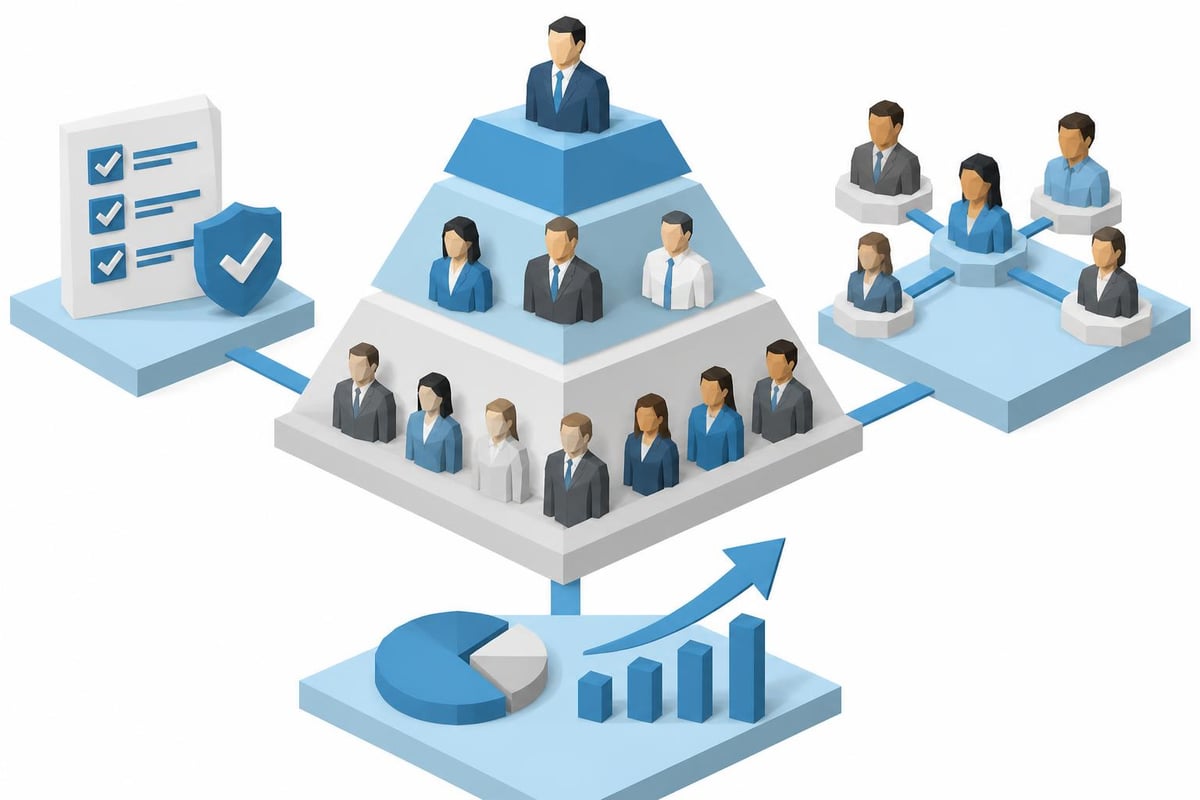
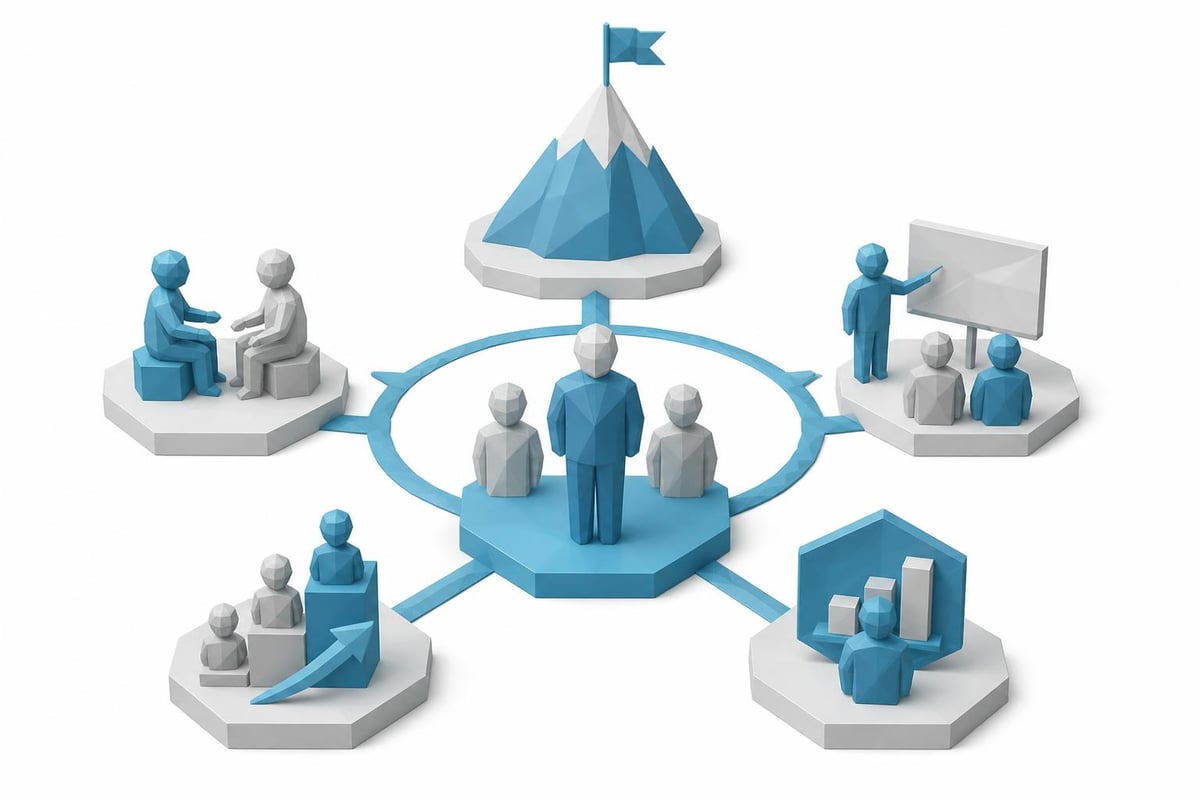
When your leadership team operates as a collection of talented individuals rather than a unified force, every decision takes longer, execution suffers, and opportunities slip through the cracks. Leadership team coaching addresses this challenge by transforming disconnected executives into a high-performing unit that drives measurable business outcomes. Unlike traditional training programs that focus on individual skill-building, this approach tackles the interpersonal dynamics, communication patterns, and strategic alignment that determine whether teams thrive or merely survive.

Why Leadership Teams Need Coaching

Most organizations invest heavily in developing individual leaders while overlooking the collective performance of the leadership team itself. This gap creates friction points that cascade throughout the organization.

The Hidden Cost of Misalignment

When senior leaders aren't synchronized, their teams inherit confusion. Consider these common symptoms:

  • Strategic priorities shift based on who spoke to the CEO last
  • Cross-functional projects stall due to competing department agendas
  • Talented employees leave because they receive conflicting direction
  • Decisions get revisited multiple times, wasting energy and momentum

Research from the Center for Creative Leadership highlights six core principles that make coaching effective, including creating a supportive environment and developing self-awareness. These principles become exponentially more powerful when applied to entire leadership teams rather than individuals in isolation.

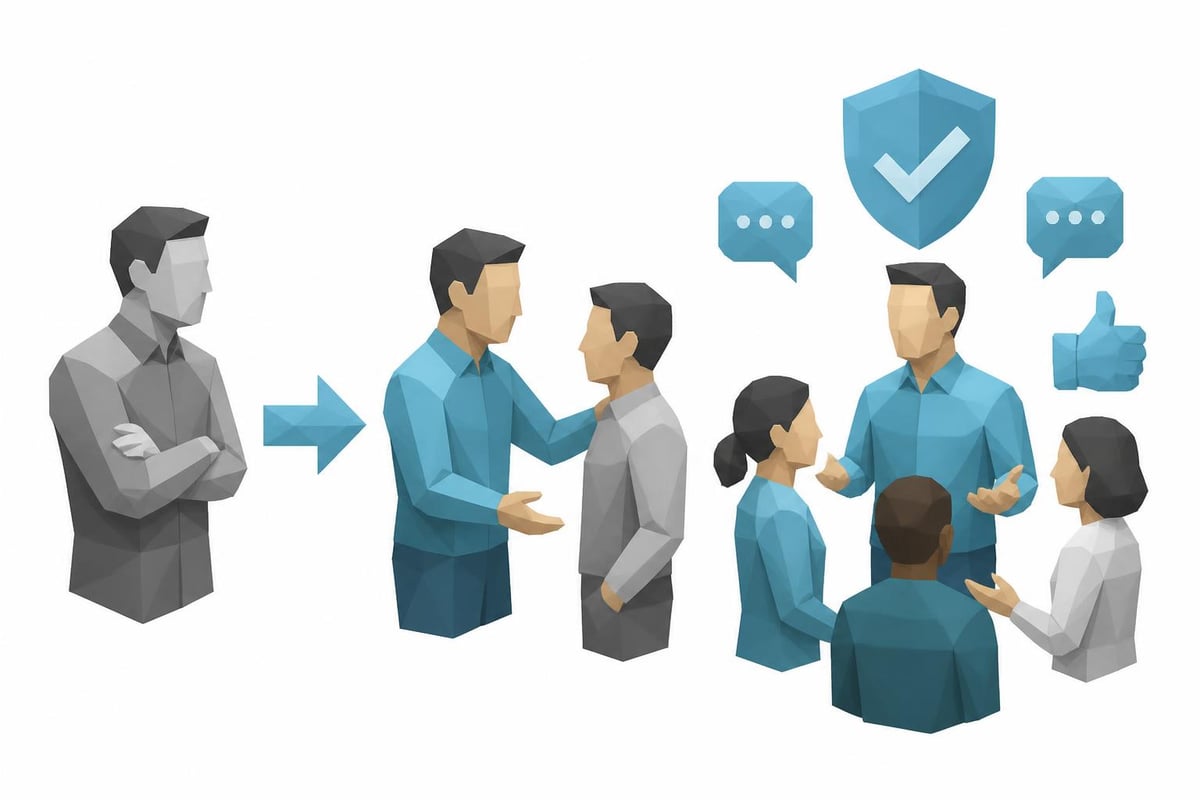
Leadership team misalignment impacts

The ROI of Team Cohesion

Organizations that invest in leadership team coaching typically see returns across multiple dimensions. A case study from Work Brighter demonstrates how coaching repaired conflicts and improved communication among directors at an executive recruitment company, directly impacting their ability to serve clients effectively.

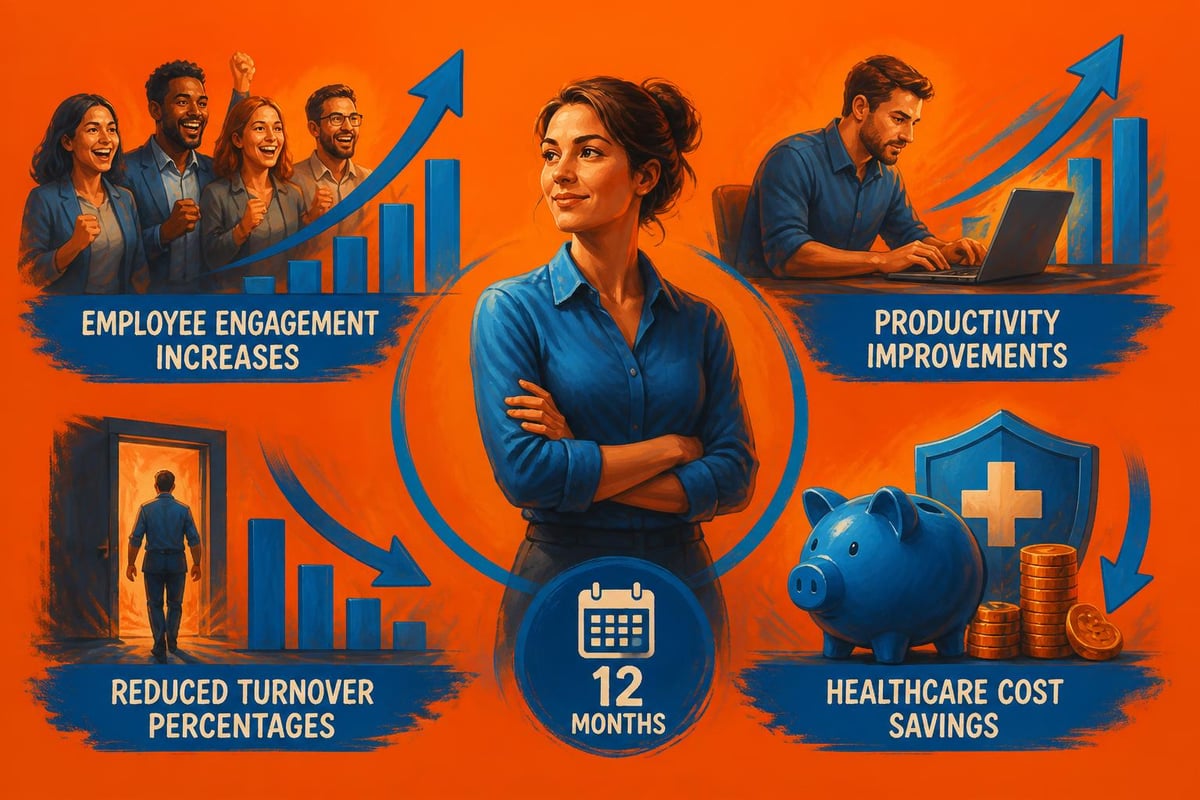
The financial benefits extend beyond improved morale. When leadership teams make faster decisions, companies capture market opportunities their competitors miss. When executives model strong communication, employee engagement rises, reducing turnover costs. Understanding the ROI of coaching helps justify these investments to boards and shareholders.

Key Components of Effective Leadership Team Coaching

Successful leadership team coaching requires more than periodic workshops or motivational speakers. It demands ongoing intervention, measurement, and accountability tied to business outcomes.

Live Intervention During Real Work

The most impactful coaching happens in the flow of actual business operations. Instead of role-playing exercises in offsite locations, effective coaches join leadership meetings, observe decision-making patterns, and provide immediate feedback.

This hands-on approach accelerates learning because executives can't hide behind theoretical understanding. They must demonstrate new behaviors with real stakes. When a coach facilitates your quarterly planning session, they can:

  1. Identify communication breakdowns as they happen
  2. Redirect unproductive conflict into constructive debate
  3. Ensure every voice contributes to key decisions
  4. Hold the team accountable to agreed-upon processes
  5. Connect discussion outcomes to measurable KPIs

A systemic team coaching case study from an international professional services firm shows how building trust and enhancing collaboration over twelve months created lasting organizational change.

Assessment and Baseline Measurement

Before coaching begins, effective programs establish clear baselines through 360-degree leadership assessments and team dynamics evaluations. This data provides objective insights into strengths and development areas.

Assessment Type What It Measures Business Impact
360 Leadership Review Individual leader effectiveness from multiple perspectives Identifies blind spots affecting team performance
Team Dynamics Survey Communication patterns, psychological safety, decision quality Reveals systemic issues blocking progress
KPI Scorecards Current performance on key business metrics Establishes ROI baseline for coaching outcomes

Creating psychological safety in the workplace becomes measurable when you track how often team members voice dissenting opinions or admit mistakes without fear of retribution.

Team coaching assessment framework

Practical Applications Across Business Scenarios

Leadership team coaching delivers value across various organizational challenges, from rapid growth to turnaround situations.

Scaling Through Growth Transitions

When companies expand from fifty to two hundred employees, the informal communication that once worked breaks down. Leadership coaching case studies show how coaching helps growing divisions develop delegation skills and team alignment as responsibilities expand.

During these transitions, coaching helps leadership teams:

  • Establish operating cadences that maintain alignment without micromanagement
  • Develop middle managers who can coach their own teams effectively
  • Create communication protocols that scale with headcount
  • Build accountability mechanisms that preserve execution quality

Companies working with the right coaching directories can find specialists experienced in growth-stage challenges specific to their industry.

Repairing Dysfunctional Dynamics

Sometimes leadership teams carry historical baggage that poisons current effectiveness. Unresolved conflicts, turf battles, or passive-aggressive behavior patterns require skilled intervention.

Coaching in these situations focuses on:

  1. Surfacing underlying issues that polite corporate culture has buried
  2. Establishing new norms for productive conflict and debate
  3. Rebuilding trust through structured vulnerability exercises
  4. Creating accountability for maintaining healthier patterns

One pharmaceutical company case study illustrates how coaching an interdependent team created trust and enhanced performance by addressing these fundamental relationship issues.

Choosing the Right Coaching Approach

Not all leadership team coaching delivers equal results. The market includes everything from certification-focused consultants to hands-on practitioners who tie their work to business outcomes.

Certification vs. Results Orientation

Many coaching programs emphasize credentials and theoretical frameworks while delivering minimal measurable impact. When evaluating options, ask potential coaches about:

  • How they measure success beyond participant satisfaction surveys
  • Whether they coach during actual work or only in separate sessions
  • What business KPIs they've improved in previous engagements
  • How quickly clients typically see tangible results

Multiple leadership coaching case studies from European HR boards demonstrate various coaching interventions and their outcomes, providing benchmarks for what's possible.

For organizations seeking accountability and practical results, exploring resources like AccountabilityNow can complement coaching initiatives with structured frameworks that maintain momentum between sessions.

Flexible Engagement Models

Traditional consulting arrangements lock companies into lengthy contracts regardless of results. Progressive coaching approaches offer month-to-month terms and aligned incentive structures.

This flexibility matters because:

  • You can scale coaching intensity based on evolving needs
  • Poor fit becomes apparent quickly without financial penalty
  • Results drive continuation rather than contractual obligation
  • Budget fluctuations don't force premature program termination

The best business coaching approaches increasingly incorporate technology and flexible delivery models that adapt to client circumstances.

Coaching engagement models comparison

Measuring Leadership Team Coaching Impact

Effective coaching programs establish clear metrics before work begins and track progress consistently throughout the engagement.

Leading and Lagging Indicators

Smart measurement frameworks combine short-term behavioral shifts with longer-term business outcomes.

Leading Indicators:

  • Meeting efficiency scores
  • Decision velocity metrics
  • Communication quality ratings
  • Conflict resolution speed

Lagging Indicators:

  • Employee engagement scores
  • Voluntary turnover rates
  • Revenue growth
  • Customer satisfaction improvements

Following eight guiding principles for impactful leadership coaching ensures your program addresses both immediate behavioral changes and sustainable business results.

Linking Coaching to Business Outcomes

The ultimate test of leadership team coaching isn't improved survey scores, it's measurable business performance. Effective programs connect coaching interventions directly to outcomes like faster product launches, improved sales conversion, or reduced operational costs.

When selecting coaching partners, prioritize those who discuss KPIs and ROI in initial conversations rather than focusing exclusively on process and methodology. Finding the right partner through platforms like Noomii connects you with coaches who understand business accountability.

Implementation Strategies for Maximum Impact

Even excellent coaching fails when organizational conditions don't support change. Successful implementations require executive commitment, clear expectations, and cultural reinforcement.

The CEO and board must visibly support the coaching process by participating fully, implementing recommended changes, and holding the team accountable to new standards. Half-hearted leadership engagement signals that coaching is optional rather than strategic.

Schedule coaching sessions around actual business cycles rather than arbitrary calendar dates. Coach during budget planning, strategic reviews, and crisis response to maximize relevance and immediate application of new skills.

Create feedback loops that let the broader organization see leadership improvements. When employees notice faster decisions or clearer communication from executives, it reinforces positive change and builds organizational trust.


Leadership team coaching transforms how executives work together, creating faster decisions, stronger communication, and measurable business results that ripple throughout your organization. When you're ready to build an accountable leadership team that drives real outcomes rather than just completing another training program, Noomii connects you with coaches who roll up their sleeves and work alongside your team with no long-term contracts and clear ties to your KPIs.

Human Resources Coaching: Transform Your Workplace in 2026

Human resources departments face unprecedented challenges in 2026. From navigating hybrid work environments to addressing toxic leadership patterns, HR professionals need sophisticated tools that go beyond traditional training programs. Human resources coaching has emerged as a strategic imperative for organizations seeking to develop resilient leaders, improve employee engagement, and drive measurable business outcomes. This approach combines behavioral science, personalized development plans, and accountability structures to create lasting organizational change.

The Strategic Value of Human Resources Coaching

Human resources coaching represents a fundamental shift from reactive problem-solving to proactive talent development. Organizations that invest in structured coaching programs see significant improvements in leadership effectiveness, employee retention, and overall workplace culture.

The distinction between coaching and traditional training matters. While training provides knowledge and skills, coaching focuses on behavioral change and sustained performance improvement. This personalized approach addresses individual leadership challenges within the context of organizational objectives.

Key differentiators include:

  • Customized development paths based on individual assessment data
  • Ongoing accountability that extends beyond single training sessions
  • Real-time application to actual workplace challenges
  • Measurable behavioral changes tracked through validated metrics

Research demonstrates that ongoing coaching and feedback creates more sustainable performance improvements than one-time interventions. Organizations that implement continuous coaching frameworks report higher employee satisfaction and stronger leadership pipelines.

Building the Business Case for Coaching Investment

CFOs and executives demand clear ROI from leadership development initiatives. Human resources coaching delivers quantifiable results when properly structured and measured.

Metric Category Typical Improvement Range Measurement Timeline
Leadership Effectiveness 18-35% increase 6-12 months
Employee Engagement 22-41% increase 3-9 months
Retention of High Performers 25-47% improvement 12-18 months
Team Productivity 15-28% increase 6-12 months

Organizations should establish baseline metrics before launching coaching programs. Track both leading indicators (coaching session completion rates, action plan progress) and lagging indicators (promotion rates, turnover reduction, cultural health scores).

ROI measurement framework

Implementing Effective Coaching Programs

Successful human resources coaching programs require thoughtful design and strategic execution. The foundation begins with clear objectives aligned to organizational priorities.

Start by identifying specific leadership gaps that impact business performance. Common focus areas include decision-making quality, conflict resolution capabilities, strategic thinking development, and executive presence enhancement. Each coaching engagement should target defined competencies with measurable success criteria.

The Coach Matching Process

Precision matching between coaches and leaders determines program success. Generic assignments based solely on availability create mediocre outcomes. Sophisticated matching considers industry experience, coaching methodology, personality compatibility, and specific expertise areas.

Advanced organizations use assessment data to inform matching decisions. When leaders understand their behavioral preferences and development needs, they can articulate requirements for their coaching relationship. This creates stronger partnerships and accelerates progress.

The science behind launching successful HR coaching programs emphasizes alignment between coach expertise and organizational culture. Coaches must understand sector-specific challenges whether working with government agencies, healthcare systems, or technology companies.

Critical matching factors:

  1. Relevant industry experience and context
  2. Specialized competencies aligned to development goals
  3. Coaching style compatibility with learner preferences
  4. Cultural fit with organizational values
  5. Track record with similar leadership challenges

Organizations benefit from maintaining diverse coach networks that can address varied development needs. Building relationships with certified executive coaches across specializations ensures appropriate expertise for every leadership level.

Addressing Complex Leadership Challenges

Human resources coaching excels at tackling nuanced organizational issues that resist standard interventions. These situations require individualized approaches grounded in behavioral assessment and contextual understanding.

Toxic Leadership Patterns

One of the most valuable applications involves addressing problematic leadership behaviors before they destroy team morale and organizational culture. Early intervention through targeted coaching for toxic leaders prevents expensive turnover and potential legal exposure.

Toxic leadership manifests in multiple forms: micromanagement that crushes initiative, inconsistent decision-making that creates confusion, public criticism that undermines psychological safety, and favoritism that breeds resentment. Each pattern requires specific intervention strategies.

Effective coaching in these situations begins with comprehensive assessment. Leaders often lack awareness of their impact on others. Multi-rater feedback instruments provide objective data about behavioral patterns and their consequences.

The intervention plan typically includes:

  • Behavioral contracts with specific commitments
  • Regular accountability check-ins with defined frequency
  • Skills development in areas like emotional intelligence
  • Team rebuilding activities to restore trust
  • Progress tracking through both qualitative and quantitative measures

Case studies demonstrate remarkable turnaround potential. Executive coaching for performance improvement documented a 22% increase in collaboration time and significant improvements in team satisfaction following targeted interventions with struggling leaders.

Building Psychological Safety

Creating environments where employees feel safe to speak up, take risks, and challenge assumptions requires intentional leadership development. Human resources coaching helps leaders understand their role in either fostering or destroying psychological safety.

Leaders learn to recognize behaviors that shut down open communication. They develop new approaches to soliciting diverse perspectives, responding constructively to mistakes, and modeling vulnerability. The impact extends throughout organizational culture as psychological safety in the workplace becomes embedded in daily interactions.

Psychological safety development

Scaling Coaching Across Organizations

Enterprise-scale human resources coaching requires infrastructure that supports consistency while allowing customization. Large organizations face unique challenges in deploying coaching effectively across diverse business units, geographic regions, and leadership levels.

Technology-Enabled Deployment

Modern coaching platforms provide essential infrastructure for managing programs at scale. These systems handle coach assignments, schedule coordination, progress tracking, and impact measurement. Integration with existing HRIS and talent management systems ensures seamless data flow.

Key platform capabilities include:

  • Centralized coach networks with verified credentials
  • Automated matching algorithms based on multiple criteria
  • Standardized assessment instruments with instant scoring
  • Progress dashboards visible to coaches, participants, and sponsors
  • Compliance documentation for regulatory requirements
  • Aggregated analytics showing program-wide trends

Government agencies particularly value systems that document compliance with development requirements and equal access to resources. Fortune 500 companies prioritize platforms that provide executive visibility into leadership pipeline strength.

Governance and Quality Assurance

Maintaining coaching quality across hundreds of engagements demands robust governance structures. Organizations should establish clear standards for coach qualifications, engagement protocols, and ethical guidelines.

Regular quality reviews ensure coaches deliver value and adhere to organizational standards. These assessments include participant satisfaction surveys, progress against defined objectives, and adherence to engagement frameworks.

Quality Metric Review Frequency Accountability Owner
Coach Certification Status Quarterly HR Leadership
Participant Satisfaction Per Engagement Program Manager
Goal Achievement Rate Monthly HR Analytics
Engagement Compliance Real-time Coaching Platform
ROI Documentation Annually CFO/CHRO

Integration with Talent Management Systems

Human resources coaching delivers maximum value when integrated with broader talent development strategies. Isolated coaching initiatives miss opportunities to leverage assessment data, succession planning insights, and performance management systems.

Progressive organizations embed coaching into their leadership development frameworks. High-potential programs include coaching as a standard component. Succession planning identifies development needs that coaching addresses. Performance improvement plans incorporate coaching support alongside formal feedback.

This integration creates a comprehensive talent ecosystem. Assessment data from various sources informs customized development plans that combine coaching, training, stretch assignments, and mentoring. Leaders receive coordinated support rather than fragmented interventions.

Supporting Critical Transitions

Leadership transitions represent high-stakes moments when coaching provides exceptional value. New executives, first-time managers, and leaders taking on expanded responsibilities all benefit from structured support during adjustment periods.

The strategic role of executive coaching becomes particularly evident during rapid growth phases. Organizations scaling quickly need leaders who can adapt to changing demands while maintaining team stability.

Transition coaching typically addresses:

  1. Stakeholder relationship building in new contexts
  2. Strategic priority setting amid competing demands
  3. Team assessment and potential restructuring decisions
  4. Cultural navigation when moving between organizations
  5. Personal brand establishment in new environments

The accelerated timeline for demonstrating impact makes coaching support essential. Leaders cannot afford extended learning curves when boards and teams expect immediate results.

Leadership transition support

Advanced Coaching Methodologies

Human resources coaching has evolved significantly beyond simple skill-building conversations. Contemporary approaches incorporate neuroscience research, behavioral economics insights, and adult learning theory to create more effective interventions.

Evidence-Based Assessment Tools

Sophisticated coaching begins with validated diagnostic instruments that reveal behavioral patterns, cognitive preferences, and developmental needs. These assessments provide objective baselines and track progress over time.

Leading organizations use multiple assessment types including personality inventories, emotional intelligence measures, 360-degree feedback instruments, values clarification tools, and leadership competency frameworks. The combination creates comprehensive understanding of each leader's profile.

Assessment data informs targeted intervention strategies. Rather than generic leadership development, coaches design precise approaches addressing specific gaps revealed through diagnostics. This evidence-based methodology increases efficiency and demonstrates tangible progress.

Accountability Structures That Drive Results

The difference between coaching that produces lasting change and coaching that wastes resources often comes down to accountability design. Effective programs build multiple accountability layers that sustain momentum between sessions.

Proven accountability mechanisms include:

  • Written action commitments reviewed at each session
  • Behavioral experiments with defined success metrics
  • Stakeholder check-ins providing external perspective
  • Progress journals documenting insights and applications
  • Team feedback loops creating social accountability

Organizations should resist the temptation to offer coaching without structure. While flexibility matters, accountability frameworks ensure participants actually implement new behaviors rather than simply discussing concepts.

Best practices for building internal coaching programs emphasize establishing clear expectations and measurement criteria from program inception. This clarity prevents scope drift and enables legitimate impact assessment.

Measuring Coaching Impact

Demonstrating the value of human resources coaching requires disciplined measurement approaches. Organizations should establish metrics at individual, team, and organizational levels.

Individual metrics track specific behavioral changes tied to coaching objectives. Did the leader improve decision-making quality? Has conflict resolution capability strengthened? Are direct reports reporting higher satisfaction? These micro-level changes connect to macro-level organizational outcomes.

Team metrics assess collective performance shifts. Productivity improvements, engagement score increases, retention rate changes, and collaboration quality enhancements all provide evidence of coaching impact. The most compelling evidence comes from comparing coached leaders' teams against control groups.

Organizational metrics demonstrate system-wide effects. As more leaders develop through coaching, culture shifts become measurable. Employee surveys reveal changing perceptions. Innovation metrics show increased risk-taking. Customer satisfaction scores improve as better leadership creates better service delivery.

ROI Calculation Frameworks

Calculating return on investment from coaching requires defining both costs and benefits in financial terms. Comprehensive cost accounting includes coach fees, participant time, program administration, technology platforms, and assessment instruments.

Benefit quantification proves more challenging but remains essential. Assign dollar values to retention improvements, productivity gains, reduced grievances, faster promotion readiness, and improved team performance. Conservative estimates maintain credibility while still demonstrating substantial returns.

Case evidence shows impressive results. Personalized coaching implementations document significant improvements in productivity, stress management, and employee satisfaction with measurable business impact.

Cost Category Typical Range (per participant) Benefit Category Typical Range (annualized)
Coach Fees $8,000-$25,000 Retention Savings $15,000-$75,000
Assessment Tools $500-$2,000 Productivity Gains $12,000-$45,000
Platform/Admin $300-$1,500 Team Performance $8,000-$35,000
Participant Time $2,000-$8,000 Reduced Conflicts $5,000-$20,000

Future-Proofing Leadership Development

The landscape of human resources coaching continues to evolve rapidly. Organizations that want to maintain competitive advantage must stay current with emerging methodologies and technologies.

Artificial intelligence increasingly supports coaching processes through sentiment analysis, pattern recognition in behavioral data, and personalized content recommendations. However, the human element remains irreplaceable for building trust, providing nuanced feedback, and navigating complex interpersonal dynamics.

Hybrid coaching models combine technology-enabled learning with live coaching conversations. Participants complete digital assessments, review microlearning content, and practice skills in simulated environments between coaching sessions. This blended approach maximizes efficiency while preserving relationship depth.

The most forward-thinking organizations view human resources coaching as integral to organizational resilience. By continuously developing leaders who can adapt to disruption, navigate ambiguity, and inspire teams through change, they build sustainable competitive advantages.

Strategic implementation requires ongoing refinement based on results data and participant feedback. Programs that worked brilliantly three years ago may need updating as organizational contexts shift and leadership challenges evolve. Understanding what makes executive coaching effective in different circumstances enables continuous improvement.

Coaching for Inclusive Leadership

Contemporary human resources coaching increasingly emphasizes inclusive leadership capabilities. Leaders must navigate diverse teams, understand varied perspectives, and create environments where all employees can thrive.

Coaching interventions help leaders recognize unconscious biases, develop cultural intelligence, practice inclusive communication, and design equitable systems. These capabilities directly impact innovation capacity, employee engagement, and talent attraction in competitive markets.

Organizations pursuing diversity, equity, and inclusion goals find that leadership coaching provides essential support for translating good intentions into behavioral change. Awareness alone rarely shifts ingrained patterns. Coaching provides the structure and accountability needed for genuine transformation.

Progressive coaching programs also emphasize sustainability of change beyond the formal engagement period. Leaders develop self-coaching capabilities and peer support networks that continue driving development after professional coaching concludes. This approach maximizes long-term impact while managing costs.

Selecting the Right Coaching Partners

The quality of coaching outcomes depends heavily on coach selection and program design. Organizations should evaluate potential coaching partners across multiple dimensions before committing to long-term relationships.

Essential evaluation criteria:

  • Verified coach credentials and certification standards
  • Proven experience in relevant industries and contexts
  • Assessment tool sophistication and validity
  • Matching methodology that ensures appropriate fit
  • Technology infrastructure supporting program management
  • Measurement frameworks demonstrating impact
  • References from similar organizational clients
  • Ethical standards and confidentiality protocols

Request detailed case studies showing measurable results with organizations facing comparable challenges. Generic marketing materials provide little value. Specific examples of how coaching addressed leadership gaps, improved team performance, or resolved cultural issues offer meaningful insight.

Understanding available coaching packages and engagement models helps organizations select structures aligned with their needs and budgets. Flexibility matters as requirements often evolve during implementation.

The relationship between internal HR teams and external coaching providers should be collaborative rather than transactional. The best outcomes emerge when coaches understand organizational context deeply and HR leaders stay actively engaged in guiding program evolution.


Human resources coaching has become an indispensable tool for organizations committed to leadership excellence and sustainable performance improvement. By combining evidence-based assessments, precision coach matching, and rigorous accountability structures, forward-thinking organizations transform their leadership capabilities and create resilient cultures. The Noomii Leadership Coaching program delivers these outcomes through a proven framework that aligns individual development with institutional priorities, supported by a global network of certified executive coaches and advanced analytics that demonstrate measurable ROI. For organizations seeking structured approaches to leadership development alongside comprehensive accountability frameworks, partnering with experienced coaching providers ensures programs deliver lasting value and competitive advantage.

Executive Coach NY: Building Accountable Leaders in 2026

New York's business landscape demands more from leaders than ever before. Mid-market companies face intense competition, rapid market shifts, and the constant pressure to deliver results while retaining top talent. For organizations seeking measurable leadership development, finding the right executive coach ny teams can partner with becomes a strategic imperative rather than a nice-to-have investment.

What Sets Effective Executive Coaching Apart

Traditional coaching often focuses on theory, certifications, and sidebar conversations that feel disconnected from daily operations. The most effective executive coach ny professionals bring brings a fundamentally different approach: they embed themselves in your business rhythm, coach leaders live during actual meetings, and tie every intervention to clear KPIs and ROI.

This practical methodology addresses real challenges as they unfold. When your leadership team struggles with decision velocity, an embedded coach doesn't schedule a workshop three weeks out. They join your next leadership meeting, observe the dynamics, and provide immediate feedback that shifts behavior in real time.

The New York Advantage

New York's concentration of mid-market companies creates unique opportunities for leadership development. Organizations with 25 to 500 employees operate in a sweet spot where they're large enough to need sophisticated leadership practices but small enough to implement changes quickly.

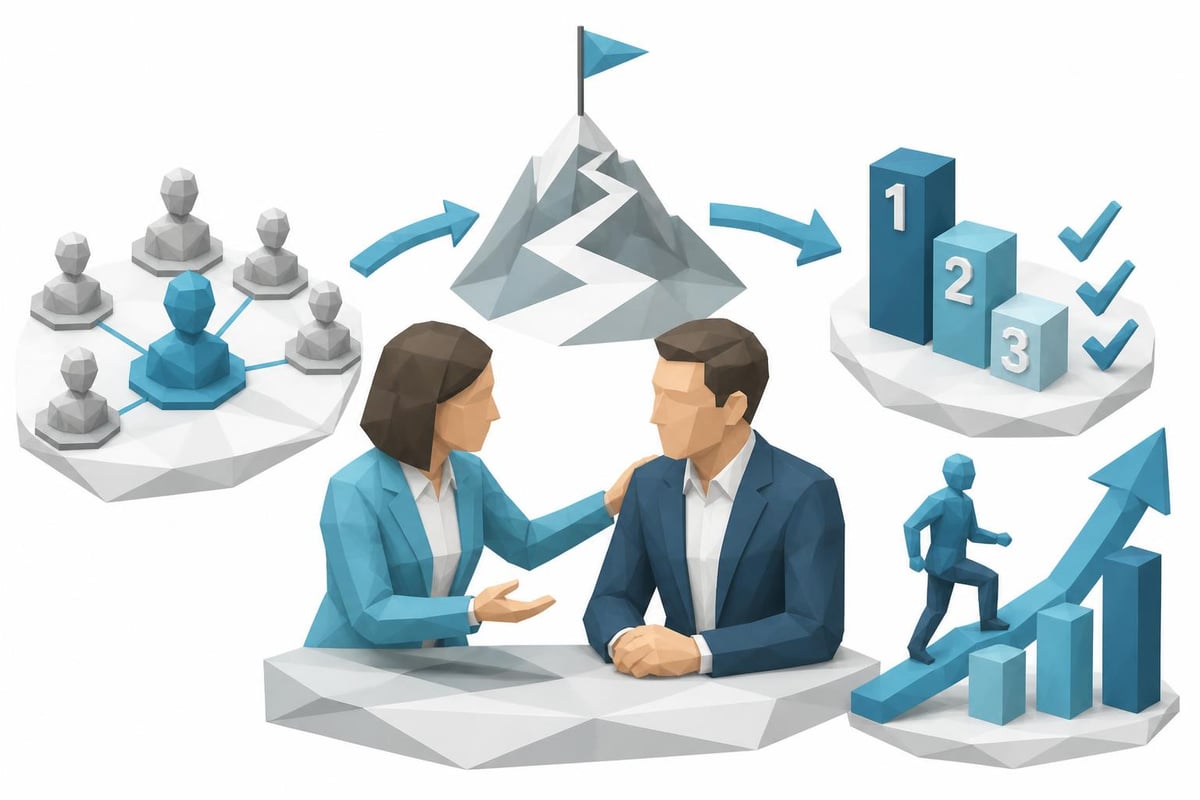
Executive coaching engagement model

Vistage offers executive coaching in New York through peer advisory groups, while other providers like HigherEchelon focus on certified training programs. The key differentiator lies in how coaching connects to business outcomes rather than just leadership competencies.

Measuring What Matters: KPIs and Scorecards

Executive coaching without measurement is expensive consulting theater. The most impactful coaching engagements establish clear operating cadences and KPI scorecards from day one. These frameworks create visibility into:

  • Decision velocity: Time from issue identification to resolution
  • Manager effectiveness: Team engagement scores and retention rates
  • Communication quality: Cross-functional collaboration metrics
  • Execution clarity: Percentage of priorities completed on time
  • Revenue impact: Sales growth and customer retention tied to leadership behaviors

Building these scorecards requires understanding your specific business model and competitive context. A 360 leadership assessment combined with operational data reveals where leadership gaps directly impact business performance.

Live Coaching in Action

Month-to-month engagements eliminate the risk of long-term contracts that don't deliver. When an executive coach ny companies trust works on flexible terms, both parties stay accountable. The coach must demonstrate value quickly, and the organization can scale support up or down based on results.

This flexibility matters particularly for growing companies where priorities shift quarterly. What starts as leadership development for your executive team might evolve into manager training as you promote high performers, then extend to team coaching as those new managers build their own groups.

From Theory to Practice: Real Outcomes

The difference between academic coaching and practical coaching shows up in weekly leadership meetings. Theory-focused coaches help executives understand leadership models. Practice-focused coaches sit in your meetings, watch your team struggle with a contentious decision, and intervene to shift the dynamic immediately.

Consider a common scenario: your leadership team has debated the same strategic initiative for three consecutive meetings without resolution. A traditional coach schedules individual sessions to explore decision-making styles. A practical coach stops the fourth meeting, names the pattern, facilitates a decision framework on the spot, and ensures the team commits before leaving the room.

Traditional Coaching Practical Coaching
Weekly 1:1 sessions Live meeting participation
Leadership theory Real-time feedback
Self-reported progress KPI-tracked outcomes
Annual assessments Monthly scorecards
Fixed curriculum Adaptive to business needs

Powerhouse Coaching and TLD Group offer structured programs, while organizations seeking results-focused approaches often explore alternatives that tie coaching directly to operational improvements.

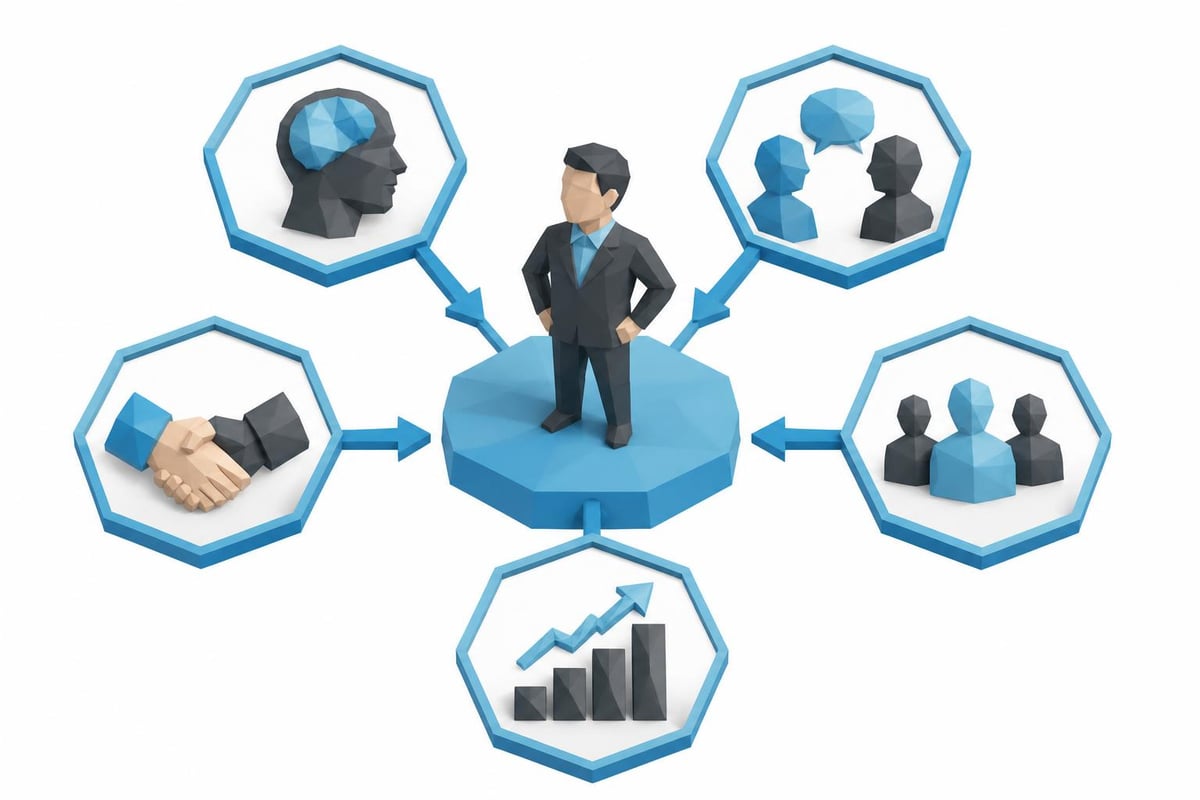
Leadership development outcomes

Building Managers Who Coach

One overlooked benefit of effective executive coaching is how it cascades through your organization. When senior leaders experience powerful coaching, they naturally begin coaching their own teams differently. This multiplier effect transforms organizational culture far beyond the initial coaching engagement.

Developing managers who coach requires three core capabilities:

  1. Asking better questions instead of providing all the answers
  2. Creating accountability through clear commitments and follow-up
  3. Giving real-time feedback that changes behavior immediately

Companies investing in performance coaching across leadership levels see higher engagement and retention because employees feel developed rather than managed. The accountability framework at AccountabilityNow demonstrates how systematic follow-through drives results.

Sales and Retention Coaching

For many mid-market companies, leadership development directly impacts revenue. Sales leaders who learn to coach their teams see improved performance without adding headcount. Customer success managers who develop coaching skills retain accounts more effectively.

This connection between leadership development and business outcomes explains why forward-thinking organizations treat executive coaching as a revenue investment rather than an HR expense. When your VP of Sales improves their coaching skills, their team's quota attainment rises. When your customer success leader learns to develop their managers, churn decreases.

Selecting the Right Coaching Partnership

The New York market offers numerous options for executive coaching. Meridian Executive Coaching provides video-based sessions with clinical expertise, while Syntaxis specializes in executive presence. Understanding psychological safety in the workplace becomes essential when evaluating which approach fits your culture.

Key evaluation criteria include:

  • Willingness to tie coaching to business KPIs
  • Flexibility in engagement terms (avoid multi-year contracts)
  • Experience with your industry and company size
  • Approach to measuring and reporting progress
  • Ability to coach live in your operational rhythm

Mid-market companies benefit from coaches who understand the unique challenges of scaling beyond startup chaos but before enterprise bureaucracy sets in. This sweet spot requires balancing structure with agility, a challenge an experienced executive coach ny teams rely on understands intimately.

Team Coaching and Facilitation

Individual executive coaching addresses personal leadership development, but team coaching tackles group dynamics, communication patterns, and collective decision-making. The most effective engagements combine both approaches, working with executives individually while also facilitating team sessions.

Team coaching surfaces conflicts that individual sessions miss. Your executive team might each report progress in 1:1 coaching while collectively avoiding the strategic conversation that would unlock your next growth phase. A skilled facilitator recognizes this pattern and creates the conditions for breakthrough discussions.

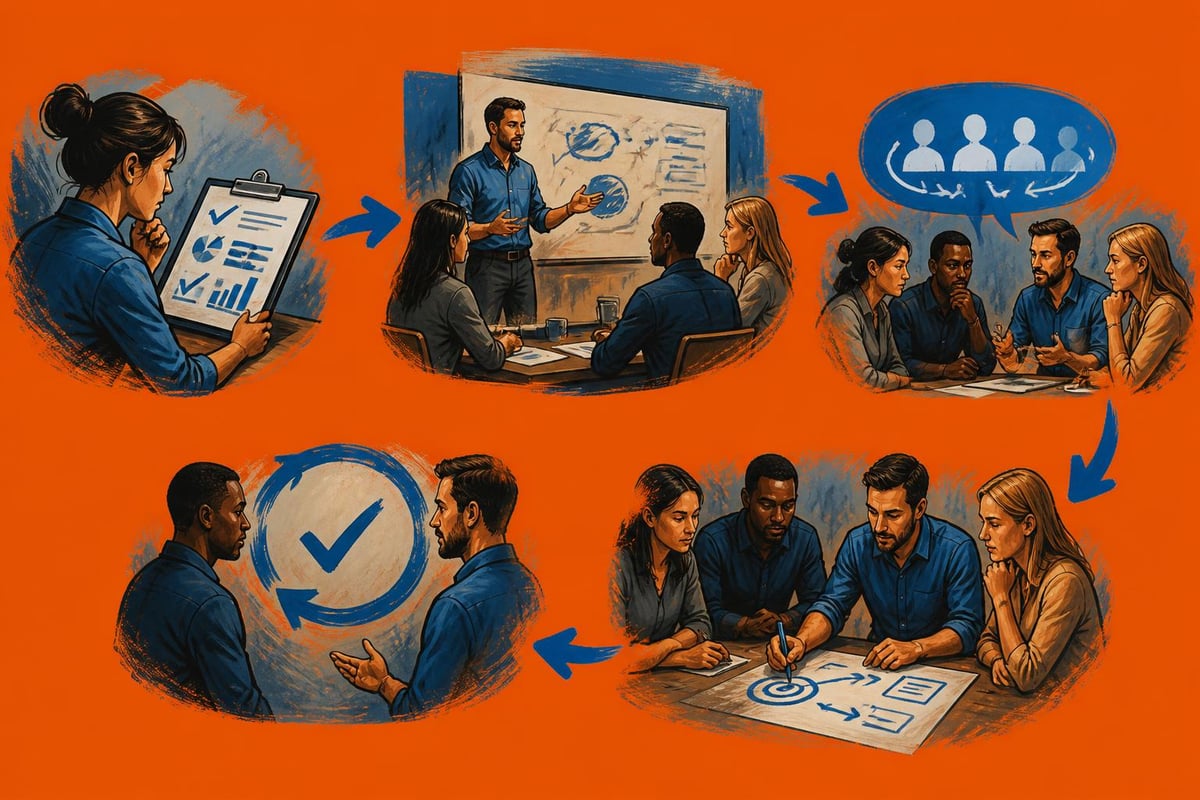
Team coaching session structure

Organizations exploring business coaching for entrepreneurs or established companies find that facilitation skills matter as much as coaching expertise. The ability to read group dynamics, intervene effectively, and drive decisions separates average facilitators from exceptional ones.


Finding an executive coach ny leaders trust requires looking beyond credentials to focus on business results, measurement rigor, and practical engagement models. Noomii Corporate Coaching delivers exactly this approach for mid-market companies and Fortune 500 divisions seeking accountable leadership development tied to clear KPIs. With month-to-month terms, live meeting coaching, and aligned incentive options, we share the risk and deliver visible results that transform decision speed, communication quality, and execution consistency. Discover how practical corporate coaching drives measurable business outcomes at Noomii.

Leadership Solution: Transform Your Organization in 2026

Organizations face unprecedented leadership challenges in 2026, from navigating hybrid work environments to managing increasingly diverse teams across global operations. Finding the right leadership solution requires more than generic training programs or one-size-fits-all approaches. It demands precision diagnostics, expert coaching partnerships, and measurable frameworks that align individual growth with institutional priorities. Companies that invest in evidence-based leadership development consistently outperform competitors, retain top talent, and build cultures of sustained innovation.

The Critical Need for Targeted Leadership Solutions

Modern organizations cannot afford leadership gaps. When executives lack the skills to navigate complex decisions, entire departments suffer from confusion, misalignment, and declining morale. The cost of poor leadership extends far beyond productivity metrics, impacting employee retention, customer satisfaction, and ultimately, bottom-line performance.

Traditional leadership development programs often fail because they lack specificity. Generic workshops and broad-based seminars rarely address the unique challenges facing individual leaders within specific organizational contexts. A truly effective leadership solution must diagnose precise behavioral patterns, match leaders with specialized expertise, and track measurable outcomes against defined objectives.

Identifying Leadership Challenges Before They Escalate

Organizations frequently recognize leadership problems only after significant damage has occurred. Declining engagement scores, increased turnover among high performers, or deteriorating team dynamics signal deeper leadership issues that require immediate intervention.

Evidence-based diagnostic tools reveal leadership gaps before they become critical:

  • Behavioral assessments that measure decision-making patterns
  • 360-degree feedback identifying blind spots in communication
  • Team health indicators showing trust and psychological safety levels
  • Cultural alignment metrics comparing espoused versus actual values
  • Competency frameworks benchmarking leaders against role requirements

These diagnostic approaches provide the foundation for any comprehensive leadership solution. Without accurate assessment, development initiatives lack direction and accountability.

Leadership diagnostic framework

Building a Leadership Solution That Delivers Results

Effective leadership development requires structure, expertise, and accountability. Organizations that approach leadership growth as a strategic initiative rather than an HR checkbox achieve dramatically better outcomes. Creating a successful leadership development program requires alignment between business priorities and individual development needs.

The Role of Precision Coach Matching

Not every executive coach can address every leadership challenge. A CFO struggling with strategic communication needs different expertise than a department head navigating team conflict. The matching process between leader and coach determines program success more than any other factor.

Key considerations in coach selection include:

  1. Industry experience relevant to organizational context
  2. Specialized skills addressing specific behavioral challenges
  3. Cultural competence for diverse team environments
  4. Track record with similar leadership scenarios
  5. Assessment compatibility with diagnostic frameworks

Organizations working with toxic leader situations require coaches with deep expertise in behavioral intervention and organizational psychology, not general leadership consultants.

Challenge Type Required Coach Expertise Expected Outcomes
Toxic Leadership Behavioral intervention, conflict resolution Improved team morale, reduced turnover
Strategic Vision Executive strategy, change management Clear organizational direction, alignment
Team Performance Group dynamics, communication Enhanced collaboration, productivity
Decision-Making Critical thinking, risk assessment Faster, more effective decisions

Implementing Targeted Intervention Strategies

Once diagnostic data reveals specific leadership gaps and the right coach partnership is established, customized intervention plans become the vehicle for transformation. These plans must address immediate behavioral challenges while building long-term leadership capacity.

Successful intervention strategies balance corrective action with skill development. A leader who micromanages team members needs both feedback on current behaviors and training in delegation, trust-building, and outcome-based management approaches.

Addressing Toxic Workplace Behaviors

Toxic leadership patterns destroy organizational culture faster than any external market challenge. Leaders who create hostile environments, play favorites, or undermine psychological safety generate ripple effects throughout entire departments. Understanding psychological safety in workplace environments provides crucial context for intervention design.

Intervention plans for toxic behaviors include:

  • Immediate behavioral contracts with clear expectations
  • Regular accountability check-ins with coach and supervisor
  • Skills training in emotional intelligence and communication
  • Team feedback mechanisms creating transparency
  • Escalation protocols for repeated violations

These structured approaches transform toxic patterns into opportunities for growth when leaders demonstrate genuine commitment to change.

Scaling Leadership Solutions Across Organizations

Fortune 500 companies and government agencies face unique challenges when implementing leadership development at scale. Programs must maintain consistency while allowing customization, ensure compliance with regulatory requirements, and demonstrate measurable ROI across hundreds or thousands of participants.

Scalable leadership program

Compliance and Governance Considerations

Government agencies operate under strict ethical and regulatory frameworks that commercial leadership programs often overlook. A compliant leadership solution must align with mission objectives, support public service values, and withstand audit scrutiny.

Critical compliance elements include:

  • Vendor management protocols meeting procurement standards
  • Coach credentialing aligned with professional requirements
  • Data privacy protections for assessment and feedback information
  • Equal opportunity considerations ensuring program accessibility
  • Performance metrics documented for accountability reporting

Organizations that integrate compliance from program inception avoid costly redesigns and maintain stakeholder confidence throughout implementation.

Measuring Leadership Development Impact

Executive stakeholders demand evidence that leadership investments generate returns. Vague promises of "improved leadership" no longer satisfy boards and oversight committees. Five characteristics of a successful leadership development strategy include rigorous measurement and accountability frameworks.

Measurable indicators of leadership solution effectiveness:

  1. Engagement scores trending upward in coached leaders' teams
  2. Retention rates improving among high-potential employees
  3. Performance metrics meeting or exceeding targets
  4. 360-degree feedback showing behavioral improvements
  5. Succession readiness increasing at critical levels
  6. Cultural health indicators strengthening organization-wide

Advanced analytics platforms now track these metrics in real-time, providing continuous feedback on program effectiveness and enabling rapid adjustments when interventions underperform.

Differentiating Leadership Solutions for Specific Sectors

Government agencies require different approaches than technology startups. Manufacturing organizations face distinct challenges compared to professional services firms. The most effective leadership solution recognizes sector-specific realities and tailors interventions accordingly.

Government and Public Sector Leadership

Public sector leaders balance mission delivery with political realities, budget constraints, and public accountability. Leadership development in these environments must strengthen decision-making under scrutiny while maintaining ethical standards and regulatory compliance.

Government-focused leadership solutions emphasize stakeholder management, transparent communication, and values-driven decision-making. Coaches working with public sector leaders understand organizational hierarchies, civil service cultures, and the unique pressures of serving diverse constituencies.

Fortune 500 and Enterprise Organizations

Large corporations demand leadership development that scales across geographies, functions, and organizational levels while maintaining quality and consistency. Developing leadership across multiple levels requires sophisticated coordination and technology platforms.

Enterprise leadership solutions leverage technology for assessment delivery, coach coordination, and progress tracking. They incorporate succession planning, high-potential identification, and executive bench strength development as integrated components rather than standalone initiatives.

Integrating Leadership Solutions With Existing Frameworks

Organizations already invest in various development initiatives, from onboarding programs to management training to executive education partnerships. An effective leadership solution complements rather than competes with these existing investments.

Integration strategies include:

  • Aligning coaching objectives with internal competency models
  • Coordinating coach interventions with formal training calendars
  • Sharing progress data with learning management systems
  • Incorporating organizational values into coaching conversations
  • Supporting leaders through major transition points

This integration creates seamless development experiences where coaching reinforces classroom learning and vice versa.

Integrated development ecosystem

Technology Platforms Supporting Leadership Development

Modern leadership solutions leverage technology for efficiency, consistency, and data-driven insights. Assessment platforms administer validated instruments and generate instant reports. Matching algorithms connect leaders with coaches based on multiple compatibility factors. Progress dashboards provide real-time visibility into program performance.

However, technology serves the coaching relationship rather than replacing it. The human connection between leader and coach remains the primary vehicle for transformation, with technology removing administrative friction and enabling better decision-making.

Developing Future Leaders Through Succession Planning

Organizations cannot afford leadership gaps when executives retire, depart, or move into new roles. Strategies for developing future leaders emphasize early identification and deliberate development of high-potential talent.

High-Potential Leadership Development

High-potential employees require different development approaches than remedial interventions for struggling leaders. These emerging leaders need exposure to strategic thinking, cross-functional challenges, and executive decision-making scenarios that current roles may not provide.

Components of high-potential leadership solutions:

  • Stretch assignments expanding capability boundaries
  • Executive mentorship providing senior-level perspective
  • Strategic project involvement building business acumen
  • Cross-functional rotations broadening organizational understanding
  • Accelerated coaching focused on rapid capability development

Organizations that invest in high-potential development create leadership pipelines ensuring business continuity and competitive advantage.

Executive Leadership and C-Suite Development

C-suite executives face unique pressures requiring specialized coaching expertise. These leaders navigate board relationships, manage investor expectations, represent organizations publicly, and make decisions affecting thousands of stakeholders. Executive coaching packages designed for C-suite leaders must reflect this complexity.

Board-Level Leadership Challenges

Executives working directly with boards encounter governance dynamics, fiduciary responsibilities, and strategic oversight relationships that mid-level leaders never experience. Coaches supporting these executives must understand corporate governance, board psychology, and executive-director relationships.

The leadership solution for board-level executives includes specialized assessment of strategic thinking, stakeholder management capabilities, and crisis leadership readiness. Interventions focus on executive presence, communication under pressure, and decision-making with incomplete information.

Building Leadership Solutions That Last

Sustainable leadership development extends beyond individual coaching engagements. Organizations must build internal capacity for ongoing leader development, creating cultures where growth becomes embedded in daily operations rather than periodic interventions.

Elements of sustainable leadership cultures:

  • Leaders coaching other leaders through formal mentorship
  • Regular feedback mechanisms normalizing developmental conversations
  • Learning opportunities integrated into workflow
  • Recognition systems rewarding leadership growth
  • Accountability structures maintaining development momentum

Three keys to making leadership development work emphasize viewing development as continuous rather than episodic.

Organizations achieving sustainable leadership transformation move beyond dependence on external coaches, though they maintain coaching relationships for specialized challenges and executive-level development.

Return on Investment in Leadership Solutions

CFOs and financial leaders rightfully demand evidence that leadership investments generate returns exceeding costs. Calculating ROI on leadership development requires tracking both direct and indirect benefits across time horizons extending beyond quarterly reporting cycles.

Investment Category Typical Costs Measurable Returns ROI Timeline
Assessment & Diagnostics $500-2,000 per leader Targeted development, reduced wasted training 3-6 months
Executive Coaching $10,000-50,000 per engagement Improved performance, retention of key talent 6-12 months
Program Infrastructure $25,000-100,000 annually Scalability, consistency, data insights 12-24 months
Culture Transformation $100,000-500,000+ enterprise-wide Engagement, innovation, competitive advantage 18-36 months

Hard ROI metrics include reduced turnover costs, improved productivity measurements, and faster time-to-competency for promoted leaders. Soft benefits like enhanced culture and employer brand value prove harder to quantify but deliver substantial long-term value.

Selecting the Right Leadership Solution Partner

Organizations evaluating leadership development providers must look beyond marketing materials to assess true capability, track record, and cultural fit. The wrong partner wastes resources and damages leadership credibility through failed initiatives.

Evaluation criteria for leadership solution providers:

  • Proven methodology grounded in research and evidence
  • Global coach network with verified credentials and experience
  • Technology platforms supporting scalability and measurement
  • Industry expertise relevant to organizational context
  • Compliance capabilities meeting regulatory requirements
  • References from similar organizations demonstrating results
  • Transparent pricing and contractual terms

Organizations benefit from requesting case studies, speaking with current clients, and piloting programs with small cohorts before enterprise-wide rollout. This due diligence prevents costly mistakes and builds internal stakeholder confidence.


The right leadership solution transforms organizational performance by addressing specific challenges with precision, expertise, and accountability. From diagnosing toxic patterns to developing future C-suite executives, effective programs align individual growth with institutional priorities while delivering measurable results that satisfy board-level scrutiny. Organizations seeking comprehensive leadership development backed by evidence-based diagnostics, precision coach matching, and scalable implementation frameworks should explore how Noomii Leadership Coaching delivers tailored solutions meeting the demands of Fortune 500 companies, government agencies, and forward-thinking enterprises. For additional accountability frameworks supporting leadership transformation, visit AccountabilityNow to complement your development initiatives.

Stress Management Training for Employees That Delivers

Workplace stress continues to drain productivity and engagement across organizations in 2026. Mid-market companies face mounting pressure to support employee wellbeing while maintaining operational excellence. Implementing effective stress management training for employees transforms these challenges into opportunities, building resilient teams capable of navigating complexity while delivering measurable business outcomes.

Understanding the Business Case for Stress Training

Stress-related costs extend far beyond individual discomfort. Organizations experience reduced productivity, increased absenteeism, and higher turnover when stress goes unmanaged.

Research demonstrates that companies investing in comprehensive stress management training programs see tangible returns through improved performance metrics. The financial impact includes lower healthcare costs, reduced presenteeism, and stronger retention rates among high performers.

Key business impacts include:

  • Productivity losses from stress-induced distraction and reduced cognitive function
  • Turnover expenses when talented employees seek healthier work environments
  • Healthcare cost increases linked to stress-related health conditions
  • Team dysfunction stemming from poor communication under pressure

Organizations that deploy performance coaching alongside stress training create integrated support systems. This combination addresses immediate stressors while building long-term capabilities for handling workplace demands.

Employee stress indicators

Core Components of Effective Stress Management Programs

Successful stress management training for employees requires more than generic wellness content. Programs must address specific workplace stressors while equipping participants with practical tools.

Stress Awareness and Recognition

Training begins with helping employees identify personal stress indicators before they escalate. This includes recognizing physical symptoms, emotional responses, and behavioral changes that signal mounting pressure.

Workplace stress management programs emphasize building awareness across teams, enabling colleagues to support each other proactively. Managers trained in stress recognition intervene earlier, preventing minor issues from becoming major crises.

Practical Coping Mechanisms

Effective programs move beyond theory to teach actionable techniques employees can implement immediately:

  1. Time management strategies that reduce overwhelm through prioritization
  2. Boundary-setting skills that protect personal time and energy
  3. Communication frameworks that clarify expectations and prevent misunderstandings
  4. Cognitive reframing techniques that shift perspective on challenges
  5. Physical stress reduction methods including breathing exercises and movement

Organizations leveraging tools like RankPill for their content marketing understand the importance of systematic approaches. Similarly, stress management requires structured processes that teams can consistently apply under pressure.

Integration with Leadership Development

The most powerful stress management training for employees connects individual wellness with organizational culture. When leaders model healthy stress responses and create psychological safety in workplace environments, training gains traction.

Training Level Focus Area Expected Outcome
Individual Contributors Personal stress recognition and coping Improved resilience and productivity
Managers Team stress dynamics and support Better team performance and retention
Senior Leaders Culture and policy decisions Organizational stress reduction

Leadership teams working with executive coaching professionals integrate stress management into broader strategic initiatives. This ensures wellness efforts align with business priorities rather than existing as separate programs.

Implementation Strategies That Drive Results

Rolling out stress management training for employees requires careful planning and execution. Organizations that treat this as a strategic initiative rather than a check-box exercise see substantially better outcomes.

Customization for Organizational Context

Generic stress training fails because it ignores specific workplace realities. Effective programs begin with assessment:

  • Stress audit surveys that identify primary stressors across departments
  • Focus groups exploring how stress manifests in daily operations
  • Performance data review revealing stress-related productivity patterns
  • Exit interview analysis uncovering stress-driven turnover factors

Companies can reference stress awareness and management training approaches while adapting content to their unique environment. The goal is creating relevant scenarios that resonate with participants' actual experiences.

Stress training implementation

Ongoing Reinforcement and Support

Single training sessions rarely create lasting behavior change. Sustainable stress management requires continuous reinforcement through multiple channels:

Reinforcement mechanisms:

  • Monthly skill-building workshops addressing specific stress scenarios
  • Manager coaching sessions to support team members individually
  • Peer support groups where employees share strategies
  • Digital resources providing just-in-time stress management tools
  • Integration into performance conversations and development planning

Organizations partnering with Noomii access coaches who work directly within team meetings, reinforcing stress management principles in real business situations. This live coaching approach accelerates behavior change compared to classroom-only training.

Measuring Program Effectiveness

Accountability drives results. Effective stress management programs establish clear metrics tied to business outcomes rather than relying solely on participant satisfaction scores.

Metric Category Specific Indicators Measurement Frequency
Engagement Pulse survey scores, participation rates Monthly
Productivity Task completion, quality metrics Weekly
Wellbeing Stress levels, energy ratings Quarterly
Business Impact Turnover, absenteeism, healthcare costs Quarterly

Establishing KPI scorecards allows leadership teams to track ROI and adjust programs based on data. This measurement discipline separates programs that deliver real value from those providing only superficial benefits.

Advanced Approaches to Workplace Stress Reduction

Beyond foundational training, innovative organizations explore emerging methods that complement traditional stress management techniques.

Technology-Enabled Stress Management

Digital tools extend training reach and provide personalized support. These include mobile apps delivering guided stress reduction exercises, wearable devices tracking stress indicators, and virtual reality experiences building resilience skills.

Research on virtual reality-based attention training demonstrates promising results for stress reduction. While cutting-edge, such approaches work best when integrated with human coaching support rather than as standalone solutions.

Addressing Systemic Stressors

The most effective stress management training for employees acknowledges that individual coping skills have limits. Organizations must simultaneously address structural issues creating unnecessary stress.

This includes evaluating workload distribution, clarifying role expectations, improving decision-making processes, and addressing toxic leader behaviors that create chronic stress. Research examining workplace stress through employee interviews reveals that systemic factors often outweigh individual stress tolerance.

Comprehensive approaches combine individual skill-building with organizational improvements. For example, teams might receive communication training while leadership redesigns meeting cadences to reduce scheduling conflicts.

Building Resilience Through Accountability

Stress management gains power when embedded in accountability frameworks. Platforms like Accountability Now help organizations track commitments and follow through on stress reduction initiatives, ensuring programs don't fade after initial enthusiasm.

Accountability strategies include:

  • Public commitments to stress management practices
  • Peer accountability partnerships between team members
  • Regular check-ins on stress management goal progress
  • Leadership visibility around personal stress management practices

When leaders demonstrate vulnerability around stress and model healthy responses, it creates permission for others to prioritize their wellbeing without fear of career consequences.

Selecting the Right Training Partner

Organizations seeking maximum impact from stress management training for employees should evaluate potential partners carefully. The right provider brings expertise, practical experience, and commitment to measurable results.

Consider partners who offer customized content addressing your specific industry challenges, proven track records with companies of similar size and complexity, integration capabilities connecting stress training with broader leadership development, and flexible engagement models allowing you to scale based on results.

Providers offering comprehensive stress management programs combined with coaching support deliver superior outcomes compared to vendors providing only content delivery. Look for organizations willing to tie their success to your business metrics rather than simply completing contracted training hours.

Stress training outcomes

The investment in quality stress management training for employees pays dividends across organizational performance. Companies that approach this strategically build competitive advantages through healthier, more resilient workforces capable of sustaining high performance over time.


Effective stress management training transforms workplace culture while delivering measurable business results through improved productivity, engagement, and retention. Organizations ready to move beyond generic wellness programs and implement strategic stress reduction initiatives can partner with experienced coaches who work directly in your operations. Noomii Corporate Coaching delivers practical stress management solutions integrated with leadership development, providing month-to-month flexibility and tying progress to clear KPIs that matter to your business.

Team Develop: Building High-Performance Teams in 2026

Organizations that prioritize strategic initiatives to team develop consistently outperform competitors in innovation, retention, and market adaptability. The ability to systematically elevate team capabilities determines whether companies thrive or stagnate in competitive environments. With evidence-based approaches, structured interventions, and expert coaching partnerships, businesses transform fragmented groups into cohesive units that deliver exceptional results. The difference between average teams and high-performing teams lies not in talent alone but in deliberate development strategies that address leadership gaps, communication barriers, and alignment issues with precision.

The Science Behind Effective Team Development

Research demonstrates that successful efforts to team develop require more than periodic training sessions or motivational workshops. Evidence-based team development interventions reveal specific methodologies that create lasting behavioral change and measurable performance improvements. Organizations must understand the underlying dynamics that influence team effectiveness before implementing development programs.

Understanding Team Development Stages

Teams progress through predictable stages requiring different leadership approaches and interventions. The forming stage demands clarity around roles, objectives, and expectations. During storming, conflicts emerge as team members challenge ideas and establish influence patterns. Norming brings cooperation and shared standards, while performing reflects optimal productivity and collaboration.

Each stage presents distinct development opportunities:

  • Forming: Establish psychological safety and clear communication protocols
  • Storming: Address conflict constructively and clarify decision-making authority
  • Norming: Reinforce productive behaviors and strengthen team identity
  • Performing: Optimize processes and maintain high performance standards

Organizations that recognize these stages design interventions matching team maturity levels. Research on team dynamics and development confirms that timing interventions appropriately significantly increases their effectiveness. Leadership coaching accelerates progression through these stages by equipping leaders with diagnostic skills and targeted strategies.
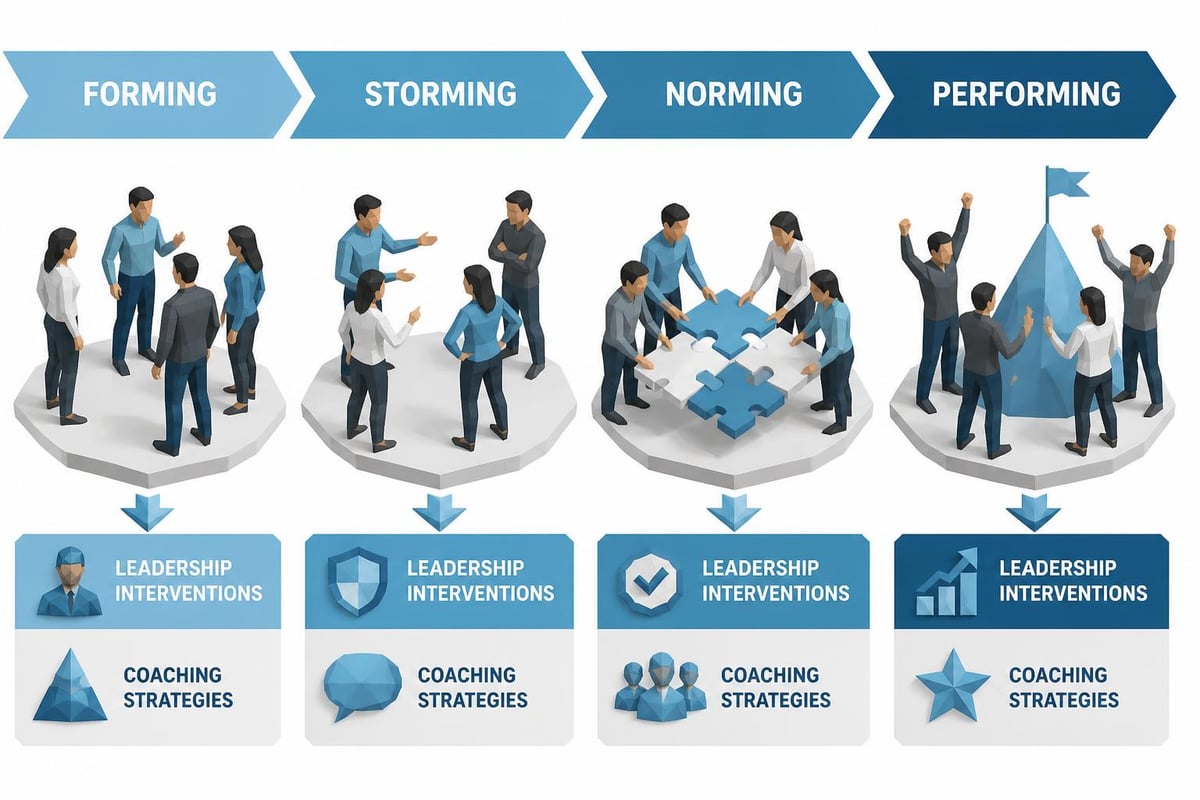
Team development stages framework

Strategic Frameworks to Team Develop Successfully

Organizations achieve superior results when they apply systematic frameworks rather than ad-hoc training efforts. The most effective approaches combine assessment, targeted intervention, skill building, and continuous reinforcement. This structured methodology ensures development initiatives align with business objectives and produce quantifiable outcomes.

Assessment-Driven Development Planning

Comprehensive assessment identifies precise capability gaps, behavioral patterns, and systemic obstacles limiting team performance. Organizations should evaluate both individual competencies and collective team dynamics using validated instruments. These assessments reveal hidden friction points, communication breakdowns, and unrecognized strengths that inform development priorities.

Leadership diagnostics examine decision-making patterns, emotional intelligence, conflict management approaches, and strategic thinking capabilities. Team assessments measure trust levels, role clarity, accountability mechanisms, and collaborative effectiveness. The combination provides complete visibility into development needs across the organization.

Assessment Type Focus Areas Primary Benefits
Individual Leadership Decision-making, emotional intelligence, strategic thinking Personalized development plans
Team Dynamics Trust, communication, accountability Targeted intervention design
Organizational Culture Values alignment, psychological safety System-level improvements
Performance Metrics KPIs, productivity, quality standards ROI measurement capability

Precision Coach Matching for Maximum Impact

Generic coaching approaches fail to address specialized challenges facing technical teams, executive groups, or cross-functional units. Matching team leaders with coaches possessing relevant sector expertise and proven track records in specific development areas dramatically increases program effectiveness. Organizations benefit from leadership and executive coaching partnerships that understand industry dynamics and regulatory contexts.

The matching process considers leadership style, developmental goals, team composition, organizational culture, and strategic priorities. Coaches with experience addressing similar challenges accelerate progress by applying proven methodologies rather than experimental approaches. This precision ensures development investments deliver measurable returns within defined timeframes.

Building Core Competencies That Transform Teams

Teams require specific competencies to perform at exceptional levels consistently. Development programs must systematically build these capabilities through structured learning, deliberate practice, and ongoing coaching support. Organizations that team develop around core competencies create sustainable competitive advantages.

Communication Excellence Across Channels

Effective communication transcends simple information exchange. High-performing teams master active listening, constructive feedback delivery, conflict de-escalation, and persuasive stakeholder engagement. Development programs should address both verbal and written communication, formal and informal channels, and internal and external interactions.

Critical communication competencies include:

  • Delivering feedback that motivates improvement without triggering defensiveness
  • Facilitating productive meetings that drive decisions and accountability
  • Navigating difficult conversations about performance, priorities, or resource constraints
  • Tailoring messages for diverse audiences with varying technical knowledge
  • Building rapport across cultural and generational differences

Organizations often overlook the communication challenges specific to their industry or operational model. Government agencies require transparency and compliance-focused communication. Technology companies need rapid information sharing across distributed teams. Manufacturing environments demand clarity in safety-critical contexts. Best practices in team development emphasize customizing communication training to organizational realities.

Psychological Safety and Trust Building

Teams perform best when members feel safe taking interpersonal risks, sharing dissenting opinions, and admitting mistakes without fear of punishment or embarrassment. Psychological safety in the workplace directly correlates with innovation, learning, and performance outcomes. Leaders must intentionally cultivate environments where vulnerability strengthens rather than undermines professional standing.

Development initiatives should equip leaders with specific behaviors that build psychological safety. This includes modeling vulnerability, responding productively to bad news, framing work as learning problems rather than execution problems, and demonstrating curiosity about different perspectives. Teams with high psychological safety identify problems earlier, experiment more frequently, and recover from setbacks faster than teams operating in fear-based cultures.
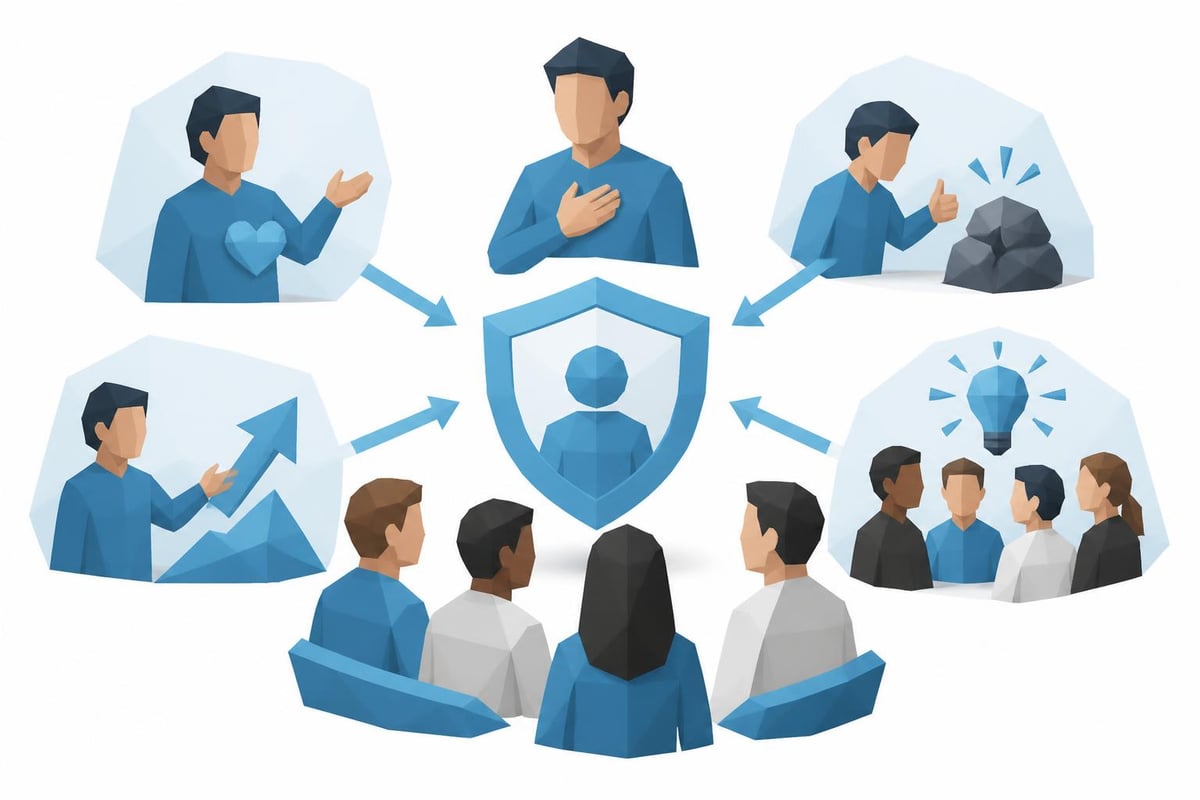
Psychological safety framework

Measuring Development Impact With Precision

Organizations require concrete evidence that investments to team develop generate tangible returns. Measurement frameworks should capture both leading indicators of behavioral change and lagging indicators of business impact. This dual focus demonstrates program effectiveness while enabling course corrections before problems compound.

Key Performance Indicators for Team Development

Effective measurement systems track multiple dimensions of team performance over time. Quantitative metrics provide objective baselines and progress markers. Qualitative assessments capture nuanced improvements in collaboration quality, decision-making sophistication, and cultural health.

Essential metrics across development programs:

  1. Engagement scores measured through validated surveys tracking commitment and satisfaction
  2. Retention rates comparing turnover before and after interventions
  3. Productivity metrics specific to team deliverables and efficiency measures
  4. Quality indicators including error rates, rework percentages, and customer satisfaction
  5. Innovation outputs such as ideas generated, experiments conducted, or improvements implemented
  6. Leadership advancement tracking promotions and expanded responsibilities
  7. Cultural health assessing trust, collaboration, and psychological safety levels

Research on team training effectiveness demonstrates that organizations using comprehensive measurement systems achieve significantly better outcomes than those relying solely on participant satisfaction ratings. The rigor applied to measurement directly influences program quality and organizational commitment to ongoing development.

Translating Metrics Into Strategic Insights

Data collection alone creates minimal value. Organizations must analyze patterns, identify correlations, and extract actionable insights that inform future development decisions. This analytical capability separates sophisticated development functions from administrative training departments.

Analysis should examine which interventions produce the strongest results for specific team types, leadership levels, or developmental challenges. Organizations discover that certain coaching approaches work exceptionally well for technical teams but prove less effective for sales organizations. Some assessment tools predict leadership success accurately in stable environments but fail during periods of rapid change.

Development Phase Measurement Focus Decision Points
Pre-Intervention Baseline capabilities, current performance Investment prioritization
During Program Skill acquisition, behavioral changes Real-time adjustments
Immediate Post Knowledge retention, satisfaction Program refinement
6-Month Follow-Up Behavior sustainability, performance impact ROI validation
Annual Review Cultural shifts, business outcomes Strategic planning

Addressing Common Team Development Challenges

Organizations attempting to team develop encounter predictable obstacles that derail initiatives or dilute results. Anticipating these challenges and implementing mitigation strategies significantly increases success probability. Leadership coaching provides the expertise needed to navigate complex development scenarios effectively.

Overcoming Resistance to Change

Team members frequently resist development initiatives, viewing them as criticism of current performance or additional burdens on already-stretched schedules. Leaders must frame development as investment in career growth and organizational success rather than remedial intervention. Transparent communication about development objectives, expected commitments, and potential benefits reduces resistance substantially.

Involving team members in development planning increases buy-in and ensures initiatives address real needs rather than perceived problems. When teams help design their development journey, they take ownership of outcomes and hold each other accountable for applying new capabilities. This participatory approach transforms development from something imposed by management into a team-driven improvement process.

Managing Time Constraints and Competing Priorities

Organizations struggle to allocate sufficient time for development activities amid operational demands. This challenge becomes particularly acute during high-pressure periods when development would deliver the greatest value. Leadership teams must establish development as a strategic priority reflected in resource allocation, calendar protection, and performance expectations.

Practical strategies for protecting development time:

  • Schedule development activities during strategic planning cycles
  • Integrate skill practice into regular team activities rather than separate sessions
  • Use brief, focused interventions that respect time constraints
  • Leverage technology for asynchronous learning and flexible engagement
  • Demonstrate leadership commitment through consistent participation

Organizations that treat development as discretionary inevitably sacrifice it when pressures mount. Building development into operational rhythms and accountability systems ensures consistency despite changing circumstances.

Sustaining Momentum Beyond Initial Interventions

The most significant challenge facing efforts to team develop involves sustaining behavioral changes after formal programs conclude. Research indicates that without reinforcement mechanisms, participants revert to previous behaviors within weeks of completing training. Organizations must design sustainability systems that embed new capabilities into daily operations.

Sustainability requires multiple reinforcement mechanisms working in concert. Coaching provides ongoing support as leaders encounter real-world application challenges. Peer accountability structures create social pressure to maintain new behaviors. Performance management systems reward demonstrated capabilities and create consequences for reverting to ineffective patterns. Interventions that improve team effectiveness consistently include structured follow-up components that sustain initial gains.
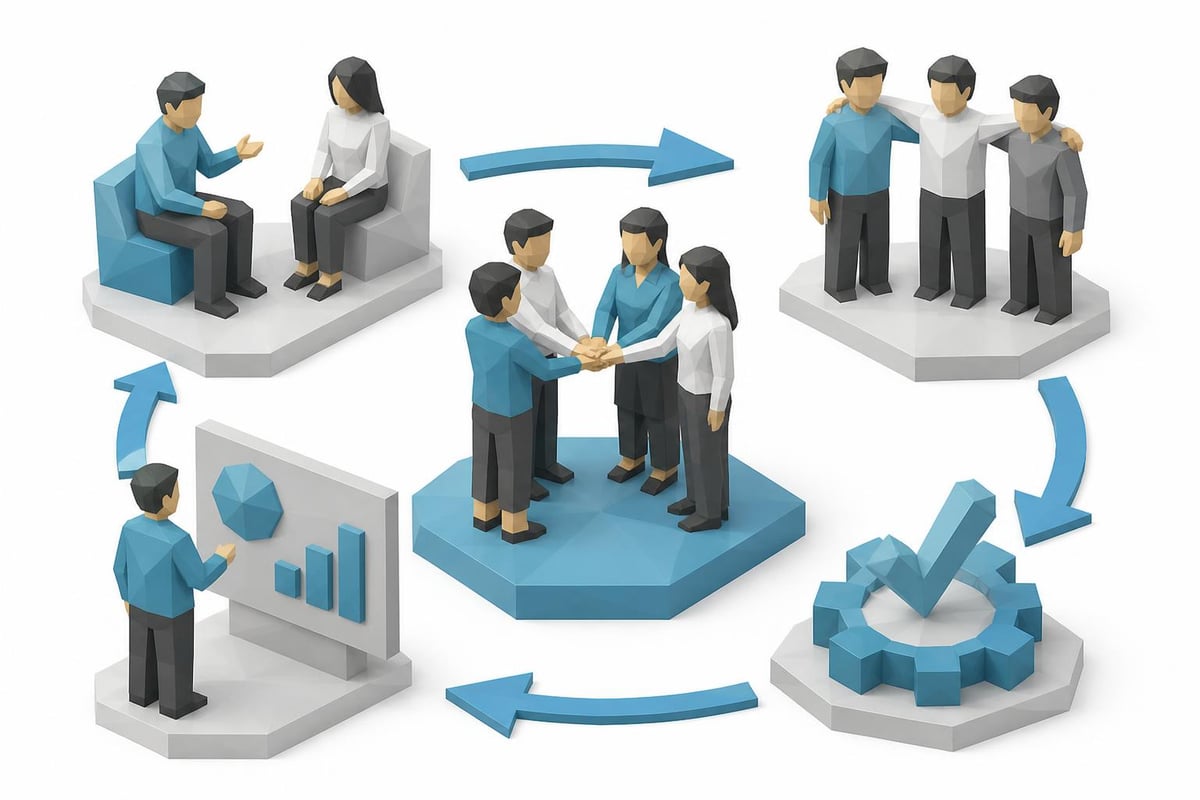
Development sustainability model

Scaling Development Across Growing Organizations

As organizations expand, maintaining consistent development quality across multiple teams and locations presents significant challenges. Scalable approaches preserve development effectiveness while accommodating growth and geographic dispersion. Leadership coaching networks provide the infrastructure needed to deliver consistent experiences regardless of team size or location.

Building Internal Development Capabilities

Organizations maximize long-term value by developing internal coaching and facilitation capabilities alongside external partnerships. Internal coaches understand organizational culture, political dynamics, and specific business challenges with depth external providers cannot match. However, internal resources require training, supervision, and protected time to develop teams effectively.

Hybrid models combining internal and external resources optimize both cost-efficiency and impact. External coaches handle sensitive situations, executive-level interventions, and specialized technical challenges. Internal coaches manage ongoing skill development, team facilitation, and culture reinforcement. This division of responsibility ensures appropriate resource allocation while building sustainable capabilities.

Technology-Enabled Development at Scale

Digital platforms enable organizations to team develop across geographic boundaries and time zones. Video conferencing, collaborative workspaces, and learning management systems create consistent experiences for distributed teams. However, technology alone cannot replicate the impact of skilled coaching and facilitation. Organizations must thoughtfully integrate technology with human expertise.

The most effective scaled development programs use technology for content delivery, asynchronous learning, and progress tracking while preserving high-touch coaching for complex challenges. This blended approach balances efficiency with effectiveness, ensuring teams receive appropriate support regardless of location or size.

Integrating Development With Organizational Strategy

Isolated development initiatives produce limited value compared to programs aligned with strategic priorities and business objectives. When efforts to team develop directly support strategic goals, leadership commits resources, participants engage seriously, and outcomes receive appropriate recognition. This alignment transforms development from an HR activity into a strategic capability.

Connecting Team Capabilities to Business Outcomes

Organizations should map required team capabilities to specific business objectives, identifying gaps that limit strategic execution. This analysis reveals which development investments deliver the highest strategic returns. For example, companies pursuing innovation strategies require teams skilled in experimentation, creative problem-solving, and rapid learning from failure. Organizations focused on operational excellence need teams mastering process optimization, quality management, and continuous improvement.

Development planning begins with strategic objectives rather than generic competency models. This approach ensures initiatives address actual business needs and produce measurable contributions to organizational success. Leadership coaching helps translate abstract strategies into concrete capability requirements and development roadmaps.

Strategic alignment process:

  1. Identify key strategic priorities for the next 12-24 months
  2. Define team capabilities required to execute each priority successfully
  3. Assess current capability levels against requirements
  4. Prioritize development initiatives based on strategic impact and gap size
  5. Design interventions targeting highest-priority capabilities
  6. Establish metrics linking capability growth to business outcomes
  7. Review and adjust based on strategic shifts and results

Governance and Compliance Considerations

Regulated industries and government agencies face additional complexity when designing programs to team develop. Development initiatives must align with compliance requirements, ethical standards, and governance frameworks. Leadership coaching in these environments requires expertise navigating regulatory constraints while delivering meaningful development.

Organizations operating under strict oversight benefit from development approaches that explicitly address compliance obligations, ethical decision-making, and risk management. These programs demonstrate how leaders can achieve objectives within established boundaries rather than viewing compliance as obstacles to performance. Addressing toxic leadership patterns becomes particularly critical in regulated environments where leadership failures create legal, financial, and reputational risks.

Creating Development-Focused Leadership Cultures

Organizations achieve sustainable competitive advantage when development becomes embedded in leadership culture rather than remaining a periodic program. This transformation requires intentional culture-building efforts, leadership modeling, and systemic reinforcement. Companies with development-focused cultures attract superior talent, adapt faster to market changes, and maintain performance through disruption.

Leadership Modeling and Accountability

Senior leaders set the tone for organizational commitment to development through their visible participation and personal growth efforts. When executives engage seriously with coaching, share development experiences, and demonstrate vulnerability about growth areas, they signal that development matters at all levels. This modeling creates psychological safety for others to embrace development opportunities.

Leadership accountability systems should include development metrics alongside operational and financial performance measures. When promotion decisions, compensation outcomes, and recognition programs reward demonstrated growth and team development contributions, leaders prioritize these activities despite competing demands. Organizations serious about development make it a non-negotiable expectation for leadership roles.

Building Communities of Practice

Communities of practice accelerate development by creating peer learning networks where leaders share challenges, exchange insights, and support each other's growth. These communities supplement formal coaching with ongoing peer coaching, collective problem-solving, and shared accountability. Organizations that team develop through community models create self-sustaining development ecosystems requiring less formal program infrastructure.

Effective communities require careful design, facilitation support, and organizational endorsement. They function best when members share common challenges, possess complementary expertise, and commit to regular participation. Leadership coaching helps communities establish productive norms, navigate conflicts, and maintain focus on meaningful development rather than devolving into complaint sessions.

Leveraging External Expertise for Accelerated Development

While internal capabilities provide important value, external coaching partnerships deliver specialized expertise, fresh perspectives, and proven methodologies that accelerate development timelines. Organizations benefit from strategic relationships with coaching networks possessing deep experience across industries, team types, and developmental challenges. Resources that help teams understand formation processes complement internal knowledge with external research and best practices.

When to Engage External Coaches

External coaches prove particularly valuable during leadership transitions, organizational restructuring, rapid growth phases, and crisis situations. These high-stakes scenarios demand expertise navigating complex dynamics with speed and precision. External coaches bring objectivity unconstrained by internal politics and relationships that sometimes limit internal resources.

Organizations should also engage external coaches for specialized challenges requiring specific expertise. Addressing toxic leadership, building cross-cultural teams, developing agile capabilities, or implementing large-scale transformations benefits from coaches with relevant specialized experience. Generic approaches prove insufficient for these complex developmental needs.

Maximizing Return on Coaching Investments

Organizations maximize coaching ROI through careful coach selection, clear objective-setting, and rigorous progress tracking. Precision matching between coach expertise and developmental challenges ensures appropriate resource allocation. Well-defined success criteria enable objective evaluation of coaching impact and inform future investment decisions.

Coaching engagements should include structured accountability mechanisms, milestone reviews, and stakeholder involvement. These elements maintain focus on agreed objectives and enable course corrections when progress stalls. The combination of expert coaching, structured processes, and organizational support creates conditions for transformative development outcomes that justify premium investments.


The capacity to systematically team develop determines organizational success in increasingly competitive and complex business environments. By combining evidence-based frameworks, precision coaching partnerships, and rigorous measurement systems, companies transform development from generic training into strategic capability building that drives measurable business results. Organizations ready to elevate team performance through structured development initiatives can accelerate their journey by partnering with Noomii Leadership Coaching, which delivers tailored solutions aligned with strategic objectives and compliance requirements. For additional frameworks and accountability systems that complement leadership development, explore resources at AccountabilityNow to reinforce the behavioral changes that sustain high performance.

Construction Site Manager Course: Building Better Leaders

The construction industry faces a critical leadership gap in 2026, with skilled site managers becoming increasingly difficult to find and retain. A construction site manager course offers more than technical expertise-it builds the leadership foundation necessary to drive projects forward, manage diverse teams, and deliver measurable results under pressure. For mid-market construction firms and project divisions, investing in structured site manager education represents a strategic decision that directly impacts project timelines, budget adherence, and team performance.
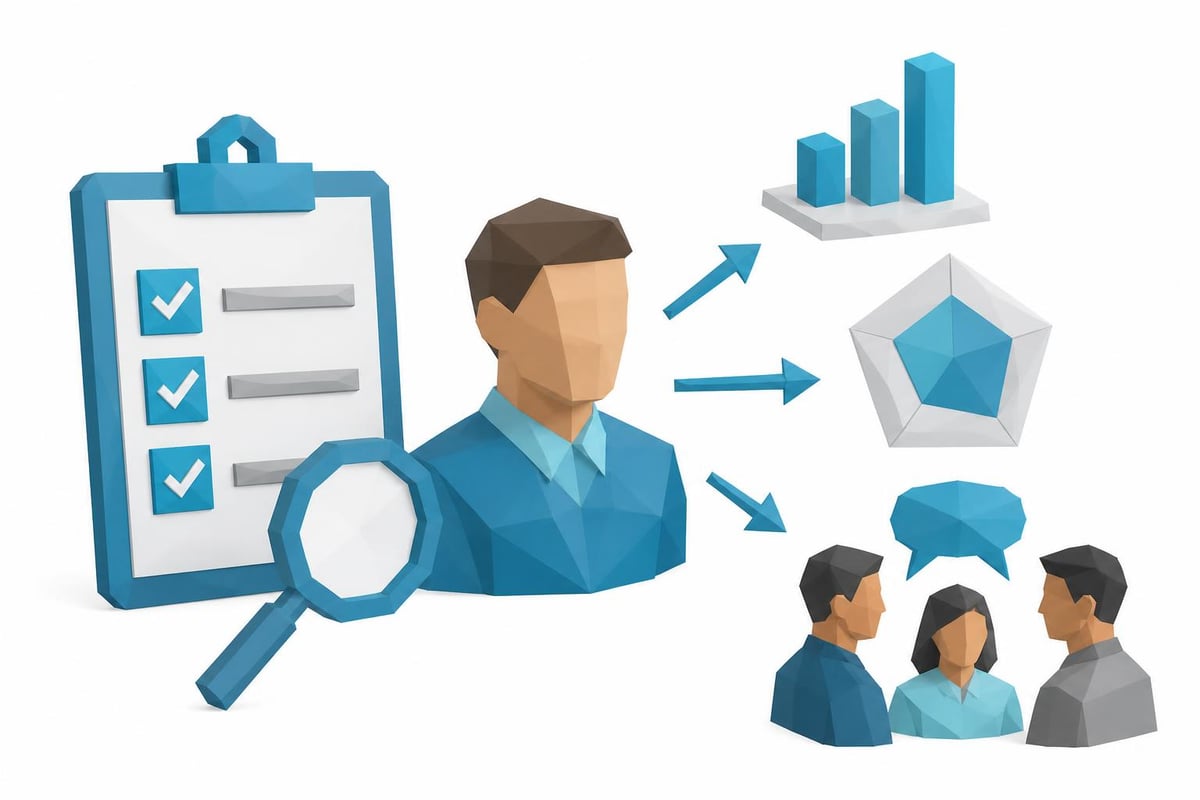
Why Traditional Construction Site Manager Training Falls Short

Most construction site manager course offerings focus heavily on certifications, software proficiency, and regulatory compliance. While these elements matter, they represent only a fraction of what makes an effective site manager. The real challenge lies in developing leadership capabilities that translate technical knowledge into team performance.
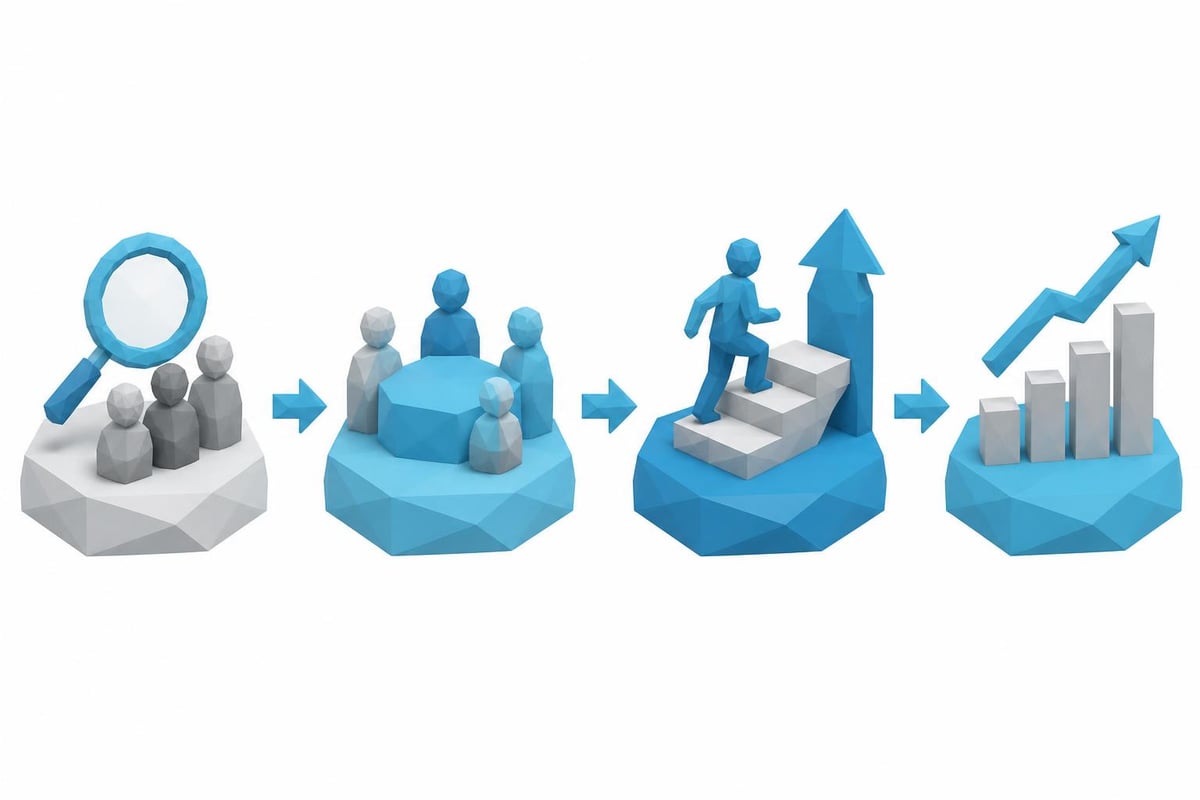
Many programs teach theory without application. Site managers learn about scheduling software but never practice difficult conversations with subcontractors. They study budget management but lack frameworks for holding teams accountable to cost targets. This disconnect creates managers who understand processes but struggle to lead people.

Gap between technical training and leadership skills

The Leadership Component Missing from Most Programs

Effective site management requires a blend of technical competency and people leadership. According to research on site manager responsibilities, successful professionals must coordinate multiple stakeholders, make rapid decisions with incomplete information, and maintain team morale under challenging conditions.

Key leadership gaps in standard training:

  • Conflict resolution and difficult conversations
  • Performance accountability frameworks
  • Team coaching and development
  • Strategic communication across stakeholder groups
  • Real-time decision-making under pressure

Programs like the UCLA Extension construction site project management course cover comprehensive project management tools, yet even these established programs dedicate limited time to the interpersonal dynamics that determine project success or failure.

Building Accountable Site Leaders Beyond Certification

A construction site manager course becomes transformational when it integrates leadership development with technical training. This means moving beyond classroom learning to experiential coaching that happens in real project environments.

What Effective Leadership Development Looks Like

Traditional Training Leadership-Integrated Approach
Classroom theory sessions Live coaching during team meetings
Case study analysis Real-time decision coaching
Software demonstrations KPI scorecard implementation
Generic best practices Custom accountability frameworks
Certificate completion Measurable performance outcomes

The most effective approach combines structured education with ongoing coaching support. Site managers need frameworks they can apply immediately, not concepts they'll struggle to implement months later.

Consider how Noomii approaches leadership development for construction and project-based companies. Rather than delivering generic management training, coaches work directly in team meetings, helping managers practice accountability conversations, refine communication patterns, and build measurable leadership capabilities tied to project KPIs.

Essential Skills Every Construction Site Manager Course Should Include

The Associated General Contractors of America construction project manager course provides detailed modules on technical competencies, but the leadership skills deserve equal emphasis in any comprehensive program.

Core Leadership Competencies

  1. Accountability Systems: Building scorecards that track team performance against clear metrics
  2. Communication Frameworks: Delivering concise updates to executives, trades, and clients
  3. Conflict Navigation: Addressing safety concerns, schedule conflicts, and quality disputes
  4. Team Development: Coaching foremen and crew leaders to elevate their performance
  5. Decision Velocity: Making informed choices quickly when delays cost thousands per day

Beyond these fundamentals, site managers benefit tremendously from understanding psychological safety in workplace environments. Construction sites involve inherent risks, and teams perform best when members feel comfortable raising safety concerns, admitting mistakes, and proposing alternative approaches without fear of retaliation.

The ROI of Leadership-Focused Training

Construction companies that invest in leadership development alongside technical training see measurable returns. Projects move faster when managers make confident decisions. Rework decreases when communication improves. Retention increases when crew members feel coached rather than commanded.

Measurable outcomes from integrated leadership development:

  • 15-25% reduction in project delays through faster decision-making
  • 20-30% improvement in safety incident reporting and prevention
  • 10-20% decrease in turnover among skilled trades and supervisors
  • 25-40% improvement in client satisfaction scores
  • Stronger execution against budget and timeline commitments

Choosing the Right Construction Site Manager Course for Your Team

Evaluation criteria for construction management training

Selection criteria extend beyond course content to delivery format, time commitment, and post-training support. The New York Real Estate Institute construction project management certificate offers comprehensive training for aspiring general contractors, while UCLA’s fundamentals of construction management provides broader foundational knowledge.

Evaluation Framework

When assessing a construction site manager course for your organization, consider these dimensions:

  1. Curriculum Balance: Does it address both technical and leadership competencies?
  2. Application Methodology: Will managers practice skills in real project environments?
  3. Measurement Systems: How will you track behavioral change and business outcomes?
  4. Flexibility: Does the format accommodate working professionals on active sites?
  5. Support Duration: Does coaching extend beyond classroom completion?

For construction companies with 25-500 employees, the most effective approach often combines formal education with embedded coaching. Site managers complete structured coursework while receiving real-time coaching support during their actual project work. This dual approach, similar to how resources like AccountabilityNow integrate ongoing accountability into development programs, ensures learning transfers immediately into performance improvement.

Integration with Corporate Coaching Programs

Progressive construction firms recognize that a construction site manager course represents one component of broader leadership development strategy. Site managers who complete training perform best when supported by coaching systems that reinforce new behaviors and hold them accountable to growth.

Building a Comprehensive Development System

Component Purpose Timeline
Formal Course Technical and leadership foundations 3-6 months
Live Coaching Skill application in real meetings 6-12 months
360 Assessments Measure behavioral change Quarterly
KPI Scorecards Track business impact Monthly
Peer Learning Share challenges and solutions Ongoing

This integrated approach transforms how managers lead. Rather than completing a course and reverting to old habits, they receive continuous reinforcement and accountability. The result: sustained behavior change that drives measurable business results.

Companies implementing this model report faster project decisions, stronger team communication, and cleaner execution across competing priorities. Site managers develop into leaders who coach their teams rather than simply directing tasks.

Understanding how career coaching works provides valuable context for construction firms considering integrated development approaches. The principles of clarifying goals, building accountability, and measuring progress apply equally whether coaching individual career transitions or developing construction site leadership capabilities.


Developing exceptional construction site managers requires more than technical certification-it demands integrated leadership development that builds accountability, communication, and decision-making capabilities. For mid-market construction companies seeking measurable improvements in project performance and team retention, combining structured training with live coaching delivers superior outcomes. Noomii Corporate Coaching helps construction and project-based companies build accountable leaders who drive faster decisions, stronger execution, and measurable ROI through practical coaching embedded directly in your operations-month to month, with no long contracts and results you can track.

Coach of a Team: Leadership Development Strategies

The role of a coach of a team extends far beyond traditional management approaches. In today's complex organizational landscape, effective team coaching requires strategic insight, behavioral expertise, and the ability to navigate intricate group dynamics while driving measurable business outcomes. Organizations that invest in structured team coaching report higher engagement levels, improved decision-making capabilities, and stronger alignment between individual contributions and strategic objectives. The distinction between managing a team and coaching one lies in the fundamental approach: management focuses on task completion while coaching develops capability, resilience, and self-directed performance.
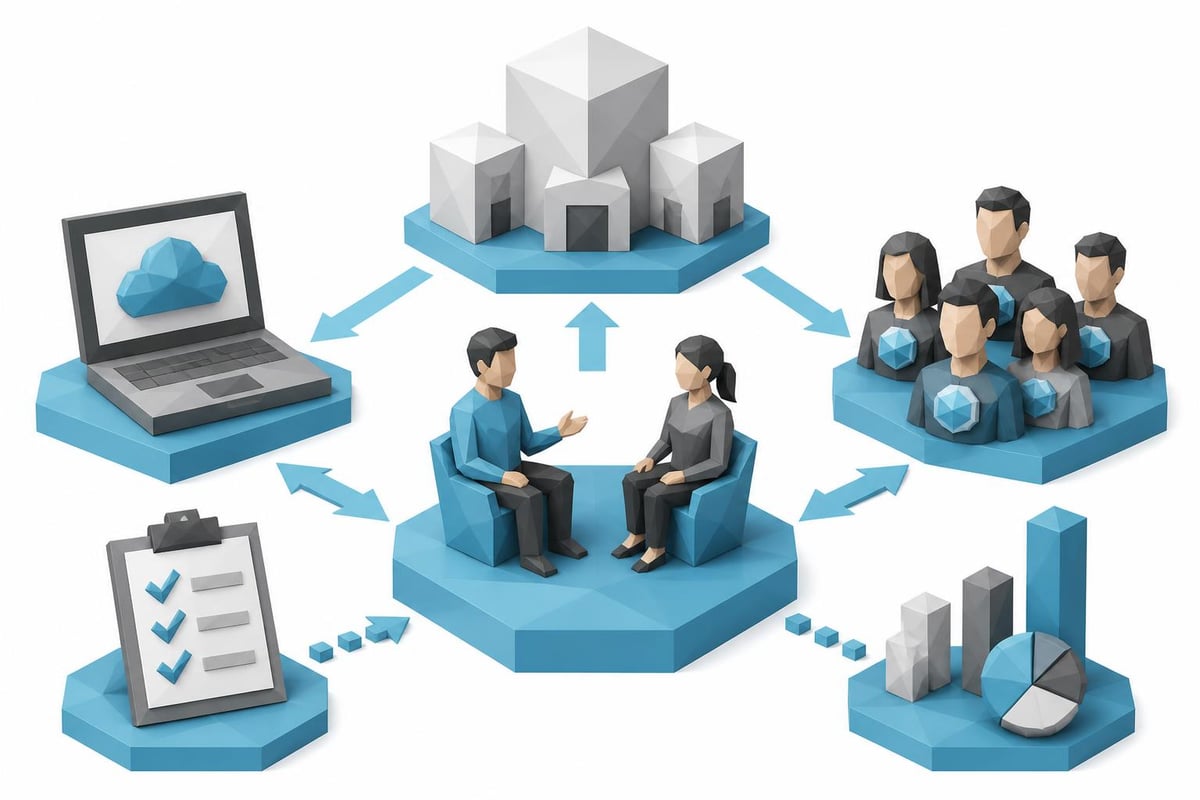
The Strategic Value of Team Coaching in Modern Organizations

Corporate leadership teams face unprecedented challenges in 2026. The coach of a team must address hybrid work dynamics, generational diversity, technological disruption, and increasing demands for transparency and ethical leadership. These pressures require more than administrative oversight; they demand transformative coaching that reshapes how teams think, collaborate, and execute.

Organizations implementing team coaching programs that drive sustainable results report significant improvements in key performance indicators. Research demonstrates that teams receiving structured coaching interventions show 32% higher productivity and 47% better retention rates compared to those relying solely on traditional management structures.

The business case for investing in a coach of a team becomes evident when examining Fortune 500 performance data. Companies with established team coaching frameworks consistently outperform competitors in innovation metrics, employee satisfaction scores, and market responsiveness.

Defining the Coach of a Team Role

A coach of a team operates at the intersection of psychology, business strategy, and organizational development. This role encompasses several critical functions:

  • Diagnostic Assessment: Identifying behavioral patterns, communication gaps, and structural inefficiencies that impede team performance
  • Capability Building: Developing individual and collective skills that enhance problem-solving, decision-making, and collaboration
  • Accountability Systems: Creating frameworks that ensure follow-through on commitments and measurable progress toward objectives
  • Cultural Alignment: Ensuring team behaviors reflect organizational values and strategic priorities
  • Conflict Navigation: Facilitating productive resolution of interpersonal tensions and competing priorities

The coach of a team must maintain objectivity while building trust, challenge existing assumptions while preserving psychological safety, and drive results while supporting individual growth trajectories.

Team coaching assessment framework

Evidence-Based Approaches to Team Coaching

The most effective team coaching interventions rely on validated assessment methodologies and data-driven insights. A coach of a team should begin every engagement with comprehensive diagnostics that establish baseline metrics across multiple dimensions.

Assessment Categories for Team Effectiveness

Assessment Area Key Metrics Business Impact
Communication Patterns Response times, message clarity, feedback frequency Reduces project delays by 28%
Decision-Making Quality Decision speed, stakeholder alignment, outcome accuracy Improves strategic execution by 35%
Psychological Safety Speaking-up behaviors, risk-taking, innovation attempts Increases creative solutions by 41%
Role Clarity Responsibility understanding, boundary definition, handoff efficiency Decreases redundancy by 23%
Accountability Adherence Commitment follow-through, deadline compliance, ownership behaviors Enhances delivery predictability by 38%

Understanding the dynamics of team coaching requires recognizing that teams operate as complex adaptive systems. Every intervention creates ripple effects throughout the organizational network. The skilled coach of a team anticipates these consequences and designs interventions that strengthen rather than disrupt existing productive patterns.

Implementing Precision Coach Matching

Not every coach is suited for every team. The concept of precision matching recognizes that coaching effectiveness depends on alignment between the coach's expertise, the team's specific challenges, and the organizational context.

Critical matching criteria include:

  1. Industry Experience: Coaches with direct sector knowledge understand regulatory constraints, market dynamics, and competitive pressures
  2. Challenge Specialization: Specific expertise in areas such as conflict resolution, strategic planning, or performance optimization
  3. Cultural Competence: Ability to navigate organizational culture, leadership style preferences, and communication norms
  4. Methodology Alignment: Coaching approach compatibility with existing development frameworks and learning preferences
  5. Outcome Focus: Track record delivering measurable results in similar organizational contexts

When organizations match teams with appropriately specialized coaches, they see 67% faster progress toward development objectives and 53% higher satisfaction with coaching outcomes.

Building Targeted Intervention Plans

Generic coaching programs deliver generic results. The effective coach of a team develops customized intervention plans that address specific performance gaps while leveraging existing strengths. This requires thorough diagnosis, stakeholder input, and clear success criteria.

Structuring Effective Coaching Interventions

Phase 1: Discovery and Diagnosis (Weeks 1-3)

The coach of a team conducts individual interviews, observes team interactions, reviews performance data, and administers validated assessments. This phase identifies root causes rather than surface symptoms.

Phase 2: Design and Alignment (Weeks 4-5)

Based on diagnostic findings, the coach develops specific interventions addressing identified gaps. Stakeholders review and approve the coaching plan, ensuring alignment with organizational priorities and available resources.

Phase 3: Implementation and Practice (Weeks 6-20)

Teams engage in structured coaching sessions, skill-building exercises, and real-world application of new approaches. The coach of a team provides observation, feedback, and course corrections throughout this intensive development period.

Phase 4: Measurement and Sustainment (Weeks 21-26)

Final assessments measure progress against baseline metrics. The coach transitions from active intervention to periodic reinforcement, ensuring new behaviors become embedded practices.

Organizations seeking to establish psychological safety in workplace environments find that structured coaching interventions create the foundation for open communication and productive risk-taking.

Team coaching intervention phases

Addressing Toxic Leadership and Dysfunction

The coach of a team often confronts difficult behavioral patterns that undermine organizational effectiveness. Toxic leadership manifests in multiple forms: micromanagement that stifles initiative, favoritism that breeds resentment, blame cultures that prevent learning, and inconsistent standards that create confusion.

Intervention Strategies for Toxic Patterns

Micromanagement Correction

  • Establish clear decision rights and authority boundaries
  • Implement structured delegation protocols with defined check-in points
  • Develop leader self-awareness around control tendencies and underlying anxieties
  • Create accountability systems that don't require constant oversight

Trust Rebuilding After Betrayal

When leaders violate trust through dishonesty, favoritism, or broken commitments, the coach of a team must facilitate a structured repair process. This includes acknowledgment of harm, demonstration of changed behavior, and gradual restoration of confidence through consistent actions.

The repair timeline extends significantly longer than the initial damage. Research indicates that rebuilding trust requires five positive interactions for every negative experience, and complete restoration may take 6-18 months depending on severity.

Conflict Resolution Frameworks

High-performing teams don't avoid conflict; they navigate it productively. The coach of a team teaches structured approaches to disagreement that preserve relationships while reaching sound decisions. Effective coaching practices emphasize curiosity over judgment, interest-based problem-solving over positional bargaining, and systemic thinking over blame assignment.

Measuring Coaching Impact and ROI

Executive leadership demands evidence of return on investment for all development initiatives. The coach of a team must establish clear metrics, track progress systematically, and demonstrate tangible organizational benefits.

Key Performance Indicators for Team Coaching

Individual Development Metrics

  • Leadership competency scores across validated assessment dimensions
  • 360-degree feedback improvements from direct reports, peers, and supervisors
  • Behavioral change frequency measured through observation protocols
  • Goal achievement rates for personal development objectives

Team Performance Metrics

  • Project delivery timeline adherence and budget compliance
  • Quality metrics including error rates, rework frequency, and client satisfaction
  • Innovation indicators such as new ideas generated and implemented
  • Collaboration efficiency measured through meeting effectiveness and decision speed

Organizational Impact Metrics

  • Employee engagement scores within coached teams versus organizational baseline
  • Retention rates for team members and the team as a cohesive unit
  • Promotion rates indicating leadership pipeline development
  • Revenue or cost impact attributable to improved team performance

Organizations implementing comprehensive measurement frameworks report 89% satisfaction with coaching investments compared to 43% satisfaction when relying on subjective assessments alone.

The effective coach of a team translates behavioral improvements into business language. Rather than reporting "better communication," they demonstrate "23% reduction in project delays caused by miscommunication." This translation makes the abstract concrete and the subjective measurable.

Scalable Solutions for Enterprise Organizations

Fortune 500 companies and government agencies require coaching solutions that maintain quality while serving hundreds or thousands of leaders simultaneously. The coach of a team working at enterprise scale must leverage technology, standardized methodologies, and networked expertise.

Building Coaching Infrastructure

Technology-Enabled Coaching Platforms

Modern team coaching relies on digital infrastructure that facilitates scheduling, progress tracking, resource distribution, and outcome measurement. These platforms enable:

  • Automated assessment administration and scoring
  • Secure communication channels for confidential coaching conversations
  • Progress dashboards providing real-time visibility to stakeholders
  • Resource libraries offering just-in-time learning materials
  • Analytics engines identifying patterns across coaching engagements

Standardized Methodologies with Customization Flexibility

Enterprise coaching programs balance consistency and customization. The coach of a team applies core frameworks proven effective across contexts while adapting specific tactics to unique circumstances. This approach ensures quality control while respecting organizational diversity.

Network Effects Through Coach Communities

Organizations building internal coaching networks or partnering with external coaching providers benefit from knowledge sharing across the coach community. When coaches collaborate, they accelerate problem-solving, avoid reinventing solutions, and elevate collective expertise.

Harnessing the power of team coaching at scale requires intentional design of these supporting systems and structures.

Enterprise team coaching ecosystem

Compliance and Governance Considerations

Government agencies and regulated industries face unique constraints when implementing team coaching. The coach of a team must navigate confidentiality requirements, documentation standards, procurement regulations, and ethical guidelines while delivering effective development interventions.

Regulatory Alignment Strategies

Confidentiality Protocols

Coaching conversations require psychological safety, which depends on appropriate confidentiality boundaries. However, organizational settings create competing obligations around transparency and accountability.

Best practice frameworks establish clear guidelines:

  • Individual coaching content remains confidential except when required by law or safety concerns
  • Team coaching observations may be shared with sponsors in aggregated, de-identified form
  • Progress reports focus on behavioral changes and outcomes rather than conversation details
  • Informed consent processes clarify confidentiality boundaries before coaching begins

Documentation and Record Retention

Organizations must balance thorough documentation with privacy protection. The coach of a team maintains records that demonstrate program integrity and effectiveness while protecting sensitive individual information.

Ethical Standards and Professional Boundaries

Professional coaching associations establish ethical codes governing coach behavior. These standards address conflicts of interest, scope of practice limitations, referral obligations, and professional development requirements. Organizations partnering with external coaches should verify adherence to recognized ethical frameworks.

The Future of Team Coaching in Corporate Settings

The profession continues evolving as organizational challenges grow more complex and research reveals new insights about team effectiveness. The coach of a team in 2026 operates differently than coaches did even five years ago, and the trajectory suggests continued transformation.

Emerging Trends Reshaping Team Coaching

Remote and hybrid team dynamics require new coaching approaches that account for reduced spontaneous interaction, technology-mediated communication challenges, and distributed decision-making. The coach of a team must develop expertise in virtual facilitation, asynchronous collaboration, and digital team culture.

Artificial intelligence tools are augmenting coaching by providing real-time feedback on communication patterns, predicting team dynamics risks, and personalizing development recommendations. While technology enhances capability, the human judgment and relational depth provided by skilled coaches remains irreplaceable.

Neuroscience research continues revealing how teams learn, make decisions, and respond to stress. The coach of a team increasingly incorporates brain-based insights into intervention design, helping teams work with rather than against their neurological patterns.

Diversity, equity, and inclusion imperatives demand that coaches address systemic barriers and unconscious biases that limit team effectiveness. The modern coach of a team recognizes how power dynamics, cultural assumptions, and historical patterns shape current interactions.

Developing Internal Coaching Capability

Forward-thinking organizations build internal coaching capability rather than relying exclusively on external resources. This approach offers several advantages:

  • Lower long-term costs as internal coaches serve multiple teams over extended periods
  • Greater organizational context knowledge enabling faster diagnosis and more relevant interventions
  • Cultural reinforcement as coaching becomes embedded in leadership practice rather than episodic intervention
  • Scalability allowing coaching to reach lower organizational levels economically

However, internal coaching programs face challenges including boundary management, credibility establishment, and resource allocation. The hybrid model combining internal coaching capability with external expertise for specialized situations often delivers optimal results.

Organizations can learn from structured team coaching programs when designing their internal capability development initiatives.

Integration with Leadership Development Ecosystems

Team coaching delivers maximum value when integrated with broader leadership development systems rather than implemented as standalone intervention. The coach of a team should connect coaching work to succession planning, performance management, strategic planning, and organizational design initiatives.

Creating Developmental Synergies

Performance Management Alignment

Team coaching reinforces performance management by translating organizational objectives into team-level goals and individual development priorities. When the coach of a team aligns coaching focus with performance priorities, leaders see direct connection between development activities and career advancement.

Succession Planning Integration

High-potential identification and development represents a critical organizational capability. Team coaching accelerates leadership readiness by providing intensive development experiences that compress learning timelines. Organizations can identify emerging leaders through team coaching engagements and provide targeted development addressing specific readiness gaps.

Strategic Execution Support

Strategy implementation fails more often from execution breakdowns than poor strategy formulation. The coach of a team bridges the gap between strategic intent and operational reality by helping teams translate vision into action, overcome implementation obstacles, and adapt to changing circumstances while maintaining strategic alignment.

Cultural Transformation Catalysts

When organizations pursue significant cultural change, team coaching serves as a primary implementation mechanism. The coach of a team models desired behaviors, challenges inconsistencies between stated values and actual practices, and reinforces new patterns until they become self-sustaining.

The comprehensive approach recognizes that team coaching doesn't exist in isolation but rather operates as one element within an integrated leadership development ecosystem designed to build organizational capability systematically.


Effective team coaching transforms organizational performance by developing leadership capability, strengthening team dynamics, and driving measurable business outcomes. Whether addressing toxic patterns, building collaboration, or accelerating strategic execution, the structured approach of a skilled coach of a team delivers returns that far exceed investment costs. Organizations ready to elevate their leadership development can explore how Noomii Leadership Coaching delivers precision-matched coaching solutions aligned with your strategic priorities. The program combines evidence-based diagnostics, specialized coach expertise, and scalable frameworks that integrate seamlessly with existing development initiatives while ensuring accountability throughout the transformation process.

Google Project Management Course: What Leaders Need to Know

Mid-market companies face a persistent challenge: promoting talented individual contributors into management roles without equipping them with the structured frameworks to lead projects effectively. The Google Project Management Professional Certificate has emerged as a scalable solution for organizations seeking to build foundational project management capabilities across their teams. For companies with 25 to 500 employees, understanding how this credential fits into your broader leadership development strategy is essential before investing time and resources into training programs.

Understanding the Project Management Google Course Structure

The project management Google course consists of six comprehensive courses delivered through Coursera, totaling approximately 180 hours of learning over three to six months. Unlike traditional academic programs, this certificate emphasizes practical application through real-world scenarios and hands-on projects.

Core Curriculum Components

The program covers essential project management methodologies that translate directly to workplace execution:

  • Foundations of project management and organizational structures
  • Initiating projects with stakeholder analysis and goal-setting
  • Planning projects including budgets, timelines, and risk management
  • Executing and closing projects with quality control processes
  • Agile project management principles and Scrum framework implementation
  • Capstone project synthesizing all learned competencies

According to National University’s program overview, learners gain proficiency in industry-standard tools including Asana, Smartsheet, and Tableau alongside fundamental change management principles.

Project management course structure

Business Value for Mid-Market Organizations

For growing companies, the question isn't whether project management skills matter but rather how to develop them efficiently across multiple levels of leadership. The project management Google course offers a standardized baseline that creates common language and methodology across teams.

Measurable Outcomes and ROI Considerations

Time Investment: The self-paced format allows managers to complete coursework without extended absences from daily responsibilities. Most learners finish within four to six months at approximately 10 hours per week.

Cost Efficiency: At under $300 for the complete certificate (with Coursera subscription), the program costs significantly less than traditional MBA courses or multi-day workshops.

Skill Application: The curriculum emphasizes deliverables that mirror actual workplace projects, meaning learners produce artifacts they can immediately implement.

Metric Traditional Training Google PM Course
Duration 2-5 days intensive 3-6 months flexible
Cost $2,000-$5,000 $240-$300
Certification Variable Recognized credential
Practical Application Limited exercises Six applied projects

Organizations evaluating this program should consider how it complements rather than replaces personalized leadership development. While the certificate builds technical competency, psychological safety in workplace dynamics and executive presence require hands-on coaching that online courses cannot deliver.

Integration with Corporate Leadership Development

The most successful deployments of the project management Google course occur when companies integrate the certification into broader leadership pathways rather than treating it as standalone training. Mid-market firms often struggle with the gap between knowledge acquisition and behavioral change.

Combining Certification with Practical Coaching

Smart organizations pair the Google certificate with structured coaching interventions:

  1. Pre-Certification Assessment: Identify specific project management gaps through 360 reviews before enrollment
  2. Concurrent Application: Assign real company projects that align with course modules as learners progress
  3. Post-Certification Integration: Deploy coaches to help managers translate theory into consistent practice within existing operating rhythms

Reviews from independent sources highlight that while the course provides excellent foundational knowledge, translating concepts like stakeholder management and risk mitigation into daily leadership behaviors requires accountability mechanisms beyond self-paced learning.

Certification integration

Comparing Alternatives and Decision Criteria

Before committing to the project management Google course for your team, evaluate how it stacks against alternative approaches based on your specific organizational needs.

When the Google Course Makes Sense

Best fit for:

  • Teams with limited formal project management exposure
  • Organizations standardizing processes across departments
  • Companies building internal promotion pipelines for individual contributors
  • Firms needing recognized credentials for client-facing roles

Less ideal for:

  • Experienced project managers seeking advanced certifications (PMP, PRINCE2)
  • Organizations requiring industry-specific methodology (construction, healthcare IT)
  • Teams needing immediate intervention on failing initiatives

According to comprehensive 2026 reviews, the certificate excels at building breadth across project management fundamentals but doesn't provide the depth required for complex enterprise program management.

Supplementing with Executive Coaching

The technical skills from any project management Google course represent only one dimension of effective leadership. Mid-market companies see the strongest results when they combine structured learning with executive coaching packages that address communication patterns, decision-making frameworks, and accountability systems.

For example, a manager may learn RACI matrix theory through the Google course but struggle to have difficult conversations when roles overlap. Live coaching during actual team meetings addresses these real-world friction points that no online module can fully simulate.

Implementation Roadmap for Organizations

Rolling out the project management Google course effectively requires more than simply purchasing Coursera licenses for your team. Consider this structured approach:

Phase One: Strategic Alignment (Weeks 1-2)

Define which roles genuinely need project management fundamentals versus those requiring more advanced competencies. Not every manager benefits equally from the same training intervention. Link course completion to specific business outcomes like improved on-time delivery rates or reduced scope creep.

Phase Two: Cohort Learning (Months 1-4)

Create internal cohorts that progress through the material together, enabling peer discussion and shared problem-solving. Schedule monthly check-ins where participants present how they've applied concepts to current projects. This social learning component significantly increases completion rates compared to isolated individual study.

Phase Three: Application and Coaching (Months 4-8)

Pair newly certified managers with coaches who observe their project execution in real contexts. Focus coaching on translating Google course frameworks into your company's specific operational cadence, including meeting structures, reporting formats, and KPI scorecards that drive accountability.

Implementation Phase Timeline Key Activities Success Metrics
Strategic Alignment 2 weeks Role mapping, outcome definition Clear eligibility criteria
Cohort Learning 4 months Group progression, peer sharing 80%+ completion rate
Application Coaching 4 months Live observation, feedback Measurable project improvements

Implementation timeline

Addressing Common Concerns and Limitations

Decision-makers often ask whether the project management Google course truly prepares managers for the complexity of mid-market environments. The honest answer requires nuance.

Credential Recognition: While Google's brand carries weight, the certificate doesn't yet command the same universal recognition as PMP certification in all industries. However, for internal development and general business contexts, the credential provides legitimate validation of competency.

Depth Versus Breadth: The curriculum review from ShortCourses notes the program covers a wide range of topics without deep specialization in any single methodology. This breadth serves generalist managers well but may frustrate those seeking mastery in specific frameworks.

Self-Paced Completion Challenges: Without external accountability, completion rates for online certificates typically hover around 15-20%. Companies that integrate completion into performance goals and provide structured support see dramatically higher success rates.

The limitations become opportunities when organizations view the certificate as one component of a comprehensive leadership development system rather than a complete solution. Effective mid-market companies recognize that technical project management knowledge must combine with emotional intelligence, communication skills, and strategic thinking developed through personalized coaching interventions.


The project management Google course provides a cost-effective, standardized foundation for building essential capabilities across your leadership team, but certification alone doesn't create behavioral change or business results. When you're ready to translate learning into measurable performance improvements through live coaching, clear accountability systems, and practical leadership development, Noomii delivers month-to-month corporate coaching tied directly to your KPIs and ROI. We coach managers in your actual meetings, build scorecards that drive execution, and help mid-market companies achieve faster decisions, stronger retention, and cleaner results across priorities.

Development Plan: Building Leaders Who Drive Results

A comprehensive development plan serves as the blueprint for transforming individual capabilities into organizational strength. For HR leaders and executives managing complex leadership challenges, the difference between mediocre performance and exceptional results often lies in the rigor and precision of the development planning process. Whether addressing underperformance, preparing high-potential leaders for advancement, or building resilience across the entire leadership team, a well-constructed development plan creates accountability, tracks progress, and ensures that coaching investments deliver measurable ROI.

The Strategic Foundation of Effective Development Planning

Building a development plan that drives results requires more than identifying competency gaps and assigning training modules. The most effective approaches combine diagnostic precision with behavioral science, aligning individual growth trajectories with organizational priorities and performance metrics.

Evidence-based assessment forms the cornerstone of any serious development initiative. Without validated data on current capabilities, behavioral patterns, and leadership effectiveness, organizations risk building development plans on assumptions rather than facts. Assessment tools must measure both technical competencies and interpersonal dynamics, revealing how leaders make decisions under pressure, communicate with teams, and navigate organizational complexity.

The precision coach matching process ensures that each leader works with someone who understands their specific context and challenges. A mid-level manager transitioning to executive leadership requires different guidance than a senior leader working to address toxic leadership patterns that damage team morale and retention. Sector expertise matters because healthcare executives face different regulatory environments than technology leaders, and government agency directors operate within constraints that Fortune 500 executives never encounter.

Development plan assessment framework

Diagnostic Elements That Matter

A thorough development plan begins with comprehensive diagnostics that examine multiple dimensions of leadership effectiveness:

  • Behavioral assessment data measuring decision-making patterns, communication styles, and conflict resolution approaches
  • 360-degree feedback capturing perspectives from direct reports, peers, and supervisors on leadership impact
  • Performance metrics linking individual behaviors to team outcomes, engagement scores, and business results
  • Cultural alignment assessment evaluating how leadership style supports or undermines organizational values
  • Competency gap analysis identifying specific skills requiring development to meet current and future role demands

These diagnostic elements create a factual foundation that eliminates guesswork. When organizations invest in executive coaching packages, they expect clarity about what needs to change and confidence that the intervention will address root causes rather than symptoms.

Building the Development Plan Architecture

The structure of a development plan determines its effectiveness. Poor structure leads to vague objectives, unmeasurable progress, and wasted coaching hours. Rigorous structure creates accountability, enables tracking, and ensures that every coaching conversation advances specific competencies tied to performance outcomes.

Core Components of High-Impact Plans

Component Purpose Key Elements
Competency Targets Define specific capabilities to develop 3-5 priority areas, behavioral indicators, proficiency levels
Action Steps Detail concrete activities and practices Weekly practices, skill applications, relationship strategies
Success Metrics Establish measurable progress indicators 360 feedback scores, team engagement data, business KPIs
Accountability Structure Create commitment mechanisms Check-in frequency, progress documentation, stakeholder reviews
Timeline Milestones Set realistic development pacing 90-day checkpoints, 6-month assessments, annual reviews

Each component must connect to observable behaviors and organizational outcomes. A development plan targeting "improved communication" lacks the specificity to drive change. A plan targeting "conducting weekly team meetings with clear agendas, soliciting input from all members, and documenting decisions with assigned accountability" creates concrete actions that teams can observe and measure.

The timeline element deserves particular attention. Leadership development occurs over months, not weeks. Expecting transformation in 30 days sets up both coach and client for disappointment. Most meaningful behavioral change requires 90 to 180 days of consistent practice, feedback integration, and refinement. Organizations that understand this timeline build development plans with realistic milestones that acknowledge the actual pace of adult learning and behavior modification.

Implementation Strategies That Drive Adoption

Even the most expertly designed development plan fails without committed implementation. Leaders resist change when they perceive development activities as punitive, disconnected from real work, or imposed without their input. Successful implementation requires securing genuine commitment, integrating development activities into daily workflow, and building support systems that sustain momentum through inevitable challenges.

Securing Leader Buy-In

Co-creation beats imposition every time. When leaders participate in shaping their development plan, they take ownership of the outcomes. This doesn't mean abandoning organizational requirements or allowing leaders to avoid difficult growth areas. It means framing the development conversation as a partnership where the organization provides resources and the leader commits to specific changes that serve both personal career goals and team performance.

The development plan should explicitly answer three questions for the participating leader:

  1. What specific capabilities will this develop, and why do they matter for my effectiveness?
  2. How will we measure progress, and what constitutes success?
  3. What support and resources will the organization provide throughout this process?

Transparency about expectations eliminates ambiguity. Leaders know exactly what they're working toward, how progress will be evaluated, and what resources they can leverage. This clarity builds confidence and reduces resistance.
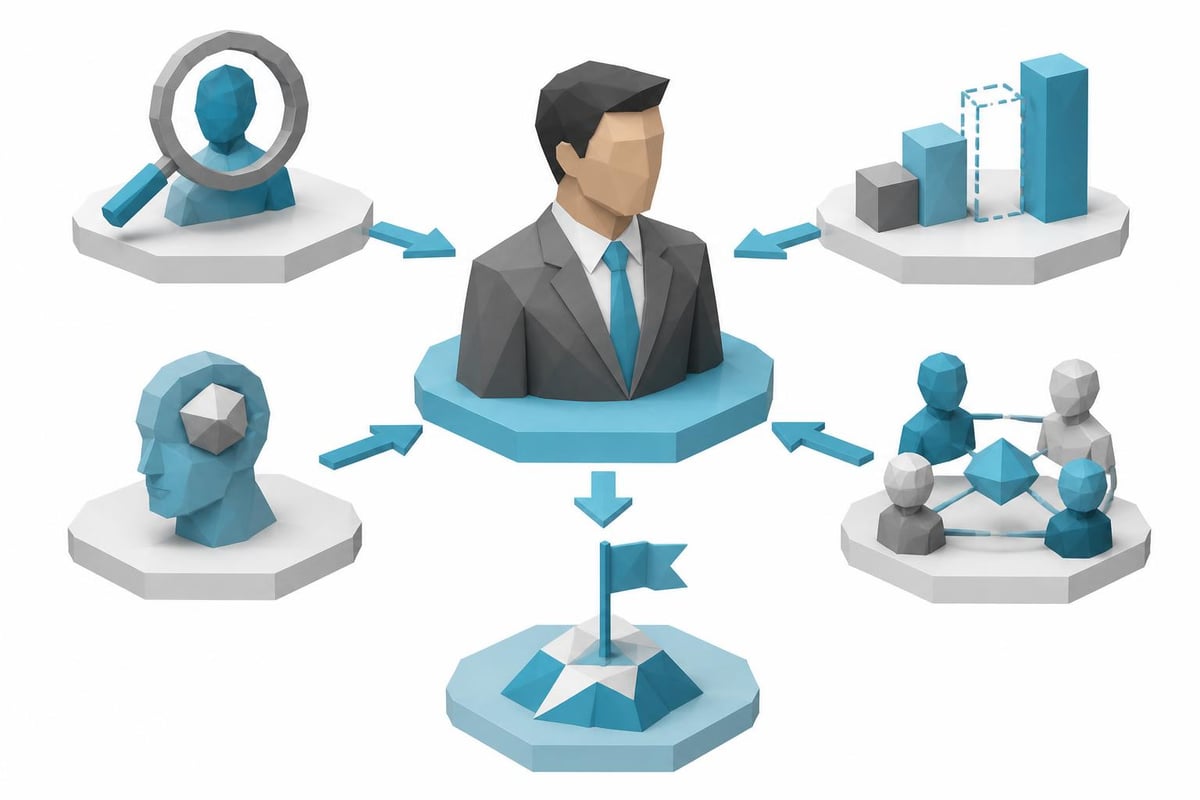
Development plan implementation

Integration with Daily Leadership Practice

Development activities cannot exist separate from regular work. The most effective development plans embed new behaviors into existing responsibilities rather than adding disconnected exercises. A leader working to improve delegation skills practices with actual team assignments, not hypothetical scenarios. Someone building strategic thinking capabilities applies frameworks to real business challenges facing their division.

Practice design matters immensely. Each development activity should specify:

  • The situation or context where the skill applies
  • The specific behavior or approach to practice
  • The reflection or feedback mechanism to capture learning
  • The frequency or repetition required to build capability

This level of detail transforms abstract competencies into concrete actions. Leaders know exactly what to do differently, when to do it, and how to evaluate whether the new approach improved outcomes.

Measuring Progress and Demonstrating ROI

Organizations invest significant resources in leadership development. Executives and board members rightfully demand evidence that these investments produce returns. A robust development plan includes measurement systems that track both behavioral change and business impact, creating the data necessary to demonstrate value and justify continued investment.

Multi-Level Measurement Framework

Effective measurement examines development outcomes across four distinct levels:

Behavioral Change Indicators track whether leaders are actually adopting new practices. This includes self-reported behavior changes, 360-degree feedback showing shifted perceptions, and direct observation of new skills in action. If a development plan targets improved team communication but the leader still dominates meetings without soliciting input, the intervention isn't working regardless of what the leader reports.

Team Performance Metrics connect leadership behavior to team outcomes. As leaders develop new capabilities, their teams should demonstrate measurable improvements in engagement, productivity, quality, or other relevant metrics. A development plan addressing psychological safety in the workplace should correlate with increased team member willingness to raise concerns, offer ideas, and admit mistakes without fear of punishment.

Organizational Impact Measures examine broader effects on culture, retention, and business results. When multiple leaders participate in development programs simultaneously, organizations should see systemic improvements in leadership bench strength, succession readiness, and cultural health indicators. For Fortune 500 companies implementing leadership and executive coaching at scale, these organizational metrics justify program continuation and expansion.

ROI Calculations translate development outcomes into financial terms. This includes both cost savings from reduced turnover and improved productivity, and revenue impact from enhanced decision-making and innovation. While some leadership outcomes resist pure financial quantification, organizations must demonstrate that development investments produce returns that justify the expense.

Metric Category Example Indicators Data Sources
Individual Behavior 360 feedback scores, skill demonstration frequency, self-assessment ratings Surveys, observation, coach reports
Team Performance Engagement scores, project completion rates, quality metrics HR systems, project management tools
Organizational Impact Leadership pipeline strength, culture survey results, retention rates HRIS, annual surveys, exit data
Financial ROI Turnover cost reduction, productivity gains, revenue per employee Financial systems, operational data

Addressing Common Development Plan Challenges

Even well-designed development plans encounter obstacles. Leaders face competing priorities, organizational changes disrupt coaching relationships, and initial enthusiasm wanes as the hard work of behavior change sets in. Anticipating these challenges and building mitigation strategies into the development plan increases the likelihood of sustained progress and successful outcomes.

Sustaining Momentum Through Resistance

Resistance emerges in predictable patterns. Early enthusiasm gives way to discomfort as leaders confront ingrained habits and receive critical feedback. Mid-program plateaus occur when initial gains slow and continued progress requires deeper change. Near the end, leaders sometimes regress to old patterns when they perceive the coaching safety net disappearing.

Effective development plans acknowledge these patterns and build countermeasures:

  • Scheduled check-ins with both coach and organizational sponsor at 30, 60, and 90-day intervals
  • Peer learning groups where multiple leaders share challenges and strategies
  • Reflection exercises that help leaders recognize progress even during plateaus
  • Graduated reduction of coaching intensity rather than abrupt termination
  • Transition planning that extends accountability beyond formal coaching completion

Organizations sometimes contribute to development plan failure by changing priorities mid-stream, reassigning leaders to new roles, or failing to provide promised resources. The development plan should specify organizational commitments alongside individual responsibilities, creating mutual accountability that prevents these failures.

Development plan challenges

Adapting Plans Without Losing Focus

Circumstances change. A leader initially focused on strategic thinking might suddenly face a team crisis requiring immediate attention to conflict resolution skills. Market conditions might eliminate the business challenge that formed the context for practicing new capabilities. Development plans must balance consistency with adaptability.

Structured flexibility provides the answer. The core competency targets and success metrics remain stable, providing continuity and preventing endless pivots that never produce results. The specific practices and applications can adapt to changing circumstances while still building the target capabilities. A leader working on decision-making can practice that skill on whatever business challenges currently demand attention, even if those challenges differ from original assumptions.

Regular review cycles at 90-day intervals provide natural opportunities to assess whether the original development plan still addresses the most critical needs or requires adjustment. These reviews examine both individual progress and organizational context, ensuring the development plan remains relevant without losing the focus necessary for meaningful change.

Advanced Development Planning for Complex Situations

Some leadership challenges demand development plans with additional sophistication. Addressing toxic leadership patterns, preparing executives for significantly expanded responsibilities, or developing leaders to navigate major organizational transformations requires planning approaches that go beyond standard competency development.

Intervention Plans for Toxic Leadership

When leaders demonstrate behaviors that damage team morale, create hostile environments, or violate organizational values, the development plan serves a dual purpose: creating a path to behavior change while protecting the organization and establishing documentation should termination become necessary.

These plans require heightened specificity and monitoring. Vague objectives and self-reported progress won't suffice. The plan must detail exactly which behaviors must stop, what alternative behaviors must replace them, and how the organization will verify change. Typical elements include:
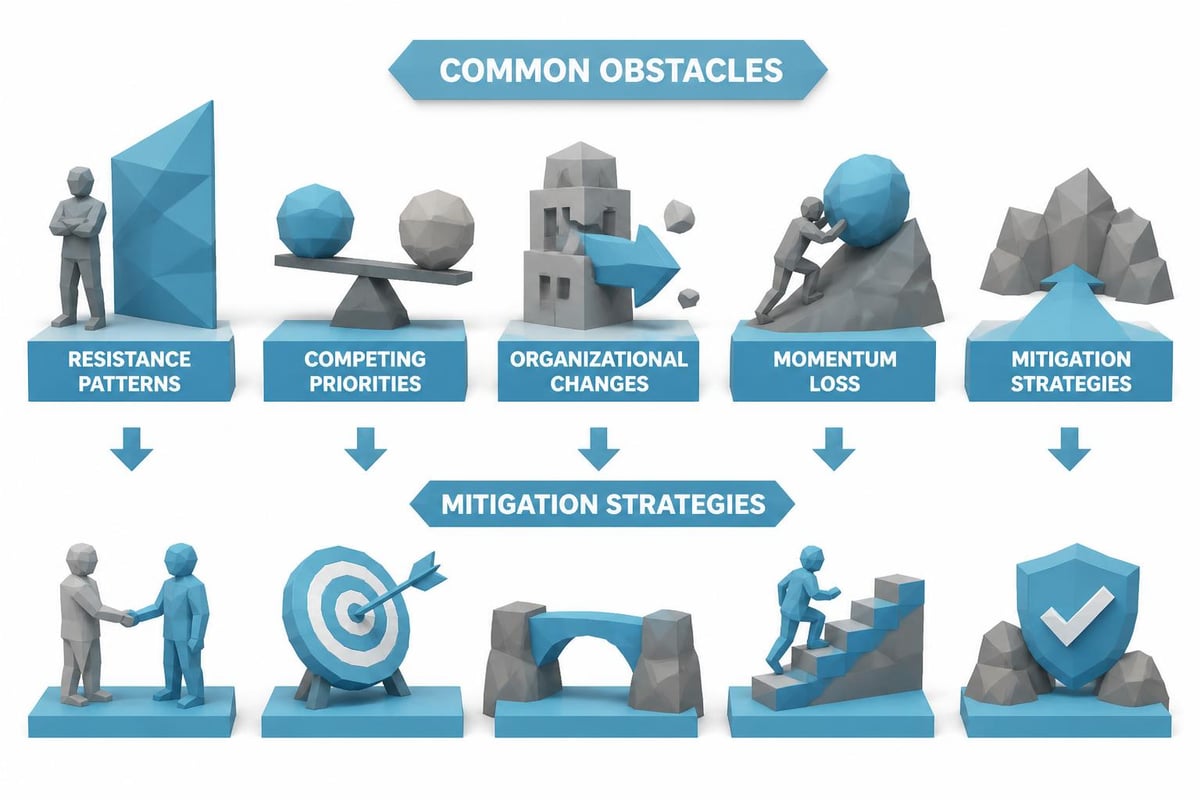
  • Specific prohibited behaviors described in observable terms
  • Alternative behaviors with clear behavioral indicators
  • Mandatory 360-degree feedback at defined intervals
  • Structured team listening sessions to gather unfiltered input
  • Executive sponsor check-ins separate from coaching sessions
  • Clear consequences if behavioral standards aren't met
  • Timeline for demonstrating sustained improvement

This level of structure protects both the organization and the leader. Everyone understands expectations, measurement methods, and consequences. For organizations working with coaches experienced in toxic leader transformation, these intervention plans balance accountability with genuine support for leaders willing to change.

Succession Development Plans

Preparing high-potential leaders for significantly expanded roles requires development planning that builds capabilities the leader hasn't yet needed. A director becoming a VP needs different skills than a VP becoming a C-suite executive. The development plan must create learning experiences that approximate future responsibilities rather than simply refining current capabilities.

Stretch assignments form the core of succession development. These are projects or temporary roles that require the leader to exercise new muscles in relatively safe environments. An operations leader might take on a strategic planning assignment. A technical leader might lead a cross-functional initiative requiring stakeholder management and influence without authority.

The development plan for succession candidates should include:

  1. Exposure experiences providing visibility into senior leadership challenges and decision-making contexts
  2. Mentorship relationships with executives currently holding the target role or similar positions
  3. Formal education in areas like finance, strategy, or governance where technical knowledge gaps exist
  4. Progressive responsibility through expanded scope or temporary role coverage during executive absences
  5. Board or committee participation offering governance experience and enterprise-wide perspective

Just as DoReset provides structured 90-day plans for personal transformation, succession development plans create systematic pathways for professional transformation over 12 to 24 months, with milestones that demonstrate growing readiness for advancement.

Integration with Organizational Development Systems

Individual development plans achieve maximum impact when they integrate with broader talent management and organizational development systems. Isolated coaching interventions help individual leaders but miss opportunities for systemic improvement that amplifies impact across the enterprise.

Linking Individual and Organizational Priorities

Strategic alignment ensures that leadership development directly advances organizational objectives. If the organization prioritizes innovation, development plans should build capabilities in creative problem-solving, experimentation, and calculated risk-taking. If operational excellence drives competitive advantage, development plans emphasize execution discipline, process improvement, and quality management.

This alignment occurs through several mechanisms:

  • Leadership competency models that define capabilities required to execute organizational strategy
  • Performance management systems that evaluate leaders on competencies identified as strategic priorities
  • Development plan libraries that offer proven interventions for priority capability areas
  • Aggregate reporting that shows whether collective development activity addresses the most critical organizational needs
  • Resource allocation that directs coaching investment toward highest-impact development areas

Organizations using top executive coaching firms often request this level of integration, ensuring that individual coaching engagements serve institutional priorities while respecting the confidential nature of the coaching relationship.

Building Organizational Learning Capacity

As leaders progress through individual development plans, they generate insights and practices that benefit others. Capturing and sharing this learning multiplies the return on development investment. The organization builds intellectual capital about what works in developing specific capabilities within its particular culture and context.

Knowledge management strategies for development planning include:

  • Peer learning communities where leaders share development challenges and successful practices
  • Case studies documenting development journeys and extracting transferable lessons
  • Internal coaching or mentoring programs where developed leaders guide others
  • Updated competency frameworks reflecting emerging requirements and proven development pathways
  • Best practice documentation from successful development plans serving as templates for similar situations

This organizational learning transforms development planning from an individual intervention into an institutional capability. The organization becomes increasingly sophisticated at diagnosing leadership challenges, designing effective interventions, and supporting leaders through difficult transitions.

Technology and Tools Supporting Development Plans

Modern development planning leverages technology to enhance assessment accuracy, track progress more precisely, and scale personalized development to larger populations. While human judgment and coaching relationships remain irreplaceable, technology augments these capabilities in ways that improve outcomes and efficiency.

Assessment and Feedback Platforms

Digital assessment tools deliver validated instruments measuring personality traits, cognitive patterns, emotional intelligence, and leadership competencies. These platforms typically offer:

  • Automated scoring and report generation reducing time from assessment to insight
  • Comparative data showing how individual results compare to relevant benchmarks
  • Longitudinal tracking revealing changes over time through repeat assessments
  • Integration with development planning tools that suggest interventions based on results
  • Multi-rater coordination simplifying 360-degree feedback collection and analysis

The quality and validation of assessment instruments matter significantly. Organizations should verify that chosen tools demonstrate reliability, validity, and freedom from bias across diverse populations.

Progress Tracking and Analytics

Development plan software creates structured frameworks for documenting goals, tracking activities, and measuring outcomes. These systems provide:

Feature Benefit
Goal Management Clear documentation of development targets with accountability tracking
Activity Logging Record of coaching sessions, learning activities, and practice applications
Progress Indicators Visual dashboards showing advancement toward competency targets
Stakeholder Communication Controlled information sharing with sponsors, HR, and relevant leaders
Aggregate Reporting Enterprise view of development activity, investment, and outcomes

For large organizations running development programs affecting dozens or hundreds of leaders simultaneously, these platforms provide visibility and coordination impossible through manual methods.

Cultural Considerations in Development Planning

Leadership effectiveness manifests differently across cultures. Development plans must account for cultural context, particularly in global organizations where leaders work across geographies or multinational teams. What constitutes effective communication, appropriate authority, or productive conflict varies significantly across cultural contexts.

Adapting Development Approaches

Cultural intelligence should inform both the assessment and intervention phases of development planning. Assessment tools validated in Western contexts may produce misleading results in other cultural settings. Feedback approaches that work well in direct communication cultures can create discomfort and resistance in cultures valuing harmony and indirect communication.

Development plans for leaders working in global contexts should:

  • Include cultural competency as an explicit development area when relevant
  • Select coaches with experience in the leader's cultural context or target geography
  • Adapt feedback delivery to cultural communication preferences
  • Recognize that desired leadership behaviors may vary by cultural setting
  • Build awareness of cultural assumptions embedded in leadership models

Organizations with significant international operations benefit from development planning expertise that extends beyond domestic contexts and accounts for the complexity of cross-cultural leadership.


A well-constructed development plan transforms leadership capability through structured assessment, targeted intervention, and disciplined measurement. Organizations that approach development planning with rigor and precision build leadership strength that drives engagement, performance, and competitive advantage. Whether addressing immediate performance issues, developing succession candidates, or strengthening executive teams, the development plan provides the roadmap for measurable leadership transformation. Noomii Corporate Leadership Program delivers evidence-based development planning that aligns individual growth with organizational priorities, matching leaders with expert coaches who drive accountability and results-discover how structured leadership development can transform your organization at Noomii Leadership Coaching. For leaders seeking ongoing accountability beyond formal coaching, Accountability Now offers systems that sustain behavioral change and maintain momentum toward development goals.