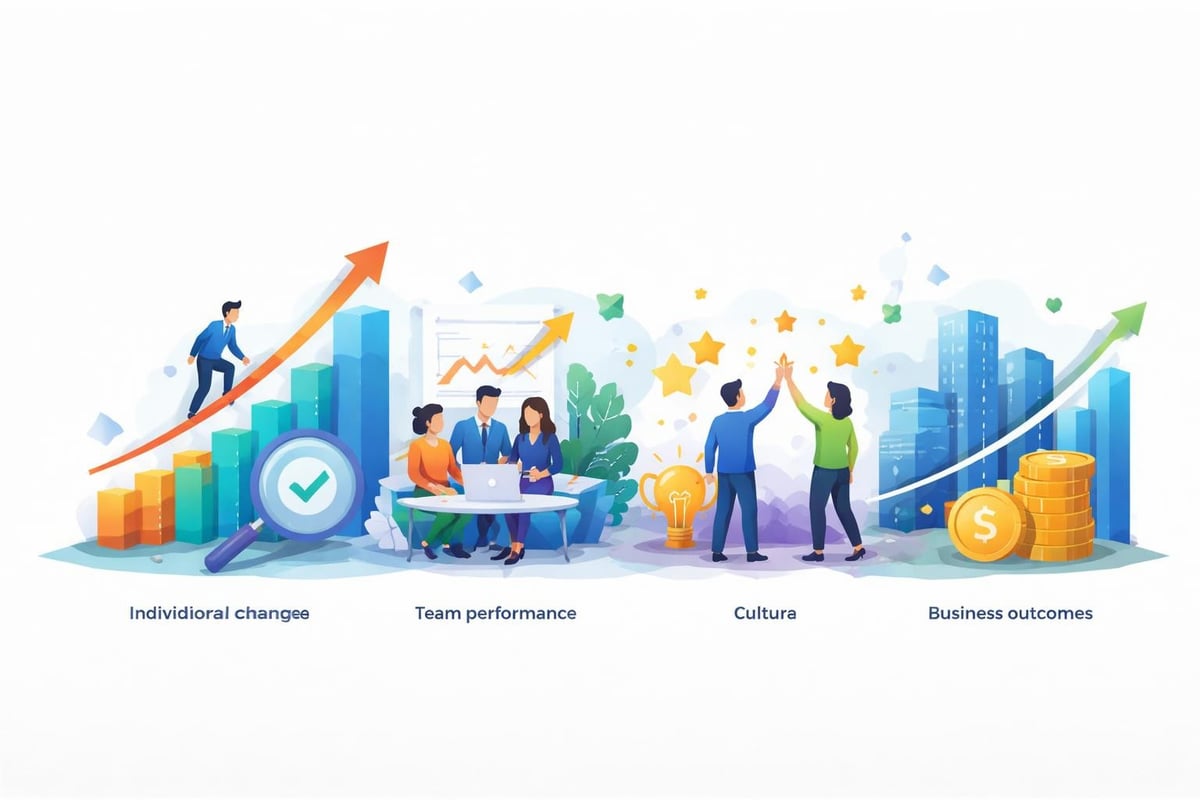
Coaching Business: Building Measurable Results in 2026

The coaching business landscape has shifted dramatically in 2026. Mid-market companies no longer accept vague promises of transformation or lengthy certification dissertations. They demand measurable outcomes, clear accountability, and coaching that integrates directly into daily operations. The most successful coaching practices now focus on tying every engagement to specific KPIs and business results, moving beyond traditional models that kept coaches on the sidelines observing rather than actively participating in organizational change.

The Current State of the Coaching Industry

The coaching business sector continues to expand rapidly. According to IBISWorld data, the number of business coaching firms in the United States has grown significantly, reflecting increased corporate investment in leadership development. Industry statistics show that businesses increasingly recognize coaching as essential infrastructure rather than optional professional development.

Key market indicators include:

  • Sustained growth in corporate coaching budgets
  • Shift toward outcome-based engagement models
  • Increased demand for coaches who work inside operations
  • Focus on retention and engagement metrics as success markers

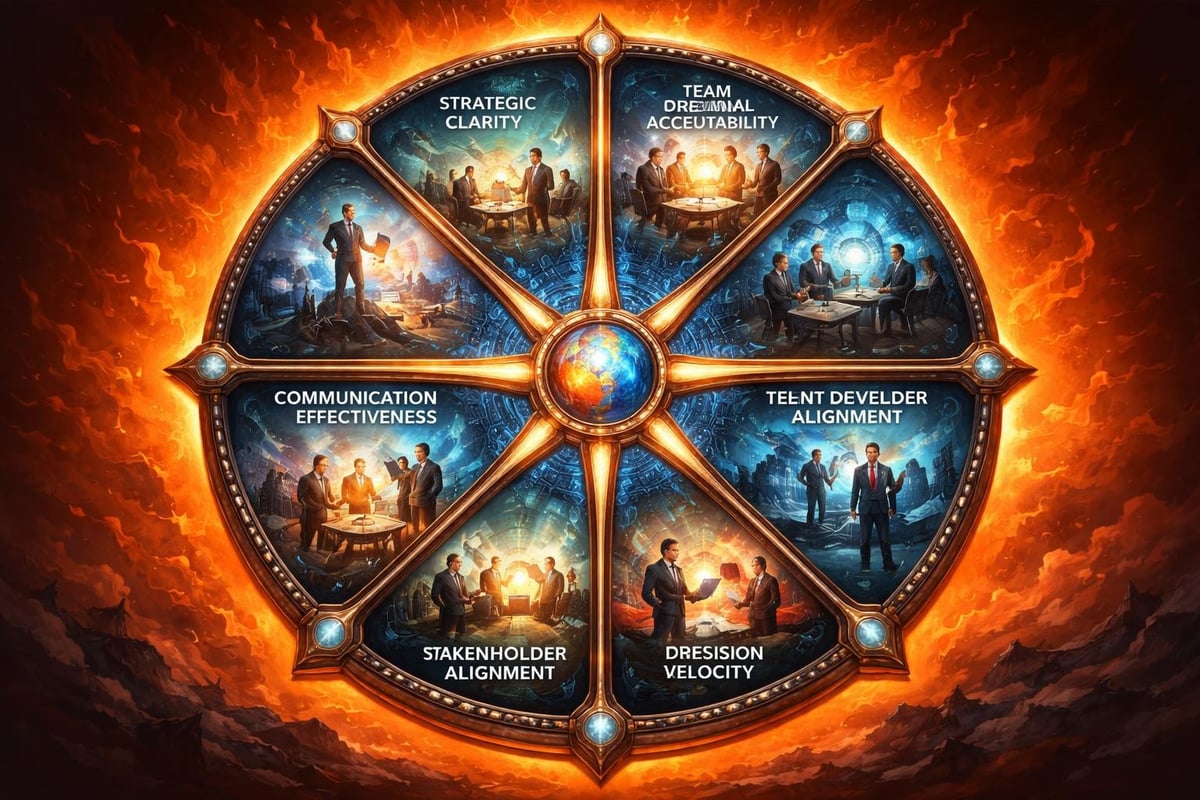
Coaching business market growth

This growth reflects a fundamental change in how companies approach talent development. Organizations with 25 to 500 employees particularly seek business coaching services that integrate seamlessly with existing management structures.

What Distinguishes Effective Coaching Programs

Modern coaching business models succeed by embedding themselves in actual business operations. The difference between transformative coaching and wasted investment comes down to engagement structure and accountability mechanisms.

Live Operational Coaching

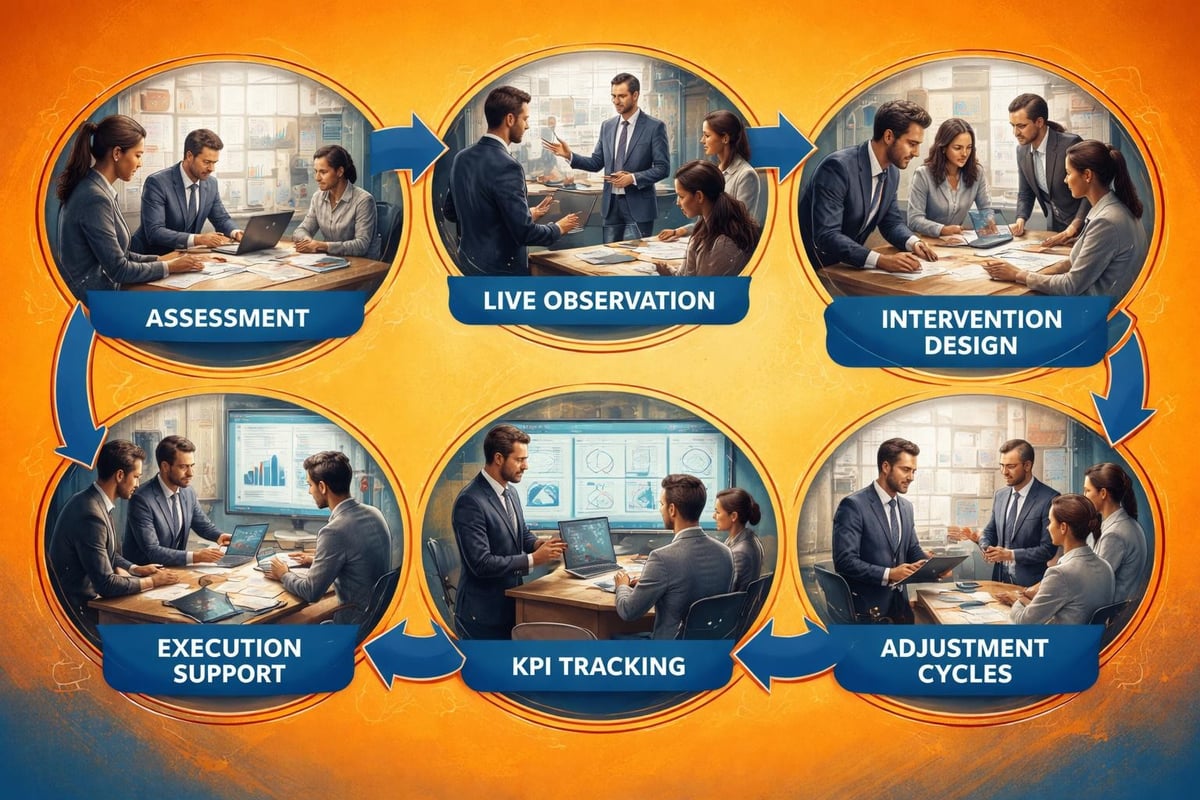
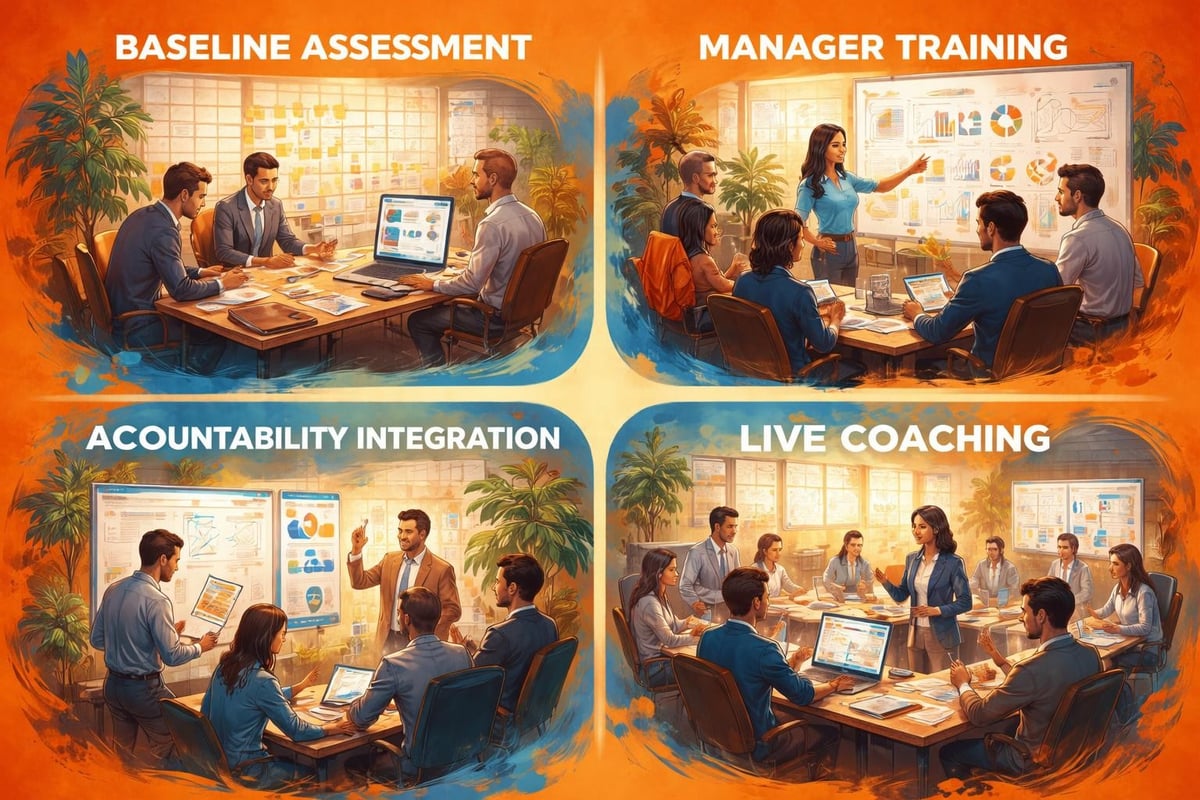
The most impactful coaching happens during real meetings, not in theoretical discussions afterward. Coaches who attend leadership meetings, observe decision-making processes, and provide immediate feedback create exponentially more value than those who rely solely on one-on-one sessions.

Operational coaching includes:

  1. Sitting in on executive team meetings
  2. Observing manager-employee interactions
  3. Facilitating strategic planning sessions
  4. Coaching sales conversations in real time
  5. Providing immediate feedback on communication patterns

KPI-Driven Accountability

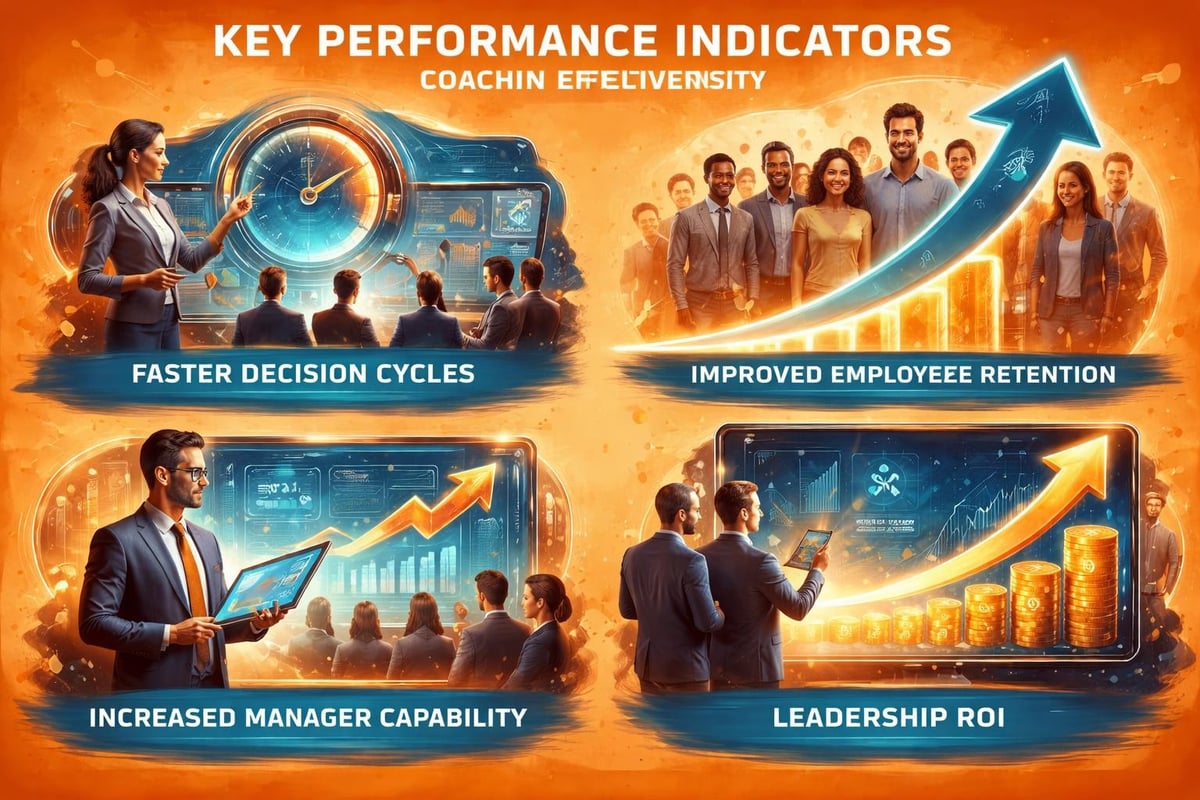
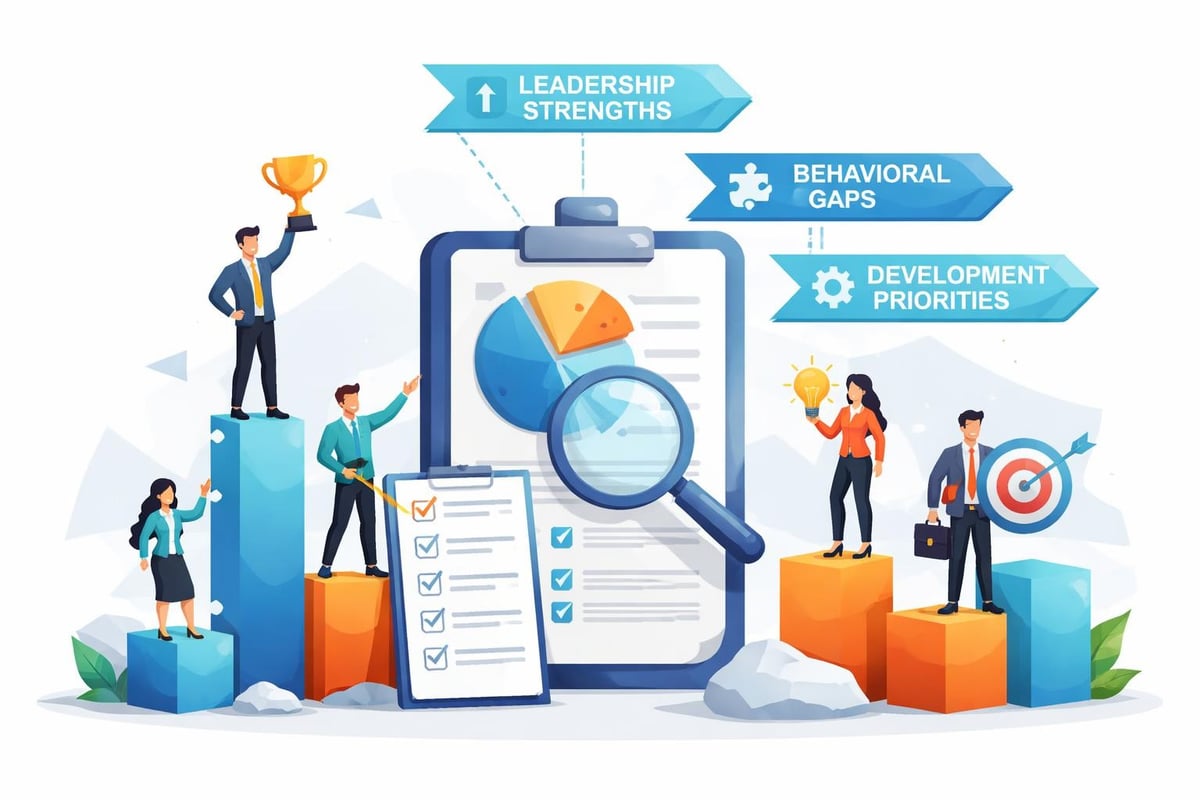
Every coaching engagement should connect to specific business metrics. Whether the goal involves improving retention rates, accelerating decision velocity, or increasing sales conversion, the coaching business must demonstrate progress through quantifiable data. Organizations implementing 360 leadership assessments combined with KPI scorecards see significantly faster improvements in management effectiveness.

Coaching Focus Area Primary KPIs Measurement Frequency
Executive Leadership Decision cycle time, strategic initiative completion Monthly
Manager Development Team engagement scores, 1-on-1 consistency Bi-weekly
Sales Coaching Conversion rates, pipeline velocity, retention Weekly
Team Facilitation Meeting efficiency, project delivery, collaboration metrics Monthly

Service Delivery Models That Drive Results

The coaching business ecosystem now features diverse delivery models. The most successful approaches share common characteristics: flexibility, measurability, and integration with existing business processes.

Month-to-Month Engagements

Long-term contracts create misaligned incentives. When coaches lock clients into extended agreements, the urgency to deliver visible results diminishes. Month-to-month arrangements keep both parties focused on continuous improvement and measurable progress. This model has become increasingly popular among mid-market companies that value agility.

Research from coaching industry reports indicates that flexible engagement terms correlate with higher client satisfaction and better business outcomes.

Risk-Sharing Incentive Structures

Progressive coaching businesses now offer aligned incentive options where coaching fees tie partially to achievement of specific business outcomes. This approach transforms the coach-client relationship from vendor-buyer to true partnership.

Common incentive structures include:

  • Base fee plus performance bonus tied to KPI achievement
  • Sliding scale based on retention improvement
  • Success fees for hitting strategic milestones
  • Revenue share models for sales coaching programs

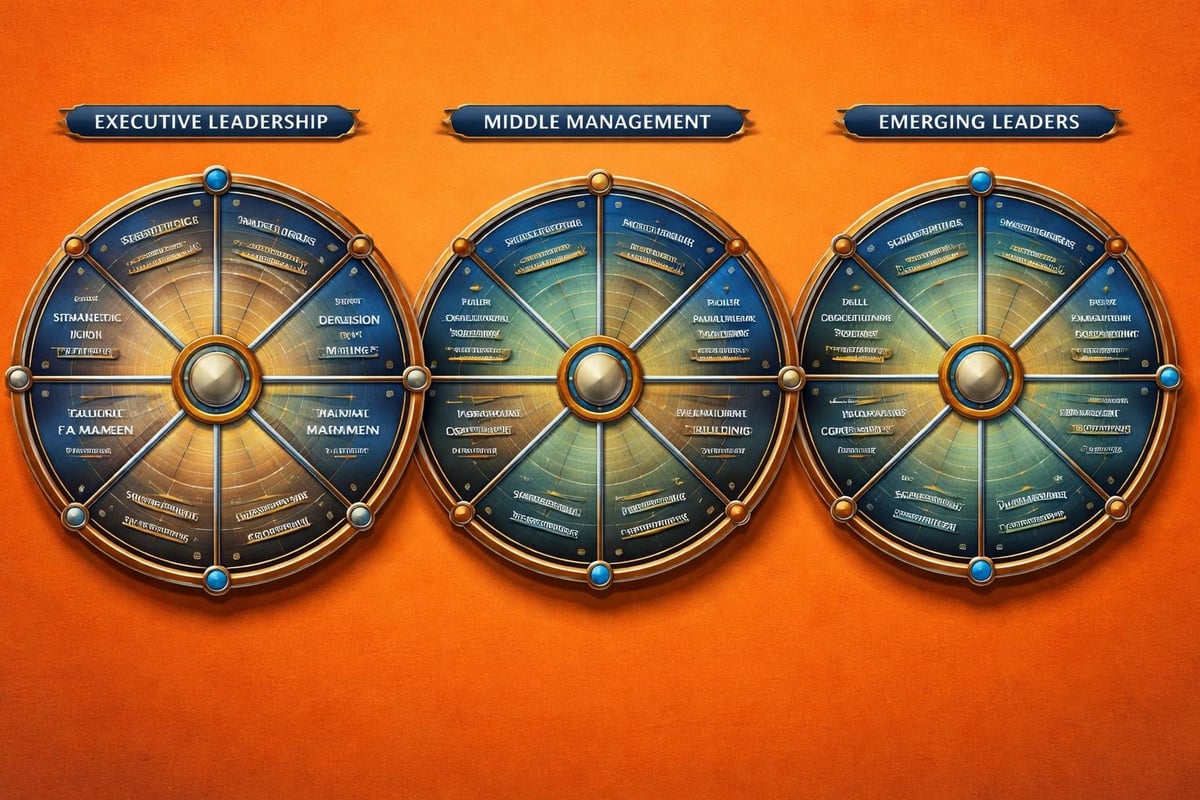
Coaching engagement models

Building Accountable Leaders and High-Performing Teams

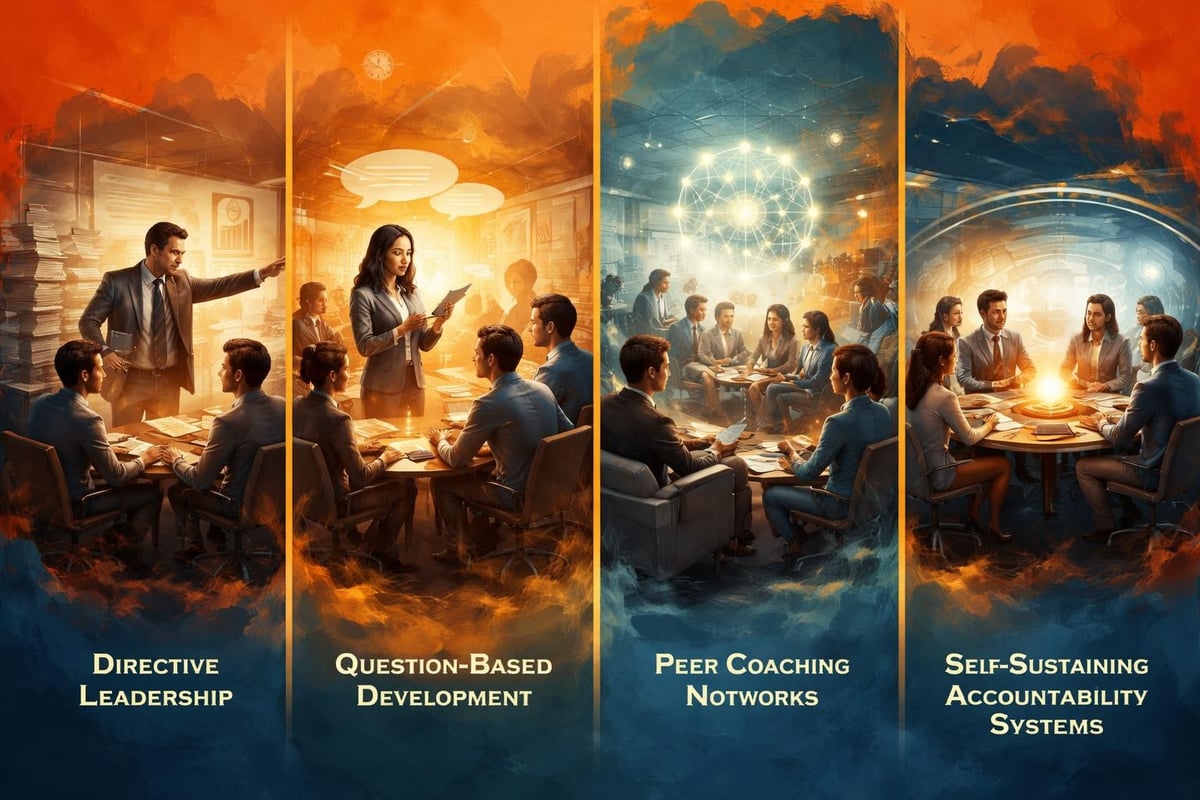
The primary value proposition of any coaching business centers on developing leaders who can replicate coaching behaviors throughout the organization. When managers learn to coach their direct reports effectively, the impact multiplies exponentially across the company.

Manager Training That Sticks

Most manager training fails because it remains theoretical. Effective programs combine instruction with supervised practice, ongoing feedback loops, and accountability mechanisms that ensure new behaviors become habits.

  1. Teach core coaching frameworks during focused workshops
  2. Observe managers applying skills in actual team interactions
  3. Provide specific feedback on execution and impact
  4. Track adoption metrics through regular check-ins
  5. Adjust approaches based on what works for each manager's style

Organizations seeking comprehensive support often explore options through business coach directories to find professionals with proven track records in manager development.

Team Coaching and Facilitation

High-performing teams require deliberate attention to communication patterns, decision-making processes, and conflict resolution capabilities. Team coaching addresses these elements systematically while building collective accountability.

The most effective team facilitation focuses on improving meeting effectiveness, clarifying roles and responsibilities, establishing operating cadences, and creating healthy debate mechanisms. For companies prioritizing accountability, resources like AccountabilityNow.net provide additional frameworks for building ownership cultures.

Measuring Coaching Business Impact

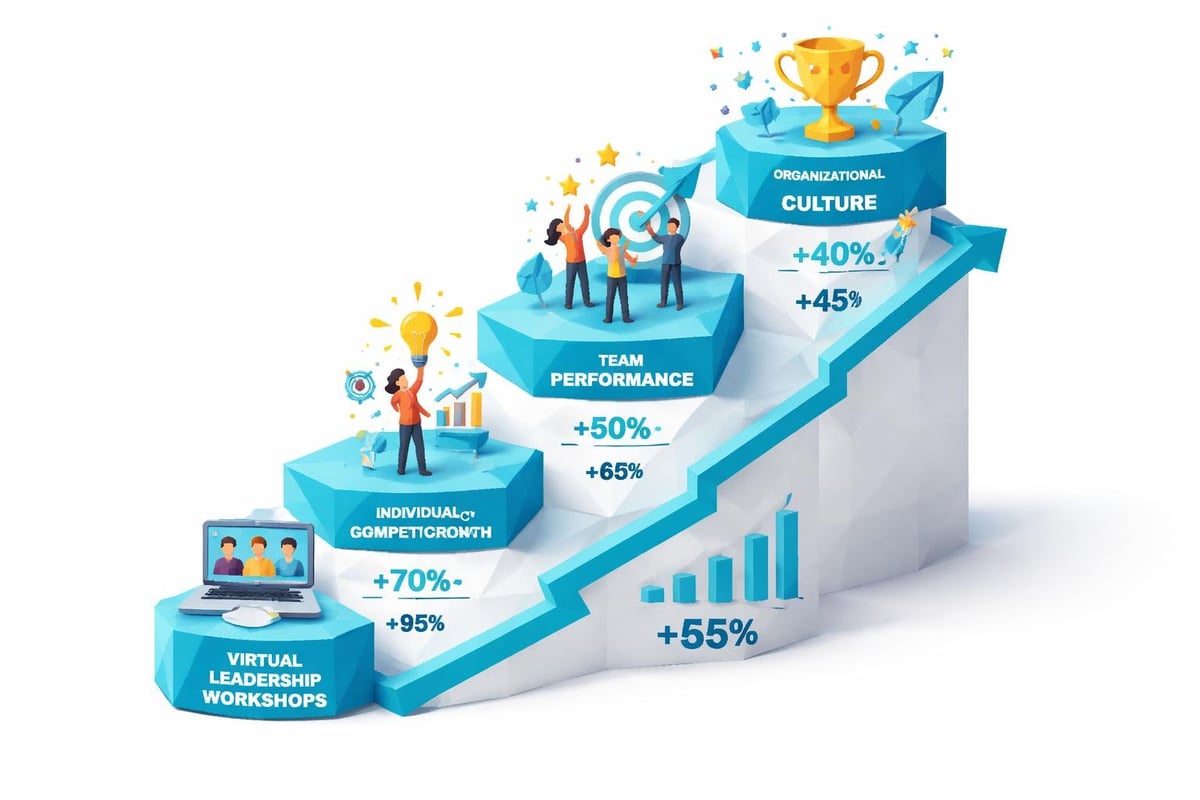
Companies investing in coaching deserve clear evidence of return on investment. Coaching statistics demonstrate significant productivity improvements and business outcomes when engagements focus on measurable results rather than abstract development goals.

Quantifiable Outcomes

Business Area Typical Improvements Timeline
Decision Velocity 30-50% faster strategic decisions 3-6 months
Employee Engagement 15-25% improvement in survey scores 4-8 months
Retention Rates 10-20% reduction in regrettable turnover 6-12 months
Sales Performance 20-40% increase in close rates 3-6 months
Meeting Efficiency 25-35% reduction in meeting time 2-4 months

Qualitative Indicators

Beyond numbers, successful coaching business engagements produce observable cultural shifts: managers who ask better questions, teams that resolve conflicts constructively, executives who communicate strategy more effectively, and organizations where accountability becomes the norm rather than the exception.

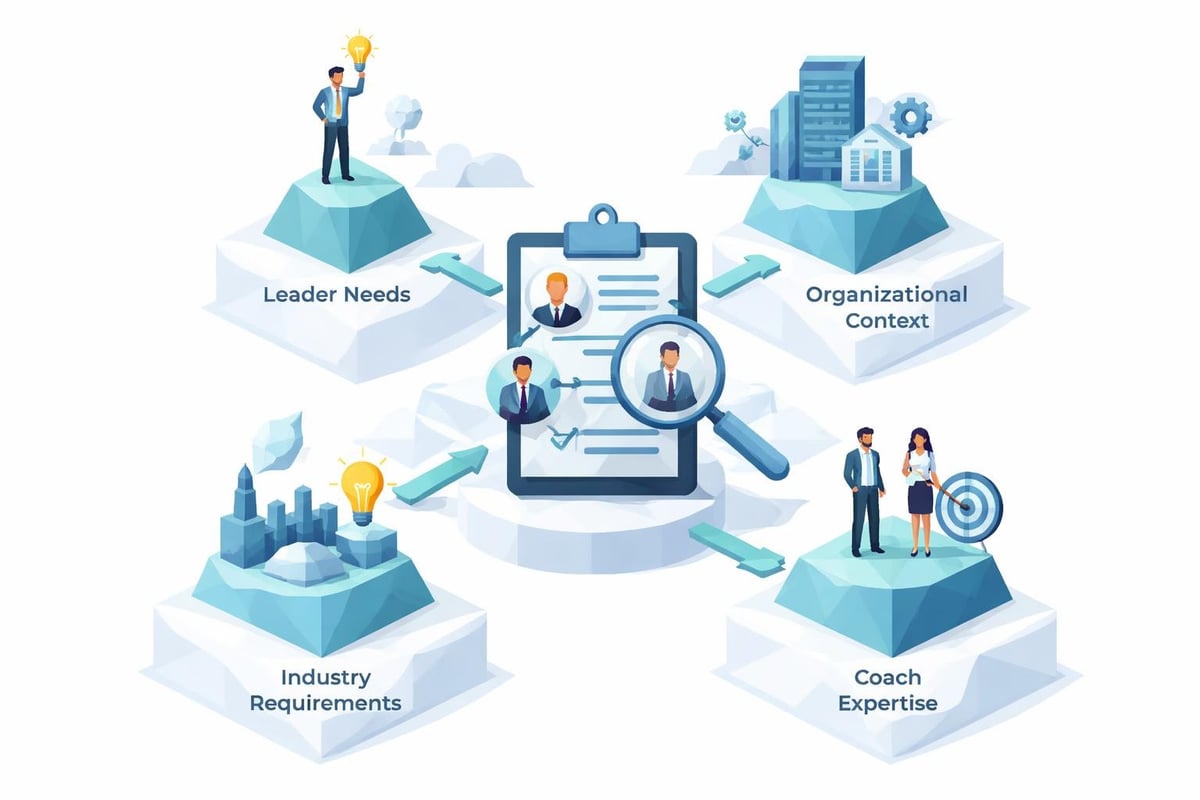
Coaching business outcomes

Selecting the Right Coaching Partner

Not all coaching businesses deliver equal value. Mid-market companies should evaluate potential partners based on specific criteria that predict successful outcomes.

Essential selection criteria:

  • Operational experience: Coaches should understand business operations, not just coaching theory
  • Industry relevance: Look for experience with similar company sizes and challenges
  • Measurement orientation: Insist on clear KPIs and regular progress reporting
  • Flexibility: Avoid long-term contracts that lock you into underperforming relationships
  • Integration capability: Choose coaches willing to work inside your meetings and processes

Companies can research qualified professionals through platforms like Noomii’s business coaching directory, which provides access to experienced coaches across various specializations.

Implementation Best Practices

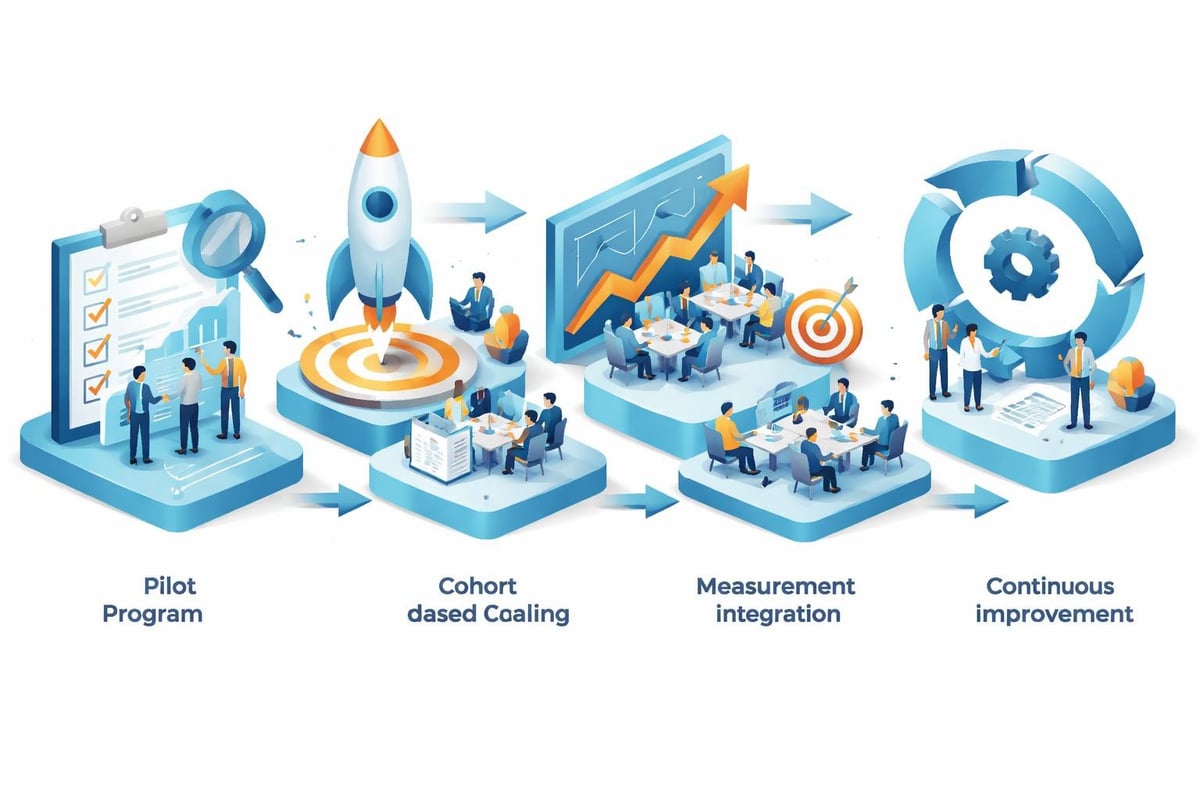
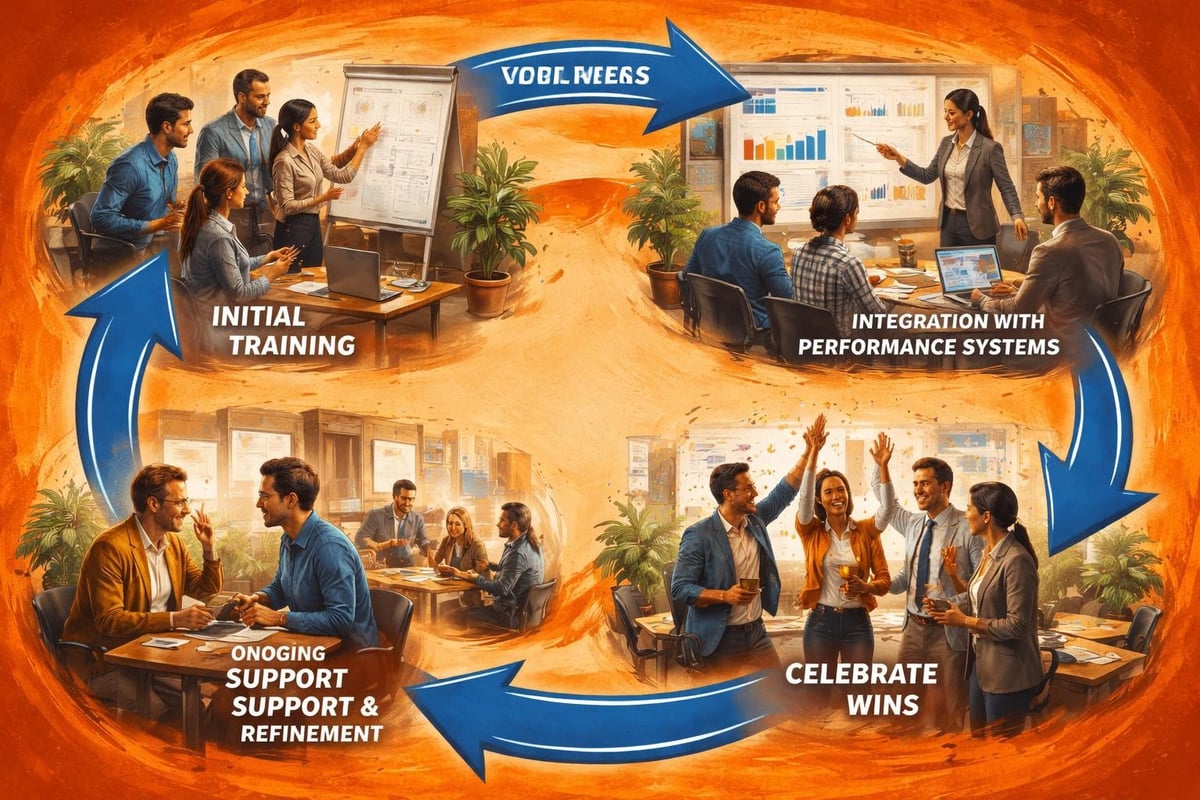
Launching a coaching engagement successfully requires thoughtful preparation and clear communication. Organizations that invest time upfront in defining expectations, establishing measurement frameworks, and securing leadership commitment see dramatically better results.

Start by identifying specific business challenges that coaching should address. Vague goals like "improve leadership" rarely produce meaningful change. Instead, focus on concrete outcomes such as reducing decision cycle time by 40% or improving manager-employee communication scores by 20 points. According to market size analyses, companies that define clear coaching objectives achieve significantly higher ROI.

Next, establish baseline metrics for each focus area. You cannot measure improvement without knowing your starting point. Document current performance on all relevant KPIs before coaching begins.

Finally, create accountability structures that ensure sustained attention. Schedule regular review sessions, assign internal champions to support the work, and communicate progress transparently across the organization.


Building accountable leaders and high-performing teams requires coaching that moves beyond theory into practical, measurable business improvement. The most effective coaching business models integrate directly into operations, tie progress to clear KPIs, and maintain flexibility through month-to-month arrangements. Whether you need executive coaching, leadership development, manager training, or team facilitation, Noomii delivers practical corporate coaching focused on visible results and measurable ROI. Our approach combines hands-on operational coaching with rigorous accountability frameworks that drive faster decisions, stronger communication, higher engagement, and cleaner execution across your priorities.

Entrepreneur Growth & Leadership Development in Lausanne

Lausanne has emerged as a powerhouse for entrepreneur growth and leadership development in lausanne, combining world-class educational institutions, innovative acceleration programs, and a thriving business ecosystem. Nestled on the shores of Lake Geneva, this Swiss city offers entrepreneurs access to cutting-edge leadership training, strategic coaching, and extensive networks that transform ambitious founders into exceptional business leaders. The concentration of prestigious business schools, accelerators, and coaching organizations creates an environment where leadership excellence becomes not just aspirational but achievable through structured, evidence-based development pathways.

The Lausanne Advantage for Entrepreneurial Leaders

Lausanne's geographical position at the crossroads of European business makes it uniquely positioned to cultivate entrepreneurial talent. The city hosts several internationally recognized institutions that specialize in transforming functional experts into strategic leaders.

Lausanne ecosystem components

The IMD Business School’s Orchestrating Winning Performance program delivers actionable strategies that help dynamic professionals tackle current challenges while shaping their organizations' futures. This concentration of expertise creates what researchers call a "leadership density effect," where proximity to excellence accelerates individual growth trajectories.

Key advantages of Lausanne's ecosystem include:

  • Access to evidence-based leadership methodologies validated by academic research
  • Multilingual business environment preparing leaders for global markets
  • Strong connections between academia, industry, and entrepreneurial ventures
  • Supportive regulatory environment for business experimentation and growth
  • Concentration of venture capital and strategic funding sources

Educational Infrastructure Driving Leadership Excellence

The educational infrastructure supporting entrepreneur growth and leadership development in lausanne extends far beyond traditional business degrees. HEC Lausanne, the Faculty of Business and Economics at the University of Lausanne, contributes significantly to developing business leaders through comprehensive executive education programs that bridge academic rigor with practical application.

EPFL’s Leadership and Development department strengthens personal and professional competencies through targeted programs addressing employability, development services, and specialized training. These institutions don't just transfer knowledge-they transform how entrepreneurs think about leadership challenges.

Institution Primary Focus Target Audience Unique Strength
IMD Business School Executive Leadership Senior Leaders & Entrepreneurs Global perspective, action learning
HEC Lausanne Business Economics MBA students, Executives Research-driven insights
EPFL Technical Leadership Engineers, Scientists, Tech Founders Innovation and technology integration
EHL Hospitality Leadership Service Industry Leaders Customer experience excellence

The diversity of these offerings ensures entrepreneurs can find precisely the leadership development pathway aligned with their industry, growth stage, and specific challenges.

Tailored Programs for Different Growth Stages

Effective entrepreneur growth and leadership development in lausanne recognizes that founders face distinct challenges at different organizational stages. Early-stage entrepreneurs require fundamentally different support than those scaling established ventures.

From Startup to Scale-Up

GENILEM provides personalized support to entrepreneurs and early-stage companies, offering project diagnostics and a comprehensive three-year acceleration program that helps turn visions into thriving businesses. This structured approach addresses the reality that most leadership failures occur during critical transition points-when founders must evolve from hands-on operators to strategic executives.

The LeadiNNg to Scale-Up program, a collaboration between Innovaud and IMD, specifically targets tech companies transitioning from promising startups to fast-growing scale-ups. This program acknowledges that scaling requires different leadership competencies than launching.

Critical competencies for scaling entrepreneurs:

  1. Strategic delegation and building effective leadership teams
  2. Creating organizational structures that support rapid growth
  3. Maintaining company culture while expanding headcount
  4. Navigating complex stakeholder relationships and governance
  5. Making data-driven decisions under increasing uncertainty
  6. Managing personal transition from founder to CEO role

Understanding psychological safety examples becomes essential during scaling phases, as team dynamics fundamentally shift when organizations grow beyond direct founder oversight.

Executive Leadership Transitions

Experienced managers ready to transition into senior leadership roles face unique challenges that require specialized support. IMD’s Program for Executive Development emphasizes expanding perspective beyond functional expertise-a critical shift many technically brilliant entrepreneurs struggle to make.

This transition demands what researchers call "identity evolution." Entrepreneurs must reframe their self-concept from "the person who knows how to do everything" to "the leader who knows how to develop others who do everything." This psychological shift often proves more challenging than acquiring new technical skills.

Building Inner Leadership Strength

Sustainable entrepreneur growth and leadership development in lausanne goes beyond external skills to cultivate internal leadership qualities that sustain performance under pressure.

Leadership development dimensions

Developing Authentic Authority

The High Performance Leadership program at IMD focuses specifically on developing inner strength and confidence to become truly authoritative, high-performing leaders. This inner development proves particularly crucial for entrepreneurs who face constant questioning of their decisions, strategies, and capabilities.

Building authentic authority requires:

  • Deep self-awareness of personal strengths, limitations, and triggers
  • Capacity to remain centered during organizational turbulence
  • Confidence grounded in competence rather than bravado
  • Ability to acknowledge uncertainty while maintaining directional clarity
  • Emotional regulation that prevents reactivity from undermining credibility

Organizations working with toxic leader patterns understand that leadership problems often stem from underdeveloped inner capacities rather than malicious intent. Entrepreneurs under extreme pressure may default to controlling, dismissive, or aggressive behaviors that undermine team performance.

Faith-Based Leadership Perspectives

The Lausanne Movement’s Leadership Development episode emphasizes developing leaders for personal and societal transformation, engaging in changing systems and structures beyond organizational walls. This values-based approach reminds entrepreneurs that leadership influence extends far beyond quarterly earnings.

Integrating purpose-driven leadership with business performance creates what researchers term "sustainable motivation"-the capacity to maintain extraordinary effort over extended periods without burnout. Entrepreneurs who connect their ventures to larger missions demonstrate greater resilience during inevitable setbacks.

Evidence-Based Coaching for Measurable Growth

While traditional education provides foundational knowledge, personalized coaching delivers the customized support that accelerates entrepreneur growth and leadership development in lausanne. The coaching industry has evolved significantly, moving from generalized advice to precision interventions backed by validated assessments and measurable outcomes.

Precision Matching for Maximum Impact

Generic coaching approaches fail to address the specific challenges entrepreneurs face in particular industries, organizational contexts, and growth stages. Advanced leadership executive coaching now leverages sophisticated matching algorithms that pair leaders with coaches possessing relevant sector expertise and specialized skills.

This precision matching considers multiple dimensions:

Matching Dimension Why It Matters Impact on Results
Industry Experience Coach understands market dynamics, competitive pressures 40% faster problem resolution
Growth Stage Expertise Relevant experience with startup, scale-up, or enterprise challenges Higher strategy implementation success
Leadership Style Compatibility Natural rapport and communication effectiveness Deeper self-awareness development
Specific Challenge History Coach has successfully addressed similar issues previously More targeted, efficient interventions
Cultural and Language Fluency Eliminates communication barriers, understands context Stronger trust and openness

Organizations seeking to understand how much does business coaching cost should recognize that precision matching significantly improves return on investment by reducing time to results and increasing the likelihood of sustainable behavioral change.

Structured Intervention Frameworks

Effective entrepreneur growth and leadership development in lausanne employs structured frameworks rather than unguided conversation. These frameworks ensure comprehensive assessment, targeted development plans, measurable progress tracking, and accountability mechanisms that drive actual change.

Components of effective coaching interventions:

  • Initial diagnostic assessments identifying specific strengths and development areas
  • Clear goal-setting aligned with both personal aspirations and organizational needs
  • Regular progress evaluation against predetermined success metrics
  • Structured exercises and assignments between coaching sessions
  • Stakeholder feedback integration to validate perceived versus actual change
  • Adjustment protocols when initial approaches prove ineffective

The shift toward accountability-driven coaching has transformed outcomes across industries. Programs incorporating regular accountability checkpoints demonstrate 3.5 times higher goal achievement rates than those relying solely on periodic coaching conversations. Resources like https://accountabilitynow.net/ provide frameworks for embedding systematic accountability into leadership development initiatives.

Addressing Critical Leadership Challenges

Entrepreneurs in Lausanne's competitive ecosystem face predictable leadership challenges that, if left unaddressed, can derail otherwise promising ventures. Effective development programs tackle these issues directly rather than hoping they resolve organically.

Navigating Difficult Transitions

Leadership transitions-whether from founder to CEO, individual contributor to manager, or technical expert to strategic executive-represent vulnerability points where even talented entrepreneurs stumble. These transitions require not just new skills but fundamental identity shifts that challenge self-concept and trigger resistance.

Leadership transition challenges

Research on Google Project Aristotle psychological safety revealed that team effectiveness depends more on how members interact than on individual talent levels. Entrepreneurs must learn to create environments where teams feel safe challenging assumptions, admitting mistakes, and proposing unconventional solutions.

Transforming Problematic Leadership Patterns

High-pressure entrepreneurial environments sometimes cultivate leadership behaviors that initially drive results but ultimately damage organizational health. Recognizing and addressing these patterns early prevents long-term cultural damage.

Common problematic patterns include:

  1. Micromanagement stemming from perfectionism – Inability to delegate effectively, creating bottlenecks
  2. Dismissiveness of team input – Undermining engagement and losing access to distributed intelligence
  3. Volatile emotional reactions – Creating uncertainty that paralyzes decision-making
  4. Chronic overwork expectations – Driving burnout and turnover that disrupts continuity
  5. Conflict avoidance – Allowing small issues to metastasize into major problems

Specialized approaches like toxic leader transformation provide structured methodologies for addressing entrenched patterns without requiring leader replacement. These interventions work when leaders possess genuine desire to change and receive appropriate support throughout the transformation process.

Creating Scalable Leadership Development Systems

Organizations experiencing rapid growth cannot rely solely on individual coaching for executive team members. Scalable systems extend leadership development throughout the organization, creating bench strength that supports sustainable expansion.

Building Internal Leadership Capacity

Sophisticated entrepreneur growth and leadership development in lausanne creates multiplier effects by developing leaders who develop other leaders. This cascading approach builds organizational capability that persists beyond any individual's tenure.

Elements of scalable leadership systems:

  • Clearly defined leadership competency models aligned with organizational values
  • Assessment tools that identify high-potential talent across levels
  • Structured development pathways with clear progression criteria
  • Mentoring programs connecting emerging leaders with experienced executives
  • Regular leadership forums creating peer learning communities
  • Performance metrics that reward leadership development alongside business results

Organizations implementing comprehensive systems report 60% higher promotion-from-within rates and significantly lower regrettable turnover among high-potential employees.

Integration with Organizational Strategy

Leadership development initiatives that operate independently from business strategy waste resources and miss opportunities. Effective programs align individual growth with institutional priorities, ensuring development efforts directly support organizational objectives.

This alignment requires:

Strategic Need Leadership Capability Required Development Approach
Market expansion Cross-cultural leadership, adaptability International assignments, cultural competency training
Innovation acceleration Creative problem-solving, risk tolerance Innovation labs, failure analysis sessions
Digital transformation Technology fluency, change management Digital upskilling, transformation case studies
Customer experience enhancement Empathy, service orientation Customer immersion programs, feedback integration
Operational excellence Process thinking, continuous improvement Lean training, efficiency metrics dashboards

Connecting leadership development directly to business outcomes transforms it from a "nice to have" benefit to a strategic necessity that boards and investors recognize as essential infrastructure.

Measuring Leadership Development Impact

Quantifying the return on leadership development investments has historically challenged organizations. Modern approaches employ sophisticated metrics that demonstrate tangible impact on organizational performance, moving beyond subjective satisfaction ratings.

Defining Success Metrics

Effective measurement of entrepreneur growth and leadership development in lausanne requires multilevel metrics capturing individual behavior change, team performance improvements, and organizational outcomes.

Individual-level metrics:

  • 360-degree assessment score improvements across defined competencies
  • Achievement of specific development goals within target timeframes
  • Behavioral change validation through stakeholder interviews
  • Self-reported confidence and capability assessments
  • Engagement and retention of the developing leader

Team-level metrics:

  • Employee engagement scores for teams led by program participants
  • Team performance against key operational or strategic objectives
  • Turnover rates within teams before and after leader development
  • Innovation metrics like ideas generated, tested, and implemented
  • Collaboration effectiveness measures across functional boundaries

Organizational-level metrics:

  • Leadership bench strength and succession planning readiness
  • Promotion-from-within rates at management and executive levels
  • Time-to-productivity for newly promoted leaders
  • Cultural health indicators aligned with desired values
  • Financial performance correlated with leadership quality indices

Organizations tracking these comprehensive metrics consistently demonstrate 3-5x return on investment in leadership coaching within 18-24 months, with returns accelerating over time as developed leaders influence broader organizational populations.

Continuous Improvement Protocols

Static leadership development programs quickly become obsolete as business environments evolve. Leading organizations implement continuous improvement protocols that regularly evaluate program effectiveness and adapt methodologies based on evidence.

These protocols include quarterly program reviews analyzing metric trends, annual deep-dive assessments comparing results across cohorts, regular participant feedback collection through multiple channels, benchmarking against external best practices and emerging research, and rapid experimentation with new approaches in controlled pilot groups.

The commitment to evidence-based refinement distinguishes transformational programs from those that merely check compliance boxes without driving meaningful change.

The Future of Leadership Development in Lausanne

Entrepreneur growth and leadership development in lausanne continues evolving as new technologies, methodologies, and business challenges emerge. Forward-thinking organizations position themselves to capitalize on these trends rather than reacting after competitors gain advantages.

Technology-Enhanced Development

Artificial intelligence, virtual reality, and advanced analytics are transforming how organizations assess leadership capabilities and deliver development interventions. These technologies don't replace human coaching but enhance its effectiveness through better diagnostics, personalized content delivery, and continuous progress monitoring.

Emerging technologies enable:

  • Real-time leadership behavior analysis providing immediate feedback
  • Simulation environments where leaders practice difficult conversations safely
  • Predictive analytics identifying future leadership needs before gaps emerge
  • Personalized learning pathways adapting to individual progress rates
  • Global coaching access eliminating geographical constraints

Organizations exploring best AI for business coaching should view technology as amplifying human expertise rather than replacing the relationship-based trust essential for deep development work.

Integrated Ecosystem Approaches

The most sophisticated entrepreneur growth and leadership development in lausanne leverages the complete ecosystem rather than isolated program elements. This integration connects academic institutions, coaching organizations, peer networks, industry associations, and funding sources into coherent development journeys.

Entrepreneurs participating in integrated ecosystems access multidimensional support addressing knowledge gaps, skill development, network building, resource acquisition, and emotional resilience simultaneously. This holistic approach recognizes that leadership challenges rarely fit neatly into single categories requiring isolated solutions.


Lausanne's unique combination of world-class educational institutions, specialized acceleration programs, and evidence-based coaching creates unparalleled opportunities for entrepreneurs committed to leadership excellence. The Noomii Leadership Coaching program delivers precision-matched coaching that transforms leadership challenges into measurable organizational improvements, combining advanced diagnostics with targeted interventions that align individual growth with institutional priorities. Whether addressing specific leadership patterns, preparing for critical transitions, or building scalable development systems, Noomii's global network of certified coaches provides the expertise and accountability that turns leadership potential into tangible business results.

Business Accountability & Systems Coaching in Basel 2026

Basel stands as a global hub for pharmaceutical innovation, banking excellence, and international governance. Within this sophisticated ecosystem, organizations face unprecedented challenges in leadership accountability, systems integration, and sustainable performance. Business accountability and systems coaching in Basel has emerged as a critical solution for executives and organizations seeking to transform leadership effectiveness while building resilient operational frameworks that withstand market volatility and regulatory complexity.

The Basel Context: Where Governance Meets Leadership Excellence

Basel's unique position as home to the Basel Institute on Governance creates an environment where accountability frameworks aren't theoretical constructs but operational necessities. Organizations operating in this region must navigate stringent compliance requirements, cross-border team dynamics, and stakeholder expectations that demand precision in leadership execution.

Why Systems Thinking Matters in Basel's Business Environment

The pharmaceutical and financial sectors dominating Basel's economy require leaders who understand interconnected systems rather than isolated functions. Systems coaching addresses this need by helping executives recognize how their decisions ripple through organizational structures, affecting everything from team morale to regulatory compliance.

Key benefits of systems-focused coaching include:

  • Enhanced ability to identify root causes rather than symptoms
  • Improved cross-functional collaboration and communication
  • Stronger risk management through holistic thinking
  • Better alignment between individual performance and organizational goals
  • Increased adaptability during industry disruption

Traditional coaching often focuses on individual behavioral change. Business accountability and systems coaching in Basel takes a broader approach, examining how leaders interact with organizational structures, processes, and cultures. This distinction proves crucial in Basel's highly regulated industries where one executive's decision can impact entire value chains.

Systems coaching framework

Building Accountability Frameworks That Drive Results

Accountability without systems creates isolated performance improvements. Systems without accountability produce elegant frameworks that fail in execution. The integration of both elements creates sustainable transformation.

The Four Pillars of Effective Accountability Coaching

Organizations seeking business accountability and systems coaching in Basel should expect programs built on these foundational elements:

  1. Diagnostic precision – Validated assessments that identify leadership gaps, team dynamics, and systemic inefficiencies
  2. Customized intervention design – Tailored coaching plans addressing specific challenges from toxic leadership patterns to strategic decision-making deficits
  3. Measurable progress tracking – Clear KPIs linking coaching interventions to organizational outcomes
  4. Continuous feedback integration – Regular calibration ensuring coaching remains aligned with evolving business needs

The Systemic Team Coaching Certificate program demonstrates how structured approaches to team development create lasting accountability improvements. Organizations in Basel benefit from similar methodologies adapted to their specific regulatory and operational contexts.

Accountability Element Traditional Approach Systems Coaching Approach
Goal Setting Individual targets Interconnected objectives aligned across teams
Performance Measurement Isolated metrics System-wide indicators reflecting collective impact
Feedback Mechanisms Annual reviews Real-time systems feedback loops
Problem Resolution Blame assignment Root cause analysis within system context
Development Focus Skill acquisition Capability building within organizational systems

Matching Coaches to Complex Basel Business Needs

Generic coaching approaches fail in Basel's specialized business environment. Leaders in pharmaceutical R&D face different challenges than those managing wealth management divisions or navigating international trade compliance. Precision matching between coach expertise and organizational needs determines program success.

Critical Matching Criteria for Basel Organizations

The complexity of business accountability and systems coaching in Basel requires sophisticated matching beyond basic industry alignment:

  • Regulatory knowledge – Coaches must understand compliance frameworks governing client operations
  • Cross-cultural competence – Basel's international business community demands cultural fluency
  • Systems expertise – Demonstrated ability to work with organizational complexity, not just individual development
  • Sector-specific experience – Deep knowledge of pharmaceutical, financial, or manufacturing environments
  • Language capabilities – Fluency in German, French, and English enables effective communication across Swiss business contexts

Organizations exploring how much business coaching costs should recognize that precision matching delivers ROI far exceeding generic programs. The investment in properly matched coaching prevents costly misalignments and accelerates results.

Coach matching process

Addressing Toxic Leadership Through Systemic Intervention

Basel organizations occasionally confront leadership behaviors that undermine team performance, erode trust, and threaten compliance. Addressing these situations requires sophisticated approaches balancing individual accountability with systemic factors that enable destructive patterns.

The Systems Perspective on Leadership Dysfunction

Business accountability and systems coaching in Basel approaches toxic leadership not as isolated character flaws but as symptoms of systemic dysfunction. This perspective enables more effective interventions:

Individual Level:

  • Behavioral pattern recognition and modification
  • Emotional intelligence development
  • Communication skills enhancement
  • Self-awareness building through validated assessments

Team Level:

  • Psychological safety restoration
  • Feedback culture development
  • Role clarity and boundary definition
  • Collaborative decision-making frameworks

Organizational Level:

  • Structural factors enabling dysfunction
  • Accountability mechanism strengthening
  • Succession planning and talent development
  • Cultural norm alignment with stated values

The certification programs offered through Accountability Works provide frameworks that coaching professionals use to structure these multilevel interventions. Organizations benefit when coaches bring formalized accountability methodologies to complex leadership challenges.

Implementing Measurable Accountability Systems

Executives and HR leaders in Basel demand evidence. Coaching programs must demonstrate tangible impact on organizational performance, not just participant satisfaction. This requirement drives the focus on systems-level metrics and accountability frameworks.

Key Performance Indicators for Coaching Programs

  1. Leadership Effectiveness Scores – Pre and post-coaching assessments measuring decision quality, team engagement, and strategic thinking
  2. Team Performance Metrics – Productivity indicators, collaboration measures, and innovation outputs
  3. Retention and Engagement – Employee satisfaction, voluntary turnover rates, and internal mobility patterns
  4. Compliance and Risk Indicators – Incident reports, audit findings, and ethical climate assessments
  5. Business Outcomes – Revenue growth, cost efficiency, market share, and stakeholder satisfaction

Organizations implementing business accountability and systems coaching in Basel should establish baseline measurements before coaching begins. This discipline enables clear ROI demonstration and program refinement based on data rather than assumptions.

Measurement Phase Timeframe Key Activities Expected Outcomes
Pre-Coaching Assessment Weeks 1-2 Leadership diagnostics, team surveys, stakeholder interviews Baseline data, priority identification
Early Intervention Months 1-3 Initial coaching sessions, quick wins, feedback loops Behavioral shifts, team dynamic improvements
Mid-Program Evaluation Months 4-6 Progress assessment, strategy refinement, expanded interventions Measurable KPI movement, system changes
Sustained Impact Months 7-12 Integration support, capability transfer, independence building Self-sustaining improvements, cultural shifts

Scaling Leadership Development Across Organizations

Basel's multinational corporations and expanding mid-market companies require coaching solutions that scale efficiently while maintaining quality and customization. Business accountability and systems coaching in Basel addresses this need through structured programs that balance standardization with flexibility.

Scalable Program Design Elements

Tiered Coaching Approaches:

  • Executive-level intensive coaching for C-suite and senior leadership
  • Group coaching for mid-level managers developing accountability skills
  • Team coaching addressing systemic performance challenges
  • Peer accountability circles supporting continuous development

Technology-Enabled Delivery:

  • Virtual coaching sessions enabling geographic flexibility
  • Digital assessment tools providing real-time feedback
  • Learning management systems housing resources and tracking progress
  • Analytics dashboards monitoring program effectiveness across populations

The business coaching landscape in Germany demonstrates how structured approaches enable organizations to deliver consistent coaching experiences across locations while respecting local contexts. Basel organizations benefit from similar methodologies adapted to Swiss business culture and regulatory requirements.

Scalable coaching framework

Integration With Existing Leadership Development Frameworks

Organizations in Basel have typically invested in leadership development programs, talent management systems, and succession planning processes. Effective business accountability and systems coaching in Basel integrates seamlessly with these existing frameworks rather than creating parallel structures.

Strategic Integration Points

Coaching programs deliver maximum value when connected to:

  • Talent Reviews – Coaching priorities aligned with succession planning and high-potential development
  • Performance Management – Coaching goals integrated with annual objectives and competency frameworks
  • Learning Curricula – Coaching reinforcing skills introduced through formal training programs
  • Organizational Change Initiatives – Coaching supporting leaders through transformation, restructuring, or cultural shifts
  • Compliance Programs – Coaching addressing behavioral risks and ethical decision-making

Resources like Accountability Inc.’s Mastermind Program demonstrate how structured accountability frameworks can complement existing development infrastructure. The key lies in treating coaching as a performance acceleration tool rather than a remedial intervention.

Cultural Considerations in Basel's Coaching Environment

Switzerland's multilingual, consensus-driven business culture shapes how accountability coaching must be delivered. Direct confrontation common in American coaching styles may prove counterproductive. Systems thinking aligns naturally with Swiss preferences for thorough analysis and stakeholder inclusion.

Adapting Coaching Approaches to Swiss Business Culture

Effective business accountability and systems coaching in Basel respects these cultural dimensions:

Communication Preferences:

  • Precision and detail over broad generalizations
  • Written documentation supporting verbal agreements
  • Structured agendas and clear process frameworks
  • Respect for hierarchy while encouraging participation

Decision-Making Norms:

  • Consensus-building taking precedence over speed
  • Thorough risk analysis before commitment
  • Long-term thinking over quarterly pressures
  • Stakeholder alignment as success prerequisite

Accountability Expectations:

  • Personal responsibility deeply valued
  • Quality standards non-negotiable
  • Punctuality and reliability fundamental
  • Discretion and confidentiality paramount

The Billy Coaching Institute in Basel demonstrates local expertise in navigating these cultural nuances. Organizations benefit when coaches understand not just coaching methodology but the specific context in which Basel leaders operate.

Government and Public Sector Applications

Basel hosts numerous international organizations, regulatory bodies, and public institutions requiring specialized coaching approaches. Business accountability and systems coaching in Basel serves these entities through programs balancing public service missions with performance excellence.

Public Sector Coaching Distinctions

Government and NGO leaders face unique challenges:

  • Mission complexity beyond profit maximization
  • Multiple stakeholder accountability including citizens, donors, and oversight bodies
  • Political dynamics influencing operational decisions
  • Resource constraints demanding efficiency
  • Public scrutiny of leadership behavior and outcomes

Coaching programs for these organizations emphasize systems thinking to navigate bureaucratic complexity while maintaining individual leader accountability to mission objectives. The integration of governance frameworks with leadership development proves particularly valuable in Basel's international organization ecosystem.

Private Coaching Programs and Accountability Support

While organizational programs address team and company-level challenges, individual executives often benefit from private coaching relationships focused on personal accountability and professional growth. The 12-week private coaching program offered by Accountability Works exemplifies structured approaches to individual development.

Individual Accountability Coaching Benefits

Executives in Basel pursuing private coaching gain:

  • Confidential space for honest self-reflection
  • Personalized accountability structures matching individual work styles
  • Faster progress on specific skill development
  • Career transition support and strategic planning
  • Work-life integration strategies for demanding roles

These individual relationships complement organizational programs, creating multilevel support systems. Leaders receiving both organizational and private coaching often demonstrate accelerated development compared to those engaged in only one intervention type.

Selecting the Right Coaching Partner for Basel Organizations

The proliferation of coaching providers creates selection challenges for Basel HR leaders and executives. Distinguishing between superficial programs and substantive interventions requires careful evaluation.

Essential Selection Criteria

Organizations evaluating business accountability and systems coaching in Basel should assess:

  1. Coach Credentials and Experience – Certifications, years of practice, sector expertise, and client references
  2. Methodology Rigor – Evidence-based approaches rather than proprietary systems lacking validation
  3. Assessment Tools – Validated instruments providing objective baseline and progress measurement
  4. Matching Process – Systematic approaches ensuring coach-client fit beyond superficial compatibility
  5. Program Flexibility – Customization capabilities balancing structure with organizational uniqueness
  6. Measurement Orientation – Clear KPI definition and progress tracking throughout engagement
  7. Cultural Competence – Understanding of Swiss business culture and Basel's specific context
  8. Integration Capabilities – Ability to work within existing HR and development frameworks

The Intentional Leaders approach to systems-based accountability demonstrates how coaching providers can articulate clear methodologies that organizations can evaluate. Transparency in approach enables informed selection decisions.

The Role of Technology in Modern Accountability Coaching

Digital tools have transformed coaching delivery, assessment, and impact measurement. Business accountability and systems coaching in Basel increasingly leverages technology to enhance effectiveness and demonstrate ROI.

Technology Applications in Coaching Programs

Assessment and Diagnostics:

  • 360-degree feedback platforms gathering stakeholder perspectives
  • Psychometric instruments measuring leadership competencies
  • Team effectiveness surveys identifying system dynamics
  • Real-time pulse checks tracking progress between sessions

Coaching Delivery:

  • Video conferencing enabling geographic flexibility
  • Mobile apps supporting between-session accountability
  • Digital journaling tools promoting reflection
  • Learning platforms housing resources and exercises

Impact Measurement:

  • Analytics dashboards tracking individual and cohort progress
  • Correlation analysis linking coaching to business outcomes
  • Predictive modeling identifying at-risk participants
  • ROI calculators demonstrating program value

Organizations exploring this intersection should review resources on AI applications in business coaching while recognizing that technology enables rather than replaces human coaching relationships. The most effective programs balance digital efficiency with personal connection.

Building Internal Coaching Capabilities

While external coaches bring fresh perspectives and specialized expertise, organizations pursuing sustained accountability improvements often develop internal coaching capabilities. This approach creates lasting cultural change beyond individual engagement periods.

Internal Capability Development Strategies

Manager as Coach Programs:

  • Training line managers in coaching skills and accountability frameworks
  • Creating structured conversation models for regular development discussions
  • Establishing peer coaching networks supporting continuous learning
  • Developing internal certification programs recognizing coaching competence

HR Business Partner Evolution:

  • Shifting from administrative focus to strategic coaching relationships
  • Building diagnostic skills for identifying systemic performance issues
  • Developing facilitation capabilities for team interventions
  • Creating coaching cultures through modeling and expectation-setting

Organizations can access external resources like hands-on coaching support from Accountability Now while simultaneously building internal capabilities. This dual approach accelerates cultural transformation while maintaining access to specialized expertise for complex situations.

Measuring Long-Term Cultural Impact

Business accountability and systems coaching in Basel delivers immediate performance improvements, but the most significant value emerges in cultural transformation. Organizations experience lasting benefits when accountability becomes embedded in daily operations rather than dependent on external coaching relationships.

Cultural Indicators of Sustained Impact

Observable Behavioral Changes:

  • Leaders initiating difficult conversations proactively rather than avoiding conflict
  • Teams establishing and maintaining clear accountability structures independently
  • Cross-functional collaboration improving without intervention requirements
  • Innovation increasing as psychological safety strengthens

Structural Evolution:

  • Accountability mechanisms becoming standard in meeting formats and decision processes
  • Performance management systems incorporating coaching principles
  • Promotion criteria reflecting systems thinking and accountability demonstration
  • Onboarding programs transferring accountability norms to new employees

Organizations tracking these cultural indicators alongside traditional KPIs gain comprehensive understanding of coaching program ROI. The transformation from coaching-dependent to self-sustaining accountability represents the ultimate program success measure.

Addressing Common Implementation Challenges

Even well-designed coaching programs encounter obstacles during implementation. Organizations pursuing business accountability and systems coaching in Basel benefit from anticipating and preparing for predictable challenges.

Challenge Mitigation Strategies

Challenge Impact Mitigation Approach
Executive skepticism about coaching value Limited engagement, program undermining Pre-program education, pilot demonstrations, ROI guarantee structures
Participant time constraints Session cancellations, incomplete assignments Calendar blocking commitments, executive sponsorship, efficiency optimization
Cultural resistance to vulnerability Superficial engagement, limited breakthroughs Confidentiality assurance, leadership modeling, gradual trust-building
Coach-client mismatches Poor rapport, ineffective interventions Robust matching processes, rematch options, preference accommodation
Measurement difficulties ROI ambiguity, renewal resistance Baseline establishment, clear KPI definition, regular tracking discipline

Organizations addressing these challenges proactively experience smoother implementations and faster results. The investment in change management supporting coaching programs pays dividends in participation quality and outcome achievement.


Business accountability and systems coaching in Basel represents a strategic investment in leadership capability and organizational resilience. The integration of individual development with systems thinking creates sustainable performance improvements that withstand market volatility and leadership transitions. Organizations seeking to transform leadership effectiveness while building cultures of accountability benefit from structured approaches combining diagnostic precision, expert coach matching, and measurable impact tracking. The Noomii Leadership Coaching program delivers exactly this combination, pairing Basel organizations with certified executive coaches who understand both coaching methodology and the specific challenges facing leaders in this unique business environment.

Life Coach: How to Find the Right Fit for Your Business

The professional coaching industry continues to expand rapidly, with over 109,200 life coaching businesses operating across the United States in 2026. For mid-market companies seeking to strengthen leadership capacity, understanding the distinction between generic life coaching and results-focused corporate coaching becomes essential. While traditional life coaching addresses personal development goals, organizations need practitioners who deliver measurable business outcomes tied to concrete KPIs and ROI.

Understanding the Life Coach Landscape

A life coach typically works with individuals to clarify goals, overcome obstacles, and create actionable plans for personal and professional growth. The profession has grown substantially, with the global coaching industry generating billions in annual revenue and attracting professionals from diverse backgrounds.

Key areas where life coaches typically focus:

  • Career transitions and advancement strategies
  • Work-life balance and stress management
  • Communication skills and relationship building
  • Goal setting and accountability frameworks
  • Confidence development and mindset shifts

The challenge for corporate leaders lies in identifying practitioners who understand business context. Many life coaches bring valuable interpersonal skills but lack the operational rigor necessary to drive organizational change. Companies with 25 to 500 employees need coaching that integrates with existing management systems, not standalone personal development sessions.

Life coach professional development areas

Certifications and Credentials Matter Less Than Results

The coaching industry offers numerous certification pathways, from International Coaching Federation (ICF) credentials to specialized programs. While these certifications demonstrate commitment to professional development, they do not guarantee business results.

Organizations should evaluate potential coaches based on their track record with similar companies, their ability to speak the language of business metrics, and their willingness to tie compensation to outcomes. Month-to-month engagements with clear performance indicators reveal whether a life coach can deliver beyond theory.

Evaluation Criteria Traditional Approach Results-Focused Approach
Engagement Terms Long contracts, upfront fees Month-to-month, shared risk
Success Metrics Client satisfaction, session completion KPI movement, retention rates, revenue impact
Methodology Scheduled coaching calls Live meeting facilitation, real-time feedback
Focus Individual growth in isolation Integrated team and organizational development

Finding business coaches who understand this distinction separates transformative engagements from expensive time investments. The best practitioners integrate coaching into your existing operating cadence rather than creating parallel systems.

Matching Coaching Style to Business Needs

Different organizational challenges require different coaching approaches. A newly promoted manager struggling with delegation needs tactical skills coaching. An executive team experiencing communication breakdowns requires facilitation and conflict resolution expertise. A sales leader missing targets benefits from performance coaching tied to pipeline metrics.

Common business scenarios requiring specialized coaching:

  1. Leadership transitions: New executives need rapid onboarding into company culture and stakeholder management
  2. Team dysfunction: Groups with trust issues or unclear accountability benefit from facilitated sessions
  3. Performance gaps: Individuals with skill deficits require structured development plans
  4. Strategic alignment: Leadership teams struggling with priority-setting need decision-making frameworks
  5. Retention challenges: Managers losing top talent require coaching on engagement and development

The Noomii Corporate Leadership Program addresses these scenarios through precision matching between organizational needs and coach expertise. Rather than applying generic frameworks, this approach diagnoses specific leadership gaps and pairs leaders with practitioners who have solved similar challenges.

Coaching specialization matching

The Role of Assessment in Effective Coaching

360-degree leadership assessments provide objective data about how leaders are perceived by direct reports, peers, and supervisors. This feedback forms the foundation for targeted development plans that address real behavioral gaps rather than assumed weaknesses.

Without assessment data, coaching conversations often focus on surface-level issues while deeper patterns remain unaddressed. Executive coaches who integrate structured assessments into their practice deliver faster results because they work from evidence rather than assumption.

Progressive organizations also track engagement scores, turnover rates, and decision velocity as coaching KPIs. These metrics demonstrate whether leadership development translates into organizational improvement or remains an isolated personal growth exercise.

Integrating Coaching with Operational Systems

The most effective coaching happens inside normal business operations, not in separate development sessions. When a life coach participates in actual management meetings, strategic planning sessions, or difficult conversations, they observe real behavior and provide immediate feedback that sticks.

This integration model requires coaches who understand business context. They must grasp your industry dynamics, competitive pressures, and operational constraints. Generic advice about “authentic leadership” or “emotional intelligence” falls flat without this grounding.

Practical integration approaches:

  • Coach observes leadership team meetings and debriefs afterward on decision quality and communication patterns
  • Practitioner reviews KPI scorecards with managers and coaches on accountability conversations
  • Coach facilitates quarterly planning sessions and ensures clear ownership of priorities
  • Expert shadows sales leaders during pipeline reviews and provides real-time feedback on coaching conversations

Month-to-month terms allow you to test this integration before committing long-term resources.

Building Manager Capability Through Coaching

The multiplier effect in organizational coaching comes from developing managers who can coach their own teams. Rather than creating dependency on external practitioners, effective programs transfer skills to internal leaders.

This requires explicit training on coaching frameworks, feedback delivery, and development planning. Managers learn to conduct effective one-on-ones, give performance feedback that drives improvement, and create accountability without micromanagement.

The life coach market includes many practitioners who excel at this capability-building model. They measure success not by hours delivered but by how many leaders no longer need external support because they have internalized coaching practices.

Manager coaching capability development

ROI and Measurement Frameworks

Corporate coaching investments require the same financial rigor as other business initiatives. Smart organizations establish baseline metrics before coaching begins and track improvement throughout the engagement.

Metric Category Sample Measurements Tracking Frequency
People Outcomes Engagement scores, voluntary turnover, promotion rates Quarterly
Operational Results Decision cycle time, meeting effectiveness, priority completion Monthly
Financial Impact Revenue per employee, customer retention, margin improvement Quarterly
Leadership Behavior 360 assessment scores, direct report feedback, peer ratings Semi-annually

Organizations working with business coaches in the United States should demand visibility into these metrics. Vague claims about “improved confidence” or “better relationships” do not justify ongoing investment without supporting data.

The shared risk model, where coaching fees partially depend on outcome achievement, aligns incentives between practitioner and organization. This approach remains rare in the coaching industry but delivers superior accountability.


Building accountable leaders and high-performing teams requires coaching that delivers measurable business results, not theoretical frameworks applied in isolation. The right approach integrates development into your operating rhythm, transfers capability to your managers, and ties success to clear KPIs. If you need practical corporate coaching that drives faster decisions, stronger communication, and cleaner execution across priorities, Noomii offers month-to-month partnerships with visible outcomes and shared accountability for results.

Business Performance Improvement for Small Firms in Geneva

Geneva stands as one of Europe’s most competitive business environments, where small firms face unique challenges in scaling operations while maintaining the precision and excellence the market demands. Business performance improvement for small firms in Geneva requires a strategic approach that addresses leadership effectiveness, operational efficiency, and cultural alignment. The intersection of international competition, regulatory complexity, and talent scarcity creates both obstacles and opportunities for organizations willing to invest in structured development programs.

Understanding the Geneva Business Landscape

Small firms operating in Geneva navigate a distinct ecosystem characterized by high operational costs, diverse workforce dynamics, and proximity to international organizations. The city’s position as a global hub for finance, diplomacy, and technology attracts exceptional talent but also intensifies competition for market share.

Geneva-based companies must balance Swiss regulatory requirements with international business standards. According to the practical guide for businesses in Geneva, understanding local tax structures, employment laws, and compliance frameworks forms the foundation for sustainable growth. Business performance improvement for small firms in Geneva begins with this regulatory literacy.

The Leadership Challenge

Leadership effectiveness directly impacts organizational performance. Small firms in Geneva often struggle with leadership transitions, succession planning, and executive decision-making under pressure. When leaders lack the skills to navigate complexity, entire organizations suffer from decreased productivity, talent attrition, and missed market opportunities.

Common leadership gaps include:

  • Inability to delegate effectively across multicultural teams
  • Inadequate conflict resolution skills in high-stakes environments
  • Poor strategic communication with stakeholders and investors
  • Resistance to data-driven decision-making processes
  • Limited emotional intelligence in managing diverse personalities

Organizations that invest in leadership and executive coaching address these gaps systematically, creating ripple effects throughout their operations.

Geneva business leadership development

Operational Excellence Through Process Optimization

Business performance improvement for small firms in Geneva demands rigorous attention to operational efficiency. Unlike larger corporations with dedicated process improvement teams, small firms must embed optimization into their daily culture.

Process reengineering identifies bottlenecks, eliminates redundant activities, and streamlines workflows to maximize resource utilization. Business optimization training equips teams with methodologies to analyze current operations and design improved systems.

Key Performance Indicators That Matter

Tracking the right metrics separates high-performing organizations from those that plateau. Small firms should establish KPIs across multiple dimensions:

Performance Area Essential Metrics Measurement Frequency
Financial Health Revenue growth rate, profit margins, cash flow Monthly
Operational Efficiency Process cycle time, error rates, resource utilization Weekly
Customer Satisfaction Net Promoter Score, retention rate, lifetime value Quarterly
Employee Engagement Turnover rate, satisfaction scores, productivity Quarterly
Innovation Capacity New product launches, R&D investment, market share Annually

Establishing measurement systems creates accountability and reveals improvement opportunities. Organizations implementing comprehensive KPI frameworks experience 23% higher performance than those relying on financial metrics alone.

Supply Chain and Resource Management

Geneva’s position in global supply networks offers advantages and challenges. Small firms must optimize inventory management, supplier relationships, and logistics coordination to compete effectively. Performance improvement strategies developed by major consulting firms provide frameworks that smaller organizations can adapt to their scale.

Resource allocation determines whether firms can capitalize on market opportunities. Business performance improvement for small firms in Geneva requires disciplined capital deployment, prioritizing investments that generate measurable returns within realistic timeframes.

Building High-Performance Teams

Team dynamics significantly influence organizational outcomes. Small firms in Geneva benefit from tight-knit cultures but risk insularity and groupthink without intentional diversity and inclusion practices.

Psychological safety forms the foundation of high-performing teams. Research from Google’s Project Aristotle demonstrates that teams where members feel safe to take risks, voice opinions, and admit mistakes outperform those with superior individual talent but poor interpersonal dynamics.

Creating Accountability Structures

Accountability separates aspirational goals from achieved results. Small firms should implement structured accountability frameworks that clarify expectations, track progress, and address underperformance constructively.

Effective accountability systems include:

  1. Clearly defined roles and responsibilities documented in accessible formats
  2. Regular check-ins with structured agendas and action item tracking
  3. Transparent performance dashboards visible to relevant stakeholders
  4. Constructive feedback loops that separate person from performance
  5. Consequence frameworks for both success and failure

Organizations struggling with accountability patterns benefit from external expertise that provides objective assessment and proven intervention strategies. Team performance optimization

Leadership Development as Performance Strategy

Business performance improvement for small firms in Geneva fundamentally depends on leadership quality. Organizations cannot exceed the capabilities of their leadership teams, making development programs strategic imperatives rather than discretionary expenses.

The Geneva management and leadership training center provides targeted courses that address specific competency gaps. However, classroom learning alone rarely produces lasting behavioral change. Sustainable transformation requires personalized coaching that addresses individual patterns, contextual challenges, and organizational dynamics.

The ROI of Leadership Coaching

Skeptical executives often question coaching investments, viewing them as soft interventions with unclear returns. Data contradicts this perception. Organizations implementing structured leadership coaching programs report:

  • 48% improvement in executive decision-making quality
  • 37% reduction in employee turnover among coached leaders’ teams
  • 52% increase in employee engagement scores
  • 28% improvement in project completion rates
  • 33% higher revenue growth compared to industry benchmarks

Understanding how much business coaching costs helps organizations budget appropriately while recognizing that quality coaching generates multiples of its investment through improved performance.

Addressing Toxic Leadership Patterns

Small firms cannot afford the destructive impact of toxic leadership. In organizations with fewer than 100 employees, one problematic leader creates disproportionate damage to culture, productivity, and retention.

Toxic patterns manifest as micromanagement, credit-taking, blame-shifting, favoritism, or intimidation. These behaviors trigger defensive responses throughout organizations, eroding trust and collaboration. Business performance improvement for small firms in Geneva must include mechanisms for identifying and transforming destructive leadership before it metastasizes.

Evidence-based interventions combine assessment, feedback, coaching, and accountability to shift entrenched patterns. Organizations implementing comprehensive toxic leader transformation programs see measurable cultural improvement within six months.

Strategic Positioning in Competitive Markets

Geneva’s market dynamics require small firms to differentiate clearly while executing flawlessly. Strategic positioning defines how organizations compete, which customers they serve, and what value propositions they offer.

Market Intelligence and Adaptation

Successful small firms maintain acute awareness of competitive movements, customer preference shifts, and emerging technologies. This intelligence informs strategic pivots that keep organizations relevant as markets evolve.

Business performance improvement for small firms in Geneva includes developing systematic processes for gathering, analyzing, and acting on market intelligence. Organizations that react to market changes outperform those that anticipate and shape them.

Building Strategic Partnerships

No small firm possesses all capabilities needed to compete at the highest levels. Strategic partnerships extend organizational capacity, providing access to expertise, distribution channels, capital, or technology.

The Geneva Chamber of Commerce facilitates connections between businesses, offering networking opportunities and business health assessments that identify partnership opportunities. Effective partnerships require clear value exchange, aligned incentives, and structured governance to prevent conflicts.

Strategic business partnerships

Implementing Continuous Improvement Cultures

Sustainable business performance improvement for small firms in Geneva requires embedding improvement into organizational DNA. One-time initiatives produce temporary gains that fade without supporting systems.

Continuous improvement cultures share common characteristics:

  • Leadership modeling of learning, experimentation, and adaptation
  • Structured feedback mechanisms capturing insights from customers, employees, and partners
  • Resource allocation for improvement initiatives alongside operational activities
  • Recognition systems celebrating both results and improvement efforts
  • Failure tolerance that treats setbacks as learning opportunities

The International Labour Organization’s Work Improvement in Small Enterprises program provides practical methodologies for building improvement capacity within resource-constrained environments.

Learning from Best Practices

Small firms accelerate improvement by studying successful organizations and adapting proven approaches. Business consulting services in Geneva bring external perspectives that challenge assumptions and introduce alternative approaches.

However, best practice adoption requires careful contextualization. Strategies effective in large corporations often fail in small firms without modification for scale, resources, and organizational structure. Critical evaluation determines which practices transfer effectively and which require adaptation.

Technology Enablement and Digital Transformation

Digital capabilities increasingly separate thriving firms from struggling ones. Business performance improvement for small firms in Geneva must include strategic technology adoption that enhances efficiency, customer experience, and decision-making.

Prioritizing Technology Investments

Resource constraints force small firms to prioritize ruthlessly. Technology investments should address specific performance gaps with clear ROI expectations:

Technology Category Performance Impact Implementation Complexity
Customer Relationship Management High retention, revenue growth Medium
Financial Management Systems Improved cash flow, reduced errors Low
Collaboration Platforms Enhanced remote work, communication Low
Business Intelligence Tools Data-driven decisions, trend identification High
Process Automation Reduced costs, faster cycle times Medium

Organizations should implement foundational systems before pursuing advanced capabilities. Attempting complex transformations without operational stability typically produces failed initiatives and wasted capital.

Developing Digital Capabilities

Technology value depends on organizational capacity to leverage it effectively. Small firms must invest in training, change management, and process redesign alongside technology acquisition.

Digital transformation represents cultural change as much as technical implementation. Leaders must champion new ways of working, model technology adoption, and address resistance constructively. Organizations approaching digital transformation as people challenges rather than technology projects achieve significantly higher success rates.

Measuring and Communicating Progress

Business performance improvement for small firms in Geneva requires visible progress tracking that maintains momentum and justifies continued investment. Measurement systems should balance rigor with simplicity, providing meaningful insights without overwhelming teams with data collection.

Establishing Baseline Performance

Improvement requires clear starting points. Organizations should document current performance across key dimensions before implementing change initiatives. Baseline assessments create comparison points that demonstrate impact and identify areas needing additional attention.

Comprehensive assessments examine financial performance, operational efficiency, customer satisfaction, employee engagement, and market position. Impact Hub Geneva workshops help entrepreneurs develop compelling narratives around their performance metrics.

Creating Accountability Through Transparency

Sharing performance data widely distributes accountability throughout organizations. When teams see how their contributions connect to organizational outcomes, engagement and ownership increase substantially.

Transparency requires psychological safety. Organizations punishing poor results drive data manipulation and concealment. Those treating honest reporting as learning opportunities build cultures where problems surface quickly and teams collaborate on solutions.

The Coaching Advantage for Geneva Businesses

Business performance improvement for small firms in Geneva accelerates when organizations access expert guidance tailored to their specific challenges. Generic training programs provide frameworks but rarely address the nuanced situations leaders face daily.

Executive coaching delivers personalized development that targets individual growth areas while considering organizational context. Coaches bring external perspectives, challenge limiting assumptions, and provide accountability for behavioral change. Organizations implementing structured coaching programs consistently outperform those relying solely on internal development.

The top business coaches in France and surrounding regions offer expertise across industries, functional areas, and leadership challenges. Matching leaders with coaches possessing relevant sector experience and specialized skills maximizes coaching effectiveness.

Precision matching transforms coaching outcomes. Generic coach assignments produce inconsistent results, while evidence-based matching algorithms pair leaders with coaches positioned to drive specific improvements. Organizations should seek coaching providers offering systematic matching processes rather than random assignment.


Achieving sustainable business performance improvement for small firms in Geneva demands integrated approaches addressing leadership development, operational excellence, and cultural transformation. Organizations that view improvement as ongoing journeys rather than one-time projects build competitive advantages that compound over time. The Noomii Leadership Coaching program delivers precision-matched coaching solutions that align leadership development with organizational goals, providing the expertise Geneva businesses need to transform performance and achieve measurable results in 2026’s competitive landscape.

Gemini Prompts to Help Coaches Create Content in 2026

Creating consistent, high-quality content is one of the most effective ways for coaches to attract clients, establish authority, and demonstrate expertise. However, many coaches struggle with content creation due to time constraints, writer’s block, or uncertainty about what resonates with their target audience. Gemini, Google’s advanced AI model, offers powerful capabilities to streamline this process through strategic prompts that generate relevant, engaging material. Using gemini prompts to help coaches create content enables professionals to maintain a robust online presence while focusing on their core coaching work.

Strategic Content Planning with Gemini

Before diving into specific prompts, coaches should understand how to structure their requests for optimal results. Gemini excels when provided with clear context about your coaching niche, target audience, and desired outcomes.

Effective prompt structure includes:

  • Specific details about your coaching specialty (executive, leadership, career, etc.)
  • Target audience demographics and pain points
  • Content format (blog post, social media, email, etc.)
  • Desired tone and length
  • Key messages or frameworks you want to incorporate

When working with business coaches or leadership development professionals, Gemini can adapt content to reflect industry-specific challenges and solutions. This customization ensures your content speaks directly to mid-market companies facing issues like accountability gaps, ineffective meeting structures, or unclear KPIs.

Content planning framework

Seven Essential Gemini Prompts for Coaches

Prompt 1: Targeted Blog Topic Generation

“Generate 10 blog post topics for a leadership coach serving mid-market companies with 25-500 employees. Focus on practical challenges like accountability, meeting effectiveness, and manager development. Each topic should address a specific pain point and promise a measurable outcome.”

This prompt produces content ideas that align with business objectives rather than generic self-improvement topics. Similar ChatGPT prompts for coaches have proven effective, and Gemini’s enhanced reasoning capabilities take this approach further.

Prompt 2: LinkedIn Authority Posts

“Write a 200-word LinkedIn post from the perspective of a corporate coach who works hands-on with leadership teams. Topic: Why monthly coaching sessions fail without integrated KPI scorecards. Include a personal anecdote, one counterintuitive insight, and a clear call-to-action. Use professional but conversational tone.”

LinkedIn remains crucial for business coaches throughout the United States, and this prompt creates posts that demonstrate expertise while encouraging engagement.

Prompt 3: Client-Attracting Email Sequences

“Create a 5-email nurture sequence for prospects who downloaded a guide on ‘Building Accountability in Leadership Teams.’ Each email should: address one common objection to hiring a coach, provide actionable value, and subtly position coaching as the bridge between knowing and doing. Keep each email under 250 words.”

This approach mirrors strategies outlined in AI-powered prompts for attracting coaching clients, leveraging gemini prompts to help coaches create content that converts prospects into paying clients.

Prompt 4: Case Study Development

“Draft a 600-word case study about a mid-market manufacturing company that improved manager retention by 40% through leadership coaching. Include: initial challenges, specific coaching interventions, measurable results with timeline, and client testimonial. Use concrete numbers and avoid generic coaching jargon.”

Case studies provide social proof that resonates with decision-makers evaluating corporate coaching investments. For accountability-focused work like what’s offered at AccountabilityNow, quantifiable results are essential.

Prompt 5: Video Script Creation

“Write a 90-second video script explaining the difference between traditional coaching and hands-on coaching that happens inside client meetings. Target audience: VP of Operations at companies with 100-300 employees. Include one metaphor, three specific benefits, and end with a question that prompts self-reflection.”

Video content demands tight scripting. This prompt ensures your message lands within the critical first few seconds while maintaining viewer engagement.

Prompt Type Best Use Case Average Time Saved Engagement Potential
Blog Topics Monthly planning 2-3 hours Medium-High
LinkedIn Posts Weekly thought leadership 45 min per post High
Email Sequences Lead nurturing 4-6 hours Very High
Case Studies Sales conversations 5-7 hours Very High
Video Scripts Social media, website 2-3 hours High

Prompt 6: Workshop and Webinar Outlines

“Create a detailed outline for a 60-minute webinar titled ‘The Five KPIs Every Mid-Market Leader Should Track Weekly.’ Include: opening hook, three main sections with key points, interactive elements for audience engagement, common objections with responses, and closing call-to-action. Target audience: directors and VPs at companies with 50-400 employees.”

Webinars establish expertise and generate qualified leads. This prompt structures presentations that deliver value while positioning your coaching services as the logical next step.

Prompt 7: Repurposing Long-Form Content

“Take this 1,500-word blog post [paste content] and create: five LinkedIn posts highlighting different insights, ten Twitter threads, three Instagram carousel concepts, and one email newsletter summary. Maintain the core message about accountability in leadership while adapting tone and length for each platform.”

Content repurposing maximizes your investment in creation. As highlighted in Gemini prompts for content creation, this approach ensures consistent messaging across channels.

Content distribution strategy

Advanced Techniques for Better Results

Beyond basic prompts, coaches can enhance output quality through iterative refinement and strategic context-building.

Layering context produces superior results. Rather than one massive prompt, start with a foundation: “You are an expert content strategist specializing in B2B coaching services for mid-market companies.” Then add: “Our coaching approach emphasizes measurable business outcomes over theoretical frameworks.” Finally, introduce your specific request.

Use Gemini’s multimodal capabilities. Upload existing content, client testimonials, or workshop slides and ask Gemini to analyze patterns, extract key themes, or identify gaps in your current content strategy.

Create prompt templates. Develop reusable frameworks for recurring content needs. For instance, professionals working with executive coaches in Denver or other locations can maintain brand consistency while customizing for regional business cultures.

The PromptSource framework demonstrates how structured prompt repositories enhance AI output quality over time.

Measuring Content Effectiveness

Creating content without tracking performance wastes resources. Using gemini prompts to help coaches create content should connect directly to business metrics.

Key performance indicators include:

  1. Website traffic from organic search
  2. LinkedIn post engagement rates
  3. Email open and click-through rates
  4. Discovery call booking rates
  5. Content-to-client conversion percentages

Ask Gemini: “Create a simple spreadsheet template to track content performance across blog posts, social media, and email campaigns. Include columns for: date published, content type, topic, primary CTA, traffic/views, engagement metrics, leads generated, and conversion to discovery calls.”

This analytical approach mirrors the KPI-focused methodology that business coaches in Ohio and nationwide use to demonstrate ROI to their clients.

Content performance tracking

Integration with Existing Marketing Systems

Gemini-generated content works best within a cohesive marketing ecosystem. Rather than creating isolated pieces, strategic coaches build content architectures that guide prospects through awareness, consideration, and decision stages.

Sample content funnel:

Stage Content Type Gemini Prompt Focus Goal
Awareness Blog posts, LinkedIn Problem identification, industry trends Traffic, follows
Consideration Case studies, webinars Solutions, methodologies, differentiation Email subscribers
Decision Comparison guides, ROI calculators Specific outcomes, testimonials, guarantees Discovery calls

Resources like Gemini prompts for getting more coaching clients provide additional frameworks for audience-specific content strategies.

Avoiding Common Pitfalls

While powerful, AI-generated content requires human oversight and refinement. Coaches should avoid these mistakes:

Generic output lacks differentiation. Always customize prompts with your unique methodology, client success stories, and specific market position. Generic “leadership tips” content won’t differentiate you from thousands of other coaches.

Missing the human element. AI can structure and draft, but authentic voice comes from your experiences. Add personal anecdotes, client conversations, and real-world observations to every piece.

Ignoring audience sophistication. Mid-market executives evaluating coaching investments need different content than individual clients seeking personal development. Adjust complexity, tone, and proof points accordingly.

Skipping the editing process. Treat Gemini output as a strong first draft requiring refinement, fact-checking, and brand alignment before publication.

Research on creative writing with AI tools confirms that iterative human-AI collaboration produces superior results compared to either working alone.


Effective content creation no longer requires choosing between quality and consistency. By implementing gemini prompts to help coaches create content strategically, coaching professionals can maintain robust marketing efforts while dedicating primary energy to client results. Whether you’re building thought leadership on LinkedIn, nurturing email prospects, or demonstrating expertise through case studies, AI amplifies your impact without compromising authenticity. If you’re ready to transform how your leadership team communicates, executes, and delivers results, Noomii provides hands-on corporate coaching tied to clear KPIs, with flexible month-to-month terms and measurable business outcomes from day one.

Business Coaching for Consultants and Freelancers in Zurich

Zurich’s thriving independent professional sector continues to expand in 2026, with consultants and freelancers representing a significant portion of the city’s business ecosystem. As competition intensifies and client expectations evolve, independent professionals face unique challenges that traditional employment models never prepared them for. Business coaching for consultants and freelancers in Zurich addresses these gaps by providing strategic guidance, accountability structures, and frameworks that transform solo practitioners into confident business leaders. The Swiss market demands excellence, and coaching delivers the competitive edge needed to thrive in one of Europe’s most sophisticated business environments.

Why Independent Professionals in Zurich Need Strategic Coaching

The transition from employee to independent consultant creates unprecedented freedom alongside complex business challenges. Pricing strategy, client acquisition, capacity management, and long-term positioning require expertise that extends far beyond technical skills.

Zurich’s high cost of living and competitive marketplace demand premium positioning and consistent revenue generation. Business coaching for consultants and freelancers in Zurich provides the strategic frameworks needed to navigate these economic realities while building sustainable, profitable practices.

The Pricing Dilemma Facing Swiss Consultants

Independent professionals consistently undervalue their expertise, leaving substantial revenue on the table. Coaches help consultants and freelancers understand:

  • Value-based pricing models that reflect outcomes rather than hours
  • Market positioning strategies specific to Zurich’s corporate culture
  • Negotiation frameworks that maintain professional relationships while securing appropriate fees
  • Package structuring that increases average client value

Understanding how much business coaching costs helps consultants appreciate the ROI of investing in their own professional development.

Building Scalable Business Systems

Freelancers often trade time for money without creating leverage or scalability. Strategic coaching addresses this limitation through systematic business development approaches that RhinoCoaching offers to solo-entrepreneurs across Switzerland.

Challenge Coaching Solution Measurable Outcome
Inconsistent revenue Client acquisition systems Predictable pipeline
Time scarcity Delegation frameworks 20-30% capacity increase
Low margins Value positioning 40-60% rate increases
Client dependency Diversification strategy Reduced risk exposure

Business systems for consultants

Strategic Positioning in Zurich’s Corporate Landscape

Switzerland’s business culture values precision, reliability, and proven expertise. Independent professionals must navigate unwritten rules while differentiating themselves in crowded markets.

Business coaching for consultants and freelancers in Zurich addresses positioning through three critical dimensions: market differentiation, credibility building, and relationship development. The Zurich International Business School provides individualized coaching that focuses specifically on these leadership behaviors essential for Swiss business success.
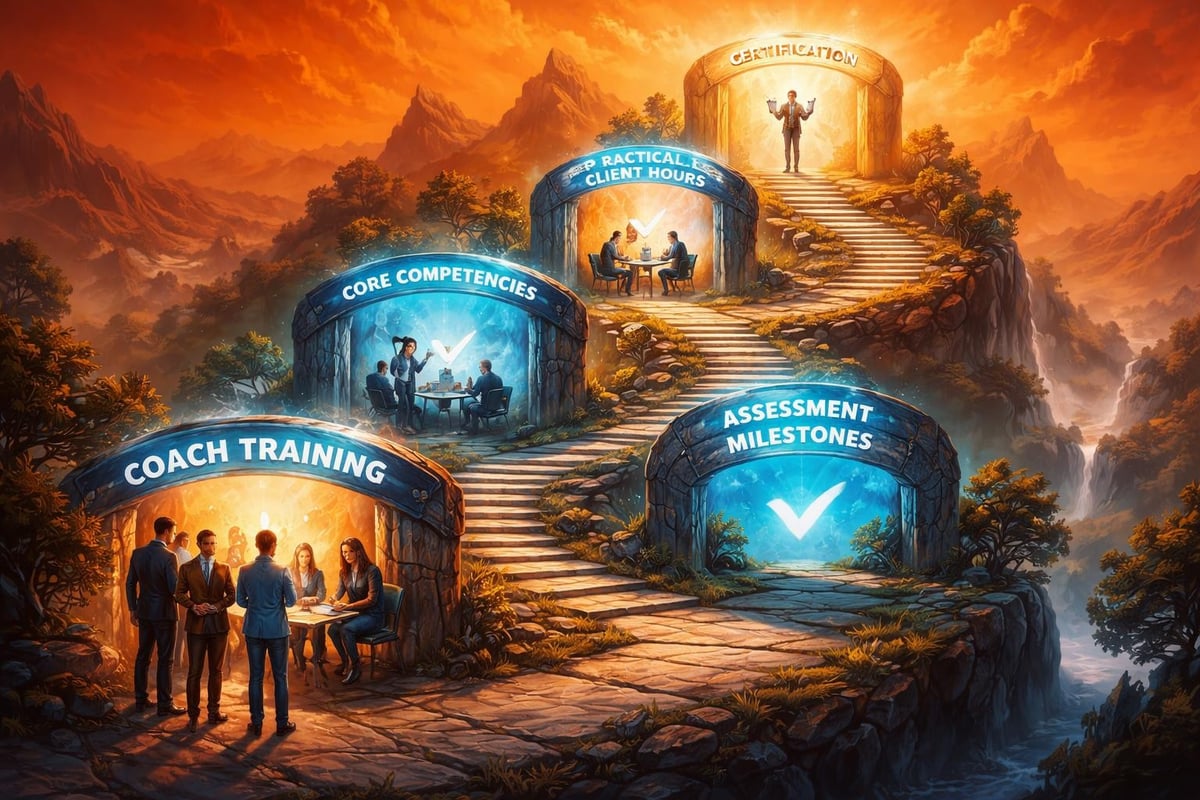
Niche Selection and Market Dominance

Generalists struggle to command premium rates or build memorable brands. Coaches guide professionals through strategic niche selection using:

  1. Capability audits that identify unique expertise combinations
  2. Market analysis revealing underserved segments in Zurich
  3. Competitive positioning that creates clear differentiation
  4. Authority building through thought leadership and content
  5. Network leverage connecting professionals with ideal client segments

Specificity creates authority. A consultant specializing in pharmaceutical regulatory compliance for Basel-area biotechs commands higher rates than a general business consultant.

Credibility Architecture for Swiss Clients

Zurich’s corporate decision-makers require substantial proof before engaging independent consultants. Coaching helps professionals develop:

  • Case study frameworks that demonstrate measurable results
  • Referral systems that leverage existing client relationships
  • Professional certifications recognized within target industries
  • Strategic partnerships with complementary service providers

Swiss business culture prioritizes trust and reliability over flashy marketing. Coaches help consultants build credibility architectures that align with these values while standing out in competitive markets.

Operational Excellence and Capacity Management

Technical expertise alone doesn’t guarantee business success. Consultants must master operational systems that support consistent delivery while maintaining quality standards.

Business coaching for consultants and freelancers in Zurich addresses operational challenges through proven frameworks that increase capacity without sacrificing quality. Magda Kern’s business coaching approach focuses on developing these soft skills alongside goal achievement.

Time Management for Knowledge Workers

Billable hours represent only one component of sustainable consulting practices. Coaches help professionals allocate time across:

  • Client delivery (40-50% of available time)
  • Business development (20-25% for pipeline building)
  • Administrative operations (10-15% for essential systems)
  • Professional development (10-15% for skill enhancement)
  • Strategic planning (5-10% for business evolution)

Without structured time allocation, consultants drift into reactive mode, constantly fighting fires rather than building sustainable practices.

Quality Control and Service Delivery

Inconsistent delivery damages reputation and limits growth potential. Coaching establishes quality frameworks including:

  1. Client onboarding protocols that set clear expectations
  2. Project management systems ensuring consistent execution
  3. Communication standards maintaining professional relationships
  4. Feedback mechanisms capturing improvement opportunities
  5. Documentation processes preserving institutional knowledge

Consultant quality systems

Financial Management and Business Intelligence

Many talented consultants struggle with financial fundamentals, creating cash flow crises and limiting growth potential. Business coaching for consultants and freelancers in Zurich transforms financial management from reactive bookkeeping to strategic intelligence.

Revenue Forecasting and Pipeline Management

Predictable revenue requires systematic pipeline development and accurate forecasting. Coaches implement:

Pipeline Stage Key Metrics Action Items
Prospecting Outreach volume, response rates Daily outbound activities
Qualification Meeting conversion, fit assessment Structured discovery calls
Proposal Close rates, average deal size Value-based proposals
Negotiation Discount frequency, payment terms Negotiation frameworks
Delivery Client satisfaction, referral rates Quality systems

Understanding pipeline velocity allows consultants to make informed decisions about capacity, hiring, and business development investment.

Profit Optimization Strategies

Revenue alone doesn’t determine business health. Coaches help independent professionals optimize profit through:

  • Expense auditing identifying unnecessary costs specific to Zurich operations
  • Tax optimization leveraging Swiss structures for independent professionals
  • Pricing experimentation testing rate increases with new clients
  • Service packaging bundling offerings for higher average transactions

Inez Bössow’s structured business coaching provides the external perspective needed to identify profit leakage and optimization opportunities.

Leadership Development for Solo Practitioners

Consultants and freelancers must lead without formal authority, influencing clients, partners, and eventually team members as businesses scale. Business coaching for consultants and freelancers in Zurich develops leadership capabilities essential for professional influence and business growth.

Client Leadership and Influence

Independent professionals must guide clients toward optimal outcomes while respecting organizational dynamics. This requires:

  • Stakeholder mapping identifying decision-makers and influencers
  • Political navigation understanding power structures within client organizations
  • Communication frameworks adapting messages for different audiences
  • Change management supporting clients through transformation initiatives

Working with a leadership coach develops these sophisticated influence capabilities that separate strategic advisors from tactical implementers.

Building and Leading Remote Teams

Scaling beyond solo practice requires effective team leadership. Coaches guide consultants through:

  1. Determining optimal timing for first hires
  2. Identifying roles that provide maximum leverage
  3. Recruiting talented professionals in competitive markets
  4. Establishing performance expectations and accountability
  5. Creating culture even in small, distributed teams

FreeUp connects coaching businesses with pre-vetted freelancers for specific tasks, allowing consultants to test delegation before committing to permanent hires.

Personal Leadership and Executive Presence

Zurich’s sophisticated business environment demands executive-level presence regardless of company size. Coaching develops:

  • Communication mastery for presentations, negotiations, and difficult conversations
  • Strategic thinking that positions consultants as trusted advisors
  • Emotional intelligence navigating complex interpersonal dynamics
  • Decision-making frameworks balancing analysis with action

These capabilities transform consultants from service providers into strategic partners commanding premium positioning.

Consultant leadership development

Selecting the Right Business Coach in Zurich

The coaching industry offers varying quality levels and specialization areas. Consultants and freelancers must evaluate potential coaches using specific criteria aligned with their business objectives.

Evaluating Coach Credentials and Experience

Not all coaches understand the unique challenges facing independent professionals. Priority evaluation criteria include:

  • Industry experience in consulting or freelance business models
  • Geographic knowledge of Zurich and Swiss business culture
  • Track record with measurable client outcomes
  • Coaching certifications from recognized professional bodies
  • Methodology alignment matching your learning preferences

Business coaching for consultants and freelancers in Zurich works best when coaches combine business expertise with coaching methodology and local market knowledge.

Coaching Formats and Engagement Models

Different professionals benefit from different coaching structures:

Format Best For Typical Investment
One-on-one sessions Personalized strategic guidance CHF 200-500/hour
Group programs Peer learning and accountability CHF 2,000-5,000/quarter
Intensive workshops Rapid skill development CHF 1,500-3,000/day
Ongoing advisory Continuous strategic support CHF 1,000-3,000/month

Robin Waite’s business coaching for consultants offers structured accelerators combining accountability with operational simplification.

Measuring Coaching ROI

Professional development represents an investment requiring measurable returns. Track coaching effectiveness through:

  1. Revenue metrics including total revenue and average client value
  2. Profitability improvements measuring margin expansion
  3. Time efficiency quantifying capacity increases
  4. Client satisfaction tracking retention and referral rates
  5. Strategic progress measuring advancement toward long-term objectives

Quality coaches establish clear success metrics before engagement begins, ensuring accountability for results.

Building Sustainable Competitive Advantages

Zurich’s consulting market grows more competitive each year. Business coaching for consultants and freelancers in Zurich creates sustainable advantages that compound over time rather than temporary tactical wins.

Developing Proprietary Methodologies

Generic consultants compete on price. Professionals with unique frameworks command premium positioning. Coaches help develop:

  • Assessment tools that diagnose client challenges systematically
  • Implementation frameworks providing structured problem-solving approaches
  • Decision models helping clients navigate complex choices
  • Transformation roadmaps guiding clients through change initiatives

These intellectual property assets differentiate practices while increasing perceived value.

Strategic Network Development

Professional networks drive both opportunities and knowledge exchange. Effective networking strategies include:

  • Targeted relationship building with ideal client profiles and referral partners
  • Community leadership through industry associations and professional groups
  • Content contribution establishing expertise through published insights
  • Strategic alliances with complementary service providers

Zurich’s business community values depth over breadth in professional relationships. Quality coaches help consultants develop authentic connections rather than transactional networking approaches.

Continuous Innovation and Market Adaptation

Markets evolve, and yesterday’s differentiators become tomorrow’s table stakes. Coaching establishes innovation disciplines including:

  1. Regular market research identifying emerging trends
  2. Client feedback systems capturing shifting needs
  3. Skill development planning maintaining technical relevance
  4. Service evolution adapting offerings to market demands
  5. Competitive analysis understanding positioning shifts

Fearless Business provides resources for consultants including frameworks for business development and lead generation that support ongoing market adaptation.

Psychological Dimensions of Independent Professional Success

Technical and strategic capabilities alone don’t guarantee success. Consultants and freelancers must navigate psychological challenges that employee positions shield them from.
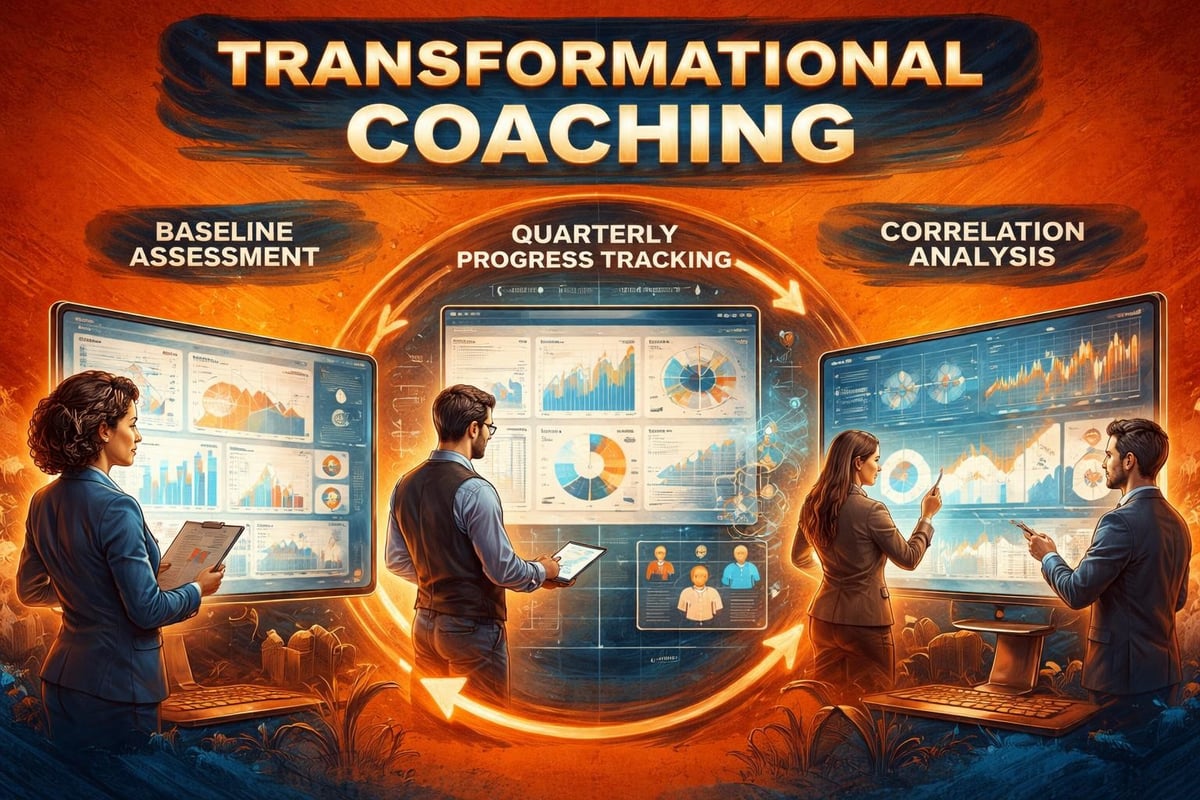
Overcoming Impostor Syndrome and Pricing Anxiety

Independent professionals frequently struggle with confidence, particularly when positioning themselves at premium price points. Business coaching for consultants and freelancers in Zurich addresses these psychological barriers through:

  • Evidence-based self-assessment distinguishing real gaps from perceived inadequacy
  • Value articulation frameworks connecting expertise to client outcomes
  • Pricing psychology understanding buyer behavior in professional services
  • Confidence-building practices developing executive presence and authority

Understanding psychological safety examples helps consultants create environments where clients feel comfortable sharing challenges and collaborating on solutions.

Managing Isolation and Building Accountability

Solo practice creates isolation that undermines motivation and decision quality. Structured coaching provides:

  • Regular accountability ensuring consistent progress toward objectives
  • External perspective challenging assumptions and blind spots
  • Celebration systems acknowledging wins often overlooked in independent work
  • Problem-solving partnerships navigating challenges with experienced guidance

The discipline required for independent success exceeds what employment demands. External accountability systems make the difference between consistent execution and sporadic progress. For consultants looking to formalize their own accountability structures, exploring resources from AccountabilityNow provides additional frameworks for maintaining momentum.

Work-Life Integration for Sustainable Performance

The freedom of independent work can paradoxically create always-on cultures that lead to burnout. Coaches help establish:

  1. Boundary systems protecting personal time and energy
  2. Recovery protocols ensuring sustainable performance rhythms
  3. Capacity planning aligning workload with energy management
  4. Delegation timing identifying when to expand team capacity
  5. Life design integration building businesses that support desired lifestyles

Zurich offers exceptional quality of life, but only consultants who deliberately protect personal time enjoy these benefits while building successful practices.

Technology and Tools for Modern Consultants

Digital transformation affects how consultants deliver value, manage operations, and compete in 2026’s marketplace. Business coaching for consultants and freelancers in Zurich includes technology strategy alongside business fundamentals.

Essential Technology Stack Components

Modern consulting practices require integrated technology supporting:

Function Tool Category Business Impact
Client management CRM systems Relationship tracking, pipeline visibility
Project delivery Collaboration platforms Efficient execution, client communication
Time tracking Productivity tools Capacity analysis, project profitability
Financial management Accounting software Cash flow visibility, tax compliance
Marketing automation Email and content systems Efficient business development

Technology should enhance rather than complicate operations. Coaches help consultants select and implement tools appropriate for their business stage and technical comfort.

Leveraging AI for Competitive Advantage

Artificial intelligence transforms consulting workflows in 2026. Strategic applications include:

  • Research acceleration using AI to analyze markets and competitors
  • Content creation developing thought leadership materials efficiently
  • Proposal development customizing client presentations rapidly
  • Administrative automation reducing non-billable time requirements

Exploring best AI for business coaching reveals how technology augments rather than replaces human expertise in professional development.

Data-Driven Decision Making

Intuition alone doesn’t optimize business performance. Coaches implement metrics frameworks tracking:

  1. Lead source effectiveness and conversion rates
  2. Client profitability and lifetime value analysis
  3. Service delivery efficiency and quality indicators
  4. Marketing ROI across different channels and tactics
  5. Business health indicators predicting growth sustainability

Data transforms business management from reactive to strategic, enabling confident decisions based on evidence rather than assumptions.


The journey from talented consultant to thriving business owner requires more than technical expertise and hard work. Strategic guidance, accountability systems, and proven frameworks separate professionals who struggle from those who build sustainable, profitable practices in Zurich’s competitive marketplace. Noomii Leadership Coaching delivers precision coach matching and evidence-based leadership diagnostics that help consultants and freelancers develop the strategic capabilities, operational systems, and leadership presence needed for lasting success. Whether you’re launching your independent practice or scaling beyond solo operations, working with the right coaching partner transforms potential into measurable results.

Gemini Prompts to Help Coaches Write Social Posts

Social media remains essential for coaches building authority and attracting clients, yet many struggle with consistent, engaging content creation. Google’s Gemini offers powerful capabilities to streamline this process through strategic prompting. Understanding how to craft effective gemini prompts to help coaches write social posts transforms time-consuming content creation into a scalable system that maintains authenticity while driving results.

Why Coaches Need Smarter Content Creation Tools

Leadership coaches, executive coaches, and business coaches face unique content challenges. Your expertise lies in developing leaders and driving business outcomes, not necessarily in crafting scroll-stopping social media posts. Yet visibility on platforms like LinkedIn and Instagram directly impacts client acquisition and brand authority.

The statistics tell a compelling story. Coaches who post consistently generate three times more inbound inquiries than those who post sporadically. However, content creation consumes an average of eight to twelve hours weekly, time better spent delivering client results and refining methodologies.

Content creation time investment

The Strategic Advantage of AI-Powered Content

Gemini prompts to help coaches write social posts solve the efficiency equation without sacrificing quality. Rather than staring at blank screens or recycling generic motivational quotes, coaches can leverage structured prompts that transform client insights, session breakthroughs, and business frameworks into compelling content.

Research shows that personality-driven content generation significantly enhances engagement by aligning messaging with audience preferences. When coaches combine their domain expertise with well-crafted AI prompts, they create content that resonates authentically while maintaining professional polish.

Foundational Prompts for Daily Social Content

Building a sustainable content system starts with versatile prompts that coaches can deploy repeatedly. These foundational templates address common coaching scenarios while allowing personalization.

Client Success Story Transformation

“Transform this client outcome into a compelling LinkedIn story: [describe situation, intervention, and result]. Focus on the leadership shift that created measurable business impact. Use a conversational yet professional tone. Include one reflection question for the audience. Keep it under 200 words.”

This prompt structure works particularly well for leadership development and team coaching scenarios where quantifiable results demonstrate coaching value. The reflection question drives engagement while positioning you as a thought leader who facilitates growth rather than preaches solutions.

Framework Explanation Series

“Explain this coaching framework in a social post: [framework name and core components]. Target mid-market managers who want practical tools, not theory. Use bullet points for the steps. Add one real-world application example. End with a clear next step.”

Frameworks represent intellectual property that differentiates coaching practices. By systematically sharing these through well-structured posts, coaches build credibility while educating potential clients on their methodology.

Weekly Theme Development

Content Type Prompt Focus Platform Fit Engagement Goal
Case Study Client transformation with metrics LinkedIn Authority building
Quick Tip Single actionable insight Instagram, LinkedIn Immediate value
Question Post Audience reflection prompt LinkedIn Conversation starter
Behind-the-Scenes Coaching process transparency Instagram Stories Relationship building

Advanced Prompts for Thought Leadership

Moving beyond daily content, gemini prompts to help coaches write social posts can elevate your positioning as an industry expert. These advanced applications require more context but generate higher-value content.

Industry Trend Analysis

“Analyze this leadership trend: [trend description]. Connect it to challenges facing mid-market companies with 25-500 employees. Explain why traditional coaching approaches miss the mark. Propose one contrarian perspective based on practical experience. Structure as a LinkedIn article opener with a strong hook.”

This prompt type positions coaches as strategic thinkers rather than service providers. It’s particularly effective for executive coaches working with senior leaders who value nuanced business perspectives.

Data-Driven Insight Posts

The most compelling coaching content combines expertise with evidence. Use this structure:

“Create a LinkedIn post based on this coaching data: [insert anonymized metrics from client engagements]. Highlight the correlation between [specific intervention] and [business outcome]. Frame it as a surprising finding. Include one application tip readers can implement immediately. Add relevant hashtags for visibility.”

According to research on AI content creation tools, coaches who incorporate data and metrics in social posts achieve 47% higher engagement than those relying solely on inspirational messaging.

Engagement metrics comparison

Platform-Specific Optimization

Different platforms require different approaches. While gemini prompts to help coaches write social posts provide the foundation, platform optimization maximizes reach and engagement.

LinkedIn Authority Building

LinkedIn rewards substantive content that drives meaningful professional conversation. Effective prompts for this platform emphasize:

  • Leadership insights that challenge conventional wisdom
  • Business results tied to specific interventions
  • Industry commentary that demonstrates strategic thinking
  • Process transparency that builds trust

For LinkedIn specifically, these proven prompt structures help avoid generic AI-sounding content by incorporating personal experience and specific examples.

Instagram Engagement Tactics

Instagram demands visual appeal and concise value delivery. Adapt prompts accordingly:

“Create an Instagram caption for this coaching concept: [concept]. Start with a pattern interrupt statement. Deliver value in three bullet points maximum. End with an engaging question. Use line breaks for readability. Suggest five relevant hashtags.”

Tools like AI-powered Instagram generators complement Gemini by handling visual content coordination alongside caption generation.

Content Repurposing Systems

Smart coaches maximize efficiency by repurposing content across platforms. This systematic approach to gemini prompts to help coaches write social posts creates compound value from single insights.

Session-to-Content Pipeline

  1. Record key insights from client sessions (with permission)
  2. Use Gemini to extract shareable principles
  3. Generate platform-specific variations
  4. Schedule across channels
  5. Monitor engagement and refine

“Review this anonymized coaching session transcript: [paste relevant excerpt]. Extract three shareable leadership principles. For each principle, create: one LinkedIn post (150 words), one Instagram caption (50 words), and one Twitter thread opener (280 characters). Maintain consistent messaging while adapting format.”

This single prompt generates nine content pieces from one source material, demonstrating the efficiency gains possible through strategic AI integration. For coaches managing client-heavy schedules, these AI content automation approaches reduce weekly content time from twelve hours to three.

Measuring Content Performance

Effective social media strategy requires ongoing optimization based on performance data. Build measurement into your prompting approach:

“Analyze these three post variations: [paste posts]. Based on engagement metrics [likes, comments, shares], identify which elements resonated most. Suggest two new post concepts that amplify successful elements while testing new approaches.”

This meta-analysis prompt helps coaches continuously improve content quality while maintaining authenticity. Performance tracking aligns with the accountability focus that defines results-oriented coaching approaches.

Content Audit Framework

  • Monthly review of top-performing posts by platform
  • Quarterly refinement of prompt templates based on results
  • Audience feedback integration from comments and direct messages
  • Competitive analysis of content gaps and opportunities

Working with business coaches who understand content marketing can accelerate this optimization process by bringing outside perspective to performance patterns.

Maintaining Authenticity While Scaling

The primary concern coaches express about AI-generated content centers on authenticity. Well-crafted gemini prompts to help coaches write social posts should enhance rather than replace your unique voice and perspective.

Voice Calibration Strategy

Begin by feeding Gemini examples of your best-performing organic content:

“Analyze these five posts I wrote: [paste examples]. Identify my writing patterns, tone, vocabulary preferences, and structural approaches. Create a style guide I can reference in future prompts to maintain consistency.”

This foundational step ensures AI-generated content sounds like you, not a generic business account. The investment in voice calibration pays dividends across hundreds of future posts.

Additionally, the insights from this productivity-focused collection of Gemini prompts demonstrate how specificity in prompting directly correlates with output quality and authenticity.


Strategic use of AI prompts transforms social media from a time drain into a scalable client acquisition system. By implementing these gemini prompts to help coaches write social posts, you maintain visibility and authority without sacrificing client delivery time. If you want practical coaching that drives measurable business results while building sustainable systems, Noomii connects mid-market companies with executive coaches who deliver accountability, clear KPIs, and visible ROI on month-to-month terms.

Entrepreneur Growth and Execution Support in Aalborg

Aalborg has emerged as a dynamic hub for entrepreneurship in Denmark, offering a comprehensive ecosystem that supports founders from initial concept through scaling and execution. The city’s unique combination of world-class university resources, dedicated incubators, and sophisticated coaching infrastructure creates an environment where entrepreneurs can access the strategic guidance and operational support necessary to build sustainable, high-growth businesses. Understanding how to leverage entrepreneur growth and execution support in Aalborg can dramatically accelerate your venture’s trajectory while avoiding common pitfalls that derail early-stage companies.

The Aalborg Entrepreneurship Ecosystem

Aalborg’s entrepreneurial landscape extends far beyond traditional business incubators. The city has cultivated a multi-layered support system that addresses every stage of business development.

At the foundation sits AAU Innovation at Aalborg University, which transforms academic knowledge into commercial opportunities through structured workshops, mentoring programs, and guidance specifically designed for researchers and students. This institution-backed approach ensures entrepreneurs have access to cutting-edge research and technical expertise.

The ecosystem also includes specialized environments like GrowAAL EAST, a coworking space that brings together over 30 companies focused on software, technology, and artificial intelligence. This concentration of tech-focused ventures creates natural collaboration opportunities and knowledge sharing that accelerates problem-solving and innovation.

Aalborg entrepreneurship ecosystem components

Early-Stage Foundation Building

Starting a business requires more than a good idea. International entrepreneurs particularly benefit from resources like StartUp Café Aalborg, which provides free information and advice for those looking to establish businesses in the city. The café offers workplace facilities, networking opportunities, and drop-in sessions with experienced consultants who understand the regulatory and cultural landscape.

For student entrepreneurs, the AAU Startup Program delivers workshops, mentoring, and practical tools to help transform academic projects into viable businesses. This program bridges the gap between theoretical knowledge and practical execution.

Key benefits of these early-stage programs include:

  • Access to experienced mentors with industry-specific knowledge
  • Networking with fellow entrepreneurs facing similar challenges
  • Practical workspace without significant overhead costs
  • Guidance on legal structures, funding options, and market validation
  • Connection to potential co-founders and early team members

Leadership Development as a Growth Accelerator

While technical skills and market knowledge matter, leadership capability often determines whether a startup scales successfully or stalls at critical inflection points. Entrepreneur growth and execution support in Aalborg increasingly recognizes that founder development must occur alongside business development.

The challenges entrepreneurs face evolve dramatically as their companies grow. A founder who excels at product development may struggle with team management. An entrepreneur comfortable with early sales might find strategic partnership negotiations overwhelming. These leadership gaps become bottlenecks that constrain organizational growth.

The Cost of Leadership Blind Spots

Research consistently shows that leadership deficiencies cost growing companies significantly. Poor decision-making at the executive level creates cascading effects throughout the organization. Teams become disengaged when founders fail to communicate vision effectively. Strategic opportunities slip away when leaders lack the confidence or framework to evaluate complex choices.

Many entrepreneurs also bring counterproductive patterns from previous work experiences. Someone who thrived in a hierarchical corporate environment may struggle to build the collaborative, adaptive culture that startups require. Understanding toxic leadership patterns and how to avoid replicating them becomes essential as teams expand beyond the founding members.

Leadership Challenge Impact on Execution Required Intervention
Decision paralysis Missed market opportunities, competitor advancement Executive decision-making frameworks
Communication gaps Team misalignment, duplicated effort Strategic communication coaching
Delegation failure Founder burnout, scalability constraints Trust-building and accountability systems
Conflict avoidance Unresolved tensions, talent attrition Constructive confrontation skills

Specialized Support for High-Growth Ventures

Scale Incubator represents Aalborg’s commitment to high-growth, sustainable companies. As a founders-first incubator, Scale provides resources and community specifically designed for entrepreneurs pursuing ambitious scaling objectives rather than lifestyle businesses.

This type of focused support matters because high-growth ventures face distinct challenges. They require different funding strategies, governance structures, and operational systems than companies pursuing steady, incremental growth. The entrepreneur growth and execution support in Aalborg available through Scale addresses these specific needs.

Sector-Specific Acceleration

Specialized programs deliver even more targeted support. ESA BIC Denmark, hosted at Aalborg University, focuses exclusively on space-based business ideas. This incubation program helps entrepreneurs navigate the unique technical, regulatory, and commercial challenges of the space sector.

For established SMEs seeking transformation, the Aalborg Institute for Development provides practical tools and strategies around digitalization, artificial intelligence, and innovation. Their approach emphasizes capacity building and tangible implementation rather than theoretical frameworks.

These specialized programs excel at:

  1. Connecting entrepreneurs with industry-specific mentors and investors
  2. Providing access to technical infrastructure and research facilities
  3. Navigating sector-specific regulatory requirements
  4. Building credibility through association with recognized institutions
  5. Creating partnership opportunities with established industry players

Specialized incubator pathways

Strategic Execution Through Leadership Coaching

Execution separates successful entrepreneurs from those with merely good ideas. The ability to translate strategy into consistent, measurable action determines business outcomes. This execution capability depends heavily on leadership effectiveness.
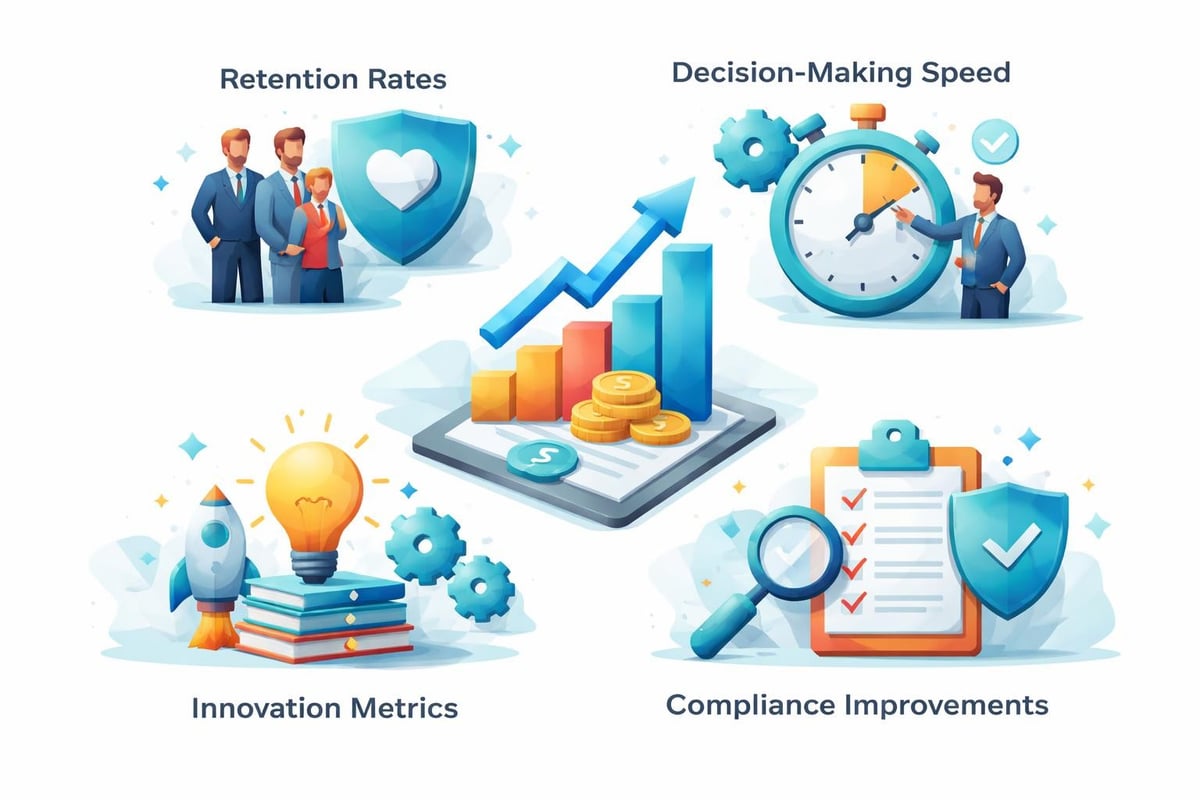
Corporate leadership coaching has evolved significantly beyond generic motivational approaches. Modern programs like those offered by Noomii combine evidence-based diagnostics with precision matching to pair entrepreneurs with coaches who possess directly relevant expertise. This targeted approach delivers faster results than traditional coaching models.

Data-Driven Leadership Assessment

Effective entrepreneur growth and execution support in Aalborg starts with accurate self-awareness. Advanced leadership assessments identify specific strengths, developmental areas, and behavioral patterns that impact business performance. These tools move beyond personality typing to provide actionable insights about decision-making approaches, communication effectiveness, and stress responses.
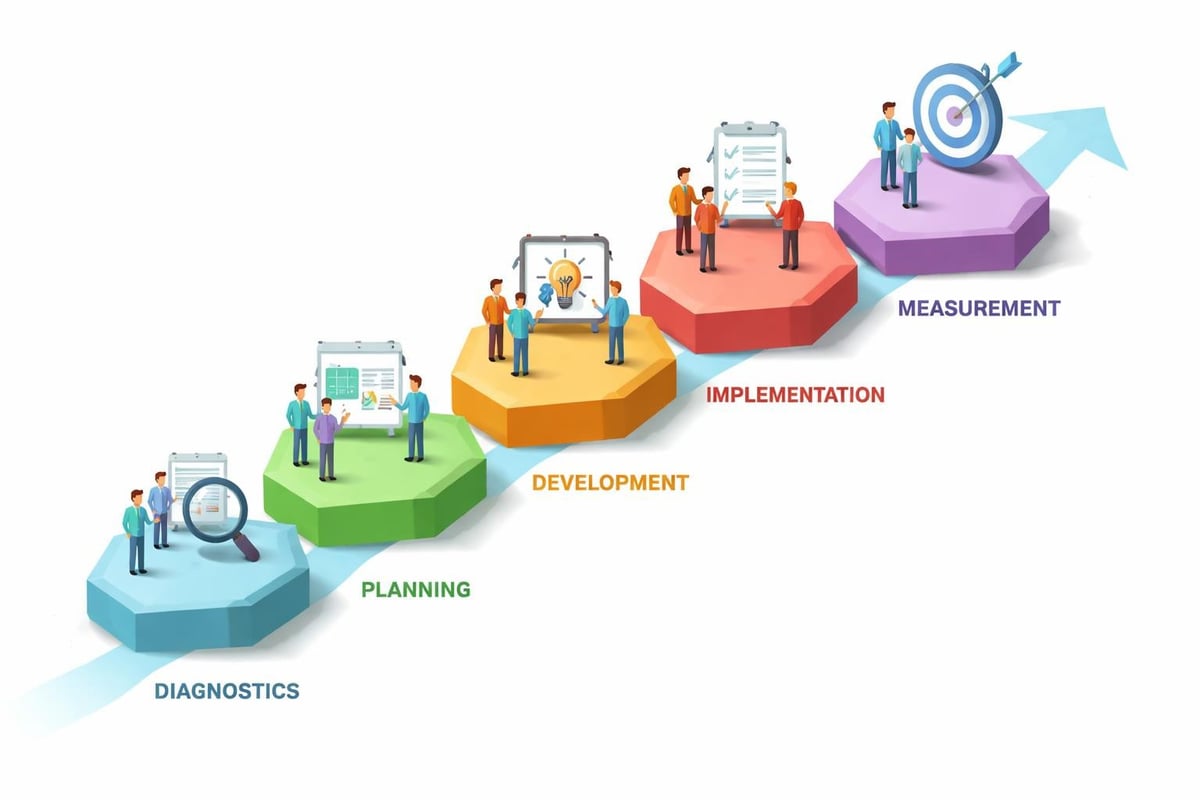

The assessment data enables entrepreneurs to understand why certain situations trigger counterproductive reactions. A founder might discover that their tendency toward perfectionism, while valuable during product development, creates bottlenecks when team members need autonomy. This awareness creates the foundation for targeted behavioral change.

Assessment areas critical for entrepreneurs include:

  • Strategic thinking and long-term vision development
  • Adaptability and response to ambiguity
  • Interpersonal effectiveness and team building
  • Emotional regulation under pressure
  • Conflict resolution and difficult conversations
  • Resource allocation and priority management

Matching Expertise to Entrepreneurial Needs

Generic coaching rarely addresses the specific challenges entrepreneurs face. A coach with corporate HR background may not understand startup funding dynamics. Someone experienced with Fortune 500 executives might struggle to relate to bootstrapped venture constraints.

Precision matching ensures entrepreneurs work with coaches who have navigated similar challenges. This might mean connecting a fintech founder with a coach who has scaled technology companies, or pairing a social enterprise leader with someone experienced in mission-driven organizations. The right match accelerates progress because the coach immediately understands context and can provide relevant frameworks.

Research institutions like the MSMEs and Family Businesses Lab at Aalborg University provide valuable insights into the specific growth challenges facing small and medium enterprises. This research informs coaching approaches that address real-world execution barriers rather than theoretical leadership concepts.

Building Scalable Leadership Systems

Individual founder development represents only one dimension of sustainable growth. Truly scalable organizations build leadership capability throughout the team, creating systems that function effectively even as the company expands beyond the founder’s direct oversight.

This systematic approach to leadership development aligns individual growth with organizational priorities. Instead of isolated coaching engagements, companies implement integrated programs that develop consistent leadership behaviors across all levels.

Creating Accountability Structures

Accountability separates intentions from results. Many entrepreneurs struggle with this aspect of execution because early-stage ventures often lack formal governance structures. As companies grow, informal accountability mechanisms break down.

Structured accountability systems track progress against defined objectives, create transparency around decision-making, and ensure follow-through on commitments. These systems might include regular strategic reviews, peer accountability groups, or executive dashboards that make performance visible. Resources like Accountability Now provide frameworks for building these critical structures into growing organizations.

Accountability Mechanism Implementation Stage Primary Benefit
Weekly priority reviews Seed to Series A Maintains focus amid rapid change
Board advisory meetings Post-funding Strategic guidance and governance
Peer mastermind groups All stages Collective wisdom and support
360-degree feedback 10+ employees Leadership development insights
OKR tracking systems Scaling phase Organizational alignment

Scalable leadership accountability framework

Measuring Leadership Impact

Effective entrepreneur growth and execution support in Aalborg requires measurable outcomes. Vague improvements in “leadership capability” don’t justify investment or demonstrate ROI. Modern coaching programs establish clear KPIs that connect leadership development to business results.

These metrics might include employee engagement scores, leadership effectiveness ratings from 360 assessments, team productivity measurements, or strategic initiative completion rates. The key is establishing baseline measurements before coaching begins and tracking improvement over defined timeframes.

Critical leadership metrics for growing ventures:

  • Time-to-decision on strategic choices (measuring decision-making efficiency)
  • Employee retention rates among high performers (indicating leadership effectiveness)
  • Cross-functional collaboration scores (showing communication impact)
  • Strategic goal achievement percentage (demonstrating execution capability)
  • Leadership pipeline readiness (ensuring sustainable growth capacity)

Integrating University Resources with Commercial Coaching

Aalborg’s unique advantage lies in the integration between academic institutions and practical business support. Universities provide research-backed methodologies and cutting-edge knowledge, while commercial coaching delivers personalized application and accountability.

AAU Student Entrepreneurship equips students to make value-creating contributions through entrepreneurial courses and activities. This academic foundation prepares entrepreneurs to think systematically about business challenges.

Commercial coaching builds on this foundation by addressing the messy realities of implementation. Academic frameworks provide structure, but experienced coaches help entrepreneurs adapt those frameworks to specific situations, navigate unexpected obstacles, and maintain momentum through setbacks.

Accessing Aalborg’s Mentor Network

AAU’s mentor corps consists of over 100 skilled professionals offering support across various backgrounds and competencies. This extensive network provides entrepreneurs with access to experienced guidance without the formal structure of coaching engagements.

Mentorship works best for specific technical questions, industry introductions, and periodic strategic input. Coaching excels at sustained behavioral change, accountability for execution, and developing leadership capabilities. The most successful entrepreneurs leverage both resources strategically.

Combining mentorship from Aalborg’s academic network with professional leadership coaching creates comprehensive support. Mentors provide industry wisdom and connections, while coaches ensure entrepreneurs develop the personal effectiveness to capitalize on those opportunities.

Overcoming Common Execution Barriers

Even with access to excellent entrepreneur growth and execution support in Aalborg, founders encounter predictable obstacles that derail execution. Understanding these barriers enables proactive mitigation.

Frequent execution killers include:

  1. Priority proliferation: Pursuing too many opportunities simultaneously dilutes impact
  2. Planning without action: Creating detailed strategies but failing to implement
  3. Feedback avoidance: Ignoring market signals that contradict founder assumptions
  4. Team misalignment: Operating with different understandings of goals and strategies
  5. Resource over-extension: Committing to initiatives without adequate capacity

Leadership coaching specifically addresses the behavioral and cognitive patterns underlying these barriers. A coach helps entrepreneurs recognize when they’re spreading resources too thin, develop frameworks for ruthless prioritization, and build the emotional resilience to receive difficult feedback.

The Role of Psychological Safety

High-performing entrepreneurial teams operate with psychological safety. Team members feel comfortable challenging assumptions, admitting mistakes, and proposing unconventional ideas without fear of punishment or ridicule. This environment accelerates learning and innovation.

Founders set the tone for psychological safety through their responses to disagreement, failure, and uncertainty. Learning to implement psychological safety practices becomes critical as teams grow beyond the founding members who share implicit trust.

Leadership coaching helps entrepreneurs develop the self-awareness and emotional regulation necessary to create psychologically safe environments. This includes recognizing defensive reactions, managing stress responses, and modeling vulnerability appropriately.

Tailoring Support to Growth Stage

Entrepreneur growth and execution support in Aalborg must match the company’s developmental stage. Early-stage ventures need different interventions than scaling businesses or established SMEs undergoing transformation.

Pre-Seed to Seed Stage

Founders at this stage focus on product-market fit, initial customer acquisition, and team formation. Leadership challenges center on decision-making under extreme uncertainty, managing founding team dynamics, and maintaining motivation through setbacks.

Coaching interventions emphasize resilience, strategic experimentation frameworks, and founder relationship management. The goal is developing sustainable work practices and decision-making approaches that prevent burnout while maintaining rapid iteration.

Series A to Growth Stage

Scaling introduces leadership complexity. Founders must transition from doers to leaders, building systems that enable others to execute effectively. Communication becomes more challenging as team size expands beyond direct relationships.

Leadership development focuses on delegation, strategic communication, building middle management layers, and creating consistent organizational culture. Coaches help founders navigate the identity shift from individual contributor to organizational architect.

Established SME Transformation

Mature companies pursuing digital transformation or market expansion face different challenges. Leadership must overcome organizational inertia, manage change resistance, and balance innovation with operational stability.

Coaching addresses change leadership, stakeholder management, and strategic repositioning. The emphasis shifts from building new capabilities to evolving existing organizational systems and shifting entrenched mindsets.

Measuring ROI on Leadership Investment

Smart entrepreneurs demand clear returns on every investment, including leadership development. Calculating ROI on coaching requires establishing baseline metrics, defining success criteria, and tracking improvements over time.

Direct financial impacts might include revenue growth acceleration, cost reduction through improved efficiency, or customer acquisition improvements from better team alignment. Indirect benefits include reduced founder stress, improved decision quality, and enhanced organizational resilience.

Investment Area Measurement Approach Typical Timeline
Executive coaching 360 assessment improvement, decision velocity 6-12 months
Team development Engagement scores, productivity metrics 3-9 months
Strategic planning Goal achievement rate, revenue targets 12-18 months
Culture building Retention rates, collaboration scores 9-24 months

Organizations seeking comprehensive solutions benefit from platforms that integrate assessment, matching, and progress tracking. Noomii’s approach to leadership coaching provides this integrated framework, ensuring measurable outcomes align with organizational priorities.

Building Long-Term Competitive Advantage

Sustainable competitive advantage in 2026 increasingly derives from organizational capabilities rather than product features or market position. Companies that develop superior leadership, culture, and execution systems outperform competitors regardless of sector.

Entrepreneur growth and execution support in Aalborg provides the infrastructure for building these capabilities. By combining academic resources, specialized incubators, professional coaching, and peer networks, Aalborg offers entrepreneurs comprehensive support for developing organizational excellence.

The most successful founders view leadership development as ongoing rather than episodic. They build continuous learning into organizational DNA, creating systems that develop capability at all levels. This approach transforms leadership from individual heroics into organizational competency.

Long-term leadership system components:

  • Regular leadership assessments tracking development over time
  • Structured feedback mechanisms providing ongoing performance insights
  • Learning budgets allocated for continuous skill development
  • Mentorship programs connecting experienced and emerging leaders
  • Knowledge sharing systems capturing and distributing organizational learning

Investing in these systems during growth stages creates compound benefits. Organizations with strong leadership development track records attract better talent, navigate change more effectively, and sustain performance through market disruptions.


Building a successful venture in Aalborg requires more than access to capital and customers. The entrepreneur growth and execution support in Aalborg available through incubators, university programs, and professional coaching creates the foundation for sustainable growth. When founders combine strategic vision with systematic leadership development, they build organizations capable of scaling effectively while maintaining the agility and innovation that defined their early success. Noomii Leadership Coaching partners with ambitious entrepreneurs and growing organizations to develop the leadership capabilities that transform potential into performance, providing evidence-based assessments, precision coach matching, and measurable outcomes that drive both individual and organizational excellence.

Gemini Prompts to Help Coaches Grow Revenue in 2026

Coaches today face unprecedented pressure to demonstrate tangible value while competing in saturated markets. The integration of artificial intelligence tools like Google Gemini has created new opportunities for professional coaching practices to scale their impact and accelerate revenue growth. Smart gemini prompts to help coaches grow revenue aren’t about replacing human expertise but amplifying strategic thinking, automating repetitive tasks, and uncovering hidden opportunities in client pipelines. This guide explores practical prompts that drive measurable business outcomes for coaching practices serving mid-market companies and individual clients alike.

Strategic Client Acquisition Through AI-Powered Discovery

The foundation of revenue growth begins with understanding your ideal client profile at a granular level. Gemini can analyze your existing client base and identify patterns you might miss manually.

Effective discovery prompts include:

  • “Analyze these ten client success stories and identify the three common business challenges they faced before hiring a coach”
  • “Create a detailed avatar of my ideal client based on industry, company size, pain points, and budget constraints”
  • “Generate five qualifying questions for discovery calls that reveal whether a prospect has budget authority and timeline urgency”

Recent research on AI integration in professional coaching demonstrates how large language models can support self-reflection and leadership growth when paired with human expertise. For executive coaching practices, this means using Gemini to prepare more targeted outreach that speaks directly to C-suite priorities like accountability frameworks and KPI-driven results.

AI-assisted client qualification process

Pricing Strategy Optimization

Many coaches leave revenue on the table by underpricing their services or failing to articulate value propositions clearly. Gemini prompts to help coaches grow revenue include sophisticated pricing analysis that considers market positioning and competitive differentiation.

Try these prompts for pricing clarity:

  1. “Based on these client outcomes and testimonials, suggest three pricing tiers with specific deliverables for each level”
  2. “Create a value justification script that connects my coaching fees to measurable ROI in client retention and leadership effectiveness”
  3. “Identify five ways my corporate coaching differs from competitors and translate each into a pricing premium justification”

According to insights from entrepreneurs using AI for revenue growth, strategic pricing adjustments often yield 15-30% revenue increases without requiring additional client acquisition.

Content Marketing That Converts Prospects

Content remains the primary channel for demonstrating expertise and building trust with potential coaching clients. However, creating consistent, high-quality content drains time from billable coaching hours.

Content Type Gemini Prompt Example Expected Outcome
LinkedIn Posts “Write three thought leadership posts about manager training challenges in 2026” Weekly engagement driver
Case Studies “Transform these client notes into a case study highlighting KPI improvements” Sales enablement asset
Email Sequences “Create a five-email nurture sequence for prospects interested in team facilitation” Conversion pipeline

The key is specificity. Generic prompts produce generic content that fails to differentiate your practice. Business coaches should include industry context, specific methodologies, and outcome metrics in their prompts to generate content that resonates with decision-makers facing operational challenges.

Advanced Prompts for Client Engagement

Maintaining client relationships beyond the initial engagement creates recurring revenue streams and referral opportunities. Gemini excels at generating personalized touchpoints that keep your practice top-of-mind.

Engagement-focused prompts:

  • “Design a quarterly business review template for coaching clients that tracks progress against their original KPIs”
  • “Generate five creative check-in questions I can send to alumni clients to uncover new coaching needs”
  • “Create a referral request email that highlights specific outcomes achieved and makes asking easy”

Research on generative AI adoption in professional coaching emphasizes ethical considerations and the importance of maintaining authentic human connection while leveraging AI efficiency gains.

Sales Process Refinement and Conversion Rate Improvement

Converting interested prospects into paying clients requires consistent messaging, objection handling, and clear next steps. Gemini prompts to help coaches grow revenue should address each stage of your sales funnel.

For discovery call preparation:

  • “Based on this prospect’s LinkedIn profile and company website, generate ten strategic questions about their leadership challenges”
  • “Create a three-tier proposal template for a manufacturing company with 150 employees facing retention issues”
  • “Write an objection-handling script for prospects concerned about coaching ROI measurement”

Many coaches struggle with the transition from rapport-building to commercial discussions. As highlighted in this podcast on Gemini for coaching sales, AI-generated frameworks help maintain conversational flow while addressing pricing concerns and commitment timelines.

Sales funnel optimization workflow

Operations and Delivery Efficiency

Revenue growth isn’t only about acquiring more clients. Operational efficiency allows you to serve more clients without proportional time investment, directly impacting profitability.

Streamline your practice with these prompts:

  1. “Create a session preparation checklist for 360 leadership assessments that ensures consistency across all clients”
  2. “Generate a client onboarding sequence including welcome materials, expectation-setting documents, and initial assessment tools”
  3. “Design a coaching session notes template that captures action items, commitments, and progress indicators”

When you reduce administrative overhead, you create capacity for additional billable hours or strategic business development. Tools like accountability platforms can complement AI-assisted workflows by ensuring clients follow through on commitments made during coaching sessions.

Market Positioning and Differentiation Messaging

Standing out in a crowded coaching marketplace requires clarity about what makes your approach unique. Generic positioning statements fail to capture attention or command premium pricing.

Differentiation Factor Prompt to Clarify Messaging
Methodology “Explain how live meeting coaching differs from traditional one-on-one executive coaching”
Results Focus “Create three before-and-after scenarios showing transformation in manager effectiveness”
Risk Mitigation “Write messaging that emphasizes month-to-month terms and aligned incentives versus long contracts”

The coaching industry continues evolving rapidly, with AI transforming learning material design and delivery methods. Coaches who articulate how they integrate technology while maintaining human expertise position themselves as forward-thinking partners.

Competitive differentiation matrix

Leveraging AI for Thought Leadership

Establishing yourself as an industry authority creates inbound demand and reduces client acquisition costs. Gemini can help develop comprehensive thought leadership campaigns.

Consider these strategic prompts:

  • “Outline a white paper on the ROI of leadership development programs for mid-market companies”
  • “Generate five controversial but defensible opinions about corporate coaching trends in 2026”
  • “Create a webinar outline on building accountable leadership teams with measurable KPIs”

Resources like AI prompts for coaches demonstrate how strategic content creation attracts qualified prospects already convinced of coaching value.

Revenue Analytics and Growth Forecasting

Understanding which activities drive revenue helps you allocate time effectively. Gemini can analyze historical data and project future growth based on current pipeline activities.

Analytics-focused prompts include:

  • “Based on these twelve months of client data, identify my most profitable service offering and client segment”
  • “Create a revenue forecast model assuming I convert 30% of current prospects at average deal size”
  • “Analyze my time allocation across prospecting, delivery, and administration to identify efficiency opportunities”

Coaches using platforms like Noomii gain access to broader client networks, but maximizing those connections requires disciplined tracking and follow-up systems that AI can help maintain.


Gemini prompts to help coaches grow revenue represent practical tools for amplifying human expertise, not replacing the authentic relationships that drive coaching success. By systematically applying AI to client acquisition, pricing optimization, content creation, sales processes, and operational efficiency, coaching practices can achieve sustainable growth while maintaining service quality. If you want corporate coaching that delivers measurable business results through live meeting facilitation, clear KPIs, and accountability frameworks, Noomii connects mid-market companies with experienced coaches who focus on outcomes over credentials. Our month-to-month terms and aligned incentive options ensure you invest in coaching that produces visible results, faster decisions, and stronger leadership across your organization.