
Team Leader Courses: Build Accountable Leaders in 2026
The gap between managing tasks and leading teams has never been more visible. Organizations investing in team leader courses recognize that technical expertise alone won't drive results. Mid-market companies need leaders who make faster decisions, communicate clearly, and hold themselves accountable to measurable outcomes. The right training transforms managers into coaches who elevate performance rather than simply monitor it.
What Makes Team Leader Courses Effective in 2026
Traditional leadership programs often prioritize theory over application. Effective team leader courses focus on practical skills tied directly to business metrics. Modern programs must address real-world challenges including remote team dynamics, cross-functional collaboration, and data-driven decision making.
Organizations should evaluate programs based on three critical factors:
- Application during live work scenarios rather than classroom simulations
- Measurable KPIs linking training to business outcomes
- Flexibility allowing month-to-month engagement without long-term contracts
The most successful programs incorporate skills for impactful leadership that participants apply immediately within their teams. This approach ensures training investment translates into visible performance improvements.

Core Competencies Covered in Modern Team Leader Training
Communication and Influence
Strong team leaders articulate vision and expectations clearly. Courses must develop skills in difficult conversations, feedback delivery, and transparent communication across all levels. Leaders need practice, not just principles.
Training should include:
- Running effective one-on-one meetings with direct reports
- Facilitating team discussions that drive decisions
- Presenting updates to senior leadership with clarity
- Managing conflict before it escalates
Decision-Making and Accountability
Hesitation costs organizations momentum. Team leader courses should teach structured decision-making frameworks that balance speed with quality. Leaders learn to gather input efficiently, commit to choices, and own the outcomes.
| Decision Framework | Application | Benefit |
|---|---|---|
| Data-driven analysis | Complex strategic choices | Reduces bias, improves accuracy |
| Rapid consensus building | Time-sensitive situations | Maintains momentum |
| Delegation with oversight | Routine operational decisions | Develops team capability |
Working with leadership coaches provides personalized support as managers practice these frameworks in real business scenarios.
Performance Management and Coaching
The shift from task manager to performance coach represents the most significant leadership evolution. Effective programs teach leaders to identify capability gaps, set development goals, and provide ongoing coaching rather than annual reviews.
Coaching skills include observing work patterns, asking powerful questions, and creating accountability through clear expectations. Leaders who master this transition drive higher engagement and retention across their teams.
Choosing Between Self-Paced and Live Coaching Formats
Online Courses and Certifications
Self-paced team leader courses offer convenience and breadth of content. Platforms provide structured curricula covering leadership theory, case studies, and assessment tools. However, knowledge acquisition doesn't guarantee behavior change.
These formats work best when:
- Leaders need foundational knowledge quickly
- Budget constraints limit live coaching options
- Participants have strong self-discipline and application skills
Live Coaching and Facilitation
Real transformation happens through application. Live coaching embedded in actual work situations creates immediate impact. Coaches observe team meetings, provide real-time feedback, and help leaders adjust their approach based on what's working.
This format delivers superior results because coaches tie progress to specific KPIs. Organizations see measurable improvements in decision speed, communication quality, and team performance. Programs from performance coaches focus on this practical application rather than theoretical frameworks.

Measuring ROI from Team Leader Development
Establishing Baseline Metrics
Before investing in team leader courses, organizations must define success metrics. Common indicators include employee engagement scores, decision cycle time, project completion rates, and voluntary turnover within teams.
Baseline measurement enables clear before-and-after comparisons. Companies can calculate actual ROI rather than relying on satisfaction surveys or completion certificates.
Tracking Progress and Adjusting Approach
Monthly check-ins against established KPIs reveal whether training drives results. Effective programs adjust content and focus based on these metrics rather than following rigid curricula.
For example, if engagement scores improve but decision speed lags, coaching shifts emphasis to decision-making frameworks and delegation practices. This responsiveness ensures training investment addresses actual performance gaps. Understanding executive coaching cost helps organizations budget appropriately for this level of customization.
Addressing Common Leadership Challenges Through Training
Managing Remote and Hybrid Teams
Team leader courses in 2026 must address distributed workforce realities. Leaders need specific techniques for building trust without in-person interaction, running productive virtual meetings, and maintaining team cohesion across locations.
Training should cover asynchronous communication best practices, digital collaboration tools, and methods for reading team dynamics through video interactions. Leaders who excel in these areas create high-performing remote teams rather than settling for reduced productivity.
Navigating Organizational Politics and Influence
Technical expertise won't advance without political savvy. Effective programs teach leaders to build alliances, navigate conflicting priorities, and influence without authority. This includes understanding different leadership styles and approaches and when to apply each.
Building Accountability Systems
Leaders must create structures that drive accountability without micromanagement. This involves establishing clear operating cadences, defining ownership, and implementing scorecards that make performance visible.
Accountability systems include:
- Weekly team scorecards tracking leading and lagging indicators
- Clear decision rights preventing ownership ambiguity
- Regular retrospectives identifying process improvements
- Transparent communication of priorities and trade-offs
Resources like AccountabilityNow complement formal training by providing frameworks teams can implement immediately.
Selecting the Right Program for Your Organization
Assessing Organizational Needs
Start by identifying specific performance gaps. Are managers avoiding difficult conversations? Do decisions stall in committee? Is turnover concentrated under particular leaders? Clear problem definition guides program selection.
Survey both leaders and their direct reports to understand perception gaps. Often, leaders believe they communicate effectively while teams report confusion about priorities and expectations.
Evaluating Program Providers
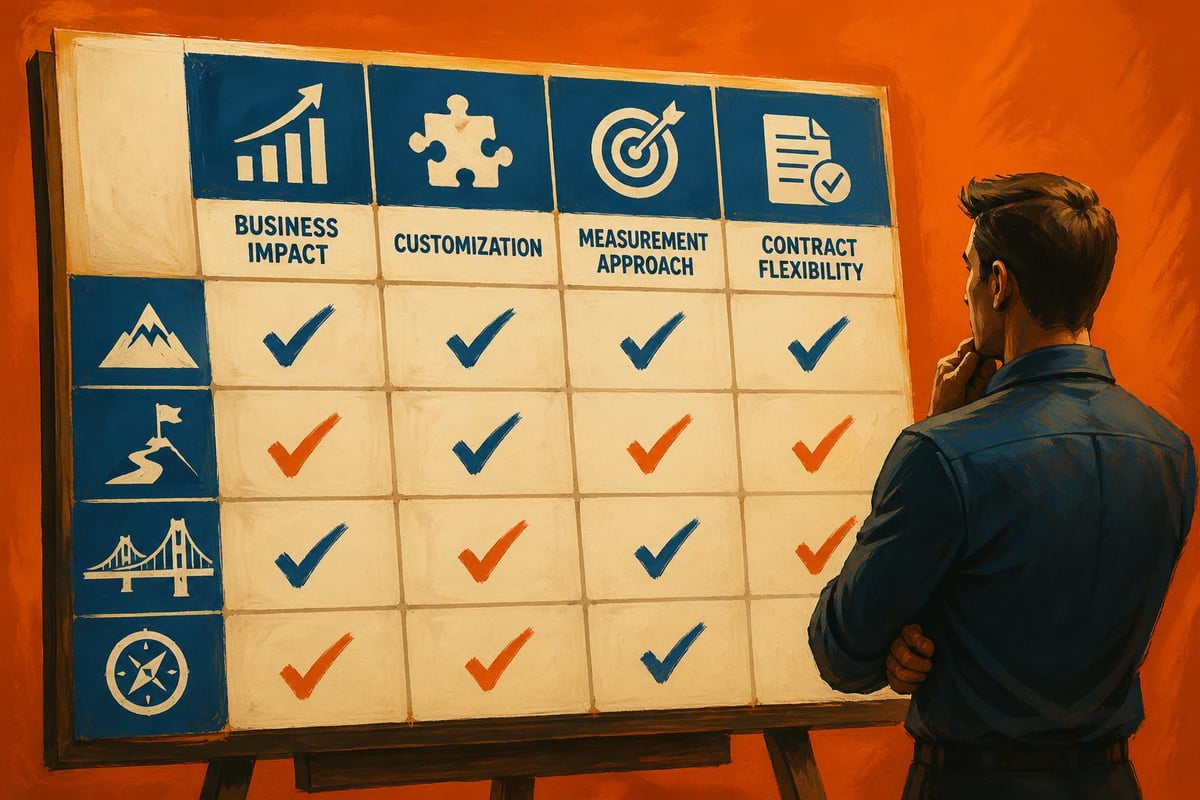
Look beyond credentials and certifications. The best team leader courses emphasize measurable business results over theoretical knowledge.
| Evaluation Criteria | What to Look For | Red Flags |
|---|---|---|
| Track record | Specific KPI improvements from past clients | Vague testimonials without metrics |
| Approach | Live coaching during real work | Pure classroom or video content |
| Flexibility | Month-to-month terms | Long-term contracts required |
| Accountability | Shared risk or incentive alignment | Fixed fees regardless of outcomes |
Programs offering comprehensive specializations in team leadership provide depth across multiple competencies but may lack customization to your specific business context.
Implementation Strategies That Drive Adoption
Creating Leadership Cohorts
Train leaders in groups rather than individually. Cohort-based learning creates peer accountability and allows leaders to share challenges and solutions. This approach also ensures consistent leadership practices across the organization.
Cohorts should meet monthly to review progress on specific KPIs, discuss application challenges, and receive group coaching. This ongoing support prevents regression to old habits.
Integrating Training Into Operating Rhythm
Rather than treating team leader courses as separate events, embed development into regular business operations. Coaches attend leadership team meetings, provide feedback on real interactions, and help leaders apply techniques immediately.
This integration ensures training addresses actual situations rather than hypothetical scenarios. Leaders develop muscle memory through repeated practice in consequential moments.
Reinforcing New Behaviors
Leadership development requires sustained effort beyond initial training. Organizations should establish mechanisms reinforcing new behaviors including peer feedback, leader shadowing programs, and ongoing measurement against development goals.
Managers who demonstrate coaching capabilities should mentor emerging leaders. This creates a self-sustaining leadership culture rather than dependence on external training.
Investing in team leader courses delivers measurable business results when programs focus on practical application rather than theoretical knowledge. The most effective approach combines structured skill development with live coaching during real work situations, tied directly to KPIs that matter to your organization. Noomii Corporate Coaching helps mid-market companies build accountable leaders through month-to-month coaching embedded in your actual operations, ensuring you see visible results before committing to long-term contracts. If you're ready to develop leaders who drive faster decisions, stronger communication, and cleaner execution, connect with Noomii today.



Leave a Reply
Want to join the discussion?Feel free to contribute!