

Presence Coaching: Building Authentic Leadership in 2026
In today's fast-paced corporate environment, leaders face constant distractions that pull them away from what matters most: genuine connection with their teams. Presence coaching addresses this fundamental challenge by teaching leaders to show up fully, listen deeply, and engage authentically in every interaction. This approach doesn't rely on theory or certifications alone; it transforms how managers communicate, make decisions, and build trust across their organizations. For mid-market companies seeking measurable outcomes, understanding and implementing presence coaching can unlock breakthrough performance in leadership development and team execution.
What Presence Coaching Actually Means
Presence coaching refers to the practice of being completely engaged, attentive, and authentic during coaching conversations and leadership interactions. It combines mindfulness, somatic awareness, and developmental psychology to create moments of genuine connection that drive meaningful change.
Unlike traditional coaching methods that follow rigid frameworks, presence coaching emphasizes the quality of attention coaches and leaders bring to each moment. When a coach demonstrates true presence, they notice subtle shifts in energy, read unspoken concerns, and respond with precision to what's actually happening rather than following a predetermined script.
This matters because employees can instantly detect whether their leader is truly listening or simply waiting to speak. That split-second judgment shapes trust, engagement, and willingness to embrace accountability.
The Core Components of Coaching Presence
Effective presence coaching requires several interconnected elements:
- Full sensory attention focused on the person and conversation
- Suspension of judgment and personal agenda
- Awareness of both verbal and non-verbal communication
- Ability to tolerate silence and discomfort
- Grounding in the present moment rather than past or future
Research shows that presence serves as a core competency in coaching, enhancing skills like active listening, questioning, and ethical awareness. When coaches master this competency, they create safe environments where leaders can explore challenges honestly and develop practical solutions.

Why Presence Matters for Corporate Performance
Mid-market companies cannot afford coaching that sounds impressive but delivers no ROI. Presence coaching directly impacts business metrics by improving the quality of leadership conversations that happen daily across organizations.
When managers learn to be fully present during one-on-ones, performance reviews, and team meetings, several outcomes emerge immediately. Direct reports feel heard and valued, reducing turnover risk. Problems surface earlier because people trust their leader will actually listen. Decisions accelerate because leaders gather better information through attentive dialogue.
The importance of presence in coaching extends beyond individual sessions. It creates a ripple effect throughout company culture, teaching everyone to engage more authentically.
| Business Impact | Without Presence | With Presence |
|---|---|---|
| Decision Speed | Delayed by politics and hidden concerns | Faster through honest dialogue |
| Manager Effectiveness | Relies on authority and process | Builds trust and accountability |
| Employee Retention | High turnover in key roles | Stronger engagement and loyalty |
| Execution Quality | Misalignment and rework | Cleaner delivery on priorities |
Companies working with leadership coaches who emphasize presence report tangible improvements in team dynamics within the first quarter. This happens because presence-based approaches address the root cause of many performance issues: disconnected, distracted, or inauthentic leadership communication.
Implementing Presence Coaching in Your Organization
Rolling out presence coaching requires more than sending managers to a workshop. It demands integration into daily operating rhythms and accountability structures. For organizations exploring leadership coaching services, the implementation process should tie directly to KPIs and visible business outcomes.
A Practical Implementation Framework
Step 1: Baseline Assessment
Begin with 360 leadership assessments that measure current presence levels. Ask direct reports specific questions about their manager's listening quality, responsiveness to concerns, and engagement during conversations. This creates measurable starting points.
Step 2: Live Coaching in Real Meetings
Theory falls flat without application. Coaches should join actual team meetings, one-on-ones, and strategic sessions to model presence and provide real-time feedback. This approach, emphasized in executive coaching for C-suite professionals, demonstrates techniques in context.
Step 3: Daily Practice Protocols
Leaders need simple practices they can execute consistently:
- Two-minute grounding exercise before important conversations
- Phone and laptop closed during one-on-ones
- Reflection journal tracking presence quality after key meetings
- Peer feedback sessions on listening and engagement
Step 4: KPI Integration
Connect presence improvements to scorecards tracking engagement scores, retention rates, and decision velocity. When leaders see direct correlation between their presence and team performance, behavior change accelerates.
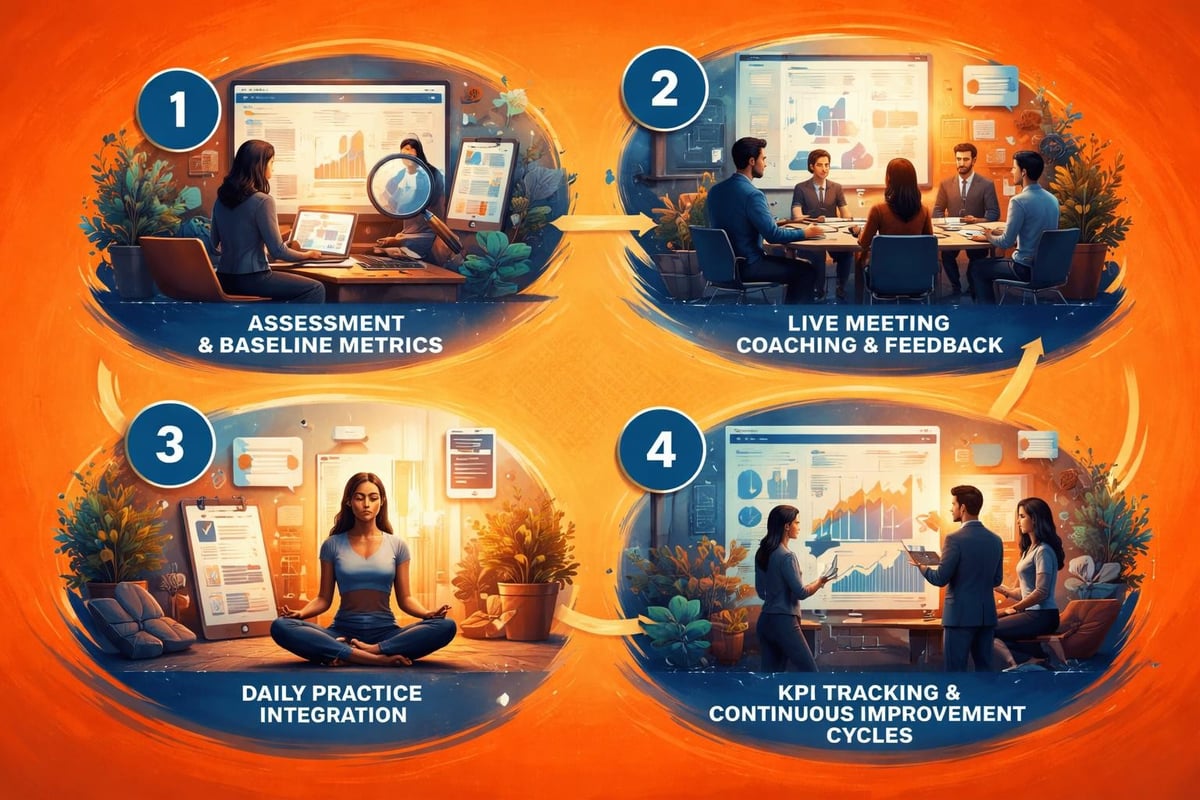
Research on presence in executive coaching shows that sustainable change requires ongoing practice rather than one-time training. The C2 Model demonstrates how coaches must dynamically adjust their presence based on client needs and contextual factors.
Measuring Results and Maintaining Momentum
Presence coaching only matters if it produces measurable business outcomes. Forward-thinking companies track specific metrics before, during, and after coaching engagements to validate ROI.
Key Performance Indicators for Presence Coaching:
- Employee engagement scores (quarterly pulse surveys)
- Manager effectiveness ratings from direct reports
- Time from problem identification to decision
- Voluntary turnover among high performers
- Team collaboration scores in cross-functional projects
Organizations should also monitor qualitative indicators through interviews and focus groups. Ask team members whether their leaders listen better, respond more thoughtfully, and create safer environments for honest dialogue.
Performance coaches who integrate presence techniques help clients establish these measurement systems from day one. When coaching agreements include clear KPIs tied to compensation or retention, both coaches and leaders stay accountable for producing results.
The most successful implementations pair presence coaching with broader cultural initiatives. When senior executives model presence in town halls and strategy sessions, it signals organizational commitment. When operating cadences build in reflection time rather than back-to-back meetings, presence becomes sustainable rather than aspirational.
Organizations seeking coaching support can explore platforms like Noomii to find qualified professionals who emphasize measurable outcomes alongside skill development. Additionally, resources like AccountabilityNow provide complementary frameworks for building accountability systems that reinforce presence-based leadership.

Overcoming Common Implementation Challenges
Despite clear benefits, organizations encounter predictable obstacles when introducing presence coaching. Understanding these challenges upfront enables proactive mitigation strategies.
Resistance from time-pressed executives represents the most common barrier. Leaders claim they lack time for presence practices or that operational demands require constant multitasking. The solution involves demonstrating how presence actually saves time by reducing miscommunication, rework, and conflict.
Skepticism about soft skills emerges in data-driven cultures that prioritize hard metrics. Counter this by framing presence as a performance multiplier with direct P&L impact. Share case studies showing revenue gains and cost reductions tied to improved leadership presence.
Inconsistent practice undermines results when leaders engage intensely during coaching sessions but revert to old patterns immediately after. Build accountability through manager training programs that include peer observation, regular check-ins, and public commitments to specific presence practices.
Lack of executive sponsorship dooms initiatives when senior leaders talk about presence but model distracted, rushed behavior. Secure visible commitment from the C-suite before launching broader programs, ensuring executives participate in coaching themselves.
Research examining how presence builds rapport and creates forward movement emphasizes that overcoming these challenges requires patience and systemic thinking. Quick fixes produce superficial compliance; sustained cultural change demands months of consistent reinforcement.
Presence coaching transforms leadership from a position of authority into a practice of authentic connection and accountability. When implemented with clear KPIs and integrated into daily operating rhythms, it produces faster decisions, stronger team engagement, and cleaner execution across priorities. Noomii Corporate Coaching delivers presence-based approaches through live meeting facilitation, real-time feedback, and month-to-month engagements tied to measurable business outcomes. If you're ready to build accountable leaders who drive visible results, explore how Noomii can support your organization's growth.



Leave a Reply
Want to join the discussion?Feel free to contribute!