

Assistant Manager Training: Build Accountable Leaders
The gap between frontline employees and senior leadership represents one of the most critical development opportunities in mid-market companies. Assistant managers occupy this crucial middle ground, yet many organizations promote high-performing individual contributors without providing the structured support they need to succeed. Effective assistant manager training bridges this gap by transforming technical experts into leaders who can coach, delegate, and drive measurable results while maintaining team engagement and operational excellence.
Why Assistant Manager Training Drives Business Results
Organizations that invest in comprehensive assistant manager training programs see immediate improvements in team performance, employee retention, and execution velocity. These mid-level leaders directly influence daily operations, customer experience, and frontline employee satisfaction.
Key business outcomes include:
- Faster decision-making as assistant managers gain confidence to act without constant escalation
- Higher employee engagement through consistent coaching and clear expectations
- Improved retention rates when team members receive regular development conversations
- Cleaner execution across competing priorities and operational demands
Unlike traditional leadership development programs that focus heavily on theory and certifications, practical assistant manager training should emphasize real-world application. This means coaching live in team meetings, practicing difficult conversations with actual scenarios, and tying every skill to clear KPIs and business outcomes.
Essential Components of Effective Assistant Manager Training
Building a Strong Foundation in the First 90 Days
New assistant managers need structured onboarding that goes beyond operational checklists. A 30-60-90-day plan for new assistant managers provides the framework, but companies must customize this approach to their specific culture and performance expectations.
The first month should focus on observation, relationship-building, and mastering existing systems. Months two and three progressively shift toward independent decision-making and team development responsibilities.
| Timeframe | Primary Focus | Key Deliverables |
|---|---|---|
| Days 1-30 | Learn systems, build relationships | Process documentation, stakeholder meetings |
| Days 31-60 | Execute independently, identify improvements | First process improvement, performance conversations |
| Days 61-90 | Coach team, drive results | Team development plan, KPI ownership |
Developing Coaching Skills for Daily Application
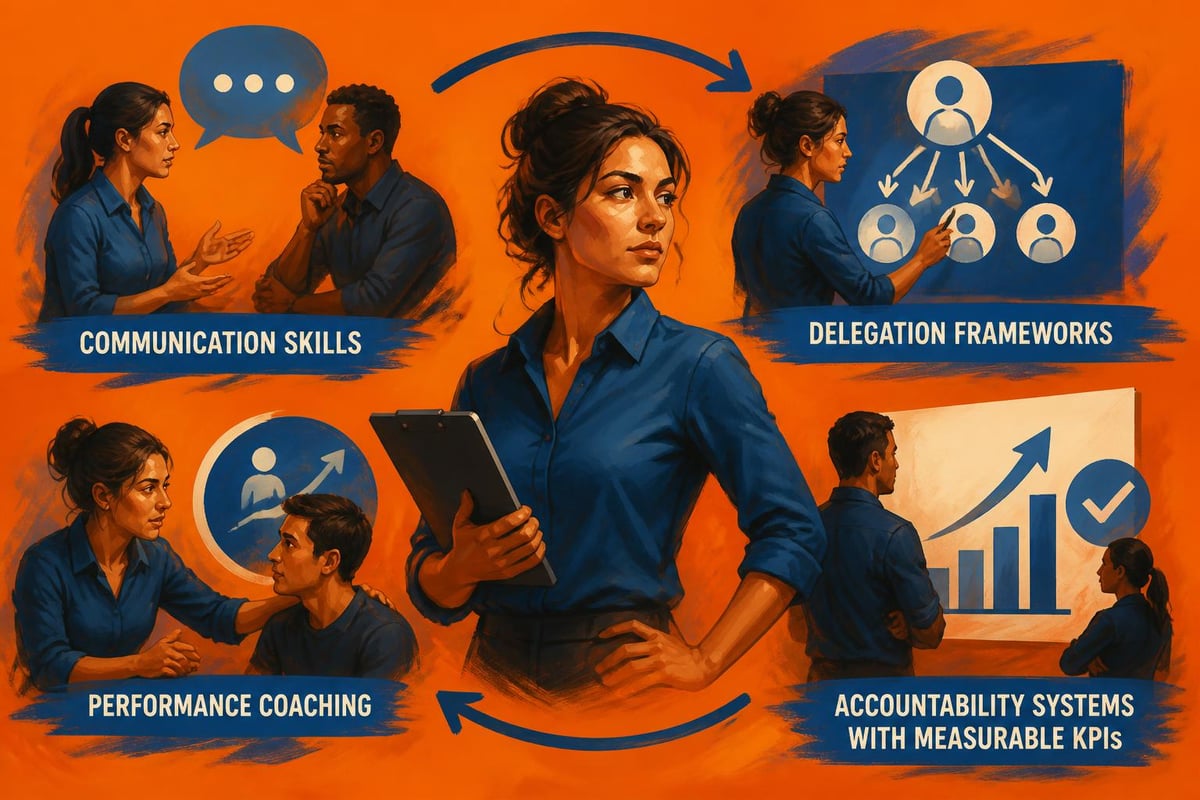
Assistant managers must learn to coach rather than simply direct. This fundamental shift requires training in active listening, powerful questioning, and feedback delivery. Rather than solving every problem themselves, effective assistant managers develop their team members' problem-solving capabilities.
Practical coaching training involves:
- Role-playing difficult performance conversations with real scenarios from your workplace
- Practicing delegation frameworks that build capability rather than create dependency
- Learning to ask development questions instead of providing immediate answers
- Receiving feedback on coaching interactions through observation and shadowing
Working with experienced executive coaches who understand corporate environments can accelerate this development significantly.
Accountability Systems and Performance Management
Assistant manager training must include concrete tools for managing performance, setting clear expectations, and holding team members accountable. This means learning to set SMART goals, conduct effective one-on-ones, and address performance gaps quickly.
Effective accountability practices include:
- Weekly one-on-one meetings with direct reports focused on priorities and obstacles
- Monthly performance reviews tied to specific, measurable outcomes
- Transparent KPI scorecards that track individual and team progress
- Clear consequences for both high performance and underperformance
Organizations that implement structured accountability frameworks see dramatic improvements in execution speed and team clarity.
Overcoming Common Assistant Manager Training Challenges
Transitioning from Peer to Leader
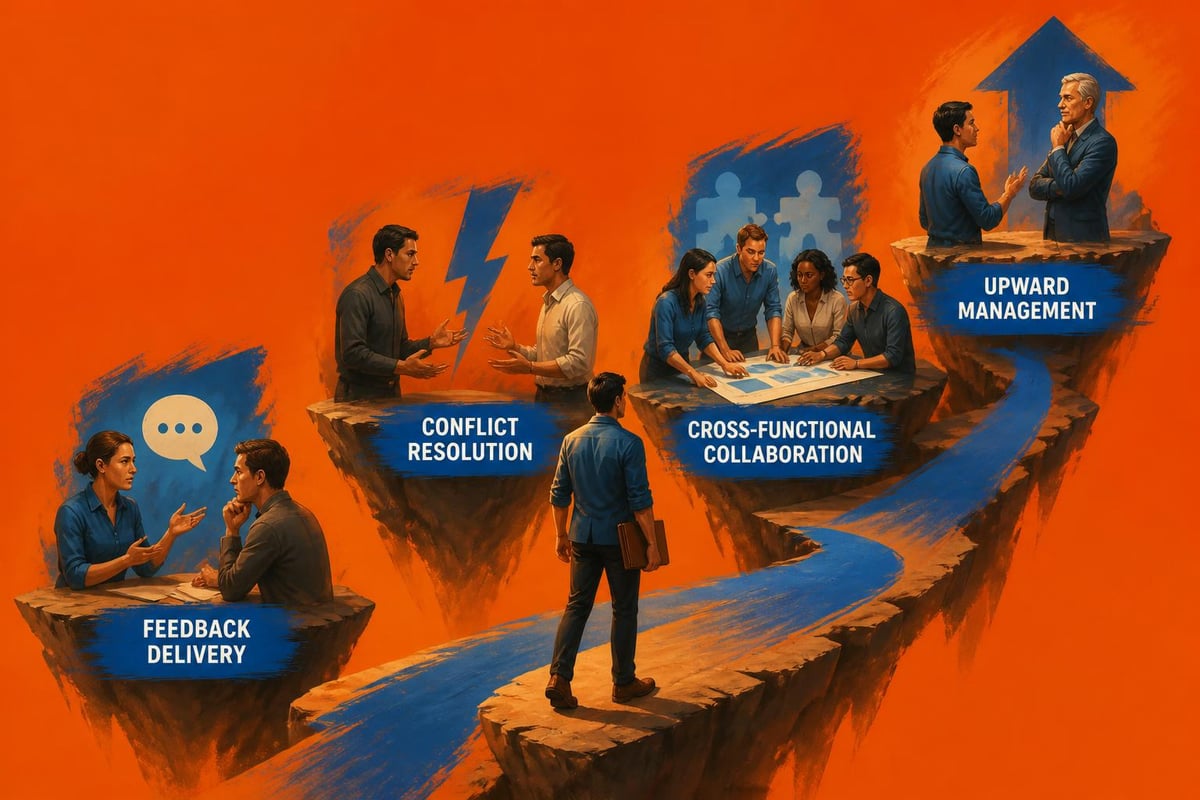
One of the most difficult aspects of assistant manager training involves helping newly promoted leaders navigate relationships with former peers. This transition requires explicit discussion about boundary-setting, maintaining professionalism, and managing potential resentment or awkwardness.
Training should address specific scenarios like giving constructive feedback to former colleagues, making unpopular decisions, and maintaining consistency across all team members regardless of previous relationships.
Balancing Operational Work with Leadership Responsibilities
Assistant managers frequently struggle to shift time allocation from tactical execution to team development. Effective training programs help leaders identify which tasks to delegate, which to eliminate, and which truly require their direct involvement.
This often requires:
- Time audits to understand current activity allocation
- Delegation planning with clear ownership transfers
- Authority matrices defining decision rights at each level
- Regular check-ins with senior leaders to recalibrate priorities
Building Confidence in Decision-Making Authority
Many assistant managers hesitate to make decisions without approval, creating bottlenecks and slowing execution. Training must explicitly define decision-making authority and create safe spaces to practice judgment calls.
Progressive exposure works best-starting with low-stakes decisions and gradually expanding scope as confidence and competence grow. Pairing assistant managers with performance coaches provides external support during this critical development phase.
Measuring Training Effectiveness and ROI
Assistant manager training should deliver measurable business impact, not just completion certificates. Organizations must establish clear metrics before training begins and track progress consistently.
Key Performance Indicators to Track
| Metric Category | Specific KPIs | Target Improvement |
|---|---|---|
| Team Performance | Productivity per employee, quality scores | 15-20% increase |
| Retention | Voluntary turnover in direct reports | 25-30% reduction |
| Engagement | Employee satisfaction scores | 10-15 point increase |
| Execution Speed | Time to complete key processes | 20-25% reduction |
Month-to-month tracking allows organizations to adjust training approaches based on real results rather than waiting for annual reviews. This iterative improvement mirrors the best practices in executive coaching approaches where progress is continuously measured against business outcomes.
Creating Continuous Development Beyond Initial Training
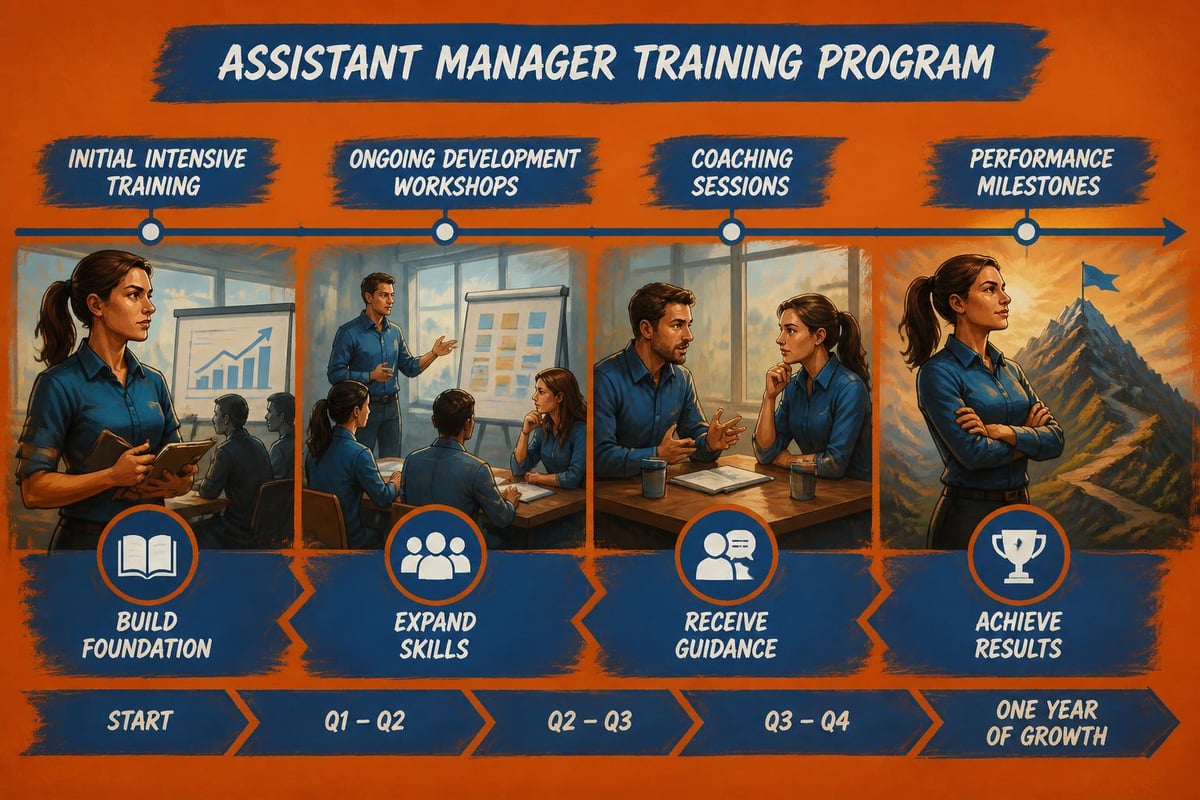
Assistant manager training shouldn't be a one-time event. The most effective programs establish ongoing development rhythms including peer learning groups, advanced skill workshops, and regular coaching sessions.
Continuous development might include:
- Monthly leadership roundtables where assistant managers share challenges and solutions
- Quarterly advanced workshops on topics like conflict resolution or strategic thinking
- Access to external coaching resources for personalized development
- Shadowing opportunities with senior leaders across functions
Selecting the Right Training Approach for Your Organization
Different organizational contexts require different training approaches. A 50-person company needs something fundamentally different than a 500-person enterprise, even if core leadership principles remain constant.
Internal vs. External Training Resources
Internal programs offer:
- Company-specific context and case studies
- Lower direct costs per participant
- Easier scheduling and logistics
- Cultural alignment and shared language
External programs provide:
- Fresh perspectives and best practices from other industries
- Specialized expertise in leadership development
- Objective feedback without internal politics
- Proven frameworks and accelerated learning
The most effective approach often combines both-using external expertise to establish frameworks and develop initial capabilities, then building internal capacity to sustain and customize the program over time.
Customization Based on Industry and Company Stage
Assistant manager training for a rapidly scaling technology company looks different from training in a stable manufacturing environment. Effective programs account for industry-specific challenges, competitive pressures, and organizational maturity.
Consider factors like decision-making speed requirements, regulatory compliance needs, customer interaction frequency, and cross-functional complexity when designing your training approach.
Effective assistant manager training transforms your middle management layer from a bottleneck into an accelerator of business results. When these leaders learn to coach their teams, make confident decisions, and execute with clarity, the entire organization benefits through faster cycles, higher engagement, and stronger retention. Noomii Corporate Coaching helps mid-market companies build accountable leaders through practical, ROI-focused training that happens live in your meetings and ties directly to measurable KPIs. Unlike traditional programs focused on certifications and theory, we deliver month-to-month coaching with visible results-so your assistant managers become the leaders your business needs.



Leave a Reply
Want to join the discussion?Feel free to contribute!