Coaching for Development: Building Future-Ready Leaders
Organizations face an undeniable reality in 2026: leadership excellence directly correlates with competitive advantage. As businesses navigate rapid technological change, evolving workforce expectations, and complex global challenges, the gap between adequate management and transformational leadership has never been wider. Coaching for development has emerged as the strategic solution that bridges this gap, moving beyond traditional training models to create lasting behavioral change and measurable performance improvements. Unlike generic leadership programs that deliver one-size-fits-all content, coaching for development provides personalized, evidence-based interventions that unlock individual potential while advancing organizational objectives.
Understanding Coaching for Development
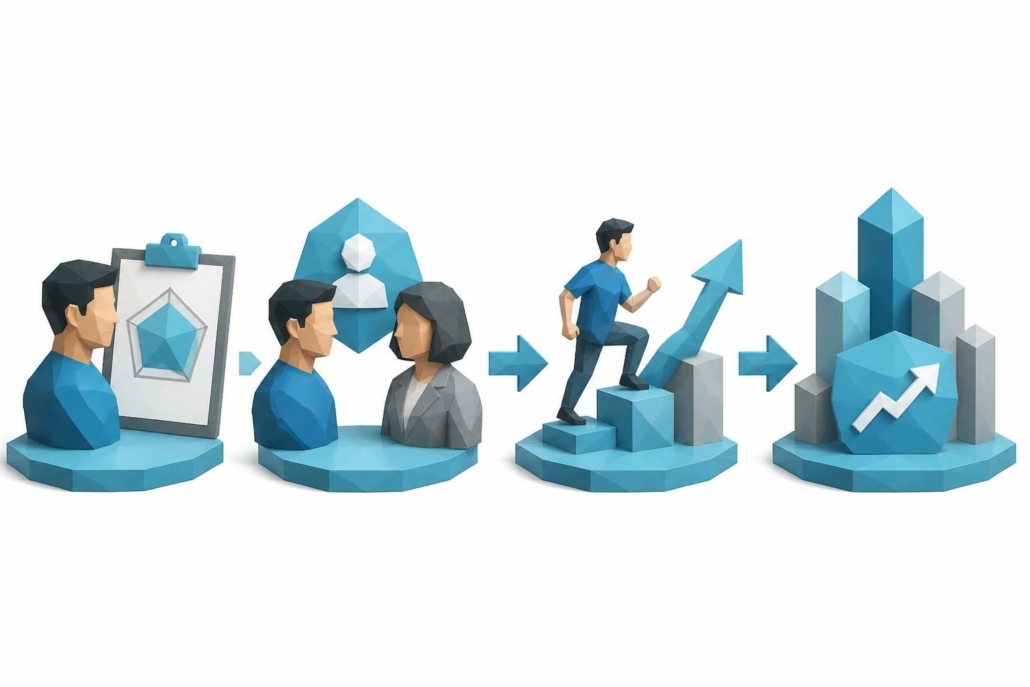
Coaching for development represents a fundamental shift in how organizations approach talent optimization. This methodology focuses on long-term potential rather than immediate problem-solving, creating sustainable growth trajectories for leaders at every level.
The distinction matters because coaching for change and coaching for development serve different strategic purposes. While change-focused coaching addresses specific performance gaps or behavioral issues, coaching for development builds future capabilities and prepares leaders for roles they have not yet assumed. Organizations implementing this approach invest in their leadership pipeline, ensuring continuity and adaptability as business demands evolve.
Core Principles That Drive Results
Effective coaching for development operates on several foundational principles that distinguish it from other professional development approaches:
- Strengths-based exploration that amplifies existing capabilities while addressing development areas
- Self-directed learning where leaders take ownership of their growth journey
- Future-focused vision that aligns individual aspirations with organizational needs
- Evidence-based assessment that provides objective baselines and progress metrics
- Confidential partnership that creates psychological safety for vulnerable exploration
These principles align with research on coaching effectiveness, which demonstrates that structured developmental coaching produces measurable improvements in goal attainment, well-being, and workplace performance. The systematic review confirms what forward-thinking organizations already know: coaching for development delivers quantifiable returns when implemented with rigor and precision.
Building a Strategic Coaching Architecture
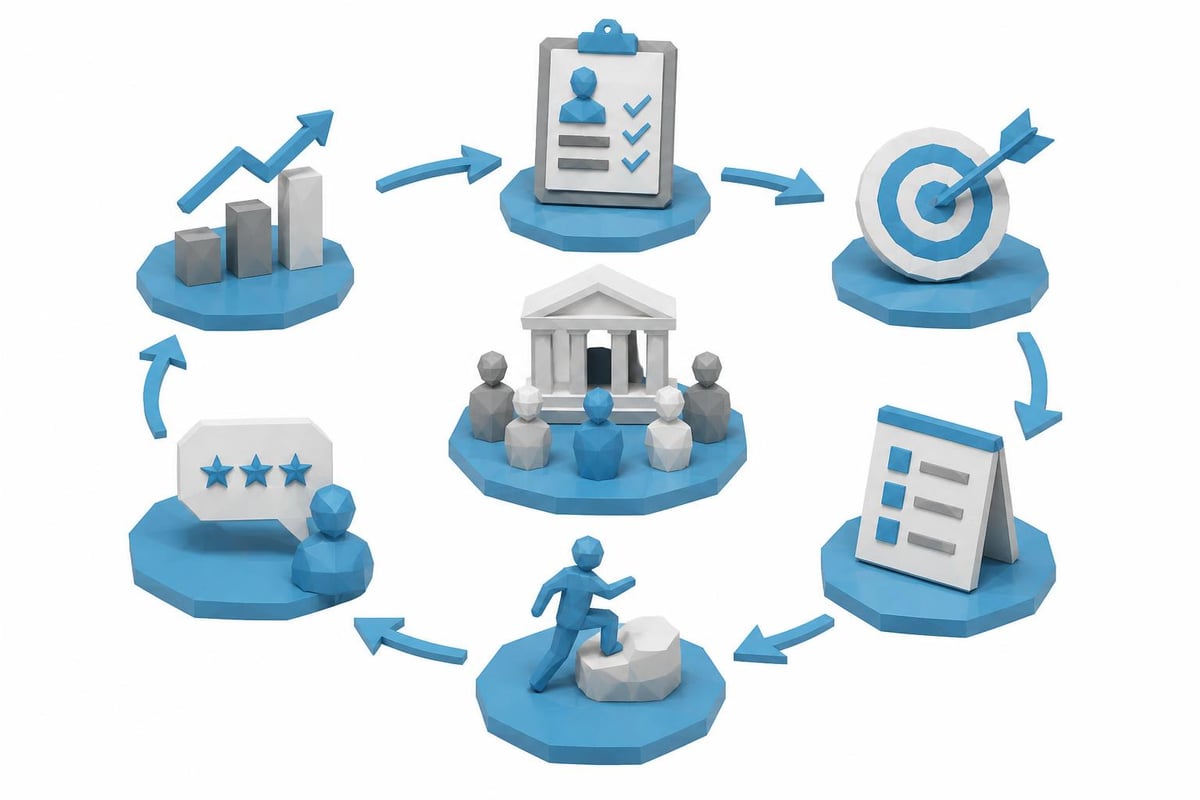
Organizations that achieve transformational results from coaching for development do not treat it as an isolated initiative. They embed it within a comprehensive leadership architecture that supports continuous growth.
Strategic implementation begins with diagnostic clarity. Leaders cannot develop what they cannot see, and organizations cannot measure what they have not defined. Advanced assessment tools identify behavioral patterns, leadership competencies, communication styles, and decision-making tendencies across individuals and teams. This diagnostic foundation enables precision in both coach selection and intervention design.
The Matching Advantage
The coaching relationship itself serves as the primary vehicle for development, making coach-leader compatibility essential for success. Generic assignments that ignore specialization, industry experience, or interpersonal chemistry compromise outcomes before the first session begins.
Sophisticated matching algorithms consider multiple dimensions simultaneously:
| Matching Factor | Strategic Importance | Impact on Outcomes |
|---|---|---|
| Industry expertise | High | Accelerates contextual understanding |
| Leadership level experience | Critical | Ensures relevant perspective |
| Development focus area | Critical | Drives targeted interventions |
| Communication style alignment | Moderate | Enhances rapport and trust |
| Geographic and cultural fluency | Moderate to High | Reduces friction in global contexts |
Organizations leveraging top executive coaching firms gain access to diverse talent pools where specialized expertise meets proven methodologies. This access proves particularly valuable when addressing complex challenges like toxic leadership patterns that require both psychological insight and organizational systems thinking.
Implementing Coaching for Development Across Leadership Levels
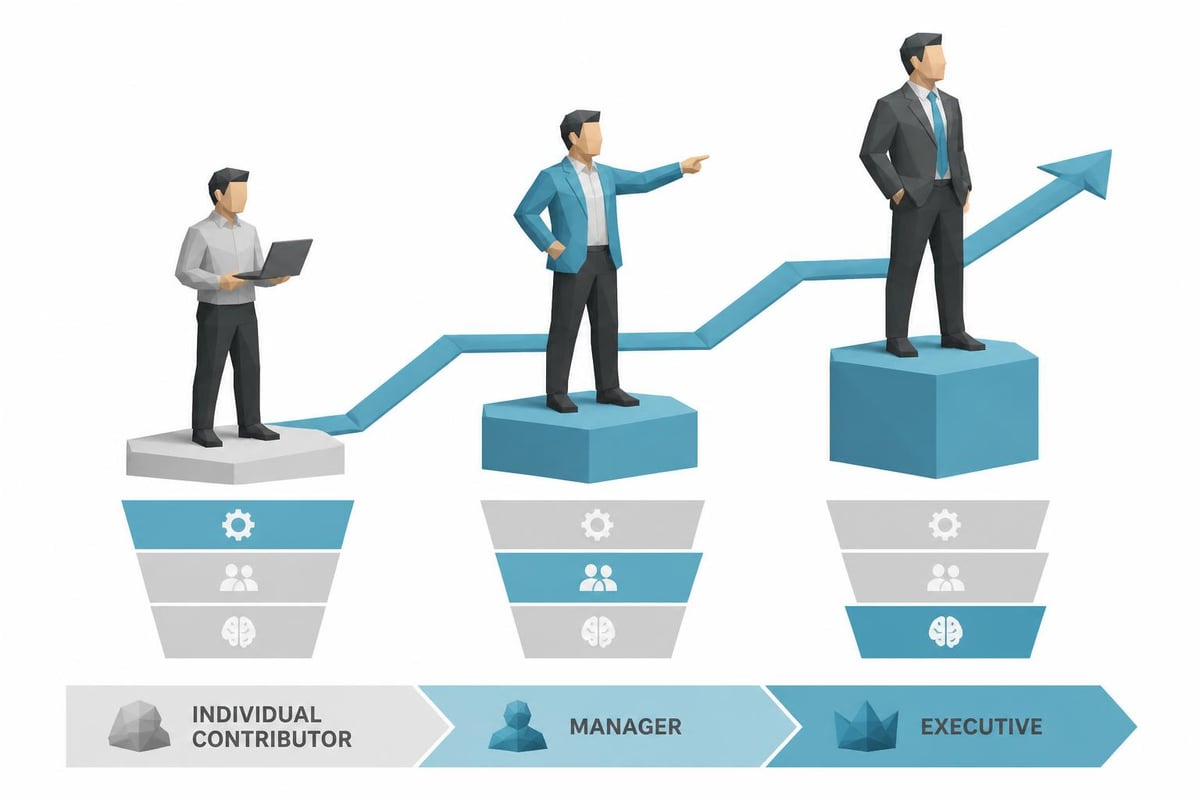
Different leadership tiers require tailored approaches that reflect varying responsibilities, influence spheres, and development needs. Coaching for development scales effectively when organizations customize interventions rather than applying uniform programs.
Executive Leadership Development
C-suite and senior executives face unique pressures: strategic decision-making under uncertainty, stakeholder management across complex ecosystems, and personal visibility that amplifies both successes and failures. Executive coaching for development addresses these realities by building capabilities in areas such as strategic thinking, executive presence, board relations, and organizational transformation leadership.
The Department of Defense coaching program demonstrates how government agencies structure coaching initiatives to promote professional growth and positive organizational impact. Their model emphasizes competence development aligned with mission objectives, a principle equally applicable in corporate environments.
Mid-Level Manager Transformation
Mid-level managers occupy the critical zone where strategy meets execution. They translate executive vision into team action while managing upward, laterally, and downward simultaneously. Coaching for development at this level focuses on delegation mastery, conflict resolution, performance management, and the transition from individual contributor to people leader.
Many mid-level managers struggle with the shift from technical expertise to leadership influence. Coaching interventions help them develop new mental models about what creates value and how to measure success beyond personal achievement.
Emerging Leader Acceleration
High-potential employees identified for leadership roles benefit enormously from early coaching for development. These interventions prevent the sink-or-swim dynamics that waste talent and create unnecessary organizational disruption.
Emerging leader programs typically address:
- Self-awareness and emotional intelligence development
- Feedback integration and growth mindset cultivation
- Influencing without authority
- Building cross-functional relationships
- Understanding organizational politics and dynamics
- Personal brand and executive presence foundations
By investing in potential before promoting into leadership, organizations reduce failure rates and accelerate time-to-productivity for new leaders.
Measuring Impact and Demonstrating ROI
Coaching for development demands the same accountability standards as any strategic investment. Organizations require evidence that coaching initiatives produce tangible value, not just participant satisfaction scores.
Defining Success Metrics
Effective measurement frameworks capture multiple dimensions of impact:
- Individual performance indicators including 360-degree feedback improvements, goal attainment rates, and competency development scores
- Team performance metrics such as engagement levels, retention rates, and productivity measures
- Organizational outcomes including leadership pipeline strength, succession readiness, and cultural health indicators
- Financial returns through reduced turnover costs, improved decision quality, and accelerated time-to-performance for promoted leaders
The Chartered Institute of Personnel and Development’s research on coaching and mentoring effectiveness provides frameworks for evaluating these various impact dimensions. Their work emphasizes that measurement systems must align with organizational context and strategic priorities rather than applying generic templates.
Creating Feedback Loops
Continuous improvement in coaching for development programs requires systematic feedback collection and analysis. Organizations should establish regular touchpoints to assess progress, identify barriers, and adjust interventions accordingly.
| Feedback Mechanism | Frequency | Primary Purpose |
|---|---|---|
| Coach-leader check-ins | Weekly to bi-weekly | Monitor progress, adjust tactics |
| Stakeholder interviews | Quarterly | Assess behavioral change visibility |
| Assessment updates | Semi-annually | Measure competency development |
| Program reviews | Annually | Evaluate strategic alignment and ROI |
These feedback loops inform both individual coaching relationships and program-level refinements, ensuring continuous optimization of the coaching for development ecosystem.
Integrating Coaching With Organizational Culture
Coaching for development achieves maximum impact when embedded within supportive organizational cultures rather than operating as isolated interventions. The relationship between managing and coaching reflects broader cultural assumptions about leadership, learning, and performance.
Building a Coaching Culture
Organizations committed to leadership excellence increasingly adopt coaching as a core leadership competency, not just an external service. This cultural transformation requires several enabling conditions:
Leadership modeling starts at the top, with executives visibly engaging in their own development and demonstrating curiosity rather than defensiveness about feedback. When senior leaders openly discuss their coaching experiences and growth areas, they normalize vulnerability and continuous learning throughout the organization.
Manager capability development extends coaching skills beyond professional coaches to everyday leadership interactions. While managers should not serve as formal coaches for their direct reports due to evaluative conflicts, coaching skills like powerful questioning, active listening, and non-directive support enhance their leadership effectiveness.
Psychological safety foundations create the trust necessary for meaningful development conversations. Research by Amy Edmondson on psychological safety in the workplace demonstrates that teams perform best when members feel safe taking interpersonal risks, admitting mistakes, and asking for help.
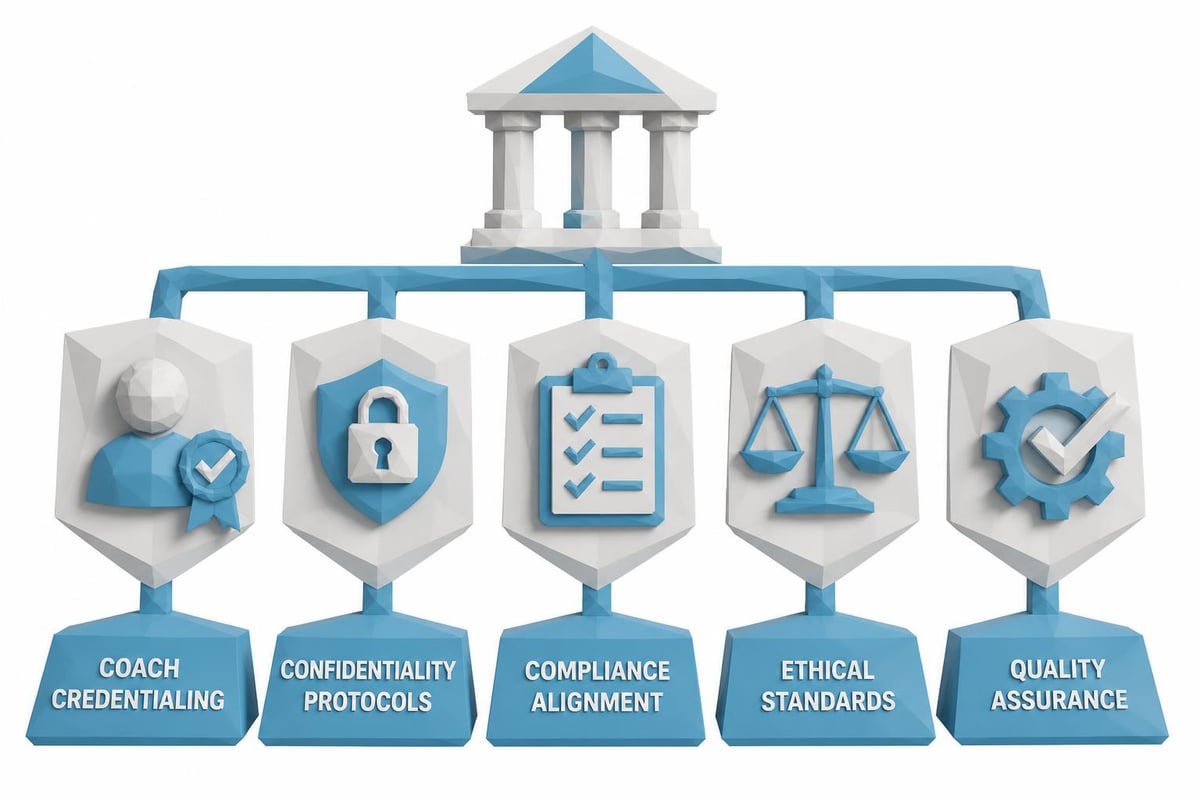
Aligning With Compliance and Governance
Government agencies and highly regulated industries face unique considerations when implementing coaching for development programs. Compliance requirements, ethical standards, and documentation protocols must integrate seamlessly with coaching practices.
Organizations must establish clear guidelines regarding:
- Confidentiality boundaries and mandatory reporting exceptions
- Data privacy and assessment information security
- Coach credential verification and ongoing compliance
- Conflict of interest identification and management
- Documentation standards that satisfy audit requirements
These governance structures protect both the organization and coaching participants while ensuring program integrity. The key lies in designing protocols that enable development rather than constraining it through excessive bureaucracy.
Addressing Complex Leadership Challenges
Coaching for development proves particularly valuable when organizations face multifaceted leadership challenges that resist simpler interventions. These situations demand sophisticated approaches that account for individual psychology, team dynamics, and organizational systems simultaneously.
Transforming Toxic Leadership Patterns
Toxic leadership creates cascading damage: destroyed morale, talent exodus, reduced productivity, and sometimes legal liability. Yet firing every problematic leader creates its own disruptions and fails to address underlying systemic issues that enabled the behavior.
Coaching for development offers a redemptive pathway when toxic leaders possess genuine motivation to change. The principles of coaching for development emphasize individual potential and growth capacity, even when current behaviors cause harm. Structured interventions combine rigorous accountability with developmental support, creating conditions where behavioral transformation becomes possible.
Not every toxic leader can or should be coached. Organizations must conduct honest assessments of change readiness, pattern severity, and organizational risk tolerance before committing resources to developmental interventions.
Strengthening Decision-Making Quality
Executive decision-making occurs under conditions of incomplete information, competing stakeholder demands, and uncertain futures. Coaching for development enhances decision quality by building leaders' capacity to:
- Recognize and challenge their cognitive biases
- Seek diverse perspectives systematically
- Distinguish between reversible and irreversible decisions
- Manage emotional reactions that cloud judgment
- Learn from decision outcomes without defensiveness
These capabilities compound over time, improving not just individual decisions but the organizational decision-making culture leaders create through their example.
Building Inclusive Leadership Capabilities
The diversity of modern workforces demands leadership capabilities that earlier generations could ignore. Leaders must navigate cultural differences, generational expectations, communication preferences, and inclusion dynamics that significantly impact team performance and talent retention.
Coaching for development addresses inclusive leadership through consciousness-raising, skill-building, and accountability structures. Coaches help leaders examine unconscious biases, develop cultural intelligence, and implement practices that ensure all team members can contribute fully.
Scaling Coaching for Development Programs
As organizations recognize coaching's value, the question shifts from whether to invest to how to scale effectively. Growth brings both opportunities and challenges that require thoughtful program architecture.
Technology-Enabled Delivery Models
Digital platforms expand coaching access while introducing new considerations around relationship quality, confidentiality, and engagement. Video coaching eliminates geographic barriers, enabling global organizations to provide consistent support across locations. Asynchronous coaching through messaging platforms offers flexibility for leaders with demanding schedules or preference for written reflection.
However, technology serves as an enabler rather than a replacement for human expertise and relational depth. The most effective programs blend technological convenience with the irreplaceable elements of human connection, intuition, and adaptive responsiveness that define excellent coaching.
Building Internal Coaching Capacity
Some organizations develop internal coaching capabilities to complement external resources. This hybrid approach offers several advantages:
- Organizational knowledge that internal coaches possess accelerates contextual understanding
- Cost efficiency for high-volume needs across multiple leadership levels
- Culture reinforcement through consistent messaging and value alignment
- Accessibility with reduced scheduling complexity and geographic constraints
Internal programs require substantial investment in coach training, supervision, quality assurance, and ethical boundary management. Organizations must weigh these costs against the benefits for their specific context and scale requirements. Working with resources like executive coaching packages provides flexibility to customize approaches based on organizational needs.
Partner Selection Criteria
Organizations seeking external coaching partners should evaluate potential providers across multiple dimensions:
| Evaluation Criterion | Key Considerations | Red Flags |
|---|---|---|
| Coach quality and credentialing | Certification standards, experience verification, specialty matching | Vague credentials, lack of specialization |
| Assessment rigor | Validated tools, comprehensive diagnostics, baseline establishment | Proprietary-only tools without validation data |
| Matching methodology | Systematic process, multiple factors, participant input | Random assignment, limited options |
| Measurement capabilities | Clear metrics, progress tracking, ROI demonstration | Satisfaction-only measures, vague outcomes |
| Scalability and flexibility | Size adaptation, geographic reach, engagement models | Rigid programs, limited capacity |
The partnership quality directly impacts program outcomes, making selection among the most consequential decisions organizations make in their coaching for development journey.
Future Trends Reshaping Leadership Development
Coaching for development continues evolving as new research, technologies, and workplace realities emerge. Organizations building sustainable programs must anticipate these shifts while maintaining focus on timeless development principles.
Artificial Intelligence and Human Coaching
AI applications in coaching range from automated scheduling and progress tracking to sophisticated analysis of communication patterns and sentiment. Some platforms offer AI coaching chatbots that provide on-demand support for routine development needs.
These tools complement rather than replace human coaches. AI excels at pattern recognition, data analysis, and scalable delivery of structured content. Human coaches provide the empathy, intuition, contextual judgment, and adaptive responsiveness that complex leadership development requires. The future likely involves thoughtful integration where technology handles administrative tasks and routine support while human coaches focus on high-value interventions.
Neuroscience-Informed Approaches
Advances in neuroscience reveal how learning, behavior change, and habit formation actually occur in the brain. Coaching for development increasingly incorporates these insights, using techniques that work with rather than against neurological realities.
Brain-based coaching emphasizes repetition for neural pathway strengthening, emotional regulation for optimal learning states, and gradual progression that prevents cognitive overload. These principles enhance coaching effectiveness by aligning interventions with how adults actually develop new capabilities.
Cohort-Based and Team Coaching Models
While individual coaching remains foundational, group formats offer unique advantages for certain development objectives. Cohort programs create peer learning communities where leaders support each other's growth while building cross-functional relationships. Team coaching addresses collective dynamics, shared challenges, and collaborative capabilities that individual coaching cannot fully address.
These models require different facilitation skills and program designs but expand coaching's reach and impact potential. Organizations benefit from portfolio approaches that deploy individual, cohort, and team coaching based on specific development goals and contexts.
Implementation Roadmap for Organizations
Launching or scaling coaching for development programs requires systematic planning and stakeholder alignment. Organizations achieve best results when they approach implementation strategically rather than opportunistically.
Phase One: Foundation Building
Initial program development focuses on establishing clarity and infrastructure:
- Define coaching for development objectives aligned with organizational strategy
- Identify target populations and prioritize based on impact potential
- Establish success metrics and measurement systems
- Develop governance structures and ethical guidelines
- Secure executive sponsorship and budget allocation
This foundation phase typically spans three to six months and sets the trajectory for everything that follows.
Phase Two: Pilot Implementation
Before full-scale rollout, pilot programs test assumptions, refine processes, and generate early proof points:
- Select pilot participants representing diverse leadership levels and functions
- Implement matching process and initiate coaching engagements
- Collect feedback systematically throughout pilot period
- Measure outcomes against established success criteria
- Document lessons learned and program refinements needed
Successful pilots build internal credibility and provide concrete evidence for broader investment.
Phase Three: Scaled Deployment
With validated approaches and demonstrated results, organizations can confidently scale:
- Roll out programs to broader leadership populations
- Develop internal communication strategies that build awareness and engagement
- Train HR partners and managers to support coached leaders
- Establish ongoing quality assurance and continuous improvement processes
- Track aggregate impact and refine measurement approaches
Scaling demands operational excellence: streamlined processes, clear accountability, and resources adequate to maintain quality as volume increases.
Sector-Specific Considerations
Different organizational contexts create unique requirements for coaching for development programs. Customization ensures relevance and maximizes impact across diverse environments.
Government and Public Sector
Public sector organizations balance mission delivery, political dynamics, budget constraints, and public accountability. Coaching for development in these environments must address:
- Mission alignment that connects individual development to public service outcomes
- Political navigation that helps leaders work effectively across administrations
- Resource constraints that require demonstrable value and cost-efficiency
- Public scrutiny that demands ethical rigor and transparent governance
Government coaching programs often emphasize competency frameworks aligned with organizational values and public service standards.
Fortune 500 Enterprises
Large corporations deploy coaching for development to maintain competitive advantage through superior leadership. These programs typically feature:
- Executive performance optimization that enhances decision-making at the highest levels
- High-potential acceleration that protects talent investments and reduces leadership gaps
- Change leadership capability that enables successful transformation initiatives
- Global consistency with local relevance across diverse markets and cultures
Corporate programs emphasize measurable business impact and integration with broader talent management systems. Organizations seeking specialized support often explore options through networks of top executive coaches with proven track records in similar contexts.
Professional Services and Knowledge Work
Firms built on intellectual capital face unique leadership challenges around client delivery, talent retention, and partnership dynamics. Coaching for development addresses:
- Technical expert to client advisor transitions
- Building and leading high-performing project teams
- Business development and client relationship management
- Partnership track preparation and expectations
- Work-life integration in demanding environments
These programs often emphasize coaching as competitive advantage in talent markets where leadership development opportunities influence recruitment and retention.
Coaching for development transforms organizational leadership capability by unlocking individual potential while advancing strategic objectives. When implemented with diagnostic rigor, precision matching, and measurement discipline, it delivers measurable returns that compound over time. Organizations seeking to build future-ready leadership at scale can partner with Noomii Leadership Coaching to access evidence-based diagnostics, specialized coach matching, and scalable solutions designed for government agencies, Fortune 500 companies, and organizations committed to leadership excellence. To enhance accountability throughout your leadership development journey, explore complementary resources at https://accountabilitynow.net/ that reinforce the behavioral changes coaching initiatives create.



Leave a Reply
Want to join the discussion?Feel free to contribute!