
Strategic Management Training for Measurable Results
Organizations today face unprecedented complexity in markets, technology, and talent management. Mid-market companies particularly struggle to translate strategic vision into consistent execution while maintaining the agility that made them successful. Strategic management training bridges this gap by equipping leaders with frameworks, tools, and accountability systems that convert plans into measurable outcomes. Unlike traditional programs focused on theory, effective training embeds directly into operations, transforming how teams make decisions, allocate resources, and achieve targets.
What Strategic Management Training Actually Delivers
Strategic management training develops the capability to set direction, allocate resources wisely, and execute with precision. The Academy of Management’s Strategic Management Division identifies behavioral strategy, corporate governance, and innovation as core pillars that successful organizations master. However, understanding concepts differs dramatically from applying them under pressure.
The most valuable programs move beyond classroom instruction to real-world application. Participants learn to:
- Diagnose strategic misalignment between stated goals and actual resource deployment
- Build cascading KPI systems connecting individual performance to organizational priorities
- Facilitate strategic conversations that surface critical assumptions and risks
- Create accountability mechanisms ensuring follow-through on commitments
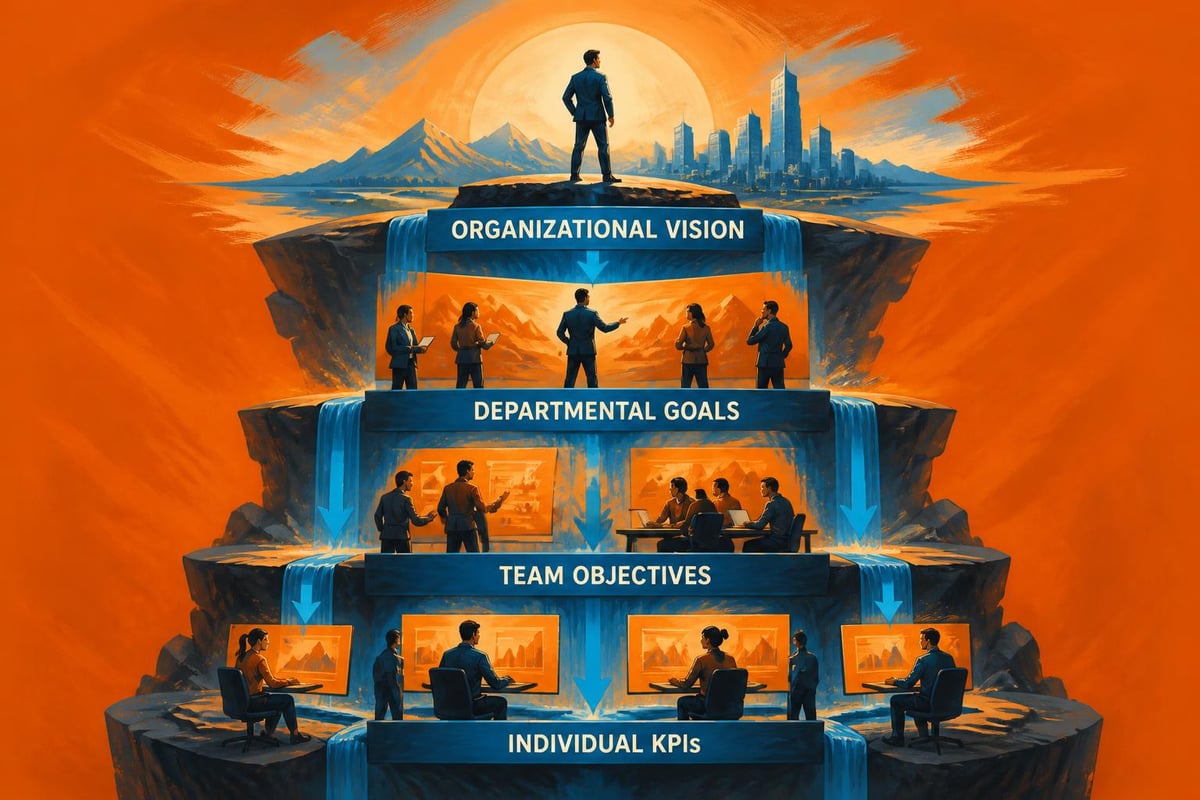
Practical application separates effective training from academic exercises. When facilitators coach live in leadership meetings, managers immediately see how strategic frameworks apply to their specific challenges, whether launching products, entering markets, or restructuring teams.
Building Strategic Capability Across Leadership Tiers
Mid-market companies need strategic thinking at every level, not just the C-suite. Effective strategic management training creates a common language and toolkit spanning executives, directors, and frontline managers. This alignment accelerates decision-making and reduces the friction that typically occurs when strategies filter down through organizational layers.
Executive-Level Strategic Development
Senior leaders require training focused on portfolio decisions, competitive positioning, and governance. They wrestle with resource allocation across competing initiatives, market entry timing, and organizational design choices. Understanding business coaching ROI becomes critical when executives must justify strategic investments to boards and stakeholders.
Training at this level addresses scenario planning, risk assessment, and stakeholder management. Executives develop capabilities to articulate strategy clearly, test assumptions rigorously, and adjust course based on market feedback rather than ego attachment.
Manager Training for Strategic Execution
Middle managers translate strategy into operational reality. Strategic management training equips them to cascade objectives, coach team members, and identify execution barriers early. Without this capability, even brilliant strategies stall in the messy middle of organizations.
Manager training emphasizes:
- Breaking strategic initiatives into actionable projects with clear milestones
- Running effective team meetings focused on progress, obstacles, and accountability
- Coaching direct reports to make decisions aligned with strategic priorities
- Identifying when to escalate issues versus solve independently
- Using data and KPIs to track execution quality
The quintessence of strategic management lies in this execution discipline, where plans become outcomes through persistent, focused effort.
Measuring Training Impact Through Business Outcomes
Strategic management training must demonstrate tangible value. Organizations increasingly demand clear ROI rather than accepting vague promises of leadership development. Measurement begins before training starts, establishing baseline metrics across key dimensions.
| Metric Category | Baseline Indicators | Post-Training Targets |
|---|---|---|
| Decision Speed | Days to approve initiatives | 40% reduction |
| Strategic Clarity | Employee understanding scores | 30+ point increase |
| Execution Quality | On-time project completion | 85%+ consistency |
| Resource Efficiency | Strategic vs. reactive work ratio | 70/30 minimum |
| Team Engagement | Manager effectiveness ratings | Top quartile scores |
Accountability starts with shared metrics. When training providers and clients align around specific KPIs, both parties focus on genuine improvement rather than activity completion. Month-to-month agreements reinforce this accountability, allowing organizations to adjust or exit if results don't materialize.

Resources like MIT OpenCourseWare’s strategic management readings provide theoretical foundations, but practical training translates frameworks into daily leadership behaviors that move business metrics.
Designing Training That Sticks
Most strategic management training fails because it treats development as an event rather than a process. Participants attend workshops, feel inspired, then return to unchanged systems that reward old behaviors. Sustainable capability building requires different architecture.
Effective programs combine several elements:
- Pre-work assessments identifying current strategic gaps and skill deficiencies
- Live coaching sessions where trainers facilitate actual leadership meetings and strategic discussions
- 360 leadership assessments providing multi-perspective feedback on strategic behaviors
- Operating cadence implementation establishing rhythms for strategic review and adjustment
- KPI scorecards making strategy visible and progress measurable
This integrated approach ensures learning transfers immediately into practice. When coaches work inside operations, they address real obstacles as they emerge, building problem-solving capacity rather than prescribing solutions. For organizations seeking practical corporate coaching aligned with business realities, this approach delivers superior returns.
The Role of Team Coaching in Strategic Alignment
Individual leader development alone cannot transform organizational capability. Strategic management training must include team coaching that builds collective intelligence and decision-making quality. Leadership teams learn to surface diverse perspectives, test strategic assumptions collaboratively, and commit fully once decisions are made.
Team coaching addresses the behavioral dynamics that undermine strategy:
- Siloed thinking that optimizes departments while harming overall performance
- Conflict avoidance that leaves critical issues unresolved
- Meeting cultures dominated by presentations rather than dialogue
- Accountability gaps where commitments go untracked
When teams develop strategic thinking together, implementation accelerates because alignment happens during planning rather than after announcements.
Integration With Broader Leadership Development
Strategic management training works best when connected to comprehensive leadership development systems. Organizations benefit from linking strategy work with complementary capabilities:
Communication skills ensure leaders articulate vision compellingly and facilitate productive strategic conversations. Coaching capability enables managers to develop strategic thinking in their teams rather than hoarding insight. Data literacy allows leaders to interpret metrics correctly and make evidence-based strategic adjustments.
Kent State’s strategic planning resources offer frameworks for integrating these elements, though application requires customization to specific organizational contexts.
Strategic management training also complements specialized coaching in sales, retention, and operational excellence. When sales leaders understand corporate strategy, they prioritize accounts and opportunities aligned with organizational direction rather than chasing any available revenue.

Selecting the Right Training Partner
Organizations evaluating strategic management training providers should examine several critical factors beyond credentials and case studies. The right partner brings practical business experience, customizes approaches to specific challenges, and shares accountability for outcomes.
Warning signs include:
- Rigid curricula applied identically across all clients
- Emphasis on certifications over business results
- Resistance to outcome-based pricing or risk-sharing arrangements
- Limited availability for ongoing coaching and support
- Generic content disconnected from industry realities
Positive indicators include:
- Willingness to coach live in leadership meetings and operations
- Flexible month-to-month engagement terms
- Clear KPI frameworks tied to specific business outcomes
- Integration of training with existing systems and rhythms
- Track record in similar industries and company sizes
Resources like Becker’s strategic management courses provide standardized content useful for individual learning, but organizational transformation requires customized intervention addressing unique strategic challenges.
The Strategic Management Division’s library contains valuable academic resources, yet bridging theory to practice demands facilitators who have led teams, managed P&Ls, and navigated competitive markets themselves.
Making Strategic Management Training Work
Success requires organizational commitment beyond sending leaders to programs. Companies must create space for strategic work, establish review cadences, and celebrate progress toward strategic objectives alongside operational metrics.
Leaders who complete strategic management training need permission to apply new approaches, even when they initially slow familiar processes. Strategic thinking requires reflection time that feels inefficient in cultures rewarding constant motion. Organizations must consciously protect this space.
Reinforcement mechanisms matter enormously. Monthly strategic reviews, quarterly deep-dive sessions on key initiatives, and annual strategy refreshes create rhythm supporting continuous strategic improvement. Without these structures, training insights fade as urgent operational demands dominate attention.
Strategic management training transforms organizational capability when designed around practical application, measurable outcomes, and sustained accountability. Mid-market companies need partners who understand business realities, customize approaches to specific challenges, and commit to delivering visible results. Noomii Corporate Coaching brings this practical approach to leadership development, coaching live in your operations while tracking progress through clear KPIs. With month-to-month terms and aligned incentive options, we share the risk and stay focused on outcomes that matter: faster decisions, stronger execution, and measurable business impact.



Leave a Reply
Want to join the discussion?Feel free to contribute!