
Self Development Coach: What Buyers Miss in 2026

The market for a self development coach has exploded since 2020, yet buyer confusion has grown in parallel. Companies spend millions on coaches who deliver feel-good sessions but struggle to tie progress to performance. Individuals hire practitioners who recycle frameworks from weekend certifications rather than apply tested methods to real problems. The gap between promise and outcome has never been wider, and the difference comes down to what buyers evaluate before signing contracts.

The Self Development Coach Landscape Has Changed

In 2026, anyone can claim the title. The barriers to entry remain low, certification mills churn out credentials in weeks, and marketing promises rarely match delivery. This saturation creates noise that drowns out practitioners who actually drive measurable change.

What defines an effective self development coach today:

  • Demonstrated outcomes with clients who faced similar challenges
  • Frameworks tied to behavior change, not abstract theory
  • Willingness to tie progress to observable metrics
  • Experience inside the environment where coaching occurs
  • Ability to coach live, not just in closed-door sessions

The best practitioners work where decisions happen. They join leadership meetings, observe team dynamics, diagnose breakdowns in real time, and coach through execution. This contrasts sharply with the sideline model where a self development coach meets privately, offers reflection questions, and never witnesses how leaders actually perform under pressure.
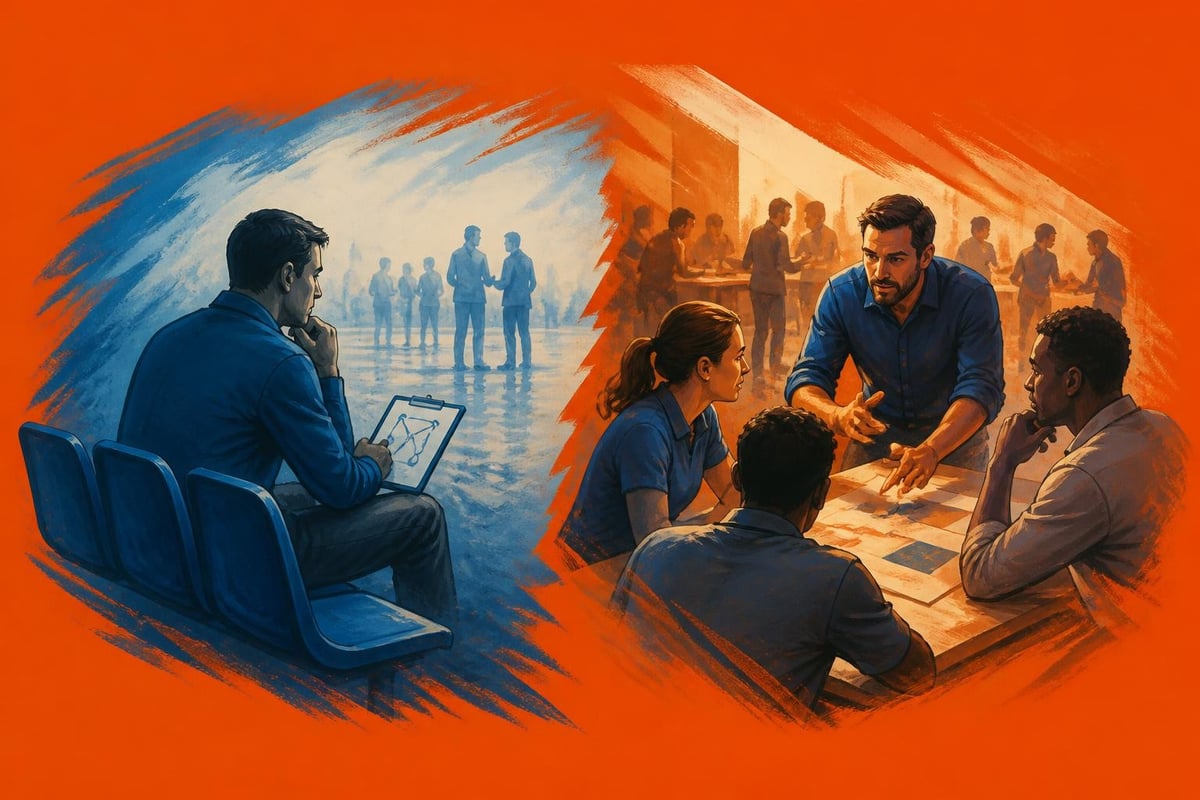
Self development coaching models comparison

Research supports this shift. Meta-analyses examining executive coaching effectiveness show the strongest outcomes emerge when coaching integrates with work context, includes goal specificity, and measures behavioral change. Generic development conversations produce weaker results than targeted interventions linked to performance.

What Buyers Miss When Evaluating Coaches

Most selection processes prioritize credentials over capability. Buyers ask about certifications, training hours, and methodology instead of outcomes, client retention, and proof.

The Certification Trap

Credentials signal training, not competence. A self development coach with an ICF certification completed coursework and logged hours. That tells you nothing about whether they've helped leaders improve decision speed, built coaching capability in managers, or driven engagement gains.

Better questions reveal capability:

  1. What specific outcomes have you achieved with clients in our industry?
  2. How do you measure progress beyond self-reported satisfaction?
  3. Can you share a case where coaching failed and what you learned?
  4. Will you work inside our operations or only in private sessions?
  5. What happens if we don't see results in 90 days?

These questions separate practitioners who deliver from those who recycle theory. The coaches worth hiring welcome scrutiny, share evidence, and tie their work to business metrics.

The ROI Gap

Few buyers demand return visibility before engagement. They treat coaching as a development expense rather than a performance investment. This changes when you frame the conversation around outcomes.

Traditional Approach Results-Driven Approach
Quarterly coaching sessions Live coaching in meetings
Subjective feedback surveys KPI scorecards with targets
Annual engagement reviews Monthly progress against metrics
Fixed 12-month contracts Month-to-month with performance ties
Generic development plans Custom frameworks for specific gaps

A self development coach operating in the results-driven model stakes reputation on visible progress. When coaching integrates with leadership development tied to measurable outcomes, retention improves because value becomes obvious.

Framework: The Performance Coaching Diagnostic

Most coaches assess individuals. Few diagnose the system where those individuals operate. This framework separates surface symptoms from root causes:

Problem: Identify the performance gap (slow decisions, poor execution, communication breakdowns, retention issues)

Diagnosis: Determine whether the gap stems from skill, will, environment, or system design

Solution: Build targeted interventions that address root causes, not symptoms

Result: Measure change through observable behaviors and business metrics

Lesson: Extract what worked, what failed, and how to scale the approach

This diagnostic applies whether you're evaluating a self development coach for yourself or vetting practitioners for your organization. Coaches who skip diagnosis and jump to solutions typically deliver weak results. They apply favorite frameworks regardless of fit.
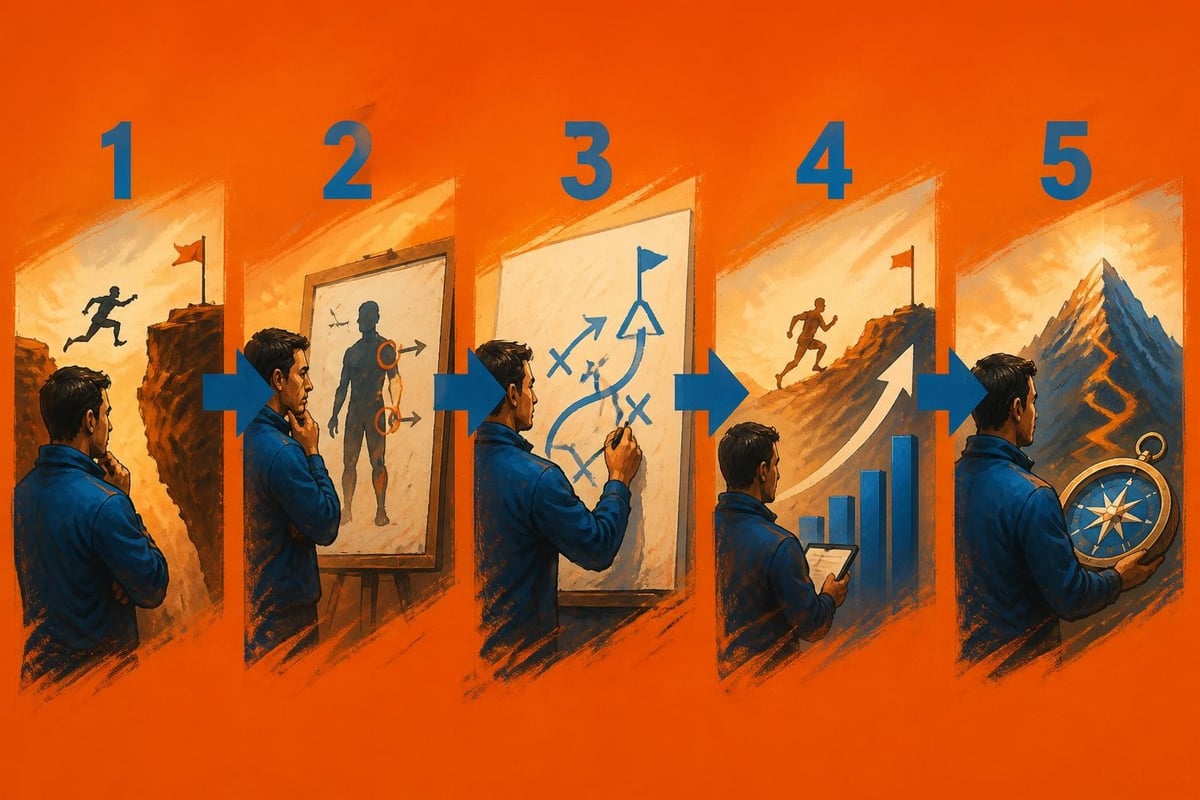
Performance coaching diagnostic process

The Rise of Embedded Coaching

The most significant shift in 2026 is the move from periodic sessions to embedded practice. Organizations that build internal coaching capability outperform those that rely on external consultants alone.

Research on coaching teams as a collective demonstrates how teaching managers to coach during regular operations multiplies impact. A self development coach who trains your leaders to develop others creates sustainable capability. One who keeps coaching centralized creates dependency.

Embedded coaching looks like:

  • Managers coaching in one-on-ones and team meetings
  • Leaders using coaching questions during strategy sessions
  • Real-time feedback replacing delayed annual reviews
  • Coaching integrated into operating cadence, not separate from it

This approach requires practitioners comfortable working in public, coaching transparently, and developing capability in others. Many coaches resist this model because it exposes their methods and reduces ongoing dependence.

Contrarian Insight: More Coaching Creates Less Development

Organizations often assume more coaching hours equal better outcomes. The opposite frequently proves true.

When leaders rely on external coaches for every development conversation, they never build coaching muscle themselves. Teams become dependent on facilitation rather than learning to navigate challenges independently. The self development coach becomes a crutch instead of a catalyst.

The solution: dose coaching strategically. Use intensive support during transitions, skill-building phases, or crisis moments. Then step back and let leaders apply what they've learned. Return for tune-ups and advanced work once foundational capability exists.

This cycling between support and independence builds stronger leaders than continuous hand-holding. It also costs less and scales better.

Comparing Human Coaches and AI Tools in 2026

AI coaching tools have improved dramatically. They offer 24/7 availability, consistent frameworks, and data tracking that human practitioners struggle to match. Yet they miss critical elements.

What AI tools do well:

  • Pattern recognition across user interactions
  • Immediate feedback on routine challenges
  • Structured goal tracking and reminders
  • Cost efficiency at scale

What human coaches still own:

  • Contextual judgment in complex situations
  • Real-time adaptation during live interactions
  • Trust-building through relationship depth
  • Challenging assumptions leaders can't see themselves

The best approach combines both. Use AI for repetitive skill-building and tracking. Deploy human coaches for high-stakes development, strategic transitions, and capability building that requires nuanced judgment.

For companies exploring business coaching options, the question isn't human versus AI but how to integrate both effectively. A self development coach who leverages technology for measurement while delivering human insight where it matters most provides the strongest value.

Red Flags When Hiring a Self Development Coach

Experience reveals patterns that predict poor outcomes:

  • Long-term contracts required upfront signal low confidence in visible results
  • Resistance to measurement suggests fear of accountability
  • Credential emphasis over outcome evidence prioritizes inputs over outputs
  • Generic frameworks applied universally indicate lack of diagnostic skill
  • Unavailability between sessions limits real-time support when it matters most

These red flags appear across industries and coaching specialties. Whether you're evaluating practitioners for corporate coaching or individual development, the same warning signs apply.

Conversely, green flags include month-to-month terms, willingness to tie compensation to results, evidence of client outcomes, and flexibility to adapt methods based on what's working.

FAQ

What does a self development coach actually do?

A self development coach helps individuals or leaders improve performance, build skills, and achieve specific goals through structured conversations, feedback, and accountability. Effective practitioners diagnose root causes, design targeted interventions, and measure progress against observable outcomes rather than relying solely on reflection exercises.

How is a self development coach different from a therapist?

Coaches focus on future performance and goal achievement in professional or personal domains, while therapists address mental health conditions and past trauma. Coaching assumes clients are resourceful and capable, working to unlock potential rather than heal pathology. For a detailed comparison, see coaching versus therapy distinctions.

Do I need a certified self development coach?

Certification indicates training completion but doesn't guarantee results. Prioritize demonstrated outcomes with clients facing similar challenges, willingness to measure progress, and experience relevant to your context. Many highly effective coaches lack formal credentials, while some certified practitioners deliver weak results.

How long does coaching take to show results?

Properly targeted coaching should produce observable behavior changes within 60-90 days when tied to specific performance gaps. If you see no measurable progress in that timeframe, either the diagnosis was wrong, the intervention doesn't fit, or the coach lacks capability. Demand visibility quickly.

What should I expect to pay for a self development coach?

Rates vary widely from $100 to $1000+ per hour based on experience, specialization, and engagement model. For organizations, package pricing or retained arrangements often provide better value than hourly rates. Beware of coaches who resist outcome-based pricing if they claim to drive business results.

Can managers become effective coaches without certification?

Yes. The most valuable coaching happens in regular operations when managers ask good questions, provide specific feedback, and hold teams accountable. Research on workplace coaching effectiveness shows that coaching skills training focused on practical application drives better outcomes than lengthy certification programs.

How do I know if a self development coach is right for my team?

Test fit through a limited pilot before committing long-term. Effective coaches diagnose first, propose specific interventions tied to your context, and welcome measurement against clear criteria. If a coach promises transformation without understanding your environment, walk away.

What's the difference between self development coaching and leadership development?

Self development coaching addresses individual growth across life domains, while leadership development focuses specifically on performance in leadership roles. Significant overlap exists, and the best practitioners adapt their approach based on client needs rather than rigid category boundaries. Both should deliver measurable outcomes.

Should coaching happen privately or in group settings?

Both have value depending on goals. Private coaching works well for sensitive leadership challenges, career transitions, or personal barriers. Group and team coaching builds collective capability, improves communication, and costs less per participant. The strongest programs combine individual and collective approaches strategically.


Effective self development requires practitioners who prioritize outcomes over credentials and integrate coaching into real work rather than keeping it separate. When you're ready to build leadership capability that drives measurable business results, Noomii connects you with coaches who work month-to-month, tie progress to clear KPIs, and coach live in your operations where it matters most.

Building a Global Talent Strategy for 2027: What Works

Building a global talent strategy for 2027 requires a fundamentally different approach than what worked even two years ago. The barriers have shifted. Migration patterns have changed. Leadership gaps have widened. Organizations that rely on 2024 playbooks will find themselves unable to compete for talent, unable to retain their best people, and unable to scale leadership capacity across borders. The stakes are higher because the margin for error is smaller. What follows is what we've observed working with government agencies and Fortune 500 companies navigating these challenges right now.

The Migration Reality No One Is Talking About

Most global talent strategies ignore the single biggest constraint: cross-border mobility is harder, slower, and more expensive than it was in 2024. Visa processing times have extended. Compliance requirements have multiplied. Political headwinds have created unpredictable policy environments.

Here's what changed:

  • Average visa processing for high-skilled workers increased 40% between 2024 and 2026
  • Seven major economies introduced new skills-based immigration frameworks with stricter qualification thresholds
  • Remote work visa programs expanded to 23 countries, but only 11% of organizations have formal strategies to leverage them

The World Bank’s migration and development resources show international talent flows shifting toward regional hubs rather than traditional destination markets. Organizations building a global talent strategy for 2027 must account for this friction by designing talent sourcing around geographic clusters, not just individual markets.

The Diagnostic Most Teams Skip

We conducted talent mobility audits for three multinational organizations in 2026. Each assumed their immigration compliance was adequate. Each was wrong.

Problem: A technology firm planned to relocate 47 senior engineers from India and Poland to US headquarters. They budgeted four months and $380,000.

Diagnosis: Their immigration counsel hadn't updated filing strategies for new USCIS premium processing restrictions. Their internal HR team didn't track dependent visa complications. Their leadership team had no contingency for denials.

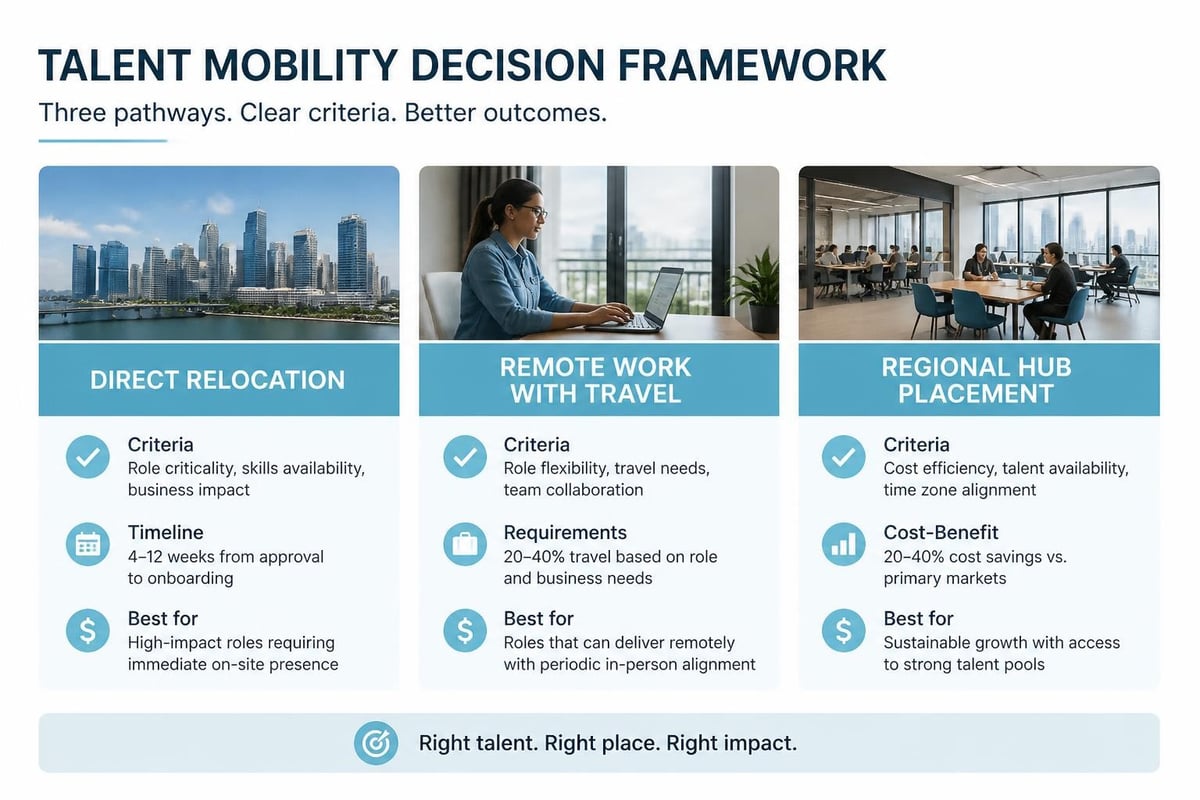
Solution: We implemented a tiered mobility model with three pathways: direct relocation (reduced to 12 priority roles), remote work arrangements with periodic travel (28 roles), and hub-based placement in Canada and UK offices (7 roles).

Result: Total timeline extended to seven months, but success rate improved from projected 73% to 94%. Cost per successful placement dropped 22%.

Lesson: Immigration is now a strategic constraint, not an administrative task. Your global talent strategy needs scenario planning for policy changes, not just compliance checklists.

Global talent mobility framework

Why Retention Systems Beat Policies

Harvard Business Review's January 2026 research confirmed what we've seen firsthand: retention policies alone don’t keep top talent. Organizations need systems that create stickiness through development, belonging, and impact.

Building a global talent strategy for 2027 means designing retention as infrastructure, not as a benefit.

What Actually Creates Retention

We compared retention rates across 14 organizations with similar compensation structures but different development approaches. The difference wasn't perks. It was systems.

Organization Type 24-Month Retention (High Performers) Development System
Policy-focused (enhanced leave, flexibility) 67% Ad hoc, manager-dependent
Program-focused (training catalog, tuition) 71% Standardized, self-directed
Systems-focused (coaching, mentorship, succession) 88% Integrated, measurable, personalized

The systems-focused group embedded executive coaching into leadership transitions, succession planning, and high-potential development. They tracked coaching outcomes against retention, promotion readiness, and engagement scores. They treated development as a performance system, not an HR program.

The framework that worked:

  1. Identify critical roles and succession gaps quarterly, not annually
  2. Deploy targeted interventions (coaching, mentorship, stretch assignments) within 30 days of identification
  3. Measure progress through defined KPIs: time-to-readiness, retention of coached leaders, internal fill rates
  4. Adjust based on data, not anecdotes

This is how leadership development becomes a retention lever instead of a cost center.

The Leadership Gap That Widens Across Borders

Global expansion amplifies leadership deficits. A mediocre director in your home market becomes a liability when leading a team across four time zones with no local support.

We audited leadership capability for a pharmaceutical company expanding into Southeast Asia and Latin America. They promoted 11 directors into VP roles to lead new regional teams. Within eight months, six were underperforming. Turnover in their teams was 34% higher than company average.

The Real Problem

The issue wasn't capability. It was context. These leaders had never managed across cultures, never built teams remotely, never navigated regulatory complexity in unfamiliar markets. The company assumed leadership skills were transferable. They're not.

What we found:

  • 73% of newly promoted global leaders lacked cross-cultural fluency training
  • 82% had never managed a fully distributed team before their promotion
  • 64% received no coaching or support during their first six months in role

Building a global talent strategy for 2027 requires acknowledging that leadership development must be localized, contextual, and supported. SHRM’s 2025 talent trends highlight upskilling as a top HR priority, but most organizations still treat leadership development as generic rather than situation-specific.

The Intervention That Changed Outcomes

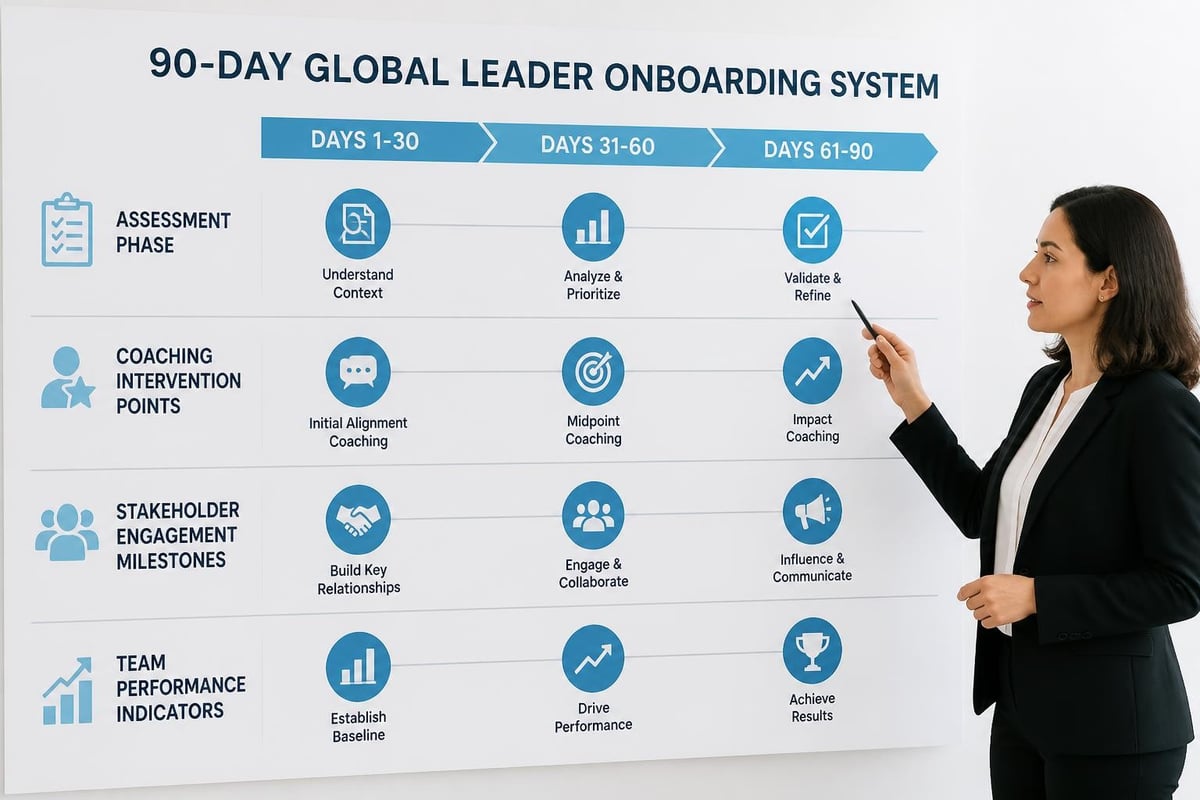
We designed a 90-day rapid onboarding system for global leaders:

  • Week 1-2: Cultural intelligence assessment and regional stakeholder mapping
  • Week 3-6: Paired coaching focused on navigating first critical decisions (hiring, budget allocation, team structure)
  • Week 7-12: Peer learning cohort with other global leaders facing similar challenges

Leaders who completed this system showed 41% faster time-to-impact (defined as achieving first major milestone) and 29% higher team engagement scores at six months compared to those who didn't. Leaders running distributed teams will find practical steps in our guide to virtual team management best practices for 2027.

The difference wasn't rocket science. It was support at the moment of need. That's what performance coaching delivers when it's designed around real transitions, not theoretical development.

Leadership development intervention timeline

The Skills Taxonomy Mistake

Most organizations building a global talent strategy for 2027 start with job descriptions and competency models from 2023. This is a mistake. The work has changed. The skills required have changed. The competitive landscape has changed. Sourcing for these roles is easier when you test for capability rather than credentials, as explained in our guide to skills-based hiring versus degrees.

Deloitte's research on bridging the experience gap identifies a critical disconnect: organizations know they need different skills but haven't updated how they assess, develop, or source talent accordingly.

Here's the pattern we see:

  1. HR uses outdated job architectures
  2. Hiring managers write role descriptions based on past needs
  3. Talent acquisition sources for yesterday's skills
  4. Leaders inherit teams misaligned with current strategy

The Audit That Surfaces Truth

We ran a skills gap analysis for a financial services firm planning Asian market expansion. They needed leaders who could manage regulatory complexity, build local partnerships, and navigate political uncertainty. Their talent profiles prioritized technical finance skills and process management.

The disconnect was obvious:

Required Capability Current Assessment Weight Actual Performance Correlation
Regulatory navigation 15% 67% (strongest predictor)
Stakeholder influence 10% 58%
Ambiguity tolerance Not measured 52%
Technical finance skills 45% 31%
Process optimization 30% 28%

They were selecting for skills that barely mattered and ignoring capabilities that drove success. We rebuilt their assessment framework, retrained interviewers, and changed their internal mobility criteria. Within one hiring cycle, quality-of-hire scores improved 34%.

The lesson: Your talent strategy is only as good as your ability to identify what actually matters. Most organizations are optimizing for the wrong things.

What AI Changes and What It Doesn't

AI hasn't eliminated the need for human judgment in talent decisions. It has exposed how poorly most organizations define what good looks like.

Building a global talent strategy for 2027 means using AI to surface patterns, not to make decisions. We've tested several AI-powered talent platforms. The best ones help you see your blind spots. The worst ones automate your biases at scale.

Where AI Adds Value

  • Pattern recognition: Identifying which leadership behaviors correlate with team performance across regions
  • Skills gap analysis: Mapping current capabilities against future needs faster than manual assessment
  • Scenario modeling: Testing how different mobility, development, and hiring strategies impact pipeline strength

Where AI Fails

  • Cultural context: Understanding why a leadership style works in Seoul but fails in São Paulo
  • Individual motivation: Knowing which development opportunities will engage a specific leader
  • Political navigation: Assessing someone's ability to build trust in complex stakeholder environments

The organizations getting this right use AI for efficiency and humans for judgment. They don't let algorithms make high-stakes talent decisions. They use data to inform decisions that leaders still own.

The Compliance Layer Everyone Underestimates

Global talent strategies fail most often on compliance, not strategy. Immigration. Labor law. Data privacy. Tax obligations. Anti-discrimination requirements. Every market adds complexity.

We worked with a government contractor expanding operations into 14 countries. Their talent team focused on sourcing and development. Their legal team reviewed contracts. No one owned the integration of compliance into talent processes.

The gaps we found:

  • Background check procedures violated GDPR in five European markets
  • Performance documentation didn't meet evidentiary standards for three Asian jurisdictions
  • Compensation bands created pay equity exposure in two Latin American countries
  • Immigration status tracking failed audit requirements for government contracts

None of these were intentional. All of them created risk. Building a global talent strategy for 2027 requires embedding compliance expertise into talent operations, not treating it as a separate function.

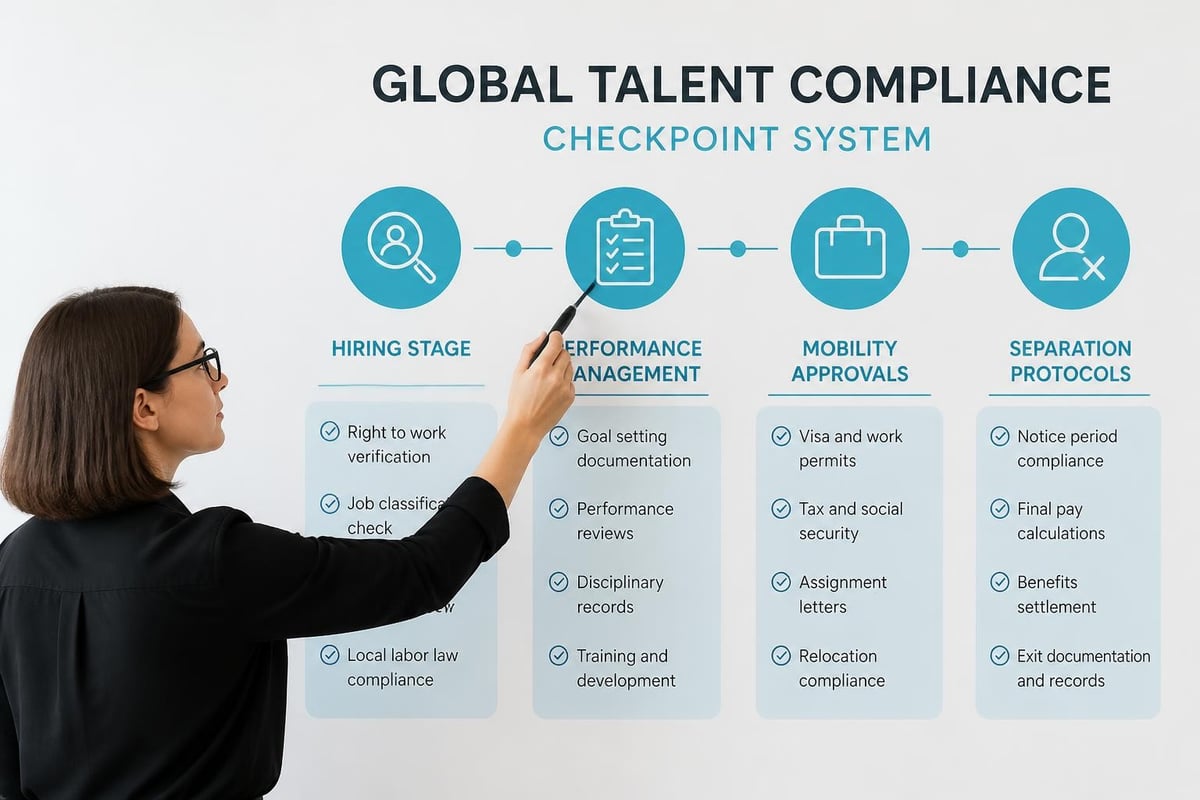
The framework that works:

  1. Map compliance requirements by jurisdiction before designing processes
  2. Build compliance checkpoints into hiring, onboarding, performance management, and separation workflows
  3. Train talent teams on regulatory implications of their decisions
  4. Audit compliance quarterly, not when something goes wrong

This isn't exciting work. It's essential work. Organizations that skip this step pay for it later through fines, lawsuits, or contract losses.

Talent compliance framework

The Local-Global Balance Nobody Gets Right

Centralized talent strategies create consistency but miss local market realities. Decentralized approaches create flexibility but lose economies of scale and quality control.

The right answer isn't one or the other. It's a clear framework for what gets decided centrally and what gets decided locally.

The Decision Framework

After analyzing 22 multinational talent strategies, we identified the split that works:

Centralized Decisions:

  • Compensation philosophy and band structure
  • Leadership competency framework and assessment methodology
  • Technology platforms and data standards
  • Compliance minimums and audit protocols
  • Coaching and development provider networks

Local Decisions:

  • Market-specific pay positioning and incentive design
  • Sourcing channels and employer brand messaging
  • Interview processes and selection criteria (within framework)
  • Development program timing and delivery format
  • Manager training content and cultural adaptation

Organizations that define this clearly outperform those that don't. Their talent teams know where they have autonomy and where they need alignment. Their leaders don't waste time debating decisions that should be standardized.

Building a global talent strategy for 2027 means being explicit about governance before you scale, not after you've created chaos.

The ROI Conversation That Actually Matters

CFOs don't care about engagement scores. They care about business outcomes. Your global talent strategy needs to demonstrate financial impact, not just activity metrics.

We helped a manufacturing company build the business case for expanding their leadership coaching program into five new markets. The CHRO wanted to invest $2.3M. The CFO wanted proof it would deliver returns.

The model we built tracked:

  • Reduction in executive turnover (replacement cost savings)
  • Improvement in time-to-productivity for new market leaders (revenue impact)
  • Increase in internal promotion rate (hiring cost avoidance)
  • Change in team performance metrics under coached leaders (margin improvement)

Over 18 months, the program delivered $4.7M in quantifiable value against $2.1M in total investment (including internal program management costs). ROI: 124%.

The breakthrough wasn't the coaching. It was the measurement system. Most organizations can't connect talent investments to business outcomes because they don't define the connection upfront. They implement programs, hope for results, and wonder why finance won't fund expansion.

What Psychological Safety Reveals About Global Teams

Psychological safety varies significantly across cultures. What feels like candor in Amsterdam feels like insubordination in Jakarta. What reads as thoughtful silence in Tokyo reads as disengagement in New York.

Leaders managing global teams need to understand these dynamics or they'll misread their teams entirely. We conducted psychological safety assessments across 47 teams in 12 countries. The range was staggering: 8.2 (out of 10) in Nordic teams to 4.1 in hierarchical Asian markets.

The mistake most leaders make: Assuming low scores mean bad leadership. Sometimes they do. Often they reflect cultural norms around authority, conflict, and communication.

The better approach:

  • Assess psychological safety relative to local baseline, not absolute scores
  • Train global leaders on cultural interpretation of feedback and participation
  • Design team agreements that acknowledge different communication styles
  • Measure improvement over time, not just point-in-time scores

Team coaching becomes essential for global teams because it creates space to name these differences and build shared norms. Without that intervention, teams stay siloed even when they're technically aligned.

The Talent Infrastructure Most Organizations Lack

Building a global talent strategy for 2027 isn't about better recruiting or more training. It's about infrastructure: the systems, processes, data, and governance that make talent decisions consistent, scalable, and effective.

Most organizations are missing:

  • Single source of truth for skills data across locations
  • Standardized assessment methodology with local calibration
  • Clear decision rights for talent investments and allocation
  • Integration between talent systems and business planning
  • Feedback loops that connect talent outcomes to strategic results

Without infrastructure, you have programs. With infrastructure, you have competitive advantage.

We worked with a professional services firm building operations in eight new markets over 24 months. Their approach: build infrastructure first, then scale.

Year One:

  • Implement skills taxonomy and assessment tools
  • Train local HR teams on frameworks and decision processes
  • Establish data governance and reporting standards
  • Design pilot coaching and development programs with measurement built in

Year Two:

  • Scale programs based on Year One data
  • Expand coach network into new markets with quality controls
  • Launch internal mobility platform connecting talent across regions
  • Integrate talent metrics into quarterly business reviews

This sequencing matters. Organizations that scale before they have infrastructure create complexity they can't manage. Those that build infrastructure first scale faster with better quality.


Building a global talent strategy for 2027 comes down to this: understand the constraints, measure what matters, and build systems that outlast individual leaders. Organizations that treat talent as infrastructure rather than initiative will outperform those that don't. Noomii Leadership Coaching helps organizations design and implement evidence-based leadership development systems that scale across borders, integrate with compliance requirements, and deliver measurable business impact through precision coaching and data-driven talent strategies.

Virtual Team Management Best Practices for 2027

Virtual team management in 2027 requires more than new tools or policies. It demands fundamental changes in how leaders diagnose dysfunction, build accountability, and measure results across distributed workforces. Most organizations still apply pre-2020 leadership models to post-pandemic realities, wondering why engagement flatlines and performance gaps widen. The answer is simple: generic remote-work advice does not solve the specific leadership failures that destroy virtual team effectiveness. After working with Fortune 500 companies and government agencies navigating complex distributed leadership challenges, clear patterns emerge around what works and what fails spectacularly.

The Diagnostic Gap Most Leaders Miss

Organizations invest heavily in collaboration platforms while ignoring the leadership behaviors that determine whether those platforms create value or chaos. This is the critical mistake.

A 2026 analysis of hybrid work challenges found that technology adoption rates mean nothing without corresponding leadership capability development. Teams with identical tools show wildly different performance based solely on manager competence in virtual contexts. The gap is not in Slack versus Teams. The gap is in whether leaders can diagnose team dysfunction remotely, address it directly, and build accountability without physical presence.

What Effective Diagnosis Looks Like

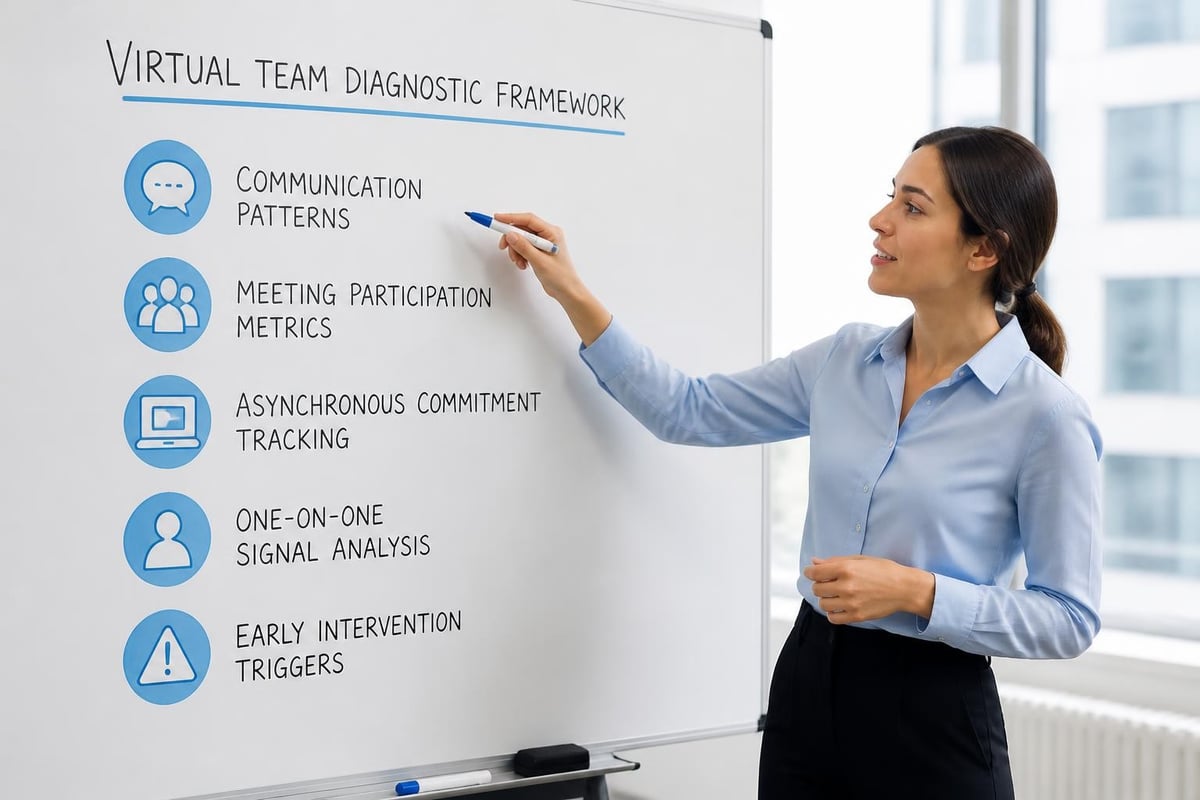
Behavioral pattern recognition beats engagement surveys. Leaders who excel at virtual team management best practices for 2027 track specific indicators:

  • Response time patterns across communication channels
  • Quality of written communication and decision documentation
  • Participation distribution in virtual meetings
  • Completion rates on asynchronous work commitments
  • Frequency and nature of one-on-one requests

These signals reveal disengagement, confusion, conflict, or capability gaps weeks before traditional metrics catch them. One executive we coached discovered a high-performer was burnt out not through survey scores but by analyzing increasingly terse messages and declining video-on rates during team calls. Early intervention prevented departure.

Leadership diagnostic framework

The Center for Creative Leadership research on virtual teams confirms this approach. Leaders who combine qualitative observation with quantitative tracking outperform those relying on either alone.

The Precision Matching Imperative

Generic leadership development programs fail virtual teams because distributed work amplifies individual leader weaknesses. A micromanager in an office is annoying. A micromanager leading a remote team destroys autonomy, slows decisions, and drives resignations.

This reality demands precision in leadership intervention. Organizations need diagnostic clarity about which leader needs what type of development, then matching them with coaches or mentors who have solved that exact problem in similar contexts.

The Matching Framework That Works

Leader Challenge Required Coach Experience Intervention Focus Success Metric
Excessive async check-ins Scaled distributed teams Trust-building systems Manager touchpoint reduction
Poor written clarity Cross-cultural communication Documentation standards Decision turnaround time
Meeting overload High-performance virtual cultures Async-first workflows Calendar density decrease
Visibility anxiety Remote-first organizations Outcome-based evaluation Performance confidence scores

The Noomii Corporate Leadership Program uses this precision matching approach because mismatched coaching wastes time and money. A coach who built virtual teams at a tech startup cannot necessarily help a government agency director navigate compliance requirements while leading distributed staff.

Specificity matters. Our work with organizations like the Department of Energy required coaches who understood both virtual team dynamics and public sector governance constraints.

Building Accountability Without Surveillance

The worst virtual team management practices in 2027 involve surveillance tools that measure activity instead of output. Keystroke monitoring, random screenshot capture, and productivity tracking software signal distrust and infantilize professionals.

Yet the opposite extreme also fails. Pure autonomy without structure creates confusion about priorities, duplicated work, and missed dependencies. The answer is accountability architecture.

The Five-Component Accountability System

Transparent goal cascading ensures every team member connects their work to organizational priorities. This is not OKR theater. It is specific outcome ownership with clear success criteria.

Defined decision rights eliminate the ambiguity that plagues virtual teams. Who makes what decisions? Who needs to be consulted? Who simply gets informed? When these questions lack answers, distributed work grinds to a halt.

Commitment-based calendaring means leaders and teams make explicit promises about deliverable timing, then track completion rates as a team health metric. One global team we advised reduced missed deadlines by 60% in four months using this approach.

Public work documentation creates visibility without meetings. Written updates, decision logs, and project status documentation let teams coordinate asynchronously while building institutional knowledge.

Results retrospectives examine outcomes, not activity. Weekly or biweekly reviews focus on what got done, what blockers emerged, and what the team learned. This builds accountability culture without surveillance.

Research on managing engagement in remote teams supports these practices. Gallup found that clarity of expectations and regular meaningful feedback drive remote worker engagement far more than office presence or monitoring.

Accountability architecture

The Communication Architecture Decision

Most virtual team management failures stem from poorly designed communication systems. Leaders allow communication chaos, where urgent items hide in email, decisions scatter across Slack threads, and team members waste hours hunting for information.

Effective virtual team management best practices for 2027 require explicit communication architecture:

  1. Synchronous channels for real-time discussion (video calls, instant messaging)
  2. Asynchronous channels for considered input (email, documents, project management tools)
  3. Archive channels for searchable institutional knowledge (wikis, shared drives with clear naming conventions)
  4. Notification protocols that specify response time expectations by channel and message type
  5. Escalation paths for when normal channels fail

One Fortune 500 client we worked with reduced meeting time by 35% and improved cross-functional project delivery by implementing clear channel purpose definitions. Previously, every discussion defaulted to meetings because no one trusted async channels for important work.

The Meeting Minimization Framework

Virtual meetings are expensive and exhausting. Leaders who understand virtual team management best practices for 2027 follow these principles:

  • Default to async for information sharing, status updates, and one-way communication
  • Use synchronous time only for discussion requiring real-time input, relationship building, or conflict resolution
  • Keep standing meetings under 30 minutes with clear agendas sent 24 hours ahead
  • Record all meetings and provide written summaries within two hours for distributed timezone accommodation
  • Measure meeting load as a team health metric, targeting reduction over time

The MIT guidance on remote performance management emphasizes that performance conversations in distributed environments require more structure and documentation than office-based equivalents. This applies equally to team meetings.

Manager Development as Infrastructure Investment

Virtual team effectiveness is manager effectiveness. Period. Organizations that treat remote leadership as an individual capability issue rather than an organizational development priority fail predictably.

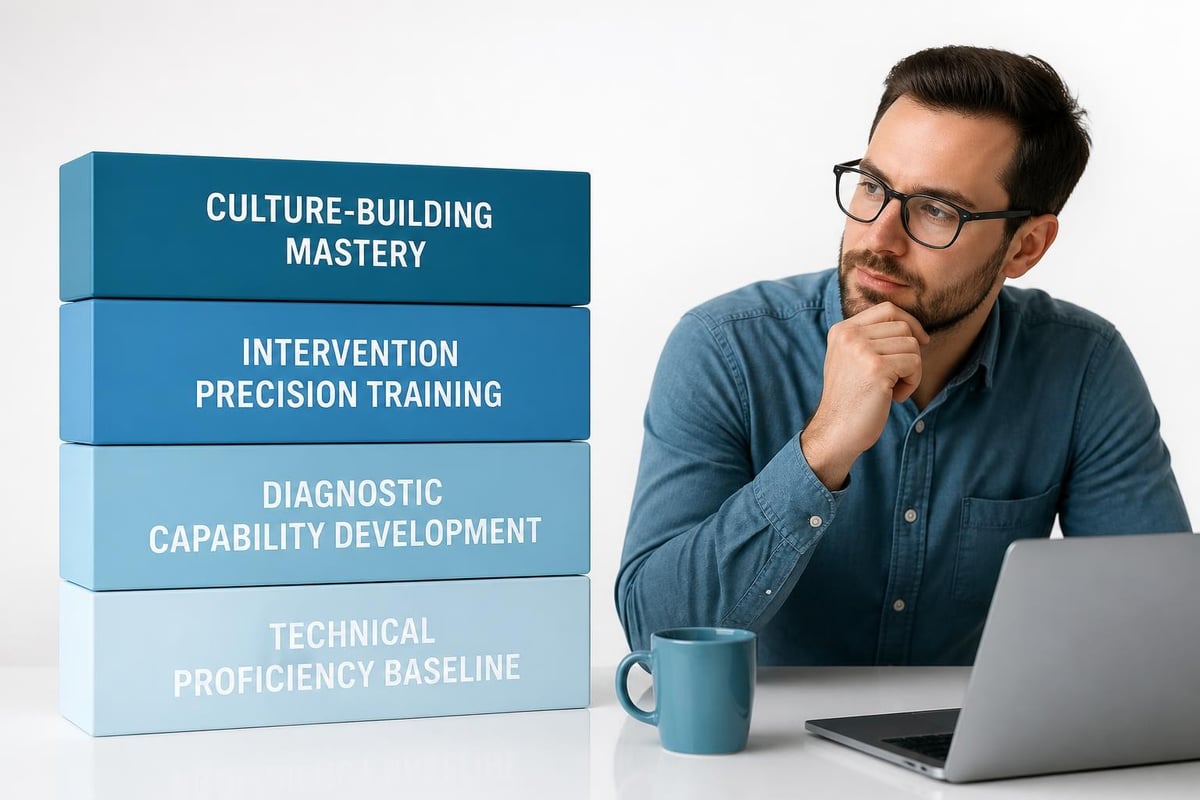
The Manager Capability Stack

Level One: Technical Proficiency
Competence with collaboration platforms, async communication, and virtual meeting facilitation. This is table stakes, not differentiation.

Level Two: Diagnostic Capability
Ability to spot disengagement, conflict, capability gaps, and burnout through remote signals. Most managers lack this skill. They notice problems only after they become crises.

Level Three: Intervention Precision
Matching the right developmental intervention to the specific problem. Knowing when to coach, when to clarify expectations, when to restructure work, and when to exit someone who cannot succeed remotely.

Level Four: Culture Building
Creating team norms, psychological safety, and belonging across distance. This separates adequate virtual team managers from exceptional ones.

The SHRM guidance on coaching first-time managers for remote success acknowledges this capability stack. Organizations that invest in structured manager development for distributed leadership see measurable returns in retention and team performance.

Our work with leadership coaching programs consistently shows that manager competence in virtual contexts predicts team outcomes more than any other variable. Invest here or accept mediocre results.

Manager capability development

Performance Evaluation in Distributed Contexts

Annual performance reviews were already broken. Virtual work exposes every flaw in traditional evaluation systems. Leaders who rely on office presence observations, hallway conversations, and visibility bias cannot fairly assess distributed team members.

Virtual team management best practices for 2027 demand evaluation system redesign:

Output-Based Assessment Criteria

Traditional Metric Virtual Alternative Why It Matters
Hours worked Outcomes delivered Remote workers operate across timezones; hours are meaningless
Office presence Communication quality Async environments reward clear writing and documentation
Manager visibility Stakeholder feedback Direct observation decreases; 360 input increases in importance
Activity levels Impact measurement Busy does not equal productive in virtual settings
Team meeting participation Contribution across channels Value creation happens beyond synchronous meetings

One global organization we advised implemented quarterly impact reviews where team members document their contributions against team goals with supporting evidence. Managers then validate and calibrate ratings across teams. This approach eliminated the visibility bias that previously rewarded those in headquarters timezones.

The key is defining success criteria before evaluation periods, making them transparent, and collecting evidence throughout the period rather than relying on recency bias and manager memory.

The Inclusion and Belonging Challenge

Virtual work can democratize access or amplify existing inequities. The difference is leadership intentionality.

Teams with distributed members often develop proximity bias, where those near headquarters get better assignments, more face time with executives, and faster promotions. This destroys distributed team morale and drives high-performer exits.

Addressing this requires structural intervention:

Rotate meeting times to share timezone inconvenience across the team rather than always disadvantaging remote members in other regions.

Equalize information access by documenting all important discussions and decisions in writing, not just summarizing them for those who could not attend synchronous meetings.

Distribute high-visibility work based on capability and development goals, not office location or manager proximity.

Create dedicated relationship-building time that is explicitly not about work deliverables. Virtual teams need space for the informal connection that happens naturally in offices.

Monitor promotion and opportunity data by location to surface and correct proximity bias before it becomes systematic inequity.

Harvard Business School's perspective on bridging distance in hybrid teams provides practical leader behaviors that reduce proximity bias and build inclusion. The research is clear: these issues do not resolve organically. They require deliberate leadership action.

Building psychological safety in distributed teams is harder than in physical spaces but more important. Team members who fear speaking up in virtual meetings or challenging ideas in written channels withhold the input that prevents mistakes and drives innovation.

The Contrarian View on Hybrid Models

Much of the discourse about virtual team management best practices for 2027 assumes hybrid is inevitable and optimal. This deserves challenge.

For many organizations, hybrid is the worst of both worlds. It creates two classes of employees, forces infrastructure investment in both virtual and physical environments, and generates constant scheduling friction about who needs to be where when.

The data on hybrid work challenges shows persistent execution problems. Organizations implement hybrid policies without addressing the leadership capability gaps, communication architecture decisions, or inclusion challenges that determine hybrid success.

When to Choose Fully Remote

Organizations should seriously consider fully remote when:

  • Work is primarily cognitive and asynchronous
  • Talent requirements exceed local market availability
  • Real estate costs significantly impact profitability
  • Employee retention depends on location flexibility
  • Leadership team has virtual management competence

When to Choose Fully Office-Based

Office mandates make sense when:

  • Work requires hands-on collaboration with physical materials
  • Organizational culture depends on spontaneous interaction
  • Leadership lacks capability to manage virtually
  • Compliance or security requires physical presence

The critical error is choosing hybrid by default without honestly assessing whether the organization can execute it well. Hybrid done poorly is worse than either extreme done competently.

Measuring What Matters in Virtual Teams

Most organizations measure the wrong things in distributed work environments. They track activity, attendance, and satisfaction while ignoring the outcomes that determine business results.

Better metrics for virtual team effectiveness:

  • Decision velocity: Time from problem identification to implemented solution
  • Cross-functional coordination: Project completion rates and timeline accuracy when multiple teams collaborate
  • Knowledge retention: Percentage of critical processes and decisions documented in searchable formats
  • Development velocity: Skills acquisition and capability growth rates among team members
  • Innovation rate: New ideas proposed, tested, and implemented per quarter
  • Voluntary retention: Percentage of high performers who choose to stay beyond two years

These metrics reveal whether virtual team management actually works. Engagement survey scores matter less than whether teams execute effectively, develop talent, and retain the people who drive results.

Organizations serious about virtual team management best practices for 2027 implement quarterly metric reviews that examine trends, diagnose problems, and adjust leadership practices based on data.

Frequently Asked Questions

What is the biggest mistake leaders make managing virtual teams in 2027?

Treating virtual team management as a technology problem rather than a leadership capability problem. Leaders invest in new tools while ignoring the diagnostic skills, communication architecture, and accountability systems that determine distributed team effectiveness. Technology enables remote work; leadership capability determines whether it succeeds.

How can managers build accountability without micromanaging remote teams?

Implement accountability architecture: transparent goal cascading, defined decision rights, commitment-based calendaring, public work documentation, and results retrospectives. This creates structure and visibility without surveillance. Focus on outcomes delivered rather than activity performed.

What performance metrics work best for distributed teams?

Output-based metrics that measure impact rather than activity: decision velocity, cross-functional coordination success, knowledge documentation rates, development velocity, innovation rates, and voluntary retention of high performers. Avoid measuring hours worked, office presence, or manager visibility.

How do you prevent proximity bias in hybrid team environments?

Rotate meeting times across timezones, equalize information access through written documentation, distribute high-visibility work based on capability not location, create dedicated relationship-building time, and actively monitor promotion and opportunity data by location to surface and correct bias.

What communication architecture should virtual teams implement?

Define five distinct channels: synchronous for real-time discussion, asynchronous for considered input, archive for searchable knowledge, notification protocols specifying response expectations, and escalation paths for when normal channels fail. Default to async and use synchronous time only for discussion requiring real-time input or relationship building.

How should organizations develop managers for virtual team leadership?

Build the four-level capability stack: technical proficiency with tools, diagnostic capability to spot dysfunction through remote signals, intervention precision to match solutions to problems, and culture-building skills to create psychological safety and belonging across distance. This requires structured development programs, not ad hoc training.


Virtual team management best practices for 2027 demand diagnostic precision, accountability architecture, and leadership capability development that most organizations have not yet built. Generic advice fails because distributed work amplifies individual leader weaknesses and exposes organizational system gaps. The Noomii Corporate Leadership Program helps organizations solve these complex challenges through evidence-based diagnostics, precision coach matching, and targeted interventions that build measurable virtual team leadership capability aligned with your strategic priorities.