The turbulence of 2026 has sorted leaders into two distinct categories: those who adapt and those who implode. Market volatility, AI disruption, regulatory shifts, and talent wars have created an environment where leadership weaknesses surface fast. Why uncertainty exposes weak leaders isn't mysterious. Ambiguity strips away the protective scaffolding that mediocre executives rely on during stable times. When the playbook disappears, so does their credibility.
Over the past 18 months, boards and CHROs have witnessed a disturbing pattern. Leaders who appeared competent during predictable periods now freeze during volatility. The same executives who delivered quarterly results when markets cooperated suddenly cannot make timely decisions. Research from Stanford Graduate School of Business confirms that expressing uncertainty damages perceptions of leader effectiveness, yet weak leaders broadcast their confusion through indecisiveness, contradictory communications, and delayed action.
The Diagnostic Gap That Reveals Leadership Fragility
Organizations discover leadership problems too late because they confuse past performance with future capability. A vice president who excelled in operations during growth may lack the judgment needed when revenues contract 20%. The skills are different. The pressure is different. The consequences of hesitation multiply.
Three specific failures emerge when uncertainty tests leadership quality:
- Decision paralysis disguised as thoroughness where leaders demand more data to avoid accountability
- Inconsistent messaging that reflects internal confusion rather than strategic adaptation
- Avoidance behaviors including delegation of critical decisions that require executive judgment
The Fortune 500 Pattern
In 2025 and early 2026, we observed a consistent pattern across enterprise clients. During market disruptions, weak leaders defaulted to process over judgment. They convened endless working groups, requested additional analyses, and deferred decisions until "conditions stabilized." Meanwhile, their organizations bled talent, market share, and stakeholder confidence.
One manufacturing client faced supply chain disruptions that required immediate supplier diversification. The COO, effective during stable periods, spent six weeks analyzing options while competitors secured alternative sources. The delay cost the company $23 million in lost contracts and damaged customer relationships that took 14 months to repair.

The diagnostic lesson: leaders who cannot tolerate ambiguity will always choose delay over risk, even when delay guarantees worse outcomes. This pattern explains why uncertainty exposes weak leaders so reliably. They lack the emotional resilience and judgment to act without complete information.
How Weak Leaders Damage Organizations During Volatility
The costs of leadership weakness compound during uncertain periods. What appears as cautious management actually accelerates organizational decline through several mechanisms.
| Leadership Weakness |
Organizational Impact |
Recovery Time |
| Decision paralysis |
Missed market opportunities, competitor advantage |
12-18 months |
| Inconsistent communication |
Employee disengagement, trust erosion |
18-24 months |
| Blame deflection |
Team dysfunction, talent exodus |
24+ months |
| Risk aversion |
Innovation stagnation, market irrelevance |
Permanent damage possible |
The Trust Erosion Cycle
When leaders cannot provide clarity during turbulence, teams fill the void with speculation. We documented this pattern at a financial services client in Q4 2025. As regulatory changes created uncertainty about compliance requirements, the Chief Risk Officer delayed communications for three weeks while "gathering complete information."
During that silence, three damaging narratives spread through the organization:
- Leadership didn't understand the regulatory changes
- The company might face significant penalties
- Layoffs were imminent to cover compliance costs
None were accurate, but the delayed communication allowed rumors to establish as perceived truth. When the CRO finally communicated, employees had already lost confidence. The hesitation that seemed prudent to the executive was interpreted as incompetence by the organization.
This dynamic illustrates why uncertainty exposes weak leaders so completely. Their instinct to wait for certainty before communicating creates information vacuums that damage credibility faster than imperfect but timely communication would.
The AI Disruption Test of Leadership Quality
The rapid adoption of AI tools in 2025-2026 has become an unexpected leadership diagnostic. Forbes analysis of AI adoption reveals how technological disruption exposes decision-making and adaptability weaknesses among executives who previously appeared competent.
Strong leaders approached AI as a strategic capability question: Where does this technology create competitive advantage? What risks require mitigation? How do we pilot, measure, and scale? Weak leaders defaulted to committee formation, vendor comparisons that delayed decisions for quarters, and public skepticism that masked their discomfort with unfamiliar technology.
The Government Agency Example
A federal agency client faced pressure to implement AI tools for case processing efficiency. The initiative could reduce processing times from 45 days to 12 days, significantly improving citizen service while reducing costs.
The appointed project leader, a 20-year agency veteran, spent seven months studying the technology before making recommendations. During this period:
- Two other agencies implemented similar solutions and published results showing 60% efficiency gains
- Staff frustration increased as manual processing volumes grew
- Congressional inquiries began questioning the agency's modernization progress
- The technology landscape evolved, requiring the analysis to restart
The leader's caution was rooted in fear of criticism rather than thoughtful risk management. This distinction matters. Prudent leaders assess risks, establish safeguards, and proceed with measured implementation. Weak leaders avoid risk entirely by disguising inaction as diligence.

What Separates Decisive Leaders From Pretenders
The distinction between strong and weak leadership during uncertainty isn't about confidence or charisma. It's about judgment, adaptability, and the willingness to make directional decisions with incomplete information.
Decisive leaders demonstrate three capabilities that weak leaders lack:
Comfort With Directional Correctness
Strong leaders understand that perfect information doesn't exist during volatility. They make decisions that are directionally correct, knowing they'll adjust as conditions clarify. This requires distinguishing between reversible and irreversible decisions and matching decision speed accordingly.
A technology client faced vendor selection during rapid AI evolution. Instead of delaying until the "best" solution emerged, the CTO selected a platform with strong integration capabilities and contractual flexibility. Six months later, when better options appeared, the architecture allowed migration without disrupting operations. The decision wasn't perfect, but it was timely and adaptable.
Transparent Communication About Uncertainty
Contrary to assumptions that leaders must project absolute certainty, research shows that leading through uncertainty requires transparent communication about what's known, unknown, and how decisions will adapt as information emerges.
Weak leaders believe admitting uncertainty damages credibility. Actually, pretending to certainty that doesn't exist damages credibility faster. Employees recognize manufactured confidence immediately.
The communication framework that builds trust during uncertainty:
- Acknowledge the ambiguity explicitly rather than pretending clarity exists
- Share the decision framework explaining how choices will be made
- Establish decision timelines so teams know when clarity will come
- Commit to updates at specific intervals regardless of whether conditions have stabilized
Bias Toward Learning Over Defensiveness
When decisions produce unexpected results, strong leaders investigate what happened and adjust. Weak leaders defend their choices, blame circumstances, or point to process compliance.
We observed this distinction during a pharmaceutical client's market expansion. An executive vice president championed entering a Southeast Asian market based on analysis showing strong demand. Within six months, regulatory barriers and local competition made the investment untenable.
The EVP's response revealed leadership quality. Rather than defending the decision or blaming incomplete market intelligence, she commissioned a rapid lessons-learned analysis, identified the analytical gaps that led to the miscalculation, and improved the market assessment framework for future decisions. The business lost $4 million on the failed expansion but gained stronger strategic decision-making capability.
A weaker leader would have protected their reputation through blame deflection, ensuring the organization learned nothing and repeated similar mistakes.
The Performance Coaching Intervention That Changes Outcomes
Organizations waiting for uncertainty to pass before addressing leadership gaps make a strategic error. The volatility itself provides the developmental opportunity. Performance coaching during uncertain periods accelerates leadership capability faster than classroom training ever could because the stakes are real and the feedback is immediate.
The intervention framework that strengthens leadership during turbulence:
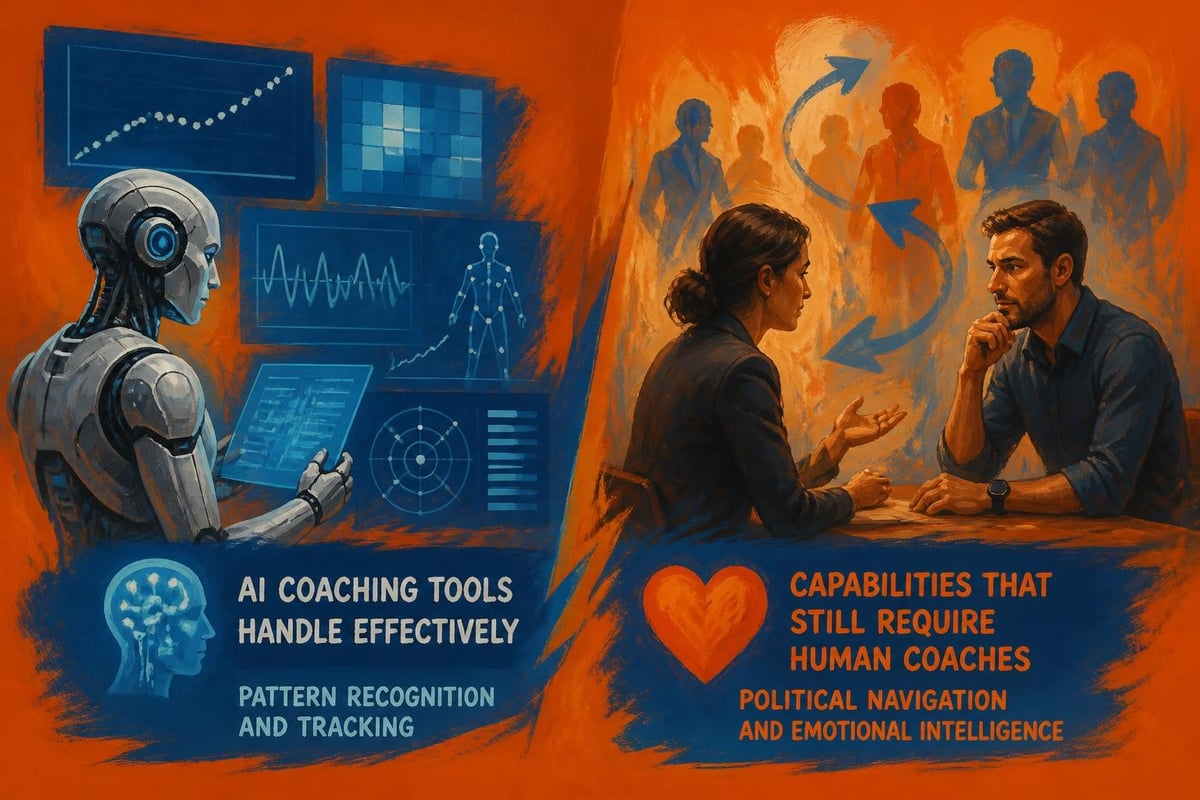
- Real-time decision coaching where leaders receive guidance on actual organizational challenges, not theoretical scenarios
- Behavioral pattern identification revealing how leaders' default responses under pressure create unintended consequences
- Stakeholder impact analysis showing how leadership behaviors affect team performance, engagement, and retention
- Adaptive strategy development building specific capabilities for decision-making under uncertainty
The Executive Team Transformation
A manufacturing client faced simultaneous challenges in Q2 2026: supply chain disruptions, labor shortages, and customer consolidation. The executive team, historically effective, began fragmenting as uncertainty increased. The CEO noticed contradictory messages to the organization, territorial behavior between divisions, and delayed decisions on time-sensitive opportunities.
Rather than waiting for conditions to stabilize, the CHRO initiated targeted coaching interventions with four executives showing the most pronounced leadership gaps. The coaching focused on:
- Decision-making frameworks for ambiguous situations
- Communication protocols during rapid change
- Collaborative problem-solving under pressure
- Emotional regulation techniques for high-stress periods
Within 90 days, observable changes included faster cross-functional decisions, consistent organizational messaging, and proactive rather than reactive responses to market shifts. The quantifiable impact: 34% reduction in decision cycle time and measurable improvement in employee confidence scores.
This example demonstrates why uncertainty exposes weak leaders but also creates optimal conditions for leadership development. The pressure that reveals weaknesses also accelerates capability building when organizations intervene strategically.
The Board-Level Implications of Leadership Weakness
Directors and governance committees often discover leadership problems too late because performance metrics lag behavioral warning signs. By the time financial results show deterioration, leadership damage has compounded for quarters.
Forward-looking boards now monitor leading indicators of leadership effectiveness during uncertain periods:
| Indicator |
What It Reveals |
Intervention Threshold |
| Decision velocity |
Paralysis vs. adaptability |
>30% slowdown from baseline |
| Communication consistency |
Leader clarity vs. confusion |
Contradictory messages in <14 days |
| Team retention |
Confidence in leadership |
>15% increase in voluntary departures |
| Cross-functional collaboration |
Territorial vs. collaborative behavior |
Escalations requiring CEO intervention |
The Succession Planning Lesson
A Fortune 500 client identified this pattern too late in 2025. The designated CEO successor, a high-performing division president, received the promotion during relatively stable market conditions. Within six months, as industry disruption accelerated, the new CEO's limitations became apparent.
Board members noticed:
- Strategy presentations that described problems in detail but offered no clear path forward
- Requests for external consultants to make decisions that required executive judgment
- Defensive reactions to director questions about strategic choices
- Organizational confusion about priorities and direction
The board faced an uncomfortable reality. The succession process had evaluated candidates based on historical performance during stability rather than judgment and adaptability during uncertainty. The skills required for success had shifted, but the evaluation criteria hadn't.
This example illustrates why Fortune 500 leaders today face fundamentally different challenges than their predecessors. The volatility isn't temporary. It's the permanent operating environment. Organizations need leaders who thrive in uncertainty, not those who merely survive it.
Building Leadership Resilience Before Crisis Demands It
The costliest mistake organizations make is treating leadership development as a remedial intervention rather than a strategic capability investment. Waiting until uncertainty exposes weak leaders guarantees expensive consequences: failed strategies, damaged cultures, lost talent, and eroded stakeholder confidence.
Proactive organizations build leadership resilience through:
Scenario-Based Development
Rather than generic leadership training, expose executives to realistic uncertainty scenarios with consequences. Tabletop exercises that simulate market disruptions, regulatory changes, or competitive threats reveal how leaders think under pressure and where capabilities need strengthening.
A healthcare client implemented quarterly scenario exercises for their leadership team throughout 2025. Each session presented a realistic crisis requiring rapid decision-making with incomplete information. The exercises revealed which leaders could synthesize complex inputs, make directional decisions, and communicate clearly under pressure.
Two executives consistently struggled with these scenarios. Rather than waiting for an actual crisis to expose these gaps, the organization provided targeted coaching focused on decision-making frameworks and stress management. When a real regulatory crisis emerged in March 2026, both leaders performed effectively because they'd developed the capabilities beforehand.
Evidence-Based Assessment
Subjective performance reviews miss leadership weaknesses that objective assessment tools reveal. Validated instruments measuring decision-making quality, emotional intelligence, adaptability, and judgment under pressure provide data that annual reviews cannot.
The assessment approach that identifies vulnerability to uncertainty:
- Behavioral tendency analysis showing how leaders default under stress
- Judgment evaluation through structured decision-making scenarios
- Stakeholder perception surveys revealing impact on team performance
- Adaptability scoring measuring response to changing conditions
Organizations using this diagnostic framework identify leadership development needs 12-18 months before performance problems become visible in business results.
Continuous Feedback Mechanisms
Annual reviews provide insufficient feedback frequency during periods of rapid change. Leaders need real-time input on how their behaviors affect organizational performance, especially during volatile conditions.
The feedback infrastructure that accelerates leadership development:
- Peer coaching groups where executives review each other's decisions and share observations
- Stakeholder pulse surveys conducted quarterly rather than annually to track leadership impact
- Decision post-mortems analyzing significant choices to extract lessons
- Executive coach partnerships providing ongoing guidance rather than episodic interventions
The Competitive Advantage of Superior Leadership Development
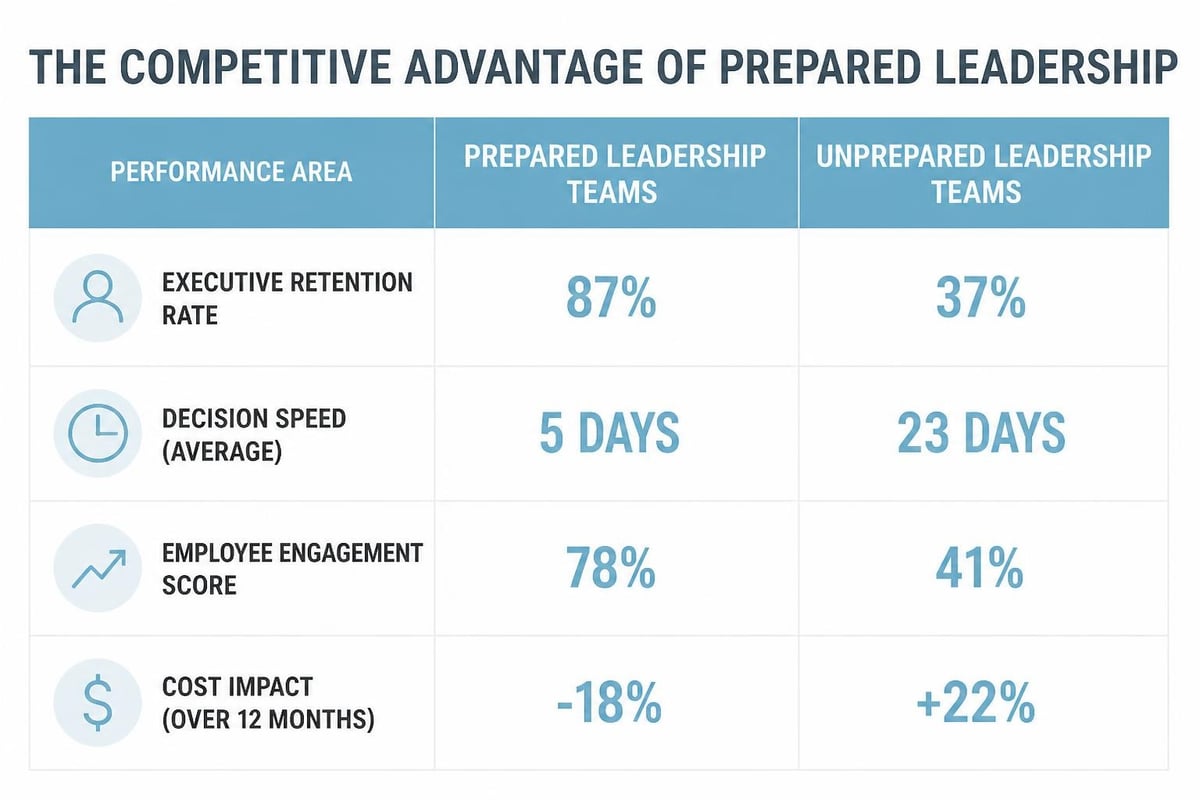
Organizations that develop adaptive leaders faster than competitors gain sustainable advantage. In 2026's environment, where uncertainty is constant and market conditions shift rapidly, leadership quality determines organizational survival more than strategy, capital, or technology.
Why uncertainty exposes weak leaders matters because it reveals what separates resilient organizations from fragile ones. The difference isn't in avoiding uncertainty. It's in building leadership that thrives despite it.
The economics are clear. Leadership coaching programs that strengthen executive decision-making, communication, and adaptability deliver measurable ROI through:
- Faster, higher-quality strategic decisions that capture market opportunities competitors miss
- Reduced talent turnover as employees maintain confidence in leadership during turbulence
- Stronger stakeholder relationships built on consistent, transparent communication
- Organizational resilience that withstands disruptions without performance degradation
The investment in leadership development appears discretionary until competitors with stronger leaders capture market share, talent, and investor confidence. Then it becomes a recovery expense, always costlier than prevention would have been.
Uncertainty doesn't create weak leaders. It reveals them. The executives who appear competent during stable periods but freeze during volatility have always lacked the judgment and adaptability that true leadership requires. Organizations that recognize this pattern and invest in targeted leadership development gain competitive advantage that compounds during exactly the periods when others struggle. Noomii Leadership Coaching helps organizations identify leadership gaps before crises expose them, matching executives with specialized coaches who build decision-making capability, emotional resilience, and the judgment required to lead through persistent uncertainty.
FAQ
What are the early warning signs that a leader will struggle during uncertainty?
Early indicators include decision delays that exceed reasonable analysis periods, inconsistent messaging that reflects internal confusion rather than strategic adaptation, requests for additional data when sufficient information exists for directional decisions, and defensive reactions to questions about strategic choices. Leaders who performed well historically may still show these patterns when conditions shift.
How quickly should organizations intervene when leadership weaknesses appear during volatile periods?
Immediate intervention produces better outcomes than waiting. Leadership problems compound rapidly during uncertainty as teams lose confidence, competitors gain advantage, and recovery becomes costlier. Organizations should initiate targeted coaching within 30 days of identifying behavioral patterns that indicate decision paralysis, communication failures, or avoidance of accountability.
What distinguishes productive caution from leadership paralysis during uncertain times?
Productive caution involves systematic risk assessment, establishment of safeguards, pilot programs that enable learning, and timely decisions with built-in flexibility. Paralysis involves endless analysis, committee formation that delays accountability, contradictory signals about priorities, and avoided decisions until certainty exists. The distinction is whether the leader is managing risk or avoiding it entirely.
Can leaders who struggle with uncertainty develop the necessary capabilities, or are these fundamental traits?
Leadership adaptability can be developed through targeted interventions focused on decision-making frameworks, emotional regulation under pressure, comfort with directional correctness, and transparent communication about ambiguity. However, development requires self-awareness and willingness to change behavioral patterns. Leaders who cannot acknowledge their struggles rarely improve.
What metrics should boards monitor to identify leadership effectiveness during volatile periods before financial performance declines?
Leading indicators include decision cycle time compared to baseline periods, consistency of organizational messaging, voluntary departure rates among high performers, frequency of cross-functional escalations requiring CEO intervention, and stakeholder confidence scores from pulse surveys. These metrics reveal leadership problems 6-12 months before they appear in financial results.
{
  "@context": "https://schema.org",
  "@type": "FAQPage",
  "mainEntity": [
    {
      "@type": "Question",
      "name": "What are the early warning signs that a leader will struggle during uncertainty?",
      "acceptedAnswer": {
        "@type": "Answer",
        "text": "Early indicators include decision delays that exceed reasonable analysis periods, inconsistent messaging that reflects internal confusion rather than strategic adaptation, requests for additional data when sufficient information exists for directional decisions, and defensive reactions to questions about strategic choices. Leaders who performed well historically may still show these patterns when conditions shift."
      }
    },
    {
      "@type": "Question",
      "name": "How quickly should organizations intervene when leadership weaknesses appear during volatile periods?",
      "acceptedAnswer": {
        "@type": "Answer",
        "text": "Immediate intervention produces better outcomes than waiting. Leadership problems compound rapidly during uncertainty as teams lose confidence, competitors gain advantage, and recovery becomes costlier. Organizations should initiate targeted coaching within 30 days of identifying behavioral patterns that indicate decision paralysis, communication failures, or avoidance of accountability."
      }
    },
    {
      "@type": "Question",
      "name": "What distinguishes productive caution from leadership paralysis during uncertain times?",
      "acceptedAnswer": {
        "@type": "Answer",
        "text": "Productive caution involves systematic risk assessment, establishment of safeguards, pilot programs that enable learning, and timely decisions with built-in flexibility. Paralysis involves endless analysis, committee formation that delays accountability, contradictory signals about priorities, and avoided decisions until certainty exists. The distinction is whether the leader is managing risk or avoiding it entirely."
      }
    },
    {
      "@type": "Question",
      "name": "Can leaders who struggle with uncertainty develop the necessary capabilities, or are these fundamental traits?",
      "acceptedAnswer": {
        "@type": "Answer",
        "text": "Leadership adaptability can be developed through targeted interventions focused on decision-making frameworks, emotional regulation under pressure, comfort with directional correctness, and transparent communication about ambiguity. However, development requires self-awareness and willingness to change behavioral patterns. Leaders who cannot acknowledge their struggles rarely improve."
      }
    },
    {
      "@type": "Question",
      "name": "What metrics should boards monitor to identify leadership effectiveness during volatile periods before financial performance declines?",
      "acceptedAnswer": {
        "@type": "Answer",
        "text": "Leading indicators include decision cycle time compared to baseline periods, consistency of organizational messaging, voluntary departure rates among high performers, frequency of cross-functional escalations requiring CEO intervention, and stakeholder confidence scores from pulse surveys. These metrics reveal leadership problems 6-12 months before they appear in financial results."
      }
    }
  ]
}