

Can Coaching Replace Therapy? What Leaders Must Know
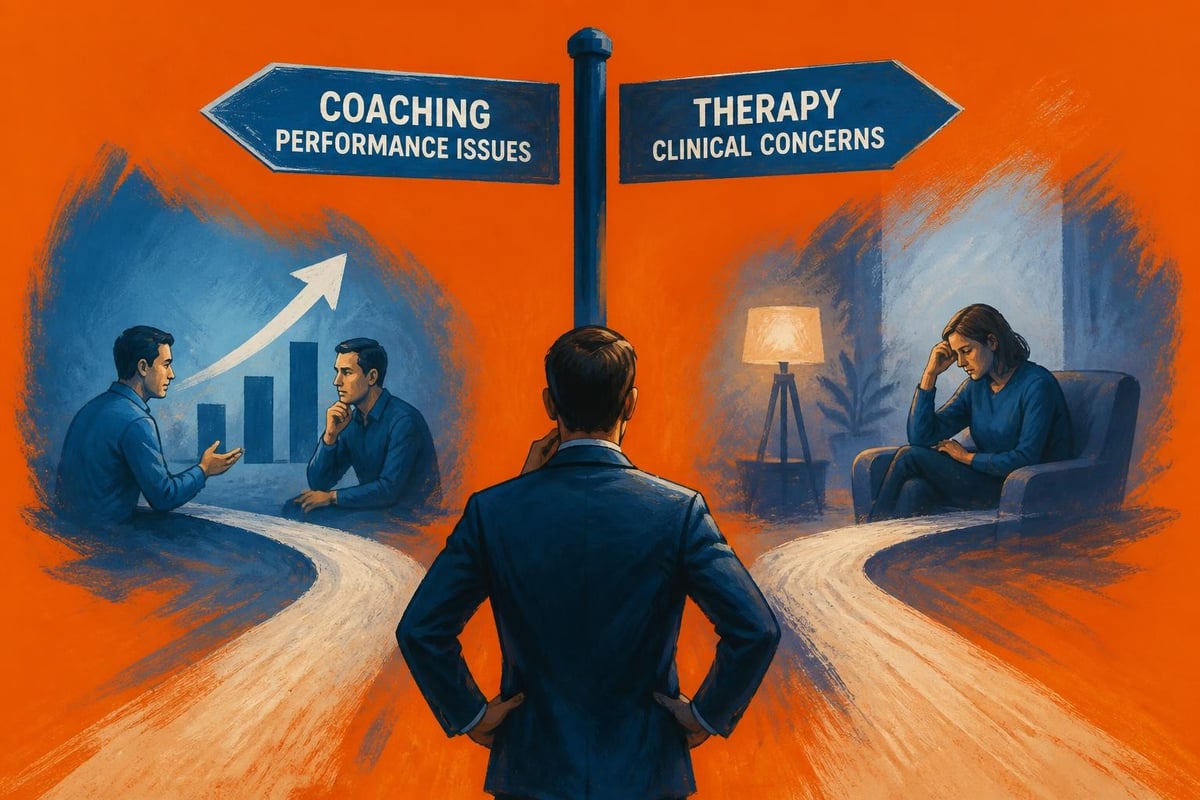
The question “can coaching replace therapy” surfaces regularly in executive suites, particularly when leaders notice team members struggling with stress, burnout, or persistent performance issues. The confusion stems from legitimate overlap: both involve conversation, both address challenges, and both aim to help people move forward. Yet treating them as interchangeable creates serious risks for individuals, teams, and organizational outcomes. After observing hundreds of coaching engagements across mid-market companies, the evidence is clear. Coaching and therapy serve fundamentally different purposes, require different expertise, and produce different results. Understanding these distinctions isn’t academic. It’s essential for leaders who need to know when to deploy each resource, how to avoid costly mistakes, and why getting this wrong damages both people and performance.
The Core Distinction Between Therapy and Coaching
Therapy addresses clinical mental health conditions, psychological wounds, and emotional regulation challenges. Licensed therapists diagnose and treat anxiety disorders, depression, trauma, personality disorders, and other conditions defined in the DSM-5. Their training spans years of supervised clinical work, diagnostic frameworks, and evidence-based treatment protocols.
Coaching vs. therapy differences center on scope and intent. Coaching focuses on performance, goals, behavior change, and skill development in people who are psychologically healthy. Executive coaches work with functional leaders to improve decision quality, communication effectiveness, team dynamics, and business results.
Key differences include:
- Regulation and credentials: Therapists hold state licenses requiring specific graduate degrees and clinical hours. Coaches face no universal licensing requirements.
- Focus: Therapy examines past experiences and underlying psychological patterns. Coaching addresses current challenges and future goals.
- Medical framework: Therapy operates within healthcare systems and can diagnose conditions. Coaching cannot and should not attempt diagnosis.
- Outcome measures: Therapy tracks symptom reduction and psychological health. Coaching measures performance improvements and goal achievement.
The diagnostic question matters most. When someone experiences clinical depression, panic attacks, or unresolved trauma, coaching not only fails to help but can cause harm by delaying appropriate treatment.

When Leaders Confuse the Two
I’ve watched companies assign coaches to managers clearly suffering from burnout-induced anxiety or undiagnosed ADHD. The coaching engagement stalls, the individual feels frustrated, and the organization wastes money while the underlying issue worsens. One mid-market technology firm brought me in after three coaching engagements failed with their VP of Operations. Within two conversations, it became obvious he needed therapy for generalized anxiety disorder, not coaching for time management.
The confusion emerges from three patterns:
- Coaching marketing often overpromises, suggesting coaches can address “limiting beliefs,” “inner blocks,” and “emotional patterns” that sound therapeutic.
- Leaders lack frameworks to distinguish between performance issues and mental health conditions.
- Stigma around therapy makes coaching feel more acceptable in corporate environments.
Dr. Stephanie Manning’s analysis clarifies this well: therapy addresses emotional and psychological challenges rooted in mental health, while coaching remains future-focused and goal-oriented. When organizations blur this line, they fail both the individual and the business objective.
The Risk of Treating Coaching as Therapy
Can coaching replace therapy? No. The evidence shows attempting this substitution creates measurable harm. A recent Atlantic article explores how coaching has become a modern substitute for traditional advice-seeking, raising serious concerns about using coaching for issues requiring clinical intervention.
The specific risks include:
| Risk Category | Impact on Individual | Impact on Organization |
|---|---|---|
| Delayed treatment | Mental health conditions worsen without proper intervention | Performance issues persist despite coaching investment |
| Mismatched intervention | Individual feels coaching “doesn’t work” and loses trust | Wasted budget and damaged relationships |
| Ethical boundary violations | Coach attempts to address issues beyond their competence | Legal and reputational exposure |
| Symptom masking | Surface coping strategies without addressing root causes | Temporary improvements followed by regression |
I’ve reviewed situations where coaches without clinical training attempted to address trauma responses, eating disorders, and severe anxiety. The outcomes ranged from ineffective to actively harmful. One coach encouraged a director to “push through” panic attacks as “limiting beliefs,” delaying proper treatment by eight months.
Professional coaches recognize their boundaries. When performance issues stem from clinical conditions, competent coaches refer to licensed therapists. At Noomii, we’ve built explicit protocols: if coaching conversations reveal potential mental health issues, we pause the engagement and recommend clinical assessment before proceeding.

The Proper Integration Model
The question isn’t whether can coaching replace therapy, but how they complement each other when properly deployed. Many executives benefit from both simultaneously, with clear role definition. Therapy addresses underlying anxiety or past trauma. Coaching applies new capabilities to current leadership challenges.
Effective integration follows these principles:
- Therapy first when clinical symptoms exist (persistent mood changes, intrusive thoughts, substance issues, relationship crises)
- Coaching for performance when psychological health is stable
- Communication between providers only with explicit client consent
- Regular check-ins to ensure each intervention stays in its lane
I worked with a Fortune 500 division president managing severe impostor syndrome rooted in childhood experiences. His therapist addressed the underlying self-worth issues while our leadership development work focused on communication strategies, decision frameworks, and team dynamics. The dual approach worked because boundaries remained clear.
When Coaching Is the Right Tool
For mid-market companies addressing performance, accountability, and execution challenges, coaching delivers measurable results that therapy neither targets nor provides. The question of can coaching replace therapy becomes irrelevant when the actual need involves leadership capability, team dynamics, or operational execution.
Coaching proves most effective for:
- Transitioning to new leadership roles where skills need development
- Improving team communication and resolving functional conflict
- Building coaching capability in managers
- Accelerating decision quality through better frameworks
- Aligning priorities across departments
- Establishing accountability systems tied to KPIs
One manufacturing client brought us in when their leadership team couldn’t execute strategic priorities despite multiple consultants and retreats. The issue wasn’t mental health. It was lack of operating cadence, unclear accountability, and weak manager coaching skills. We embedded in their weekly meetings, built KPI scorecards, and trained managers to coach their direct reports. Revenue grew 23% over 18 months with dramatically improved retention.
The outcomes coaching produces differ fundamentally from therapy outcomes. We measure faster decisions, cleaner execution, stronger engagement scores, and improved retention numbers. These tie directly to business performance, not psychological symptom reduction.
The Certification Trap in Coaching
Many organizations believe certified coaches provide safer, more effective support than experienced practitioners without credentials. The evidence doesn’t support this assumption. Coaching certifications vary wildly in rigor, with some requiring just weekend courses. Performance coaching effectiveness correlates more strongly with business experience, pattern recognition, and outcome track records than credential display.
This matters particularly when considering can coaching replace therapy. Some certified coaches, armed with surface-level psychology training from coaching programs, believe they can address deeper issues. They cannot. The certification may increase their confidence without increasing their actual competence in clinical areas.
Effective coaches know what they don’t know. They recognize when clients need therapy, make appropriate referrals, and maintain clear boundaries. These capabilities come from experience and professional integrity, not from certification programs focused on coaching techniques.
Practical Guidance for Organizations
Leaders responsible for deploying coaching and therapy resources need clear decision criteria. Can coaching replace therapy? Apply this framework:
Choose therapy when you observe:
- Persistent mood changes lasting weeks
- Substance use affecting performance
- Interpersonal conflict rooted in emotional regulation
- Trauma responses or intrusive thoughts
- Significant life crises (divorce, grief, major health issues)
- Performance decline despite skill and motivation
Choose coaching when you see:
- Skill gaps in functional areas
- Need for accountability structures
- Communication breakdowns about process or priorities
- Leadership transitions requiring new capabilities
- Team dynamics issues around roles and goals
- Execution challenges with clear solutions
Many situations require both, deployed sequentially or simultaneously with proper coordination. A manager going through divorce (therapy) might simultaneously benefit from coaching on delegation and communication during a demanding period, provided the coach understands boundaries.
The Future Landscape
The coaching industry continues evolving, with AI tools and platforms changing how coaching gets delivered. Yet the fundamental distinction between coaching and therapy remains unchanged by technology. AI coaching tools, like human coaches, cannot diagnose or treat mental health conditions. Recent research on AI limitations in mental health confirms that AI cannot replace human therapists, emphasizing the importance of human elements in clinical treatment.
Similarly, AI chatbots in coaching contexts show promise for specific skill development but cannot replace human mentorship and certainly cannot substitute for therapy. Organizations exploring AI coaching tools must maintain the same boundaries: these tools support performance and skill development, not clinical mental health treatment.
The democratization of coaching through platforms and AI creates new risks. More people access coaching support, which generally benefits performance. But easier access may also increase instances of coaching deployed inappropriately for issues requiring therapy. Leaders need sharper diagnostic frameworks, not just more coaching options.
Measuring What Matters
Organizations that properly distinguish coaching from therapy measure different outcomes for each. Therapy investments (through EAPs or benefits) track utilization rates, satisfaction scores, and potentially health cost reductions. Coaching investments track performance improvements, goal achievement, retention changes, and business KPIs.
We’ve run 360 leadership assessments before and after coaching engagements, measuring specific behavior changes tied to business priorities. These assessments wouldn’t make sense for therapy outcomes, which focus on symptom reduction and psychological health rather than leadership behaviors.
Effective coaching measurement includes:
- Specific behavioral changes (decision speed, communication clarity, delegation frequency)
- Team engagement and retention metrics
- Progress on defined KPIs and business goals
- Peer and direct report feedback on observable changes
- ROI calculations based on performance improvements
When organizations try to use coaching to address therapy-appropriate issues, these metrics typically flatline. No amount of coaching on time management helps someone with untreated ADHD. No communication coaching fixes relationship issues rooted in unresolved trauma. The measurement breakdown provides evidence that the wrong intervention was deployed.
FAQ
Can coaching help with stress and burnout?
Coaching can address work-related stress through better prioritization, delegation, and boundary-setting when stress stems from skill gaps or organizational issues. Clinical burnout with symptoms like emotional exhaustion, depersonalization, and reduced personal accomplishment often requires therapy to address underlying mental health components before coaching can effectively target work strategies.
How do I know if I need a coach or therapist?
If you’re experiencing persistent negative emotions, relationship struggles, past trauma, or symptoms affecting daily functioning, start with therapy. If you’re psychologically healthy but facing performance challenges, skill gaps, career transitions, or goal achievement obstacles, coaching fits better. When in doubt, consult a licensed therapist first for assessment.
Can the same person provide both coaching and therapy?
Some licensed therapists also offer coaching, but ethical practitioners maintain clear boundaries between the two roles. They cannot provide both services to the same client simultaneously without role confusion and boundary issues. The interventions, billing, confidentiality rules, and outcome measures differ fundamentally.
Do coaches need psychology training?
Effective coaches benefit from understanding human behavior, motivation, and change dynamics, but they don’t need clinical psychology training. What matters more is business experience, pattern recognition from working with many clients, and knowing when issues exceed coaching scope and require therapy referral. Psychology courses in coaching programs don’t qualify coaches to address clinical issues.
What happens if I start coaching and realize I need therapy?
Competent coaches recognize clinical issues and make appropriate referrals. Coaching should pause while you address mental health concerns with a licensed therapist. Once you’re psychologically stable, coaching can resume to focus on performance and goals. There’s no shame in this transition, it demonstrates the coach’s professional integrity and your commitment to getting appropriate help.
Is coaching confidential like therapy?
Coaching confidentiality varies by agreement and lacks the legal protections of therapy. Corporate coaching, where the organization pays, often includes progress reporting to the company. Therapy enjoys stronger confidentiality protections under HIPAA and state laws. Always clarify confidentiality terms before beginning coaching and never share information in coaching that you need legally protected.
Can coaching address anxiety or depression?
No. Anxiety disorders and clinical depression require treatment from licensed mental health professionals using evidence-based therapeutic approaches. Coaches who claim to address anxiety or depression without clinical licenses violate ethical boundaries and potentially harm clients. Performance anxiety or situational worry differs from anxiety disorders, but only licensed therapists can make that diagnostic distinction.
How much does coaching cost compared to therapy?
Therapy typically costs $100-$250 per session and may be covered by insurance. Executive and leadership coaching ranges from $200-$500+ per session with corporate engagements often structured as monthly retainers. Therapy is usually weekly, while coaching frequency varies. Insurance rarely covers coaching. The cost comparison matters less than ensuring you get the appropriate intervention for your actual need.
What if my company offers coaching but I think I need therapy?
Use your company’s Employee Assistance Program (EAP) or health insurance for therapy access. Most EAPs provide confidential therapy sessions at no cost. Don’t use workplace coaching as a therapy substitute due to confidentiality limitations and scope boundaries. If you’re unsure which you need, start with an EAP assessment to determine the appropriate resource.
The question of can coaching replace therapy has a clear answer grounded in evidence and professional boundaries: coaching addresses performance and goals in psychologically healthy individuals while therapy treats clinical mental health conditions requiring licensed clinical expertise. When mid-market companies need to build accountable leaders, improve team execution, and drive measurable business results, Noomii delivers practical corporate coaching tied to clear KPIs and ROI, with no long contracts and month-to-month terms that keep us accountable for visible outcomes. We know our boundaries, recognize when issues require clinical support, and focus relentlessly on the leadership capability and execution improvements that drive your business forward.



Leave a Reply
Want to join the discussion?Feel free to contribute!