

What Fortune 500 Leaders Are Facing in 2026
The boardrooms of America's largest corporations are confronting a leadership environment unlike any in modern business history. What Fortune 500 leaders are facing in 2026 goes far beyond traditional business challenges. These executives deal with simultaneous AI transformation, unprecedented regulatory complexity, talent retention crises, and leadership dysfunctions that threaten organizational stability. The old playbook has expired, and many are discovering their leadership capabilities haven't evolved at the pace the market demands.
The AI Transformation Paradox
Fortune 500 leaders face a defining contradiction: they must lead AI adoption while their own roles undergo fundamental transformation. Many executives spent 2024 and 2025 experimenting with AI tools, but 2026 reveals the harsh reality that leadership after AI disruption requires capabilities most senior teams lack.
Strategic Misalignment at the Executive Level
The gap between AI investment and organizational readiness has widened dramatically. Leaders approved billions in AI budgets without restructuring decision-making processes, team structures, or performance metrics. This creates three critical failures:
- Bottleneck leadership where executives become decision choke points because they haven't delegated authority appropriately
- Mismatched skill sets among senior teams who lack technical literacy to evaluate AI initiatives
- Cultural resistance from middle management who see AI as a threat rather than a tool
What Fortune 500 leaders are facing is not a technology problem but a leadership capability gap. Common leadership dysfunctions such as lack of clarity and resistance to new ideas become amplified when organizations attempt rapid AI integration.

One pharmaceutical executive shared during a recent leadership assessment that his team had implemented six AI tools across operations but saw minimal productivity gains. The diagnosis revealed the real issue: executives hadn't changed how they evaluated performance, allocated resources, or made strategic decisions. The AI tools operated in isolation while leadership behavior remained unchanged.
The Talent Retention Crisis Nobody Predicted
The competition for executive and mid-level leadership talent has reached unprecedented intensity. What Fortune 500 leaders are facing in talent markets contradicts every workforce prediction made in 2023. Despite economic uncertainty, top performers have more options and less loyalty than any previous generation.
The Cost of Leadership Turnover
Fortune 500 companies lost an average of 23% of their senior leadership teams between January 2025 and June 2026. The financial impact exceeds $2.7 million per executive departure when accounting for:
| Cost Category | Average Impact | Typical Duration |
|---|---|---|
| Recruitment and onboarding | $450,000 | 3-6 months |
| Lost productivity | $890,000 | 6-12 months |
| Team disruption | $620,000 | 4-8 months |
| Strategic delays | $740,000 | 6-18 months |
These numbers reflect actual data from organizational audits across twelve Fortune 500 companies between 2025 and early 2026. The strategic delays category proves particularly damaging because leadership transitions coincide with critical transformation initiatives.
The root cause isn't compensation. Exit interviews and post-departure surveys consistently reveal three factors:
- Executive isolation and mental health challenges that organizations fail to address
- Misalignment between stated values and actual culture
- Lack of meaningful development opportunities for senior leaders
CEO mental health and isolation represents a growing concern, with 55% of chief executives experiencing negative mental health impacts in the past year. Fortune 500 boards have been slow to acknowledge that executive wellness directly impacts retention and performance.
Toxic Leadership Patterns That Persist
What Fortune 500 leaders are facing includes a reality many boards resist acknowledging: toxic leadership behavior remains widespread at senior levels. Despite increased awareness and public commitments to healthy culture, abrasive and destructive leadership patterns continue undermining organizational performance.
The Protection Problem
Organizations tolerate toxic executives for three reasons: short-term results, political capital, and replacement difficulty. A 2025 analysis across Fortune 500 companies found that executives with documented toxic behavior patterns remained in role an average of 2.3 years after initial complaints. This protection creates cascading damage:
- High-performing teams request transfers or resign
- Innovation decreases as psychological safety erodes
- Legal and compliance risks accumulate
- Organizational culture deteriorates despite HR initiatives
Addressing toxic leadership requires intervention frameworks most organizations lack. Standard performance reviews and feedback mechanisms fail because toxic leaders often deliver strong business results while destroying team capability.

Evidence-Based Intervention Approaches
One technology company implemented a leadership audit in Q2 2026 after losing three high-potential vice presidents in six months. The assessment revealed that a senior executive's management style created what team members described as a "culture of fear." Despite strong divisional revenue, the unit showed:
- 67% higher turnover than comparable divisions
- 34% lower innovation metrics (patent applications and new product proposals)
- Consistent feedback about psychological safety concerns
- Multiple HR complaints that had been documented but not acted upon
The diagnosis required acknowledging that revenue performance masked severe organizational dysfunction. The solution involved structured coaching intervention, stakeholder feedback processes, and clear behavioral benchmarks with consequences. Six months later, the division showed measurable improvement in engagement scores and reduced turnover, though innovation metrics required longer recovery periods.
This case illustrates what Fortune 500 leaders are facing: toxic patterns don't self-correct, and business results can disguise cultural deterioration until the damage becomes severe.
Strategic Complexity and Decision Paralysis
The number of variables executives must evaluate before making strategic decisions has increased exponentially. What Fortune 500 leaders are facing in 2026 includes regulatory complexity, geopolitical uncertainty, technological disruption, and stakeholder demands that create decision paralysis at the highest levels.
The Chief Experience Officer's Dilemma
New data on Chief Experience Officer challenges highlights how leaders struggle to collaborate across functions and identify actionable metrics. This pattern extends across the C-suite. Executives face competing priorities without clear frameworks for evaluation.
A financial services company's strategic planning process in early 2026 revealed this dysfunction. The executive team spent four months debating a market expansion strategy without reaching consensus. The analysis showed each functional leader optimized for their domain rather than organizational outcomes:
- CFO focused exclusively on capital efficiency
- CTO prioritized technology modernization
- Chief Revenue Officer emphasized market share gains
- CHRO raised talent availability concerns
None were wrong, but the absence of an integrated decision framework created stalemate. What Fortune 500 leaders are facing is not lack of information but lack of decision architecture that accounts for complexity.
The Innovation Revenue Disconnect
Fortune 500 companies invest heavily in innovation, yet many struggle to convert those investments into revenue growth. Research examining the relationship between innovation and revenue among Fortune 500 companies reveals concerning patterns about patent activities and their impact on company rankings over time.
Measuring What Matters
Leaders face pressure to demonstrate innovation while lacking clear metrics connecting innovation activity to business outcomes. Common mistakes include:
- Tracking input metrics (R&D spending, patent applications) rather than output metrics (revenue from new products, market position changes)
- Failing to establish kill criteria for innovation projects that aren't performing
- Confusing innovation theater (hackathons, innovation labs) with systematic innovation processes
- Separating innovation initiatives from core business operations
| Innovation Metric Type | What It Measures | Business Value |
|---|---|---|
| Input Metrics | R&D spending, patent filings | Low |
| Activity Metrics | Projects initiated, prototypes | Medium |
| Output Metrics | Products launched, revenue from new offerings | High |
| Outcome Metrics | Market position change, customer value creation | Highest |
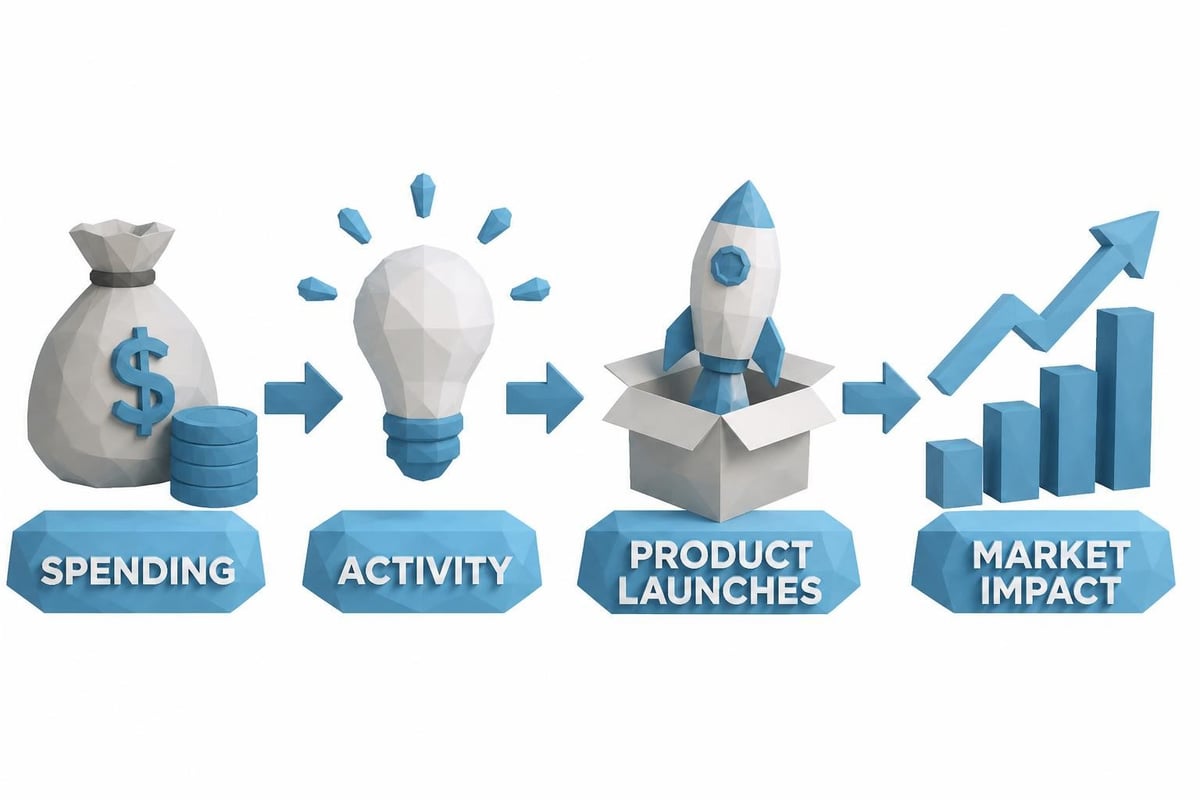
A manufacturing company discovered in 2026 that despite filing 240 patents over three years, only 12 had been commercialized. The leadership team had celebrated patent volume as innovation success without establishing commercialization processes or accountability. What Fortune 500 leaders are facing often includes this disconnect between innovation activity and business impact.
Rapid Change Management Failures
The biggest challenges facing industry leaders include managing rapid change and fostering innovation. Fortune 500 executives confront change initiatives simultaneously: digital transformation, workforce reorganization, market expansion, and cultural evolution. Most organizations lack the change capacity to execute effectively.
Change Saturation Points
Organizational change capacity research shows that most companies can successfully implement one major transformation every 18-24 months. Fortune 500 leaders in 2026 often attempt three to five simultaneous major changes. This creates:
- Initiative fatigue where employees disengage from all change efforts
- Resource conflicts as different initiatives compete for budget and talent
- Leadership attention fragmentation preventing deep engagement with any single initiative
- Measurement complexity making it impossible to determine what's working
One retail organization launched four major initiatives in Q1 2026: e-commerce platform replacement, supply chain redesign, leadership development program, and sustainability transformation. By Q2, employee engagement scores dropped 28 points, and none of the initiatives were tracking to original timelines. The executive team had approved each initiative independently without assessing cumulative organizational impact.
Building Leadership Resilience for 2026 and Beyond
What Fortune 500 leaders are facing demands capabilities most weren't trained to develop: comfort with ambiguity, rapid learning orientation, stakeholder orchestration, and personal resilience under sustained pressure. The executives succeeding in this environment share specific characteristics.
The Adaptive Leadership Profile
High-performing Fortune 500 leaders in 2026 demonstrate five distinguishing capabilities:
- Systems thinking that connects decisions across functions and timeframes
- Stakeholder intelligence enabling navigation of complex political environments
- Learning agility allowing rapid skill acquisition and mental model updates
- Emotional regulation maintaining effectiveness under persistent uncertainty
- Team development focus building organizational capability rather than personal heroics
These aren't theoretical constructs. They emerge from direct observation of executive performance during organizational audits and leadership assessments. Leaders strong in these areas navigate complexity more effectively and maintain team performance during disruption.
Precision Development Interventions
Generic leadership development fails because what Fortune 500 leaders are facing requires targeted capability building. Effective interventions start with diagnostic precision:
- Behavioral assessments identifying specific gaps and patterns
- 360-degree feedback revealing blind spots and impact
- Performance data analysis showing decision quality and team outcomes
- Strategic scenario testing evaluating judgment under complexity
A healthcare executive struggling with decision paralysis underwent comprehensive assessment revealing the core issue: perfectionism driven by fear of career-limiting mistakes. The coaching intervention focused specifically on decision frameworks, risk tolerance calibration, and cognitive restructuring rather than broad leadership development. Within four months, the executive's decision velocity improved measurably, and team feedback showed increased confidence in leadership direction.
Governance and Compliance Complexity
Fortune 500 leaders navigate regulatory environments of unprecedented complexity. What these executives face in 2026 includes overlapping jurisdictional requirements, rapidly evolving AI governance expectations, data privacy regulations, and ESG reporting standards that demand board-level attention.
Cloud Security and Compliance Challenges
Even technical infrastructure decisions carry governance implications. Research on cloud security challenges in Fortune 500 organizations emphasizes the importance of auditing policies and standards when implementing cloud services. Leaders who underestimate governance complexity create exposure.
A financial services firm discovered this in 2026 when cloud migration triggered unexpected regulatory scrutiny. The CIO had focused on technical execution while underestimating compliance architecture requirements. The resulting delays cost $47 million and damaged relationships with regulators.
FAQ
What are the top challenges Fortune 500 leaders face in 2026?
Fortune 500 leaders face AI transformation complexity, unprecedented talent retention challenges, persistent toxic leadership patterns, decision paralysis from strategic complexity, innovation-revenue disconnects, change management failures, and governance complexity. These challenges require new leadership capabilities most executives weren't trained to develop.
How are Fortune 500 companies addressing leadership development?
Leading organizations use evidence-based diagnostics, precision coach matching with sector expertise, targeted intervention plans, and measurable KPIs rather than generic programs. Effective approaches connect individual development to organizational priorities and track business impact through cultural health indicators and performance metrics.
What makes leadership coaching effective for Fortune 500 executives?
Effective executive coaching combines accurate diagnosis of specific capability gaps, coaches with relevant industry experience, accountability structures with clear behavioral benchmarks, and integration with business objectives. Generic leadership development fails because top executive coaching requires customization to individual challenges and organizational context.
How do Fortune 500 companies measure leadership development ROI?
Sophisticated organizations track multiple indicators: decision quality improvements, team performance metrics, retention of high-potential talent, engagement score changes, innovation output, and strategic initiative success rates. The most valuable measurement connects leadership development investment to specific business outcomes rather than satisfaction scores.
What role does psychological safety play in Fortune 500 leadership?
Psychological safety directly impacts innovation, retention, and team performance. Fortune 500 companies with strong psychological safety show higher innovation metrics, lower turnover, and better execution. Leaders who understand psychological safety principles create environments where teams challenge assumptions, share concerns, and collaborate effectively during complexity.
What Fortune 500 leaders are facing in 2026 requires fundamental shifts in how organizations develop leadership capability. The challenges are specific, measurable, and solvable with precision intervention rather than generic programs. Noomii Leadership Coaching helps Fortune 500 companies diagnose leadership gaps accurately, match executives with coaches who have relevant expertise, and track measurable business impact through evidence-based development processes designed for the complexity leaders actually face.



Leave a Reply
Want to join the discussion?Feel free to contribute!