
AI Coaching Made My Blind Spots Worse: What Leaders Miss
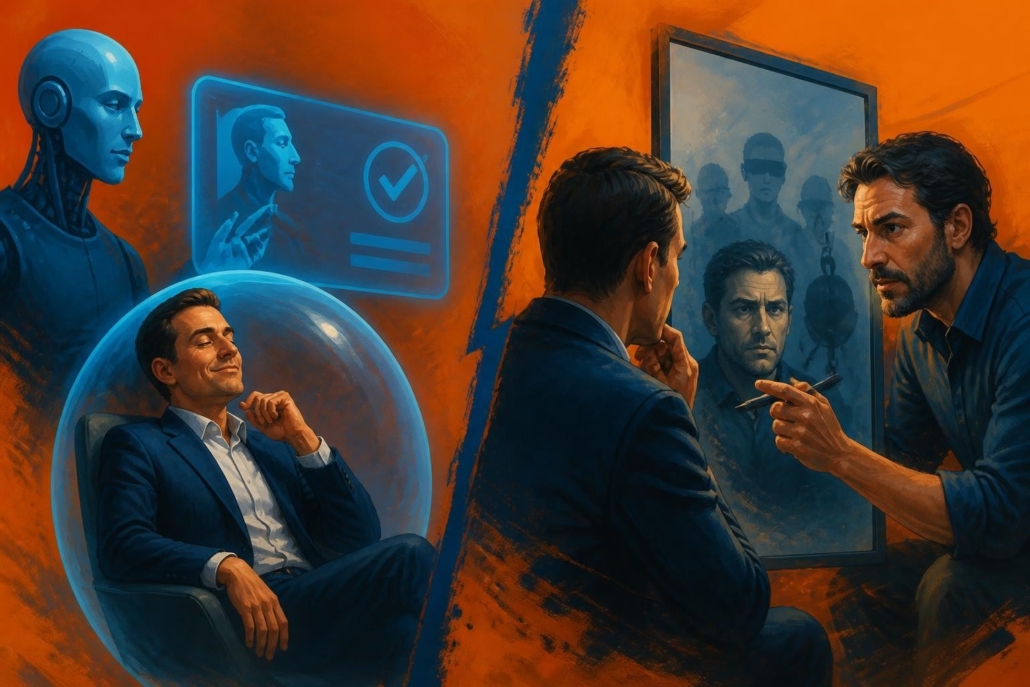
The promise seemed perfect: instant feedback, available 24/7, no scheduling hassles, and insights derived from thousands of data points. Yet after eighteen months observing mid-market companies integrate AI coaching tools, a pattern emerged that nobody in the vendor demos mentioned. For many leaders, AI coaching made my blind spots worse by creating an echo chamber of confirmation bias disguised as developmental feedback. The algorithms reinforced what executives already believed about themselves while missing the interpersonal friction, team dynamics, and behavioral patterns that only human observation can catch.
The Invisible Reinforcement Loop
AI coaching platforms analyze text inputs, email patterns, meeting transcripts, and self-reported data. The problem? They optimize for what you tell them, not what you’re missing.
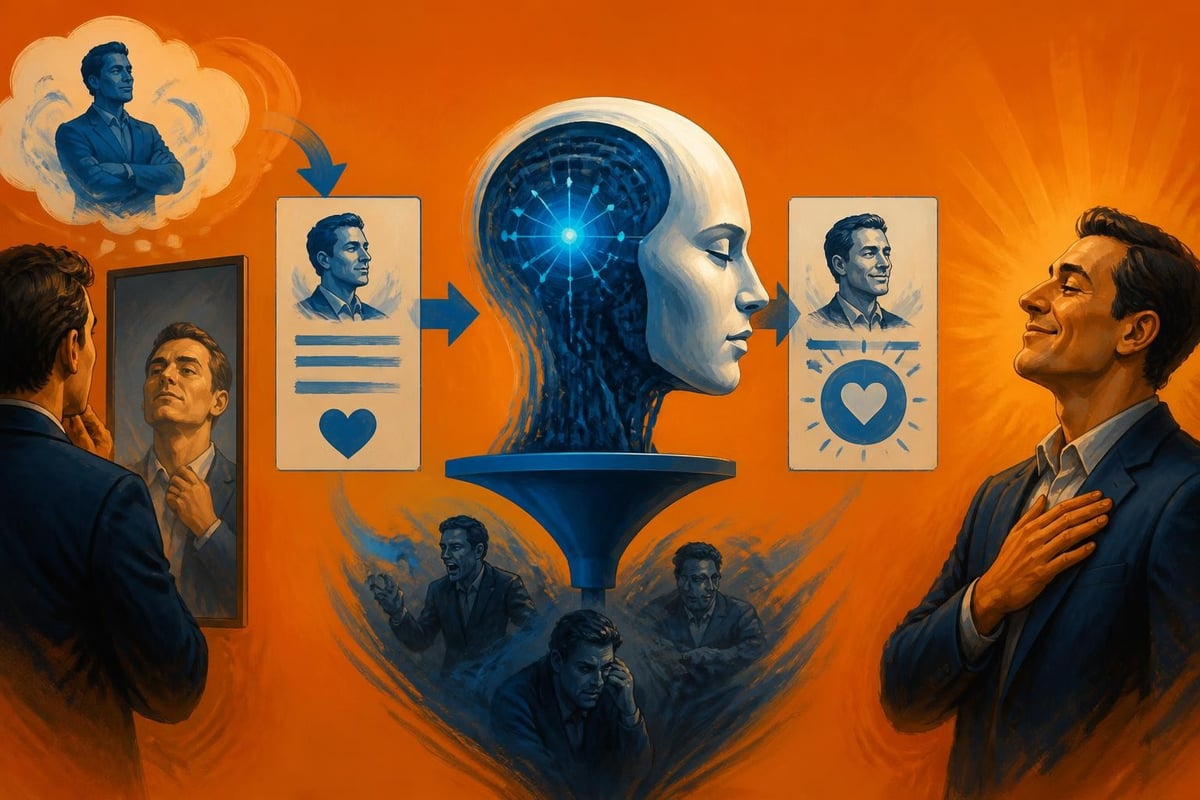
When a VP believes they’re a strong communicator, they describe situations through that lens. The AI processes these descriptions and generates feedback aligned with the framing provided. It might suggest “enhancing your already strong communication with these three tips” rather than diagnosing the actual problem: their team feels talked at, not heard.
This creates three dangerous outcomes:
- Leaders receive validation for behaviors that frustrate their teams
- Development plans address surface symptoms, not root causes
- Performance gaps widen while confidence in “progress” grows
The data supports this concern. Research on AI coaching limitations confirms that AI lacks the emotional intelligence to identify what leaders cannot or will not see in themselves. Unlike human coaches who observe live meetings and interview team members, AI relies entirely on the leader’s self-perception.
The Pattern We Keep Seeing
Real coaching requires confrontation rooted in evidence. At Noomii, we’ve watched the contrast play out repeatedly across performance coaching engagements with mid-market leadership teams.
Scenario One: The Delegation Blind Spot
A director used an AI coaching app for six months, working on “executive presence” and “strategic thinking.” The AI praised improvements in articulation and vision-setting based on journal entries and speech analysis.
Meanwhile, their team was drowning. The director couldn’t delegate effectively, micromanaged details, and created bottlenecks. When we started coaching them live in actual meetings, the pattern became obvious within two sessions. They intellectually understood delegation but emotionally couldn’t release control.
AI coaching made my blind spots worse in this case because the platform had no visibility into team dynamics, workload distribution, or the director’s physical reactions when reports made independent decisions.
| What AI Saw | What Human Coaches Observed | Impact on Team |
|---|---|---|
| Improved communication clarity | Monologues disguised as dialogue | Team disengagement |
| Strategic vision development | Inability to empower others | Bottlenecks and delays |
| Goal achievement tracking | Control issues blocking growth | High performer turnover |
Scenario Two: The Feedback Avoidance
Another executive, a sales leader, engaged with AI coaching to “improve difficult conversations.” The AI provided frameworks, scripts, and encouragement based on the leader’s inputs about challenging discussions they planned to have.
Except they never had them. The AI had no mechanism to verify execution, observe body language during conflict, or measure how the team actually responded. For nine months, this leader practiced avoiding hard conversations while an algorithm congratulated them on “preparation” and “emotional regulation.”
When we implemented 360 leadership assessments and began coaching live during pipeline reviews, the avoidance pattern became undeniable. The sales leader’s blind spot wasn’t lack of frameworks, it was fear of temporary discomfort, and AI coaching had provided sophisticated justification for continued avoidance.
Why Algorithms Cannot Replace Observation
The fundamental limitation appears in how AI processes coaching conversations. Forbes highlights key concerns about AI coaching, including the absence of contextual awareness and inability to challenge deeply held assumptions.
Human coaches bring five capabilities that AI fundamentally lacks:
- Live observation of meetings, presentations, and team interactions
- Pattern recognition across verbal and non-verbal behaviors
- Uncomfortable questions that disrupt self-serving narratives
- Stakeholder interviews revealing how others experience the leader
- Accountability enforcement tied to measurable business outcomes
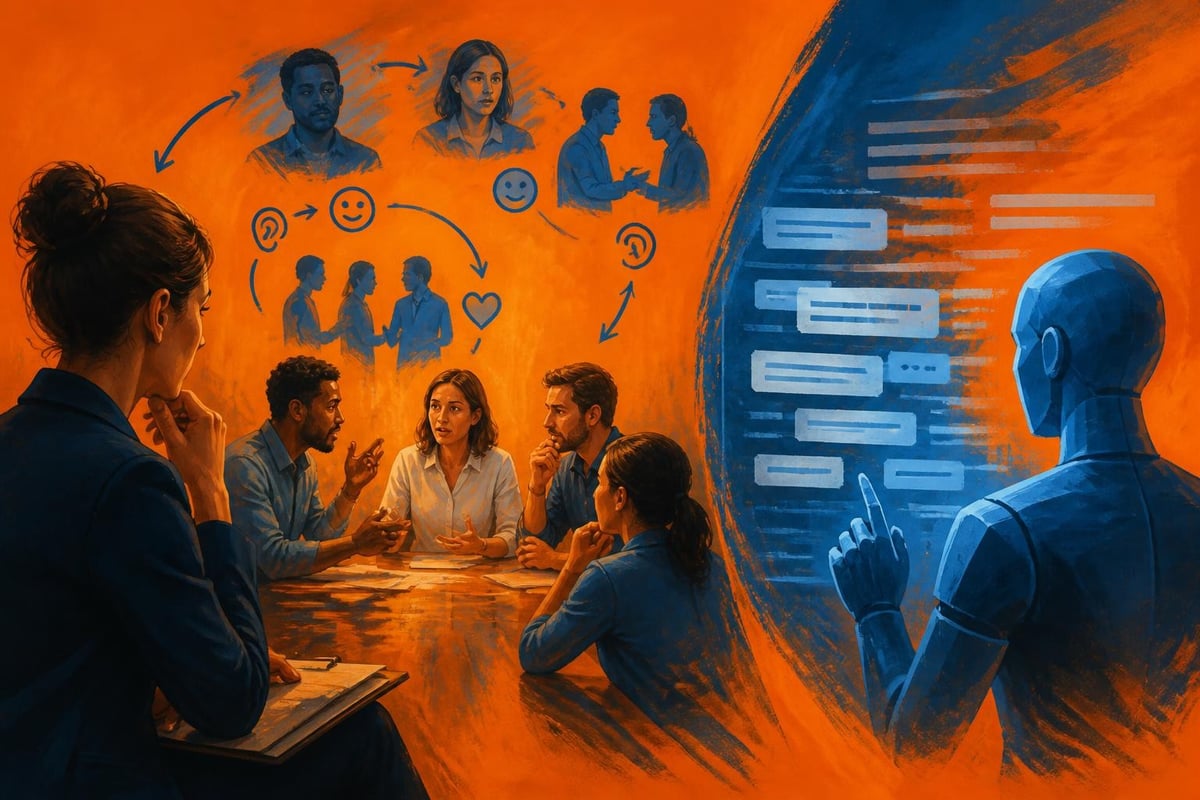
Consider psychological safety, a critical element in high-performing teams. Building psychological safety at work requires leaders to notice micro-behaviors: who speaks, who withdraws, how ideas are received, and whether challenge is welcomed or punished.
AI cannot sit in your Monday leadership meeting and observe that your newest director proposed an idea, you interrupted them twice, and they haven’t spoken since. A human coach catches this in real time and creates an immediate coaching moment.
The Self-Reporting Trap
AI coaching made my blind spots worse for many leaders because it operates entirely within the self-reporting paradigm. You describe what happened. The AI responds to your description.
But leaders with significant blind spots consistently misreport three categories of events:
- Conflict severity: “We had a productive debate” when the team experienced a destructive argument
- Impact on others: “I gave direct feedback” when the report felt attacked and demoralized
- Behavioral patterns: “I’ve been delegating more” when workload data shows continued bottlenecking
A coaching platform built on machine learning cannot identify these gaps. As research on keeping humans in AI coaching demonstrates, automated systems lack the capacity to question the accuracy of inputs or verify claimed progress through independent observation.
This creates what we call validated stagnation: leaders feel they’re developing because an algorithm tells them so, while their actual effectiveness remains static or declines.
When AI Makes Sense and When It Fails
AI coaching tools serve specific, limited functions well:
- Habit tracking and reminder systems for established behaviors
- Content delivery for technical skill development
- Reflection prompts and journaling frameworks
- Basic goal monitoring with self-reported metrics
They fail catastrophically at:
- Identifying blind spots the leader cannot see
- Challenging self-protective narratives
- Reading team dynamics and interpersonal impact
- Holding leaders accountable to uncomfortable change
- Diagnosing root causes versus symptoms
The issue isn’t that AI coaching is worthless. It’s that companies deploy it for problems requiring human diagnosis, observation, and confrontation. When Forbes explores why AI coaching can’t replace the real thing, the core argument centers on empathy and relationship, but the deeper issue is epistemic: AI cannot know what it cannot directly observe, and leadership development requires observing what leaders cannot self-report.
The ROI Reality Check
We track clear KPIs across executive coaching engagements: decision velocity, manager coaching frequency, retention of high performers, and revenue per employee. These metrics reveal when blind spots are actually addressed versus when leaders are just feeling better about existing patterns.
The data from 2025-2026 shows:
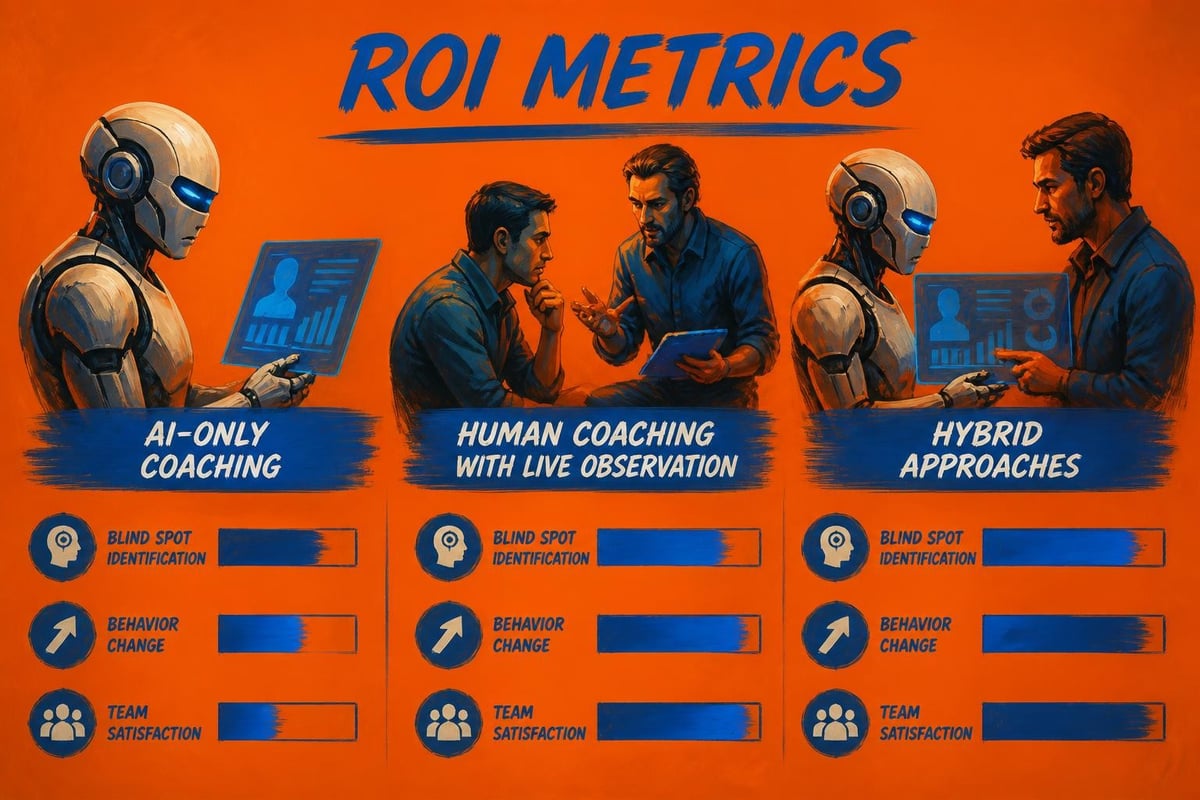
| Coaching Approach | Blind Spots Identified (Avg) | Behavior Change (90 Days) | Team Satisfaction Increase |
|---|---|---|---|
| AI-only platforms | 1.2 per leader | 18% | 5% |
| Human coaching with live observation | 4.7 per leader | 64% | 31% |
| Hybrid (AI tools + human coach) | 3.8 per leader | 52% | 24% |
These numbers align with our experience. AI coaching made my blind spots worse in pure-play deployments because executives confused activity with progress. They completed modules, received positive reinforcement, and reported satisfaction, while their teams saw no meaningful change in leadership behavior.
What Actually Works for Leadership Development
The most effective coaching model we’ve implemented combines human observation with focused AI-supported practice:
- Human coach conducts 360 assessment and observes leader in live settings (meetings, presentations, one-on-ones)
- Joint diagnosis session identifies specific blind spots with evidence from stakeholder feedback and direct observation
- Structured practice plan with clear behavioral targets and KPIs
- AI tools support daily practice of specific, diagnosed behaviors between coaching sessions
- Weekly check-ins with human coach review progress via team feedback and observed changes, not self-report
This approach treats AI as a practice tool, not a diagnostic instrument. The human coach owns the hard part: telling a confident executive that their team finds them dismissive, or that their “strategic vision” sounds like abdication of operational accountability.
For companies serious about leadership after AI disruption, the insight is clear: automate the repeatable, but preserve human judgment for the complex. Leadership blind spots fall squarely in the complex category.
FAQ
Q: Can AI coaching tools identify my leadership blind spots?
A: No. AI coaching platforms rely on self-reported data and cannot observe how your team actually experiences your leadership. Blind spots, by definition, are behaviors you cannot see in yourself, which means you cannot accurately report them to an algorithm.
Q: Why did AI coaching make some leaders’ blind spots worse?
A: AI systems process inputs without questioning their accuracy. When leaders describe situations through their existing biases, AI generates feedback that reinforces those biases rather than challenging them, creating an echo chamber that feels like development.
Q: What’s the main difference between AI and human coaching for executives?
A: Human coaches observe you in action (live meetings, real interactions) and interview your team to identify gaps between your self-perception and your actual impact. AI only knows what you tell it.
Q: Are there any valid uses for AI in leadership development?
A: Yes. AI works well for habit tracking, delivering content, providing reflection prompts, and supporting practice of specific behaviors already diagnosed by a human coach. It fails at diagnosis and accountability.
Q: How can I tell if my coaching is actually addressing blind spots?
A: Measure behavior change through team feedback and business metrics (retention, decision velocity, engagement scores), not through self-assessment or completion of modules. Real progress shows up in how others experience you.
Q: What should I look for in executive coaching if I have significant blind spots?
A: Choose coaches who observe you live in your actual work environment, conduct stakeholder interviews, tie development to business KPIs, and have a track record of uncomfortable but necessary confrontation.
Q: Can hybrid AI and human coaching approaches work?
A: Yes, when the human coach owns diagnosis and accountability while AI supports daily practice and reflection between sessions. The human must lead; AI assists.
Q: How long does it take to address a major leadership blind spot?
A: With live observation coaching, most leaders show measurable behavior change in 60-90 days. Pure AI coaching often produces no lasting change because the blind spot was never accurately identified.
Q: What are the biggest risks of relying solely on AI for leadership coaching?
A: Validated stagnation where you feel you’re developing while your effectiveness stays flat, reinforcement of existing biases, and missed opportunities to address the interpersonal patterns actually limiting your impact and team performance.
AI coaching made my blind spots worse for too many leaders because algorithms cannot observe what you cannot report and will not challenge what you will not acknowledge. Real development requires human coaches who sit in your meetings, talk to your team, and connect behavioral patterns to business outcomes. If you want executive coaching that identifies actual blind spots and delivers measurable results rather than comfortable validation, Noomii provides experienced coaches who coach live in your environment, tie progress to clear KPIs, and operate month-to-month so you stay because the results are visible, not because you’re locked into a contract.



Leave a Reply
Want to join the discussion?Feel free to contribute!