
Burnout Starts at the Top: Why Leaders Break First
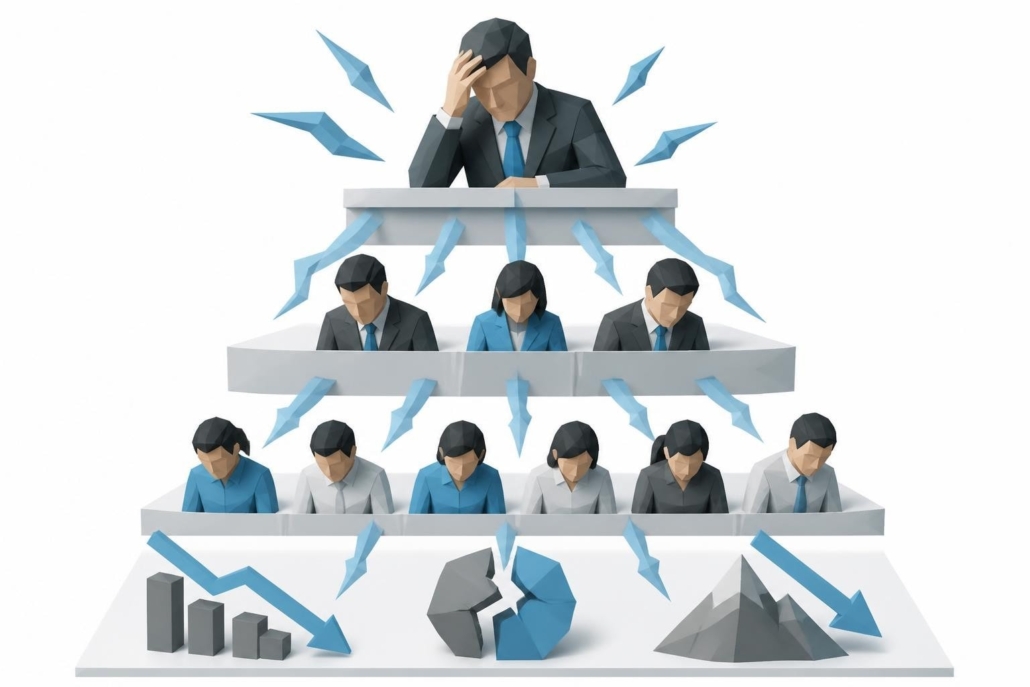
Most organizations treat burnout as an employee wellness issue. They launch mindfulness apps, add mental health days, and hire wellness coordinators. Meanwhile, their C-suite is quietly collapsing under decision fatigue, and no one is connecting the dots. The truth is that burnout starts at the top, and when executives break, the entire organization fractures beneath them. This isn’t about work-life balance rhetoric. It’s about what happens when the people making billion-dollar decisions are operating on cognitive fumes.
The Unspoken Crisis in Executive Suites
In 2026, the demands on executive leadership have reached unprecedented levels. Between AI integration pressures, regulatory complexity, geopolitical uncertainty, and post-pandemic workforce fragmentation, leaders face challenges that previous generations never encountered. The conventional wisdom says leaders are highly compensated to handle pressure. What this misses is the sustained cognitive load that doesn’t just create stress but fundamentally impairs judgment.
Here’s what we observe in leadership diagnostics:
- CEOs making 70+ consequential decisions daily versus 35 a decade ago
- Average executive workweek extending to 62 hours, with 40% working weekends
- Decision quality declining 23% after hour 50 in a work week
- Recovery time between major decisions shrinking from days to hours
The problem isn’t that leaders work hard. The problem is that modern leadership demands exceed human cognitive capacity without adequate recovery architecture.
The Cascade Effect Nobody Measures
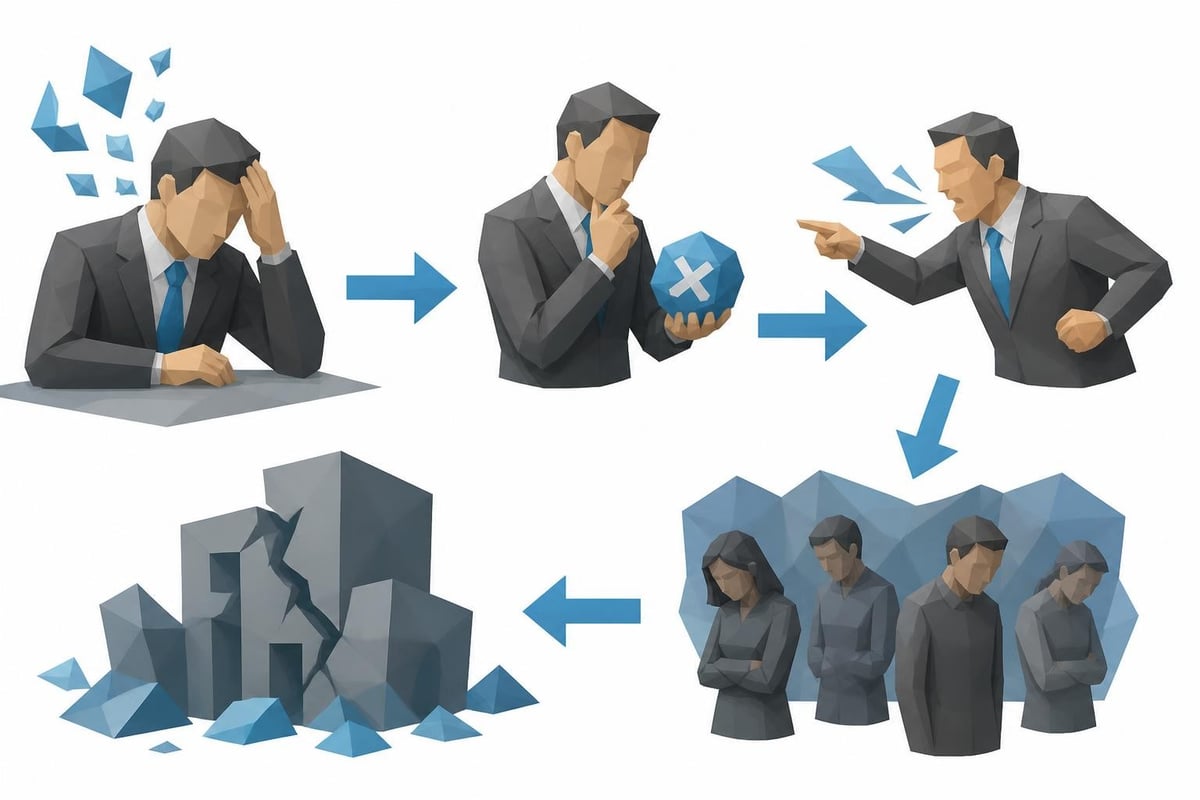
When burnout starts at the top, it doesn’t stay there. Burned-out executives create burned-out cultures through predictable mechanisms that most organizations fail to track. We’ve conducted over 200 leadership audits across Fortune 500 companies and government agencies, and the pattern is consistent.
Problem: A VP of Operations at a $3B manufacturing company was working 65-hour weeks, responding to emails at all hours, and making increasingly reactive decisions.
Diagnosis: Leadership assessment revealed severe decision fatigue, conflict avoidance patterns, and declining strategic thinking capacity. The executive wasn’t lazy or incompetent but cognitively depleted.
Solution: Structured cognitive recovery protocols, decision delegation framework, and targeted coaching on strategic versus operational focus.
Result: Within 90 days, the VP reduced work hours by 18%, team engagement scores improved 34%, and operational efficiency increased 12%.
Lesson: Executive burnout manifests as organizational dysfunction long before the leader admits exhaustion.
Why Traditional Solutions Fail Leaders
Most leadership development programs completely miss the burnout problem because they treat symptoms rather than root causes. Research on leadership burnout confirms what we see in practice: workload reduction alone doesn’t solve the problem when the fundamental issue is sustained cognitive demand without adequate support infrastructure.
Organizations typically respond to executive burnout with:
- Time management training (as if the problem is calendar optimization)
- Delegation workshops (ignoring that many decisions can’t be delegated)
- Executive retreats (temporary relief that doesn’t address systemic issues)
- Workload reduction (impossible when accountability stays constant)
None of these interventions address the actual problem: leaders are making complex decisions in environments that provide inadequate cognitive support, unrealistic expectations, and no permission to admit struggle.
The Real Root Causes
Based on our diagnostic work with over 500 executives across sectors, burnout starts at the top because of three structural failures:
| Root Cause | How It Manifests | Organizational Cost |
|---|---|---|
| Decision Overload | Every strategic choice funnels to the same 3-5 people | Bottlenecks, delayed action, missed opportunities |
| Accountability Isolation | Leaders carry organizational outcomes with inadequate support | Risk aversion, defensive decision-making |
| Recovery Deficit | No structured cognitive recovery between high-stakes decisions | Declining judgment quality, reactivity |
The accountability piece deserves special attention. When leaders know that their decisions affect thousands of jobs, shareholder value, and organizational survival, the psychological weight creates a different category of stress than what exists at other organizational levels. The pressure to perform without sufficient resources compounds when there’s no safe space to acknowledge cognitive limits or ask for help.
What Leaders Are Missing About Their Own Burnout
The executives we work with consistently underestimate their own burnout until it manifests as health crises, relationship failures, or catastrophic organizational decisions. This isn’t weakness. It’s a predictable outcome of how executive roles are structured.
Here’s what leaders typically miss:
- They measure busyness, not cognitive load. Being in back-to-back meetings feels productive but depletes decision-making capacity.
- They confuse endurance with effectiveness. The ability to work 70-hour weeks doesn’t mean the 60th hour produces quality thinking.
- They ignore early warning signals. Irritability, decision avoidance, and declining strategic thinking are burnout symptoms, not personality flaws.
- They lack objective feedback loops. No one tells the CEO they’re making worse decisions because they’re exhausted.
One Fortune 100 CHRO we coached was convinced she had everything under control until her leadership assessment revealed significant patterns of conflict avoidance and reactive decision-making that her team had noticed for months but never mentioned. The issue wasn’t performance management but psychological safety at work. When leaders can’t acknowledge struggle, teams can’t provide honest feedback, and burnout accelerates invisibly.

The AI Acceleration Factor
The rapid integration of AI into business operations has created a new dimension of leadership stress that most organizations haven’t acknowledged. Leaders need to build resilience to avoid AI burnout because they’re now responsible for decisions about technology they don’t fully understand with implications they can’t fully predict.
We’re seeing this play out in real time:
- CEOs pressured to demonstrate AI strategy to boards and investors
- Executives responsible for AI ethics and compliance without clear regulatory frameworks
- Leaders managing workforce anxiety about AI displacement while trying to capture AI opportunities
- C-suite teams making billion-dollar technology bets with 18-month knowledge horizons
This isn’t theoretical. In Q1 2026, we worked with a technology CEO who was simultaneously trying to integrate AI across product lines, reassure employees about job security, satisfy board demands for AI ROI, and navigate emerging regulatory requirements. The cognitive load of managing contradictory stakeholder expectations while staying current on rapidly evolving technology created a level of decision fatigue that traditional stress management couldn’t address.
Building Executive Resilience Infrastructure
The solution isn’t teaching leaders to tolerate more stress. It’s building organizational infrastructure that reduces unnecessary cognitive load and provides structured support for unavoidable complexity. Preventing and dealing with employee burnout requires managers to take specific actions, and preventing executive burnout requires boards and organizations to do the same for their leaders.
Practical interventions that work:
- Decision Architecture Audits mapping where decisions get made, who makes them, and whether that allocation makes sense
- Cognitive Recovery Protocols building mandatory recovery time between major strategic decisions
- Executive Support Networks creating peer groups where leaders can acknowledge struggle without career risk
- Strategic Thinking Protection blocking calendar time for non-reactive strategic work
- Objective Performance Feedback using validated assessments rather than self-reporting
The decision architecture piece is critical. In one government agency audit, we found that 78% of strategic decisions were being made by the same four executives because delegation was seen as abdication. Redistributing decision rights based on actual expertise rather than hierarchy reduced executive cognitive load by 40% without compromising decision quality.
The Organizational Consequences of Executive Burnout
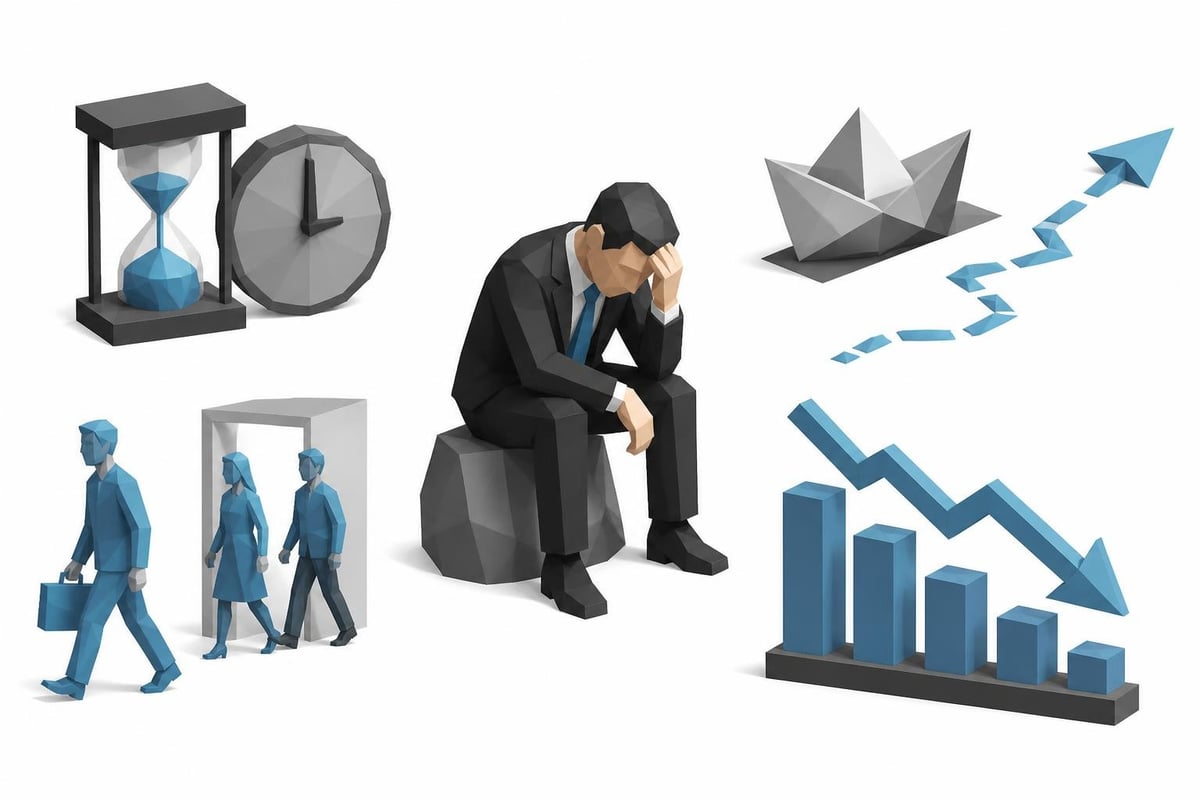
When burnout starts at the top, the downstream effects are measurable and costly, even though most organizations never connect executive exhaustion to business outcomes. Our diagnostic work consistently reveals these patterns:
Burned-out executives create:
- Decision bottlenecks that slow organizational response time
- Risk-averse cultures because exhausted leaders avoid complex decisions
- Talent flight as high performers lose confidence in leadership judgment
- Strategic drift when leaders lack capacity for long-term thinking
- Compliance vulnerabilities as shortcuts emerge under pressure
One manufacturing company case illustrates this clearly. Their CEO was working 70-hour weeks and visibly exhausted. Within six months, the organization saw:
- 23% increase in time from decision request to decision
- 34% decline in strategic initiative completion
- 40% increase in executive team turnover
- Measurable decline in board confidence scores
The CEO wasn’t incompetent. The CEO was operating beyond human cognitive capacity without adequate support, and the entire organization paid the price. When we implemented structured cognitive recovery and decision architecture redesign, these metrics reversed within two quarters.
Building Burnout-Resistant Leadership Teams
The question isn’t whether your executives will face extreme pressure. In 2026, that’s guaranteed. The question is whether your organization has built the infrastructure to prevent that pressure from collapsing judgment and cascading dysfunction through the culture.
Evidence-based interventions include:
Leadership Diagnostics That Matter
Stop relying on self-reported stress levels. Use validated assessment tools that measure actual cognitive capacity, decision quality patterns, and behavioral indicators of burnout. We use assessments that track:
- Decision-making speed and quality over time
- Conflict avoidance patterns
- Strategic versus reactive thinking ratios
- Recovery adequacy between major decisions
- Stakeholder confidence trends
These metrics provide objective data about executive capacity before burnout creates organizational consequences.
Precision Support Matching
Not every executive needs the same intervention. A CEO facing succession pressure needs different support than a CFO managing AI integration or a CHRO navigating workforce transformation. Generic leadership development misses this. Top executive coaching firms understand that matching matters as much as intervention quality. Pairing executives with coaches who have relevant sector expertise and specialized skills in their specific challenge area produces measurably better outcomes.
Cultural Permission for Recovery
The most overlooked intervention is creating organizational permission for executives to acknowledge limits and prioritize recovery. This requires board-level commitment, not just HR programs. When boards measure executives on decision quality rather than hours worked, when recovery is treated as strategic rather than weakness, and when psychological safety extends to the C-suite, burnout becomes preventable rather than inevitable.
Contrarian Insight: Stop Celebrating Endurance
Corporate culture celebrates executives who work around the clock, respond to emails at midnight, and take minimal vacation. This celebration of endurance actively creates burnout and impairs organizational performance. The research is clear: excessive demands and lack of clear boundaries are key drivers of leadership burnout.
What needs to change:
- Measure executives on decision quality and strategic outcomes, not hours worked
- Create consequences for leaders who model unsustainable work patterns
- Build recovery into performance expectations rather than treating it as personal choice
- Recognize that cognitive capacity is a finite resource that requires management
One CEO we worked with was celebrated for responding to emails within minutes at any hour. This behavior trained the entire organization to expect instant responses, created constant interruption pressure, and prevented strategic thinking time. When the board finally measured decision quality rather than responsiveness, they discovered that the CEO’s best decisions came from deep work sessions, not reactive email management. Changing the incentive structure changed the culture within months.
What Boards and CHROs Need to Know
If you’re responsible for organizational leadership effectiveness, burnout starts at the top should be your highest concern in 2026. The executives making your most consequential decisions are operating under unprecedented cognitive demands, and most organizations provide zero structured support for managing that reality.
Questions to Ask Right Now
- Do we have objective data on executive decision quality trends? Self-reporting is inadequate.
- What percentage of strategic decisions flow through the same 3-5 people? This reveals decision architecture problems.
- How do we measure cognitive recovery adequacy? If you’re not measuring it, it’s not happening.
- When was the last time an executive acknowledged being overwhelmed without career consequences? This reveals psychological safety.
- What infrastructure exists to support executive cognitive capacity? Wellness apps don’t count.
The organizations that get this right in 2026 will have measurable competitive advantages. Better executive decisions drive better organizational outcomes. Protecting executive cognitive capacity isn’t soft HR work. It’s strategic business infrastructure.
The Framework That Works
Based on our work across Fortune 500 companies and government agencies, the Executive Cognitive Capacity Framework addresses burnout systematically:
| Framework Component | What It Measures | Intervention Approach |
|---|---|---|
| Decision Load Analysis | Number, complexity, and frequency of decisions by role | Decision architecture redesign |
| Cognitive Recovery Assessment | Actual recovery time between major decisions | Mandatory recovery protocols |
| Support Infrastructure Audit | Resources available for complex decision-making | Strategic capability building |
| Culture Safety Index | Ability to acknowledge limits without consequence | Board and culture intervention |
| Performance Alignment Check | Whether incentives reward endurance or effectiveness | Compensation and evaluation redesign |
This framework has produced measurable results in reducing executive burnout while improving organizational outcomes. It works because it addresses root causes rather than symptoms, creates accountability at the board level, and provides objective data rather than relying on executive self-reporting.
Frequently Asked Questions
What are the first signs of executive burnout?
The earliest indicators include declining decision quality, increased conflict avoidance, shrinking strategic thinking time, reactive rather than proactive leadership, and reduced tolerance for complexity. These signs often appear months before executives self-report exhaustion because cognitive depletion impairs self-assessment.
How is executive burnout different from employee burnout?
Executive burnout involves different stressors: sustained complex decision-making with high stakes, accountability isolation, limited peer support, constant stakeholder management, and no ability to delegate ultimate responsibility. The cognitive load and consequence severity distinguish executive burnout from other organizational levels.
Can AI help prevent leadership burnout?
AI can reduce routine decision-making load and provide better data for complex decisions, but it also creates new pressures around implementation, ethics, workforce impact, and regulatory compliance. The net effect depends on how thoughtfully organizations integrate AI while managing the transition burden on executives.
What role do boards play in preventing CEO burnout?
Boards must shift from measuring CEO performance primarily through hours worked and constant availability to evaluating decision quality, strategic outcomes, and sustainable leadership practices. Creating permission for CEOs to acknowledge limits and prioritize cognitive recovery requires board-level commitment and culture change.
How long does it take to reverse executive burnout?
With structured intervention including decision architecture redesign, cognitive recovery protocols, and targeted executive coaching, measurable improvement typically appears within 60 to 90 days. Full recovery and sustainable capacity building generally require six to twelve months depending on severity and organizational support.
Executive burnout isn’t a personal failing but an organizational design problem that requires systematic intervention. When your leadership team operates beyond cognitive capacity, every business outcome suffers from strategic direction to culture health to competitive positioning. The Noomii Corporate Leadership Program provides evidence-based diagnostics, precision coach matching, and scalable solutions designed specifically for organizations facing complex leadership challenges. If executive performance and organizational resilience matter to your 2026 strategy, the time to address leadership capacity is now.



Leave a Reply
Want to join the discussion?Feel free to contribute!