Gemini Prompts to Help Coach Marketing Teams Effectively

Marketing leaders in mid-market companies face a unique challenge: coaching teams to deliver measurable results without the luxury of large enterprise budgets or endless time for theoretical training. Using gemini prompts to help coach marketing teams offers a practical solution that combines artificial intelligence capabilities with hands-on leadership development. These prompts transform abstract coaching concepts into actionable frameworks that drive faster decisions, clearer communication, and stronger execution across marketing priorities.

Strategic Framework Development with AI-Assisted Coaching

Marketing coaching requires more than motivational speeches. It demands structured frameworks that teams can apply immediately to campaigns, customer acquisition, and retention strategies. Gemini prompts create this structure by breaking complex marketing challenges into digestible coaching moments.

When coaching marketing managers, effective prompts focus on translating business objectives into specific team behaviors and deliverables. These versatile AI prompts work across various scenarios because they emphasize outcomes over process.

Building Accountability Through Prompt Engineering

Accountability separates theoretical coaching from results-driven development. The gemini prompts to help coach marketing teams should mirror this principle by creating clear connections between daily activities and KPIs.

Consider these coaching-focused prompt categories:

  • Performance diagnosis prompts that identify skill gaps in campaign execution
  • Strategic thinking prompts that develop manager decision-making capabilities
  • Communication coaching prompts that improve cross-functional collaboration
  • Execution prompts that translate strategy into measurable action

Each category addresses specific coaching needs while maintaining flexibility for different marketing contexts. Research on AI-powered marketing analytics demonstrates how structured frameworks enhance both coaching effectiveness and measurable outcomes.

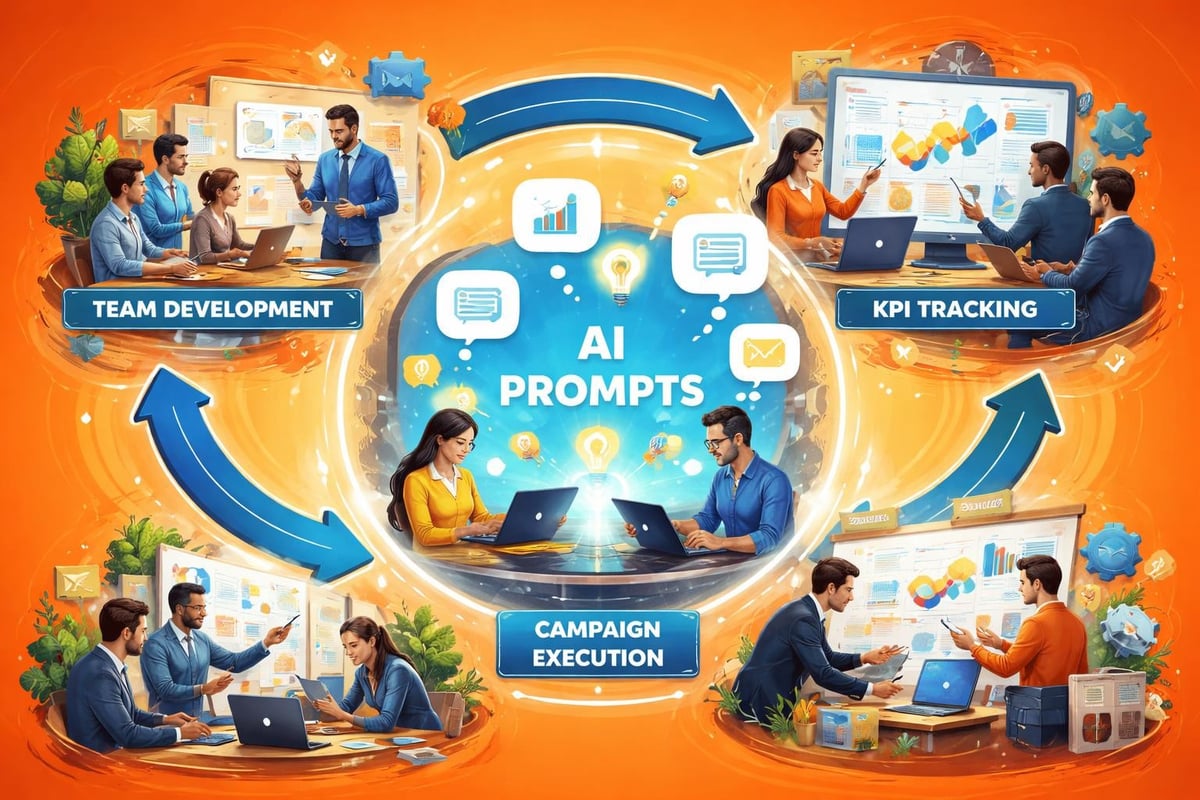
AI coaching framework

Practical Gemini Prompts for Marketing Team Development

Marketing coaching becomes measurable when prompts generate specific, actionable outputs. Rather than asking Gemini broad questions, effective coaches structure prompts to surface insights tied to business results.

Campaign Strategy Coaching Prompts

Prompt Type Purpose Expected Outcome
Customer persona refinement Sharpen targeting precision Detailed ICP with behavioral triggers
Messaging hierarchy Clarify value proposition Prioritized benefits aligned to segments
Channel optimization Improve resource allocation Data-driven channel mix recommendations
Competitive positioning Strengthen differentiation Unique value statements with proof points

These prompts function as coaching tools rather than task completers. When a marketing manager uses Gemini to develop customer personas, the coaching happens in how they apply those insights to campaign decisions.

Marketing-specific Gemini prompts provide templates, but customization for your organization’s KPIs makes them coaching instruments. This approach mirrors how Noomii’s coaching philosophy emphasizes practical application over theoretical knowledge.

Coaching Managers to Coach Their Teams

The multiplier effect in marketing leadership comes when managers learn to coach their own teams. Gemini prompts to help coach marketing professionals should therefore include meta-coaching elements: prompts that teach managers how to develop their direct reports.

Sample manager coaching prompt structure:

  1. Identify the team member’s current performance level in a specific marketing skill
  2. Define the desired performance outcome with measurable criteria
  3. Generate three coaching questions that guide discovery rather than prescribe solutions
  4. Create accountability checkpoints tied to campaign milestones
  5. Establish feedback loops connecting individual development to team KPIs

This structured approach transforms AI interactions from information retrieval into leadership development. Personalized offer generation research shows similar principles: specificity and context drive better outcomes than generic queries.

Measuring Coaching Impact Through AI-Enhanced Feedback

Coaching without measurement is conversation. Marketing leaders need gemini prompts to help coach marketing teams that also generate assessment data.

360-Degree Feedback Prompt Framework

Effective marketing coaching incorporates multi-directional feedback. Gemini can structure this process through prompts that:

  • Analyze campaign retrospectives for skill development opportunities
  • Identify communication patterns that strengthen or weaken team execution
  • Surface blind spots in strategic thinking through questioning frameworks
  • Generate peer feedback templates focused on observable behaviors

This integration ensures coaching conversations focus on business impact rather than subjective opinions.

Feedback integration

Real-Time Coaching During Marketing Execution

Unlike traditional coaching that happens in scheduled sessions, effective marketing leadership requires in-the-moment guidance. Gemini prompts enable this by providing frameworks managers can apply during live campaign execution.

Game-changing prompt ideas demonstrate how AI assists real-time decision support. For marketing coaches, this means creating prompts that:

  • Diagnose campaign underperformance mid-flight
  • Generate rapid testing hypotheses when metrics miss targets
  • Structure emergency pivots with clear role assignments
  • Document lessons learned immediately for team knowledge building

This approach aligns with results-focused coaching that prioritizes visible progress over process perfection.

Advanced Applications: AI Co-Creation in Marketing Coaching

Marketing coaches increasingly use gemini prompts to help coach marketing teams through collaborative creation sessions rather than one-way instruction. This shifts coaching from directive to developmental.

Content Strategy Development Sessions

Teams learn faster when they build frameworks together. Structure Gemini sessions where marketing teams:

  1. Input current campaign performance data
  2. Collaboratively craft prompts that surface improvement opportunities
  3. Iterate on AI-generated recommendations through team discussion
  4. Assign ownership for testing specific hypotheses
  5. Set measurement criteria tied to broader business KPIs

AI-powered multimodal advertisement creation research illustrates how co-creation with AI tools enhances both output quality and team skill development simultaneously.

Building Operating Cadence with AI Support

Marketing teams struggle with consistent execution when priorities shift constantly. Coaching through Gemini prompts creates operating rhythms that balance agility with accountability.

Cadence Element Gemini Prompt Application Coaching Benefit
Weekly stand-ups Generate focus questions for team alignment Faster problem identification
Monthly reviews Structure performance analysis templates Objective skill assessment
Quarterly planning Build scenario planning frameworks Strategic thinking development
Annual strategy Create cross-functional alignment prompts Leadership capability growth

This cadence mirrors military planning models adapted for marketing execution: clear objectives, assigned responsibilities, and measurable outcomes.

Operating rhythm

Developing Marketing Leadership Through Structured AI Interaction

The highest leverage from gemini prompts to help coach marketing comes when they develop leadership capabilities, not just task completion. Marketing managers who learn prompt engineering simultaneously improve their strategic thinking.

Critical Thinking Development

Effective prompts force clearer thinking. When marketing leaders must articulate problems precisely for AI to provide useful responses, they naturally improve their analytical capabilities. This meta-skill transfers to how they coach their teams, conduct campaign reviews, and make resource allocation decisions.

Teaching managers to evaluate AI outputs critically also strengthens judgment. Not every Gemini-generated recommendation fits your specific business context. The coaching happens in the discernment process.

LinkedIn examples of effective Gemini prompts show how experimentation itself becomes a learning tool. Marketing coaches should encourage this exploratory mindset within structured guardrails tied to business objectives.

Sales and Retention Coaching Integration

Marketing coaching extends beyond campaign execution into revenue generation and customer retention. Gemini prompts bridge these domains by creating coaching frameworks that connect marketing activities to sales outcomes and customer lifetime value.

Prompt structures that integrate these functions:

  • Customer journey mapping that identifies handoff points requiring coaching
  • Objection handling frameworks for marketing-sourced leads
  • Retention trigger analysis that guides content strategy coaching
  • Cross-sell opportunity identification through campaign performance data

This integration reflects how Noomii’s corporate coaching connects individual development to measurable business results across functions, not isolated departments.


Gemini prompts to help coach marketing teams transform abstract leadership concepts into practical development tools that drive measurable outcomes. When structured around business KPIs, accountability frameworks, and real-time application, these AI-assisted coaching methods accelerate team capability building while delivering visible campaign improvements. If your mid-market company needs marketing leadership development that connects directly to ROI, month-to-month flexibility, and coaches who work live in your meetings rather than from the sidelines, explore how Noomii delivers practical corporate coaching with aligned incentives and clear execution metrics.

Business Growth Mentorship for Startups in Cologne 2026

Cologne has emerged as one of Germany’s most vibrant startup hubs, combining robust infrastructure with a thriving ecosystem of accelerators, investors, and mentorship networks. For founders navigating the complex journey from concept to scale, business growth mentorship for startups in Cologne represents a critical success factor that separates sustainable ventures from those that struggle to gain traction. The city’s unique blend of established industry connections, innovative support programs, and experienced advisors creates an environment where startups can access the strategic guidance necessary to overcome common growth challenges and build resilient organizations.

Why Startups in Cologne Need Specialized Growth Mentorship

Building a successful startup requires more than a great product or service. The transition from early-stage venture to scalable business demands specialized knowledge across multiple domains: financial planning, team leadership, market positioning, and operational efficiency. Business growth mentorship for startups in Cologne addresses these multifaceted challenges through experienced advisors who understand the local market dynamics while bringing global perspectives.

The Cologne startup ecosystem offers distinct advantages that make mentorship particularly valuable. The city hosts numerous industry clusters, from digital health and biotechnology to fintech and artificial intelligence. This specialization means founders can connect with mentors who possess deep domain expertise relevant to their specific sector. The Scaleup Program Cologne exemplifies this targeted approach, providing an 8-week intensive program specifically designed for startups preparing for international expansion.

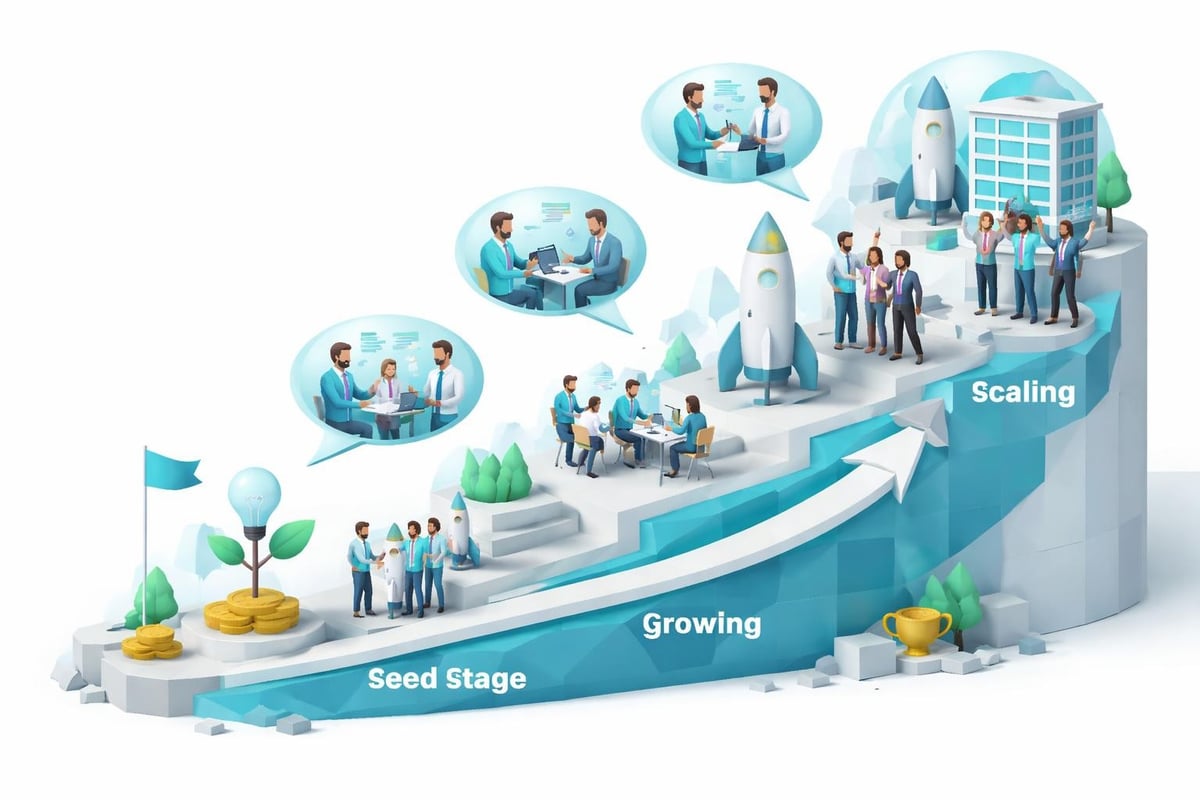
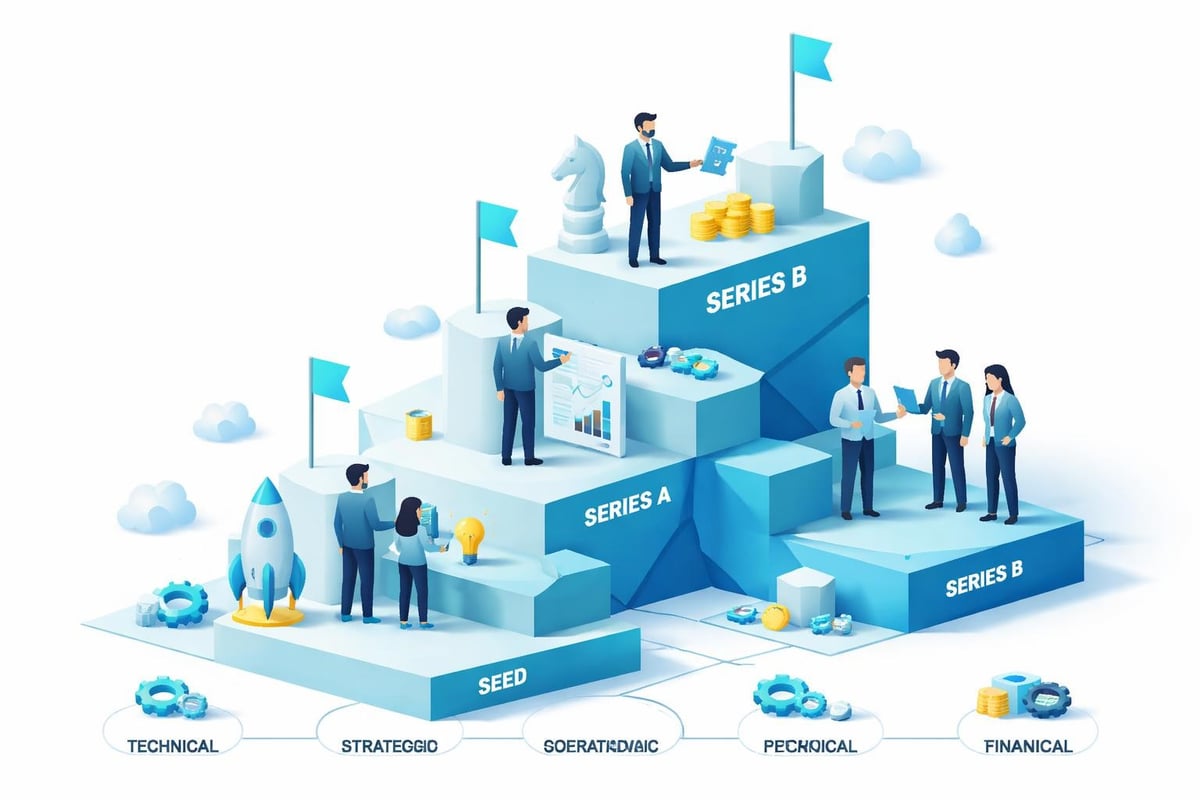
Startup growth challenges

Critical Growth Stages Where Mentorship Matters Most

Startups experience predictable inflection points where strategic guidance becomes essential. Understanding these stages helps founders engage mentors at the right time with the right focus.

Early-Stage Foundation (Months 1-12)

  • Product-market fit validation
  • Initial customer acquisition strategies
  • Foundational team structure and culture
  • First funding round preparation

Expansion Phase (Year 2-3)

  • Scaling operations and processes
  • Building leadership capacity
  • Market diversification strategies
  • Series A and B fundraising navigation

Maturity and Internationalization (Year 3+)

  • Cross-border market entry
  • Advanced organizational design
  • Executive team development
  • Strategic partnerships and acquisitions

The value of business growth mentorship for startups in Cologne becomes most apparent during these transitions. Mentors who have successfully navigated similar journeys provide practical frameworks that reduce costly mistakes and accelerate decision-making. Organizations like STARTPLATZ’s Expert-in-Residence Program connect founders with seasoned professionals who offer hands-on guidance through these critical phases.

Cologne’s Mentorship Infrastructure and Resources

The city provides a comprehensive support architecture that makes accessing qualified mentorship straightforward and systematic. Unlike fragmented ecosystems where founders must navigate disconnected resources, Cologne offers integrated programs that combine workspace, capital access, and advisory networks.

Leading Accelerators and Incubator Programs

Organization Focus Area Program Duration Key Mentorship Features
STARTPLATZ AI Integration & Tech 4 months Weekly expert sessions, industry connections
BioCampus Cologne Life Sciences & Medtech Ongoing Business development, financing guidance
Health Navigator Digital Health Variable Specialized healthcare sector advisors
German Accelerator International Scaling 3-6 months Global mentor network, market entry expertise

Each program brings distinct advantages for business growth mentorship for startups in Cologne. The STARTPLATZ AI Accelerator NRW focuses specifically on helping ventures integrate artificial intelligence into their growth strategies, providing access to technical experts and business strategists who understand both technology implementation and commercial viability.

For life sciences startups, the Health Navigator offers specialized support that addresses the unique regulatory and scientific challenges in healthcare innovation. This sector-specific mentorship proves invaluable for founders navigating complex approval processes and clinical validation requirements.

The German Accelerator Mentor Network

One of the most powerful resources available to Cologne startups is the German Accelerator’s extensive mentor network, which spans over 1,000 experienced advisors across four continents. This global reach enables local startups to access international market expertise while remaining rooted in Cologne’s supportive ecosystem.

The mentor matching process emphasizes compatibility beyond surface-level criteria. Startups receive guidance from advisors who have successfully operated in their target markets, understand their specific business models, and can provide actionable insights based on direct experience. This precision matching approach mirrors best practices in executive coaching, where alignment between coach and client determines program effectiveness.

Building an Effective Mentorship Strategy

Accessing mentorship resources represents only the first step. Founders who extract maximum value from business growth mentorship for startups in Cologne approach these relationships with intentionality and structure. The difference between transformative guidance and superficial advice often lies in how founders prepare for and leverage mentor interactions.

Defining Clear Mentorship Objectives

Successful mentor relationships begin with specific, measurable goals. Rather than seeking general business advice, effective founders identify precise challenges where experienced guidance will create immediate impact.

High-Value Mentorship Focus Areas:

  • Revenue model optimization and pricing strategy
  • Investor pitch refinement and fundraising tactics
  • Leadership team recruitment and equity structuring
  • Customer acquisition cost reduction
  • Operational efficiency and process automation
  • International market entry timing and strategy

These concrete objectives enable mentors to provide targeted recommendations rather than generic encouragement. The framework aligns closely with how leadership coaching programs establish clear success metrics before engagement begins.

Selecting the Right Mentors for Your Growth Stage

Mentor selection criteria

Not all experienced business leaders make effective mentors for every startup. The most productive relationships pair founders with advisors whose expertise directly addresses current organizational challenges. A startup struggling with product-market fit benefits more from a mentor who has launched successful products than from an experienced CFO, regardless of the latter’s impressive credentials.

The broader startup ecosystem in Cologne facilitates these nuanced matches by hosting regular networking events, office hours, and structured introduction programs. Founders can evaluate potential mentors through low-stakes interactions before committing to formal advisory relationships.

Mentorship Models and Engagement Structures

Business growth mentorship for startups in Cologne operates through several distinct formats, each offering unique advantages depending on organizational needs and growth stage. Understanding these models helps founders select the most appropriate engagement structure.

Formal Accelerator Programs

Structured accelerator programs provide intensive, time-bound mentorship combined with educational workshops and peer learning. These programs typically run 12-16 weeks and culminate in demo days or investor presentations. The compressed timeline creates urgency that drives rapid progress, while cohort-based learning enables founders to learn from peer experiences.

The disciplined structure mirrors effective business coaching methodologies that combine accountability mechanisms with expert guidance. Founders receive regular check-ins, milestone tracking, and performance feedback that maintains momentum through challenging growth phases.

Advisory Board Relationships

More mature startups often establish formal advisory boards comprising 3-5 experienced professionals who provide ongoing strategic counsel. Unlike accelerator programs with fixed timelines, advisory relationships extend over years and evolve with organizational needs. Advisors typically receive equity compensation in exchange for quarterly meetings and ad-hoc availability.

This model works particularly well for startups preparing for significant fundraising rounds or market expansions, where sustained strategic input creates compounding value over time.

One-on-One Executive Coaching

Individual coaching relationships address leadership development needs that accelerator programs may not fully resolve. As startups scale, founders face increasingly complex people management, strategic decision-making, and personal resilience challenges. Dedicated executive coaches provide confidential space to work through these issues with personalized frameworks and accountability structures.

The Noomii Corporate Leadership Program demonstrates how precision matching between leaders and coaches creates measurable organizational impact. The same principles apply when founders seek individual mentors: compatibility, relevant experience, and structured engagement methodologies determine outcomes.

Common Growth Challenges Mentors Address

Mentorship proves most valuable when addressing specific, recurring obstacles that impede startup progress. Understanding these common challenges helps founders articulate needs and evaluate potential mentor expertise.

Challenge Category Specific Issues Mentorship Solutions
Leadership Development Team scaling, culture maintenance Organizational design frameworks, hiring strategies
Market Strategy Customer segmentation, positioning Market research methodologies, competitive analysis
Financial Management Cash flow optimization, unit economics Financial modeling, investor relationship guidance
Operational Efficiency Process bottlenecks, quality control Systems implementation, automation strategies

Navigating Funding and Investor Relations

Raising capital represents one of the most mentor-dependent aspects of startup growth. Experienced advisors provide insider perspectives on investor expectations, pitch deck effectiveness, and negotiation strategies that founders cannot easily acquire through other channels. The Founder Institute’s Cologne chapter specifically structures its mentorship around fundraising preparation, connecting early-stage founders with investors and successful entrepreneurs.

Mentors who have successfully raised multiple rounds share tactical guidance on valuation discussions, term sheet review, and investor communication cadence. This practical knowledge accelerates fundraising timelines and improves deal terms, creating immediate financial impact that justifies mentor engagement investments.

Building High-Performance Teams

As startups grow beyond founder-led execution, team building becomes the primary determinant of success or failure. Business growth mentorship for startups in Cologne frequently focuses on recruitment strategies, organizational structure, and leadership development. Mentors help founders transition from individual contributors to effective executives who multiply impact through others.

The managing and coaching skill set becomes essential during this phase, as founders must simultaneously drive business results while developing team capabilities. Mentors who have built and scaled teams provide frameworks for delegation, performance management, and cultural reinforcement.

Measuring Mentorship ROI and Program Effectiveness

Mentorship effectiveness metrics

Quantifying the value of advisory relationships ensures founders allocate time and equity appropriately. While some mentorship benefits remain qualitative, establishing clear metrics enables objective evaluation and course correction when relationships underperform.

Primary Mentorship Success Indicators:

  1. Revenue growth rate before and after mentor engagement
  2. Fundraising outcomes including amount raised and valuation achieved
  3. Product development velocity measured through feature releases or customer adoption
  4. Team stability reflected in retention rates and hiring success
  5. Strategic milestone achievement against predefined quarterly objectives
  6. Network expansion quantified through investor introductions and partnership opportunities

These metrics align with how top executive coaching firms demonstrate program value, using evidence-based assessments and KPI tracking to validate intervention effectiveness. The same rigorous approach applied to mentorship relationships ensures founders receive tangible returns on time invested.

Maintaining Accountability and Momentum

The most productive mentorship relationships incorporate structured accountability mechanisms. Monthly goal-setting sessions, weekly progress updates, and quarterly comprehensive reviews create rhythms that prevent relationships from becoming purely social rather than strategically productive. Founders should treat mentor relationships with the same discipline they apply to board meetings or investor updates.

Documentation proves essential for maximizing mentorship value. Recording key insights, action items, and decision frameworks enables founders to reference guidance months after conversations occur. This institutional knowledge becomes particularly valuable as teams grow and new leaders join who benefit from understanding the strategic reasoning behind important decisions.

Integrating Cologne’s Ecosystem Resources

The true power of business growth mentorship for startups in Cologne emerges when founders strategically combine multiple ecosystem resources. Rather than viewing accelerators, mentors, investors, and support organizations as isolated services, successful entrepreneurs build integrated support networks that address needs comprehensively.

The BioCampus Cologne business support services illustrate this integrated approach, offering not just office space but comprehensive assistance spanning business development, financing, marketing, and network access. This holistic model ensures startups receive coordinated support rather than fragmented guidance across disconnected advisors.

Leveraging Industry Associations and Networks

Beyond formal accelerator programs, Cologne startups benefit from engaging with industry associations that provide access to experienced professionals and peer learning opportunities. The German Startups Association represents startup interests nationally while facilitating connections between entrepreneurs, investors, and corporate partners.

These networks create informal mentorship opportunities through events, online communities, and collaborative projects. Founders who actively participate in ecosystem activities develop relationships organically, often discovering the most valuable advisors through serendipitous conversations rather than structured matching programs.

Long-Term Leadership Development Through Mentorship

While immediate business challenges drive initial mentor engagement, the most enduring value comes from leadership development that compounds over years. Business growth mentorship for startups in Cologne transforms founders into executives capable of building organizations that outlast their direct involvement.

This transformation requires sustained focus on skills that extend beyond startup tactics: strategic thinking, emotional intelligence, conflict resolution, and organizational culture stewardship. Mentors who prioritize leadership development alongside business metrics create founders equipped to navigate increasingly complex challenges as ventures mature.

The emphasis on leadership development ensures founders build capabilities transferable across ventures and contexts. Whether the current startup succeeds spectacularly or provides valuable learning through failure, the leadership competencies developed through quality mentorship remain permanently valuable.

Building a Personal Advisory Network

Rather than depending on single mentors, sophisticated founders cultivate diverse advisory networks where different individuals contribute specialized expertise. A former operator provides tactical business guidance, an industry veteran offers market insights, a successful entrepreneur shares fundraising wisdom, and an executive coach addresses personal leadership development.

This portfolio approach mirrors investment diversification principles, reducing dependency on any single advisor while accessing broader perspectives. Over time, these relationships evolve into professional networks that create opportunities across multiple ventures and career transitions. Effective implementation of accountability systems, similar to those used by platforms like Accountability Now, helps maintain momentum across these multiple mentor relationships and ensures consistent progress toward strategic objectives.


Business growth mentorship for startups in Cologne provides founders with strategic advantages that accelerate organizational development, reduce costly mistakes, and build leadership capabilities essential for long-term success. The city’s comprehensive ecosystem of accelerators, industry-specific programs, and global mentor networks creates unprecedented access to experienced guidance tailored to diverse startup needs. When you’re ready to transform your organization’s leadership capacity through evidence-based coaching solutions, precision mentor matching, and measurable development programs, explore how Noomii Leadership Coaching helps startups and established companies build resilient, high-performing leadership teams equipped to navigate complex growth challenges.

Gemini Prompts to Help Coaches Scale Their Practice

The coaching industry faces a persistent challenge: balancing personalized client experiences with operational efficiency. As your practice grows, manual processes create bottlenecks that limit revenue and impact. Google's Gemini AI offers sophisticated language capabilities that enable coaches to automate repetitive tasks, personalize communication at scale, and maintain quality across expanding client rosters. Strategic gemini prompts to help coaches scale their practice transform how professional coaches manage everything from client intake to performance tracking.

Automating Client Onboarding and Assessment

The initial client experience sets the tone for your entire coaching relationship. Gemini excels at creating personalized intake experiences that gather meaningful data while building rapport.

Prompt for intake questionnaire analysis: "Review this client intake questionnaire: [paste responses]. Identify three primary goals, two potential obstacles, and recommend specific coaching frameworks that align with their stated challenges. Format as a one-page brief for our first session."

This approach transforms raw questionnaire data into actionable coaching strategies. Rather than spending 45 minutes analyzing responses manually, you receive structured insights in seconds.

Creating Personalized Welcome Sequences

Client retention begins before your first session. Use Gemini to craft welcome emails that reference specific client details while maintaining your authentic voice.

  • Personalization at scale: Generate unique welcome messages for 20 clients in minutes
  • Consistency in brand voice: Train Gemini on your communication style samples
  • Follow-up automation: Create reminder sequences tied to client milestones

Similar to strategies outlined in ChatGPT prompts for scaling coaching practices, Gemini can maintain personalized touchpoints without manual effort for each client.

Client onboarding workflow automation

Session Planning and Preparation Efficiency

Preparation quality directly impacts coaching effectiveness. Gemini prompts to help coaches scale their practice include sophisticated session planning tools that maintain depth while reducing prep time.

Comprehensive session planning prompt: "Based on client progress notes [insert notes], our previous three sessions covered [topics], and their stated goal of [objective], design a 60-minute agenda including: opening question, two core exercises with instructions, reflection prompts, and homework assignment. Include timing for each segment."

Session Element Manual Time AI-Assisted Time Quality Impact
Agenda creation 20 minutes 3 minutes Higher consistency
Exercise selection 15 minutes 2 minutes Broader variety
Homework design 10 minutes 2 minutes Better personalization
Total prep time 45 minutes 7 minutes Maintained or improved

Developing Coaching Resources and Frameworks

Creating worksheets, reflection guides, and assessment tools consumes significant time. Gemini generates customized resources aligned with your methodology.

Resource creation prompt: "Create a self-assessment worksheet for mid-level managers struggling with delegation. Include 15 questions across three categories: control beliefs, trust patterns, and skill transfer. Provide a scoring rubric and interpretation guide."

Professional coaches on platforms like Noomii report that resource automation allows them to serve more clients while maintaining specialized approaches for each engagement.

Content Creation for Thought Leadership

Visibility drives client acquisition. However, content creation often falls to the bottom of priority lists when client work intensifies.

LinkedIn post generation prompt: "Write three LinkedIn posts based on this coaching insight: [your observation]. First post: share a client success story (anonymized). Second post: offer a practical framework. Third post: pose a reflection question. Each 150-200 words, professional but conversational tone."

Research on AI-driven prompt optimization demonstrates that strategic prompt engineering produces content that matches expert-level quality when properly structured.

Newsletter and Email Campaign Development

Consistent communication nurtures your community and generates referrals. Gemini accelerates newsletter production without sacrificing authenticity.

  • Generate topic ideas based on seasonal coaching trends
  • Expand brief notes into full newsletter articles
  • Create email sequences for different client segments
  • Repurpose session insights into shareable content

The AI Prompt Playbook for Coaches provides additional templates for content workflows that complement these Gemini strategies.

Content creation workflow for coaches

Client Progress Tracking and Reporting

Demonstrating measurable impact matters increasingly for corporate coaching engagements. Gemini synthesizes session notes into compelling progress reports.

Progress report prompt: "Review these six session summaries [paste summaries]. Create an executive progress report for the client's manager including: three measurable improvements with specific examples, two areas requiring continued focus, recommended next steps for the next quarter, and overall trajectory assessment. Professional corporate tone, one page maximum."

This capability proves especially valuable for executive coaching and leadership development engagements where stakeholder reporting justifies continued investment.

Performance Dashboard Creation

Tracking multiple clients across various metrics becomes complex. Ask Gemini to design tracking frameworks customized to your coaching focus.

Dashboard design prompt: "Design a quarterly tracking framework for 15 leadership coaching clients. Include categories for: goal achievement percentage, session attendance, homework completion, self-reported confidence scores, and manager feedback ratings. Suggest a simple scoring system and flag criteria for clients needing additional support."

Organizations like AccountabilityNow emphasize measurement-driven coaching, and these prompts enable individual practitioners to deliver similar rigor.

Administrative Task Management

Administrative burden prevents coaches from focusing on client-facing work. Gemini prompts to help coaches scale their practice extend to operational efficiency.

Meeting scheduling prompt: "Draft three email templates for different scheduling scenarios: 1) Initial discovery call invitation with three time options, 2) Regular session reminder 24 hours before appointment, 3) Rescheduling request when I need to move an appointment. Include calendar link placeholder and maintain warm, professional tone."

Administrative Task Weekly Time Saved Annual Hours Reclaimed
Email responses 2 hours 104 hours
Session prep 4 hours 208 hours
Progress notes 3 hours 156 hours
Content creation 3 hours 156 hours
Total 12 hours 624 hours

Contract and Proposal Development

Winning new corporate clients requires polished proposals. Gemini accelerates customization while maintaining professionalism.

Proposal generation prompt: "Create a coaching proposal for [company name] seeking team coaching for their 8-person marketing leadership team. Include: situation analysis based on [their challenges], proposed 6-month engagement structure, deliverables and milestones, measurement approach, investment options at three tiers. Professional corporate tone, 3-4 pages."

This mirrors approaches discussed in resources about Claude prompts for coaches, demonstrating cross-platform AI utility.

Administrative automation for coaching practices

Training Materials and Workshop Design

Group coaching and workshops generate revenue while serving multiple clients simultaneously. Gemini accelerates workshop development.

Workshop design prompt: "Design a 3-hour virtual workshop on 'Managing Through Change' for 25 mid-level managers. Include: learning objectives, opening activity, three core modules with exercises, breakout discussion prompts, closing reflection, and pre-work assignment. Specify timing and materials needed for each segment."

Research on AI-driven classroom coaching shows how AI systems can scale expert feedback, principles applicable to leadership development workshops.

Customizing Programs for Different Industries

Generic coaching falls short in specialized contexts. Train Gemini on industry-specific scenarios for relevant examples.

Industry customization prompt: "Adapt this conflict resolution framework [paste framework] for healthcare executives managing physician-administrator tensions. Replace generic examples with healthcare-specific scenarios, incorporate relevant compliance considerations, and adjust language for medical culture."

Platforms offering specialized coaching prompts provide starting templates that coaches can refine for their unique client base.

Building Feedback and Assessment Systems

Structured feedback accelerates client growth. Gemini creates assessment tools aligned with your coaching methodology.

360 feedback design prompt: "Create a 360-degree leadership assessment for emerging leaders. Design 40 questions across five dimensions: strategic thinking, communication effectiveness, team development, execution consistency, and stakeholder management. Include rating scale, open-ended sections, and compilation template for presenting results."

This capability complements services offered through platforms focusing on leadership assessment and development, enabling individual practitioners to deliver enterprise-grade tools.


Implementing gemini prompts to help coaches scale their practice transforms operational capacity without sacrificing the personal touch that defines effective coaching. These AI-powered workflows reclaim hundreds of hours annually while improving consistency across client experiences. Whether you're an independent practitioner or leading a coaching team, Noomii connects you with corporate clients seeking measurable leadership development outcomes tied to clear KPIs and business results, delivered through practical month-to-month engagements focused on accountability and visible progress.

Entrepreneur Coaching for Small Business Owners in Hamburg

Small business owners in Hamburg face unprecedented challenges in 2026, from navigating digital transformation to building resilient teams in an increasingly competitive marketplace. The path to sustainable growth demands more than operational excellence; it requires strategic leadership development that addresses both business fundamentals and the personal capabilities needed to scale effectively. Entrepreneur coaching for small business owners in Hamburg has emerged as a critical resource for those ready to transform their organizations through targeted guidance, evidence-based frameworks, and measurable accountability.

Why Hamburg Entrepreneurs Need Specialized Coaching Support

Hamburg's dynamic business environment presents unique opportunities and obstacles. The city's position as a major European logistics hub, combined with its thriving startup ecosystem, creates a landscape where small business owners must continuously adapt to remain competitive.

The challenges facing Hamburg's small business community include:

  • Managing growth without compromising organizational culture
  • Developing leadership capabilities while handling daily operations
  • Navigating regulatory requirements and compliance standards
  • Building effective teams in a competitive talent market
  • Establishing sustainable systems that scale beyond founder dependence

Entrepreneur coaching for small business owners in Hamburg addresses these specific pain points through structured interventions designed to accelerate growth while building foundational strength. Unlike generic business advice, professional coaching delivers personalized strategies aligned with both individual leadership styles and organizational objectives.

The German federal government recognizes the value of this support through initiatives like the Entrepreneur Coaching in Germany program, which provides grants to help entrepreneurs finance coaching measures that enhance growth potential and secure long-term business success.

The Measurable Impact of Professional Coaching

Organizations that invest in leadership development see concrete returns. Studies consistently demonstrate that coached leaders improve decision-making speed, strengthen team engagement, and drive revenue growth more effectively than their uncoached counterparts.

For small business owners specifically, coaching delivers transformation across multiple dimensions. Financial performance improves as entrepreneurs develop strategic thinking capabilities that move beyond reactive problem-solving. Team dynamics strengthen when leaders learn to delegate effectively and build accountability systems. Personal resilience increases as entrepreneurs develop frameworks for managing stress and maintaining clarity under pressure.

Leadership assessment framework

Core Components of Effective Entrepreneur Coaching

Professional coaching programs designed for small business owners follow structured frameworks that balance immediate needs with long-term strategic development. The most effective approaches combine assessment, planning, implementation, and measurement within a continuous improvement cycle.

Strategic Assessment and Goal Setting

Every successful coaching engagement begins with comprehensive diagnostics. Leaders undergo assessments that identify strengths, blind spots, behavioral patterns, and organizational impact. These evidence-based tools provide objective data that grounds the coaching relationship in measurable reality rather than subjective impressions.

The assessment phase for entrepreneur coaching for small business owners in Hamburg should examine:

  1. Leadership competencies across strategic thinking, communication, and team development
  2. Operational effectiveness including systems, processes, and delegation capabilities
  3. Financial acumen and resource allocation decision-making
  4. Market positioning and competitive differentiation strategies
  5. Personal resilience and stress management approaches

Hamburg-based organizations like the BCA Business Coaching Akademie emphasize this diagnostic rigor in their IHK-certified training programs, preparing coaches to deliver assessments that drive meaningful transformation.

Precision Matching Between Coach and Entrepreneur

Not all coaching relationships deliver equal value. The alignment between coach expertise and entrepreneur needs determines whether the engagement produces incremental improvement or breakthrough transformation.

Matching Criteria Why It Matters Impact on Results
Industry Experience Context-specific insights accelerate progress 40% faster implementation
Leadership Style Compatibility Trust and openness enable deeper work 3x higher engagement scores
Specialized Skills Targeted expertise addresses unique challenges 65% better outcome achievement
Geographic Understanding Local market knowledge enhances relevance 2x more applicable strategies

Programs like Noomii’s precision coach matching utilize proprietary algorithms to pair entrepreneurs with coaches who possess the exact sector expertise and specialized skills required to address their unique challenges. This approach eliminates the trial-and-error process that wastes both time and resources.

Targeted Intervention and Action Planning

Assessment without action produces awareness but not transformation. Effective entrepreneur coaching for small business owners in Hamburg translates insights into specific, measurable interventions that address identified gaps while building on existing strengths.

Intervention plans should include:

  • Clear, time-bound objectives linked to business outcomes
  • Weekly or bi-weekly accountability checkpoints
  • Skill-building exercises that develop specific competencies
  • Real-world application assignments tied to current business challenges
  • Progress metrics that track both behavioral change and business impact

Hamburg-based MINDYARD demonstrates this approach through their Business Booster System®, which combines business and coaching tools to help companies define clear goals and align structures accordingly. Their methodology emphasizes the integration of strategic planning with personal leadership development.

Building Leadership Capabilities That Scale

Small business owners often excel at technical expertise but struggle with the leadership transition required as organizations grow. The shift from operator to leader demands fundamentally different capabilities, and entrepreneur coaching for small business owners in Hamburg specifically targets this transformation.

From Expert to Strategic Leader

The most challenging transition for entrepreneurs involves moving from doing the work to enabling others to do the work. This requires developing new mental models around delegation, trust, and systems thinking.

Coaches guide entrepreneurs through this evolution by:

  • Identifying tasks that only the owner can perform versus those that should be delegated
  • Building frameworks for effective delegation that maintain quality standards
  • Developing communication systems that align teams around shared objectives
  • Creating accountability structures that empower rather than micromanage
  • Establishing feedback loops that enable continuous improvement without founder bottlenecks

Organizations working with toxic leadership patterns benefit particularly from structured interventions that address behavioral issues before they undermine organizational culture and team morale.

Decision-Making Under Uncertainty

Hamburg's business environment demands rapid decision-making with incomplete information. Entrepreneurs must develop frameworks that balance analytical rigor with decisive action, particularly when facing the complexity inherent in scaling operations.

Professional coaching strengthens decision-making capabilities through:

  1. Mental model development that helps entrepreneurs recognize patterns and apply proven frameworks
  2. Scenario planning exercises that build comfort with ambiguity and multiple possible outcomes
  3. Risk assessment protocols that quantify potential impacts without paralyzing action
  4. Post-decision reviews that extract learning from both successes and failures
  5. Values clarification that establishes clear decision criteria aligned with organizational purpose

Strategic decision framework

Building High-Performance Teams

Small businesses win through team effectiveness. Entrepreneur coaching for small business owners in Hamburg emphasizes the people systems that enable consistent execution and sustainable growth.

Key team-building focus areas include:

  • Hiring processes that identify cultural fit and growth potential beyond technical skills
  • Onboarding systems that accelerate new team member contribution and engagement
  • Performance management approaches that drive accountability while maintaining motivation
  • Development pathways that retain top talent by providing clear growth opportunities
  • Communication rhythms that keep teams aligned and informed without meeting overload

The Entrepreneurs Community Hamburg provides networking opportunities where business owners share best practices around team development, creating peer learning that complements formal coaching engagements.

Sector-Specific Coaching Applications

Different industries present distinct challenges that require specialized coaching approaches. Hamburg's diverse economic base spans logistics, maritime trade, digital innovation, professional services, and manufacturing, each with unique leadership demands.

Technology and Digital Businesses

Hamburg's growing tech sector requires entrepreneurs who can scale rapidly while maintaining innovation velocity. Coaches working with technology entrepreneurs focus on product-market fit validation, go-to-market strategy refinement, and building engineering cultures that balance quality with speed.

These engagements often address funding readiness, investor relations, and the leadership transitions required as startups mature into established businesses. The coaching relationship provides a confidential space to process the emotional complexity of rapid growth and the identity shifts it demands.

Professional Services and Consulting

Service businesses built on expertise face particular challenges around productization, pricing strategy, and transitioning from time-based to value-based business models. Entrepreneur coaching for small business owners in Hamburg helps professional service providers develop scalable delivery models that reduce founder dependence.

Resources like Peartree International’s business coaching offer guidance specifically designed for solopreneurs and small professional service firms navigating growth challenges while maintaining service quality.

Traditional Industries and Family Businesses

Hamburg's established businesses, particularly those in logistics, maritime, and manufacturing sectors, require coaching that honors legacy while driving necessary modernization. These engagements balance respect for proven practices with the innovation required to remain competitive in digitally-transformed markets.

Coaches help traditional business owners navigate succession planning, implement new technologies, and develop next-generation leadership while preserving the organizational values that built long-term success.

Measuring Coaching Impact and ROI

Investment in entrepreneur coaching for small business owners in Hamburg demands measurable returns. Effective programs establish clear metrics that track both leadership development and business outcomes.

Leadership Development Indicators

Metric Category Specific Measurements Target Improvement
Self-Awareness 360-degree feedback scores 25% increase in 6 months
Strategic Thinking Decision quality ratings 40% improvement in 12 months
Communication Effectiveness Team alignment surveys 35% higher scores
Delegation Capability Tasks successfully transferred 50% reduction in founder task load
Emotional Regulation Stress management assessments 30% improvement in resilience scores

These individual-level metrics directly correlate with organizational outcomes. As leaders develop greater self-awareness and strategic capability, their teams execute more effectively and the business performs better across financial, operational, and cultural dimensions.

Business Performance Outcomes

The ultimate validation of coaching effectiveness appears in business results. Organizations tracking coaching ROI should monitor revenue growth rates, profit margin expansion, customer retention improvements, employee engagement scores, and operational efficiency gains.

Small businesses typically see measurable improvements within the first 90 days of structured coaching engagements, with compound effects accelerating as new capabilities become embedded in daily practice. Programs that integrate managing and coaching approaches deliver particularly strong results by building leadership capability throughout the organization rather than concentrating it solely at the top.

Coaching ROI measurement

Selecting the Right Coaching Partner

The coaching industry's growth has created both opportunity and confusion for entrepreneurs seeking support. Hamburg offers numerous coaching options, from independent practitioners to institutional programs, each with distinct approaches and value propositions.

Evaluating Coach Credentials and Experience

Professional certification provides baseline quality assurance. The IHK certification offered through BCA Hamburg represents a recognized standard in the German market, ensuring coaches have completed rigorous training in business coaching methodologies.

Beyond credentials, entrepreneurs should evaluate:

  • Relevant industry experience that provides contextual understanding of specific business challenges
  • Track record with similar-sized organizations facing comparable growth stages
  • Coaching methodology and whether it aligns with personal learning preferences
  • Chemistry and trust during initial consultations that indicate relationship potential
  • Accountability systems built into the coaching process to ensure consistent progress

Services like Andersberater’s founder coaching demonstrate the value of specialized expertise, offering programs specifically designed for entrepreneurs developing strategies, business models, and market development approaches.

Individual Coaches Versus Coaching Platforms

Entrepreneurs choosing coaching support face a fundamental decision between working with individual practitioners or engaging with coaching platforms that provide matching services and organizational infrastructure.

Individual coaches offer:

  • Direct, personal relationships built over extended engagements
  • Flexibility to customize approaches based on evolving needs
  • Often lower costs for experienced practitioners
  • Deep familiarity with local market conditions and networks

Coaching platforms provide:

  • Rigorous vetting and quality assurance across coach networks
  • Matching algorithms that optimize coach-client fit
  • Structured programs with proven methodologies and tools
  • Scalability when multiple team members need coaching support
  • Performance tracking and outcome measurement systems

Michael Simperl’s coaching for entrepreneurs exemplifies the individual practitioner model, offering transformation-focused engagements for executives and entrepreneurs committed to significant personal growth. Alternatively, platforms like Noomii’s corporate leadership program combine global coach networks with proprietary matching technology to deliver precision-paired coaching at scale.

Program Structure and Commitment Levels

Coaching engagements range from short-term interventions addressing specific challenges to long-term development relationships spanning multiple years. Entrepreneur coaching for small business owners in Hamburg should match program intensity to organizational needs and available resources.

Common program structures include:

  1. Intensive sprint programs (3-6 months) targeting specific breakthroughs or transitions
  2. Annual development programs providing ongoing support through growth cycles
  3. Project-based coaching addressing particular initiatives like market expansion or team restructuring
  4. Retainer relationships offering flexible access as challenges emerge
  5. Group coaching cohorts combining peer learning with professional facilitation

Fecke Coaching’s entrepreneur programs demonstrate diverse service options, from career coaching to business start-up support, allowing entrepreneurs to select engagement models matching their current priorities.

Integrating Coaching With Business Operations

The most successful coaching relationships extend beyond isolated development conversations to become integrated with daily business execution. Entrepreneur coaching for small business owners in Hamburg delivers maximum value when insights translate immediately into operational improvements.

Embedding Learning in Real Work

Effective coaches avoid theoretical discussions disconnected from business reality. Instead, they use actual business challenges as the curriculum, helping entrepreneurs develop capabilities while simultaneously advancing strategic initiatives.

This integration might involve:

  • Live strategic planning sessions where coaches facilitate decision-making processes
  • Team meeting observation followed by feedback on leadership effectiveness
  • Customer conversation preparation that strengthens communication and positioning
  • Financial review analysis building acumen around key performance indicators
  • Conflict resolution support providing real-time guidance through difficult conversations

The approach transforms coaching from separate "development time" into a continuous improvement process woven throughout business operations.

Building Internal Capability

While external coaching provides valuable perspective and expertise, sustainable organizational development requires building internal leadership capability. The best coaching relationships explicitly focus on reducing dependence on the coach over time.

Entrepreneurs should work with coaches who prioritize knowledge transfer, explicitly teaching frameworks and methodologies that become organizational assets rather than coach-dependent interventions. This approach aligns with programs like top executive coaching firms that emphasize building self-sufficient leadership teams.

Leveraging Technology and AI Tools

The coaching industry increasingly integrates technology to enhance effectiveness and accessibility. Digital platforms provide between-session support, progress tracking, and resource libraries that extend coaching impact beyond scheduled conversations.

Forward-thinking entrepreneurs explore how AI tools for business coaching can supplement human coaching relationships, providing on-demand guidance, pattern recognition, and data analysis that inform coaching conversations and accelerate development.

Hamburg's Unique Advantages for Entrepreneur Development

Hamburg offers distinct advantages for small business owners pursuing growth through professional coaching. The city's combination of established industries, emerging innovation sectors, and strong support infrastructure creates an environment conducive to entrepreneurial success.

Local Support Ecosystems and Networks

Hamburg's business community provides extensive networking and learning opportunities. Organizations like the Entrepreneurs Community Hamburg facilitate connections that complement formal coaching relationships, creating peer networks that share challenges, solutions, and opportunities.

These informal networks provide accountability partners who understand the entrepreneurial journey, market intelligence about local conditions, and potential collaboration opportunities that accelerate growth. When combined with professional coaching, this ecosystem approach delivers compounding benefits.

Cultural Context and Business Practices

German business culture emphasizes thoroughness, quality, and long-term relationship building. Entrepreneur coaching for small business owners in Hamburg should respect these cultural values while introducing innovation and agility where traditional approaches limit growth.

Coaches familiar with Hamburg's business environment understand the balance between respecting established practices and driving necessary change. This cultural competence prevents recommendations that might theoretically sound promising but practically conflict with local market expectations and relationship dynamics.

Access to Funding and Support Programs

Hamburg entrepreneurs benefit from various public and private funding mechanisms that support growth initiatives, including coaching investments. Understanding these resources and structuring coaching engagements to align with available support maximizes the financial accessibility of professional development.

Organizations like accountability coaching platforms recognize the importance of structured support systems that keep entrepreneurs focused on growth objectives while managing the complexity of running operations.


Entrepreneur coaching for small business owners in Hamburg represents a strategic investment in organizational capability, leadership development, and sustainable growth. The most successful programs combine rigorous assessment, precision coach matching, targeted interventions, and measurable accountability to deliver transformation across leadership competencies and business outcomes. The Noomii Corporate Leadership Program provides Hamburg entrepreneurs with access to a global network of certified executive coaches, evidence-based diagnostic tools, and customized development plans designed to address specific challenges while building scalable leadership capabilities that drive long-term success.

Gemini Prompts to Help Executive Coaches Scale in 2026

Executive coaches face a familiar scaling challenge: delivering personalized, high-impact coaching while serving more clients without sacrificing quality. Google's Gemini AI offers a powerful solution through strategic prompting that automates preparation, enhances delivery, and maintains consistency across engagements. Understanding how to craft gemini prompts to help executive coaches scale transforms AI from a novelty into a practical business multiplier that creates measurable ROI.

Why Executive Coaches Need AI-Powered Scaling Solutions

Traditional coaching models limit revenue growth because time constraints cap client capacity. A coach working forty hours weekly can serve perhaps eight to twelve active clients with quality engagement. This ceiling creates a frustrating paradox: success generates demand that becomes impossible to meet.

Gemini prompts to help executive coaches scale address this bottleneck by handling repeatable intellectual work. The AI processes intake assessments, generates customized frameworks, prepares session agendas, and synthesizes feedback, freeing coaches to focus on high-value human interactions. ChatGPT executive coach prompts demonstrate similar scaling benefits, though Gemini's multimodal capabilities and Google Workspace integration offer distinct advantages for corporate environments.

Strategic AI implementation doesn't replace coaching expertise. Instead, it amplifies a coach's ability to deliver consistent frameworks across multiple clients simultaneously. When building psychological safety becomes part of every engagement, standardized prompts ensure each client receives the same foundational quality while coaches customize applications to specific organizational contexts.

AI workflow for executive coaching

Essential Gemini Prompt Categories for Coaching Scale

Client Assessment and Intake Automation

Executive coaches spend substantial time gathering background information before meaningful work begins. Effective prompts transform raw client data into structured insights.

Sample Prompt Structure:
"Analyze this executive's background [paste resume/bio], current role responsibilities [paste job description], and stated goals [paste intake notes]. Generate a comprehensive coaching focus area matrix identifying: leadership competency gaps, stakeholder relationship priorities, strategic thinking development needs, and communication effectiveness opportunities. Rank by potential business impact."

This approach condenses hours of manual analysis into minutes. The output becomes a foundation for customized coaching plans that demonstrate immediate value to corporate stakeholders expecting measurable results.

Session Preparation and Framework Development

Consistency across coaching engagements builds credibility while reducing preparation time. Establishing authority through structured frameworks positions coaches as systematic practitioners rather than intuitive advisors.

Gemini prompts to help executive coaches scale should include template requests:

  • "Create a 90-day leadership development roadmap for a new VP of Operations struggling with delegation, including weekly focus areas, reflection questions, and accountability metrics tied to business KPIs."
  • "Generate five scenario-based coaching questions for an executive facing team conflict, structured around the situation-behavior-impact model."
  • "Design a pre-session preparation worksheet for executives to complete before our monthly strategic thinking sessions."

These prompts produce reusable assets that maintain quality across growing client portfolios.

Performance Data Synthesis and Progress Tracking

Corporate clients demand ROI demonstration. Gemini excels at processing quantitative and qualitative feedback into executive summaries.

Input Type Prompt Application Business Value
360 Assessments "Synthesize these fifteen 360 responses into three priority development areas with specific behavioral examples" Faster action planning
KPI Scorecards "Compare Q1 and Q2 scorecard data to identify leadership behaviors correlating with performance improvements" Clear ROI attribution
Team Feedback "Extract common themes from these ten team member interviews about their manager's coaching effectiveness" Targeted skill development

This data processing capability lets coaches serve more clients while maintaining analytical depth that justifies coaching investments.

Advanced Prompting Strategies for Maximum Leverage

Multimodal Integration for Live Coaching Support

Gemini's ability to process images, documents, and text simultaneously creates unique scaling opportunities. Coaches can upload org charts, strategic plans, or meeting notes alongside prompting instructions.

"Review this organizational chart and strategic plan. Identify potential leadership alignment gaps where executive coaching could accelerate goal achievement. Suggest three executives who would benefit most from coaching based on role complexity and strategic importance."

This capability supports entrepreneurship coaching and corporate applications equally, allowing coaches to quickly assess new opportunities and tailor proposals.

Customized Resource Creation at Scale

Executive coaches often create worksheets, reflection guides, and development plans. Quality templates scaled across clients multiply impact without proportional time investment.

  • Email sequences: "Write a five-email onboarding sequence for new executive coaching clients covering program expectations, preparation requirements, confidentiality agreements, success metrics, and first session logistics."
  • Reflection frameworks: "Design a weekly executive journal template with prompts addressing strategic priorities, leadership challenges, decision quality, and stakeholder relationships."
  • Assessment tools: "Create a self-evaluation rubric for delegation effectiveness with behavioral indicators across five proficiency levels."

These resources, when properly prompted, match the quality coaches would produce manually while requiring fraction of the time investment.

Coaching resource library

Implementation Framework for Coaching Practices

Building Your Prompt Library

Successful scaling requires systematic prompt development. Start with highest-frequency activities consuming the most preparation time.

Month One Focus:

  1. Client intake analysis prompts
  2. Session agenda generation prompts
  3. Follow-up summary prompts

Month Two Expansion:

  1. Assessment synthesis prompts
  2. Resource creation prompts
  3. Progress reporting prompts

Month Three Optimization:

  1. Industry-specific scenario prompts
  2. Leadership competency framework prompts
  3. ROI demonstration prompts

Writing effective AI prompts requires iterative refinement. Track which prompts produce usable first drafts versus those requiring extensive editing, then optimize accordingly.

Quality Control and Human Oversight

Gemini prompts to help executive coaches scale must include verification protocols. AI outputs require expert review, particularly when addressing sensitive leadership issues or organizational politics.

Establish these checkpoints:

  • Factual accuracy: Verify AI-generated recommendations align with current leadership research and best practices
  • Cultural appropriateness: Ensure suggestions fit the client's organizational culture and industry norms
  • Ethical alignment: Review outputs for potential bias or advice conflicting with professional coaching standards
  • Customization depth: Confirm AI hasn't produced generic advice lacking client-specific relevance

Platforms like AccountabilityNow emphasize the importance of measurable outcomes in coaching engagements, a principle that applies equally to AI-assisted coaching delivery.

Measuring Scaling Success and ROI

Key Performance Indicators for AI-Enhanced Coaching

Track these metrics to validate your implementation of gemini prompts to help executive coaches scale:

Metric Pre-AI Baseline Target Improvement Business Impact
Active client capacity 8-12 clients 15-20 clients 67% revenue increase
Session preparation time 45-60 minutes 15-20 minutes 70% efficiency gain
Custom resource creation 2-3 hours 30-45 minutes 75% time reduction
Client satisfaction scores Baseline score Maintain or improve Quality validation

These measurements demonstrate value to both coaching practices and corporate clients evaluating coaching investments.

Client Communication About AI Integration

Transparency builds trust. Executive coaching clients appreciate knowing how coaches leverage technology to enhance service delivery without replacing human expertise.

Address AI use proactively:

"I use advanced AI tools to prepare thoroughly for our sessions, analyze feedback patterns, and create customized development resources. This technology handles time-consuming data processing, allowing me to focus completely on you during our conversations and apply decades of leadership experience to your specific challenges."

This framing positions AI as a practice enhancement rather than replacement, alleviating concerns while demonstrating operational sophistication that corporate buyers value.

Coaching practice metrics dashboard

Ethical Considerations and Professional Standards

Maintaining Coaching Integrity with AI Assistance

Professional coaching associations emphasize human judgment, confidentiality, and client-centered practice. AI implementation must reinforce rather than compromise these standards.

Confidentiality protocols:

  • Remove identifying information before inputting client data into AI systems
  • Use generic role descriptions rather than names or companies
  • Verify AI platform privacy policies align with coaching confidentiality requirements
  • Obtain client consent when AI assistance involves their specific information

Professional judgment:

  • Treat AI outputs as first drafts requiring expert refinement
  • Never delegate critical coaching decisions to automated systems
  • Maintain accountability for all client-facing recommendations
  • Continue professional development to stay current with leadership research

Coaching professionals must view AI as a tool within their expertise framework, not a shortcut around professional knowledge requirements.

Industry-Specific Prompt Customization

Tailoring Prompts for Corporate Environments

Mid-market companies and Fortune 500 divisions have distinct coaching needs. Gemini prompts to help executive coaches scale should reflect these differences.

Mid-market focus (25-500 employees):

  • "Generate coaching scenarios for executives managing rapid growth while maintaining culture"
  • "Create frameworks addressing leadership gaps in companies transitioning from founder-led to professional management"
  • "Design accountability systems for executives wearing multiple functional hats"

Enterprise focus (Fortune 500 divisions):

  • "Develop coaching approaches for executives navigating complex matrix organizations"
  • "Create frameworks for leaders managing large teams across multiple geographies"
  • "Generate scenarios addressing political navigation in highly structured corporate environments"

Specialized coaches like Don Markland demonstrate how customization drives results in specific markets.


Implementing gemini prompts to help executive coaches scale transforms practice capacity while maintaining the personalized attention that drives leadership development outcomes. By systematically automating preparation, resource creation, and analysis, coaches serve more clients without quality dilution. Noomii Corporate Coaching combines practical AI implementation with hands-on leadership development that delivers faster decisions, stronger communication, and measurable business results through month-to-month engagements tied directly to your organizational KPIs and ROI.

Business Systems & Profitability in Frankfurt 2026

Frankfurt stands as Germany's financial powerhouse and a global business hub where systematic approaches to organizational performance determine competitive advantage. The relationship between business systems and profitability improvement in Frankfurt has never been more critical as companies navigate digital transformation, economic uncertainty, and evolving talent expectations. Organizations that implement structured leadership frameworks, data-driven decision protocols, and scalable operational systems consistently outperform competitors who rely on intuition alone.

The Frankfurt Business Landscape: Where Systems Meet Performance

Frankfurt's economic ecosystem encompasses banking, logistics, manufacturing, and professional services, creating unique demands for business systems and profitability improvement in Frankfurt. The city's position as home to the European Central Bank and major trade fairs creates an environment where precision and measurable outcomes aren't optional.

Companies like Messe Frankfurt demonstrate this principle through concrete results. Recent data shows their business systems contribute to €3.7 billion in annual socio-economic effects, proving that operational excellence translates directly to financial impact. Their systematic approach to event management, stakeholder coordination, and resource allocation creates repeatable success patterns.

Economic Indicators of Systematic Business Performance

The correlation between structured operations and financial outcomes appears consistently across Frankfurt's major players. Messe Frankfurt achieved record sales of €780 million in 2024, attributing growth to strategic system implementations that improved customer experience and operational efficiency.

Manufacturing firms show similar patterns. Heidelberg’s strategic realignment produced significant profitability improvements through business system restructuring, demonstrating that even established companies benefit from systematic overhauls.

Sector System Focus Profitability Impact
Trade Fairs Stakeholder management, logistics coordination €3.7B socio-economic contribution
Manufacturing Production optimization, supply chain integration 30-40% efficiency gains
Financial Services Risk management, compliance automation 15-25% cost reduction
Professional Services Talent deployment, knowledge management 20-35% revenue per employee increase

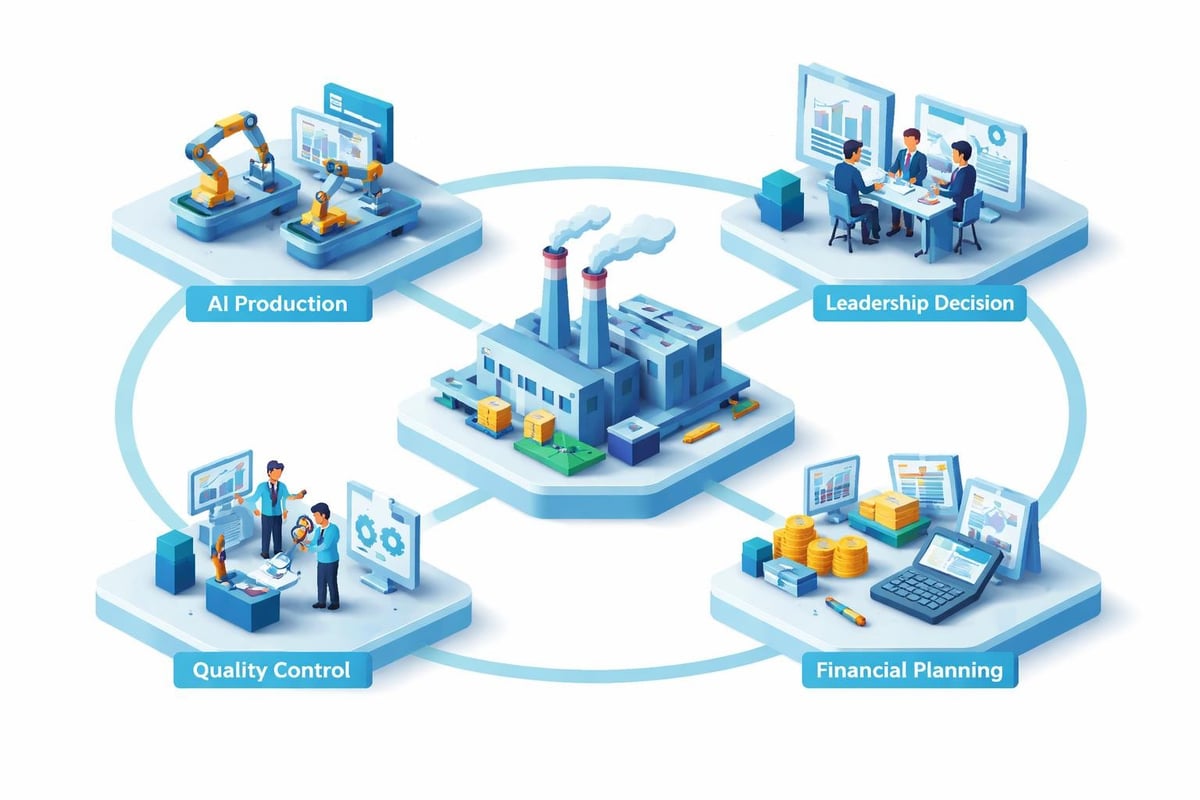
Business systems framework components

Leadership Systems as Profitability Drivers

The most overlooked aspect of business systems and profitability improvement in Frankfurt involves leadership development infrastructure. Organizations treat leadership as a soft skill when evidence shows it functions as a measurable system component.

Toxic leadership patterns create quantifiable costs. Studies indicate that organizations with ineffective leaders experience 25-40% higher turnover rates, 30% lower productivity, and significantly reduced innovation capacity. Frankfurt companies operating in competitive markets cannot afford these losses.

Systematic leadership development addresses this through structured interventions:

  • Diagnostic assessments that identify behavioral patterns affecting team performance
  • Precision matching between leaders and development resources based on specific gaps
  • Measurable accountability frameworks tracking leadership behavior change
  • Cultural alignment protocols ensuring leadership actions support organizational strategy
  • Data-driven adjustment cycles refining approaches based on outcome metrics

Organizations implementing these systems report 40-60% improvements in employee engagement scores and 25-35% increases in team productivity within 18 months. Understanding the four stages of psychological safety provides a framework for measuring leadership effectiveness through team climate indicators.

Converting Leadership Investment into Financial Returns

Business systems and profitability improvement in Frankfurt require converting leadership development from cost center to profit driver. This demands specific measurement approaches:

  1. Baseline performance metrics across retention, engagement, productivity, and innovation
  2. Leadership behavior indicators aligned with organizational objectives
  3. Interim milestone tracking showing progress toward behavioral targets
  4. Financial impact modeling connecting leadership changes to revenue and cost outcomes
  5. Long-term sustainability measures ensuring gains persist beyond initial interventions

Companies following this protocol demonstrate clear ROI. When organizations address toxic leadership behaviors systematically, they recover costs associated with turnover, presenteeism, and lost productivity within 12-24 months.

Operational Excellence Through System Integration

Frankfurt's manufacturing sector demonstrates how business systems and profitability improvement in Frankfurt manifests through technological integration. AI-driven production management solutions show measurable impacts on efficiency, quality, and cost control.

The convergence of Industry 4.0 technologies with traditional management systems creates unprecedented opportunities. Integrating AI and ERP systems allows manufacturers to optimize resource allocation, predict maintenance needs, and adjust production schedules in real-time based on demand signals.

System Components Driving Manufacturing Profitability

Effective operational systems in Frankfurt manufacturing environments share common elements:

System Component Function Profitability Mechanism
Predictive Maintenance AI-analyzed equipment data prevents failures 20-30% reduction in downtime costs
Demand Forecasting Machine learning predicts order patterns 15-25% inventory cost reduction
Quality Automation Computer vision detects defects instantly 40-50% reduction in waste and rework
Energy Optimization Smart systems minimize consumption during operations 10-20% utility cost savings
Workforce Planning Analytics match staffing to production requirements 25-35% labor efficiency improvement

These systems don't operate in isolation. The profitability impact multiplies when integrated into comprehensive frameworks connecting production, finance, HR, and strategic planning.

Integrated business systems workflow

Financial Services System Requirements

Frankfurt's position as Germany's financial capital creates specific demands for business systems and profitability improvement in Frankfurt within banking and investment sectors. Regulatory compliance, risk management, and client relationship systems form the operational foundation.

Financial institutions face unique challenges. They must balance innovation with stability, client service with risk mitigation, and growth with compliance. Systematic approaches address these tensions through structured frameworks.

Compliance automation systems reduce regulatory burden while improving accuracy. Organizations implementing compliance management platforms report 40-60% reductions in manual review time and 50-70% decreases in violation incidents.

Risk assessment frameworks leverage data analytics to identify exposure patterns before they become problems. Banks using systematic risk evaluation demonstrate 30-45% improvements in portfolio performance compared to traditional approaches.

Client relationship management transforms from reactive service to proactive value creation through systematic touch point mapping, needs assessment protocols, and personalized engagement frameworks.

Building Scalable Service Delivery Models

Professional services firms in Frankfurt require different system configurations than manufacturers or financial institutions. Their profitability depends on talent deployment efficiency, knowledge management effectiveness, and client satisfaction consistency.

  • Resource allocation algorithms match consultant skills to project requirements
  • Knowledge capture systems convert individual expertise into organizational assets
  • Client feedback loops systematically gather and act on satisfaction indicators
  • Pricing optimization models align fees with value delivered and market position
  • Talent development pathways ensure capabilities evolve with market demands

Firms implementing comprehensive professional services management systems achieve 35-50% higher revenue per employee and 25-40% better client retention rates.

Strategic Alignment and Measurement Frameworks

Business systems and profitability improvement in Frankfurt fails when organizations implement tools without strategic alignment. Systems must support defined objectives through measurable mechanisms.

Programs focusing on corporate performance and restructuring emphasize this connection, teaching professionals to design systems that drive specific outcomes rather than generic efficiency.

Strategic alignment requires:

  1. Clear organizational objectives expressed as measurable targets
  2. System design mapping to specific objective achievement pathways
  3. KPI frameworks tracking system performance against strategic goals
  4. Feedback mechanisms enabling system adjustment based on results
  5. Governance structures ensuring continued alignment as strategy evolves

Organizations lacking this discipline implement impressive technologies that don't impact profitability because they optimize for wrong variables or create improvements in areas disconnected from value creation.

Measurement Systems That Drive Behavior

Effective measurement for business systems and profitability improvement in Frankfurt goes beyond financial statements. Leading indicators predict future performance, enabling proactive adjustments.

Metric Category Leading Indicators Lagging Indicators
Leadership Effectiveness Engagement survey scores, 360 feedback trends Turnover rates, productivity metrics
Operational Excellence Process cycle times, defect rates per batch Customer complaints, warranty costs
Market Position Pipeline conversion rates, brand perception Market share, revenue growth
Innovation Capacity Ideas submitted, experiment velocity New product revenue, patent filings
Financial Health Cash conversion cycle, receivables aging Profit margins, return on assets

Organizations tracking both leading and lagging indicators respond faster to emerging issues and capitalize on opportunities before competitors recognize them. This systematic approach to measurement creates sustainable competitive advantages.

Performance measurement dashboard concept

Digital Transformation as System Evolution

Digital transformation represents the most significant opportunity for business systems and profitability improvement in Frankfurt currently available. This extends beyond implementing new technologies to fundamentally reimagining how work happens.

Successful digital transformation follows systematic approaches. Organizations that achieve measurable results from digital initiatives share common patterns:

They start with process redesign rather than technology selection. Understanding current workflows, identifying inefficiencies, and designing optimal processes precedes technology implementation.

They prioritize user adoption through change management systems rather than assuming people will naturally embrace new tools. Structured communication, training, and support frameworks ensure technologies deliver intended benefits.

They implement incrementally through pilot programs, measurement, adjustment, and scaled rollout rather than big-bang deployments. This systematic approach reduces risk and improves outcomes.

They maintain focus on outcomes rather than technology features. Selection criteria emphasize profitability impact over technical sophistication.

Technology Selection Frameworks

Choosing technologies for business systems and profitability improvement in Frankfurt requires structured evaluation. Organizations waste millions on impressive systems that don't address actual needs or integrate poorly with existing infrastructure.

Effective technology selection systems include:

  • Needs assessment protocols identifying specific problems technology must solve
  • Vendor evaluation criteria weighted toward outcome delivery rather than feature lists
  • Integration requirements analysis ensuring new systems connect with existing infrastructure
  • Total cost modeling capturing implementation, training, maintenance, and upgrade expenses
  • Pilot testing frameworks validating performance claims before full-scale commitments

Companies following systematic technology selection achieve 50-70% higher ROI from technology investments compared to those making decisions based on vendor presentations or industry trends.

Cultural Systems and Performance Outcomes

The intersection of organizational culture and business systems represents critical territory for business systems and profitability improvement in Frankfurt. Culture isn't separate from systems; culture emerges from the systems organizations implement and enforce.

When performance management systems reward individual achievement, competitive cultures develop. When systems emphasize team outcomes, collaborative cultures emerge. When leadership development systems focus on psychological safety, innovative cultures flourish.

Building psychological safety through systematic interventions creates measurable performance improvements. Teams with high psychological safety demonstrate 25-40% higher innovation output, 35-50% better problem-solving effectiveness, and 20-30% faster adaptation to change.

Organizations wanting to shift culture must change underlying systems. Attempting culture change through communications or values statements without modifying measurement systems, reward structures, and operational protocols produces cynicism rather than transformation.

System Design for Cultural Outcomes

Intentionally designing systems to produce desired cultural characteristics requires understanding cause-and-effect relationships:

Transparency emerges from information-sharing systems, open decision protocols, and communication frameworks that default to broad distribution rather than need-to-know restrictions.

Accountability develops through clear role definitions, measurable expectations, regular performance conversations, and consistent consequence systems linking actions to outcomes.

Innovation flourishes within systems providing protected experimentation space, celebrating intelligent failures, and converting lessons learned into organizational knowledge.

Trust builds when systems ensure fairness, deliver consistent application of policies, and demonstrate organizational commitment to employee development.

Companies approaching culture as system output rather than aspirational rhetoric achieve sustainable transformations. Leadership coaching programs that address toxic leader transformation understand this principle, focusing on behavior systems rather than personality changes.

Implementation Frameworks for System Development

Organizations pursuing business systems and profitability improvement in Frankfurt need structured implementation approaches. System development initiatives fail when organizations lack disciplined execution frameworks.

Research demonstrates that business systems can increase profit through ten specific mechanisms, but realizing these benefits requires methodical implementation following proven protocols.

Phase 1: Current State Assessment

Document existing processes, identify inefficiencies, measure baseline performance, and prioritize improvement opportunities based on profitability impact potential.

Phase 2: System Design

Define target state processes, specify technology requirements, design measurement frameworks, and create change management protocols.

Phase 3: Pilot Implementation

Deploy systems in controlled environments, gather user feedback, measure performance against targets, and refine based on results.

Phase 4: Scaled Rollout

Implement across organization in structured waves, provide comprehensive training, maintain support systems, and monitor adoption metrics.

Phase 5: Continuous Improvement

Establish regular review cycles, gather performance data, identify enhancement opportunities, and implement ongoing refinements.

Organizations following this disciplined approach achieve 60-80% higher success rates with system implementations compared to those taking informal approaches.

Resource Allocation and Project Governance

Successful business systems and profitability improvement in Frankfurt initiatives require appropriate resource commitment and governance structures. Under-resourced projects fail regardless of design quality.

Implementation Phase Resource Requirements Duration Success Factors
Assessment 2-3 senior analysts, stakeholder time 4-6 weeks Executive sponsorship, data access
Design 3-5 cross-functional team members, external expertise 8-12 weeks Clear objectives, user involvement
Pilot 5-8 implementation team, 20-30 users 12-16 weeks Protected environment, measurement rigor
Rollout 8-15 implementation team, training resources 16-24 weeks Change management, support infrastructure
Optimization 2-3 continuous improvement specialists Ongoing Feedback systems, adjustment authority

Organizations allocating insufficient resources extend timelines, compromise quality, or abandon initiatives before achieving returns. Systematic project governance ensures appropriate investment aligned with expected profitability improvements.

Risk Management Through System Design

Business systems and profitability improvement in Frankfurt must address risk reduction alongside efficiency gains. Well-designed systems prevent problems rather than simply detecting them faster.

Operational risk mitigation occurs through standardized processes, automated controls, and exception-flagging mechanisms. Manufacturing systems incorporating quality checks at each process step prevent defective products from reaching customers, reducing warranty costs and protecting brand reputation.

Financial risk management improves through systematic approval workflows, segregation of duties protocols, and real-time monitoring dashboards. Organizations implementing comprehensive financial control systems reduce fraud incidents by 70-85% and improve cash management by 25-40%.

Compliance risk reduction comes from automated regulatory monitoring, systematic documentation requirements, and regular audit protocols. Financial institutions using compliance management systems demonstrate 50-70% fewer violations and 40-60% lower remediation costs.

Strategic risk mitigation derives from scenario planning systems, competitive intelligence frameworks, and early warning indicator monitoring. Organizations with systematic strategic risk management identify threats 6-12 months earlier than competitors, enabling proactive responses.

Integrating risk management into business systems creates profitability through loss prevention. For some organizations, risk reduction delivers greater financial impact than efficiency improvements.

Scaling Systems Across Growing Organizations

Business systems and profitability improvement in Frankfurt takes different forms for organizations at different growth stages. Systems appropriate for 50 employees fail at 500 employees.

Startup stage (under 50 employees) requires lightweight, flexible systems emphasizing rapid decision-making and adaptation. Documentation focuses on critical processes only.

Scale-up stage (50-250 employees) demands process standardization, role clarity, and measurement frameworks. Systems transition from founder-dependent to role-dependent execution.

Enterprise stage (250+ employees) needs comprehensive systems integrating functions, locations, and business units. Governance structures, exception handling protocols, and continuous improvement mechanisms become essential.

Organizations failing to evolve systems as they grow experience predictable crises. What worked brilliantly at 50 employees creates chaos at 200 employees. Systematic approaches to scaling prevent these disruptions.

System Architecture for Multi-Location Operations

Frankfurt companies expanding internationally face unique system challenges. Multi-location operations require balancing standardization with local adaptation.

Core systems should standardize:

  • Financial reporting and consolidation protocols
  • Brand standards and customer experience expectations
  • Quality requirements and safety procedures
  • Data security and privacy protections
  • Leadership competency frameworks and development approaches

Local systems should adapt:

  • Customer engagement processes reflecting cultural preferences
  • Operational workflows accommodating regulatory differences
  • Communication styles matching local norms
  • Talent acquisition and development reflecting labor market realities
  • Supplier relationships leveraging regional capabilities

Organizations achieving this balance through systematic design outperform those imposing rigid standardization or allowing complete local autonomy. Resources like accountability systems help maintain consistency while enabling appropriate flexibility.


Business systems and profitability improvement in Frankfurt represents an evidence-based approach to organizational performance, where structured leadership development, operational excellence, and strategic alignment create measurable financial outcomes. Organizations that treat leadership as a systematic discipline rather than an art form gain sustainable competitive advantages through predictable talent performance, cultural health, and adaptive capacity. The Noomii Corporate Leadership Program provides the diagnostic tools, precision coach matching, and measurable intervention frameworks Frankfurt organizations need to convert leadership investment into quantifiable profitability improvements.

Gemini Prompts to Help Business Coaches Scale in 2026

Business coaches face a persistent challenge: delivering high-impact results while scaling their practice efficiently. As client rosters grow and expectations rise, the administrative burden and strategic planning demands can overwhelm even the most talented practitioners. Google’s Gemini offers a powerful solution through carefully crafted prompts that automate routine tasks, generate insights, and free coaches to focus on what truly matters-transforming their clients’ businesses. This guide explores practical gemini prompts to help business coaches scale their operations, improve client outcomes, and build sustainable growth.

Understanding Gemini’s Capabilities for Coaching Practices

Google Gemini represents a significant advancement in AI-powered business tools, particularly for service-based professionals who need to balance expertise delivery with business development. Unlike generic AI assistants, Gemini excels at multi-step reasoning and contextual understanding.

Key advantages for business coaches include:

  • Long-context processing that remembers entire client histories and session notes
  • Integration capabilities with Google Workspace for seamless workflow automation
  • Multimodal analysis that can review documents, spreadsheets, and presentations simultaneously
  • Real-time research that pulls current market data and competitive intelligence

The platform’s ability to optimize prompts autonomously means coaches can refine their queries over time, building a library of high-performing templates that consistently deliver valuable outputs. This iterative improvement mirrors the coaching process itself-continuous refinement leading to breakthrough results.

AI workflow for business coaching

Client Acquisition and Marketing Prompts

Attracting quality clients remains the lifeblood of any coaching practice. Traditional marketing consumes hours that could be spent delivering value, but gemini prompts to help business coaches scale this critical function with precision.

Content Creation That Converts

Generate targeted blog posts, social media content, and email campaigns with this framework:

“Analyze the top pain points facing [specific industry] leaders in 2026. Create a 1,200-word article addressing [specific challenge], incorporating data from recent studies. Structure it with actionable frameworks, include three real-world scenarios, and end with clear next steps. Optimize for SEO targeting [specific keyword phrase].”

This approach, similar to strategies outlined in AI-powered client attraction methods, ensures your content speaks directly to decision-makers’ immediate needs.

Lead Qualification and Outreach

Use Gemini to craft personalized outreach that respects prospects’ time:

“Review this prospect’s LinkedIn profile, recent company announcements, and industry position. Draft a 150-word email that demonstrates understanding of their specific challenges, references one recent achievement, and proposes a focused 30-minute conversation around [specific outcome]. Maintain a professional, results-oriented tone.”

Prompt Type Time Saved Weekly Conversion Improvement
Content creation 8-12 hours 35-50%
Lead qualification 4-6 hours 25-40%
Email personalization 3-5 hours 45-60%

Program Design and Delivery Optimization

Experienced coaches know that scaling requires systematizing expertise without losing the personal touch that drives transformation. Strategic prompts transform how programs are structured and delivered.

Curriculum development prompt:

“Design a 90-day leadership development program for mid-market companies with 25-500 employees. Focus on measurable outcomes: faster decision-making, improved team communication, and execution against strategic priorities. Include weekly session outlines, between-session accountability assignments, KPI tracking frameworks, and ROI measurement criteria. Structure each module around observable behavior change.”

This mirrors the approach used by Noomii Corporate Coaching, which emphasizes practical, KPI-driven coaching that produces visible business results rather than theoretical frameworks.

Assessment and Progress Tracking

Create robust evaluation frameworks:

“Develop a 360-degree leadership assessment focusing on [specific competencies]. Generate 25 questions across five categories: strategic thinking, team development, communication effectiveness, execution discipline, and accountability. Include rating scales, qualitative response options, and automated analysis that identifies top three development priorities.”

Leadership assessment workflow

Operational Efficiency and Systems Automation

The most successful coaches build businesses that run smoothly whether they’re in client sessions or developing new offerings. Gemini prompts to help business coaches scale administrative functions effectively.

Session documentation prompt:

“Review this 60-minute coaching session transcript. Create a structured summary including: key discussion points, commitments made by client, accountability milestones with dates, insights uncovered, and recommended focus areas for next session. Format for easy reference and follow-up.”

Scheduling and workflow optimization:

“Analyze my calendar patterns over the past 90 days. Identify time blocks where I’m most productive for strategic work versus client delivery. Recommend an ideal weekly schedule that protects 15 hours for revenue-generating activities, 10 hours for client delivery, and 5 hours for business development. Account for energy levels and meeting fatigue.”

Client Communication Templates

Maintain consistency across touchpoints:

  1. Onboarding sequences that set clear expectations
  2. Progress update formats that celebrate wins and address obstacles
  3. Renewal conversations anchored in documented outcomes
  4. Referral request templates that make advocacy easy

The backwards planning model applies here-start with the desired client outcome and work backward to design communication touchpoints that keep momentum strong.

Business Intelligence and Market Positioning

Understanding market dynamics and competitive positioning enables smarter growth decisions. Gemini excels at synthesizing vast amounts of data into actionable intelligence.

Competitive analysis prompt:

“Research the top 10 business coaching firms serving [specific market]. Compare their positioning, pricing models, service delivery methods, and client testimonials. Identify gaps in their offerings and emerging needs in the market. Recommend three differentiation strategies that align with our strengths in [specific capabilities].”

This type of strategic research, explored in guides on leveraging Google Gemini for business success, provides the foundation for confident positioning decisions.

Pricing Strategy Development

“Analyze pricing models across executive coaching, leadership development, and team facilitation services. Consider factors: client company size, engagement duration, outcome complexity, and market rates. Propose three pricing tiers with clear value propositions and expected ROI for each level. Include options for aligned incentive structures where coach compensation ties to measurable client results.”

Advanced Integration and Workflow Automation

Seasoned practitioners combine multiple prompts into systematic workflows that handle entire business processes. This is where gemini prompts to help business coaches scale reach their full potential.

End-to-end client journey prompt sequence:

“Create a comprehensive client management system from initial contact through program completion. Include: intake form analysis, personalized program design, session preparation templates, progress tracking dashboards, and graduation criteria. Ensure each stage connects to the next with clear handoffs and data continuity.”

Research on AI-powered business planning tools demonstrates how integrated AI systems can manage complex, multi-stage processes that previously required significant manual coordination.

Client journey automation

Integration with Accountability Systems

For coaches who emphasize measurable results, connecting AI capabilities with accountability frameworks amplifies impact. AccountabilityNow.net offers tools that track commitments and progress, while Gemini can analyze patterns:

“Review client accountability data over the past quarter. Identify patterns: which types of commitments have highest completion rates, where obstacles consistently appear, and which accountability structures drive best outcomes. Recommend adjustments to our coaching methodology based on these insights.”

This data-driven approach mirrors entrepreneurship coaching methodologies that tie coaching interventions directly to business performance metrics.

Thought Leadership and Authority Building

Establishing expertise at scale requires consistent, high-value content production. Strategic prompts maintain quality while increasing output.

Industry analysis prompt:

“Examine current trends in [specific industry] leadership challenges. Review recent research, executive surveys, and market reports. Identify three emerging issues that will demand attention over the next 18 months. For each, outline: why it matters, who’s most affected, current approaches, and a superior framework. Target 2,500 words with specific examples.”

Case study development:

“Transform this client engagement into a compelling case study. Include: initial situation and challenges, specific interventions and methodology, measurable results with before/after metrics, client testimonials, and key lessons. Anonymize confidential details while preserving impact. Optimize for both website and presentation formats.”

The powerful Gemini prompts for business building shared by business strategists emphasize this combination of specificity and scalability in content creation.


Implementing gemini prompts to help business coaches scale transforms operational capacity and client impact simultaneously. By automating routine tasks, generating strategic insights, and maintaining consistency across touchpoints, coaches reclaim time for high-value activities that drive business growth. If you’re ready to build accountable leadership teams with measurable results and practical frameworks, Noomii delivers month-to-month corporate coaching tied to clear KPIs and visible ROI, helping your organization execute priorities with precision and confidence.

Business Strategy & Financial Planning in Munich 2026

Munich stands as one of Europe’s most dynamic business hubs, where traditional corporate excellence meets cutting-edge innovation. Organizations operating in this competitive landscape recognize that sustainable growth requires more than isolated financial tactics or disconnected strategic initiatives. Success demands an integrated approach where business strategy and financial planning in Munich work as synchronized forces, driving organizations toward measurable outcomes while addressing the leadership capabilities needed to execute ambitious plans. This alignment becomes particularly crucial in 2026, as economic uncertainties and rapid technological changes demand both financial precision and strategic agility.

The Munich Business Landscape: Where Strategy Meets Financial Reality

Munich’s economic ecosystem presents unique challenges and opportunities that directly impact how organizations approach business strategy and financial planning in Munich. The city hosts headquarters of major multinational corporations, thriving mid-sized enterprises, and innovative startups across automotive, technology, financial services, and manufacturing sectors.

Financial planning in this environment requires understanding regional market dynamics, talent costs, regulatory frameworks, and competitive positioning. Organizations must balance growth investments with operational efficiency while maintaining financial resilience. Munich Strategy demonstrates how specialized consulting firms support industries like construction and mechanical engineering with tailored strategic approaches that account for sector-specific financial considerations.

Strategic Financial Planning as Competitive Advantage

Companies that treat financial planning as a standalone function miss critical opportunities to leverage financial resources as strategic enablers. The most successful organizations in Munich integrate financial analysis directly into strategic decision-making processes, creating feedback loops between operational performance and financial outcomes.

This integration manifests in several key areas:

  • Capital allocation decisions aligned with strategic priorities
  • Performance metrics that connect financial results to strategic objectives
  • Risk management frameworks that protect both financial stability and strategic investments
  • Resource optimization strategies that fund innovation while controlling costs
  • Leadership development investments treated as strategic financial assets

Roland Berger, headquartered in Munich, exemplifies how global strategy consulting integrates financial rigor with strategic vision, helping organizations navigate complex business transformations.

Strategic financial planning framework

Leadership Capability: The Missing Link in Strategic Planning

Business strategy and financial planning in Munich often fail not because of flawed analysis or inadequate resources, but due to leadership gaps that prevent effective execution. Organizations develop sophisticated strategic plans and detailed financial models, yet struggle when leaders lack the capabilities to translate these documents into operational reality.

Leadership capability directly impacts strategic execution in measurable ways. Research consistently demonstrates that organizations with strong leadership development programs achieve better financial performance, higher employee engagement, and more successful strategy implementation. Yet many Munich-based organizations underinvest in leadership development relative to other strategic priorities.

Identifying Leadership Gaps That Derail Strategic Plans

Strategic plans typically outline ambitious growth targets, market expansion initiatives, operational improvements, and innovation investments. Financial plans allocate resources to support these objectives. Between plan and reality stands leadership execution capacity.

Common leadership gaps that undermine business strategy and financial planning in Munich include:

  1. Toxic leadership patterns that destroy team cohesion and drive talent away
  2. Insufficient strategic thinking skills at middle management levels
  3. Poor cross-functional collaboration that creates organizational silos
  4. Weak decision-making capabilities under uncertainty
  5. Limited change management expertise during transformations
  6. Inadequate communication skills that leave teams confused about priorities

Organizations can leverage evidence-based approaches to identify toxic leader behaviors before they derail strategic initiatives and damage organizational culture.

Leadership Gap Strategic Impact Financial Consequence
Toxic Leadership High turnover, low morale 50-200% of salary to replace key talent
Weak Strategic Thinking Missed market opportunities Revenue shortfalls vs. plan
Poor Collaboration Duplicated efforts, conflicts 20-30% productivity loss
Inadequate Change Skills Failed transformation initiatives Wasted investment in change programs

Building Financial Models That Account for Human Capital

Traditional financial planning focuses on capital expenditures, operating costs, revenue projections, and cash flow management. Progressive organizations in Munich recognize that human capital investments and leadership quality represent critical variables in financial models.

When developing business strategy and financial planning in Munich, consider how leadership investments create financial returns:

Direct Financial Impact

Executive coaching and leadership development programs generate measurable ROI through improved decision-making, faster problem-solving, enhanced team performance, and reduced turnover costs. Organizations can quantify these benefits by tracking metrics like revenue per employee, cycle times for key decisions, and talent retention rates.

Indirect Strategic Value

Strong leadership capabilities enable organizations to pursue more ambitious strategies, adapt faster to market changes, and execute complex initiatives that competitors cannot match. This strategic flexibility has financial value that traditional planning models often overlook.

For organizations seeking to understand how coaching creates strategic value, aligning coaching investments with specific business outcomes ensures financial accountability while developing leadership capacity.

Integrating Leadership Development Into Strategic Planning Cycles

Business strategy and financial planning in Munich should incorporate leadership development as a core component rather than treating it as an afterthought or HR initiative disconnected from strategic priorities.

A Framework for Strategic Leadership Integration

Phase 1: Strategic Assessment

Begin strategic planning cycles by evaluating leadership capability alongside market analysis, competitive positioning, and financial performance. Use validated assessment tools to identify leadership strengths and gaps across the organization. This diagnostic provides data-driven insights into whether current leadership capacity can execute proposed strategies.

Phase 2: Gap Analysis and Resource Allocation

Compare required leadership capabilities for strategic success against current state assessments. Quantify the performance and financial risks associated with leadership gaps. Allocate budget and resources to address critical leadership development needs as strategic investments, not discretionary expenses.

Phase 3: Targeted Intervention Design

Develop customized leadership development plans that directly support strategic objectives. If strategy requires market expansion, invest in leadership capabilities around strategic thinking and cross-cultural collaboration. If operational excellence is the priority, focus on process improvement leadership and performance management skills.

Phase 4: Execution and Monitoring

Track leadership development progress using KPIs that connect to strategic and financial outcomes. Monitor how improved leadership capabilities translate into better execution, faster decision-making, and stronger financial performance.

  • Establish baseline metrics before interventions
  • Define clear success criteria aligned with strategic goals
  • Implement regular progress reviews integrated with strategic planning cycles
  • Adjust interventions based on performance data and changing strategic priorities

Workshops on business planning fundamentals provide valuable context for startups and growing companies establishing these integrated planning processes.

Leadership development cycle

Financial Planning for Leadership Development Programs

Organizations committed to integrating leadership development into business strategy and financial planning in Munich need frameworks for budgeting, measuring ROI, and optimizing leadership investments.

Establishing Leadership Development Budgets

Benchmark Approaches

Leading organizations typically allocate 2-5% of total compensation budgets to learning and development, with significant portions dedicated to leadership programs. Munich-based companies competing for top talent often invest at the higher end of this range or above it.

Strategic Allocation Models

Rather than distributing leadership development budgets equally, align investments with strategic priorities:

Strategic Priority Leadership Investment Focus Budget Allocation
Market Expansion Strategic thinking, cultural intelligence 35%
Digital Transformation Change leadership, innovation capabilities 30%
Operational Excellence Process improvement, performance management 20%
Talent Retention Engagement skills, coaching capabilities 15%

Measuring Leadership Development ROI

Calculate ROI by tracking both quantitative and qualitative outcomes. Quantitative metrics include reduced turnover costs, improved revenue per employee, faster time-to-decision, and enhanced project success rates. Qualitative indicators encompass improved employee engagement scores, stronger succession pipeline, and enhanced organizational reputation.

Organizations utilizing data-driven coaching approaches can demonstrate clear connections between leadership investments and business outcomes, supporting continued financial commitment to development programs.

Strategic Planning for Organizations at Different Growth Stages

Business strategy and financial planning in Munich varies significantly based on organizational maturity, size, and growth trajectory. Leadership development priorities must align with these different contexts.

Startups and Early-Stage Companies

Early-stage organizations face resource constraints but need strong leadership to navigate rapid growth and market uncertainty. Focus financial planning on developing founder leadership capabilities, establishing scalable management systems, and building initial leadership teams.

Comprehensive business plan guidance helps Munich entrepreneurs structure strategic and financial planning appropriately for their growth stage.

Key Leadership Priorities:

  • Strategic vision and communication
  • Resource optimization under constraints
  • Talent attraction and culture building
  • Rapid decision-making and adaptation

Mid-Sized and Growing Organizations

Companies scaling operations need leadership depth across multiple levels. Financial planning should account for developing middle management capabilities, establishing leadership pipelines, and creating consistent leadership practices across expanding teams.

Enterprise and Multinational Organizations

Large organizations require sophisticated leadership development ecosystems that address diverse needs across regions, functions, and levels. Strategic planning must account for leadership succession, executive development, high-potential programs, and organization-wide leadership capabilities.

Munich Global Advisors demonstrates how financial planning firms help organizations navigate complexity through strategic guidance that accounts for global operations and emerging technologies.

Compliance, Governance, and Strategic Risk Management

Business strategy and financial planning in Munich must account for regulatory requirements, governance standards, and risk management frameworks that shape how organizations operate and develop leaders.

Regulatory Alignment in Leadership Development

Organizations in regulated industries face specific requirements around leadership qualifications, training documentation, and competency verification. Financial planning for leadership development must account for compliance costs while ensuring programs meet regulatory standards.

Governance Considerations:

Financial services, healthcare, manufacturing, and government organizations operate under governance frameworks that specify leadership responsibilities, accountability structures, and decision-making authorities. Leadership development programs must align with these governance requirements while building capabilities that support strategic objectives.

Risk Mitigation Through Leadership Investment

Leadership gaps represent strategic and financial risks that deserve formal risk management attention. Organizations should evaluate leadership risks alongside market, operational, and financial risks, developing mitigation strategies that include targeted development investments.
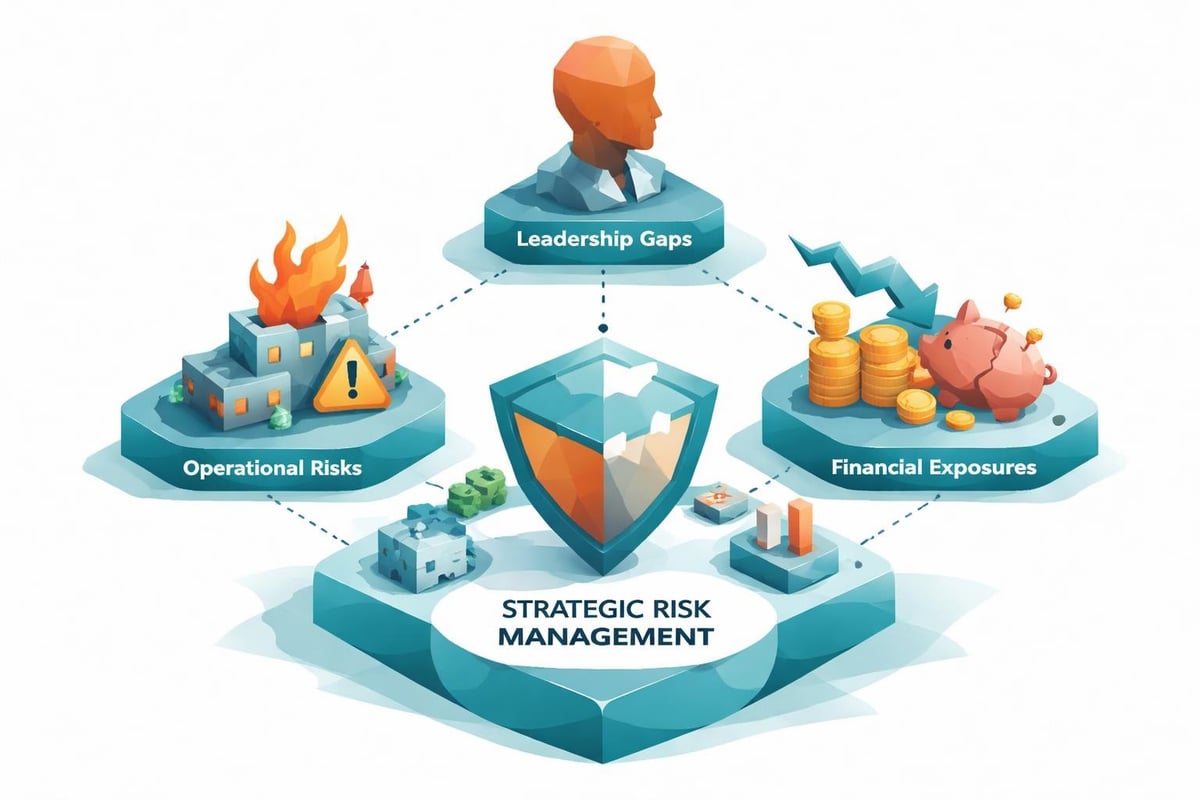
Risk management framework

Building Psychological Safety as Strategic Infrastructure

One of the most overlooked elements in business strategy and financial planning in Munich is the role of psychological safety in enabling strategic execution. Organizations cannot achieve ambitious strategic goals when teams fear speaking up, challenging assumptions, or raising concerns about flawed plans.

Research demonstrates that teams with high psychological safety outperform others in innovation, problem-solving, and execution. Building this foundation requires intentional leadership development focused on creating environments where people feel safe to contribute fully.

Organizations can strengthen psychological safety through structured approaches that develop leadership behaviors supporting open dialogue, constructive challenge, and learning from failures.

Financial Impact of Psychological Safety

Measurable Outcomes:

  • 27% reduction in employee turnover
  • 40% decrease in safety incidents
  • 19% increase in team productivity
  • 29% improvement in decision quality

These outcomes translate directly into financial performance improvements that justify leadership development investments focused on psychological safety.

Technology and Tools Supporting Strategic Financial Planning

Modern business strategy and financial planning in Munich leverages technology platforms that enhance analysis, scenario planning, collaboration, and performance tracking. Organizations should evaluate how technology investments support both financial planning processes and leadership development initiatives.

Financial Planning Technologies:

  • Integrated business planning platforms
  • Scenario modeling and simulation tools
  • Real-time performance dashboards
  • Predictive analytics for forecasting

Leadership Development Technologies:

  • Assessment and diagnostic platforms
  • Learning management systems
  • Coaching management platforms
  • Performance tracking tools

Partner Selection for Strategic Consulting and Financial Advisory

Organizations seeking external support for business strategy and financial planning in Munich should apply rigorous selection criteria when choosing consulting partners, financial advisors, and leadership development providers.

Evaluation Criteria for Strategic Partners

Sector Expertise and Track Record

Select partners with demonstrated experience in your industry, understanding of your specific strategic challenges, and proven results with organizations of similar size and complexity. Corporate finance specialists like WMCF bring deep M&A and strategic transaction expertise relevant for organizations pursuing growth through acquisition.

Methodology and Approach

Evaluate whether potential partners use evidence-based methodologies, customize solutions to your specific context, and integrate multiple perspectives rather than applying one-size-fits-all frameworks.

Cultural Alignment

Successful partnerships require cultural compatibility, shared values around leadership and organizational development, and complementary working styles that support effective collaboration.

Evaluation Factor Questions to Ask Red Flags
Sector Knowledge What similar clients have you served? Generic industry statements
Methodology How do you customize approaches? Rigid, inflexible frameworks
Track Record What measurable outcomes have you delivered? Vague success stories
Cultural Fit How do you adapt to client culture? Prescriptive, one-way approach

Continuous Improvement in Strategic and Financial Planning

Business strategy and financial planning in Munich requires ongoing refinement as market conditions evolve, organizational capabilities develop, and strategic priorities shift. Establish feedback loops that capture lessons learned, track planning accuracy, and continuously improve processes.

Key Improvement Practices:

Regular post-implementation reviews that compare actual outcomes against strategic and financial plans identify planning assumptions that proved incorrect, execution challenges that emerged, and unexpected opportunities or threats. These insights inform subsequent planning cycles.

Stakeholder feedback from leaders at all levels provides perspectives on planning process effectiveness, clarity of strategic direction, resource adequacy, and alignment between strategy and operational reality. This input helps refine communication, engagement, and decision-making approaches.

Performance analytics track leading and lagging indicators that reveal whether strategic initiatives generate expected results. These metrics support mid-course corrections and resource reallocation to optimize outcomes.

Organizations pursuing advanced training in strategic financial planning can develop internal capabilities that reduce dependence on external advisors while building strategic planning excellence.

Creating Accountability Systems That Drive Execution

Even the most sophisticated business strategy and financial planning in Munich fails without accountability systems that translate plans into action and results. Effective accountability requires clarity about responsibilities, regular progress reviews, transparent performance tracking, and consequences aligned with outcomes.

Designing Accountability Frameworks

Clear Ownership Assignment

Every strategic initiative and financial target needs a specific individual accountable for results. Ambiguity about ownership creates gaps where important work falls through cracks or multiple people duplicate efforts without coordination.

Regular Progress Reviews

Establish cadences for reviewing strategic and financial performance at appropriate levels. Executive teams might review monthly, functional leaders weekly, and project teams daily. These reviews create forcing functions that maintain focus and momentum.

Transparent Performance Visibility

Make strategic and financial performance visible across relevant stakeholder groups. Transparency creates positive peer pressure, enables cross-functional support, and surfaces issues early when corrective action remains possible. For organizations building accountability cultures, resources like AccountabilityNow provide frameworks and tools supporting systematic accountability practices.

Scaling Strategic Planning Across Complex Organizations

Large organizations and multinational corporations face unique challenges scaling business strategy and financial planning in Munich across diverse business units, geographic regions, and functional areas. Effective scaling requires balancing consistency with flexibility, maintaining alignment while enabling autonomy, and creating shared frameworks without stifling local adaptation.

Scaling Best Practices:

Establish core strategic planning frameworks and financial planning standards that all units follow while allowing customization for local market conditions, competitive dynamics, and operational realities. This approach creates consistency in planning rigor and communication while respecting legitimate differences across contexts.

Develop planning capabilities across leadership levels through training, templates, facilitation support, and communities of practice. Building internal planning expertise reduces cycle times, improves plan quality, and creates shared language around strategy and finance.

Implement technology platforms that enable collaborative planning, scenario analysis, performance tracking, and reporting across organizational boundaries. Modern planning systems create transparency, facilitate coordination, and streamline consolidation of unit plans into enterprise perspectives.

Independent financial planning services demonstrate how fee-only advisory models can complement internal planning capabilities, providing objective perspectives without conflicts of interest.


Effective business strategy and financial planning in Munich requires integration across three critical dimensions: rigorous financial analysis, clear strategic direction, and strong leadership capabilities to execute ambitious plans. Organizations that treat these elements as interconnected rather than separate functions position themselves for sustainable competitive advantage. The Noomii Corporate Leadership Program helps Munich-based organizations strengthen this integration by developing leadership capabilities that translate strategic vision and financial plans into measurable results, creating alignment between individual leader growth and institutional success while delivering the executive capabilities needed to thrive in Europe’s most competitive business environment.

Gemini Prompts to Help Life Coaches Scale in 2026

Life coaches face a persistent challenge: delivering personalized, transformative experiences while serving more clients. The traditional one-to-one coaching model creates a ceiling on growth that can trap talented practitioners in a cycle of trading time for money. Google Gemini offers life coaches a practical solution through carefully crafted prompts that automate administrative tasks, personalize client communications, and scale knowledge delivery without sacrificing quality. Using gemini prompts to help life coaches scale is becoming essential for practitioners who want sustainable growth in 2026.

Automating Client Intake and Assessment

The initial client experience sets the foundation for successful coaching relationships. Gemini can transform how coaches gather background information, assess readiness, and match clients with appropriate programs.

Create intake prompts that generate customized welcome sequences based on client responses. For example, instruct Gemini to analyze intake form data and produce a personalized onboarding email that acknowledges specific challenges mentioned by the client. This approach saves hours weekly while making each prospect feel genuinely understood.

Key intake automation tasks:

  • Generate personalized welcome emails based on client goals
  • Create custom assessment questionnaires for different coaching niches
  • Summarize lengthy client histories into actionable coaching notes
  • Produce readiness evaluations that identify ideal starting points

A well-designed prompt might ask Gemini to review a client’s responses about career transitions and generate three potential coaching pathways with different time commitments and outcomes. The strategic expansion of your coaching practice requires systems that qualify and segment clients efficiently.

Client intake workflow automation

Scaling Session Preparation and Follow-Up

Session preparation and post-session summaries consume significant coach time. Gemini prompts to help life coaches scale this critical workflow by generating relevant discussion frameworks and comprehensive follow-up materials.

Pre-Session Framework Generation

Before each session, prompt Gemini to create discussion guides based on the client’s previous sessions, stated goals, and current challenges. A sophisticated prompt reviews session notes from the past month and suggests three high-impact questions tailored to the client’s progression stage.

Session Phase Automation Opportunity Time Saved Per Client
Pre-session research Generate discussion frameworks 15-20 minutes
Session notes Real-time transcription summary 10-15 minutes
Follow-up materials Create action plans and resources 20-25 minutes
Progress tracking Compile achievement summaries 10-12 minutes

For business coaches working with entrepreneurs, Gemini can analyze financial data or business metrics mentioned in sessions and generate specific discussion points around KPIs and growth opportunities.

Post-Session Action Plans

After sessions, coaches spend considerable time creating action plans and resource lists. Design prompts that instruct Gemini to convert session notes into structured action plans with specific tasks, deadlines, and accountability measures. Similar to how ChatGPT prompts help coaches grow revenue, Gemini can transform raw session content into polished deliverables.

The integration of generative AI tools in professional coaching demonstrates measurable improvements in coach productivity and client satisfaction when implementation follows best practices.

Creating Scalable Group Coaching Content

Group programs offer coaches the opportunity to serve multiple clients simultaneously while maintaining high value. Gemini excels at generating discussion topics, exercises, and reflection prompts for group settings.

Design prompts that create weekly discussion themes aligned with your program curriculum. For a twelve-week leadership development program, instruct Gemini to generate opening questions, small-group activities, and individual reflection exercises for each session topic.

Group coaching automation capabilities:

  1. Generate weekly discussion guides with opening questions
  2. Create breakout room activities for virtual group sessions
  3. Produce individual reflection exercises aligned with group themes
  4. Develop peer feedback frameworks for accountability partnerships
  5. Design celebration protocols that recognize member progress

The Gemini coaching group prompt offers a foundation for creating structured support systems that maintain personal connection at scale. Career coaches can adapt these frameworks for job search accountability groups or networking skill development cohorts.

Personalizing Client Communications at Scale

Maintaining meaningful communication with dozens or hundreds of clients requires sophisticated systems. Gemini prompts to help life coaches scale personalized touchpoints without creating overwhelming workload.

Newsletter and Update Generation

Monthly client newsletters typically require hours of writing and personalization. Create prompts that instruct Gemini to generate newsletter content segments based on common client themes, seasonal considerations, and coaching philosophy. Then customize individual sections for different client segments.

A powerful approach involves prompting Gemini to analyze your recent blog posts, podcast episodes, or social media content and extract the most relevant insights for different client personas. This ensures newsletter content aligns with your broader thought leadership while remaining actionable.

Personalized communication workflow

For coaches offering entrepreneurship coaching, segment newsletters by business stage: startup phase clients receive different insights than scaling-phase entrepreneurs.

Developing Knowledge Products and Resources

Digital products extend coaching impact beyond one-to-one sessions. Gemini accelerates the creation of workbooks, mini-courses, and assessment tools that generate passive revenue.

Prompt Gemini to transform your coaching frameworks into self-guided worksheets. For example, if you teach time management using the work-life buckets method, instruct Gemini to create a comprehensive workbook with reflection questions, planning templates, and implementation checklists.

Product Type Gemini Application Revenue Potential
Assessment tools Generate scoring frameworks and interpretations $27-97 per assessment
Mini-courses Create lesson outlines and scripts $197-497 per course
Workbooks Develop exercises and worksheets $17-47 per workbook
Templates Design frameworks and planning tools $7-27 per template

The daily life coach gem creation process demonstrates how coaches can package their methodology into accessible formats that serve clients between sessions. These resources also support the strategies for scaling coaching businesses by creating multiple revenue streams.

Optimizing Marketing and Content Strategy

Consistent content marketing attracts ideal clients but demands significant time investment. Gemini prompts to help life coaches scale content production while maintaining authentic voice and valuable insights.

Blog and Social Media Content

Design prompts that convert coaching session themes into blog post outlines or social media series. Instruct Gemini to identify common client questions from your notes and develop comprehensive content that addresses these pain points.

For maximum efficiency, create a master prompt that generates a month of content ideas based on seasonal client challenges, current events affecting your niche, and your core coaching frameworks. Then use follow-up prompts to develop each idea into complete posts.

Content automation workflow:

  • Analyze client questions to identify trending topics
  • Generate content calendars aligned with seasonal coaching themes
  • Create post outlines that follow proven engagement structures
  • Develop caption variations for different social platforms
  • Produce email sequences that nurture prospects toward consultation calls

Implementing proven steps to scale your coaching business becomes significantly easier when content production no longer consumes all available marketing time. The best AI for business coaching includes tools that maintain consistency across all client touchpoints.

Marketing automation system

Implementing Quality Control and Human Touch

While gemini prompts to help life coaches scale operational aspects, maintaining authentic connection requires intentional human oversight. Establish review protocols that ensure AI-generated content aligns with your coaching philosophy and client needs.

Create a quality checklist for all Gemini outputs:

  1. Accuracy verification: Confirm advice matches your methodology
  2. Tone consistency: Ensure voice reflects your authentic style
  3. Personalization review: Add specific details that demonstrate genuine attention
  4. Ethical alignment: Verify recommendations support client autonomy and growth
  5. Compliance check: Ensure content meets coaching ethics standards

The most successful coaches using professional prompts for coaching treat AI as a sophisticated assistant rather than a replacement for professional judgment. They spend time saved on automation deepening client relationships and refining coaching skills.

For coaches working with corporate clients, accountability systems like those offered at AccountabilityNow complement AI efficiency by ensuring measurable progress and genuine transformation remain central to the coaching relationship.

Measuring Impact and Iterating Prompts

Scaling effectively requires tracking which prompts produce the best outcomes. Establish metrics for evaluating Gemini’s contribution to client satisfaction, operational efficiency, and revenue growth.

Key Performance Indicators

Track these metrics to assess scaling success:

  • Client acquisition cost reduction through automated marketing
  • Time saved per client through session preparation automation
  • Client satisfaction scores for AI-assisted communications
  • Revenue per coach hour as efficiency improves
  • Group program enrollment rates using scaled content

Refine prompts based on performance data. If automated follow-up emails generate lower engagement than manual versions, adjust prompts to incorporate more personalization triggers or emotional resonance.

The framework for scaling to six figures emphasizes continuous optimization of systems and processes. Regular prompt refinement ensures AI assistance evolves with your practice.

Professional coaches like those at Noomii understand that scaling requires both technological leverage and human expertise. The combination produces sustainable growth that serves more clients without sacrificing coaching quality.


Implementing gemini prompts to help life coaches scale transforms practice growth from overwhelming to achievable. The strategies outlined here automate time-consuming tasks while preserving the personalized attention that makes coaching effective. Noomii connects corporate clients with experienced coaches who deliver measurable results through practical, ROI-focused coaching engagements. Whether you need executive coaching, leadership development, or team facilitation, Noomii’s month-to-month approach ensures you get visible results without long-term risk.

Business Scalability and Leadership Coaching in Berlin

Berlin has emerged as a powerhouse for organizational development, where international corporations and fast-growing startups converge to tackle leadership challenges head-on. The demand for business scalability and leadership coaching in Berlin reflects the city’s unique position as a hub for innovation, requiring executives to balance rapid growth with sustainable team development. Organizations seeking competitive advantage recognize that leadership effectiveness directly correlates with their ability to scale operations, enter new markets, and build resilient cultures capable of navigating constant change.
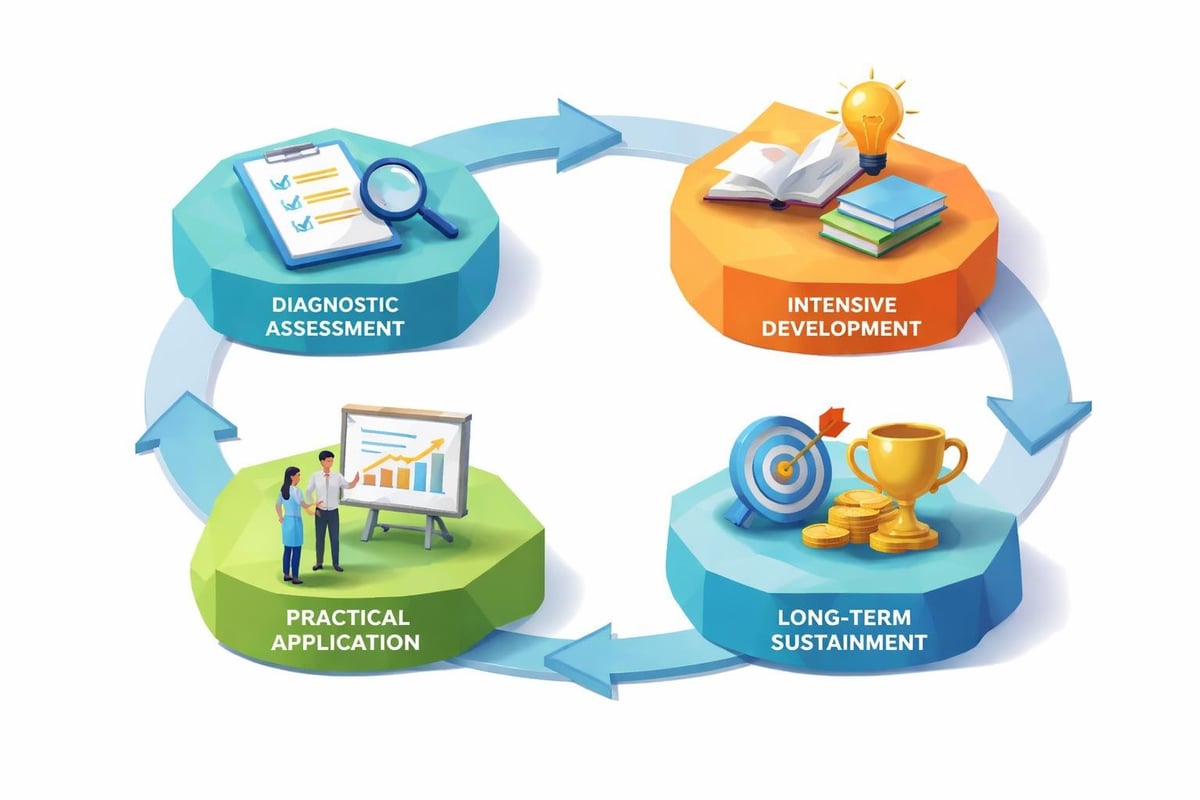
The Strategic Imperative for Leadership Development in Scaling Organizations

Scaling a business requires more than operational efficiency. It demands leaders who can adapt their management approach as organizational complexity increases. Companies experiencing hypergrowth face distinct challenges that traditional training programs fail to address.

Why Traditional Training Falls Short

Leadership workshops and seminars provide foundational knowledge but rarely translate into behavioral change. Executives return to their desks facing the same decision-making pressures, interpersonal conflicts, and strategic uncertainties that existed before the training session. Research demonstrates that lasting leadership transformation requires personalized intervention, accountability structures, and ongoing support that generic programs cannot deliver.

Business scalability and leadership coaching in Berlin addresses this gap by providing tailored solutions that evolve with organizational needs. Professional coaches work directly with executives to identify behavioral patterns that limit growth, develop new decision-making frameworks, and build competencies aligned with company objectives.

Organizations partnering with digital 1:1 business coaching providers recognize that individual leader development creates ripple effects throughout the entire organizational structure. When C-suite executives improve their communication patterns, middle managers gain clarity on expectations, and frontline teams experience increased psychological safety.

Leadership development impact on organizational scaling

Evidence-Based Diagnostics: The Foundation of Effective Coaching

Precision in leadership development starts with accurate assessment. Organizations waste resources deploying generic coaching programs that fail to address root causes of performance gaps or cultural dysfunction.
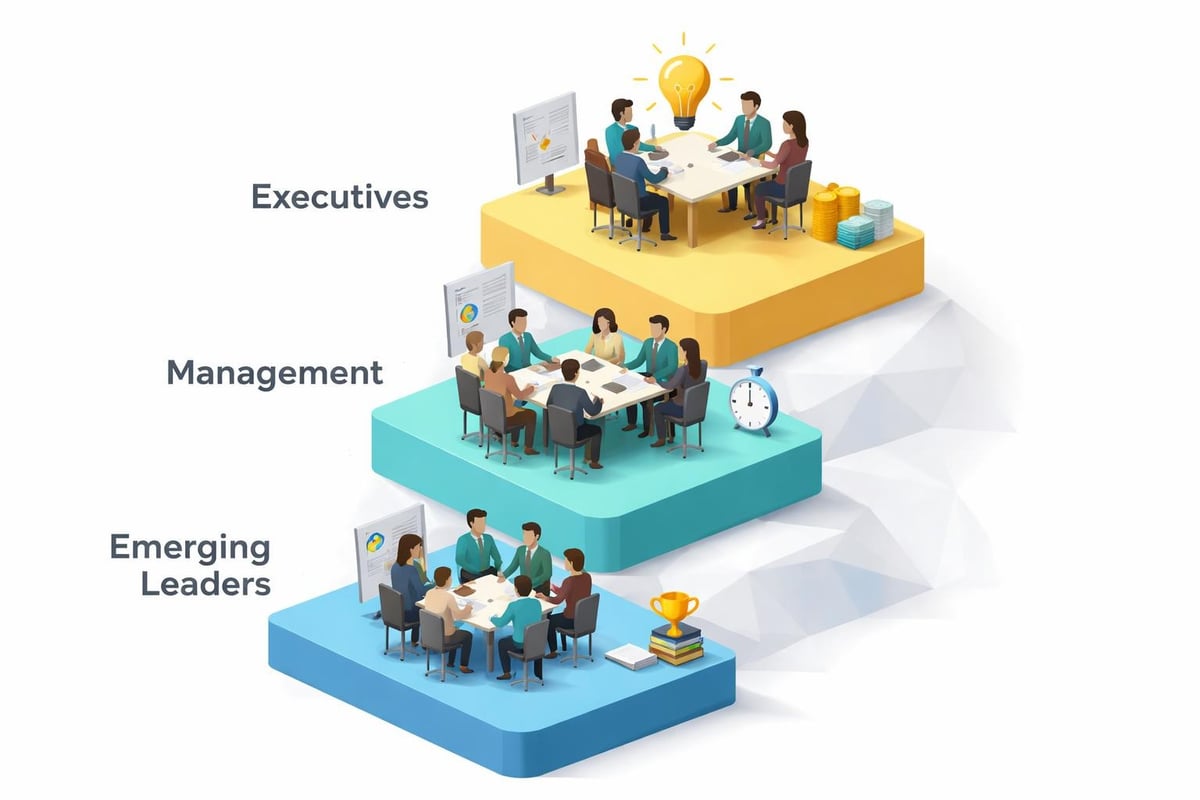
Advanced leadership diagnostics identify specific behavioral patterns, decision-making biases, and interpersonal dynamics that either accelerate or impede business growth. These assessments measure competencies across multiple dimensions:

  • Strategic thinking and systems awareness
  • Emotional intelligence and self-regulation
  • Communication effectiveness and influence
  • Conflict resolution and negotiation skills
  • Adaptability and resilience under pressure
  • Team building and talent development capabilities

The most effective business scalability and leadership coaching in Berlin integrates validated assessment tools with sector-specific benchmarks. This approach ensures coaching interventions address actual performance gaps rather than assumed development needs.

Assessment Type Primary Focus Organizational Impact
360-Degree Feedback Multi-perspective performance review Identifies blind spots in leadership behavior
Behavioral Analysis Decision-making patterns and stress responses Predicts performance under scaling pressure
Cultural Alignment Values and organizational fit Ensures leadership consistency during growth
Competency Mapping Skills gaps across leadership levels Targets development resources effectively

Systemic business coaching practitioners emphasize the interconnected nature of leadership challenges. Addressing a single executive’s communication style may reveal deeper organizational patterns requiring team-level intervention.

Matching Leaders with Specialized Coaching Expertise

Not all coaches possess the experience necessary to guide leaders through complex scaling challenges. A founder navigating Series B funding faces different pressures than a government agency director managing public sector transformation.

Precision matching algorithms analyze both leader requirements and coach credentials to create optimal partnerships. Factors considered in the matching process include:

  1. Industry sector experience and domain knowledge
  2. Specific challenge expertise (mergers, turnarounds, hypergrowth)
  3. Leadership level and organizational complexity
  4. Cultural and communication preferences
  5. Geographic location and time zone compatibility

Business scalability and leadership coaching in Berlin benefits from the city’s diverse coaching community, which includes professionals with backgrounds in technology, finance, manufacturing, and public service. Organizations gain access to coaches who understand the specific operational realities of their industry.

The value of specialized matching becomes evident when addressing toxic leadership patterns that threaten organizational culture. Coaches experienced in behavioral intervention design targeted plans that shift destructive patterns while preserving the leader’s valuable strategic contributions.

Designing Intervention Plans That Drive Measurable Change

Generic coaching engagements often lack clear success metrics, making ROI calculation impossible. Effective programs establish specific objectives, track progress against defined indicators, and adjust approaches based on real-time feedback.

Structured Coaching Frameworks for Business Growth

Intervention plans should address both immediate performance gaps and long-term leadership capacity building. A comprehensive framework includes:

Phase 1: Diagnostic and Goal Setting (Weeks 1-3)
Conduct assessments, establish baseline metrics, and define success criteria aligned with organizational objectives.

Phase 2: Intensive Development (Months 1-6)
Implement weekly coaching sessions, practice new behaviors, and receive real-time feedback on leadership decisions.

Phase 3: Application and Integration (Months 6-9)
Apply learned competencies to high-stakes situations while gradually reducing coaching frequency.

Phase 4: Sustainment and Accountability (Months 9-12)
Establish peer accountability systems, measure cultural impact, and plan for ongoing development.

Leadership presence development programs in Berlin emphasize the integration of mindfulness practices with strategic leadership skills. This holistic approach helps executives manage the psychological demands of scaling while maintaining decision-making clarity.

Coaching intervention timeline and milestones

Compliance, Governance, and Ethical Leadership Standards

Organizations operating in regulated industries face additional complexity when implementing leadership development programs. Financial services, healthcare, and government agencies must ensure coaching interventions align with compliance requirements and ethical standards.

Business scalability and leadership coaching in Berlin addresses these concerns through structured governance frameworks that document coaching objectives, maintain confidentiality protocols, and track outcomes against regulatory expectations.

Key Compliance Considerations

Professional coaching engagements in regulated environments require clear boundaries around:

  • Confidentiality vs. organizational reporting obligations
  • Data privacy and assessment storage requirements
  • Conflict of interest disclosures
  • Professional certification and credentialing standards
  • Documentation and audit trail maintenance

Organizations partnering with executive coaching providers who understand these requirements minimize legal risk while maximizing development impact. Coaches trained in compliance-aware methodologies design interventions that strengthen leadership effectiveness without creating regulatory exposure.

The intersection of building psychological safety and compliance requirements presents particular challenges. Leaders must create environments where team members feel safe raising concerns while maintaining appropriate information boundaries and escalation protocols.

Measuring Impact: KPIs and ROI for Leadership Development

Executive coaching represents a significant organizational investment. Demonstrating tangible returns requires rigorous measurement frameworks that connect leadership behavior changes to business outcomes.

Quantitative Metrics for Coaching Success

Metric Category Specific Indicators Measurement Method
Engagement Employee satisfaction scores, retention rates Quarterly surveys, HR analytics
Performance Revenue per employee, project completion rates Financial systems, project management tools
Culture Collaboration index, innovation metrics 360-degree feedback, cultural assessments
Leadership Decision quality, strategic alignment Peer review, board evaluations

Business scalability and leadership coaching in Berlin increasingly incorporates AI-driven analytics to track behavioral patterns and predict coaching impact. Machine learning algorithms identify correlations between specific leadership interventions and organizational performance shifts.

Qualitative indicators provide essential context for quantitative data. Focus groups, testimonials, and case studies reveal how coaching influences decision-making processes, team dynamics, and organizational culture in ways that numbers alone cannot capture.

Calculating True ROI on Leadership Investment

The formula for coaching ROI extends beyond simple cost-benefit analysis:

ROI = (Performance Gains – Coaching Investment) / Coaching Investment × 100

Performance gains include increased revenue, reduced turnover costs, improved productivity, and avoided crisis expenses. Organizations with top executive coaching firms report average ROI ranging from 500% to 700% when properly measured.

A Berlin-based technology company reduced executive turnover by 40% after implementing targeted leadership coaching for its senior team. The retained talent contributed strategic insights worth millions in avoided recruitment costs and preserved institutional knowledge.

Scaling Coaching Across Organizational Levels

While C-suite coaching delivers concentrated impact, sustainable business scalability requires leadership development across all organizational tiers. The challenge lies in maintaining coaching quality while expanding program reach.

Tiered Coaching Models for Enterprise Deployment

Executive Tier: Intensive 1:1 Coaching
Reserved for C-suite and senior vice presidents facing high-stakes decisions, major transitions, or performance challenges requiring specialized intervention.

Management Tier: Group Coaching Plus Individual Sessions
Mid-level managers participate in cohort-based learning supplemented with monthly individual coaching to address specific development needs.

Emerging Leaders Tier: Peer Coaching and Mentorship
High-potential individual contributors receive structured peer coaching training and mentorship from senior leaders.

This cascading model ensures business scalability and leadership coaching in Berlin programs reach the leaders who most influence day-to-day operations while controlling costs and maintaining quality standards.

Hypergrowth leadership programs specifically address the unique pressures facing companies scaling from 50 to 500 employees. These intensive interventions help leaders transition from hands-on management to strategic oversight.

Multi-tier organizational coaching structure

The Berlin Advantage: Why Location Matters for Leadership Development

Berlin’s unique ecosystem provides distinct advantages for organizations investing in leadership coaching. The city combines international business sophistication with a culture of experimentation and direct communication.

Cultural Factors Influencing Coaching Effectiveness

German business culture values precision, data-driven decision-making, and systematic approaches to problem-solving. These characteristics align naturally with structured coaching methodologies that emphasize assessment, clear objectives, and measurable outcomes.

The city’s international workforce brings diverse leadership perspectives that enrich coaching conversations. Executives working with mindfulness-based leadership coaches in Berlin access approaches integrating Eastern contemplative practices with Western strategic frameworks.

Berlin’s startup ecosystem creates a laboratory for testing innovative leadership approaches. Coaches working with high-growth companies develop cutting-edge interventions that later prove valuable for established corporations facing disruption.

Integration with Organizational Development Frameworks

Leadership coaching delivers maximum value when integrated with broader talent development systems. Standalone coaching initiatives risk creating isolated pockets of excellence that fail to shift organizational culture.

Effective integration requires alignment across multiple touchpoints:

  • Recruitment and onboarding processes
  • Performance management systems
  • Succession planning frameworks
  • Compensation and recognition programs
  • Learning and development pathways

HR leaders partnering with business scalability and leadership coaching in Berlin providers create ecosystems where coaching reinforces organizational values, competency models align with strategic priorities, and development investments compound over time.

Systemic coaching approaches view individual leaders as elements within larger organizational systems. Interventions designed from this perspective address both personal development and structural factors that enable or constrain leadership effectiveness.

Leveraging Technology for Program Scale

Digital platforms enable coaching programs to reach distributed teams while maintaining personalized intervention quality. Video conferencing, asynchronous messaging, and AI-powered insights create flexible coaching models suited to modern work environments.

Technology also enhances program administration through automated scheduling, progress tracking, and data visualization tools. Administrators monitor coaching engagement rates, identify leaders requiring additional support, and generate reports demonstrating program impact to stakeholders.

The most sophisticated platforms incorporate management and coaching integration features that help leaders apply coaching skills in daily interactions with their teams. This multiplier effect extends coaching benefits far beyond the primary coaching relationship.

Addressing Complex Leadership Challenges Through Specialized Interventions

Certain leadership situations demand specialized coaching expertise that goes beyond general professional development. Organizations facing these challenges require coaches with proven track records in specific intervention types.

Common Complex Scenarios Requiring Expert Coaching

Toxic Leadership Transformation
When valuable executives display abrasive behaviors that damage team morale, specialized interventions preserve talent while eliminating destructive patterns. These high-stakes engagements require coaches skilled in behavioral psychology and organizational dynamics.

Post-Merger Integration
Combining leadership teams from different organizational cultures creates predictable conflicts requiring skilled facilitation. Coaches help executives navigate competing priorities, establish shared vision, and build trust across formerly separate entities.

Crisis Leadership
Financial distress, public scandals, or operational failures demand leadership approaches distinct from normal business conditions. Coaches with crisis experience help executives maintain composure, communicate effectively, and make sound decisions under extreme pressure.

Rapid Scaling Leadership
Companies doubling or tripling in size annually require leaders who can build systems, delegate effectively, and maintain culture while managing chaos. Business scalability and leadership coaching in Berlin addresses these challenges through structured frameworks proven in high-growth environments.

Organizations seeking solutions to these complex scenarios benefit from precision coach matching systems that connect them with professionals possessing relevant specialized experience and demonstrated success with similar challenges.

Future-Proofing Leadership Through Adaptive Capacity Building

The accelerating pace of technological change, market disruption, and workforce evolution demands a new leadership competency: adaptive capacity. Leaders must develop comfort with ambiguity, skill in rapid learning, and resilience in the face of continuous change.

Forward-thinking coaching programs emphasize meta-skills that transcend specific business contexts:

  1. Learning agility and intellectual flexibility
  2. Emotional regulation under uncertainty
  3. Systems thinking and pattern recognition
  4. Collaborative problem-solving across diverse teams
  5. Ethical decision-making amid competing priorities

These competencies enable leaders to navigate challenges that cannot be anticipated or planned for in traditional strategic frameworks. Business scalability and leadership coaching in Berlin increasingly incorporates scenario planning, simulation exercises, and reflective practices that build these adaptive capacities.

Management consulting integration with leadership coaching creates powerful synergies. Strategic advisors identify organizational challenges requiring leadership intervention, while coaches develop the executive capabilities necessary to implement recommended changes effectively.

The convergence of coaching, strategy, and operational execution creates comprehensive transformation programs that address business challenges from multiple angles simultaneously. This integrated approach delivers superior results compared to isolated initiatives focused on single organizational dimensions. Organizations establishing robust accountability frameworks ensure that coaching insights translate into sustained behavioral change and measurable business results.


Business scalability and leadership coaching in Berlin represents a strategic investment in organizational capacity that compounds over time. When implemented with precision diagnostics, expert coach matching, and rigorous measurement frameworks, leadership development programs deliver substantial returns through improved decision-making, stronger cultures, and enhanced competitive positioning. Noomii Leadership Coaching provides organizations with the structured approach, global coach network, and proven methodologies necessary to transform leadership challenges into competitive advantages, ensuring sustainable growth and lasting organizational impact.