
General Manager Training: Build Accountable Leaders
Effective general manager training separates organizations that execute cleanly from those that struggle with accountability and strategic alignment. Mid-market companies face a unique challenge: their general managers need to balance operational excellence, financial oversight, team development, and strategic thinking-all while driving measurable results. The traditional approach of certification-heavy programs often falls short because it emphasizes theory over practical application. What today's organizations need is training that embeds accountability, ties directly to KPIs, and transforms managers into leaders who coach their teams to higher performance.
Why Traditional General Manager Training Falls Short
Most general manager training programs focus heavily on credentials and classroom learning. While frameworks matter, they rarely translate into the day-to-day decisions that define effective leadership.
The gap becomes evident when newly trained managers return to their roles. They may understand strategic planning concepts but struggle to facilitate difficult conversations. They've studied financial management but can't connect budget decisions to team engagement. The disconnect exists because traditional training treats management as a knowledge problem rather than a performance problem.
Three critical weaknesses plague conventional approaches:
- Lack of real-time application in actual business scenarios
- Minimal focus on accountability frameworks and measurable outcomes
- Insufficient emphasis on the manager-as-coach model that drives team performance
Organizations investing in Duke’s General Management Program or Kellogg’s General Management Program gain valuable strategic knowledge, but without practical reinforcement, skills atrophy quickly.

Core Competencies Every General Manager Must Master
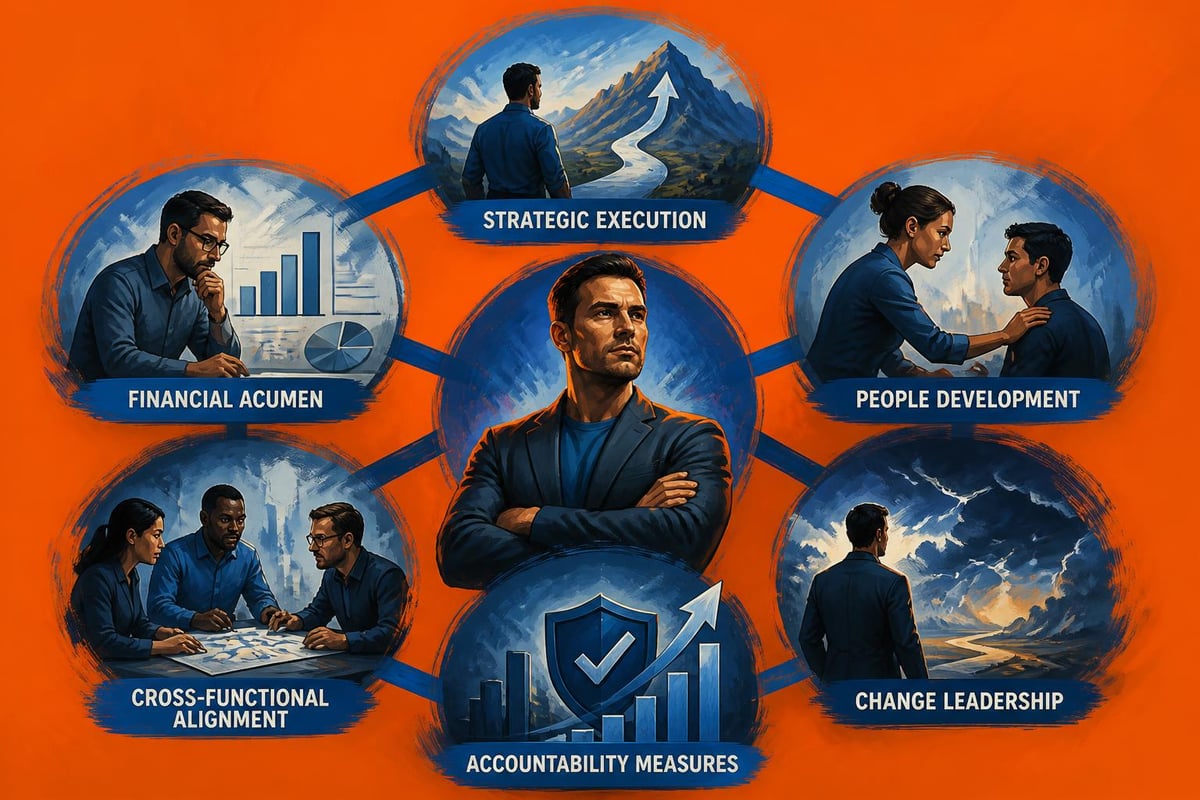
General manager training should build five interconnected capabilities that drive organizational performance.
Strategic Thinking and Execution
General managers must translate company vision into actionable quarterly priorities. This means moving beyond high-level strategy sessions to establish clear KPIs, assign ownership, and create cadence around execution reviews. The best training integrates operating cadence and KPI scorecards directly into the learning process.
Financial Acumen With Business Context
Understanding P&L statements matters less than knowing how to use financial data to make better operational decisions. Effective general manager training connects budget allocation to team capacity, pricing strategy to customer retention, and investment decisions to competitive positioning.
| Core Financial Skills | Business Application | Impact Metric |
|---|---|---|
| Budget Management | Resource allocation across priorities | ROI per initiative |
| Forecast Accuracy | Pipeline visibility and planning | Variance reduction |
| Cost Control | Operational efficiency gains | Margin improvement |
People Leadership That Drives Performance
The transition from managing tasks to developing people represents the biggest leap in general manager training. Leaders must learn to conduct performance conversations, provide developmental feedback, and build accountability without micromanaging. This shift requires practice in real situations, not role-playing exercises.
Performance coaches who work alongside general managers during actual team meetings create faster skill development than any classroom session can achieve.
Cross-Functional Collaboration
General managers coordinate sales, operations, finance, and customer success. Training must develop the ability to facilitate conversations where different functions align around shared outcomes rather than defend departmental interests.
Change Management and Adaptation
Markets shift, priorities evolve, and teams resist change. The Certified General Manager curriculum addresses change principles, but application requires coaching through real organizational transitions.
Building a Manager-as-Coach Culture
The highest-performing organizations don't just train general managers-they transform them into coaches who develop their direct reports. This model multiplies leadership capacity across the organization.
The manager-as-coach approach requires three fundamental shifts:
- From directive to developmental conversations where managers ask powerful questions instead of providing all answers
- From annual reviews to continuous feedback embedded in weekly one-on-ones and project debriefs
- From individual accountability to team ownership where managers facilitate collective problem-solving
Programs like Cornell’s General Managers Program introduce coaching concepts, but sustainable change requires ongoing reinforcement. Organizations working with Noomii see faster adoption because coaches participate in actual leadership meetings, modeling effective techniques in context.
Understanding how career coaching works helps general managers apply coaching frameworks to employee development conversations.
Measuring Training Effectiveness Through Business Outcomes
Effective general manager training produces measurable improvements in team performance, not just participant satisfaction scores.
Key Performance Indicators for Training ROI
| Metric Category | Specific KPIs | Target Improvement |
|---|---|---|
| Decision Speed | Days to resolve cross-functional issues | 30-50% reduction |
| Team Engagement | Quarterly engagement survey scores | 15-25% increase |
| Retention | Voluntary turnover of high performers | 20-40% decrease |
| Execution Quality | On-time project completion rate | 25-35% improvement |
| Revenue Impact | Team quota attainment | 10-20% increase |
The difference between theoretical knowledge and practical application shows up in these metrics. When general manager training includes live coaching during strategic planning sessions, budget reviews, and team meetings, managers develop skills they immediately apply.
The SOE Blue Collar General Manager program demonstrates this principle through hands-on operational training over two years.
Implementing Continuous Development for General Managers
One-time training events create temporary enthusiasm but rarely sustain behavior change. Continuous training and development for general managers builds competence over time through deliberate practice.
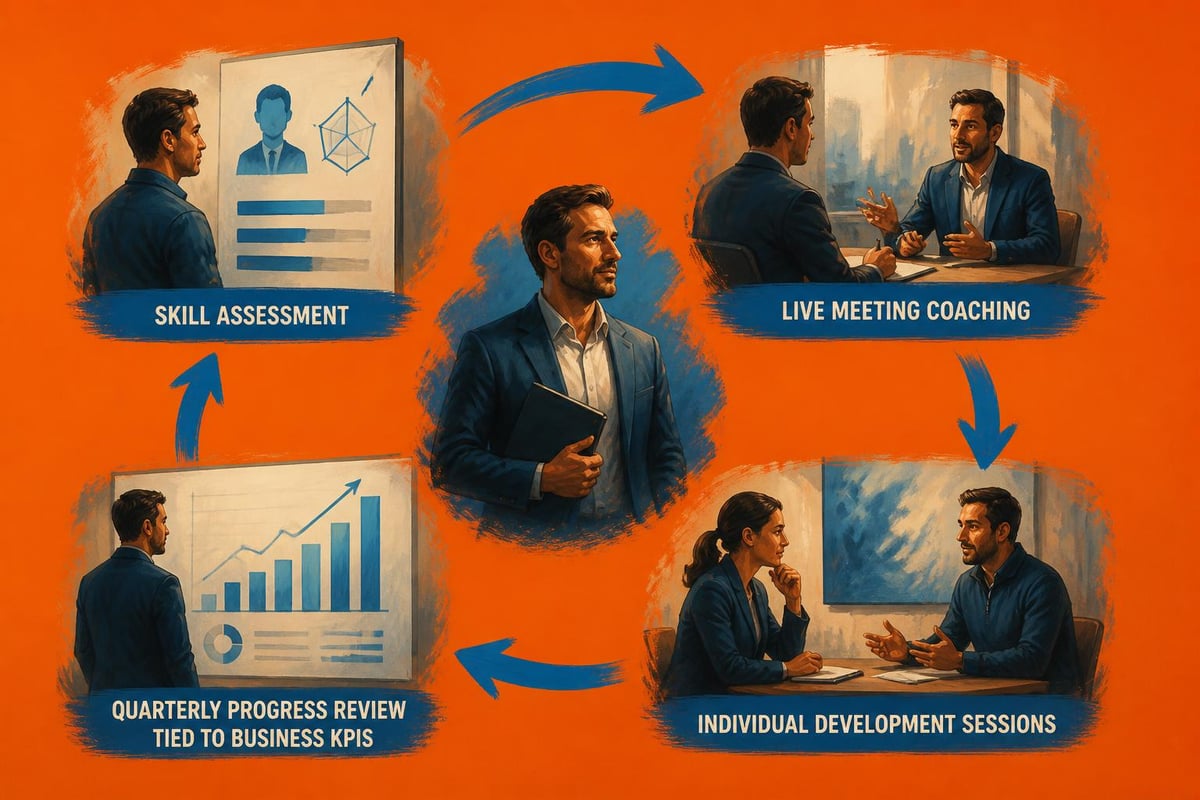
Effective continuous development includes:
- Monthly group coaching sessions addressing current business challenges
- Quarterly 360 leadership assessments tracking progress against specific behaviors
- Bi-weekly one-on-one coaching focused on individual development priorities
- Real-time feedback during critical meetings and decision points
This ongoing approach aligns with how adult learners actually develop new capabilities-through repeated application with expert feedback. Mid-market companies benefit most because their general managers handle diverse responsibilities without the specialized support structures common in larger enterprises.
Practical Applications That Drive Results
The test of general manager training appears in weekly team meetings, quarterly planning sessions, and difficult personnel decisions. Consider these practical scenarios:
A general manager leading a struggling sales team must diagnose whether the issue stems from inadequate pipeline, poor qualification, weak closing skills, or compensation misalignment. Effective training provides frameworks for rapid diagnosis and intervention.
When facing budget cuts, a general manager needs to facilitate conversations that maintain team morale while making difficult resource decisions. This requires emotional intelligence, transparent communication, and the ability to refocus teams on what they can control.
During organizational restructuring, general managers must manage their own uncertainty while providing stability for direct reports. The ability to acknowledge challenges while maintaining focus separates effective leaders from those who either sugarcoat reality or amplify anxiety.
These situations require judgment developed through experience and coaching, not classroom instruction alone. Organizations that embed coaches in actual business operations accelerate capability development by months or years compared to traditional training approaches.
Selecting the Right Training Approach for Your Organization
Mid-market companies between 25 and 500 employees need general manager training that balances rigor with flexibility. The right approach matches your organizational maturity, growth trajectory, and specific performance gaps.
Evaluation criteria for training programs:
- Direct connection between training activities and current business priorities
- Measurement systems that track behavior change and business outcomes
- Flexibility to adapt content based on emerging challenges
- Integration with existing leadership development and performance management processes
- Month-to-month engagement rather than long-term contracts that lock you into approaches that may not deliver results
Best practices for management training emphasize leveraging individual strengths while building new capabilities, an approach that resonates with busy general managers juggling multiple priorities.
Organizations seeking proven results often explore options like working with an executive coach in Atlanta or other major markets where experienced coaches understand mid-market challenges.
Investing in general manager training delivers measurable returns when programs emphasize practical application, accountability, and continuous development over certifications and theory. The most effective approach embeds coaching directly into your business operations, transforming managers into leaders who drive engagement, retention, and execution across priorities. If you want practical corporate coaching that delivers measurable business results tied to clear KPIs and month-to-month terms that share the risk, Noomii provides the leadership development and team coaching that mid-market companies need to build accountable leaders.



Leave a Reply
Want to join the discussion?Feel free to contribute!