

Coaching Mindset: Build Accountable Leaders in 2026
The best leaders in 2026 share a quiet secret: they've stopped telling people what to do. Instead, they've adopted a coaching mindset that transforms everyday conversations into opportunities for growth, accountability, and measurable business results. This shift isn't about soft skills or theoretical frameworks. It's about equipping managers to develop their teams while driving clear outcomes tied to revenue, retention, and operational excellence. Organizations that embed this approach see faster decisions, stronger communication, and leaders who build capability instead of dependency.
What Makes a Coaching Mindset Different From Traditional Management
A coaching mindset represents a fundamental shift in how leaders approach their teams. Traditional management operates on authority, directives, and control. Leaders with a coaching mindset focus on curiosity, development, and empowerment, asking questions that unlock thinking rather than delivering answers that create reliance.
The distinction matters because modern teams demand autonomy. Employees want managers who challenge them to solve problems, not supervisors who micromanage execution. Research consistently shows that psychological safety and trust drive high-performing teams, and these conditions flourish when leaders adopt a coaching approach.

Core Characteristics That Define the Coaching Mindset
Leaders who successfully adopt this approach share five critical traits. Self-assuredness allows them to ask questions without needing to be the smartest person in the room. Authenticity builds trust because team members recognize genuine investment in their growth. Focus ensures conversations stay anchored to outcomes and business priorities rather than drifting into unfocused dialogue.
- Courage to hold difficult conversations about performance gaps
- Authority derived from expertise and credibility, not positional power
- Curiosity that assumes team members have valuable insights to share
These traits combine to create leaders who develop others while maintaining accountability. They don't abandon standards or expectations. Instead, they raise both by helping people build the skills to meet them consistently.
Building Coaching Skills Into Daily Leadership Practice
Theory means nothing without application. The coaching mindset becomes real when leaders integrate specific behaviors into routine interactions: one-on-ones, team meetings, performance reviews, and spontaneous hallway conversations.
Asking Powerful Questions Instead of Providing Quick Answers
The fastest way to shift from directive management to a coaching approach involves changing your default response. When team members bring problems, resist the urge to solve immediately. Instead, ask questions that guide their thinking:
- What approaches have you already considered?
- What obstacles are preventing progress?
- What would success look like in this situation?
- What resources or support would help you move forward?
- What will you do next, and when will you do it?
This sequence accomplishes two goals simultaneously. It develops problem-solving capability in your team while surfacing insights you might have missed with a quick directive. Leading without authority through influence requires trust in your team's ability to find solutions when guided effectively.
| Directive Management | Coaching Mindset Approach |
|---|---|
| "Here's what you need to do" | "What options have you explored?" |
| "I'll handle this problem" | "What support do you need to solve this?" |
| "Follow this process exactly" | "What approach makes sense given our constraints?" |
| "Report results to me weekly" | "How will you track progress and adjust?" |
Creating Space for Reflection and Learning
Effective coaches build reflection into workflows rather than treating it as extra work. After project completions, client calls, or major decisions, schedule 15-minute conversations focused on learning. Staying present and empowering others to grow requires dedicated time separate from tactical execution discussions.
Ask your team members to identify what worked well, what they'd change next time, and what capabilities they developed through the experience. Document these insights and reference them in future planning conversations. This practice transforms experiences into repeatable expertise across your organization.
Measuring Impact and ROI From Leadership Coaching
Mid-market companies need proof that investing in leadership development generates measurable returns. The coaching mindset isn't validated by participant satisfaction scores alone. It succeeds when tied to business outcomes that matter: revenue growth, retention rates, decision velocity, and operational efficiency.
Linking Coaching Behaviors to Business KPIs
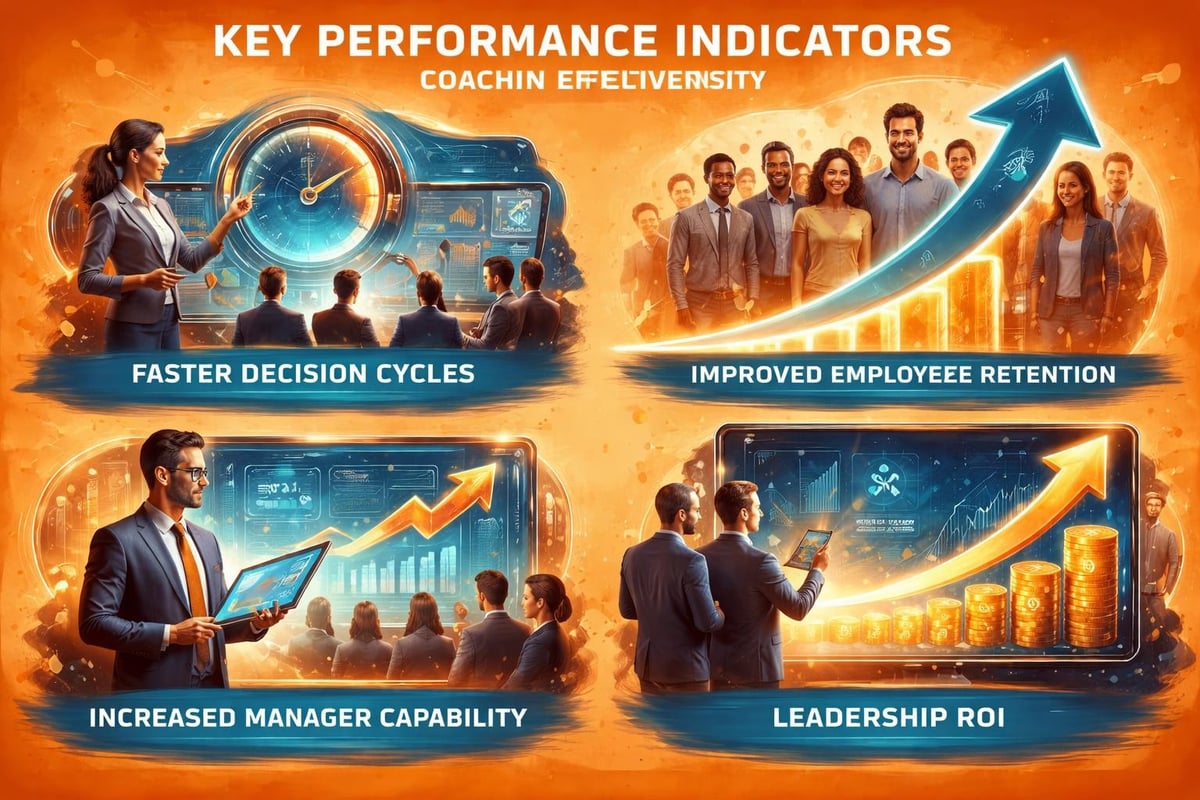
Organizations that successfully embed a coaching culture establish clear connections between leader behaviors and business results. Start by identifying the three to five metrics that matter most to your company's success in 2026. Common examples include:
- Decision cycle time (days from problem identification to resolution)
- Voluntary turnover rate among high performers
- Employee engagement scores in manager effectiveness categories
- Cross-functional project completion rates and timelines
- Revenue per employee and productivity benchmarks
Track these metrics quarterly while implementing coaching training and live facilitation with your leadership team. Look for correlation between increased coaching behaviors (measured through 360 assessments and direct observation) and improvement in your target KPIs. Most organizations see meaningful movement within six to nine months when coaching is integrated into operating cadence rather than treated as standalone training.
Accountability Structures That Reinforce Coaching Habits
The coaching mindset fails when leaders attend workshops then return to old habits under pressure. Sustainable change requires structural reinforcement through your management operating system. Integrate coaching checkpoints into weekly leadership meetings. Have managers share specific examples of coaching conversations and the outcomes generated.
Build coaching capability into performance expectations for all people managers. Include specific behavioral indicators in job descriptions and performance reviews: "Develops team capability through questions rather than directives" or "Creates space for team members to propose solutions before offering guidance." Track frequency and quality through peer feedback and skip-level conversations with direct reports.
Consider implementing the five domains framework that encompasses attitudes, skills, knowledge, behaviors, and values to create a comprehensive development roadmap for your leaders.
Implementing Coaching Mindset Across Mid-Market Organizations
Rolling out a coaching approach across 25 to 500 employees requires more than executive mandate. It demands practical integration into existing workflows, visible executive modeling, and patience as new behaviors replace entrenched patterns.
Starting With Manager Training That Delivers Immediate Application
Avoid traditional training that separates learning from application by weeks or months. Instead, combine skill-building sessions with live coaching in actual team meetings and one-on-ones. This approach allows facilitators to model coaching behaviors in real situations while helping managers practice with immediate feedback.
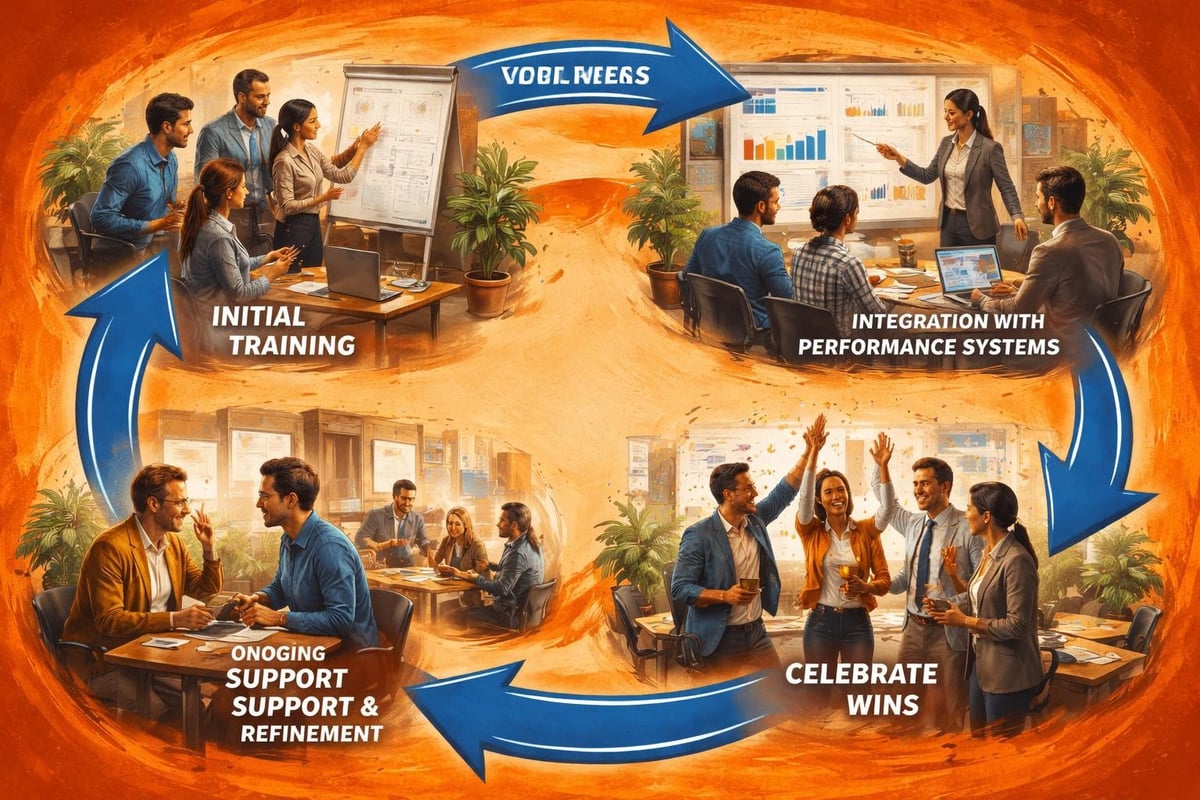
Design your rollout in phases:
- Executive team adopts coaching mindset first, creating visible modeling for the organization
- Front-line managers receive training combined with live facilitation support
- Individual contributors learn to expect and engage productively with coaching conversations
- HR systems and processes align to reinforce coaching behaviors
This sequencing ensures each level prepares the next while preventing the disconnect that happens when only one layer receives development. For organizations seeking accountability and measurable outcomes, this integrated approach proves far more effective than isolated training events.
Maintaining Momentum Through Consistent Reinforcement
The coaching mindset becomes permanent when woven into your company's operating fabric. Reference coaching principles in strategy meetings, budget reviews, and quarterly planning sessions. Celebrate examples where coaching conversations led to breakthrough solutions or faster execution. Share stories of managers who developed team members into stronger contributors through consistent application of coaching techniques.
| Implementation Phase | Timeline | Key Activities | Success Metrics |
|---|---|---|---|
| Executive Alignment | Weeks 1-4 | Leadership team training, live coaching sessions | 100% executive participation, visible modeling |
| Manager Development | Weeks 5-16 | Skill training plus live facilitation, 360 assessments | 80%+ managers demonstrate coaching behaviors |
| Team Integration | Weeks 17-26 | Team member orientation, feedback systems | Improved engagement scores, faster decisions |
| Sustained Practice | Ongoing | Monthly reinforcement, quarterly KPI reviews | Measurable improvement in retention, execution |
Organizations that commit to this timeline while maintaining flexibility for their unique context see the strongest results. The coaching mindset isn't a program with an end date. It's a capability that compounds over time, generating increasing returns as more leaders internalize and practice these approaches.
Developing a coaching mindset across your leadership team transforms how work gets done, replacing dependency with capability and directives with discovery. When you need practical corporate coaching that delivers visible results tied to your business KPIs, Noomii rolls up our sleeves and coaches live in your meetings. We work month to month with no long contracts, sharing risk through aligned incentives so you stay because the outcomes matter. Build accountable leaders who drive faster decisions, stronger retention, and cleaner execution across your priorities.



Leave a Reply
Want to join the discussion?Feel free to contribute!