

Gemini Prompts to Help Coaches Write Emails
Coaches spend countless hours crafting emails to clients, prospects, and team members. Whether you’re communicating with executives about leadership development or following up with managers after a coaching session, email remains the primary business communication tool. Google’s Gemini AI can dramatically reduce writing time while improving message quality, but only when you use the right prompts. Understanding how to leverage gemini prompts to help coaches write emails can transform your communication workflow from time-consuming to strategic.
Why Email Writing Consumes Valuable Coaching Time
Every coach faces the same challenge: balancing direct client work with administrative tasks. Email writing falls into that frustrating middle zone where quality matters, but speed is essential.
Corporate coaches particularly struggle with several email types:
- Client onboarding sequences that set expectations
- Follow-up messages after leadership assessments
- Progress reports linking coaching to measurable KPIs
- Meeting preparation emails for team facilitation sessions
- Re-engagement campaigns for dormant prospects
The average coach spends 6-8 hours weekly on email composition. That represents nearly 20% of a standard work week dedicated to writing rather than coaching. Business coaches who master AI-assisted email writing reclaim this time for revenue-generating activities while maintaining personalized client communication.

Essential Gemini Prompts for Client Onboarding Emails
Client onboarding sets the tone for your entire coaching engagement. Your initial emails must balance professionalism with warmth while establishing clear expectations.
Welcome Email Prompt
Use this prompt structure when a new client signs on:
“Write a welcome email to [client name], a [title] at a [company size] company, who just enrolled in [coaching type]. Include: welcome message, what to expect in our first session, how to prepare, and next steps. Tone: professional yet approachable. Length: 200 words.”
This prompt generates personalized welcomes without requiring you to start from scratch. Modify bracketed sections with specific details, and Gemini adapts the message accordingly.
Expectation-Setting Prompt
“Create an email explaining the coaching process to a new executive client. Cover: session frequency, confidentiality, homework expectations, progress measurement through KPIs, and communication between sessions. Include a brief paragraph about ROI expectations. Keep under 300 words.”
Setting clear expectations prevents misunderstandings later. According to proven prompt frameworks for coaches, specificity in your initial prompt creates better output quality.
Follow-Up Email Prompts After Coaching Sessions
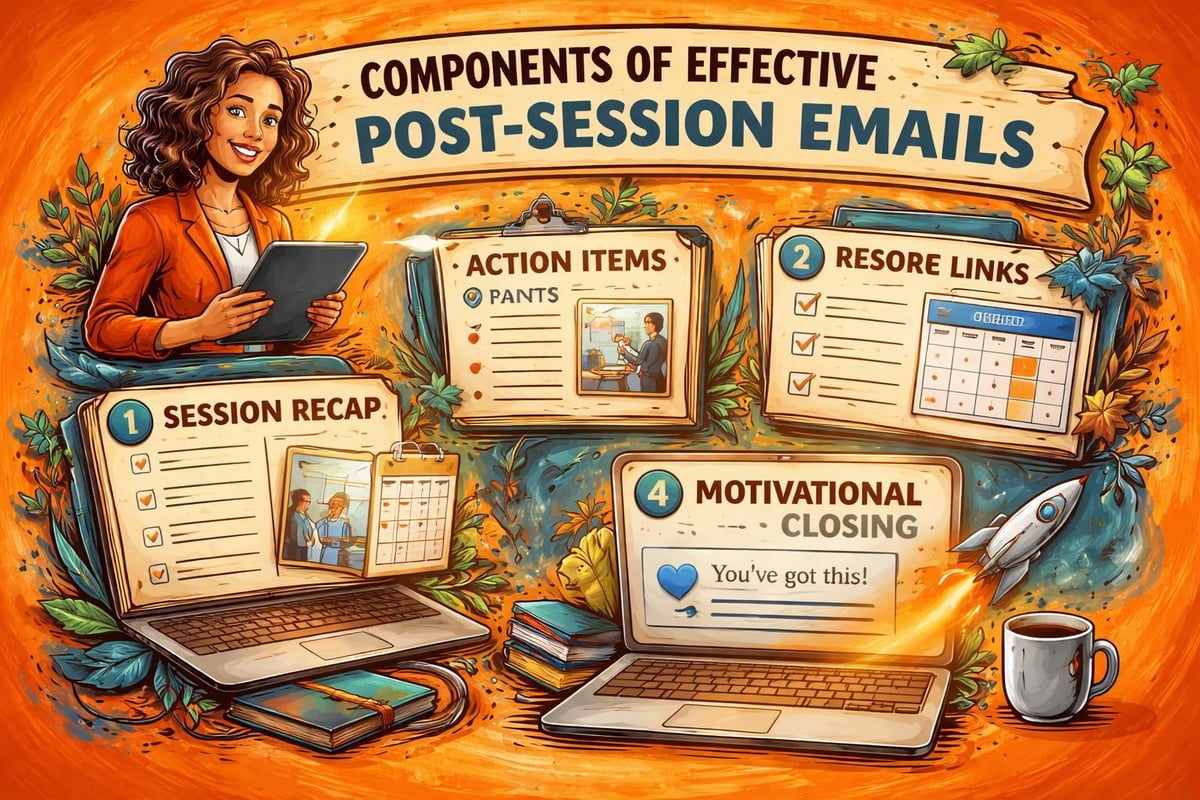
Post-session communication reinforces learning and maintains momentum between meetings.
| Email Type | Purpose | Recommended Timing |
|---|---|---|
| Session Summary | Recap key insights and action items | Within 24 hours |
| Progress Check | Review action item completion | 3-4 days post-session |
| Resource Share | Send relevant articles or tools | Within 48 hours |
| Pre-Session Prep | Remind about upcoming session agenda | 1 day before next meeting |
Sample session summary prompt:
“Draft a follow-up email summarizing today’s coaching session about [topic]. Include: three key insights discussed, action items with deadlines, resources mentioned, and encouragement. Reference specific examples from our conversation: [insert 2-3 specific points]. Professional but warm tone. 250 words maximum.”
The specificity in brackets ensures Gemini doesn’t produce generic output. When working with executive coaches, detail matters because leaders expect precision and relevance.
Prompts for Progress Reports and ROI Communication
Mid-market companies and Fortune 500 divisions demand measurable results. Your emails must connect coaching activities to business outcomes.
Monthly Progress Report Prompt
“Write a monthly progress email to [client name]’s supervisor summarizing coaching outcomes. Include: sessions completed this month, specific behavioral changes observed, progress toward stated goals [list 2-3 goals], KPI improvements [specify metrics], and recommended next steps. Data-driven and professional tone. 350 words.”
This prompt structure works particularly well when you need to demonstrate value to stakeholders who aren’t directly participating in coaching sessions. For organizations working with, tying every coaching activity to measurable business results becomes essential.
ROI Justification Email
“Compose an email demonstrating coaching ROI for a [department] leader. Highlight: initial challenges, coaching interventions implemented, quantifiable improvements in [metrics like retention, decision speed, team engagement], cost savings or revenue impact, and continuation recommendations. Include comparison data where possible. Professional, evidence-based tone. 400 words.”
Prospect Engagement and Conversion Prompts
Attracting new coaching clients requires emails that educate while building credibility.
- Problem-agitation email: Identifies a specific leadership challenge your prospect faces
- Case study email: Shares a relevant success story with measurable outcomes
- Value demonstration email: Explains your unique approach without overwhelming detail
- Meeting invitation email: Proposes a specific conversation with clear agenda
Discovery call invitation prompt:
“Write an email inviting [prospect name], [title] at [company], to a 30-minute discovery call. Reference their challenge with [specific issue]. Briefly explain how our coaching approach addresses this through [method]. Propose three specific time slots next week. Include a clear value statement about what they’ll learn in the call. Conversational yet professional. 200 words.”
Tools like Coach AI Writer and Coach GPT offer specialized solutions, but gemini prompts to help coaches write emails provide flexibility across multiple use cases without additional software costs.
Re-engagement Campaigns for Dormant Clients
Clients sometimes ghost. Strategic re-engagement emails can resurrect valuable relationships.
First Re-engagement Attempt
“Draft a friendly check-in email to a client who hasn’t responded in 6 weeks. Acknowledge the gap in communication, ask if their priorities have shifted, offer to adjust our approach, and suggest a brief call to reassess fit. No pressure or guilt. Supportive tone. 150 words.”
Final Touchpoint Prompt
“Write a graceful closing email to a client who hasn’t engaged in 3 months. Express understanding that timing may not be right, leave the door open for future collaboration, request brief feedback on why coaching didn’t continue, and wish them well. Professional and respectful. 175 words.”

Customizing Gemini Output for Authenticity
Generic AI output sounds robotic. Your emails must reflect your coaching voice and philosophy.
Enhancement techniques:
- Add personality markers – Include phrases or expressions you naturally use
- Insert specific examples – Replace Gemini’s placeholders with real situations
- Adjust formality – Modify based on your relationship with each recipient
- Include relevant data – Add actual metrics, dates, and names
- Review for brand alignment – Ensure language matches your coaching methodology
For coaches who’ve developed signature frameworks or methodologies, reference these specifically in your prompts. Resources like the AI prompt starter pack for coaches demonstrate how specificity improves output relevance.
Time-Saving Email Templates to Prompt
| Template Type | Use Case | Time Saved Per Email |
|---|---|---|
| Session confirmation | Scheduling and logistics | 8-10 minutes |
| Cancellation/rescheduling | Managing calendar changes | 5-7 minutes |
| Invoice and payment | Financial communications | 6-8 minutes |
| Resource delivery | Sharing assessments or tools | 4-6 minutes |
| Referral request | Building your practice | 10-12 minutes |
Session confirmation prompt example:
“Create a session confirmation email for [client name]. Include: date and time [specify], video call link [insert], agenda items [list 2-3 topics], any preparation needed [specify], and reminder about cancellation policy. Friendly professional tone. 150 words.”
These templates become even more powerful when you save successful Gemini outputs and create a personal library. Many business coaches across the United States maintain swipe files of their best AI-generated emails, then customize them for each situation.
Advanced Prompts for Difficult Conversations
Some emails require extra care: addressing missed commitments, discussing fee increases, or ending engagements.
Missed Commitment Email
“Draft an accountability email to a client who hasn’t completed agreed-upon action items for three consecutive weeks. Balance: supportive tone with clear concern, question whether obstacles exist, offer to adjust goals if needed, and reaffirm commitment expectations. Firm but caring. 225 words.”
Fee Increase Notification
“Write an email announcing a 15% fee increase effective [date]. Include: appreciation for the relationship, explanation of value delivered [reference specific outcomes], market context, new rate details, and offer to discuss concerns. Confident and appreciative tone. 275 words.”
According to client communication best practices, addressing difficult topics promptly and professionally strengthens rather than weakens coaching relationships.
Integration with Your Coaching Workflow
Gemini prompts to help coaches write emails work best when integrated into your existing systems.
Weekly email planning process:
- Review upcoming sessions and identify needed communications
- Select appropriate prompts from your library
- Customize prompts with specific client details
- Generate initial drafts through Gemini
- Personalize output with your voice and relevant examples
- Schedule or send emails at optimal times
For coaches managing multiple clients across different engagement types, this systematic approach prevents emails from becoming reactive crisis management. Corporate coaches working on leadership development and manager training find that consistent communication rhythms build trust and demonstrate professionalism.
Additional prompt resources like 50 AI prompts for coaches and CoachVox weekly tips provide ongoing inspiration for expanding your prompt library.
Mastering gemini prompts to help coaches write emails transforms one of coaching’s most time-consuming tasks into a strategic advantage. The hours you save can be reinvested in client-facing work and business development. Noomii offers practical corporate coaching that delivers measurable business results through executive coaching, leadership development, and team facilitation, helping mid-market companies build accountable leaders while maintaining month-to-month flexibility. If you’re ready to coach live in meetings, tie progress to clear KPIs, and achieve visible outcomes, explore how Noomii’s approach can support your organization.



Leave a Reply
Want to join the discussion?Feel free to contribute!