Coaching Business: Building Measurable Results in 2026
The coaching business landscape has shifted dramatically in 2026. Mid-market companies no longer accept vague promises of transformation or lengthy certification dissertations. They demand measurable outcomes, clear accountability, and coaching that integrates directly into daily operations. The most successful coaching practices now focus on tying every engagement to specific KPIs and business results, moving beyond traditional models that kept coaches on the sidelines observing rather than actively participating in organizational change.
The Current State of the Coaching Industry
The coaching business sector continues to expand rapidly. According to IBISWorld data, the number of business coaching firms in the United States has grown significantly, reflecting increased corporate investment in leadership development. Industry statistics show that businesses increasingly recognize coaching as essential infrastructure rather than optional professional development.
Key market indicators include:
- Sustained growth in corporate coaching budgets
- Shift toward outcome-based engagement models
- Increased demand for coaches who work inside operations
- Focus on retention and engagement metrics as success markers

This growth reflects a fundamental change in how companies approach talent development. Organizations with 25 to 500 employees particularly seek business coaching services that integrate seamlessly with existing management structures.
What Distinguishes Effective Coaching Programs
Modern coaching business models succeed by embedding themselves in actual business operations. The difference between transformative coaching and wasted investment comes down to engagement structure and accountability mechanisms.
Live Operational Coaching
The most impactful coaching happens during real meetings, not in theoretical discussions afterward. Coaches who attend leadership meetings, observe decision-making processes, and provide immediate feedback create exponentially more value than those who rely solely on one-on-one sessions.
Operational coaching includes:
- Sitting in on executive team meetings
- Observing manager-employee interactions
- Facilitating strategic planning sessions
- Coaching sales conversations in real time
- Providing immediate feedback on communication patterns
KPI-Driven Accountability
Every coaching engagement should connect to specific business metrics. Whether the goal involves improving retention rates, accelerating decision velocity, or increasing sales conversion, the coaching business must demonstrate progress through quantifiable data. Organizations implementing 360 leadership assessments combined with KPI scorecards see significantly faster improvements in management effectiveness.
| Coaching Focus Area | Primary KPIs | Measurement Frequency |
|---|---|---|
| Executive Leadership | Decision cycle time, strategic initiative completion | Monthly |
| Manager Development | Team engagement scores, 1-on-1 consistency | Bi-weekly |
| Sales Coaching | Conversion rates, pipeline velocity, retention | Weekly |
| Team Facilitation | Meeting efficiency, project delivery, collaboration metrics | Monthly |
Service Delivery Models That Drive Results
The coaching business ecosystem now features diverse delivery models. The most successful approaches share common characteristics: flexibility, measurability, and integration with existing business processes.
Month-to-Month Engagements
Long-term contracts create misaligned incentives. When coaches lock clients into extended agreements, the urgency to deliver visible results diminishes. Month-to-month arrangements keep both parties focused on continuous improvement and measurable progress. This model has become increasingly popular among mid-market companies that value agility.
Research from coaching industry reports indicates that flexible engagement terms correlate with higher client satisfaction and better business outcomes.
Risk-Sharing Incentive Structures
Progressive coaching businesses now offer aligned incentive options where coaching fees tie partially to achievement of specific business outcomes. This approach transforms the coach-client relationship from vendor-buyer to true partnership.
Common incentive structures include:
- Base fee plus performance bonus tied to KPI achievement
- Sliding scale based on retention improvement
- Success fees for hitting strategic milestones
- Revenue share models for sales coaching programs

Building Accountable Leaders and High-Performing Teams
The primary value proposition of any coaching business centers on developing leaders who can replicate coaching behaviors throughout the organization. When managers learn to coach their direct reports effectively, the impact multiplies exponentially across the company.
Manager Training That Sticks
Most manager training fails because it remains theoretical. Effective programs combine instruction with supervised practice, ongoing feedback loops, and accountability mechanisms that ensure new behaviors become habits.
- Teach core coaching frameworks during focused workshops
- Observe managers applying skills in actual team interactions
- Provide specific feedback on execution and impact
- Track adoption metrics through regular check-ins
- Adjust approaches based on what works for each manager's style
Organizations seeking comprehensive support often explore options through business coach directories to find professionals with proven track records in manager development.
Team Coaching and Facilitation
High-performing teams require deliberate attention to communication patterns, decision-making processes, and conflict resolution capabilities. Team coaching addresses these elements systematically while building collective accountability.
The most effective team facilitation focuses on improving meeting effectiveness, clarifying roles and responsibilities, establishing operating cadences, and creating healthy debate mechanisms. For companies prioritizing accountability, resources like AccountabilityNow.net provide additional frameworks for building ownership cultures.
Measuring Coaching Business Impact
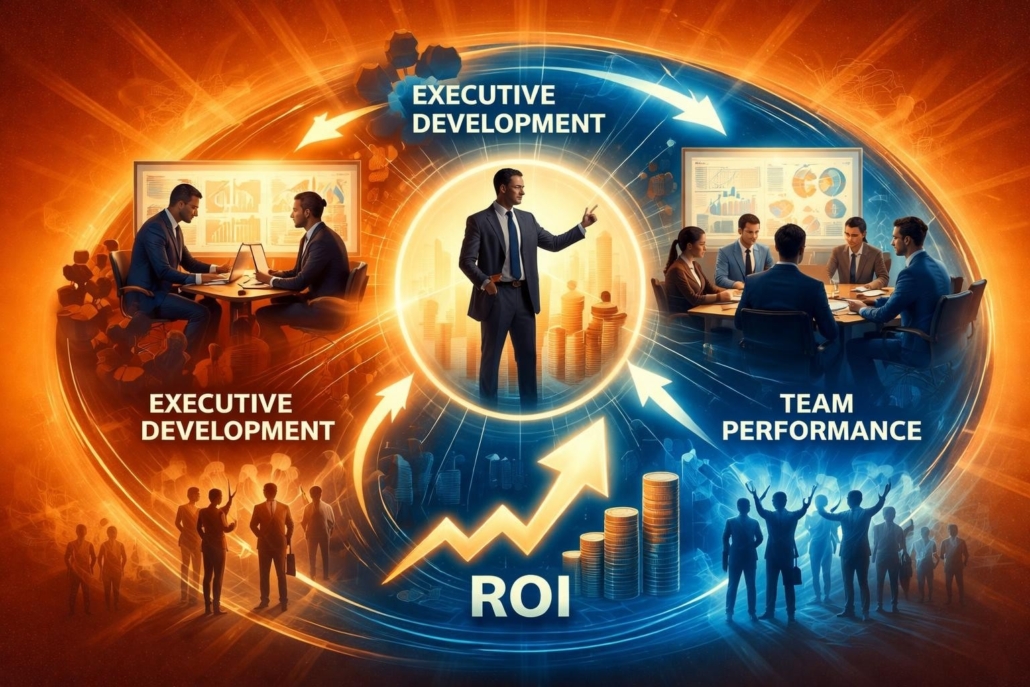
Companies investing in coaching deserve clear evidence of return on investment. Coaching statistics demonstrate significant productivity improvements and business outcomes when engagements focus on measurable results rather than abstract development goals.
Quantifiable Outcomes
| Business Area | Typical Improvements | Timeline |
|---|---|---|
| Decision Velocity | 30-50% faster strategic decisions | 3-6 months |
| Employee Engagement | 15-25% improvement in survey scores | 4-8 months |
| Retention Rates | 10-20% reduction in regrettable turnover | 6-12 months |
| Sales Performance | 20-40% increase in close rates | 3-6 months |
| Meeting Efficiency | 25-35% reduction in meeting time | 2-4 months |
Qualitative Indicators
Beyond numbers, successful coaching business engagements produce observable cultural shifts: managers who ask better questions, teams that resolve conflicts constructively, executives who communicate strategy more effectively, and organizations where accountability becomes the norm rather than the exception.

Selecting the Right Coaching Partner
Not all coaching businesses deliver equal value. Mid-market companies should evaluate potential partners based on specific criteria that predict successful outcomes.
Essential selection criteria:
- Operational experience: Coaches should understand business operations, not just coaching theory
- Industry relevance: Look for experience with similar company sizes and challenges
- Measurement orientation: Insist on clear KPIs and regular progress reporting
- Flexibility: Avoid long-term contracts that lock you into underperforming relationships
- Integration capability: Choose coaches willing to work inside your meetings and processes
Companies can research qualified professionals through platforms like Noomii’s business coaching directory, which provides access to experienced coaches across various specializations.
Implementation Best Practices
Launching a coaching engagement successfully requires thoughtful preparation and clear communication. Organizations that invest time upfront in defining expectations, establishing measurement frameworks, and securing leadership commitment see dramatically better results.
Start by identifying specific business challenges that coaching should address. Vague goals like "improve leadership" rarely produce meaningful change. Instead, focus on concrete outcomes such as reducing decision cycle time by 40% or improving manager-employee communication scores by 20 points. According to market size analyses, companies that define clear coaching objectives achieve significantly higher ROI.
Next, establish baseline metrics for each focus area. You cannot measure improvement without knowing your starting point. Document current performance on all relevant KPIs before coaching begins.
Finally, create accountability structures that ensure sustained attention. Schedule regular review sessions, assign internal champions to support the work, and communicate progress transparently across the organization.
Building accountable leaders and high-performing teams requires coaching that moves beyond theory into practical, measurable business improvement. The most effective coaching business models integrate directly into operations, tie progress to clear KPIs, and maintain flexibility through month-to-month arrangements. Whether you need executive coaching, leadership development, manager training, or team facilitation, Noomii delivers practical corporate coaching focused on visible results and measurable ROI. Our approach combines hands-on operational coaching with rigorous accountability frameworks that drive faster decisions, stronger communication, higher engagement, and cleaner execution across your priorities.


Leave a Reply
Want to join the discussion?Feel free to contribute!