
Career Change Coach: Transform Your Professional Path
Making a significant career shift can feel overwhelming, especially when you're juggling current responsibilities while exploring new opportunities. A career change coach serves as a strategic partner who brings structure, accountability, and proven frameworks to help professionals navigate transitions with confidence. Whether you're a mid-level manager considering a leadership role or an executive exploring entrepreneurship, working with the right coach can accelerate your timeline and reduce costly missteps.
Understanding the Role of a Career Change Coach
A career change coach specializes in guiding professionals through the complex process of transitioning between roles, industries, or entire career paths. Unlike general life coaches, these practitioners focus specifically on workplace transitions and professional development.
The best coaches bring objectivity to your situation when you're too close to see clearly. They ask difficult questions about your motivations, skills gaps, and readiness for change. Working with a career change coach provides expertise in market positioning, accountability for action steps, and confidence building during uncertain times.
Three Distinct Career Changer Profiles
Research shows that career changers typically fall into three categories, each requiring different coaching approaches. Explorers are in discovery mode, uncertain about their next direction and needing broad exposure to possibilities. Navigators have identified a target but need strategic guidance on the transition path. Creators are building something new, whether a business or a redefined role within their organization.
Understanding which persona describes your situation helps both you and your coach design the most effective engagement. An Explorer benefits from assessments and industry exposure, while a Navigator needs tactical planning and skill development support.

Key Benefits of Professional Career Transition Support
Expertise in market dynamics stands as a primary advantage when working with a seasoned coach. They understand hiring trends, salary benchmarks, and skill requirements across industries. This knowledge prevents you from pursuing outdated strategies or undervaluing your experience.
Personalized guidance tailored to your specific situation delivers faster results than generic advice. Your coach considers your financial constraints, family obligations, geographic preferences, and risk tolerance when developing your transition plan.
Consider these measurable outcomes:
- Reduced transition timeline by 30-40% compared to solo navigation
- Higher starting salaries through better negotiation preparation
- Lower risk of false starts or premature departures
- Expanded professional network through coach connections
- Improved clarity on transferable skills and market positioning
Accountability mechanisms keep momentum when motivation wanes. A career change coach schedules regular check-ins, tracks progress against milestones, and challenges rationalizations that delay action. This structured support proves especially valuable for professionals accustomed to managing others but struggling with self-direction during uncertainty.
Selecting the Right Coach for Your Transition
Start your search by clarifying what type of support you need. Finding a career change coach begins with identifying whether you need industry-specific expertise, general transition methodology, or specialized support like executive positioning or entrepreneurship.
| Selection Criteria | What to Evaluate | Red Flags |
|---|---|---|
| Relevant Experience | Prior work in your target industry or transition type | Only certification credentials, no real-world background |
| Methodology | Clear process with defined phases and deliverables | Vague promises of "transformation" without specifics |
| Success Stories | Verifiable client outcomes with measurable results | Generic testimonials without details |
| Business Model | Transparent pricing and realistic timelines | Pressure for long-term contracts upfront |
Check credentials and success stories thoroughly before committing. Ask for client references, particularly those who made transitions similar to yours. Request specifics about their coaching process, typical engagement length, and how they measure success.
Look for coaches connected to reputable directories like Noomii, which vets practitioners and provides transparency about specializations and approaches. Quality platforms maintain standards that protect clients from ineffective or unethical practitioners.
Month-to-Month Flexibility vs. Long Contracts
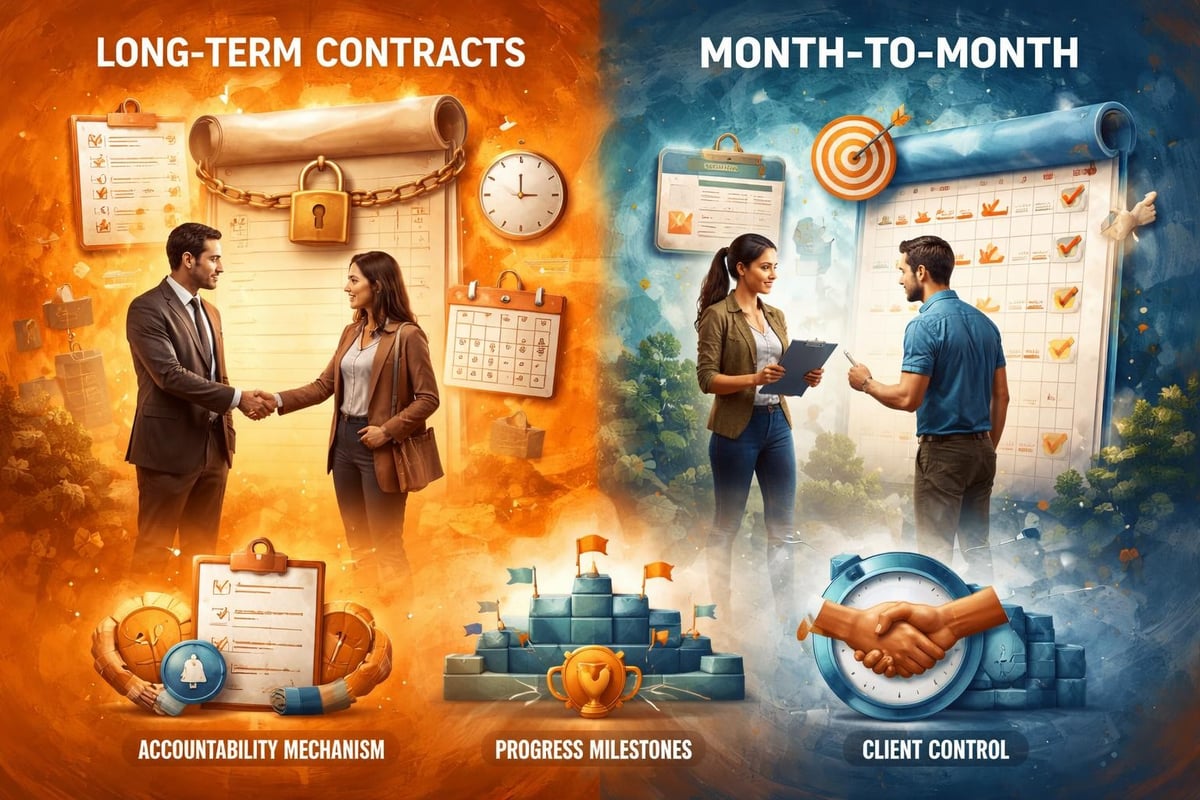
The coaching industry has shifted toward more flexible arrangements as clients demand accountability tied to results rather than time served. Traditional six-month or year-long commitments made sense when coaching focused primarily on personal development without clear success metrics.
Modern career change coaching increasingly operates month-to-month, allowing both parties to evaluate progress and fit continuously. This model aligns incentives properly, the coach must deliver visible value each month to retain the engagement. For corporate settings, team coaching follows similar principles, tying continuation to measurable business outcomes.
Practical Steps in the Career Change Process
Your career change coach will guide you through several distinct phases, each building toward your transition goal. Assessment comes first, examining your skills, values, interests, and constraints. Quality coaches use structured tools rather than casual conversation to gather this intelligence.
Strategy development translates assessment insights into specific target roles, industries, or business concepts. This phase includes market research, competitive positioning, and gap analysis identifying skills or credentials you need to acquire.
- Complete comprehensive skills and values assessment
- Research target markets and validate assumptions
- Develop positioning strategy and personal brand
- Build or refresh professional network in target area
- Create tactical plan with weekly milestones
- Execute job search or business launch activities
- Negotiate offers and manage transition logistics
Execution support distinguishes exceptional coaches from adequate ones. Rather than ending the engagement once you have a plan, effective practitioners coach you through implementation challenges. They review application materials, conduct mock interviews, troubleshoot networking obstacles, and provide real-time guidance when opportunities arise.
Career ownership coaching emphasizes education, awareness, and discovery throughout this process, helping clients understand not just the "what" but the "why" behind each strategic choice.
Corporate Applications of Career Change Coaching
Organizations increasingly provide career change coaching for internal transitions, particularly when developing high-potential employees for leadership roles. A mid-level manager moving into a director position faces many of the same challenges as someone changing industries, different stakeholder expectations, new skill requirements, and identity shifts.
Leadership coaches working within corporate contexts help individuals navigate these transitions while delivering value to the organization. The coaching addresses both personal development and business outcomes, faster decision-making capability, improved communication effectiveness, and stronger team engagement.
Measuring ROI in Professional Transitions
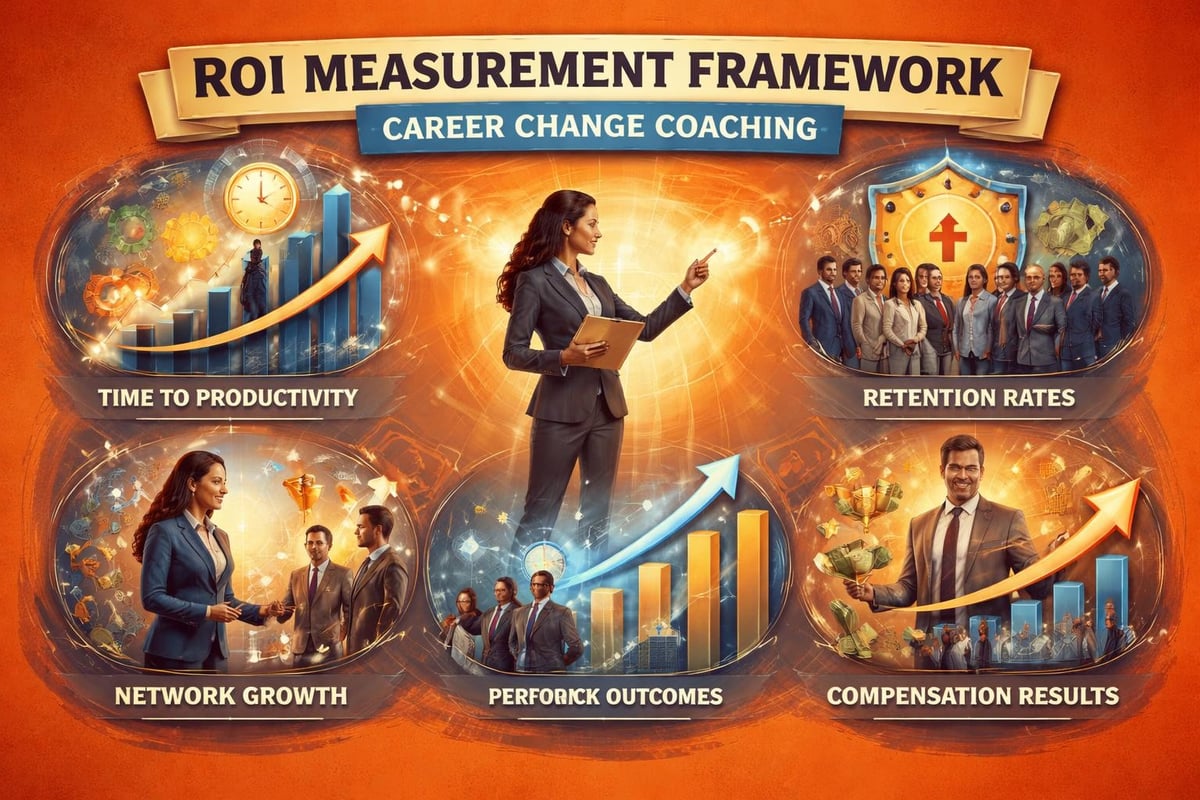
Smart organizations and individuals track specific metrics to validate coaching investments:
- Time to productivity in the new role compared to historical averages
- Retention rates for coached vs. uncoached transitions
- Performance ratings in first 6-12 months post-transition
- Network expansion measured by meaningful professional connections
- Compensation outcomes relative to market benchmarks
Forward-thinking companies tie coaching engagements to these metrics through aligned incentive structures, ensuring both coach and organization share accountability for results.
Alternative Support Models for Career Transitions
While one-on-one coaching delivers the most personalized support, other models suit different budgets and needs. Group coaching programs reduce cost while maintaining expert guidance, though with less individual attention. These work well for common transitions like first-time management or industry entry.
Peer accountability groups facilitated by a coach provide middle-ground options. Participants benefit from diverse perspectives and shared experiences while still accessing professional guidance on methodology and strategy. Tools like AI for career coaching supplement human support with on-demand resources and practice environments.
Some professionals combine approaches, using intensive one-on-one coaching for strategy development then shifting to group support or accountability partnerships for execution phases. This hybrid model optimizes investment while maintaining momentum.
The career transition landscape continues evolving as professionals expect more changes throughout their working lives. Multiple career transitions have become the norm rather than the exception, making expertise in change navigation an increasingly valuable capability.
Working with a qualified career change coach transforms uncertainty into strategic action, reducing transition time while improving outcomes. Whether you're an individual professional exploring your next chapter or an organization developing internal talent, structured coaching support delivers measurable value. Noomii connects professionals with vetted coaches who bring practical expertise and proven methodologies to career transitions, ensuring your investment produces visible results from the first month forward.



Leave a Reply
Want to join the discussion?Feel free to contribute!