
How to Become a Certified Life Coach in 2026
The coaching industry has experienced remarkable growth over the past decade, with professionals from diverse backgrounds exploring opportunities to guide others toward personal and professional transformation. Becoming a certified life coach represents more than acquiring a credential; it establishes credibility, demonstrates commitment to ethical standards, and provides the foundational skills necessary to create meaningful impact. Whether you're transitioning from corporate leadership, human resources, or seeking an entirely new career path, understanding the certification landscape helps you make informed decisions about your coaching journey.
Understanding Life Coach Certification Requirements
The path to becoming a certified life coach begins with selecting a training program that aligns with industry standards. Unlike regulated professions such as therapy or counseling, life coaching certification remains voluntary, yet it significantly enhances professional credibility and client trust.
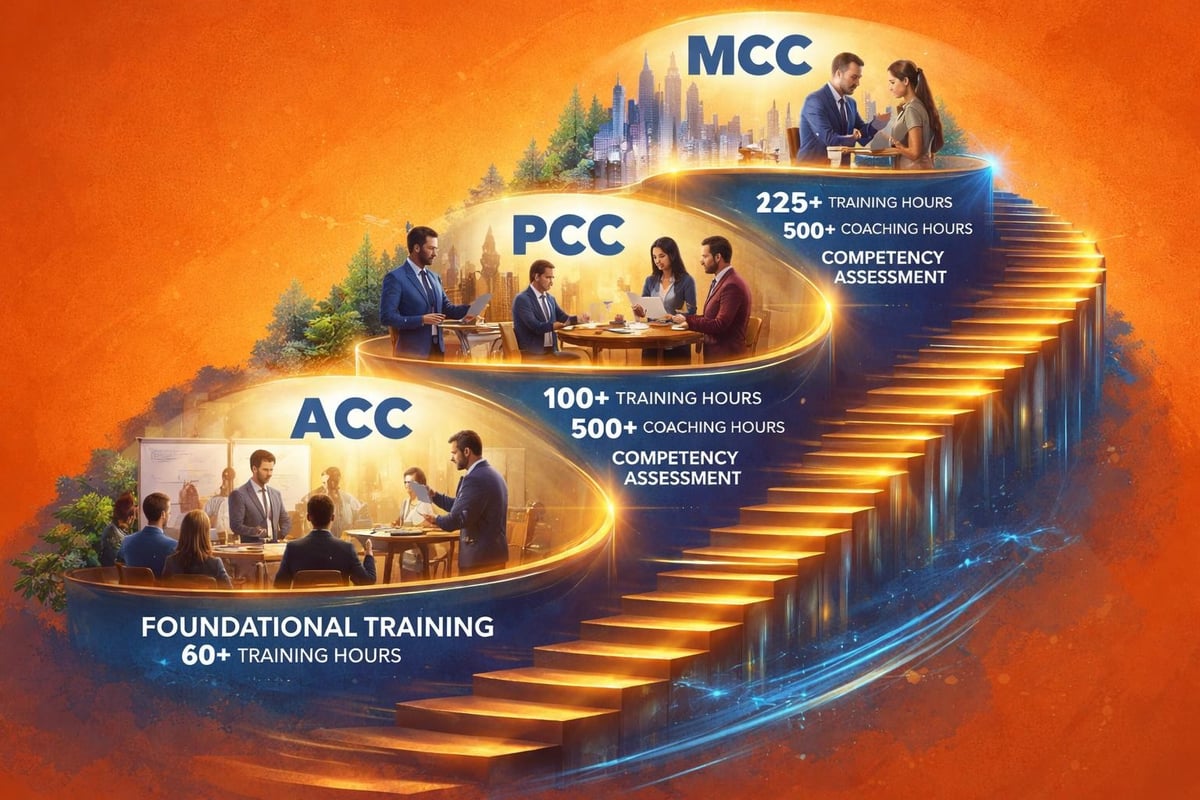
Most reputable programs require between 60 and 200 hours of coach-specific training. The International Coaching Federation (ICF), widely recognized as the gold standard in the coaching profession, has established three levels of accreditation: Associate Certified Coach (ACC), Professional Certified Coach (PCC), and Master Certified Coach (MCC). Each level demands progressively more training hours, coaching experience, and demonstrated competency.
Key Components of Certification Programs
Quality certification programs incorporate several essential elements that prepare you for effective coaching practice:
- Core coaching competencies including active listening, powerful questioning, and creating awareness
- Ethics and professional standards aligned with ICF or other recognized bodies
- Business development and marketing strategies for building your practice
- Supervised coaching practice with real clients under mentor guidance
- Examination or portfolio assessment demonstrating skill mastery
According to certification requirements outlined by industry experts, programs should also include feedback mechanisms, peer coaching opportunities, and continuing education pathways to maintain certification status.
Choosing the Right Training Program
With hundreds of coaching schools competing for students, selecting the right program requires careful evaluation. Not all programs carry equal weight in the marketplace, and your choice directly impacts your career trajectory.
| Program Feature | Why It Matters | Questions to Ask |
|---|---|---|
| ICF Accreditation | Ensures quality standards and industry recognition | Is the program ACTP, ACSTH, or CCE accredited? |
| Curriculum Focus | Aligns training with your target market | Does it cover corporate, life, or specialty coaching? |
| Practice Hours | Builds confidence and competency | How many supervised client hours are included? |
| Business Training | Prepares you for sustainable practice | What marketing and business skills are taught? |
| Cost and Schedule | Fits your financial and time constraints | What's the total investment and time commitment? |
Erickson Coaching International emphasizes that the best programs combine neuroscience-based methodologies with practical application, ensuring coaches understand not just what to do, but why certain approaches create lasting change. When evaluating programs, consider whether they offer flexibility for working professionals, as many corporate leaders pursue certification while maintaining their current roles.
The Coach Training Alliance programs demonstrate how accredited training can accommodate diverse learning styles through live virtual classes, recorded sessions, and self-paced modules. This flexibility proves particularly valuable for mid-career professionals who bring substantial business experience but need formal coaching methodology.
Building Your Coaching Practice with Credibility
Becoming a certified life coach extends beyond classroom learning. The real work begins when you start applying your skills with actual clients, refining your approach, and establishing your professional identity.
Accumulating Coaching Hours
ICF certification requires documented coaching hours, typically ranging from 100 to 500 hours depending on the credential level. These hours must meet specific criteria:
- Focus on client agenda, not consulting or advising
- Demonstrate core coaching competencies
- Include sessions with multiple clients across diverse situations
- Be properly documented with dates, duration, and client agreements
- Exclude training, mentoring, or therapy sessions
Many newly certified coaches struggle with the chicken-and-egg dilemma: clients want experienced coaches, but you need clients to gain experience. Strategic approaches include offering pro bono sessions to build your portfolio, partnering with organizations needing volunteer coaching services, or working with leadership coaches to understand corporate coaching applications.
Establishing Your Niche and Market Position
The most successful coaches specialize rather than generalize. Your corporate background, industry expertise, and personal experiences create unique positioning in the marketplace. Consider whether you'll focus on executive transitions, leadership development, work-life integration, or specific industries where you possess insider knowledge.

For professionals with corporate experience, understanding how coaching integrates with business results proves essential. Unlike traditional life coaching focused primarily on personal fulfillment, corporate applications require tying coaching outcomes to measurable business metrics. The Noomii coaching platform connects coaches with organizations seeking results-oriented partnerships rather than theoretical approaches.
Investment and Timeline Considerations
The financial and time investment for becoming a certified life coach varies significantly based on program selection and credential goals. Budget between $3,000 and $15,000 for quality accredited training, with ICF-accredited programs typically commanding premium pricing due to their rigorous standards.
Timeline expectations should remain realistic:
- Months 1-6: Complete core training program and begin practice coaching
- Months 6-12: Accumulate required coaching hours and receive mentor feedback
- Months 12-18: Submit certification application, complete examination, and launch formal practice
- Ongoing: Maintain certification through continuing education and ethical practice
The National Coach Academy outlines how these timelines compress or extend based on whether you pursue certification part-time while maintaining other employment or commit full-time to your coaching career transition.
The return on investment materializes through increased client fees, access to corporate contracts, and professional credibility. Certified coaches typically command 20-30% higher rates than non-certified practitioners, and many organizations require certification for vendor consideration. For those interested in understanding market rates, resources on how much career coaching costs provide valuable benchmarking data.
Practical Application Beyond Theory
While certification provides essential foundation, real coaching mastery develops through consistent practice and continuous learning. The coaches who thrive understand that credentials open doors, but results keep them open.
Integrating Coaching into Corporate Settings
For professionals aiming to work with organizations rather than individual clients, understanding corporate coaching dynamics proves critical. Companies increasingly seek coaches who comprehend business operations, speak the language of ROI, and integrate coaching with existing management systems.
Effective corporate coaches move beyond one-on-one sessions to facilitate team dynamics, support strategic execution, and develop manager coaching capabilities. They understand operating cadences, KPI scorecards, and how to tie coaching interventions to business outcomes. This practical orientation distinguishes results-focused coaching from theoretical approaches that struggle to demonstrate value.
Resources like accountability frameworks help coaches structure corporate engagements around measurable progress rather than abstract personal development. When coaching integrates with business rhythms-quarterly planning, monthly reviews, weekly team meetings-it becomes embedded in organizational operations rather than existing as a parallel activity.
Maintaining Certification and Professional Growth
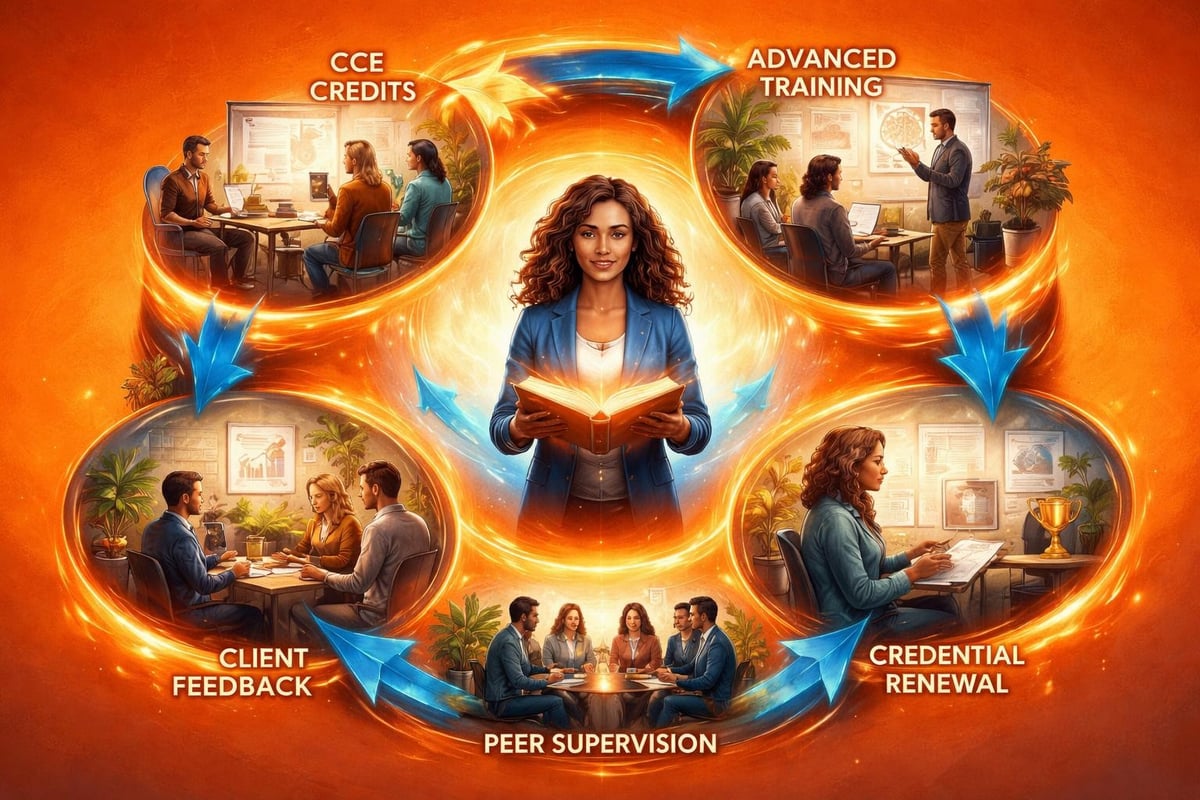
Certification isn't a one-time achievement but an ongoing commitment. Most credentialing bodies require:
- Continuing Coach Education (CCE) credits every three years
- Adherence to professional ethics and standards
- Maintenance of professional liability insurance
- Regular supervision or mentoring relationships
- Portfolio review or re-examination for advanced credentials
The investment in becoming a certified life coach extends throughout your career, with top practitioners dedicating 40-60 hours annually to professional development. This commitment ensures your methodologies evolve with emerging research, your skills sharpen through peer learning, and your practice remains aligned with industry best practices.
Credentials That Matter in the Marketplace
Not all certifications carry equal weight with prospective clients and corporate buyers. Understanding which credentials matter helps you invest strategically in your professional development.
The ICF credentials (ACC, PCC, MCC) remain the most widely recognized globally, particularly for corporate coaching engagements. Many Fortune 500 companies specify ICF certification in their coaching vendor requirements. However, specialty certifications in areas like executive coaching, team facilitation, or assessment tools can complement your core credential and differentiate your offering.
When evaluating additional certifications, consider whether they align with your target market's needs. Leadership development clients may value credentials in organizational development or change management, while entrepreneurs might prioritize coaches with business-building credentials and real-world experience scaling companies.
The Universal Coaching Federation and other credentialing bodies offer alternative pathways that may better fit specific coaching philosophies or target markets. Research how your ideal clients select coaches and which credentials influence their decisions.
Becoming a certified life coach requires strategic planning, quality training, dedicated practice, and ongoing professional development. The credential establishes your foundation, but real impact emerges through applied skill and measurable results. If you're a mid-market company seeking coaches who move beyond theory to deliver tangible business outcomes-faster decisions, stronger leaders, and cleaner execution-Noomii connects you with practical corporate coaching tied to clear KPIs and ROI. Our month-to-month approach means you stay because results are visible, not because you're locked into lengthy contracts.



Leave a Reply
Want to join the discussion?Feel free to contribute!