Executive Leadership Development in Basel: A 2026 Guide
Basel's position as Switzerland's pharmaceutical and biotech hub creates unique demands for executive leadership development in 2026. Organizations operating in this competitive environment require leaders who can navigate complex regulatory frameworks, drive innovation, and build resilient teams across global markets. The city's concentration of multinational corporations, research institutions, and innovative startups creates an ecosystem where leadership excellence directly impacts organizational success and competitive positioning.
The Basel Leadership Landscape
Executive leadership development in Basel reflects the city's dual identity as both a traditional Swiss business center and a global innovation powerhouse. The region hosts headquarters and major operations for companies like Novartis, Roche, and numerous emerging biotech firms, each requiring leaders who can balance Swiss precision with global agility.
Basel's leadership development ecosystem benefits from institutional support and academic excellence. The University of Basel’s commitment to fostering professional leadership culture demonstrates how academic institutions contribute to the broader business community's development needs. This collaborative environment creates opportunities for cross-sector learning and best practice sharing.
The city's multilingual, multicultural workforce presents both challenges and opportunities for leadership development. Executives must demonstrate cultural intelligence, communication excellence, and the ability to lead diverse teams across multiple time zones and regulatory environments.
Industry-Specific Leadership Requirements
Basel's life sciences sector demands specialized leadership competencies that extend beyond traditional management skills. Leaders must understand regulatory compliance, clinical trial management, and the ethical considerations unique to healthcare innovation.
Key competencies for Basel executives include:
- Regulatory navigation across FDA, EMA, and Swiss authorities
- Cross-functional collaboration between R&D, commercial, and compliance teams
- Strategic decision-making under uncertainty and high-stakes environments
- Stakeholder management across investors, regulators, and patient advocacy groups
- Change leadership during mergers, acquisitions, and organizational transformations
These specialized requirements make generic leadership programs insufficient. Organizations need tailored executive leadership development in Basel that addresses sector-specific challenges while building fundamental leadership capabilities.
Evidence-Based Assessment and Diagnostics
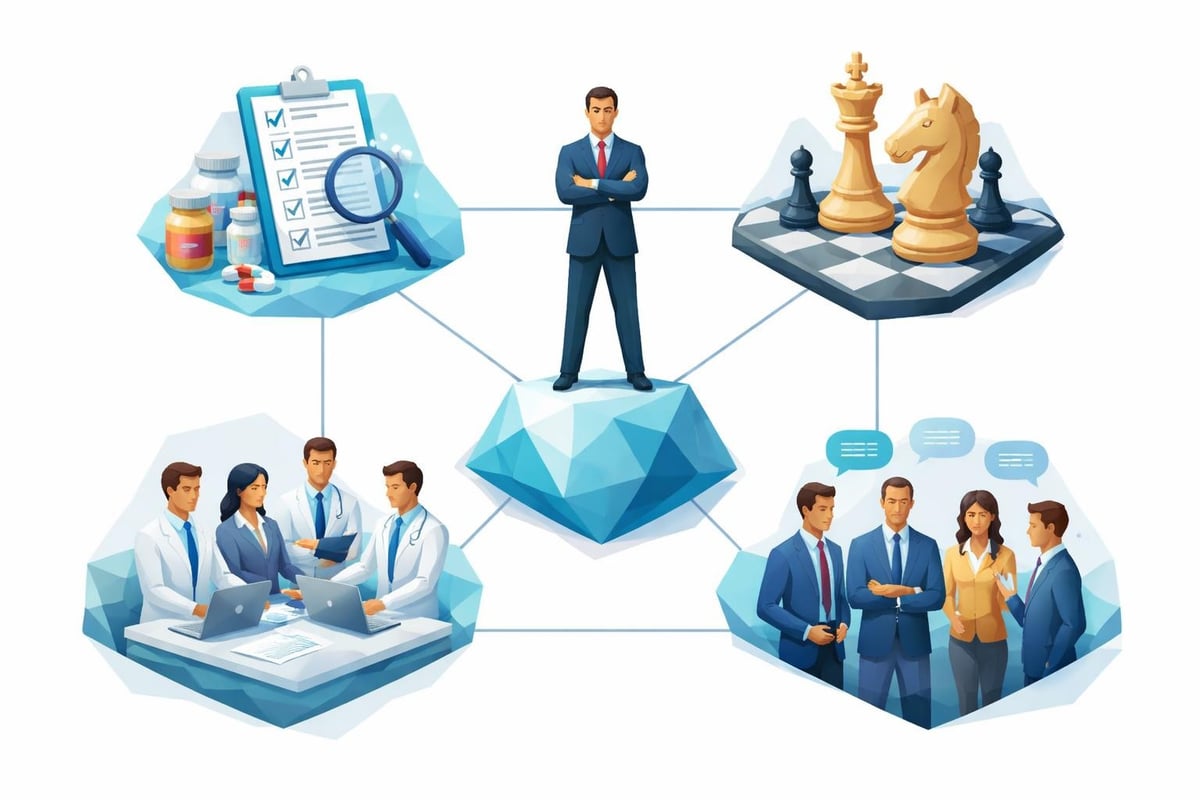
Effective executive leadership development in Basel begins with comprehensive diagnostics that identify individual strengths, developmental gaps, and behavioral patterns. Organizations that invest in validated assessment tools gain objective insights that inform targeted interventions and measurable improvement plans.
Modern leadership assessments combine multiple methodologies to create complete profiles. 360-degree feedback captures perspectives from direct reports, peers, and supervisors, revealing blind spots and confirming strengths. Psychometric evaluations measure personality traits, cognitive abilities, and emotional intelligence factors that predict leadership effectiveness.
Behavioral assessments identify patterns that either support or undermine organizational objectives. These tools can detect early warning signs of problematic leadership behaviors, including those associated with toxic leadership patterns that erode team morale and organizational performance.
| Assessment Type | Primary Focus | Key Benefits |
|---|---|---|
| 360-Degree Feedback | Multi-perspective evaluation | Reveals blind spots, confirms strengths |
| Psychometric Testing | Personality and cognitive abilities | Predicts leadership potential and fit |
| Behavioral Analysis | Action patterns and habits | Identifies improvement opportunities |
| Competency Mapping | Role-specific skills | Aligns development with organizational needs |
The diagnostic phase establishes baseline measurements that enable organizations to track progress and demonstrate return on investment. Without objective starting points, leadership development initiatives struggle to prove their value or adjust interventions based on evidence.
Precision Matching: Coaches and Leaders
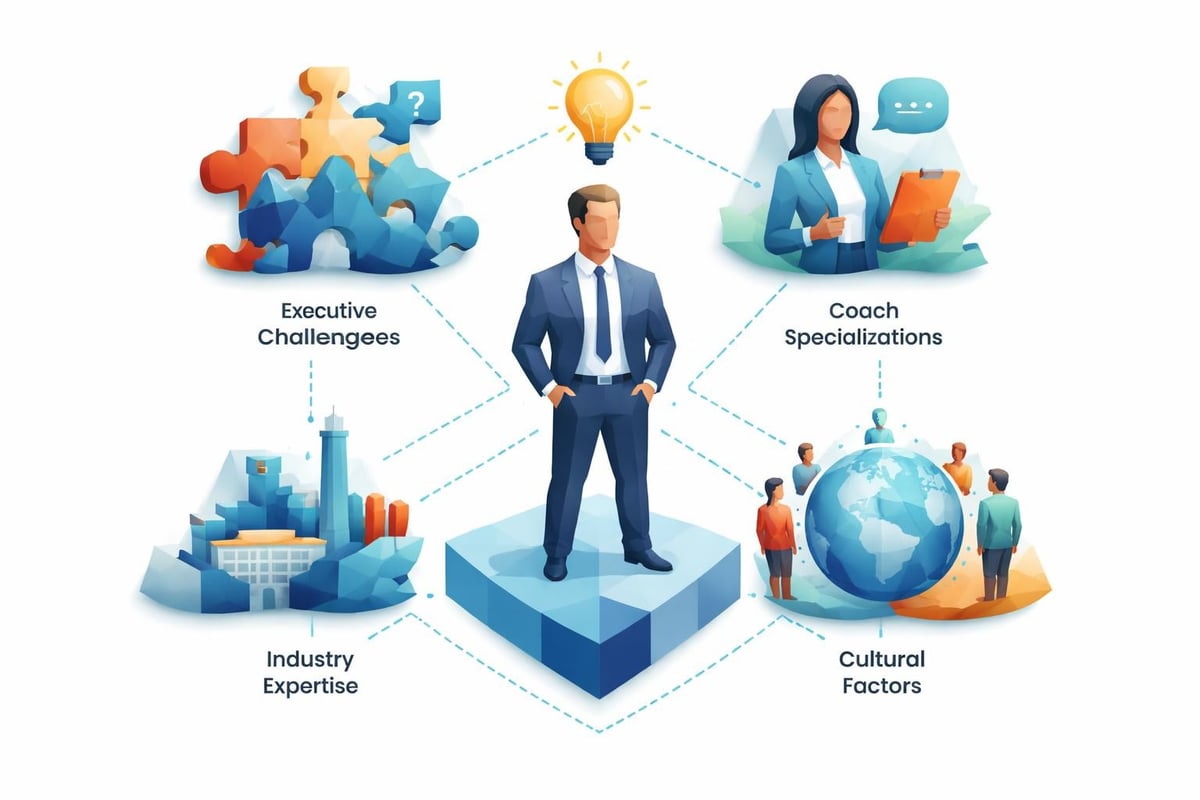
The effectiveness of executive leadership development in Basel depends significantly on the quality of coach-leader matching. Pairing executives with coaches who possess relevant industry experience, cultural understanding, and specialized expertise dramatically improves engagement and outcomes.
Generic matching approaches that rely solely on availability or cost considerations consistently underperform. Leaders facing complex challenges in Basel's pharmaceutical sector need coaches who understand regulatory environments, scientific innovation cycles, and the unique pressures of life sciences leadership.
Critical matching criteria include:
- Industry expertise: Direct experience in relevant sectors, preferably within Basel's core industries
- Leadership level alignment: Coaches who have worked with similar organizational tiers
- Challenge specialization: Proven track record addressing specific issues like conflict resolution or strategic transformation
- Cultural and linguistic fit: Understanding of Swiss business culture and multilingual capabilities
- Methodological approach: Coaching philosophy that aligns with organizational values and leader preferences
Developing Talent’s emphasis on co-designed interventions exemplifies how collaborative coach selection processes improve program effectiveness. When leaders participate in choosing their coaches, engagement and commitment increase substantially.
Advanced matching algorithms can process dozens of variables simultaneously, identifying optimal coach-leader pairings that human coordinators might overlook. These systems consider past success patterns, personality compatibility factors, and scheduling logistics to create matches that maximize development potential.
The Role of Specialized Coaching Networks
Organizations implementing executive leadership development in Basel benefit from accessing global coaching networks that provide depth and breadth of expertise. No single coach possesses all the specialized knowledge required to address every leadership challenge across an organization.
Network-based approaches enable organizations to match specific challenges with precisely qualified coaches. A leader struggling with board-level communication receives a different coach than one managing a cross-functional innovation team, even though both participate in the same organizational program.
Addressing Toxic Leadership and Cultural Challenges
Executive leadership development in Basel must confront uncomfortable realities about leadership dysfunction. Toxic leadership behaviors undermine organizational performance, drive talent away, and create compliance risks that threaten institutional stability.
Identifying and transforming problematic leadership requires courage and systematic intervention. Organizations often delay action on toxic leaders due to their technical expertise, historical contributions, or political influence. This hesitation multiplies the damage these leaders inflict on teams and culture.
Common toxic leadership patterns include:
- Micromanagement that stifles innovation and autonomy
- Public criticism and humiliation of team members
- Taking credit for others' work while deflecting responsibility for failures
- Creating fear-based cultures that suppress honest communication
- Favoritism and inconsistent application of standards
Effective interventions combine direct feedback, structured coaching, and clear accountability mechanisms. Leaders must understand the specific behaviors that create problems, receive support in developing alternatives, and face genuine consequences if patterns persist.
The transformation process typically follows a structured pathway. Initial confrontation establishes awareness and creates urgency. Assessment identifies root causes and contributing factors. Targeted coaching develops new skills and behavioral patterns. Ongoing accountability ensures sustained change and prevents relapse.
Organizations in Basel's highly regulated industries face additional pressures to address toxic leadership. Compliance failures, safety incidents, and quality problems often trace back to leadership cultures that discourage transparency and punish messengers who raise concerns.
Scalable Programs for Organizations of All Sizes
Executive leadership development in Basel must accommodate organizations ranging from government agencies to Fortune 500 corporations. Scalability requires flexible frameworks that maintain quality while adapting to different organizational sizes, structures, and resource constraints.
Small to mid-sized organizations (50-500 employees) typically focus development resources on senior leadership teams and high-potential managers. These programs emphasize practical application, peer learning, and rapid implementation of new approaches. Budget constraints demand efficient delivery models that maximize impact per investment dollar.
Large multinational corporations operating in Basel require enterprise-scale solutions that can simultaneously develop hundreds of leaders across multiple countries and business units. These programs need sophisticated tracking systems, standardized assessment tools, and coordination mechanisms that ensure consistency while allowing local customization.
Government agencies and public institutions face unique constraints around procurement processes, budget cycles, and political oversight. The St. Gallen Management Seminar’s executive leadership programs demonstrate how structured curricula can meet public sector requirements while delivering transformational results.
| Organization Size | Primary Focus | Delivery Model | Success Metrics |
|---|---|---|---|
| Small (50-500) | Senior team development | Cohort-based, intensive | Team performance, retention |
| Mid (500-5,000) | Leadership pipeline | Blended individual/group | Promotion readiness, engagement |
| Large (5,000+) | Enterprise-wide capability | Standardized with local flex | Cultural metrics, succession depth |
| Government | Mission alignment | Compliance-focused | Service delivery, morale |
Scalable executive leadership development in Basel leverages technology to extend reach without sacrificing personalization. Virtual coaching sessions, digital assessment platforms, and learning management systems enable organizations to serve geographically dispersed leaders while maintaining program coherence and quality standards.
Measuring Impact and Demonstrating ROI
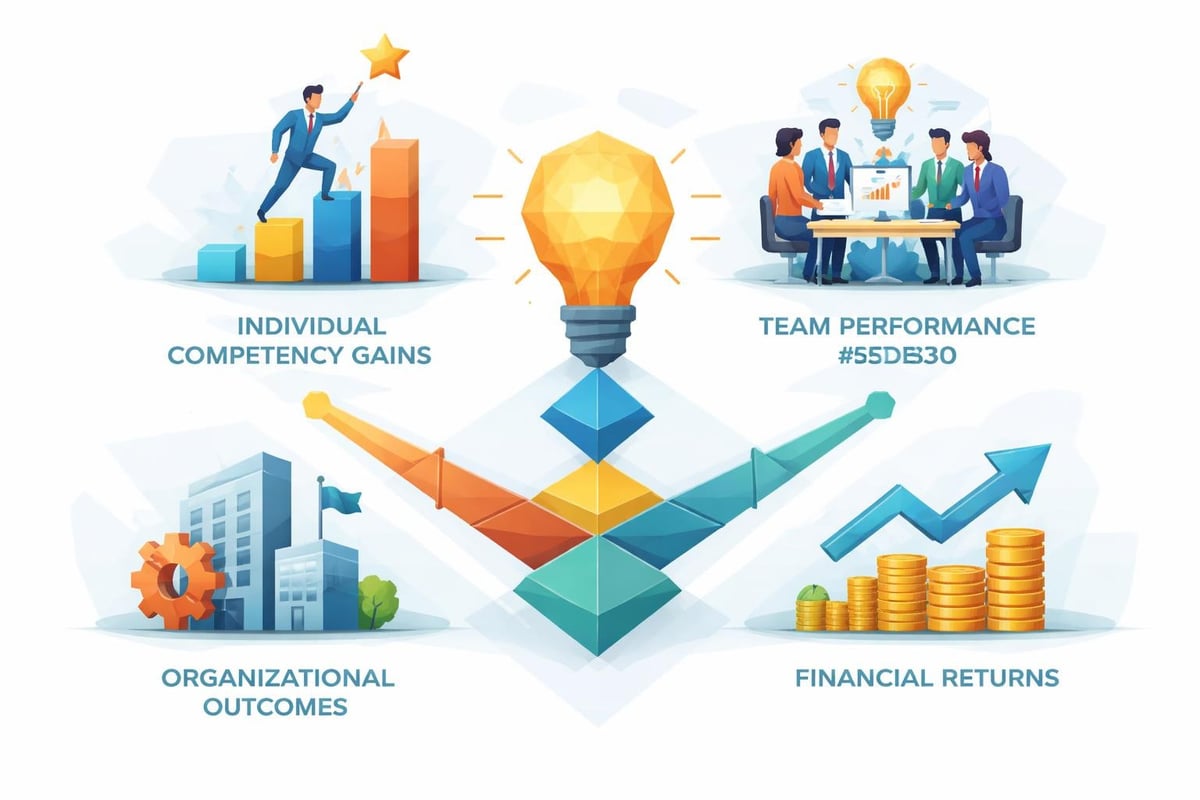
Organizations investing in executive leadership development in Basel demand evidence that programs deliver tangible business results. Measurement frameworks must capture both individual leader growth and organizational-level improvements that justify continued investment.
Individual-level metrics track behavioral changes, competency development, and performance improvements for participating leaders. Pre-program and post-program assessments document skill gains across targeted competencies. 360-degree feedback administered at regular intervals reveals whether others perceive meaningful changes in leadership effectiveness.
Team-level indicators measure how leadership development influences the performance of units that participating leaders manage. Employee engagement scores, voluntary turnover rates, and productivity metrics provide objective evidence of leadership impact. Teams led by developed leaders should show measurable improvements compared to control groups or baseline periods.
Organizational outcomes connect leadership development to strategic objectives and financial performance. These might include innovation metrics like patents filed or products launched, operational excellence indicators such as quality scores or safety records, or financial measures including revenue growth and profitability.
- Establish baseline measurements across all relevant metrics before program launch
- Define success criteria that align with organizational priorities and strategic goals
- Implement tracking systems that capture data consistently throughout the program
- Analyze patterns and correlations between development activities and outcome improvements
- Calculate return on investment by comparing program costs to quantified benefits
- Adjust interventions based on evidence about what drives the strongest results
Leader Beyond’s approach to executive coaching emphasizes measurable outcomes that demonstrate coaching value to organizational stakeholders. This accountability orientation builds trust and supports continued investment in leadership development.
The most sophisticated measurement approaches use control groups or matched comparison designs that isolate leadership development effects from other organizational changes. While methodologically challenging, these evaluations provide the strongest evidence for program effectiveness.
Integrating with Organizational Systems
Executive leadership development in Basel achieves maximum impact when integrated with broader talent management and organizational development systems. Standalone programs that operate independently of succession planning, performance management, and strategic planning initiatives fail to achieve their full potential.
Succession planning integration ensures development programs prepare identified high-potential leaders for specific future roles. Rather than generic leadership skills, programs emphasize competencies required for target positions. This alignment increases internal promotion readiness and reduces external hiring costs.
Performance management connections reinforce development priorities through goal-setting, feedback, and rewards. When leadership competencies appear in performance evaluations and influence compensation decisions, leaders take development more seriously. Organizations signal that leadership excellence matters by making it consequential.
Strategic planning alignment focuses development resources on capabilities that support organizational strategy. Companies pursuing innovation strategies emphasize creative leadership and risk-taking. Organizations executing operational excellence strategies prioritize process discipline and quality management.
The University of Basel’s integration of leadership development with organizational culture initiatives illustrates how coordinated approaches amplify impact. When leadership development, culture change, and structural improvements work in concert, transformation accelerates and sustains.
HR leaders implementing executive leadership development in Basel should map connections between development programs and existing systems. Identify gaps where integration opportunities exist and create formal linkages through shared metrics, aligned timelines, and coordinated communications.
Future Trends Shaping Basel Leadership Development
Executive leadership development in Basel continues evolving in response to technological advances, workforce changes, and emerging business challenges. Organizations that anticipate these trends position themselves to attract, develop, and retain exceptional leadership talent.
Artificial intelligence and automation are transforming leadership roles across industries. Leaders need new competencies in technology strategy, ethical AI implementation, and human-machine collaboration. AI tools supporting business coaching demonstrate how technology augments rather than replaces human development expertise.
Hybrid work environments require leadership approaches that build connection, maintain culture, and drive performance across distributed teams. Basel executives must master virtual communication, asynchronous collaboration, and inclusive practices that engage diverse, remote workforce members.
Sustainability and social responsibility increasingly influence leadership expectations. Stakeholders demand leaders who balance profit with environmental stewardship and social impact. Basel's life sciences sector faces particular scrutiny around patient access, pricing ethics, and environmental practices.
The leadership development market itself transforms through digital platforms and data-driven personalization. Organizations can now access global coaching talent, implement sophisticated matching algorithms, and track development progress with unprecedented precision.
Forward-looking organizations in Basel invest in leadership capabilities that position them for long-term success. Rather than reacting to today's challenges alone, they develop leaders who can navigate uncertainty, drive innovation, and build organizational resilience for whatever challenges 2027 and beyond present. Noomii’s corporate leadership coaching platform exemplifies how technology enables organizations to scale personalized development while maintaining quality and demonstrating measurable results.
Building Sustainable Leadership Pipelines
Executive leadership development in Basel must extend beyond senior leaders to create robust pipelines that ensure organizational continuity and reduce succession risks. Organizations with strong bench strength weather leadership transitions smoothly and fill critical roles quickly with qualified internal candidates.
Pipeline development requires systematic identification of high-potential employees early in their careers. Assessment processes evaluate both current performance and future potential, considering factors like learning agility, strategic thinking, and interpersonal effectiveness that predict leadership success.
Development pathways provide varied experiences that build leadership readiness. These might include stretch assignments, cross-functional rotations, international postings, and progressive responsibility increases. Each experience develops specific competencies while testing readiness for advancement.
Mentoring and sponsorship programs accelerate high-potential development by connecting emerging leaders with senior executives who provide guidance, advocacy, and access to opportunities. These relationships transfer institutional knowledge, build networks, and demonstrate organizational investment in individual careers.
Organizations should track pipeline health metrics including the number of promotion-ready candidates for each critical role, demographic diversity of high-potential pools, and retention rates of identified successors. These indicators reveal whether pipeline development efforts generate sustainable leadership supply.
The most effective approaches to executive leadership development in Basel combine immediate needs with long-term capability building. While addressing current leadership gaps through coaching and targeted interventions, organizations simultaneously develop the next generation of leaders who will drive future success. Organizations seeking comprehensive solutions that address both tactical challenges and strategic capability building can explore frameworks like those offered through leadership development coaching programs that align individual growth with institutional priorities, and platforms such as Accountability Now provide additional resources for maintaining leadership accountability throughout development journeys.
Executive leadership development in Basel demands precision, sector expertise, and measurable results that align individual growth with organizational objectives. Whether addressing immediate challenges like toxic leadership or building long-term capabilities through succession planning, organizations need evidence-based approaches that demonstrate tangible value. Noomii Leadership Coaching delivers tailored solutions through advanced diagnostics, precision coach matching, and scalable programs that transform leadership at every organizational level, creating confident, adaptive leaders who drive sustained success.



Leave a Reply
Want to join the discussion?Feel free to contribute!