
High-Impact Leadership Coaching in Zurich: A 2026 Guide
Zurich has established itself as a global hub for corporate excellence, attracting multinational corporations, financial institutions, and innovative enterprises that demand the highest standards of leadership. As organizations face increasingly complex challenges in 2026, the need for high-impact leadership coaching in Zurich has never been more critical. This specialized form of executive development goes beyond traditional training programs, delivering measurable transformation through precision matching, evidence-based diagnostics, and strategic interventions that align individual growth with organizational objectives.
The Zurich Leadership Landscape in 2026
Switzerland's business capital presents unique leadership challenges that require sophisticated coaching solutions. Executives operating in Zurich navigate multilingual teams, cross-border regulations, and competitive talent markets while maintaining the precision and reliability Swiss organizations are known for worldwide.
High-impact leadership coaching in Zurich addresses these specific demands by connecting leaders with coaches who understand both global business dynamics and local organizational culture. The city's concentration of international headquarters means leadership challenges often involve managing diverse stakeholder expectations, driving digital transformation, and building resilient cultures that can withstand market volatility.
Key Characteristics of Effective Leadership Coaching
Organizations investing in leadership coaching services expect tangible returns. Effective programs combine several critical elements:
- Evidence-based assessment tools that identify leadership strengths and developmental gaps
- Precision matching algorithms connecting executives with sector-specific coaching expertise
- Measurable outcomes tied to organizational KPIs and cultural health indicators
- Scalable frameworks that work for individual executives and entire leadership teams
- Compliance alignment ensuring all interventions meet regulatory and ethical standards
The distinction between mediocre and transformative coaching lies in systematic approaches that leverage data, specialized expertise, and accountability structures. Research from leadership coaching best practices demonstrates that structured programs produce sustainable behavioral change when properly implemented.

Why Organizations Choose High-Impact Leadership Coaching in Zurich
Fortune 500 companies and government agencies operating in Zurich select coaching partners based on their ability to deliver precision results. Generic leadership development falls short when executives face complex challenges like toxic workplace dynamics, strategic decision-making under uncertainty, or cultural transformation initiatives.
The most effective coaching programs begin with comprehensive diagnostics that reveal underlying patterns affecting organizational performance. These assessments go beyond personality profiles to examine decision-making frameworks, communication effectiveness, emotional intelligence competencies, and systemic leadership behaviors.
| Assessment Component | Purpose | Organizational Impact |
|---|---|---|
| Behavioral Analysis | Identify leadership patterns and blind spots | Reduced conflict and improved team dynamics |
| Strategic Thinking Evaluation | Measure decision-making frameworks | Enhanced organizational agility |
| Emotional Intelligence Metrics | Assess self-awareness and empathy | Stronger stakeholder relationships |
| Communication Effectiveness | Analyze influence and persuasion skills | Clearer strategic direction |
Precision Matching: The Competitive Advantage
The coaching industry faces a critical challenge: matching executives with coaches who possess relevant expertise for their specific situations. Generic assignments produce mediocre results. High-impact leadership coaching in Zurich succeeds because it prioritizes precision matching.
Advanced matching considers multiple factors:
- Industry expertise ensuring coaches understand sector-specific challenges
- Leadership level alignment matching executive seniority with coaching experience
- Challenge specialization connecting specific issues with proven intervention methods
- Cultural compatibility respecting organizational values and communication styles
- Language capabilities enabling nuanced conversations in multilingual environments
Organizations utilizing Noomii’s coaching platform gain access to proprietary algorithms that analyze these dimensions simultaneously, producing optimal matches that accelerate developmental progress.
Addressing Toxic Leadership Patterns
One of the most urgent applications of high-impact leadership coaching in Zurich involves addressing toxic leadership behaviors that erode organizational culture, drive talent attrition, and create legal liabilities. Identifying and transforming toxic leader patterns requires specialized expertise and carefully designed interventions.
Toxic leadership manifests in various forms:
- Micromanagement that stifles innovation and demotivates high performers
- Inconsistent decision-making creating organizational confusion and distrust
- Communication breakdowns generating misalignment across departments
- Favoritism damaging team cohesion and psychological safety
- Emotional volatility producing unpredictable work environments
Effective coaching programs don't simply identify these behaviors but implement structured interventions that replace destructive patterns with constructive alternatives. This transformation requires accountability frameworks, regular progress monitoring, and organizational support systems that reinforce new behaviors.
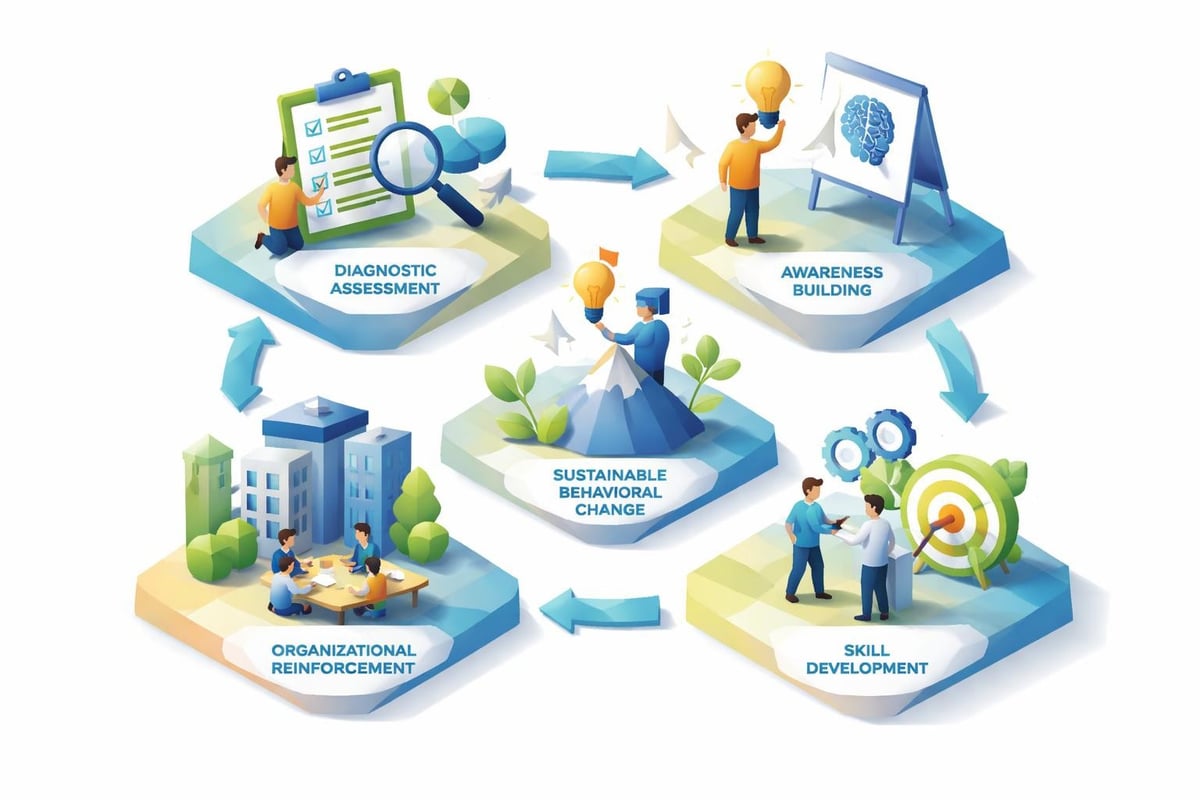
The Intervention Process
Transforming toxic leadership follows a systematic approach:
Phase 1: Diagnostic Clarity
Gather 360-degree feedback, behavioral data, and organizational impact metrics to establish baseline performance and identify specific intervention targets.
Phase 2: Awareness Building
Create self-awareness through structured reflection, video analysis of leadership interactions, and guided examination of behavioral consequences.
Phase 3: Skill Development
Build alternative capabilities through role-playing, scenario analysis, and incremental behavior changes with immediate feedback loops.
Phase 4: Organizational Reinforcement
Align performance management systems, stakeholder expectations, and team dynamics to support sustained behavioral change.
Scalable Solutions for Growing Organizations
High-impact leadership coaching in Zurich must scale effectively as organizations grow. A coaching framework that works for ten executives becomes inefficient when applied to one hundred leaders without systematic adaptation.
Scalability requires several capabilities:
- Standardized assessment protocols maintaining diagnostic consistency across large populations
- Coach network depth ensuring quality matches regardless of volume
- Technology infrastructure tracking progress across multiple coaching relationships simultaneously
- Data aggregation identifying patterns and trends across organizational levels
- Flexible delivery models accommodating diverse schedules and geographical distribution
Organizations implementing executive leadership coaching at scale often discover that systematic approaches reveal cultural patterns invisible when examining individual leaders in isolation.
Measuring Impact Across Leadership Tiers
Sophisticated organizations demand evidence that coaching investments produce tangible returns. Measurement frameworks should capture impact at multiple levels:
| Leadership Level | Primary Metrics | Secondary Indicators |
|---|---|---|
| C-Suite | Strategic decision quality, board effectiveness | Stakeholder satisfaction, succession readiness |
| Senior Management | Team performance, cross-functional collaboration | Employee engagement, innovation metrics |
| Middle Management | Direct report development, project delivery | Retention rates, promotion velocity |
| Emerging Leaders | Competency acquisition, behavioral adaptation | Peer feedback, learning agility |
This multi-tiered approach ensures that high-impact leadership coaching in Zurich delivers value throughout organizational hierarchies while maintaining cost efficiency and developmental focus.
Integration with Organizational Systems
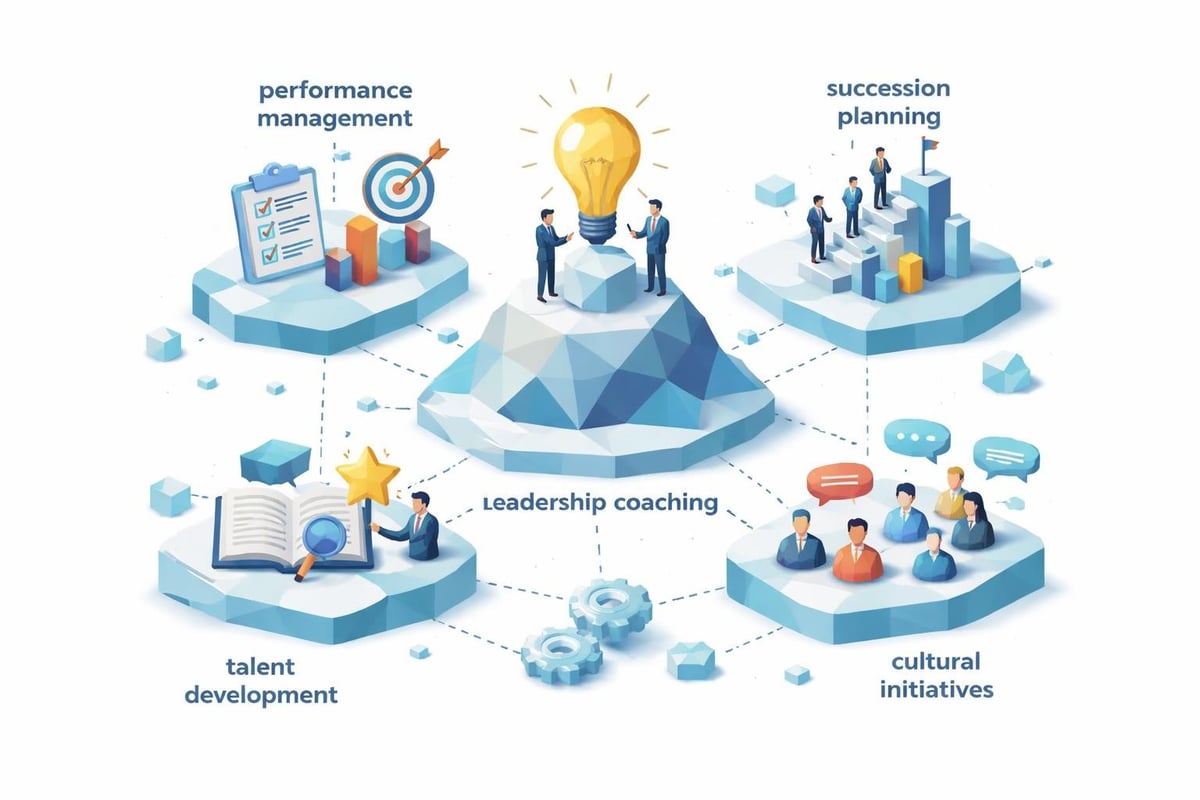
Leadership coaching achieves maximum impact when integrated with broader organizational systems rather than operating as an isolated intervention. The most successful programs align with performance management, succession planning, talent development, and cultural initiatives.
Integration creates several advantages. First, coaching conversations connect directly to business priorities, ensuring developmental efforts support strategic objectives. Second, organizational systems reinforce coaching insights, making behavioral changes more likely to persist. Third, data flows between systems reveal patterns that inform both individual coaching and systemic interventions.
Many Zurich organizations partner with consultancies like those offering leadership and team coaching to create comprehensive development ecosystems that address leadership challenges holistically.
Compliance and Governance Considerations
Organizations subject to regulatory oversight or operating in highly governed environments require coaching programs that meet compliance standards. This consideration is particularly relevant for financial institutions, pharmaceutical companies, and government agencies prevalent in Zurich.
Compliant coaching programs incorporate:
- Documented methodologies creating audit trails for development interventions
- Ethical frameworks ensuring coaching relationships respect organizational policies
- Confidentiality protocols balancing coaching privacy with organizational accountability
- Outcome reporting demonstrating developmental progress to stakeholders
- Risk management identifying leadership behaviors that create organizational exposure
These structural elements distinguish professional leadership development from informal mentoring while protecting both individuals and organizations.
The Role of Technology in Modern Leadership Coaching
Technology has transformed how high-impact leadership coaching in Zurich is delivered and measured. Digital platforms enable remote coaching sessions, virtual assessments, progress tracking, and data analytics that were impossible in traditional face-to-face models.
Advanced coaching platforms offer several capabilities:
- Scheduling automation coordinating complex calendars across time zones
- Session recording and transcription enabling detailed reflection and accountability
- Progress dashboards visualizing developmental trajectories for coaches and executives
- Resource libraries providing just-in-time learning materials between sessions
- Communication channels maintaining continuity beyond scheduled coaching conversations
These technological enhancements increase coaching efficiency without sacrificing the relationship depth essential for behavioral transformation. Organizations exploring leadership development coaching options should evaluate platform capabilities as thoroughly as coach qualifications.
Data-Driven Coaching Decisions
The integration of analytics into coaching programs enables evidence-based decision-making at every stage. Initial assessments generate baseline data that informs coach matching and intervention design. Mid-program metrics reveal whether coaching is producing intended changes or requires adjustment. Post-program analysis demonstrates return on investment and identifies patterns applicable to future initiatives.
Organizations implementing systematic data collection discover insights about which coaching approaches work best for specific leadership challenges, developmental stages, and organizational contexts. This knowledge compounds over time, making each successive coaching initiative more effective than the last.
Selecting the Right Coaching Partner
Organizations seeking high-impact leadership coaching in Zurich face numerous provider options, from independent practitioners to global consulting firms. Making the optimal selection requires evaluating several dimensions beyond cost considerations.
Critical Selection Criteria:
- Network depth: Access to specialized coaches across industries and challenges
- Matching methodology: Systematic approaches versus random assignments
- Measurement frameworks: Evidence-based progress tracking and outcome validation
- Scalability: Capacity to grow with organizational needs
- Integration capabilities: Technology platforms and organizational system connectivity
- Track record: Demonstrated results with similar organizations and challenges
Organizations should request case studies, client references, and detailed methodology descriptions before committing to coaching partnerships. The investment in thorough due diligence prevents costly mismatches and accelerates developmental impact.
Programs incorporating human-centered leadership coaching approaches often resonate particularly well with executives navigating career transitions or identity shifts alongside skill development.
The Importance of Cultural Fit
Zurich's multicultural business environment demands coaching solutions that respect diverse perspectives while maintaining organizational coherence. The best coaching partnerships acknowledge cultural nuances without using them as excuses for avoiding difficult developmental conversations.
Cultural fit assessment should examine:
- Coach familiarity with Swiss business norms and expectations
- Experience working across European organizational contexts
- Multilingual capabilities matching organizational language requirements
- Understanding of industry-specific cultural dynamics
- Ability to navigate both hierarchical and collaborative organizational models
These considerations ensure coaching conversations address real leadership challenges rather than getting derailed by cultural misunderstandings or superficial assessments.
Building Sustainable Leadership Capabilities
High-impact leadership coaching in Zurich ultimately aims to build sustainable capabilities that persist long after formal coaching relationships conclude. This sustainability requires moving beyond skill acquisition to identity transformation and organizational culture evolution.
Sustainable leadership development incorporates several elements:
- Reflective practices that become habitual rather than coach-dependent
- Peer learning communities enabling ongoing development through colleague interactions
- Embedded feedback mechanisms providing continuous performance insights
- Self-directed learning pathways empowering leaders to pursue growth independently
- Organizational reinforcement systems celebrating and rewarding developmental progress
The most effective programs explicitly design for sustainability from the initial engagement, ensuring every coaching intervention builds long-term capability rather than creating coach dependency.
Creating Leadership Development Ecosystems
Organizations achieving exceptional results view coaching as one component within comprehensive leadership development ecosystems. These ecosystems combine formal training, experiential learning, mentoring relationships, stretch assignments, and coaching interventions into integrated pathways that accelerate leadership growth.
Ecosystem thinking requires coordination across HR functions, business units, and external partners. It demands sophisticated program design that sequences developmental experiences for maximum impact. It necessitates cultural shifts that prioritize continuous learning over static competency models.
Zurich organizations investing in ecosystem approaches often partner with resources like accountability frameworks to ensure developmental commitments translate into behavioral changes and organizational results.
| Ecosystem Component | Purpose | Coaching Integration Point |
|---|---|---|
| Formal Training | Knowledge transfer and skill building | Pre-coaching preparation and post-coaching reinforcement |
| Stretch Assignments | Applied learning in high-stakes contexts | Real-time coaching during critical projects |
| Mentoring Relationships | Wisdom transfer and network building | Complementary perspective to coaching insights |
| Action Learning Projects | Problem-solving while developing capabilities | Coaching support for team leadership and facilitation |
| 360 Feedback Processes | Multi-perspective developmental insights | Data-driven coaching focus areas |
Future Trends in Leadership Coaching
The landscape of high-impact leadership coaching in Zurich continues evolving as technology advances, organizational needs shift, and coaching methodologies mature. Several trends are shaping the future of executive development in 2026 and beyond.
Artificial intelligence integration is transforming assessment accuracy, pattern recognition, and personalized intervention design. AI-enhanced platforms analyze communication patterns, decision-making frameworks, and behavioral trends with precision impossible through human observation alone.
Virtual reality applications enable leadership skill practice in simulated environments, allowing executives to experiment with new behaviors without real-world consequences. This technology is particularly valuable for developing crisis management capabilities and high-stakes communication skills.
Neuroscience-informed coaching applies brain science insights to accelerate behavioral change, leveraging understanding of neuroplasticity, habit formation, and emotional regulation to design more effective interventions.
Collective leadership models are shifting coaching focus from individual executives to leadership teams, addressing systemic dynamics and collaborative capabilities essential for modern organizational success.
These innovations enhance rather than replace the foundational elements of effective coaching: trusted relationships, behavioral accountability, and systematic developmental frameworks.
High-impact leadership coaching in Zurich delivers measurable transformation when organizations select partners with precision matching capabilities, evidence-based methodologies, and scalable frameworks. The investment in systematic coaching produces leaders who drive engagement, navigate complexity, and deliver sustainable organizational results. Organizations ready to transform their leadership capabilities can explore how Noomii Leadership Coaching combines advanced diagnostics, proprietary matching algorithms, and a global network of certified coaches to deliver precision solutions aligned with organizational goals and compliance standards.



Leave a Reply
Want to join the discussion?Feel free to contribute!