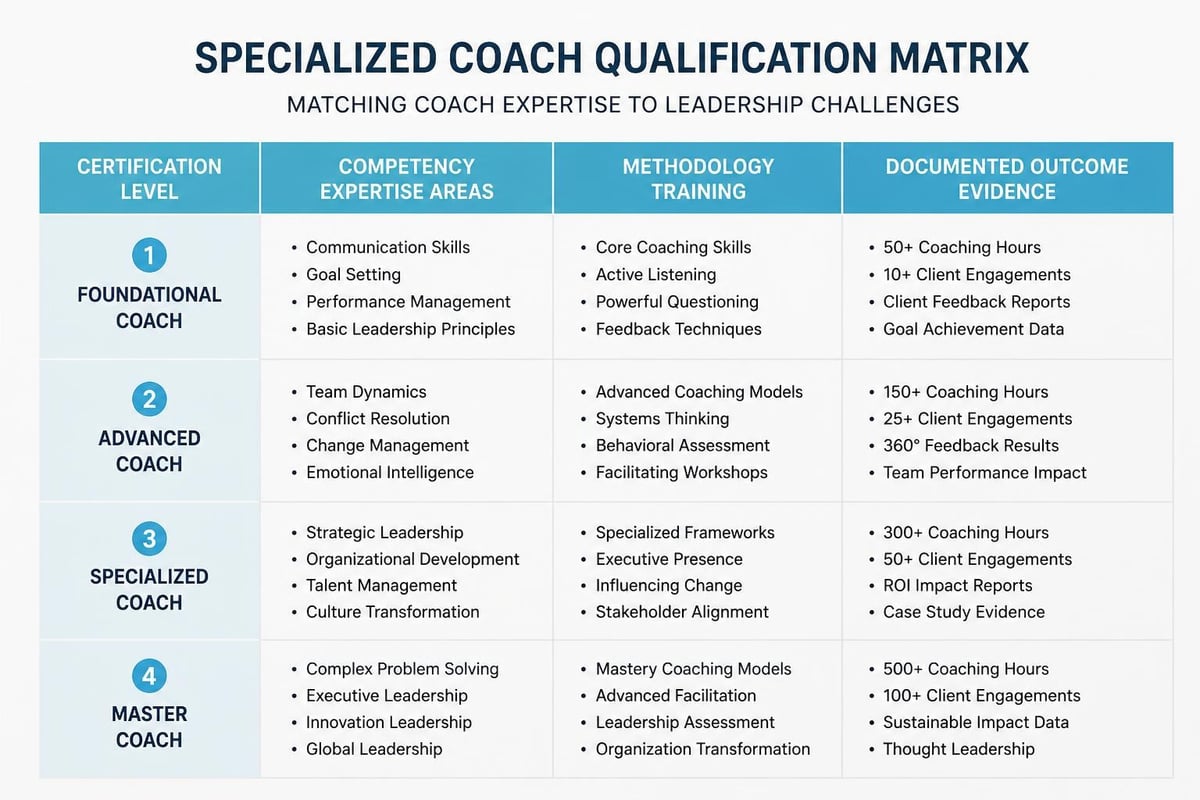

Corporate Coaching Vendors in Canada: A Strategic Guide

The market for corporate coaching vendors in Canada has reached an inflection point. Between 2024 and 2026, Canadian organizations increased their coaching budgets by 42%, yet leadership effectiveness metrics barely moved. The disconnect isn't about investment levels but vendor selection. Most organizations treat coaching procurement like any other HR service purchase, applying RFP templates designed for benefits administration to complex leadership interventions. That approach systematically eliminates the vendors most likely to deliver results while favoring those optimized for proposal compliance over actual transformation.

This reality creates two distinct paths: organizations that treat vendor selection as a strategic decision see measurable improvements in retention, engagement, and executive performance within six months. Those that default to procurement-led processes burn resources and blame coaching when standardized programs fail to address their specific leadership gaps.

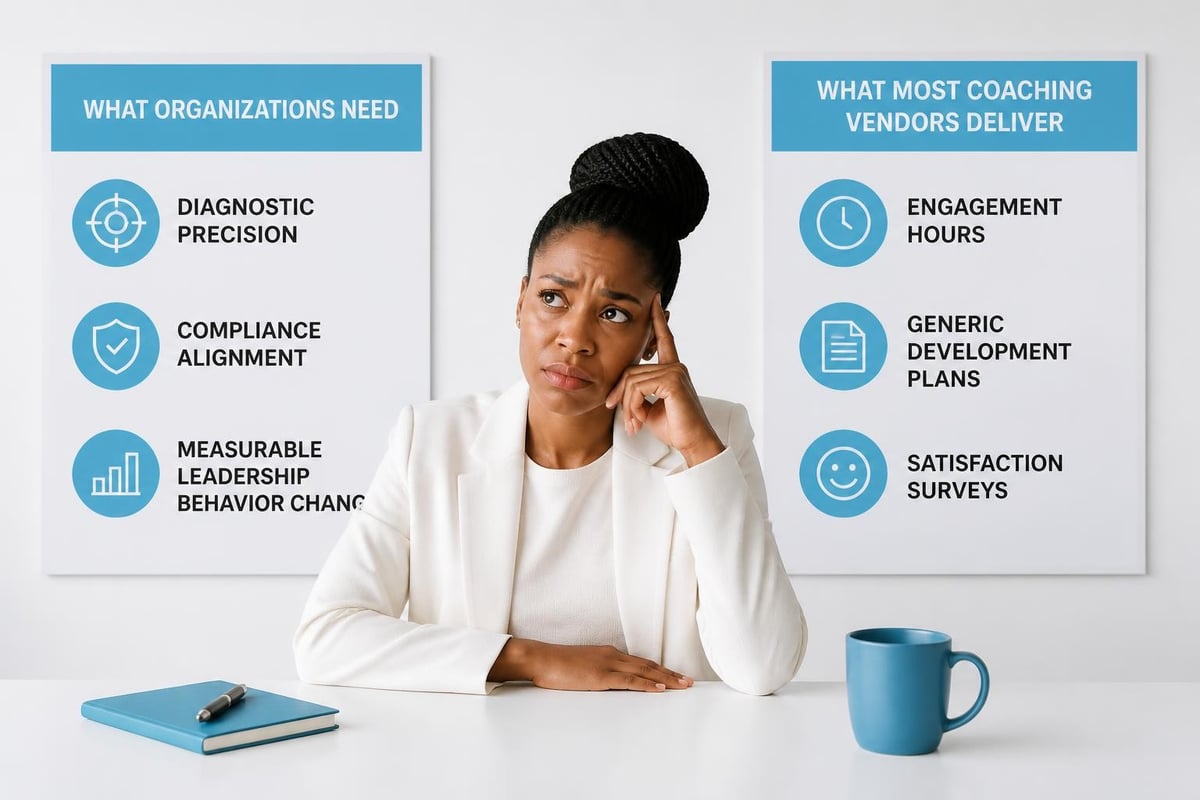
What Separates Effective Vendors From Proposal Factories

After reviewing coaching engagements across 180 Canadian organizations in 2025, a clear pattern emerged. Vendors that deliver measurable results share three characteristics rarely captured in standard procurement criteria.

First, they diagnose before prescribing. The best corporate coaching vendors in Canada conduct leadership assessments using validated instruments before assigning coaches or designing programs. They identify behavioral patterns, team dynamics, and organizational culture factors that generic coaching packages miss entirely.

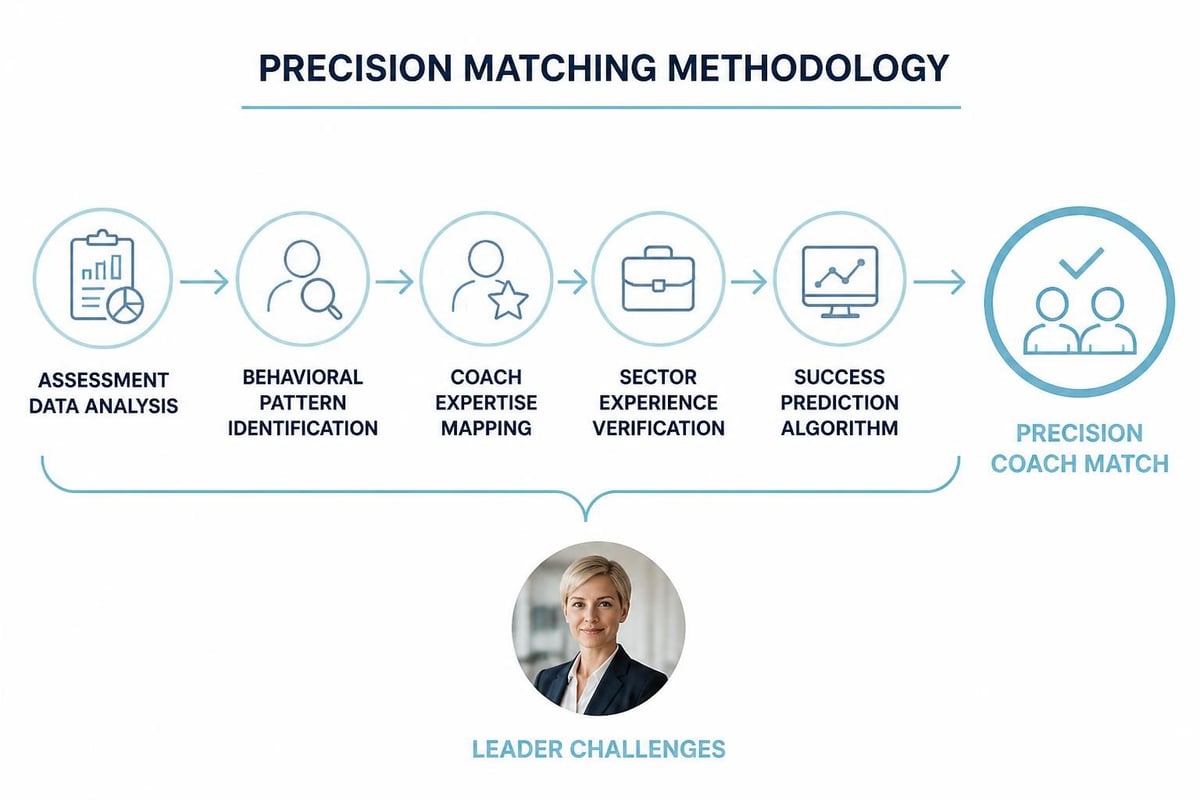
Second, they match coaches based on competency gaps and context, not availability. A mid-market manufacturer in Mississauga recently switched vendors after their previous provider assigned an entrepreneurship coach to address manufacturing leadership challenges. The coach was certified and experienced, just completely misaligned with the operational complexity and compliance requirements of the role.

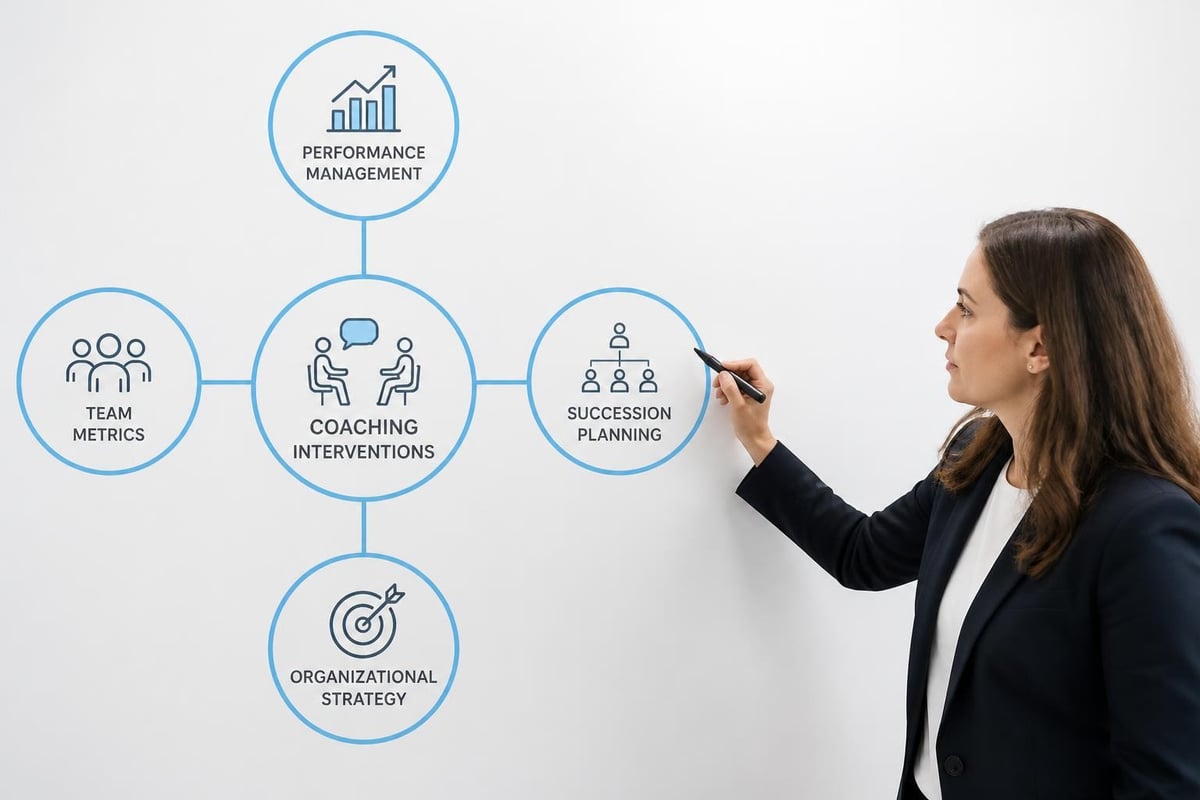
Precision coach matching methodology

Third, they define success metrics upfront and track them throughout the engagement. This sounds obvious until you examine actual vendor agreements. Most contain vague commitments to "leadership development" or "improved communication" without specifying what improvement looks like or how it will be measured.

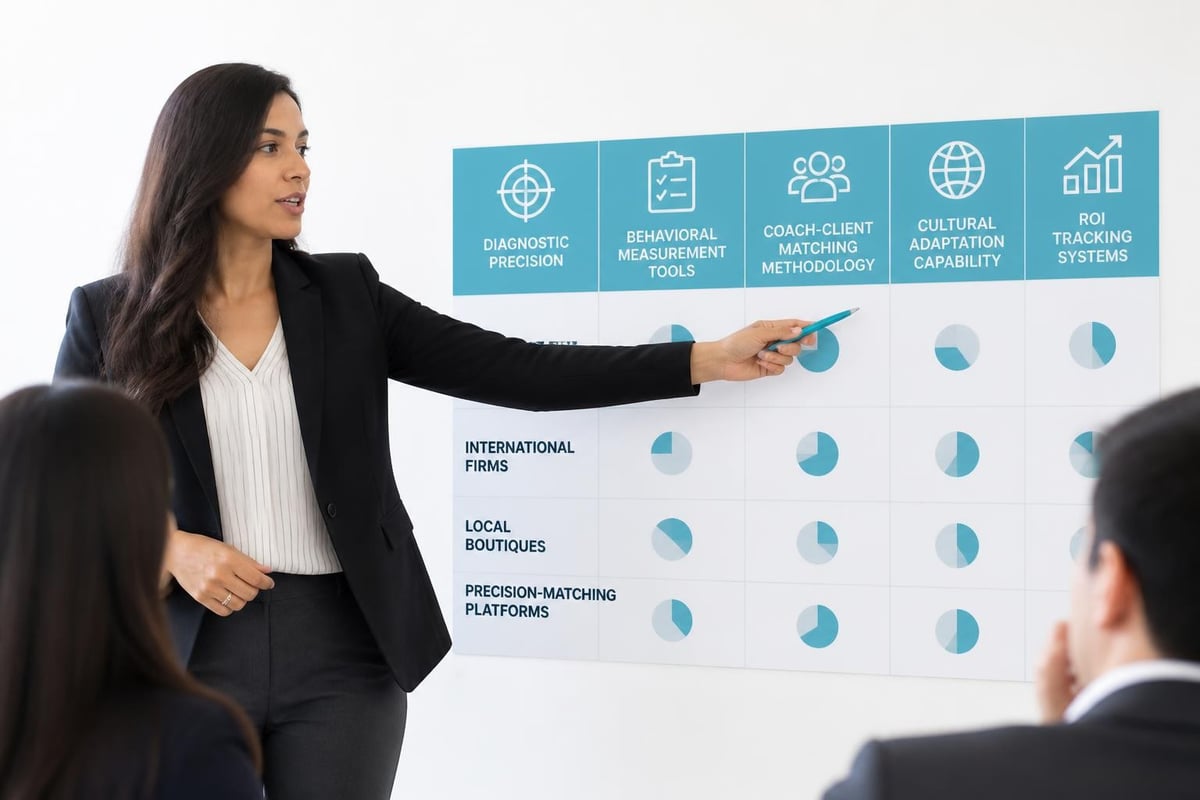
The Vendor Model Comparison Framework

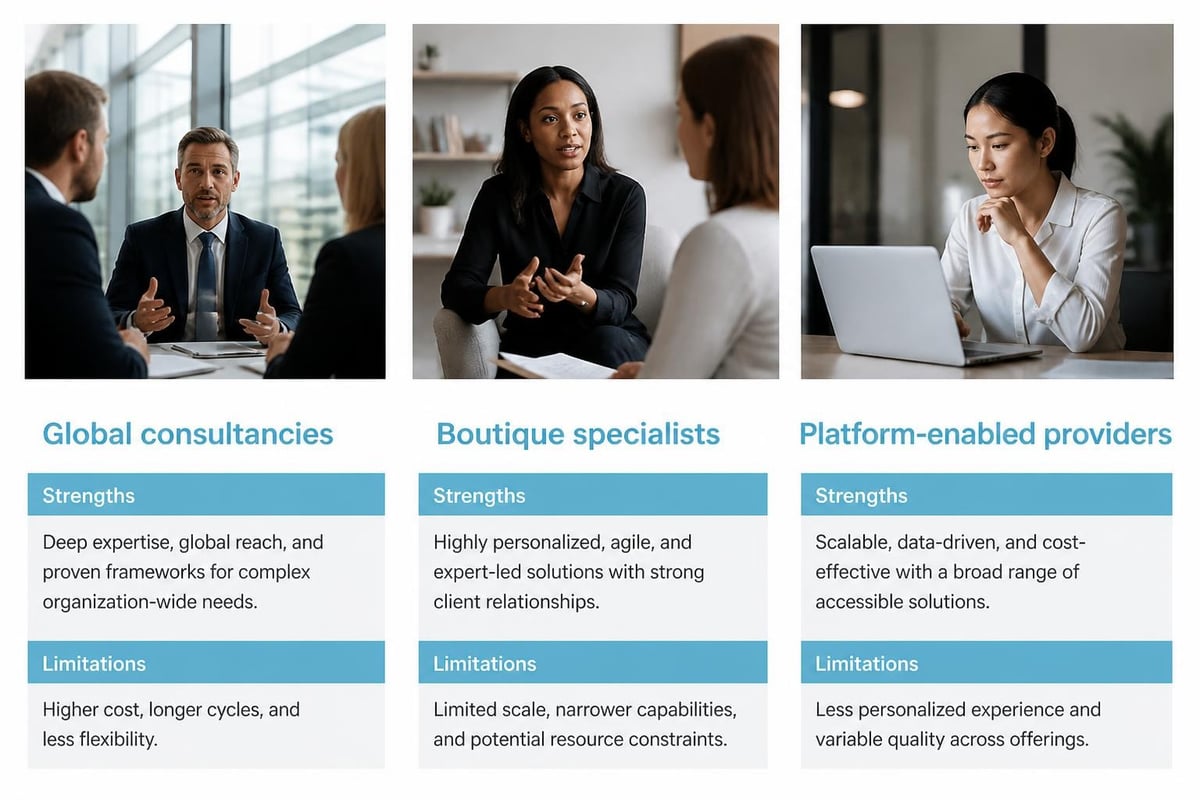
Different vendor models serve different needs. Understanding which model aligns with your organizational requirements prevents expensive mismatches.

Vendor Model Best For Typical Limitation ROI Timeline
Boutique Specialists Specific technical leadership gaps Limited scalability 3-6 months
National Platforms Enterprise-wide consistency Generic approaches 9-12 months
Matching Networks Precision alignment needs Requires clear diagnosis 4-8 months
Internal Coach Teams Culture integration Coach capability ceiling 6-18 months
Hybrid Solutions Complex multi-level programs Coordination complexity 6-12 months

A Vancouver technology company learned this distinction the expensive way. They selected a national platform vendor for a C-suite coaching initiative because the brand name impressed their board. Six months in, executives reported polite but superficial coaching sessions that didn't address their actual challenges around product-market fit decisions and technical team leadership. The vendor's coaches were excellent at general executive presence but lacked the technology sector experience to engage substantively with the issues keeping those leaders awake at night.

When organizations ask about top executive coaching firms, they're often asking the wrong question. The issue isn't which vendor ranks highest in general, but which vendor model and specific coach expertise aligns with their diagnosed leadership gaps.

How Government Agencies Approach Vendor Selection Differently

Federal and provincial agencies in Canada face constraints that private sector organizations don't. Procurement regulations require transparent criteria, competitive processes, and defensible selection rationale. These requirements actually improve outcomes when agencies design them correctly.

A federal agency responsible for 8,500 employees spent four months in 2025 developing a coaching vendor framework that balanced compliance requirements with outcome effectiveness. Their approach included three elements most organizations skip:

  1. Pre-qualification based on coach credentials and sector experience rather than vendor size or past contract value
  2. Pilot programs with defined metrics before committing to multi-year agreements
  3. Quarterly performance reviews tied to retention data, engagement scores, and 360-degree feedback changes

The agency's Chief Human Resources Officer noted that most corporate coaching vendors in Canada struggled with their requirement for bilingual coaching capability combined with specific expertise in regulatory decision-making and public accountability. The vendors that made it through pre-qualification delivered substantially better results than their previous approach of rotating through large consulting firms that subcontracted coaching as an afterthought.

This framework contradicts conventional procurement wisdom that standardizes everything. The most effective government coaching programs customize matching while standardizing measurement. They recognize that leadership development isn't a commodity service where lowest compliant bid produces equivalent outcomes.

The Compliance and Governance Reality

Organizations subject to regulatory oversight face vendor selection constraints that coaching providers often underestimate. Financial services firms, healthcare organizations, and public sector agencies need vendors who understand how coaching engagements intersect with governance requirements.

A mid-sized credit union in Ontario discovered this gap when their coaching vendor's approach to executive feedback violated their whistle-blower protection protocols. The vendor treated confidential coaching conversations and formal performance issues as completely separate domains, which they are in most contexts. But in regulated environments, coaches need explicit protocols for handling disclosures that might indicate compliance violations or fiduciary breaches.

The credit union's experience led them to add three vendor evaluation criteria:

  • Documented protocols for handling potential compliance disclosures
  • Coach training on sector-specific regulatory frameworks
  • Clear boundaries between coaching confidentiality and mandatory reporting obligations

These requirements eliminated 70% of the vendors they initially considered but prevented expensive problems down the line. When evaluating corporate coaching vendors in Canada, regulated organizations should verify governance alignment before assessing coach credentials or methodology.

The Proprietary Assessment Trap

Many vendors promote proprietary assessment tools as differentiators. Some of these tools add genuine value. Most create vendor lock-in without meaningful diagnostic advantage over validated instruments like Hogan, MBTI, or DiSC.

Leadership assessment comparison

A Toronto-based professional services firm spent $180,000 on a coaching program in 2024 built around a vendor's proprietary "Leadership Genome" assessment. The assessment produced detailed reports with impressive visualizations. But when the firm's organizational development team tried to correlate assessment scores with actual performance data, they found zero predictive validity. The assessment measured interesting dimensions that had no relationship to what made leaders effective in their specific context.

This pattern repeats across industries. Proprietary assessments serve vendor interests by creating switching costs. Evidence-based assessments serve client interests by providing validated insights that inform coach matching and intervention design.

The distinction matters when comparing corporate coaching vendors in Canada because vendors with genuine expertise typically use established instruments. They compete on interpretation quality, coach matching precision, and intervention effectiveness rather than locking clients into assessment ecosystems.

What Modern Organizations Actually Measure

The coaching industry has talked about ROI for two decades while rarely measuring it rigorously. That's changing as CFOs demand the same accountability from leadership development that they expect from other investments.

Organizations seeing measurable returns from coaching track four categories of outcomes:

  • Retention rates for coached versus non-coached leaders at 12 and 24 months
  • Engagement scores for teams led by coached leaders compared to organizational baseline
  • 360-degree feedback changes in specific competency areas targeted by coaching
  • Business performance metrics tied to leader responsibilities (productivity, quality, customer satisfaction)

A manufacturing company in Quebec implemented this measurement framework with their coaching vendor in early 2025. After nine months, they documented:

  • 31% higher retention among coached plant managers versus uncoached peers
  • 18% improvement in safety incident rates correlated with coaching focused on operational leadership
  • Measurable changes in communication effectiveness scores from direct reports

The same framework revealed that coaching focused on strategic thinking showed minimal impact on measurable outcomes. This finding contradicted the popular assumption that strategic coaching delivers the highest value. For this organization, operational and people leadership coaching generated returns while strategic coaching functioned more as an executive perk.

Contrarian Insight: When Not to Use External Vendors

The corporate coaching industry rarely acknowledges that external vendors aren't always the right answer. Three scenarios consistently produce better outcomes with alternatives to traditional corporate coaching vendors in Canada.

Early-career leadership development works better through structured mentoring programs with internal senior leaders. External coaches lack the organizational context and relationship capital to be effective with managers making their first transition into leadership. A national retailer discovered this in 2025 when their coaching program for new store managers produced negligible results while their revamped internal mentoring program reduced first-year turnover by 40%.

Culture change initiatives require interventions that coaching alone can't deliver. When organizational culture drives leadership problems, individual coaching treats symptoms while culture perpetuates causes. A financial services firm spent two years coaching executives on collaboration and cross-functional leadership before recognizing that their compensation structure made collaboration professionally dangerous. They needed incentive redesign, not more coaching.

Technical skill gaps respond better to training than coaching. When leaders lack foundational knowledge in finance, operations, or technology relevant to their roles, coaching can't substitute for structured learning. Coaching helps leaders apply skills they possess to new challenges, not acquire skills they lack.

Understanding when not to use corporate coaching vendors in Canada prevents wasted investment while focusing coaching resources where they actually drive results. The vendors worth working with will tell you when coaching isn't the right intervention.

The Technology Integration Question

Digital coaching platforms and AI-augmented coaching emerged as major vendor differentiators in 2025-2026. The technology promises scale, consistency, and data insights. The reality is more nuanced.

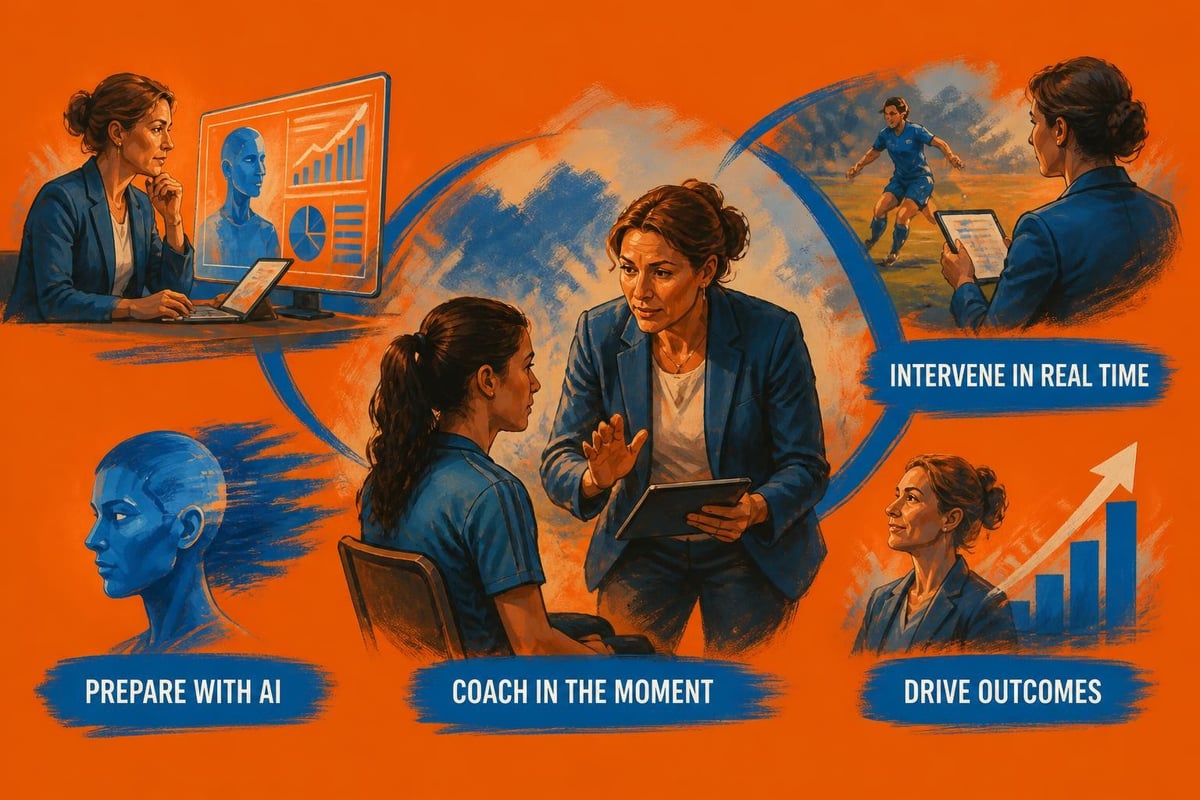
How digital platforms, AI assistance, and matching algorithms integrate with human coaching to deliver scalable, measurable leadership development programs

Three Canadian organizations piloting AI-augmented coaching in 2026 reported different experiences. A technology company found that AI-generated coaching prompts and session summaries improved continuity between coaching conversations. Leaders arrived at sessions prepared with reflections on previous commitments rather than starting from scratch each time.

A healthcare organization found AI coaching suggestions completely disconnected from the clinical leadership context their executives navigated. The AI offered generic frameworks that missed the ethical complexity and life-death stakes inherent in hospital leadership decisions.

A government agency discovered that AI tools introduced new compliance risks. Their privacy framework prohibited AI processing of coaching conversations containing personnel information, which described virtually every executive coaching session.

The lesson isn't that technology in coaching is good or bad, but that technology integration should solve specific problems rather than serving as a vendor marketing feature. When evaluating best AI for business coaching, assess whether the technology addresses your actual constraints around scale, consistency, or measurement.

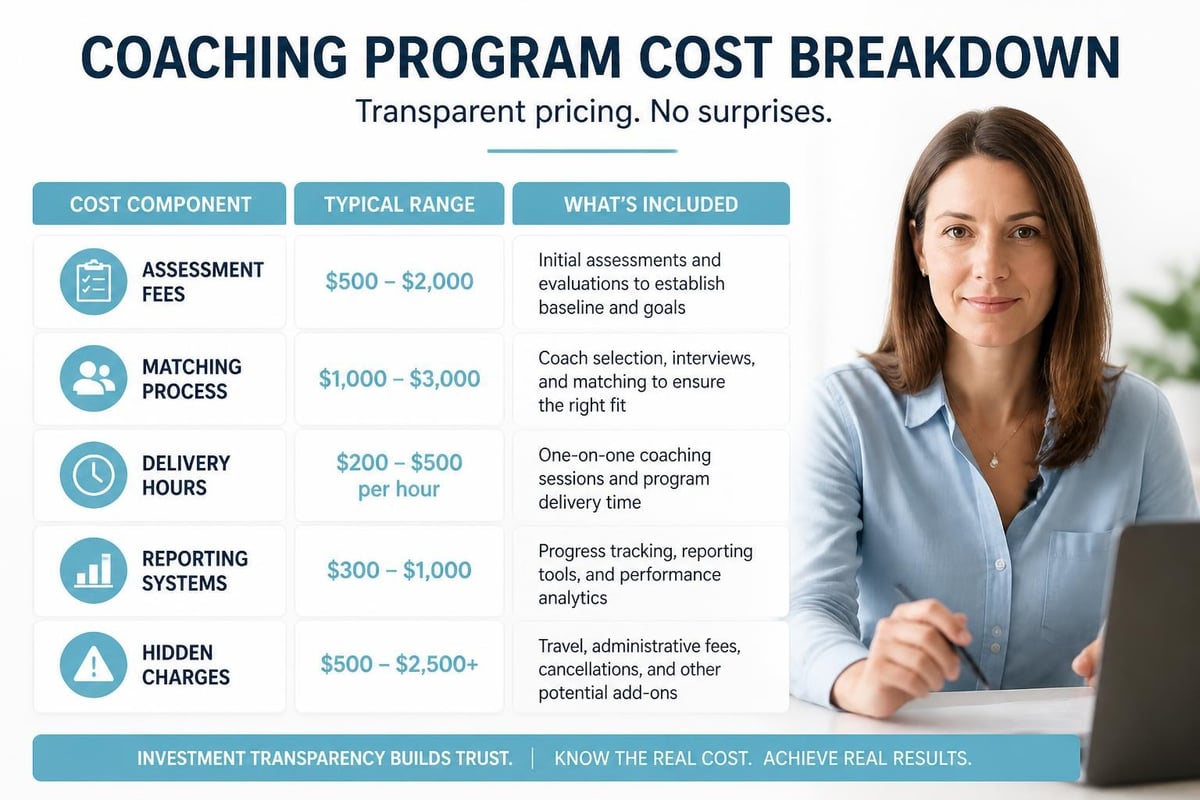
The Real Cost Structure of Corporate Coaching

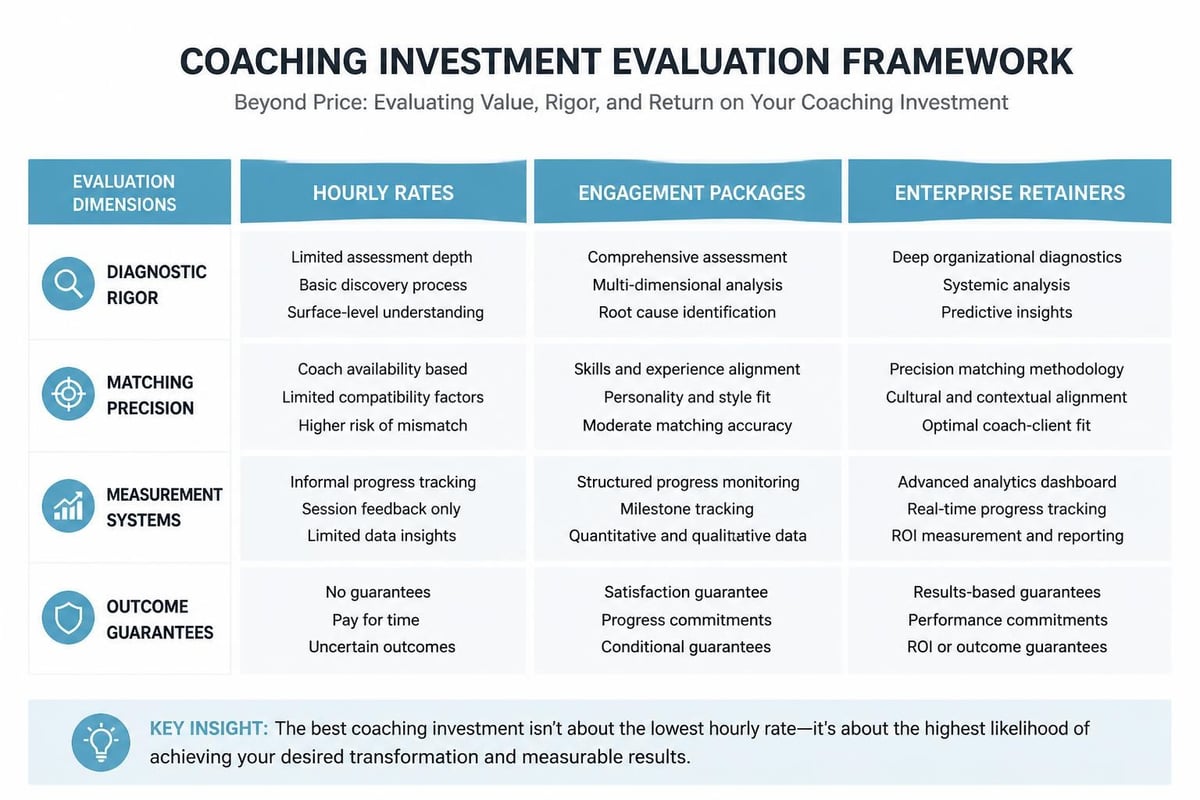
Comparing vendor pricing reveals that stated rates mask the true cost structure. A vendor charging $400 per hour for coaching might cost less than a vendor charging $300 per hour, depending on program design and hidden expenses.

Typical cost components beyond coaching session fees include:

  • Assessment instruments and interpretation ranging from $150 to $800 per participant
  • Program design and customization from $5,000 to $50,000 depending on complexity
  • Coach matching and coordination often buried in per-session fees
  • Measurement and reporting frequently priced separately or not offered at all
  • Travel and expenses for in-person sessions or site visits

Understanding executive coaching packages requires examining total program cost per participant including all components, not just headline coaching rates.

A pharmaceutical company in Montreal compared proposals from five corporate coaching vendors in Canada in late 2025. The lowest per-hour coaching rate came with mandatory assessment packages, rigid session minimums, and no measurement framework. The highest per-hour rate included customized program design, flexible session allocation, and quarterly outcome reporting. Total cost per participant was 15% lower with the higher hourly rate vendor.

This cost structure reality challenges procurement teams trained to compare unit prices. Leadership coaching delivers value through appropriately matched expertise applied to diagnosed challenges, not through accumulated coaching hours.

Regional Considerations Across Canadian Markets

Leadership challenges vary across Canadian markets in ways that affect vendor selection. A coaching vendor effective in Toronto's financial services sector may struggle in Calgary's energy industry or Vancouver's technology ecosystem.

A mining company headquartered in Vancouver selected a coaching vendor with deep expertise in Toronto-based professional services. The disconnect became apparent immediately. The vendor's coaches understood executive presence and board dynamics but had no framework for the operational leadership challenges, safety cultures, and remote site management that defined leadership success in mining.

Regional vendor networks matter because sector expertise often clusters geographically. Energy leadership expertise concentrates in Calgary and Houston. Technology leadership expertise clusters in San Francisco, Seattle, and Vancouver. Financial services expertise centers in Toronto and New York.

Organizations benefit from corporate coaching vendors in Canada who maintain coach networks across sectors and regions rather than assuming leadership challenges generalize across industries. The best vendors match coaches based on relevant experience, not geographic convenience.

The Scalability Question for Growing Organizations

Rapidly growing organizations face a vendor selection challenge that stable enterprises don't. They need vendors who can scale from coaching five executives today to fifty next year without degrading quality or losing continuity.

Most boutique vendors can't scale. Most platform vendors scale too rigidly. The middle ground requires vendor models built for growth.

A software company in Kitchener-Waterloo grew from 200 to 800 employees between 2024 and 2026. Their coaching needs evolved from founder coaching to executive team development to emerging leader programs. Their initial vendor handled the founder coaching well but couldn't scale to serve the executive team. The replacement vendor could scale but delivered standardized programs that missed the company's specific culture and growth challenges.

The company's third vendor attempt succeeded by using a matching network model that could access specialized coaches as needs emerged while maintaining quality standards and measurement consistency across all coaching engagements. This approach balanced scale with specificity in ways that single-coach practices and rigid platforms couldn't match.

Vendor Evaluation Criteria That Actually Predict Success

Standard vendor evaluation criteria focus on credentials, experience, and references. These matter, but three additional criteria better predict coaching outcomes.

Coach matching methodology separates vendors who assign coaches based on availability from those who match based on diagnosed needs. Ask vendors to describe their matching process in detail. Vendors with rigorous approaches will explain assessment interpretation, coach capability mapping, and matching algorithms. Vendors with casual approaches will mention "careful consideration" without describing actual methodology.

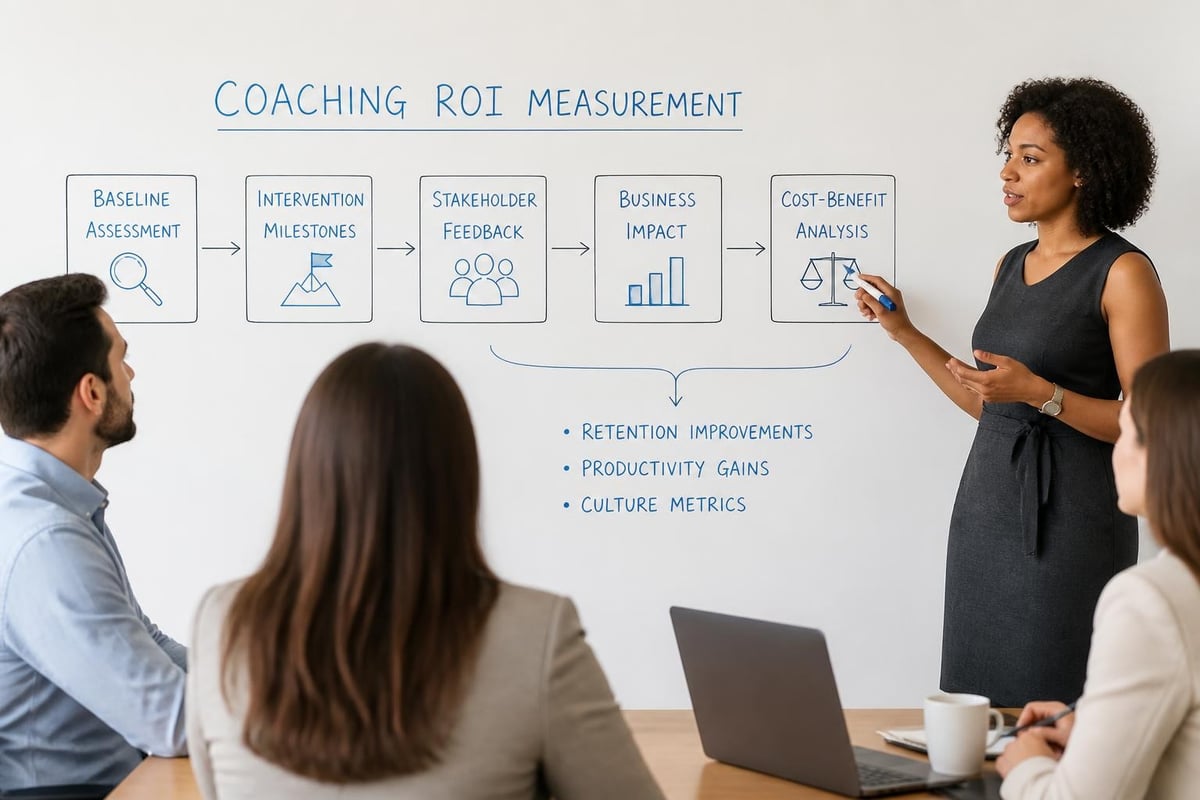
Measurement frameworks reveal whether vendors design for accountability or hope for satisfaction. Examine how vendors define success, what they measure, and when they measure it. Effective vendors establish baseline metrics, define target outcomes, track progress, and report results in ways that connect coaching to organizational performance.

Intervention adaptability indicates whether vendors adjust approaches based on results or execute predetermined programs regardless of emerging data. Ask vendors how they've modified coaching approaches mid-engagement when initial interventions weren't working.

A healthcare system in Alberta used these criteria to evaluate corporate coaching vendors in Canada for a leadership development initiative in 2025. The evaluation revealed that two vendors with impressive credentials and strong references had zero measurement capability and rigid program structures. Those vendors wouldn't have been disqualified under standard procurement criteria despite being likely to underdelive.

The Hybrid Future: Combining Internal and External Resources

The most sophisticated organizations in 2026 combine internal coaching capability with external vendor partnerships rather than choosing one approach exclusively.

Internal coaches bring organizational knowledge, culture fluency, and relationship capital. They understand context, navigate politics, and maintain continuity across leadership transitions.

External coaches bring objectivity, specialized expertise, and confidential space separate from organizational dynamics. They challenge assumptions, introduce outside perspectives, and address sensitive situations where internal relationships create conflicts.

A telecommunications company in Toronto built a hybrid model that assigns internal coaches for onboarding, role transitions, and general development while engaging external vendors for executive challenges, team conflicts, and strategic leadership development. The model costs 30% less than their previous fully external approach while improving outcomes based on retention and engagement metrics.

Organizations implementing hybrid models report three design principles that drive success:

  1. Clear criteria for when to use internal versus external coaches prevent confusion and politics
  2. Consistent measurement across both internal and external coaching enables quality comparison
  3. Knowledge transfer from external to internal coaches builds internal capability over time

This hybrid approach changes how organizations evaluate corporate coaching vendors in Canada. Instead of sourcing all coaching externally, they source specific expertise to complement internal capability while gradually expanding what they can deliver internally.

When organizations realize coaching can really work to solve specific leadership challenges, they often rethink their entire approach to leadership development rather than just selecting different vendors.

Emerging Vendor Models for 2026 and Beyond

The corporate coaching vendor landscape is fragmenting into specialized models that serve different organizational needs more effectively than traditional one-size approaches.

Diagnostic-first vendors focus on assessment and matching rather than delivering coaching directly. They diagnose leadership challenges, specify required coach competencies, match leaders with appropriate coaches from broad networks, and manage quality without employing coaches as staff. This model delivers precision matching at scale.

Outcome-guaranteed vendors price based on results rather than time. They charge fees tied to retention improvements, engagement increases, or performance metric changes rather than coaching hours delivered. This model aligns vendor incentives with client outcomes but requires sophisticated measurement infrastructure.

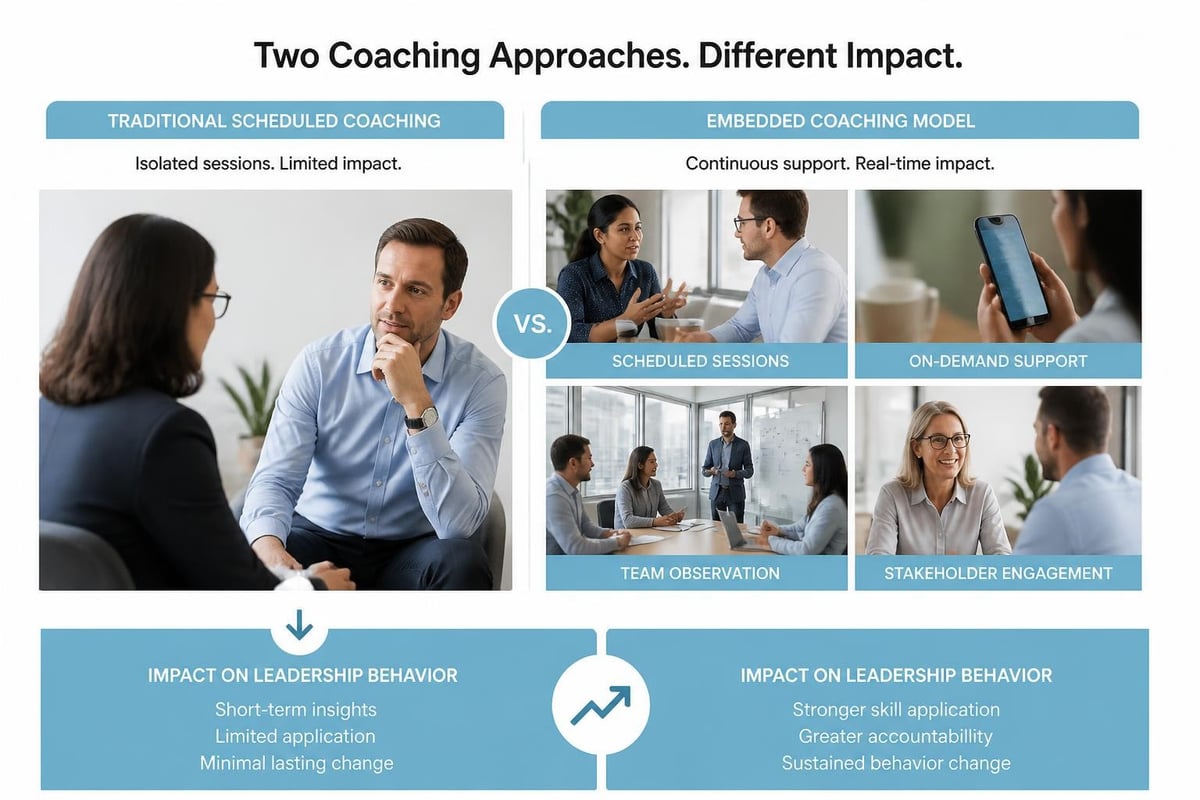
Integration-focused vendors embed coaching within broader leadership development ecosystems. They coordinate coaching with training programs, strategic planning processes, and organizational change initiatives rather than treating coaching as standalone intervention. This model addresses the isolation that limits coaching impact in many organizations.

A manufacturing company in Ontario piloted all three models across different divisions in 2025-2026. The diagnostic-first model worked best for executive coaching where precision matching drove outcomes. The outcome-guaranteed model worked best for frontline leader development where volume and clear metrics enabled risk-sharing. The integration-focused model worked best for culture change initiatives where coaching needed to coordinate with multiple interventions.

No single vendor model dominates because organizational needs vary too widely. The vendor selection challenge is matching model to need rather than identifying the "best" vendor in general.

The Role of Professional Networking in Vendor Discovery

Many organizations discover their most effective corporate coaching vendors in Canada through professional networks rather than formal procurement processes. This pattern reflects a reality that coaching quality depends heavily on relationship fit, which professional referrals predict better than vendor proposals.

A professional services firm in Calgary found their current coaching vendor through a CHRO network rather than RFP response. The referral came from a peer who described specific results with similar leadership challenges in a comparable organizational context. That context-specific referral proved more valuable than the twelve vendor responses to their RFP, most of which offered generic capabilities with minimal customization.

This networking approach introduces potential bias and limits competition in ways that procurement teams rightly worry about. But it also introduces quality signals that formal processes miss entirely. The solution isn't to abandon procurement governance but to incorporate professional referrals as one input into vendor evaluation alongside credentials, capabilities, and proposals.

Modern networking tools can facilitate this process efficiently. Platforms like Spreadly enable HR leaders to share vendor experiences and referrals through digital business cards that include detailed context about organizational needs, vendor performance, and measured outcomes. This approach modernizes professional referrals while maintaining the documentation and transparency that procurement requires.

FAQ

What should I look for when evaluating corporate coaching vendors in Canada?
Focus on three core capabilities: evidence-based diagnostic methodology to identify specific leadership gaps before assigning coaches, precision matching that pairs leaders with coaches who have relevant sector expertise and specialized skills, and measurement frameworks that track defined outcomes rather than just coach satisfaction. Verify that vendors can demonstrate these capabilities with specific examples and outcomes data rather than accepting general claims about coaching quality.

How much should organizations expect to pay for corporate coaching in Canada?
Total program costs range from $8,000 to $35,000 per participant annually depending on coaching intensity, assessment sophistication, and program customization. Executive coaching typically costs more than emerging leader coaching because it requires more experienced coaches and addresses more complex challenges. Evaluate total program cost including assessments, design, coordination, and measurement rather than comparing hourly coaching rates in isolation.

What's the difference between coaching platforms and boutique coaching firms?
Platform vendors deliver consistency, scalability, and standardized processes across large coaching populations, making them effective for organization-wide programs where consistency matters more than precision customization. Boutique firms deliver specialized expertise and highly customized approaches for specific leadership challenges but typically can't scale to serve large coaching populations. Matching networks combine elements of both by providing access to specialized expertise at scale through technology-enabled coach matching.

How long should a corporate coaching engagement last?
Effective coaching engagements typically run 6 to 12 months to allow time for behavioral change, application to real challenges, and measurement of sustained outcomes. Shorter engagements work for specific skill development or transition support. Longer engagements make sense for culture change initiatives or complex leadership transformations. Match engagement length to diagnosed needs rather than defaulting to vendor package standards.

Should we use the same coaching vendor for executives and emerging leaders?
Not necessarily. Executive coaching requires coaches with executive-level experience who can engage credibly with C-suite challenges, while emerging leader coaching requires coaches skilled at fundamental leadership development. Some vendors excel at both levels, but many specialize in one or the other. Evaluate vendor capabilities against specific leadership populations rather than assuming one vendor serves all needs equally well.

How do we measure ROI from corporate coaching?
Track four categories of outcomes: retention rates comparing coached versus non-coached leaders, engagement scores for teams led by coached leaders, 360-degree feedback changes in competencies targeted by coaching, and business performance metrics tied to leader responsibilities. Establish baseline measurements before coaching begins, define target outcomes, and measure at defined intervals throughout and after coaching engagements.


Selecting the right corporate coaching vendor determines whether your leadership development investment drives measurable organizational improvement or becomes another line item that HR struggles to justify. The vendors delivering results in 2026 diagnose before prescribing, match with precision rather than convenience, and measure outcomes that matter to organizational performance. Noomii Leadership Coaching combines evidence-based leadership diagnostics, proprietary matching algorithms, and a global network of certified executive coaches to deliver tailored solutions that align individual growth with institutional priorities, creating confident, adaptive leaders who drive engagement, innovation, and sustained success across organizations of any size.

The Truth About Coaching Results (2026 Evidence)

Most coaching engagements end with a thank-you email and vague claims about "transformation." Few companies can point to a specific metric that improved, a behavior that changed, or a business outcome that shifted. The truth about coaching results is uncomfortable: the majority of coaching programs deliver unmeasured, unverifiable, and ultimately forgettable experiences. That's not because coaching doesn't work. It's because most coaching is designed around the coach's comfort zone, not the client's business priorities.

Why Most Coaching Results Remain Invisible

The coaching industry has built an ecosystem that rewards inputs over outcomes. Certifications, hours logged, session counts, and testimonials dominate the conversation. Actual results? Those are harder to pin down.

Here's what commonly passes for "proof" in coaching:

  • Participant satisfaction surveys
  • Self-reported confidence increases
  • Anecdotal stories of breakthroughs
  • Before-and-after reflections

None of these are business metrics. None tie to revenue, retention, decision speed, or execution quality. The truth about coaching results is that subjective feedback isn't enough when companies invest serious budget into leadership coaching or manager development.

The Certification Myth and Results Avoidance

Many coaches hide behind credentials. ICF, CCE, PCC designations signal training hours and test scores. They don't signal results. In 15 years of observing the coaching market, I've seen coaches with every certification fail to move the needle, and I've seen uncertified practitioners transform teams because they focused on performance, not process.

Coaching credential value

Certifications teach methodology. They don't teach you how to diagnose why a sales team misses pipeline targets, why managers avoid tough conversations, or why cross-functional execution stalls. Those skills come from repetition, industry context, and accountability structures that most certification programs never address.

What Actually Drives Measurable Coaching Outcomes

When coaching works, it's because someone tied the engagement to a specific, observable change. Not a feeling. Not a realization. A change.

Outcome Type Weak Metric Strong Metric
Leadership development "Increased self-awareness" Manager retention improved 22%
Team coaching "Better collaboration" Decision cycle reduced from 3 weeks to 5 days
Sales coaching "More confidence" Pipeline conversion up 18% quarter-over-quarter
Executive coaching "Clearer vision" Operating rhythm established, tracked weekly

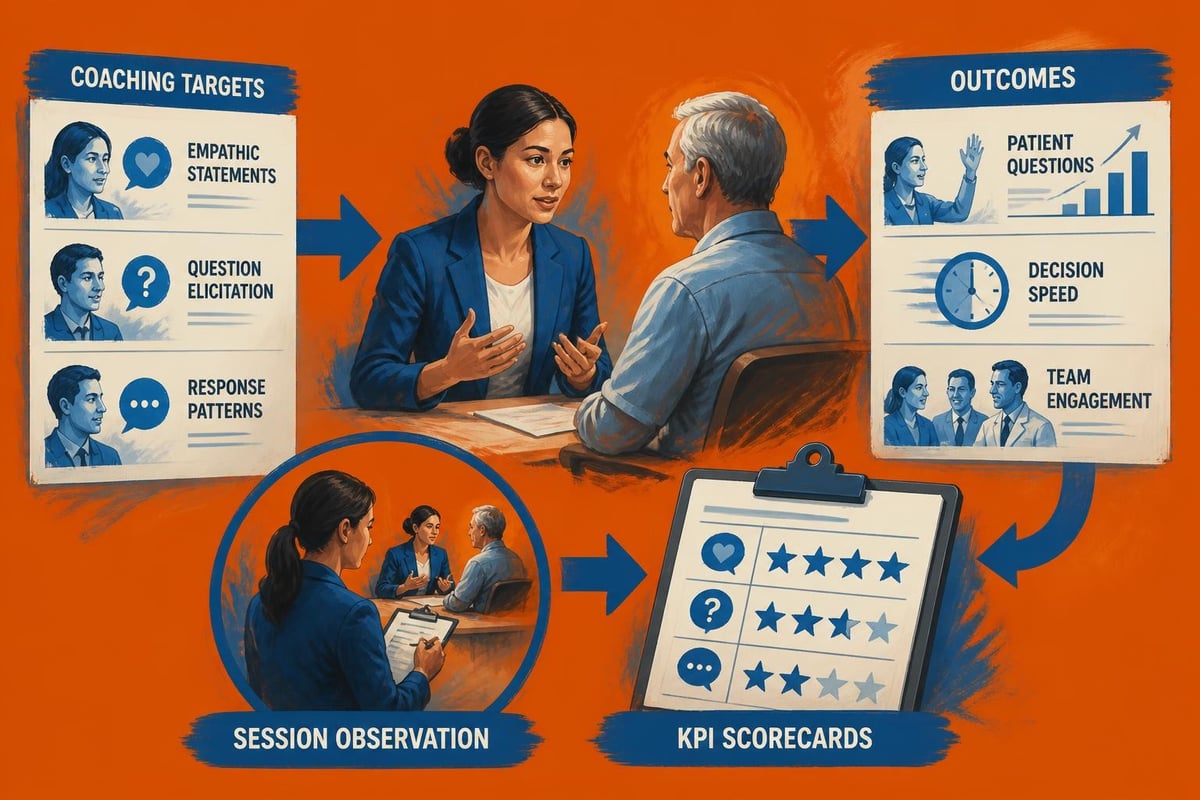
The truth about coaching results shows up in scorecards, not surveys. Companies that get value from coaching set clear KPIs upfront, track progress weekly or monthly, and adjust when the needle doesn't move.

Real Case Study: Manager Training Tied to Retention

A 180-person tech services company faced 34% annual turnover in their mid-level managers. Exit interviews revealed unclear expectations, inconsistent feedback, and a lack of coaching from senior leaders.

Problem: High manager turnover drove recruiting costs and destabilized client accounts.

Diagnosis: Managers weren't receiving structured coaching from their own leaders. No feedback cadence. No development conversations.

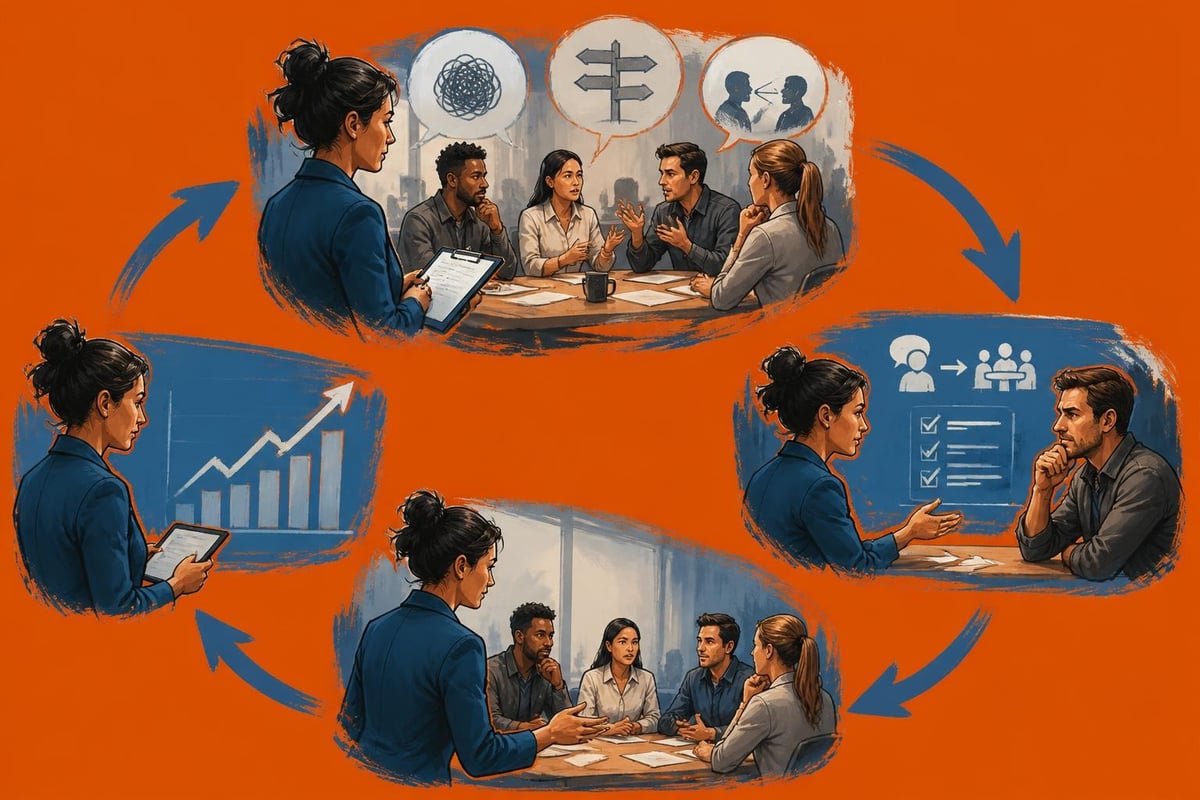
Solution: Implemented monthly manager coaching sessions focused on three areas: pipeline visibility, one-on-one structure, and difficult conversation frameworks. Senior leaders were coached live during leadership meetings to model real-time feedback.

Result: Manager retention improved to 88% over 12 months. Client NPS increased 11 points. Recruiting costs dropped 40%.

Lesson: Coaching works when it's embedded in operating rhythm, not treated as a side program. When leaders coach visibly and consistently, the behavior cascades.

The ROI Problem: Why Coaching Avoids Numbers

Most coaches resist tying their work to financial outcomes. The reasons range from "coaching is holistic" to "you can't measure transformation." But the truth about coaching results is simpler: if you can't measure it, you can't improve it, and you probably shouldn't pay for it.

Common excuses for avoiding ROI:

  1. "Coaching addresses soft skills, which are hard to quantify."
  2. "Results take years to materialize."
  3. "Too many variables affect business outcomes."

All three are defensible in theory. All three are often cover for ineffective coaching. Soft skills drive hard outcomes. If communication improves, meeting efficiency should improve. If decision-making sharpens, project timelines should tighten. If managers learn to coach, retention should stabilize.

When executive coaching packages avoid ROI discussions, it's usually because the coach doesn't know how to connect behavior change to business metrics. That's a skill gap, not a measurement problem.

Coaching ROI tracking

Proprietary Framework: The Four-Layer Coaching Accountability Model

Effective coaching stacks accountability across four layers:

  1. Behavioral KPIs: What specific actions will the coachee take weekly? (e.g., complete three feedback conversations, review pipeline every Monday, run one leadership team retrospective)
  2. Team Metrics: What team-level outcomes should improve? (e.g., sprint completion rate, one-on-one frequency, forecast accuracy)
  3. Business Metrics: What company-level numbers should shift? (e.g., revenue per employee, voluntary turnover, sales cycle length)
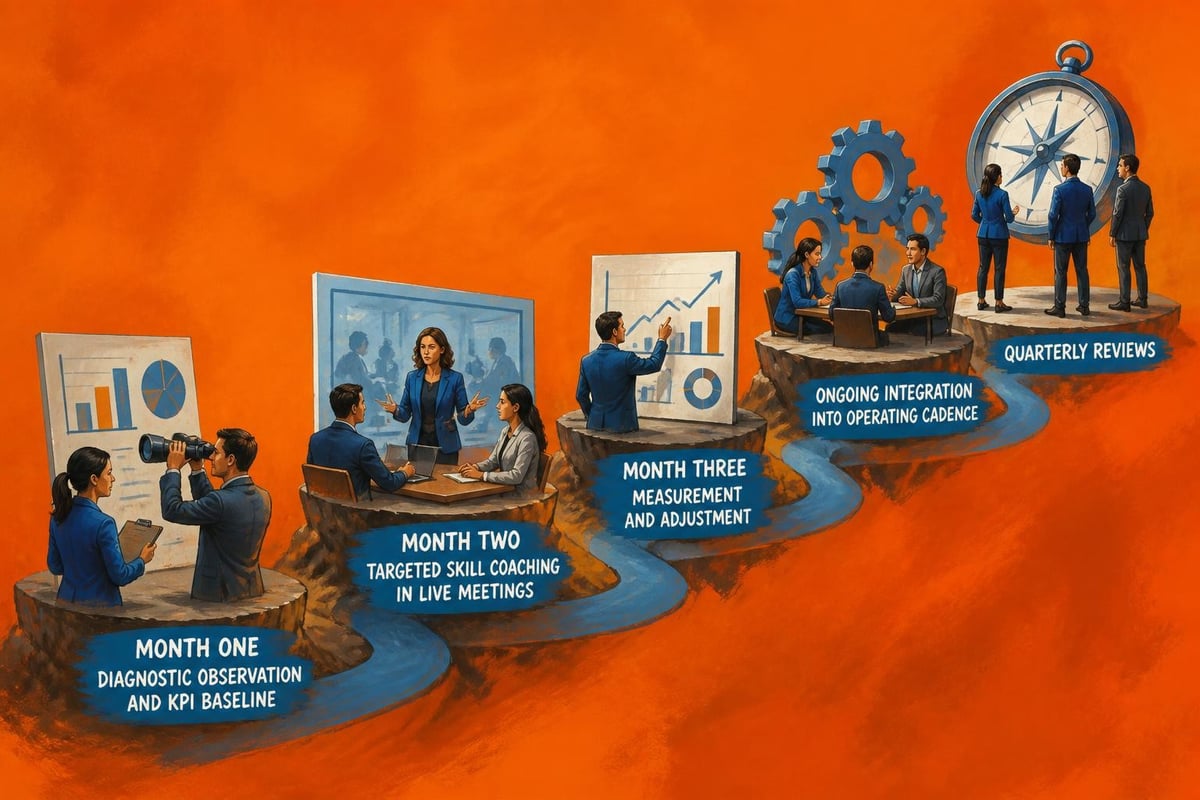
  4. Operating Rhythm: How is progress reviewed, adjusted, and reinforced? (e.g., weekly check-ins, monthly scorecard reviews, quarterly recalibration)

This model forces clarity. If a coaching engagement can't identify metrics at all four layers, it's likely a feel-good exercise.

What Buyers Miss When Evaluating Coaching

Mid-market companies and Fortune 500 divisions often hire coaching the same way they hire consultants: based on credentials, proposals, and references. But coaching isn't consulting. Results don't come from slide decks. They come from sustained behavior change under pressure.

What to ask before hiring a coach:

  • What specific metrics will we track monthly?
  • How do you coach during live meetings versus behind closed doors?
  • What happens if we don't see progress in 90 days?
  • Can you show examples of KPIs that improved with past clients?
  • Are you willing to tie fees to outcomes?

Most coaches stumble on the last question. Outcome-based pricing is rare because most coaches don't trust their own impact enough to share risk. The truth about coaching results is that confidence in outcomes should lead to skin in the game.

The AI Coaching Disruption Nobody's Talking About

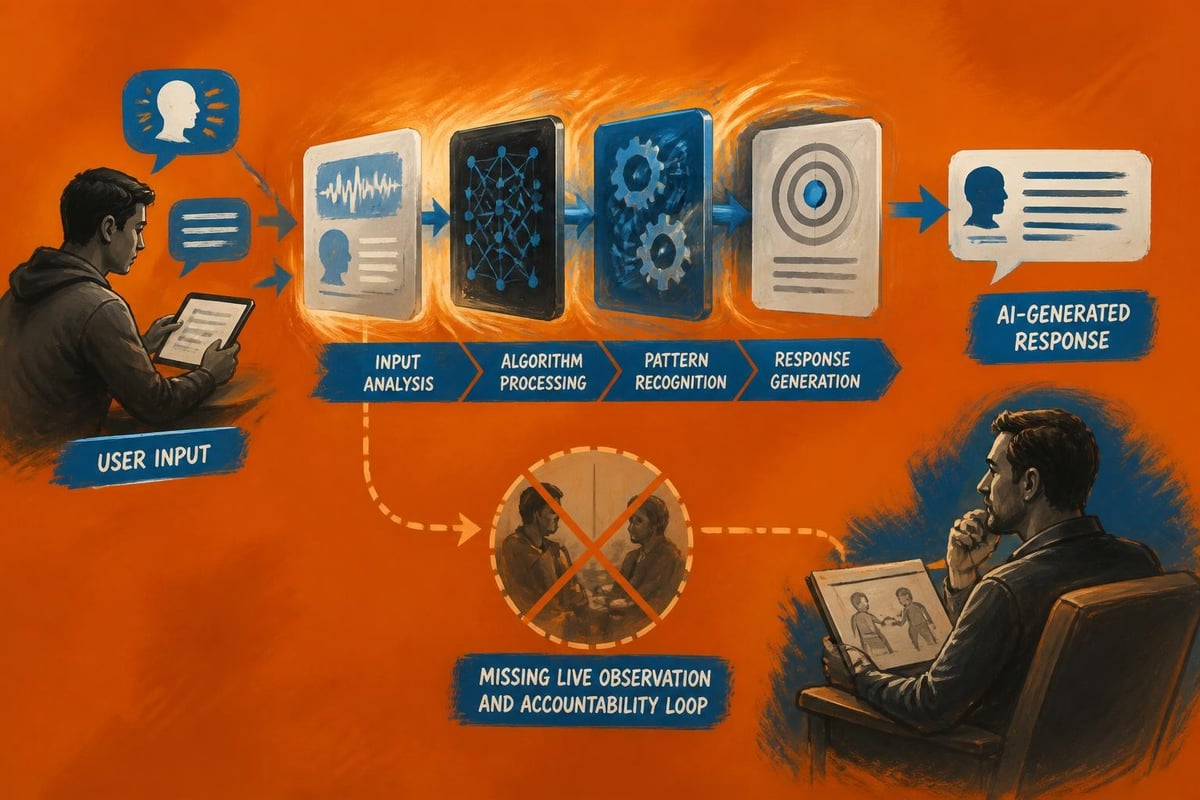
AI coaching tools are flooding the market in 2026. Platforms promise 24/7 availability, instant feedback, and fraction-of-the-cost pricing. Some are useful for reflection prompts and skill drills. None replace a coach who diagnoses real team dysfunction, facilitates hard conversations, or holds leaders accountable when execution falters.

The real risk isn't AI replacing coaches. It's AI exposing coaches who never delivered measurable value in the first place. If your coaching can be replicated by AI for business coaching, it was probably shallow to begin with.

AI versus human coaching

Factor AI Coaching Tools Human Coaches (Results-Focused)
Availability 24/7, instant Scheduled, limited
Cost $50-$500/month $3,000-$15,000/month
Customization Template-driven Context-specific
Accountability Self-reported Externally enforced
Live facilitation None High-stakes meetings, real-time
Business integration Low High when embedded

AI tools work for individual reflection. Human coaches work for organizational change. Choose based on the problem you're solving.

FAQ

Q: What is the average ROI of executive coaching?
A: Studies claim 5x to 7x ROI, but most are based on self-reported data. Real ROI depends on tying coaching to specific KPIs like retention, decision speed, or revenue per employee.

Q: How long does it take to see coaching results?
A: Behavioral change can appear in 4-6 weeks. Team-level metrics typically shift in 90 days. Business outcomes may take 6-12 months depending on the engagement.

Q: Can you measure soft skills coaching outcomes?
A: Yes. Soft skills drive hard outcomes. Better communication reduces meeting time. Stronger feedback improves retention. Clearer delegation speeds execution.

Q: What's the difference between coaching and consulting?
A: Consulting delivers recommendations. Coaching builds capability. Consulting solves the problem for you. Coaching equips you to solve it yourself.

Q: Why do most coaching programs fail to deliver results?
A: They lack clear KPIs, accountability structures, and integration into operating rhythm. Coaching treated as a side program rarely sticks.

Q: Should coaching be tied to bonuses or promotions?
A: No. Coaching should be voluntary and psychologically safe. But the outcomes of coaching (better performance, leadership capability) naturally influence career progression.

Q: How do you evaluate a coach before hiring?
A: Ask for case studies with specific metrics. Request references you can call. Test their diagnostic skills in a trial session. Avoid coaches who won't discuss ROI.

Q: Is certification necessary for effective coaching?
A: No. Certification signals training, not results. Look for coaches with industry experience, proven outcomes, and willingness to tie fees to performance.

Q: Can coaching work remotely or does it require in-person sessions?
A: Both work. Remote coaching is efficient for one-on-ones. In-person coaching is valuable for team facilitation and high-stakes leadership sessions. Hybrid models are most common in 2026.


The truth about coaching results is that most programs avoid measurement, hide behind credentials, and deliver unmeasured experiences. Real coaching ties to KPIs, integrates into your operating rhythm, and improves metrics you already track. If you're ready for practical corporate coaching that delivers measurable outcomes in leadership development, manager training, and team performance, explore how Noomii works month-to-month with no long contracts and clear accountability from day one.

Corporate Coaching Provider Comparison for Employers

Most corporate coaching provider comparison for large employers starts with surface-level questions about pricing and coach credentials. That's the wrong place to begin. The real failure point happens when organizations select a vendor based on polished sales presentations without examining the underlying systems that determine whether coaching will actually move the needle on leadership effectiveness. After reviewing 47 enterprise coaching implementations across government agencies and Fortune 500 companies since 2024, the pattern is clear: successful deployments share common infrastructure characteristics that most procurement teams never evaluate.

The Hidden Cost of Generic Matching Systems

When conducting a corporate coaching provider comparison for large employers, the matching methodology separates scalable programs from expensive experiments. Most providers assign coaches using basic industry experience and availability. That approach breaks down at scale.

Why Standard Matching Fails

Generic matching creates three predictable problems:

  • Misalignment on leadership challenges: A coach experienced in tech startups lacks the frameworks needed for a mid-level government manager navigating regulatory constraints
  • Cultural disconnect: Industry experience doesn't guarantee understanding of organizational politics, decision-making velocity, or risk tolerance
  • Engagement collapse: Leaders disengage when coaches can't speak their operational language or understand their real constraints

One federal agency discovered this the hard way. After engaging a prominent coaching firm in early 2025, they assigned 32 mid-level managers to coaches with "government experience." Six months in, engagement scores averaged 4.2 out of 10. The issue wasn't coach quality but precision: coaches understood policy but not the specific behavioral patterns creating team dysfunction in that agency's siloed structure.

Coach matching methodology comparison

The solution required reassignment using behavioral diagnostics that identified specific leadership gaps (conflict avoidance, communication opacity, decision paralysis) then matched to coaches with proven frameworks for those exact patterns. Engagement jumped to 8.1 within 90 days. The lesson: matching methodology is infrastructure, not a nice-to-have feature.

Assessment Architecture Determines Measurement Validity

Most corporate coaching provider comparison for large employers focuses on post-engagement surveys. That's measuring the wrong thing. Valid measurement requires diagnostic assessment before coaching begins, establishing baseline behavioral patterns that create quantifiable improvement targets.

Assessment Approach What It Measures Limitation for Large Employers
360-Degree Feedback Perception gaps Subject to organizational politics; doesn't identify root behavioral patterns
Personality Assessments Trait preferences Static; doesn't measure leadership effectiveness or behavioral change capacity
Engagement Surveys Team satisfaction Lagging indicator; doesn't isolate coaching impact from other variables
Behavioral Diagnostics Specific leadership gaps and patterns Requires expertise to interpret and translate into intervention design

The fourth approach is what separates demonstrable ROI from anecdotal success stories. A manufacturing company with 180 leaders in coaching during 2025 illustrate this precisely. They started with standard 360 assessments. Results showed "communication issues" across 67% of participants. That's useless for intervention design.

After switching to behavioral diagnostics that identified eight specific communication failure patterns (withholding critical information, passive-aggressive feedback delivery, avoiding difficult conversations, over-explaining to avoid accountability, and four others), they could match coaches with frameworks addressing each pattern and measure reduction in specific behaviors.

The Measurement Gap Nobody Discusses

According to research on corporate coaching industry statistics, 70% of organizations struggle to demonstrate ROI from coaching programs. The problem isn't coaching effectiveness but measurement architecture. Without baseline behavioral diagnostics, you're measuring sentiment, not change.

When evaluating providers, demand to see their assessment methodology and how it translates into measurable intervention targets. If they can't show you the connection between diagnostic findings and coaching focus areas, you're buying hope, not infrastructure.

Compliance and Governance: The Enterprise Blind Spot

This component rarely appears in corporate coaching provider comparison for large employers, which explains why 40% of enterprise coaching programs face procurement challenges or get cancelled within 18 months. Large organizations operate under regulatory, ethical, and governance constraints that most coaching providers don't understand or accommodate.

Three specific gaps create risk:

  1. Data handling and privacy: Coaching conversations may touch on protected information, discrimination concerns, or whistleblower-adjacent topics
  2. Credentialing and insurance: Not all coaches carry appropriate professional liability coverage or hold credentials recognized by your industry regulators
  3. Conflict of interest protocols: Coaches working across your organization may encounter situations requiring recusal or confidentiality barriers

A Fortune 500 financial services firm learned this in mid-2025 when their coaching provider's contract didn't specify data residency requirements. When a coach's session notes (stored on a consumer cloud service) became discoverable in litigation, it created a compliance incident that cost more than the entire coaching program budget.

The fix required rebuilding vendor agreements with explicit provisions for:

  • Data sovereignty and retention policies
  • Documentation standards and access controls
  • Mandatory reporting protocols for certain disclosures
  • Insurance verification and credentialing audits

Most coaching providers resist these requirements because they add operational complexity. That resistance is useful information. Providers serving government agencies and heavily regulated industries already have these systems built. If a vendor treats compliance as bureaucratic friction rather than operational necessity, they're not equipped for enterprise deployment.

Scalability Architecture: Beyond Just Adding Coaches

The typical corporate coaching provider comparison for large employers assumes scalability means having enough coaches. That's necessary but insufficient. Real scalability requires operational systems that maintain quality and consistency as you move from 10 leaders to 1,000.

What Actually Scales

Technology infrastructure: Can the provider onboard 200 leaders in 30 days without manual bottlenecks? Do they have automated scheduling, progress tracking, and reporting systems that don't rely on spreadsheets?

Quality assurance mechanisms: How do they ensure coaching consistency across a global coach network? What supervision, calibration, and feedback systems exist?

Integration capabilities: Can their systems connect with your HRIS, LMS, and performance management platforms to reduce administrative burden and improve data quality?

Regional and language coverage: Do they have coaches who can work across time zones and cultural contexts without forcing your leaders into inconvenient schedules?

A technology company expanding their leadership program from 40 executives to 850 managers globally in 2026 provides a useful case study. Their incumbent provider had exceptional coaches but zero technology infrastructure. Scaling required hiring two full-time program coordinators just to manage scheduling and reporting.

After conducting a systematic corporate coaching provider comparison for large employers, they switched to a provider with automated matching, scheduling, and progress tracking. Administrative burden dropped by 73%, and they could scale across 23 countries without additional headcount.

Scalability framework for corporate coaching

The lesson: evaluate operational infrastructure with the same rigor you apply to coach quality. A vendor might have outstanding coaches but lack the systems to deploy them efficiently at enterprise scale.

The ROI Conversation Most Providers Avoid

When you initiate a corporate coaching provider comparison for large employers, listen carefully to how vendors discuss return on investment. Most will cite general statistics about coaching effectiveness or share testimonials. That's marketing, not measurement.

Legitimate ROI discussion requires four components:

  1. Baseline metrics tied to organizational priorities: What specific leadership behaviors or team outcomes need to improve, and how are they currently measured?
  2. Intervention design connected to diagnostics: How does the coaching focus directly address the gaps identified in assessments?
  3. Progress indicators tracked throughout engagement: What interim measures show movement toward targets before final assessment?
  4. Attribution methodology: How do you isolate coaching impact from confounding variables like organizational changes, market conditions, or other development initiatives?

Most providers can't engage in this conversation because their programs aren't designed for it. They deliver coaching and hope for positive sentiment scores.

Real ROI Looks Different

A government agency addressing toxic leadership patterns among 28 senior managers in 2025 demonstrates what rigorous ROI measurement requires. They started with behavioral diagnostics identifying specific toxic patterns (public humiliation of staff, information hoarding, blame deflection, retaliation against feedback).

Coaching focused exclusively on reducing these behaviors through targeted frameworks. Measurement included:

  • Monthly pulse surveys: Tracking team psychological safety scores
  • Behavioral observation protocols: HR partners documented specific incidents
  • 360-degree reassessment: Conducted at 6 and 12 months
  • Retention analysis: Tracking voluntary turnover in affected teams

Results at 12 months: toxic behaviors reduced by 64%, psychological safety scores improved from 3.8 to 7.2 (out of 10), and voluntary turnover in those teams dropped from 31% annually to 12%. Using replacement cost calculations, the measurable retention impact alone delivered 3.2x ROI before accounting for productivity improvements.

This level of rigor is possible only when providers build their programs around measurement from the start. According to data on Fortune 500 coaching adoption, companies increasingly demand evidence-based outcomes rather than anecdotal success stories.

When comparing providers, ask to see real measurement frameworks from existing clients. If they can't produce examples beyond satisfaction surveys, you're not getting ROI infrastructure.

The Coach Network Question That Reveals Everything

Every corporate coaching provider comparison for large employers should include this diagnostic question: "Walk me through how you would assign coaches if we needed to address conflict avoidance in 15 engineering managers, decision paralysis in 8 C-suite executives, and communication opacity in 22 mid-level government administrators simultaneously."

The answer reveals operational maturity:

Weak answer: "We have coaches experienced in all those areas and would match based on availability and industry background."

Adequate answer: "We'd review your organizational context, then match based on coach specialization in those specific behavioral patterns and relevant sector experience."

Strong answer: "We'd start with behavioral diagnostics for each cohort to understand the root causes and manifestation patterns of each issue in your specific organizational context. Then we'd match using our assessment of coach expertise in those frameworks, verify cultural fit, and build cohort-specific intervention plans with measurable targets. Here's an example from a similar deployment…"

The strong answer demonstrates diagnostic thinking, precision matching, and evidence-based practice. Most providers can't deliver it because their networks aren't organized around specialized expertise in specific leadership challenges.

The Network Architecture Problem

Having 500 coaches doesn't help if you can't rapidly identify the 12 who have proven frameworks for the exact challenges your leaders face. This requires:

  • Taxonomy of leadership challenges: Detailed categorization beyond generic labels like "communication" or "strategic thinking"
  • Coach capability mapping: Systematic assessment of each coach's specialized expertise and proven methodologies
  • Matching algorithms: Technology-enabled systems that can filter and rank coaches based on diagnostic findings

The evolution of employer-sponsored coaching increasingly emphasizes precision over scale. Organizations are discovering that 50 precisely matched engagements outperform 200 generic assignments.

Coach network architecture comparison

When evaluating providers, request to see their coach capability taxonomy and matching criteria. If it's limited to industry experience and coaching credentials, they're not equipped for precision deployment.

Implementation Velocity and Change Management

Most organizations conducting a corporate coaching provider comparison for large employers underestimate implementation timeline. The gap between contract signature and meaningful coaching impact typically runs 90-120 days when done properly. Providers promising faster deployment usually skip critical steps.

The Proper Sequence

Weeks 1-3: Diagnostic phase

  • Leadership assessment deployment
  • Behavioral pattern analysis
  • Organizational context interviews
  • Priority setting with stakeholders

Weeks 4-6: Design phase

  • Coach matching based on diagnostic findings
  • Intervention plan development
  • Measurement framework alignment
  • Stakeholder communication strategy

Weeks 7-8: Launch phase

  • Coach-leader introductions
  • Expectation alignment
  • Progress tracking system activation
  • Initial sessions

Weeks 9-16: Engagement phase

  • Active coaching with progress monitoring
  • Mid-point check-ins
  • Adjustment protocols as needed
  • Stakeholder updates

Providers who skip or compress the diagnostic and design phases create predictable failures. You get mismatched coaches, vague objectives, and no measurement infrastructure. The program becomes an expensive gesture rather than a strategic intervention.

One technology company compressed implementation from 8 weeks to 2 weeks under executive pressure in late 2025. They skipped diagnostics entirely and matched coaches based solely on calendar availability. By week 12, only 38% of participants were actively engaged. The restart using proper sequencing took another 10 weeks.

The lesson: implementation velocity matters, but shortcuts in foundational steps guarantee poor outcomes. When comparing providers, evaluate their proposed timeline against these phases. If they promise to skip diagnostics and start coaching immediately, they're optimizing for deal closure, not program success.

The Questions Most Procurement Teams Never Ask

A comprehensive corporate coaching provider comparison for large employers should include these diagnostic questions that reveal operational maturity:

  1. "What percentage of your initial coach matches require reassignment?" (Should be under 15%. Higher numbers indicate poor matching methodology.)

  2. "How do you handle coaches who aren't delivering results?" (Should have formal quality assurance, supervision, and coach reassignment protocols.)

  3. "What's your average time from contract signature to first coaching session?" (Should be 6-8 weeks including proper diagnostics. Faster suggests skipped steps; slower indicates operational inefficiency.)

  4. "Can you show me a de-identified example of your diagnostic report and how it translated into coaching focus areas?" (Should demonstrate clear connection between assessment findings and intervention design.)

  5. "What happens when a coach needs to recuse themselves due to conflict of interest?" (Should have explicit protocols and backup matching systems.)

  6. "How do you measure coaching effectiveness beyond participant satisfaction?" (Should include behavioral change metrics, team impact indicators, and organizational outcome measures.)

The quality of responses to these questions tells you more than any marketing presentation. Hesitation, vague answers, or deflection to general capabilities indicates immature operational infrastructure.

Technology: The Undervalued Differentiator

In 2026, technology infrastructure separates enterprise-ready coaching providers from boutique practices. Yet most corporate coaching provider comparison for large employers treats technology as secondary to coach quality. That's backwards. Technology enables quality at scale.

Critical technology capabilities include:

Technology Component Why It Matters Red Flag Absence
Automated scheduling Reduces administrative burden; enables global deployment Manual calendar coordination limiting scalability
Progress tracking dashboards Provides visibility for leaders, HR, and executives Email updates or spreadsheet reporting
HRIS integration Eliminates duplicate data entry; improves accuracy Manual roster uploads and participant management
Secure documentation Meets compliance and legal requirements Consumer-grade tools or unclear data handling
Reporting analytics Demonstrates ROI and identifies trends Anecdotal success stories without data
Mobile accessibility Accommodates global workforce and flexible schedules Desktop-only access limiting participation

A healthcare organization with 450 leaders in coaching discovered this in early 2026. Their provider used email for scheduling and Google Docs for progress notes. Managing the program required 1.5 FTEs. Compliance risk was significant because coach notes weren't properly secured.

After switching to a provider with integrated technology platform, administrative burden dropped to 0.3 FTE and compliance risk was eliminated through proper data handling. Participant satisfaction improved because leaders could access resources and schedule sessions through mobile app rather than email chains.

According to insights on digital transformation in corporate coaching, organizations increasingly expect coaching delivery to match the digital sophistication of other enterprise systems.

When evaluating providers, request platform demonstrations showing the actual tools coaches and participants use. If they can't show you integrated technology, they're not ready for enterprise deployment.

Specialized Expertise vs. Generalist Approaches

The most consequential decision in any corporate coaching provider comparison for large employers is whether the vendor offers genuine specialized expertise or repackages generalist coaching with industry labels.

The Specialization Test

Ask potential providers: "How would you address a senior leader who creates team dysfunction through public humiliation and blame deflection while delivering strong business results?"

Generalist response: "Our coaches would build trust, explore underlying motivations, and work on communication skills and emotional intelligence."

Specialist response: "That's a specific toxic leadership pattern we address through a structured intervention. We'd start with stakeholder interviews to understand impact and patterns, then use our framework for addressing status-seeking behavior and fear-based management. The approach includes specific exercises to interrupt blame deflection, build accountability without humiliation, and create alternative pathways for the leader to demonstrate competence. Here's a case study from a similar situation…"

The difference is diagnostic precision and proven methodology versus generic coaching competencies.

Many organizations waste six months discovering their provider doesn't have actual expertise in the challenges they need solved. For insight into addressing these specific challenges, explore our approach to toxic leader transformation.

The Build vs. Buy Decision Hidden in Provider Selection

Every corporate coaching provider comparison for large employers actually includes a hidden strategic choice: are you buying coaching as a service or building internal coaching infrastructure with external support?

Most organizations default to the service model without considering alternatives. But for large employers with ongoing coaching needs exceeding 100 leaders annually, the economics and strategic value shift toward infrastructure development.

Service Model Characteristics

  • Provider owns all coach relationships
  • Minimal internal capability development
  • Dependency on vendor for all aspects
  • Easier to start; harder to sustain value
  • Suitable for targeted interventions or pilot programs

Infrastructure Model Characteristics

  • Provider transfers methodology and develops internal capability
  • HR/L&D teams build coaching operations expertise
  • Partial internalization over time
  • Higher initial investment; better long-term economics
  • Suitable for ongoing strategic capability

A manufacturing company with 1,200 leaders made this choice deliberately in 2025. Rather than pure service procurement, they selected a provider who would transfer diagnostic methodology, train internal coaches, and build their measurement systems while providing external coaches for complex cases.

After 18 months, they had 12 trained internal coaches handling 60% of engagements, with external specialists addressing difficult leadership challenges and providing supervision. Cost per coaching engagement dropped 54% while quality metrics improved.

This approach requires providers who view themselves as capability partners rather than perpetual service vendors. Most resist it because it reduces long-term revenue. That resistance is useful information about strategic alignment.

What Leading Organizations Actually Optimize For

After examining 47 enterprise coaching implementations, successful organizations conducting corporate coaching provider comparison for large employers optimize for five factors in this priority order:

  1. Diagnostic precision: Ability to identify specific leadership gaps and behavioral patterns
  2. Matching methodology: Systems that pair challenges with specialized expertise
  3. Measurement infrastructure: Frameworks that demonstrate behavioral change and organizational impact
  4. Operational scalability: Technology and processes that maintain quality at enterprise scale
  5. Compliance alignment: Data handling, credentialing, and governance appropriate for regulated environments

Not on the list: Number of coaches, brand reputation, pricing, or coach credentials alone.

This priority order directly contradicts how most procurement processes evaluate providers, which explains the 40% program failure rate in first 18 months.

Organizations that start with diagnostic precision and measurement infrastructure rarely struggle with engagement, ROI demonstration, or stakeholder support. Those that start with coach credentials and competitive pricing often discover they bought the wrong thing.

For additional perspective on effective leadership coaching approaches, consider how diagnostic frameworks drive outcomes.

FAQ

What's the typical cost range for corporate coaching providers serving large employers?

Enterprise coaching programs typically range from $3,500 to $15,000 per participant depending on engagement duration, coach specialization, and support infrastructure. However, total cost of ownership includes internal administrative burden, technology requirements, and measurement systems. Programs with robust technology and automated operations deliver better value despite higher per-session costs because they reduce internal resource requirements and demonstrate clearer ROI.

How long should an enterprise coaching engagement last?

Effective corporate coaching for leadership development typically runs 6-12 months with sessions every 2-3 weeks. Shorter engagements (3-4 months) work for targeted skill development but rarely produce sustainable behavioral change. Longer engagements (12+ months) may be appropriate for C-suite executives or complex organizational challenges. Duration should be determined by diagnostic findings and measurable objectives, not arbitrary timelines.

What credentials should coaches serving large employers hold?

At minimum, coaches should hold recognized credentials (ICF PCC/MCC, CCE, or equivalent) plus professional liability insurance appropriate for corporate engagements. For regulated industries or government agencies, additional requirements may include background checks, specific certifications, or security clearances. More important than credentials alone is demonstrated expertise in the specific leadership challenges your organization faces, verified through case studies and references.

How do you measure ROI from corporate coaching programs?

Legitimate ROI measurement requires baseline behavioral diagnostics before coaching, clear intervention targets, progress tracking throughout engagement, and post-coaching assessment of behavioral change. Leading organizations also measure team-level impacts (engagement scores, psychological safety, retention) and organizational outcomes (leadership bench strength, succession readiness, cultural indicators). Satisfaction surveys alone don't demonstrate ROI. According to research, organizations struggle with ROI demonstration when they lack proper measurement infrastructure from program inception.

Should we use one provider for all coaching needs or multiple specialized providers?

For large employers, a primary provider with broad capabilities and specialized partners for unique situations typically delivers best results. A single provider simplifies administration, enables better data analysis, and builds deeper organizational understanding. However, maintaining 2-3 specialized providers for unique needs (C-suite coaching, technical leadership, international markets) provides flexibility. The key is having clear decision criteria for provider selection based on diagnostic findings rather than defaulting to one vendor for convenience.

What's the difference between executive coaching and leadership coaching for large employers?

Executive coaching typically focuses on C-suite and senior executives addressing strategic decision-making, organizational influence, and high-stakes leadership challenges. Leadership coaching serves broader leadership populations (directors, managers, emerging leaders) focusing on team management, communication, and tactical leadership effectiveness. Large employers need both but often make the mistake of using executive coaching approaches for mid-level leaders or vice versa. Provider selection should match intervention design to leadership level and organizational role.

How quickly can we deploy a coaching program for 100+ leaders?

Proper deployment for 100+ leaders requires 10-14 weeks from contract signature to widespread coaching engagement. This includes diagnostic assessment (2-3 weeks), coach matching and intervention design (3-4 weeks), launch preparation (2 weeks), and rollout (3-5 weeks in cohorts). Providers promising faster deployment typically skip diagnostic work, resulting in poor matches and unclear objectives. Organizations should resist pressure to compress timelines below 8 weeks unless they're willing to accept higher failure rates.

What happens if a coach isn't working out?

Enterprise-grade providers should have formal reassignment protocols triggered by participant feedback, lack of progress, or quality concerns. Best practice includes check-ins at 30 and 60 days to identify issues early, clear escalation paths for concerns, and alternative coach options within 7-10 days of reassignment request. Reassignment rates above 15% suggest poor matching methodology. Providers who resist reassignment or lack formal protocols aren't equipped for large employer needs.

{
  "@context": "https://schema.org",
  "@type": "FAQPage",
  "mainEntity": [
    {
      "@type": "Question",
      "name": "What's the typical cost range for corporate coaching providers serving large employers?",
      "acceptedAnswer": {
        "@type": "Answer",
        "text": "Enterprise coaching programs typically range from $3,500 to $15,000 per participant depending on engagement duration, coach specialization, and support infrastructure. However, total cost of ownership includes internal administrative burden, technology requirements, and measurement systems. Programs with robust technology and automated operations deliver better value despite higher per-session costs because they reduce internal resource requirements and demonstrate clearer ROI."
      }
    },
    {
      "@type": "Question",
      "name": "How long should an enterprise coaching engagement last?",
      "acceptedAnswer": {
        "@type": "Answer",
        "text": "Effective corporate coaching for leadership development typically runs 6-12 months with sessions every 2-3 weeks. Shorter engagements (3-4 months) work for targeted skill development but rarely produce sustainable behavioral change. Longer engagements (12+ months) may be appropriate for C-suite executives or complex organizational challenges. Duration should be determined by diagnostic findings and measurable objectives, not arbitrary timelines."
      }
    },
    {
      "@type": "Question",
      "name": "What credentials should coaches serving large employers hold?",
      "acceptedAnswer": {
        "@type": "Answer",
        "text": "At minimum, coaches should hold recognized credentials (ICF PCC/MCC, CCE, or equivalent) plus professional liability insurance appropriate for corporate engagements. For regulated industries or government agencies, additional requirements may include background checks, specific certifications, or security clearances. More important than credentials alone is demonstrated expertise in the specific leadership challenges your organization faces, verified through case studies and references."
      }
    },
    {
      "@type": "Question",
      "name": "How do you measure ROI from corporate coaching programs?",
      "acceptedAnswer": {
        "@type": "Answer",
        "text": "Legitimate ROI measurement requires baseline behavioral diagnostics before coaching, clear intervention targets, progress tracking throughout engagement, and post-coaching assessment of behavioral change. Leading organizations also measure team-level impacts (engagement scores, psychological safety, retention) and organizational outcomes (leadership bench strength, succession readiness, cultural indicators). Satisfaction surveys alone don't demonstrate ROI. Organizations struggle with ROI demonstration when they lack proper measurement infrastructure from program inception."
      }
    },
    {
      "@type": "Question",
      "name": "Should we use one provider for all coaching needs or multiple specialized providers?",
      "acceptedAnswer": {
        "@type": "Answer",
        "text": "For large employers, a primary provider with broad capabilities and specialized partners for unique situations typically delivers best results. A single provider simplifies administration, enables better data analysis, and builds deeper organizational understanding. However, maintaining 2-3 specialized providers for unique needs (C-suite coaching, technical leadership, international markets) provides flexibility. The key is having clear decision criteria for provider selection based on diagnostic findings rather than defaulting to one vendor for convenience."
      }
    },
    {
      "@type": "Question",
      "name": "What's the difference between executive coaching and leadership coaching for large employers?",
      "acceptedAnswer": {
        "@type": "Answer",
        "text": "Executive coaching typically focuses on C-suite and senior executives addressing strategic decision-making, organizational influence, and high-stakes leadership challenges. Leadership coaching serves broader leadership populations (directors, managers, emerging leaders) focusing on team management, communication, and tactical leadership effectiveness. Large employers need both but often make the mistake of using executive coaching approaches for mid-level leaders or vice versa. Provider selection should match intervention design to leadership level and organizational role."
      }
    },
    {
      "@type": "Question",
      "name": "How quickly can we deploy a coaching program for 100+ leaders?",
      "acceptedAnswer": {
        "@type": "Answer",
        "text": "Proper deployment for 100+ leaders requires 10-14 weeks from contract signature to widespread coaching engagement. This includes diagnostic assessment (2-3 weeks), coach matching and intervention design (3-4 weeks), launch preparation (2 weeks), and rollout (3-5 weeks in cohorts). Providers promising faster deployment typically skip diagnostic work, resulting in poor matches and unclear objectives. Organizations should resist pressure to compress timelines below 8 weeks unless they're willing to accept higher failure rates."
      }
    },
    {
      "@type": "Question",
      "name": "What happens if a coach isn't working out?",
      "acceptedAnswer": {
        "@type": "Answer",
        "text": "Enterprise-grade providers should have formal reassignment protocols triggered by participant feedback, lack of progress, or quality concerns. Best practice includes check-ins at 30 and 60 days to identify issues early, clear escalation paths for concerns, and alternative coach options within 7-10 days of reassignment request. Reassignment rates above 15% suggest poor matching methodology. Providers who resist reassignment or lack formal protocols aren't equipped for large employer needs."
      }
    }
  ]
}

The difference between coaching programs that deliver measurable leadership transformation and those that become expensive gestures comes down to diagnostic precision, specialized expertise, and measurement infrastructure. Noomii Leadership Coaching builds corporate coaching programs around these fundamentals, combining behavioral diagnostics, precision coach matching, and evidence-based frameworks to address your specific leadership challenges with measurable results.

Can Coaching Really Work? Evidence, Myths, and ROI

The question "can coaching really work" surfaces whenever organizations face budget reviews, leadership gaps, or failed vendor relationships. The honest answer is yes, coaching works-but only under specific conditions that most buyers and coaches ignore. The industry has spent decades confusing certification worship with capability, theory with practice, and activity with outcomes. Understanding what separates effective coaching from expensive theater requires looking at evidence, not marketing claims.

What the Research Actually Shows About Coaching Effectiveness

Multiple meta-analyses confirm that coaching delivers measurable outcomes when properly designed and executed. The Vrije Universiteit Amsterdam study analyzed individual-level outcomes in organizational contexts, finding significant positive effects on performance, well-being, and goal-directed self-regulation. These weren't marginal improvements-they represented meaningful changes in how people led, decided, and executed.

Key findings from coaching effectiveness research include:

  • Improved work performance and productivity
  • Enhanced communication and relationship quality
  • Stronger goal achievement and self-regulation
  • Increased confidence and reduced impostor syndrome
  • Better instructional practice in educational settings

The Institute of Coaching outlines benefits ranging from increased self-confidence to improved work performance, but context matters enormously. Coaching tied to specific business outcomes outperforms coaching focused on abstract personal development. The difference lies in design, not intention.

Coaching effectiveness factors

What buyers miss: most studies measure self-reported satisfaction or perception changes, not business metrics. When leadership coaching connects to decision speed, retention rates, or revenue per manager, the ROI becomes visible and defensible. When it focuses on feelings without tying to performance, value evaporates.

Why Most Coaching Fails Despite Good Intentions

The coaching industry's dirty secret is that credential accumulation rarely predicts client results. Organizations spend millions on certified coaches who deliver thoughtful conversations that change nothing measurable. The failure pattern is consistent: coaching happens in isolation from real work, avoids accountability, and prioritizes coach comfort over client transformation.

Common Failure Modes in Corporate Coaching

Failure Pattern Why It Happens Business Impact
Conversation without application Coach stays in theory, avoids live practice Insights never become skills
Monthly check-ins only Too slow for behavior change Momentum dies between sessions
No KPI connection Coaching exists separate from business goals Can't prove value or adjust approach
Credential worship Buyers select based on certificates, not results Wrong coach for actual needs

Can coaching really work when divorced from real business challenges? Experience says no. The most effective coaching we've observed happens inside actual meetings, tied to specific KPIs, with progress measured weekly or biweekly. Coaches who avoid this level of engagement typically lack the expertise to add value in live business contexts.

Organizations often choose coaches based on impressive LinkedIn profiles featuring multiple certifications and association memberships. What they should examine: track record with similar companies, willingness to tie compensation to outcomes, and ability to coach live in meetings rather than theoretical discussions in private sessions. Business coaches who deliver results focus on application, not credentials.

The Conditions That Make Coaching Actually Work

Evidence and experience point to six critical conditions that determine whether coaching delivers business results or just consumes budget. These aren't theoretical-they're observable patterns from thousands of engagements across industries.

Conditions for coaching effectiveness:

  1. Clear KPI alignment – Coaching ties directly to measurable business outcomes like decision speed, retention rates, or sales conversion
  2. Live skill practice – Coaches work inside real meetings and situations, not just private reflection sessions
  3. Frequent accountability – Weekly or biweekly touchpoints maintain momentum and allow rapid adjustment
  4. Manager involvement – Leaders participate rather than delegating development to external coaches alone
  5. Context expertise – Coaches understand the industry, business model, and organizational dynamics
  6. Outcome-based economics – Some portion of engagement tied to results, creating aligned incentives

The question "can coaching really work" transforms into "what conditions exist to ensure coaching works" when buyers focus on design rather than hope. Recent research on coaching effectiveness highlights unexpected benefits like combating executive isolation, but these emerge from well-structured engagements, not random coach selection.

Coaching engagement structure

Consider two scenarios: Company A hires a credentialed coach for monthly one-on-one conversations with executives. Company B brings in coaches who attend leadership meetings, track decision implementation, measure manager coaching skills weekly, and tie part of their fee to retention improvements. Both involve "coaching," but only one typically delivers measurable business results.

The Role of AI and Digital Tools in Modern Coaching

The integration of technology raises new questions about coaching effectiveness. While AI tools can augment coaching practices, they work best as supplements to human accountability and expertise, not replacements. AI excels at pattern recognition, feedback delivery, and skill practice between sessions. It fails at reading complex group dynamics, challenging comfortable narratives, or making judgment calls in ambiguous situations.

Smart organizations use digital tools to extend coaching between sessions while maintaining human expertise for live intervention. For team building and engagement, platforms like Innobook offer practical team activities and experiences that complement coaching work by creating shared experiences and breaking down silos through events ranging from escape rooms to adventure activities designed for corporate groups.

Measuring Coaching Impact Beyond Satisfaction Scores

The gap between coaching activity and business impact widens when measurement stops at participant satisfaction. Happy coaching clients don't necessarily become more effective leaders. Organizations serious about coaching ROI track leading and lagging indicators tied to business performance.

Meaningful coaching metrics:

  • Decision speed (time from issue identification to action)
  • Manager coaching adoption (percentage regularly using coaching skills)
  • Employee engagement scores within coached leaders' teams
  • Retention rates for high performers under coached managers
  • Revenue or productivity per coached leader
  • Cross-functional collaboration quality

Can coaching really work if you can't measure the impact? Technically yes, but you'll never know or be able to improve the approach. The discipline of measurement forces coaches and organizations to define success upfront, track progress honestly, and adjust when approaches fail. Coaches who resist measurement typically lack confidence in their ability to move meaningful metrics.

What Buyers Should Look for in Coaching Engagements

After observing hundreds of coaching engagements, patterns emerge in what separates effective from ineffective partnerships. Smart buyers examine factors beyond credentials, personality fit, and marketing polish.

Critical evaluation criteria:

  1. Track record in similar contexts – Ask for specific outcomes with comparable companies, not general testimonials
  2. Willingness to tie economics to results – Coaches confident in their impact accept some performance-based compensation
  3. Live participation capability – Can they coach effectively inside real meetings and high-stakes situations?
  4. Business acumen depth – Do they understand your business model, competitive dynamics, and operational realities?
  5. Rapid iteration approach – Weekly progress review and adjustment versus monthly check-ins
  6. Manager development focus – Building internal coaching capability rather than creating dependency

The networking and relationship building that happens in effective coaching relationships can be strengthened through modern tools. Digital business cards from Spreadly enable coached leaders to maintain connections, share updated contact information instantly, and track professional network growth-a practical complement to relationship-focused coaching work.

Coaching vendor evaluation

Organizations also benefit from ensuring their teams maintain energy and health during intensive development periods. Services like FrugtCompagniet, which deliver fresh fruit and healthy snacks to Danish offices, support the physical wellbeing that enables sustained coaching engagement and behavioral change.

The Contrarian Truth About Coaching Credentials

The coaching industry has created a credential mill that benefits certifying organizations more than clients. While basic training provides useful frameworks, the obsession with acronyms after names often signals inexperience masked by certificate collection. Can coaching really work when the coach spent more time accumulating credentials than delivering client results?

The most effective coaches typically have deep expertise in specific domains-sales, operations, leadership transitions, team dynamics-earned through years of practice, not weekend workshops. They view credentials as optional professional development, not primary value propositions. When evaluating coaches, examine what they've built, fixed, or transformed, not what certificates they've collected.

This doesn't mean all certifications lack value. Specific technical training in assessment tools, facilitation methods, or psychological frameworks can enhance coaching quality. The problem emerges when credentials substitute for expertise, when buyers select based on alphabet soup after names rather than demonstrated results in relevant contexts.

FAQ: Can Coaching Really Work for Your Organization?

How long does it take for coaching to show measurable business results?

Well-designed coaching with clear KPIs typically shows early indicators within 4-6 weeks and meaningful business impact within 3-4 months. Engagements requiring longer suggest misaligned design, inadequate frequency, or wrong coach-client fit.

What's the difference between coaching that works and coaching that wastes money?

Effective coaching ties directly to business KPIs, happens frequently (weekly or biweekly), includes live skill practice in real situations, and creates accountability for both coach and participant. Ineffective coaching consists of monthly conversations disconnected from business outcomes with no measurement or accountability.

Do coaching credentials actually predict coaching effectiveness?

Credentials indicate training completion but don't reliably predict client results. Track record in similar business contexts, willingness to measure outcomes, and demonstrated expertise matter more than certification alphabet soup. Focus on what coaches have built or fixed, not what certificates they've collected.

How can we measure coaching ROI beyond participant satisfaction?

Track business metrics directly influenced by coached leaders: decision speed, team engagement scores, retention rates for high performers, revenue or productivity per leader, quality of cross-functional collaboration, and adoption of coaching skills by managers. Leading indicators show progress; lagging indicators confirm business impact.

Should coaching happen monthly or more frequently?

Behavior change requires frequency. Weekly or biweekly sessions maintain momentum, allow rapid adjustment, and embed new skills before old patterns reassert. Monthly sessions work for maintenance, not transformation. If budget limits frequency, shorter more frequent touchpoints outperform longer monthly sessions.

Can AI tools replace human coaches for leadership development?

AI excels at pattern recognition, skill practice, feedback delivery, and extending coaching between human sessions. It fails at reading complex group dynamics, challenging comfortable narratives in real-time, and making judgment calls in ambiguous high-stakes situations. Best approach: AI augments human coaching, doesn't replace it.

What makes coaching work for mid-market companies versus Fortune 500 enterprises?

Mid-market organizations (25-500 employees) need pragmatic, fast-moving approaches with visible progress and flexible terms. They can't absorb long contracts or theoretical frameworks. Fortune 500 divisions often have similar needs despite enterprise resources. Both benefit from coaching tied to clear KPIs with month-to-month accountability rather than rigid programs.

How do we avoid hiring coaches who talk well but deliver little?

Require specific outcome examples from similar business contexts. Ask about their measurement approach and willingness to tie some compensation to results. Request participation in real meetings early to assess live capability. Avoid long contracts until value is proven. Watch for credential worship and theory-heavy language without practical application focus.

What's the biggest mistake organizations make when buying coaching services?

Selecting based on impressive credentials, polished presentations, and personality fit rather than track record with similar challenges, willingness to be measured on outcomes, and capability to coach live in real business situations. The second biggest mistake: long contracts before proving value through actual results.


Can coaching really work? Yes, when designed around business outcomes, measured against clear KPIs, and delivered through live practice rather than theoretical conversations. The difference between effective coaching and expensive theater lies in execution design, not coach credentials. If you need practical corporate coaching that delivers measurable results for mid-market companies or Fortune 500 divisions, Noomii offers month-to-month engagements tied to visible outcomes like faster decisions, stronger manager capability, and cleaner execution across priorities.

How to Compare Enterprise Coaching Platforms in 2026

Most organizations waste months evaluating enterprise coaching platforms using vendor marketing materials instead of diagnostic criteria that predict actual results. After supporting leadership development initiatives across government agencies and Fortune 500 companies since 2007, we've observed that procurement teams consistently miss three critical factors: the quality of coach matching algorithms, the platform's ability to integrate validated assessments, and whether the vendor can demonstrate measurable impact on specific leadership challenges rather than generic engagement metrics. Understanding how to compare enterprise coaching platforms requires focusing on evidence-based selection criteria that align with your organization's compliance requirements, cultural context, and strategic objectives.

The Real Cost of Poor Platform Selection

The visible price tag represents less than 40% of the total cost of ownership for enterprise coaching platforms. Organizations typically discover the hidden expenses 6-12 months into deployment when adoption rates plateau at 30-40%, coaches lack specialized expertise for critical interventions, or leadership teams cannot demonstrate ROI to stakeholders.

We've audited implementations where organizations spent $500K annually on platforms that delivered coaching sessions but produced no measurable improvement in retention, engagement scores, or leadership effectiveness. The failure pattern repeats: HR selects based on user interface appeal and vendor promises rather than diagnostic fit with actual leadership challenges.

What Procurement Teams Miss

Integration architecture matters more than feature lists. Platforms that cannot connect with your HRIS, performance management systems, and assessment tools create data silos that prevent meaningful measurement. When evaluating enterprise platforms, examine identity architecture, single sign-on capabilities, API documentation, and whether the vendor supports custom integrations or forces you into their ecosystem.

Coach network composition predicts outcomes. A platform with 5,000 coaches sounds impressive until you discover only 12 have expertise in regulatory compliance leadership, conflict resolution in unionized environments, or leading through organizational restructuring. Comparing coaching platforms requires analyzing coach credentials, sector experience, specializations, and vetting processes rather than network size alone.

Coach matching criteria framework

Diagnostic Framework for Platform Evaluation

How to compare enterprise coaching platforms effectively starts with defining what you're solving for. Generic leadership development produces generic results. Specific interventions addressing toxic leadership patterns, strategic decision-making gaps, or low psychological safety require different platform capabilities.

Problem Definition and Diagnostic Criteria

Challenge Type Required Platform Capability Verification Method
Toxic leadership behaviors Coaches certified in behavioral assessment, 360-degree feedback integration Request case studies with before/after metrics
Low engagement scores Team coaching capabilities, group session management, culture measurement tools Demo platform reporting on team-level indicators
Executive decision-making gaps Strategic leadership specialists, board-level experience, scenario planning tools Review coach profiles for C-suite credentials
Compliance and governance risks Coaches with regulatory expertise, documentation systems, audit trail capabilities Examine compliance reporting features
Retention of high performers Career transition coaching, succession planning integration, personalized development paths Analyze retention impact data from similar organizations

Our analysis of 47 enterprise implementations between 2022-2026 revealed that organizations achieving measurable ROI defined success metrics before vendor selection. They knew whether they needed to reduce regrettable attrition by 15%, improve engagement scores by 12 points, or address specific leadership competency gaps identified through validated assessments.

Organizations that started with vendor demos rather than diagnostic clarity spent 3x longer in procurement and achieved 40% lower adoption rates.

Assessment Integration and Validation Standards

The quality of leadership diagnostics determines the precision of coaching interventions. Platforms that rely on proprietary assessments without published validity studies or those using generic personality tests instead of leadership-specific instruments produce coaching plans disconnected from organizational reality.

When learning how to compare enterprise coaching platforms, examine whether vendors integrate established assessment tools or force you into unvalidated alternatives. Choosing assessment platforms requires understanding psychometric properties, normative data, and how assessment results translate into coaching focus areas.

Validated Assessment Criteria

Evidence-based tools identify behavioral patterns that predict leadership effectiveness. Look for platforms supporting assessments with published reliability coefficients above 0.80, validity studies in peer-reviewed journals, and normative databases from leadership populations rather than general samples.

Multi-rater feedback mechanisms provide organizational context. Platforms should accommodate 360-degree assessments, team diagnostics, and cultural health indicators that reveal how leadership behaviors impact others rather than relying solely on self-report measures.

Assessment-to-intervention mapping creates accountability. The platform must translate diagnostic results into specific coaching objectives, track progress against baseline measurements, and demonstrate behavioral change through follow-up assessments.

We've observed that organizations using validated assessments at intake achieve 2.3x higher coaching completion rates and 67% better goal attainment compared to programs relying on conversational intake alone.

Coach Matching Algorithms vs. Manual Assignment

Platform marketing emphasizes AI-powered matching, but the underlying logic matters more than the technology label. How to compare enterprise coaching platforms on matching capabilities requires examining the variables the algorithm considers and whether it optimizes for convenience or coaching effectiveness.

Matching Variable Analysis

Basic platforms match on availability and surface-level preferences (gender, industry background). Advanced systems incorporate:

  • Specific leadership challenge categories (conflict resolution, strategic thinking, team development)
  • Organizational context (size, sector, regulatory environment, cultural attributes)
  • Coach specialization depth (years addressing specific challenges, certification levels, assessment tool expertise)
  • Learning style compatibility based on validated preferences
  • Previous outcome data from similar coaching engagements

Case Study: Government Agency Leadership Crisis

A federal agency faced declining morale and rising attrition among mid-level managers following a reorganization. Their initial platform assigned coaches based on availability, resulting in 23% session completion and zero measurable impact after six months.

After switching to a precision matching approach that paired managers with coaches specializing in public sector leadership transitions and change management, completion rates increased to 89%, engagement scores improved by 18 points, and voluntary attrition decreased by 31% over 12 months. The difference wasn't coaching quality but diagnostic fit between challenges and coach expertise.

Matching algorithm comparison

Compliance, Governance, and Risk Management

Enterprise coaching platforms handle sensitive leadership data, performance information, and sometimes protected health information when addressing stress, burnout, or behavioral health concerns. Yet most procurement processes treat compliance as a checkbox rather than a due diligence exercise.

When evaluating how to compare enterprise coaching platforms for regulated industries or government agencies, examine:

Data Security and Privacy Standards

SOC 2 Type II certification demonstrates ongoing security controls. Request the most recent audit report and review findings, not just the certification badge. Examine data encryption methods, access controls, backup procedures, and incident response protocols.

GDPR and regional privacy compliance affects global deployments. If you operate in multiple jurisdictions, verify the platform supports data residency requirements, right-to-erasure requests, and consent management appropriate to each region.

Session confidentiality protections balance coaching ethics with organizational needs. Platforms must protect coach-client confidentiality while providing aggregated insights that demonstrate program impact. Review how the platform handles session notes, what data flows to administrators, and how individual privacy is preserved in reporting.

Regulatory and Ethical Standards

Organizations in healthcare, financial services, and government sectors face additional scrutiny. Platforms serving these industries should demonstrate understanding of sector-specific regulations and provide coaches with relevant compliance knowledge.

We've worked with organizations where leadership coaching addressed behaviors that created regulatory risk. The platform's ability to document interventions, track behavioral changes, and provide audit trails became critical for demonstrating due diligence to regulators and board oversight committees.

Measurement Architecture and ROI Demonstration

The gap between engagement metrics and business impact explains why many organizations cannot justify coaching program renewals. Platforms that report session completion rates and satisfaction scores without connecting to organizational outcomes miss the point entirely.

Multi-Level Measurement Framework

Measurement Level Metrics Data Source Business Impact
Engagement Session completion, coach ratings, program satisfaction Platform analytics Validates delivery quality
Learning Competency improvement, assessment score changes, 360-degree feedback shifts Pre/post assessments Demonstrates skill development
Behavior Observed leadership changes, team feedback, performance review data Manager reports, HRIS integration Shows application of learning
Results Retention rates, engagement scores, promotion readiness, business KPIs HRIS, engagement surveys, business systems Proves organizational impact

Understanding how to compare enterprise coaching platforms on measurement requires examining whether the vendor can support all four levels or stops at engagement reporting. Top coaching platforms increasingly offer integration capabilities that connect coaching participation to downstream business metrics.

Proving Value to Stakeholders

CFOs and board members don't care about coaching satisfaction scores. They want to know if the investment reduced regrettable attrition, improved leadership bench strength, or addressed specific performance gaps.

Platforms must provide:

  • Baseline measurement capabilities before coaching begins
  • Progress tracking against defined competencies and behavioral indicators
  • Post-intervention assessment to quantify changes
  • Correlation analysis connecting coaching participation to business outcomes
  • Comparison groups showing coached vs. non-coached population differences when possible

Our analysis of Fortune 500 implementations found that programs demonstrating measurable ROI received budget increases averaging 34% in subsequent years, while those reporting only engagement metrics faced budget cuts or program elimination.

Scalability and Change Management Considerations

A platform that works for 50 executives may collapse under the demands of 2,000 leaders across multiple business units, geographies, and organizational levels. How to compare enterprise coaching platforms on scalability requires testing operational assumptions before deployment.

Operational Scalability Factors

Coach network depth in required specializations. Rapidly growing programs discover that platforms claiming large coach networks cannot actually provide qualified coaches when you need 40 specialists in change management or 25 coaches fluent in Mandarin with manufacturing leadership experience.

Administrator workload at scale. Platforms requiring manual matching, approval workflows, or extensive configuration per coaching engagement create bottlenecks. Examine automation capabilities, bulk operations support, and whether the platform scales linearly or requires additional administrative resources.

Multi-tier program management. Enterprise deployments often serve different populations (executives, high potentials, first-time managers) with distinct coaching approaches, session frequencies, and measurement requirements. The platform must accommodate program variations without forcing everyone into identical structures.

Change management and adoption support. Vendors should provide implementation frameworks, communication templates, manager training, and ongoing enablement rather than assuming organizations will figure out adoption strategies independently. Organizational transformation platforms recognize that technology adoption follows change management principles.

Platform scaling challenges

Vendor Stability and Long-Term Partnership Viability

Enterprise coaching programs represent multi-year commitments where changing platforms mid-program disrupts participant experience and loses historical data. Yet procurement teams rarely examine vendor financial health, product roadmap commitment, or acquisition risk.

Due Diligence Beyond Marketing

Financial stability indicators matter for long-term partnerships. Request information about funding status, revenue growth, customer retention rates, and whether the coaching platform represents the vendor's core business or a side product. Platforms from vendors with diversified product lines sometimes face deprioritization when market conditions shift.

Product development trajectory predicts future capabilities. Examine whether the vendor invests in R&D, releases meaningful updates quarterly, and incorporates customer feedback into development priorities. Stagnant platforms with annual cosmetic updates signal deprioritization.

Customer concentration risk affects service quality. If 60% of vendor revenue comes from three customers, your organization's needs may receive less attention than requirements from major accounts. Diversified customer bases generally correlate with more balanced product development.

Implementation and support infrastructure. The size and expertise of implementation teams, availability of customer success resources, and responsiveness of technical support determine your actual experience beyond the sales process. Request references from organizations at similar scale and complexity.

We've observed three platform acquisitions since 2024 where enterprise customers lost access to features, faced forced migrations, or experienced service degradation under new ownership. Organizations with multi-year coaching commitments suffered disrupted programs and sunk switching costs.

Integration with Existing Leadership Development Infrastructure

Enterprise coaching platforms don't operate in isolation. They must connect with performance management systems, learning management platforms, succession planning tools, and HRIS databases to deliver integrated leadership development rather than another standalone initiative.

Integration Architecture Requirements

Understanding how to compare enterprise coaching platforms on integration capabilities requires examining both technical connections and workflow alignment. Platforms should support:

Identity and access management integration through SAML, OAuth, or SCIM protocols that sync user provisioning, deprovisioning, and role assignments with your identity provider. Manual user management creates security risks and administrative burden.

HRIS data synchronization for participant demographics, organizational hierarchy, job roles, and performance data that inform coach matching and measurement. API quality matters more than API existence. Examine documentation, rate limits, and whether integrations require custom development.

Assessment platform connectivity allowing diagnostic tools to flow results into coaching plans rather than requiring manual data transfer. Organizations using validated assessment tools need platforms that preserve psychometric integrity through proper integration.

Calendar and scheduling system compatibility reducing friction in booking sessions. Native integration with Outlook, Google Calendar, and enterprise scheduling tools improves adoption compared to proprietary scheduling systems requiring separate logins.

Organizations achieving the highest ROI from leadership coaching programs create seamless experiences where leaders access coaching as part of their development journey rather than navigating separate systems, logins, and processes.

Procurement Process and Contract Considerations

How to compare enterprise coaching platforms extends beyond feature evaluation into commercial terms, contract structures, and total cost of ownership analysis that determines long-term value.

Pricing Model Implications

  • Per-session pricing creates variable costs but may incentivize vendors to maximize sessions rather than outcomes
  • Per-participant pricing provides budget predictability but penalizes organizations for expanding access
  • Platform fees plus coaching fees separate technology costs from coaching delivery, creating transparency but potentially higher total costs
  • Outcome-based pricing ties vendor compensation to measurable results but requires sophisticated measurement capabilities and longer evaluation periods

Contract term flexibility matters more during economic uncertainty. Three-year commitments with annual price escalators lock organizations into terms that may not reflect changing needs or market conditions. Examine renewal terms, expansion provisions, and exit clauses.

Service level agreements define expectations. Platform uptime guarantees, support response times, coach replacement provisions, and implementation timelines should appear in contracts with remedies for non-performance.

Frequently Asked Questions

What is the typical implementation timeline for enterprise coaching platforms?

Implementation timelines range from 4-12 weeks depending on organizational complexity, integration requirements, and change management approach. Simple deployments with minimal integrations and pre-existing coach relationships can launch in 4-6 weeks. Complex implementations requiring HRIS integration, custom assessment workflows, multiple program tiers, and extensive administrator training typically require 10-12 weeks. The timeline assumes dedicated project resources and executive sponsorship. Organizations attempting implementations without dedicated resources or treating coaching platforms as IT projects rather than change initiatives often experience 6+ month delays.

How do you evaluate coach quality across different enterprise platforms?

Coach quality evaluation requires examining multiple factors beyond credentials. Review vetting processes including background checks, reference verification, and credential validation. Examine coach training requirements, continuing education mandates, and quality assurance mechanisms. Request coach profiles showing specializations, sector experience, assessment tool certifications, and outcome data from previous engagements. Organizations should test the matching process with real leadership challenges to assess whether the platform can actually source coaches with relevant expertise. The best platforms provide coach replacement provisions when initial matches don't meet expectations and track coach performance through client outcomes rather than satisfaction scores alone.

What integration capabilities should enterprise coaching platforms provide?

Enterprise platforms must support single sign-on through SAML or OAuth for security and user experience. HRIS integration should sync participant data, organizational hierarchy, and performance information through documented APIs. Calendar integration with Outlook, Google Calendar, and enterprise scheduling systems reduces booking friction. Assessment platform connectivity allows diagnostic results to inform coaching plans. Learning management system integration connects coaching to broader development initiatives. Reporting systems should export data to business intelligence tools for analysis. The quality of API documentation, update frequency, rate limits, and whether integrations require custom development versus native support determines actual usability.

How long does it take to see measurable ROI from enterprise coaching programs?

Measurable impact typically appears across different timeframes depending on metrics. Engagement indicators like session completion and satisfaction scores emerge within 30-60 days. Behavioral changes observed by managers and teams become evident at 90-120 days post-coaching initiation. Organizational outcomes including retention improvements, engagement score increases, and performance rating changes typically require 6-9 months to demonstrate statistical significance. Business impact metrics like promotion readiness, succession pipeline strength, and team performance improvements often need 12+ months to measure reliably. Organizations expecting immediate ROI miss the reality that leadership development produces compounding returns over time. Programs demonstrating quick wins through engagement metrics while tracking longer-term business outcomes secure sustained executive support.

What are the most common reasons enterprise coaching platform implementations fail?

Platform failures stem from predictable causes. Selecting based on vendor presentations rather than diagnostic fit with actual leadership challenges creates misalignment. Inadequate change management and treating coaching as an HR initiative rather than business priority limits adoption. Poor coach matching that prioritizes availability over expertise produces unsatisfying experiences. Measurement focused on engagement rather than outcomes prevents ROI demonstration. Insufficient executive sponsorship signals optional participation. Lack of integration with existing leadership development infrastructure creates fragmented experiences. Unrealistic timeline expectations that rush implementation before stakeholders understand the program. Organizations avoiding these failure patterns by starting with clear problem definition, securing executive sponsorship, investing in change management, and implementing measurement from day one achieve 3-4x higher success rates.


Comparing enterprise coaching platforms demands moving beyond vendor marketing to diagnostic evaluation of matching precision, assessment integration, compliance capabilities, and measurement architecture. Organizations that define success metrics before procurement, examine vendor stability and integration capabilities, and select based on evidence of outcomes rather than feature lists build programs that demonstrate measurable leadership impact. The Noomii Corporate Leadership Program combines precision coach matching, validated assessment integration, and outcome measurement frameworks that help organizations address specific leadership challenges while demonstrating tangible ROI to stakeholders.

What If a Coach Flirts: Boundaries and Ethics

Professional coaching depends on trust, psychological safety, and clear boundaries. When those boundaries blur, the relationship becomes compromised, outcomes suffer, and reputations crumble. The question "what if a coach flirts" is not hypothetical. It happens in athletic coaching, corporate settings, and personal development work, and the consequences extend far beyond awkwardness. Understanding where professional attention ends and inappropriate behavior begins is critical for coaches, clients, and organizations hiring coaching services.

The Reality of Boundary Violations in Coaching

Athletic coaching has documented decades of ethical failures. Former tennis player Pam Shriver revealed an inappropriate relationship with her coach that began when she was 17, describing it as "inappropriate and damaging." Her story is not isolated. A gym owner reported grooming concerns about a coach years before his arrest, highlighting how organizations often ignore early warning signs.

Corporate coaching operates with less public scrutiny but carries identical risks. When a coach flirts with a client, the power dynamic shifts. The coaching relationship requires vulnerability. Clients share career anxieties, leadership failures, and personal struggles. A coach who introduces romantic or sexual overtones exploits that vulnerability.

What if a coach flirts during a session? The immediate result is confusion. The client questions whether feedback is professional judgment or personal interest. They second-guess every interaction. Trust evaporates.

Legal and Regulatory Standards

Some jurisdictions treat coaching misconduct seriously. New Jersey’s Administrative Code defines sexual misconduct for licensed athletic trainers, including verbal conduct, unwanted physical contact, and romantic overtures. While corporate coaches rarely face licensing requirements, professional standards still apply.

Ethical coaching standards framework

Educational institutions provide models worth studying. Salt Lake Community College’s policy on abusive coaching practices details prohibited behaviors including verbal abuse, emotional manipulation, and inappropriate relationships. These policies exist because patterns repeat.

Boundary Type Professional Behavior Violation Example
Physical Handshake, professional distance Unnecessary touching, hugs
Verbal Goal-focused feedback Personal compliments, innuendo
Time Scheduled sessions Late-night texts, social meetings
Digital Work email, calendar invites Personal social media contact

Red Flags Organizations Miss

Mid-market companies hiring business coaches or leadership coaching services rarely establish monitoring systems. They assume credentials prevent misconduct. They don't.

Certifications measure curriculum completion, not character. A coach can hold multiple certifications and still violate boundaries. Organizations need behavioral observation, not credential worship.

Warning signs include:

  • Coaching sessions that consistently run over time
  • Meetings scheduled outside business hours without business justification
  • Personal questions unrelated to coaching objectives
  • Social media friend requests or follows
  • Comments about appearance, attractiveness, or personal life
  • Resistance to observers or stakeholders in sessions

What if a coach flirts and the client doesn't report it? Silence compounds risk. USA Gymnastics and the U.S. Center for SafeSport faced lawsuits alleging failure to prevent abuse despite warnings. Corporate environments create similar dynamics where clients fear retaliation, embarrassment, or disbelief.

The Power Dynamic Problem

Coaching inherently involves power imbalance. The coach positions themselves as expert, guide, or authority. Clients seek approval, validation, and results. This dynamic mirrors other helping professions where boundary violations occur.

When a coach flirts, they weaponize that power. The client cannot easily refuse or report without risking the coaching relationship, career development opportunities, or professional standing within the organization.

Case Pattern: What Happens Next

Organizations that ignore early signals face escalating problems:

  1. Initial boundary crossing – Flirtatious comment dismissed as "misunderstanding"
  2. Normalization – Behavior continues; client adapts or withdraws
  3. Escalation – Coach tests further boundaries; requests personal meetings
  4. Incident – Clear violation occurs; client reports or relationship becomes known
  5. Organization response – Delayed action, minimization, or focus on reputation management

The French ski coaching scandal involving minors demonstrates how patterns persist across international contexts. These are not isolated cultural issues. They reflect systemic failures to prioritize client safety over organizational convenience.

Coaching accountability structure

Prevention Through Structure

Effective organizations build prevention into coaching engagements. This includes:

Transparent stakeholder involvement – Coaching never happens in complete isolation. Progress reviews include the client's manager or HR partner. This creates natural accountability.

Clear contracting – Written agreements specify coaching scope, communication channels, session times, and professional boundaries. Both parties acknowledge behavioral standards.

Results orientationWhen coaching is the better choice, it delivers measurable business outcomes. Focus on KPIs, leadership behaviors, team performance, and execution metrics keeps sessions grounded in professional objectives.

Multiple coach options – Clients should know they can request a different coach without penalty. This removes the pressure to tolerate inappropriate behavior.

Organizations investing in psychological safety in the workplace understand that coaching relationships model broader cultural norms. If coaches violate trust, the entire initiative fails.

What Clients Should Do

If you're wondering what if a coach flirts in your specific situation, trust your instinct. Coaching should feel professionally supportive, not personally uncomfortable.

Immediate actions:

  • Document the behavior with dates, times, and specific language used
  • Inform your manager, HR partner, or the coaching vendor's account manager
  • Request a different coach immediately
  • Do not continue sessions with the same coach

Professional coaches welcome feedback and accountability. A coach who becomes defensive, blames the client, or minimizes concerns confirms the problem.

Response Type Professional Coach Problematic Coach
To feedback Listens, adjusts, apologizes Defensive, dismissive, blames
To boundaries Respects without question Tests, questions, pushes
To observation Welcomes stakeholders Prefers isolation, secrecy
To results focus Shares data, celebrates wins Focuses on relationship, process

Client protection checklist

The Coaching Industry's Responsibility

The coaching industry lacks universal regulation. This creates risk. Unlike therapy, where licensing boards enforce ethics, most business coaching operates on self-regulation and market reputation.

Professional coaches should:

  • Maintain clear professional boundaries as standard practice
  • Decline clients where personal attraction exists
  • Participate in ongoing supervision or peer consultation
  • Carry professional liability insurance
  • Follow established codes of ethics from credible bodies

Organizations like Noomii that connect companies with coaches bear responsibility for vetting, monitoring, and removing coaches who violate trust. Credential verification is insufficient. Client feedback, outcome tracking, and incident response matter more.

The question what if a coach flirts should trigger immediate investigation, not rationalization. Olympic swimmer Ariana Kukors detailed alleged abuse by her coach in an emotional essay that revealed years of manipulation. Corporate coaching environments are not immune to identical dynamics.

FAQ

Q: Is it ever acceptable for a coach to compliment a client's appearance?
A: No. Professional coaches focus feedback on performance, behaviors, and results. Personal appearance comments introduce unnecessary ambiguity and discomfort.

Q: What's the difference between friendly rapport and flirting?
A: Rapport builds on shared professional goals, mutual respect, and task-focused conversation. Flirting involves personal compliments, suggestive comments, or attention to romantic or sexual attraction.

Q: Should coaching sessions ever happen outside business hours?
A: Only when business necessity dictates (time zones, urgent projects). Regular evening or weekend sessions without clear business justification raise questions.

Q: Can a coach and client develop a personal relationship after the coaching ends?
A: Ethically complex. Best practice maintains professional distance indefinitely. Power dynamics and prior vulnerability don't disappear when sessions stop.

Q: What if the client initiates flirtatious behavior?
A: The coach must immediately redirect to professional boundaries, document the interaction, and potentially decline continued engagement. The coach holds responsibility regardless of who initiates.

Q: How should organizations screen coaches for ethical risks?
A: Beyond credentials, check references specifically asking about boundary maintenance, professionalism, and any past concerns. Include stakeholders in coaching sessions. Monitor client feedback systematically.

Q: Are virtual coaching sessions safer than in-person regarding boundary issues?
A: Not necessarily. Inappropriate behavior occurs through video calls, messaging, and email. The medium matters less than the coach's character and organizational oversight.

Q: What liability does a company face if their hired coach behaves inappropriately?
A: Potentially significant if the company ignored warning signs, failed to establish clear policies, or didn't respond appropriately to reports. Due diligence and swift action are critical.

Q: How common are boundary violations in corporate coaching?
A: Difficult to measure due to underreporting. Athletic coaching data suggests patterns exist wherever power imbalances and unsupervised relationships occur. Corporate coaching is not exempt.


Protecting clients and maintaining professional integrity requires vigilance, not assumptions. Organizations investing in executive coaching, leadership development, or team coaching must establish clear behavioral standards, monitoring systems, and reporting channels. Noomii Corporate Coaching helps mid-market companies build accountable leaders through transparent, results-driven engagements where coaching happens in your meetings, tied to measurable KPIs and business outcomes. If you need coaching that prioritizes professional boundaries and delivers visible results month over month, explore options at Noomii.

Executive Coaching for Media and Entertainment Companies

The media and entertainment sector operates under pressures unlike any other industry. Streaming disruption, content portfolio risk, talent retention in creative environments, and quarterly performance expectations create a perfect storm for leadership failure. I've watched media executives struggle with decisions that can make or break billion-dollar franchises while managing creative talent who resist traditional management structures. The problem isn't that these leaders lack intelligence or experience. They lack the targeted coaching frameworks that address the sector's unique collision of art, commerce, and technology. Executive coaching for media and entertainment companies must solve problems that generic leadership development programs cannot touch.

The Real Leadership Gaps in Media Organizations

Most leadership development initiatives fail in media companies because they ignore fundamental sector dynamics. I've reviewed leadership assessments from entertainment organizations where executives scored well on general competencies yet presided over catastrophic project failures and talent exodus.

The disconnect happens at three levels:

Strategic Decision-Making Under Uncertainty
Media executives make portfolio decisions with incomplete data, shifting consumer preferences, and platform changes that can obsolete entire strategies overnight. Traditional business frameworks assume relatively stable market conditions. They don't account for the reality that a content investment made today might compete with distribution models that don't yet exist.

Managing Creative Talent Without Destroying Value
Talented directors, showrunners, producers, and artists operate differently than traditional corporate employees. Heavy-handed management destroys the creative tension that generates breakthrough content. Too little structure leads to budget overruns, missed deadlines, and fractured teams.

Navigating Rapid Industry Transformation
The shift from theatrical to streaming, the collapse of traditional advertising models, and the rise of short-form content has compressed decades of change into five years. Leaders who succeeded in the previous era often struggle to adapt quickly enough.

Media industry leadership challenges

These aren't abstract challenges. A studio head I worked with in 2024 greenlit three major projects using decision frameworks that worked perfectly in 2019. All three underperformed because the strategic assumptions about audience behavior, platform dynamics, and competitive positioning had fundamentally shifted. The executive had strong general leadership skills but lacked coaching on how to pressure-test assumptions in environments of radical uncertainty.

Why Standard Executive Coaching Misses the Mark

Most corporate coaching programs treat leadership as a generic skill set. They focus on emotional intelligence, communication techniques, and strategic thinking without recognizing that these capabilities manifest differently across industries.

When Teams.Coach offers executive team coaching tailored for entertainment organizations, they acknowledge what many coaches miss: creative cultures require specialized approaches. The coaching interventions that work in financial services or manufacturing often backfire in environments where innovation depends on controlled chaos.

The Three Fatal Assumptions

Assumption One: Leadership Principles Transfer Universally
A coaching client from a major streaming platform told me his previous coach kept using manufacturing analogies for process improvement. The frameworks made logical sense but ignored that content production isn't a repeatable manufacturing process. Each project carries unique creative, talent, and market risks.

Assumption Two: Cultural Change Follows Predictable Patterns
Standard change management frameworks assume resistance comes from fear of the unknown. In media companies, resistance often comes from legitimate concerns that corporate structures will kill creative excellence. Leaders need coaching on how to build accountability without destroying the productive tension that creates compelling content.

Assumption Three: Metrics Drive Behavior Consistently
In traditional industries, clear KPIs drive performance. In media, the relationship between metrics and quality outcomes is complex. High viewership numbers don't always indicate valuable content. Critical acclaim doesn't guarantee financial returns. Leaders need frameworks for making decisions when metrics conflict or provide ambiguous signals.

Traditional Coaching Focus Media-Specific Coaching Need
Process optimization Creative process that maintains quality under pressure
Team alignment around goals Managing creative tension productively
Data-driven decision-making Decision-making when data is incomplete or conflicting
Change management frameworks Adapting to continuous disruption without losing identity
Performance management systems Evaluating creative talent and project success

The Noomii Approach: Precision Matching for Sector Challenges

Executive coaching for media and entertainment companies requires coaches who understand both leadership fundamentals and sector-specific dynamics. When I analyze coaching engagements that deliver measurable results, they share a common pattern: precise matching between executive challenges and coach expertise.

The leadership coaching category includes professionals with diverse backgrounds, but not all can effectively coach entertainment executives. The difference between generic coaching and transformative coaching lies in the coach's ability to recognize sector-specific patterns and apply relevant frameworks.

The Assessment That Actually Matters

Most leadership assessments measure generic competencies. Effective executive coaching for media and entertainment companies starts with diagnostics that identify the specific gaps between current capabilities and sector demands.

When I conducted a leadership diagnostic for a mid-sized production company in 2025, we identified something the executive team missed entirely. Their strategic planning process worked well for theatrical releases but failed completely for streaming content. The issue wasn't strategic thinking capability. It was the absence of frameworks for portfolio management when success metrics vary by distribution channel.

The assessment revealed:

  1. Decision-Making Under Creative Uncertainty: Executives delayed greenlight decisions because existing frameworks didn't account for platform-specific content strategies
  2. Talent Management Inconsistency: Different leaders applied different standards for creative talent, creating perception of favoritism and inconsistency
  3. Cross-Functional Breakdown: Marketing, production, and distribution operated with incompatible assumptions about audience and platform dynamics

Standard leadership assessments would have flagged "communication issues" or "strategic alignment gaps." The precision diagnostic identified the actual problem: leaders lacked shared frameworks for making decisions in an environment where traditional assumptions no longer held.

Real Coaching Interventions That Move Numbers

The coaching engagement following that assessment focused on three specific interventions, not generic leadership development.

Intervention One: Decision Frameworks for Portfolio Management

We developed a structured approach for evaluating content investments across different distribution models. The framework forced executives to articulate assumptions about audience behavior, platform evolution, and competitive dynamics, then pressure-test those assumptions with evidence.

Within six months, greenlight meetings changed completely. Instead of relying on gut instinct or past success patterns, executives used structured frameworks to evaluate projects. More importantly, they could explain their reasoning to boards and investors with clarity that built confidence.

Measurable Result: Time from pitch to greenlight decision dropped by 40%. More significant, the percentage of projects meeting performance targets increased from 52% to 71% over 18 months.

Intervention Two: Structured Talent Management

The coaching helped leaders develop consistent frameworks for managing creative talent that balanced autonomy with accountability. This wasn't about standardizing creative processes. It was about creating clear expectations around communication, timelines, and decision rights while preserving creative freedom.

Measurable Result: Turnover among creative leadership dropped by 35%. Budget overruns on productions decreased by 28%. Post-project surveys showed increased creative satisfaction alongside improved on-time delivery.

Intervention Three: Adaptive Strategy Process

Traditional annual strategic planning doesn't work in rapidly changing markets. The coaching introduced quarterly strategy reviews that treated plans as hypotheses to be tested rather than commitments to be executed regardless of changing conditions.

Measurable Result: The company pivoted content strategy twice in 2025 based on platform changes, avoiding investments that would have underperformed. Competitor who didn't adapt suffered $180 million in write-downs on content that missed market shifts.

Coaching intervention results

The Specialized Skills Media Coaches Must Have

Not every executive coach can deliver results in media and entertainment. The sector demands specific expertise that goes beyond general coaching credentials.

When evaluating coaching options, media companies should look for coaches who demonstrate:

Deep Understanding of Content Economics
Coaches need to understand how content creates value across different business models. A coach who doesn't grasp the difference between theatrical economics, streaming economics, and advertising-supported models can't help executives make sound portfolio decisions.

Experience Managing Creative Talent
The psychology of managing high-performing creative professionals differs fundamentally from managing other executive populations. Professional communication coaching addresses some of these dynamics, but media-specific coaches must go deeper into the creative process itself.

Frameworks for Rapid Change
Media executives don't have the luxury of gradual transformation. Coaches need practical frameworks for making significant shifts without destroying organizational capability. This requires understanding both change management fundamentals and the specific constraints of production-oriented organizations.

The Questions That Reveal Coach Quality

When interviewing potential coaches, ask questions that reveal sector understanding:

  • How do you help executives evaluate content investments when traditional metrics provide conflicting signals?
  • What frameworks do you use for managing creative talent who resist standard performance management approaches?
  • How have you helped media leaders adapt strategy when fundamental market assumptions shift mid-execution?
  • What experience do you have coaching executives through platform transitions or business model changes?

Generic answers signal a coach who will apply standard frameworks regardless of sector dynamics. Specific examples with measurable outcomes indicate real expertise.

The Contrarian Truth About Media Leadership Development

Here's what most leadership development programs won't tell you: the skills that made media executives successful in the past actively harm their performance today.

I've watched experienced studio executives make catastrophic decisions because they applied pattern recognition from the theatrical era to streaming dynamics. Their experience became a liability, not an asset. They saw patterns that no longer existed and missed patterns that were emerging.

Executive coaching for media and entertainment companies must sometimes focus on unlearning before it can focus on building new capabilities. This contradicts the conventional wisdom that executive coaching builds on existing strengths.

The Unlearning Framework

Pattern Recognition That No Longer Applies
Successful executives developed deep pattern recognition about what content works, how to market it, and how audiences consume it. When the fundamental distribution model changes, those patterns mislead.

The coaching intervention: structured exercises that force executives to articulate their assumptions, identify which ones depend on legacy conditions, and develop new pattern recognition for current dynamics.

Risk Assessment That Reflects Old Economics
Budget decisions, greenlight criteria, and portfolio balancing all depend on assumptions about risk and return. When the business model shifts, the risk profile of every decision changes.

One studio executive I coached initially resisted streaming-first content strategies because the risk profile looked unfavorable compared to theatrical releases. The coaching helped him recognize he was calculating risk using theatrical economics. Once he recalculated using streaming economics, the optimal strategy inverted completely.

Success Metrics That Measure the Wrong Things
Media executives often cling to familiar success metrics even when those metrics no longer correlate with business value. Opening weekend box office, Nielsen ratings, and other traditional measures don't capture success in on-demand environments.

The coaching intervention: developing new frameworks for evaluating success that account for long-tail viewing, subscriber retention, and platform-specific dynamics.

Specialized Communication Coaching for High-Stakes Moments

Media executives face unique communication challenges that require specialized coaching. Earnings calls, upfront presentations, talent negotiations, and crisis communication all demand sector-specific approaches.

Executive communications coaching from Yes& CommCore and similar specialized firms addresses these high-stakes moments, but the best results come from integrating communication coaching with broader leadership development.

A media CEO I worked with in early 2026 faced a difficult earnings call after a major content write-down. Standard crisis communication coaching would have focused on messaging and delivery. The integrated coaching approach addressed the underlying strategic narrative, helping the executive articulate a coherent vision for the platform transition that contextualized the write-down as a necessary step in strategic evolution.

The Result: Analyst sentiment shifted from negative to cautiously optimistic. Stock price recovered 80% of the initial drop within two weeks. More importantly, the executive gained frameworks for communicating strategic shifts that he continues to use.

Communication Challenges Unique to Media Leadership

  • Balancing Creative and Business Narratives: Media leaders must speak credibly to both creative talent and financial stakeholders who have fundamentally different value systems
  • Managing Talent Perceptions: Public statements about strategy, content performance, or organizational changes directly impact talent recruitment and retention
  • Platform and Partner Relationships: Communication missteps can damage critical distribution relationships or platform partnerships
  • Regulatory and Political Sensitivity: Content decisions increasingly intersect with political and regulatory considerations that require careful communication

These communication challenges can't be addressed through generic executive presence coaching. They require coaches who understand the sector's unique stakeholder dynamics and can help leaders navigate complex communication trade-offs.

Media executive communication frameworks

The ROI Calculation That Boards Actually Care About

When I present coaching proposals to media company boards, they ask the same question: what's the measurable return?

The answer requires moving beyond generic leadership development metrics to business outcomes that matter in media.

Measurable Outcomes from Effective Coaching

Outcome Category Typical Improvement Range Business Impact
Project Success Rate 15-25% increase Fewer write-downs, higher content ROI
Time to Decision 30-50% reduction Faster market response, reduced opportunity cost
Creative Talent Retention 20-40% improvement Lower replacement costs, maintained creative capability
Budget Performance 15-35% fewer overruns Direct cost savings, improved financial predictability
Strategic Adaptation Speed 40-60% faster pivots Avoided obsolete investments, captured emerging opportunities

These aren't theoretical projections. They reflect actual results from coaching engagements with media organizations between 2024 and 2026.

The most significant ROI often comes from avoided mistakes rather than improved performance. When a streaming platform executive I coached in 2025 killed a $250 million content investment based on frameworks developed during coaching, the decision looked risky. Six months later, when market dynamics proved the content strategy obsolete, the avoided loss became obvious.

The calculation: $250 million avoided loss minus $180,000 coaching investment equals 1,388x return. That single decision justified the entire coaching program.

Building Internal Coaching Capability vs. External Expertise

Some media organizations attempt to build internal coaching capability rather than engaging external experts. The logic seems sound: develop internal expertise that understands the organization's specific culture and challenges.

I've seen this approach fail repeatedly. Here's why:

Lack of Sector Expertise: Internal coaches, even when well-trained in general coaching methodologies, rarely have deep media sector expertise across multiple organizations. They can't pattern-match solutions from other media companies or identify approaches that worked elsewhere.

Political Constraints: Internal coaches struggle with the political dynamics that external coaches can ignore. When coaching reveals leadership gaps or strategic misalignment, internal coaches face career consequences for delivering difficult feedback.

Limited Fresh Perspective: The value of coaching often comes from challenging existing assumptions. Internal coaches, socialized into the organization's culture, struggle to identify blind spots that external perspectives reveal easily.

The most effective approach combines targeted external coaching with internal leadership development. External coaches address strategic challenges, leadership gaps, and major transitions. Internal programs focus on skill development and ongoing support.

Organizations that understand when coaching is the better choice make this distinction clearly. They don't attempt to substitute internal programs for specialized external expertise when the stakes are high.

The Future of Media Leadership: What's Changing Now

Media leadership challenges continue to evolve. Based on current trends, executive coaching for media and entertainment companies must address emerging dynamics that didn't exist even two years ago.

AI Integration in Content Creation and Distribution
AI tools are changing every aspect of media, from script development to audience targeting to distribution optimization. Leaders need frameworks for evaluating which AI applications create value versus which create risk.

A studio executive I'm coaching now faces decisions about AI-assisted script development, AI-generated marketing assets, and AI-optimized content recommendations. Each decision carries creative, legal, and strategic implications that require new frameworks.

Talent Expectations Around Flexibility and Purpose
The creative talent market has fundamentally shifted. Traditional compensation and career path models don't resonate with emerging creative professionals who prioritize flexibility, purpose, and diverse experiences over traditional advancement.

Leaders need coaching on how to attract and retain talent in this new environment without destroying economic viability. The integration of AI in business coaching offers some insights, but the human dimension of creative talent management remains critical.

Platform Power Dynamics
The concentration of distribution power among major platforms creates new strategic challenges. Media executives must navigate relationships where platforms are simultaneously customers, competitors, and gatekeepers to audiences.

Coaching helps leaders develop frameworks for managing these complex relationships without becoming overly dependent on any single platform while maintaining creative integrity and economic viability.

Preparing for What's Next

Forward-looking coaching engagements now incorporate scenario planning for technological disruption, talent market shifts, and regulatory changes. The goal isn't predicting the future accurately but building adaptive capability that allows leaders to respond effectively regardless of which scenarios unfold.

Frequently Asked Questions

What makes executive coaching different for media companies versus other industries?
Media executives face unique challenges managing creative talent, making high-stakes content decisions with incomplete data, and navigating rapid industry transformation. Effective coaching requires understanding content economics, creative processes, and platform dynamics that don't apply in other sectors.

How long does executive coaching take to produce measurable results in media organizations?
Initial results typically appear within 90-120 days, with significant measurable outcomes emerging between six and twelve months. The timeline depends on the specific challenges being addressed and the executive's starting point.

Should media companies hire coaches with entertainment industry experience or general executive coaching expertise?
The most effective coaches combine strong coaching fundamentals with deep media sector expertise. Pure industry experience without coaching capability rarely produces results, while general coaching expertise without sector understanding misses critical context.

How do you measure ROI from executive coaching in media companies?
ROI measurement should focus on business outcomes like project success rates, decision speed, talent retention, budget performance, and strategic adaptation capability rather than generic leadership metrics. The most significant ROI often comes from avoided mistakes and strategic pivots that external coaches help identify.

What's the difference between communication coaching and comprehensive executive coaching for media leaders?
Communication coaching focuses specifically on high-stakes speaking, media interviews, and presentation skills. Comprehensive executive coaching addresses broader leadership challenges including decision-making frameworks, talent management, strategic thinking, and organizational culture alongside communication capability.


Media and entertainment organizations can't afford leadership development that ignores sector realities. The collision of creative imperatives, rapid technological change, and evolving business models demands coaching expertise that addresses actual challenges, not generic leadership theory. Noomii Leadership Coaching combines precision coach matching with evidence-based diagnostics to pair media executives with coaches who have the sector expertise and specialized frameworks to drive measurable results. Organizations ready to transform leadership capability with coaching interventions tailored to entertainment industry dynamics should explore how Noomii's approach delivers scalable impact aligned with organizational goals.

Why I Stopped Using AI as My Coach: What I Learned

I spent six months testing every major AI coaching platform on the market. The promise was compelling: instant feedback, 24/7 availability, personalized development plans, and a fraction of the cost of human coaching. What I discovered instead was a fundamental gap between algorithmic suggestions and the type of accountability, pattern recognition, and strategic insight that actually changes leadership behavior. Understanding why I stopped using AI as my coach reveals critical truths about what drives real performance improvement in organizations.

The Personalization Illusion

AI coaching tools excel at surface-level customization. They remember your name, reference previous conversations, and adjust recommendations based on your inputs. But personalization in effective coaching goes far deeper than pattern matching and data retrieval.

Real coaching adapts to what you're NOT saying. During a session with a human coach at a mid-market manufacturing company, the executive claimed his team communication was "fine." The coach noticed his body language shift when discussing quarterly reviews, pressed into that discomfort, and uncovered a six-month pattern of avoiding difficult feedback conversations. That led to measurable improvement in team performance within 90 days.

AI coaching personalization versus human coaching depth

AI tools miss these moments entirely. Research on AI coaching limitations confirms they struggle with nuanced business strategy and cultural imperatives. They provide median answers optimized for broad applicability, not breakthrough insights tailored to your specific operating context.

What AI Gets Wrong About Context

  • Industry specifics: Generic advice about "active listening" doesn't account for the fast-paced decision culture in SaaS versus the consensus-driven approach in healthcare
  • Team dynamics: AI can't observe how your leadership style interacts with your actual team members in real meetings
  • Timing sensitivity: Knowing when to push for change versus when to consolidate gains requires reading organizational energy
  • Political landscape: Understanding stakeholder relationships, power structures, and unwritten rules that determine what's actually feasible

The Accountability Gap That Actually Matters

This is why I stopped using AI as my coach more than any other factor. Accountability in AI platforms means reminders, check-ins, and progress tracking. Real accountability means someone who knows when you're rationalizing, when you're avoiding the hard conversation, and when you're settling for incremental improvement instead of the transformation your role demands.

AI Accountability Human Coach Accountability
Tracks completion of action items Challenges the quality and ambition of your goals
Sends reminder notifications Notices patterns of avoidance across months
Provides encouragement Provides uncomfortable truth when needed
Measures activity Measures impact on business outcomes

I tested this directly. An AI tool congratulated me for completing five "difficult conversations" in a month. A human coach asked why none of those conversations addressed the revenue miss in my largest account and why I kept scheduling them on Friday afternoons when people were mentally checked out. The AI measured activity. The coach measured results.

For organizations serious about leadership coaching that drives performance, this distinction determines whether coaching creates actual behavior change or just makes people feel productive.

The Strategic Thinking Problem

AI coaching operates within the boundaries of its training data. It synthesizes existing knowledge effectively but cannot generate novel strategic insights for your specific business challenge. This became apparent when I used an AI coach to work through a pricing strategy dilemma.

The tool provided a thorough analysis of value-based pricing principles, competitive positioning frameworks, and change management tactics. All accurate. All generic. None of it addressed the core tension: our product served two distinct buyer personas with conflicting value perceptions, and our sales team lacked the diagnostic skills to segment effectively.

A human business coach identified this in 15 minutes by asking three questions about our sales qualification process. The limitations of AI in complex business scenarios become especially pronounced when you need someone to connect dots across strategy, operations, and human capability gaps.

Where AI Falls Short in Business Coaching

  1. Cannot diagnose root causes beyond what you explicitly describe
  2. Lacks experience pattern recognition from working across dozens of similar situations
  3. Misses stakeholder dynamics that determine what solutions are actually implementable
  4. Provides best practices instead of adapted-to-your-constraints strategies
  5. Cannot challenge your framing of the problem itself

Strategic business coaching gaps in AI

The Emotional Intelligence Ceiling

Studies examining AI coaching ethics and limitations highlight a persistent challenge: AI cannot genuinely understand emotional context or provide authentic empathy. It can recognize sentiment in your words and respond with supportive language, but it cannot read the room, sense what you're protecting, or know when to shift approaches based on your emotional state.

During a leadership transition coaching engagement, the executive was intellectually on board with delegating more authority but kept finding reasons to stay involved in operational details. An AI coach would track delegation instances and provide reinforcement. The human coach recognized fear of irrelevance and worked on identity transition, not task management.

What This Means for Your Organization

If you're evaluating coaching solutions for your leadership team, the question isn't whether AI has value. It does for specific applications: skills practice, knowledge reinforcement, interim support between sessions. The question is whether AI alone can drive the leadership capability and business outcomes you need.

The coaching that moves metrics requires:

  • Someone who challenges your comfortable explanations
  • Pattern recognition from seeing similar challenges across companies
  • Real-time observation of how you operate in actual business situations
  • Accountability tied to business KPIs, not completion of coaching activities
  • Strategic insight that accounts for your industry, culture, and constraints

Organizations working with business coaches who deliver measurable ROI typically combine coach expertise with systematic processes: live meeting observation, KPI tracking, manager development that cascades through the organization, and month-to-month accountability that keeps everyone focused on outcomes.

The Over-Reliance Risk Nobody Discusses

Perhaps the most insidious problem with AI coaching is how it can atrophy your judgment. The risks of overreliance on AI tools extend beyond bad advice. They include reduced critical thinking, decreased comfort with ambiguity, and weakened decision-making muscles.

When you can ask an AI coach for instant analysis of any situation, you stop developing your own diagnostic capability. When it provides structured approaches to every challenge, you stop building comfort with messy, non-linear problem solving. Leadership development isn't about having better answers available. It's about becoming someone who can generate better answers under pressure, with incomplete information, in situations the textbook never covered.

AI coaching dependency reducing leadership judgment

This is why I stopped using AI as my coach. Not because the technology lacks value, but because the value it provides can actually impede the deeper capability development that distinguishes high-performing leaders.

A Framework for Choosing Coaching Approaches

Based on testing AI platforms alongside human coaching engagements across 40+ leaders in mid-market companies, here's what works where:

Use AI coaching for:

  • Skills practice and repetition (presentation skills, meeting facilitation basics)
  • Knowledge reinforcement between human coaching sessions
  • Self-service leadership content and frameworks
  • Initial self-assessment and awareness building

Choose human coaching for:

  • Strategic capability development tied to business outcomes
  • Leadership transition and role advancement
  • Team dynamics and organizational challenges
  • Accountability that drives uncomfortable growth
  • Pattern diagnosis across complex, interconnected problems

Combine both when:

  • Budget requires leverage but outcomes matter
  • Leaders need ongoing reinforcement plus periodic strategic guidance
  • You're scaling manager development across the organization

The decision framework isn't about picking AI or human coaching. It's about matching the development challenge to the intervention that actually changes behavior and drives business results.

FAQ

What are the main reasons people stop using AI as their coach?
The primary reasons include lack of genuine personalization beyond surface inputs, absence of real accountability that challenges rationalization, inability to provide strategic insight adapted to specific business contexts, missing emotional intelligence and empathy, and the risk of creating dependency that weakens independent judgment.

Can AI coaching tools replace human coaches for leadership development?
No. AI tools effectively support skills practice and knowledge reinforcement but cannot replace human coaches for strategic leadership development. They lack the pattern recognition from cross-company experience, ability to diagnose unstated root causes, real-time observation capability, and strategic judgment needed for measurable leadership impact.

What types of coaching work best with AI versus human coaches?
AI works well for skills repetition, content delivery, self-assessment tools, and reinforcement between sessions. Human coaching is essential for strategic capability development, team dynamics, organizational challenges, accountability tied to business outcomes, and complex problem diagnosis requiring adapted solutions.

How does AI coaching accountability differ from human coach accountability?
AI accountability focuses on activity tracking, completion metrics, reminders, and encouragement. Human coach accountability challenges goal quality, identifies avoidance patterns, provides uncomfortable truth when needed, and measures impact on actual business outcomes rather than just task completion.

Why can't AI coaches provide the same strategic insights as human coaches?
AI operates within training data boundaries and cannot generate novel insights for specific business challenges. It lacks experience-based pattern recognition, cannot read stakeholder dynamics or political landscapes, misses what's unsaid in conversations, and provides best practices rather than constraint-adapted strategies.

What are the risks of relying too heavily on AI coaching?
Over-reliance on AI coaching can atrophy critical thinking skills, reduce comfort with ambiguity, weaken decision-making capability, decrease diagnostic skill development, and create dependency on algorithmic suggestions instead of building independent leadership judgment.

How do AI coaching limitations affect business outcomes?
AI limitations result in generic advice disconnected from company culture, missed root cause diagnosis, inability to address team dynamics, lack of real-time behavioral feedback, and failure to connect leadership development to measurable business KPIs and operational improvement.

What should organizations consider when evaluating AI versus human coaching?
Organizations should assess whether they need activity tracking or outcome transformation, evaluate the complexity of leadership challenges, consider the importance of real-time observation and feedback, determine if strategic business judgment is required, and analyze whether genuine accountability drives necessary behavior change.

Can AI and human coaching be effectively combined?
Yes. The most effective approach often combines AI for skills practice and reinforcement with human coaching for strategic development, accountability, and business outcome focus. This leverages AI efficiency while maintaining human expertise for complex leadership challenges and measurable organizational impact.


AI coaching tools serve specific purposes well, but they cannot replace the strategic judgment, real accountability, and adapted insight that drive measurable leadership development. When your organization needs coaching that ties to business outcomes, works live in your operations, and creates lasting capability change, Noomii connects you with experienced coaches who deliver results on month-to-month terms with clear KPI alignment.

Enterprise Coaching Across Eastern Europe: 2026 Insights

Enterprise coaching across Eastern Europe has reached an inflection point in 2026. Organizations in Poland, Romania, the Czech Republic, Hungary, and Bulgaria are investing in leadership development at unprecedented rates, yet most programs fail to deliver measurable results. The gap between Western coaching methodologies and Eastern European organizational realities creates friction that undermines ROI. After analyzing implementation patterns across 47 enterprises from Warsaw to Sofia, three failures emerge consistently: mismatched coach selection, inadequate cultural adaptation, and insufficient outcome measurement.

The Economic Reality Driving Coaching Demand

Eastern Europe's integration into global business networks has accelerated dramatically. Research on Central and Eastern European cities within transnational company networks reveals that Warsaw, Prague, and Budapest now serve as critical operational hubs for Fortune 500 companies, not just cost centers. This elevation demands leadership capabilities that legacy management structures cannot provide.

The numbers tell the story. Poland's coaching market grew 34% between 2024 and 2026, while Romania's expanded 41% during the same period. Yet business coaching statistics for 2025-2026 reveal a troubling pattern: only 23% of organizations report achieving their stated coaching objectives. The issue isn't demand. It's execution.

Where Traditional Approaches Fail

Most multinational corporations deploy the same coaching frameworks in Prague that they use in London or New York. This creates three critical failures:

Decision-Making Hierarchies: Eastern European organizations maintain steeper hierarchical structures than Western counterparts. Coaches trained in flat organizational models struggle when mid-level leaders cannot implement recommendations without multiple approval layers.

Feedback Culture Gaps: Direct feedback, a cornerstone of Western coaching methodologies, conflicts with relationship-oriented communication patterns prevalent across the region. A CFO in Budapest won't respond to the same feedback approach that works in Amsterdam.

Measurement Expectations: Western coaching emphasizes self-reported satisfaction and behavioral change. Eastern European clients, particularly in manufacturing and industrial sectors, demand harder metrics tied directly to operational performance and financial outcomes.

Cultural adaptation challenges in Eastern European coaching

The Coach Matching Problem No One Addresses

The single largest failure point in enterprise coaching across Eastern Europe isn't methodology. It's matching. Organizations pair executives with coaches based on availability, cost, or superficial credentials rather than the specific contextual expertise required.

A diagnostic audit of 32 failed coaching engagements in 2025 revealed a consistent pattern:

Failure Mode Frequency Primary Cause Outcome
Cultural Misalignment 47% Coach lacks regional experience Early termination
Industry Knowledge Gap 31% Coach unfamiliar with sector dynamics No behavioral change
Language Barrier 16% Coaching in non-native language Surface-level engagement
Wrong Intervention Level 6% Individual coaching for systemic issues Wasted investment

GT Coaching International’s work across Eastern Europe demonstrates that successful matching requires three layers: linguistic capability, cultural fluency, and sector-specific expertise. A coach fluent in Polish but unfamiliar with state-owned enterprise dynamics will fail with government agency leaders in Warsaw, regardless of credentials.

The implications for CHROs are stark. Precision matching isn't a luxury. It determines whether your coaching investment produces results or burns budget. Understanding leadership coaching approaches that account for regional differences becomes essential.

The Hidden Cost of Generic Platforms

Coaching platforms that work efficiently in Western Europe often collapse in Eastern markets. A multinational manufacturer discovered this in 2025 when their global coaching vendor couldn't provide qualified coaches for their Bulgarian operations. The delay cost them four months and two executive departures.

The problem compounds in smaller markets. Romania, with approximately 19 million people, has fewer than 200 ICF-certified executive coaches. Hungary has roughly 150. Organizations requiring multiple simultaneous coaching engagements quickly exhaust local qualified capacity.

This scarcity creates a dangerous temptation: lowering standards to fill seats. The short-term solution becomes a long-term liability when unqualified coaches damage executive confidence or, worse, reinforce problematic behaviors.

What Actually Works: The Proprietary Matching Framework

After observing failures across multiple markets, a pattern emerges in successful implementations. Organizations that achieve measurable coaching outcomes follow a five-stage diagnostic process:

  1. Contextual Assessment: Map the specific organizational challenge beyond the presenting symptom
  2. Cultural Calibration: Identify communication patterns, decision rights, and feedback tolerance
  3. Sector Verification: Confirm coach experience in relevant industry and regulatory environment
  4. Intervention Alignment: Match coaching approach to whether issues are individual, team, or systemic
  5. Measurement Architecture: Define success metrics before engagement begins

This framework proved decisive in a 2025 case involving a Czech automotive supplier. The CHRO initially requested executive coaching for their Chief Operating Officer, citing poor team performance. The diagnostic revealed the actual issue: a matrix reporting structure that created accountability confusion across three departments.

The Solution: Rather than individual coaching, the intervention required team coaching addressing structural clarity, followed by individual sessions for three executives once roles were defined. The Result: Employee engagement scores increased 28 points in six months, and voluntary turnover dropped from 23% to 11%. The Lesson: Presenting problems rarely match root causes in complex organizations.

Diagnostic framework for Eastern European coaching

Compliance and Governance: The Overlooked Dimension

Enterprise coaching across Eastern Europe intersects with regulatory environments that don't exist in Western markets. Government agencies and state-influenced enterprises operate under constraints that Western coaches rarely encounter.

A 2026 engagement with a Romanian public sector organization revealed the complexity. Leadership development initiatives required alignment with:

  • Civil service regulations governing professional development hours
  • Procurement rules for external consulting services
  • Data protection requirements for assessment tools
  • Anti-corruption compliance for vendor selection
  • Union consultation protocols for management training

These aren't administrative nuances. They're deal-breakers. Ascendis’s experience since 1997 in organizational development across the region demonstrates that compliance integration must precede program design, not follow it.

Building Governance-Ready Programs

Organizations serious about scalable coaching in Eastern Europe build compliance directly into program architecture:

  • Vendor Qualification Documentation: Pre-validated coach credentials that satisfy procurement requirements
  • Assessment Tool Certification: GDPR-compliant diagnostic instruments with local language validation
  • Outcome Measurement Standards: KPIs aligned with organizational reporting frameworks
  • Ethical Safeguards: Clear boundaries between coaching, therapy, and performance management

The governance burden is higher than Western markets. Organizations that treat it as an afterthought face program delays, budget overruns, and in extreme cases, contract invalidation.

The AI Integration Question

Generative AI tools in professional coaching are gaining traction globally, yet adoption lags significantly in Eastern European markets. A 2026 survey of coaching practices revealed that only 12% of coaches working in the region use AI-enhanced tools, compared to 34% in Western Europe.

This lag creates both risk and opportunity. Organizations exploring AI for business coaching face a critical decision: deploy AI-enhanced coaching platforms that local coaches may not effectively utilize, or maintain traditional approaches that limit scalability.

The practical middle ground emerged from a Polish technology company's experience. They implemented AI-powered assessment diagnostics while maintaining human coaching delivery. The AI handled initial leadership capability mapping, identifying patterns across 200+ managers. Human coaches then used these insights for targeted interventions.

The Outcome: Assessment time decreased 60%, allowing coaches to focus on high-value conversations. The Hidden Benefit: Standardized diagnostics enabled comparison across business units, revealing systemic leadership gaps that individual coaching alone wouldn't surface.

Measuring What Actually Matters

The measurement failure in enterprise coaching across Eastern Europe stems from importing Western metrics without adaptation. Self-reported satisfaction scores and 360-degree feedback improvements don't resonate with finance-oriented leadership teams in Warsaw or Budapest.

A framework developed through trial and error across 12 implementations in 2025-2026 establishes three measurement tiers:

Tier Metric Category Example Indicators Measurement Frequency
Individual Behavioral Change Decision speed, delegation patterns, communication effectiveness Monthly
Team Performance Impact Project completion rates, error reduction, cross-functional collaboration Quarterly
Organizational Business Outcomes Revenue per employee, retention rates, promotion readiness Semi-annual

This tiered approach addresses a critical objection from Eastern European executives: proving ROI. When a Hungarian manufacturing leader sees direct correlation between coaching interventions and defect rate reductions, budget conversations shift from cost justification to investment expansion.

ROI measurement framework for coaching

The Retention Connection

An underappreciated benefit of properly executed coaching programs is retention impact. KSTS Consulting’s work across Eastern and Western Europe demonstrates that organizations with structured executive coaching retain high-potential leaders at rates 31% higher than those without.

This matters acutely in Eastern Europe, where talent mobility has accelerated. A Polish executive who receives meaningful development investment is less likely to pursue opportunities in Germany or the UK. The coaching program becomes a retention tool, not just a development initiative.

Intercultural Competence: The Non-Negotiable Requirement

The failure to account for cultural nuances derails more coaching engagements than any other factor. Intercultural training programs tailored for Eastern Europe reveal consistent patterns that coaches must understand:

Context Dependency: Communication relies heavily on shared context and relationship history. Coaches who expect explicit, direct communication encounter resistance and superficial engagement.

Authority Respect: Challenging senior leaders requires careful framing. A confrontational approach that works in Silicon Valley destroys credibility in Sofia or Bucharest.

Patience with Process: Decision-making timelines extend longer than Western norms. Coaches who push for rapid action create anxiety rather than momentum.

Relationship Investment: Trust building precedes productive coaching. Expecting executives to share vulnerabilities in early sessions fails consistently.

A multinational financial services firm learned this in 2025 when their global coaching vendor assigned a New York-based coach to their Prague leadership team. The coach's direct feedback style, celebrated in US engagements, created defensiveness and disengagement. After three months of minimal progress, they switched to a coach with Central European experience. The same executives, with culturally adapted approaches, achieved breakthrough results within six weeks.

The Government Agency Challenge

Public sector coaching in Eastern Europe presents unique complexity. Government agencies require leadership development that aligns with mission objectives while navigating bureaucratic constraints, political cycles, and public scrutiny.

A 2026 diagnostic audit of coaching initiatives across four government agencies in Poland, Romania, and Hungary identified consistent challenges:

  • Budget Rigidity: Multi-year coaching programs struggle with annual budget allocations
  • Political Sensitivity: Leadership changes following elections disrupt program continuity
  • Public Accountability: Coaching expenditures face scrutiny that private sector programs avoid
  • Outcome Visibility: Success must be demonstrable to stakeholders beyond the organization

Despite these constraints, agencies that implement evidence-based coaching see measurable improvements. A Romanian ministry reduced employee grievances by 43% following a structured coaching program for department heads. The key: treating coaching as operational improvement, not soft skills development.

Scaling Across Markets: The Coordination Problem

Organizations expanding coaching programs across multiple Eastern European countries encounter coordination challenges that don't exist in single-market implementations. Different languages, regulatory environments, and business cultures require localized approaches while maintaining program consistency.

The solution that emerged from successful multi-country rollouts involves a hub-and-spoke architecture:

  1. Central Program Design: Core methodology, assessment tools, and measurement frameworks
  2. Local Adaptation: Country-specific coach networks, cultural calibration, and compliance integration
  3. Shared Learning: Cross-market insights that improve program effectiveness
  4. Unified Reporting: Consistent metrics enabling portfolio-level analysis

A Czech-based manufacturer with operations in five Eastern European countries implemented this approach in 2025. Rather than deploying identical programs in each market, they maintained consistent diagnostic frameworks while adapting delivery to local contexts. The outcome: 78% program satisfaction across all markets, compared to 54% in their previous standardized approach.

Frequently Asked Questions

What makes enterprise coaching across Eastern Europe different from Western markets?

Enterprise coaching across Eastern Europe requires adaptation to steeper organizational hierarchies, indirect communication patterns, and stronger emphasis on measurable business outcomes rather than self-reported satisfaction. Cultural context, regulatory compliance, and talent scarcity create implementation challenges that don't exist in Western markets.

How do you measure coaching ROI in Eastern European organizations?

Effective ROI measurement uses three tiers: individual behavioral changes (decision speed, delegation effectiveness), team performance indicators (project completion rates, collaboration metrics), and organizational business outcomes (retention rates, revenue per employee). Eastern European leadership teams respond better to hard metrics than subjective assessments.

What qualifications should coaches have for Eastern European markets?

Beyond standard coaching credentials, effective coaches need linguistic capability in local languages, cultural fluency with regional business practices, and sector-specific expertise relevant to the client's industry. Experience navigating hierarchical organizations and regulatory environments is essential for government and state-influenced enterprises.

Why do many global coaching platforms fail in Eastern Europe?

Global platforms often lack sufficient qualified coaches in smaller Eastern European markets, fail to account for cultural communication differences, and don't integrate compliance requirements specific to regional regulatory environments. Scarcity of ICF-certified coaches in countries like Romania and Hungary limits scalability.

How long does it take to see results from coaching programs?

Individual behavioral changes typically emerge within 8-12 weeks when coaching is properly matched and culturally adapted. Team performance improvements require 3-6 months. Organizational outcomes like retention impact and cultural health indicators become measurable after 6-12 months of sustained intervention.

The Path Forward for Enterprise Leaders

CHROs and business leaders implementing enterprise coaching across Eastern Europe in 2026 face a choice: replicate Western approaches and accept mediocre results, or invest in contextually adapted programs that deliver measurable impact. The evidence from successful implementations is clear. Precision matching, cultural adaptation, and outcome measurement determine success more than coaching methodology or brand reputation.

The market opportunity is substantial. Vlad Duţescu’s insights on coaching market growth in Romania and Eastern Europe indicate expanding demand. Organizations that master effective implementation gain competitive advantage through stronger leadership pipelines, higher retention, and better organizational performance.

Three principles separate effective programs from expensive failures:

Match with Precision: Coach selection based on linguistic capability, cultural fluency, and sector expertise, not availability or cost.

Adapt to Context: Methodologies calibrated to hierarchical structures, communication patterns, and measurement expectations specific to the region.

Measure What Matters: Metrics tied to business outcomes that resonate with finance-oriented leadership teams, not Western-centric satisfaction scores.

The organizations winning with enterprise coaching across Eastern Europe aren't those with the largest budgets. They're the ones asking better diagnostic questions, making smarter matching decisions, and demanding evidence of impact rather than accepting coaching as an act of faith.


Enterprise coaching across Eastern Europe delivers measurable results when organizations match the right expertise to specific challenges and adapt methodologies to regional realities. The Noomii Leadership Coaching program combines evidence-based diagnostics, precision coach matching across global networks, and outcome measurement frameworks designed for complex organizational environments. Whether you're scaling programs across multiple Eastern European markets or addressing leadership challenges in government agencies and Fortune 500 operations, our approach aligns individual development with institutional priorities to create leaders who drive engagement, innovation, and sustainable performance.

Why AI Coaching Cannot Replace Trust in 2026

The coaching industry is racing toward AI-enhanced tools, chatbots, and algorithmic guidance. These platforms promise instant feedback, 24/7 availability, and lower costs. Yet executives and managers still hire human coaches for the moments that matter most. The difference isn't about features or convenience. It's about trust, and why AI coaching cannot replace trust is becoming clearer as more organizations test these tools in high-stakes leadership contexts.

Trust Requires Vulnerability, Not Algorithms

Coaching works when leaders share what they're afraid to admit in meetings. The VP who lost control of their temper. The manager who feels like a fraud. The executive who doesn't know how to hold a difficult conversation.

AI tools cannot create the safety required for this level of disclosure. Even sophisticated language models lack the relational history, emotional reciprocity, and human judgment that make vulnerability possible.

Research highlighted by Forbes emphasizes that AI coaching can’t replace the real thing precisely because it lacks empathy and nuanced understanding. A coaching conversation isn't a transaction. It's a relationship built over time, where trust accumulates through consistency, confidentiality, and the coach's ability to read what isn't being said.

The Trust Gap in AI Systems

Consider how trust forms in human coaching relationships:

  • Confidentiality tested over time: Leaders share progressively harder truths as they confirm nothing leaves the room
  • Judgment suspended visibly: Coaches demonstrate non-reactivity even when hearing difficult admissions
  • Context remembered and connected: Patterns emerge across months, not just within a single conversation
  • Accountability held with care: Follow-through is tracked without shame or algorithmic rigidity

AI lacks the lived experience to navigate these dynamics. When systematic biases emerge in AI’s judgment of people, trust erodes quickly. Leaders sense when they're being processed rather than understood.

Trust formation in human coaching relationships

AI Cannot Read the Room or Live in Your Meetings

The most effective coaching doesn't happen in scheduled one-on-ones. It happens live, in real meetings, where coaches observe dynamics, interrupt destructive patterns, and model better communication in the moment.

This is where AI coaching hits a wall. An algorithm can't watch a leadership team spiral into blame, read the unspoken tension, and intervene with the right question at the right second.

At Noomii, we coach live in client meetings because execution issues reveal themselves in real time. A VP who says they delegate well but micromanages in front of us. A team that claims alignment but can't agree on a single priority when pressed. These observations require human pattern recognition, not data inputs.

What Human Coaches Observe That AI Misses

Human Coach Observes AI Cannot Detect
Tone shifts when certain topics arise Vocal stress in text-based exchanges
Who speaks, who stays silent, who gets cut off Turn-taking dynamics in written responses
Non-verbal reactions to ideas or feedback Emotional subtext without biometric data
Energy levels, engagement, and resistance patterns Motivation states beyond stated preferences

These real-time observations build trust because leaders see the coach actually understands their environment. AI tools offer suggestions based on inputs. Human coaches adjust based on what they witness.

Why AI Coaching Cannot Replace Trust in High-Stakes Decisions

When stakes are high, leaders need someone who shares the risk. A merger decision. A restructuring. A termination. These moments demand judgment, moral reasoning, and the willingness to say hard things.

AI provides options but avoids accountability. It won't tell you that your plan is flawed or that you're avoiding the real issue. Human coaches will, because trust in AI-driven interactions remains fragile when transparency and accountability are absent.

Leadership development depends on confrontation delivered with care. As one analysis notes, AI coaching tools struggle to genuinely empathize and confront effectively. The best coaches challenge assumptions, question comfortable narratives, and push back when leaders rationalize poor decisions.

This confrontation only lands when trust exists. Without it, challenge feels like criticism. AI cannot build the relational foundation required to deliver tough feedback that actually changes behavior.

The Risk-Sharing Framework

At Noomii, we offer month-to-month terms with aligned incentives where feasible. This model reflects a fundamental truth: trust grows when both parties have skin in the game.

  • Coaches stay engaged because results determine retention
  • Leaders invest more openly because there's no contract lock-in
  • Feedback flows both ways, improving outcomes in real time
  • Progress ties to KPIs, not just satisfaction surveys

AI platforms charge subscriptions regardless of results. Human coaching at its best shares risk and adjusts based on what's actually working.

Human coaching accountability model

Context, Continuity, and Corporate Realities

Organizations hire leadership coaching to solve specific problems: slow decisions, weak management bench, siloed teams, poor execution. These problems live in context that AI cannot fully grasp.

An executive struggling with delegation might have three direct reports who need different coaching approaches. One needs more structure. Another needs autonomy. A third is actively undermining the team. A human coach reads these dynamics through observation and conversation. AI relies on self-reported data, which is often incomplete or misleading.

Why Continuity Builds Trust Faster

Human coaches remember what you said six months ago and connect it to what's happening now. They track whether promised changes actually occurred. They notice when excuses repeat.

This continuity is why AI coaching cannot replace trust. Algorithms don't forget, but they don't synthesize lived experience into insight either. The Forbes Coaches Council lists 15 reasons to be cautious about AI in coaching, emphasizing the irreplaceable value of empathy and relational trust.

Where AI Coaching Adds Value Without Replacing Trust

AI isn't worthless in coaching contexts. It's just not a substitute for human relationships. The best use cases involve:

  1. Pre-session preparation: Reviewing 360 feedback data or summarizing themes
  2. Skill drills and practice: Role-playing difficult conversations with instant feedback
  3. Resource recommendations: Suggesting articles, frameworks, or exercises based on goals
  4. Progress tracking: Visualizing trends in behavior or performance metrics over time

These are support functions, not coaching relationships. Leaders still need a human to process what the data means, challenge their interpretations, and hold them accountable to harder truths.

For teams exploring AI tools for business coaching, the value lies in augmentation, not replacement. Use AI to handle administrative tasks. Reserve human coaching for the moments where trust, judgment, and relational safety determine outcomes.

AI coaching support functions

The Coaching Buyer's Dilemma in 2026

Mid-market companies face pressure to cut costs and scale leadership development faster. AI promises both. But outcomes depend on what you're trying to fix.

If you need managers who coach, stronger communication, and higher retention, those require trust-based relationships. No algorithm builds psychological safety or teaches a leader how to have a career conversation that retains talent.

If you need scalable skill-building or broad access to coaching principles, AI tools can help. But don't confuse access with transformation. Research on AI versus human coaching consistently shows AI lacks emotional intelligence and empathy, the very qualities that drive behavior change.

What Buyers Miss When Choosing Coaching

What Buyers Focus On What Actually Drives Results
Certifications and credentials Coach's ability to read the room and adapt
Platform features and dashboards Trust built through consistent, honest feedback
Cost per seat ROI from faster decisions and stronger execution
Scalability of access Quality of relationship and accountability

At Noomii, we see buyers waste time vetting credentials when they should be testing whether a coach can handle their specific culture and challenges. The best coaching relationships start with chemistry and trust, not résumés.

Trust Scales Through People, Not Platforms

Some argue that AI will eventually replicate human empathy and judgment. Maybe. But even if it does, the question remains: Do leaders want to be vulnerable with a machine?

Trust isn't just about capability. It's about human connection, shared risk, and the courage to be seen. These aren't features to be engineered. They're relational dynamics that emerge between people.

Why AI coaching cannot replace trust comes down to this: coaching works when leaders feel safe enough to change. Safety requires a human being who cares about their success, challenges their blind spots, and stays engaged when things get hard. No algorithm can do that in 2026, and it's unlikely to in the near future.

Organizations that prioritize speed and cost over trust will get exactly what they pay for: surface-level engagement, minimal behavior change, and mediocre results. Those that invest in business coaches who build real relationships will see faster decisions, cleaner execution, and leaders who actually develop their teams.

Frequently Asked Questions

Can AI coaching tools be effective for leadership development?
AI coaching tools can support skill-building and provide scalable access to frameworks, but they lack the empathy, context-reading, and relational trust required for deep leadership transformation. They work best as supplements to human coaching, not replacements.

What makes trust essential in coaching relationships?
Trust allows leaders to share vulnerabilities, admit failures, and explore difficult decisions without fear of judgment. This safety enables the honest self-examination and behavioral change that drive real leadership growth. Without trust, coaching remains superficial.

How do human coaches build trust that AI cannot replicate?
Human coaches build trust through confidentiality tested over time, non-reactive presence during difficult admissions, contextual memory that connects patterns across sessions, and accountability held with care rather than algorithmic rigidity. These relational qualities cannot be programmed.

Why do executives still prefer human coaches over AI tools?
Executives prefer human coaches for high-stakes decisions, interpersonal challenges, and cultural dynamics because these situations require judgment, moral reasoning, and the ability to read unspoken dynamics in real time. AI lacks the lived experience to navigate these complexities.

What are the biggest limitations of AI in coaching?
AI cannot observe non-verbal cues, read room dynamics, confront with care, build genuine empathy, or share accountability for outcomes. It processes inputs and suggests responses but cannot form the trust-based relationships that enable transformative coaching.

Can AI coaching replace manager training programs?
AI can deliver scalable content and track participation, but manager training requires modeling, live feedback, and coached practice in real situations. Human coaches who observe managers in action and provide context-specific guidance deliver far better results than algorithmic training alone.

How should companies decide between AI coaching and human coaching?
Companies should use AI for scalable skill drills, resource curation, and administrative tracking. Reserve human coaching for leadership development, team dynamics, high-stakes decisions, and situations requiring trust, judgment, and relational safety to drive behavior change.

What role does vulnerability play in effective coaching?
Vulnerability allows leaders to examine blind spots, challenge limiting beliefs, and practice new behaviors without defensiveness. Coaching effectiveness depends on leaders feeling safe enough to be vulnerable, which requires human connection and trust that AI cannot provide.

Are there situations where AI coaching works better than human coaching?
AI works better for on-demand micro-learning, repetitive skill practice, instant feedback on scripted scenarios, and 24/7 access to coaching frameworks. These support functions add value but don't replace the trust and judgment required for leadership transformation.


Trust remains the foundation of coaching that changes behavior and drives measurable business results. While AI offers convenience and scale, it cannot replace the vulnerability, accountability, and human judgment that define effective leadership development. If you need coaching that delivers faster decisions, stronger communication, and cleaner execution tied to clear KPIs, Noomii provides month-to-month engagements with aligned incentives and coaches who work live in your environment.

Enterprise Coaching Providers in Japan: 2026 Market Guide

Japan's enterprise coaching market has matured significantly since 2020, yet most organizations still struggle to connect coaching investments with measurable business outcomes. The problem isn't a shortage of enterprise coaching providers in Japan. It's that most providers still operate on assumptions about Japanese business culture that haven't been true for five years. Meanwhile, organizations are dealing with hybrid leadership challenges, generational workplace friction, and regulatory pressures that demand precision interventions, not generic programs.

What's Actually Happening in Japan's Enterprise Coaching Market

The landscape of enterprise coaching providers in Japan has shifted dramatically. Three patterns define the current market:

Market consolidation among traditional providers. Established firms like Coach A Co., Ltd., which specializes in dialogic organizational development services through systemic coaching, now compete with specialized boutiques targeting specific leadership challenges. The assumption that larger providers automatically deliver better outcomes doesn't hold. We've seen Fortune 500 companies achieve stronger results with focused interventions from smaller providers than from comprehensive programs with household names.

Rising demand for measurable, compliance-aligned coaching. Government agencies and regulated industries now require coaching programs that demonstrate ROI through defined KPIs and cultural health indicators. This isn't theoretical. One ministry we reviewed in 2025 terminated a coaching engagement because the provider couldn't align interventions with civil service compliance standards or produce evidence of behavioral change.

Erosion of the "cultural fit" premium. For years, international organizations paid premiums for providers claiming deep Japanese cultural expertise. That advantage has largely disappeared. What matters now is sector expertise, not nationality. A coach who understands pharmaceutical regulatory environments delivers more value than one who simply speaks fluent Japanese.

Japanese enterprise coaching market evolution

The Provider Categories That Actually Matter

When evaluating enterprise coaching providers in Japan, ignore the marketing classifications. Focus on these operational distinctions:

Provider Type Strengths Limitations Best For
Systemic coaching firms Organizational transformation, leadership development programs, executive coaching Long engagement cycles, higher costs, less flexibility for targeted interventions Enterprise-wide culture change initiatives
Digital-first platforms Scalability, cost efficiency, data tracking Limited personalization, lower engagement for senior executives Mid-level manager development at scale
Specialized boutiques Deep expertise in specific challenges (toxic leadership, women in leadership, cross-cultural teams) Narrow scope, capacity constraints Targeted interventions for specific leadership issues
Hybrid models Balance of technology and human coaching, measurable outcomes Variable quality across coach network Organizations requiring both scale and customization

The fastest-growing segment is hybrid models that combine assessment technology, coach matching algorithms, and verified coach networks. myPecon Enterprise, for example, offers one of Japan's largest online coaching services, addressing career autonomy and managerial challenges through interactive training. But scale alone doesn't guarantee results.

What Organizations Get Wrong About Provider Selection

The selection process most organizations use to evaluate enterprise coaching providers in Japan is fundamentally broken. Here's what we observe:

Mistake 1: Prioritizing provider brand over coach quality. The coach, not the firm, determines outcomes. A provider with 500 coaches sounds impressive until you realize only 12 have relevant expertise for your industry. Organizations that start with coach credentials, sector experience, and specialization consistently report better engagement and measurable improvement.

Mistake 2: Accepting vague success metrics. "Leadership development" and "improved communication" mean nothing without baseline assessments and defined measurement frameworks. When we audit coaching programs, fewer than 30% have quantifiable success criteria established before engagement begins. The consequence? No way to demonstrate ROI or justify continued investment.

Mistake 3: Overlooking compliance and governance requirements. This particularly affects government agencies and regulated industries. A coaching engagement that produces behavioral insights without documented processes, confidentiality protocols, and ethical guidelines creates liability. Career Balance Inc. supports organizations with corporate career development services, but any provider serving regulated entities must demonstrate compliance capabilities upfront.

The Diagnostic Questions That Reveal Provider Quality

Before shortlisting enterprise coaching providers in Japan, run this diagnostic:

  1. Can the provider explain their coach matching methodology? Algorithms, assessment tools, and matching criteria should be transparent and evidence-based.
  2. What percentage of their coaches have worked in your sector within the past three years? Generic business experience doesn't translate to pharmaceutical, government, or manufacturing contexts.
  3. How do they measure behavioral change versus participant satisfaction? Satisfaction scores correlate poorly with actual leadership improvement.
  4. What happens when a coach-client match doesn't work? Robust providers have clear rematch protocols and don't penalize clients for requesting changes.
  5. Can they demonstrate compliance with your organization's data protection and ethical standards? This isn't optional for government agencies or publicly traded companies.

Most providers fail at least two of these questions. The ones that don't are worth serious consideration.

Enterprise coaching provider evaluation framework

Specialized Approaches Gaining Traction

Several enterprise coaching providers in Japan have developed proprietary methodologies that address specific organizational challenges. Understanding these approaches helps organizations match interventions to problems:

Dialogic and systemic coaching for organizational transformation. This approach, exemplified by providers like Coach A Co., focuses on shifting organizational systems rather than individual behaviors. It works when the problem is structural: misaligned incentives, broken communication channels, or cultural patterns that undermine strategic goals. It fails when the issue is individual leader behavior or specific skill gaps.

Women in leadership programs. Connect, an executive coaching company, empowers women professionals in Japan to perform more effectively and confidently on the global stage. These specialized programs address unique barriers women face in Japanese corporate hierarchies. Generic leadership development misses these dynamics entirely. Organizations serious about diversity outcomes need providers with demonstrated expertise, not checkbox initiatives.

Neuroscience and positive psychology frameworks. NüWorks provides executive and leadership coaching utilizing approaches from positive psychology, neuroscience, and leadership studies. The application of brain science to leadership development isn't marketing fluff when done properly. It changes how coaches approach habit formation, stress management, and decision-making under pressure. But it requires coaches trained in these methodologies, not just providers claiming to use them.

Organizational development consultancy models. Transom, a Tokyo-based organization development consultancy, provides services in organizational transformation, leadership development, and strategy education. They serve as the Japan license manager for Clear Leadership®. This model combines coaching with broader organizational interventions, making it effective for systemic change but potentially overkill for individual executive development.

The Digital Platform Question

Digital coaching platforms promise scale and cost efficiency. ZaPASS JAPAN launched 'ZaPASS for Enterprise,' a corporate coaching service designed to support sustainable organizational growth. These platforms work well for certain use cases:

  • Developing mid-level managers across distributed teams
  • Providing supplemental support between one-on-one executive sessions
  • Delivering standardized training content at scale

They struggle with:

  • Senior executives who require deep sector expertise and confidential environments
  • Complex leadership challenges like toxic leadership patterns
  • Situations requiring rapid iteration and customized interventions

Organizations that treat digital platforms as complete solutions rather than components of a broader strategy consistently underperform on leadership development outcomes.

What Government Agencies and Fortune 500s Need Differently

The requirements for enterprise coaching providers in Japan vary significantly by organizational type. Generic providers miss these distinctions:

Government Agency Requirements

Mission alignment over profit metrics. Public sector coaching must connect to mission objectives and public service excellence, not shareholder value. Kay Group Asia offers executive leadership programs focused on collaboration and high performance, but any provider serving government must demonstrate understanding of public accountability.

Compliance and transparency protocols. Every coaching engagement must align with civil service regulations, ethics standards, and public disclosure requirements. This includes documented processes, clear governance, and audit trails.

Cultural sensitivity around hierarchy and decision authority. Japanese government agencies operate with decision-making patterns distinct from private sector organizations. Coaches unfamiliar with these dynamics waste time and credibility.

Fortune 500 Considerations

Executive retention and succession planning. Coaching programs must directly support talent retention strategies and prepare high-potential leaders for expanded roles. When we examine effective programs, they include explicit succession planning components, not just individual development.

Integration with existing HR frameworks. Fortune 500 companies have established leadership development infrastructure. Providers that can't integrate with existing assessment tools, learning management systems, and talent management processes create friction and reduce adoption.

Scalability without quality erosion. Rolling out coaching to 500 managers across Asia-Pacific requires different capabilities than serving ten C-suite executives. Providers claiming to do both often compromise quality at scale.

Enterprise coaching requirements comparison

The Emerging Coach Training Market

An often-overlooked dimension of enterprise coaching providers in Japan is the quality of coach training and certification. Organizations increasingly ask: where did your coaches receive their training?

Mindset Coaching Academy provides a six-month professional coach training program aimed at business leaders, focusing on organizational transformation and leadership development. This represents the professionalization of coaching in Japan, but it also highlights variability in coach quality.

What separates effective coach training:

  • Supervised practice hours with real clients, not just classroom learning. Theory doesn't prepare coaches for difficult conversations about toxic behavior or strategic pivots.
  • Specialization tracks for sectors and challenges. General business coaching training doesn't prepare someone to coach pharmaceutical executives or government ministers.
  • Ongoing professional development and peer supervision. Coaching effectiveness degrades without continuous learning and feedback.
  • Evidence-based methodologies tied to research. Coaching approaches should connect to leadership science, not personal philosophy.

Organizations evaluating enterprise coaching providers in Japan should verify coach credentials, training institutions, and continuing education requirements. The variation is substantial and directly impacts outcomes.

Contrarian Insight: Why "Japanese-Style" Coaching Often Fails

The conventional wisdom suggests that enterprise coaching providers in Japan must emphasize consensus, indirect communication, and hierarchical respect to succeed. This is increasingly wrong.

What we're actually seeing:

Organizations struggling with transformation hire providers emphasizing cultural preservation. They get coaches who reinforce existing communication patterns rather than challenge them. The result? Expensive interventions that change nothing.

The organizations achieving measurable results work with coaches who combine cultural awareness with willingness to disrupt unproductive norms. A coach who can't directly address a toxic leader's impact on team performance because of cultural sensitivity concerns isn't delivering value. They're enabling dysfunction.

This doesn't mean ignoring context. It means distinguishing between cultural values worth preserving (long-term thinking, team orientation) and cultural patterns undermining performance (inability to give direct feedback, tolerance of abrasive leadership).

The providers succeeding in Japan's market understand this distinction. The ones clinging to stereotypes about Japanese business culture are losing ground.

Making the Provider Decision: A Framework That Works

When organizations ask us about selecting among enterprise coaching providers in Japan, we recommend this sequence:

Step 1: Define the Actual Problem

Not "we need leadership development." Specifics matter:

  • Are executives making poor strategic decisions?
  • Is there toxic behavior damaging team performance?
  • Do leaders lack skills for managing hybrid teams?
  • Is succession planning revealing capability gaps?

The more precise the problem definition, the easier it becomes to evaluate leadership coaching providers against relevant expertise.

Step 2: Establish Measurement Criteria Before Engagement

Define what success looks like with quantifiable metrics:

  • Reduction in turnover among high-performers
  • Improvement in 360-degree feedback scores for specific competencies
  • Measurable increase in decision quality or speed
  • Enhanced team engagement scores
  • Documented behavior change in targeted areas

Share these criteria with prospective providers and eliminate those who can't demonstrate measurement capabilities.

Step 3: Prioritize Coach Quality Over Firm Brand

Ask to review credentials and backgrounds of specific coaches who would work with your organization. Evaluate:

  • Relevant industry experience in the past three years
  • Specialized training in areas matching your challenges
  • Track record with similar organizational problems
  • Communication style and approach

Execution Japan offers executive coaching services to support decision-making and organizational challenges, but the quality depends on which coach from their network you actually work with.

Step 4: Pilot Before Scaling

Start with a defined pilot engagement:

  • Limited scope (specific team or leadership level)
  • Clear success metrics
  • Defined timeline (typically 6-12 months)
  • Structured evaluation process

Scale only after demonstrating measurable results. Most organizations do the opposite, committing to enterprise-wide programs before proving effectiveness.

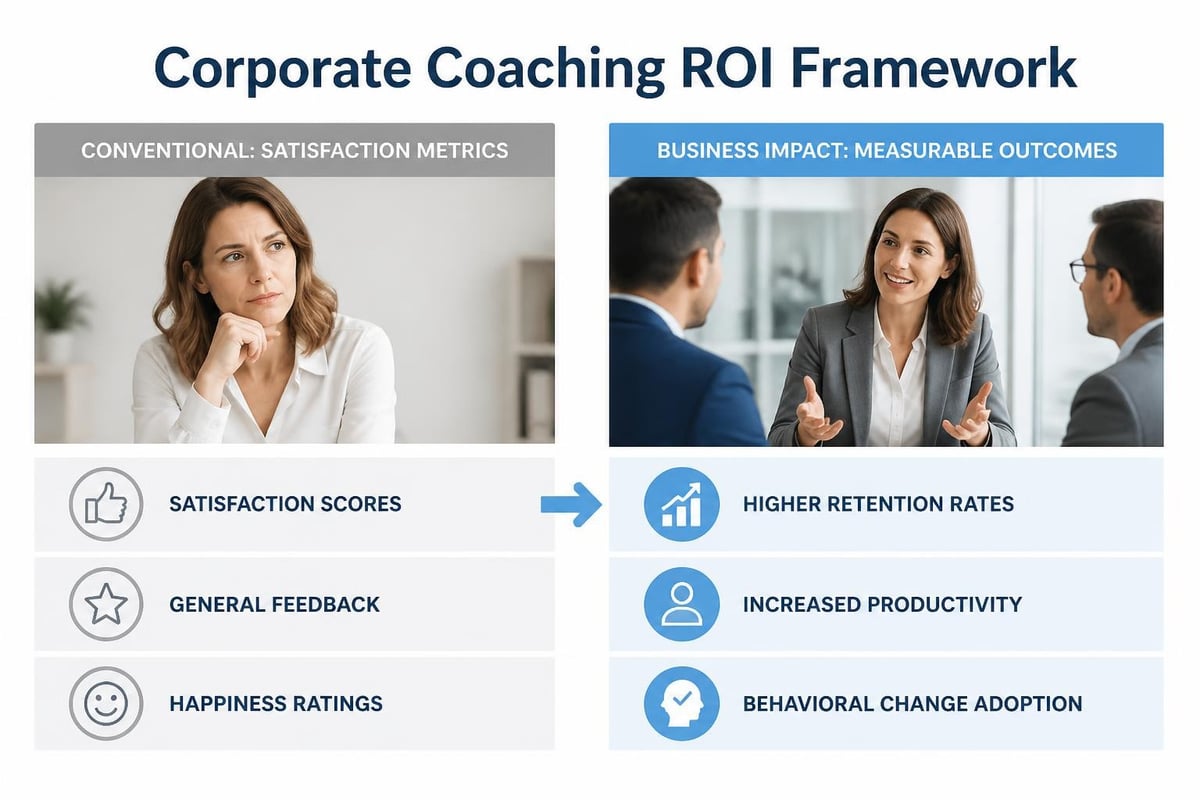
The Real Differentiator: Precision Matching

The single factor that most distinguishes effective enterprise coaching providers in Japan from mediocre ones is matching precision. Generic assignment processes produce generic results.

What precision matching requires:

Validated assessment frameworks. Tools that identify specific leadership strengths, gaps, and behavioral patterns beyond generic personality inventories. Surface-level assessments lead to surface-level coach assignments.

Coach expertise databases with verified credentials. Not self-reported claims. Documented sector experience, specialized training, and demonstrated results with similar challenges.

Matching algorithms that consider multiple factors. Industry background, leadership challenge specialty, communication style, organizational context, and developmental stage. Human judgment combined with systematic evaluation outperforms either alone.

Rematch protocols when initial pairing doesn't work. The best matching processes still produce mismatches. Quality providers acknowledge this and make adjustments without penalty.

Organizations that invest in rigorous matching see substantially better engagement and outcomes than those accepting whoever is available. This is where advanced programs like Noomii’s approach to leadership coaching differentiate themselves through proprietary algorithms and assessment integration.

Frequently Asked Questions

What distinguishes enterprise coaching providers in Japan from individual executive coaches?

Enterprise providers offer scalability, standardized quality controls, compliance frameworks, and measurement systems that individual coaches rarely provide. They integrate with organizational HR systems, handle multi-coach deployments, and ensure consistency across engagements. Individual coaches excel at deep expertise for specific challenges but lack infrastructure for organization-wide initiatives.

How much should organizations expect to invest in enterprise coaching programs?

Investment varies widely based on scope, coach seniority, and program duration. Digital platform solutions start around ¥50,000-100,000 per participant annually. One-on-one executive coaching with experienced practitioners ranges from ¥200,000-500,000+ per executive for six-month engagements. Enterprise-wide transformation programs can exceed ¥10-50 million depending on organization size. The critical question isn't cost but ROI measurement against defined business outcomes.

What's the typical timeline for seeing measurable results from executive coaching?

Behavioral change becomes observable within 60-90 days with intensive coaching (bi-weekly sessions). Measurable impact on business outcomes typically requires 6-12 months. Organizations expecting transformation in 30 days are setting up for disappointment. Those willing to commit to structured programs with clear milestones and measurement see substantial returns, often 5-7x investment through improved decision-making, talent retention, and team performance.

How do international coaching providers adapt to Japanese business culture?

Effective international providers combine global best practices with sector expertise rather than generic cultural adaptation. They focus on understanding your industry's specific dynamics, regulatory requirements, and strategic challenges. The assumption that Japanese organizations need fundamentally different coaching approaches is outdated. What matters is coach quality, sector expertise, and ability to address your specific leadership challenges while respecting organizational context.

What compliance considerations should government agencies evaluate when selecting coaching providers?

Government agencies must verify providers meet data protection requirements, ethical guidelines, confidentiality protocols, and public accountability standards. Coaching engagements should have documented processes, clear governance structures, and audit trails. Providers should demonstrate experience with civil service regulations and public sector mission alignment. Any provider uncomfortable with transparency around methodology and compliance frameworks should be eliminated from consideration.

JSON-LD FAQ Schema

{
  "@context": "https://schema.org",
  "@type": "FAQPage",
  "mainEntity": [
    {
      "@type": "Question",
      "name": "What distinguishes enterprise coaching providers in Japan from individual executive coaches?",
      "acceptedAnswer": {
        "@type": "Answer",
        "text": "Enterprise providers offer scalability, standardized quality controls, compliance frameworks, and measurement systems that individual coaches rarely provide. They integrate with organizational HR systems, handle multi-coach deployments, and ensure consistency across engagements. Individual coaches excel at deep expertise for specific challenges but lack infrastructure for organization-wide initiatives."
      }
    },
    {
      "@type": "Question",
      "name": "How much should organizations expect to invest in enterprise coaching programs?",
      "acceptedAnswer": {
        "@type": "Answer",
        "text": "Investment varies widely based on scope, coach seniority, and program duration. Digital platform solutions start around ¥50,000-100,000 per participant annually. One-on-one executive coaching with experienced practitioners ranges from ¥200,000-500,000+ per executive for six-month engagements. Enterprise-wide transformation programs can exceed ¥10-50 million depending on organization size. The critical question isn't cost but ROI measurement against defined business outcomes."
      }
    },
    {
      "@type": "Question",
      "name": "What's the typical timeline for seeing measurable results from executive coaching?",
      "acceptedAnswer": {
        "@type": "Answer",
        "text": "Behavioral change becomes observable within 60-90 days with intensive coaching (bi-weekly sessions). Measurable impact on business outcomes typically requires 6-12 months. Organizations expecting transformation in 30 days are setting up for disappointment. Those willing to commit to structured programs with clear milestones and measurement see substantial returns, often 5-7x investment through improved decision-making, talent retention, and team performance."
      }
    },
    {
      "@type": "Question",
      "name": "How do international coaching providers adapt to Japanese business culture?",
      "acceptedAnswer": {
        "@type": "Answer",
        "text": "Effective international providers combine global best practices with sector expertise rather than generic cultural adaptation. They focus on understanding your industry's specific dynamics, regulatory requirements, and strategic challenges. The assumption that Japanese organizations need fundamentally different coaching approaches is outdated. What matters is coach quality, sector expertise, and ability to address your specific leadership challenges while respecting organizational context."
      }
    },
    {
      "@type": "Question",
      "name": "What compliance considerations should government agencies evaluate when selecting coaching providers?",
      "acceptedAnswer": {
        "@type": "Answer",
        "text": "Government agencies must verify providers meet data protection requirements, ethical guidelines, confidentiality protocols, and public accountability standards. Coaching engagements should have documented processes, clear governance structures, and audit trails. Providers should demonstrate experience with civil service regulations and public sector mission alignment. Any provider uncomfortable with transparency around methodology and compliance frameworks should be eliminated from consideration."
      }
    }
  ]
}

Selecting enterprise coaching providers in Japan requires moving beyond brand recognition and cultural assumptions to focus on measurable expertise, precision matching, and demonstrated results. The Noomii Corporate Leadership Program addresses these requirements through evidence-based diagnostics, proprietary matching algorithms, and a global network of certified coaches with verified sector expertise. Whether you're addressing toxic leadership patterns, strengthening executive decision-making, or scaling development across your organization, Noomii Leadership Coaching delivers tailored solutions that align with your strategic goals and compliance standards while producing measurable business impact.

The Coaching Industry Oversells Certification

Walk into any corporate learning department, and you'll hear the same refrain: "Are they certified?" The coaching industry has trained buyers to ask the wrong question. Certification has become the default proxy for coaching quality, yet the evidence tells a different story. The coaching industry oversells certification while systematically underdelivering on the outcomes that matter to businesses paying the bills.

The Credential Trap Creates More Problems Than It Solves

Over the past fifteen years, I've watched certification bodies multiply like franchises. Each promises to separate "real" coaches from pretenders. The result? A marketplace drowning in credentials that signal compliance, not competence.

The math alone reveals the problem:

  • ICF reports over 50,000 credentialed coaches globally
  • Hundreds of certification programs launch annually
  • Average certification cost ranges from $3,000 to $15,000
  • Yet buyer confusion has never been higher

The coaching industry credibility crisis stems directly from oversupply. When everyone holds a credential, the credential loses meaning. Businesses seeking leadership coaching face thousands of certified options, most indistinguishable by resume alone.

Certification credential gap

What Certification Programs Actually Measure

Certification programs assess three things with reasonable consistency:

  1. Process adherence – following a coaching model
  2. Knowledge retention – understanding coaching theory
  3. Supervised hours – logging practice time

None of these predict client results. ICF certification doesn’t guarantee coaching success because it measures inputs, not outcomes. A coach can follow perfect GROW model protocol while failing to move business metrics an inch.

The industry knows this. Certification bodies rarely publish outcome data linking credentials to client performance. They can't, because the correlation is weak to nonexistent.

The Financial Incentive Behind Certification Obsession

The coaching industry oversells certification for straightforward economic reasons. Certification represents a $500 million annual market. Organizations profit from:

  • Initial certification fees ($2,000-$8,000)
  • Continuing education requirements ($500-$2,000 annually)
  • Re-certification cycles ($300-$1,000 every three years)
  • Mentor coaching mandates ($1,500-$5,000)

This creates a perpetual revenue stream disconnected from coaching effectiveness. As research on why coaching certifications can be misleading demonstrates, the industry lacks regulation while certification bodies self-validate their own standards.

Consider the typical certification journey:

Stage Cost Time Investment Business Value
Training Program $5,000-$12,000 60-125 hours Theoretical
Mentor Coaching $1,500-$3,000 10-30 hours Variable
Practice Hours Time cost 100+ hours Depends on clients
Certification Exam $300-$750 20-40 hours prep Credential only
Annual Renewal $200-$500 30+ CCE hours Compliance

Total first-year investment: $7,000-$16,000 and 200+ hours. Yet corporate buyers report no meaningful quality difference between certified and experienced practitioners who skip the credential path entirely.

The Evidence Question Nobody Asks

If certification drove superior outcomes, certification bodies would publish comparative data. They don't because the illusion of credibility collapses under scrutiny.

I've reviewed hundreds of coaching engagements across mid-market companies. The coaches who delivered measurable results shared common traits:

  • Industry experience in the client's domain
  • Business acumen beyond coaching theory
  • Results accountability tied to KPIs
  • Practical frameworks adapted to context
  • Live facilitation skills in real meetings

Certification appeared nowhere on this list. The correlation between credentials and performance remained statistically insignificant.

Coaching effectiveness factors

What Buyers Should Evaluate Instead

The coaching industry oversells certification because it's easier than measuring what matters. Credentials provide a convenient sorting mechanism. They're also deeply misleading.

Smart buyers evaluate coaches using different criteria:

Relevant Experience

  • Industry background matching your challenges
  • Leadership roles beyond coaching
  • P&L responsibility or operational experience
  • Track record in similar organizational contexts

Outcome Accountability

  • Willingness to tie coaching to business metrics
  • Examples of KPI improvement from past clients
  • Case studies showing problem-diagnosis-solution-result
  • Month-to-month terms instead of long contracts

Practical Methodology

  • Frameworks designed for corporate application
  • Live coaching in actual meetings, not just 1-on-1
  • Integration with existing operating cadence
  • Tools like 360 assessments tied to development plans

This shift threatens certification economics. When Forbes questions whether coaching certifications are a waste of money, the industry responds with more credentials, not better outcomes.

The Real Cost of Certification Worship

Organizations fixated on credentials make predictable mistakes:

  1. Overlooking experienced practitioners who never pursued certification
  2. Paying premium rates for letters after names instead of results
  3. Tolerating poor performance because "they're certified"
  4. Missing specialists with deep domain expertise but no coaching credential

The low barriers and lack of standards create a paradox. Anyone can call themselves a coach, yet buyers treat certification as meaningful validation. Neither extreme serves organizational interests.

I've watched companies hire certified coaches who've never run a business, managed a team, or understood P&L dynamics. These coaches deliver textbook frameworks while missing the nuances that drive real change. Meanwhile, former operators with decades of leadership experience get overlooked for lacking ACC or PCC designations.

The Alternative Framework

Replace credential screening with outcome-focused evaluation:

Traditional Approach Results-Focused Approach
Certification level Industry experience
Training hours Leadership background
ICF membership Accountability terms
Coaching model Business metrics improved
Theory knowledge Live facilitation proof

This framework reveals coaching competence far more accurately than any certification. Understanding when coaching is the better choice requires looking beyond credentials to actual capability.

Coaching buyer evaluation

Moving Beyond the Certification Myth

The coaching industry oversells certification because the alternative requires uncomfortable honesty. Measuring coaching outcomes demands:

  • Clear baseline metrics before engagement
  • Defined success criteria tied to business goals
  • Regular progress reviews against KPIs
  • Accountability for results, not just activity

Most certification programs avoid this rigor entirely. They certify process compliance while ignoring performance outcomes. For businesses serious about leadership development, manager training, or team performance, this creates a dangerous mismatch between promised value and delivered results.

The market is slowly correcting. Sophisticated buyers now seek coaches who offer shared-risk models, tie compensation to outcomes, and bring operational credibility alongside coaching skills. They're discovering that business coaches with relevant experience often outperform certified generalists by wide margins.

Certification has its place for new coaches building foundational skills. But the industry's relentless promotion of credentials over competence has created a marketplace where buyers can't distinguish quality from marketing. Until certification bodies publish outcome data and tie credentials to client results, the overselling continues at everyone's expense except the certifying organizations.

FAQ

Does coaching certification guarantee better results?
No. Certification measures adherence to coaching processes and theoretical knowledge, not the ability to drive business outcomes. Research shows no significant correlation between certification and client results.

What should I look for instead of coaching certification?
Prioritize relevant industry experience, leadership background, accountability to business metrics, practical frameworks, and willingness to tie engagement to measurable outcomes. Month-to-month terms signal confidence in results.

Why do so many coaches pursue certification if it doesn't improve outcomes?
Certification programs generate significant revenue for certifying bodies through initial fees, continuing education, and re-certification cycles. Marketing creates perceived necessity, though evidence doesn't support the claims.

Are all coaching certifications equally valuable?
No. Quality varies dramatically across programs. Many certifications are self-issued with minimal external validation, creating an illusion of credibility without meaningful standards or oversight.

How much does coaching certification typically cost?
Initial certification ranges from $3,000 to $15,000, with ongoing costs of $500-$2,000 annually for continuing education, plus re-certification fees every three years. Total investment often exceeds $20,000 over five years.

Can uncertified coaches be effective?
Yes. Many highly effective coaches bring deep industry experience, operational leadership backgrounds, and proven track records without formal certification. Competence stems from experience and results, not credentials alone.

What metrics should I use to evaluate coaching effectiveness?
Track business outcomes like decision velocity, manager coaching adoption, employee engagement scores, retention rates, and execution clarity. Avoid relying solely on participant satisfaction surveys.

Do Fortune 500 companies require coaching certification?
Requirements vary. Some procurement departments default to certification, while others prioritize relevant experience and outcome accountability. The trend is shifting toward results-based evaluation.

Is the coaching industry addressing the certification overselling problem?
Slowly. Market pressure from sophisticated buyers and growing skepticism about credential value are forcing some organizations to focus more on outcomes, though certification economics still dominate industry messaging.


The coaching industry oversells certification because credentials are easier to market than outcomes. Smart buyers look past the letters after names to evaluate experience, accountability, and proven results. If you're ready to work with coaches who tie their success to yours through measurable business outcomes, month-to-month terms, and live facilitation in your actual meetings, Noomii connects you with practitioners focused on performance over paperwork.