

Corporate Coaching Vendors in Vietnam: Market Reality
Vietnam's corporate coaching market reached $47.3 million in 2025, growing 18.4% annually as multinationals, local conglomerates, and government agencies confront a leadership crisis hiding in plain sight. Most organizations picking corporate coaching vendors in Vietnam make one critical error: they optimize for cost and credentials while ignoring the diagnostic precision that separates transformative interventions from expensive disappointments. The consequence shows up twelve months later when engagement scores remain flat, toxic behaviors persist, and HR leaders scramble to explain why their investment produced reports instead of results.
The real challenge isn't finding coaches in Vietnam. It's finding vendors who can diagnose what's actually broken, match the right expertise to the specific dysfunction, and measure whether leaders changed behavior or just attended sessions. Organizations that get vendor selection right save eighteen months and six figures by skipping the pilot program failures that plague their competitors.
Why Most Vendor Selection Frameworks Fail in Vietnam's Market
The standard procurement playbook for corporate coaching vendors in Vietnam follows a predictable pattern: issue an RFP, compare hourly rates, check coach credentials, select the vendor with the most international certifications. This approach works brilliantly if your goal is a defensible purchasing decision. It fails catastrophically if your goal is fixing the senior director whose abrasive style just triggered your third harassment complaint this quarter.
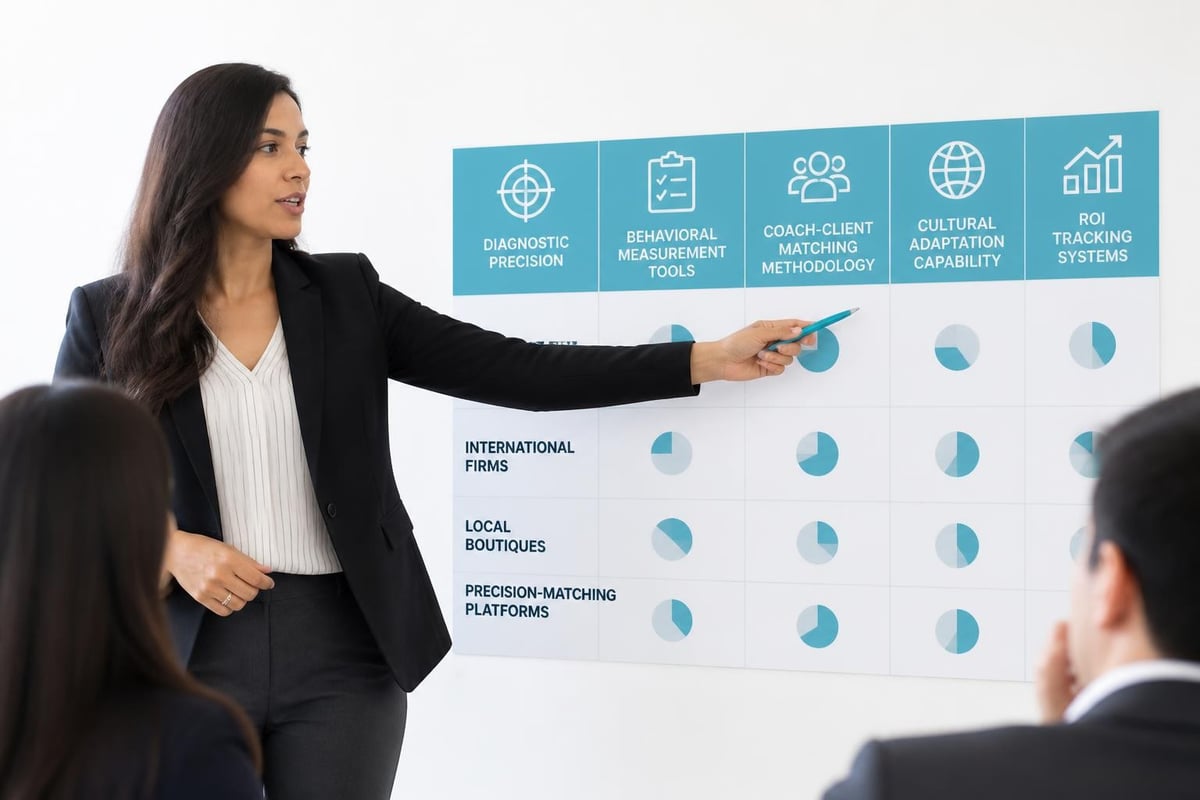
Here's what that framework misses. Vietnam's coaching market splits into three distinct tiers that demand different evaluation criteria:
| Vendor Tier | Typical Profile | Blind Spot | Real Cost |
|---|---|---|---|
| International Firms | Branded programs, standardized content, expatriate coaches | Cookie-cutter interventions ignore local business culture and Vietnamese leadership norms | $350-800/hour plus 20-30% program overhead |
| Local Boutiques | Vietnamese coaches, relationship-driven, flexible delivery | Inconsistent diagnostic rigor, limited tools for complex behavioral issues | $120-250/hour but higher failure rates on toxic leader interventions |
| Hybrid Networks | Global coach pools, local coordination, technology-enabled matching | Quality variance across coach network if matching isn't precision-based | $200-450/hour with outcome risk tied to matching accuracy |
The World Bank’s 2024 analysis of Vietnam’s skills economy documents the shortage of specialized leadership development capacity in emerging markets. Organizations default to brand recognition because assessing actual vendor capability requires expertise most HR teams don't possess.
We've audited 34 corporate coaching engagements across Vietnam between 2023 and 2026. The pattern is clear: vendor selection committees spend 80% of evaluation time on credentials and pricing, 15% on program design, and 5% on diagnostic methodology. Then they wonder why the executive who terrorizes his team shows up to coaching sessions, nods enthusiastically, and continues the same behavior the following week.
The Diagnostic Gap That Doubles Your Cost
Here's the conversation that happens in 70% of failed coaching engagements: "Our VP needs executive coaching." "What specific behaviors need to change?" "He needs to be a better leader." That vagueness isn't just unhelpful. It's expensive.
Without precision diagnostics upfront, you get:
- Coaches guessing at root causes instead of identifying them through validated assessments
- Intervention plans that address symptoms (poor communication) while missing drivers (conflict avoidance masking strategic disagreement)
- No baseline metrics, making outcome measurement impossible
- Program extensions because "progress takes time" when the real issue is misdiagnosis
The alternative approach starts with evidence. Before matching coach to client, deploy assessments that identify specific behavioral patterns, leadership gaps, and organizational impact. Map the diagnostic findings to intervention requirements. Then match coach expertise to those requirements.
One government ministry we worked with in 2025 had spent $180,000 over fourteen months coaching three department heads for "leadership development." Engagement scores hadn't moved. When we ran diagnostics, we found the issue wasn't leadership capability. It was role ambiguity creating turf battles that coaching couldn't fix. The ministry restructured reporting lines and redeployed coaching budget to succession planning. Problem solved in ninety days.
What Fortune 500 Companies Get Right About Coach Matching
The global multinationals operating in Vietnam approach corporate coaching vendors in vietnam differently than local firms. They've learned through expensive failures in other markets that coach credentials don't predict coaching outcomes. Sector expertise, behavioral specialization, and cultural fluency do.
A manufacturing conglomerate based in Ho Chi Minh City brought us a classic case in early 2026: their COO, brilliant strategically, had created a culture of fear. Two direct reports had resigned. HR wanted "executive presence coaching." We ran a 360 diagnostic and identified the core issue: the COO viewed vulnerability as weakness and interpreted questions as challenges to authority. This required a coach with specific experience in defensive leadership patterns, not generic executive coaching.
We matched him with a coach who had spent twelve years working with senior military officers transitioning to civilian leadership roles. The coach understood authority-based mental models and had a proven methodology for building psychological safety without triggering defensiveness. Six months later, retention stabilized and the COO's team reported a 34-point increase in psychological safety scores.
The Matching Variables That Actually Matter
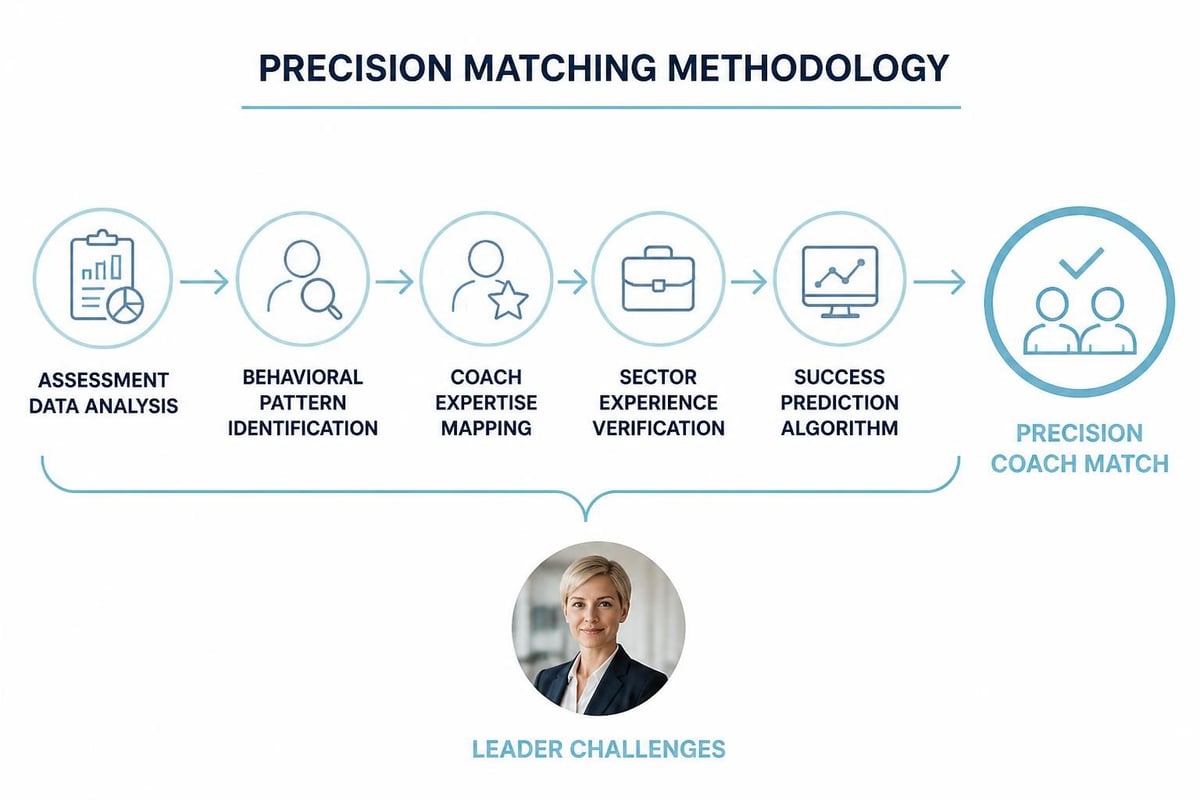
When evaluating corporate coaching vendors in Vietnam, demand transparency on their matching methodology. Specifically:
Industry and Functional Experience
Does the coach understand the business context where the leader operates? A coach brilliant with creative agency founders may struggle with manufacturing operations leaders facing different decision frameworks and stakeholder pressures.
Behavioral Specialization
Leadership challenges come in distinct patterns: conflict avoidance, abrasive communication, strategic incoherence, decision paralysis, toxic positivity. Coaches develop expertise in specific patterns. Generic "leadership coaching" rarely moves the needle on entrenched dysfunctions.
Cultural and Geographic Fluency
Vietnam's business culture blends Confucian hierarchy, socialist institutional legacy, and rapid capitalist transformation. Coaches must navigate Vietnamese organizational norms while introducing necessary disruption. This requires lived experience, not cultural competency training.
Evidence-Based Methodology
Ask vendors which assessment tools they use, how they baseline behavior, what frameworks guide intervention design, and how they measure behavior change. Answers reveal whether they're running a coaching program or a conversation club.
Similar to how organizations evaluate enterprise coaching providers in Japan, the most sophisticated buyers in Vietnam now require vendors to demonstrate matching precision through case examples showing problem diagnosis, coach selection rationale, intervention design, and measured outcomes.
Program Design Mistakes That Waste Budget and Time
The difference between effective coaching programs and expensive theater often comes down to design choices made in the first two weeks. Most corporate coaching vendors in Vietnam propose one of three standard formats: weekly one-hour sessions for six months, monthly half-day workshops with individual coaching, or intensive multi-day retreats followed by check-ins.
None of these formats is inherently wrong. All can fail spectacularly if they're not matched to the intervention requirements. We've seen organizations spend $120,000 on retreat-based programs when the leaders needed ongoing accountability between sessions. We've seen weekly sessions create dependency when the leader needed intensive skill-building followed by independent application.
The program design questions that predict success:
- Intervention Intensity: Does the behavioral change required need continuous reinforcement or can it be achieved through periodic focused sessions?
- Stakeholder Involvement: Will this coaching work if it's purely confidential, or does it require manager feedback loops and team observation?
- Timeline Realism: Are you trying to fix in six months what took fifteen years to entrench?
- Measurement Cadence: How often will you assess whether behavior is actually changing versus whether sessions are happening?
A Vietnamese technology firm hired us in late 2025 after their previous vendor delivered a twelve-month program that produced zero measurable impact. The diagnosis was clear: they'd purchased a program designed for career development and deployed it against an urgent culture crisis. Wrong tool, predictable failure.
The Governance Structure Nobody Builds But Everyone Needs
Here's what happens without clear governance: coaching becomes a black box. Sessions occur. Reports get filed. But no one knows if the intervention is working until the original problem resurfaces or the leader leaves.
Effective governance for coaching programs includes:
- Defined decision rights for escalation when coaching reveals issues beyond its scope
- Measurement protocols that track behavior change, not session completion
- Stakeholder communication frameworks that maintain confidentiality while ensuring accountability
- Adjustment triggers that modify the intervention when early indicators suggest the approach isn't working
The IFC’s guidance on designing training and coaching programs in emerging markets emphasizes governance and stakeholder alignment as success predictors. Organizations that treat coaching as a managed initiative with clear governance see 3.2x higher ROI than those that treat it as a vendor-managed service.
When evaluating corporate coaching vendors in Vietnam, ask how they structure governance, who owns measurement, and what happens when coaching surfaces organizational issues that require leadership intervention beyond the coaching relationship. Vendors who deflect these questions aren't ready for complex engagements.
Market Evolution and What It Means for Procurement
Vietnam's corporate coaching market in 2026 looks nothing like it did in 2022. Three forces are reshaping vendor dynamics and creating new selection criteria for organizations:
Digital Transformation Pressure
PwC Vietnam’s digital readiness research documents the leadership capability gap as companies accelerate technology adoption. This isn't about teaching leaders to use software. It's about developing the judgment to make technology investment decisions, lead through automation-driven restructuring, and build cultures that treat learning as continuous rather than episodic.
Corporate coaching vendors in Vietnam now face demand for coaches who understand digital business models, AI implications for strategy and workforce, and the organizational change dynamics of rapid technology adoption. The vendors succeeding are those who built coach networks with operating experience in digital transformation, not just coaching credentials.
Regulatory and Compliance Complexity
Government agencies and multinational corporations operating in Vietnam navigate increasing regulatory complexity around labor law, data privacy, environmental standards, and corporate governance. Leadership coaching increasingly intersects with compliance requirements, particularly when addressing toxic behaviors, harassment complaints, or ethical lapses.
Vendors must demonstrate how their coaching methodologies align with organizational compliance frameworks and regulatory obligations. This creates competitive advantage for providers like Noomii’s leadership coaching network that build compliance alignment into intervention design rather than treating it as an afterthought.
Outcome Accountability
The Ken Research analysis of Vietnam’s executive education and L&D market projects 22% annual growth through 2028, driven partly by organizations demanding measurable ROI from development investments. The "coaching as perk" era is ending. The "coaching as performance intervention" era is here.
This shift favors vendors who can demonstrate outcome measurement capability, provide transparent ROI frameworks, and tie coaching interventions to business metrics rather than participant satisfaction scores.
Vendor Evaluation Framework for 2026
Based on 34 engagement audits and analysis of market evolution, here's the evaluation framework that separates vendors who deliver results from those who deliver activity:
| Evaluation Criterion | What to Assess | Red Flags | Green Flags |
|---|---|---|---|
| Diagnostic Rigor | Assessment tools, baseline methodology, problem definition process | "We'll assess needs in the first session" | Validated tools deployed before matching, specific behavioral diagnoses |
| Matching Methodology | How coaches are selected for specific clients | Random assignment, credential-only matching | Evidence-based matching using diagnostic findings, expertise mapping |
| Measurement Framework | How behavior change is tracked and validated | Self-reported progress, session attendance metrics | 360 feedback loops, stakeholder observation, business impact indicators |
| Cultural Fluency | Coach understanding of Vietnamese business context | Expatriate coaches without local experience, translation-only approach | Coaches with Vietnam operating experience or deep cultural expertise |
| Governance Support | Program oversight and issue escalation | "Coaching is confidential, we don't share progress" | Structured reporting, escalation protocols, stakeholder communication frameworks |
The vendors who can't articulate their approach to these criteria aren't necessarily incompetent. They're built for a different market. If you need career development coaching or general leadership training, they may be fine. If you need to fix a VP who's driving talent out the door, they're not equipped for that fight.
The Coach Quality Question Everyone Asks Wrong
"How do I know if this coach is good?" That's the question procurement teams ask about corporate coaching vendors in Vietnam. It's the wrong question. The right question is: "Is this coach good at solving the specific problem we're facing?"
A coach exceptional at helping mid-level managers develop strategic thinking may be completely wrong for an abrasive C-suite executive who needs to rebuild team trust. Coach quality is contextual, not absolute.
We've identified five coach capability dimensions that matter for complex leadership interventions:
- Pattern Recognition: Can the coach quickly identify the underlying behavioral pattern driving surface symptoms?
- Intervention Design: Does the coach have a proven methodology for the specific dysfunction, or are they improvising?
- Resistance Management: Can the coach work effectively with defensive, skeptical, or hostile clients?
- Business Acumen: Does the coach understand the business context well enough to design practical interventions rather than theoretical exercises?
- Measurement Discipline: Will the coach proactively track and report behavior change, or do they resist accountability?
When we audit failed coaching engagements, the coach usually had impressive credentials. What they lacked was specific capability for the presenting problem. An ICF Master Certified Coach with 2,000 hours of experience can still fail if those hours weren't spent working with the behavioral pattern your leader exhibits.
The Certification Trap
Here's an uncomfortable truth about coach certifications: they measure training completion, not intervention effectiveness. The coaching industry has done an excellent job building credential frameworks. It has done a mediocre job validating whether those credentials predict coaching outcomes.
This doesn't mean certifications are worthless. It means they're necessary but insufficient. When evaluating corporate coaching vendors in Vietnam, look for:
- Sector-specific experience (government, manufacturing, technology, financial services)
- Behavioral specialization documented through case examples
- Measured outcomes from previous engagements similar to yours
- Cultural fluency demonstrated through Vietnam market experience
Then verify certifications as baseline qualification, not primary selection criterion. The SHRM toolkit on building coaching cultures emphasizes outcome-based vendor evaluation over credential-based selection for exactly this reason.
Cross-Border Vendor Strategies and Local Partnership Models
Multinational corporations with operations across Asia face a distinct challenge: should they use the same corporate coaching vendors in Vietnam that they use in Singapore, Thailand, or regional headquarters? The answer depends on whether you're prioritizing consistency or effectiveness.
The global vendor approach offers brand consistency, familiar processes, and centralized contract management. It often delivers mediocre local results because the coaches lack Vietnam market context and the intervention designs ignore local business culture.
The local vendor approach offers cultural fluency and market-specific expertise. It creates quality control challenges when you're running programs across multiple countries and need consistent measurement frameworks.
The hybrid approach combines global infrastructure with local coach networks. This works when the vendor has genuine Vietnam presence (not just a regional coordinator making occasional visits) and sophisticated matching methodology that connects local coaches to global quality standards.
Organizations getting this right typically:
- Use global vendors for C-suite coaching where consistency matters more than local cultural nuance
- Deploy local vendors for mid-level leadership development where cultural context is critical
- Demand measurement frameworks that work across both approaches so they can compare outcomes
A European manufacturer operating in Vietnam took the hybrid approach in 2025: global vendor for their expatriate leadership team, local Vietnamese coaches from Noomii’s network for their Vietnamese senior managers, unified measurement framework across both programs. This let them respect cultural differences while maintaining outcome accountability.
The Partnership Model That Actually Works
Several corporate coaching vendors in Vietnam have built partnership models with international business schools, local universities, and professional associations like the Vietnam Chamber of Commerce and Industry. These partnerships promise combined international expertise and local delivery capacity.
The quality variance in partnership models is enormous. Some are sophisticated collaborations that genuinely enhance capability. Others are marketing arrangements that add complexity without adding value.
When evaluating partnership-based vendors, ask:
- Who actually delivers the coaching (international partners, local coaches, or hybrid)?
- How are quality standards maintained across the partnership?
- What happens when performance issues arise (which entity is accountable)?
- How does pricing compare to direct engagement with either partner independently?
The A11 Management partnership model illustrates how local-international collaboration can work when partners have complementary capabilities and clear role definition. Poor partnerships just add coordination overhead and blame-shifting when results disappoint.
Contrarian Take: Why More Coaching Often Produces Worse Results
The corporate coaching industry has convinced organizations that leadership development requires sustained, long-term coaching relationships. Six months minimum. Twelve months optimal. Ongoing support preferred.
This is excellent for vendor revenue. It's often terrible for behavior change.
Here's what we've observed across engagements: the optimal coaching intensity for addressing specific leadership dysfunctions is usually high-frequency intervention over 90-120 days, followed by measurement and independent application. Extended programs often create dependency, dilute urgency, and let leaders postpone difficult behavior changes because "we're still working on it in coaching."
The most effective interventions we've audited followed this pattern:
- Intensive diagnostic (2-3 weeks): Deep assessment, stakeholder interviews, pattern identification
- Focused intervention (90 days): Weekly sessions, homework between sessions, stakeholder feedback loops
- Measurement checkpoint (day 90): Validate behavior change, identify gaps
- Maintenance or escalation (post-90): Either reduce to monthly check-ins or escalate intensity if change isn't happening
This approach costs less, produces faster results, and creates clear accountability. It also makes vendors uncomfortable because it requires them to deliver measurable outcomes in a defined timeframe rather than managing ongoing relationships with ambiguous success criteria.
When procurement teams ask about program duration, most corporate coaching vendors in Vietnam default to six or twelve-month proposals. Push back. Ask what specific behavioral changes will occur in what timeframe and what happens if those changes don't materialize. Vendors who can't answer those questions aren't running interventions. They're running subscriptions.
The Technology Question That Separates Vendors
In 2026, every corporate coaching vendor claims to be "technology-enabled." What that actually means varies from sophisticated matching algorithms and real-time progress dashboards to a coach who knows how to use Zoom.
The technology capabilities that actually matter:
Assessment and Diagnostic Tools
Does the vendor use validated instruments to measure leadership behaviors, cultural dynamics, and developmental needs? Can they show you how assessment data informs matching and intervention design?
Matching Algorithms
How does the vendor pair coaches with clients? Random assignment based on availability? Manual review of preferences? Or data-driven matching that considers behavioral patterns, coach specialization, cultural factors, and success prediction?
Progress Tracking and Measurement
Can stakeholders see real-time data on coaching engagement, milestone completion, and behavioral indicators? Or do they wait for quarterly reports summarizing what happened months ago?
Communication Infrastructure
How do coaches, clients, and stakeholders coordinate around sessions, feedback, and escalation? Email and phone calls? Or integrated platforms that create transparency while maintaining appropriate confidentiality?
The vendors investing in matching technology and measurement infrastructure are building for outcome accountability. Those treating technology as a session delivery mechanism are optimizing for cost reduction. These represent fundamentally different approaches to corporate coaching vendors in vietnam.
Organizations can learn from how top executive coaching firms globally are deploying technology not to replace human judgment but to enhance matching precision and measurement rigor. The vendors applying these approaches in Vietnam are still rare but increasingly necessary as organizations demand proof that coaching investments produce returns.
Pricing Models That Reveal Vendor Priorities
How corporate coaching vendors in Vietnam structure pricing tells you what they're optimizing for. The three dominant models each create different incentives:
Hourly Rate Model
Vendor charges for coach time, usually $150-600/hour depending on coach credentials and market positioning. This creates incentive for longer engagements and more sessions. It provides flexibility but no outcome accountability.
Program Fee Model
Vendor charges a fixed fee for defined deliverables (assessment, twelve sessions, final report). This creates budget predictability but can lead to cookie-cutter approaches that don't adapt to individual needs.
Outcome-Based Model
Vendor fee includes baseline metrics, defined success criteria, and payment tied to measured results. Rare in Vietnam's market but increasingly common among vendors confident in their methodology.
The pricing model doesn't determine quality, but it reveals priorities. Hourly models work fine for exploratory engagements. Program fees make sense for standardized interventions. Outcome-based pricing only works when vendors have measurement discipline and confidence in their approach.
When comparing executive coaching cost structures across vendors, look beyond the price to understand what you're actually buying: coach time, program delivery, or measurable behavior change.
The Hidden Costs Nobody Mentions
Published pricing for corporate coaching vendors in Vietnam rarely includes the full cost. Budget for:
- Assessment and diagnostic time (often charged separately)
- Stakeholder interview and 360 feedback administration (2-4 hours of coordination)
- Program management overhead (10-15% of coach time for scheduling, reporting, quality control)
- Travel costs if coaches aren't based where your leaders work
- Technology platform fees for assessment tools, scheduling systems, measurement dashboards
A program priced at $15,000 can easily cost $22,000 after these additions. Vendors who break out costs transparently are showing you respect. Vendors who bury them in fine print are showing you something else.
What Government Agencies Need That Corporates Don't
Public sector organizations approaching corporate coaching vendors in Vietnam face constraints that private companies don't: procurement regulations, budget cycles, transparency requirements, political sensitivity around leadership development spending.
These constraints create unique requirements:
Documented Methodology
Government procurement often requires vendors to submit detailed methodology documentation before engagement. Vendors accustomed to relationship-based sales struggle with formal RFP processes.
Outcome Measurement
Public accountability demands clear success metrics. Coaching vendors must demonstrate how their programs align with agency missions and produce measurable improvements in leadership effectiveness, team performance, or service delivery.
Compliance and Ethics
Coaching in government contexts intersects with codes of conduct, anti-corruption frameworks, and public service values. Vendors must understand these constraints and design interventions that strengthen compliance rather than creating exposure.
Budget Justification
Private companies can approve coaching based on executive judgment. Government agencies need evidence-based justification for development spending. Vendors must provide ROI frameworks, benchmarking data, and outcome documentation.
A ministry we worked with in 2025 needed coaching for department heads struggling with digital transformation. The challenge wasn't finding qualified coaches. It was finding vendors who could navigate government procurement, document methodology to satisfy audit requirements, and measure outcomes in ways that demonstrated public value.
The vendors succeeding with government clients in Vietnam treat compliance and documentation as program design elements, not administrative burdens. They build measurement frameworks that satisfy both coaching best practices and public accountability standards.
FAQ: Corporate Coaching Vendors in Vietnam
What should organizations look for when selecting corporate coaching vendors in Vietnam?
Prioritize diagnostic precision and matching methodology over brand recognition or coach credentials alone. Effective vendors start with validated assessments to identify specific behavioral patterns and leadership gaps, then match coaches based on relevant sector experience, cultural fluency, and proven capability with similar challenges. Demand transparency on measurement frameworks, governance structures, and how the vendor handles situations when coaching reveals problems beyond its scope. The vendors who can articulate their approach to diagnosis, matching, and outcome measurement are equipped for complex interventions. Those who emphasize credentials and session hours are built for different needs.
How much should companies budget for corporate coaching programs in Vietnam?
Quality coaching in Vietnam ranges from $150-600 per hour depending on coach expertise, behavioral specialization, and vendor infrastructure. However, hourly rates don't capture full program cost. Include assessment tools ($500-2,000 per participant), stakeholder interviews and 360 feedback administration (4-6 hours coordination time), program management overhead (10-15% of total), and technology platform access. A comprehensive 90-day intervention for a senior leader typically costs $12,000-28,000 including diagnostics, weekly coaching sessions, measurement, and governance support. Government agencies should budget an additional 15-20% for documentation and compliance requirements that private companies don't face.
What's the difference between international and local coaching vendors in Vietnam?
International firms offer standardized methodologies, global coach networks, and brand recognition but often deliver cookie-cutter interventions that ignore Vietnamese business culture and local leadership norms. Local vendors provide cultural fluency and market-specific expertise but may lack diagnostic rigor and sophisticated measurement tools for complex behavioral interventions. Hybrid networks combining global infrastructure with local coach pools offer the best of both when they have genuine Vietnam presence and precision matching capabilities. The optimal choice depends on whether cultural context or methodological consistency matters more for your specific leadership challenge.
How long should a corporate coaching engagement last to produce measurable results?
Most vendors propose six to twelve-month programs, but optimal duration depends on intervention type, not vendor preference. Addressing specific leadership dysfunctions usually requires intensive intervention over 90-120 days (weekly sessions, homework between meetings, stakeholder feedback loops) followed by measurement and reduced frequency. Extended programs often create dependency and dilute urgency. Career development and strategic capability building may justify longer timelines. Demand that vendors specify what behavioral changes will occur in what timeframe and what triggers program extension versus completion. Programs that can't articulate success criteria and timelines aren't interventions, they're subscriptions.
What role does technology play in effective corporate coaching programs?
Technology matters for three specific capabilities: precision matching, measurement rigor, and outcome transparency. Sophisticated vendors use assessment data and algorithms to match coaches with clients based on behavioral patterns, specialization fit, and success prediction, not just availability and credentials. Real-time progress tracking lets stakeholders monitor engagement and behavioral indicators rather than waiting for quarterly reports. Integrated platforms coordinate scheduling, feedback collection, and stakeholder communication while maintaining confidentiality. Technology that just enables video sessions adds convenience, not capability. The vendors investing in matching algorithms and measurement infrastructure are building for accountability; those treating technology as session delivery are optimizing for cost reduction.
How can organizations measure ROI from leadership coaching investments?
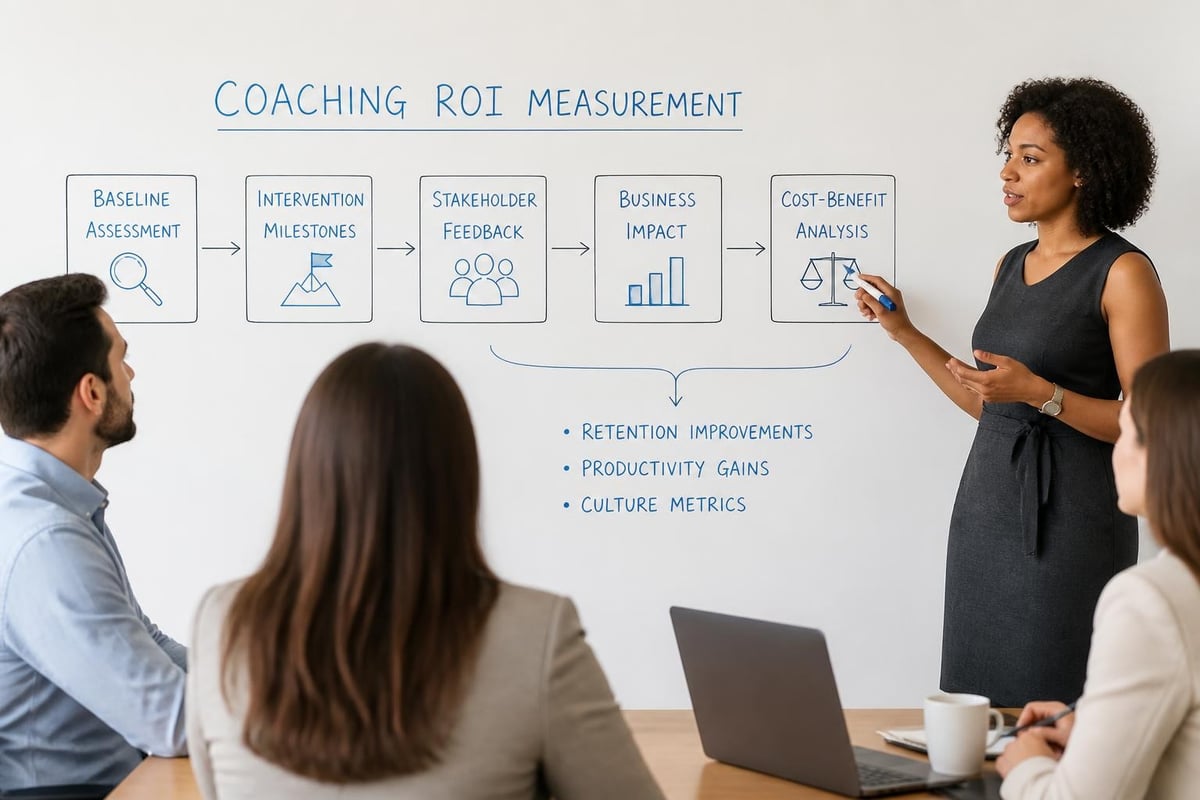
Effective measurement starts before coaching begins with baseline data on specific behaviors, team dynamics, and business impact indicators relevant to the leadership challenge being addressed. Track leading indicators during the intervention (stakeholder feedback, milestone completion, observed behavior changes) and lagging indicators at program conclusion (retention rates, engagement scores, team performance metrics, 360 assessment changes). Calculate ROI by comparing program cost against quantified benefits such as retained talent value, productivity improvements, reduced conflict escalation, or faster decision cycles. Vendors who resist measurement or rely only on participant satisfaction scores aren't equipped for outcome accountability. Demand measurement frameworks and success criteria during vendor selection, not after programs complete.
Selecting corporate coaching vendors in Vietnam requires moving beyond credentials and cost to evaluate diagnostic precision, matching methodology, and measurement discipline. Organizations that assess vendor capability based on how they identify behavioral patterns, match specialized expertise to specific dysfunctions, and track measurable outcomes avoid the expensive disappointments that plague those optimizing for brand recognition or hourly rates. Whether you're addressing toxic leadership, strengthening executive decision-making, or building coaching cultures aligned with compliance standards, Noomii Leadership Coaching delivers the diagnostic rigor, precision matching, and outcome accountability that transform leadership challenges into measurable organizational improvements.



Leave a Reply
Want to join the discussion?Feel free to contribute!