
Why Certified Coaches Still Struggle in 2026

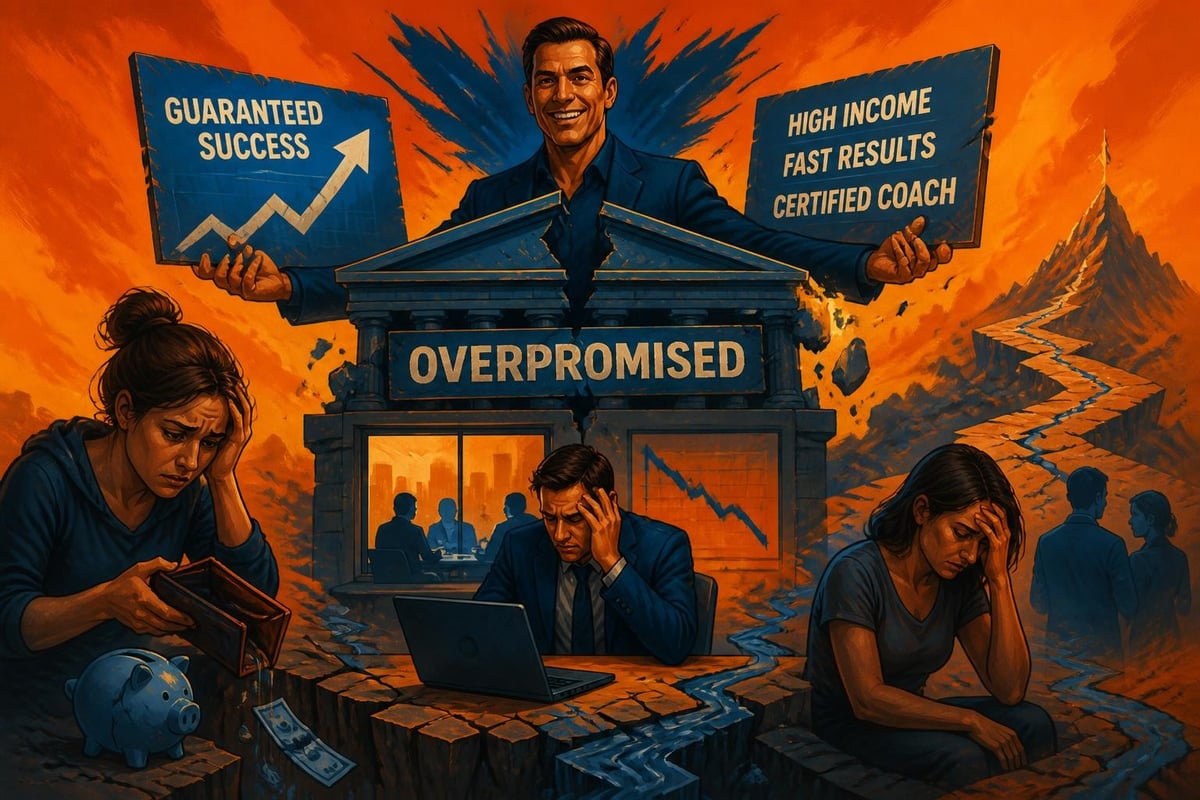
You earned the credential. Completed the coursework. Passed the assessments. Yet your calendar remains half-empty, and your corporate clients choose competitors with less impressive letters after their names. Understanding why certified coaches still struggle requires looking beyond the certification myth to examine what actually drives coaching success in 2026. The uncomfortable truth is that credentials signal training completion, not market readiness, client acquisition ability, or business acumen.

The Certification Paradox: Training Without Business Skills

Certification programs teach coaching competencies but rarely address the business fundamentals required to sustain a practice. Most coaches exit programs equipped with frameworks and conversation techniques yet completely unprepared for prospecting, pricing, or positioning their services.

The typical certification gap includes:

  • No instruction on client acquisition strategies
  • Limited guidance on pricing models or package structure
  • Minimal training in articulating value to corporate buyers
  • Zero emphasis on financial management or cash flow
  • Absence of marketing fundamentals or positioning strategy

This explains why many certified coaches struggle to scale despite possessing legitimate skills. The certification addressed coaching delivery but ignored the commercial engine required to find paying clients consistently.

Market Saturation Creates Invisible Coaches

The coaching industry added over 23,000 newly certified practitioners in 2025 alone. This saturation means your certification no longer differentiates you, it simply qualifies you to enter an increasingly crowded market where client discoverability determines success more than coaching ability.

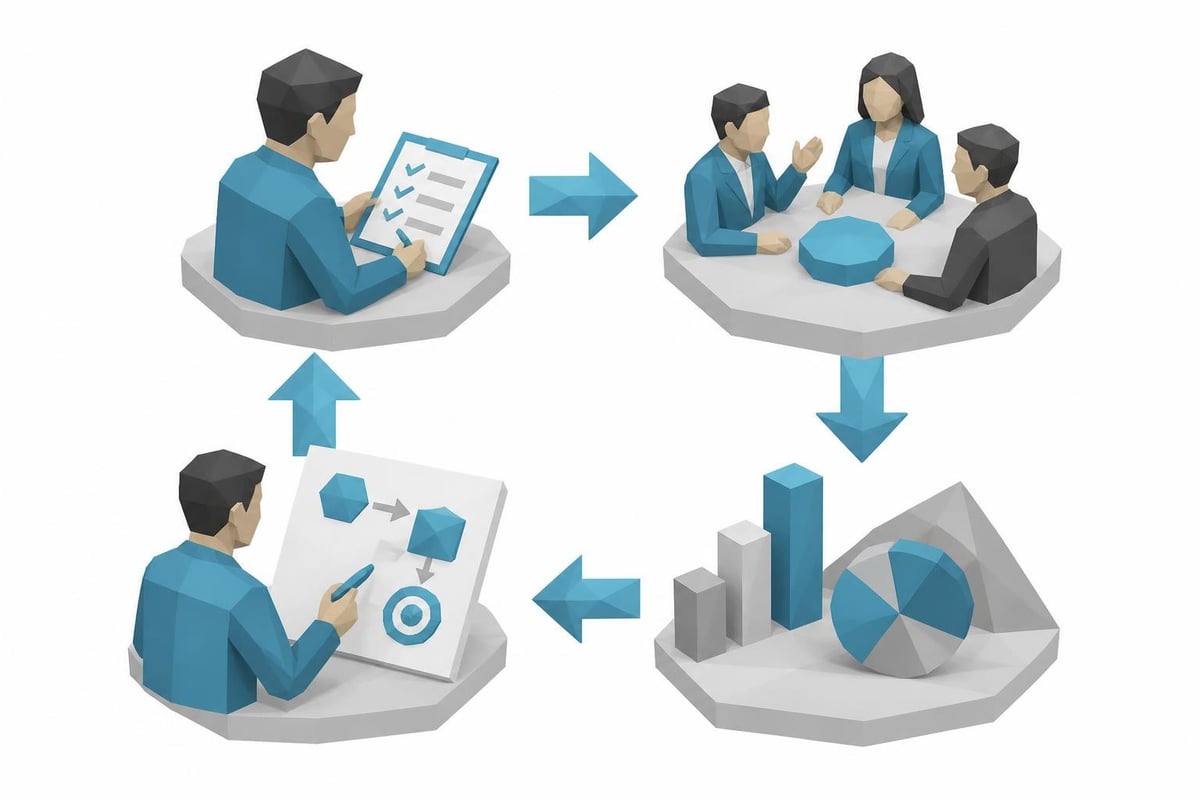
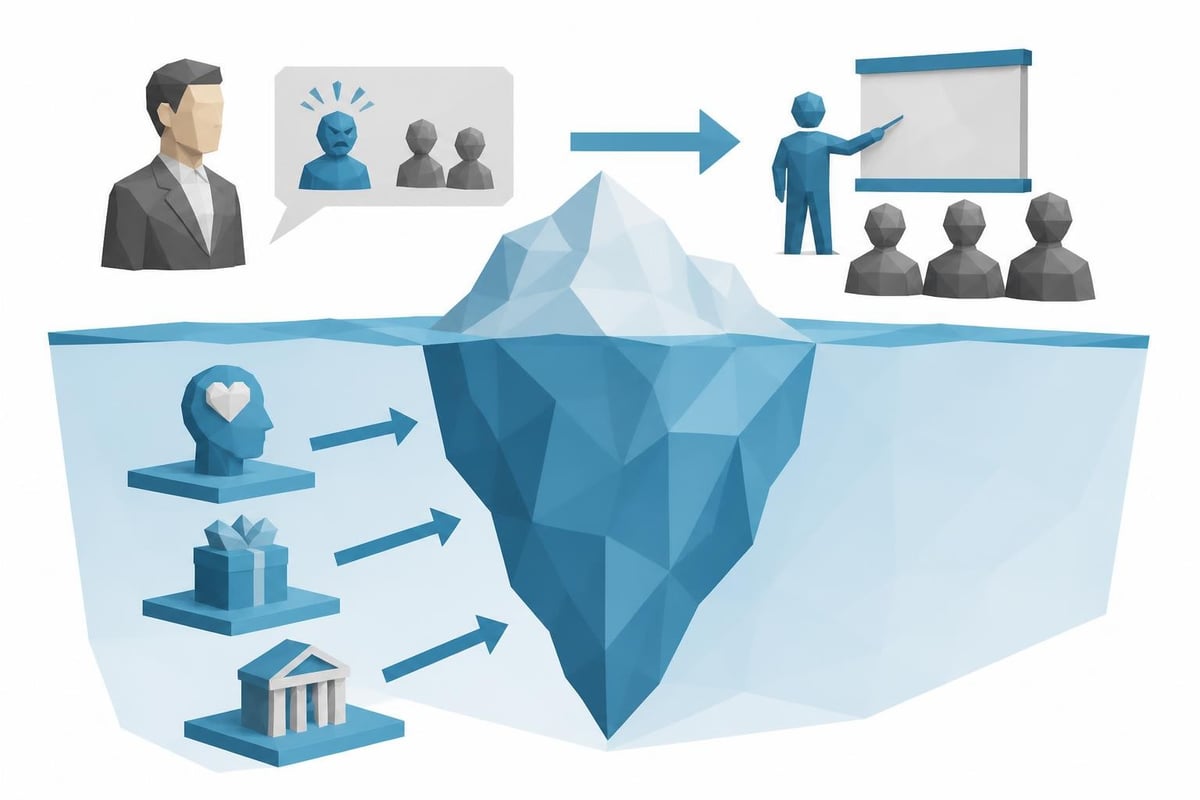
Market saturation in coaching

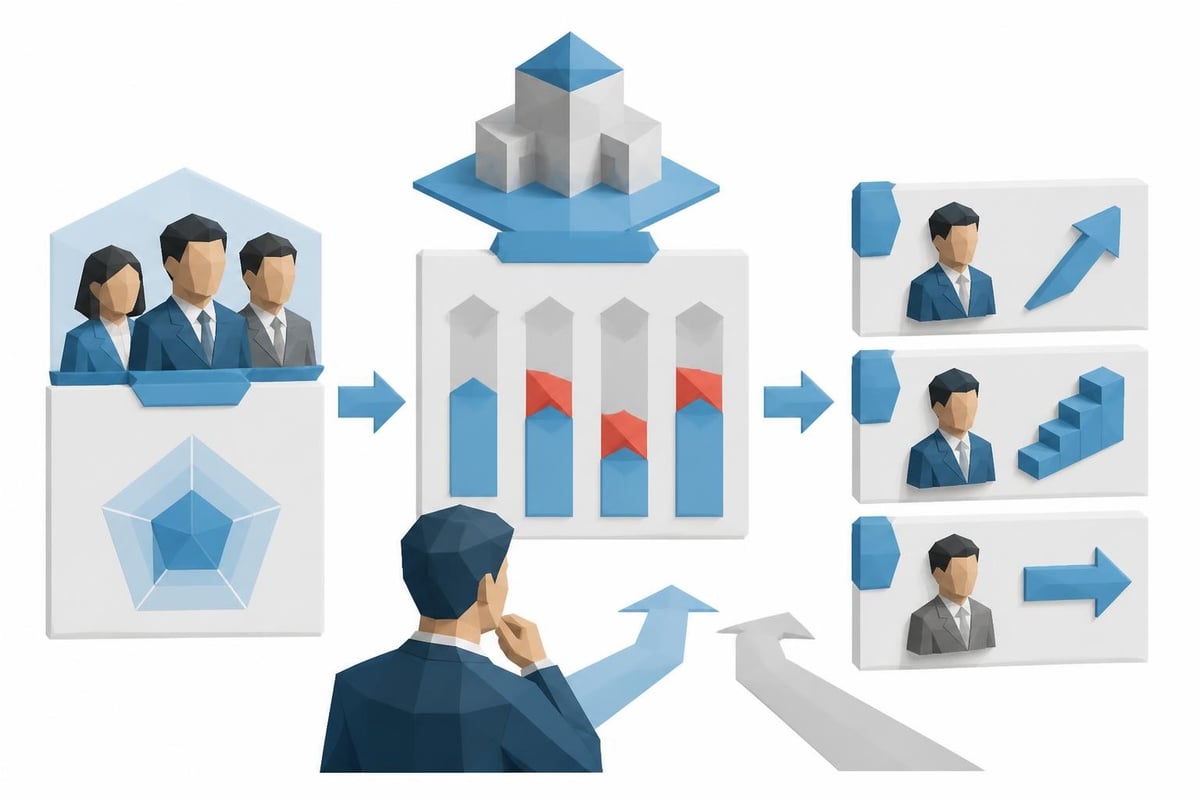
Corporate buyers face decision paralysis when evaluating coaches. Everyone claims transformation, leadership development, and breakthrough results. Without clear differentiation beyond certification level, buyers default to referrals, existing relationships, or platforms that pre-vet coaches against business outcomes.

What Corporate Buyers Actually Evaluate

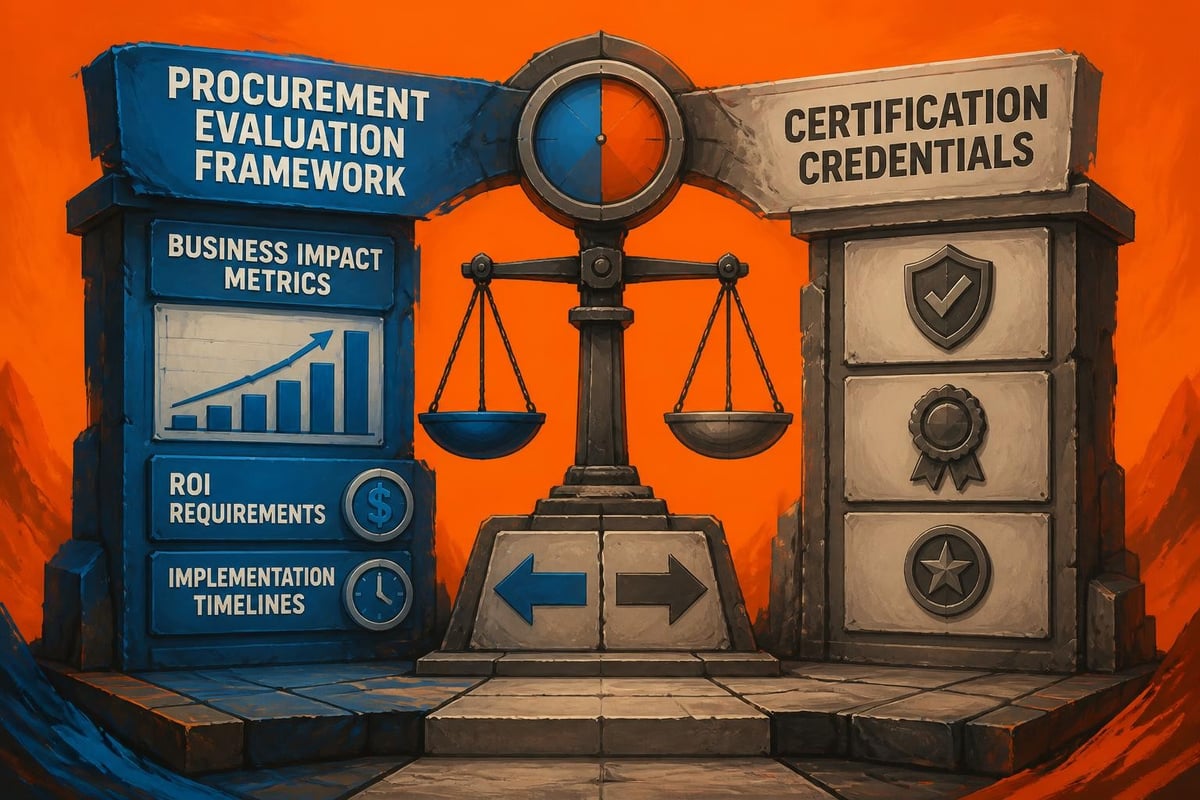
Certification signals baseline competence. Corporate decision-makers evaluate entirely different criteria when selecting coaches for their teams:

Buyer Priority Why It Matters What Coaches Miss
Measurable outcomes Budget justification requires ROI Focusing on process over results
Industry context Generic coaching misses business nuances Emphasizing universal frameworks
Implementation speed Leaders need quick wins Lengthy discovery and assessment phases
Scalability One coach can't serve 200 managers Selling individual sessions only

The certification prepared you to conduct coaching conversations. It didn't prepare you to speak the language of P&L impact, employee retention costs, or revenue per employee, which is what corporate buyers care about when evaluating performance coaches.

The Revenue Plateau: Why Growth Stalls

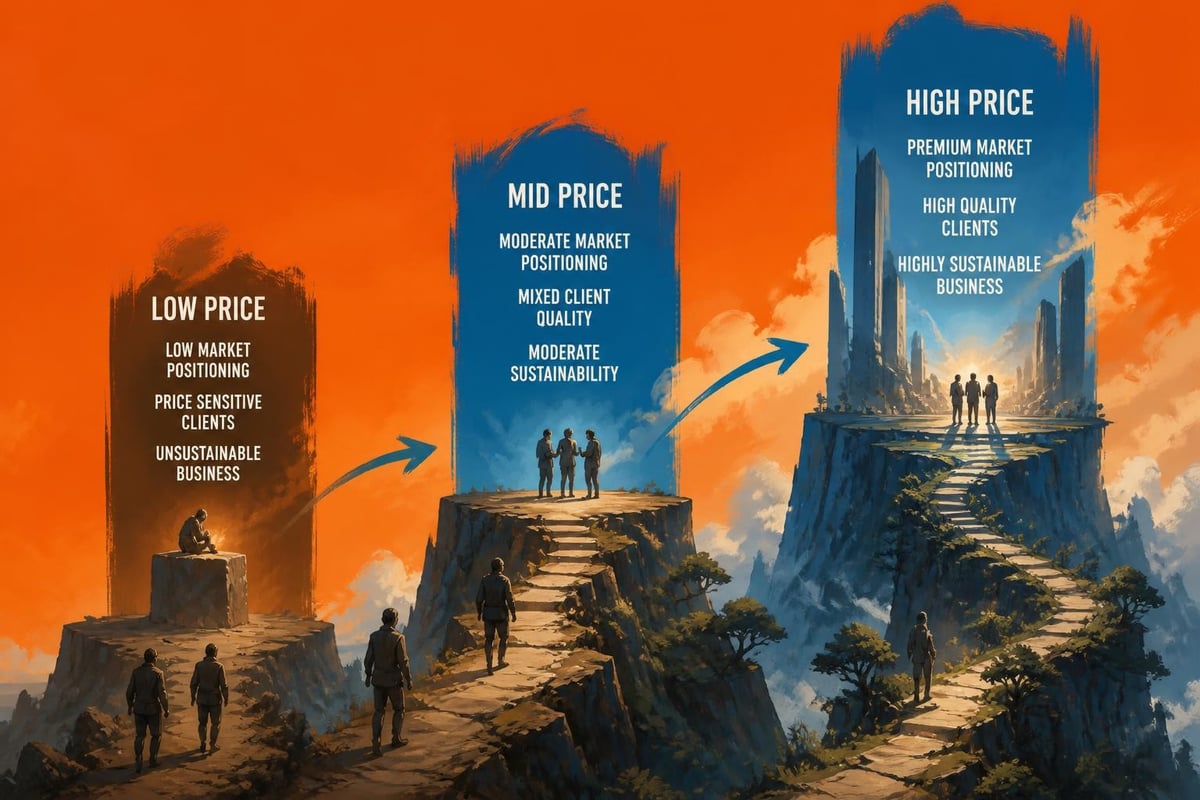
After initial momentum from referrals and personal networks, many certified coaches hit a revenue ceiling between $60,000 and $90,000 annually. This plateau occurs because the strategies that generated first clients don't scale to build a sustainable business.

Common plateau triggers include:

  1. Trading time for money exclusively with no leveraged offerings
  2. Relying on word-of-mouth without systematic lead generation
  3. Underpricing services due to imposter syndrome or market ignorance
  4. Avoiding niching to keep options open, resulting in generic positioning
  5. Neglecting professional visibility beyond immediate network

Forbes identifies market differentiation challenges as a critical barrier. When your marketing mirrors every other certified coach, buyers see commoditized services and shop on price or convenience rather than unique value.

The Experience vs. Credential Debate

Why certified coaches still struggle becomes obvious when examining what actually builds trust with sophisticated buyers. A coach with 15 years of operational leadership experience and no certification often wins corporate contracts over newly certified coaches with impressive credentials but limited business context.

Experience signals that outweigh certification:

  • Direct P&L responsibility in similar industries
  • Track record of building or scaling teams
  • Specific expertise in the client's business challenges
  • Demonstrated results with measurable outcomes
  • Understanding of organizational dynamics and politics

This reality frustrates coaches who invested significant time and money in certification programs. The market values applicable experience and proven results over training completion certificates.

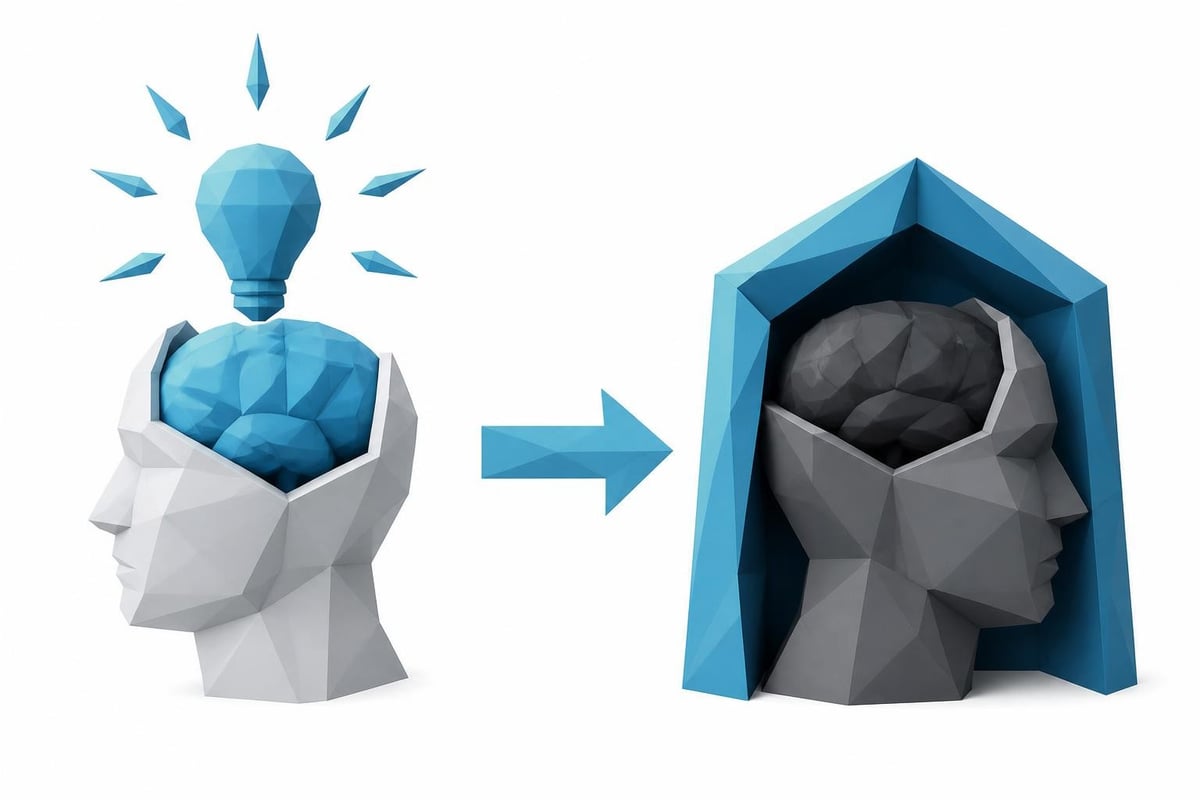
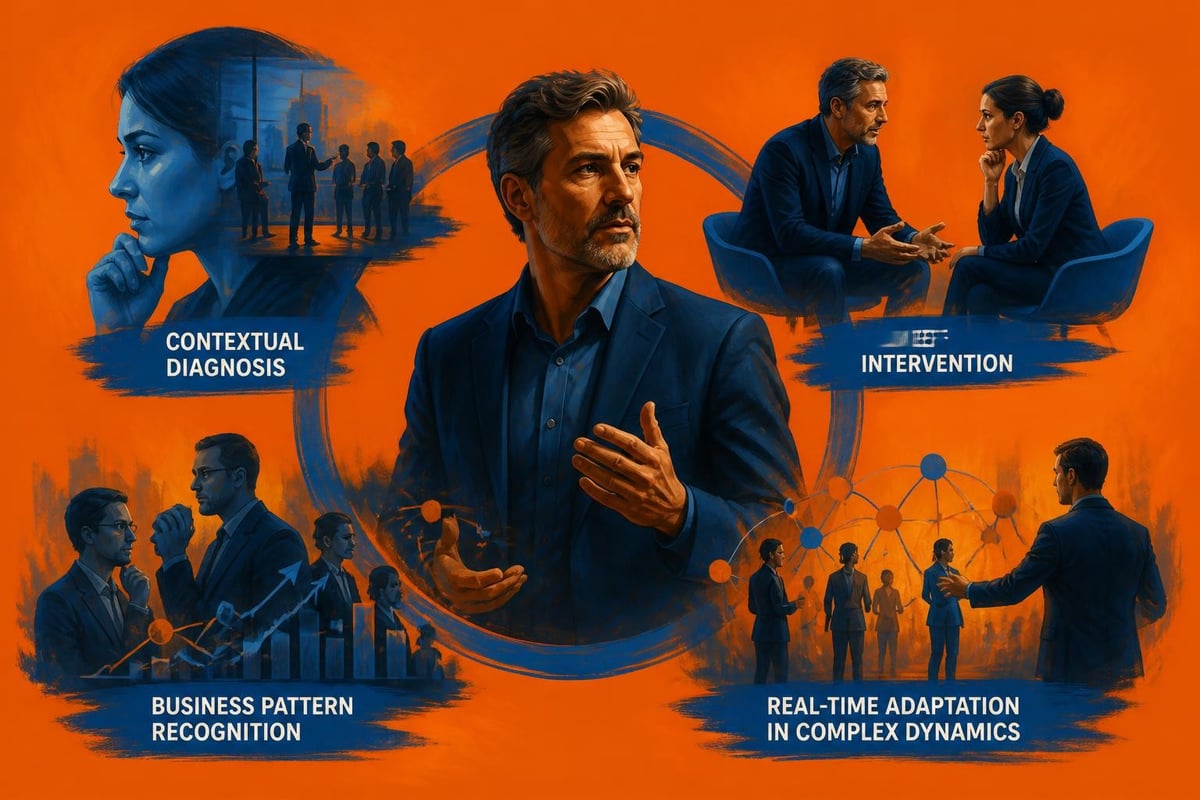
Experience versus credentials

Implementation Gaps That Certifications Don't Address

Certification teaches coaching methodology. It doesn't address the implementation challenges that determine whether coaching creates lasting change or becomes another failed corporate initiative.

Corporate coaching fails when:

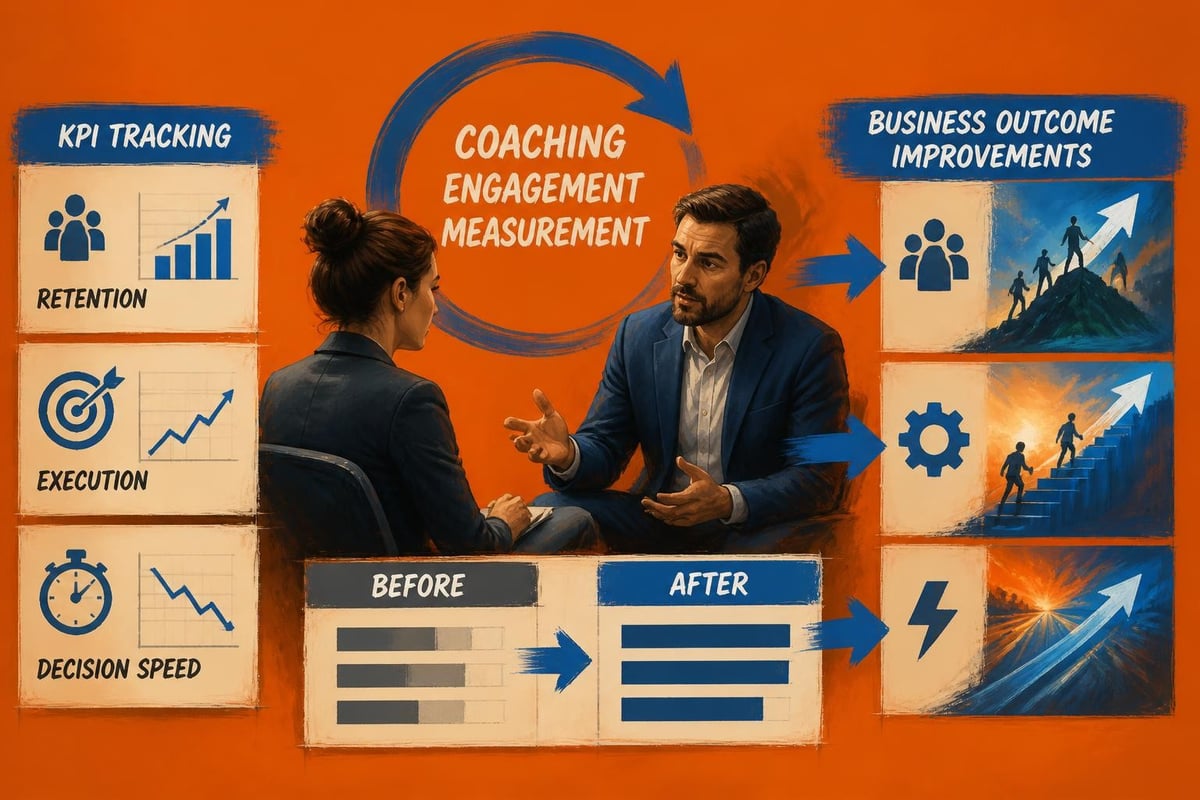
  • Coaching remains disconnected from business KPIs and strategic priorities
  • Sessions focus on feelings and awareness without behavioral change
  • No accountability structure exists beyond coaching conversations
  • Leadership doesn't model or reinforce coached behaviors
  • Results aren't measured against baseline performance metrics

Effective corporate coaches embed themselves in business operations. They understand psychological safety at work, connect coaching to retention and engagement data, and tie progress to quarterly OKRs. Certification programs rarely teach this operational integration.

The Marketing and Positioning Problem

Most certified coaches fail at marketing because they market their process rather than client outcomes. Buyers don't care about your ICF certification level or your preferred framework. They care whether you can help their managers have difficult conversations, improve team performance, or reduce voluntary turnover.

Many running a coaching business face challenges including client acquisition and unclear service positioning. The coaches who thrive in 2026 position themselves around specific business outcomes in defined markets rather than broad coaching capabilities.

Effective positioning answers:

  • What specific business problem do you solve?
  • For which type of organization or leader?
  • What measurable outcomes can clients expect?
  • Why should they choose you over alternatives?
  • What proof validates your claims?

Generic language like "I help leaders reach their potential" communicates nothing distinctive. Specific positioning like "I help mid-market manufacturing companies reduce frontline manager turnover by 30% through operational coaching and KPI accountability" differentiates immediately.

Building a Coaching Business Versus Coaching Well

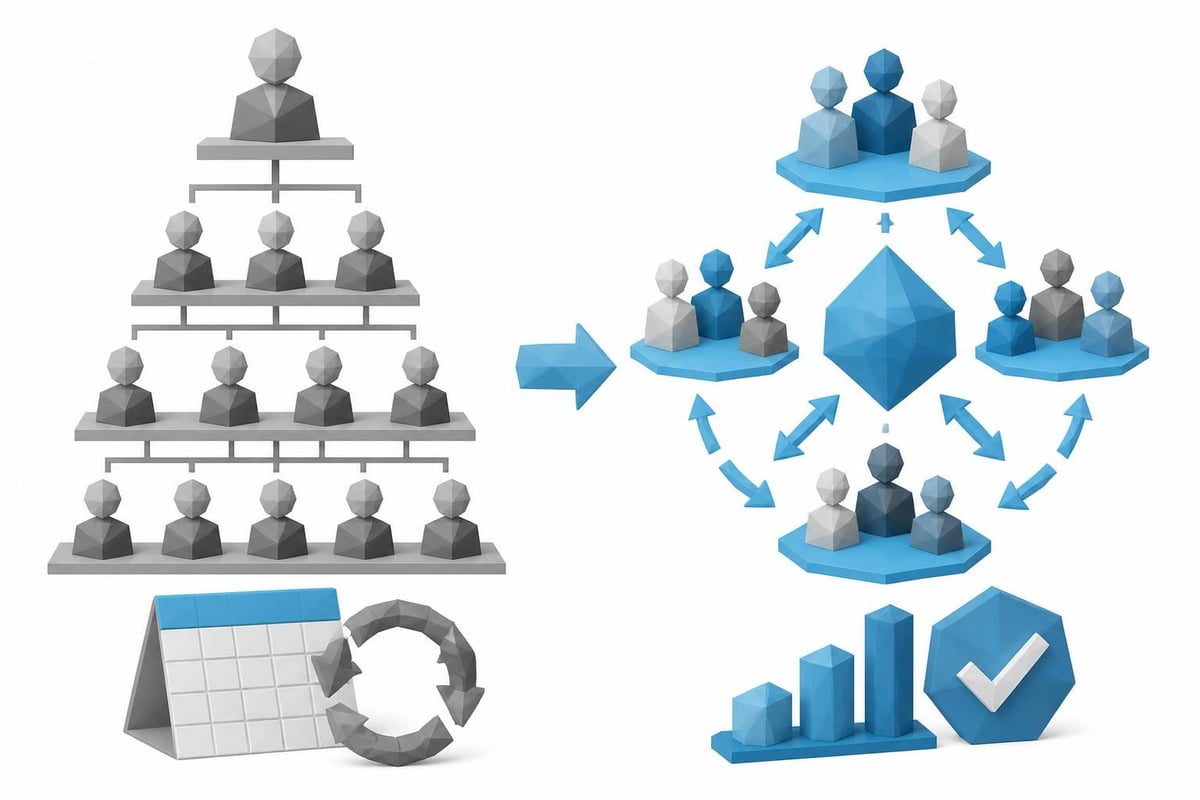
The final reason why certified coaches still struggle centers on role confusion. Coaching ability represents only 30% of what determines business success. The remaining 70% involves sales, marketing, operations, financial management, and strategic positioning.

Business Function Time Required Covered in Certification?
Service delivery (coaching) 30% Yes, extensively
Sales and client acquisition 25% No
Marketing and positioning 20% No
Operations and administration 15% No
Financial management 10% No

Successful coaches either develop business capabilities or partner with organizations that provide client flow, like Noomii, which connects qualified coaches with corporate clients actively seeking specific expertise.

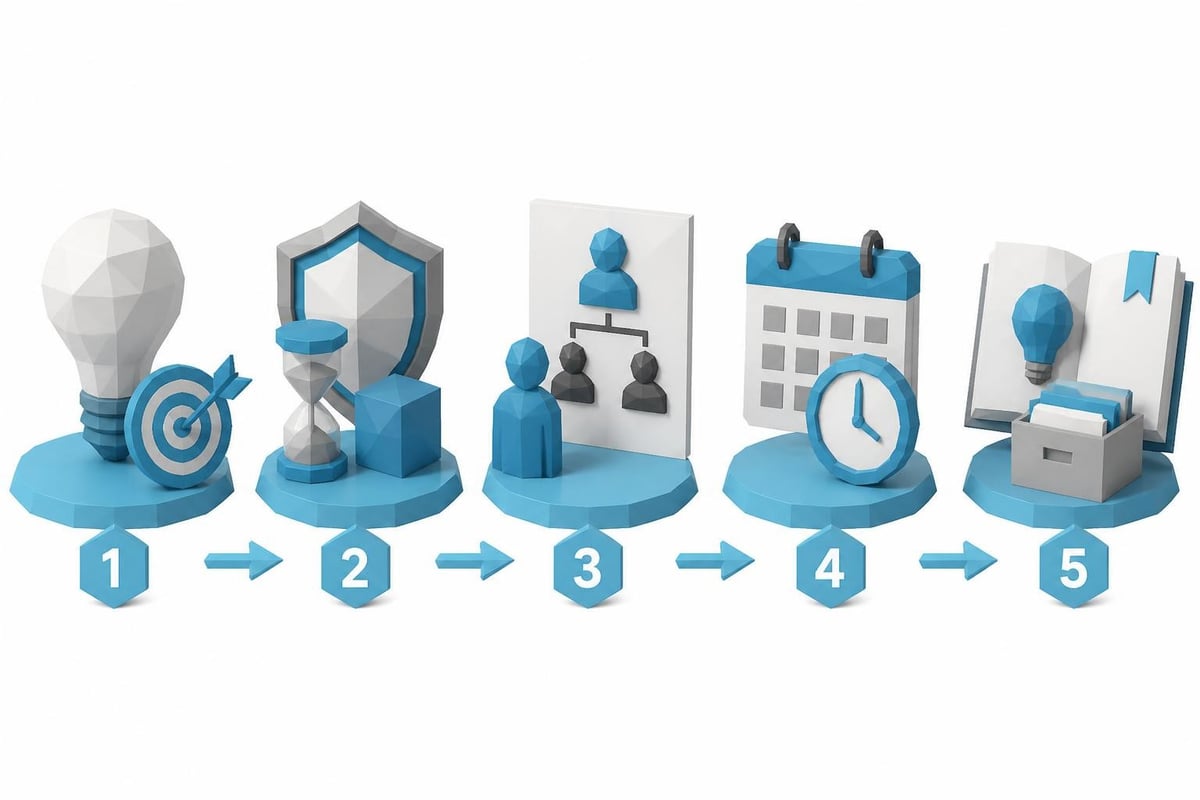
Business operations breakdown

Moving Beyond the Certification Ceiling

Breaking through requires accepting that certification was the entry point, not the destination. Coaches who build sustainable practices in 2026 focus on outcomes, specialize in solving specific problems, and develop business acumen alongside coaching skills. They recognize that corporate buyers evaluate coaches based on relevant experience, measurable results, and business fluency rather than certification pedigree.

Frequently Asked Questions

Why do certified coaches struggle to find clients?
Certification teaches coaching skills but not client acquisition, marketing, or business development. Most coaches lack systematic lead generation strategies and rely on referrals that eventually dry up without a sustainable client pipeline.

Does coaching certification guarantee business success?
No. Certification validates coaching competency but doesn't address business fundamentals, marketing, positioning, or the commercial skills required to build a sustainable practice. Many certified coaches plateau financially despite strong coaching abilities.

What should coaches focus on besides certification?
Coaches should develop niche expertise, create measurable outcome frameworks, build systematic marketing, master consultative sales, and understand the business context of their target clients. Business acumen often matters more than additional certifications.

How do corporate buyers evaluate coaches?
Corporate buyers prioritize measurable outcomes, industry experience, implementation capability, and ROI over certification level. They evaluate whether coaches understand their business challenges and can demonstrate relevant results with similar organizations.

Why do experienced professionals outcompete certified coaches?
Experienced practitioners bring business credibility, industry knowledge, and practical insights that resonate with corporate buyers. They speak the language of business outcomes rather than coaching processes, making them more attractive to decision-makers.

What causes coaches to plateau at $60,000-90,000 annually?
Revenue plateaus occur when coaches rely exclusively on trading time for money, lack systematic client acquisition, underprice services, avoid specialization, and fail to create leveraged or scalable offerings beyond one-to-one coaching.

Should I get additional coaching certifications?
Additional certifications rarely solve business development challenges. Focus instead on building marketing systems, developing niche expertise, creating outcome measurement frameworks, and improving commercial skills that drive client acquisition.

How can coaches differentiate in a saturated market?
Differentiation comes from specialized expertise, proven results in specific industries, proprietary frameworks, measurable outcomes, and clear positioning around business problems rather than coaching methodologies. Specificity beats generalization.

What business skills do certified coaches typically lack?
Most coaches lack training in sales, marketing, financial management, pricing strategy, service packaging, client acquisition systems, and business operations. Certification programs focus on coaching delivery rather than practice management.


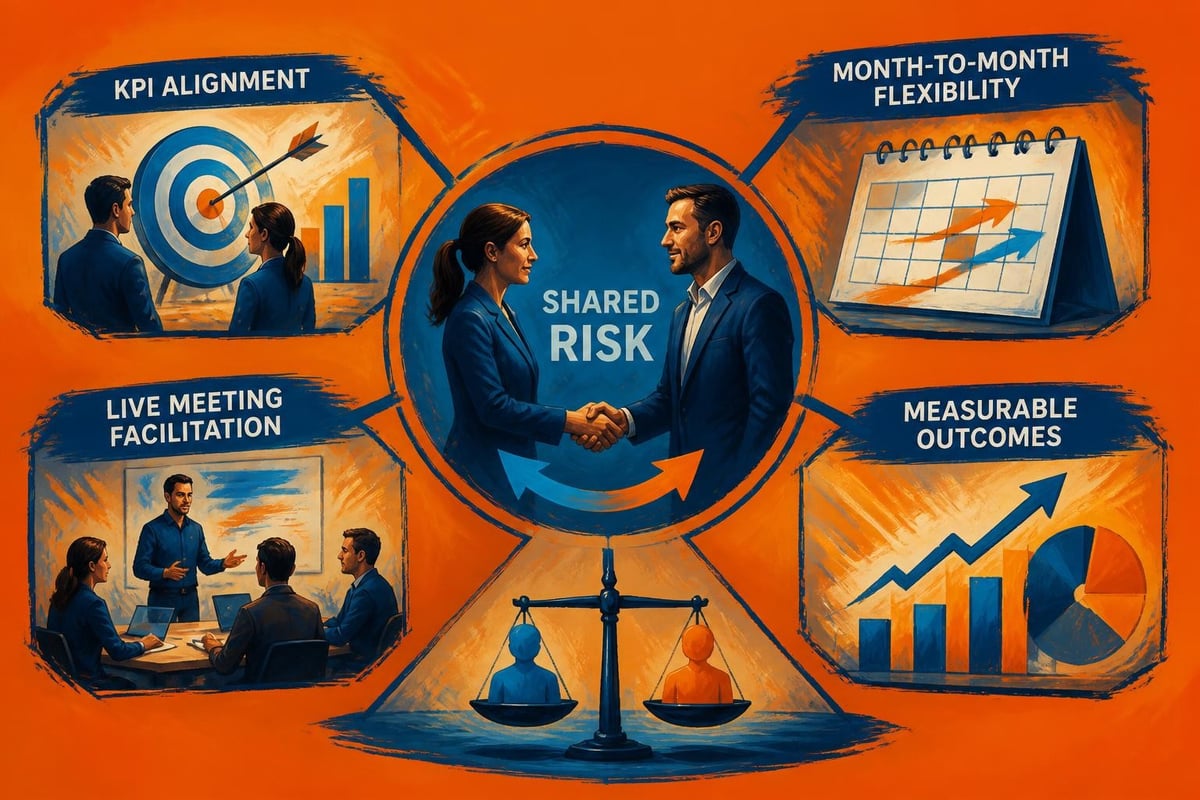
Credentials open doors, but results keep them open. The coaches who thrive understand that certification represents the beginning of professional development, not the culmination. If your organization needs coaching that prioritizes measurable business outcomes over credential worship, Noomii connects you with experienced practitioners who tie coaching directly to KPIs, embed themselves in your operations, and deliver results you can track quarterly. We work month-to-month because retention should depend on visible progress, not long-term contracts.

AI Is Exposing Weak Leaders: What It Reveals in 2026

The arrival of generative AI in enterprise environments has created an unexpected consequence: it’s functioning as an X-ray machine for leadership competence. Over the past eighteen months, organizations implementing AI tools have discovered that technology adoption failures rarely stem from the technology itself. Instead, AI is exposing weak leaders by revealing the decision-making vacuums, accountability gaps, and cultural dysfunctions that existed all along but remained hidden behind bureaucratic complexity and information asymmetry. What boards and CHROs are discovering is uncomfortable but actionable: the same executives who struggle with AI adoption are often the ones creating bottlenecks across the organization.

The Information Advantage Has Collapsed

For decades, senior leaders maintained positional power through exclusive access to information. They controlled what reached their teams, how data flowed upward, and which insights shaped decisions. AI has obliterated this advantage overnight.


The Arrival of Generative AI: The Ultimate Leadership X-Ray Machine

The arrival of generative AI in enterprise environments has created an unexpected consequence: it’s functioning as an X-ray machine for leadership competence. Over the past eighteen months, organizations implementing AI tools have discovered that technology adoption failures rarely stem from the technology itself. Instead, AI is exposing weak leaders by revealing the decision-making vacuums, accountability gaps, and cultural dysfunctions that existed all along but remained hidden behind bureaucratic complexity and information asymmetry. What boards and CHROs are discovering is uncomfortable but actionable: the same executives who struggle with AI adoption are often the ones creating bottlenecks across the organization.


The Information Advantage Has Collapsed

For decades, senior leaders maintained positional power through exclusive access to information. They controlled what reached their teams, how data flowed upward, and which insights shaped decisions. AI has obliterated this advantage overnight.

When teams can query company data directly, generate market analysis independently, and access institutional knowledge without executive gatekeepers, the leader’s role transforms fundamentally. Leaders who relied on information control rather than judgment quality now face a competence crisis they cannot hide.

What Gets Revealed When Information Democratizes

The shift exposes three critical leadership deficits:

  • Inability to make trade-off decisions: When everyone has the same data, leaders must actually choose between competing priorities rather than delaying under the guise of “gathering more information.”
  • Lack of strategic judgment: Access to insights doesn’t equal knowing what matters, and weak leaders demonstrate they never developed this muscle.
  • Absence of decision frameworks: Without proprietary processes for evaluation, leaders default to consensus-seeking that stalls execution.

Organizations deploying AI assistants across management layers report a consistent pattern: high-performing leaders accelerate because they already possessed strong judgment frameworks, while struggling executives become more visible obstacles as their teams bypass them for faster decision support.


Broken Processes Surface Immediately

AI implementation functions as an organizational stress test. A Fortune 500 client recently rolled out an AI tool designed to streamline contract reviews across legal, procurement, and business units. Within three weeks, the project stalled completely.

The problem wasn’t the technology. The AI worked exactly as designed. What it exposed was that nobody actually owned the contract approval process. Legal thought procurement had final authority. Procurement believed business unit leaders made the call. Business units assumed legal held veto power.

For years, this ambiguity had been masked by manual workflows, informal hallway conversations, and individual workarounds. People figured it out case by case. AI removed that cushion and revealed the leadership vacuum underneath.

The Accountability Test

When processes break down during AI adoption, the pattern reveals which leaders have actually built functioning systems versus those who’ve been coasting on talented individuals compensating for organizational dysfunction.

Leadership Response What It Signals Organizational Outcome
“Let’s form a committee to study this” Avoidance of ownership Project delays, team frustration
“I’ll decide by Friday, here’s the framework” Clear accountability Rapid iteration, momentum
“This is too complex for AI right now” Fear of exposure Competitive disadvantage
“What’s broken in our process that AI revealed?” Diagnostic thinking Structural improvement

The most capable executives treat AI failures as diagnostic gold. They ask what the breakdown reveals about decision rights, workflow design, and organizational clarity. Weak leaders blame the technology, request more vendor demos, or create working groups that produce nothing.


Decision Hesitation Becomes Visible

Before AI, indecisive leaders could hide behind lengthy analysis cycles, endless stakeholder meetings, and the fiction that perfect information was just one more report away. AI is exposing weak leaders by eliminating these excuses and revealing hesitation for what it is: an inability to manage uncertainty and accountability.

A government agency implementing AI for citizen service requests discovered their middle management layer was the bottleneck. The AI correctly categorized 94% of requests and routed them to appropriate departments. But requests sat in management queues for an average of eight days because supervisors wouldn’t commit to action without executive sign-off on edge cases.

The irony? Executives had already delegated this authority. Managers simply never exercised it because the organization had normalized decision avoidance as a risk-mitigation strategy.

The Speed Differential

Organizations with decisive leadership cultures are pulling away from competitors at an accelerating rate. When AI surfaces an opportunity or flags a risk, strong leaders:

  • Establish decision criteria in advance
  • Assign clear ownership with authority boundaries
  • Set decision deadlines measured in days, not weeks
  • Accept that 80% certainty with speed beats 95% certainty with delay
  • Learn from outcomes rather than punishing reasonable mistakes

Weak leaders do the opposite. They treat every AI insight as requiring perfect certainty before action, create decision-making processes that diffuse accountability across multiple stakeholders, and optimize for avoiding blame rather than capturing value.

The performance gap is measurable. Companies in the top quartile of decision effectiveness are seeing 40% faster AI implementation cycles and 3x higher ROI on automation investments compared to bottom-quartile peers.


Toxic Patterns Can No Longer Hide

AI is exposing weak leaders by making toxic leadership behaviors impossible to disguise. When systems create transparency, leaders who rely on control through fear, information hoarding, or credit theft find themselves operating in hostile territory.

Consider feedback mechanisms. AI-powered pulse surveys, sentiment analysis of communication patterns, and automated 360-degree assessments make it harder for toxic leaders to maintain the gap between their self-perception and their actual impact. A manufacturing company recently discovered through AI analysis of Slack communications that their highest-performing plant had the lowest psychological safety scores, directly correlated with one executive’s communication style.

The Transparency Dilemma

Leaders who built careers on taking credit for team successes while deflecting accountability for failures face a new reality. AI systems that track contribution, decision-making, and outcomes create an evidence trail that’s difficult to manipulate.

Behaviors that AI illuminates:

  • Bottlenecking: When one leader consistently delays decisions that could be made at lower levels
  • Credit theft: Attribution analysis shows who generated insights versus who presented them
  • Inconsistent standards: Pattern recognition reveals when rules apply selectively based on relationships
  • Information hoarding: Access logs demonstrate who restricts data flow without justification

The organizations addressing these patterns proactively are implementing evidence-based leadership diagnostics that identify behavioral gaps before they become cultural crises. The ones ignoring the signals are watching talent leave for competitors who’ve created healthier environments.


The Capability Development Gap

Perhaps the most significant way AI is exposing weak leaders is by revealing that many organizations have treated leadership development as a checkbox exercise rather than capability building. Research shows AI project failures are fundamentally organizational learning problems, not technology deficits.

A financial services firm invested $12 million in AI tools for their wealth management division. Eighteen months later, adoption sat at 23% and ROI was negative. The post-mortem revealed the real issue: executives hadn’t developed the capabilities to lead in an AI-augmented environment.

They didn’t know how to:

  • Redesign workflows around AI capabilities
  • Coach teams through automation anxiety
  • Evaluate AI outputs for quality and bias
  • Make build-versus-buy decisions for AI tools
  • Create governance frameworks for AI usage

These weren’t technology skills. These were leadership capabilities that required new mental models, judgment frameworks, and organizational design thinking. The executives who succeeded had invested in developing these competencies. The ones who failed had assumed their existing leadership approaches would translate automatically.

The Learning Velocity Problem

The pace of AI advancement means leadership capability gaps compound quickly. An executive who was adequate in 2024 becomes a liability in 2026 if they haven’t continuously developed their capacity to work with these systems.

Organizations are discovering they need leaders who can:

  • Rapidly prototype new processes without waiting for perfect planning
  • Experiment with AI applications and learn from failures publicly
  • Translate technical capabilities into business value
  • Navigate the ethical complexities of automation decisions
  • Build trust in environments where change is constant

These capabilities don’t emerge from traditional leadership training. They require immersive experience, structured reflection, and often external coaching focused on adaptive leadership rather than conventional management skills.


What High-Performing Leaders Do Differently

The executives thriving in AI-enabled environments share identifiable patterns that separate them from struggling peers. These aren’t theoretical best practices but observed behaviors from organizations successfully navigating this transition.

They establish decision rights explicitly. Before implementing any AI system, effective leaders map decision authority, create escalation criteria, and document who owns what. They eliminate the ambiguity that AI exposes.

They build feedback loops into everything. Rather than treating AI as a deployment project, strong leaders create continuous learning systems. They establish metrics, review outcomes weekly, and adjust based on evidence rather than opinions.

They normalize intelligent failure. Organizations led by capable executives treat AI experiments as learning opportunities. They distinguish between failures from poor execution (unacceptable) and failures from testing new approaches (valuable data).

They invest in their own development. The best leaders recognize they don’t have all the answers and actively seek coaching, peer learning, and external perspectives. They understand that leadership development isn’t a destination but an ongoing capability-building process.


The Board-Level Conversation That’s Not Happening

Most boards are asking the wrong questions about AI. They want to know about cybersecurity risks, compliance frameworks, and competitive positioning. These matter, but they miss the fundamental issue: AI is exposing weak leaders throughout the management ranks, and board-level leadership assessment processes haven’t caught up.

Boards should be asking:

  • Which executives are accelerating with AI access versus slowing down?
  • What does our AI adoption pattern reveal about decision-making effectiveness across business units?
  • Are we developing leadership capabilities at the pace our AI strategy requires?
  • What toxic patterns are our new transparency tools revealing that we’ve been ignoring?

The honest answers to these questions are often uncomfortable. They reveal that some C-suite executives who looked effective in slower, less transparent environments lack the capabilities needed now. They expose that succession planning hasn’t accounted for AI-era leadership requirements. They demonstrate that psychological safety at work is lower than leaders claim because people are afraid to surface what AI is revealing.

The Succession Planning Blind Spot

Traditional executive assessment focuses on past performance, industry relationships, and strategic vision. These still matter, but they’re insufficient indicators of who will succeed in AI-augmented environments.

The executives positioned for advancement now demonstrate:

  • Adaptive decision-making: They change their minds when evidence shifts
  • Transparency comfort: They operate effectively when their decisions are visible
  • Capability humility: They acknowledge skill gaps and invest in closing them
  • Systems thinking: They see how AI reveals organizational design problems, not just automates tasks
  • Ethical judgment: They navigate the complex trade-offs AI enables without defaulting to what’s easy

Boards conducting succession planning without evaluating candidates against these criteria are selecting for yesterday’s leadership requirements.


The CHRO’s Diagnostic Opportunity

Chief Human Resources Officers are sitting on the most valuable dataset for understanding how AI is exposing weak leaders: the patterns emerging from implementation projects, engagement surveys, exit interviews, and performance data.

Smart CHROs are connecting these dots to answer critical questions:

  • Where are our leadership gaps most acute? By mapping AI adoption success rates against business units and leaders, patterns emerge quickly. The divisions struggling aren’t failing because of technology complexity. They’re failing because of leadership inadequacy.
  • Who needs immediate intervention? Some executives can develop the capabilities they’re missing with targeted coaching. Others can’t or won’t. Early identification determines whether intervention happens before or after expensive failures.
  • What’s our leadership pipeline reality? If AI is exposing weaknesses in current leaders, what does that suggest about the readiness of their successors? Often the answer is sobering: organizations have been promoting people who excelled at navigating broken systems rather than fixing them.
  • How do we accelerate capability development? The CHROs making progress are implementing structured leadership development that addresses AI-era requirements specifically, not generic management training with AI content added as an afterthought.

The organizations making this diagnostic work actionable are those partnering with executive coaching focused on measurable behavioral change, not feel-good development experiences that check boxes without building capabilities.


Frequently Asked Questions

Why does AI expose leadership weaknesses more than other technologies?

AI exposes leadership weaknesses because it democratizes information access, automates routine decision support, and creates transparency around who actually adds value versus who simply controls access to resources. Previous technologies typically enhanced existing workflows without fundamentally challenging power structures. AI eliminates information asymmetry and reveals whether leaders possess genuine judgment capabilities or just positional authority.

How can organizations identify which leaders will struggle with AI adoption before it becomes a crisis?

Organizations can identify at-risk leaders by evaluating three indicators: decision velocity (how quickly they make choices when given adequate information), transparency comfort (whether they operate effectively when their decisions are visible to broader teams), and learning agility (whether they actively develop new capabilities or rely solely on existing experience). Leaders weak in these areas will struggle as AI implementation accelerates regardless of their past performance.

What’s the most common leadership failure pattern during AI implementation?

The most common failure pattern is treating AI as a technology deployment rather than an organizational design challenge. Weak leaders focus on vendor selection, feature comparisons, and technical specifications while avoiding the harder work of clarifying decision rights, redesigning workflows, building team capabilities, and establishing governance frameworks. This results in technically successful implementations that deliver no business value because the organizational context wasn’t prepared.

Can leaders who struggle initially with AI adoption develop the necessary capabilities?

Some can, others cannot. The differentiator is whether the struggle stems from skill gaps (teachable) or fundamental leadership deficits like inability to handle accountability, resistance to transparency, or unwillingness to make decisions under uncertainty. Leaders demonstrating genuine curiosity, actively seeking coaching, and making visible capability investments typically succeed. Those defending current approaches, blaming technology or teams, and avoiding development opportunities rarely improve regardless of intervention intensity.

What should boards do when AI reveals significant leadership weaknesses in the C-suite?

Boards should conduct honest capability assessments against AI-era leadership requirements, establish clear development timelines with measurable milestones, and make succession decisions based on evidence rather than tenure or past performance. The worst response is hoping the problem resolves itself. AI adoption accelerates, competitive pressure increases, and leadership gaps compound quickly. Boards that act decisively on what AI reveals about executive capability typically see improved organizational performance within 12-18 months.


AI is not creating leadership problems but it is making them impossible to ignore. Organizations that treat these revelations as diagnostic opportunities rather than threats will build competitive advantages through stronger decision-making cultures, clearer accountability structures, and more capable leadership at every level. The Noomii Corporate Leadership Program helps organizations translate what AI exposes into measurable leadership improvement through evidence-based diagnostics, precision coach matching, and targeted interventions that address specific capability gaps. If your organization needs to strengthen leadership effectiveness as AI reveals where you’re vulnerable, Noomii Leadership Coaching delivers the structured approach and measurable results that boards and CHROs require.

When teams can query company data directly, generate market analysis independently, and access institutional knowledge without executive gatekeepers, the leader’s role transforms fundamentally. Leaders who relied on information control rather than judgment quality now face a competence crisis they cannot hide.

What Gets Revealed When Information Democratizes

The shift exposes three critical leadership deficits:

  • Inability to make trade-off decisions: When everyone has the same data, leaders must actually choose between competing priorities rather than delaying under the guise of “gathering more information”
  • Lack of strategic judgment: Access to insights doesn’t equal knowing what matters, and weak leaders demonstrate they never developed this muscle
  • Absence of decision frameworks: Without proprietary processes for evaluation, leaders default to consensus-seeking that stalls execution

Organizations deploying AI assistants across management layers report a consistent pattern: high-performing leaders accelerate because they already possessed strong judgment frameworks, while struggling executives become more visible obstacles as their teams bypass them for faster decision support.

AI revealing leadership decision-making gaps

Broken Processes Surface Immediately

AI implementation functions as an organizational stress test. A Fortune 500 client recently rolled out an AI tool designed to streamline contract reviews across legal, procurement, and business units. Within three weeks, the project stalled completely.

The problem wasn’t the technology. The AI worked exactly as designed. What it exposed was that nobody actually owned the contract approval process. Legal thought procurement had final authority. Procurement believed business unit leaders made the call. Business units assumed legal held veto power.

For years, this ambiguity had been masked by manual workflows, informal hallway conversations, and individual workarounds. People figured it out case by case. AI removed that cushion and revealed the leadership vacuum underneath.

The Accountability Test

When processes break down during AI adoption, the pattern reveals which leaders have actually built functioning systems versus those who’ve been coasting on talented individuals compensating for organizational dysfunction.

Leadership Response What It Signals Organizational Outcome
“Let’s form a committee to study this” Avoidance of ownership Project delays, team frustration
“I’ll decide by Friday, here’s the framework” Clear accountability Rapid iteration, momentum
“This is too complex for AI right now” Fear of exposure Competitive disadvantage
“What’s broken in our process that AI revealed?” Diagnostic thinking Structural improvement

The most capable executives treat AI failures as diagnostic gold. They ask what the breakdown reveals about decision rights, workflow design, and organizational clarity. Weak leaders blame the technology, request more vendor demos, or create working groups that produce nothing.

Decision Hesitation Becomes Visible

Before AI, indecisive leaders could hide behind lengthy analysis cycles, endless stakeholder meetings, and the fiction that perfect information was just one more report away. AI is exposing weak leaders by eliminating these excuses and revealing hesitation for what it is: an inability to manage uncertainty and accountability.

A government agency implementing AI for citizen service requests discovered their middle management layer was the bottleneck. The AI correctly categorized 94% of requests and routed them to appropriate departments. But requests sat in management queues for an average of eight days because supervisors wouldn’t commit to action without executive sign-off on edge cases.

The irony? Executives had already delegated this authority. Managers simply never exercised it because the organization had normalized decision avoidance as a risk-mitigation strategy.

The Speed Differential

Organizations with decisive leadership cultures are pulling away from competitors at an accelerating rate. When AI surfaces an opportunity or flags a risk, strong leaders:

  1. Establish decision criteria in advance
  2. Assign clear ownership with authority boundaries
  3. Set decision deadlines measured in days, not weeks
  4. Accept that 80% certainty with speed beats 95% certainty with delay
  5. Learn from outcomes rather than punishing reasonable mistakes

Weak leaders do the opposite. They treat every AI insight as requiring perfect certainty before action, create decision-making processes that diffuse accountability across multiple stakeholders, and optimize for avoiding blame rather than capturing value.

The performance gap is measurable. Companies in the top quartile of decision effectiveness are seeing 40% faster AI implementation cycles and 3x higher ROI on automation investments compared to bottom-quartile peers.

Toxic Patterns Can No Longer Hide

AI is exposing weak leaders by making toxic leadership behaviors impossible to disguise. When systems create transparency, leaders who rely on control through fear, information hoarding, or credit theft find themselves operating in hostile territory.

Consider feedback mechanisms. AI-powered pulse surveys, sentiment analysis of communication patterns, and automated 360-degree assessments make it harder for toxic leaders to maintain the gap between their self-perception and their actual impact. A manufacturing company recently discovered through AI analysis of Slack communications that their highest-performing plant had the lowest psychological safety scores, directly correlated with one executive’s communication style.

Toxic leadership patterns revealed by AI

The Transparency Dilemma

Leaders who built careers on taking credit for team successes while deflecting accountability for failures face a new reality. AI systems that track contribution, decision-making, and outcomes create an evidence trail that’s difficult to manipulate.

Behaviors that AI illuminates:

  • Bottlenecking: When one leader consistently delays decisions that could be made at lower levels
  • Credit theft: Attribution analysis shows who generated insights versus who presented them
  • Inconsistent standards: Pattern recognition reveals when rules apply selectively based on relationships
  • Information hoarding: Access logs demonstrate who restricts data flow without justification

The organizations addressing these patterns proactively are implementing evidence-based leadership diagnostics that identify behavioral gaps before they become cultural crises. The ones ignoring the signals are watching talent leave for competitors who’ve created healthier environments.

The Capability Development Gap

Perhaps the most significant way AI is exposing weak leaders is by revealing that many organizations have treated leadership development as a checkbox exercise rather than capability building. Research shows AI project failures are fundamentally organizational learning problems, not technology deficits.

A financial services firm invested $12 million in AI tools for their wealth management division. Eighteen months later, adoption sat at 23% and ROI was negative. The post-mortem revealed the real issue: executives hadn’t developed the capabilities to lead in an AI-augmented environment.

They didn’t know how to:

  • Redesign workflows around AI capabilities
  • Coach teams through automation anxiety
  • Evaluate AI outputs for quality and bias
  • Make build-versus-buy decisions for AI tools
  • Create governance frameworks for AI usage

These weren’t technology skills. These were leadership capabilities that required new mental models, judgment frameworks, and organizational design thinking. The executives who succeeded had invested in developing these competencies. The ones who failed had assumed their existing leadership approaches would translate automatically.

The Learning Velocity Problem

The pace of AI advancement means leadership capability gaps compound quickly. An executive who was adequate in 2024 becomes a liability in 2026 if they haven’t continuously developed their capacity to work with these systems.

Organizations are discovering they need leaders who can:

  • Rapidly prototype new processes without waiting for perfect planning
  • Experiment with AI applications and learn from failures publicly
  • Translate technical capabilities into business value
  • Navigate the ethical complexities of automation decisions
  • Build trust in environments where change is constant

These capabilities don’t emerge from traditional leadership training. They require immersive experience, structured reflection, and often external coaching focused on adaptive leadership rather than conventional management skills.

What High-Performing Leaders Do Differently

The executives thriving in AI-enabled environments share identifiable patterns that separate them from struggling peers. These aren’t theoretical best practices but observed behaviors from organizations successfully navigating this transition.

They establish decision rights explicitly. Before implementing any AI system, effective leaders map decision authority, create escalation criteria, and document who owns what. They eliminate the ambiguity that AI exposes.

They build feedback loops into everything. Rather than treating AI as a deployment project, strong leaders create continuous learning systems. They establish metrics, review outcomes weekly, and adjust based on evidence rather than opinions.

They normalize intelligent failure. Organizations led by capable executives treat AI experiments as learning opportunities. They distinguish between failures from poor execution (unacceptable) and failures from testing new approaches (valuable data).

They invest in their own development. The best leaders recognize they don’t have all the answers and actively seek coaching, peer learning, and external perspectives. They understand that leadership development isn’t a destination but an ongoing capability-building process.

High-performing leader AI adoption framework

The Board-Level Conversation That’s Not Happening

Most boards are asking the wrong questions about AI. They want to know about cybersecurity risks, compliance frameworks, and competitive positioning. These matter, but they miss the fundamental issue: AI is exposing weak leaders throughout the management ranks, and board-level leadership assessment processes haven’t caught up.

Boards should be asking:

  1. Which executives are accelerating with AI access versus slowing down?
  2. What does our AI adoption pattern reveal about decision-making effectiveness across business units?
  3. Are we developing leadership capabilities at the pace our AI strategy requires?
  4. What toxic patterns are our new transparency tools revealing that we’ve been ignoring?

The honest answers to these questions are often uncomfortable. They reveal that some C-suite executives who looked effective in slower, less transparent environments lack the capabilities needed now. They expose that succession planning hasn’t accounted for AI-era leadership requirements. They demonstrate that psychological safety at work is lower than leaders claim because people are afraid to surface what AI is revealing.

The Succession Planning Blind Spot

Traditional executive assessment focuses on past performance, industry relationships, and strategic vision. These still matter, but they’re insufficient indicators of who will succeed in AI-augmented environments.

The executives positioned for advancement now demonstrate:

  • Adaptive decision-making: They change their minds when evidence shifts
  • Transparency comfort: They operate effectively when their decisions are visible
  • Capability humility: They acknowledge skill gaps and invest in closing them
  • Systems thinking: They see how AI reveals organizational design problems, not just automates tasks
  • Ethical judgment: They navigate the complex trade-offs AI enables without defaulting to what’s easy

Boards conducting succession planning without evaluating candidates against these criteria are selecting for yesterday’s leadership requirements.

The CHRO’s Diagnostic Opportunity

Chief Human Resources Officers are sitting on the most valuable dataset for understanding how AI is exposing weak leaders: the patterns emerging from implementation projects, engagement surveys, exit interviews, and performance data.

Smart CHROs are connecting these dots to answer critical questions:

Where are our leadership gaps most acute? By mapping AI adoption success rates against business units and leaders, patterns emerge quickly. The divisions struggling aren’t failing because of technology complexity. They’re failing because of leadership inadequacy.

Who needs immediate intervention? Some executives can develop the capabilities they’re missing with targeted coaching. Others can’t or won’t. Early identification determines whether intervention happens before or after expensive failures.

What’s our leadership pipeline reality? If AI is exposing weaknesses in current leaders, what does that suggest about the readiness of their successors? Often the answer is sobering: organizations have been promoting people who excelled at navigating broken systems rather than fixing them.

How do we accelerate capability development? The CHROs making progress are implementing structured leadership development that addresses AI-era requirements specifically, not generic management training with AI content added as an afterthought.

The organizations making this diagnostic work actionable are those partnering with executive coaching focused on measurable behavioral change, not feel-good development experiences that check boxes without building capabilities.

Frequently Asked Questions

Why does AI expose leadership weaknesses more than other technologies?

AI exposes leadership weaknesses because it democratizes information access, automates routine decision support, and creates transparency around who actually adds value versus who simply controls access to resources. Previous technologies typically enhanced existing workflows without fundamentally challenging power structures. AI eliminates information asymmetry and reveals whether leaders possess genuine judgment capabilities or just positional authority.

How can organizations identify which leaders will struggle with AI adoption before it becomes a crisis?

Organizations can identify at-risk leaders by evaluating three indicators: decision velocity (how quickly they make choices when given adequate information), transparency comfort (whether they operate effectively when their decisions are visible to broader teams), and learning agility (whether they actively develop new capabilities or rely solely on existing experience). Leaders weak in these areas will struggle as AI implementation accelerates regardless of their past performance.

What’s the most common leadership failure pattern during AI implementation?

The most common failure pattern is treating AI as a technology deployment rather than an organizational design challenge. Weak leaders focus on vendor selection, feature comparisons, and technical specifications while avoiding the harder work of clarifying decision rights, redesigning workflows, building team capabilities, and establishing governance frameworks. This results in technically successful implementations that deliver no business value because the organizational context wasn’t prepared.

Can leaders who struggle initially with AI adoption develop the necessary capabilities?

Some can, others cannot. The differentiator is whether the struggle stems from skill gaps (teachable) or fundamental leadership deficits like inability to handle accountability, resistance to transparency, or unwillingness to make decisions under uncertainty. Leaders demonstrating genuine curiosity, actively seeking coaching, and making visible capability investments typically succeed. Those defending current approaches, blaming technology or teams, and avoiding development opportunities rarely improve regardless of intervention intensity.

What should boards do when AI reveals significant leadership weaknesses in the C-suite?

Boards should conduct honest capability assessments against AI-era leadership requirements, establish clear development timelines with measurable milestones, and make succession decisions based on evidence rather than tenure or past performance. The worst response is hoping the problem resolves itself. AI adoption accelerates, competitive pressure increases, and leadership gaps compound quickly. Boards that act decisively on what AI reveals about executive capability typically see improved organizational performance within 12-18 months.


AI is not creating leadership problems but it is making them impossible to ignore. Organizations that treat these revelations as diagnostic opportunities rather than threats will build competitive advantages through stronger decision-making cultures, clearer accountability structures, and more capable leadership at every level. The Noomii Corporate Leadership Program helps organizations translate what AI exposes into measurable leadership improvement through evidence-based diagnostics, precision coach matching, and targeted interventions that address specific capability gaps. If your organization needs to strengthen leadership effectiveness as AI reveals where you’re vulnerable, Noomii Leadership Coaching delivers the structured approach and measurable results that boards and CHROs require.


Your Certification Will Not Get Clients

I've watched thousands of coaches spend $5,000 to $25,000 on certifications, then wonder why their phones aren't ringing. The uncomfortable truth: your certification will not get clients. Not in leadership development, not in executive coaching, and especially not in mid-market corporate contracts. The coaching industry has sold you a myth that credentials equal clients, but fifteen years of market observation tells a different story.

The Certification Trap Most Coaches Fall Into

Corporate buyers don't browse ICF directories looking for the shiniest credentials. They want business outcomes. When a VP of Operations needs team performance improved by Q3, your 200-hour certification from a prestigious school means nothing without proof you've solved similar problems.

Here's what actually happens when corporate buyers evaluate coaches:

  • They ask for case studies and measurable results
  • They want references from similar-sized companies
  • They test whether you understand their specific industry challenges
  • They evaluate your diagnostic process and measurement framework
  • They check if you can tie coaching to revenue, retention, or margin

Your certification will not get clients because it proves you completed coursework, not that you deliver results. The distinction between certification and competency is critical here. Certification indicates training completion; competency proves you can apply skills to produce business outcomes.

Corporate buyer evaluation criteria

The ROI Disconnect Between Credentials and Client Acquisition

I've analyzed pricing and close rates across hundreds of corporate coaching engagements. Coaches with identical certifications show win rates ranging from 12% to 67%. The differentiator? Business acumen, industry pattern recognition, and demonstrated results.

One coach we work with landed a $240,000 contract with a manufacturing company despite having no formal certification. His edge: ten years running operations teams, a proprietary diagnostic process, and three case studies showing 30%+ improvements in decision velocity. Meanwhile, his ICF-credentialed competitor with no corporate experience didn't make the shortlist.

What Corporate Buyers Actually Purchase

Mid-market companies purchasing executive coaching or leadership development aren't buying credentials. They're buying confidence that you'll move specific business metrics.

What Buyers Care About What Coaches Emphasize
KPI improvement proof Certification hours
Industry pattern recognition Coaching models learned
Diagnostic frameworks Credential letters (PCC, MCC)
Client references School pedigree
Risk-sharing terms Philosophical approach
Implementation support Coaching presence

This misalignment explains why certifications don’t directly lead to client acquisition across coaching disciplines. The skills that win clients are business diagnosis, clear communication of value, and proof of past results.

The Three Elements That Actually Win Corporate Contracts

After watching successful corporate coaching practices build seven-figure revenues, I've identified three repeatable patterns that matter more than any certification.

1. Proprietary diagnostic frameworks

Corporate buyers want structure and measurement. When you enter with a named assessment process, clear KPIs, and a scorecard methodology, you communicate business discipline. Certification programs teach listening and presence; corporate buyers need project management and metric accountability.

2. Industry-specific pattern recognition

A coach who's worked with fifteen SaaS companies can diagnose typical growth-stage leadership gaps in the first conversation. That expertise comes from repetition and real-world experience, not certification coursework. When you can name the exact challenges a manufacturing operations leader faces scaling from 150 to 300 employees, you've demonstrated competency that credentials can't provide.

3. Results documentation and case study discipline

Your certification will not get clients, but documented results will. Build every engagement around Problem, Diagnosis, Solution, Result, and Lesson. When a prospect asks what you've achieved, you should have:

  • Three case studies with quantified outcomes
  • Client references who speak to business impact
  • Before/after metrics for team performance, retention, or revenue
  • Industry-specific examples matching their challenges

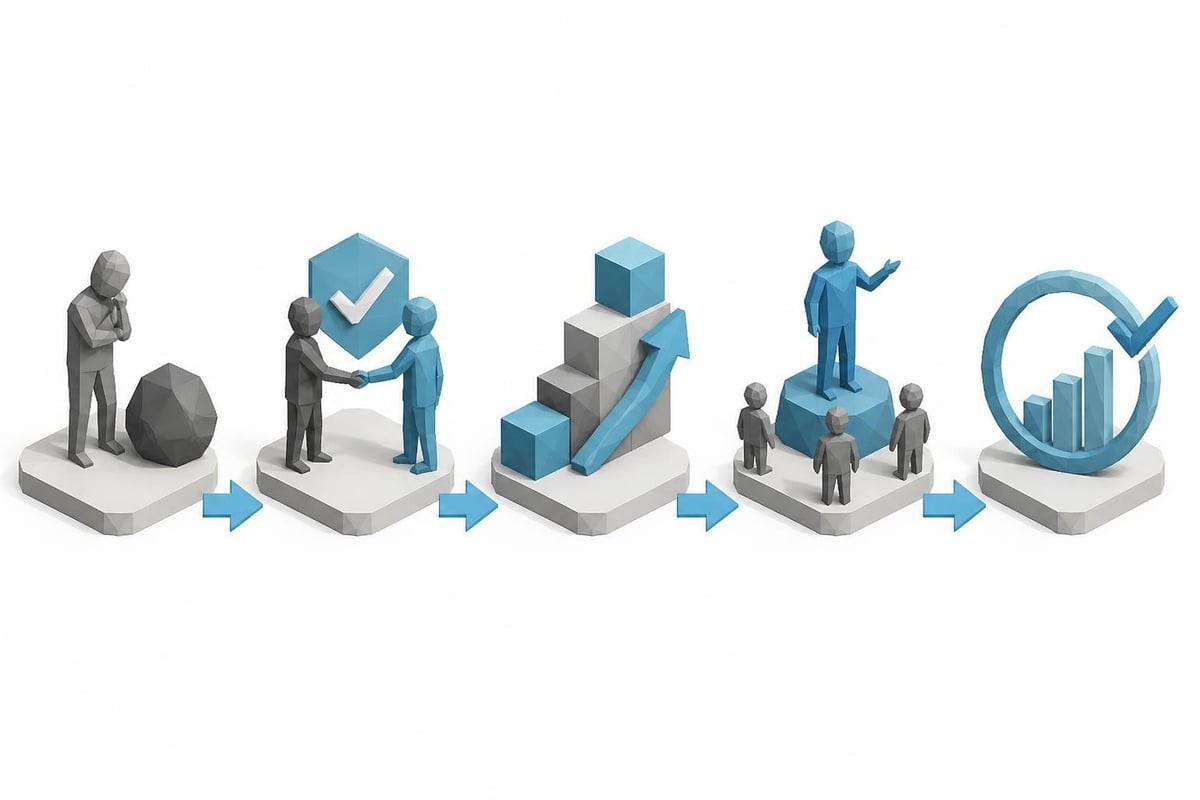
Results documentation framework

Why the Certification-First Model Fails in Corporate Settings

Certification programs optimize for coaching elegance, not business results. They teach presence, powerful questions, and non-directive approaches. Corporate coaching often requires directive expertise, implementation support, and accountability mechanisms that certification programs barely address.

I've seen this play out repeatedly with performance coaches entering corporate markets. Those who succeed pivot from pure coaching to business consulting blended with coaching methods. They attend client meetings, review scorecards, challenge strategic assumptions, and hold leaders accountable to commitments. That's not taught in certification programs, but it's what corporate buyers actually purchase.

The marketplace reality around certification value shows enhanced credibility doesn't automatically translate to client acquisition or revenue growth. Credibility is table stakes; business impact wins contracts.

The AI Coaching Disruption Amplifies This Reality

2026's corporate coaching landscape includes AI coaching platforms offering scalable, consistent, measurement-rich coaching experiences. These tools don't have certifications, but they deliver:

  • Real-time performance tracking
  • Consistent methodology application
  • Integration with existing business systems
  • Cost predictability and ROI transparency

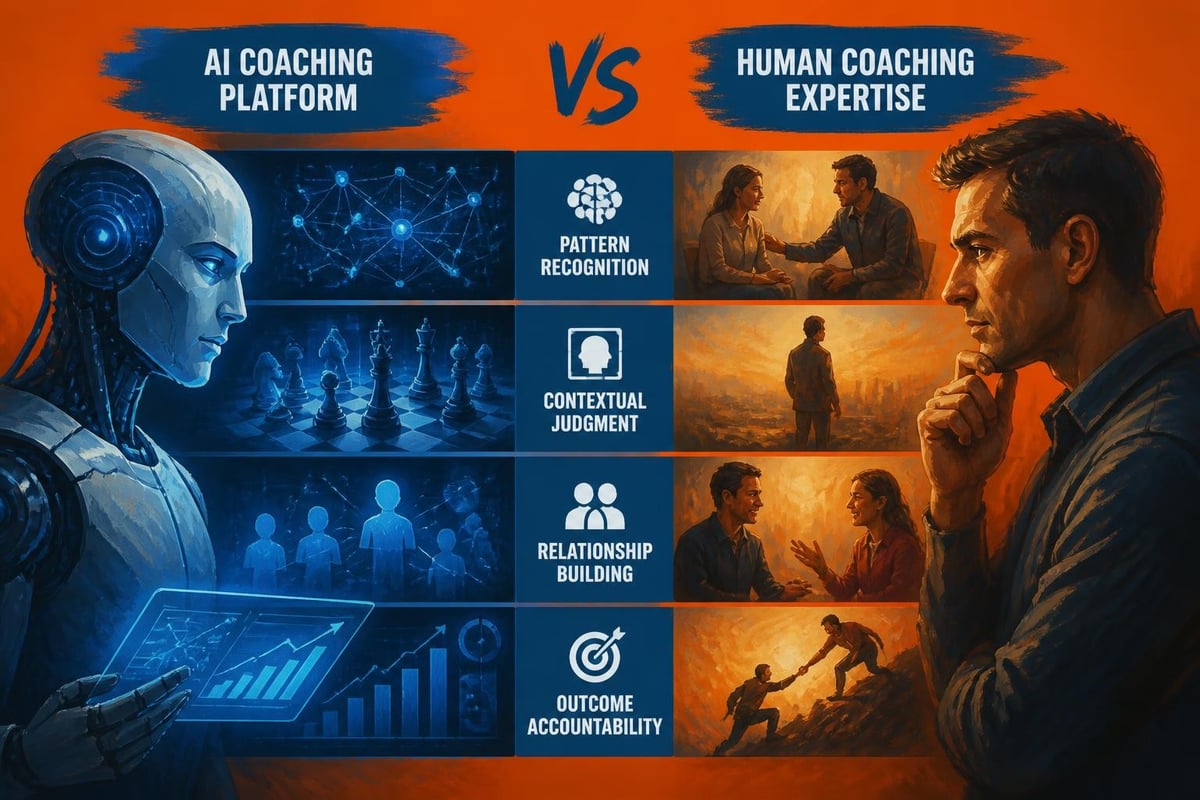
Your certification will not get clients when you're competing against AI tools unless you offer something AI cannot: contextual business judgment, relationship capital, and senior executive credibility. None of those come from certification programs.

Building Client Acquisition Systems That Actually Work

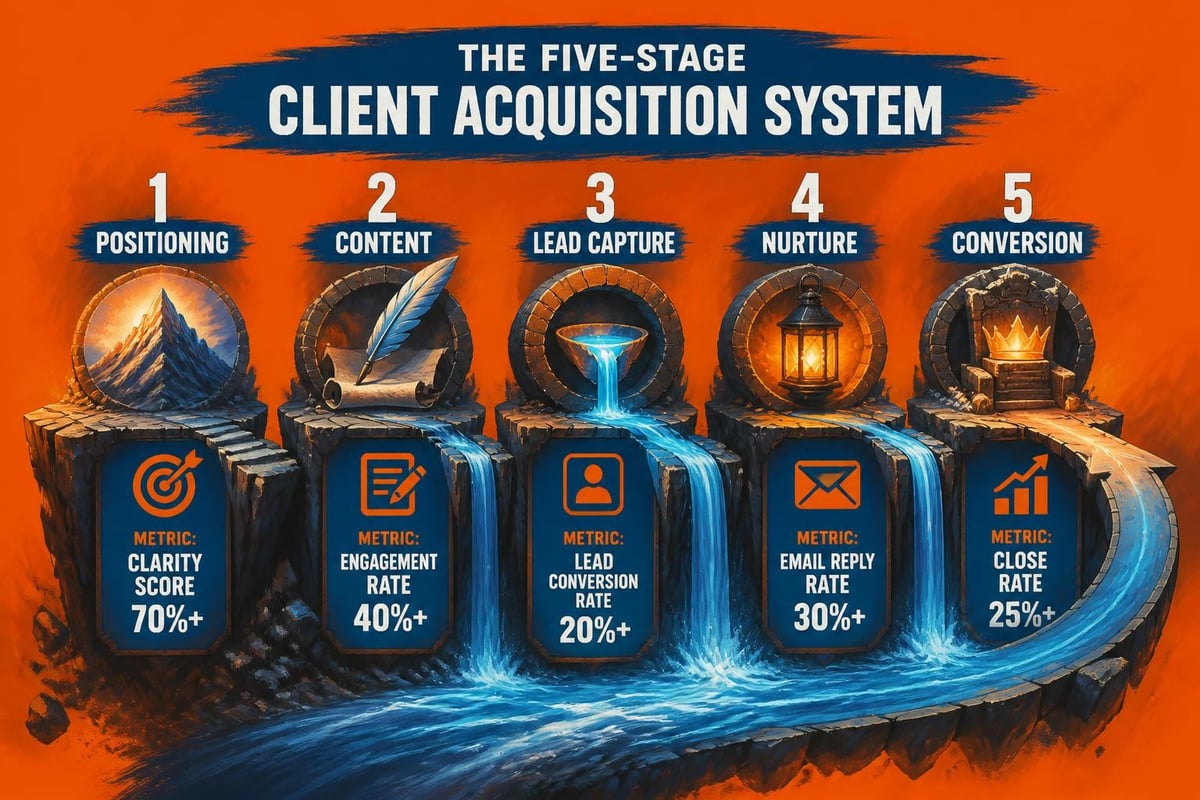
Successful corporate coaching practices in 2026 build marketing systems around proof, not credentials. Here's the repeatable approach:

  1. Document every engagement with metrics – Track KPIs before, during, and after every coaching relationship
  2. Build industry vertical expertise – Become known for solving specific problems in defined industries
  3. Create proprietary frameworks – Name your diagnostic process, assessment methodology, or scorecard system
  4. Publish case studies and lessons – Share anonymized results that demonstrate pattern recognition
  5. Offer risk-aligned pricing – Month-to-month terms or performance incentives show confidence in outcomes

Notice certification doesn't appear in that list. Coaching effectiveness isn't guaranteed by credentials; it's proven through results and client success.

Client acquisition system

The Contrarian Truth About Corporate Coaching Success

The coaches earning $300,000+ annually in corporate markets often aren't the most certified. They're the most business-savvy, industry-connected, and results-focused. They understand psychological safety frameworks, operating cadence design, and KPI scoreboard methodology because they've lived in business roles, not because they took certification courses.

Your certification will not get clients, but fifteen years running sales teams will. Your PCC credential won't win the contract, but three case studies showing 40% improvement in manager effectiveness will. This isn't to say certifications are worthless, they're just not client acquisition tools. They're professional development investments that may improve your coaching quality but won't fill your pipeline.

The corporate buyers I work with care about one question: "Can you help us achieve specific business outcomes within our timeline and budget?" Certification doesn't answer that question. Industry expertise, proprietary processes, documented results, and risk-sharing terms do.

FAQ

Does this mean I shouldn't get certified as a coach?

Not at all. Certification provides valuable training in coaching fundamentals, ethics, and methodology. It's professional development, not marketing. Get certified to improve your craft, but don't expect it to generate client inquiries or corporate contracts.

What should I focus on instead of pursuing more credentials?

Build industry expertise, document client results with specific KPIs, create proprietary diagnostic frameworks, and develop case studies. Focus on business outcomes and measurement systems that corporate buyers value.

How do I compete against certified coaches when pitching corporate clients?

Emphasize business experience, industry pattern recognition, and documented results. Share case studies, offer risk-aligned pricing, and demonstrate understanding of their specific operational challenges. Corporate buyers prioritize outcomes over credentials.

Can I win corporate contracts without any business experience?

It's significantly harder. Consider partnering with experienced business operators, focusing on smaller companies where you can build case studies, or working within corporate platforms to gain experience before pursuing direct contracts.

How long does it take to build a credible corporate coaching practice?

With focused effort on a specific industry vertical and disciplined results documentation, 18-24 months to establish credibility and generate consistent inbound leads. Without that focus, many coaches struggle for years.

What metrics should I track to demonstrate coaching ROI?

Track decision velocity, employee engagement scores, retention rates, revenue per employee, manager effectiveness ratings, and goal achievement percentages. Choose metrics that align with the business priorities of your target clients.

Do corporate buyers ever ask about certifications?

Occasionally, especially in regulated industries or when working through HR departments. When they do, it's usually a checkbox question, not a primary decision factor. Business results still drive the final decision.

Should I display my certifications on my website and marketing materials?

Yes, but position them as supporting credentials, not primary value propositions. Lead with results, industry expertise, and proprietary methodologies. Certifications can appear in your bio or credentials section.

What's the biggest mistake coaches make when pursuing corporate clients?

Leading with coaching philosophy and credentials instead of business diagnosis and measurable outcomes. Corporate buyers need to see you understand their operational challenges and can deliver specific KPI improvements within defined timeframes.


Your certification proves you completed training, but corporate buyers purchase business results. The coaches who succeed in mid-market and enterprise environments focus on industry expertise, proprietary frameworks, and documented outcomes rather than collecting credentials. If you want corporate coaching work that delivers measurable impact tied to revenue, retention, and execution, Noomii connects you with performance-focused coaches who prioritize business results over certification pedigree. We work month-to-month with clear KPIs because visible results should drive the relationship, not long contracts and credential worship.

Supply Chain Management Certificate Course Guide 2026

Mid-market organizations face mounting pressure to streamline operations, reduce costs, and deliver products faster than competitors. While many companies invest in supply chain technology and processes, few recognize that sustainable improvement requires both technical expertise and leadership development. A supply chain management certificate course provides foundational knowledge in procurement, logistics, and operations, but translating that learning into measurable business results demands accountability, coaching, and clear execution frameworks that align teams around shared KPIs.

Why Supply Chain Credentials Matter for Mid-Market Teams

Organizations with 25 to 500 employees operate in a unique space where supply chain decisions directly impact cash flow, customer satisfaction, and competitive positioning. Unlike enterprise operations with dedicated supply chain departments, mid-market companies often rely on operations managers, procurement specialists, and cross-functional leaders who wear multiple hats.

Certificate programs build critical capabilities:

  • Strategic sourcing and vendor relationship management
  • Demand forecasting and inventory optimization
  • Transportation and distribution network design
  • Supply chain analytics and performance measurement
  • Risk mitigation and business continuity planning

Supply chain fundamentals

Arizona State University’s 15-week foundations program emphasizes practical skills across operations, procurement, and logistics to improve efficiency and reduce risk. Georgia Tech’s professional certificate allows professionals to build expertise across various supply chain domains with customized learning paths.

These credentials matter most when paired with leadership development that transforms technical knowledge into accountable execution. Noomii Corporate Coaching helps mid-market teams connect operational improvements to clear business outcomes, coaching managers live in their meetings to drive faster decisions and cleaner execution.

Choosing the Right Certificate Program Structure

Program Type Duration Best For Key Focus
Graduate Certificate 12-18 months Career pivots, formal credentials Strategic decision-making, advanced analytics
Professional Development 8-15 weeks Working professionals, skill building Applied techniques, immediate implementation
Online Flexible Self-paced Remote teams, budget-conscious Fundamental concepts, convenience

Texas Christian University’s online certificate offers flexible scheduling with personalized faculty guidance, ideal for operations managers balancing learning with full-time responsibilities. North Carolina State’s operations and supply chain program emphasizes designing systems that align supply and service fulfillment with customer demand.

Matching Curriculum to Business Priorities

Not all supply chain education translates equally to mid-market contexts. Companies handling high-volume customer interactions through platforms like Focus Services need supply chain expertise that supports scalable customer care and fulfillment operations across multiple regions.

Evaluate programs based on:

  1. Real-world case studies from mid-market contexts
  2. Tools and frameworks applicable to limited budgets
  3. Integration of technology with human decision-making
  4. Measurable outcomes tied to business metrics
  5. Faculty with practitioner experience beyond academia

Mount Mercy University’s certificate program covers global supply chain management, operations management, and supply chain analytics with emphasis on achieving business performance. Mercer University’s graduate certificate focuses on strategic supply chain decisions including performance measurement and operations management.

Bridging Certification and Operational Excellence

Completing a supply chain management certificate course provides vocabulary, frameworks, and analytical tools. Converting that knowledge into faster inventory turns, reduced carrying costs, or improved on-time delivery requires organizational alignment and accountability that extends beyond individual expertise.

Common implementation gaps:

  • Managers learn optimization techniques but lack authority to change processes
  • Teams understand best practices but face resistance from legacy workflows
  • Leaders champion new approaches without tying progress to KPIs
  • Cross-functional communication breaks down between supply chain and sales teams

Worcester Polytechnic Institute’s online certificate emphasizes designing and managing effective supply chains while improving operational efficiencies through analytical tools. The University of New Hampshire’s graduate program focuses on managing operations, data analysis, forecasting, and optimizing global supply chains.

Certificate to execution

Organizations that complement formal education with performance coaching see faster application of supply chain principles. When managers receive real-time feedback during planning meetings and quarterly reviews, theoretical knowledge becomes embedded in daily decisions and team behaviors.

Building Manager Capability Beyond Certification

Mid-market success depends on managers who can coach their teams through process changes, not just implement technical solutions. A supply chain professional armed with optimization models still needs to influence cross-functional stakeholders, navigate organizational politics, and maintain team engagement during transformation.

Florida Atlantic University’s Certified Professional in Supply Management course offers comprehensive foundations in sourcing, procurement, and supply chain expertise suitable for both new and experienced professionals.

Companies running eCommerce operations through platforms like Shopify can leverage Talk Shop‘s Discord community alongside formal supply chain education to address real-world fulfillment challenges, inventory optimization, and scaling questions from fellow practitioners.

Understanding psychological safety at work becomes critical when supply chain teams implement new forecasting models or challenge entrenched vendor relationships. Managers trained in both technical supply chain management and facilitation skills drive adoption faster than those relying solely on analytical expertise.

Measuring ROI from Supply Chain Education

Metric Category Before Training Target After 6 Months Measurement Approach
Inventory Turns 4.2x annually 5.5x annually Monthly ratio calculation
On-Time Delivery 87% 95%+ Weekly shipment tracking
Procurement Cycle 21 days average 14 days average System timestamp data
Carrying Costs 18% of inventory value 13% of inventory value Quarterly financial review

Supply chain improvements deliver measurable business results when organizations establish clear KPIs before sending managers through certificate programs. Companies that track baseline performance, set improvement targets, and review progress monthly see significantly better returns than those treating certification as professional development without business accountability.

Supply chain KPI scorecard

Noomii’s approach to operating cadence and KPI scorecards helps organizations connect supply chain investments to visible business outcomes. When managers learn procurement optimization techniques through a supply chain management certificate course and simultaneously receive coaching on stakeholder communication and team accountability, implementation accelerates and results compound.

Aligning Supply Chain Learning with Business Strategy

Certificate programs provide tools. Leadership development provides the capacity to deploy those tools strategically. Mid-market organizations competing against larger enterprises need supply chain managers who understand both technical optimization and business prioritization.

Strategic alignment requires:

  • Executive sponsorship connecting supply chain improvements to revenue goals
  • Cross-functional KPI frameworks spanning operations, sales, and finance
  • Regular reviews where supply chain decisions face business outcome scrutiny
  • Manager training that develops coaching skills alongside technical expertise
  • Month-to-month accountability structures rather than annual planning cycles

Organizations exploring executive coaching positions often seek coaches who understand operational functions like supply chain management, not just leadership soft skills. The intersection of technical expertise and leadership development creates competitive advantage for companies where every efficiency gain directly impacts profitability.

Platforms like accountability frameworks complement formal supply chain education by establishing clear ownership structures, progress tracking mechanisms, and consequence systems that prevent learned concepts from remaining theoretical.

Integrating Certification with Team Development

Individual certification creates isolated pockets of expertise. Team-wide capability building transforms organizational performance. When multiple managers complete supply chain education concurrently and participate in group coaching sessions, knowledge transfer accelerates and implementation obstacles surface earlier.

Mid-market companies benefit from cohort-based approaches where:

  1. Three to five managers enroll in the same certificate program
  2. Weekly team sessions discuss application to current business challenges
  3. Coaches facilitate live problem-solving during operational meetings
  4. Cross-functional stakeholders receive updates on supply chain improvements
  5. Progress reviews tie learning milestones to business KPI movement

This integrated model prevents the common scenario where certified professionals return to organizations unprepared to absorb new approaches. Leadership development that occurs parallel to technical training ensures managers can influence change, not just understand optimal solutions.

For organizations evaluating whether formal coaching delivers results, research on does executive coaching work demonstrates measurable improvements in decision speed, communication clarity, and execution quality when coaching focuses on business outcomes rather than abstract leadership concepts.


A supply chain management certificate course builds essential operational expertise, but transforming that knowledge into measurable business results requires leadership accountability and execution discipline. When mid-market teams combine formal supply chain education with practical coaching that happens live in their meetings, they achieve faster inventory turns, improved delivery performance, and cleaner execution across priorities. Noomii helps organizations connect supply chain improvements to clear KPIs and visible ROI through month-to-month coaching that shares risk and delivers results you can measure.

Leadership Team Coaching: Transform Executive Performance

Organizations face unprecedented leadership challenges in 2026, from navigating hybrid work environments to managing distributed teams across global markets. Executive teams struggle with alignment, decision-making paralysis, and communication breakdowns that cascade throughout entire organizations. Leadership team coaching has emerged as the proven solution for addressing these complex challenges with precision and measurable outcomes. Unlike traditional training programs that deliver generic content to passive participants, team coaching creates active learning environments where executives develop real-time solutions to actual organizational problems while building collective capability.

Why Traditional Leadership Development Falls Short

Most leadership programs focus exclusively on individual development, missing the critical dynamics that occur when leaders work together. Executives attend workshops, absorb information, and return to organizations where systemic patterns remain unchanged.

The problem intensifies when leadership teams lack cohesion. Research shows that dysfunctional executive teams create ripple effects throughout organizations, eroding trust, decreasing engagement, and reducing productivity across all levels. A single toxic leader can destabilize an entire department, while an unaligned executive team sends contradictory messages that confuse and demotivate employees.

Leadership team coaching addresses these gaps by:

  • Focusing on collective team dynamics rather than isolated individual behaviors
  • Creating accountability structures that extend beyond workshop walls
  • Building shared mental models that align decision-making across leadership levels
  • Addressing real organizational challenges in real time

Organizations that invest in comprehensive team coaching see demonstrable improvements in strategic alignment, operational efficiency, and cultural health. The approach transforms how leaders interact, make decisions, and drive organizational performance.

Leadership team coaching impact

The Science Behind Effective Team Coaching

Leadership team coaching operates on established principles of adult learning, systems thinking, and organizational psychology. Understanding the six principles of leadership coaching provides foundational insight into what makes coaching interventions effective.

The most successful programs combine behavioral science with practical application. Evidence-based diagnostics identify specific patterns, communication styles, and decision-making tendencies that either accelerate or impede team performance. These assessments go beyond surface-level personality tests to reveal deep structural issues.

Assessment Tools That Drive Precision

Modern leadership team coaching relies on validated instruments that measure multiple dimensions simultaneously:

Assessment Type What It Measures Application in Coaching
Team Dynamics Communication patterns, conflict styles, collaboration quality Identifies interaction breakdowns and improvement opportunities
Strategic Alignment Shared vision, goal clarity, priority consensus Reveals disconnects between stated strategy and actual behavior
Cultural Health Trust levels, psychological safety, engagement Exposes underlying climate issues affecting performance
Decision-Making Process quality, speed, implementation effectiveness Pinpoints bottlenecks and improvement areas

These diagnostic tools create baseline measurements that enable organizations to track progress objectively. When combined with psychological safety at work frameworks, they reveal the conditions necessary for high-performing teams to emerge and sustain excellence.

The data informs customized intervention plans that address specific team needs rather than applying one-size-fits-all solutions. This precision approach ensures coaching investments deliver maximum return.

Precision Matching: The Right Coach Makes the Difference

The effectiveness of leadership team coaching depends heavily on coach selection. Organizations need coaches who understand their industry context, navigate complex political environments, and possess the credibility to challenge senior executives productively.

Sophisticated matching processes consider multiple factors beyond basic credentials. The best matches align coach expertise with team challenges, organizational culture, and desired outcomes. A coach who excels at conflict resolution may not be the right fit for a team needing strategic repositioning support.

Critical matching criteria include:

  • Industry Experience: Deep knowledge of sector-specific challenges and regulatory environments
  • Intervention Expertise: Proven track record addressing similar team dysfunction patterns
  • Cultural Compatibility: Ability to work effectively within the organization's cultural norms
  • Executive Credibility: Experience and presence that command respect from senior leaders
  • Systems Perspective: Understanding how team dynamics connect to broader organizational systems

Organizations working with global call centers and distributed teams benefit from coaches who understand remote team dynamics. Companies like Focus Services, operating across multiple continents, require coaches familiar with cross-cultural leadership challenges and virtual team management.

The matching process should incorporate stakeholder input, including HR leaders, team members, and organizational sponsors. This collaborative approach ensures alignment and increases coaching engagement from the outset.

Addressing Common Leadership Team Challenges

Leadership team coaching tackles specific dysfunctions that impede organizational performance. Each challenge requires targeted interventions based on root cause analysis rather than symptomatic treatment.

Communication Breakdown and Misalignment

Executive teams frequently struggle with inconsistent messaging and information silos. Leaders operate with different assumptions, priorities, and interpretations of strategic direction. Understanding the dynamics of team coaching helps address these communication failures systematically.

Effective interventions establish common language, clarify decision rights, and create transparent communication protocols. Teams learn to surface disagreements productively rather than allowing undiscussed conflicts to fester.

Trust Deficits and Political Behavior

Low trust environments breed political maneuvering, information hoarding, and defensive behavior. Leadership team coaching builds trust through structured vulnerability exercises, accountability frameworks, and behavioral contracts.

The 4 stages of psychological safety provide a roadmap for systematically developing trust within teams. Coaches guide executives through progression from inclusion safety to challenger safety, where team members feel empowered to question status quo and propose innovative solutions.

Trust building in leadership teams

Strategic Misalignment and Competing Priorities

Even talented executives can work at cross-purposes when strategic priorities remain unclear or contested. Leadership team coaching creates alignment through facilitated strategy sessions, priority-setting exercises, and resource allocation discussions.

Teams develop shared scorecards that make trade-offs explicit and create accountability for collective outcomes. This shifts focus from individual functional success to integrated organizational performance.

Implementing Scalable Team Coaching Programs

Organizations pursuing leadership team coaching at scale need structured implementation frameworks that maintain quality while expanding reach. The most successful programs balance standardization with customization.

Implementation phases typically include:

  1. Diagnostic Phase: Comprehensive assessment of team dynamics, organizational context, and desired outcomes
  2. Design Phase: Customized intervention planning aligned with assessment findings and strategic priorities
  3. Engagement Phase: Active coaching sessions combining skill-building, real-world application, and accountability
  4. Integration Phase: Embedding new behaviors into organizational systems and processes
  5. Sustainment Phase: Ongoing reinforcement and measurement to ensure lasting change

Each phase requires specific deliverables, success metrics, and stakeholder engagement. Organizations should establish clear governance structures that define roles, responsibilities, and decision rights throughout the coaching journey.

Measuring Return on Investment

Effective leadership team coaching generates measurable business impact. Organizations should establish KPIs before coaching begins and track progress consistently.

Measurement Category Sample Metrics Data Sources
Team Effectiveness Decision speed, meeting productivity, conflict resolution time Process tracking, team surveys
Organizational Performance Employee engagement, retention rates, productivity metrics HR systems, operational data
Strategic Execution Goal achievement, initiative completion, market responsiveness Business dashboards, project tracking
Financial Impact Revenue growth, cost reduction, efficiency gains Financial reporting systems

Regular measurement enables course corrections and demonstrates value to organizational sponsors. The data also informs future coaching investments and program refinements.

Government and Fortune 500 Applications

Leadership team coaching serves diverse organizational contexts with adapted approaches for different sectors. Government agencies and Fortune 500 companies face distinct challenges requiring specialized coaching methodologies.

Government Agency Considerations

Public sector organizations operate under unique constraints including political oversight, regulatory compliance, and mission-driven cultures. Leadership team coaching in government settings emphasizes:

  • Mission alignment and public service values
  • Stakeholder management across political boundaries
  • Change management in bureaucratic systems
  • Team morale and engagement in constrained environments

Coaches working with government teams need deep understanding of public sector dynamics, including procurement processes, transparency requirements, and civil service regulations. The coaching must align with broader organizational development initiatives while respecting institutional norms.

Fortune 500 Requirements

Large corporations demand coaching programs that scale across multiple business units while addressing enterprise-level strategic challenges. These organizations benefit from:

  • Executive team alignment at division and corporate levels
  • Culture transformation initiatives that cascade throughout organizations
  • Leadership bench development for succession planning
  • Integration support during mergers and acquisitions

Fortune 500 companies increasingly view leadership team coaching as competitive advantage rather than remedial intervention. Proactive coaching builds organizational resilience and adaptive capacity before crises emerge.

Leadership team coaching applications

Integration with Organizational Systems

Sustainable leadership team coaching integrates with existing organizational systems rather than operating as isolated intervention. The most effective programs connect to talent management, performance management, and strategic planning processes.

HR leaders play critical roles in ensuring integration. They align coaching objectives with broader development plans and competency frameworks, creating coherent leadership development ecosystems.

Integration touchpoints include:

  • Talent Reviews: Using coaching insights to inform succession planning and high-potential identification
  • Performance Management: Incorporating team coaching objectives into individual and collective goal-setting
  • Strategic Planning: Leveraging coached teams to drive strategy development and execution
  • Culture Initiatives: Aligning team coaching with broader organizational culture change efforts

This systems approach ensures coaching investments reinforce rather than compete with other organizational priorities. Leaders see consistent messages and expectations across multiple touchpoints, accelerating behavior change and skill development.

Emerging Trends in Team Coaching

The leadership team coaching field continues evolving in response to changing work environments and organizational needs. Several trends are reshaping practice in 2026.

Virtual and hybrid team coaching has matured significantly, with coaches developing sophisticated approaches for building connection and accountability in distributed environments. Digital collaboration tools enable real-time coaching during actual team interactions rather than simulated exercises.

Data analytics increasingly inform coaching interventions. Advanced platforms track communication patterns, meeting effectiveness, and collaboration quality, providing coaches with granular insights that enable precise interventions. These technologies complement rather than replace human coaching expertise.

Focus on psychological safety examples demonstrates growing recognition that team performance depends on creating environments where members feel safe taking interpersonal risks. Coaches explicitly address psychological safety as foundational element of high-performing teams.

The integration of artificial intelligence in coaching support tools provides leaders with on-demand resources between formal coaching sessions. However, these tools enhance rather than replace skilled human coaches who navigate complex interpersonal dynamics and organizational politics.

Best Practices from Successful Programs

Organizations achieving exceptional results from leadership team coaching share common practices that maximize effectiveness and return on investment.

Executive Sponsorship and Commitment

The most successful programs secure active sponsorship from the CEO or senior executives who participate fully in coaching processes. This visible commitment signals organizational priority and creates accountability.

Sponsors should communicate coaching purpose, expected outcomes, and their personal commitment to the process. They participate in diagnostic activities, attend coaching sessions, and model desired behaviors throughout the organization.

Clear Success Criteria

Effective programs establish specific, measurable success criteria before coaching begins. These criteria align with strategic objectives and organizational priorities, ensuring coaching investments drive business results.

Success metrics should include both leading indicators (behavior changes, skill development) and lagging indicators (business outcomes, organizational performance). This balanced approach demonstrates coaching impact while enabling real-time adjustments.

Sustained Follow-Through

Leadership team coaching generates lasting impact when organizations commit to sustained follow-through beyond initial engagement. The best programs include:

  • Regular reinforcement sessions that maintain momentum
  • Peer accountability structures that support continued development
  • Integration of learned practices into standard operating procedures
  • Ongoing measurement and feedback loops

Organizations should view leadership team coaching as continuous investment rather than one-time intervention. The principles of coaching leaders emphasize sustained engagement for genuine transformation.

Selecting the Right Coaching Partner

Organizations seeking leadership team coaching must evaluate potential partners carefully. The quality and fit of the coaching provider significantly impact outcomes.

Key evaluation criteria include:

  • Coach Quality: Credentials, experience, and track record with similar organizations
  • Matching Process: Sophistication of coach-client matching methodology
  • Assessment Tools: Validity and relevance of diagnostic instruments
  • Program Flexibility: Ability to customize approaches for unique organizational needs
  • Measurement Capability: Rigor of impact tracking and ROI demonstration
  • Scalability: Capacity to support growth from pilot to enterprise-wide programs

Organizations should request case studies, speak with references, and pilot small-scale engagements before committing to enterprise programs. The investment in thorough provider evaluation pays dividends in superior outcomes.

Questions about does executive coaching work reflect appropriate skepticism. Organizations should demand evidence of effectiveness and insist on measurable outcomes tied to business priorities.

Cultural Transformation Through Team Coaching

Leadership team coaching serves as powerful catalyst for broader cultural transformation. When executive teams model new behaviors, demonstrate vulnerability, and hold each other accountable, these patterns cascade throughout organizations.

Cultural change requires more than aspirational value statements. It demands consistent behavior from leaders who shape organizational norms through daily actions and decisions. Coached leadership teams become culture carriers who actively reinforce desired behaviors and confront misalignment.

The process often surfaces difficult truths about existing culture, including unspoken norms, reward systems that contradict stated values, and structural barriers to desired behaviors. Effective coaches help teams navigate these discoveries productively, developing action plans that address root causes rather than symptoms.

Organizations serious about culture change must align leadership team coaching with broader transformation initiatives. This creates coherent narrative where coached teams drive culture evolution rather than reacting to externally imposed programs.


Leadership team coaching delivers measurable organizational impact when implemented with precision, sustained commitment, and integration into broader systems. The most effective programs combine evidence-based diagnostics with expert coaching matched to specific team needs and organizational contexts. Organizations pursuing excellence should partner with providers who demonstrate proven capability, rigorous measurement, and scalable methodologies. Noomii Leadership Coaching delivers precisely this combination through advanced assessments, proprietary matching algorithms, and a global network of certified executive coaches who transform leadership teams across government agencies, Fortune 500 companies, and organizations of every size. Learn more about how Noomii can help your leadership team achieve breakthrough results, and discover additional resources at https://accountabilitynow.net/ for comprehensive accountability frameworks.

Cost Management Accounting Course: Build Better Leaders

Mid-market companies face a persistent challenge: managers promoted for technical expertise often lack the financial literacy to make informed decisions. A cost management accounting course bridges this gap, equipping leaders with the analytical skills to evaluate costs, allocate resources, and drive profitability. When managers understand cost behaviors, inventory valuation, and margin analysis, they move beyond gut instinct and build accountable teams anchored in measurable outcomes. For organizations seeking to strengthen leadership capability and tie coaching to clear KPIs, integrating financial literacy into manager training becomes a competitive advantage.

Why Managers Need Financial Literacy

Most leadership development programs emphasize soft skills while overlooking the financial foundation that enables strategic thinking. Managers who cannot interpret a P&L statement, assess cost-volume-profit relationships, or evaluate capital investments struggle to align team priorities with business goals.

A structured curriculum-such as a cost management accounting course from NASBA-provides hands-on training in job order costing, activity-based costing, and total quality management. These concepts translate directly into operational decisions: which products to prioritize, how to price services competitively, and where to reduce waste without sacrificing quality.

Bridging the Gap Between Finance and Operations

Operational managers often view finance as a separate function, but cost management reveals how every decision impacts the bottom line. When leaders grasp the relationship between variable costs, fixed overhead, and contribution margin, they can:

  • Forecast resource needs based on production volume
  • Identify cost drivers that inflate budgets
  • Negotiate supplier contracts with confidence
  • Evaluate make-versus-buy decisions with data

Cost management concepts

This financial fluency strengthens cross-functional collaboration. Teams that speak the same language as finance build credibility, secure budget approvals faster, and demonstrate ROI with precision.

Core Components of a Cost Management Accounting Course

Effective programs balance theory with application, ensuring participants can immediately apply concepts to real business scenarios.

Course Component Business Application Expected Outcome
Cost behavior analysis Predicting how expenses change with volume More accurate budgeting and forecasting
Inventory valuation methods Choosing FIFO, LIFO, or weighted average Optimized tax strategy and cash flow
Variance analysis Comparing actual costs to budgets Early detection of inefficiencies
Capital budgeting Evaluating long-term investments Data-driven expansion decisions

Practical Tools for Immediate Use

Courses from the American Management Association emphasize creating costing systems tailored to manufacturing environments, while UC San Diego’s cost accounting program blends textbook theory with Excel templates for collecting and analyzing data. These resources enable managers to build scorecards, track KPIs, and report progress in language executives understand.

A cost management accounting course also introduces benchmarking techniques. Comparing departmental efficiency ratios, cost per unit, or gross margin percentages against industry standards reveals where your team excels and where improvement is needed. This accountability becomes especially valuable when paired with 360 leadership assessments that identify behavioral patterns impacting financial performance.

Integrating Cost Management Into Leadership Development

For mid-market companies, standalone training rarely delivers lasting change. The most successful organizations embed financial literacy into ongoing coaching and development programs.
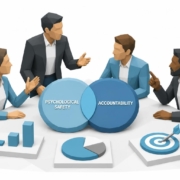
Consider a sales manager responsible for client retention. Without understanding customer acquisition costs, lifetime value, or gross margin by account, decisions become reactive. A cost management accounting course equips this leader to:

  1. Calculate the true cost of serving each client segment

  2. Identify high-margin accounts worth deeper investment
  3. Propose pricing adjustments backed by data
  4. Collaborate with finance on incentive structures tied to profitability

Live Application in Team Settings

Traditional classroom training delivers concepts; coaching brings them to life. When executive coaching happens live in your meetings, coaches can guide managers through real-time financial analysis. A team debating whether to expand into a new market benefits from a facilitator who prompts cost-volume-profit discussions, challenges assumptions about fixed costs, and ensures ROI projections reflect realistic scenarios.

This approach aligns with how Noomii delivers measurable business results by coaching on the problems you're actually solving, not hypothetical case studies. Managers practice new skills in the moments that matter, receive immediate feedback, and see their decisions validated or adjusted based on financial impact.

Leadership development workflow

Choosing the Right Program for Your Team

With dozens of options available-from university courses like those at University of Colorado Boulder to specialized programs from Becker CPE-selection depends on your team's baseline knowledge and business context.

Key Selection Criteria

  • Industry relevance: Manufacturing-focused courses emphasize inventory and production variances, while service businesses benefit from overhead allocation and capacity utilization topics
  • Time commitment: Self-paced online programs from providers like Coursera accommodate busy schedules, while intensive seminars deliver faster results
  • Certification value: Courses offering CPE credits appeal to accountants transitioning into management, but practical application matters more than credentials for operational leaders
  • Post-training support: Programs that include case studies, Excel templates, and peer discussion forums extend learning beyond the classroom
Provider Format Duration Best For
NASBA Online self-paced 8-12 hours CPE credit seekers
AMA In-person seminar 2-3 days Manufacturing managers
Coursera Video lectures + assignments 4 weeks Budget-conscious teams
Becker Online modules 2-4 hours Focused skill-building

Organizations serious about building financial literacy across multiple management levels often choose blended approaches: core content delivered through a cost management accounting course, followed by team-based coaching that applies concepts to strategic priorities. This combination ensures knowledge retention and behavioral change, not just certificate collection.

Measuring the Impact on Business Performance

Training investments must deliver visible ROI. The best way to evaluate a cost management accounting course is by tracking changes in decision-making speed, budget accuracy, and profitability.

Leading indicators of success include:

  • Reduction in budget variance percentages quarter over quarter
  • Increased manager participation in financial planning cycles
  • Faster approval timelines for capital requests due to stronger business cases
  • Improved gross margin through better pricing and cost control

ROI measurement framework

Lagging indicators confirm long-term value: higher employee engagement scores, lower turnover among managers who feel equipped to lead, and cleaner execution across priorities because teams understand how their work drives financial outcomes. When coupled with performance coaching that reinforces financial discipline, these programs transform company culture.

Linking Learning to Operating Cadence

Companies that integrate cost management principles into weekly scorecards and monthly business reviews see faster adoption. Instead of treating financial literacy as a one-time event, embed it into your operating rhythm. Review cost variances in team huddles, celebrate managers who identify savings opportunities, and make financial performance a standing agenda item.

This approach complements platforms like AccountabilityNow, which help teams track commitments and follow through on cost reduction initiatives. When managers know their cost management skills will be tested regularly through KPI reviews, they engage more deeply with training content and apply concepts immediately.


A cost management accounting course equips managers with the financial literacy to drive accountability, make data-backed decisions, and contribute to measurable business results. When organizations pair structured training with live coaching that ties progress to clear KPIs, leaders develop the confidence to execute cleanly across priorities. Noomii delivers this practical approach: rolling up our sleeves, coaching in your meetings, and ensuring every leadership development investment shows visible ROI. If you want manager training that builds accountable teams and strengthens execution, explore how Noomii can help.

Potential Coach: Finding Leadership Transformation in 2026

Finding the right leadership development solution can determine whether your organization thrives or stagnates in 2026. A potential coach represents more than just a consultant or advisor-they embody the catalyst for measurable transformation across every level of organizational leadership. When executives face complex challenges ranging from toxic workplace dynamics to strategic decision-making gaps, the ability to identify and engage a potential coach with precision expertise becomes paramount. This comprehensive exploration reveals how organizations can recognize, evaluate, and leverage the right coaching partnerships to drive sustainable results aligned with compliance standards and institutional priorities.

Understanding What Defines a Potential Coach

The concept of coaching has evolved dramatically from its traditional athletic roots into a sophisticated professional discipline. A potential coach in the corporate leadership context must demonstrate validated expertise across multiple dimensions that directly address organizational pain points.

Core competencies distinguish exceptional coaching candidates from general consultants:

  • Evidence-based diagnostic capabilities using validated assessment frameworks
  • Sector-specific experience aligned with organizational challenges
  • Proven track record of measurable leadership transformation
  • Compliance and governance understanding relevant to your industry
  • Ability to address sensitive issues including toxic leadership patterns

Evaluating Coaching Credentials and Expertise

Organizations frequently struggle to differentiate between qualified professionals and those lacking substantive credentials. The marketplace for life coaching and executive development has expanded significantly, making systematic evaluation essential.

When assessing a potential coach, examine certification standards from recognized bodies. International Coach Federation (ICF), Center for Creative Leadership (CCL), and similar organizations maintain rigorous credentialing processes. Beyond certifications, investigate actual client outcomes, retention rates, and documented performance improvements.

Coach evaluation framework

Industry specialization matters profoundly. A potential coach who has successfully addressed challenges within government agencies brings fundamentally different expertise than someone focused exclusively on startup environments. This specialization becomes critical when dealing with regulatory compliance, bureaucratic navigation, or mission-driven organizational cultures.

Matching Organizational Needs with Coaching Expertise

Precision matching between organizational challenges and coaching capabilities determines program success. Generic leadership development rarely addresses the nuanced issues facing modern enterprises, from toxic leader behaviors to cross-functional collaboration breakdowns.

Diagnostic Assessment as the Foundation

Before engaging any potential coach, comprehensive diagnostics must identify specific leadership gaps, behavioral patterns, and performance obstacles. This evidence-based approach replaces guesswork with measurable insights.

Assessment Category Key Indicators Measurement Tools
Executive Decision-Making Strategic clarity, risk assessment, stakeholder alignment 360-degree feedback, decision velocity metrics
Team Dynamics Psychological safety, collaboration effectiveness, conflict resolution Cultural health surveys, communication pattern analysis
Behavioral Patterns Emotional intelligence, adaptability, accountability Validated personality assessments, performance reviews
Strategic Leadership Vision articulation, change management, innovation capacity Strategic planning outcomes, implementation success rates

Organizations must understand potential analysis methodologies to properly evaluate both internal leadership capabilities and external coaching resources. This systematic examination reveals specific competencies requiring development and guides the selection of appropriately specialized coaching support.

Sector-Specific Coaching Requirements

Government agencies require coaching approaches fundamentally different from Fortune 500 corporations. Public sector organizations navigate mission complexity, political accountability, and public service standards that demand specialized understanding from any potential coach.

A potential coach working with federal agencies must comprehend bureaucratic decision-making processes, stakeholder management across political boundaries, and the unique pressures facing public servants. Understanding leadership potential requires recognizing how different organizational contexts shape development needs.

Fortune 500 companies face distinct challenges including shareholder expectations, market volatility, and competitive talent retention. Their potential coach must bring proven experience navigating corporate governance, board-level communication, and high-stakes executive performance issues.

Building Scalable Coaching Programs That Deliver Results

Individual coaching relationships provide value, but organizational transformation requires scalable frameworks that maintain quality across multiple leadership levels. Examining does executive coaching work reveals that success depends heavily on program structure and measurement rigor.

Scalability demands systematic processes for:

  1. Initial needs assessment across the leadership population
  2. Coach matching based on specific development requirements
  3. Intervention planning with clear milestones and accountability structures
  4. Progress tracking through defined KPIs and cultural indicators
  5. Outcome validation demonstrating ROI and organizational impact

Creating Targeted Intervention Plans

Generic development plans fail to address the specific behavioral changes necessary for leadership transformation. A potential coach must craft interventions addressing documented issues whether that involves toxic workplace behaviors, communication breakdowns, or strategic thinking deficits.

Effective intervention plans include:

  • Behavioral baselines establishing current performance metrics
  • Specific development objectives with measurable success criteria
  • Action steps with timeline accountability and resource requirements
  • Feedback mechanisms providing real-time adjustment capabilities
  • Success validation through 360-degree assessments and performance data

When addressing sensitive situations such as toxic leader transformation, interventions must balance organizational urgency with individual development realities. Rushing transformation creates superficial compliance rather than genuine behavioral change.

Measuring Coaching Impact and Demonstrating ROI

Organizations invest substantial resources in leadership development, making measurement non-negotiable. A potential coach who cannot demonstrate tangible results through data-driven metrics represents a questionable investment regardless of credentials or experience.

Establishing Key Performance Indicators

Leadership development KPIs must connect individual growth to organizational outcomes. Surface-level satisfaction scores fail to capture whether coaching actually improves decision-making quality, team performance, or business results.

Meaningful KPIs include:

  • Employee engagement scores within coached leaders' teams
  • Decision velocity and quality metrics for strategic initiatives
  • Talent retention rates among high-potential team members
  • Cultural health indicators including psychological safety measures
  • Revenue or mission delivery improvements correlated with leadership changes

Understanding human potential requires recognizing that development occurs along multiple dimensions simultaneously. Measurement frameworks must capture this complexity without becoming so elaborate they provide limited actionable insight.

Coaching ROI measurement

Tracking Cultural and Behavioral Shifts

Beyond individual performance metrics, organizational culture represents a critical outcome area for any potential coach engagement. Leadership behaviors cascade throughout organizations, creating ripple effects that either strengthen or undermine cultural health.

Cultural Indicator Baseline Measurement Progress Tracking Validation Method
Psychological Safety Anonymous survey, 1-5 scale across teams Quarterly reassessment Correlation with innovation metrics, error reporting
Trust and Transparency Communication pattern analysis Monthly pulse surveys Retention rates, internal promotion success
Accountability Culture Project delivery rates, goal achievement Quarterly performance reviews Strategic initiative completion rates
Collaboration Effectiveness Cross-functional project success Team feedback mechanisms Time-to-market improvements

Organizations exploring psychological safety in the workplace discover that coaching represents one of the most powerful levers for cultural transformation. A potential coach addressing executive behavior directly influences whether teams feel safe to innovate, challenge assumptions, and bring their full capabilities to work.

Navigating Coach Selection and Engagement Processes

The process of identifying and engaging the right potential coach determines program success before any actual coaching occurs. Organizations must approach this selection with the same rigor applied to other strategic vendor decisions.

Building Evaluation Criteria

Systematic evaluation begins with clear criteria aligned to organizational priorities. Generic questions about coaching philosophy provide limited useful information compared to specific inquiries about relevant experience and proven methodologies.

Essential evaluation questions for any potential coach:

  • What specific leadership challenges have you addressed in organizations similar to ours?
  • How do you measure coaching effectiveness and demonstrate ROI?
  • What assessment tools and diagnostic frameworks do you employ?
  • How do you handle situations where leaders resist development feedback?
  • What is your approach to maintaining confidentiality while ensuring organizational accountability?

The role of a coach extends beyond providing advice or encouragement. Professional coaching demands structured methodologies, evidence-based practices, and measurable accountability that distinguishes it from mentoring or consulting relationships.

Understanding Engagement Models and Pricing

Coaching engagement structures vary significantly across providers. Some potential coaches offer fixed packages with predetermined session counts, while others provide flexible arrangements adapting to emerging needs. Understanding executive coaching cost models helps organizations budget appropriately and avoid unexpected expenses.

Consider these engagement model variations:

  1. Retainer-based relationships providing ongoing access with flexible scheduling
  2. Project-specific engagements addressing defined challenges within fixed timeframes
  3. Hybrid models combining individual coaching with group development sessions
  4. Organizational partnerships offering multiple coach access across leadership levels

Pricing transparency matters critically. A potential coach should clearly articulate fee structures, additional costs for assessments or materials, and any performance-based components. Hidden fees or ambiguous pricing models indicate potential relationship challenges ahead.

Integrating Coaching with Broader Development Frameworks

Isolated coaching rarely delivers optimal results. Integration with existing leadership development infrastructure, performance management systems, and organizational strategy amplifies coaching impact dramatically.

Coaching integration framework

Aligning with Performance Management

When coaching exists separately from performance evaluation processes, leaders receive contradictory signals about development priorities. A potential coach should collaborate with HR leadership to ensure coaching objectives align with performance expectations and advancement criteria.

This alignment requires:

  • Sharing development plans (with appropriate confidentiality boundaries) with supervisors
  • Coordinating coaching focus areas with annual review priorities
  • Integrating coaching progress into talent review discussions
  • Using performance data to inform coaching interventions

Organizations investing in leadership executive coaching discover that integration with broader talent systems multiplies development effectiveness. Leaders understand that coaching supports career progression rather than indicating performance deficiency.

Supporting Succession Planning Initiatives

High-potential leader development represents one of the highest-value applications for coaching resources. Identifying and preparing future executives requires targeted development addressing specific capability gaps that could derail advancement.

A potential coach working with succession pipeline candidates must balance current role performance enhancement with future-state capability building. This dual focus requires sophisticated understanding of both individual development trajectories and organizational strategic needs.

Succession coaching priorities typically include:

  • Strategic thinking and enterprise-wide perspective development
  • Executive presence and stakeholder management capabilities
  • Complex decision-making under uncertainty and incomplete information
  • Leading through organizational change and transformation
  • Building and developing high-performing teams

Research on unleashing potential demonstrates that structured development dramatically accelerates readiness for expanded leadership responsibility. Organizations that systematically develop internal talent through coaching reduce external hiring needs and strengthen cultural continuity.

Addressing Complex Leadership Challenges Through Coaching

Certain leadership challenges require specialized coaching approaches that general practitioners cannot effectively address. Organizations facing toxic leadership, ethical violations, or severe team dysfunction need potential coaches with demonstrated expertise in these sensitive areas.

Toxic Leadership Transformation

Toxic leaders create measurable organizational damage including elevated turnover, reduced innovation, and deteriorated psychological safety. Addressing these behaviors requires a potential coach with specific expertise in behavioral change, emotional intelligence development, and accountability structures.

The transformation process typically involves:

  1. Comprehensive behavioral assessment documenting specific toxic patterns and organizational impact
  2. Individual awareness development helping leaders recognize their behavioral effects
  3. Alternative behavior modeling providing concrete practices replacing toxic approaches
  4. Accountability systems ensuring sustained behavioral change rather than superficial compliance
  5. Team rebuilding repairing relationships damaged by previous toxic interactions

Not every leader can successfully transform from toxic patterns. A qualified potential coach must honestly assess transformation likelihood and recommend alternatives when appropriate, including role changes or organizational separation. Organizations exploring how to present coaching to a toxic leader need strategies balancing development opportunity with organizational protection.

Navigating Ethical and Compliance Issues

Leaders facing ethical challenges or compliance violations require coaching approaches that address both behavioral change and organizational risk management. A potential coach in these situations must understand legal boundaries, regulatory requirements, and governance standards while maintaining coaching effectiveness.

This specialized work demands collaboration with legal counsel, HR compliance functions, and sometimes external regulators. The potential coach must navigate confidentiality limitations while ensuring organizational accountability and risk mitigation.

Leveraging Technology and Assessment Tools

Modern coaching effectiveness depends significantly on diagnostic tools and technology platforms that enhance insight quality and track progress systematically. A potential coach utilizing validated assessments and digital tracking systems delivers measurably better outcomes than those relying solely on conversational approaches.

Evidence-Based Assessment Instruments

Quality coaching begins with quality assessment. Validated instruments provide objective baselines eliminating subjective bias and establishing clear development targets.

Common assessment categories include:

  • Personality and behavioral style (MBTI, DiSC, Hogan assessments)
  • Emotional intelligence (EQ-i 2.0, MSCEIT)
  • Leadership competencies (360-degree feedback instruments)
  • Cognitive capabilities (Watson-Glaser, critical thinking assessments)
  • Values and motivation (Motivators assessment, values inventories)

A potential coach should explain assessment selection rationale, interpretation methodology, and how results inform coaching interventions. Generic assessments lacking validation research provide limited developmental value despite marketing claims.

Digital Coaching Platforms and Progress Tracking

Technology platforms enable consistent progress tracking, facilitate communication between sessions, and aggregate data demonstrating program-wide impact. Organizations implementing coaching at scale require these systems to maintain quality and measure effectiveness.

Platform capabilities supporting coaching effectiveness include:

  • Goal tracking with milestone documentation
  • Session scheduling and preparation materials
  • Progress dashboards visible to coaches, leaders, and HR partners
  • Resource libraries providing supplemental development materials
  • Aggregated analytics demonstrating organizational coaching impact

The integration of coaching platforms with existing HR systems creates seamless workflows reducing administrative burden while improving data quality. A potential coach comfortable with technology integration brings additional value beyond their direct coaching expertise.

Future-Proofing Leadership Through Strategic Coaching

Leadership requirements continue evolving as organizational complexity, technological disruption, and workforce expectations shift. A potential coach must help leaders develop adaptive capabilities that remain relevant amid continuous change rather than solving only current challenges.

Building Adaptive Leadership Capabilities

Static skill development fails in rapidly changing environments. Leaders need meta-capabilities enabling continuous learning, perspective adaptation, and complexity navigation.

Adaptive leadership competencies include:

  • Learning agility across unfamiliar situations and contexts
  • Perspective-taking and stakeholder empathy development
  • Comfort with ambiguity and incomplete information
  • Experimental mindset treating initiatives as learning opportunities
  • Resilience and recovery from setbacks or failures

Understanding leadership potential requires recognizing that capacity for growth often matters more than current capability levels. A potential coach focusing on adaptive development creates lasting impact extending far beyond immediate coaching engagement.

Preparing for Emerging Leadership Challenges

Organizations in 2026 face leadership challenges that barely existed five years ago. Remote and hybrid workforce management, AI integration decisions, generational diversity navigation, and accelerated change cycles demand new leadership approaches.

A forward-thinking potential coach helps leaders anticipate emerging challenges and develop capabilities before they become urgent necessities. This proactive development approach positions organizations ahead of competitors still reacting to changes already underway.

The relationship between organizational success and leadership quality remains undeniable. Finding the right potential coach requires systematic evaluation of credentials, proven methodologies, sector expertise, and cultural alignment. Organizations that approach coaching strategically, integrating it with broader development frameworks and measuring impact rigorously, achieve measurable transformation across individual performance, team effectiveness, and cultural health. Whether addressing toxic leadership patterns, preparing succession candidates, or building adaptive capabilities for future challenges, precision coaching matching delivers returns that generic development programs cannot achieve. By partnering with coaches who demonstrate evidence-based practices, accountability for results, and deep understanding of organizational dynamics, companies position themselves for sustained competitive advantage through superior leadership at every level. Accountability frameworks ensure that coaching investments translate into documented performance improvements rather than expensive conversations with limited organizational impact, and organizations can verify this through platforms like AccountabilityNow that track development commitments systematically.


Identifying and engaging the right potential coach transforms leadership development from a hopeful investment into a strategic advantage with measurable returns. The Noomii Corporate Leadership Program eliminates guesswork through precision matching algorithms connecting your specific challenges with coaches possessing proven sector expertise and validated methodologies. Whether you're addressing toxic leadership patterns, developing executive decision-making capabilities, or building scalable leadership programs across your organization, Noomii Leadership Coaching delivers evidence-based solutions aligned with your compliance requirements and institutional priorities. Discover how precision coaching matching drives measurable leadership transformation and sustainable organizational results today.