
The Rise of AI Coaching Platforms: What Works in 2026
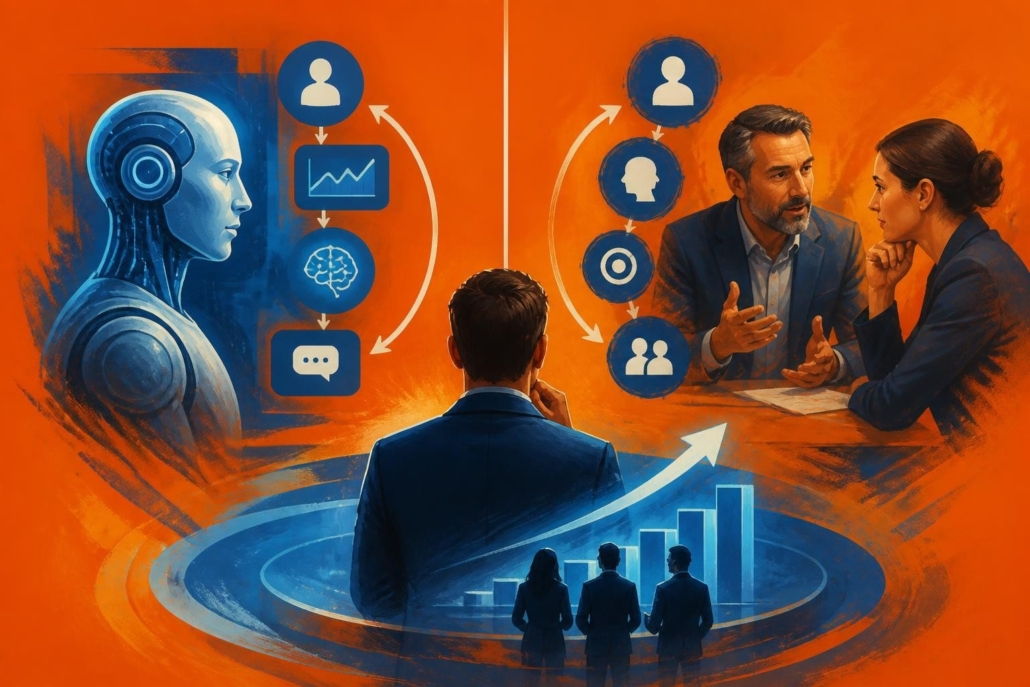
The rise of AI coaching platforms has created fascinating contradictions in corporate development. Organizations chase automation while simultaneously demanding deeper human accountability. Investment dollars flow toward conversational AI and machine learning while buyer surveys reveal persistent trust gaps. By mid-2026, we've accumulated enough field data to separate legitimate applications from overengineered solutions that solve problems nobody actually has.
What Actually Works in AI Coaching Applications
The strongest AI coaching applications share three characteristics: narrow scope, immediate feedback, and measurable skill metrics. They fail when positioned as relationship replacements.
AI-powered speech coaching platforms demonstrate this pattern perfectly. Yoodli analyzes presentation delivery with precision no human coach could sustain across hundreds of practice sessions. Filler words, pacing variations, eye contact duration-quantified instantly. The technology excels at repetitive skill drilling.
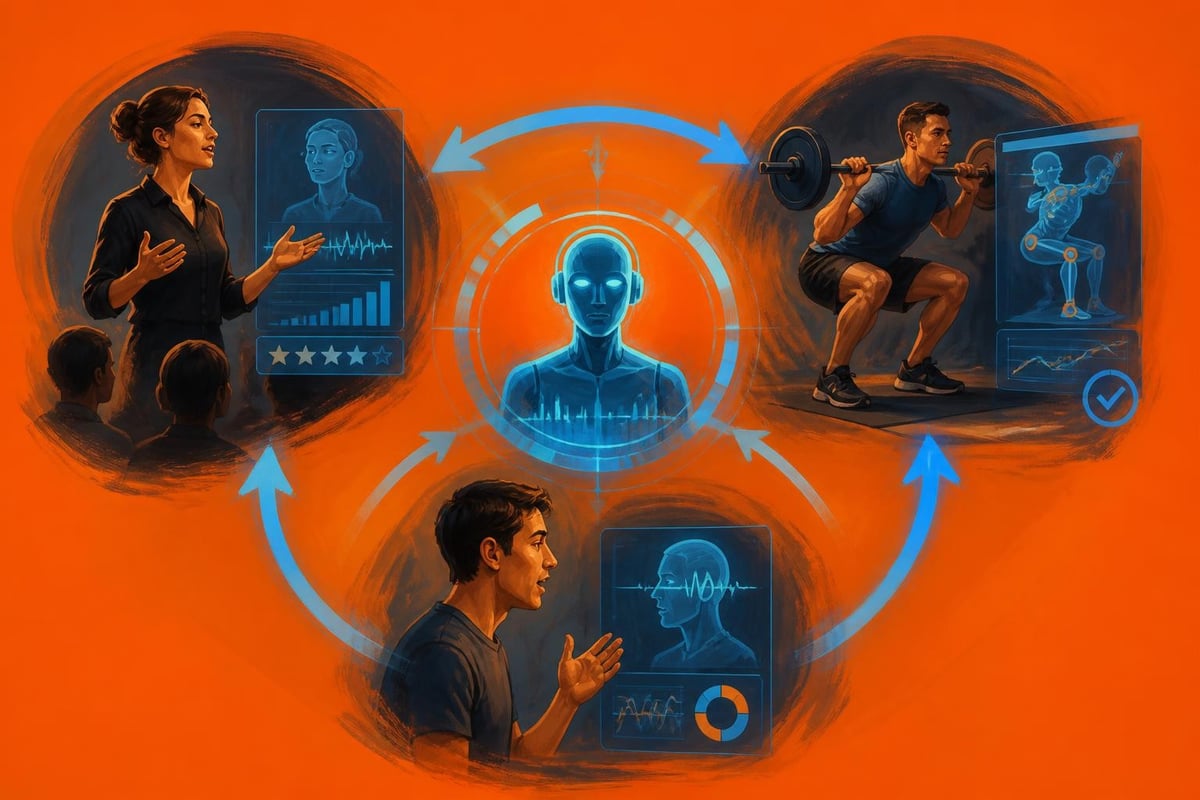
Contrast that with attempts to automate strategic executive coaching. Research on generative AI integration in professional coaching workflows reveals consistent limitations around contextual judgment, organizational politics, and behavioral change sustainability. The technology can't navigate the complexity of a VP sabotaging peers while delivering quarterly numbers.
Current AI coaching strengths:
- Real-time form correction in physical training
- Speech pattern analysis and presentation feedback
- Goal tracking and progress visualization
- 24/7 availability for skill practice
- Consistent rubric application
Persistent gaps:
- Understanding unstated organizational dynamics
- Navigating career trade-offs with incomplete information
- Adjusting approach based on emotional nuance
- Building trust through shared difficulty
- Challenging client blind spots they defend
The Pattern Recognition Problem
The rise of AI coaching platforms assumes pattern recognition equals wisdom. That's where implementations collapse in corporate settings.
I've watched three mid-market companies deploy AI coaching tools between 2024 and 2026. All three showed similar adoption curves: enthusiastic pilot phase, declining engagement after week six, quiet abandonment by month four. Exit interviews revealed the same insight: "It couldn't tell me what I was actually struggling with."
| Company Size | AI Platform Type | Initial Adoption | 90-Day Retention | Primary Complaint |
|---|---|---|---|---|
| 180 employees | Goal-setting chatbot | 64% | 12% | Generic responses |
| 340 employees | Leadership feedback tool | 71% | 18% | Couldn't grasp context |
| 95 employees | Communication coach | 58% | 22% | Felt like homework |
The issue isn't technological sophistication. Conversational AI coaches designed for college student goal-setting demonstrate impressive natural language processing. The issue is diagnostic depth. These systems identify surface patterns while missing the underlying dynamics driving behavior.
When a manager avoids difficult conversations, AI might recommend communication templates. A seasoned executive coach would diagnose whether the avoidance stems from conflict anxiety, lack of organizational authority, fear of retention consequences, or simply never seeing the behavior modeled. Different root causes demand different interventions.
Where AI Augments Rather Than Replaces
Smart organizations position AI as infrastructure, not replacement. They use technology to scale administrative tasks and measurement while preserving human judgment for complex decisions.
The Infrastructure Model
Consider how AI vision-language models provide exercise form feedback in real-time. FormCoach doesn't replace personal trainers; it extends their reach. One trainer can manage twelve clients simultaneously because AI handles form monitoring while humans provide motivation, program adjustments, and injury prevention judgment.
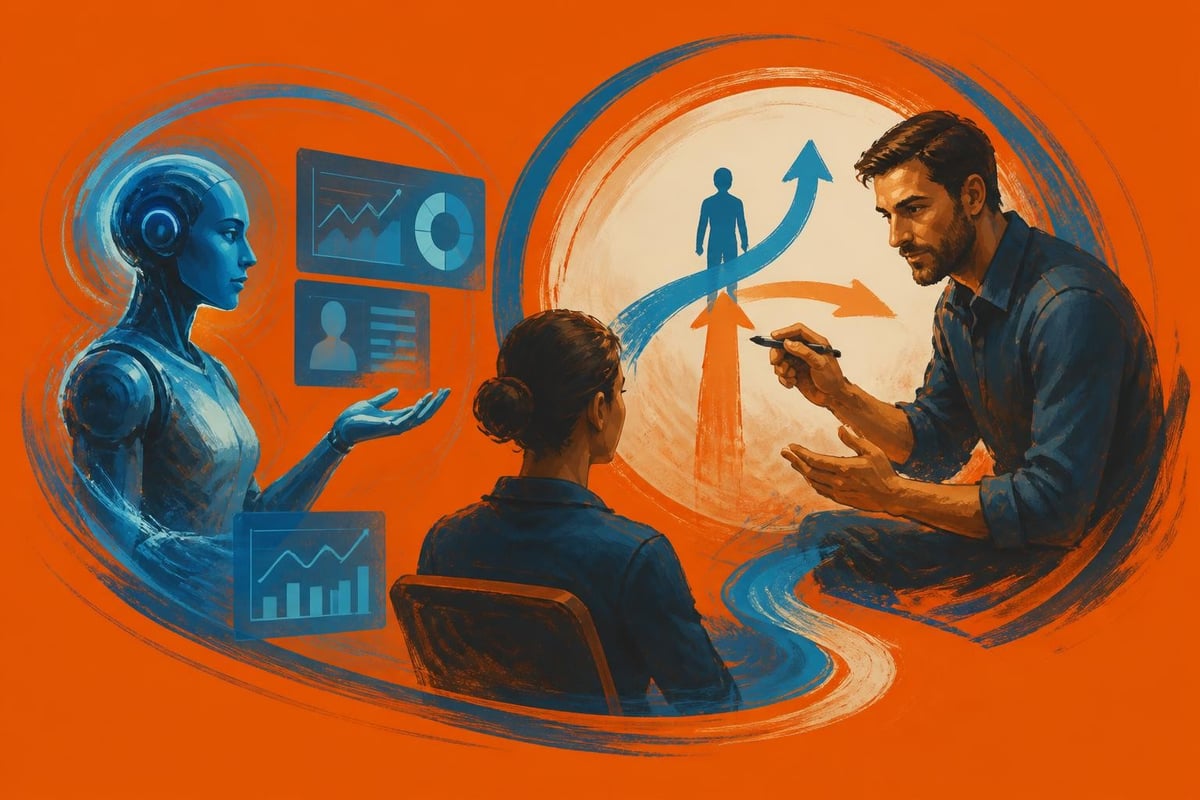
The same model applies in corporate coaching. AI can track KPI progress, send accountability reminders, analyze 360 feedback quantitatively, and flag behavioral patterns. Leadership coaches then apply that data to strategic interventions: repairing damaged stakeholder relationships, navigating succession planning politics, or rebuilding team trust after restructuring.
Effective AI augmentation uses:
- Automated scheduling and session logistics
- Pre-session data collection and pattern analysis
- Progress tracking between coaching conversations
- Skill practice environments with instant feedback
- Post-session action item monitoring
The Certification Myth Meets the AI Era
The rise of AI coaching platforms has intensified an existing problem: credential worship without outcome accountability. Now organizations face double certification theater: human coaches touting alphabet soup credentials while AI platforms boast about training data volume and model parameters.
Neither matters without measurable results.
I recently reviewed proposals from five coaching vendors for a 220-person technology company. Three human coaching firms led with ICF credentials and training lineage. Two AI platforms emphasized conversational turns and sentiment analysis accuracy. None opened with client retention improvements, promotion velocity, or engagement score changes.
The smart buyer question isn't "What certifications?" or "What AI model?" It's "Show me outcome data from similar organizations."
Understanding how to evaluate AI tools for business coaching requires the same rigor you'd apply to human coaching: implementation track record, measurement methodology, client references, and result sustainability beyond the initial engagement.
What Buyers Miss About Implementation Risk
The rise of AI coaching platforms introduces new failure modes beyond traditional coaching implementation challenges.
Human coaching failure patterns:
- Coach-client mismatch on communication style
- Insufficient executive sponsor support
- Vague success criteria and accountability
- No connection between coaching topics and business priorities
AI platform-specific failures:
- Over-reliance on self-reported data
- No escalation path for complex situations
- Privacy concerns limit honest engagement
- Technology friction reduces adoption
- Algorithm bias in feedback and recommendations
The costliest mistake is treating AI coaching as "set and forget" automation. Successful implementations require active management: monitoring engagement patterns, soliciting qualitative feedback, adjusting content based on business cycle changes, and maintaining human coaching options for situations requiring judgment.
The 2026 Reality Check
After two years of aggressive AI coaching platform launches, market consolidation has begun. Early movers with narrow, defensible use cases are extending reach. Generalist platforms attempting to automate relationship coaching are quietly pivoting or shutting down.
Team coaching remains stubbornly resistant to AI automation. The technology can't facilitate conflict resolution when two executives have fundamentally opposed strategies and both have valid business cases. It can't rebuild psychological safety after a toxic leader's departure. It can't navigate the political complexity of cross-functional accountability.
Organizations getting value from AI coaching use it as measurement infrastructure and skill practice environment. Those disappointed treated it as a cheaper replacement for human expertise.
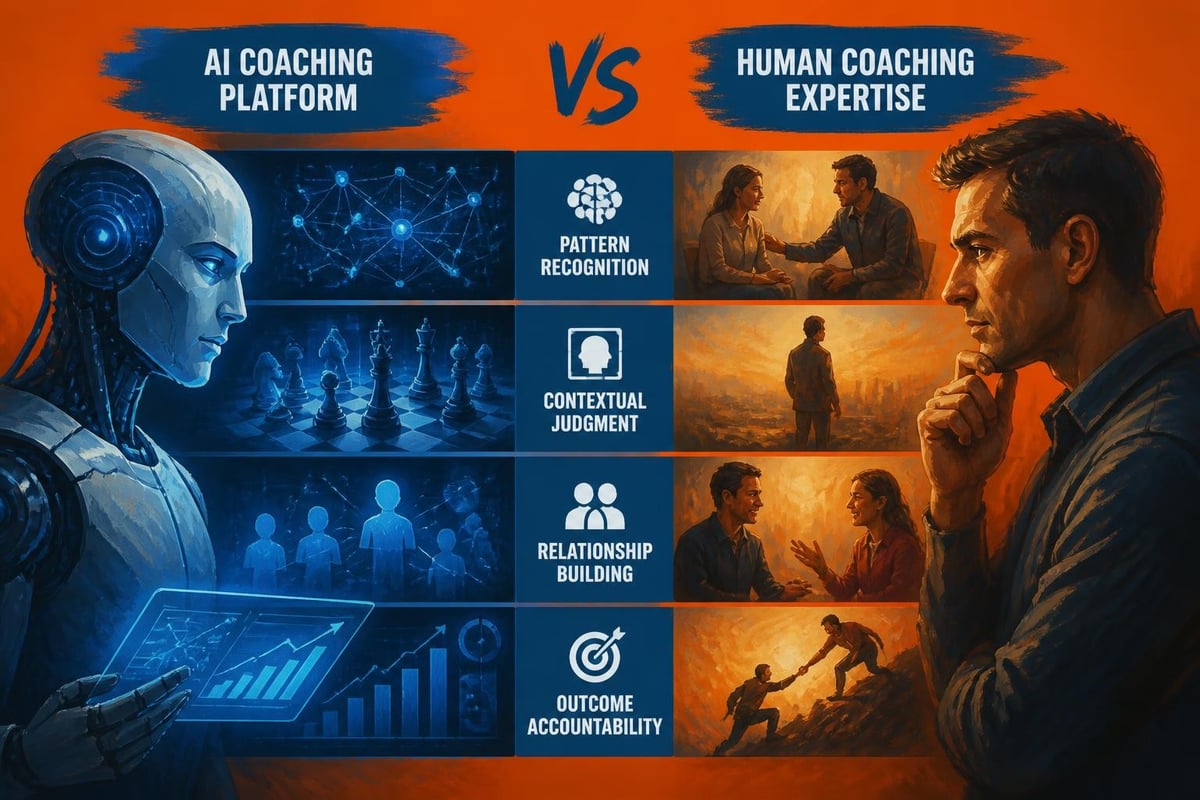
The winning approach combines both: AI handles scale and consistency for skill development; experienced coaches provide diagnosis, strategy, and behavioral change support tied to business outcomes. Companies trying to choose one or the other consistently underperform those using each for its actual strengths.
Frequently Asked Questions
What are AI coaching platforms and how do they work?
AI coaching platforms use natural language processing, machine learning, and conversational interfaces to provide automated coaching interactions. They analyze user inputs, track progress toward goals, and deliver feedback based on pattern recognition algorithms. Most operate through chat interfaces, mobile apps, or integrated workplace tools.
Can AI coaching platforms replace human executive coaches?
No. AI platforms excel at skill practice, data tracking, and immediate feedback on measurable behaviors. They struggle with contextual judgment, organizational politics, relationship dynamics, and complex behavioral change. Effective implementations use AI for scale and measurement while preserving human coaching for strategic diagnosis and intervention.
What coaching applications work best with AI technology?
Narrow, skill-focused applications show strongest results: public speaking practice, exercise form correction, goal tracking, presentation delivery analysis, and communication pattern feedback. Applications requiring contextual understanding, emotional intelligence, and strategic judgment remain better suited to experienced human coaches.
How much do AI coaching platforms cost compared to human coaching?
AI platforms typically range from $20-$200 per user monthly for corporate implementations. Human executive coaching runs $3,000-$15,000 monthly per executive. The cost difference is significant, but so is the capability difference. Smart organizations use both strategically rather than treating them as direct substitutes.
What results can organizations expect from AI coaching tools?
Legitimate platforms should demonstrate measurable skill improvements in their specific domain: reduced filler words in presentations, improved exercise form metrics, higher goal completion rates, or increased practice frequency. Be skeptical of claims around leadership effectiveness, engagement, or retention without controlled studies and comparison groups.
Do AI coaching platforms raise privacy or data security concerns?
Yes. Platforms collecting performance data, personal goals, career concerns, or relationship challenges create significant privacy exposure. Review data handling policies, storage locations, third-party access, and deletion procedures before implementation. Employees often self-censor with AI tools due to privacy uncertainty, limiting effectiveness.
How do you evaluate AI coaching platforms before purchase?
Demand outcome data from similar organizations, not just engagement metrics. Request reference calls with clients 12+ months post-implementation. Test the platform with representative users before full deployment. Verify escalation procedures for situations requiring human judgment. Examine data privacy and security certifications independently.
What makes AI coaching adoption fail in corporate settings?
Common failure patterns include generic responses that don't address actual challenges, technology friction reducing engagement, no clear connection to business priorities, privacy concerns limiting honest interaction, and lack of human coaching backup for complex situations. Successful implementations require active management and realistic scope definition.
Should organizations choose AI platforms or human coaches for leadership development?
Neither exclusively. Use AI for scalable skill practice, progress tracking, and immediate feedback. Use experienced human coaches for strategic diagnosis, behavioral change interventions, political navigation, and outcome accountability tied to business results. Organizations forcing an either-or choice consistently underperform those using both strategically.
The rise of AI coaching platforms creates genuine value when positioned as measurement infrastructure and skill practice environment, not relationship replacement. Organizations win by combining AI scale with human expertise where diagnosis and judgment actually matter. Noomii connects mid-market companies with experienced coaches who deliver measurable business outcomes through live session coaching, clear KPIs, and month-to-month accountability, ensuring you get results without long-term contract risk.



Leave a Reply
Want to join the discussion?Feel free to contribute!