
Psychological Safety vs Accountability in Leadership
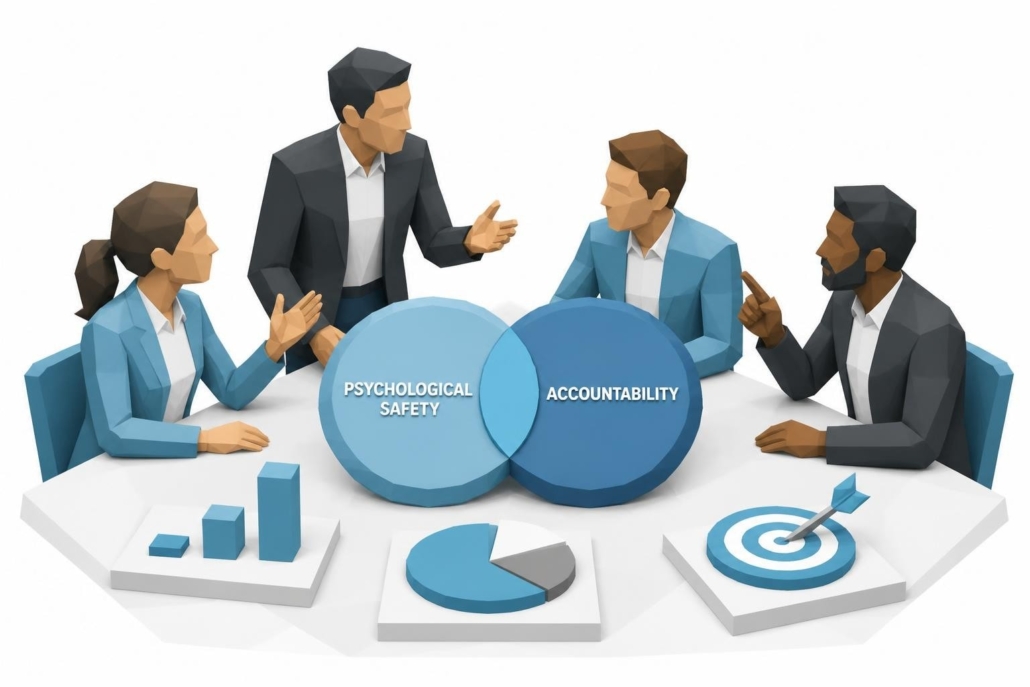
Most leadership teams believe psychological safety versus accountability represents a tradeoff. They're wrong. The organizations winning in 2026 have discovered these aren't opposing forces requiring careful balance, but reinforcing dynamics that strengthen each other when properly structured. The problem isn't that leaders lack good intentions. It's that they fundamentally misunderstand what each construct means, how they interact, and what happens when you get the implementation wrong. After working with dozens of Fortune 500 companies and government agencies addressing toxic leadership patterns and low team performance, one pattern emerges consistently: organizations that treat psychological safety versus accountability as separate initiatives fail at both.
Why Leaders Misunderstand the Relationship
The confusion stems from flawed mental models. Most executives imagine psychological safety as creating comfortable, conflict-free environments where team members feel "safe" from criticism. They picture accountability as demanding results, holding feet to the fire, and maintaining high standards. Under this framework, psychological safety and accountability appear fundamentally incompatible.
This interpretation misses what the research actually shows. Psychological safety isn't about comfort or unconditional support. It's about creating conditions where people take interpersonal risks: challenging assumptions, admitting mistakes, asking for help, proposing half-formed ideas, and delivering bad news without fear of punishment or humiliation.
Accountability isn't about punishment either. It's about clarity of expectations, ownership of outcomes, and consistent consequences aligned with performance.
When leaders conflate psychological safety with permissiveness and accountability with fear-based management, they create false dichotomies. The real question isn't whether to prioritize one over the other, but how to architect both simultaneously.
What We Learned From Failed Implementations
Three patterns emerge repeatedly in organizations struggling with psychological safety versus accountability:
Pattern One: The Comfort Trap
A technology company implemented "psychological safety training" that emphasized empathy, active listening, and creating supportive environments. Within six months, performance reviews became meaningless. Managers avoided difficult conversations. Underperformers remained in critical roles. The executive team confused kindness with safety.
Pattern Two: The Performance Hammer
A financial services firm responded to compliance failures by implementing strict accountability measures: documented performance improvement plans, regular audits, and zero-tolerance policies. High performers left. Innovation stopped. Teams shared only sanitized information in meetings. Real problems went underground.
Pattern Three: The Pendulum Swing
A government agency oscillated between approaches. After a harassment scandal, they emphasized psychological safety. When productivity dropped, they reinstated rigid accountability structures. Each swing created cynicism and destroyed trust. Teams never knew which version of leadership would show up.

These failures reveal a critical insight: you cannot retrofit accountability onto psychologically unsafe cultures, and you cannot add psychological safety to punitive environments. Both require foundational redesign.
The Four Elements That Make Both Work
Organizations achieving high psychological safety and high accountability share four structural elements. These aren't cultural aspirations or leadership behaviors alone. They're system-level design choices that shape how work actually gets done.
Explicit Standards With Contextual Application
High-performing teams know exactly what "good" looks like. Standards are documented, measurable, and consistently reinforced. But application requires judgment. A manufacturing plant we worked with maintained strict safety protocols (non-negotiable accountability) while encouraging operators to flag potential hazards before they became violations (psychological safety). The difference: they separated outcome standards from process exploration.
| Element | Low Accountability | High Accountability |
|---|---|---|
| Standards | Vague expectations | Documented criteria with examples |
| Measurement | Subjective assessment | Objective metrics tied to outcomes |
| Consequences | Inconsistent application | Predictable responses aligned to impact |
| Learning | Mistakes hidden | Failures analyzed systematically |
The table above shows how organizations implementing both constructs structure their performance systems differently. Notice that high accountability increases transparency, which actually supports psychological safety when separated from punishment.
Outcome Ownership Separate From Method Prescription
A Fortune 500 client struggled with innovation in their product division. Leadership demanded accountability for launch timelines but micromanaged every decision, creating what appeared to be psychological safety versus accountability conflict. The breakthrough came when they restructured: teams owned quarterly OKRs completely (accountability) but chose their own methodologies, experiments, and resource allocation within budget parameters (psychological safety).
This separation matters because it addresses the real tension. People resist accountability when it means defending choices rather than delivering results. They avoid risks in psychologically unsafe environments because method deviations become ammunition during failure post-mortems.
The solution isn't balance. It's architectural separation.
Define what success looks like with precision. Measure outcomes ruthlessly. Then grant genuine autonomy over how teams achieve those outcomes, including permission to fail fast on methods while maintaining accountability for learning and adaptation.
Transparent Decision Rights and Escalation Paths
Ambiguity about who decides what destroys both psychological safety and accountability. When authority is unclear, people either avoid decisions (low accountability) or make them without proper input (low psychological safety). Understanding the 4 stages of psychological safety helps leaders recognize where decision-making authority needs explicit definition.
A government agency we supported mapped decision rights across three categories:
- Individual authority: Decisions team members make independently
- Consultative decisions: Decisions requiring input but individual ownership
- Consensus decisions: Decisions requiring collective agreement
They then created escalation protocols: when to elevate decisions, who holds veto power, and how disagreements get resolved. This structure increased both constructs. Team members took more interpersonal risks because they knew their input mattered in defined contexts. Accountability improved because ownership was unambiguous.
Consequence Systems That Distinguish Failure Types
Organizations conflating all failures create psychological safety versus accountability problems. The critical distinction: outcome failures versus behavioral violations versus system failures.
Outcome failures happen when teams execute well but results disappoint. These require analysis, learning, and sometimes resource reallocation. They don't require punishment.
Behavioral violations occur when individuals ignore standards, hide information, or undermine team norms. These require immediate, consistent consequences regardless of outcomes.
System failures emerge from flawed processes, unclear expectations, or resource constraints. These require leadership accountability, not team-level punishment.

A manufacturing client implemented this framework after quality issues. When defects occurred, they asked three questions: Did the team follow documented procedures? Were procedures adequate for the situation? Did they report and escalate appropriately? Different answers triggered different responses. Following procedures but missing targets led to process improvement. Hiding defects led to disciplinary action. Inadequate procedures led to leadership accountability for training and resource allocation.
This approach resolved their psychological safety versus accountability challenge. Teams reported problems earlier because they understood consequences matched the failure type. Accountability improved because everyone knew which behaviors were non-negotiable.
What Boards and CHROs Miss About Implementation
Most leadership development programs treat psychological safety versus accountability as interpersonal dynamics requiring manager training. They miss the institutional architecture that makes both possible. Based on diagnostic work across sectors, three gaps appear consistently:
Gap One: Measurement Systems Misalignment
Organizations measure what they claim to value poorly. They track engagement scores as psychological safety proxies. They count completed performance reviews as accountability evidence. Neither captures reality. Research shows that psychological safety and accountability must coexist to drive high performance, yet few organizations measure both systematically.
Better indicators exist:
- For psychological safety: Frequency of contrary opinions in leadership meetings, percentage of bad news delivered before crises, time from problem identification to escalation, participation rates in improvement initiatives
- For accountability: Percentage of objectives with clear owners, average time to performance conversations after missed targets, consistency of consequences across similar situations, completion rates for committed deliverables
Gap Two: Leadership Behavior Inconsistency
The fastest way to destroy both constructs: leadership behavior that contradicts stated values. A technology executive told their team "we have psychological safety" then cut off a director who questioned their strategy. The message received: we have psychological safety for agreement.
Another executive demanded "accountability" but protected high performers who violated team norms. The message: accountability applies selectively based on political capital.
These inconsistencies create what we call institutional whiplash. Teams stop responding to stated values and start reading behavioral cues. When those cues conflict with messaging, cynicism replaces engagement.
The Real Implementation Sequence
Organizations successfully building both constructs follow a specific sequence, not a balanced approach:
- Establish non-negotiable behavioral standards (accountability foundation)
- Create transparent reporting mechanisms for violations and concerns (psychological safety infrastructure)
- Demonstrate consistent consequences for standard violations regardless of rank (accountability proof)
- Reward interpersonal risk-taking that improves outcomes (psychological safety reinforcement)
- Publicly analyze failures using the failure-type framework (both constructs)
- Adjust systems based on what analysis reveals (leadership accountability)
Notice this sequence doesn't "balance" the constructs. It builds them in parallel through different mechanisms. Accountability comes through standards and consequences. Psychological safety comes through response to risk-taking and failure transparency.
Gap Three: Coaching and Development Misalignment
Leadership coaching often addresses symptoms rather than root causes. An executive demonstrates toxic leader behaviors and gets coaching on emotional intelligence. The real issue: organizational systems reward political gamesmanship over transparent problem-solving. Until systems change, individual coaching generates limited impact.
Effective programs align three levels:
| Level | Accountability Focus | Psychological Safety Focus |
|---|---|---|
| Individual | Personal ownership of commitments and outcomes | Willingness to voice concerns and admit mistakes |
| Team | Clear roles, decision rights, and performance standards | Norms supporting constructive conflict and learning |
| Organizational | Systems, processes, and incentives that reward both | Leadership modeling and consistent consequences |
Organizations investing in individual coaching without addressing team dynamics and organizational systems waste resources. The environment overwhelms individual development. Understanding how psychological safety functions at different organizational levels helps target interventions appropriately.
Practical Interventions That Work
Theory matters less than implementation. Here's what actually changes performance based on client outcomes:
The Accountability Audit
Before addressing psychological safety versus accountability gaps, diagnose current state precisely. We use a structured audit examining:
- Clarity: Can team members articulate their primary responsibilities and decision authority without referring to job descriptions?
- Measurement: Do objective performance metrics exist for critical roles, and do people know their current standing?
- Consequences: In the past twelve months, have clear consequences followed both strong performance and consistent underperformance?
- Transparency: Can teams describe how decisions were made and who owned key choices?
This audit typically reveals that organizations lack accountability fundamentals before addressing psychological safety. You cannot build interpersonal risk-taking on a foundation of ambiguous expectations and inconsistent consequences.
The Safe-to-Fail Experiment Protocol
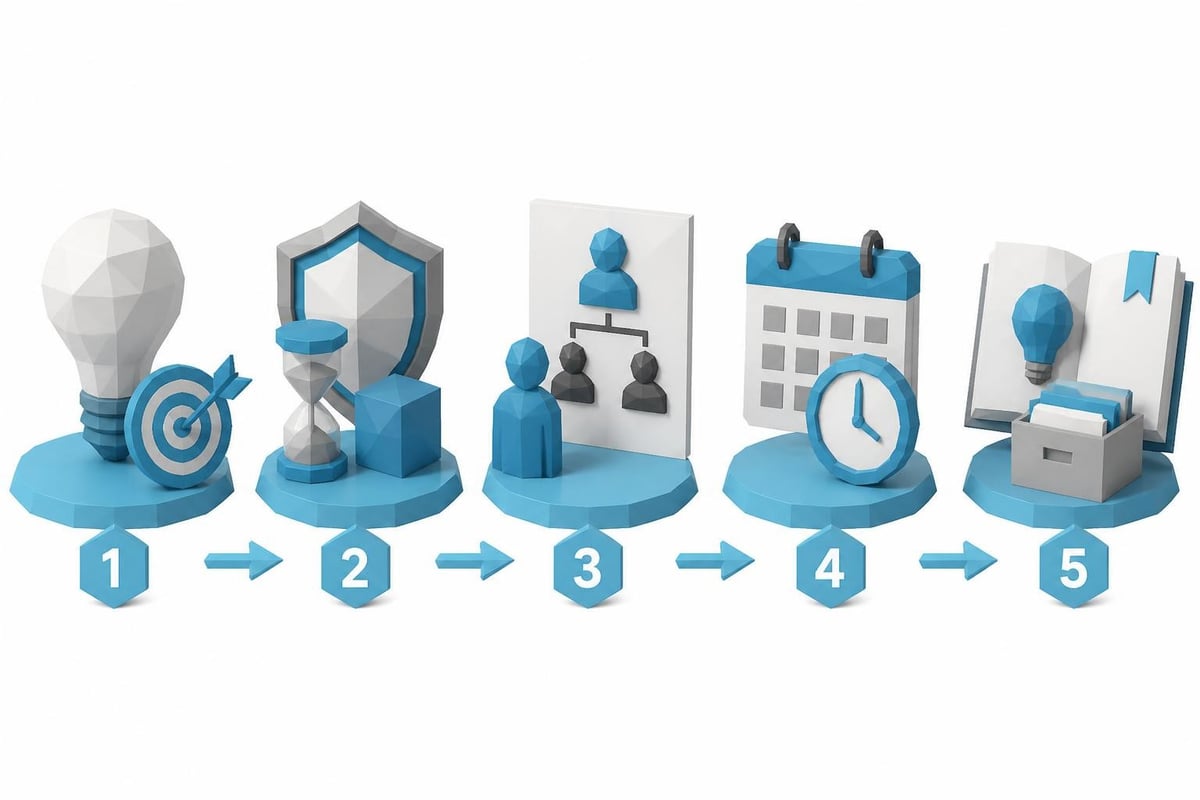
Organizations claiming to support innovation often punish intelligent failures. This protocol structures experiments to build both accountability and psychological safety:
- Define hypothesis and success metrics (accountability)
- Set explicit failure boundaries (psychological safety)
- Assign decision authority (accountability)
- Schedule reflection sessions regardless of results (psychological safety)
- Document learnings in accessible formats (both)
A financial services client used this protocol for new product development. Teams proposed experiments with defined resource limits and timeline boundaries. If experiments failed within those boundaries, teams presented learnings to leadership without career consequences. If they exceeded boundaries without escalation, that triggered accountability conversations about process, not outcome.
This approach resolved their psychological safety versus accountability tension. Teams took bigger swings because failure parameters were explicit. Accountability improved because the protocol required rigorous thinking upfront and systematic learning afterward.
The Consequence Consistency Review
Every quarter, examine consequence patterns across similar situations. Ask:
- Did similar performance levels receive similar responses?
- Did rank or political capital influence consequences?
- Were behavioral standards applied uniformly?
- Did we explain consequence rationale transparently?
One aerospace client discovered their consequences varied based on manager courage rather than performance reality. Strong performers with difficult personalities received different treatment than similar performers who were well-liked. Publishing this finding and committing to consistency improved both constructs. Teams trusted that standards applied equally. Leaders couldn't avoid difficult accountability conversations.
The Strategic Implications Leaders Ignore
Psychological safety versus accountability isn't just a team effectiveness question. It shapes strategic capability in ways most boards miss.
Organizations with high psychological safety and low accountability generate ideas but execute poorly. They struggle with prioritization, resource discipline, and competitive intensity. Teams feel good but deliver inconsistent results.
Organizations with high accountability and low psychological safety execute existing playbooks efficiently but cannot adapt. They miss market shifts, ignore customer feedback that contradicts current strategy, and experience sudden failures when external conditions change. Research on the link between psychological safety and workplace accountability demonstrates that both constructs together drive adaptive performance.
Organizations with both constructs demonstrate different strategic capabilities:
- Faster market response: Bad news travels quickly to decision-makers who act decisively
- Better risk management: Teams surface concerns early rather than hiding problems until crisis
- Stronger innovation pipelines: Safe failure enables experimentation while accountability ensures learning capture
- Higher talent retention: Top performers stay in environments with clear standards and genuine safety for disagreement
- Improved governance: Board oversight works when management shares difficult realities transparently
These advantages compound over time. In stable markets, the difference may appear marginal. In volatile environments, it becomes existential.
What 2026 Data Reveals
Recent research tracking organizational performance through pandemic recovery, economic uncertainty, and AI transformation reveals striking patterns. Organizations in the top quartile for both psychological safety and accountability delivered:
- 32% higher revenue growth than peers with one or neither construct
- 47% lower regrettable attrition among high performers
- 23% faster time-to-market for new offerings
- 58% fewer compliance incidents and regulatory issues
These aren't marginal improvements. They represent fundamental performance differentiation. The mechanism: teams that surface problems early and execute solutions decisively outperform those that hide issues or debate endlessly.
The data also reveals sector-specific patterns. In heavily regulated industries like financial services and healthcare, the performance gap between high-high organizations and others exceeds 40%. When compliance failures carry severe consequences, the ability to report problems without fear while maintaining rigorous standards becomes critical.
Government agencies show similar patterns. Those successfully implementing both constructs demonstrate better mission delivery, higher public trust scores, and stronger employee morale. The correlation isn't coincidental. Public sector environments require both rigorous accountability to taxpayers and psychological safety for civil servants to flag waste, inefficiency, or policy failures.
Implementation Frameworks That Actually Scale
Most psychological safety versus accountability initiatives fail at scale. They work in pilot teams but collapse when rolled out enterprise-wide. The breakdown happens because organizations treat implementation as culture change rather than system redesign.
Successful approaches follow infrastructure logic:
Phase One: Standards and Measurement
Define behavioral expectations, performance standards, and decision rights explicitly. Document them. Make them accessible. Create measurement systems that track both constructs with leading and lagging indicators. This isn't culture work. It's operational excellence.
Phase Two: Leadership Alignment and Demonstration
Senior leaders must demonstrate both constructs visibly and consistently. This means taking interpersonal risks in leadership meetings (psychological safety) and accepting consequences when commitments slip (accountability). No shortcuts exist. Teams watch leadership behavior more than they hear leadership words.
Phase Three: System Integration
Embed both constructs into existing systems: performance management, hiring criteria, promotion decisions, resource allocation, strategic planning, and cross-functional collaboration. Standalone initiatives fail. Integration into how work gets done succeeds.
Phase Four: Continuous Reinforcement
Track indicators monthly. Discuss progress in business reviews. Adjust based on data. Celebrate examples of both constructs in action. Address violations immediately. Make this as rigorous as financial performance management.
Organizations attempting to shortcut these phases by training managers on psychological safety while leaving accountability systems unchanged get predictable results: trained managers returning to unchanged environments where old behaviors persist.
Getting psychological safety versus accountability right isn't about finding the perfect balance point. It's about building organizational systems where both constructs reinforce each other through clear standards, consistent consequences, explicit decision rights, and differentiated failure responses. Most leadership teams lack the diagnostic precision and implementation discipline to build these systems without expert guidance. Noomii Leadership Coaching helps organizations design and implement the structural elements that make both psychological safety and accountability possible, using evidence-based assessments, precision coach matching, and measurable intervention plans that address root causes rather than symptoms.



Leave a Reply
Want to join the discussion?Feel free to contribute!