

ICF Is Not Mandatory for Executive Coaching
The coaching industry has created a pervasive myth that International Coach Federation credentials are required to practice executive coaching. This belief costs companies money and limits their access to experienced practitioners who deliver measurable business results. The truth is that icf is not mandatory for executive coaching, and understanding this opens doors to better coaching partnerships focused on outcomes rather than credentials alone.
Why Certification Confusion Persists
The coaching industry benefits financially from the perception that ICF certification is essential. Training programs, certification bodies, and credential-dependent platforms all profit when buyers believe they cannot hire effective coaches without specific letters after their names.
Three factors drive this misconception:
- Marketing by training schools that position credentials as mandatory rather than optional
- Corporate procurement departments defaulting to credential requirements as risk mitigation
- Coaches themselves using certifications to differentiate in saturated markets
The reality contradicts the marketing. No law, regulation, or business requirement mandates ICF membership or credentialing for executive coaching. While executive coach certifications can enhance credibility, they do not determine coaching effectiveness or business impact.

What Buyers Actually Need
Mid-market companies hiring executive coaches need practitioners who understand their business context, diagnose leadership gaps accurately, and drive measurable improvement in decision quality, team performance, and execution. These capabilities rarely correlate with certification status.
Consider two scenarios. Coach A holds an ICF PCC credential with 500 training hours but has never managed a P&L, led a sales team, or built an operating cadence. Coach B spent 15 years as a VP of Operations, coached dozens of leadership teams through growth phases, and ties every engagement to KPIs and retention metrics. Which coach better serves a mid-market manufacturing company struggling with manager accountability?
The certification-first approach ignores what drives coaching outcomes. Noomii Corporate Coaching works with companies seeking executive coaching focused on results, not theoretical frameworks disconnected from business reality.
The Case Against Credential Worship
Between 2018 and 2026, we observed hundreds of executive coaching engagements across industries. The pattern is consistent: certification status shows zero correlation with coaching effectiveness when measured by client retention, promotion rates, team engagement scores, or revenue impact.
Red flags in credential-dependent coaching:
- Coaches who lead with credentials rather than outcomes in discovery calls
- Programs requiring minimum engagement lengths to justify training investments
- Practitioners defensive about results measurement or KPI alignment
- Marketing focused on methodology rather than client success stories
One Fortune 500 division hired a highly credentialed coach for a struggling regional team. After six months and $80,000, the team showed no improvement in decision speed, conflict resolution, or execution against priorities. The replacement coach, a former COO without ICF credentials, transformed the same team in 90 days using live meeting coaching and weekly accountability scorecards.
This is not an isolated case. Understanding executive coaching positions means recognizing that real-world leadership experience often outweighs classroom training hours.
| Credential-Focused Coaching | Results-Focused Coaching |
|---|---|
| Emphasizes training hours and certifications | Emphasizes client outcomes and business metrics |
| Operates in confidential, unobserved sessions | Coaches live in meetings with visible progress |
| Requires long-term contracts to justify investment | Works month-to-month with shared risk models |
| Resists measurement and KPI alignment | Ties every engagement to scorecards and ROI |
| Positions credentials as primary differentiator | Positions experience and results as differentiator |

What Experience Actually Proves
After working with over 200 companies since 2019, we identified what separates effective executive coaching from expensive talking therapy. The distinction has nothing to do with ICF membership.
Effective executive coaches demonstrate:
- Direct business experience in roles similar to their clients
- Pattern recognition across industries and leadership challenges
- Diagnostic capability that identifies root causes, not symptoms
- Implementation focus that produces visible behavior change
- Measurement discipline that tracks progress against defined outcomes
The statement that icf is not mandatory for executive coaching reflects market reality, not opinion. While ICF certification is considered a gold standard by some, it remains optional rather than required. Companies choosing coaches based solely on credentials often miss practitioners with superior business acumen and implementation track records.
The Proprietary Framework Gap
Most certified coaches learn standardized questioning models and conversational frameworks. These tools work in specific contexts but rarely address the operational challenges mid-market companies face: unclear accountability structures, weak operating cadences, managers who cannot coach their own teams, or toxic leadership behaviors that drive turnover.
Noomii Corporate Coaching developed frameworks based on firsthand implementation across industries:
- Live meeting coaching that accelerates team decision quality and reduces meeting waste
- Manager-as-coach development that builds internal coaching capability
- KPI scorecard design that connects leadership behavior to business outcomes
- 360 assessment integration that drives specific, measurable behavior changes
- Retention coaching for sales teams tied directly to revenue impact
These frameworks emerged from solving real problems, not from certification programs. They work because they address the diagnosis accurately and produce measurable results within 60-90 days.
When Credentials Add Value
Acknowledging that icf is not mandatory for executive coaching does not mean credentials never matter. Specific contexts benefit from certification, particularly when buyers lack experience evaluating coaches or when regulatory environments favor documented training.
Scenarios where ICF credentials provide value:
- Organizations with procurement policies requiring standardized credentials
- Coaches early in their practice building credibility with initial clients
- International contexts where ICF recognition facilitates market entry
- Large enterprises using credentials as screening filters in vendor selection
ICF credentialing provides a recognized path that meets international standards, even when not legally required. Programs like those from NC State and NYU offer valuable training, particularly for career changers building coaching skills.
The distinction is simple: credentials may open doors, but results keep clients. Companies focused on business outcomes prioritize coaching effectiveness over certification status.
The AI Coaching Disruption Factor
The coaching industry faces a fundamental challenge in 2026. AI coaching tools now handle routine developmental conversations, goal tracking, and accountability check-ins. This commoditizes exactly what many certified coaches offer: structured questioning, reflective listening, and framework application.
What AI cannot replicate is contextual business diagnosis. An AI tool cannot observe a leadership team meeting, identify the unspoken power dynamics stalling decisions, diagnose the root cause as unclear role accountability, design a custom intervention using operating cadence changes, and coach the team live through the implementation.
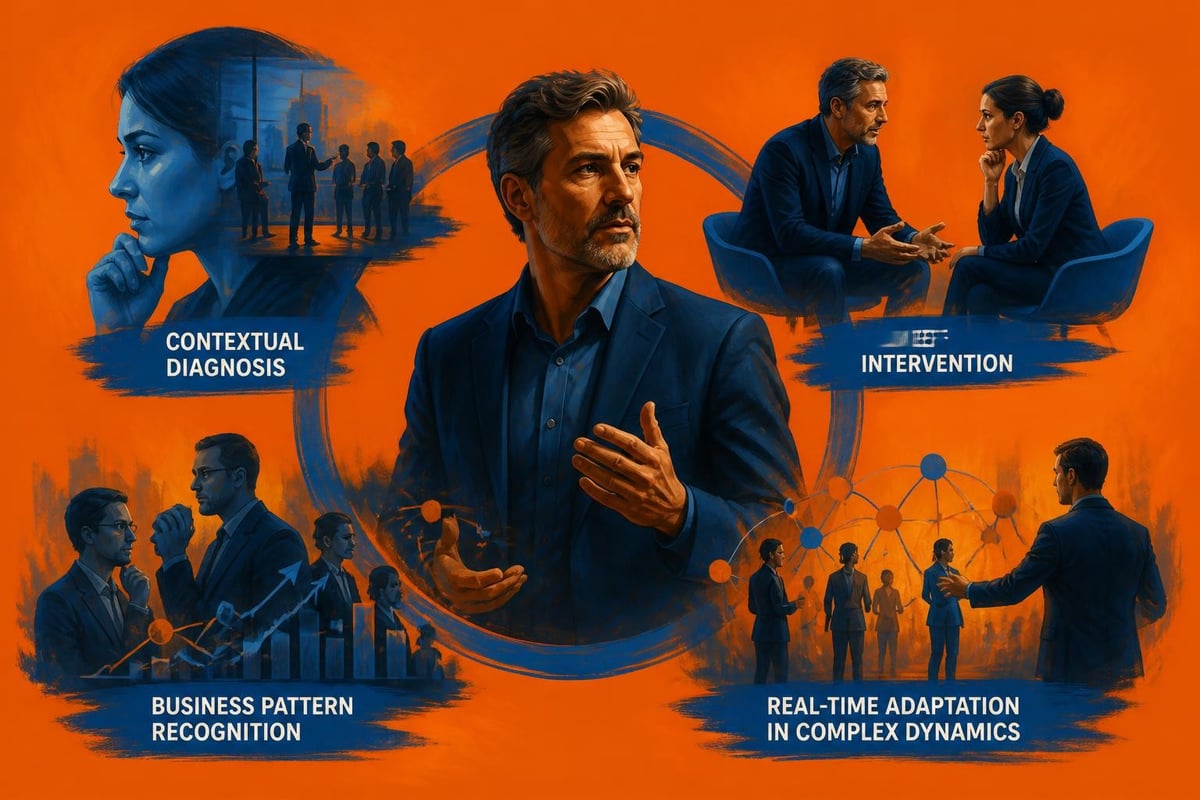
This disruption exposes the weakness of certification-dependent coaching. If your primary value proposition rests on applying standardized frameworks and asking structured questions, you are competing with software. If your value comes from business experience, diagnostic acumen, and implementation capability, you are irreplaceable.
Companies hiring executive coaches in 2026 should ask: "Can an AI tool do what you do?" If the answer is yes, look elsewhere regardless of credentials.
Making Better Coaching Decisions
The statement that icf is not mandatory for executive coaching shifts the buying criteria from credentials to capabilities. This benefits companies and effective coaches while challenging those who rely on credentials to mask limited business experience.
Evaluation criteria that matter:
- Documented client results with specific metrics and timeframes
- Relevant business experience in industries or functions similar to yours
- Diagnostic questions during discovery that reveal pattern recognition
- Willingness to tie engagements to KPIs and measurable outcomes
- Month-to-month terms rather than locked long-term contracts
- References from clients in similar situations who achieved visible results
When companies understand that business coaches do not require specific certifications, they access a broader talent pool. They hire former executives who built teams, former sales leaders who drove revenue, and former operators who scaled businesses. These practitioners often outperform certified coaches without comparable experience.
The coaching industry will resist this shift because it threatens revenue streams built on training and credentialing. But buyers holding the budget have the power to demand results over credentials.
Frequently Asked Questions
Is ICF certification required to practice executive coaching?
No. ICF certification is not legally or professionally required to practice executive coaching. While ICF certification can enhance credibility, particularly with certain corporate clients, it remains optional rather than mandatory for coaching professionals.
What matters more than ICF credentials when hiring an executive coach?
Direct business experience, documented client results, diagnostic capability, and willingness to tie coaching to measurable outcomes matter more than certifications. Look for coaches who understand your industry context and can demonstrate specific improvements in leadership effectiveness, team performance, and business metrics.
Can uncredentialed coaches be more effective than ICF-certified coaches?
Yes. Many executive coaches with extensive business leadership experience but no ICF credentials outperform certified coaches who lack comparable real-world context. Effectiveness depends on business acumen, pattern recognition, and implementation capability rather than training hours.
Do corporate clients prefer ICF-certified coaches?
Preferences vary. Some procurement departments use ICF credentials as screening criteria, while others prioritize business results and relevant experience. Mid-market companies increasingly focus on coaching outcomes and ROI rather than credential requirements.
How do I evaluate an executive coach without relying on credentials?
Ask for specific client results with metrics, request references from similar situations, assess their diagnostic questions during discovery, review their business background, and evaluate their willingness to work month-to-month with KPI alignment rather than requiring long-term contracts.
What risks come with hiring non-credentialed coaches?
The primary risk is selecting coaches without sufficient business experience or coaching capability. Mitigate this by thoroughly vetting their track record, checking references, starting with defined pilot engagements, and requiring measurable outcomes tied to business metrics.
Does Noomii only work with ICF-certified coaches?
No. Noomii Corporate Coaching prioritizes business results and relevant experience over credential requirements. We evaluate coaches based on their ability to drive measurable improvements in leadership effectiveness, team performance, and business outcomes, not certification status.
Are there situations where ICF certification provides value?
Yes. ICF certification can help newer coaches build initial credibility, facilitate international market entry, meet specific procurement requirements, and provide structured training for career changers. The value depends on the specific coaching context and buyer requirements.
How has AI coaching impacted the credential versus experience debate?
AI tools now handle routine coaching conversations, making standardized framework application less valuable. This shift emphasizes the importance of human coaches who bring contextual business diagnosis, live intervention capability, and real-world pattern recognition that AI cannot replicate, regardless of credential status.
The evidence is clear: icf is not mandatory for executive coaching, and companies achieve better results when they prioritize business experience and measurable outcomes over credentials. If you need practical corporate coaching that delivers visible improvements in leadership effectiveness, team performance, and business execution, Noomii works month-to-month with mid-market companies to build accountable leaders tied to clear KPIs and ROI. We roll up our sleeves, coach live in your meetings, and share the risk so you stay because results are visible.



Leave a Reply
Want to join the discussion?Feel free to contribute!