

Why Certified Coaches Still Cannot Get Clients in 2026
The coaching certification industry generated over $3.2 billion in 2025, yet more than 70% of newly certified coaches never sign their first paying client. That disconnect reveals a fundamental truth: certification programs train coaches to coach, not to run a coaching business. Understanding why certified coaches still cannot get clients matters more than ever as the market becomes saturated with credentialed practitioners who all sound identical, all promise transformation, and all struggle to differentiate themselves in a crowded marketplace.
The Certification Illusion: What Training Programs Actually Deliver
Most certification programs dedicate 100+ hours to coaching methodology, ethics, and supervised practice sessions. They invest maybe two hours, if any, on client acquisition. This imbalance creates coaches who can facilitate powerful conversations but cannot identify their ideal client, articulate their value proposition, or navigate a sales conversation without feeling like they're betraying their authentic selves.
What certifications emphasize:
- ICF core competencies and coaching presence
- Listening skills and powerful questioning techniques
- Ethics, boundaries, and professional standards
- Supervised coaching hours and peer practice
What certifications omit:
- Market positioning and niche selection
- Messaging that resonates with buyer pain points
- Consistent lead generation systems
- Sales conversations and conversion strategies
The gap between coaching skills and business acumen explains why certified coaches still cannot get clients despite their training investments. Certification validates your ability to coach someone who's already sitting across from you. It does nothing to get that person in the chair.

The Positioning Problem: Everyone Sounds the Same
Walk through any coach directory and count how many profiles promise to "unlock your potential," "create breakthroughs," or "transform your life." This generic positioning stems from certification programs that teach coaching as a universal process applicable to anyone with any problem.
The Commodity Trap
When you position yourself as a general life coach or executive coach without specificity, you compete on price with thousands of others offering identical services. Buyers cannot distinguish between you and the next certified coach, so they default to the cheapest option or the one with the most social proof.
| Weak Positioning | Strong Positioning |
|---|---|
| "I help executives reach their potential" | "I help first-time VPs survive their first 90 days without losing key team members" |
| "Life coaching for career transitions" | "Career coaching for physicians leaving clinical practice" |
| "Leadership development coaching" | "Leadership coaching for engineering managers building remote teams" |
Specific positioning reduces your addressable market but increases your conversion rate. The coaches who thrive focus narrowly and own a definable problem for a definable audience. Leadership coaches who specialize in particular industries or transitions consistently outperform generalists.
The Marketing Void: No System, No Clients
Here's the pattern I've observed across hundreds of struggling certified coaches: they rely exclusively on referrals, post inconsistently on social media, attend networking events sporadically, and hope their website generates leads. This is not a marketing system. It's a hope strategy.
Common mistakes coaches make:
- Over-reliance on word-of-mouth without building a referral engine
- Sporadic content creation without a documented strategy
- No email list or nurture sequence
- LinkedIn activity with no clear call to action
- Website that explains coaching but doesn't address buyer problems
The lack of a consistent client-generation system keeps certified coaches stuck in feast-or-famine cycles. One month they have three clients from referrals, the next month nothing materializes, and panic sets in.
Building Predictable Lead Flow
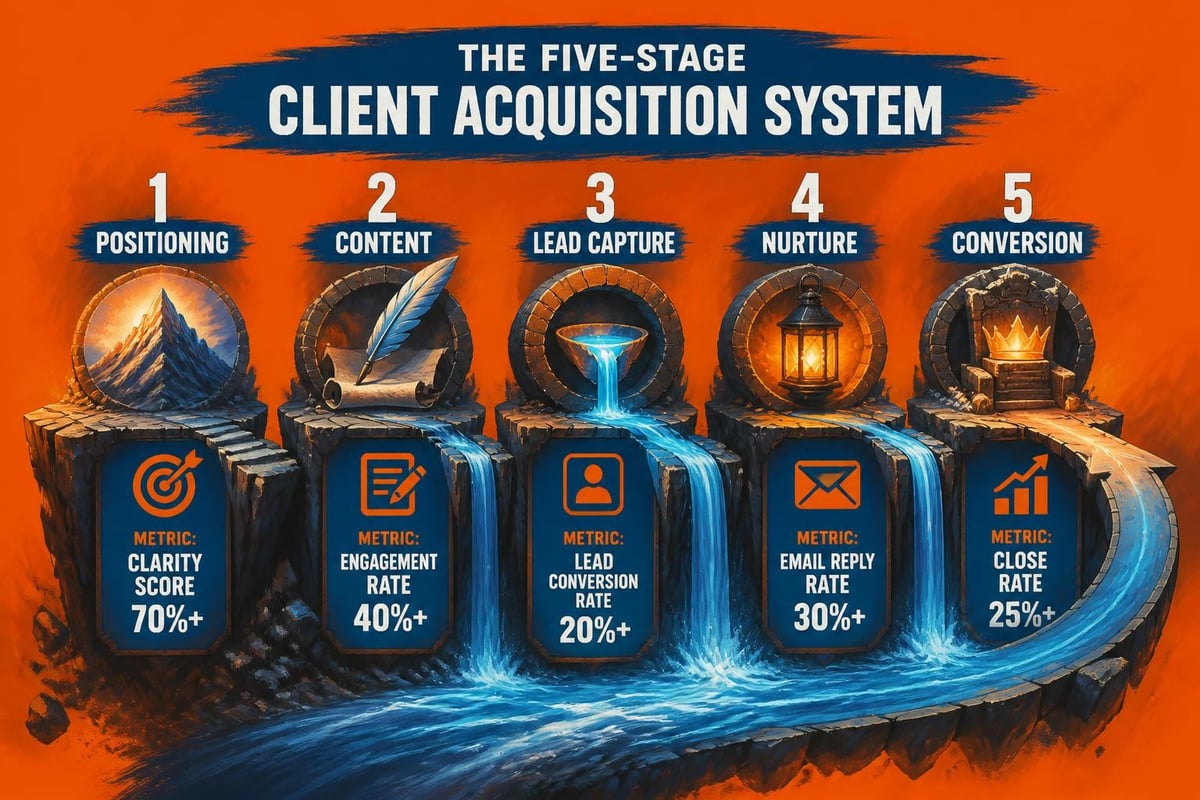
Successful coaches treat marketing as a system, not an activity. They publish content on a schedule, build email lists methodically, create lead magnets that demonstrate expertise, and nurture prospects through defined touchpoints. They track metrics: website visitors, email subscribers, discovery call bookings, conversion rates.
- Define your ideal client with precision: demographics, psychographics, current situation, desired outcome
- Create content that addresses their specific problems: blog posts, videos, LinkedIn articles focused on solutions
- Build an email nurture sequence: seven to ten emails that educate, build trust, and present your offer
- Establish one primary lead generation channel: master one before adding others
- Track and optimize conversion metrics: measure what works and do more of it
This systematic approach separates coaches who build sustainable practices from those wondering why certified coaches still cannot get clients despite their credentials.
The Sales Conversation Gap: Coaching Skills Don't Transfer
Coaches excel at asking powerful questions and holding space for client discovery. These skills actually work against them in sales conversations when they ask too many questions, avoid stating their value directly, or wait for prospects to convince themselves.
Why coaching sales conversations fail:
- Too much exploration, not enough direction
- Reluctance to discuss pricing or investment
- Asking permission instead of proposing next steps
- Confusing a sales call with a coaching session
- Inability to articulate ROI or measurable outcomes
Corporate buyers evaluating executive coaching costs want to hear how coaching connects to business outcomes: retention, productivity, decision quality, team performance. Individual buyers want to understand exactly what problem gets solved and how their life changes. Neither wants a discovery session disguised as a sales call.
The Differentiation Challenge: Credentials Everyone Has
When every coach in your category holds ICF credentials, an ACC or PCC designation no longer differentiates you. Buyers assume certification as table stakes. What distinguishes you is industry experience, specialized knowledge, proprietary methodologies, demonstrated results, and your ability to articulate how you solve their specific problem differently than alternatives.
What Actually Differentiates Coaches
- Industry expertise: former operators who understand the business context
- Proprietary frameworks: named processes that structure your approach
- Measurable outcomes: case studies with before/after metrics
- Specialized training: beyond general coaching certification
- Clear methodology: how you work, what clients can expect, timeframe for results
The coaches who never struggle with client acquisition typically came to coaching after successful careers in their target industry. They position their operational experience first and coaching certification second. This explains why coaches aren’t getting clients when they lead with credentials instead of relevant expertise.
The Pricing Paradox: Undercharging Signals Low Value
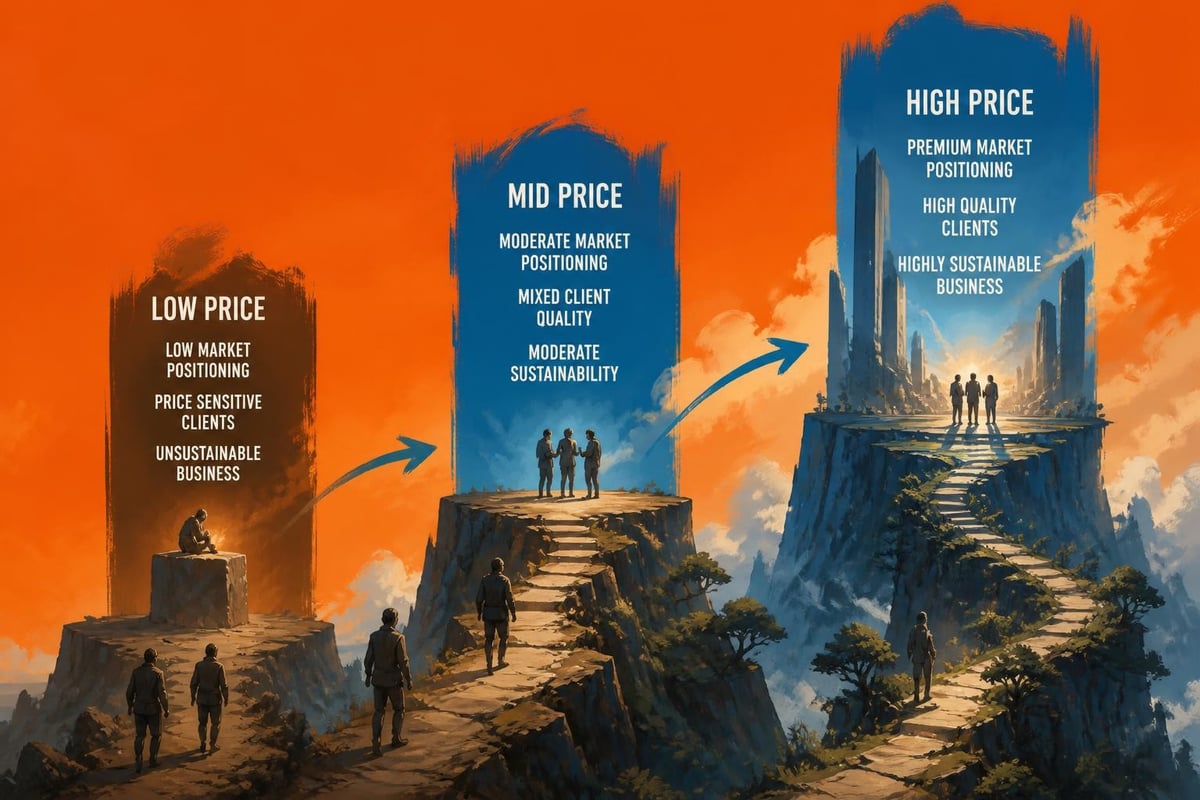
Newly certified coaches often price themselves below market to "get experience" or "build their practice." This strategy backfires. Low pricing attracts price-sensitive clients who demand more, complain often, and rarely refer. It also signals to buyers that you lack confidence in your value.
| Price Point | Signal to Market | Typical Client |
|---|---|---|
| $75-150/session | New, inexperienced, uncertain | Price shoppers, high maintenance |
| $200-400/session | Established, specialized | Committed clients, reasonable expectations |
| $500+/session | Expert, proven outcomes | Serious buyers, results-focused |
The market pays for certainty, not credentials. When you articulate exactly what problem you solve, who benefits, and what outcomes they can expect, pricing becomes easier. You're not selling coaching hours. You're selling the solution to a costly problem.
The Business Model Problem: Trading Time for Money
The hourly coaching model limits income and creates burnout. Successful coaches package their services around outcomes, not hours. They create group programs, retainer arrangements, and organizational engagements that leverage their expertise beyond one-to-one sessions.
Alternative business models:
- Group coaching programs: serve 8-12 clients simultaneously with individual and group components
- Corporate retainers: monthly engagement with multiple stakeholders
- Team facilitation: workshops and offsites with ongoing coaching support
- Assessment-based packages: 360 reviews, diagnostics, and multi-session coaching
- Hybrid models: combining individual coaching with manager training and team sessions
Organizations seeking leadership development increasingly prefer coaches who can work across levels: individual executives, management teams, and organizational systems. The single-session hourly model doesn't serve complex corporate needs.
The Visibility Challenge: No One Knows You Exist
Certification doesn't come with clients. It comes with permission to coach. If your target market doesn't know you exist, credentials are irrelevant. Most coaches underinvest in visibility, assuming quality work naturally attracts clients. It doesn't.
Building Strategic Visibility
- Content marketing: publish 2-4 pieces monthly addressing specific client problems
- Speaking engagements: present at industry conferences, association meetings, podcasts
- Strategic partnerships: develop referral relationships with complementary professionals
- LinkedIn optimization: profile positioning, consistent posting, engagement with target connections
- Email list building: weekly or biweekly newsletter demonstrating expertise
The coaches who build thriving practices treat visibility as a professional responsibility, not vanity. They understand how to compete on corporate coaching platforms and in the broader market by establishing thought leadership in their niche.
The Experience Advantage: What Buyers Actually Value
When decision-makers hire coaches, they prioritize relevant experience over certification level. A former CFO coaching financial executives, a retired general coaching military transitions, or an ex-startup founder coaching entrepreneurs brings credibility no certification provides. This explains why certified coaches still cannot get clients when they lack contextual expertise in their target market.
The most successful coaches combine three elements:
- Operational experience in the industry or function they serve
- Coaching methodology to structure conversations and interventions
- Business acumen to generate leads, convert prospects, and deliver measurable value
Certification provides only the middle element. The market rewards the complete package.
FAQ About Why Certified Coaches Cannot Get Clients
Why do certified coaches struggle to find clients?
Certification programs teach coaching skills but rarely address business development, marketing, positioning, or sales. Coaches graduate equipped to facilitate sessions but unprepared to attract, convert, and retain paying clients in competitive markets.
Does coaching certification guarantee client success?
No. Certification validates coaching competency but doesn't create market demand. Client acquisition requires positioning, marketing systems, sales skills, and differentiation that most certification programs don't teach.
What's the biggest mistake new certified coaches make?
Leading with credentials instead of solving specific problems for defined audiences. Buyers care about outcomes and relevant experience, not certification letters after your name.
How long does it take certified coaches to get their first client?
Without business development skills, it can take 6-12 months or longer. Coaches who treat client acquisition as a system rather than hoping for referrals typically sign clients within 30-90 days.
Should coaches niche down or stay general?
Successful coaches niche aggressively. General positioning creates commodity competition on price. Specific positioning targeting defined problems for defined audiences increases conversion rates and allows premium pricing.
What marketing actually works for coaches in 2026?
Content marketing addressing specific buyer problems, strategic LinkedIn presence, email list nurturing, and referral systems. Sporadic social media posting and networking without follow-up systems rarely generate consistent leads.
How should coaches price their services?
Price based on value delivered and market positioning, not hours invested or cost-plus models. Underpricing signals inexperience and attracts difficult clients. Premium pricing requires clear articulation of outcomes and ROI.
Do coaches need a website to get clients?
Not initially, but eventually yes. Early client acquisition happens through direct outreach, networking, and content on platforms like LinkedIn. A website becomes important for credibility as visibility grows, but it's rarely the primary lead source.
Can certified coaches compete with experienced industry professionals?
Yes, but not on credentials alone. Coaches must develop specialized methodologies, demonstrate measurable outcomes, build visibility in their niche, and articulate value in terms buyers understand rather than coaching jargon.
The gap between certification and client acquisition won't close until coaches treat business development with the same seriousness they apply to coaching methodology. The market doesn't reward credentials; it rewards coaches who solve specific problems for defined audiences and communicate that value clearly. If your organization needs practical leadership development that delivers measurable business outcomes rather than credential-focused coaching, Noomii connects you with experienced coaches who tie their work to KPIs, ROI, and visible results from day one.



Leave a Reply
Want to join the discussion?Feel free to contribute!