
Transformational Leadership Programs for Directors Frankfurt
Frankfurt stands as Europe's financial capital and a global business hub where directors face unprecedented complexity. From navigating regulatory compliance across the EU to managing distributed teams in hybrid environments, leadership demands continue to intensify. Transformational leadership programs for directors in Frankfurt have emerged as essential investments for organizations seeking to develop executives who can inspire innovation, drive cultural change, and deliver sustainable growth. These programs move beyond traditional management training by focusing on fundamental behavioral change, emotional intelligence, and the capacity to lead through ambiguity. Directors who engage in transformational leadership development demonstrate measurably higher team engagement, improved decision-making quality, and the ability to navigate complex stakeholder environments with confidence.
The Frankfurt Leadership Landscape
Frankfurt's unique position as Germany's financial center creates distinct leadership challenges. Directors oversee operations spanning multiple regulatory jurisdictions, manage culturally diverse teams, and balance stakeholder expectations that range from supervisory boards to international partners.
The banking sector alone employs over 60,000 professionals in Frankfurt, with directors facing intense pressure to modernize legacy systems while maintaining compliance with BaFin regulations. Beyond finance, the city hosts major pharmaceutical companies, logistics operations, and technology firms, each requiring leadership approaches tailored to their sector dynamics.
Transformational leadership programs for directors in Frankfurt address these sector-specific needs through targeted interventions. Programs incorporate case studies from German corporate governance, EU compliance frameworks, and cross-border team management scenarios that reflect real operational challenges.
Why Traditional Management Training Falls Short
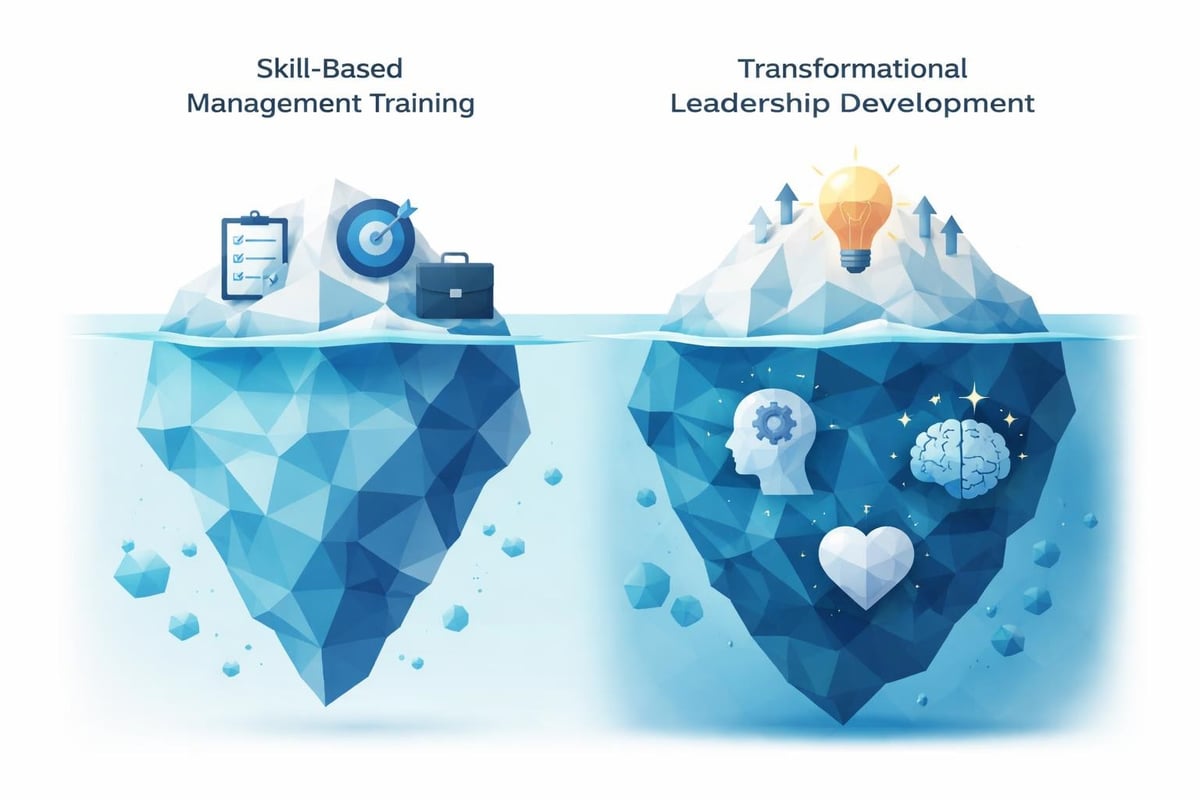
Conventional leadership development focuses on skill acquisition: strategic planning frameworks, financial analysis techniques, and project management methodologies. While valuable, these skills represent the baseline expectations for directors.
The critical gaps traditional training misses:
- Adaptive capacity to lead through disruption and uncertainty
- Emotional intelligence required for authentic stakeholder engagement
- Self-awareness necessary for recognizing unconscious biases in decision-making
- Behavioral flexibility to adjust leadership style based on context
- Capacity to create psychological safety that enables team innovation
Directors need development experiences that challenge their mental models, expand their behavioral repertoire, and build genuine leadership presence. Leadership coaching services that focus on transformational outcomes deliver these deeper shifts through personalized, evidence-based interventions.
Evidence-Based Frameworks Driving Results
Transformational leadership programs for directors in Frankfurt incorporate validated assessment tools and research-backed methodologies that ensure measurable impact. Organizations investing significant resources in director development require demonstrable returns.
The most effective programs utilize multi-rater feedback assessments that capture how directors are perceived by supervisory boards, direct reports, and peer executives. This 360-degree data reveals blind spots that single-source feedback misses completely.
Core assessment categories include:
- Strategic thinking and systems awareness
- Emotional and social intelligence competencies
- Decision-making patterns under pressure
- Communication effectiveness across hierarchical levels
- Change leadership and innovation facilitation
Programs offered by institutions like IMD’s Transformational Leader program combine assessment data with intensive coaching to create personalized development journeys. Directors receive clear baseline measurements, targeted interventions, and follow-up assessments that track behavioral change over time.
The Neuroscience of Leadership Transformation
Modern transformational leadership programs ground their approaches in neuroscience research that explains how adults develop new behavioral patterns. Directors carry decades of habitual responses shaped by previous success, making behavioral change particularly challenging.
Effective programs create conditions for neuroplasticity through structured reflection, experiential learning, and accountability mechanisms. Directors engage in exercises that interrupt automatic responses, practice alternative behaviors in safe environments, and receive immediate feedback on their impact.
The Hertie School’s Transformational Certificate program exemplifies this approach by combining theory with practical application across sustainability, governance, and cross-sectoral leadership challenges specific to the German context.
Choosing the Right Program for Your Organization
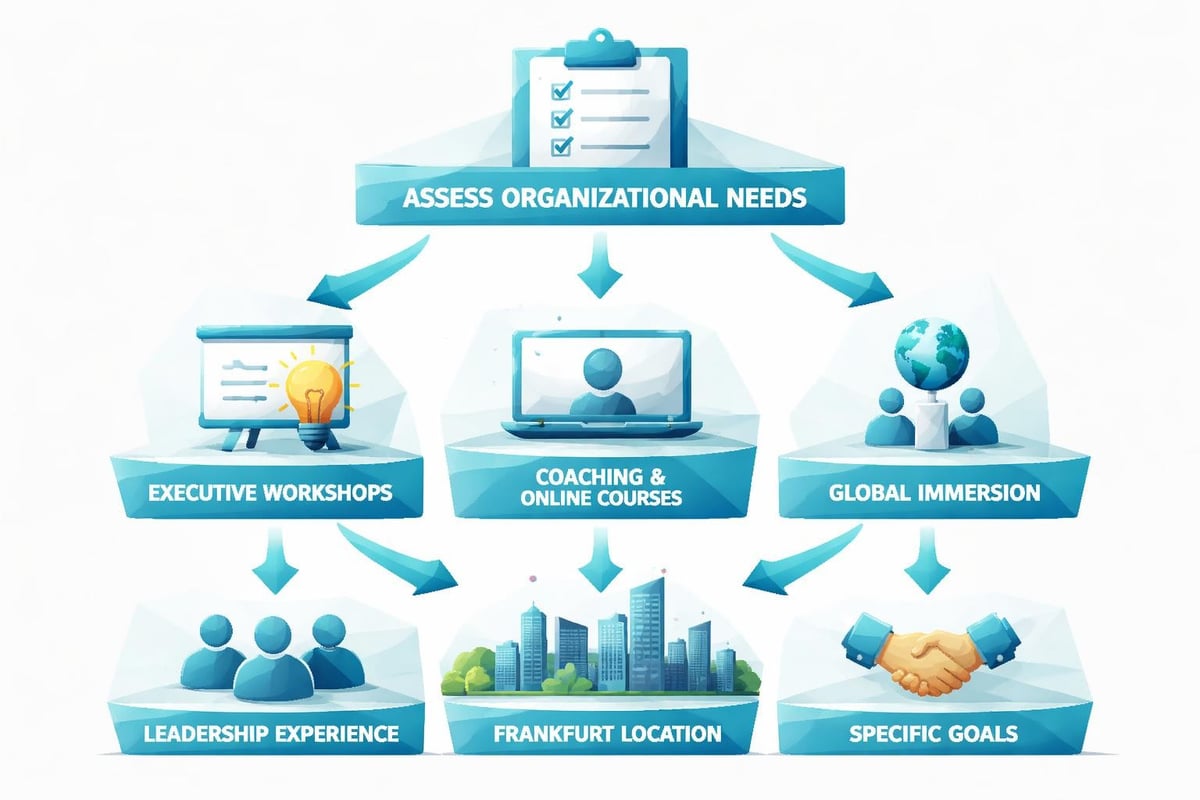
Organizations evaluating transformational leadership programs for directors in Frankfurt must consider program design elements that align with strategic objectives and organizational culture.
| Evaluation Criteria | What to Assess | Impact on Outcomes |
|---|---|---|
| Needs Diagnosis | Does the program begin with comprehensive assessment of current director capabilities and organizational gaps? | High – ensures development addresses actual needs rather than generic competencies |
| Coach Qualifications | What credentials, sector experience, and specialized expertise do coaches possess? | Critical – director-level coaching requires credibility and contextual understanding |
| Customization Capacity | Can content and delivery adapt to your organization's governance structure and strategic priorities? | High – generic programs miss industry-specific leadership challenges |
| Measurement Framework | How does the program track behavioral change and link development to business outcomes? | Critical – enables ROI demonstration and continuous improvement |
| Integration Support | Does the program help directors apply learning within your specific organizational systems? | High – prevents knowledge-action gap that undermines development investment |
Directors operate within complex organizational systems where leadership effectiveness depends on navigating formal and informal power structures. Programs that ignore this context produce learning that doesn't transfer to workplace performance.
The most sophisticated programs include action learning components where directors work on real organizational challenges during the development experience. This approach, featured in Mannaz’s Transformational Leadership Programme, ensures immediate application and creates visible organizational value throughout the coaching engagement.
Individual vs. Cohort-Based Approaches
Organizations must decide whether directors participate individually with matched coaches or join cohort programs with peer executives. Each model offers distinct advantages.
Individual coaching programs provide:
- Complete confidentiality for sensitive leadership challenges
- Total customization to director's specific development needs
- Flexible scheduling that accommodates demanding executive calendars
- Deep exploration of personal leadership patterns and beliefs
Cohort-based programs deliver:
- Peer learning from directors facing similar challenges
- Network development with executives across industries
- Shared accountability that increases commitment to change
- Cost efficiency through shared program infrastructure
Many organizations implement hybrid approaches where directors receive individual coaching while participating in select cohort learning experiences. This combination maximizes personalization while capturing peer learning benefits.
The Precision Matching Advantage
The quality of the coach-director relationship fundamentally determines program outcomes. Directors require coaches who bring credibility, sector expertise, and specialized capabilities that address their unique development needs.
Organizations implementing transformational leadership programs for directors in Frankfurt benefit from precision matching processes that consider multiple dimensions beyond basic qualifications. The matching algorithm accounts for industry background, functional expertise, cultural context, language capabilities, and specific leadership challenges the director faces.
Directors dealing with toxic leadership patterns within their teams require coaches with conflict resolution expertise and experience addressing dysfunctional organizational dynamics. Directors focused on strategic transformation need coaches who understand change management at scale and can navigate resistance across multiple stakeholder groups.
What Sets Elite Coach Networks Apart
Access to a global network of certified executive coaches expands matching possibilities and ensures organizations find the right expertise regardless of niche requirements. Top executive coaches in Germany bring deep understanding of local business culture, regulatory environments, and governance expectations that international coaches may miss.
Critical coach qualifications include:
- Minimum 15 years of executive leadership experience
- Sector-specific expertise relevant to the director's industry
- Advanced coaching certifications from ICF or EMCC
- Proven track record with director and C-suite clients
- Cultural competence for multinational leadership contexts
- Specialized capabilities in areas like crisis leadership or innovation
The most effective programs maintain rigorous coach vetting processes and ongoing quality assurance. Regular supervision, continued education requirements, and client feedback mechanisms ensure coaches maintain exceptional standards throughout engagements.
Organizations working with platforms that offer executive leadership coaching through vetted networks gain access to specialized expertise without the overhead of managing individual coach relationships. The platform handles contracting, quality assurance, and outcome tracking while directors focus entirely on their development.
Measuring Transformational Impact
Directors and boards require concrete evidence that leadership development investments deliver organizational value. Transformational leadership programs for directors in Frankfurt incorporate measurement frameworks that track both individual behavioral change and broader organizational impact.
Multi-level measurement approach:
- Individual competency development – Pre and post-program assessments quantifying growth in targeted leadership capabilities
- Behavioral change observation – 360-degree feedback tracking perceptual shifts among direct reports, peers, and supervisors
- Team performance metrics – Engagement scores, retention rates, and productivity indicators for teams led by participating directors
- Business outcome correlation – Revenue growth, operational efficiency, and strategic initiative success rates
Programs that incorporate accountability mechanisms throughout the engagement maintain focus on tangible change rather than theoretical learning. Directors establish specific behavioral goals in early sessions, receive regular feedback on progress, and adjust approaches based on real-time results.
ROI Frameworks for Leadership Development
Organizations investing six-figure sums in director development programs expect financial returns commensurate with the investment. Leading programs establish clear KPIs linked to organizational priorities before engagement begins.
| Measurement Category | Sample Metrics | Typical Improvement Range |
|---|---|---|
| Team Engagement | Employee engagement scores, voluntary turnover rates | 15-30% increase in engagement, 20-40% reduction in key talent turnover |
| Decision Quality | Strategic initiative success rates, post-implementation reviews | 25-35% improvement in initiative outcomes |
| Innovation Capacity | New product launches, process improvement submissions | 40-60% increase in team-generated innovations |
| Stakeholder Management | Board satisfaction ratings, partner relationship scores | 20-35% improvement in stakeholder confidence |
| Operational Performance | Department productivity metrics, efficiency ratios | 15-25% gains in targeted operational areas |
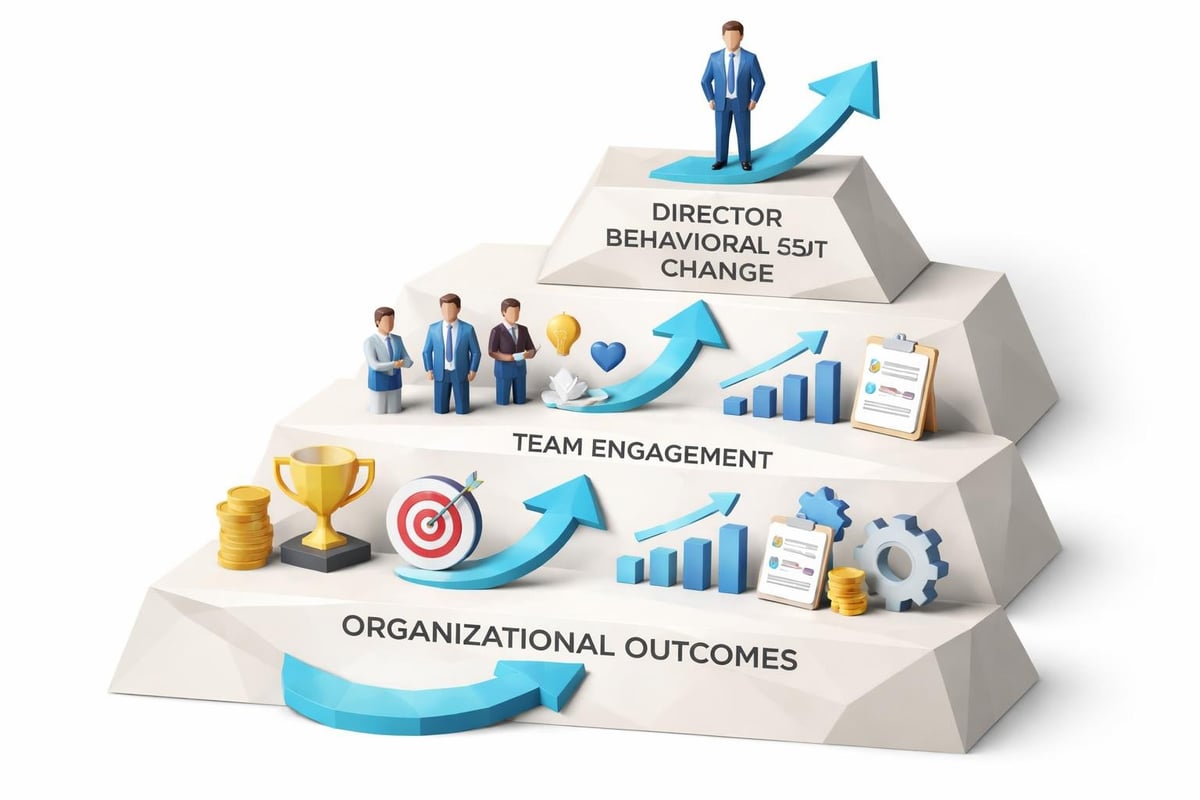
Directors who complete transformational programs demonstrate measurably different leadership behaviors that cascade through their organizations. The financial impact becomes visible through improved team performance, enhanced stakeholder relationships, and accelerated strategic execution.
Integration with Organizational Systems
Transformational leadership programs for directors in Frankfurt achieve maximum impact when integrated with broader organizational development initiatives and governance structures. Isolated leadership development creates temporary capability gains that erode without systemic reinforcement.
The most sophisticated organizations align director coaching with succession planning processes, performance management systems, and strategic planning cycles. This integration ensures development addresses real capability gaps that affect organizational performance.
Directors receive coaching on challenges they face in actual board meetings, strategy sessions, and operational reviews. This real-time application accelerates learning and creates immediate organizational value. Programs that incorporate action learning projects enable directors to apply new approaches to strategic initiatives while receiving coaching support throughout implementation.
Alignment with Compliance and Governance Standards
German corporate governance frameworks, including the German Corporate Governance Code, establish clear expectations for director capabilities and board effectiveness. Transformational leadership programs address these requirements while developing broader executive presence.
Directors must navigate complex stakeholder environments that include supervisory boards, works councils, regulatory authorities, and international partners. Programs that incorporate these governance realities prepare directors for the full scope of their leadership responsibilities.
Organizations in regulated industries benefit from programs that explicitly address compliance leadership and ethical decision-making. Directors learn to balance performance pressure with regulatory requirements and build cultures of integrity that prevent compliance failures. Understanding psychological safety in the workplace becomes particularly crucial in environments where team members must feel safe raising concerns about potential violations.
Specialized Tracks for Different Director Profiles
Not all directors face identical leadership challenges. First-time directors transitioning from functional roles require different development than seasoned executives taking on broader strategic responsibilities. Transformational leadership programs for directors in Frankfurt increasingly offer specialized tracks that address distinct director profiles.
Common specialization areas include:
- Technical to Strategic Transitions – For directors moving from functional expertise to enterprise-wide leadership roles
- International Assignment Preparation – For directors assuming responsibilities across multiple countries and cultures
- Crisis and Turnaround Leadership – For directors managing organizational restructuring or reputation recovery
- Innovation and Transformation – For directors leading digital transformation or major strategic pivots
- Mergers and Integration – For directors navigating post-merger integration challenges
Each track emphasizes different competency clusters while maintaining focus on fundamental transformational leadership capabilities. Directors in technical transitions need particular support developing strategic thinking and stakeholder management skills that weren't emphasized in their previous roles.
Programs offered through organizations like Switch On Leadership’s transformational development programs provide customized tracks that match individual director journeys while maintaining evidence-based methodologies across all specializations.
The First 100 Days Framework
Directors newly appointed to positions benefit from intensive coaching during their critical first months. This accelerated timeline requires structured approaches that compress relationship-building, strategic diagnosis, and early win identification into compressed timeframes.
Effective first 100 days programs combine pre-boarding assessment, intensive early coaching sessions, and stakeholder mapping exercises that help directors understand informal power structures. Directors develop explicit strategies for building credibility, establishing governance rhythms, and communicating their leadership approach.
The coaching relationship provides confidential space for directors to process complex organizational dynamics they're discovering, test hypotheses about strategic priorities, and refine their stakeholder engagement approaches based on early interactions.
Building Sustainable Leadership Cultures
Individual director development creates limited impact without broader cultural transformation. Organizations achieve sustainable results when transformational leadership programs cascade through multiple organizational levels and become embedded in cultural norms.
Directors who complete transformational programs often sponsor similar development for their direct reports, creating vertical alignment in leadership approach throughout the organization. This cascading effect multiplies program impact far beyond individual participants.
Organizations committed to leadership transformation establish clear leadership standards, incorporate transformational competencies into performance expectations, and reward leaders who demonstrate these capabilities consistently. This systemic approach prevents regression to previous behavioral patterns after coaching engagements conclude.
The connection between leadership quality and psychological safety at work becomes particularly evident in organizations that transform director capabilities. Teams led by directors who've completed transformational programs report significantly higher psychological safety, which directly correlates with innovation, learning, and performance outcomes.
Creating Director Peer Learning Networks
Directors face unique challenges that few colleagues can fully understand. The isolation of senior leadership positions makes peer connection particularly valuable. Progressive organizations facilitate ongoing peer learning among directors beyond formal program timeframes.
These networks provide venues for directors to share challenges, discuss emerging leadership dilemmas, and support each other's continued development. Quarterly roundtables, annual retreats, and digital collaboration platforms maintain connection and collective learning momentum.
Some organizations partner with Knowles Training Institute’s transformational courses in Germany to provide ongoing development touchpoints that refresh key concepts and introduce emerging leadership research relevant to director roles.
The Future of Director Development
Transformational leadership programs for directors in Frankfurt continue evolving as research advances understanding of adult development and organizational effectiveness. Several trends are reshaping program design and delivery.
Emerging program innovations:
- Neuroscience-informed coaching techniques that accelerate behavioral change
- Virtual reality simulations for practicing high-stakes leadership scenarios
- AI-enhanced assessment tools providing real-time feedback on communication patterns
- Microlearning modules that support sustained development between coaching sessions
- Integration with organizational analytics tracking real-time leadership impact
Directors increasingly expect development experiences that respect their time constraints while delivering deeper impact. Hybrid program models combining intensive in-person experiences with ongoing virtual coaching optimize both efficiency and effectiveness.
The emphasis on measurable business impact continues intensifying as organizations demand clear ROI from leadership investments. Programs incorporating sophisticated measurement frameworks and linking director development directly to strategic priorities will dominate the market.
Organizations exploring these advanced approaches benefit from partnering with platforms offering best AI for business coaching that augment human coaching expertise with data-driven insights and personalized development recommendations.
Global Perspectives on Transformational Leadership
While Frankfurt-based programs address local business culture and regulatory context, directors increasingly operate in global environments requiring cross-cultural leadership capabilities. The most comprehensive transformational leadership programs incorporate international perspectives and prepare directors for multinational responsibilities.
Directors learn to recognize how cultural context shapes leadership expectations, communication norms, and decision-making processes. A directive approach that succeeds in German manufacturing contexts may fail completely in Asian markets where hierarchical dynamics operate differently.
Programs like those offered by the Global Institute for Transformational Leadership emphasize holistic transformation that transcends cultural boundaries while acknowledging contextual differences. Directors develop cultural intelligence alongside emotional intelligence, expanding their leadership repertoire for diverse environments.
Cross-Border Team Leadership
Frankfurt-based directors frequently lead teams distributed across Europe, Asia, and the Americas. Managing these distributed teams requires specific capabilities beyond traditional leadership competencies.
Directors must create connection and alignment among team members who rarely meet face-to-face, navigate time zone challenges that complicate real-time collaboration, and build trust across cultural boundaries where communication norms differ significantly.
Transformational coaching addresses these challenges through experiential exercises, case study analysis of cross-border leadership failures, and structured reflection on directors' own cultural assumptions and biases. Directors develop explicit strategies for inclusive decision-making that honors diverse perspectives while maintaining operational efficiency.
Organizations with significant international operations benefit from connecting directors with resources like top executive coaches in UAE or top business coaches in France who bring deep understanding of specific regional business cultures directors must navigate.
Implementation Roadmap for Organizations
Organizations ready to invest in transformational leadership programs for directors in Frankfurt should follow structured implementation approaches that maximize program effectiveness and organizational impact.
Phase 1: Strategic Diagnosis (Weeks 1-4)
- Conduct organizational needs assessment identifying critical leadership gaps
- Define strategic priorities the director development should support
- Establish measurement framework and baseline metrics
- Secure executive sponsorship and board alignment
Phase 2: Program Design (Weeks 5-8)
- Select program provider or develop custom program architecture
- Define participant selection criteria and identify initial director cohort
- Establish coach matching process and quality standards
- Create communication strategy for broader organization
Phase 3: Launch and Engagement (Weeks 9-12)
- Complete individual director assessments
- Match directors with qualified coaches
- Conduct program orientation and goal-setting sessions
- Initiate coaching engagements with clear accountability structures
Phase 4: Sustained Development (Months 4-12)
- Maintain regular coaching cadence with progress monitoring
- Conduct mid-program assessments tracking behavioral change
- Facilitate peer learning sessions among participating directors
- Adjust interventions based on emerging needs and results
Phase 5: Integration and Scaling (Months 13-18)
- Complete final assessments measuring program impact
- Document learnings and refine approach for future cohorts
- Cascade successful practices to broader leadership population
- Embed transformational competencies into ongoing talent systems
This phased approach ensures thoughtful implementation while maintaining momentum and demonstrating early wins that build organizational confidence in the investment.
Organizations seeking proven implementation partners should explore platforms that have successfully deployed director development programs at scale. Understanding how much business coaching costs helps organizations budget appropriately while recognizing that director-level engagements represent premium investments with commensurate returns.
Accountability structures throughout the program ensure directors remain committed to their development despite competing demands. Some organizations incorporate external accountability resources such as AccountabilityNow to supplement coaching support and maintain consistent focus on behavioral change goals.
Directors in Frankfurt operate in one of Europe's most demanding business environments, where leadership excellence directly determines organizational success. Transformational leadership programs deliver the deep behavioral change, strategic perspective, and emotional intelligence that separates adequate management from truly exceptional leadership. Organizations that invest strategically in director development create sustainable competitive advantages through enhanced decision quality, stronger team engagement, and accelerated strategic execution. Noomii Leadership Coaching provides precision-matched coaching solutions that align director development with organizational priorities, delivering measurable results through evidence-based assessments, targeted interventions, and scalable implementation frameworks designed for today's complex leadership challenges.


Leave a Reply
Want to join the discussion?Feel free to contribute!