

Happiness Coaching: Drive Results in Your Organization
The modern workplace faces a paradox: organizations invest billions in productivity tools and efficiency systems, yet employee disengagement and burnout remain at record highs. Enter happiness coaching, a practical approach that connects emotional well-being directly to business performance. Unlike generic wellness programs that treat happiness as a soft perk, effective happiness coaching integrates measurable outcomes with personal fulfillment, creating a foundation for sustainable organizational success.
Understanding Happiness Coaching Beyond the Buzzwords
Happiness coaching represents a structured methodology that helps individuals and teams identify what truly drives satisfaction, then builds systems to protect and amplify those drivers. This isn't about toxic positivity or forcing smiles in difficult situations. Instead, it focuses on creating conditions where people can do their best work while maintaining genuine well-being.
The scientific approach to happiness reveals that sustainable fulfillment comes from three interconnected elements:
- Purpose alignment: Connecting daily work to meaningful outcomes
- Autonomy and agency: Giving people real decision-making power
- Relationship quality: Building trust and psychological safety within teams
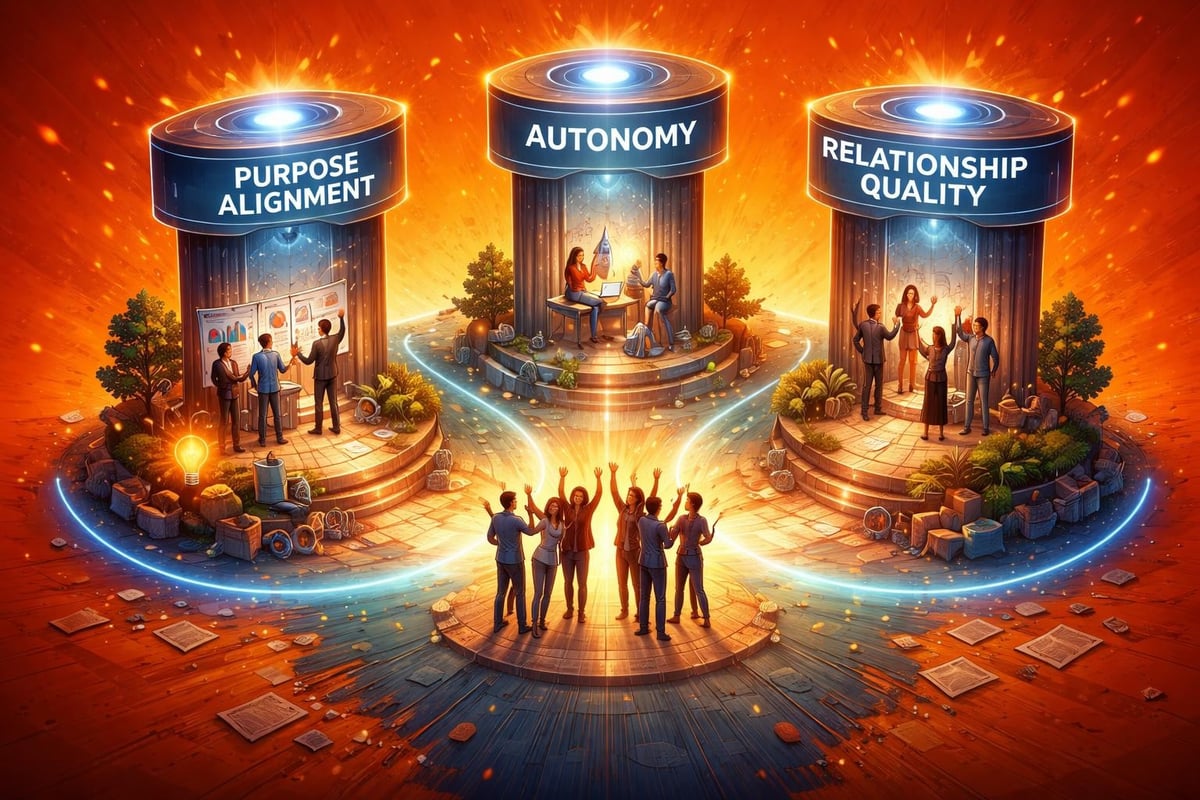
Research shows that strength-based approaches significantly impact engagement and perseverance. When organizations apply these principles systematically, they see concrete improvements in retention, decision speed, and execution quality.
The Business Case for Happiness in Corporate Settings
Mid-market companies between 25 and 500 employees face unique challenges. They're large enough to need formal systems but small enough that culture shifts happen quickly. This creates an ideal environment for happiness coaching to generate rapid ROI.
| Business Metric | Impact of Happiness Coaching | Timeline to Results |
|---|---|---|
| Employee Retention | 15-25% reduction in voluntary turnover | 3-6 months |
| Manager Effectiveness | 30-40% improvement in team coaching skills | 2-4 months |
| Decision Speed | 20-35% faster resolution on key priorities | 1-3 months |
| Customer Satisfaction | 10-20% increase in NPS scores | 4-8 months |
The connection between happiness and performance isn't just correlation. When managers learn to foster genuine well-being, they create conditions where people bring discretionary effort, share ideas freely, and solve problems proactively. This directly impacts the metrics that matter: sales conversion, project completion rates, and client retention.
Noomii’s corporate coaching platform integrates happiness principles with accountability frameworks, ensuring that well-being initiatives tie directly to KPI scorecards and operating cadence.
Implementing Happiness Coaching in Your Organization
Rolling out effective happiness coaching requires more than inspirational workshops. It demands a systematic approach that embeds well-being into daily operations and management practices.
Step-by-Step Integration Process
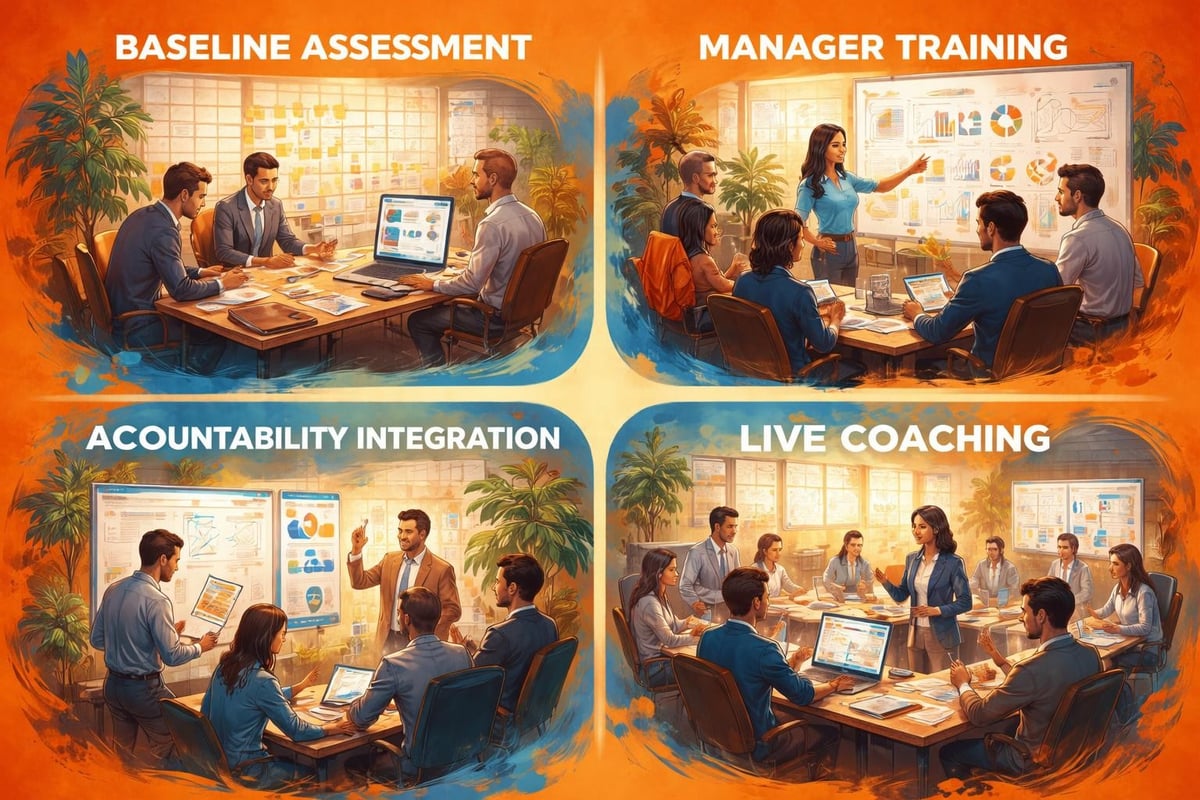
1. Establish Baseline Measurements
Before launching any happiness initiative, capture current state data. Use 360 leadership assessments to identify where managers create energy and where they drain it. Track engagement scores, meeting effectiveness ratings, and decision-making velocity.
2. Train Managers as Happiness Coaches
Your frontline leaders make or break cultural transformation. Mindful leadership principles teach managers to recognize stress signals, facilitate meaningful conversations, and create space for authentic connection. This isn't soft skills training; it's building the competencies that unlock team performance.
3. Build Accountability Systems
Happiness coaching fails when it remains abstract. Tie well-being metrics to monthly KPI reviews. Include manager coaching effectiveness in performance evaluations. Make psychological safety a tracked outcome alongside revenue and efficiency, following principles established in Google’s Project Aristotle.
4. Coach Live in the Work
Theory doesn't change behavior. Effective coaches sit in actual team meetings, observe real interactions, and provide immediate feedback. This live coaching accelerates skill development and ensures new approaches stick.
Organizations that follow these steps typically see measurable improvements within 90 days. The key is maintaining focus on business outcomes while genuinely caring about people's experience at work.
Common Pitfalls to Avoid
Many organizations stumble when implementing happiness coaching. Here are the most frequent mistakes:
- Treating it as HR's job alone: Happiness coaching must be owned by operational leaders, not delegated to human resources
- Measuring activity instead of outcomes: Track manager effectiveness and team performance, not hours spent in coaching sessions
- Ignoring the accountability piece: Without clear KPIs and consequences, initiatives fade after the initial enthusiasm
- Copying programs from other companies: Your culture is unique; cookie-cutter approaches rarely work
The holistic approach to happiness coaching emphasizes customization based on organizational context and specific team dynamics.
Connecting Individual Fulfillment to Team Performance
Individual happiness matters, but organizational impact comes from collective well-being. The most effective happiness coaching bridges personal growth with team dynamics.
Creating Shared Purpose
Teams perform best when members understand how their work contributes to something larger than themselves. Understanding happiness at a structural level helps leaders design work that naturally generates meaning. This isn't about grand mission statements. It's about making the connection between daily tasks and customer outcomes visible and tangible.
Practical applications include:
- Weekly team huddles that celebrate customer wins
- Project kickoffs that explicitly connect work to organizational goals
- Manager training on translating strategy into meaningful individual objectives
- Recognition systems that highlight impact, not just effort
When people see how their contributions matter, engagement follows naturally. This creates a virtuous cycle where happiness drives performance, which in turn reinforces happiness.
Building Coaching Cultures
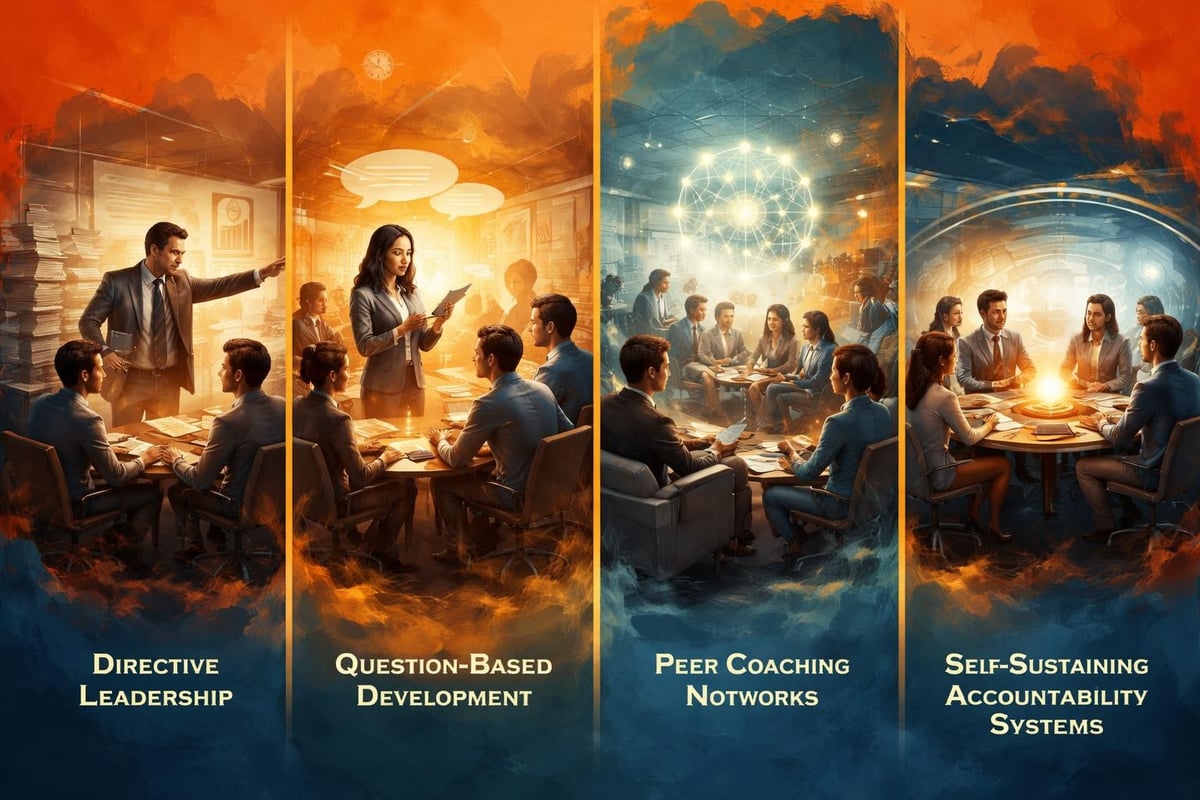
The ultimate goal of happiness coaching isn't creating dependence on external coaches. It's building organizations where managers naturally coach their teams, peers support each other, and accountability happens through trust rather than control.
Leadership coaching focused on happiness principles transforms how decisions get made, how feedback flows, and how conflicts get resolved. Managers learn to ask powerful questions instead of providing all the answers. They create safety for experimentation while maintaining clarity on expected outcomes.
This cultural shift requires patience and reinforcement. Most organizations need six to twelve months of consistent practice before coaching becomes the default management approach. However, those who persist see dramatic improvements in retention, innovation, and execution speed, validated by approaches like Mindset Priming™ that help individuals identify and achieve meaningful goals.
Measuring ROI and Sustaining Momentum
Happiness coaching must prove its value through measurable business results. Organizations that succeed track both leading indicators (manager behaviors, meeting quality) and lagging indicators (retention, revenue per employee, customer satisfaction).
Key Metrics Framework
| Category | Leading Indicators | Lagging Indicators |
|---|---|---|
| Manager Development | Coaching conversations per week, 360 feedback scores | Team engagement scores, voluntary turnover |
| Team Dynamics | Meeting effectiveness ratings, decision velocity | Project completion rates, quality metrics |
| Business Results | Pipeline quality, customer interaction scores | Revenue growth, profit margins, NPS |
Effective measurement requires discipline. Monthly reviews should examine trends, identify obstacles, and adjust approaches based on evidence. This empirical approach distinguishes professional happiness coaching from feel-good programs that fade after initial excitement.
Cost considerations for business coaching should factor in both direct fees and the opportunity cost of management time. Quality programs deliver 3-5x ROI within the first year through retention savings alone, before counting productivity and revenue impacts.
Maintaining Long-Term Success
Happiness coaching works when it becomes embedded in how the organization operates, not an add-on program. This requires ongoing reinforcement, regular skill refreshers, and visible leadership commitment. For more insights on building sustainable coaching practices, explore resources at AccountabilityNow.
Month-to-month engagement models work better than long contracts because they force continuous value demonstration. When coaches share risk through aligned incentives, both parties stay focused on measurable outcomes rather than checking boxes.
The organizations that sustain happiness coaching results treat it as core infrastructure, not a temporary initiative. They build it into onboarding, promotion criteria, and strategic planning processes. This institutional commitment ensures that well-being and performance remain connected through leadership transitions and market changes.
Happiness coaching delivers measurable business results when implemented with the same rigor applied to operations and finance. By connecting individual fulfillment to team performance and organizational outcomes, mid-market leaders create sustainable competitive advantages. Noomii helps companies build accountable leaders who coach their teams, make faster decisions, and execute cleanly on priorities, with month-to-month terms that tie progress to clear KPIs and visible ROI.


Leave a Reply
Want to join the discussion?Feel free to contribute!