
Certified Transformational Coach: A Business Guide
Mid-market companies are increasingly turning to certified transformational coaches to address leadership gaps, improve team dynamics, and drive measurable business outcomes. Unlike traditional coaching approaches that focus primarily on skill development, transformational coaching tackles the deeper mindsets, beliefs, and behaviors that either accelerate or inhibit organizational performance. For companies with 25 to 500 employees, the right coaching partnership can mean the difference between incremental improvement and genuine breakthrough results that show up in your KPIs.
What Defines a Certified Transformational Coach
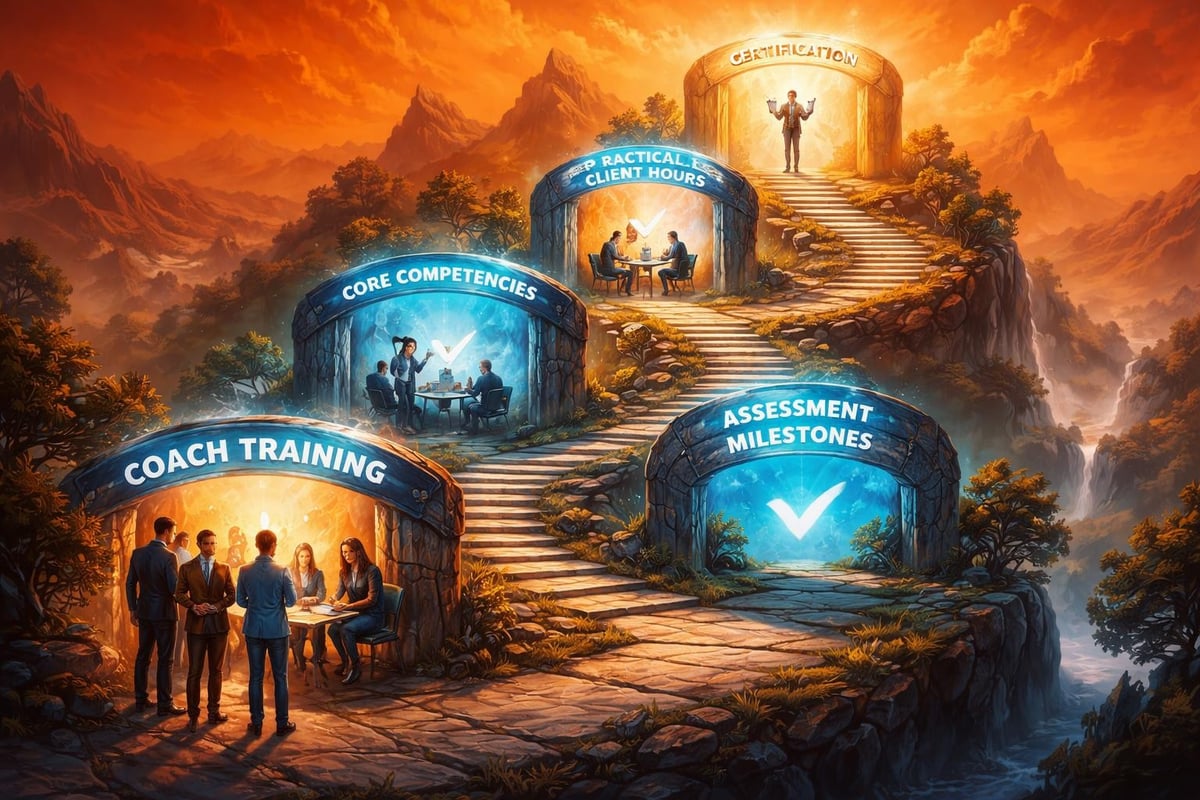
A certified transformational coach holds recognized credentials from accredited coaching bodies and specializes in facilitating fundamental shifts in how leaders think, communicate, and execute. The Advanced Certificate in Transformational Coaching represents one pathway for coaches pursuing ICF Level 2 accreditation, emphasizing rigorous training in change methodology.
Key distinctions include:
- Depth of focus: Addresses underlying beliefs and patterns, not just surface behaviors
- Measurable outcomes: Ties coaching to business KPIs and ROI metrics
- Integration approach: Works within your existing operating cadence and team meetings
- Accountability framework: Creates structures that ensure sustained change beyond coaching sessions
The certification process typically requires 100+ hours of specialized training, documented coaching hours, and demonstrated competency in transformational methodologies. Programs like those offered through Universal Coach Institute incorporate neurolinguistic programming and positive psychology into their curriculum.
The Business Case for Transformational Coaching
Organizations invest in a certified transformational coach when traditional training programs fail to create lasting change. You have likely experienced this: managers attend workshops, nod along, and return to the same patterns within weeks. Transformational coaching works differently by embedding directly into your operations.
Consider the impact on decision-making velocity. When leaders shift from defensive postures to ownership mindsets, approval cycles compress. Teams that once waited for permission begin taking calculated risks. This acceleration shows up in quarterly results, not just engagement surveys.
| Business Outcome | Traditional Training | Transformational Coaching |
|---|---|---|
| Decision Speed | Minimal change | 30-40% faster cycles |
| Manager Retention | Modest improvement | 25-35% increase |
| Team Accountability | Temporary lift | Sustainable ownership |
| Revenue Impact | Difficult to measure | Tied to specific KPIs |
Leadership coaching in a transformational framework focuses on removing the internal barriers that prevent executives from leading effectively. The certified transformational coach identifies where fear of conflict, perfectionism, or outdated beliefs constrain performance.
How Transformational Coaching Differs from Other Approaches
Many coaching certifications emphasize technique mastery: powerful questions, active listening, goal-setting frameworks. While valuable, these skills alone rarely transform organizations. A certified transformational coach operates at a different level entirely.
The transformational approach includes:
- Pattern interruption: Identifying and disrupting unproductive team dynamics in real time
- Belief examination: Surfacing and challenging the assumptions that drive current results
- Identity-level work: Shifting how leaders see themselves and their capabilities
- Systems thinking: Recognizing how individual changes ripple through organizational structures
Programs like Shoshin Coaching & Training emphasize this deeper work through ICF-accredited programs. The focus extends beyond individual goal achievement to comprehensive organizational transformation.
When evaluating coaching options, mid-market companies should look beyond credentials to implementation methodology. Does the coach work inside your business or only in scheduled sessions? Can they tie their work to your accountability framework and performance metrics?
Selecting the Right Certified Transformational Coach
The market offers numerous certification paths, making selection challenging. Life Coach Magazine’s review of top programs highlights the range of options available, from intensive retreats to extended online programs.
For corporate applications, prioritize coaches who demonstrate:
- Business acumen: Understanding of P&L dynamics, operational constraints, and market pressures
- Live facilitation experience: Ability to coach within team meetings, not just one-on-one sessions
- Results orientation: Track record of tying coaching to measurable business outcomes
- Flexible engagement models: Month-to-month terms rather than locked annual contracts

The requirements for becoming a Transformational Presence Certified Coach illustrate the commitment serious practitioners make. However, for buyers, the critical question remains: can this coach deliver results in your specific business context?
Implementation Models That Drive Results
A certified transformational coach delivers value through multiple engagement formats. The most effective corporate coaching integrates several approaches simultaneously.
Common engagement structures:
- Executive coaching sessions: One-on-one work with senior leaders on strategic thinking and leadership presence
- Team facilitation: Live coaching during leadership team meetings to improve communication and decision-making
- Manager development: Group coaching that builds coaching capability within your management ranks
- 360 assessments: Structured feedback processes that create awareness and fuel growth commitments
Companies exploring how much business coaching costs should evaluate pricing against expected ROI. The investment should correlate with measurable improvements in retention, revenue per employee, or margin expansion.
The most sophisticated coaching partnerships establish shared risk through performance-based components. When coaches tie portions of their compensation to your actual results, incentives align completely. This approach remains rare but represents the future of corporate coaching relationships.
Measuring Transformational Coaching Impact
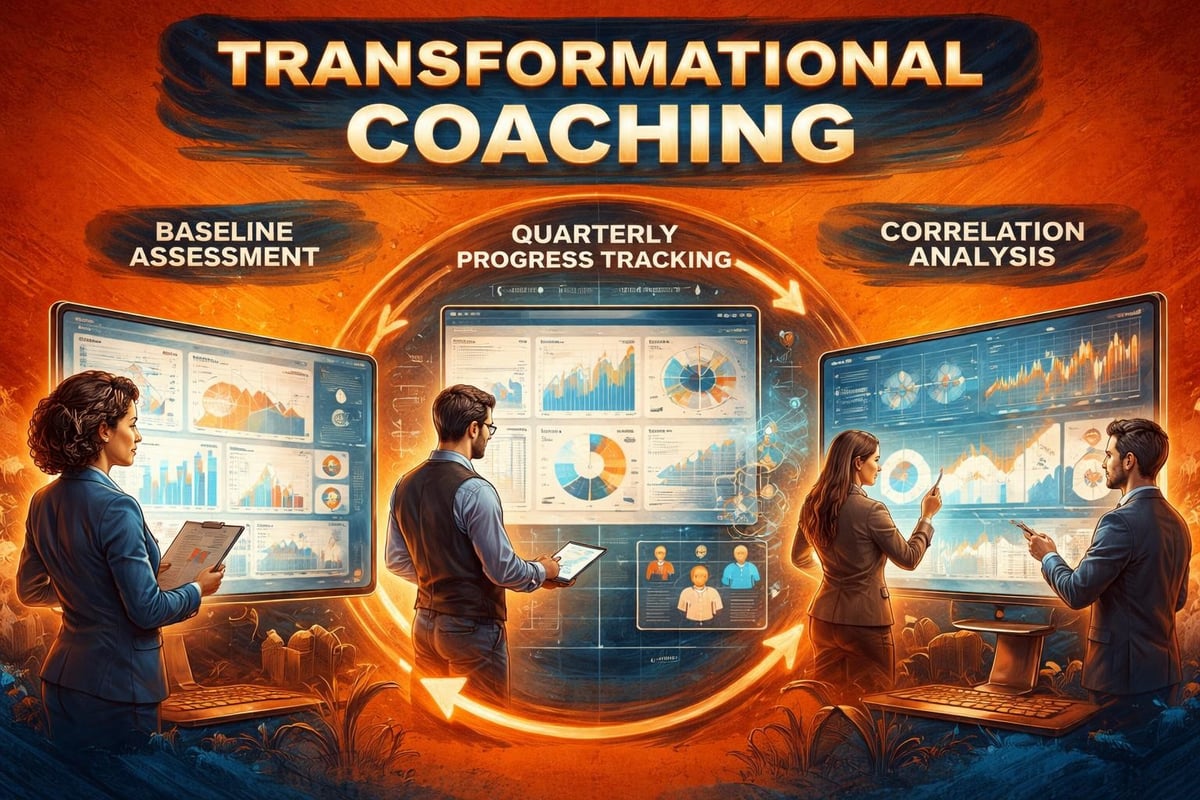
Unlike theoretical coaching that struggles to demonstrate value, transformational coaching tied to business operations generates clear data. Start with baseline metrics before coaching begins, then track changes quarterly.
| Metric Category | Sample KPIs | Target Improvement |
|---|---|---|
| Leadership Effectiveness | 360 scores, direct report retention | 15-25% increase |
| Operational Execution | OKR completion rates, cycle time | 20-30% improvement |
| Team Health | Engagement scores, collaboration ratings | 10-20% lift |
| Business Results | Revenue per employee, customer retention | 5-15% growth |
Google’s Project Aristotle research demonstrated that psychological safety drives team performance more than individual talent. A certified transformational coach builds this safety by modeling vulnerability and creating space for honest dialogue.
For organizations already investing in entrepreneurship coaching or other development initiatives, transformational coaching complements existing efforts. The key difference lies in integration depth and accountability rigor.
Scaling Transformational Coaching Across Organizations
Once transformational coaching demonstrates value with senior leaders, the natural question becomes: how do we scale this throughout our organization? The answer lies in building coaching capacity within your existing management team.
Scaling approaches include:
- Train managers as coaches: Develop internal coaching capability to sustain transformation
- Establish coaching culture: Make coaching conversations the norm, not special events
- Create peer coaching networks: Enable leaders to support each other's development
- Document proven frameworks: Capture what works and make it repeatable
This internal development work complements ongoing support from external coaches. Programs like those at Awaken Coach Institute offer intensive training that can accelerate internal coach development.
The most effective partnerships provide both hands-on coaching and capability transfer. Your team learns by watching a skilled coach facilitate difficult conversations, interrupt unproductive patterns, and create breakthrough moments. Over time, they develop these skills themselves.
When exploring options through directories like Noomii, look for coaches who explicitly include knowledge transfer in their methodology. The goal should be sustainable transformation that continues after the coaching engagement ends, with clear practices embedded in your operating cadence and accountability systems that reinforce new behaviors.
The Future of Corporate Transformational Coaching
The coaching industry continues evolving toward greater rigor, measurement, and business integration. Mid-market companies benefit from this shift as coaches move beyond feel-good sessions to performance-focused partnerships.
Emerging trends include:
- AI-enhanced coaching: Technology that tracks patterns and surfaces insights between sessions
- Neuroscience integration: Brain-based approaches that accelerate behavior change
- Real-time feedback loops: Continuous data collection that informs coaching focus
- Hybrid models: Combination of virtual and in-person coaching for maximum flexibility
Organizations considering investments in a certified transformational coach should view coaching as strategic infrastructure, not discretionary spending. When properly implemented, transformational coaching creates competitive advantage through faster adaptation, stronger execution, and higher talent retention.
The certification itself matters less than demonstrated ability to drive your specific business outcomes. Prioritize coaches who speak your language, understand your constraints, and commit to measurable results over those focused primarily on credentials and theory.
Transformational coaching delivers the greatest value when integrated into your daily operations rather than treated as a separate development activity. Companies that roll up their sleeves alongside a certified transformational coach see faster decisions, managers who coach effectively, and cleaner execution across priorities. Noomii Corporate Coaching partners with mid-market organizations to build accountable leaders and teams through practical, results-focused coaching tied to clear KPIs and ROI, with month-to-month terms that keep us accountable to delivering visible outcomes.


Leave a Reply
Want to join the discussion?Feel free to contribute!