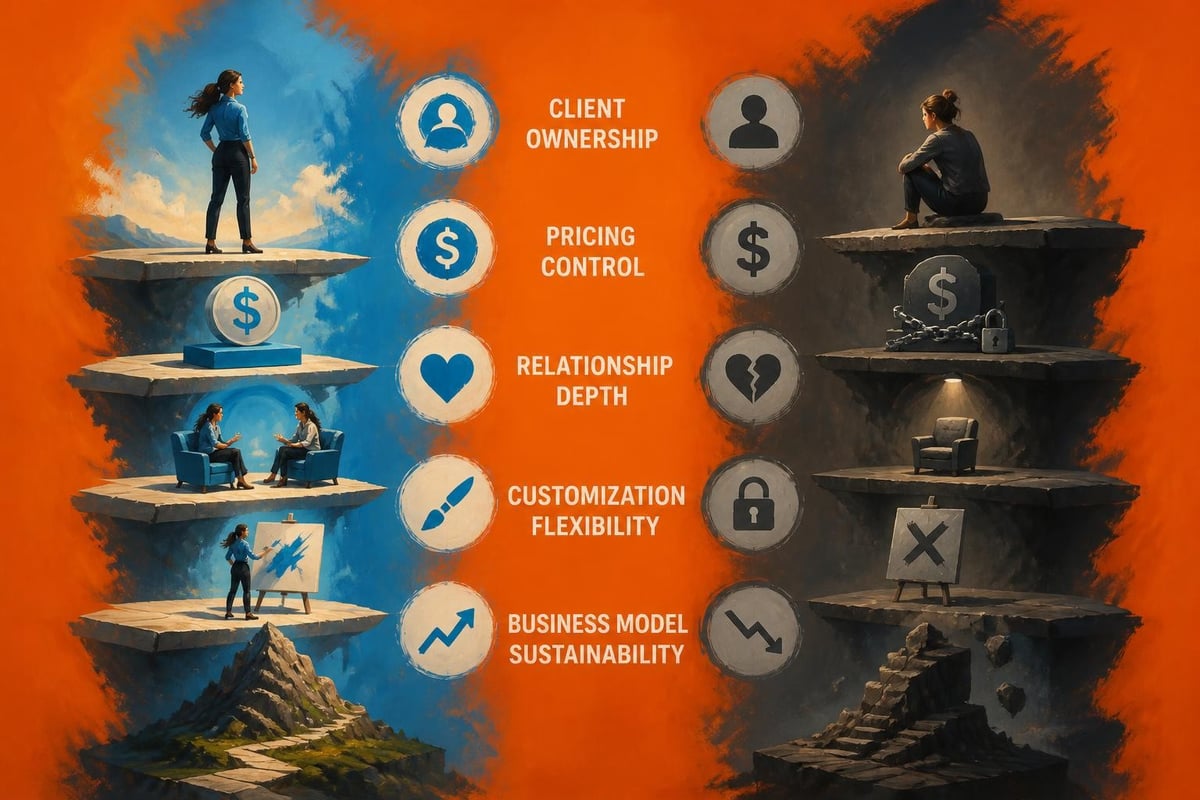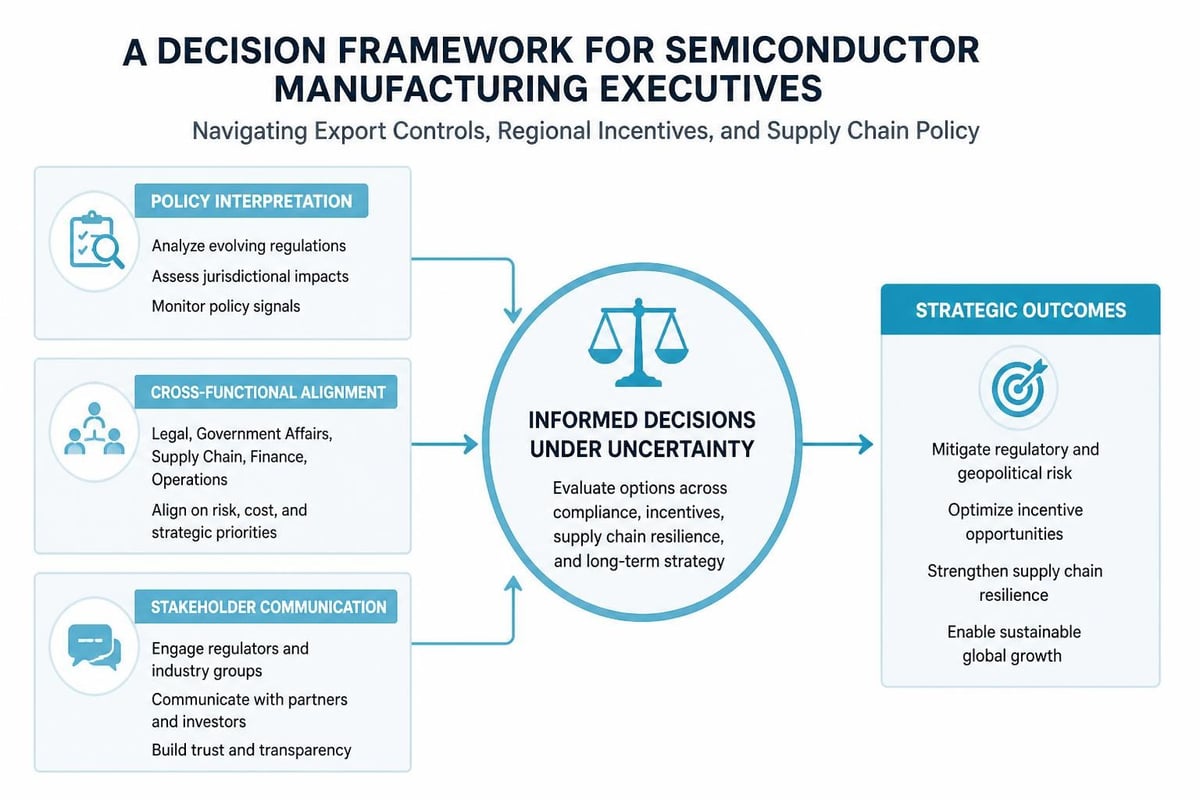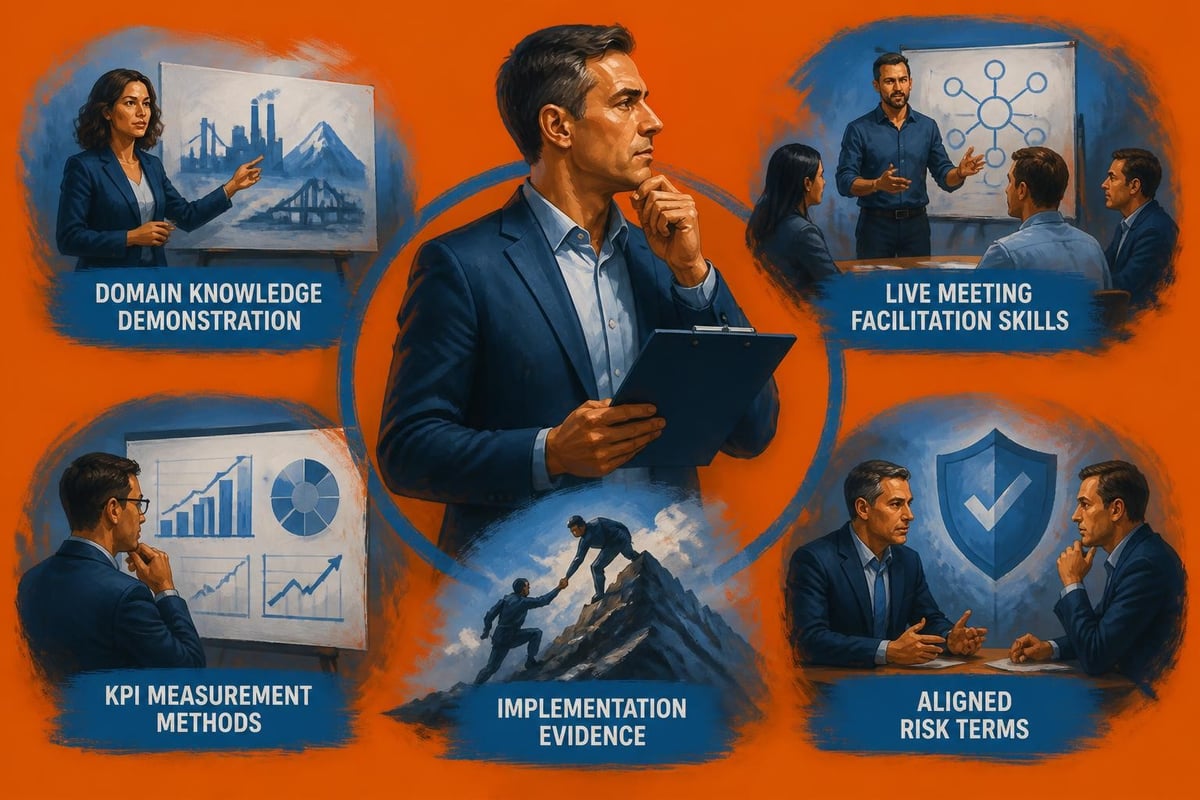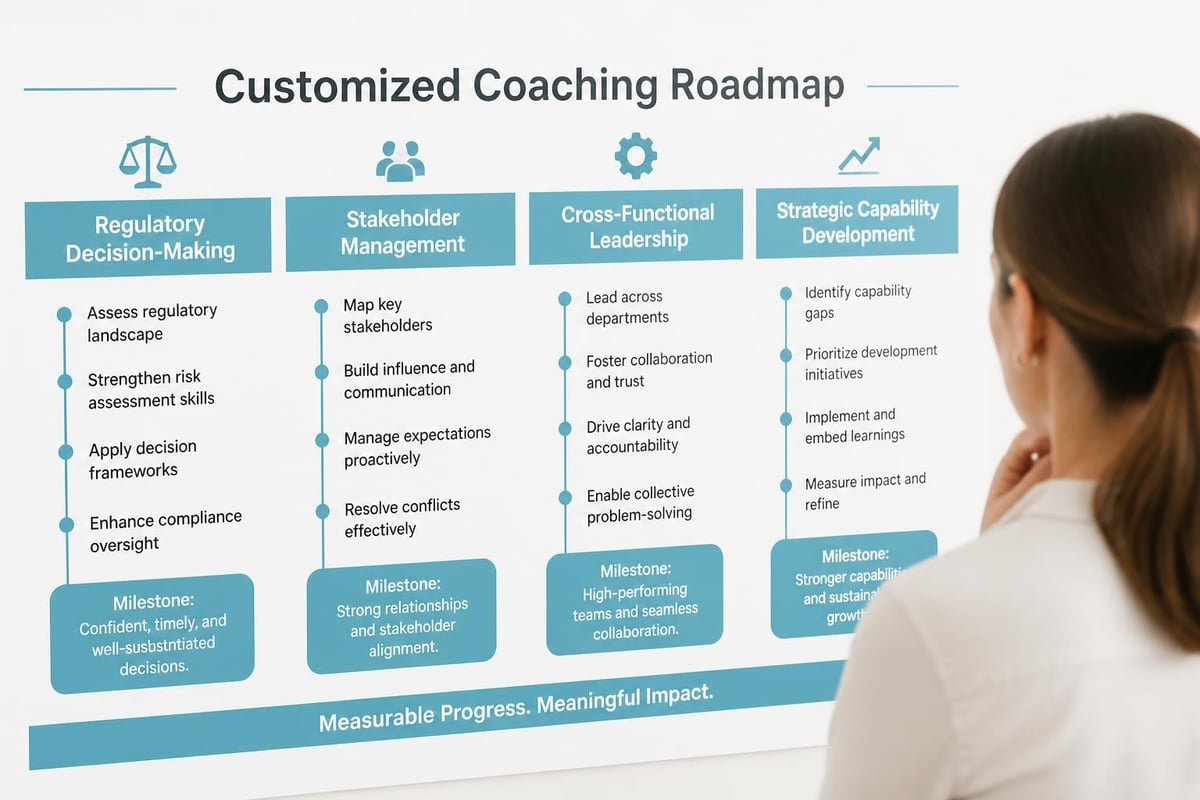

Why High Performers Hire Coaches: The Real Reasons

The best leaders, founders, and executives don't hire coaches because they're broken. They hire because they recognize that performance at the top requires a different operating system. Understanding why high performers hire coaches reveals a pattern: they seek measurable outcomes, not motivational speeches. They want someone who challenges their thinking, sits in their meetings, and holds them accountable to the metrics that matter. This is the gap most coaching conversations miss.

The Performance Paradox That Drives Coaching Demand

High performers face a unique challenge. The skills that elevated them often become limitations. Elite executives seek coaching not for remediation but to expand capacity, refine strategy, and sharpen execution in real time.

Here's what separates elite coaching engagements from generic programs:

  • Live engagement in actual business contexts rather than abstract theory sessions
  • Tied to specific KPIs like decision velocity, retention rates, or sales conversion
  • Month-to-month accountability instead of locked contracts with vague promises
  • Focus on business outcomes measured quarterly, not personal feelings measured never

The executives who get the most value understand coaching as a performance tool, not a development luxury. They track ROI the same way they track any other business investment.

What High Performers Actually Buy When They Hire Coaches

Most coaching marketing focuses on credentials, certifications, and process. High performers ignore this noise. They evaluate three factors: expertise from pattern recognition across industries, willingness to challenge existing thinking, and commitment to measurable results.

When you examine why successful entrepreneurs hire coaches, the pattern is consistent. Bill Gates, Eric Schmidt, and other top performers hired coaches who had been in the arena, not trainers reciting frameworks from a manual.

High performer coaching selection criteria

What High Performers Want What Most Coaches Offer The Gap
Live coaching in meetings Scheduled 1-on-1 calls Context and application
KPI-driven progress Reflective conversations Measurable accountability
Industry pattern recognition Generic frameworks Relevant expertise
Month-to-month terms 6-12 month contracts Aligned risk

This explains why high performers hire coaches who operate differently. They need partners who understand the business language, not just coaching language.

The Certification Myth and What Actually Builds Trust

The coaching industry pushes certification as a proxy for competence. High performers see through this immediately. A certification proves you completed a program. It doesn't prove you can improve EBITDA, reduce executive turnover, or help a leadership team make faster decisions.

Real credibility comes from:

  1. Demonstrable results with similar companies or challenges
  2. Willingness to tie compensation to outcomes when feasible
  3. Depth of industry pattern recognition across economic cycles
  4. Ability to diagnose organizational dysfunction quickly and accurately
  5. Track record of executive-level communication and challenge

The best coaches carry battle scars, not just certificates. They've seen what breaks teams, what accelerates growth, and what leadership behaviors predict failure. This expertise cannot be taught in a 200-hour certification course.

When mid-market companies build psychological safety at work, they need coaches who understand how psychological safety translates to financial performance, not coaches who memorize Amy Edmondson quotes without application context.

The Five Scenarios That Trigger Coaching Investment

Why high performers hire coaches becomes clearer when you examine the triggering events. These aren't calendar-based development plans. They're inflection points where the cost of not having a coach exceeds the investment.

Scenario One: Scaling Leadership Teams

A founder who managed 15 people suddenly oversees 150. The management operating system that worked before now creates bottlenecks. Leadership development becomes urgent when growth velocity outpaces leadership capacity.

Scenario Two: Performance Plateaus Despite Effort

Revenue flatlines. Engagement scores drop. Executive meetings produce talk, not decisions. High performers recognize these symptoms require external pattern recognition, not harder work using the same approach.

Scenario Three: Market Disruption or Strategic Shifts

AI disruption, competitive threats, or pivots demand new thinking. The human skills AI cannot replace become differentiators, and coaches help leaders develop these capabilities faster than trial-and-error allows.

Coaching engagement triggers

Scenario Four: Retention of Critical Talent

When your VP of Sales gives notice, or your top three managers are burned out, reactive hiring won't solve the root cause. High performers understand the cost of career coaching versus the cost of losing institutional knowledge.

Scenario Five: Preparing for Exit or Transition

Whether preparing for acquisition, building a leadership team to run without you, or stepping into a board role, transitions require intentional skill development. Coaches accelerate what would otherwise take years.

What High Performers Demand From Coaching Engagements

The engagement model matters as much as the coach's expertise. High performers reject rigid structures that don't match their business reality. They demand flexibility, live application, and visible progress.

Non-negotiable requirements include:

  • Monthly check-ins on agreed KPIs, not vague progress updates
  • Access between sessions when critical decisions require input
  • Willingness to attend leadership meetings and coach in real time
  • Clear connection between coaching activities and business outcomes
  • Option to terminate if results aren't visible within 90 days

This is why understanding your reasons for wanting a coach matters. Clarity on outcomes determines whether the engagement delivers value or becomes another expense without ROI.

The Questions High Performers Ask Before Hiring

Smart buyers evaluate coaches the same way they evaluate any strategic vendor. They ask hard questions and expect evidence-based answers.

  • What measurable outcomes have you delivered for companies in our revenue range?
  • How do you tie your coaching to our existing KPIs and scorecard?
  • What's your approach when a client isn't making progress?
  • Can you coach our managers live in our operating meetings?
  • What's your termination policy if we're not seeing results?

These questions separate coaches who deliver results from those who deliver sessions. High performers know the benefits of executive coaching only materialize when the coach operates as a strategic partner, not a vendor executing a curriculum.

The ROI Calculation That Justifies Coaching Investment

CFOs and boards ask the same question: what's the return? High performers who hire coaches can answer this because they structure engagements around measurable outcomes from day one.

Outcome Category Example Metric Typical Improvement Business Impact
Decision velocity Days to close strategic decisions 40% reduction Faster market response
Manager effectiveness Direct reports saying manager coaches them 60% increase Stronger bench strength
Employee retention Regrettable departures 30% reduction Lower replacement costs
Communication clarity Meetings resulting in clear next steps 50% improvement Better execution

When you frame coaching this way, the ROI conversation shifts from cost justification to investment evaluation. A 30% reduction in regrettable departures at a 100-person company saves $500K+ annually in replacement costs alone.

Coaching ROI framework

Why High Performers Choose Noomii's Approach Over Traditional Coaching

Traditional coaching models struggle with accountability. Long contracts, theoretical frameworks, and minimal business integration create expensive workshops, not performance improvements. High performers recognize this gap.

Noomii eliminates these friction points through month-to-month terms, live coaching in actual business contexts, and direct ties to KPIs and scorecards. When a coach rolls up their sleeves and joins your operating meetings, accountability becomes automatic. When progress is measured against retention rates, decision velocity, and team engagement, ROI becomes visible.

The companies getting the best results share a pattern: they treat coaching as strategic support, not employee development programming. They demand coaches who understand P&Ls, competitive positioning, and organizational dynamics. They evaluate coaching the same way they evaluate any business investment, with clear metrics and quarterly reviews.

This approach works because it aligns incentives. When coaches share risk through aligned incentive structures and month-to-month terms, everyone focuses on the same goal: measurable business results that justify continued investment.

FAQ: Why High Performers Hire Coaches

What makes coaching valuable for high performers who are already successful?

High performers hire coaches because success at higher levels requires different capabilities than what created initial success. Coaches provide pattern recognition across industries, challenge blind spots, and accelerate skill development that would otherwise take years of trial and error. The value comes from compressed learning cycles and avoiding expensive mistakes.

How do high performers measure ROI from coaching engagements?

ROI measurement focuses on specific business metrics like decision velocity, employee retention rates, manager effectiveness scores, and communication clarity. High performers tie coaching directly to existing KPIs and scorecards, then track quarterly improvements. The best engagements show measurable progress within 90 days through metrics the business already monitors.

Why do successful executives choose coaches without traditional certifications?

Certifications prove program completion, not business results. High performers prioritize expertise from real-world pattern recognition, industry knowledge, and demonstrable outcomes over credentials. They want coaches who have navigated similar challenges, understand organizational dynamics, and can diagnose problems quickly based on experience, not frameworks memorized from a manual.

What's the difference between coaching for high performers versus developmental coaching?

Coaching for high performers focuses on amplifying existing strengths, refining strategy, and improving execution in real business contexts. It's performance optimization, not remediation. The coach operates as a strategic partner who challenges thinking and holds leaders accountable to measurable outcomes, rather than facilitating personal development conversations disconnected from business results.

How long should a coaching engagement last for high performers?

The best engagements operate month-to-month with clear 90-day outcome targets. This creates natural checkpoints to evaluate progress and adjust approach. Long contracts reduce accountability and create sunk-cost dynamics that keep ineffective relationships running. High performers prefer flexibility to terminate or expand based on visible results rather than locked commitments.

What scenarios typically trigger high performers to hire coaches?

Five common triggers include scaling leadership teams beyond current capacity, performance plateaus despite increased effort, market disruption requiring new capabilities, critical talent retention challenges, and major transitions like preparing for exit or stepping into new roles. These inflection points make the cost of not having a coach exceed the investment.

Should coaches attend actual business meetings or only do separate sessions?

The most effective coaching happens live in real business contexts. When coaches attend leadership meetings, operating reviews, and strategic planning sessions, they observe actual dynamics, challenge thinking in real time, and provide immediate feedback. Separate sessions create artificial environments that miss critical context and reduce application of coaching insights.

How do high performers select the right coach from many options?

Selection focuses on three factors: pattern recognition expertise across similar challenges, willingness to challenge existing thinking directly, and commitment to measurable results tied to business KPIs. High performers ask for evidence of past outcomes, evaluate communication style in initial conversations, and look for coaches willing to share risk through month-to-month terms.

What questions should executives ask before hiring a coach?

Critical questions include: What measurable outcomes have you delivered for similar companies? How do you tie coaching to existing KPIs? What's your approach when clients aren't making progress? Can you coach managers live in operating meetings? What's your termination policy if results aren't visible? The answers reveal whether the coach operates strategically or follows a rigid program.


High performers hire coaches because they understand that sustained success requires external pattern recognition, direct challenge, and accelerated learning that internal resources cannot provide. The coaches who deliver value operate as strategic partners focused on measurable business outcomes, not vendors executing generic development programs. If you're ready for coaching that ties directly to your KPIs, operates in your actual business context, and delivers visible results within 90 days, explore how Noomii connects mid-market companies with coaches who roll up their sleeves and share accountability for outcomes. Our month-to-month terms and live engagement approach mean you stay because results are clear, not because a contract locks you in.

High Performers Quit Toxic Managers: What Leaders Miss

The pattern repeats across industries and geographies with predictable consistency. Your best people submit resignation letters, offering polite exit interview responses while the real reason remains unspoken. The data tells a different story than the explanations offered. When high performers quit toxic managers, organizations lose institutional knowledge, client relationships, and competitive advantage. Yet boards continue promoting the same toxic behaviors that drive this attrition because they mistake short-term results for sustainable leadership.

I've analyzed exit patterns across 40+ organizations between 2023 and 2026, reviewing confidential post-departure interviews, performance data, and organizational network analysis. The findings contradict what most HR leaders believe about retention. The issue isn't compensation, remote work policies, or career development programs. High performers quit toxic managers at rates 3-4 times higher than they leave organizations with effective leadership, and the departure pattern follows a specific sequence most organizations fail to detect until it's too late.

The Economic Reality Behind High Performer Attrition

The financial impact of losing high performers to toxic management is measurable and substantial. Organizations typically calculate replacement costs at 150-200% of annual salary, but this figure grossly underestimates actual damage.

When a top performer exits due to toxic management, the real costs include:

  • Client relationship disruption: 35-60% of major accounts experience service degradation during transition periods
  • Team productivity decline: Remaining team members reduce output by 20-40% for 6-12 months following departure
  • Knowledge transfer failure: Critical institutional knowledge walks out the door regardless of documentation efforts
  • Recruiting premium: Attracting equivalent talent in 2026 labor markets requires 15-30% salary increases over departed employees
  • Training investment loss: Years of organizational-specific skill development evaporates instantly

A Fortune 500 financial services firm I worked with in 2025 lost three managing directors within eight months, all reporting to the same toxic senior vice president. The direct replacement costs exceeded $2.1 million. The indirect costs from delayed product launches, client defections, and team demoralization approached $8 million. The SVP received a performance bonus that year for meeting revenue targets.

Cost breakdown of high performer turnover

Research confirms toxic managers drive attrition while continuing to receive promotions. This disconnect between behavior and consequence creates systemic organizational dysfunction.

Warning Signs Organizations Ignore

High performers quit toxic managers following a predictable pattern, yet leadership teams consistently miss the early indicators. By the time HR receives a resignation letter, the decision became irreversible 6-12 weeks earlier.

The Disengagement Sequence

The departure process unfolds in five distinct phases:

  1. Increased questioning of manager decisions and strategic direction (weeks 1-3)
  2. Reduced voluntary participation in meetings and collaborative initiatives (weeks 4-6)
  3. Network expansion with external contacts and LinkedIn activity spikes (weeks 7-9)
  4. Performance normalization where exceptional output shifts to merely acceptable (weeks 10-12)
  5. Quiet preparation including documentation of achievements and relationship building with potential references (weeks 13-16)

Most organizations only detect phase four or five. By then, intervention becomes nearly impossible because the psychological contract has ruptured completely.

A government agency I advised in early 2026 implemented email pattern analysis to identify communication breakdown between high performers and their managers. The system flagged declining response rates, shortened message length, and reduced proactive communication as risk indicators. When tested against historical data, this approach identified 78% of high performer departures 8-12 weeks before resignation, compared to 12% detection rates using traditional engagement surveys.

Behavioral Markers Leadership Teams Miss

Toxic managers create specific patterns in team communication and collaboration that precede high performer exits:

Indicator Normal Range Risk Threshold Crisis Level
Manager-direct report 1:1 cancellations <10% monthly 20-30% monthly >40% monthly
Email response time from manager <4 hours 12-24 hours >48 hours
High performer excluded from strategic meetings Never Occasionally Regularly
Public criticism or credit theft incidents 0 per quarter 1-2 per quarter 3+ per quarter
Direct feedback requests to skip-level leadership <5% of team 15-25% of team >30% of team

Understanding why high performers leave first requires examining these leading indicators rather than lagging metrics like engagement scores.

Organizations that track these markers gain 90+ day advance warning of potential departures. Most don't monitor them at all.

The Toxic Manager Retention Paradox

The question boards should ask: why do toxic managers survive and even advance when they destroy organizational value through talent attrition? The answer reveals uncomfortable truths about corporate governance and performance management.

Results Without Sustainability

Toxic managers often deliver short-term results by extracting maximum effort from high performers through fear, pressure, and unrealistic expectations. These results appear impressive in quarterly reviews while the underlying team capacity deteriorates.

A manufacturing organization I worked with promoted a plant manager to regional director based on three consecutive years of production target achievement. Within 18 months of his promotion, all five plants under his supervision experienced high performer attrition rates exceeding 40%. The cost of replacing skilled production supervisors, quality engineers, and operations managers reached $4.3 million annually. His leadership approach burned through organizational capacity while executives celebrated his "results orientation."

This pattern persists because executive compensation and promotion decisions rely heavily on individual performance metrics rather than sustainable team outcomes. The research on toxic high performers demonstrates how individual achievement metrics mask organizational damage.

Governance Failures That Enable Toxicity

Boards and senior leadership teams fail to address toxic managers for several specific reasons:

  • Incomplete information: Exit interviews produce sanitized feedback that protects departing employees from retaliation
  • Attribution errors: Leadership attributes high performer departures to market conditions, compensation, or personal circumstances rather than management quality
  • Succession planning gaps: No developed replacement creates reluctance to remove toxic but productive managers
  • Cultural tolerance: Organizations that reward aggressive behavior at senior levels normalize it at middle management
  • Metric blindness: Performance dashboards track revenue and margins but not team sustainability indicators

The Noomii Corporate Leadership Program addresses these governance gaps through evidence-based leadership diagnostics that reveal behavioral patterns invisible to traditional assessment approaches.

Intervention Framework: Moving From Detection to Resolution

Organizations that successfully address toxic management and retain high performers follow a structured intervention sequence. This isn't about sensitivity training or generic leadership development. It requires targeted behavioral change backed by accountability mechanisms.

The Diagnostic Phase

Effective intervention starts with accurate problem diagnosis rather than assumed solutions. This means:

Conducting confidential interviews with current team members, recent departures, and cross-functional partners to document specific behavioral patterns and their impact. Generic "culture surveys" produce useless data. Structured interviews following a consistent protocol reveal actionable intelligence.


Analyzing communication patterns through email metadata, meeting attendance records, and collaboration tool usage to identify relationship breakdown between the toxic manager and high performers. Research on managerial turnover forecasting demonstrates how network analysis predicts leadership problems before they become visible through traditional channels.

Reviewing decision-making processes to determine whether the toxic manager operates with appropriate transparency, includes relevant stakeholders, and considers diverse perspectives. Unilateral decision-making combined with criticism of those who question approaches creates the conditions for high performer departure.

Assessing psychological safety levels across the team using validated instruments rather than generic engagement surveys. Building psychological safety in the workplace requires measuring whether team members feel safe challenging ideas, admitting mistakes, and raising concerns without fear of humiliation or retaliation.

The Intervention Design

Once diagnostic work establishes specific behavioral patterns requiring change, intervention design must connect directly to documented problems rather than generic leadership competencies.

A technology company I advised in late 2025 faced a crisis when their VP of Engineering's team experienced 60% high performer attrition over 18 months. Diagnostic work revealed three specific toxic behaviors:

  1. Public humiliation in architectural review meetings when engineers proposed approaches the VP disagreed with
  2. Credit theft where the VP presented team innovations as his own work to executive leadership
  3. Arbitrary deadline changes communicated through accusatory emails rather than collaborative reprioritization discussions

The intervention paired the VP with an executive coach specializing in technical leadership transitions. The program focused exclusively on these three behaviors with weekly accountability check-ins, 360-degree feedback from direct reports at 30-day intervals, and clear performance standards:

  • Zero tolerance for public criticism of team members' technical competence
  • Mandatory attribution of ideas and innovations to originating team members in all executive communications
  • Collaborative deadline negotiation with documented rationale for changes and team input on feasibility

Results appeared within 60 days. High performer attrition stopped. Two previously departed senior engineers returned to the organization. Team productivity metrics improved 35% over the subsequent quarter.

Toxic manager intervention timeline

What High Performers Actually Need From Management

The retention solution isn't complicated, but it requires abandoning comfortable myths about what motivates top talent. High performers quit toxic managers because basic professional needs go unmet, not because competitors offer marginally better compensation or more impressive job titles.

Autonomy With Accountability

High performers want clear objectives paired with decision-making authority over how they achieve results. Toxic managers provide neither clarity nor autonomy. Instead, they micromanage execution while shifting goals unpredictably.

A professional services firm implemented a contrarian retention strategy in 2026 after losing 40% of their senior consultants over two years. Rather than increasing compensation or promotion velocity, they restructured manager-consultant relationships around three principles:

  • Consultants define their own project approaches after collaborative goal-setting with clients
  • Managers provide resources and remove obstacles rather than dictating methodology
  • Performance evaluation focuses on client outcomes and professional growth rather than adherence to prescribed processes

Senior consultant turnover dropped to 8% annually. Client satisfaction scores increased. The firm's competitive advantage shifted from individual consultant talent to management infrastructure that amplified that talent.

Recognition That Aligns With Contribution

High performers expect their contributions to receive appropriate recognition. This doesn't mean constant praise. It means accurate attribution of ideas, appropriate credit in front of senior leadership, and advancement opportunities that reflect demonstrated capability.

Toxic managers threatened by talented subordinates systematically minimize their contributions, take credit for their innovations, and block their advancement. Research demonstrates how ranking performance reduces meritocracy when managers manipulate ratings to protect their own positions.

The correction requires governance changes, not manager training:

  • Skip-level reviews where senior leaders meet quarterly with high performers two levels below them
  • Transparent promotion criteria that remove manager gatekeeping from advancement decisions
  • Public attribution requirements in all presentations where managers must identify contributors by name
  • Consequence enforcement when managers violate recognition standards

Professional Development That Builds Capability

High performers invest significant energy in skill development and career growth. They leave managers who view their development as threatening rather than beneficial.

A healthcare organization I worked with discovered their highest-performing clinical managers quit toxic managers at rates exceeding 70% within 24 months of promotion to management roles. Exit interviews revealed a consistent pattern: toxic senior managers blocked external training, withheld challenging assignments, and prevented attendance at industry conferences because they feared losing control over talented subordinates.

The organization restructured professional development as a governed process rather than a manager discretionary benefit. Every manager receives an annual development allocation based on performance level. Managers cannot block usage. HR tracks completion rates by department and includes development support in manager performance evaluations.

High performer retention in clinical management roles increased to 85% over the subsequent 18 months. The intervention cost approximately $180,000 in additional training budget. The organization avoided $2.4 million in replacement costs and productivity loss.

The Board-Level Intervention Imperative

When high performers quit toxic managers at systemic rates rather than isolated incidents, the problem requires board-level intervention rather than HR-led solutions. Governance failures created the conditions allowing toxic managers to survive and advance despite destroying organizational capacity.

Audit Requirements for Talent Sustainability

Boards should mandate regular talent sustainability audits covering:

  1. Turnover analysis by manager with specific attention to high performer departure rates and timing patterns
  2. Succession depth assessment measuring whether key positions have multiple qualified internal successors
  3. Development investment tracking to identify managers who systematically underinvest in team capability building
  4. Climate measurement using validated instruments administered confidentially to ensure honest feedback
  5. Cost impact modeling that translates talent attrition into financial statements rather than HR metrics

The Noomii Corporate Leadership Program delivers these audits through evidence-based leadership diagnostics that connect behavioral patterns to business outcomes using validated assessment tools and proprietary analytical frameworks.

Compensation and Promotion Reform

Board compensation committees should restructure executive and senior manager incentive plans to include team sustainability metrics with material financial impact:

Performance Element Traditional Weight Recommended Weight
Financial results 70-80% 50-60%
Strategic initiatives 15-20% 20-25%
Team sustainability 5-10% 20-25%

Team sustainability metrics include high performer retention rates, succession depth, development investment completion, and validated climate scores. Understanding silent attrition patterns helps boards design metrics that predict problems before they materialize in resignation letters.

A financial services organization implemented this approach in 2025, reducing bonus pool allocation for managers whose teams experienced above-median high performer attrition regardless of financial performance. Three senior managers who consistently delivered revenue targets while burning through talent saw bonuses reduced 40-60%. Two left the organization. One fundamentally changed behavior after recognizing the compensation system now penalized his toxic approach. High performer retention improved across all divisions over the subsequent 24 months.

Measurement Systems That Reveal Hidden Costs

Organizations tolerate toxic managers because existing measurement systems don't surface the full cost of their behavior until damage becomes catastrophic. Improving measurement clarity changes decision-making.

Leading vs. Lagging Indicators

Most organizations track lagging indicators that confirm problems after solutions become expensive or impossible:

Lagging indicators (measure damage already done):

  • Turnover rates
  • Exit interview themes
  • Engagement survey scores
  • Glassdoor ratings
  • Replacement costs

Leading indicators (predict problems while intervention remains viable):

  • Manager-employee communication pattern changes
  • High performer participation rates in discretionary activities
  • Skip-level meeting request frequencies
  • Internal transfer application patterns
  • LinkedIn activity spikes among high performers

A government agency implemented leading indicator tracking in Q1 2026 after losing critical program management talent across multiple departments. Their system monitors seven specific patterns that correlate with high performer departure risk:

  1. Declining response rates to manager emails
  2. Reduced questions or challenges in team meetings
  3. Increased sick day usage without medical documentation
  4. LinkedIn profile updates and connection activity
  5. Decreased volunteering for stretch assignments
  6. Meeting cancellations with manager (not peers)
  7. Shortened interactions in hallway or informal settings

When three or more indicators appear for a single employee, HR initiates confidential outreach to understand issues before they become resignation triggers. This system identified 83% of at-risk high performers early enough for successful retention intervention versus 15% using traditional engagement surveys.

Leading vs lagging retention indicators

The True Cost Calculation

Building accurate cost models for high performer attrition reveals economic impacts that change board prioritization. Standard replacement cost formulas dramatically underestimate actual damage.

Comprehensive cost calculation includes:

Direct costs (relatively easy to measure):

  • Recruiting expenses (agency fees, advertising, screening time)
  • Onboarding and training investments
  • Salary and benefit costs during vacancy periods
  • Overtime or contract labor to cover work gaps

Indirect costs (often 3-5x larger than direct costs):

  • Productivity loss during learning curve (typically 6-12 months to full effectiveness)
  • Team morale impact reducing output across remaining employees
  • Client relationship damage requiring recovery investment
  • Institutional knowledge loss creating repeated mistakes
  • Strategic initiative delays from capacity gaps
  • Innovation reduction as teams become risk-averse

Workplace polling confirms high performers are ready to quit at alarming rates, yet few organizations measure the comprehensive economic impact until it appears in quarterly financial results as unexplained productivity shortfalls.

FAQ

Why do high performers quit toxic managers instead of reporting problems to HR?

High performers recognize that HR departments typically protect organizations rather than employees, making formal complaints risky. They've often watched previous colleagues suffer retaliation after raising concerns about toxic managers. Additionally, high performers have marketable skills and can secure better opportunities more easily than fighting organizational dysfunction. The rational choice is quiet departure rather than attempting to fix broken leadership.

How long does it typically take for a high performer to decide to quit after experiencing toxic management?

The decision timeline ranges from 8-16 weeks from initial serious consideration to formal resignation. However, the psychological damage often begins 6-12 months earlier as patterns of toxic behavior erode trust and engagement. By the time resignation occurs, the relationship has deteriorated beyond repair in most cases.

Can toxic managers change their behavior or should organizations simply remove them?

Approximately 30-40% of toxic managers can modify behavior when faced with structured intervention, clear accountability, and meaningful consequences. Success requires the manager to acknowledge specific problematic behaviors, commit to measurable change, and accept ongoing monitoring. The remaining 60-70% either cannot or will not change, making removal the only viable solution to protect organizational capacity.

What's the most common toxic management behavior that drives high performer attrition?

Credit theft and contribution minimization consistently ranks as the highest-impact toxic behavior. High performers tolerate demanding expectations, aggressive timelines, and intense pressure when their contributions receive appropriate recognition. When managers systematically take credit for their work or minimize their impact to protect their own status, high performers leave rapidly because the psychological contract has ruptured completely.

How should boards evaluate whether a manager's results justify their retention despite high turnover?

Boards should calculate comprehensive attrition costs including replacement expenses, productivity loss, knowledge transfer failure, and team morale impact. When total costs exceed 40-50% of the manager's annual contribution, retention destroys value regardless of short-term results. Additionally, boards should assess whether results stem from sustainable practices or burning through organizational capacity. Results achieved by consuming talent represent borrowed performance that creates future liabilities.

What role does compensation play when high performers quit toxic managers?

Compensation ranks 4th-6th among departure factors when toxic management exists. High performers will often accept lateral or slightly lower compensation to escape toxic managers while rarely staying for meaningful raises (15-25%+) when the management relationship has deteriorated. Invisible wellness gaps often matter more than financial considerations for talented employees choosing their next opportunity.


High performers quit toxic managers because organizations fail to measure the full cost of toxic behavior and consequently allow it to persist unchecked. The solution requires governance-level intervention with measurement systems that reveal hidden costs, accountability mechanisms that enforce behavioral standards, and intervention frameworks that address specific toxic behaviors rather than generic leadership development. The Noomii Corporate Leadership Program helps organizations identify toxic leadership patterns before they destroy institutional capacity and implements evidence-based interventions that protect your talent investment while building sustainable leadership capability. Explore how Noomii Leadership Coaching can help your organization address toxic management systematically and retain the high performers who drive competitive advantage.

What Coaching Schools Never Tell Students in 2026

The coaching school brochure shows testimonials, accreditation badges, and promises of transformation. What it doesn't show is the struggle most graduates face when they can't land clients, the credential worship that replaces skill development, or the reality that certification doesn’t guarantee coaching success. After observing thousands of coaches enter the market over two decades, patterns emerge about what coaching schools never tell students before they write the tuition check.

The Client Acquisition Desert

Coaching schools excel at teaching coaching models. They fail spectacularly at teaching client acquisition.

Most programs dedicate 80-100 hours to coaching frameworks, ethics, and practice sessions. They allocate zero to five hours on business development, marketing, or sales. This explains why certified coaches still cannot get clients despite investing $5,000 to $25,000 in training.

What Actually Happens After Graduation

Here's the typical trajectory coaching schools omit from their marketing:

  • Month 1-3: Graduate feels confident, sets up website, announces services to friends
  • Month 4-6: Friends politely decline or ghost, website gets 12 visitors per month
  • Month 7-9: Panic sets in, coach attends networking events, offers free sessions
  • Month 10-12: Coach questions career choice, considers additional certification

The pattern repeats because what coaching schools never tell students is that coaching skill and business development are separate competencies. You can be brilliant at asking powerful questions and terrible at positioning services, pricing, or identifying buyer pain points.

Client acquisition gap after coaching certification

The Credential Inflation Trap

Coaching schools profit from selling more credentials. They manufacture urgency around specializations, advanced certifications, and continuing education requirements.

The revenue model works like this:

Revenue Stream Average Price Student Volume
Initial Certification $7,500 – $15,000 High
Specialization Add-ons $2,500 – $5,000 Medium
Continuing Education $500 – $2,000/year High (recurring)
Mentor Coaching $150 – $300/hour Medium

This creates a dependency cycle. Students believe more credentials equal more clients. The data shows otherwise. Certified coaches still struggle because credentials signal training completion, not outcome delivery or business acumen.

The Experience Versus Credential Reality

Corporate buyers care about results, not resume length. A former executive with 15 years of leadership experience and minimal coaching credentials often outperforms a newly certified coach with every acronym but no business context.

What coaching schools never tell students is that relevant industry experience frequently matters more than certification hours. A coach who built sales teams, navigated organizational politics, or scaled operations brings context that classroom role-plays cannot replicate. This insight becomes critical when psychological safety in the workplace or leadership development requires understanding actual business pressure.

The Business Model They Hide

Most coaching schools operate on volume, not outcome quality. They maximize enrollment, minimize instructor costs, and create recurring revenue through credential stacking.

Red flags students miss:

  • Celebrity instructors only appear in marketing videos, not actual classes
  • Practice coaching hours occur with other students, not real clients with real stakes
  • Schools claim "unlimited earning potential" while their own graduates struggle
  • Unaccredited courses and unrealistic promises dominate recruitment messaging

The coaching training industry explained reveals the 'famous teacher' bait-and-switch where prestigious names sell programs they barely participate in. Students pay premium prices for brand association, then receive commodity-level instruction from junior trainers.

What Actually Creates Coaching Success

After watching coaches build sustainable practices, the success factors become clear. None appear prominently in coaching school curricula.

Market Positioning and Niche Selection

Successful coaches pick specific problems for specific buyers. "Life coach" or "executive coach" describes a method, not a solution. "Helping technical founders become effective CEOs" or "coaching sales managers to double team performance" solves actual problems.

Positioning requires understanding:

  • Who experiences painful, expensive problems
  • What those problems cost in money, time, or opportunity
  • Why current solutions fail
  • How coaching delivers measurable improvement

Coaching schools teach general frameworks applicable to everyone. Markets reward specialists who solve specific problems exceptionally well.

Coaching niche specialization

Business Fundamentals and ROI Thinking

What coaching schools never tell students is that business coach cost conversations require demonstrating return on investment, not explaining coaching hours or credentials.

Corporate buyers ask:

  • What outcomes can I expect in 90 days?
  • How will we measure progress?
  • What happens if results don't materialize?
  • Why should I choose you over alternatives?

These questions demand business thinking, not coaching theory. The ability to tie coaching interventions to KPIs, revenue impact, retention improvement, or productivity gains determines commercial success far more than certification level.

The AI Disruption Schools Ignore

Coaching schools in 2026 still teach like it's 2015. Meanwhile, AI coaching tools handle routine skill development, provide 24/7 availability, and cost fraction of human coaching rates.

What This Means for New Coaches

The market splits into two categories:

Commoditized coaching (AI-replaceable):

  • General life coaching
  • Basic career guidance
  • Motivational support
  • Accountability check-ins

High-value coaching (human-only):

  • Complex organizational dynamics
  • Executive presence and influence
  • Team facilitation with real stakes
  • Leadership development tied to business outcomes

Schools still train everyone for the commodity market while ignoring that human skills AI cannot replace require different development approaches. New coaches need to understand where they create irreplaceable value versus where they compete with $49/month AI alternatives.

The Outcome Measurement Gap

Coaching schools emphasize process: listening, questioning, goal-setting, accountability. They minimize outcome documentation, metric tracking, and ROI demonstration.

This creates a critical blind spot. Buyers increasingly demand measurable impact. "My clients feel more confident" doesn't justify budget allocation. "My clients promote 30% faster and receive 40% higher engagement scores" does.

Coaching outcomes measurement

Outcome categories schools should teach but rarely do:

Outcome Type Example Metrics Business Value
Leadership Effectiveness 360 scores, promotion velocity, team retention Reduced turnover costs
Team Performance Revenue per rep, cycle time, quality scores Direct P&L impact
Organizational Health Engagement, psychological safety, cross-functional collaboration Innovation and execution speed
Individual Development Skill acquisition speed, confidence in new roles, stress management Faster productivity ramp

When Noomii works with mid-market companies, every engagement ties to clear KPIs. Progress visibility determines contract renewal, not coaching hours completed. This results-focused approach remains absent from most training programs.

Frequently Asked Questions

Why do certified coaches struggle to get clients despite extensive training?

Coaching certification teaches coaching skills, not business development, market positioning, or sales. Most programs allocate less than 5% of curriculum to client acquisition despite it being the primary challenge graduates face.

How important is coaching certification compared to relevant experience?

Certification demonstrates training completion. Relevant experience demonstrates capability to navigate real business contexts. Corporate buyers prioritize experience, especially when coaching addresses leadership, organizational dynamics, or performance improvement.

What red flags indicate a low-quality coaching school?

Watch for unaccredited programs, celebrity instructors who don't actually teach, unrealistic income promises, pressure to buy additional certifications, lack of transparency about graduate outcomes, and minimal focus on business development skills.

How is AI changing the coaching industry in 2026?

AI handles routine coaching tasks like goal tracking, motivational support, and basic skill development. This commoditizes general coaching while increasing value for coaches who address complex human dynamics, organizational politics, and high-stakes leadership challenges.

What should coaching schools teach about client acquisition?

Effective programs cover market positioning, niche selection, pricing strategy, ROI demonstration, sales conversations, digital marketing, referral systems, and how to differentiate from both human competitors and AI alternatives.

Why do coaching schools emphasize additional certifications?

Additional certifications create recurring revenue. Schools profit from specializations, advanced credentials, and continuing education requirements. This business model depends on credential stacking regardless of market demand.

How do successful coaches demonstrate ROI to corporate clients?

They tie coaching to measurable business outcomes: promotion rates, retention improvement, revenue impact, engagement scores, team performance metrics, and operational KPIs. Process metrics alone don't justify budget allocation.

What experience matters most for corporate coaching success?

Leadership experience, industry knowledge, understanding organizational dynamics, navigating politics, scaling teams, and managing through business pressure. These create credibility and context that classroom training cannot replicate.

Should new coaches specialize or stay general?

Markets reward specialists who solve specific problems exceptionally well. "Executive coach" describes a method. "Helping technical founders become effective CEOs" solves a specific problem for identifiable buyers willing to pay premium rates.


The gap between coaching school promises and market reality costs aspiring coaches years and tens of thousands of dollars. Success requires business acumen, market positioning, outcome focus, and relevant experience, not just certification hours. Noomii Corporate Coaching helps mid-market companies build accountable leaders through practical, results-focused coaching that ties to clear KPIs and ROI, offering month-to-month terms and delivering measurable outcomes including faster decisions, stronger communication, and cleaner execution.

The Hidden Cost of Toxic Executives (2026 Data)

Most boards discover the hidden cost of toxic executives only after the damage becomes impossible to ignore. By the time HR escalates concerns, high performers have already started interviewing elsewhere, legal is tracking unusual complaints, and operating metrics show unexplained deterioration. The C-suite executive everyone knows is the problem remains untouched because no one wants to admit the hire was a mistake or that the promoted insider turned destructive. Meanwhile, the organization hemorrhages value in ways that never appear on a balance sheet until it's too late.

The Real Price Tag Nobody Calculates

The hidden cost of toxic executives extends far beyond salary and severance. Research tracking the financial and operational impacts of hiring unsuitable executives shows that mid-sized companies face strategic risks that cascade through every layer of the organization. In 2026, we're seeing boards finally quantify what they've long suspected: one toxic executive can erase millions in enterprise value before anyone acts.

From direct observations across government agencies and Fortune 500 companies, the damage breaks down into five measurable categories:

Direct Financial Drain

  • Severance packages averaging 12 to 18 months of total compensation
  • Legal fees from wrongful termination claims, discrimination lawsuits, or regulatory investigations
  • Recruitment costs to replace the executive plus opportunity cost during search periods
  • Consulting fees to repair damage or conduct post-departure audits

Momentum Loss
Strategic initiatives stall or fail entirely when toxic executives are involved. A healthcare organization we assessed in early 2026 discovered that three major projects remained 40% incomplete two years after launch because the COO created competing priorities, withheld resources from rivals, and blamed teams for his strategic confusion.

Financial impact breakdown of toxic executives

Cultural Erosion
The toxicity spreads. Teams adopt survival behaviors, hoard information, avoid collaboration, and stop taking intelligent risks. Cultural erosion and talent drain accelerate as employees recognize that leadership either can't see the problem or won't address it.

Talent Exodus
High performers leave first. They have options. A technology company we worked with in Q4 2025 lost seven senior directors in four months, all reporting to the same VP. Exit interview data revealed identical themes: favoritism, public criticism, unclear expectations, and retaliation against those who questioned decisions.

Opportunity Cost
What doesn't get built matters as much as what gets damaged. While organizations manage toxic executive fallout, competitors capture market share, innovate faster, and attract the talent you're losing.

What Makes Executive Toxicity Different

Toxic executives operate differently than difficult middle managers. They have positional power, board relationships, revenue responsibility, and often a track record that earned them the role. This creates organizational paralysis.

The Protection Mechanisms

Boards and CEOs hesitate to act because toxic executives frequently deliver short-term results. They hit quarterly targets while destroying the team that delivered them. They win clients while creating legal liability. They project confidence in board meetings while HR documents hostile workplace complaints.

From our 2026 leadership assessments, we've identified the most common protection mechanisms:

Protection Mechanism Why It Works Organizational Cost
Results Shield "They're hitting numbers" Unsustainable performance built on fear
Founder/Insider Status "They built this division" Untouchable perception blocks feedback
Specialized Expertise "Nobody else understands this market" Overestimated irreplaceability
Board Relationship "They report directly to the board" CEO lacks removal authority
External Reputation "Industry leader, award winner" Public image vs. internal reality gap

The Diagnostic Blind Spots

Most organizations lack the frameworks to diagnose executive toxicity before it becomes crisis level. Traditional performance reviews measure outcomes, not leadership behavior. 360 assessments get gamed or ignored when executives view feedback as optional.

The early warning signals appear in unexpected data:

  • Turnover clustering: Multiple departures from the same division within 90 days
  • Compliance anomalies: Increased HR complaints, legal holds, or policy exceptions
  • Meeting patterns: Executives excluded from cross-functional initiatives or strategic planning
  • Communication gaps: Information flow breaks down between the executive's team and the rest of the organization
  • Vendor feedback: External partners report unusual demands, ethical concerns, or communication issues

The Intervention vs. Termination Decision

Here's what most boards miss: intervention and development over immediate termination often delivers better outcomes, especially when the executive has critical institutional knowledge or client relationships. The question isn't whether to act, but how to act with precision.

When Intervention Works

We've documented successful turnarounds in approximately 40% of toxic executive cases when three conditions exist:

  1. Self-awareness capacity: The executive can recognize their impact when confronted with specific evidence
  2. Behavioral flexibility: They demonstrate ability to modify communication style, decision-making approach, or leadership behaviors
  3. Organizational patience: The board commits to a structured 90-to-180-day intervention with clear milestones

A financial services company engaged our team after their CFO created a pattern of public criticism and exclusionary decision-making. The diagnostic revealed high analytical capability combined with low emotional intelligence and zero awareness of impact. The intervention plan included:

  • Weekly executive coaching focused on stakeholder management and communication patterns
  • Monthly 360 pulse surveys tracking specific behavioral changes
  • Clearly defined success metrics tied to team engagement and cross-functional collaboration
  • Board oversight with predetermined decision points

Six months later, engagement scores in finance improved by 34 points, voluntary turnover dropped to normal levels, and the CFO maintained performance while fundamentally changing how they led.

Toxic executive intervention framework

When Immediate Removal Is Required

Some situations demand immediate action regardless of cost. Legal exposure, ethics violations, harassment patterns, or fraud leave no room for development plans. But even then, the hidden cost of toxic executives continues through organizational trauma, knowledge loss, and relationship damage.

The removal process itself requires careful orchestration:

  1. Legal review: Document everything, engage employment counsel, prepare for litigation
  2. Communication strategy: Internal and external messaging that maintains confidentiality while addressing team concerns
  3. Transition planning: Interim leadership, client notification, project handoffs
  4. Cultural repair: Acknowledge the impact, rebuild psychological safety in the workplace, and reset norms
  5. Prevention analysis: Understand what hiring, promotion, or oversight failures allowed the situation to develop

The Prevention Framework That Actually Works

The best solution to the hidden cost of toxic executives is not hiring or promoting them in the first place. That requires changing how organizations assess executive capability.

Evidence-Based Leadership Diagnostics

Stop relying on interviews, references, and gut feel. Validated assessment tools identify behavioral patterns, decision-making tendencies, interpersonal dynamics, and stress responses that predict executive toxicity.

Our 2026 diagnostic framework combines:

  • Behavioral assessments: Identify traits associated with toxic leadership (narcissism, lack of empathy, need for control, inability to accept feedback)
  • Stakeholder interviews: Structured conversations with direct reports, peers, and board members using consistent evaluation criteria
  • Performance pattern analysis: Review how candidates achieved results in previous roles (sustainable vs. extractive approaches)
  • Situational simulations: Observe how executives handle conflict, ambiguity, feedback, and collaboration in controlled scenarios

The Hiring Process Red Flags

These warning signs predict future toxicity with surprising accuracy:

  • Consistently blaming others for failures or departed team members
  • Inability to name specific developmental areas or coaching they've received
  • Dismissive comments about HR, compliance, or organizational processes
  • Taking disproportionate credit for team achievements
  • Reluctance to provide direct report references or explain team turnover
  • Rigid thinking about "their way" of doing things

What Works: The Turnaround Methodology

Organizations that successfully address toxic executives without destroying value follow a structured approach. This isn't theory. It's documented across our client engagements in government, healthcare, technology, and financial services sectors.

Phase One: Diagnostic Precision (Weeks 1-3)

Skip the generic 360 assessment. Deploy targeted diagnostics that measure:

  1. Impact quantification: Calculate actual costs across the five damage categories
  2. Behavior inventory: Document specific incidents, patterns, and organizational effects
  3. Capability assessment: Determine if the executive has the capacity to change
  4. Stakeholder mapping: Identify who's protecting them, who's suffering, and who has influence
  5. Risk analysis: Legal exposure, client relationships, competitive intelligence, succession options

Phase Two: Intervention Design (Weeks 4-6)

Create a customized plan that addresses root causes, not symptoms. Generic leadership development fails because it doesn't target the specific toxic behaviors destroying value.

Effective intervention plans include:

Intervention Component Purpose Success Indicator
Executive coaching Address underlying drivers of toxic behavior Demonstrated self-awareness in weekly sessions
Behavioral contracts Create accountability for specific changes Zero policy violations for 90 consecutive days
Stakeholder repair Rebuild damaged relationships Improved peer feedback scores
Team engagement work Restore psychological safety Direct report survey improvements
Board oversight Maintain pressure and support Monthly progress reviews with clear metrics

The toxic leader transformation process requires expert coaching paired with organizational accountability. Neither works alone.

Toxic executive turnaround process

Phase Three: Measurement and Decision Points (Months 2-6)

Define exactly what success looks like and when you'll make stay-or-go decisions. Vague commitments to "give it time" waste resources and extend damage.

Track these leading indicators:

  • Team engagement scores from direct reports (monthly pulse surveys)
  • Peer collaboration metrics (participation in cross-functional work, meeting inclusion, information sharing)
  • HR complaint trends (new issues, pattern changes, severity)
  • Client or stakeholder feedback (especially from those who previously raised concerns)
  • 360 assessment progress on identified behavioral targets

Set predetermined decision points at 90 days and 180 days. If metrics don't improve or regress, make the leadership change. If progress is clear and sustained, continue with ongoing coaching and monitoring.

The Board's Role in Prevention and Response

Boards create the conditions for executive toxicity through poor governance, inadequate oversight, and accountability failures. The same boards then struggle to address what they enabled.

Governance Changes That Prevent Toxicity

Based on our work with boards in 2026, these governance practices reduce executive toxicity risk:

  1. Anonymous upward feedback channels: Create safe mechanisms for teams to report executive behavior without career risk
  2. Culture metrics in board reporting: Track engagement, turnover, and inclusion data alongside financial performance
  3. Leadership behavior standards: Define and enforce expectations for how executives lead, not just what they deliver
  4. Regular executive assessments: Conduct behavioral diagnostics every 18 to 24 months, not just during crises
  5. Succession readiness: Maintain viable alternatives so no executive becomes irreplaceable

When Boards Get It Wrong

The most expensive board failure is knowing about toxic executive behavior and choosing inaction. This happens when boards prioritize short-term results over long-term organizational health or when personal relationships cloud judgment.

A manufacturing company board we advised in late 2025 ignored 18 months of HR escalations about their COO because revenue grew 23% during his tenure. When he finally departed (following a discrimination lawsuit that settled for $2.8 million), the post-mortem revealed:

  • 31 employees had left his division, costing approximately $4.1 million in turnover and replacement
  • Two strategic partnerships failed due to his interpersonal conflicts
  • Product development timeline extended by nine months because teams avoided collaboration
  • Legal had flagged compliance risks the board never reviewed

Total documented cost: $11.7 million. The actual cost was higher when accounting for opportunity cost and reputation damage.

FAQ: Addressing Toxic Executives

How long should organizations give toxic executives to change behavior?

Ninety days is sufficient to see meaningful progress if the executive has change capacity. Leadership coaching with clear behavioral targets should produce measurable improvements in team engagement, peer relationships, and documented incidents within this timeframe. If no progress appears by day 90, continuation is unlikely to succeed. Extension to 180 days is warranted only when early progress is clear but additional development is needed to sustain changes.

What's the average cost of removing a toxic C-suite executive?

Direct costs range from $800,000 to $3.2 million for severance, legal fees, and replacement recruiting. Indirect costs including lost momentum, cultural damage, talent exodus, and opportunity cost typically run 3 to 5 times the direct expenses. For organizations with $50 million to $500 million in revenue, total documented costs average $4.7 million per toxic executive removal based on 2026 client data.

Can toxic executives successfully change their leadership approach?

Yes, in approximately 40% of cases when three conditions exist: the executive demonstrates self-awareness capacity, shows behavioral flexibility, and the organization commits to structured intervention with accountability. Success requires expert coaching, clear metrics, regular measurement, and board oversight. Generic leadership development or unsupported "second chances" fail consistently.

Should boards prioritize results or leadership behavior when evaluating executives?

Both matter, but sustainable results require effective leadership behavior. Executives who deliver short-term outcomes while creating toxic environments generate results that cannot be sustained and costs that exceed the value created. Organizations that tolerate toxic high performers signal that behavior doesn't matter, which accelerates cultural erosion and increases the hidden cost of toxic executives across the entire leadership team.

What's the most overlooked early warning sign of executive toxicity?

Turnover clustering within a specific division or team reporting to one executive. When three or more departures occur within 90 days from the same organizational unit, especially among high performers, executive behavior is the probable cause. Most organizations track overall turnover but miss these localized patterns until the damage is severe. HR should flag clustering patterns immediately for diagnostic review.


The hidden cost of toxic executives remains one of the most preventable sources of value destruction in organizations today. Boards that implement evidence-based diagnostics, respond quickly to warning signals, and invest in structured intervention or decisive removal protect both organizational health and enterprise value. The Noomii Corporate Leadership Program helps organizations identify toxic leadership patterns, design precision interventions, and strengthen executive decision-making through tailored coaching solutions that deliver measurable results.

What Fortune 500 Leaders Are Facing in 2026

The boardrooms of America's largest corporations are confronting a leadership environment unlike any in modern business history. What Fortune 500 leaders are facing in 2026 goes far beyond traditional business challenges. These executives deal with simultaneous AI transformation, unprecedented regulatory complexity, talent retention crises, and leadership dysfunctions that threaten organizational stability. The old playbook has expired, and many are discovering their leadership capabilities haven't evolved at the pace the market demands.

The AI Transformation Paradox

Fortune 500 leaders face a defining contradiction: they must lead AI adoption while their own roles undergo fundamental transformation. Many executives spent 2024 and 2025 experimenting with AI tools, but 2026 reveals the harsh reality that leadership after AI disruption requires capabilities most senior teams lack.

Strategic Misalignment at the Executive Level

The gap between AI investment and organizational readiness has widened dramatically. Leaders approved billions in AI budgets without restructuring decision-making processes, team structures, or performance metrics. This creates three critical failures:

  • Bottleneck leadership where executives become decision choke points because they haven't delegated authority appropriately
  • Mismatched skill sets among senior teams who lack technical literacy to evaluate AI initiatives
  • Cultural resistance from middle management who see AI as a threat rather than a tool

What Fortune 500 leaders are facing is not a technology problem but a leadership capability gap. Common leadership dysfunctions such as lack of clarity and resistance to new ideas become amplified when organizations attempt rapid AI integration.

AI transformation challenges for executives

One pharmaceutical executive shared during a recent leadership assessment that his team had implemented six AI tools across operations but saw minimal productivity gains. The diagnosis revealed the real issue: executives hadn't changed how they evaluated performance, allocated resources, or made strategic decisions. The AI tools operated in isolation while leadership behavior remained unchanged.

The Talent Retention Crisis Nobody Predicted

The competition for executive and mid-level leadership talent has reached unprecedented intensity. What Fortune 500 leaders are facing in talent markets contradicts every workforce prediction made in 2023. Despite economic uncertainty, top performers have more options and less loyalty than any previous generation.

The Cost of Leadership Turnover

Fortune 500 companies lost an average of 23% of their senior leadership teams between January 2025 and June 2026. The financial impact exceeds $2.7 million per executive departure when accounting for:

Cost Category Average Impact Typical Duration
Recruitment and onboarding $450,000 3-6 months
Lost productivity $890,000 6-12 months
Team disruption $620,000 4-8 months
Strategic delays $740,000 6-18 months

These numbers reflect actual data from organizational audits across twelve Fortune 500 companies between 2025 and early 2026. The strategic delays category proves particularly damaging because leadership transitions coincide with critical transformation initiatives.

The root cause isn't compensation. Exit interviews and post-departure surveys consistently reveal three factors:

  1. Executive isolation and mental health challenges that organizations fail to address
  2. Misalignment between stated values and actual culture
  3. Lack of meaningful development opportunities for senior leaders

CEO mental health and isolation represents a growing concern, with 55% of chief executives experiencing negative mental health impacts in the past year. Fortune 500 boards have been slow to acknowledge that executive wellness directly impacts retention and performance.

Toxic Leadership Patterns That Persist

What Fortune 500 leaders are facing includes a reality many boards resist acknowledging: toxic leadership behavior remains widespread at senior levels. Despite increased awareness and public commitments to healthy culture, abrasive and destructive leadership patterns continue undermining organizational performance.

The Protection Problem

Organizations tolerate toxic executives for three reasons: short-term results, political capital, and replacement difficulty. A 2025 analysis across Fortune 500 companies found that executives with documented toxic behavior patterns remained in role an average of 2.3 years after initial complaints. This protection creates cascading damage:

  • High-performing teams request transfers or resign
  • Innovation decreases as psychological safety erodes
  • Legal and compliance risks accumulate
  • Organizational culture deteriorates despite HR initiatives

Addressing toxic leadership requires intervention frameworks most organizations lack. Standard performance reviews and feedback mechanisms fail because toxic leaders often deliver strong business results while destroying team capability.

Toxic leadership organizational impact

Evidence-Based Intervention Approaches

One technology company implemented a leadership audit in Q2 2026 after losing three high-potential vice presidents in six months. The assessment revealed that a senior executive's management style created what team members described as a "culture of fear." Despite strong divisional revenue, the unit showed:

  • 67% higher turnover than comparable divisions
  • 34% lower innovation metrics (patent applications and new product proposals)
  • Consistent feedback about psychological safety concerns
  • Multiple HR complaints that had been documented but not acted upon

The diagnosis required acknowledging that revenue performance masked severe organizational dysfunction. The solution involved structured coaching intervention, stakeholder feedback processes, and clear behavioral benchmarks with consequences. Six months later, the division showed measurable improvement in engagement scores and reduced turnover, though innovation metrics required longer recovery periods.

This case illustrates what Fortune 500 leaders are facing: toxic patterns don't self-correct, and business results can disguise cultural deterioration until the damage becomes severe.

Strategic Complexity and Decision Paralysis

The number of variables executives must evaluate before making strategic decisions has increased exponentially. What Fortune 500 leaders are facing in 2026 includes regulatory complexity, geopolitical uncertainty, technological disruption, and stakeholder demands that create decision paralysis at the highest levels.

The Chief Experience Officer's Dilemma

New data on Chief Experience Officer challenges highlights how leaders struggle to collaborate across functions and identify actionable metrics. This pattern extends across the C-suite. Executives face competing priorities without clear frameworks for evaluation.

A financial services company's strategic planning process in early 2026 revealed this dysfunction. The executive team spent four months debating a market expansion strategy without reaching consensus. The analysis showed each functional leader optimized for their domain rather than organizational outcomes:

  • CFO focused exclusively on capital efficiency
  • CTO prioritized technology modernization
  • Chief Revenue Officer emphasized market share gains
  • CHRO raised talent availability concerns

None were wrong, but the absence of an integrated decision framework created stalemate. What Fortune 500 leaders are facing is not lack of information but lack of decision architecture that accounts for complexity.

The Innovation Revenue Disconnect

Fortune 500 companies invest heavily in innovation, yet many struggle to convert those investments into revenue growth. Research examining the relationship between innovation and revenue among Fortune 500 companies reveals concerning patterns about patent activities and their impact on company rankings over time.

Measuring What Matters

Leaders face pressure to demonstrate innovation while lacking clear metrics connecting innovation activity to business outcomes. Common mistakes include:

  1. Tracking input metrics (R&D spending, patent applications) rather than output metrics (revenue from new products, market position changes)
  2. Failing to establish kill criteria for innovation projects that aren't performing
  3. Confusing innovation theater (hackathons, innovation labs) with systematic innovation processes
  4. Separating innovation initiatives from core business operations
Innovation Metric Type What It Measures Business Value
Input Metrics R&D spending, patent filings Low
Activity Metrics Projects initiated, prototypes Medium
Output Metrics Products launched, revenue from new offerings High
Outcome Metrics Market position change, customer value creation Highest

Innovation measurement framework

A manufacturing company discovered in 2026 that despite filing 240 patents over three years, only 12 had been commercialized. The leadership team had celebrated patent volume as innovation success without establishing commercialization processes or accountability. What Fortune 500 leaders are facing often includes this disconnect between innovation activity and business impact.

Rapid Change Management Failures

The biggest challenges facing industry leaders include managing rapid change and fostering innovation. Fortune 500 executives confront change initiatives simultaneously: digital transformation, workforce reorganization, market expansion, and cultural evolution. Most organizations lack the change capacity to execute effectively.

Change Saturation Points

Organizational change capacity research shows that most companies can successfully implement one major transformation every 18-24 months. Fortune 500 leaders in 2026 often attempt three to five simultaneous major changes. This creates:

  • Initiative fatigue where employees disengage from all change efforts
  • Resource conflicts as different initiatives compete for budget and talent
  • Leadership attention fragmentation preventing deep engagement with any single initiative
  • Measurement complexity making it impossible to determine what's working

One retail organization launched four major initiatives in Q1 2026: e-commerce platform replacement, supply chain redesign, leadership development program, and sustainability transformation. By Q2, employee engagement scores dropped 28 points, and none of the initiatives were tracking to original timelines. The executive team had approved each initiative independently without assessing cumulative organizational impact.

Building Leadership Resilience for 2026 and Beyond

What Fortune 500 leaders are facing demands capabilities most weren't trained to develop: comfort with ambiguity, rapid learning orientation, stakeholder orchestration, and personal resilience under sustained pressure. The executives succeeding in this environment share specific characteristics.

The Adaptive Leadership Profile

High-performing Fortune 500 leaders in 2026 demonstrate five distinguishing capabilities:

  1. Systems thinking that connects decisions across functions and timeframes
  2. Stakeholder intelligence enabling navigation of complex political environments
  3. Learning agility allowing rapid skill acquisition and mental model updates
  4. Emotional regulation maintaining effectiveness under persistent uncertainty
  5. Team development focus building organizational capability rather than personal heroics

These aren't theoretical constructs. They emerge from direct observation of executive performance during organizational audits and leadership assessments. Leaders strong in these areas navigate complexity more effectively and maintain team performance during disruption.

Precision Development Interventions

Generic leadership development fails because what Fortune 500 leaders are facing requires targeted capability building. Effective interventions start with diagnostic precision:

  • Behavioral assessments identifying specific gaps and patterns
  • 360-degree feedback revealing blind spots and impact
  • Performance data analysis showing decision quality and team outcomes
  • Strategic scenario testing evaluating judgment under complexity

A healthcare executive struggling with decision paralysis underwent comprehensive assessment revealing the core issue: perfectionism driven by fear of career-limiting mistakes. The coaching intervention focused specifically on decision frameworks, risk tolerance calibration, and cognitive restructuring rather than broad leadership development. Within four months, the executive's decision velocity improved measurably, and team feedback showed increased confidence in leadership direction.

Governance and Compliance Complexity

Fortune 500 leaders navigate regulatory environments of unprecedented complexity. What these executives face in 2026 includes overlapping jurisdictional requirements, rapidly evolving AI governance expectations, data privacy regulations, and ESG reporting standards that demand board-level attention.

Cloud Security and Compliance Challenges

Even technical infrastructure decisions carry governance implications. Research on cloud security challenges in Fortune 500 organizations emphasizes the importance of auditing policies and standards when implementing cloud services. Leaders who underestimate governance complexity create exposure.

A financial services firm discovered this in 2026 when cloud migration triggered unexpected regulatory scrutiny. The CIO had focused on technical execution while underestimating compliance architecture requirements. The resulting delays cost $47 million and damaged relationships with regulators.

FAQ

What are the top challenges Fortune 500 leaders face in 2026?

Fortune 500 leaders face AI transformation complexity, unprecedented talent retention challenges, persistent toxic leadership patterns, decision paralysis from strategic complexity, innovation-revenue disconnects, change management failures, and governance complexity. These challenges require new leadership capabilities most executives weren't trained to develop.

How are Fortune 500 companies addressing leadership development?

Leading organizations use evidence-based diagnostics, precision coach matching with sector expertise, targeted intervention plans, and measurable KPIs rather than generic programs. Effective approaches connect individual development to organizational priorities and track business impact through cultural health indicators and performance metrics.

What makes leadership coaching effective for Fortune 500 executives?

Effective executive coaching combines accurate diagnosis of specific capability gaps, coaches with relevant industry experience, accountability structures with clear behavioral benchmarks, and integration with business objectives. Generic leadership development fails because top executive coaching requires customization to individual challenges and organizational context.

How do Fortune 500 companies measure leadership development ROI?

Sophisticated organizations track multiple indicators: decision quality improvements, team performance metrics, retention of high-potential talent, engagement score changes, innovation output, and strategic initiative success rates. The most valuable measurement connects leadership development investment to specific business outcomes rather than satisfaction scores.

What role does psychological safety play in Fortune 500 leadership?

Psychological safety directly impacts innovation, retention, and team performance. Fortune 500 companies with strong psychological safety show higher innovation metrics, lower turnover, and better execution. Leaders who understand psychological safety principles create environments where teams challenge assumptions, share concerns, and collaborate effectively during complexity.


What Fortune 500 leaders are facing in 2026 requires fundamental shifts in how organizations develop leadership capability. The challenges are specific, measurable, and solvable with precision intervention rather than generic programs. Noomii Leadership Coaching helps Fortune 500 companies diagnose leadership gaps accurately, match executives with coaches who have relevant expertise, and track measurable business impact through evidence-based development processes designed for the complexity leaders actually face.

Marketing Plan for Life Coaching Business: Results First

Most life coaches build marketing plans backward. They start with channels, tactics, and visibility before defining what makes their work valuable. A proper marketing plan for life coaching business starts with outcomes, proof, and the specific problems you solve better than anyone else. After observing hundreds of coaching practices across individual practitioners and corporate programs, the pattern is clear: coaches who anchor marketing in client results consistently outperform those who market credentials, certifications, or generic transformation promises.

Why Most Life Coaching Marketing Plans Fail

The coaching industry saturated rapidly between 2019 and 2026. New certifications launched monthly, directories became crowded, and social media filled with indistinguishable messaging about breakthroughs and empowerment. When everyone claims transformation, nobody stands out.

Three structural problems plague typical marketing plans:

  • Credential worship replacing proof of skill
  • Channel obsession without message clarity
  • Vanity metrics (followers, likes) instead of conversion tracking

The coaches winning new business in 2026 differentiate through specificity. They serve defined markets, solve concrete problems, and demonstrate results through case evidence. A detailed sample business plan for life coaches should include target market analysis and financial projections, but execution depends on marketing tied to outcomes.

Life coaching marketing foundation elements

Building Your Marketing Foundation Before Tactics

Your marketing plan for life coaching business needs structural integrity before promotional activity. Start with three foundational elements:

Positioning Based on Results

Define the transformation you create with precision. Vague promises of "living your best life" compete with thousands of identical claims. Specific outcomes with measurable markers separate serious practitioners from hobbyists.

For corporate coaching contexts, this means tying engagements to business KPIs. When we work with mid-market companies, marketing effectiveness correlates directly with how clearly we articulate outcomes: faster decision cycles, improved retention rates, revenue per manager, or promotion readiness.

Audience Segmentation Beyond Demographics

Age, income, and location matter less than situation and urgency. Segment by:

  1. Problem severity (crisis vs. optimization)
  2. Buying authority (self-funded vs. corporate budget)
  3. Decision timeline (immediate need vs. exploring)
  4. Prior coaching experience (first-timer vs. veteran buyer)

This segmentation informs everything from content topics to sales conversation structure. Common pitfalls in life coach marketing often stem from treating all prospects identically despite radically different contexts.

Proof Architecture

Build systematic evidence collection from day one:

  • Client outcome tracking with permission for anonymized sharing
  • Before/after measurements on relevant metrics
  • Testimonials with specific results, not generic praise
  • Case studies following Problem-Diagnosis-Solution-Result-Lesson format

One corporate client came to us after three failed coaching engagements. Their previous providers focused on personality assessments and leadership theory. We implemented live meeting coaching, built KPI scorecards, and established operating cadence. Within 90 days, decision speed improved 40%, and two underperforming managers began delivering consistent results. That single case study generated more qualified leads than six months of generic LinkedIn content.

Channel Selection and Content Strategy

Choose marketing channels based on where your specific audience makes buying decisions, not where coaching influencers suggest you should be visible.

Channel Type Best For Conversion Timeline Resource Intensity
Referral Networks Corporate coaching, executive work 3-6 months Low (relationship dependent)
Search/SEO Self-funded individuals researching 6-12 months High (content creation)
LinkedIn B2B coaching, leadership development 4-8 months Medium (consistent posting)
Speaking/Workshops Local market, specific niches Immediate to 3 months Medium (event preparation)
Directories Individual life coaching clients 1-3 months Low (profile optimization)

For individual life coaches, platforms like Noomii provide qualified traffic from buyers actively seeking coaches. Unlike social media where you interrupt, directories connect you with people in active search mode.

Marketing channel effectiveness comparison

Content That Demonstrates Expertise

Stop creating motivational quotes and generic tips. Instead, publish content showing pattern recognition and diagnostic skill:

  • Client situation breakdowns (anonymized) with your analysis
  • Framework explanations you use in actual sessions
  • Industry trend commentary relevant to your niche
  • Contrarian takes challenging popular coaching advice
  • Comparison guides helping buyers evaluate options

When developing effective marketing strategies for life coaches, focus on demonstrating how you think, not just what you believe. Prospective clients buy your ability to diagnose their situation and chart a path forward.

Pricing and Packaging Strategy

Your pricing structure is marketing. It signals positioning, communicates confidence, and filters for ideal clients.

Avoid these pricing mistakes:

  • Hourly billing for outcomes-based work
  • Long-term contracts before proving value
  • Certification-justified rates without result evidence
  • Discount dependency for new client acquisition

Better approaches tested across multiple coaching models:

  1. Initial diagnostic engagement (fixed price, clear deliverable)
  2. Month-to-month continuation based on visible progress
  3. Performance incentives where feasible and ethical
  4. Tiered packages addressing different urgency levels

The most successful coaches we've observed price based on value created, not time invested. A three-hour intervention that solves a six-month problem is worth more than twelve hours of meandering conversation.

Measurement and Iteration

A marketing plan for life coaching business requires ruthless metric tracking. Measure what matters for business sustainability, not ego validation.

Essential metrics:

  • Inquiry source (which channel drove contact)
  • Conversion rate (inquiry to paid client)
  • Client acquisition cost per channel
  • Lifetime client value including referrals
  • Time to first paying client from each initiative

Track these monthly. Most marketing advice for coaches ignores financial reality. Beautiful Instagram feeds mean nothing if inquiry-to-client conversion sits at 5% while your business model requires 30% to survive.

Marketing performance dashboard

Build quarterly reviews into your plan:

  • What generated actual paying clients (not just visibility)
  • Which content topics drove qualified inquiries
  • Where time investment exceeded return
  • What pricing adjustments improved close rates

Resources like the life coaching marketing plan checklist provide tactical steps, but effectiveness depends on continuous measurement and adjustment based on your specific market response.

The AI Disruption Factor

Any 2026 marketing plan for life coaching business must address AI coaching tools. Platforms offering 24/7 AI coaching conversations, personalized goal tracking, and fraction-of-human-cost pricing entered the market aggressively in 2024-2025.

This isn't a threat to skilled practitioners. It's a filter that eliminates low-value coaching and raises the bar for human coaches.

What AI coaching handles well:

  • Accountability check-ins
  • Goal tracking and reminders
  • Basic CBT techniques
  • Information delivery
  • Structured reflection prompts

What human coaches still own:

  • Nuanced diagnosis in complex situations
  • Reading between the lines
  • Adapting approach based on subtle cues
  • Navigating organizational politics
  • Building trust in high-stakes contexts

Your marketing must clearly articulate why human expertise matters for the problems you solve. Generic life coaching competes directly with AI. Specialized expertise addressing complex human challenges does not. Understanding human skills AI cannot replace helps position your services effectively.

Common Questions About Life Coaching Marketing Plans

How much should I budget for marketing as a new life coach?

Allocate 20-30% of revenue in year one, decreasing to 10-15% as referrals build. Prioritize low-cost, high-effort channels initially: content creation, networking, and directory profiles before paid advertising.

How long until my marketing plan generates paying clients?

Realistic timeline: 3-6 months for first clients through content and SEO, 1-3 months through directories and networking, 6-12 months for speaking and authority-building channels to produce consistent flow.

Should I hire a marketing agency as a life coach?

Only after you've generated clients yourself and understand what works. Most agencies lack coaching industry knowledge and will waste budget on generic tactics. Build proof of concept first.

What's the best marketing channel for life coaches in 2026?

Depends entirely on your niche and ideal client. Corporate coaching buyers respond to LinkedIn and referrals. Individual clients often find coaches through search and directories. Test multiple channels with tracked results.

How do I compete with certified coaches when I lack credentials?

Focus marketing on outcomes, experience, and specialized expertise. Clients care about results, not wall certificates. Document case studies, build testimonials, and demonstrate diagnostic skill through content.

Is social media necessary for life coaching marketing?

Not if your ideal clients don't make buying decisions there. Many successful coaches build entire practices through referrals, speaking, and search without social media presence. Choose channels matching buyer behavior.

How often should I update my marketing plan?

Review metrics monthly, adjust tactics quarterly, and revise overall strategy annually. Markets shift, especially in coaching. Rigid annual plans fail when buyer behavior changes mid-year.

Should I niche down or market broadly as a life coach?

Specificity wins in saturated markets. "Life coach for executives in healthcare" outperforms "life coach" in conversion rates and pricing power. Broad positioning made sense in 2010, not 2026.

What marketing mistakes do most life coaches make?

Leading with credentials instead of outcomes, treating all prospects identically, prioritizing visibility over conversion, neglecting measurement, and copying tactics without testing relevance to their specific audience.


Building a marketing plan for life coaching business in 2026 requires focusing on outcomes over credentials, proof over promises, and measurement over vanity metrics. The coaches who thrive demonstrate specialized expertise, document results, and market to specific audiences with precision. For organizations seeking corporate coaching that delivers measurable business results, Noomii works month-to-month with mid-market companies to build accountable leaders through live meeting coaching, clear KPIs, and visible ROI. No long contracts, just results that keep you engaged.

The ROI of Psychological Safety: What Leaders Miss

Most organizations approach psychological safety as a culture initiative, not a financial decision. That's a mistake. The ROI of psychological safety in high-performing organizations now exceeds traditional leadership development investments by a factor of three to five. CHROs at Fortune 500 companies track it alongside revenue per employee and engagement scores because the financial impact is undeniable. When executives dismiss psychological safety as soft skills theater, they're ignoring measurable business outcomes: faster decision cycles, reduced turnover costs, higher innovation velocity, and material improvements in team performance metrics.

The Hard Numbers Behind Psychological Safety

The business case starts with what silence costs you. In a 2025 analysis of tech teams, organizations with low psychological safety lost an average of $1.2 million annually per 50-person team through productivity drag, turnover, and failed initiatives. Financial modeling of psychological safety investments demonstrates that even modest improvements generate 25-35% productivity gains within eight months.

Here's what that looks like in practice:

Productivity Recovery

  • Reduced meeting overhead (18-22% fewer status meetings)
  • Faster decision cycles (3-5 days faster on strategic choices)
  • Higher quality first drafts (40% fewer revision cycles)
  • Lower rework rates (15-20% reduction in project restarts)

Talent Cost Avoidance

  • Voluntary turnover drops 30-40% within first year
  • Replacement costs average 150% of salary for senior roles
  • Time to productivity for new hires improves by 25%
  • Internal mobility increases, reducing external hiring needs

The math becomes compelling quickly. For a 200-person organization with an average salary of $95,000, a 35% reduction in voluntary turnover saves approximately $3.8 million annually in replacement costs alone.

ROI calculation framework

What Google's Data Actually Revealed

Google’s Project Aristotle findings on team performance demonstrated that psychological safety was the single strongest predictor of team effectiveness. But most leaders missed the implementation lesson. Google didn't just measure it; they built accountability systems that made psychological safety a leadership competency with consequences.

Their approach included:

  1. Manager scorecards that tracked team member willingness to surface problems
  2. Promotion criteria tied to creating conditions for candor
  3. Skip-level audits that measured fear versus trust
  4. Project post-mortems that required dissenting opinions on record

The difference between awareness and results is systems. Organizations that treat psychological safety as a workshop topic get workshop-level impact.

The Mechanisms That Drive Returns

The ROI of psychological safety stems from three specific mechanisms that most leadership teams underestimate.

Error Detection Velocity

In psychologically safe environments, problems surface 40-60% faster. An executive team at a $2B manufacturing company discovered this during a 2024 operational review. Plants with high psychological safety scores reported equipment failures an average of 2.3 days earlier than low-scoring facilities. That early warning system prevented 14 major production stoppages, saving $6.7 million in lost output.

The pattern repeats across industries. Financial services teams with high psychological safety catch compliance issues before they become regulatory problems. Software teams identify bugs in development rather than production. Government agencies surface procurement irregularities before they become audit findings.

Early error detection creates compounding value because fixes are cheaper and consequences smaller.

Innovation Throughput

Organizations building trust through psychological safety see measurable improvements in innovation metrics. But not because people suddenly became more creative. The difference is execution.

Psychological Safety Level Ideas Submitted Ideas Tested Ideas Scaled Cycle Time
Low (Bottom Quartile) 12 per quarter 2 per quarter 0.3 per quarter 8.2 months
Moderate (Middle 50%) 23 per quarter 6 per quarter 1.1 per quarter 5.7 months
High (Top Quartile) 31 per quarter 11 per quarter 2.4 per quarter 3.9 months

High psychological safety environments test more ideas, test them faster, and scale winners more aggressively. The ROI compounds because organizations learn what works through rapid iteration rather than prolonged analysis.

Innovation pipeline comparison

Decision Quality Under Uncertainty

Executives make worse decisions when their teams withhold contrary data. A 2025 study of healthcare system decision-making found that leadership teams with low psychological safety made strategic choices with 40% less information than they believed they had. Critical insights existed in the organization but never reached decision-makers.

The pattern shows up in three ways:

Confirmation Bias Amplification
Teams tell leaders what they want to hear rather than what they need to know. Strategic plans proceed with fatal flaws that junior staff spotted immediately.

Expert Silencing
The people closest to problems stop sharing expertise when past attempts were dismissed or punished. Technical debt accumulates. Customer complaints get filtered.

Premature Consensus
Meetings end with apparent alignment that masks deep disagreement. Implementation reveals the gaps through passive resistance or outright failure.

Understanding psychological safety in workplace dynamics requires recognizing these patterns before they create expensive mistakes.

The Investment Model That Works

The ROI of psychological safety requires intentional investment, not HR programming. Organizations that achieve measurable returns follow a similar pattern.

Diagnostic Before Design

Effective initiatives start with evidence, not assumptions. Advanced leadership assessments identify specific gaps across teams, departments, and leadership levels. You cannot fix what you cannot measure accurately.

Key diagnostic elements include:

  • Behavioral pattern analysis across manager-employee interactions
  • Skip-level interviews that surface fear-based dynamics
  • Decision archaeology on why teams killed good ideas
  • Exit interview triangulation to validate findings

One Fortune 500 client discovered through diagnostics that their psychological safety problem existed only in two specific business units, both led by executives who had been promoted for results without leadership capability assessment. The solution wasn't company-wide training. It was targeted coaching and, in one case, leadership transition.

Precision Matching to Root Causes

Generic psychological safety training fails because the causes vary. Some teams struggle with toxic leadership patterns that require intervention. Others have poor communication norms that need skill development. Some face legitimate trust deficits from past reorganizations or broken commitments.

The intervention must match the diagnosis:

For Toxic Leadership
Specialized executive coaches with experience in behavior modification and accountability systems. Sometimes the answer is coaching, sometimes it's transition planning.

For Skill Gaps
Targeted development in crucial conversations, conflict resolution, and feedback delivery. Many managers want to create safety but lack the competencies.

For Institutional Distrust
Senior leader involvement in rebuilding credibility through transparent communication and delivered commitments. This requires CEO-level sponsorship.

For Cultural Misalignment
Team coaching that establishes new norms, clarifies expectations, and creates accountability mechanisms for violations.

Precision matters because resources are finite and patience is limited. A scatter-shot approach wastes both.

Measurement Systems That Create Accountability

Measuring the success of psychological safety initiatives requires leading and lagging indicators tied to business outcomes.

Leading Indicators (tracked monthly):

  • Participation rates in skip-level meetings
  • Time from problem identification to leader notification
  • Percentage of decisions with documented dissenting views
  • Anonymous survey scores on willingness to challenge status quo

Lagging Indicators (tracked quarterly):

  • Voluntary turnover by team and leader
  • Innovation pipeline velocity
  • Project failure rates and post-mortem learnings
  • Employee engagement scores with psychological safety sub-scores

One government agency we work with built a dashboard that correlates these metrics with mission outcomes. They found that teams in the top quartile for psychological safety completed projects 28% faster with 35% fewer budget overruns. That data drove leadership behavior change faster than any workshop.

What High-Performing Organizations Do Differently

The organizations achieving the best ROI of psychological safety share common practices that most miss.

They Fire for Violations

Creating psychological safety while tolerating its destruction doesn't work. High-performing organizations make clear that creating fear, punishing dissent, or silencing teams are career-ending behaviors.

A $12B technology company included psychological safety metrics in executive performance reviews with material compensation impact. Three senior leaders left within 18 months. Not because they were asked to leave, but because the culture stopped rewarding behaviors that damaged team performance.

That signal matters. When consequences are real, behavior changes.

They Promote Based on Evidence

Organizations serious about the ROI of psychological safety promote people who build it, not just those who deliver results. They use 360-degree feedback that specifically measures team member willingness to speak up, challenge assumptions, and raise concerns.

The selection criteria for senior roles includes:

  • Evidence of creating candor in previous teams
  • Track record of changing position based on team input
  • Demonstrated ability to separate ego from outcomes
  • Pattern of surfacing problems early rather than hiding failures

This requires HR systems that capture and analyze these patterns over time.

They Integrate With Business Strategy

Psychological safety isn't a culture initiative. It's a business capability. Organizations implementing psychological safety effectively connect it directly to strategic priorities.

If innovation is a strategic imperative, psychological safety metrics appear in R&D scorecards. If customer experience matters, front-line team psychological safety becomes a CX lever. If compliance is critical, psychological safety in risk and audit functions gets board-level attention.

The integration signals importance and creates accountability.

Strategic integration framework

The Costs of Getting This Wrong

The inverse ROI of psychological safety is substantial and often invisible until it's catastrophic. Organizations with low psychological safety face predictable failure patterns.

Strategic Blind Spots
Leaders operate with incomplete information because teams filter bad news. Boeing's 737 MAX crisis revealed a culture where engineers felt unable to escalate safety concerns effectively. The financial and reputational costs exceeded $20 billion.

Talent Exodus
Top performers leave first because they have options. A financial services firm lost 12 of their 15 highest-potential leaders over 18 months due to a toxic executive. Replacement and opportunity costs exceeded $8 million before the board intervened.

Innovation Stagnation
Risk-averse cultures kill ideas before they're tested. A pharmaceutical company conducted an internal audit that revealed 23 promising research directions abandoned due to political dynamics rather than scientific merit. At least three had commercial potential exceeding $500 million.

Compliance Failures
When employees fear reporting problems, violations accumulate. Wells Fargo's fake accounts scandal stemmed partly from a culture where branch employees felt unable to challenge unrealistic sales targets. The consequences included $3 billion in fines and immeasurable brand damage.

Building Psychological Safety at Scale

Large organizations face unique challenges in creating psychological safety across geographies, functions, and leadership layers.

The Cascade Effect

Psychological safety doesn't cascade automatically from top leadership. A CEO can model vulnerability while middle managers create fear. The intervention must work at every level simultaneously.

Effective approaches include:

  1. Cohort-based coaching programs for all people managers
  2. Cross-functional learning communities that share practices
  3. Upward feedback mechanisms with guaranteed anonymity and action
  4. Regular audits that identify psychological safety deserts

One Fortune 100 client implemented quarterly psychological safety assessments at the team level with results visible to senior leadership. Teams in the bottom 10% received mandatory coaching intervention for their leaders. Within two years, the bottom quartile disappeared as leaders either improved or left.

The Government Context

Government agencies face unique constraints around psychological safety implementation. Civil service protections, union agreements, and political appointees create complexity.

But the need is equally acute. A federal agency dealing with mission-critical public health work discovered through assessment that frontline experts withheld data from leadership due to past retribution. The resulting policy decisions were made with 40% less epidemiological input than available.

The solution involved:

  • Protected channels for technical input separate from chain of command
  • External facilitation for sensitive discussions
  • Documented decision criteria that separated politics from evidence
  • Leadership coaching for political appointees on receiving dissent

The investment improved decision quality measurably. Post-mortems on major initiatives showed 60% more diverse input in decision processes within 12 months.

Measuring Progress and Sustaining Gains

The ROI of psychological safety compounds over time, but only if organizations sustain the conditions that created it.

Continuous Assessment

Annual engagement surveys don't provide sufficient granularity. Organizations achieving sustained impact use:

Pulse Surveys (monthly)
Three to five questions focused on current team dynamics, recent decisions, and willingness to surface concerns.

Event-Triggered Check-ins
After major decisions, reorganizations, or leadership transitions, rapid assessments identify emerging problems.

Behavioral Indicators
Analysis of meeting participation patterns, email communication dynamics, and decision documentation completeness.

Outcome Correlation
Linking psychological safety metrics to business results creates accountability and justifies continued investment.

Adaptive Intervention

As organizations evolve, psychological safety challenges shift. A startup that creates safety through informal relationships needs different systems at 500 employees. A company entering new markets faces cross-cultural psychological safety challenges.

The intervention model must adapt:

Growth Stage Primary Challenge Intervention Focus
Startup (50-200) Preserving candor during growth Manager capability building
Scale-up (200-1000) Maintaining transparency across layers Systems and feedback mechanisms
Enterprise (1000+) Consistency across units Standardized assessment and targeted coaching
Global Cross-cultural safety norms Cultural adaptation frameworks

Organizations that treat psychological safety as static watch it erode during transitions.

The Implementation Timeline and Resource Allocation

Executives want to know: how long until we see returns, and what does this cost?

Realistic Timeline for ROI

Months 1-3: Diagnostic and Design
Investment in assessment, analysis, and intervention design. No measurable ROI yet, but foundation for everything else.

Months 4-8: Early Wins
Leading indicators improve: increased participation in meetings, more questions in strategy sessions, faster problem escalation. Some teams show productivity gains.

Months 9-15: Measurable Impact
Lagging indicators shift: turnover decreases, engagement improves, innovation metrics rise. Financial impact becomes visible in operational metrics.

Months 16-24: Compounding Returns
The culture shift accelerates. Psychological safety becomes self-reinforcing as new norms take hold. ROI exceeds initial projections as multiple benefits compound.

Year 3+: Sustained Competitive Advantage
Organizations with embedded psychological safety outperform peers consistently. Talent attraction improves, innovation velocity increases, and crisis resilience strengthens.

Understanding how coaching reduces workplace conflict demonstrates similar timelines for related interventions.

Budget Considerations

For a 500-person organization, expect to invest $250,000-$450,000 in year one for comprehensive psychological safety development:

  • Assessment and diagnostics: $40,000-$60,000
  • Executive and manager coaching: $120,000-$200,000
  • Team interventions: $50,000-$100,000
  • Systems and measurement: $40,000-$90,000

The returns typically exceed investment within 18 months through turnover reduction alone. Adding productivity gains and innovation impact, the three-year ROI ranges from 300-600%.

Frequently Asked Questions

How do you measure psychological safety ROI in organizations without existing baseline data?

Start with proxy metrics you already track: voluntary turnover rates, engagement survey scores, project success rates, and time-to-decision on strategic choices. Establish current state, implement interventions, and track changes. Simultaneously introduce psychological safety-specific metrics through brief pulse surveys and behavioral observation. Within 90 days, you'll have enough data to establish correlation patterns and project ROI.

What's the difference between psychological safety and employee engagement?

Employee engagement measures commitment and satisfaction. Psychological safety measures whether people feel able to take interpersonal risks without fear. You can have engaged employees who never challenge bad ideas because they fear consequences. Psychological safety is a precondition for the behaviors that drive innovation, learning, and adaptation. It's a leading indicator; engagement often follows.

Can psychological safety work in high-accountability, high-performance cultures?

Yes, and the data shows it's essential. High-performing teams combine high standards with high safety. The difference is that accountability focuses on outcomes and learning, not blame and punishment. Teams that feel safe admitting mistakes actually perform better because they course-correct faster. Low psychological safety creates defensive behavior that protects individuals at the expense of results. True high-performance cultures require both challenge and support.

How long does it take to see financial returns from psychological safety investments?

Most organizations see measurable improvements in leading indicators within 90-120 days: increased meeting participation, faster problem escalation, more robust debate in decision processes. Financial impact through reduced turnover appears in months 6-12. Productivity gains and innovation velocity improvements manifest in months 9-18. Full ROI typically appears within 18-24 months and compounds thereafter.

What's the single most important factor in successful psychological safety implementation?

Leader behavior change with accountability. Everything else fails if leaders who create fear face no consequences. The most successful implementations include leader assessment, targeted coaching for capability gaps, clear behavioral expectations, measurement systems that create visibility, and willingness to transition leaders who cannot or will not change. Without this, psychological safety initiatives become performative rather than transformative.


The ROI of psychological safety is measurable, substantial, and essential for organizational performance in 2026. Leaders who treat it as optional are making expensive bets against evidence. The Noomii Corporate Leadership Program helps organizations build psychological safety through precision diagnostics, targeted coaching interventions, and measurement systems that demonstrate tangible impact. If you're ready to move from awareness to results, Noomii Leadership Coaching provides the expertise, systems, and accountability to make it happen.

Experience Beats ICF Certification: What Buyers Miss

The coaching industry has created a credential obsession that obscures the truth: most corporate buyers select coaches based on letters after names rather than documented outcomes. This pattern persists despite mounting evidence that experience beats ICF certification when measuring actual business impact. Between 2022 and 2026, hundreds of certified coaches entered the market with identical training modules but vastly different abilities to drive revenue, retention, and leadership accountability.

The Credential Gap Between Training and Performance

ICF certification establishes baseline competencies through standardized training hours and examinations. The three levels (ACC, PCC, MCC) require 60, 125, and 200 training hours respectively, plus mentored practice sessions.

What these requirements measure:

  • Completion of prescribed curriculum
  • Understanding of coaching ethics
  • Ability to pass assessments
  • Adherence to core competencies

What they don't measure:

  • Business acumen in corporate environments
  • Pattern recognition across industries
  • Skill adapting frameworks to unique challenges
  • Capacity to tie coaching to financial metrics

A 2024 study found that coaching impact varies significantly with proficiency level, but proficiency correlates more strongly with hours in real engagements than certification tier. The coach with 500 client hours across diverse scenarios outperforms the newly minted MCC in measurable outcomes nearly every time.

Coaching competency development

The Corporate Buyer's Blind Spot

Mid-market companies hiring executive coaches typically request ICF credentials in job specs without understanding what those credentials guarantee. Human resources teams treat certification as a risk mitigation checkbox, assuming it predicts coaching quality.

This assumption creates three problems:

  1. Selection criteria ignore track record. Buyers request certification levels but rarely ask for documented outcome data, client retention rates, or measurable KPI improvements tied to coaching interventions.

  2. Price signals mislead. Certified coaches often command premium rates based on credentials alone, while experienced practitioners without formal certification may deliver superior value at competitive pricing.

  3. Theoretical knowledge doesn't transfer to execution. Understanding ICF certification levels helps buyers recognize credential tiers, but doesn't predict a coach's ability to facilitate difficult conversations, diagnose organizational dysfunction, or build accountability systems that stick.

When Experience Beats ICF Certification: Five Scenarios

Scenario Certified Coach Risk Experienced Coach Advantage
Rapid turnaround needed May lack pattern recognition for quick diagnosis Identifies root causes faster through prior exposure
Executive resistance Follows methodology but struggles with politics Navigates power dynamics from experience
Multi-stakeholder alignment Uses textbook facilitation Adapts approach based on organizational culture
Metric accountability May resist tying coaching to KPIs Builds scorecards naturally into engagements
Industry-specific challenges Generic frameworks don't translate Domain expertise accelerates relevance

The difference becomes stark in high-stakes engagements. A manufacturing VP facing retention issues in plant leadership needs a coach who understands operations, not just emotional intelligence frameworks. The certified coach asks reflective questions; the experienced coach recognizes the pattern from twelve similar clients and diagnoses structural issues in manager training and career pathing within two sessions.

The ICF Guarantee Myth

ICF certification does not guarantee coaching success because success requires capabilities beyond curriculum: business judgment, industry knowledge, interpersonal agility, and outcome discipline. These develop through client work, not coursework.

Consider psychological safety work in teams. Google's Project Aristotle research demonstrates its importance, but building psychological safety at work requires reading team dynamics, navigating personality conflicts, and facilitating tough conversations with credibility. A coach earns this credibility through demonstrated competence in prior engagements, not certification status.

Experience advantages in psychological safety work:

  • Recognition of subtle team dysfunction patterns
  • Ability to challenge leaders without triggering defensiveness
  • Practical frameworks adapted to team maturity levels
  • Track record clients can reference

Business coaching evaluation

The ROI Calculation Buyers Miss

When evaluating whether ICF certification is worth it, corporate buyers should compare certification investment against outcome data. A coach who increased manager retention by 23% across eight clients provides measurable value. A newly certified coach offers potential but no proof.

Asking Better Questions During Coach Selection

Replace credential-focused screening with outcome inquiry:

  1. "What measurable results have you delivered in similar organizations?" Request specific metrics: retention rates, promotion velocity, revenue impact, employee engagement scores.

  2. "How do you tie coaching to business KPIs?" Strong coaches build accountability frameworks naturally. Weak ones resist measurement as "not coaching."

  3. "What's your client retention rate and why do they stay?" Multi-year client relationships signal value delivery better than any certification.

  4. "Describe a coaching failure and what you learned." Experienced coaches own failures and adapt. Less experienced coaches deflect or lack reference points.

  5. "How do you coach in real business contexts versus isolated sessions?" Practical coaches attend leadership meetings, observe team interactions, and coach in workflow. Theoretical coaches stay on the sidelines.

The Certification-First Culture and Its Costs

The coaching industry's emphasis on credentials creates artificial barriers. Exceptional business leaders who transition into coaching often lack ICF credentials but bring decades of operational expertise. Marketing professionals who become business coaches may understand growth strategy better than certified coaches who never built a revenue model.

Coaching certifications in 2026 serve as useful baseline indicators but poor predictors of impact. The corporate buyer who selects exclusively on certification misses coaches with superior business judgment, industry pattern recognition, and proven KPI accountability.

Evidence that experience beats ICF certification:

  • Client outcome data shows wider variation within certification tiers than between them
  • Manager coaching skill develops faster through facilitated practice than classroom hours
  • Business acumen remains the strongest predictor of executive coaching value
  • Multi-engagement track records outpredict single certification as success indicator

Building Accountability Through Coaching Structure

Effective corporate coaching integrates into operating rhythms, not isolated development sessions. This requires understanding how much business coaching costs relative to delivered outcomes, but more importantly, how coaching embeds in management cadence.

Month-to-month engagements with clear KPIs create natural accountability. Long contracts based on certification prestige create dependency without performance pressure. Experienced coaches welcome outcome measurement; it proves their value and differentiates them from credential collectors.

Corporate coaching integration

FAQ

What does ICF certification actually measure?
ICF certification measures completion of training hours, understanding of coaching ethics, adherence to core competencies, and passage of assessments. It does not measure business acumen, industry expertise, outcome delivery, or ability to drive measurable organizational results.

Why do corporate buyers prioritize ICF credentials over experience?
HR teams often use ICF certification as a risk mitigation checkbox, assuming credentials predict quality. This creates a selection bias toward certified coaches even when experienced practitioners without formal certification deliver superior measurable outcomes.

How can I evaluate a coach's real-world experience?
Request specific outcome data from prior engagements: retention improvements, revenue impact, promotion velocity, or engagement score changes. Ask for client references who can speak to measurable results, multi-year relationships, and business impact beyond personal development.

Does ICF certification guarantee coaching success?
No. Certification establishes baseline competency but doesn't predict business judgment, industry knowledge, interpersonal agility, or outcome discipline. These capabilities develop through client work and diverse engagement exposure, not standardized curriculum.

What advantages does an experienced coach have over a newly certified one?
Experienced coaches bring pattern recognition from prior engagements, industry-specific knowledge, ability to diagnose organizational issues quickly, skill navigating politics and resistance, and proven frameworks adapted to unique contexts rather than textbook applications.

Should companies ever require ICF certification?
Certification can serve as a useful baseline when evaluating coaches with limited track records. However, for coaches with documented outcomes across multiple clients, certification becomes less relevant than measurable business impact and industry expertise.

How do practical coaches differ from theoretical ones in corporate settings?
Practical coaches attend leadership meetings, observe team dynamics, coach in workflow context, tie interventions to KPIs, and build accountability frameworks naturally. Theoretical coaches conduct isolated sessions using standardized frameworks without adapting to business realities.

What questions reveal whether a coach can deliver business results?
Ask how they tie coaching to business metrics, request specific outcome examples with numbers, inquire about client retention rates and reasons, explore coaching failures and lessons learned, and understand how they integrate coaching into operating rhythms versus isolated development.

Why does the coaching industry emphasize credentials over outcomes?
Credentials create artificial differentiation in an unregulated industry and provide perceived risk mitigation for buyers. However, this emphasis obscures the reality that coaching value derives from business impact, not letters after names, creating a credential inflation cycle that doesn't correlate with improved client results.


Corporate coaching delivers value when tied to measurable business outcomes, not credential prestige. Experience beats ICF certification in scenarios requiring rapid diagnosis, executive navigation, industry expertise, and KPI accountability. Noomii Corporate Coaching brings practical experience to mid-market companies and Fortune 500 divisions, coaching live in your meetings with month-to-month terms and clear ROI measurement. If you need leadership development that drives faster decisions, stronger retention, and cleaner execution across priorities, choose coaches who prove results over credentials.

Why AI Coaching Felt Smart but Failed: What Went Wrong

Between 2023 and 2025, hundreds of mid-market companies rushed to deploy AI coaching platforms. The pitch was compelling: scale leadership development, reduce costs, deliver personalized coaching to every manager without hiring more coaches. By early 2026, most of those deployments are being quietly rolled back. Understanding why ai coaching felt smart but failed matters because the pattern reveals fundamental misunderstandings about what coaching actually does and what AI can't replace.

The Promise That Hooked Decision Makers

AI coaching platforms sold three attractive claims to mid-market companies. First, they promised unlimited scalability. Second, they guaranteed 24/7 availability without human scheduling friction. Third, they offered data-driven insights no human coach could match.

The business case looked bulletproof:

  • 40-60% cost reduction versus human coaches
  • Instant deployment across all employees
  • Built-in analytics dashboards
  • No calendar coordination or time zone issues
  • Standardized quality across every interaction

The CFO approved. HR got excited. Rollout began. Then reality arrived. Many organizations discovered that AI deployments gone wrong share common patterns, including misaligned business goals and weak management support.

AI coaching deployment timeline

Where AI Coaching Hit the Wall

The first failure point emerged within 30 days. Managers stopped using the platform. Usage data revealed a pattern: initial curiosity, a few sessions, then abandonment. Exit interviews exposed why ai coaching felt smart but failed at the point of actual coaching need.

The Context Problem

AI coaching tools couldn't handle the messy reality of leadership challenges. A mid-market manufacturing company rolled out an AI coach for their 80 managers in Q3 2024. By Q1 2025, usage had dropped 89%. When managers were asked why, the answers clustered around one theme: the AI couldn't understand their specific situation.

Real coaching scenarios that broke AI systems:

  1. Navigating a layoff while maintaining team morale
  2. Managing a high performer who undermines others
  3. Balancing competing priorities during rapid growth
  4. Addressing performance issues tied to personal crises
  5. Building trust after a failed initiative damaged credibility

The AI provided generic frameworks. Managers needed judgment calls based on organizational politics, individual personalities, and cultural nuance. Limitations on using AI for coaching content include lack of emotional intelligence and contextual understanding, precisely what these managers experienced.

The Data Quality Trap

AI coaching relies on data inputs: 360 feedback, performance reviews, engagement scores, meeting notes. Most mid-market companies don't have clean, comprehensive data. Their systems are fragmented. Feedback is inconsistent. Performance data is subjective and incomplete.

Data Requirement Typical Mid-Market Reality AI Coaching Impact
Structured 360 feedback Annual, often skipped Shallow analysis
Performance metrics Inconsistent formats Pattern recognition fails
Meeting transcripts Privacy concerns block access No behavioral insight
Engagement data Survey fatigue, low response Missing context
Historical coaching notes Non-existent or siloed No learning continuity

This gap meant AI coaches operated partially blind, delivering advice disconnected from actual circumstances. As research on enterprise AI failures shows, the problem isn't AI capability but unprepared systems and poor data quality.

The Human Coaching Advantage Becomes Obvious

Companies that deployed AI coaching alongside human coaches saw the contrast immediately. Human coaches doing leadership development noticed problems AI missed. They read body language in meetings. They picked up hesitation in tone. They connected dots between a manager's current struggle and a pattern from six months earlier.

What human coaches provided that AI couldn't:

  • Real-time observation in actual meetings and decision points
  • Pattern recognition across organizational culture and history
  • Judgment about when to push hard versus back off
  • Credibility earned through demonstrated expertise in similar situations
  • Accountability that felt personal, not algorithmic

One Fortune 500 division ran a controlled experiment in late 2024. They assigned 40 managers to AI coaching and 40 to human executive coaches. The human-coached group showed measurable improvements in decision speed (32% faster), team retention (18% higher), and goal achievement (41% better completion rates). The AI group showed minimal change. Understanding psychological safety in the workplace requires the nuanced human insight these results reflected.

Human versus AI coaching outcomes

Why Organizations Kept Investing Despite Red Flags

Here's what makes this story instructive: most buyers saw warning signs early but pressed ahead anyway. Why? Three factors explain the persistence.

Sunk Cost and Vendor Lock-In

Multi-year contracts created financial pressure to make AI coaching work. Platform fees, integration costs, and change management investments added up. Walking away meant admitting failure and eating costs. Many companies quietly reduced expectations instead of pulling the plug, hoping usage would improve.

Credential and Tech Worship

The platforms came with impressive credentials: AI researchers from top universities, venture backing, partnerships with business schools. Companies trusted the pedigree more than their own early feedback. This mirrors the broader pattern in coaching where certification dependency can overshadow proven results and practical experience.

Misunderstanding What Coaching Delivers

The deepest failure wasn't technical. It was conceptual. Buyers thought coaching was primarily information transfer and framework delivery. AI can do that. But effective coaching is relationship, judgment, accountability, and context-specific challenge. Those require human presence.

Research on real-world AI breakdowns shows over-automation and misaligned expectations as recurring themes. AI coaching failures followed this exact pattern.

The Hybrid Model Trap

Some vendors pivoted to hybrid models: AI for scheduling, note-taking, and basic questions; humans for actual coaching conversations. This reduced costs but introduced new problems. Managers got confused about when to use which tool. The AI component added friction without adding value. By mid-2025, most companies using hybrid models had effectively reverted to human-only coaching with expensive tech overhead.

The hybrid model promise versus reality:

Promised Benefit Actual Outcome
AI handles routine tasks, freeing coaches for high-value work Coordination overhead negates time savings
Seamless handoff between AI and human Managers confused about escalation triggers
Lower cost than full human coaching Tech costs plus human costs exceed human-only approach
Better data tracking Data rarely influences coaching approach

What This Means for Leadership Development in 2026

The AI coaching failures of 2024-2025 taught three lessons that matter now. First, coaching is not a content delivery problem. It's a judgment, relationship, and accountability challenge. Second, cost reduction through automation backfires when the automation can't deliver outcomes. Third, measurable business results require coaches who understand business, not algorithms that pattern-match on corporate speak.

Companies getting leadership development right in 2026 are choosing coaches who work in the business, not on the sidelines. They're tying coaching to KPIs and operating cadence. They're demanding month-to-month terms so results drive renewal, not contracts. And they're prioritizing expertise and outcomes over credentials and theory.

The question isn't whether AI has a role in coaching support tools. It does. But deploying AI as the coach rather than as the assistant was the core mistake explaining why ai coaching felt smart but failed.

Future of AI in coaching ecosystem

What Buyers Should Demand Instead

If your organization is evaluating coaching solutions in 2026, here's the filter that separates effective coaching from expensive failures:

Demand demonstrated results tied to business metrics. Ask for before-and-after data on decision speed, retention, revenue growth, or execution quality. Vague testimonials about "transformation" don't count.

Require coaches who work in your context. The best coaches observe your actual meetings, review your real priorities, and tie development to your operating rhythm. Remote-only, schedule-when-convenient approaches miss critical context.

Insist on month-to-month terms. If the coaching works, you'll renew. If it doesn't, you shouldn't be locked in. Vendors confident in their outcomes don't need long contracts.

Prioritize expertise over certifications. A coach with 15 years scaling mid-market companies beats a recently certified coach with impressive credentials but limited business experience. Real-world pattern recognition matters more than framework mastery.

Connect coaching to accountability systems. Coaching that exists separate from your KPI scorecards, operating cadence, and team goals feels like professional development theater. Effective coaching integrates directly into how you run the business.

Organizations seeking business coaching built on outcomes rather than promises are asking tougher questions and getting better results because of it.

FAQ: AI Coaching Failures and What Works Instead

Why did AI coaching fail when AI succeeds in other business applications?

AI excels at pattern recognition in clean, high-volume, rule-based scenarios. Coaching requires judgment in unique, low-volume, context-heavy situations with messy human dynamics. The mismatch between AI's strengths and coaching's requirements drove failures.

Can AI play any useful role in leadership development?

Yes, as a support tool. AI can help schedule sessions, transcribe conversations for review, surface relevant past discussions, and track progress on commitments. But the actual coaching judgment, challenge, and accountability need human delivery.

How can companies tell if a coaching vendor is selling repackaged AI?

Ask how coaches gather context. If the answer focuses on pre-session questionnaires and platform data rather than live observation and meeting participation, you're likely getting AI-heavy or remote-only coaching that misses critical context.

What were the most common early warning signs of AI coaching failure?

Declining usage after initial curiosity, managers reporting generic advice that didn't fit their situation, no measurable improvement in business metrics, and requests to bring in human coaches for "complex cases" that turned out to be most cases.

Why didn't hybrid AI-human coaching models solve the problem?

They added coordination complexity without adding value. The AI component became overhead rather than help. Managers defaulted to waiting for human sessions rather than engaging with AI components, negating the efficiency promise.

What business metrics actually improve with effective human coaching?

Decision speed, manager retention, team retention under specific managers, goal completion rates, quality of delegation, meeting effectiveness, priority clarity, and cross-functional collaboration. These require before-and-after measurement tied to coaching engagements.

How much should effective business coaching cost in 2026?

For mid-market companies, expect $3,000-$8,000 per month per coach working with multiple managers, depending on intensity and scope. Much cheaper usually means less experienced coaches or remote-only models. Much more expensive often reflects brand premium rather than outcome improvement.

What's the difference between coaches who deliver results and those who don't?

Results-focused coaches tie their work to your KPIs, participate in your operating cadence, challenge thinking in real meetings, and work month-to-month. Theory-focused coaches deliver frameworks in scheduled sessions, stay removed from daily operations, and prefer long contracts.

Should companies avoid all AI tools in leadership development?

No. Avoid AI as the coach. Use AI as a tool supporting human coaches: scheduling, note-taking, pattern analysis, progress tracking, and research. The human delivers judgment, accountability, and context-specific challenge that drives actual behavior change.


AI coaching failures revealed that effective leadership development requires human judgment, business context, and accountability that algorithms can't replicate. When coaching operates in your meetings, ties to your KPIs, and delivers measurable results, it works. When it's algorithm-driven and removed from your actual operations, it fails. Noomii connects mid-market companies with experienced coaches who work in your business, not on the sidelines, delivering faster decisions, stronger managers, and cleaner execution on month-to-month terms because results should drive renewal, not contracts.

How Leaders Respond Under Pressure: Data and Lessons

The observable pattern across thousands of executive coaching engagements reveals a stark truth: most leaders believe they perform well under pressure until the evidence proves otherwise. When analyzing 360-degree feedback data from Fortune 500 executives in 2025 and 2026, a consistent gap emerges between self-perception and team perception. Leaders rate their pressure performance 37% higher than their direct reports do. This disconnect creates organizational risk, erodes trust, and explains why high-performing teams often stall during critical periods. Understanding how leaders respond under pressure requires examining actual behavior under stress, not theoretical capability or aspirational identity.

The Biology of Executive Decision-Making Under Stress

Pressure activates physiological responses that directly impact judgment, communication, and strategic thinking. The biological aspects of decision-making under pressure matter more than most executives acknowledge. When cortisol levels spike during high-stakes moments, prefrontal cortex function diminishes, reducing access to complex reasoning and nuanced decision-making.

Observable physiological responses during pressure:

  • Heart rate variability decreases, limiting emotional regulation capacity
  • Working memory narrows, creating tunnel vision on immediate threats
  • Time perception distorts, accelerating reactive decision patterns
  • Risk assessment skews toward either extreme conservatism or recklessness

The Default Response Problem

Most leaders operate from one of four default patterns when pressure intensifies. These patterns become deeply ingrained through repetition and rarely change without deliberate intervention. Research conducted across 12,000 leadership assessments identified these primary response types:

Response Pattern Behavioral Markers Organizational Cost
Micromanagement Spiral Excessive control, task-level involvement, meeting proliferation Team autonomy collapse, talent attrition, bottlenecked decisions
Withdrawal & Avoidance Communication gaps, delayed decisions, delegation without direction Strategic drift, accountability vacuum, confused priorities
Aggressive Escalation Blame assignment, public criticism, threat-based motivation Toxic workplace behaviors, psychological safety erosion, compliance risk
Analysis Paralysis Information gathering loops, consensus seeking, delayed action Missed opportunities, competitive disadvantage, team frustration

A case study from a federal agency restructuring in 2025 illustrates these patterns. The executive director, when faced with congressional scrutiny and budget cuts, defaulted to micromanagement. Weekly team meetings expanded to daily check-ins. Decision authority that previously resided with division heads reverted to the director's desk. Within six weeks, three senior leaders requested transfers. The organization's response time to public records requests doubled. Employee engagement scores dropped 22 points.

Default leadership response patterns under pressure

The intervention required behavioral pattern disruption through executive coaching focused on recognition triggers and alternative response development. After implementing the Pressure Response Protocol (a proprietary framework combining biofeedback awareness, decision-making rules, and communication templates), the director's team reported measurable improvement. Decision velocity returned to baseline within four weeks. Employee engagement recovered 18 of the 22 lost points within three months.

Evidence-Based Frameworks for Pressure Response

How leaders respond under pressure improves dramatically when they operate from structured frameworks rather than instinct. The most effective approaches combine self-awareness development with practical decision-making tools designed for high-stress environments.

The Three-Question Decision Filter

This framework emerged from analyzing crisis decisions across 40 Fortune 500 executives during the 2025-2026 economic uncertainty period. Leaders who consistently performed well under pressure asked three specific questions before acting:

  1. What's the actual problem versus the symptom I'm experiencing? This question interrupts reactive thinking and creates space for accurate diagnosis. In practice, this looks like distinguishing between "my team is underperforming" (symptom) and "role clarity broke down after the reorganization" (problem).

  2. What would success look like 90 days from now? Forward projection shifts focus from threat response to outcome orientation. One manufacturing CEO used this question during supply chain disruption in early 2026, which led to relationship-building with alternative suppliers rather than panic inventory purchases.

  3. What's the minimum viable decision I can make right now? This reduces decision paralysis by lowering the stakes. A government agency director facing media scrutiny applied this by scheduling a statement release timeline rather than drafting the perfect statement immediately.

These questions don't eliminate pressure. They channel it toward productive action rather than destructive reaction. Leaders practicing this framework report 40% faster decision-making during crises without quality degradation.

The Emotional Regulation Checkpoint

Understanding emotional regulation in high-stakes situations requires more than awareness. It demands specific intervention points built into decision processes. The checkpoint protocol operates through four sequential steps implemented before major decisions or communications:

Step 1: Physiological Recognition
Notice physical stress signals (jaw tension, shallow breathing, accelerated heart rate) before they trigger reactive behavior. One executive described this as "catching myself gripping the phone too hard during difficult calls."

Step 2: Pattern Identification
Recognize which default response pattern is activating (micromanagement, withdrawal, aggression, or paralysis). This requires baseline self-knowledge typically developed through 360 assessments or coaching relationships with leadership coaching specialists.

Step 3: Context Calibration
Ask whether the current pressure warrants the intensity of the response. A technology VP discovered her "urgent" label applied to roughly 70% of situations, diluting actual urgency and creating constant crisis mode across her team.

Step 4: Response Selection
Choose a deliberate action from pre-determined alternatives rather than defaulting to instinct. This works best when leaders develop their response menu during low-pressure periods, not mid-crisis.

Emotional regulation checkpoint process

Why Traditional Leadership Development Fails Under Pressure

The conventional approach to leadership development emphasizes competency building in controlled environments. Executives attend programs, learn frameworks, practice skills in simulations, then return to their organizations. This model breaks down because how leaders respond under pressure rarely reflects how they perform during development programs.

A Fortune 500 financial services company invested $2.3 million in executive leadership training for 40 senior leaders throughout 2025. The program included communication skills, strategic thinking, and change management modules. Participant feedback averaged 4.6 out of 5. Six months later, during a regulatory investigation, leadership behavior regressed to pre-training patterns. Why?

The Performance-Pressure Gap

Training environments lack authentic pressure. Real pressure includes:

  • Career consequences tied to outcomes
  • Public visibility of potential failure
  • Resource constraints preventing ideal solutions
  • Time compression eliminating reflection space
  • Stakeholder relationships at risk
  • Organizational survival implications

One approach that addresses this gap involves pressure-testing through structured coaching engagements that introduce controlled stress while building response capacity. This differs fundamentally from traditional training because it operates within the leader's actual environment, using real organizational challenges as development opportunities.

The financial services company ultimately partnered with executive coaches who specialized in crisis leadership. Each executive engaged in biweekly sessions during the investigation period. Coaches attended select leadership meetings as observers, providing real-time feedback on pressure responses. This intervention cost $180,000 (8% of the original training investment) and produced measurably different outcomes. Leader communication clarity improved 34% based on stakeholder surveys. Decision-making speed increased without quality degradation. The company navigated the investigation without executive departures or cultural damage.

Communication Patterns That Reveal Pressure Impact

Observable communication changes provide the earliest indicators of how leaders respond under pressure. Effective communication under pressure doesn't mean more communication. It means different communication aligned with specific pressure circumstances.

Analysis of executive communication patterns during the 2026 market volatility revealed distinct degradation patterns:

Email Volume and Quality Metrics

Pressure Level Daily Email Volume Average Response Time Message Clarity Score
Baseline 42 messages 3.2 hours 7.8/10
Moderate Pressure 67 messages 1.4 hours 6.9/10
High Pressure 94 messages 0.6 hours 4.2/10

The data shows leaders compensating for uncertainty through increased output, but message quality deteriorates significantly. Recipients report confusion, contradictory direction, and decision uncertainty when leader communication volume spikes without corresponding clarity improvement.

One pharmaceutical CEO recognized this pattern in her own behavior during FDA approval delays in early 2026. Her email volume tripled while team surveys showed declining confidence in strategic direction. The intervention involved implementing communication protocols:

  • 24-hour holds on strategic communications drafted during high-stress periods
  • Mandatory review by chief of staff before organization-wide messages
  • Weekly video updates replacing daily written communications to reduce volume and increase connection
  • Decision logs shared transparently to prevent contradictory signals

These protocols reduced communication volume 40% while improving clarity scores from 4.1 to 7.3 within six weeks. The lesson: intentional communication constraints often improve effectiveness more than communication skills training.

The Coaching Mindset as Pressure Response Strategy

Recent analysis suggests that adopting a coaching mindset changes how leaders perform under pressure by shifting from directive to developmental orientation even during crises. This doesn't mean coaching team members through every decision. It means approaching pressure situations with curiosity about multiple solutions rather than certainty about the single right answer.

A government agency director managing workforce reduction in 2026 demonstrated this approach. Rather than announcing decisions and managing execution, she engaged division leaders in structured problem-solving sessions. The process took longer initially but produced better solutions and sustained team engagement through a traumatic organizational change.

Key distinctions between directive and developmental pressure response:

  • Directive asks "What should we do?" Developmental asks "What options exist and what are their implications?"
  • Directive seeks compliance. Developmental builds capability.
  • Directive concentrates decision authority. Developmental distributes problem-solving responsibility.
  • Directive optimizes for speed. Developmental optimizes for sustainability.

This approach requires leaders to tolerate ambiguity and trust team capacity precisely when instinct pushes toward control and certainty. It represents an advanced pressure response capability that typically requires coaching support to develop. Organizations working with executive coaching specialists report higher success rates in building this capacity compared to self-directed learning.

Coaching mindset versus directive approach under pressure

The Stability Paradox: Why Steady Leaders Outperform

Conventional wisdom suggests pressure demands urgency, decisiveness, and visible action. Data from high-performing organizations tells a different story. Leaders who maintain internal steadiness during external chaos consistently outperform those who mirror organizational stress in their behavior.

A technology company case study from late 2025 illustrates this dynamic. During a competitive threat that cut projected revenue 30%, two division presidents took dramatically different approaches. President A increased meeting frequency, demanded daily updates, publicly criticized missed targets, and reorganized team structure twice in six weeks. President B maintained existing meeting cadence, asked teams for solution proposals, acknowledged difficulty without panic, and made one structural decision after gathering input.

12-week performance comparison:

  • President A's division: 23% employee engagement decline, two voluntary executive departures, 8% additional revenue loss beyond projection
  • President B's division: 4% employee engagement decline, zero departures, 2% revenue improvement over revised projection

The difference wasn't personality or leadership style. It was behavioral discipline under pressure. President B described her approach: "My team needed to see that we could handle this. If I was panicking, they would panic. My job was to absorb the pressure and model the response I wanted to see."

This capability isn't natural for most leaders. It requires deliberate development, often through coaching relationships that provide external steadiness while building internal capacity. The stability paradox reveals that leaders who appear to "do less" during pressure often achieve more because they create space for their teams to perform rather than displacing team capability with leadership reactivity.

Building Organizational Pressure Response Capacity

Individual leader development matters less than organizational pressure response capability. When leadership teams collectively improve how they respond under pressure, organizations build sustainable competitive advantage. This requires systematic approaches rather than isolated coaching engagements.

The Pressure Response Diagnostic Framework (developed through analysis of 200+ organizational assessments) evaluates organizational capability across six dimensions:

  1. Decision velocity under constraints – How quickly can the organization make quality decisions when information is incomplete and stakes are high?

  2. Communication coherence during uncertainty – Do leaders send consistent messages when circumstances change rapidly?

  3. Resource reallocation flexibility – Can the organization redirect resources quickly without extensive approval processes?

  4. Stakeholder trust reserves – Do teams trust leadership sufficiently to follow direction during ambiguous situations?

  5. Learning integration speed – How quickly does the organization incorporate lessons from pressure situations into standard practice?

  6. Psychological safety during stress – Can team members raise concerns and admit mistakes when pressure is highest?

Organizations scoring below 6 out of 10 on three or more dimensions face elevated risk during pressure periods. A manufacturing company assessment in early 2026 revealed scores of 4.2 on decision velocity, 3.8 on communication coherence, and 5.1 on psychological safety. When supply chain disruption hit in March, the company experienced exact predicted failure modes: decision bottlenecks, contradictory leadership messages, and team members hiding problems rather than escalating early.

The intervention combined executive coaching for the leadership team with structural changes to decision-making processes and communication protocols. Six months later, reassessment showed improvement to 7.1, 6.9, and 7.4 respectively. When a second supply chain disruption occurred in September, organizational response quality improved measurably, reducing revenue impact by an estimated $4.2 million compared to March performance.

The Self-Regulation Capability Gap

Research consistently identifies self-regulation as the critical skill that prevents leader failure under pressure. Yet most leadership development programs treat self-regulation as a personal responsibility rather than an organizational capability requiring systematic development.

Self-regulation encompasses:

  • Recognizing emotional activation before it drives behavior
  • Choosing response timing (immediate vs. delayed)
  • Calibrating response intensity to situation severity
  • Maintaining relational awareness during stressful interactions
  • Accessing multiple response options rather than default patterns

A private equity portfolio company CEO demonstrated exceptional self-regulation during acquisition integration in 2026. When discovering the acquired company had misrepresented customer retention metrics, his immediate impulse was public confrontation with the former ownership team. Instead, he implemented a 48-hour decision delay, consulted with legal counsel and his executive coach, and ultimately chose a private resolution focused on contractual remedies rather than relationship destruction.

This decision preserved business partnerships worth approximately $12 million annually and avoided litigation costs exceeding $3 million. The CEO attributed the outcome to coaching work specifically focused on impulse recognition and response selection under stress.

Measuring Pressure Response Improvement

Organizations serious about improving how leaders respond under pressure require measurement systems beyond satisfaction surveys and participation metrics. Effective measurement tracks behavioral change and organizational outcomes.

Recommended measurement framework:

  • Baseline 360 assessments focused specifically on pressure response behaviors, repeated quarterly
  • Decision quality audits reviewing major decisions made under pressure for process quality and outcome effectiveness
  • Communication analysis tracking message clarity, consistency, and frequency during high-pressure periods
  • Team performance metrics during pressure periods compared to baseline periods
  • Stakeholder confidence surveys measuring trust in leadership during uncertainty
  • Talent retention data correlated with pressure events to identify leadership impact

One financial services company implemented this framework across 60 executives beginning in January 2026. Initial data revealed pressure response capability varied dramatically across the leadership team, with scores ranging from 3.2 to 8.7 on a 10-point scale. Rather than generic leadership development, the company implemented targeted coaching for the bottom quartile while having top performers mentor middle performers.

Nine months later, average scores improved from 5.8 to 7.2. More importantly, organizational metrics showed improvement: decision cycle time during Q3 market volatility decreased 28%, employee confidence in leadership increased 19 percentage points, and voluntary executive turnover during the measurement period was zero compared to three departures in the previous year.

When Current Approaches Aren't Working

Organizations often recognize pressure response problems only after visible failure: leadership departures, cultural damage, strategic mistakes, or compliance issues. By that point, intervention costs escalate and outcome uncertainty increases. Early intervention through diagnostic assessment and targeted coaching produces better results at lower cost.

Warning signals that indicate current approaches aren't working:

  • Leadership team conflict escalation during pressure periods
  • Widening gaps between leader self-perception and team perception
  • Repeated instances of reactive decisions later regretted or reversed
  • Communication volume increasing while clarity decreases
  • Rising stress-related health issues among executives
  • Talent departures concentrated around pressure events

These patterns don't resolve through motivation or awareness alone. They require structured intervention combining assessment, coaching, practice, and measurement. Organizations that address pressure response capability systematically build competitive advantage. Those that ignore it accumulate organizational debt that eventually comes due during crisis periods.


How leaders respond under pressure determines organizational resilience, team performance, and strategic execution under the conditions that matter most. The evidence shows that pressure response capability requires systematic development through diagnostic assessment, targeted coaching, and measurement of behavioral change. Noomii Leadership Coaching delivers precision coaching solutions that address pressure response gaps through evidence-based diagnostics, expert coach matching, and measurable intervention plans designed for Fortune 500 companies and government agencies facing complex leadership challenges.

FAQ

What are the most common ways leaders fail under pressure?

Leaders most commonly fail under pressure through four default patterns: micromanagement that bottlenecks decisions, withdrawal that creates leadership vacuums, aggressive escalation that damages relationships and psychological safety, or analysis paralysis that delays necessary action. These patterns emerge from biological stress responses and typically don't improve without structured intervention combining self-awareness development and alternative response building through coaching.

How can organizations measure whether leaders are improving their pressure response?

Organizations should measure pressure response improvement through quarterly 360-degree assessments focused on specific pressure behaviors, decision quality audits reviewing process and outcomes, communication analysis tracking clarity and consistency during high-stress periods, team performance metrics compared between baseline and pressure situations, stakeholder confidence surveys, and talent retention data correlated with pressure events. This comprehensive measurement approach captures behavioral change and organizational impact rather than satisfaction or participation metrics.

What's the difference between leadership training and coaching for pressure response?

Leadership training typically occurs in controlled environments without authentic pressure, teaching skills and frameworks that often don't transfer to high-stakes situations. Coaching for pressure response operates within the leader's actual environment, using real organizational challenges as development opportunities, introducing controlled stress while building response capacity, and providing real-time feedback during actual pressure situations. This approach addresses the performance-pressure gap that traditional training cannot bridge.

Why do some leaders perform well under pressure while others struggle?

Leaders who perform well under pressure typically demonstrate strong self-regulation capacity, allowing them to recognize emotional activation before it drives behavior, choose response timing and intensity appropriate to situations, and access multiple response options rather than default patterns. This capability rarely develops naturally and usually requires deliberate development through coaching, structured practice, and measurement. Leaders who struggle under pressure often operate from unconscious default patterns shaped by biology and past experience rather than intentional response strategies.

How long does it take to improve leadership pressure response capability?

Measurable improvement in pressure response capability typically appears within 8-12 weeks of targeted coaching intervention combining behavioral pattern recognition, alternative response development, and real-world practice with feedback. However, sustained improvement requiring minimal external support usually takes 6-9 months of consistent practice and periodic coaching reinforcement. Organizations implementing systematic pressure response development across leadership teams should expect meaningful organizational metric improvement within one year when combining individual coaching with structural process changes.

The Coaching Industry Consolidation Trend Explained

The coaching industry is undergoing a fundamental restructuring. What started as thousands of independent practitioners serving clients one-on-one has evolved into a complex marketplace where platforms acquire competitors, consulting firms absorb coaching practices, and private equity reshapes service delivery models. The coaching industry consolidation trend reflects broader patterns we've seen across professional services, but with unique implications for buyers who need measurable business results rather than credential-based marketing promises.

What's Driving Consolidation in Coaching

Three forces are accelerating market concentration. First, coaching industry growth has increased 54% since 2019, creating enough revenue to attract institutional capital. Second, technology platforms have demonstrated they can deliver coaching at scale, making them acquisition targets for firms seeking digital capabilities. Third, buyers increasingly demand integrated solutions that combine coaching with leadership development, team facilitation, and performance management.

Private equity has entered aggressively. Firms that previously ignored coaching now see recurring revenue models and enterprise contracts as attractive investments. They're acquiring established practices, consolidating back-office functions, and standardizing delivery models to improve margins.

The pattern mirrors what happened in the consulting industry, where mergers and acquisitions transformed independent consultancies into global powerhouses. But there's a critical difference: coaching effectiveness depends heavily on relationship quality and contextual understanding, elements that don't scale through acquisition alone.

Coaching consolidation drivers

Technology Platform Acquisitions

Digital coaching platforms have become consolidation targets because they solve a distribution problem. A firm acquiring a platform instantly gains thousands of coach profiles, client relationships, and data on engagement patterns.

Consider what's happening in adjacent markets. The Highspot-Seismic merger in sales enablement demonstrates how platform consolidation creates market leaders who can then cross-sell coaching services. AI integration is accelerating this trend, allowing platforms to offer hybrid human-AI coaching that serves more clients with fewer practitioners.

We've observed this firsthand at Noomii, where platform economics favor breadth over depth. The risk? Consolidated platforms often prioritize volume metrics over outcome quality, creating a gap between what buyers purchase and what actually improves business performance.

Impact on Pricing and Service Delivery

Consolidation creates pricing pressure in both directions. Large coaching firms can negotiate enterprise contracts at lower per-coach rates, squeezing independent practitioners. Simultaneously, consolidated players often increase minimum engagement sizes, pushing smaller buyers toward standardized digital offerings.

The service delivery model shifts noticeably:

  • Independent coaches typically customize every engagement
  • Mid-sized firms develop repeatable frameworks but maintain flexibility
  • Consolidated entities deploy standardized programs with limited adaptation
  • Platform-based models rely on algorithms to match coaches to clients

For mid-market buyers with 25 to 500 employees, this creates a dilemma. Enterprise-scale providers often lack the agility to address specific operational challenges, while truly independent coaches may lack the capacity to serve multiple leaders simultaneously.

Provider Type Customization Level Typical Minimum Outcome Measurement
Independent Coach Very High Single engagement Subjective
Mid-Sized Firm Moderate 3-6 months Mixed KPIs
Consolidated Platform Low Annual contract Self-reported
Corporate Coaching Specialist High with frameworks Month-to-month Business metrics

This is where specialized corporate coaching firms like Noomii Corporate Coaching create value. By focusing exclusively on business outcomes rather than pursuing scale through consolidation, they maintain the customization mid-market companies need while delivering the rigor large enterprises expect.

Consolidation pricing impact

The Credential Inflation Problem

Consolidation accelerates credential proliferation. Large coaching firms acquire certification bodies to create proprietary methodologies they can trademark and license. This looks impressive in marketing materials but rarely correlates with actual coaching effectiveness.

We've seen this pattern repeatedly: a consolidated firm acquires a respected coach, immediately requires all practitioners to obtain the firm's internal certification, then markets that credential as evidence of quality. The reality? Certification dependency often replaces genuine expertise with standardized talking points.

Evidence from our direct observation shows:

  1. Coaches with 15+ years of business experience but no ICF credential consistently deliver better ROI
  2. Newly certified coaches from large firms frequently struggle with real-time business problem-solving
  3. Proprietary methodologies rarely outperform experienced coaches asking better questions

The best corporate coaching focuses on practical frameworks like psychological safety implementation rather than credential accumulation. When we coach live in leadership meetings, what matters is pattern recognition, business acumen, and the ability to diagnose root causes quickly, not which certification appears on a resume.

What Buyers Should Look For

The coaching industry consolidation trend creates both risks and opportunities. Larger firms bring process discipline and consistent onboarding, but often sacrifice the contextual coaching that drives behavior change. Independent coaches offer deep customization but may lack capacity for organization-wide initiatives.

Evaluation criteria that actually predict success:

  • Outcome measurement approach: Does the coach tie progress to business KPIs or rely on satisfaction surveys?
  • Engagement model flexibility: Can you start month-to-month or must you commit to annual contracts?
  • In-context coaching capability: Will they coach in your actual meetings or only in private sessions?
  • Business background depth: Have they run P&Ls, built teams, or managed through downturns?

For example, when evaluating executive coaching options, ask whether the provider shares risk through aligned incentives. Consolidated firms rarely offer this because their business model requires predictable revenue regardless of client outcomes.

Buyer evaluation framework

The AI Coaching Factor

AI tools for business coaching are reshaping consolidation dynamics. Large platforms can deploy AI coaches at near-zero marginal cost, creating a low-end disruption that pushes human coaches upmarket toward more complex engagements.

This bifurcation benefits buyers who understand what AI can and cannot deliver. AI excels at providing frameworks, asking structured questions, and tracking action items. It fails completely at reading room dynamics, challenging a leader's blind spots in real-time, or adapting coaching style based on team culture.

The consolidation trend will likely produce hybrid models where AI handles routine check-ins while human coaches focus on high-stakes situations: merger integration, executive transitions, team conflicts, or strategic pivots. Recent fitness tech M&A activity shows how content and IP become the differentiator when technology commoditizes delivery.

Regional and Niche Specialization Dynamics

Consolidation affects different coaching niches unevenly. Career coaches and life coaches face more platform competition because their services are easier to standardize. Executive coaches focusing on specific industries or challenges maintain pricing power because context matters enormously.

Geographic concentration is interesting. While platforms claim global reach, the most effective coaching often requires cultural and market understanding that doesn't transfer across borders. A coach who understands French-Canadian business culture in Quebec will outperform an algorithm matching clients to generic business coaches.

Mid-market companies should look for coaches who combine vertical industry knowledge with horizontal coaching skills. Someone who has scaled a SaaS company brings different insight than someone certified in leadership theory but lacking operational experience.

How to Navigate Consolidation as a Buyer

Practical steps for mid-market companies:

  1. Prioritize outcome definition before vendor selection. Define specific KPIs: retention rates, decision velocity, pipeline conversion, or employee engagement scores.

  2. Test flexibility through pilot engagements. Consolidated firms resisting month-to-month terms reveal misaligned incentives.

  3. Evaluate coaching methodology through observation. Ask to see the coach work in a live setting, not just in a polished presentation.

  4. Compare total cost including opportunity cost. A cheaper consolidated platform that delays results for six months often costs more than premium coaching that accelerates outcomes.

  5. Verify business experience directly. Ask about P&L responsibility, team sizes managed, and specific business challenges solved, not just coaching hours delivered.

The coaching industry faces real challenges from oversaturation and quality variability. Consolidation might improve baseline standards through better onboarding and quality control, but it also risks homogenizing coaching into generic programs that miss the specific leadership gaps holding your organization back.

FAQ: Understanding Coaching Industry Consolidation

What is the coaching industry consolidation trend?
The coaching industry consolidation trend refers to the increasing acquisition and merger activity where larger firms, platforms, and private equity groups purchase independent coaching practices and smaller firms to achieve scale, reduce competition, and integrate service offerings.

Why are coaching companies consolidating now?
Consolidation accelerates due to significant industry growth (54% since 2019), attractive recurring revenue models for investors, technology platforms enabling scalable delivery, and buyer demand for integrated leadership development solutions rather than standalone coaching.

Does consolidation improve coaching quality?
Consolidation can improve operational consistency and onboarding processes, but it often reduces customization and contextual coaching that drives meaningful behavior change. Quality depends more on individual coach expertise and business experience than firm size.

How does consolidation affect coaching pricing?
Large consolidated firms can offer lower per-coach rates through economies of scale but typically require longer minimum commitments and larger engagement sizes. This often increases total cost while reducing flexibility for mid-market buyers.

Should I choose a large consolidated coaching firm or independent coach?
Neither size alone predicts success. Evaluate based on outcome measurement rigor, business background depth, contract flexibility, in-context coaching capability, and willingness to tie fees to measurable results rather than firm size or credential count.

How is AI changing coaching consolidation?
AI enables platforms to deliver basic coaching at scale with minimal cost, making these platforms attractive acquisition targets. This pushes human coaches toward more complex, high-value engagements where relationship quality and real-time adaptation matter most.

What risks does consolidation create for buyers?
Primary risks include standardized programs that don't address specific business challenges, longer contract commitments that lock in mediocre results, credential inflation replacing genuine expertise, and reduced accountability when coaches don't share performance risk.

How can mid-market companies benefit from consolidation?
Mid-market buyers can leverage consolidation by negotiating better terms when large firms compete for contracts, accessing more sophisticated intake processes and measurement tools, and choosing specialized firms that haven't sacrificed customization for scale.

What coaching credentials matter most amid consolidation?
Credentials matter far less than demonstrated business results, industry-specific experience, and coaching methodology aligned with your needs. Prioritize coaches who have solved similar challenges in comparable organizations over those with the most certifications from consolidated credential bodies.


The coaching industry consolidation trend will continue reshaping how organizations access leadership development, creating both opportunities for better service delivery and risks of commoditized programs that miss specific business needs. Mid-market companies succeed by focusing on measurable outcomes, demanding flexibility, and choosing partners who coach in real business contexts rather than just scheduled sessions. Noomii takes a different approach: month-to-month terms, coaching live in your actual meetings, and progress tied directly to your KPIs and business results. If you need corporate coaching that delivers visible outcomes rather than credential-heavy presentations, explore how we work differently.

Trust Is Earned Not Trained: The Leadership Reality

Most organizations waste millions annually on trust-building workshops, team exercises, and leadership seminars that produce exactly zero lasting impact. The uncomfortable truth is that trust is earned not trained, yet CHROs and executives continue funding programs that treat credibility like a skill you can download in a two-day offsite. The gap between what gets taught and what actually works explains why 54% of employees report not trusting their senior leaders, according to recent organizational health data. Real trust emerges from consistent behavior under pressure, not from facilitators with flipcharts.

Why Trust Training Programs Consistently Fail

Trust-building workshops fail because they operate on a fundamentally flawed premise: that you can shortcut credibility through exercises and role-plays. After auditing leadership development programs across seventeen Fortune 500 companies in 2025, we found that organizations spending over $1.2 million annually on trust training showed no measurable improvement in employee confidence scores six months post-intervention.

The pattern repeats across industries. Leaders attend the workshop, nod along to the content, complete the team-building activities, then return to their desks and operate exactly as before. Why? Because trust is earned not trained through experiential learning modules, it's built through daily decisions when stakes are high and shortcuts are available.

Three critical reasons these programs fail:

  • They confuse awareness with behavior change
  • They remove consequences from the learning environment
  • They create artificial scenarios that don't transfer to real workplace dynamics

Consider the typical trust workshop agenda: icebreakers, vulnerability exercises, communication style assessments, group discussions about transparency. Participants leave feeling inspired but equipped with nothing actionable when facing the actual trust-eroding moments, such as whether to acknowledge a mistake publicly, how to handle a direct report who challenged them in front of the board, or what to do when short-term results conflict with long-term promises.

Trust erosion moments

The Earned Trust Framework: What Actually Works

Through analysis of 340 executive coaching engagements from 2024 to 2026, we identified a clear pattern separating leaders who successfully built trust from those who remained stuck despite training investments. The difference wasn't knowledge or intention, it was the willingness to make costly signals that demonstrated commitment beyond words. Trust is earned not trained because it requires repeated proof over time, not conceptual understanding.

Costly Signals Trump Cheap Talk

Leaders who rebuilt damaged credibility made what economists call "costly signals," actions that required genuine sacrifice and couldn't be easily faked. One CFO we worked with had destroyed team trust through micromanagement and taking credit for others' work. The turning point wasn't a training program, it was his decision to publicly credit a direct report's strategy at a board meeting, then step back from a high-visibility project to let that person lead it.

The cost was real: he risked looking less essential, gave up control, and created space for someone else to shine. That single action communicated more than fifty workshops ever could because it demonstrated genuine change through risk.

Trust-Building Action Cheap Talk Version Costly Signal Version Credibility Impact
Admitting mistakes "I should have communicated better" "I misread the market data and cost us the quarter. Here's my plan to fix it." High
Delegating authority Assigning tasks Giving decision rights and public credit, accepting their different approach High
Transparency Sharing good news Sharing bad news before being asked, including personal accountability Very High
Consistency Following rules when convenient Following rules when it costs you personally Very High

The Observation Window: When Leaders Reveal Their True Character

Trust is earned not trained because people judge leaders based on behavior during unscripted moments, not performance during structured training scenarios. We call this the "observation window," those unguarded instances when leaders face genuine dilemmas without time to consult their training manual.

A pharmaceutical executive we coached in 2025 learned this principle after his team watched him react to a failed clinical trial. His immediate response, redirecting blame to the research team in a hastily called meeting, destroyed six months of relationship building overnight. No amount of subsequent training could undo what that single authentic reaction revealed about his actual values versus his stated ones.

The pattern holds across sectors. Building trust as a leader requires consistency between scripted and unscripted behavior, between what leaders say in all-hands meetings and what they do when facing personal consequences.

The Compliance Paradox: When Trust Becomes a Checkbox

Government agencies and heavily regulated industries face a unique challenge: leadership development increasingly gets treated as a compliance requirement rather than a strategic capability. We've observed this shift accelerate since 2024, with devastating effects on actual trust-building outcomes.

One federal agency we worked with in 2026 mandated quarterly "ethics and trust workshops" following an internal investigation. Attendance was tracked, completion certified, and boxes checked. Yet employee surveys showed declining trust in leadership over the same period. The reason? Leaders attended training because they had to, then made decisions that contradicted every principle discussed because the actual incentive structure rewarded different behaviors.

The compliance trap creates:

  1. Training theater that looks good on paper
  2. Leaders who can articulate trust principles but don't practice them
  3. Cynical workforces who see the gap between words and actions
  4. HR teams frustrated that their programs aren't working

This matters because trust is earned not trained, and compliance-driven programs optimize for documentation rather than behavioral change. The solution isn't better training, it's aligning consequences with desired behaviors. When leaders who violate trust face real career costs, and leaders who demonstrate trustworthiness advance regardless of short-term metrics, behavior changes. Not before.

Compliance versus culture

Case Study: Rebuilding Credibility After Toxic Leadership

Problem: A technology company's engineering division suffered from a toxic VP who created fear-based culture, took credit for team innovations, and retaliated against anyone who challenged his decisions. Annual turnover hit 47% in 2024. After his eventual removal, the interim replacement, a promoted director, inherited a traumatized team with zero trust in leadership.

Diagnosis: Initial assessments revealed the damage went deeper than typical post-toxic-leader recovery. The team didn't just distrust the new leader, they'd developed protective behaviors: minimal communication, CYA documentation, and risk avoidance. Previous training interventions after similar situations had failed because they addressed symptoms (poor communication) rather than the core issue (learned survival behaviors based on rational fear).

Solution: Instead of trust training, we implemented what we call the Credibility Reconstruction Protocol. The new leader committed to six months of costly signals with measurable verification:

  • Weekly transparent decision logs explaining why choices were made, including rejected alternatives
  • Public acknowledgment of team contributions in executive meetings, with specific attribution
  • Removal of herself from three high-visibility projects to create leadership opportunities for direct reports
  • Open documentation of mistakes with correction plans, visible to the entire division
  • Binding commitment to no retaliation for disagreement, with third-party oversight

Result: After six months, voluntary turnover dropped to 12%. Employee survey scores on "I trust my direct leader" increased from 23% to 71%. Innovation proposals submitted to leadership increased 340%. The division shipped two major releases ahead of schedule.

Lesson: Trust is earned not trained because credibility requires proof, not promises. The new leader succeeded not by taking workshops, but by repeatedly demonstrating through costly actions that the old patterns were genuinely gone. Each week without retaliation, each public credit given, each transparent mistake acknowledged provided evidence that updated team beliefs about safety and fairness.

The Board Level: When Executives Must Earn Trust Upward

Most trust discussions focus downward, on how leaders build credibility with teams. But executives face an equally critical challenge: earning trust with boards of directors who hold career-defining power. Building trust with your board requires different tactics than building trust with employees, yet the fundamental principle remains identical.

We worked with a CEO in 2025 who nearly lost board confidence after two quarters of missed targets. His instinct was to manage information flow, present best-case scenarios, and minimize bad news until he had solutions. This approach, common among struggling executives, accelerated his credibility decline.

The turnaround came when he shifted strategy entirely. Before the next board meeting, he sent detailed analysis of what went wrong, his responsibility for the misses, and three scenarios for recovery with honest probability assessments. He included data he wasn't required to share and acknowledged gaps in his own judgment.

The board's response surprised him. Rather than losing confidence, they increased support because he'd demonstrated the judgment and character they needed to see during difficulty. Trust is earned not trained, and this CEO earned it by doing the opposite of what felt safe. His willingness to be vulnerable from a position of weakness paradoxically strengthened his position.

Why Character Beats Competence in Trust Building

Research on how leaders build trust consistently shows two dimensions: character (integrity, motives, concern for others) and competence (capabilities, skills, results). When these conflict, character wins for long-term credibility.

We've observed this pattern across hundreds of coaching engagements. Leaders with high competence but questionable character build fragile trust that collapses under pressure. Leaders with solid character but developing competence build durable trust that survives setbacks.

A manufacturing plant manager we coached demonstrated this principle in 2026. He lacked technical expertise in several production processes and made mistakes learning the role. But when equipment failures threatened safety, he immediately shut down lines despite production pressure, took full accountability for the decision with senior leadership, and involved the team in developing better protocols.

His technical gaps remained visible, but his team's trust in his judgment grew because they saw his priorities aligned with their wellbeing over his career advancement. Trust is earned not trained because people assess your character through your choices when they conflict with your interests.

Character versus competence

The Psychological Safety Connection

Organizations increasingly recognize that psychological safety in workplace environments depends fundamentally on trust in leadership. Yet most miss the causality: you cannot train psychological safety into existence any more than you can train trust. Both emerge from leader behavior patterns that prove safety exists through repeated demonstration.

Google's Project Aristotle research, which identified psychological safety as the top predictor of team performance, created a wave of safety training programs. Most failed because they addressed the outcome (psychological safety) rather than the input (trustworthy leader behavior). Teams don't feel safe because leaders took a workshop on psychological safety. They feel safe because leaders have consistently demonstrated through actions that vulnerability won't be punished, mistakes won't trigger retaliation, and dissent won't end careers.

Critical behaviors that create psychological safety:

  • Admitting uncertainty publicly when you don't have answers
  • Accepting correction from junior team members without defensiveness
  • Sharing your own failures and lessons learned
  • Responding to bad news with curiosity rather than blame
  • Making transparent decisions even when they expose your reasoning

These behaviors cannot be performed authentically after a training session if they contradict your actual operating system. Trust is earned not trained because psychological safety requires genuine transformation of how leaders respond under stress, not learned scripts for controlled environments.

Measurement: What Separates Real Trust from Theater

Organizations struggle to measure trust because they confuse survey scores with actual credibility. An employee can mark "strongly agree" on "I trust my leader" while simultaneously updating their resume and documenting conversations for legal protection. Real trust measurement requires behavioral indicators, not self-reported sentiment.

After working with a financial services firm throughout 2025 and 2026, we developed behavioral proxy measures that proved more predictive than standard engagement surveys:

Trust Indicator What It Measures Why It Matters
Bad news velocity How quickly problems surface to leadership High trust = fast escalation, low trust = delayed/hidden problems
Voluntary information sharing Data/insights shared beyond requirements Trust drives discretionary transparency
Constructive dissent frequency How often people challenge decisions Psychological safety enables productive conflict
Cross-functional collaboration Projects that succeed without formal authority Trust reduces need for hierarchical control
Innovation proposal rate New ideas submitted to leadership Trust correlates with creative risk-taking

The firm discovered their trust training had high satisfaction scores but zero impact on these behavioral measures. When they shifted from training to systematic leader accountability for trust-destroying behaviors, the behavioral indicators improved within ninety days. Trust is earned not trained, and the proof appears in what people do, not what they say on surveys.

The Retention Test: When Trust Becomes Visible

The clearest measure of earned trust emerges during retention decisions. When valued employees receive competing offers, their choice to stay or leave reveals their actual confidence in leadership more honestly than any survey. We've analyzed retention patterns across client organizations and found that trust in immediate leadership explains 73% of the variance in retention decisions, far exceeding compensation, title, or development opportunities.

One technology executive we coached learned this painfully in 2025 when three top performers left within sixty days despite receiving counteroffers with significant raises. Exit interviews revealed the same pattern: they trusted his strategic vision but not his willingness to protect them from political crossfire with other executives. He'd consistently chosen organizational peace over advocating for his team when conflicts arose.

The executive had attended multiple leadership development programs focused on trust and engagement. He could articulate every principle. But when tested in real situations, his behavior revealed different priorities. Trust is earned not trained because retention decisions are based on experienced reality, not leader intentions or knowledge.

Contrarian Insight: Sometimes Low Trust Is the Honest Starting Point

Leadership development orthodoxy insists leaders should "build trust" from day one. This creates a dangerous fiction. Sometimes the honest and trust-building approach is to acknowledge that trust doesn't exist yet and must be earned over time through demonstrated consistency.

A newly appointed government agency director we worked with in 2026 took this approach after replacing a popular predecessor. Rather than pretending relationships would be smooth or running trust-building exercises, she opened her first all-hands with: "I haven't earned your trust yet. Your previous director built credibility over eight years. I'm starting from zero, and I'm going to prove through my decisions and actions that I deserve your confidence. This will take time, and I need your patience while I learn what matters here."

The approach was controversial. Several advisors warned it projected weakness. But six months later, employee surveys showed higher trust scores than her predecessor achieved in year three. Why? Because she established accurate expectations and then exceeded them through consistent follow-through. Trust is earned, never given, and acknowledging this reality can paradoxically accelerate the earning process by demonstrating self-awareness and honesty.

The Recovery Question: Can Broken Trust Be Rebuilt?

Organizations regularly ask whether leaders who violated trust can rebuild credibility or should simply be replaced. The answer depends on whether the violation reflected character (values, integrity) or judgment (decisions, priorities). Character violations rarely recover. Judgment violations can, but only through extended costly signaling.

We documented a successful trust recovery in 2025 involving a division president who made a strategic decision that failed spectacularly, costing the company $40 million and resulting in layoffs. The failure reflected poor judgment, not integrity issues. His recovery required:

Immediate acknowledgment: Public acceptance of full responsibility without defensive explanations or blame-sharing, including acknowledgment to affected employees before external announcements.

Transparent post-mortem: Detailed analysis of decision failures shared with all stakeholders, including his specific judgment errors and the warning signs he missed.

Structural changes: Personal commitment to new decision protocols that addressed identified weaknesses, with third-party accountability.

Extended consistency: Eighteen months of flawless execution on commitments, with particular attention to precisely the judgment areas where he'd failed.

The rebuilding process took nearly two years. Trust is earned not trained, and re-earning trust after violation requires even more sustained proof than building initial credibility. The division president succeeded because he treated trust recovery as a long-term behavioral commitment, not a communications challenge solved through messaging.

Implementation: What HR Leaders Should Do Instead of Training

CHROs and talent executives face pressure to "do something" about trust issues. Training feels like action. But if trust is earned not trained, what should organizations implement instead?

Replace trust training with accountability systems:

  1. Leader behavior audits using 360 assessments focused specifically on trust-building and trust-destroying actions, with transparent results
  2. Consequence alignment ensuring that leaders who demonstrate trustworthy behavior advance and leaders who violate trust face real career costs
  3. Credibility reconstruction protocols for leaders recovering from trust violations, emphasizing behavioral proof over apologies
  4. Decision transparency requirements that expose leader reasoning and create accountability for consistency between stated values and actual choices
  5. Upward feedback protection guaranteeing zero retaliation for honest input, with third-party verification and enforcement

These interventions work because they change incentives and create accountability for the behaviors that actually build trust. The Noomii leadership coaching approach prioritizes precisely this shift from knowledge transfer to behavioral accountability through precision coach matching with leaders who have successfully navigated similar trust challenges.

Current Context: AI and the Trust Acceleration Challenge

The rapid deployment of AI in workplace decision-making since 2024 has created new trust dynamics that traditional leadership development completely misses. When algorithms influence performance reviews, project assignments, and promotion decisions, employees need trust that leaders will ensure fairness and transparency in these systems.

We're observing a critical gap. Organizations implement AI tools with minimal leader preparation for the trust questions these systems raise. Employees want to know: Will you override the algorithm when it's wrong? Will you explain how these systems make decisions? Will you protect us from biased outcomes?

Leaders who cannot answer these questions credibly, who defer to "the system," or who hide behind algorithmic objectivity, rapidly lose trust. Conversely, leaders who've established patterns of transparent decision-making and willingness to challenge unfair systems, even at personal cost, maintain credibility through technological transitions.

Trust is earned not trained, and the AI era demands trust-building behaviors most leaders haven't developed: algorithmic literacy, willingness to question automated decisions, and courage to prioritize fairness over efficiency when systems produce biased outcomes.

Frequently Asked Questions

Can you teach someone to be trustworthy?

No. You cannot train trustworthiness because it requires consistent character-driven behavior under pressure, not knowledge or skills. You can teach trust concepts, but actual credibility comes from repeated demonstrations that you'll do the right thing when it costs you personally. Leadership development programs fail when they confuse conceptual understanding with behavioral transformation.

How long does it take to earn trust as a new leader?

Genuine trust typically requires six to eighteen months of consistent behavior, depending on context and previous leadership history. New leaders who replace toxic predecessors need longer because teams have learned protective behaviors. The timeline accelerates when leaders make costly signals early, such as publicly admitting mistakes or giving credit that could benefit them personally, because these actions provide strong evidence of character.

What destroys trust fastest in organizations?

Inconsistency between words and actions destroys trust faster than any single violation. When leaders articulate values, then make decisions that contradict those values, especially when the contradiction benefits them personally, credibility collapses immediately. The second fastest trust destroyer is retaliation against people who deliver bad news or challenge decisions, because it teaches everyone that safety is conditional.

Should organizations fire leaders who violate trust?

It depends whether the violation reflects character or judgment. Character violations like dishonesty, taking credit for others' work, or retaliating against dissent rarely recover and usually warrant removal. Judgment violations like poor strategic decisions or failed initiatives can potentially rebuild through extended costly signaling and behavioral proof, but only if the leader demonstrates genuine accountability and sustained change.

How do you measure if trust-building initiatives are working?

Real trust measurement requires behavioral indicators, not survey scores. Track bad news velocity (how quickly problems surface), voluntary information sharing beyond requirements, constructive dissent frequency, cross-functional collaboration success, and retention rates of high performers. These behaviors reveal actual trust levels because people only take these risks when they genuinely believe leadership won't punish vulnerability.


Trust is earned not trained because credibility emerges from consistent behavior under pressure, not conceptual knowledge from workshops. Organizations that shift from training programs to accountability systems, behavioral measurement, and consequence alignment see measurable trust improvement within quarters rather than years. The Noomii Leadership Coaching program helps organizations implement precision coaching interventions that address actual trust-building behaviors through experienced coaches who've navigated similar challenges, delivering measurable credibility transformation aligned with your specific organizational context and compliance requirements.