7 Essential Examples of Psychological Safety at Work in 2025

Did you know that nearly 70% of employees in 2025 say psychological safety is their top workplace priority? As organizations adapt to remote collaboration, bold DEI initiatives, and constant change, fostering a safe environment has never been more crucial. This shift is transforming how teams share ideas, innovate, and thrive.

Why does it matter? Research shows that psychological safety drives higher innovation, boosts retention, and directly impacts team performance. Leading HR studies confirm that when people feel safe to speak up, companies see measurable gains across the board.

In this article, you’ll discover seven essential, actionable examples of psychological safety at work that are defining success in 2025. Ready to see what sets the best organizations apart?

Understanding Psychological Safety at Work

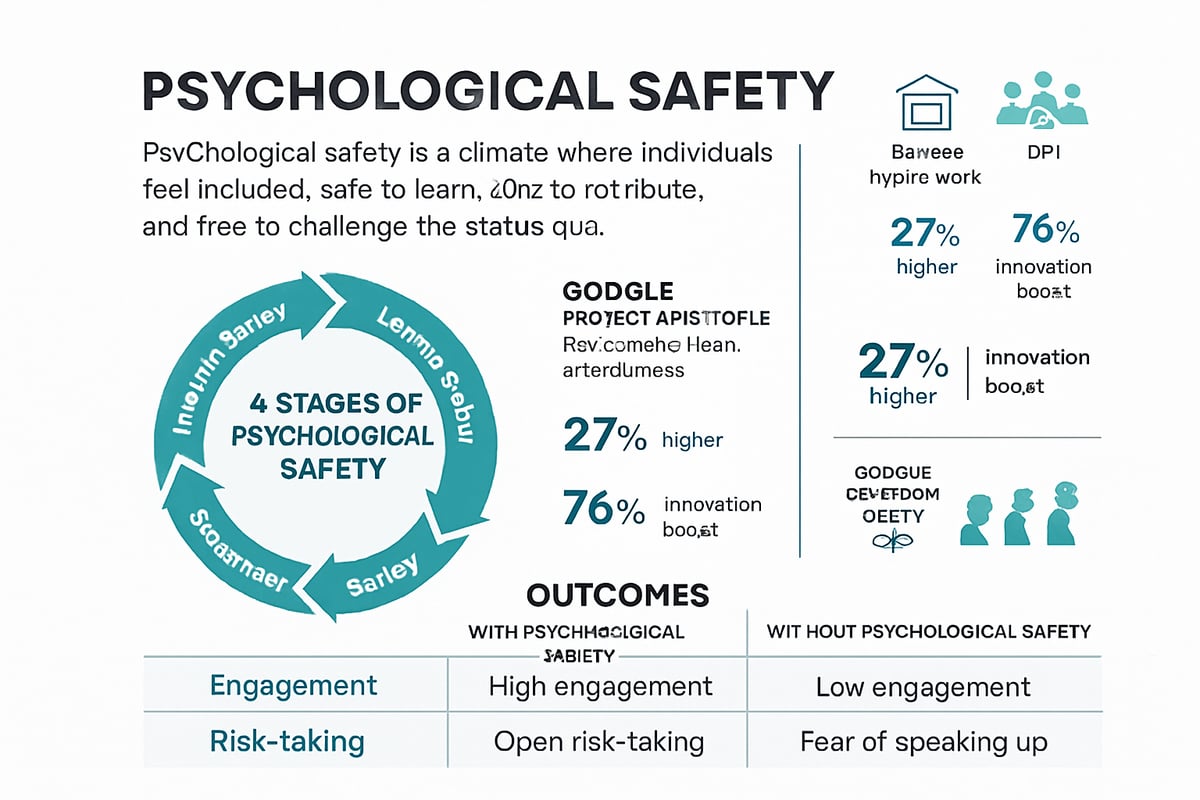
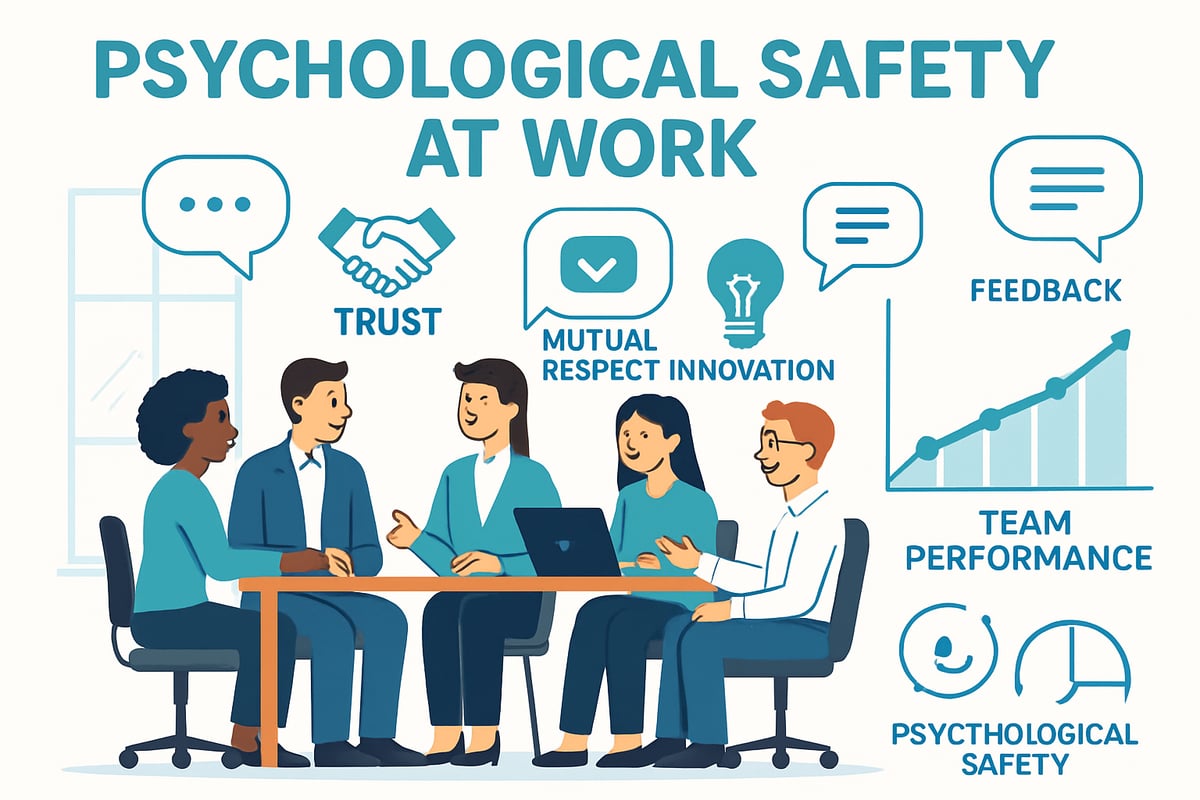
Psychological safety has become a cornerstone of thriving organizations in 2025. In its simplest form, psychological safety is the shared belief among team members that it is safe to take interpersonal risks, voice concerns, and contribute ideas without fear of embarrassment or retaliation. This environment is the foundation for high-performing teams, especially as workforces continue to evolve.

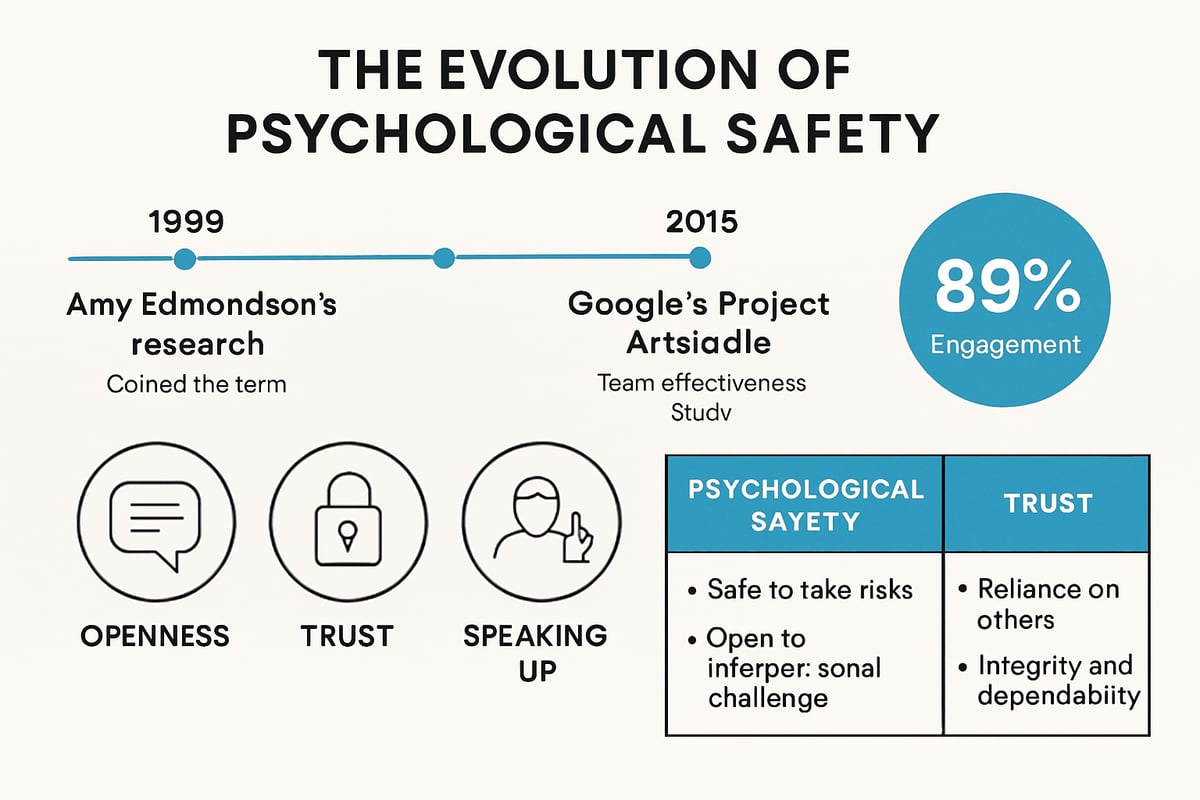
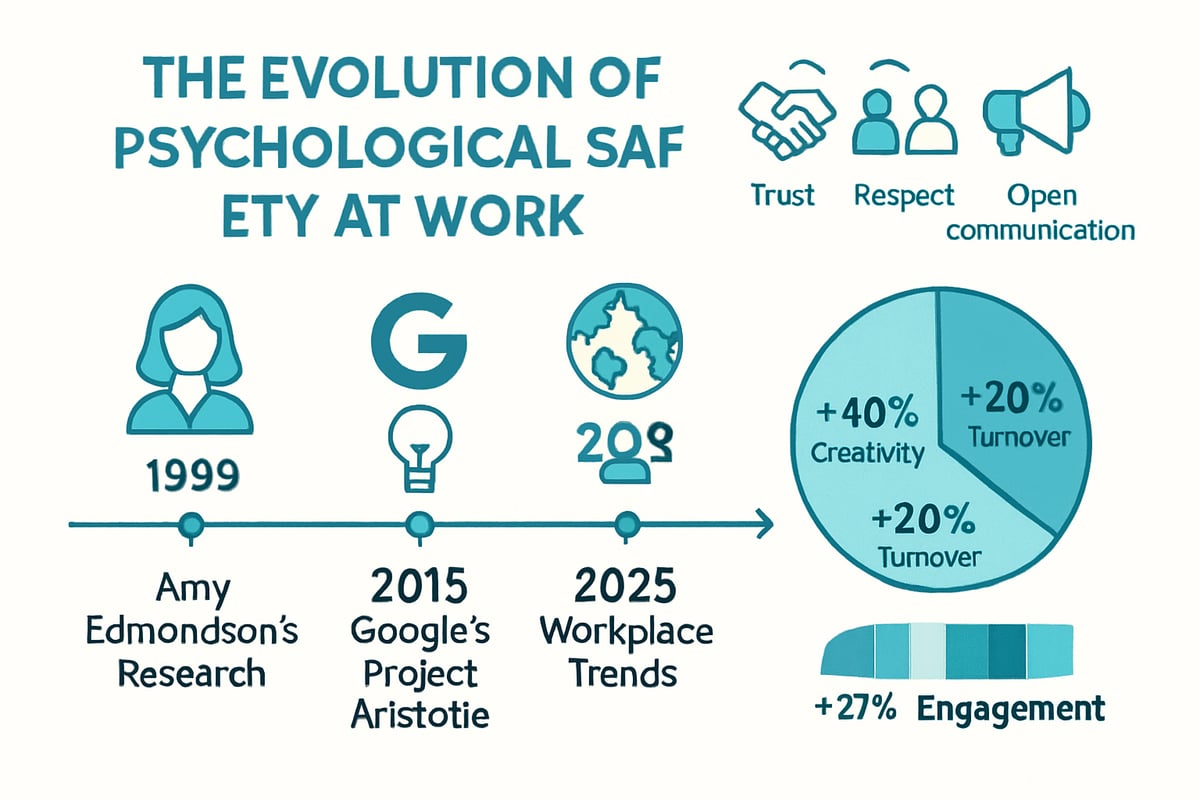
The concept was first introduced by Professor Amy Edmondson in the late 1990s. Her research showed that teams with high psychological safety were more likely to learn from mistakes and innovate. Later, Google’s Project Aristotle reinforced these findings, identifying psychological safety as the most critical factor in team effectiveness. As organizations adapt to remote work, global collaboration, and rapid technological change, these insights are more relevant than ever.

Today, the need for psychological safety is heightened. Hybrid teams, cross-cultural communication, and increased workplace stress demand environments where employees feel secure. Without psychological safety, teams are less likely to share knowledge, experiment, or challenge the status quo. Leaders now recognize that fostering this climate is essential for resilience and adaptability.

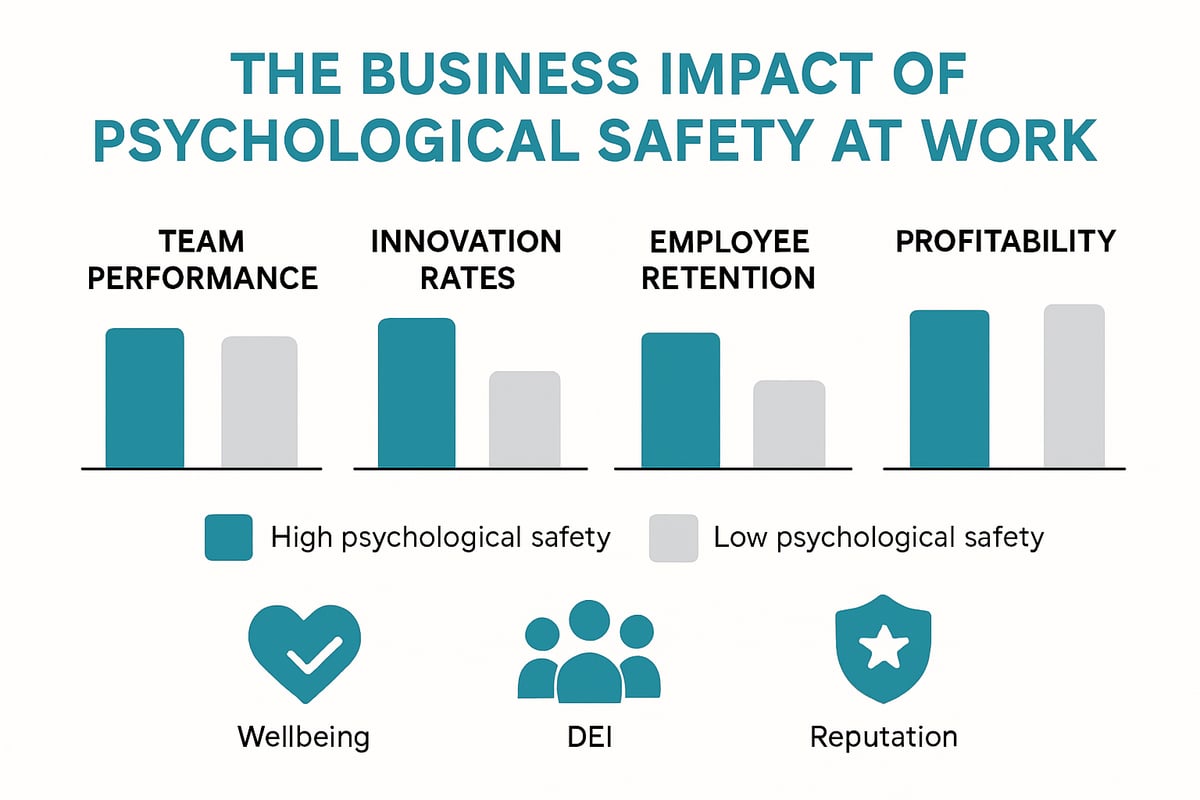
The business case for psychological safety is compelling. According to recent studies, organizations with high psychological safety report a 27% increase in creativity, a 30% reduction in turnover, and a 40% boost in employee engagement. The psychological safety at work explained resource highlights these benefits and provides deeper insights into creating such environments. These improvements translate directly into better business outcomes and a sustainable competitive edge.

It is important to clear up misconceptions. Psychological safety is not about eliminating accountability or making everyone comfortable at all times. Instead, it means building trust, respect, and open communication, where feedback is honest and mistakes are seen as learning opportunities. This balance encourages growth and continuous improvement.

Real-world organizations are setting new standards by integrating psychological safety into their core values. For example, some companies have implemented regular pulse surveys and anonymous feedback systems to ensure all voices are heard. Others use structured team check-ins and peer support programs to reinforce inclusivity.

The core elements of psychological safety at work in 2025 include:

  • Trust: Teams believe in each other’s intentions.
  • Respect: Diverse perspectives are welcomed and valued.
  • Inclusivity: Everyone feels they belong and can contribute.
  • Open Communication: Honest dialogue is encouraged and supported.

These elements are the backbone of successful teams. When organizations embrace these principles, they create more opportunities for employees to share their ideas and concerns, leading to a culture where everyone can thrive.
Understanding Psychological Safety at Work

The Impact of Psychological Safety on Organizational Success

Psychological safety is no longer a buzzword. In 2025, it is a foundational pillar for organizations aiming to thrive in a rapidly changing landscape. When teams feel secure to express ideas, concerns, or challenges, the entire enterprise reaps measurable benefits.
The Impact of Psychological Safety on Organizational Success

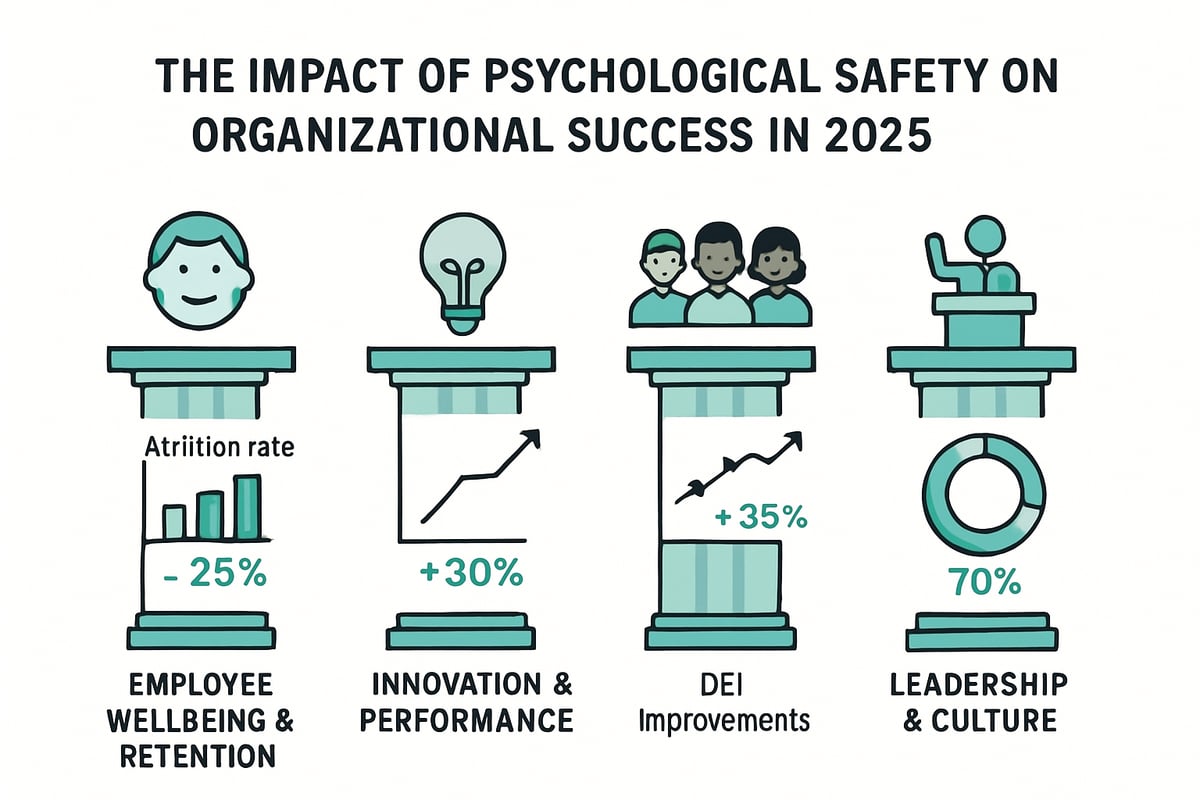
Employee Wellbeing and Retention

Organizations that prioritize psychological safety see dramatic reductions in burnout and improved mental health. According to recent research, companies with high psychological safety report lower turnover rates and higher employee satisfaction. For instance, leaders who foster these environments can reduce attrition risk to less than 3% of workers, as highlighted in Leaders Who Prioritize Psychological Safety Can Reduce Attrition Risk to Less than 3% of Workers. When employees see real-world examples of psychological safety at work, such as open conversations about stress or flexible support systems, they are more likely to stay, perform, and engage fully.

Innovation and Performance

The link between psychological safety and innovation is undeniable. Teams that feel safe are more willing to share unconventional ideas, take calculated risks, and learn from failures. Numerous studies show that when organizations implement strong examples of psychological safety at work, idea sharing and creative problem-solving soar. Breakthrough products often emerge from teams where members can question assumptions and experiment without fear of blame. These environments drive higher performance, faster learning, and more resilient strategies.

Diversity, Equity, and Inclusion (DEI)

Psychological safety is the backbone of effective DEI initiatives. Without it, diverse voices may remain unheard or undervalued. When organizations showcase robust examples of psychological safety at work, they empower all employees to contribute authentically. Data from global studies indicate that diverse teams in psychologically safe settings outperform their peers in innovation and problem-solving. Case studies from leading companies reveal that inclusive dialogue, fair feedback, and equitable opportunities are only possible when psychological safety is deeply embedded.

Leadership and Organizational Culture

Leadership sets the tone for psychological safety. Leaders who model transparency, listen actively, and admit mistakes create a culture where trust flourishes. These behaviors encourage teams to follow suit, reinforcing positive cycles of accountability and growth. By implementing examples of psychological safety at work—such as regular check-ins, open-door policies, and clear communication—organizations experience cultural transformation.

7 Essential Examples of Psychological Safety at Work in 2025

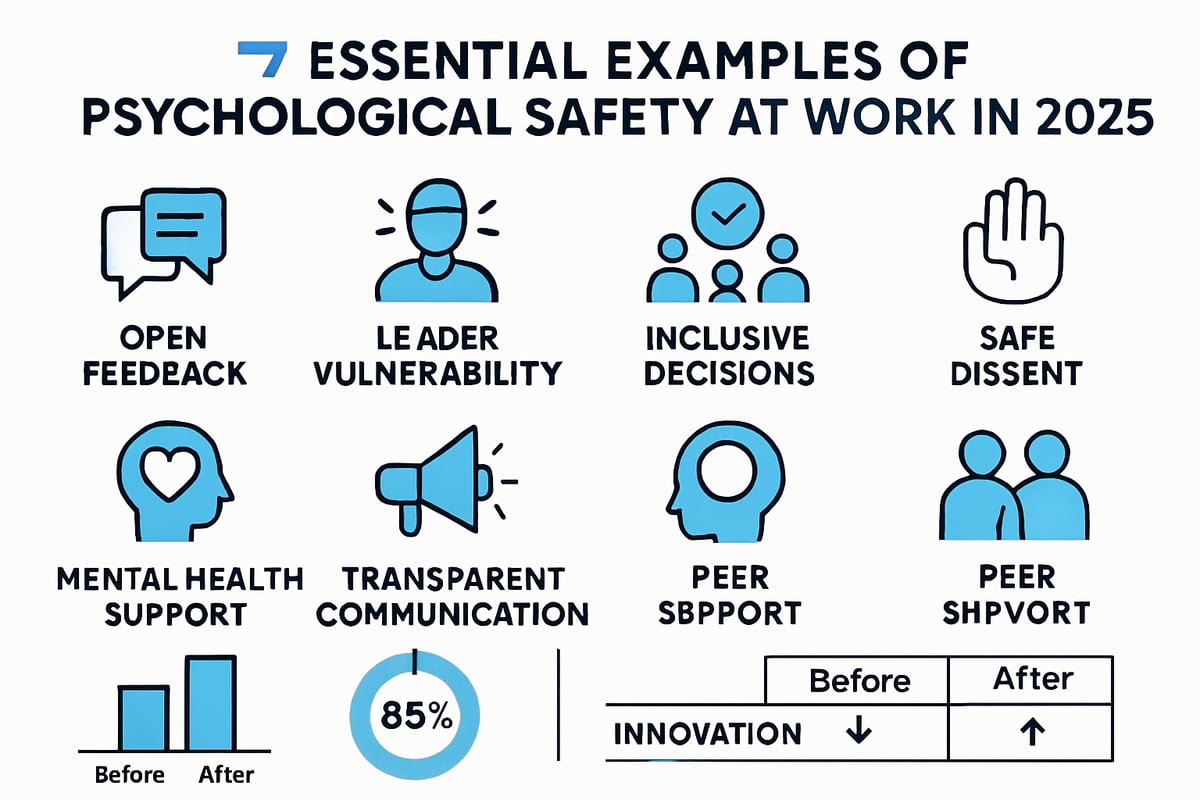
Psychological safety has become the backbone of high-performing teams and thriving organizations in 2025. To help leaders and employees build cultures where everyone feels secure to speak up, innovate, and challenge the status quo, we’ve compiled seven essential examples of psychological safety at work. Each example is grounded in real-world practice, actionable insights, and the latest research, ensuring you can apply these lessons to your own workplace.
7 Essential Examples of Psychological Safety at Work in 2025

1. Open Feedback Loops and Constructive Dialogue

The first of our seven essential examples of psychological safety at work is the creation of open feedback loops. In 2025, organizations are moving beyond annual reviews and actively fostering environments where feedback is continuous, respectful, and actionable.

Teams now hold regular feedback sessions, both in-person and digitally, using tools like real-time feedback platforms and digital suggestion boxes. These approaches allow employees to share thoughts without fear of punishment. Many leading organizations use 360-degree feedback and anonymous channels, ensuring that everyone, regardless of role or level, can voice opinions safely.

Consider the following strategies:

  • Schedule monthly feedback forums for open discussion.
  • Implement digital suggestion boxes accessible to all.
  • Train managers to facilitate feedback with empathy and objectivity.

According to real-world psychological safety examples, companies that prioritize open dialogue see measurable improvements in engagement scores, faster conflict resolution, and a notable drop in misunderstandings. Data from 2025 workplace surveys indicates that 82% of employees in psychologically safe environments report feeling comfortable voicing concerns, compared to just 46% in less supportive settings.

These examples of psychological safety at work demonstrate that feedback, when handled constructively, builds trust and accelerates team alignment. Open dialogue is not just a communication tool; it is the foundation for a resilient workplace culture.

2. Leaders Admitting Mistakes and Modeling Vulnerability

A culture of psychological safety thrives when leaders model vulnerability. One of the most impactful examples of psychological safety at work is when executives and managers openly admit mistakes, own their learning moments, and encourage their teams to do the same.

Leadership development programs in 2025 focus on authentic communication and the courage to be transparent. Leaders who share their failures, and what they learned from them, break down barriers. This honesty inspires teams to take calculated risks, knowing they will not be penalized for thoughtful experimentation.

Fortune 500 companies highlight stories where a leader’s public admission of a misstep led to increased trust and stronger team cohesion. For example, a technology executive who shared a failed product launch not only retained her team’s respect but also sparked a wave of creative problem-solving sessions. The outcome? Faster innovation cycles and more resilient teams.

Teams report that these examples of psychological safety at work lead to higher trust, better morale, and a willingness to innovate. Employees are more likely to share bold ideas, knowing their leaders value honesty over perfection.

3. Inclusive Decision-Making Processes

One of the most transformative examples of psychological safety at work is inclusive decision-making. In 2025, organizations are intentionally involving diverse perspectives at every stage, from brainstorming to final approval.

Best practices include:

  • Round-robin input during meetings to ensure every voice is heard.
  • Consensus-building frameworks that prioritize dialogue over hierarchy.
  • Digital polling and anonymous idea submissions to capture a wide range of viewpoints.

Organizations that democratize decisions see higher employee buy-in and satisfaction. Research shows that inclusive processes lead to 30% better project outcomes and 45% higher engagement scores. Employees feel empowered when their input is genuinely considered, which fosters ownership and commitment.

A global consulting firm, for example, implemented inclusive decision-making for cross-border projects. The result was not just better solutions but also a deeper sense of belonging among team members. These examples of psychological safety at work prove that when everyone has a seat at the table, organizations unlock their full potential.

4. Safe Spaces for Dissent and Challenging the Status Quo

Creating safe spaces for dissent is another cornerstone among the essential examples of psychological safety at work. Employees must have explicit permission to challenge ideas, question assumptions, and propose alternatives without fear of negative consequences.

Many organizations now establish dedicated forums for constructive debate, such as “devil’s advocate” sessions and blameless post-mortems. Psychological contracts are established, making it clear that disagreement is not just tolerated but encouraged.

Agile teams, for instance, regularly hold retrospectives where team members openly discuss what worked, what did not, and how to improve. Tech companies have seen a direct link between these practices and higher rates of innovation. Recent data shows that teams with formal dissent channels generate 25% more breakthrough ideas.

For more real-world psychological safety examples, look to organizations that have embedded these forums into their culture. These examples of psychological safety at work demonstrate that challenging the status quo is not a threat but a catalyst for progress.

5. Support for Mental Health and Wellbeing Initiatives

In 2025, support for mental health and wellbeing is integral to the most effective examples of psychological safety at work. Companies are moving beyond traditional Employee Assistance Programs and embracing holistic mental health strategies.

Key initiatives include:

  • On-demand counseling and virtual therapy.
  • Scheduled mental health days as part of PTO policies.
  • Integration of wellness apps and daily check-ins into team routines.

Organizations that prioritize mental health see tangible benefits. Statistics reveal a 35% drop in absenteeism and a 29% increase in productivity after launching comprehensive mental health programs. By normalizing mental health conversations, companies destigmatize seeking help and foster a culture of empathy.

A global software firm, for example, now starts each Monday with a voluntary mental health check-in, resulting in higher employee engagement and lower turnover. These examples of psychological safety at work show that supporting wellbeing is not only the right thing to do but also drives business results.

6. Clear Expectations and Transparent Communication

Transparency is vital among the leading examples of psychological safety at work. When employees understand their roles, goals, and how decisions are made, anxiety decreases and alignment increases.

Modern organizations use digital dashboards, regular all-hands meetings, and transparent updates from leadership to keep everyone informed. Clear role definitions and open communication channels reduce confusion and foster accountability.

Remote-first and hybrid teams especially benefit from these practices. A multinational retailer saw a 40% improvement in project delivery times after adopting real-time dashboards and weekly updates. Employees reported feeling more secure, less stressed, and better equipped to meet expectations.

These examples of psychological safety at work demonstrate that clarity and transparency are not optional—they are essential for building trust and driving performance.

7. Peer Support Networks and Allyship Programs

The final of our seven essential examples of psychological safety at work is the establishment of peer support networks and allyship programs. In 2025, organizations are investing in structures that empower employees to help one another and champion inclusivity.

Effective practices include:

  • Peer mentoring and buddy systems for new hires.
  • Employee resource groups (ERGs) dedicated to shared identities or interests.
  • Allyship training that equips employees to support marginalized colleagues.

Companies with robust peer support systems report 28% higher retention rates and significantly improved morale. Inclusion metrics rise as employees feel seen, supported, and valued.

These examples of psychological safety at work highlight the power of community. By building strong networks of support, organizations ensure that every employee has an advocate and a safe space to grow.

Measuring and Sustaining Psychological Safety in 2025

Measuring and sustaining psychological safety is essential for organizations determined to thrive in the modern workplace. As leaders seek actionable examples of psychological safety at work, they must prioritize robust measurement and continuous improvement to ensure lasting impact.
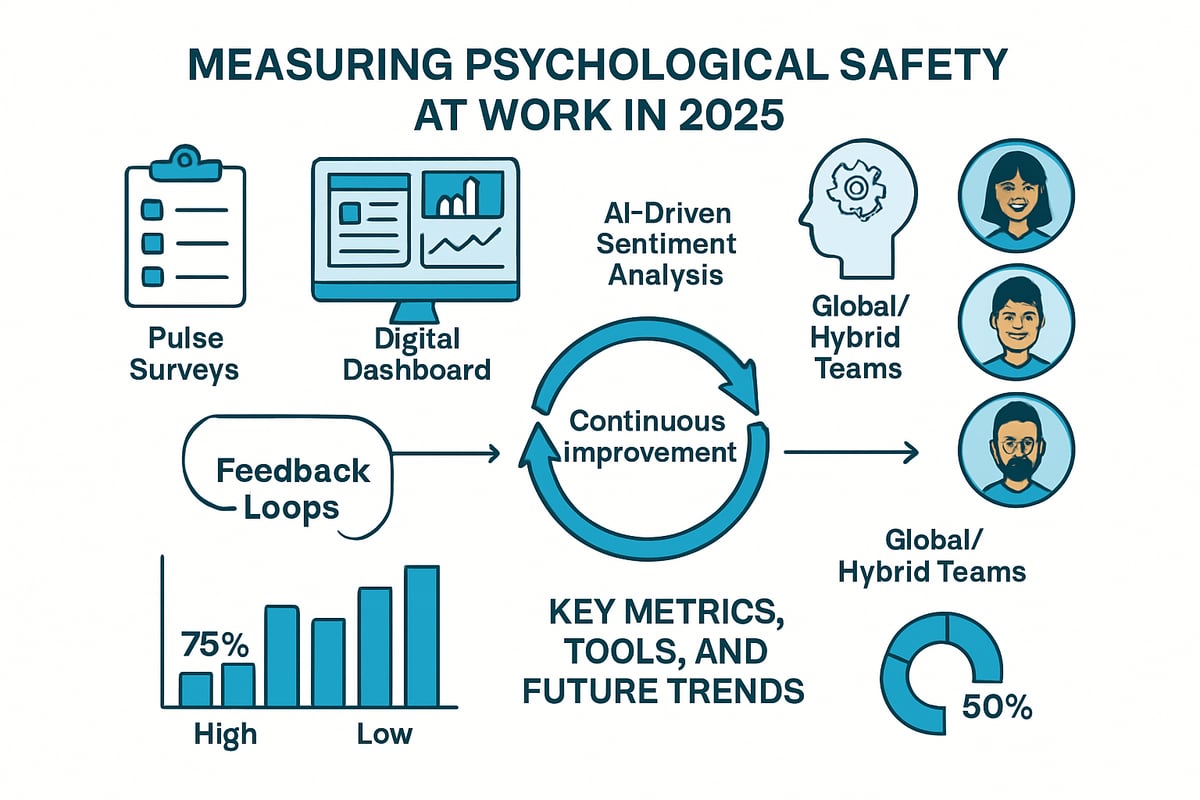
Measuring and Sustaining Psychological Safety in 2025

Key Metrics and Assessment Tools

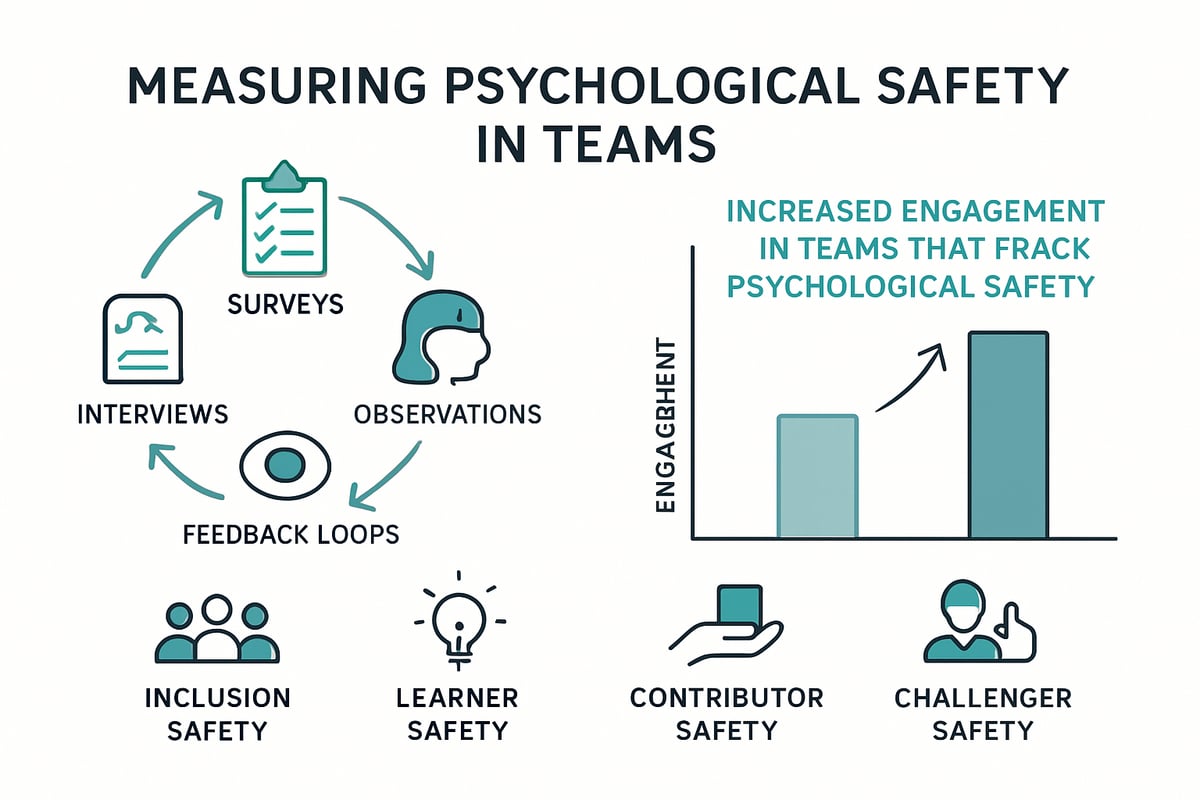
Consistent measurement is foundational when embedding examples of psychological safety at work. Leading organizations rely on pulse surveys, psychological safety scales, and engagement scores to monitor team climates. These tools capture real-time feedback, track progress, and identify pain points. According to 30+ Psychological Safety at Work Stats [2025], over 70% of high-performing teams use digital dashboards and anonymous surveys to assess safety levels. The data empowers leaders to spot trends, address concerns, and benchmark against industry standards.

Best Practices for Ongoing Measurement and Feedback

Sustained psychological safety requires more than annual check-ins. High-trust organizations schedule regular feedback cycles, integrate psychological safety questions into engagement surveys, and leverage AI-driven tools for continuous sentiment analysis. Embedding these practices into daily workflows ensures leaders have up-to-date insights, enabling rapid response to emerging issues. For more on practical strategies, see building psychological safety strategies.

Strategies for Addressing Setbacks and Maintaining Momentum

No organization is immune to setbacks. When challenges arise, effective leaders respond with transparent communication and targeted interventions. They review feedback data, facilitate open forums, and provide additional support where needed. Sharing transparent progress reports and celebrating wins reinforces trust and keeps momentum strong. HR, managers, and employees all play active roles in driving continuous improvement, ensuring that examples of psychological safety at work remain visible and actionable.

Trends Shaping the Future: AI and Global Teams

The future of measuring psychological safety is data-driven and agile. AI-powered sentiment analysis and real-time culture dashboards offer deep insights into team dynamics, even across global and hybrid teams. These technologies help organizations quickly identify shifts in climate and adapt accordingly. Overcoming challenges in remote or multicultural settings requires tailored approaches, but the core principles of trust, respect, and open dialogue remain constant.

Conclusion: Sustaining a Culture of Psychological Safety

To achieve lasting change, organizations must treat measurement as an ongoing journey, not a one-time event. By prioritizing transparent metrics, embracing continuous feedback, and leveraging modern tools, leaders can embed the most effective examples of psychological safety at work. For deeper insights on accountability and leadership, explore Accountability Now and commit to building a thriving, resilient workplace culture.
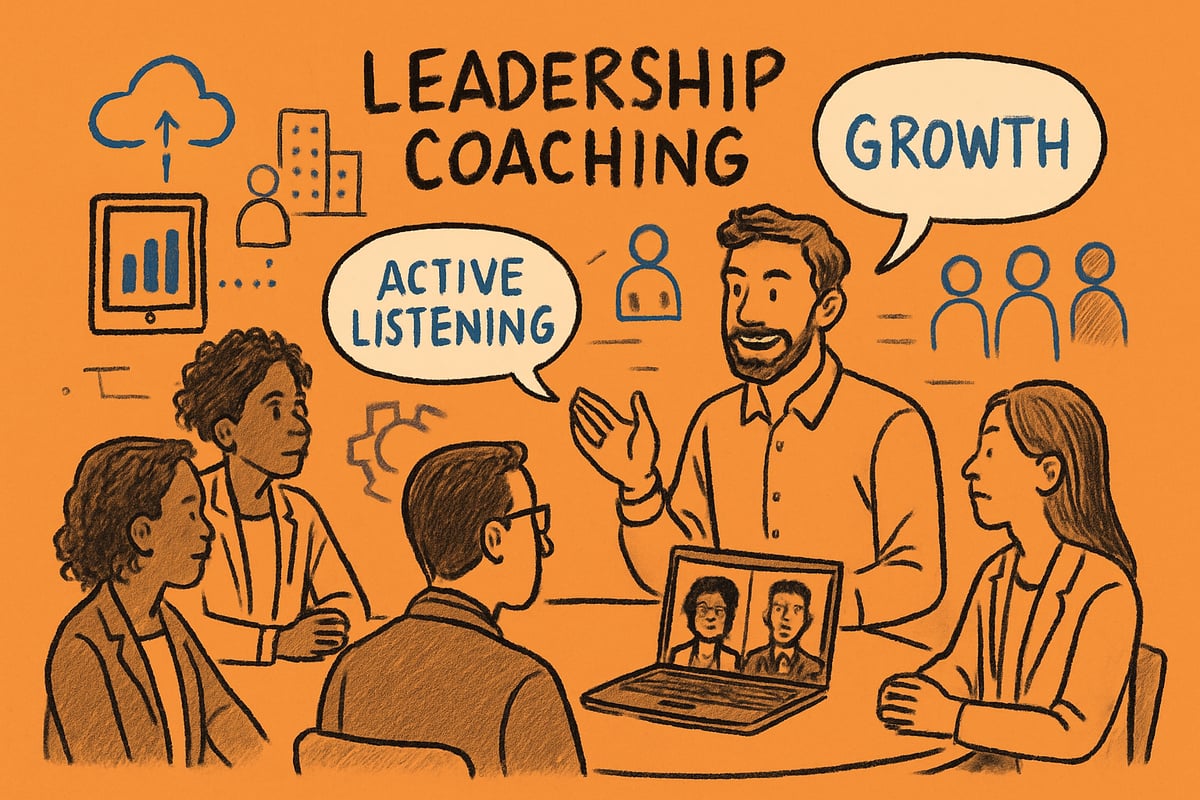
Essential Guide to Becoming a Leadership Coach in 2025

The demand for skilled leadership coaches is rapidly rising as organizations face unprecedented change, hybrid workplaces, and shifting workforce priorities in 2025.

This essential guide will show you how to become a successful leadership coach, covering everything from foundational skills and certifications to current industry trends and proven strategies for building your career.

Inside, you will learn the core competencies every leadership coach needs, the most respected certification paths, and the latest trends shaping the profession.

You will also discover actionable steps for launching your coaching practice, tips for standing out, and how to deliver measurable value to clients. Ready to start your journey?

Understanding the Role of a Leadership Coach in 2025

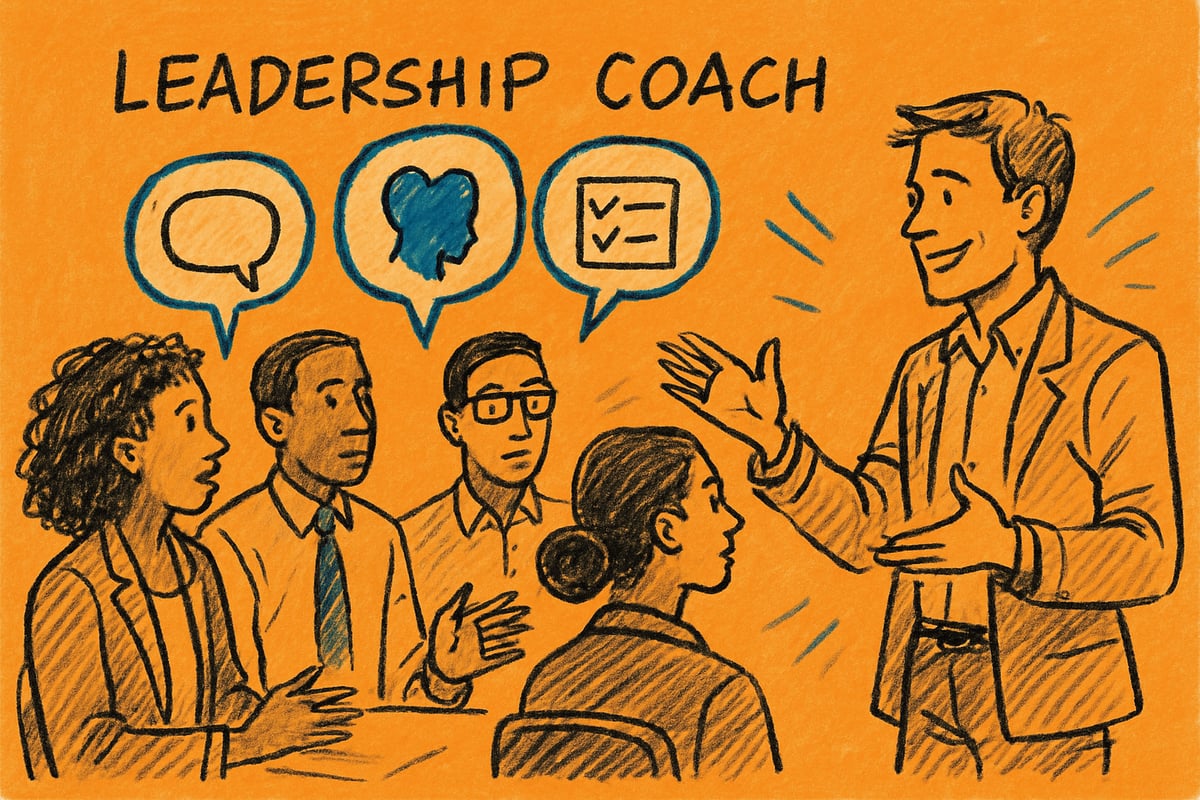
A leadership coach is a professional who partners with leaders to unlock their potential, foster growth, and drive organizational change. Core responsibilities include one-on-one coaching, facilitating group sessions, and building leadership pipelines. By asking powerful questions and offering objective feedback, a leadership coach helps clients clarify goals, overcome barriers, and build critical skills.

The landscape for a leadership coach is rapidly changing. Remote and hybrid work, digital transformation, and greater attention to diversity and inclusion are reshaping expectations. According to Harvard DCE, evidence-based coaching and neuroscience are increasingly central to modern practice. Korn Ferry highlights that coaches support leaders in driving impact across and beyond their organizations. For more on how these trends shape the field, consult leadership coaching trends 2025.

Consider the case of a CEO who, through coaching, gained clarity, confidence, and the ability to inspire teams during a major transition. While leadership coaching focuses on developing skills at all levels, executive coaching often targets C-suite leaders and strategic decision-making. Both share a commitment to measurable growth and real business results.

Understanding the Role of a Leadership Coach in 2025

Core Competencies and Skills Required

Excelling as a leadership coach in 2025 requires a distinct blend of interpersonal, analytical, and adaptive abilities. These core competencies form the foundation for impactful coaching that drives meaningful results for both individuals and organizations.

Core Competencies and Skills Required

Communication and Emotional Intelligence

At the heart of every effective leadership coach is the ability to communicate clearly and listen actively. Building trust and rapport depends on strong verbal and nonverbal communication skills.

Emotional and social intelligence are equally vital. Coaches must help leaders heighten self-awareness, understand group dynamics, and foster empathy. These skills empower clients to navigate complex workplace relationships and lead with authenticity.

Evidence-Based Frameworks and Assessment

A modern leadership coach leverages established frameworks rooted in neuroscience and adult development, as recommended by Harvard DCE. Tools like 360-degree feedback, personality assessments, and somatic coaching models provide structure and measurable progress.

Many coaches, such as those at Noomii’s practical corporate coaching strategies, use evidence-based approaches to tie coaching outcomes directly to business results. This ensures that coaching is actionable and aligned with organizational objectives.

Adaptability and Professional Growth

Change management expertise is essential. A leadership coach must guide clients through disruption, digital transformation, and shifting team dynamics. Adaptability and resilience are key to supporting leaders in unpredictable environments.

Continuous learning sets successful coaches apart. Ongoing education, professional development, and peer mentorship enable coaches to refine their skills and stay current with evolving industry trends. Coaches with real-world leadership backgrounds bring added credibility and perspective.

Certification and Educational Pathways

Pursuing the right certification is a crucial step for anyone aiming to become a recognized leadership coach. Industry leaders and organizations increasingly expect credentials that demonstrate both knowledge and ethical standards.

Certification and Educational Pathways

Top Leadership Coach Certifications

Certification Accrediting Body Key Features
ICF (ACC, PCC, MCC) International Coach Federation Global standard, rigorous assessment
BCC Center for Credentialing & Education Focus on evidence-based coaching
Harvard DCE Certificate Harvard Division of Continuing Education Leadership excellence, neuroscience focus

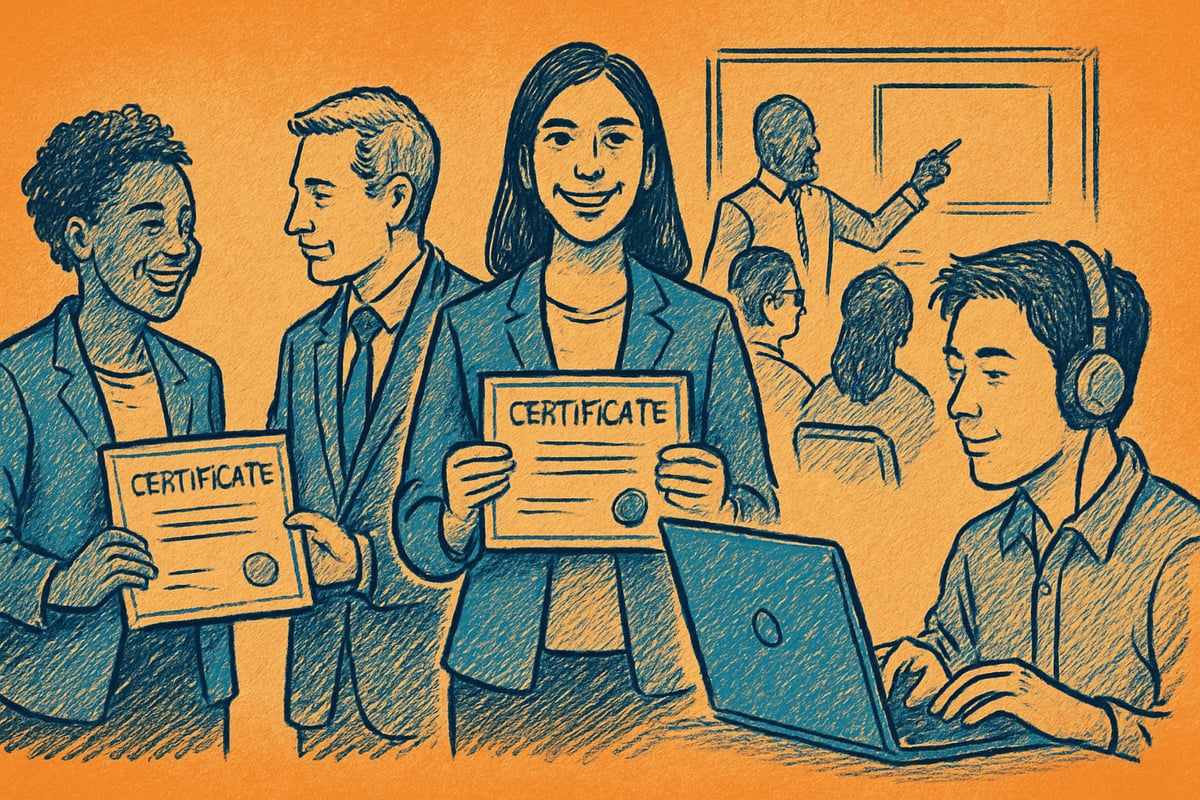
A strong educational background enhances a leadership coach’s credibility. Many coaches hold degrees in psychology, business, HR, or have completed specialized coaching programs. The Harvard DCE Certificate of Leadership Excellence is widely respected, emphasizing neuroscience and evidence-based practice.

To qualify for most certifications, candidates must complete a set number of coaching hours, participate in supervised practice, and commit to ongoing education. Blended learning is now the norm, offering flexibility through online and in-person modules.

Holding advanced credentials signals professionalism. Korn Ferry notes that their coaches often maintain multiple certifications and degrees, giving them an edge in the market. For example, a typical pathway might start as an entry-level coach, progress through supervised practice, and culminate in advanced certification after several years.

Peer coaching and mentorship are invaluable. They provide real-world feedback and help refine your style as a leadership coach. Expanding your professional network is also essential; directories like the Business coaches directory can connect you with peers and potential clients as you build your career.

Staying committed to education and professional development ensures you remain competitive and relevant in the evolving coaching landscape.

The 2025 Leadership Coaching Landscape: Trends and Opportunities

As organizations adapt to new realities, the landscape for a leadership coach is more dynamic than ever. In 2025, shifting business needs, technology, and global trends are creating unprecedented opportunities for those ready to lead.

Industry Growth and Demand

The demand for a skilled leadership coach continues to surge as companies navigate rapid digital transformation and leadership turnover. Market research reveals that the global leadership development coaching market is expected to reach new heights by 2032, driven by talent shortages and the need for future-ready leaders.

Organizations, including mid-market firms and Fortune 500 divisions, increasingly rely on coaching to boost retention and engagement. According to coaching industry growth projections, coaching is closely linked to improved employee outcomes and higher organizational performance.

Korn Ferry emphasizes the importance of developing leaders who can drive impact, while Harvard stresses the value of evidence-based coaching for building a healthy culture. The role of a leadership coach is now seen as essential in shaping the workforce of tomorrow.

Emerging Coaching Methodologies and Technologies

In 2025, leadership coach practices are evolving with the integration of neuroscience, positive psychology, and advanced digital tools. AI-powered assessment platforms and virtual coaching environments are rapidly gaining traction, making personalized feedback and progress tracking more accessible.

Coaches are blending traditional evidence-based models with somatic and emotional intelligence approaches. Korn Ferry, for instance, leverages both inside-out and outside-in perspectives to maximize leadership impact.

Continuous learning is also crucial, as leadership coach professionals adapt to new frameworks and technologies. Those who stay current with these trends are better positioned to deliver measurable results for clients and organizations.

Diversity, Inclusion, and Globalization

The modern leadership coach must be adept at fostering diversity, equity, and inclusion within organizations. As businesses expand globally, there is a growing demand for multilingual and culturally aware coaches who can support diverse leadership teams.

Coaching now often focuses on cross-cultural competence, strategic relationship-building, and work-life integration. Harvard DCE faculty highlight the importance of supporting leaders as they navigate complex, multicultural environments.

A leadership coach who prioritizes inclusive practices helps organizations create environments where all voices are heard. This commitment to DEI is key to building resilient, innovative teams across geographies.

Step-by-Step Guide: How to Become a Leadership Coach in 2025

Are you ready to become a leadership coach in 2025? Here is a practical roadmap to guide your journey, from self-discovery to building a thriving coaching practice.

Step 1: Self-Assessment and Goal Setting

Start by reflecting on your motivation to become a leadership coach. Assess your leadership experience, communication skills, and ability to inspire others. Define your target coaching niche, such as executive, team, or emerging leader coaching. Set clear goals for your skills, certifications, and preferred business model. This foundation ensures you approach your career with purpose and clarity.

Step 2: Acquire Education and Training

Next, enroll in accredited coaching programs like ICF or Harvard DCE. Participate in peer coaching, mentorship, and supervised practice to gain hands-on experience. Stay updated with the latest research in leadership theories, neuroscience, and diversity, equity, and inclusion. Continuous learning builds your credibility and prepares you for evolving client needs.

Step 3: Gain Practical Experience and Build Your Portfolio

Practice coaching individuals and groups in various settings, including corporate, nonprofit, or startup environments. Collect client testimonials, develop case studies, and document measurable results. Programs like Harvard DCE emphasize real-world scenarios and peer coaching, which help you refine your approach and demonstrate tangible impact.

Step 4: Obtain Certification and Credentials

Complete the required coaching hours and assessments for your chosen certification, such as ICF or BCC. Pursue ongoing education to maintain your credentials and ensure your methods remain current. Supervision and feedback from experienced coaches support your professional growth and help you deliver quality results.

Step 5: Launch and Market Your Coaching Practice

Define your value proposition and identify your target market. Build a strong professional brand with a website, engaging content, and client testimonials. For practical branding tips, see Building a personal brand as a coach. Network with HR leaders and join coaching communities. Leverage online platforms to find new clients and establish your reputation as a leadership coach.

Building a Successful Leadership Coaching Career

Achieving success as a leadership coach in 2025 requires a strategic blend of business acumen, outcome-driven methods, and continuous relationship-building. The path starts with understanding your unique value and how to connect with clients seeking measurable results.

To attract and retain clients, focus on networking, building partnerships, and leveraging referrals. Position yourself as a resource for organizations by aligning your coaching services with their KPIs and business objectives. Outcome-based coaching plans, supported by clear metrics, help demonstrate your impact and build trust.

The demand for skilled coaches is only increasing, with the leadership development coaching market forecast predicting rapid growth through 2032. To stand out, offer tailored solutions that link coaching outcomes to business strategy, as Korn Ferry emphasizes.

Challenges like market saturation and client skepticism require resilience. Address these by sharing case studies, gathering testimonials, and demonstrating clear ROI. Professional development is essential: attend workshops, join associations, and seek mentorship within the coaching community.

Many coaches begin as internal resources before launching independent practices.

The Value of Practical, Results-Focused Corporate Coaching

Organizations today require more than theory from a leadership coach; they demand tangible outcomes that drive business performance. Noomii Corporate Coaching stands out by embedding coaches directly into meetings, ensuring progress is tied to key performance indicators and delivering solutions that adapt to real business needs.

Essential Guide to Becoming a Leadership Coach in 2025 - The Value of Practical, Results-Focused Corporate Coaching

Their services span executive coaching, leadership development, manager training, team facilitation, and comprehensive 360 leadership assessments. This practical, hands-on approach results in faster decision-making, clearer communication, and measurable engagement improvements. For those aspiring to deliver meaningful results as a leadership coach, learning from proven models like Noomii or Accountability Now is essential to achieving lasting organizational impact.

The 4 Stages of Psychological Safety: A 2025 Guide to Thriving Teams

Imagine a team where everyone is encouraged to share bold ideas, question assumptions, and support one another without hesitation. In today’s fast-evolving workplace, the 4 stages of psychological safety form the bedrock of high-performing, resilient teams.

This guide breaks down the 4 stages of psychological safety, showing why each matters and how leaders can foster a culture of trust, innovation, and collaboration. Discover practical strategies to help your team thrive in 2025 and beyond.

What is Psychological Safety and Why Does It Matter?

Psychological safety is the glue that holds high-performing teams together. At its core, it is a shared belief among team members that the environment is safe for taking interpersonal risks. This means employees feel free to speak up, share ideas, or admit mistakes without fear of humiliation or retribution.

Harvard professor Amy Edmondson first introduced the concept, showing that teams with psychological safety outperformed those without it. Building on this, Dr. Timothy R. Clark developed the 4 stages of psychological safety, a practical framework for understanding how teams progress from basic inclusion to challenging the status quo. These stages help organizations diagnose and nurture the right environment for innovation and growth. For a deeper dive into the model and its applications, see the Four Stages of Psychological Safety.

The business impact of the 4 stages of psychological safety is both profound and measurable. When employees feel safe, they are more likely to stay engaged, contribute new ideas, and remain with the company longer. Google’s Project Aristotle famously found that psychological safety was the number one factor in successful teams. In high-stakes industries like healthcare and aviation, this culture prevents costly errors and even saves lives.

Consider the following table summarizing business outcomes:

Benefit With Psychological Safety Without Psychological Safety
Employee Retention High Low
Innovation Consistent Stagnant
Productivity Elevated Reduced
Engagement Strong Weak

Teams operating in the “learning zone” (where high safety meets high accountability) see the most growth and innovation. In contrast, ignoring psychological safety leads to increased anxiety, apathy, and missed opportunities for everyone involved.

Looking to 2025, the 4 stages of psychological safety are more critical than ever. The shift to remote and hybrid work means leaders must intentionally build trust and inclusion. Diversity, equity, and inclusion are now foundational, not optional, as Gen Z and Millennial employees expect organizations to reflect their values.

Companies that invest in psychological safety gain a distinct edge in attracting and retaining top talent. They foster environments where people can thrive, adapt, and innovate. As we explore the four stages in detail, you’ll discover how practical strategies can transform your team’s culture.

What is Psychological Safety and Why Does It Matter?

The Four Stages of Psychological Safety

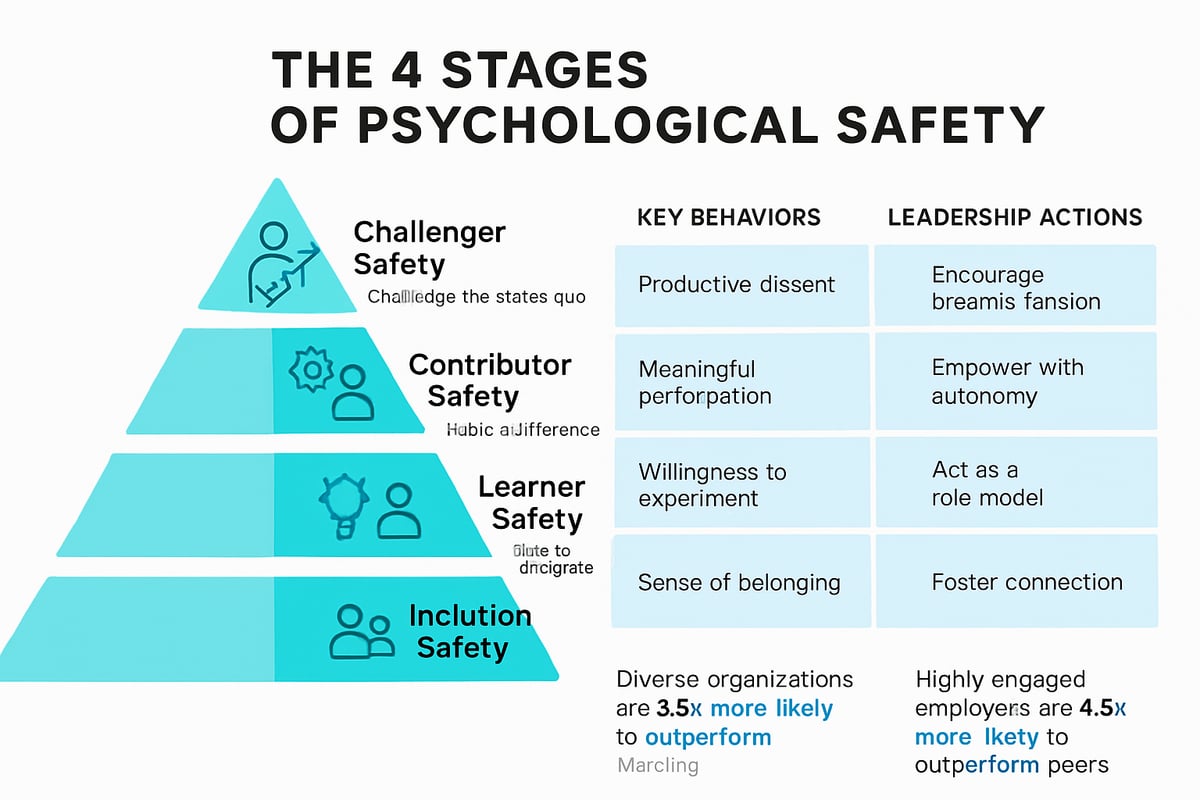
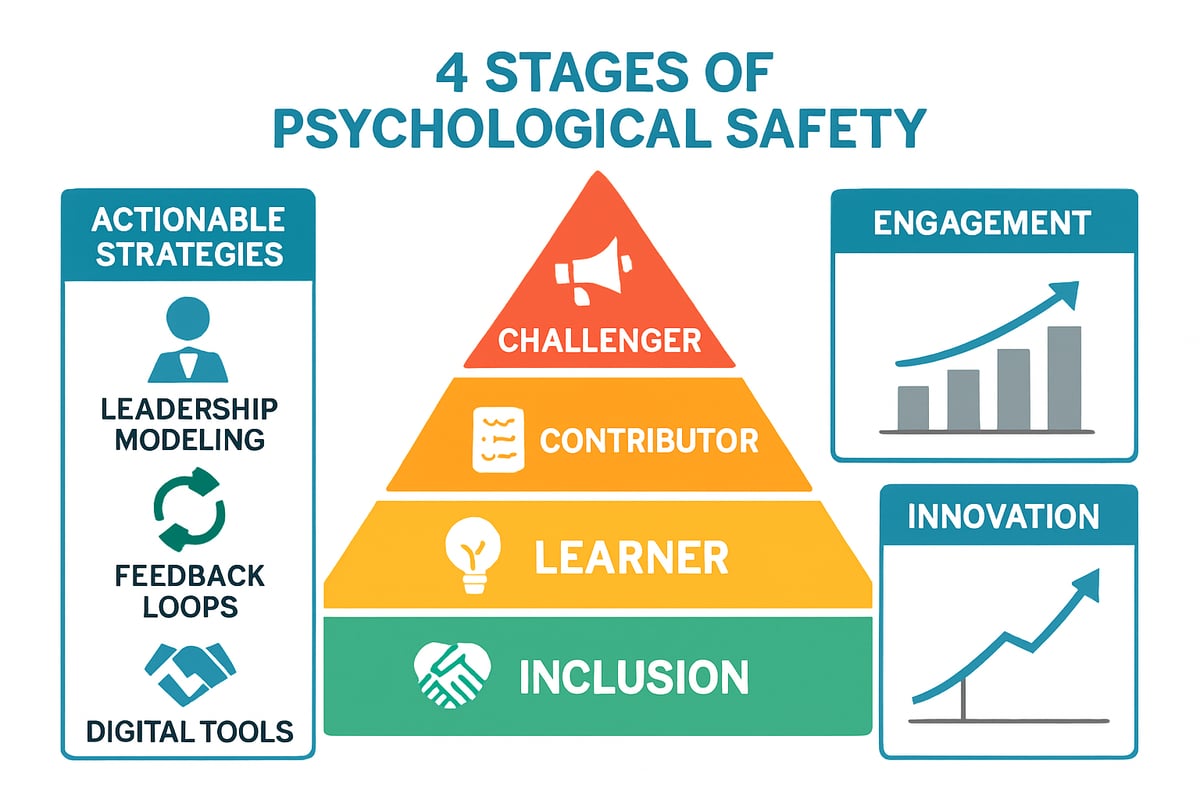
Unlocking high performance starts with understanding the 4 stages of psychological safety. This model, developed by Timothy R. Clark, breaks down how teams move from feeling accepted to confidently challenging the status quo. In today’s fast-paced workplaces, these stages are not always linear. Teams may advance, stall, or revisit earlier stages as dynamics shift. Mastering the 4 stages of psychological safety is essential for leaders aiming to cultivate resilient, innovative teams.

Each stage builds on the last, creating a foundation for trust, learning, contribution, and courageous innovation. Let’s explore what each stage means, how to recognize it, and practical ways leaders can help teams progress.

The Four Stages of Psychological Safety

1. Inclusion Safety

Inclusion Safety is the foundation of the 4 stages of psychological safety. At this stage, every team member feels accepted, respected, and valued for who they are. No one is left on the sidelines. Inclusion Safety is about belonging—when people know they are welcome, they can bring their authentic selves to work.

Key Behaviors

  • Welcoming diverse backgrounds and perspectives
  • Celebrating differences openly
  • Ensuring everyone has a voice

Indicators

  • Open communication, with no status symbols or cliques
  • Personal connections across the team
  • High participation in meetings and projects

Leadership Strategies

  • Invite input from all team members, especially quieter voices
  • Share your own work style and encourage others to do the same
  • Be approachable and visible

A company with strong Inclusion Safety sees higher engagement and collaboration. According to McKinsey, diverse teams are 35% more likely to outperform less diverse ones.

Common Challenges

  • Unconscious bias can undermine inclusion if left unchecked
  • Equal opportunities must be intentional, not assumed

A practical approach is to regularly review onboarding and team rituals to ensure every member feels seen. Inclusion Safety is the launchpad for the 4 stages of psychological safety, making it the first step to team excellence.

2. Learner Safety

Once people feel included, the next phase in the 4 stages of psychological safety is Learner Safety. Here, team members feel confident to ask questions, experiment, and admit mistakes without fear of embarrassment or punishment. This stage is the engine for growth and adaptability.

Key Behaviors

  • Treating mistakes as learning opportunities
  • Encouraging and giving feedback
  • Prioritizing continuous skill development

Indicators

  • Mistakes are shared openly, not hidden
  • Leaders model vulnerability by discussing their own learning moments
  • Learning is built into the team’s rhythm

Leadership Strategies

  • Focus on solutions, not blame, when errors occur
  • Share your own failures and what you learned
  • Dedicate time for regular learning and reflection

Tech companies that embrace a “fail fast” culture are prime examples. They innovate rapidly because team members are not afraid to try and fail. Data shows that teams with high Learner Safety adapt more quickly to disruption and change.

Common Challenges

  • Fear of judgment or blame can hold people back from speaking up
  • Leaders must consistently reinforce that learning outweighs perfection

Leaders who foster Learner Safety equip their teams to handle uncertainty with confidence, strengthening the 4 stages of psychological safety in practice.

3. Contributor Safety

Contributor Safety marks a turning point in the 4 stages of psychological safety. At this level, individuals feel empowered to contribute their ideas, opinions, and solutions. They are not just present but actively shaping outcomes.

Key Behaviors

  • Taking ownership of work
  • Recognizing and celebrating contributions
  • Promoting autonomy and initiative

Indicators

  • High engagement and proactive problem-solving
  • Team members volunteer for challenging assignments
  • Constructive feedback flows in all directions

Leadership Strategies

  • Delegate meaningful responsibilities, not just tasks
  • Express gratitude for specific contributions
  • Listen actively to new ideas and suggestions

Teams with high Contributor Safety see a surge in innovation and initiative. According to Salesforce, employees who feel heard are 4.6 times more likely to perform their best work.

Common Challenges

  • Micromanagement can stifle ownership and creativity
  • Building trust takes time and consistency

Contributor Safety is the stage where the 4 stages of psychological safety become visible through results. When everyone feels their work matters, they step up and drive progress.

4. Challenger Safety

Challenger Safety is the pinnacle of the 4 stages of psychological safety. Here, team members are encouraged to question assumptions, challenge the status quo, and share dissenting views—without fear of retaliation or ridicule.

Key Behaviors

  • Supporting constructive debate and critical thinking
  • Welcoming disruptive ideas and tough questions
  • Embracing conflict as a driver for growth

Indicators

  • Open discussions about difficult topics
  • Willingness to share “half-baked” or unconventional ideas
  • Healthy disagreement, resolved respectfully

Leadership Strategies

  • Give explicit permission to challenge decisions and norms
  • Assign “elephant miner” roles to surface unspoken issues
  • Use structured conflict frameworks, like the Thomas-Kilmann Instrument

Organizations with Challenger Safety avoid groupthink and foster breakthrough innovation. Teams that challenge assumptions make better decisions and adapt faster to change.

Common Challenges

  • Managing conflict productively without damaging trust
  • Ensuring debates remain respectful and focused on solutions

Challenger Safety is where the 4 stages of psychological safety unlock a team’s full creative and strategic potential. By mastering all four stages, leaders create an environment where continuous improvement is the norm.

For a deeper dive into the science and practical steps behind these stages, explore Psychological Safety at Work Explained.

Each stage is interconnected, and progress is rarely perfectly linear. Teams may revisit earlier stages as new members join or challenges arise. The real power lies in consistently nurturing all four stages, making psychological safety an everyday practice.

The Psychological Safety Zones: Comfort, Apathy, Anxiety, and Learning

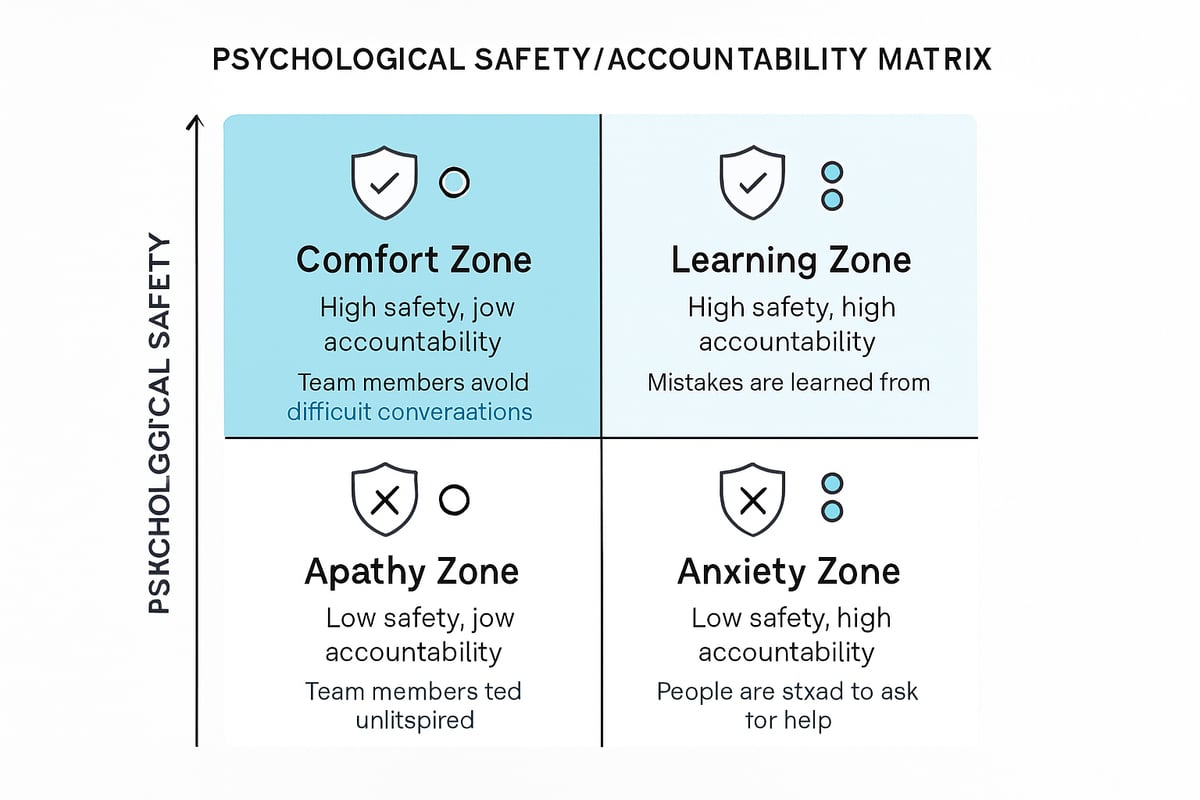
Understanding the 4 stages of psychological safety is essential, but knowing how these stages translate into everyday team dynamics creates real impact. This is where the concept of psychological safety zones comes in. The psychological safety/accountability matrix maps out how safety and accountability interact, shaping your team’s energy, engagement, and performance.

The Psychological Safety Zones: Comfort, Apathy, Anxiety, and Learning

Comparing the Four Psychological Safety Zones

Every team operates within one of four zones, each defined by the interplay between psychological safety and accountability. Here is a quick comparison:

Zone Safety Level Accountability Team Behaviors Outcomes
Comfort High Low Harmony, little challenge, steady routines Stagnation, missed growth
Apathy Low Low Disengagement, silence, minimal effort Low morale, high turnover
Anxiety Low High Stress, fear of mistakes, burnout risk Errors, absenteeism, turnover
Learning High High Open dialogue, innovation, healthy debates Growth, high performance, agility

Teams that understand the 4 stages of psychological safety can spot which zone they are in and take action. The Comfort Zone feels safe but lacks drive. The Apathy Zone is marked by silence and disengagement. Both can go unnoticed until performance suffers.

Moving Teams from Anxiety and Apathy to Learning

The Anxiety Zone is where pressure is high, but psychological safety is low. Here, team members may fear speaking up or making mistakes, leading to stress and burnout. In the Apathy Zone, people check out, feeling neither safe nor responsible for outcomes.

The Learning Zone is the sweet spot. Teams here enjoy high safety and high accountability, producing innovation and peak performance. Research highlighted in Psychological Safety at Work Stats 2025 shows teams in this zone are more resilient and adaptable to change.

To move your team into the Learning Zone:

  • Regularly assess both safety and accountability with surveys or feedback tools.
  • Celebrate learning from mistakes, not just successes.
  • Set clear goals and expectations, while encouraging open dialogue.
  • Provide resources and coaching for continuous improvement.

Practical Example: Transitioning to the Learning Zone

Consider a tech team stuck in the Anxiety Zone due to a recent merger. Employees felt pressure to deliver with little room for error, leading to high turnover. Leadership recognized this and began focusing on the 4 stages of psychological safety, starting with inclusion and learner safety.

They implemented weekly check-ins, normalized sharing mistakes, and set clear, achievable goals. Over several months, engagement scores rose, and the team shifted into the Learning Zone. Productivity and innovation soared as team members felt empowered to contribute and challenge ideas.

For organizations aiming to foster this kind of transformation, leadership support and external guidance are crucial.

Leadership Behaviors That Foster Psychological Safety

Fostering the 4 stages of psychological safety begins with leaders who set the tone for trust, openness, and growth. The right leadership behaviors transform team culture and unlock lasting high performance. Let’s break down the essential habits and strategies leaders need in today’s workplace.

Modeling Vulnerability and Openness

Leaders who admit mistakes and share their own learning journeys create a safe space for teams to do the same. When leaders are transparent about challenges, it signals that authenticity is valued over perfection. This approach is foundational for the 4 stages of psychological safety, especially as teams navigate change and uncertainty.

  • Share personal experiences and lessons learned
  • Invite honest feedback on leadership style
  • Admit when you do not have all the answers

Teams become more willing to experiment and voice concerns when leaders model vulnerability. This builds trust and sets a precedent for open dialogue across all four stages.

Inclusive Decision-Making

Including every voice in the decision-making process is crucial for building psychological safety. Leaders should actively seek input from diverse team members and recognize unique perspectives. This ensures that the 4 stages of psychological safety are not just a concept but a daily practice.

  • Rotate meeting facilitators to encourage participation
  • Use surveys or polls for anonymous input
  • Publicly acknowledge contributions and ideas

According to Deloitte, inclusive leaders can boost team performance by up to 17 percent. When everyone feels heard, teams move more easily from inclusion to contribution.

Encouraging Constructive Conflict

Healthy teams do not shy away from disagreement. Instead, leaders promote constructive conflict by normalizing debate and making it clear that challenging ideas is a sign of engagement, not disrespect.

  • Assign a “devil’s advocate” in discussions
  • Use conflict resolution frameworks for tough topics
  • Praise respectful dissent and solution-oriented debate

Constructive conflict is essential for the 4 stages of psychological safety, particularly at the challenger stage, where innovation depends on open, honest conversations.

Providing Consistent Feedback and Recognition

Regular feedback and public recognition are powerful tools for reinforcing the 4 stages of psychological safety. Leaders who prioritize feedback create an environment where growth is expected and celebrated.

  • Schedule weekly one-on-ones with team members
  • Recognize individual and team achievements in meetings
  • Offer specific, actionable feedback rather than generic praise

When feedback is routine, teams are more likely to take risks, learn from mistakes, and contribute new ideas.

Addressing Toxic Behaviors Quickly

A psychologically safe environment cannot exist where toxic behaviors go unchecked. Leaders must act swiftly to address exclusion, blame, or disrespect. This proactive approach protects the integrity of the 4 stages of psychological safety.

  • Intervene immediately when negative behavior arises
  • Set clear expectations for respectful communication
  • Model empathy and accountability in difficult moments

For actionable strategies, leaders can explore Building Psychological Safety Strategies to deepen their impact.

Continuous Learning and Growth Mindset

Leaders who invest in continuous learning set the stage for long-term team development. Encouraging ongoing skill-building and curiosity ensures the 4 stages of psychological safety become embedded in daily operations.

  • Host regular training or knowledge-sharing sessions
  • Celebrate learning from both successes and failures
  • Encourage experimentation and adaptability

Organizations that prioritize learning not only retain top talent, they also drive consistent innovation.

How Leadership Coaching Accelerates Psychological Safety

Leadership coaching has become an essential catalyst for organizations committed to mastering the 4 stages of psychological safety. While many leaders understand the theory, translating it into daily team behaviors often requires targeted support and expert guidance.

The 4 Stages of Psychological Safety: A 2025 Guide to Thriving Teams - How Leadership Coaching Accelerates Psychological Safety

Coaching provides leaders with the tools to accurately diagnose where their teams stand within the 4 stages of psychological safety. Through structured reflection and feedback, coaches help identify blind spots and bridge the gap between intention and impact. According to the Wiley Survey on Psychological Safety Gaps, significant disparities exist between how executives and employees perceive psychological safety, highlighting the need for external insights.

Noomii’s approach is grounded in evidence-based assessments and precision coach matching. Every engagement begins with a thorough evaluation of team dynamics using validated tools, ensuring that interventions are tailored to each stage of the 4 stages of psychological safety. Coaches then design targeted plans focused on building trust, enhancing communication, and raising accountability to foster sustainable change.

Outcomes are measured through clear KPIs and cultural health indicators, making progress visible and actionable. This data-driven approach aligns with organizational compliance standards and supports long-term transformation. For HR leaders and executives, leadership coaching offers a scalable solution to embed psychological safety at every level, ensuring that each of the 4 stages of psychological safety is addressed systematically.

Consider a company that struggled with low engagement and high turnover, stuck in the apathy and anxiety zones. Through coaching, leaders learned to address root causes, implement consistent feedback, and move their teams into the learning zone. The result was a measurable boost in innovation and morale. If you’re ready to accelerate your journey through the 4 stages of psychological safety, explore how leadership coaching can transform your team’s culture and results.

Practical Strategies to Build Psychological Safety in 2025

Building a culture of psychological safety is not a one-time event. It is an ongoing journey that requires intention, measurement, and action across every stage. Here is how organizations can practically implement the 4 stages of psychological safety and create thriving teams in 2025.

Assessing Your Team’s Current Stage

Start by evaluating where your team stands within the 4 stages of psychological safety. Use validated surveys, pulse checks, or facilitated discussions to gather honest feedback on inclusion, learning, contribution, and challenge. Leveraging resources like the Meta-Analysis of Psychological Safety Measures can help you identify the right tools and benchmarks.

Look for patterns in participation, openness, and willingness to share. This data guides targeted interventions and sets a baseline for future progress.

Actionable Steps for Each Stage

Once you know your team’s stage, apply focused strategies:

  • Inclusion: Host team-building and diversity workshops, update onboarding to spotlight belonging, and celebrate unique backgrounds.
  • Learner: Create regular “fail forward” sessions, reward curiosity, and encourage peer-to-peer skill sharing.
  • Contributor: Delegate meaningful projects, recognize wins publicly, and promote cross-functional mentoring.
  • Challenger: Schedule “devil’s advocate” meetings, introduce structured debate, and normalize dissenting opinions.

By customizing your approach for each stage, you reinforce the 4 stages of psychological safety and drive sustainable cultural growth.

Embedding Psychological Safety in Remote/Hybrid Teams

As work becomes more distributed, psychological safety must extend beyond physical offices. Use clear communication channels, inclusive virtual meetings, and regular check-ins to ensure everyone feels seen and heard.

Leverage collaboration tools for anonymous feedback and open brainstorming. Rotate meeting facilitators to balance participation. These habits help remote teams progress through the 4 stages of psychological safety, preventing isolation and disengagement.

Measuring Progress and Sustaining Momentum

Track progress by setting clear metrics: survey scores, retention rates, and participation levels in meetings. Schedule regular reviews to discuss what is working and where gaps remain. The Perceptyx Report on Psychological Safety Gap highlights the cost of silence and the value of continuous measurement.

Celebrate milestones and share stories of improvement to reinforce positive change. Adjust strategies as your team evolves.

Overcoming Common Barriers

Common obstacles include resistance to change, time constraints, and lack of leadership buy-in. Address these by educating stakeholders, building leadership capability, and providing ongoing resources.

For organizations seeking expert support, explore leadership development solutions like Accountability Now to accelerate progress through the 4 stages of psychological safety and create a culture where every voice matters.

9 Essential HR Courses Online to Boost Your Career in 2025

The world of HR is transforming at lightning speed, with digital skills now more vital than ever. As technology reshapes workplaces and expectations, professionals must adapt quickly to stay ahead.

Today, hr courses online are the gateway for HR practitioners to master new tools, strategies, and leadership approaches that define modern success. Whether you aim to lead, innovate, or simply keep your edge, these programs are essential for advancing your career in 2025.

In this guide, we reveal 9 essential hr courses online designed to boost your expertise and open new doors. Ready to future-proof your HR career? Start exploring your options—and consider expert guidance from Accountability Now for your next step.

Why Online HR Courses Matter in 2025

The digital transformation of human resources is accelerating, making continuous learning essential for career growth. As organizations embrace new technologies and agile practices, professionals who invest in hr courses online position themselves at the forefront of industry change.

According to the 2024 Workplace Learning Report, a surge in online learning adoption is reshaping how HR teams develop critical skills. Online HR courses offer unmatched flexibility, allowing busy professionals to learn at their own pace and fit study around demanding schedules.

Certifications from respected providers such as SHRM, HRCI, and Coursera not only enhance employability but can lead to significant salary increases. Many leading organizations now prioritize HR teams who have completed up-to-date, accredited training.

Key skills in demand for 2025 include data analytics, diversity and inclusion (DEI), remote workforce management, and employee engagement. Modern hr courses online frequently offer micro-credentials and stackable certificates, enabling professionals to tailor their learning to evolving career paths.

As the HR landscape continues to evolve, upskilling through accessible online platforms is no longer optional—it is the foundation for staying relevant and advancing in your HR career.

9 Essential HR Courses Online to Boost Your Career in 2025

Choosing the right hr courses online can be a game-changer for your HR career. Below, you’ll find a curated list of nine standout programs—each designed to address the evolving demands of the HR profession in 2025. Whether you’re entering HR, upskilling, or aiming for senior leadership, these courses offer targeted learning and recognized credentials to boost your prospects.

1. Human Resource Management: HR for People Managers by Coursera

This foundational program remains one of the most popular hr courses online. It covers HR essentials—talent acquisition, performance management, and more—with practical assignments to reinforce learning.

9 Essential HR Courses Online to Boost Your Career in 2025 - Human Resource Management: HR for People Managers by Coursera

  • Pricing: Free to audit, $49/month for certificate
  • Features: University-backed, flexible schedule
  • Best for: Aspiring HR managers, entry-level professionals
  • Pros: Comprehensive. Cons: May be basic for veterans

It’s ideal for those starting out or seeking a structured HR overview.

2. SHRM Certified Professional (SHRM-CP) Online Prep Course

If you want a globally respected credential, this is among the top hr courses online. The SHRM-CP prep offers interactive modules, practice tests, and up-to-date HR knowledge.

  • Pricing: $800–$1,200 (prep only)
  • Features: Official SHRM prep, practice exams
  • Best for: HR generalists, mid-level professionals
  • Pros: High industry value. Cons: Costly, exam extra

This certification significantly boosts credibility and career mobility.

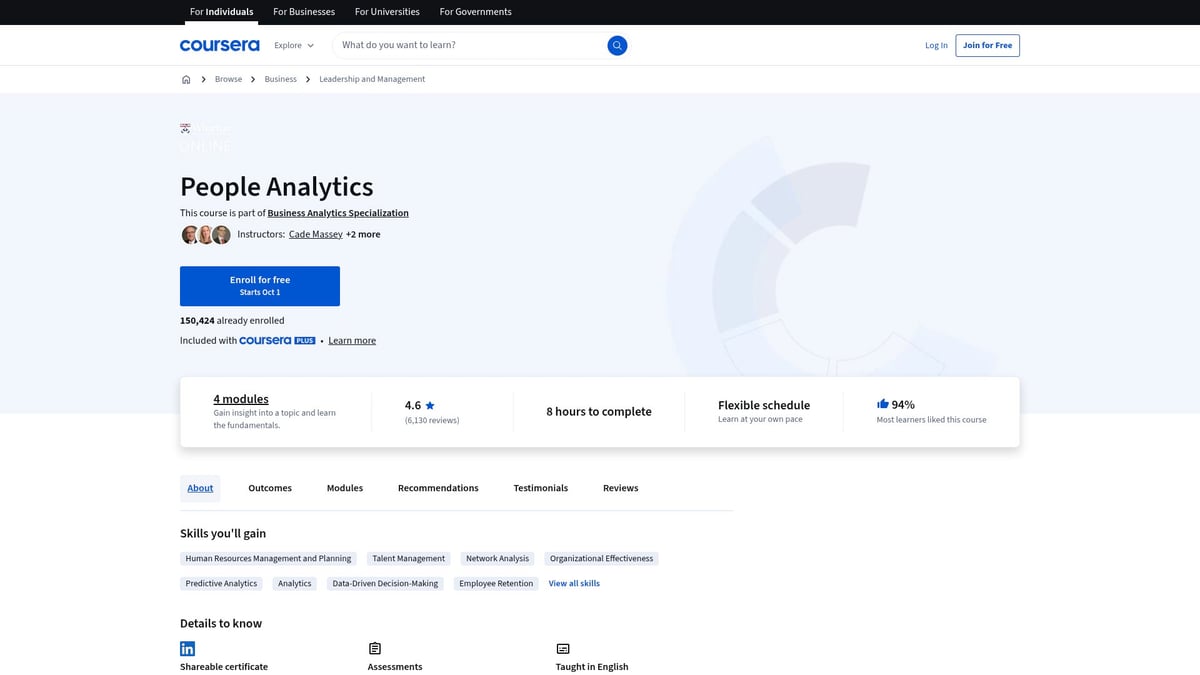
3. People Analytics by Wharton Online (Coursera)

Data-driven decision-making is central to effective HR. This course focuses on analytics tools and real-world HR case studies, making it a leading choice among hr courses online.

9 Essential HR Courses Online to Boost Your Career in 2025 - People Analytics by Wharton Online (Coursera)

  • Pricing: Free to audit, $79 for certificate
  • Features: Analytics, case studies
  • Best for: HR analysts, managers
  • Pros: Ivy League. Cons: Some data comfort needed

Graduates gain vital, in-demand analytics expertise.

4. LinkedIn Learning: Diversity, Inclusion, and Belonging

DEI is a must-have competency. This is one of the most accessible hr courses online for inclusive leadership and bias awareness, delivered in concise, actionable modules.

9 Essential HR Courses Online to Boost Your Career in 2025 - LinkedIn Learning: Diversity, Inclusion, and Belonging

  • Pricing: $39.99/month or free trial
  • Features: DEI best practices, exercises
  • Best for: HR leaders, DEI champions
  • Pros: Short, practical. Cons: Less depth

The course empowers professionals to foster belonging and equity.

5. Udemy: HR Analytics – Build an HR Dashboard using Power BI

For HR professionals drawn to tech, this hands-on course teaches dashboard creation and HR metrics visualization. It’s a practical pick among hr courses online.

  • Pricing: $19.99–$129.99 (discounts vary)
  • Features: Power BI, real projects
  • Best for: Tech-focused HR professionals
  • Pros: Affordable, project-based. Cons: Focused on one tool

Build portfolio-ready skills for immediate workplace impact.

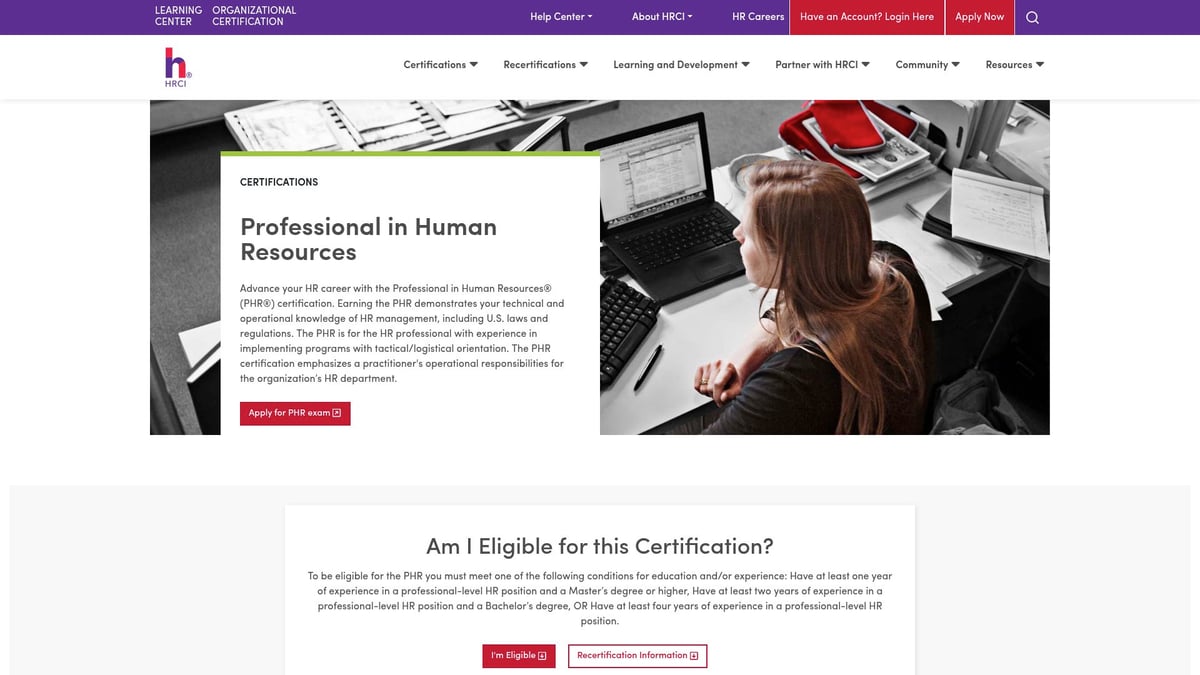
6. HRCI Professional in Human Resources (PHR) Online Prep

Aimed at experienced practitioners, this prep course helps you earn a globally respected PHR credential. Among hr courses online, it stands out for career advancement.

9 Essential HR Courses Online to Boost Your Career in 2025 - HRCI Professional in Human Resources (PHR) Online Prep

  • Pricing: $395 exam, $500+ prep
  • Features: Exam prep, practice questions
  • Best for: Experienced HRs
  • Pros: Recognition. Cons: Intensive, separate exam fee

Employers value the PHR for its industry rigor.

7. AI in HR: Artificial Intelligence for Human Resources by FutureLearn

Stay ahead of the curve with this forward-thinking course. It explores AI’s impact in HR and ethical considerations—making it a future-ready choice among hr courses online.

  • Pricing: Free, $59 certificate
  • Features: AI in HR, ethics
  • Best for: Tech-forward HR leaders
  • Pros: Current, practical. Cons: Introductory

It’s perfect for those seeking an edge in tech adoption.

8. MIT xPRO: People Management

This advanced course targets senior HR professionals and team leads, focusing on leadership and conflict resolution. Among hr courses online, its prestige is unmatched.

  • Pricing: $2,300
  • Features: Leadership, cohort learning
  • Best for: Senior HR, team leads
  • Pros: Deep learning, networking. Cons: Expensive

Participants gain advanced people management expertise.

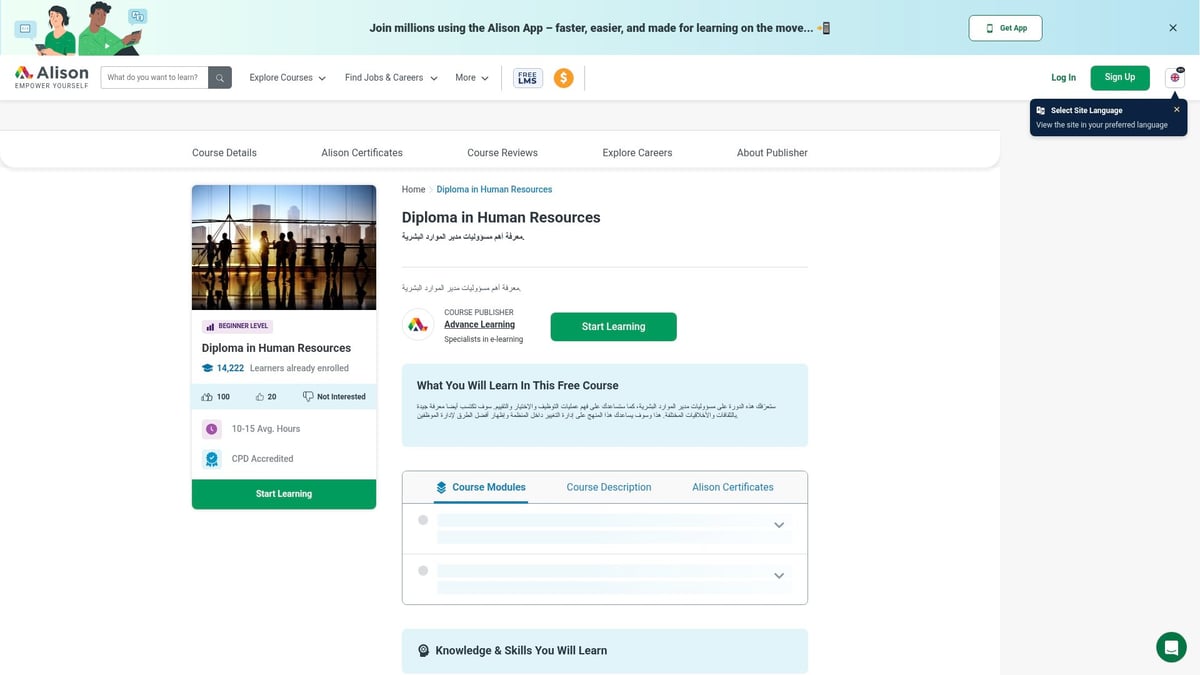
9. Alison: Diploma in HR

Begin your HR journey with this accessible, self-paced course. As one of the most inclusive hr courses online, it covers recruitment, training, and labor relations.

9 Essential HR Courses Online to Boost Your Career in 2025 - Alison: Diploma in HR

  • Pricing: Free, optional certificate
  • Features: Recruitment, labor relations
  • Best for: Beginners, career explorers
  • Pros: No cost barrier. Cons: Less recognized

It’s ideal for testing the HR waters or building foundational skills.

For those seeking to maximize the impact of these hr courses online, consider connecting with business coaches for HR managers who can help you apply your new skills to real organizational challenges.

How to Choose the Right HR Course for Your Goals

Choosing the best hr courses online starts with a clear understanding of your current role and where you want your HR career to go next. Are you an entry-level professional, or are you aiming to move into a leadership position?

Start by listing your key goals and any specific HR skills you need to develop. Do you want to specialize in analytics, diversity and inclusion, or leadership? This self-assessment will help you filter the wide range of hr courses online available today.

Compare programs by reviewing the course content, difficulty level, and the instructional approach. Use the table below to weigh important factors side by side:

Factor Why It Matters What to Check
Content Relevance Aligns with your goals Syllabus, modules, topics
Certification Value Employer recognition Accrediting body, industry respect
Flexibility Fits your schedule Self-paced, instructor-led, duration
Cost vs. ROI Worth the investment Tuition, potential salary impact

Next, consider the value of certification. Does your target employer recognize the credential? Alumni reviews and real-world outcomes can provide insight into the impact on career growth.

Balance cost, time commitment, and the long-term benefits each course offers. Reading testimonials and researching outcomes will help you find the right fit.

Match the course focus to your skill gaps. For example, mid-career HR professionals seeking analytics skills may benefit from a specialized program, while newcomers gain from foundational options. If you need personalized guidance, career coaching for HR professionals can support your decision-making and help you chart a clear path after completing your selected course.

Example: A mid-level HR manager aiming for a strategic role might choose a data analytics or SHRM-CP prep course, while someone new to HR could start with a free Alison diploma or a Coursera specialization.

Maximizing the Impact of Your HR Certification

Earning a credential from hr courses online is only the beginning. To maximize its value, start by applying new skills right away. Tackle a real workplace challenge using techniques you learned, whether it is people analytics or DEI practices. This immediate action cements your knowledge and demonstrates initiative.

Update your LinkedIn profile and resume to highlight your certification. Many employers use these platforms to verify qualifications. Showcase your badge and completed projects to make your expertise visible. Join course alumni groups and HR communities to expand your network and gain insights from peers.

Leverage your hr courses online achievement for career advancement. Discuss your new qualification in performance reviews or interviews. According to the 2025 Workplace Learning Report, HR professionals with recognized certifications see higher promotion rates and salary growth.

Track your progress by setting clear goals, such as new responsibilities or a salary increase. Continue learning with micro-credentials to stay ahead in the evolving HR field. For ongoing growth, consider life coaching for career growth to help you set strategies and stay accountable.

By following these steps, your certification becomes a launchpad for lasting impact and career momentum.

Trends Shaping the Future of HR Learning

The future of HR learning is shaped by rapid advances in AI, automation, and digital tools. Companies now expect HR professionals to master skills in data analytics, diversity and inclusion, and remote workforce management.

Micro-credentialing and stackable certificates are quickly becoming the standard. These flexible formats let professionals select targeted hr courses online that fit their unique needs and career goals.

Organizations are increasing support for digital upskilling. In fact, Gartner’s Leadership Vision for L&D Leaders in 2024 reports that 74% of HR leaders plan to boost investment in digital training by 2025.

To stay ahead, adaptability and a commitment to continuous learning are essential as the HR field evolves. Choosing the right online learning path now will set you apart in the years to come.

Psychological Safety Meaning: The Essential Guide for 2025

In 2025, companies that focus on psychological safety are soaring ahead in innovation, retention, and team performance. Yet, many leaders and employees still misinterpret psychological safety meaning and miss its true impact on workplace success.

This essential guide cuts through the confusion, revealing what psychological safety really is, why it matters more than ever, and how you can build it into your organization. You will find practical strategies, the latest research, and real-world examples throughout.

Ready to transform your team’s culture and results?

What is Psychological Safety? Meaning, Origins, and Evolution

Understanding the psychological safety meaning is crucial for any organization aiming to thrive in 2025. At its core, psychological safety is the shared belief that a team environment allows individuals to take interpersonal risks without fear of humiliation or punishment. This concept shapes how employees contribute, collaborate, and innovate.

The term “psychological safety” was first defined by Harvard professor Amy Edmondson in the late 1990s. Her pioneering research revealed that teams with high psychological safety were more likely to learn from mistakes and adapt quickly. The idea gained global attention when Google’s Project Aristotle, a multi-year study, found that psychological safety was the number one predictor of high-performing teams.

To better grasp the psychological safety meaning, it helps to look at its key characteristics:

  • Open communication where everyone’s voice is valued
  • Trust among team members and leaders
  • A climate free from retribution or blame
  • Encouragement for individuals to speak up, share concerns, or offer new ideas

While psychological safety and trust are closely related, they are not the same. Trust typically refers to the confidence that others will act in your best interest, while psychological safety is about feeling comfortable being yourself and expressing doubts or mistakes without negative consequences.

Here’s a simple comparison:

Aspect Psychological Safety Trust
Definition Comfort with risk-taking and openness Belief in reliability of others
Focus Team environment and interactions Individual relationships
Primary Outcome Learning, innovation, engagement Dependability, reliability

The psychological safety meaning has evolved significantly over the past two decades. In the early 2000s, few organizations prioritized it. By 2025, it is a non-negotiable part of successful workplace cultures, especially with the rise of hybrid and remote teams. Companies that embed psychological safety into their culture see real results. According to Gallup’s 2023 survey, 89% of employees in psychologically safe environments report higher engagement and willingness to contribute.

A prime example is Google’s Project Aristotle, which showed that teams with strong psychological safety consistently outperformed those without it. These teams were more likely to share ideas, admit mistakes, and support one another through challenges.

It’s important to clear up a common misconception: the psychological safety meaning does not imply being “nice” all the time or avoiding accountability. Instead, it’s about creating an environment where constructive feedback, healthy debate, and learning from failure are not just accepted but expected.

For a deeper dive into the origins and definition, explore the foundational research in Amy Edmondson Psychological Safety Insights.

As organizations continue to adapt to new ways of working, understanding and implementing psychological safety meaning will remain a powerful driver of innovation, retention, and overall performance.

What is Psychological Safety? Meaning, Origins, and Evolution

Why Psychological Safety Matters in 2025

In 2025, the psychological safety meaning has become a cornerstone of organizational success. Companies that understand and prioritize this concept are seeing measurable gains in innovation, retention, and overall performance. While some leaders still underestimate its impact, forward-thinking organizations recognize psychological safety as an essential driver of modern workplace excellence.

Why Psychological Safety Matters in 2025

Psychological Safety Meaning and Innovation

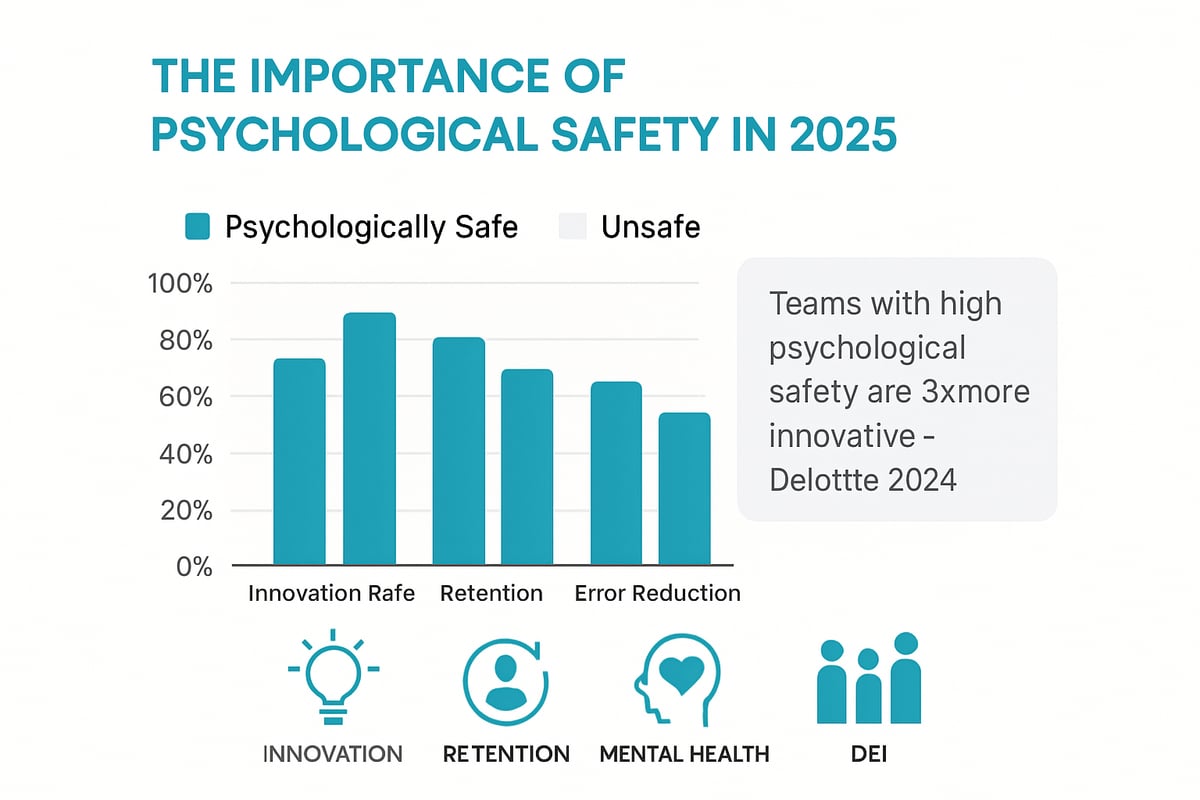
Understanding psychological safety meaning is fundamental to unlocking innovation. Research from Deloitte (2024) shows that teams with high psychological safety are three times more likely to generate innovative solutions. When employees feel safe sharing ideas, asking questions, and challenging the status quo, creativity flourishes.

This environment empowers team members to experiment without fear of embarrassment or reprisal. The result is a culture where new products, services, and processes emerge more rapidly than in organizations where people hesitate to speak up.

Factor Psychologically Safe Teams Unsafe Teams
Innovation Rate 3x higher Low
Error Reduction 50% fewer errors More frequent
Employee Engagement 89% report high Under 50%

Engagement, Retention, and Well-being

The psychological safety meaning extends beyond innovation. It directly shapes employee engagement and retention, especially in today’s evolving work environments. According to SHRM (2023), 76% of employees say they would stay longer at companies that foster psychological safety.

In hybrid and remote workplaces, where isolation and miscommunication can undermine morale, psychological safety is even more critical. Teams that feel secure are more likely to collaborate, share feedback, and resolve conflicts constructively. This leads to higher job satisfaction and lower turnover.

For more insights, Psychological Safety in the Workplace offers a comprehensive look at how organizations can embed these principles into daily operations.

DEI, Resilience, and Adaptability

The psychological safety meaning is deeply intertwined with diversity, equity, and inclusion initiatives. A safe environment enables employees from all backgrounds to contribute fully, knowing their perspectives will be valued. This inclusivity strengthens organizational resilience and adaptability during times of change or crisis.

When teams are psychologically safe, they recover more quickly from setbacks and adapt to new challenges with confidence. This capability is vital in an era marked by uncertainty, rapid technological shifts, and global competition.

Case Study: Tech Company Transformation

Consider a mid-sized tech company that embraced psychological safety meaning as a strategic priority. Leadership invested in training, open communication channels, and regular feedback sessions. Over twelve months, the company reported a 40% reduction in voluntary turnover and a surge in creative output.

Customer satisfaction scores rose as employees felt empowered to solve problems proactively. The company’s financial results outpaced industry averages, underscoring the competitive advantage of prioritizing psychological safety.

Competitive Advantage in 2025

In summary, the psychological safety meaning is not just a buzzword. It is a proven driver of innovation, engagement, and sustained performance. Organizations that invest in this area outperform peers in customer satisfaction and financial returns.

If you are seeking expert guidance to build a culture of accountability and safety, Accountability Now provides valuable resources and leadership development solutions. Prioritizing psychological safety in 2025 is your blueprint for a future-ready, resilient, and high-performing workplace.

Essential Elements and Barriers to Psychological Safety

Creating a truly safe workplace goes beyond surface-level gestures. Understanding psychological safety meaning is foundational for any organization aiming to foster trust, innovation, and high performance. Let’s break down what makes psychological safety thrive, what stands in its way, and how to address these challenges.

Essential Elements and Barriers to Psychological Safety

Core Elements of Psychological Safety

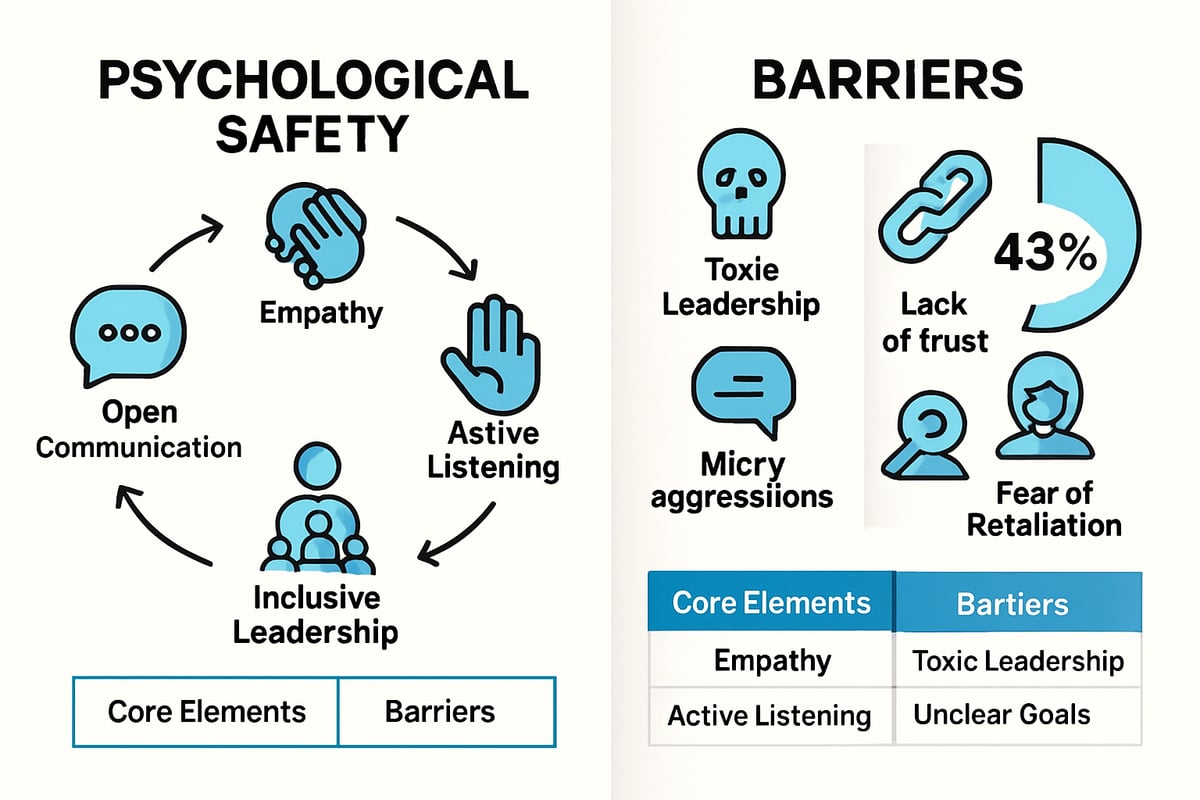
At its core, psychological safety meaning revolves around several key elements that empower teams to excel. These include:

  • Open communication: Team members share opinions without fear.
  • Empathy: Leaders and peers show genuine care for each other’s perspectives.
  • Active listening: Everyone is heard, not just the loudest voices.
  • Inclusive leadership: All backgrounds and viewpoints are welcomed.
  • Clear expectations: Roles, goals, and boundaries are transparent.

When these elements are present, teams feel empowered to take risks, voice concerns, and drive innovation. Embedding psychological safety meaning into daily interactions ensures every voice matters, setting the stage for organizational growth.

The Crucial Role of Feedback

Feedback is the engine that keeps psychological safety meaning alive. In safe environments, feedback flows freely in both directions. Team members can offer constructive criticism or admit mistakes without fear of embarrassment or retaliation.

Effective feedback is:

  • Timely and specific
  • Focused on behaviors, not personalities
  • Invited and welcomed

When feedback is normalized, learning accelerates and mistakes become opportunities. This continuous loop of open dialogue is essential for sustaining psychological safety meaning, especially in high-pressure or fast-changing industries.

Common Barriers to Psychological Safety

Despite its importance, psychological safety meaning is often undermined by common obstacles. The most prevalent barriers include:

  • Toxic leadership: Authoritarian or punitive management styles.
  • Lack of trust: Team members doubt each other’s intentions.
  • Unclear goals: Uncertainty breeds anxiety and withdrawal.
  • Microaggressions: Subtle, often unconscious, exclusionary behaviors.
  • Fear of retaliation: Worries about negative consequences for speaking up.

A Gallup study found that 43% of employees hesitate to share ideas due to fear of negative outcomes. Unconscious bias and rigid hierarchies can also erode trust, making it difficult for psychological safety meaning to take root. In one financial services firm, these issues led to project delays and missed opportunities, proving just how costly these barriers can be.

Elements Barriers
Open communication Toxic leadership
Empathy Lack of trust
Active listening Microaggressions
Inclusive leadership Unclear goals
Clear expectations Fear of retaliation

Overcoming Barriers: Practical Strategies

To transform workplace culture, leaders must actively address and remove these barriers. Start by:

  • Identifying issues: Use anonymous surveys to surface concerns.
  • Training leaders: Equip managers with skills for inclusivity and empathy.
  • Clarifying expectations: Set transparent standards for behavior and performance.
  • Empowering all voices: Encourage participation from every team member.
  • Addressing breaches: Respond swiftly and transparently to incidents.

For detailed, actionable steps, explore Building Psychological Safety Step by Step, which offers proven frameworks for lasting change. Remember, sustaining psychological safety meaning requires commitment at every level.

Finally, organizations that value accountability and continuous improvement can benefit from external support.

Step-by-Step Guide: Building Psychological Safety in Your Organization

Creating a culture rooted in psychological safety meaning is a journey that requires intention, structure, and ongoing commitment. Organizations that follow a clear roadmap see measurable improvements in team effectiveness, innovation, and employee well-being.

Step-by-Step Guide: Building Psychological Safety in Your Organization

Step 1: Assess Your Team’s Psychological Safety

Begin by evaluating your current psychological safety meaning within teams. Use anonymous surveys, focus groups, or digital feedback tools to gauge whether employees feel comfortable speaking up, sharing ideas, and admitting mistakes.

Look for patterns in responses across departments or demographics. This data will reveal strengths and areas needing improvement, providing a baseline for future progress.

Step 2: Train Leaders and Managers

Effective training is essential for embedding psychological safety meaning in your culture. Leaders must understand what true psychological safety looks like and why it matters.

Offer workshops, coaching, and interactive learning modules that focus on empathy, vulnerability, and active listening. Equip managers to recognize and address subtle signals of fear or exclusion.

Step 3: Establish Clear Values and Behavioral Expectations

Define the core values and behaviors that reflect psychological safety meaning in your organization. Make these expectations explicit—articulate them in policies, onboarding materials, and team charters.

Hold everyone, from executives to interns, accountable for upholding these standards. Consistency in messaging reinforces the importance of psychological safety at every level.

Step 4: Implement Regular Feedback and Open Communication Channels

Build robust feedback systems that allow employees to share ideas, voice concerns, and learn from mistakes without fear. Regular check-ins, open forums, and suggestion boxes foster a sense of inclusion.

Research shows that teams prioritizing open communication and psychological safety meaning experience fewer errors and stronger performance. For more on this dynamic, see Psychological Safety and Team Performance.

Step 5: Encourage Inclusive Participation and Value Diverse Perspectives

True psychological safety meaning is only achieved when every voice is valued. Rotate meeting facilitators, use anonymous brainstorming tools, and actively invite input from quieter team members.

Emphasize that diverse perspectives are essential for innovation and resilience. This approach breaks down barriers and builds mutual respect.

Step 6: Recognize and Reward Supportive Behaviors

Consistently acknowledge and reward actions that reinforce psychological safety meaning. Celebrate employees who speak up, support others, or admit mistakes for the greater good.

Recognition can be public or private, but it should always align with your stated values and goals.

Step 7: Address Breaches Swiftly and Transparently

When psychological safety is compromised, respond quickly and openly. Investigate issues without blame, communicate outcomes, and reinforce expectations.

Utilize structured frameworks to sustain progress:

Tool/Framework Purpose
Psychological Safety Index Measures team safety levels
Edmondson’s Team Learning Model Guides team reflection and improvement

A mid-sized company, after rolling out these steps, saw a 27% increase in team effectiveness (McKinsey, 2023). Sustaining psychological safety meaning in remote or hybrid teams requires regular virtual check-ins, clear communication norms, and digital tools for feedback.

Sustaining Psychological Safety for the Long Term

Embedding psychological safety meaning is not a one-time project—it is a continuous process. Monitor progress with engagement surveys, retention data, and participation rates.

Celebrate milestones, adjust strategies as needed, and invest in ongoing training.

The Role of Leadership and Corporate Coaching in Psychological Safety

Leadership is the cornerstone of any effort to embed psychological safety meaning into an organization’s culture. Without authentic commitment from the top, even the best-intentioned initiatives will struggle to gain traction. Employees look to leaders for cues on what behaviors are accepted and encouraged. When leadership prioritizes psychological safety, it signals that open dialogue, risk-taking, and honest feedback are not just tolerated, but valued.

Leadership Buy-In: The Catalyst for Change

Sustainable psychological safety starts with leadership buy-in. When executives and managers champion the psychological safety meaning, it cascades through every layer of the organization. Leaders set the tone by actively listening, inviting dissent, and responding to mistakes with curiosity rather than blame.

A leader’s willingness to admit their own errors and ask for feedback demonstrates vulnerability. This openness encourages team members to share ideas, voice concerns, and challenge assumptions. Research shows that organizations with strong leadership commitment to psychological safety are more resilient, adaptable, and better positioned for innovation.

The Power of Corporate Coaching

Corporate coaching is a powerful lever for building psychological safety meaning throughout an organization. Unlike generic training modules, personalized coaching helps leaders identify blind spots, address unhelpful behaviors, and strengthen communication skills. Coaches provide a confidential space for leaders to reflect, practice, and receive constructive feedback.

Coaching supports leaders as they navigate complex interpersonal dynamics, especially in hybrid or remote environments. For example, a Fortune 500 company recently implemented executive coaching to address silos and communication breakdowns. Over the following year, psychological safety scores rose by 68%, and employee engagement soared.

Coaching also plays a crucial role in addressing toxic behaviors that undermine team trust. Evidence from Psychological Safety in Healthcare Settings demonstrates how coaching interventions can reduce errors and improve collaboration, especially in high-stakes fields.

Training Programs and Workshops: What Works in 2025

In 2025, the most effective training programs blend evidence-based frameworks with experiential learning. Workshops that simulate real-world scenarios help leaders understand the psychological safety meaning in practical terms. Interactive sessions, role-playing, and peer feedback build empathy and reinforce positive leadership behaviors.

Modern programs emphasize inclusivity, helping leaders recognize unconscious bias and create space for all voices. Ongoing training, rather than one-off sessions, ensures that psychological safety remains a living, evolving practice. Digital platforms and micro-learning modules allow for continuous skill development, even in distributed teams.

Leadership Development and Organizational Transformation

The intersection of leadership development and psychological safety meaning is where true transformation happens. When leaders are equipped with the right skills, supported by coaching, and held accountable for modeling inclusive behaviors, teams thrive. Data from Bersin (2024) confirms that 68% of organizations see measurable improvement in psychological safety after investing in leadership coaching.

Embedding psychological safety into leadership development is not just about preventing harm. It is about unlocking creativity, accelerating learning, and building a culture where everyone can contribute fully.

Future Trends: Psychological Safety in the Evolving Workplace

The workplace landscape is changing rapidly, and the psychological safety meaning is evolving with it. In 2025, artificial intelligence and automation are reshaping how employees interact and collaborate. As machines take on more routine tasks, human roles demand even greater creativity, problem-solving, and vulnerability. This shift raises new questions about how psychological safety meaning is defined when teams rely on both human and AI input to drive results.

Remote and Hybrid Work: New Frontiers

The psychological safety meaning takes on new dimensions in remote and hybrid environments. Employees often work across time zones, cultures, and digital platforms, making it harder to read nonverbal cues or build trust organically. Leaders must be intentional about fostering open dialogue and ensuring every voice is heard, whether in a video call or a chat thread. Digital check-ins, anonymous feedback tools, and regular pulse surveys help teams maintain the psychological safety meaning in these dispersed settings.

Global Teams and Cross-Cultural Dynamics

As businesses expand globally, the psychological safety meaning must adapt to diverse cultural norms and expectations. What feels safe in one culture may not translate directly to another. Multinational organizations are investing in cross-cultural training and inclusive leadership to ensure that psychological safety meaning is consistently understood and practiced. For instance, a global tech firm recently revamped its onboarding process to include localized psychological safety modules, resulting in higher engagement and fewer misunderstandings.

Regulatory and Compliance Priorities

With the rise of mental health awareness, new regulations are shaping how organizations define the psychological safety meaning. In 2025, HR leaders are prioritizing compliance with laws around workplace well-being and anti-harassment. According to Gartner, 82% of HR leaders cite psychological safety as a top priority for workforce planning. Moreover, as highlighted in the Psychological Safety and Employee Retention report by BCG, companies that proactively address psychological safety meaning experience lower attrition and stronger employer brands.

Predictions for the Next Era

Looking forward, the psychological safety meaning will be at the heart of leadership, innovation, and employee experience. Organizations that invest in psychological safety meaning will see a competitive edge, not only in retention but also in adaptability and creativity. Leaders must stay ahead by continuously upskilling, leveraging new tools, and prioritizing accountability.

Psychology Safety at Work: The Definitive Guide for 2025

Imagine a workplace where every voice is heard, and mistakes spark learning instead of blame. That is the promise of psychology safety at work, a concept that empowers teams to innovate and grow together.

In this definitive guide, you will discover what psychology safety at work means, why it is critical for 2025, and how to create an environment where everyone thrives. We will define key principles, share data-backed business impacts, identify barriers, and walk you through actionable steps for lasting change.

Ready to build a culture where your team feels safe, valued, and inspired? Let’s dive in, and for further expert support, explore resources at Accountability Now.

What is Psychological Safety at Work?

Imagine a team meeting where everyone eagerly shares ideas, asks questions, and learns from mistakes. This is the power of psychology safety at work. When employees trust that their voices matter, innovation and growth follow.

What is Psychological Safety at Work?

Defining Psychological Safety

Psychology safety at work is a shared belief among team members that the environment is safe for taking interpersonal risks. This means employees feel comfortable speaking up, sharing ideas, and admitting mistakes without fearing embarrassment or negative consequences.

The concept gained prominence through Dr. Amy Edmondson of Harvard Business School, who emphasized that teams thrive when everyone feels heard. Key elements include open communication, mutual respect, and freedom to express differing viewpoints.

It is important to distinguish psychology safety at work from trust. While both encourage honesty, trust is about believing others will act with integrity, whereas psychological safety is about feeling safe to participate fully. Here’s a quick comparison:

Aspect Trust Psychological Safety
Focus Reliability of others Safety to take risks
Outcome Predictable behavior Open dialogue, idea sharing
Primary Question Can I rely on you? Can I speak up without fear?

For a deeper dive into the foundations of psychological safety, explore how these principles shape thriving workplaces.

Why It Matters in 2025

The importance of psychology safety at work is only increasing as organizations navigate the complexities of 2025. With the rise of hybrid and remote work, employees face new challenges in communication and collaboration. Creating an environment where everyone feels secure to share opinions is essential.

As workplaces become more diverse, inclusive cultures are critical. Psychology safety at work ensures all voices are valued, leading to greater creativity and adaptability. This link to innovation is clear in Google’s Project Aristotle, which identified psychological safety as the top predictor of high-performing teams.

Recent data underscores the business case. According to Deloitte (2023), teams with high psychological safety are 27% more likely to report strong performance. In a rapidly changing world, organizations that prioritize psychology safety at work gain a decisive edge in resilience and adaptability.

Signs of Psychological Safety (and Lack Thereof)

How can you tell if psychology safety at work truly exists? Look for open dialogue, where team members ask questions, challenge ideas, and provide constructive feedback. Leaders who visibly support these behaviors set the tone for an inclusive culture.

Positive indicators include employees sharing concerns, offering new solutions, and learning from failures. Conversely, warning signs emerge when people withhold ideas, fear making mistakes, or hesitate to ask for help. These patterns can stifle innovation and lead to disengagement.

Consider a real-world contrast. In a tech startup with high psychology safety at work, brainstorming sessions are energetic and mistakes spark learning. In contrast, a rigid corporate environment with low psychological safety sees team members remain silent, fearing criticism or retribution.

Building such a culture requires commitment. For organizations looking to strengthen their approach, expert guidance from resources like Accountability Now can provide the next step toward lasting change.

The Business Impact of Psychological Safety

Imagine a workplace where innovation thrives, employees feel energized, and organizations consistently outperform their competitors. This is the promise of psychology safety at work. In 2025, companies are recognizing that creating safe environments is not just a cultural imperative, but a business necessity.

The Business Impact of Psychological Safety

Effects on Team Performance and Innovation

Teams with strong psychology safety at work routinely achieve superior results. When employees feel safe to share ideas, challenge norms, and admit mistakes, creativity flourishes. Google’s Project Aristotle famously found that psychological safety was the number one predictor of high-performing teams.

Innovation accelerates in these environments. Microsoft’s shift to a “Growth Mindset” culture led to a noticeable spike in new product ideas and creative problem-solving. According to Gallup (2024), organizations in the top quartile for psychological safety outperform their peers by 12 percent in profitability.

Key drivers include:

  • Open dialogue and risk-taking without fear
  • Rapid learning from failures
  • Diverse perspectives leading to breakthrough solutions

For leaders, investing in psychology safety at work unlocks the full potential of every team member.

Influence on Employee Wellbeing and Retention

Psychology safety at work is a powerful safeguard against burnout and disengagement. Employees who feel safe are more likely to speak up about workloads, stress, or personal challenges. This openness reduces absenteeism and turnover rates.

The impact is especially pronounced in high-stress industries. Healthcare teams with high psychological safety report 50 percent fewer medical errors (BMJ, 2022). When staff trust their voices will be heard, morale and job satisfaction rise.

Key benefits:

  • Higher job satisfaction and mental health
  • Lower turnover and absenteeism
  • Enhanced peer support and collaboration

Ultimately, organizations that prioritize psychology safety at work retain top talent and foster resilient teams.

Organizational Reputation and Risk Management

A commitment to psychology safety at work enhances employer branding and attracts high-caliber candidates. Companies known for safe, inclusive cultures become magnets for top talent.

Risk management also improves. Clear channels for raising concerns lead to fewer compliance violations and workplace conflicts. For example, one financial services firm reduced whistleblower incidents by 30 percent after launching safety initiatives.

Organizations benefit from:

  • Stronger reputation in the marketplace
  • Lower risk of costly legal issues
  • More effective internal controls

When psychology safety at work is prioritized, organizations build trust inside and outside their walls.

Impact on Diversity, Equity, and Inclusion (DEI)

Psychology safety at work is the foundation for effective DEI initiatives. Diverse teams need safe spaces to express unique viewpoints and challenge groupthink. When minority voices are valued, decision-making quality soars.

Research from Cloverpop (2023) shows that diverse teams with high psychological safety make better decisions 87 percent of the time. Inclusive leaders who model openness and curiosity foster belonging and unleash hidden talents.

Key outcomes:

  • Greater diversity of thought and innovation
  • Higher engagement among underrepresented groups
  • Reduced bias and workplace inequity

Organizations that invest in psychology safety at work drive meaningful and measurable DEI progress.

Bottom-Line Benefits

The financial advantages of psychology safety at work are clear. Companies with safe cultures see direct links to higher ROI, customer satisfaction, and sustainable growth. According to Mercer, providing psychological safety at work is good for business, fueling stronger social bonds and greater loyalty.

Table: Business Outcomes Linked to Psychology Safety at Work

Outcome Impact
Profitability +12 percent (Gallup, 2024)
Employee retention Turnover reduced by up to 27 percent
Innovation More frequent breakthrough ideas
Customer satisfaction Higher NPS and repeat business
Compliance & risk reduction Fewer violations and incidents

For organizations seeking to future-proof their operations, psychology safety at work is a strategic investment.

Barriers to Psychological Safety in Modern Workplaces

Psychology safety at work remains a challenge in many organizations, even as leaders recognize its value. Understanding the barriers that undermine this safety is essential for creating environments where people feel free to contribute ideas, take risks, and learn from mistakes. Let’s explore the most common obstacles and how they manifest in today’s workplaces.

Barriers to Psychological Safety in Modern Workplaces

Common Obstacles

One of the most persistent barriers to psychology safety at work is a rigid hierarchy. In top-down cultures, employees often hesitate to challenge ideas or provide honest feedback. Toxic leadership, including micromanagement and favoritism, further discourages open dialogue.

Fear of failure is another obstacle. If mistakes are met with blame or punishment, people will hide errors rather than learn from them. This creates a culture where innovation stalls and growth is limited.

A clear example is when a project fails because team members were afraid to voice concerns early. When employees worry about negative consequences, they often stay silent, and the organization suffers.

The Role of Remote and Hybrid Work

Remote and hybrid work have introduced new challenges for psychology safety at work. Physical distance can lead to communication breakdowns and fewer informal interactions. This isolation makes it harder for employees to build trust and share concerns.

According to Buffer’s 2024 data, 41% of remote workers report feeling less comfortable raising issues. Misinterpretations are more likely when communication relies on email or chat, where tone and intent can be lost.

Without face-to-face cues, teams may overlook subtle signs of discomfort or disengagement. Leaders must be intentional about creating virtual spaces where everyone feels heard.

Cultural and Generational Factors

Diverse workplaces bring together people with varying communication styles, cultural backgrounds, and attitudes toward authority. These differences can create friction and misunderstandings, posing barriers to psychology safety at work.

Generational gaps also play a role. Younger employees may expect frequent feedback and open dialogue, while older generations might be used to more formal or reserved communication. Bridging these gaps requires ongoing education and empathy.

Organizations that do not address these differences risk creating an environment where some voices dominate while others are excluded. Inclusive training and structured feedback can help level the playing field.

Systemic Issues and Early Warning Signs

Systemic issues, such as unclear HR policies or a lack of leadership accountability, can undermine psychology safety at work across the entire organization. When employees are unsure how to report concerns or see no follow-through, trust erodes.

Early warning signs include rising turnover, widespread employee silence, or visible disengagement. These red flags often signal deeper issues with workplace culture. According to Why 1 in 4 Employees Still Don’t Feel Safe Speaking Up at Work, many organizations still struggle to create truly inclusive environments, despite their best intentions.
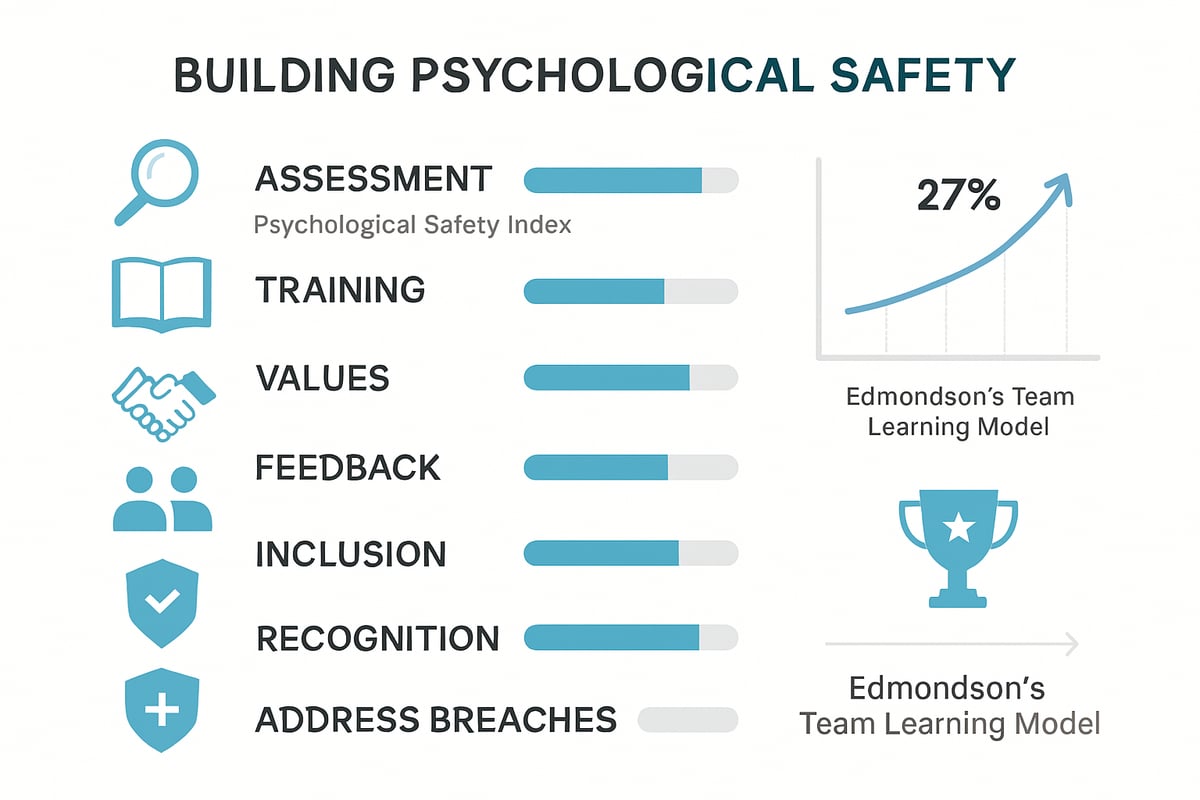
Addressing these systemic barriers is not only about policy but also about modeling accountability at every level.

Steps to Building Psychological Safety at Work in 2025

Creating lasting psychology safety at work is not a one-time initiative. It is an ongoing journey that requires deliberate action, consistent leadership, and a culture where everyone feels heard. Here’s a step-by-step roadmap to help your organization build, nurture, and sustain psychology safety at work for 2025 and beyond.

Steps to Building Psychological Safety at Work in 2025

Step 1: Leadership Commitment and Role Modeling

Change begins at the top. Leaders set the tone for psychology safety at work by modeling vulnerability, transparency, and empathy. When leaders admit mistakes publicly and invite honest feedback, they signal that it is safe to take risks.

Regular CEO town halls, open Q&A sessions, and visible support for new ideas make a difference. Leaders who share their own learning experiences foster trust and encourage employees to speak up.

To embed psychology safety at work, leaders must also recognize and reward behaviors that support open communication. This creates a ripple effect, inspiring managers and teams to follow suit.

Step 2: Establish Clear Communication Norms

Clear communication norms are the backbone of psychology safety at work. Set ground rules for respectful dialogue, active listening, and inclusive language. These rules should be visible, simple, and reinforced in every meeting.

Practical tools like anonymous surveys and digital suggestion boxes make it easier for employees to share candid feedback. Encourage team members to ask clarifying questions and challenge ideas constructively.

When communication norms are clear, employees know what is expected. This reduces anxiety and helps build psychology safety at work across all levels of the organization.

Step 3: Foster Inclusive and Diverse Environments

Inclusion and diversity are essential for psychology safety at work. Teams that embrace different perspectives are more innovative and resilient. Leaders should actively solicit input from all voices, especially those who may feel marginalized.

Offer unconscious bias training and ensure diverse representation in meetings and decision-making processes. Inclusive leaders create a climate where every idea is valued, not just the loudest or most senior voices.

Data shows that teams with inclusive leaders are 20% more likely to feel psychologically safe. When everyone feels included, psychology safety at work becomes a shared reality.

Step 4: Implement Feedback Loops and Continuous Improvement

Feedback is the engine that drives psychology safety at work forward. Establish regular check-ins, pulse surveys, and retrospective meetings to gather insights from your team.

The key is to act on feedback. Demonstrate accountability by sharing what you have learned and what will change as a result. This builds trust and reinforces that every voice matters.

For a detailed breakdown of how to put these feedback systems into practice, explore the Building Psychological Safety Steps resource. It offers actionable guidance to help your organization move from intention to impact.

Step 5: Address and Resolve Conflicts Constructively

No workplace is free from conflict, but how you handle it determines the level of psychology safety at work. Provide training in conflict resolution and mediation so employees feel confident navigating tough conversations.

Create structured spaces where difficult topics can be discussed openly and respectfully. Cross-functional teams benefit from dialogue frameworks that keep discussions focused and productive.

When conflicts are addressed promptly and fairly, employees see that mistakes are opportunities to learn. This reinforces psychology safety at work and reduces fear of speaking up.

Step 6: Monitor, Measure, and Adjust

Sustaining psychology safety at work requires ongoing measurement. Use key metrics like Employee Net Promoter Score (eNPS), turnover rates, and engagement survey results to track progress.

Metric What It Measures Frequency
eNPS Employee advocacy and satisfaction Quarterly
Turnover Rate Retention and engagement Monthly
Engagement Score Overall team morale Bi-annually

Leverage technology for real-time insights and benchmark your progress against industry standards. Regularly share results with your team and adjust strategies as needed to maintain momentum in psychology safety at work.

Step 7: Sustain Psychological Safety Over Time

Embedding psychology safety at work into the fabric of your organization is the final, crucial step. Integrate safety principles into onboarding, performance reviews, and leadership development programs.

Celebrate successes and learn from setbacks. Recognize individuals and teams who model positive behaviors. Over time, these practices become second nature, making psychology safety at work a defining feature of your culture.

Best Practices, Tools, and Resources for Sustaining Psychological Safety

Creating lasting psychology safety at work demands a commitment to proven strategies, the right technology, and continuous learning. Let’s explore the best ways to keep momentum strong and ensure safety becomes a permanent part of your culture.

Proven Best Practices

Sustaining psychology safety at work starts with embedding positive behaviors into daily routines. Peer mentoring and buddy systems help new hires feel included from day one. Regular recognition programs highlight inclusive behaviors, reinforcing team norms.

Leadership training is essential. Equip managers to model openness and handle feedback constructively. Consistent coaching keeps leaders accountable. According to Psychological Safety in the Workplace, organizations that prioritize ongoing training and peer support see stronger, lasting safety cultures.

  • Peer mentoring and onboarding buddies
  • Recognition for inclusive actions
  • Leadership coaching and accountability
  • Routine team check-ins to surface concerns

Tools and Technology

Technology can make or break your psychology safety at work initiatives. Platforms for anonymous feedback, like digital suggestion boxes or pulse surveys, let employees voice concerns without fear. Collaboration tools, such as dedicated Slack channels for open Q&A, encourage transparent communication.

Consider software that helps track sentiment and engagement in real time. These tools empower HR and leaders to act quickly on early warning signs. A clear digital infrastructure ensures everyone has a safe space to contribute, whether working remotely or onsite.

  • Anonymous feedback platforms
  • Collaboration and messaging tools
  • Real-time engagement tracking dashboards

External Resources and Support

Continuous learning keeps psychology safety at work top of mind. Leverage external resources to deepen understanding and fuel improvement. Books, podcasts, and research reports offer valuable perspectives. Professional organizations provide certification programs and access to the latest studies.

If you want to understand how psychology safety at work evolves over time, explore frameworks like the 4 Stages of Psychological Safety. This model helps teams identify their current stage and map a path forward.

  • Recommended books and podcasts
  • Certification and training programs
  • Research frameworks and whitepapers

Measuring Success

Tracking progress is vital for sustaining psychology safety at work. Use dashboards to monitor key metrics such as employee engagement, turnover rates, and eNPS. Implement regular surveys and compare results to industry benchmarks.

For current insights, the State of Psychological Safety Survey: 2025 offers comprehensive data to help you gauge where your organization stands. Organizations that consistently measure and adjust their approach see engagement improve by up to 18%.

Case Studies: Psychological Safety in Action

Imagine the impact of psychology safety at work when it moves from theory to real-world practice. Across industries, organizations are seeing remarkable results as they prioritize environments where people feel safe to speak up, challenge norms, and innovate. Let’s explore how psychology safety at work is transforming teams in tech, healthcare, and the public sector.

Tech Industry Example

In the tech sector, psychology safety at work has become a catalyst for both innovation and retention. A leading global technology company recognized that high-performing teams were those where employees felt free to question, challenge, and experiment without fear of negative consequences.

After implementing regular feedback sessions, open Q&A forums, and leadership coaching, teams reported a 20% increase in new product ideas. Turnover rates dropped as employees felt more valued and heard. Team members noted that mistakes were reframed as learning opportunities, further fueling creativity.

The company’s shift to a culture of trust and transparency led to faster problem-solving and more robust collaboration. These tangible gains showcase how psychology safety at work drives both performance and satisfaction.

Healthcare Sector Example

Psychology safety at work is especially critical in healthcare, where communication lapses can have life-or-death consequences. One major hospital system introduced structured team briefings and debriefings, empowering nurses and physicians to speak up about concerns or errors.

Within a year, the rate of reported medical errors decreased by 50%. Staff surveys revealed a significant boost in morale and job satisfaction, with more professionals willing to ask questions or request support. Teams became more proactive in addressing potential risks, leading to measurable improvements in patient outcomes.

This case highlights how a focus on psychology safety at work not only protects employees but also enhances the quality of care. Open dialogue and mutual respect became the new standard for every shift.

Government and Public Sector Example

The public sector faces unique challenges, often constrained by bureaucracy and tradition. Yet, psychology safety at work can spark transformative change here too. A government agency overhauled its internal policies to encourage open dialogue and protect whistleblowers.

The result was a 30% reduction in reported workplace conflicts and a notable increase in employee engagement. By leveling the playing field for all staff, the agency ensured that diverse perspectives were valued and acted upon. As highlighted in Psychological Safety Levels the Playing Field for Employees, this approach results in more equitable workplaces, benefiting underrepresented and disadvantaged groups.

Morale soared, and the agency’s reputation for fairness attracted top talent. This example demonstrates the far-reaching benefits of psychology safety at work in even the most structured environments.

Lessons Learned and Transferable Insights

Across every industry, several key lessons emerge about psychology safety at work. First, leadership commitment is non-negotiable—when leaders model vulnerability and openness, teams follow suit. Second, structured opportunities for feedback and candid conversation are essential for sustainable change.

Let’s summarize the outcomes:

Industry Key Outcome Improvement
Tech Innovation, Retention +20% ideas, lower turnover
Healthcare Patient Safety, Morale -50% errors, higher satisfaction
Government Engagement, Fairness -30% conflicts, higher morale

Organizations should avoid one-size-fits-all solutions. Instead, they must tailor strategies to their unique cultures and challenges.

The Essential Guide to Leadership Development in 2025

In 2025, organizations face unparalleled pressure to adapt as technology accelerates and workforce expectations rapidly evolve. The need for agile, accountable, and innovative leaders is more urgent than ever.

Recent findings from the 2025 Global Leadership Development Study reveal that strong leadership pipelines drive measurable business results. Companies with robust leadership development strategies outperform peers in growth, engagement, and retention.

This guide breaks down the modern approach to leadership development. You will discover the latest trends, essential skills, and proven frameworks that deliver real-world impact. Practical tools, case studies, and metrics will help you achieve true ROI from your leadership initiatives.

The Evolving Landscape of Leadership Development in 2025

Organizations in 2025 are experiencing a seismic shift in leadership development, driven by rapid advances in AI, evolving remote work technologies, and the rise of Millennial and Gen Z leaders. The expectations for leaders are transforming as hybrid teams become standard and digital fluency is a must.

According to the 2025 Global Leadership Development Study, today’s leaders must expertly navigate short-term disruption while keeping a firm eye on long-term growth. There is a marked shift toward agility, innovation, and cross-functional collaboration as essential leadership development outcomes. Inclusive leadership and emotional intelligence have become critical, especially in diverse, distributed teams.

Recent Harvard Business research reveals that 85% of employees can pinpoint the skills they need to enhance their performance. However, the surge in low-quality, AI-generated resources makes it crucial to seek vetted, relevant leadership development materials. Companies like Cinépolis have set a benchmark by cascading innovation-driven leadership from the C-suite to the frontlines, reinforcing the value of a unified approach.

Continuous learning and adaptability are now non-negotiable for leadership success. To stay ahead, organizations must focus on credible sources and proven frameworks. For more insights on emerging trends, see the Top 5 Leadership Trends of 2025.

The Evolving Landscape of Leadership Development in 2025

Step 1: Aligning Leadership Development with Business Priorities

In today’s dynamic environment, leadership development must align directly with your organization’s core business priorities. Generic programs often result in lackluster outcomes, making it essential to connect every leadership initiative to tangible business goals.

Step 1: Aligning Leadership Development with Business Priorities

Begin by identifying your primary business priority. Are you aiming for revenue growth, cost efficiency, or risk mitigation? Only by pinpointing this focus can leadership development deliver measurable results. Use alignment checklists and targeted questions such as:

  • What business outcomes do we need to achieve?
  • Which leadership behaviors are missing or need to be strengthened?
  • How do our current values support or hinder these outcomes?

The Cinépolis case demonstrates how aligning leadership development with innovation fueled growth and improved customer satisfaction. By narrowing efforts to a small set of critical needs, you maximize impact and avoid diluting resources.

Senior leadership must champion and clearly communicate these priorities. Their involvement ensures that leadership development is not just a training exercise, but a strategic lever for business transformation. Consider practical resources like Noomii Corporate Coaching for Leaders, which offers tailored programs built around your KPIs.

Clear alignment empowers you to design highly relevant, measurable leadership development programs. This approach not only drives ROI but also creates a culture of accountability and continuous improvement.

Step 2: Setting Measurable Leadership Development Goals

Establishing measurable goals is the foundation of an effective leadership development strategy. Without clear objectives, it is difficult to assess progress or demonstrate return on investment.

Begin by identifying the specific outcomes you want your leadership development program to achieve. These can include increased engagement, improved decision-making confidence, or higher retention rates. Defining success indicators for each goal ensures clarity and alignment across all levels.

A practical way to connect business priorities to measurable outcomes is to map them in a table:

Business Priority Performance Outcome Success Indicator Measurement Method
Revenue Growth Agility, Innovation Project Launch Rate Quarterly Project Reviews
Cost Reduction Process Efficiency Time-to-Completion Pre/Post Program Analysis
Risk Mitigation Decision-Making Confidence Error Reduction Feedback Surveys

Use both qualitative and quantitative metrics to capture a complete picture. Quantitative data, such as participation rates, can be tracked alongside qualitative feedback from surveys or interviews. Collecting baseline data before launching your leadership development initiative allows you to benchmark progress and adjust as needed.

Consistent tracking, both during and after the program, helps ensure accountability and supports continuous improvement. For deeper insights and ongoing strategies, consider exploring the Coach Blog: Leadership Strategies.

Setting relevant, measurable goals tailored to your organization’s context will drive real business impact. For more on accountability in leadership, visit Accountability Now.

Step 2: Setting Measurable Leadership Development Goals

Step 3: Assessing Current Leadership Capabilities and Gaps

Gaining an accurate picture of your organization’s strengths and weaknesses is essential for effective leadership development. Begin with an honest evaluation of your culture, systems, and readiness to embrace change. Segment leaders by seniority—senior, mid-level, and frontline—so you can target development efforts where they will be most impactful.

Use data-driven assessment tools such as surveys, 360-degree feedback, and performance reviews to gather objective insights. According to research, 85% of employees can pinpoint their own skill gaps, making learner-driven leadership development a powerful strategy for closing performance gaps.

Beware that entrenched cultural norms or misaligned incentives can undermine even the best-designed programs. Celebrating early wins and sharing success stories helps reinforce positive behaviors and accelerates adoption.

Explore emerging assessment frameworks and digital tools highlighted in Leadership Training Trends 2025 to ensure your approach remains relevant and effective.

A precise assessment enables you to focus resources, prioritize actions, and design leadership development programs that deliver measurable business results.

Step 3: Assessing Current Leadership Capabilities and Gaps

Step 4: Designing and Delivering High-Impact Leadership Development Programs

Leadership development in 2025 demands a targeted, flexible approach. Organizations must ensure every program is relevant, measurable, and adaptable to changing business needs. The following strategies help deliver maximum impact at every leadership level.

Tailoring Learning Experiences to Different Leadership Levels

Effective leadership development must address the unique needs of new managers, mid-level leaders, and executives. For new managers, mentorship and peer connections foster confidence and practical skills. Mid-level leaders benefit from micro-learning, hands-on practice, and collaborative assignments. Executives require immersive, high-touch experiences, such as simulations or strategic retreats. The Capital Group’s blended model, combining in-person and virtual learning with executive sponsorship, exemplifies this approach. Ensuring each experience is relevant to real work increases leadership development engagement and business impact.

Curating Content and Delivery Methods for 2025

Quality outweighs quantity in leadership development content. Overloading learners with options can dilute focus and reduce results. Prioritize vetted resources, including self-guided modules, group workshops, coaching, and action learning projects. Digital tools and platforms allow scalable, flexible delivery. Guard against the influx of low-value AI-generated material by using rigorous curation. For organizations seeking expert guidance, Find Top Business Coaches offers access to qualified coaches who can accelerate leadership development outcomes.

Measuring Engagement and Application On-the-Job

Tracking leadership development progress is essential for continuous improvement. Use built-in mechanisms such as participation logs, pulse surveys, and regular feedback sessions to monitor engagement. Performance check-ins and recognition of progress help reinforce learning and maintain momentum. Celebrating early wins and sharing success stories encourage sustained application of new skills. Ongoing measurement ensures leadership development programs remain relevant and aligned with business objectives, ultimately fostering greater accountability in leadership across the organization.

Step 5: Embedding Leadership Development into Organizational Culture

Leadership development thrives when it becomes an everyday part of organizational life, not just a standalone program. Executive involvement is essential—when leaders act as teachers and mentors, they set a visible standard for others to follow. This approach helps reinforce accountability and encourages all levels of the organization to prioritize growth.

Embedding leadership development into daily workflows means integrating it into meetings, decision-making, and routine processes. For example, senior leaders can share lessons learned in team huddles or use real business challenges as learning opportunities. This ensures development is practical, continuous, and relevant.

Cascading learning amplifies impact. Senior leaders train mid-level managers, who then coach their teams, creating a ripple effect. Companies that build this kind of learning culture see sustained excellence and adaptability. According to Leadership Development Trends 2025, organizations that foster feedback, experimentation, and psychological safety accelerate leadership growth and innovation.

A culture of feedback supports experimentation and learning from mistakes. Encouraging open dialogue and recognizing progress strengthens psychological safety, which is vital for leadership development. Organizations that prioritize continuous learning, as highlighted by the World Economic Forum, unlock extraordinary potential and resilience.

To make leadership development a true organizational asset, it must be woven into the fabric of culture.

Noomii Corporate Coaching stands out as a results-driven partner for organizations ready to elevate their leadership development efforts. By embedding live coaching directly into meetings and tying every initiative to key performance indicators, Noomii ensures programs are practical, actionable, and measurable from day one.

Unlike traditional approaches, Noomii offers executive coaching, manager training, team facilitation, and 360 assessments, all designed to drive real business outcomes. Their flexible, month-to-month terms and shared risk model make leadership development accessible and accountable for mid-market companies and select Fortune 500 divisions.

Clients see measurable improvements in decision speed, communication, engagement, and retention.

Building Psychological Safety Guide for Thriving Teams 2025

In 2025, the most successful teams are not just defined by technical skills, but by a deep sense of trust and openness. The ability to speak up, share ideas, and learn from mistakes is what sets thriving organizations apart.

This guide delivers a clear, actionable roadmap for building psychological safety, empowering leaders and teams to reach new heights in performance and innovation. We’ll cover the science behind psychological safety, why it matters, the barriers teams face, and proven strategies to overcome them.

You’ll discover practical steps, real-world examples, and tools to measure and sustain a culture where everyone feels safe to contribute. For those seeking deeper transformation, resources like Accountability Now can support your journey.

Unlock your team’s full potential by prioritizing psychological safety—and be ready to lead with confidence in the future of work.

Understanding Psychological Safety: Definition, Science, and Impact

Psychological safety is the backbone of every high-performing team in 2025. At its core, it means team members collectively believe they can speak up, share ideas, and admit mistakes without fear of humiliation or punishment. Harvard professor Amy Edmondson coined this concept, highlighting that building psychological safety is not about comfort, but about creating an environment where candor and learning thrive.

What Is Psychological Safety?

Unlike simply being polite, building psychological safety is about honest dialogue and constructive challenge. It’s the confidence to ask tough questions, disagree respectfully, and learn from setbacks. Teams operating in psychologically safe environments embrace healthy conflict and see mistakes as chances to grow, not reasons for blame.

Psychological Safety vs. “Being Nice”

It’s a common misconception that psychological safety means lowering standards or avoiding hard conversations. In reality, it’s the opposite. Teams with high psychological safety hold each other accountable and push for excellence, but they do so by fostering trust, transparency, and a willingness to surface tough issues.

The Science Behind Psychological Safety

Extensive research supports the value of building psychological safety. Edmondson’s landmark studies showed that hospitals with higher psychological safety reported more errors—not because they made more mistakes, but because staff felt safe to report them. Gallup’s global surveys link psychological safety to higher engagement, while MIT has found toxic cultures drive turnover rates far more than pay. In fact, employees are ten times more likely to quit due to a negative environment than compensation. Three in four workers cite their boss as their top stressor.

For a deeper dive into the science and origins of psychological safety, see What is psychological safety?.

The Business Impact: Innovation, Retention, and Performance

Why focus on building psychological safety? Teams that feel safe to speak up consistently outperform those that do not. Research shows these teams innovate faster, collaborate more effectively, and adapt to change with agility. Organizations that prioritize psychological safety enjoy higher retention rates and increased employee wellbeing. According to recent data, companies that track and act on psychological safety metrics see measurable gains in engagement and lower turnover.

Real-World Examples

Google’s Project Aristotle famously found psychological safety was the top predictor of team effectiveness, outweighing even intelligence or skill. When teams feel safe, they are more likely to share bold ideas, challenge each other’s thinking, and recover quickly from setbacks. In the healthcare sector, teams with strong psychological safety deliver better patient outcomes because they surface and address risks early.

Psychological Safety in the Modern Workplace

Today’s hybrid and remote teams rely on building psychological safety more than ever. Distributed work increases the risk of isolation and miscommunication, making it essential to foster trust and openness intentionally. High psychological safety leads to better wellbeing, stronger retention, and greater adaptability during change.

Common Misconceptions

Remember, building psychological safety is not about being soft or avoiding accountability. It’s about creating the conditions for honest feedback, learning, and growth. Teams that get this right unlock extraordinary performance, resilience, and innovation—qualities every organization needs to thrive in 2025.

Understanding Psychological Safety: Definition, Science, and Impact

Barriers to Psychological Safety: Why Teams Struggle

Creating and maintaining psychological safety within teams is not as simple as setting a policy or running a workshop. Despite good intentions, many organizations struggle with building psychological safety due to deeply rooted workplace dynamics and human behaviors. Understanding these barriers is essential for any leader or team aiming to foster a truly open and high-performing environment.

Barriers to Psychological Safety: Why Teams Struggle

Common Obstacles in the Workplace

Hierarchical structures often prevent employees from speaking up, especially when they fear repercussions from those in authority. When team members worry about being judged or punished, they are less likely to share ideas, admit mistakes, or challenge the status quo. This fear is a major hurdle in building psychological safety and can quickly erode trust within the group. According to Psychological safety in the workplace, these power dynamics are among the most persistent challenges organizations face.

Blame Culture and Perfectionism

A culture focused on blame rather than learning discourages risk-taking and experimentation. When mistakes are met with criticism or punishment, employees learn to hide errors instead of using them as opportunities for growth. Perfectionism, especially when modeled by leaders who micromanage or react harshly, undermines building psychological safety even further. Teams become more concerned with avoiding failure than pursuing innovation.

The Role of Diversity, Inclusion, and Ruinous Empathy

Lack of diversity and cultural competence can prevent authentic participation. When team members do not see themselves represented or feel their perspectives are undervalued, they may withdraw or self-censor. Ruinous empathy, where leaders prioritize being nice over offering honest feedback, also damages building psychological safety. By avoiding difficult conversations, teams miss out on growth and improvement.

The Cost of Fear and Withheld Ideas

Research shows that many employees withhold ideas or concerns if they fear embarrassment or punishment. This silent disengagement stifles creativity and often leads to missed opportunities. Teams that avoid conflict or dissent tend to stagnate, unable to adapt or improve. A single negative incident, such as a dismissive comment from a leader, can quickly unravel months of progress in building psychological safety.

Fragility and Accountability

Psychological safety is fragile. It can be derailed by one careless remark or a breach of trust. This is why ongoing attention, open feedback, and accountability are crucial. Organizations like https://accountabilitynow.net/ emphasize the importance of consistent, transparent practices to sustain a culture where everyone feels safe to contribute. Addressing these barriers head-on is the foundation for building psychological safety that lasts.

The Leader’s Role: Modeling and Enabling Psychological Safety

Leaders are the architects of team culture. Their daily actions, words, and attitudes set the tone for what is possible within a group. At the core of building psychological safety is a leader’s ability to inspire trust and openness. Teams look to their leaders to know if it is truly safe to speak up, take risks, and challenge the status quo.

The Leader’s Role: Modeling and Enabling Psychological Safety

Leading with Vulnerability and Humanity

A cornerstone of building psychological safety is vulnerability. Leaders who admit their own mistakes or uncertainties pave the way for others to do the same. This openness is not a sign of weakness, but a powerful signal that learning is valued over perfection.

When leaders ask for feedback and genuinely listen, they break down barriers that stifle innovation. Sharing personal learning moments, or acknowledging when something could have been handled better, creates a climate where honesty is welcomed. The act of modeling vulnerability encourages every team member to contribute without fear of ridicule.

Fostering Healthy Conflict and Transparent Communication

Healthy conflict is essential for growth. Leaders must actively encourage respectful debate and constructive dissent. Rather than avoiding disagreements, effective leaders welcome diverse opinions and challenge groupthink.

Transparent communication is equally vital in building psychological safety. Leaders should openly share relevant information, explain the reasoning behind decisions, and ensure everyone understands the team’s direction. According to Amy Edmondson on psychological safety, teams thrive when leaders create an environment where candor is encouraged and mistakes are seen as learning opportunities.

Recognizing Contributions and Promoting Inclusion

Recognition is a powerful tool for building psychological safety. Regularly acknowledging individual and team achievements fosters a sense of belonging. Simple gestures such as public praise or a thank-you note can significantly boost morale.

Equally important is a commitment to diversity and inclusion. Leaders must actively seek out and champion different perspectives. By addressing bias and ensuring that all voices are heard, leaders create a culture where everyone feels valued. Inclusion is not just about representation, but about making sure every team member feels empowered to participate fully.

Table: Key Leadership Behaviors for Building Psychological Safety

Behavior Impact on Team
Admitting mistakes Builds trust, models learning
Encouraging debate Sparks innovation, prevents stagnation
Transparent decisions Reduces uncertainty, builds clarity
Recognizing effort Boosts engagement, fosters belonging
Championing diversity Enables authentic participation

Data, Real-World Example, and Reinforcement

Research consistently shows that managers who balance empathy with results drive higher engagement and performance. In fact, teams with strong psychological safety report lower turnover, greater innovation, and higher job satisfaction.

Consider the example of a leader who openly apologizes for not facilitating enough trust in the past. This act can reset team dynamics and signal a new commitment to building psychological safety. For organizations seeking practical frameworks, resources like Accountability Now offer actionable strategies to embed these behaviors.

Ultimately, building psychological safety is not a one-time task, but an ongoing commitment. Leaders who prioritize trust, vulnerability, healthy conflict, and inclusion enable their teams to adapt, thrive, and outperform.

Step-by-Step Guide: Building Psychological Safety in Teams

Creating a culture where everyone feels safe to contribute, challenge, and grow is not a one-off initiative. It takes consistent effort and clarity. Follow this proven, six-step framework for building psychological safety in your team, and unlock the full potential of every member.

Step-by-Step Guide: Building Psychological Safety in Teams

Step 1: Set the Foundation with Team Agreements

The first step in building psychological safety is co-creating clear team agreements. Gather your team and openly discuss what respectful communication, active listening, and constructive feedback look like in your context.

List out the following agreements:

  • Speak with honesty and kindness.
  • Listen without interrupting.
  • Give feedback focused on behavior, not the person.

Invite every member to share their expectations and boundaries. Document these agreements and make them visible during meetings. Revisit and refine them regularly, as teams evolve and new challenges emerge.

Teams that consistently practice and update their agreements surface issues early and prevent misunderstandings. According to research, teams with explicit norms resolve conflicts faster and build trust more quickly.

For a deeper understanding of how teams progress, explore the Stages of psychological safety, which outlines the developmental journey teams follow. This knowledge can help you anticipate and address hurdles in building psychological safety from the start.

Step 2: Foster Open Communication and Vulnerability

Modeling vulnerability as a leader is crucial for building psychological safety. Admit when you are unsure or when you have made a mistake. This simple act signals to your team that it is safe to be human.

Encourage team members to ask questions and share concerns without fear of judgment. Establish regular check-ins and maintain an open-door policy, whether in-person or virtually. Use inclusive language, such as “What does everyone think?” or “I appreciate different perspectives,” to invite participation.

Avoid dismissive responses, even when ideas seem off track. Instead, ask clarifying questions to understand the reasoning behind suggestions. Leaders who share their own learning moments inspire others to do the same, reinforcing the message that growth is valued over perfection.

Open communication is the backbone of building psychological safety, especially in hybrid and remote environments where misunderstandings can easily occur. Make it a daily habit, not just a formal process.

Step 3: Encourage Healthy Conflict and Learning from Mistakes

Healthy conflict is a sign of a psychologically safe team. Building psychological safety means normalizing disagreement and debate as essential components of decision-making.

Shift the focus from “who made the mistake” to “what can we learn from this?” Implement blameless post-mortems after setbacks and retrospectives at the end of each project. These sessions should identify lessons learned, not assign blame.

Celebrate not only successes but also lessons gained from failures. This mindset reduces fear, increases risk-taking, and drives innovation. Teams that regularly engage in constructive conflict adapt faster and outperform those that avoid difficult conversations.

Consider using techniques like “failure parties” to share learnings openly, making it clear that mistakes are opportunities for team growth. Building psychological safety in this way ensures your team remains agile and resilient in a changing world.

Step 4: Promote Diversity, Equity, and Inclusion

Diversity, equity, and inclusion are foundational for building psychological safety. Ensure your team includes a mix of backgrounds, experiences, and perspectives.

Recognize and honor different communication and thinking styles, such as neurodiversity. Offer autonomy and flexibility in how people collaborate, like video-optional meetings or asynchronous brainstorming.

Actively check for unconscious bias in your interactions and decisions. Use anonymous surveys or suggestion boxes to capture voices that might otherwise go unheard. When everyone feels seen and valued, psychological safety flourishes.

Teams that embrace diversity report higher psychological safety and deliver better results. Incorporate DEI into your team rituals and review processes to sustain this progress. Building psychological safety is inseparable from building an inclusive culture.
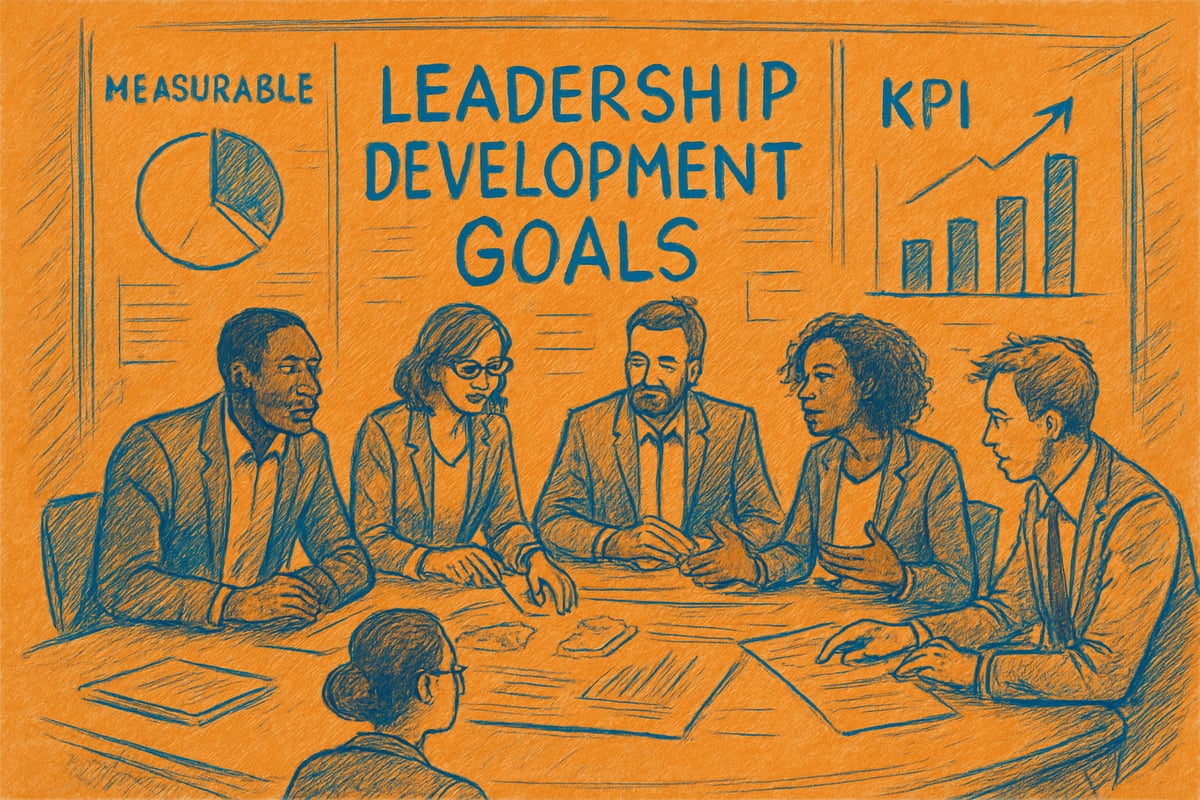
Step 5: Recognize, Celebrate, and Support Individuals

Consistent recognition is a powerful tool for building psychological safety. Regularly acknowledge both individual and team contributions, big or small.

Create simple rituals, such as appreciation circles or “shout-outs” at the start of meetings. Support your team’s mental health and wellbeing by providing resources, flexible work options, and genuine check-ins.

Even small gestures of recognition can boost belonging and engagement. When people feel appreciated, they are more likely to contribute ideas and take positive risks. Building psychological safety means making appreciation part of your team’s DNA.

Step 6: Maintain Accountability and Continuous Improvement

Accountability and continuous improvement are vital for sustaining building psychological safety over time. Hold regular feedback sessions and use pulse surveys to gauge how safe people feel in your team.

Set measurable goals for team culture, such as increasing participation in meetings or reducing turnover. Address issues as soon as they arise, and be transparent about what actions are being taken.

Iterate on your strategies as your team grows and external factors change. Organizations that measure and act on psychological safety data see lasting improvements in performance, adaptability, and retention. For additional tools and resources, visit Accountability Now for practical frameworks.

Building psychological safety is an ongoing journey. By embedding these steps into your team’s daily rhythms, you create an environment where everyone can thrive.

Practical Exercises and Activities to Build Psychological Safety

Practical exercises are the backbone of building psychological safety in any team. These hands-on activities move theory into action, helping teams create habits that foster openness, trust, and courage to speak up.

Core Exercises for Building Psychological Safety

  • Failure Parties: Celebrate mistakes as learning opportunities. Teams come together to share recent failures, discuss what was learned, and remove the stigma from getting things wrong.
  • Blameless Post-Mortems: After a project or incident, the team reviews what happened without assigning blame. The focus is on process improvement and collective learning, which is crucial for building psychological safety.
  • Courageous Conversations: Schedule regular sessions where team members practice giving and receiving feedback on tough topics. This builds resilience and helps normalize healthy conflict.
  • Story-Sharing Rounds: Invite everyone to share a story about a time they took a risk or learned from a setback. This encourages vulnerability and connection.
  • Peer Appreciation Circles: Allocate time for team members to recognize each other’s efforts. Public appreciation strengthens trust and a sense of belonging.
  • Rotating Meeting Facilitators: Give every team member the chance to lead meetings. This distributes power, encourages diverse voices, and signals shared responsibility for building psychological safety.
  • Icebreakers and Role-Play: Use scenario-based activities to practice difficult conversations or introduce new members. These exercises lower barriers and make it safer to speak up.
  • Anonymous Suggestion Boxes: Provide digital or physical spaces for team members to share ideas and concerns without fear of judgment.

Consistent use of these activities creates a rhythm of openness. Teams that integrate these exercises into their routines report higher engagement and adaptability.

Evidence and Impact

Research consistently shows that teams practicing these methods see measurable improvements. For example, the Psychological Safety and Team Performance Study found that regular learning behaviors and open communication directly correlate with better team outcomes and innovation.

Teams that prioritize building psychological safety are more likely to surface issues early, adapt quickly to change, and retain top talent. For organizations looking to deepen their approach, additional strategies are available at accountabilitynow.net.

Building psychological safety is not a one-time effort. The key is to embed these exercises into daily and weekly routines. Over time, trust grows, collaboration deepens, and the team’s collective intelligence rises.

Measuring and Sustaining Psychological Safety in 2025

Tracking progress is essential for building psychological safety that lasts. In 2025, organizations cannot afford to rely on gut feelings or anecdotal evidence alone. Instead, high-performing teams use clear indicators to measure psychological safety, ensuring it becomes a living part of their culture.
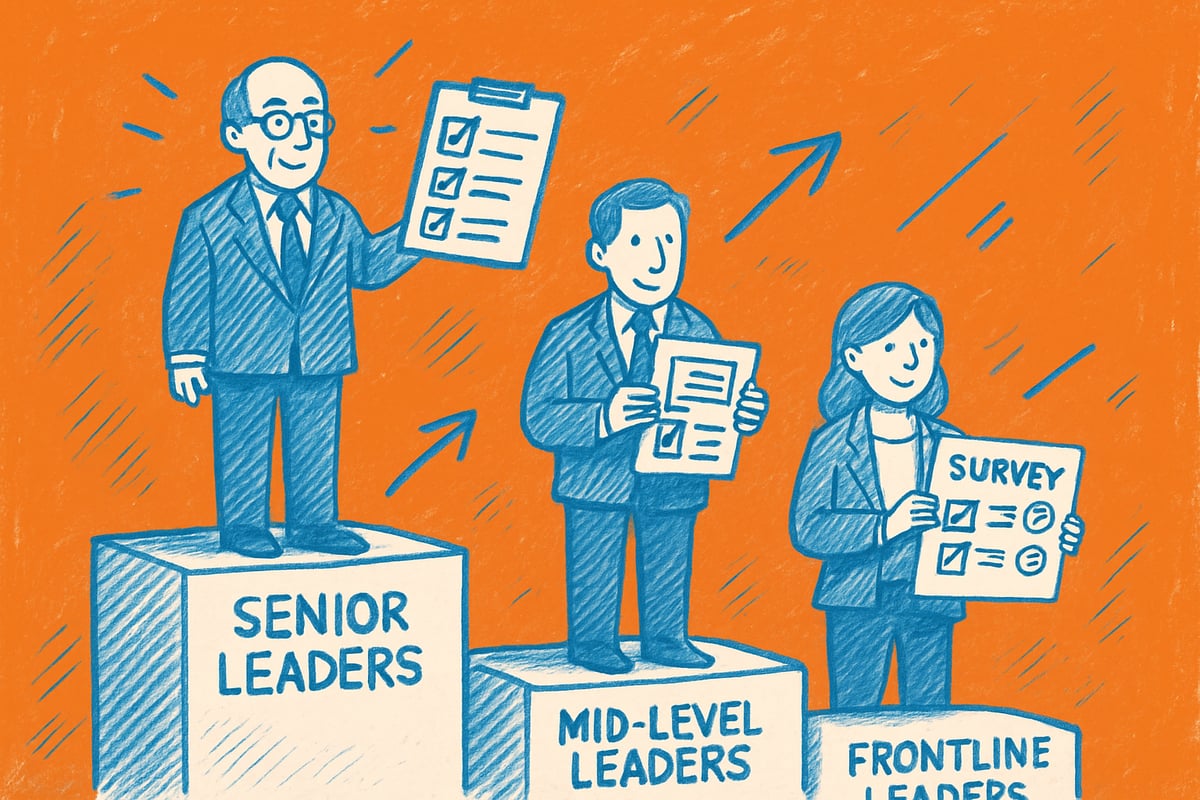
Key Metrics and Tools for Building Psychological Safety

To measure building psychological safety, start with quantifiable metrics. These include employee engagement scores, voluntary turnover rates, innovation benchmarks, and results from psychological safety surveys. Research shows that teams who consistently monitor these metrics outperform their peers in adaptability and resilience.

Some of the most effective tools for measurement are:

Tool/Framework What It Measures Frequency
Edmondson’s Team Survey Interpersonal risk-taking, trust Quarterly
Pulse Checks Real-time sentiment, engagement Monthly
360-Degree Feedback Leader and peer behaviors Biannual
Innovation Metrics Number of new ideas, experiments Ongoing

According to Psychological Safety Statistics 2025, organizations that prioritize these tools see up to 30 percent higher engagement, and their teams are twice as likely to retain top talent.

Embedding Psychological Safety in Culture

Building psychological safety is not a one-time event. Integrate it into performance reviews, leadership development, and onboarding processes. Make it a standing agenda item in team meetings and set measurable goals for team culture.
Leaders should use survey results to spark open discussions, identify barriers, and co-create solutions. Training and coaching play a pivotal role in helping managers translate feedback into action. Embedding psychological safety in daily routines sends a clear message that it is a core value, not an afterthought.

Organizations that align their measurement practices with evolving standards—such as the Workplace Psychological Safety Act—are better prepared for regulatory changes. They also build a foundation for innovation, wellbeing, and long-term success.

Sustaining Momentum and Accountability

Sustaining building psychological safety requires ongoing commitment. Regularly review progress using pulse surveys and feedback loops. Establish accountability by sharing results transparently and following up with concrete actions.

Companies that embed psychological safety into their leadership pipelines and training programs see sustained improvements, even during periods of change. For example, by leveraging best practices from resources like Accountability Now, organizations can boost resilience and respond quickly to setbacks.

A culture of psychological safety is not static—it evolves with your people and business needs. Prioritize continuous improvement, celebrate progress, and make psychological safety a visible part of your strategic vision.

The Future of Psychological Safety: Trends and Predictions for Thriving Teams

The future of building psychological safety is rapidly shifting, as teams adapt to new work realities and emerging challenges. In 2025, organizations that prioritize psychological safety will stand apart, creating environments where people feel secure, valued, and empowered to innovate.

The Hybrid and Remote Revolution

Hybrid and remote work models are now the norm, not the exception. This shift brings new opportunities and challenges for building psychological safety across distributed teams.

Leaders must foster trust and inclusion without the benefit of daily face-to-face interactions. Virtual spaces demand intentional strategies for connection and open communication. Mental health and belonging are now core business priorities, as employees seek meaningful engagement regardless of location.

Forward-thinking organizations embed building psychological safety into their onboarding, collaboration, and feedback processes. Teams that do so report higher resilience, adaptability, and retention.

Digital Tools and Data-Driven Cultures

AI-driven tools are transforming how teams monitor, measure, and nurture psychological safety. Real-time feedback platforms and sentiment analysis help leaders identify issues early and respond with agility.

Compliance standards are also evolving, with new regulations requiring organizations to track and report on culture, safety, and wellbeing. By leveraging digital platforms and analytics, organizations can ensure that building psychological safety is not just a value, but a measurable outcome.

Data shows that teams using these tools experience faster recovery from setbacks and sustained innovation. Diverse perspectives are amplified when technology bridges gaps, driving better performance. For more insights, explore the relationship between psychological safety, diversity, and team performance.

Leadership Skills and Regulatory Shifts

Leadership in 2025 demands empathy, adaptability, and inclusive decision-making. Building psychological safety requires leaders to model vulnerability, champion diversity, and align team goals with organizational values.

Regulatory frameworks are expanding, making psychological safety a compliance issue as well as a cultural imperative. Leaders must stay up to date on best practices and legal requirements, integrating psychological safety into every layer of the organization.

Continuous learning and leadership development are essential. Companies investing in coaching and accountability, such as those highlighted by Accountability Now, are future-proofing their cultures and unlocking higher performance. As research continues to link psychological safety with innovation and market success, building psychological safety will remain a cornerstone of thriving teams.

4 Stages of Psychological Safety: Essential Insights for 2025

Did you know that teams with strong psychological safety are 27% more likely to report greater innovation? As we move toward 2025, the 4 stages of psychological safety are shaping the future of workplaces, especially as remote work, diversity, and rapid change become the norm.

Understanding the 4 stages of psychological safety is crucial for leaders who want high-performing, inclusive, and resilient organizations. This article will break down what psychological safety means, explore each stage in depth, and offer practical strategies for building a culture where everyone thrives.

Ready to future-proof your team? Let’s dive into the science, stories, and steps that will help your organization unlock its full potential. Learn more about accountability and leadership at Accountability Now.

What Is Psychological Safety and Why Does It Matter in 2025?

Psychological safety is the shared belief that a team is safe for interpersonal risk-taking, where individuals feel comfortable expressing ideas, concerns, and mistakes without fear of negative consequences. The concept was first defined in academic circles by Amy Edmondson, but Timothy R. Clark’s work has brought the 4 stages of psychological safety to the forefront for leaders and organizations worldwide.

In 2025, psychological safety stands as a non-negotiable priority for high-performing organizations. The shift to hybrid and remote work has introduced new layers of complexity, making trust, clear communication, and open dialogue more critical than ever. As teams become increasingly diverse, both culturally and functionally, the 4 stages of psychological safety offer a blueprint for fostering environments where every voice matters and innovation thrives.

Why does this matter so much now? Research consistently links psychological safety to essential business outcomes. According to LeaderFactor, teams with high psychological safety are 27% more likely to report increased innovation. Companies that build psychological safety see higher employee engagement, stronger retention rates, and measurable gains in overall performance and well-being. For example, Google’s Project Aristotle famously found that psychological safety was the single most important factor in effective teams.

The impact of the 4 stages of psychological safety goes beyond innovation. When employees feel safe, they are more likely to contribute new ideas, admit mistakes early, and ask for help. This leads to faster problem-solving and resilience in the face of change. Conversely, low psychological safety breeds silence, stifles creativity, and can result in toxic workplace cultures with high turnover.

Common misconceptions persist, however. Psychological safety is not about avoiding accountability or difficult feedback. Rather, it’s about creating a climate where tough conversations can happen respectfully and learning is prioritized over blame. Leaders sometimes mistake safety for comfort, but true psychological safety supports both candor and growth.

For organizations seeking a practical path forward, the 4 stages of psychological safety—Inclusion Safety, Learner Safety, Contributor Safety, and Challenger Safety—provide a clear roadmap. Each stage addresses a fundamental human need, building progressively toward a culture where every team member feels empowered to speak up and drive meaningful change.

To deepen your understanding, explore psychological safety in the workplace for a comprehensive overview of foundational concepts and strategies.

As organizations prepare for the challenges and opportunities ahead, embracing the 4 stages of psychological safety is not just a competitive advantage, but a necessity for sustainable success. For additional leadership insights, visit accountabilitynow.net.

What Is Psychological Safety and Why Does It Matter in 2025?

The 4 Stages of Psychological Safety Explained

Understanding the 4 stages of psychological safety is essential for any organization aiming to build resilient, high-performing teams in 2025. Developed by Timothy R. Clark and popularized by LeaderFactor, this framework offers a practical roadmap for leaders and teams to systematically foster psychological safety.

The 4 stages of psychological safety outline a journey teams take, progressing from basic acceptance to courageous innovation. Each stage builds on the previous one, unlocking new levels of trust, engagement, and performance. This model has proven universal, transcending industries, cultures, and team types.

Leaders play a pivotal role in guiding their teams through each stage. By recognizing where their teams stand within the 4 stages of psychological safety, organizations can create targeted strategies for growth. For a comprehensive explanation of the framework, visit The 4 Stages of Psychological Safety.

Here’s a closer look at each stage and how it contributes to a thriving workplace.

The 4 Stages of Psychological Safety Explained

1. Inclusion Safety

Inclusion Safety is the first and foundational stage within the 4 stages of psychological safety. At this level, individuals feel accepted for who they are, free to be themselves without fear of exclusion. This stage addresses the basic human need for connection and acceptance, laying the groundwork for all subsequent stages.

When Inclusion Safety is strong, teams communicate openly, diversity is visible and respected, and boundaries are honored. New employees are welcomed through thoughtful onboarding, and team rituals celebrate differences. For example, a company might host regular “culture days” where team members share traditions, reinforcing belonging.

Research shows that teams who excel in Inclusion Safety experience higher engagement and reduced absenteeism. A table below summarizes key indicators:

Indicator High Inclusion Safety Low Inclusion Safety
Communication Open, respectful Guarded, cliquish
Diversity Valued, visible Ignored, suppressed
Boundaries Honored Violated

However, barriers such as rigid hierarchies, cliques, and unconscious bias can undermine Inclusion Safety. Leaders must actively express curiosity, validate others’ experiences, and acknowledge boundaries to build trust.

Consider a fast-growing tech startup that revamped its onboarding to include mentorship pairings and regular feedback check-ins. As a result, new hires reported a 40% increase in their sense of belonging within the first month.

Inclusion Safety is not about avoiding differences but embracing them. By establishing this first stage of the 4 stages of psychological safety, organizations create a foundation where everyone feels seen and valued.

2. Learner Safety

Learner Safety is the second phase in the 4 stages of psychological safety. Here, individuals feel free to ask questions, experiment, admit mistakes, and seek feedback without fear of embarrassment or punishment. This stage is critical for innovation and continuous improvement.

Organizations with high Learner Safety encourage honesty and curiosity. Leaders and peers celebrate learning from mistakes, not just successes. Behaviors that foster this stage include hosting post-mortem meetings, running mentorship programs, and promoting “fail forward” initiatives.

A graphic might show that organizations rewarding learning see significantly higher rates of skill development and adaptability. For example, a global consulting firm implemented bi-weekly learning circles, resulting in a 35% increase in employee upskilling over six months.

However, challenges like fear of judgment, perfectionism, or punitive cultures can stifle Learner Safety. Leaders must model vulnerability, share their own learning moments, and ensure psychological safety is prioritized in performance reviews.

Practical tips for reinforcing Learner Safety include:

  • Actively soliciting questions in meetings
  • Recognizing and rewarding honest mistakes
  • Creating safe spaces for experimentation

A notable example is a medical team that implemented regular debriefs after procedures. By openly discussing errors without blame, they improved patient outcomes and staff morale.

Advancing to Learner Safety within the 4 stages of psychological safety ensures teams grow together and adapt quickly to change.

3. Contributor Safety

Contributor Safety is the third stage in the 4 stages of psychological safety. At this level, team members feel empowered to contribute their skills, ideas, and perspectives without hesitation. They trust that their input is valued and that they can take ownership of their work.

The need for autonomy, clear roles, and outcome accountability is central here. Teams with strong Contributor Safety demonstrate behaviors like asking permission before giving feedback, encouraging equal participation, and setting clear expectations.

Here’s a quick comparison:

Behavior High Contributor Safety Low Contributor Safety
Participation Broad, encouraged Restricted, uneven
Feedback Bidirectional, timely Top-down, sporadic
Ownership Clear, celebrated Ambiguous, ignored

Statistics show that teams with Contributor Safety are more productive and innovative. For instance, a multinational engineering firm launched cross-functional projects where team members rotated leadership roles, leading to a 20% boost in project completion rates.

Pitfalls such as micromanagement or lack of direction can hinder Contributor Safety. Leaders must balance autonomy with guidance, providing clear goals while trusting team members to execute.

A best practice is implementing transparent feedback loops and recognition systems. For example, a marketing agency introduced a peer-nominated “Contributor of the Month” award, which increased engagement scores by 15%.

By nurturing Contributor Safety, organizations unlock the full potential of the 4 stages of psychological safety, allowing each person to make a meaningful impact.

4. Challenger Safety

Challenger Safety is the fourth and most advanced stage within the 4 stages of psychological safety. Here, team members feel safe to challenge the status quo, voice dissent, and propose bold new ideas. This stage is the engine of innovation, agility, and organizational growth.

Challenger Safety is defined by behaviors such as soliciting dissenting opinions, rewarding candor, and showing gratitude for constructive feedback. Leaders must encourage structured debates, assign “devil’s advocate” roles, and demonstrate vulnerability when receiving criticism.

Companies that cultivate Challenger Safety adapt faster to market changes and disruptions. For example, a software company instituted quarterly innovation hackathons where all ideas were welcome, leading to two patent filings in a single year.

Obstacles to Challenger Safety include fear of punishment, groupthink, and resistance to change. Leaders must provide “air cover” for brave voices and publicly recognize those who challenge norms constructively.

Tactics for fostering this stage include:

  • Regularly inviting alternative viewpoints
  • Publicly acknowledging and acting on feedback
  • Creating transparent escalation paths for concerns

A real-world scenario: a global retailer’s leadership team invited frontline employees to submit process improvement ideas, resulting in millions in cost savings.

Reaching Challenger Safety within the 4 stages of psychological safety is a hallmark of organizations that thrive amid uncertainty. For further insights on accountability and leadership, see the resources at accountabilitynow.net.

Each stage in the 4 stages of psychological safety is a stepping stone to a culture where every individual can belong, learn, contribute, and challenge. By understanding and intentionally nurturing these stages, leaders can transform team dynamics and drive sustainable success.

Measuring and Diagnosing Psychological Safety in Teams

Psychological safety is not just a buzzword, it is a measurable driver of team success. For organizations aiming to realize the benefits of the 4 stages of psychological safety, regular assessment is essential. Without clear measurement, leaders risk missing hidden barriers that can erode trust and performance. By diagnosing psychological safety, teams can pinpoint strengths and address areas that need improvement.

Measuring and Diagnosing Psychological Safety in Teams

Why Measurement Matters

Measuring the 4 stages of psychological safety provides accountability and a pathway for meaningful change. Teams that track their progress see up to a 20% rise in engagement, according to LeaderFactor research. When organizations prioritize measurement, they create a culture where issues are surfaced early and addressed proactively.

Regular assessment helps leaders understand how safe employees feel to be included, to learn, to contribute, and to challenge. This clarity is especially critical in 2025, as hybrid teams and rapid change intensify the need for psychological safety.

Qualitative and Quantitative Methods

Teams can use both qualitative and quantitative approaches to diagnose the 4 stages of psychological safety. Quantitative methods include structured surveys, such as the LeaderFactor Team Survey, which measures perceptions across all four stages. Surveys provide a scalable way to collect data and benchmark progress.

Qualitative methods, like one-on-one interviews and behavioral observations, add deeper context. Observing team interactions, listening for open communication, and capturing real stories reveal insights that numbers alone cannot. Combining both methods offers a holistic view of team dynamics and uncovers subtle patterns.

For a deeper dive into practical frameworks and how to apply them, see this detailed The Four Stages of Psychological Safety analysis.

Key Indicators and Survey Best Practices

To assess the 4 stages of psychological safety, focus on clear indicators. These include willingness to speak up, comfort admitting mistakes, perceived fairness, and openness to feedback. Sample survey questions might ask, “Do you feel safe sharing new ideas?” or “Are mistakes treated as learning opportunities?”

Best practices for surveys include ensuring anonymity, using simple language, and repeating assessments regularly. Confidentiality encourages honest responses, while ongoing measurement helps track progress and trends. Feedback mechanisms, such as open comment boxes or follow-up interviews, allow employees to elaborate on their experiences.

Leaders should review results with transparency, involving teams in interpreting data and co-creating action plans. This shared ownership accelerates improvement across all 4 stages of psychological safety.

Overcoming Challenges and Taking Action

Common challenges in measuring the 4 stages of psychological safety include survey fatigue, reluctance to share honest feedback, and translating insights into real change. To counter these, keep assessments concise, clarify their purpose, and follow up with visible actions.

After measurement, prioritize quick wins and longer-term strategies. For example, if results highlight low learner safety, introduce “fail forward” sessions or mentorship. When contributor safety is weak, clarify roles and encourage equal participation. Use regular check-ins to monitor progress and adjust as needed.

It is vital to involve external perspectives when necessary. Consulting resources like https://accountabilitynow.net/ can support leaders in interpreting results and implementing meaningful solutions.

Consistent, thoughtful measurement and follow-up transform psychological safety from an abstract idea into a practical, high-impact advantage for your organization.

Strategies to Build and Sustain Psychological Safety in 2025

Building and sustaining the 4 stages of psychological safety is non-negotiable for organizations aiming to thrive in 2025. Leaders who prioritize this journey foster teams that are not only innovative, but also resilient and inclusive. Achieving this transformation is not a one-and-done event. It requires deliberate, ongoing strategies that address every stage of the 4 stages of psychological safety.

Strategies to Build and Sustain Psychological Safety in 2025

Leadership Commitment and Modeling

The journey to embed the 4 stages of psychological safety starts at the top. Leaders must model vulnerability and openness, showing that it’s safe to speak up and take risks. This modeling sets the cultural tone and encourages teams to follow suit.

Key leadership actions include:

  • Regularly soliciting feedback from all team members.
  • Sharing personal stories of learning and growth.
  • Acknowledging mistakes and demonstrating accountability.

Training programs are essential. Workshops, coaching, and peer learning circles help leaders develop the skills to navigate difficult conversations and foster trust. Research shows that organizations investing in psychological safety training report higher retention and innovation rates.

Embedding Psychological Safety in Team Practices

To make the 4 stages of psychological safety stick, integrate them into daily team rituals and processes. Start strong with onboarding experiences that emphasize inclusivity and belonging. Continue with regular check-ins, open forums, and structured feedback sessions.

Consider these practical tactics:

  • Use rotating facilitators in meetings to ensure all voices are heard.
  • Incorporate psychological safety metrics into performance reviews.
  • Celebrate learning moments and highlight contributions from across the team.

A table below summarizes strategies tailored to each stage:

Stage Strategy Example
Inclusion Welcome rituals, diversity spotlights
Learner Post-mortem reviews, mentorship
Contributor Ownership of projects, clear roles
Challenger Idea challenges, gratitude for dissent

Explore more actionable approaches and real-world examples at Psychological safety at work.

Leveraging Technology and Tools

Modern technology can accelerate the adoption of the 4 stages of psychological safety. Anonymous feedback platforms, digital suggestion boxes, and collaboration tools empower employees to share ideas without fear. Data dashboards help leaders track engagement, participation, and progress across all four stages.

For organizations managing hybrid or remote teams, virtual workshops and digital pulse surveys maintain connection and transparency. These tools help diagnose areas for improvement and reinforce psychological safety as a living, evolving practice.

Overcoming Common Pitfalls

Even with best intentions, setbacks are inevitable. Common obstacles to the 4 stages of psychological safety include micromanagement, unclear expectations, and inconsistent follow-through. To overcome these, leaders must:

  • Set clear, shared norms for communication and feedback.
  • Address issues of hierarchy or bias swiftly and openly.
  • Use regular assessments and adapt strategies as needed.

When challenges arise, seeking guidance from external experts or frameworks, such as those found at Accountability Now, can provide an objective perspective and proven solutions.

Sustaining Progress for the Future

Sustaining the 4 stages of psychological safety requires ongoing commitment. Embed it into your organization’s DNA by aligning it with values, leadership development, and recognition programs. Adapt strategies as your workforce and business landscape evolve.

By prioritizing continuous learning, celebrating progress, and holding everyone accountable, organizations create environments where every team member can thrive. The 4 stages of psychological safety will remain a cornerstone for high-performing, future-ready organizations in 2025 and beyond.

The Future of Psychological Safety: Trends and Predictions for 2025

The workplace is entering a new era, and the 4 stages of psychological safety are more essential than ever for thriving organizations. As hybrid work, AI, and global teams become the norm, psychological safety will drive innovation and resilience. Leaders must anticipate how these shifts will impact their teams and culture.
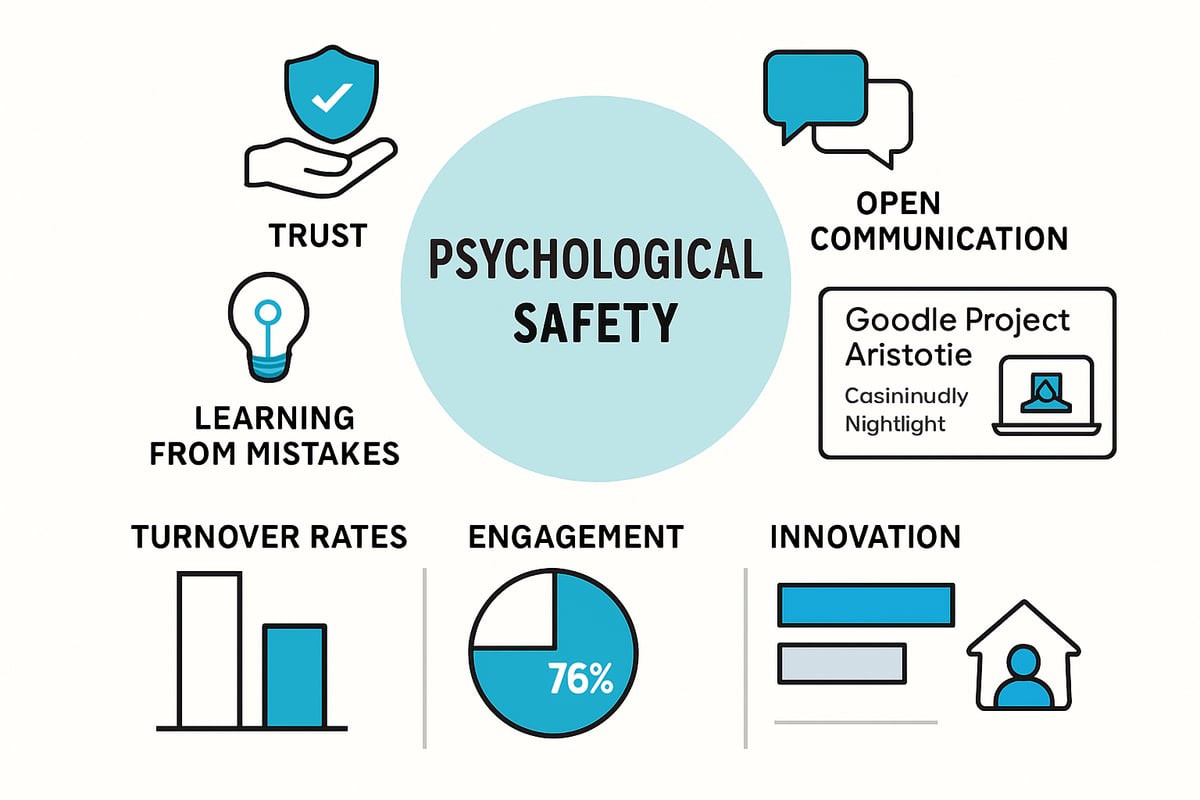
Hybrid, AI, and Global Teams: Shifting the Landscape

Hybrid work models and AI integration are redefining collaboration. The 4 stages of psychological safety provide a roadmap for teams navigating remote communication, digital tools, and cross-cultural dynamics. As teams become more distributed, leaders must intentionally foster inclusion and trust, ensuring every voice is heard regardless of location or background.

Global teams bring fresh perspectives but also new challenges. Cultural differences and digital fatigue can erode psychological safety if not addressed proactively. Teams that invest in continuous learning and open feedback will adapt faster to rapid change.

Evolving Frameworks and Expanding Research

Research on the 4 stages of psychological safety is expanding, with new frameworks emerging for complex, fast-paced environments. Organizations are recognizing the need to measure and reinforce psychological safety at every stage, from onboarding to leadership development.

Future-focused companies are leveraging insights from resources like The Four Levels of Psychological Safety to tailor strategies for their specific contexts. These approaches help teams identify gaps, address barriers, and promote a culture where challenging the status quo is safe and encouraged.

Attracting Talent, Supporting DEI, and Preparing for Change

The 4 stages of psychological safety will be a key differentiator in attracting and retaining top talent. Candidates seek workplaces where they can contribute fully, learn, and innovate. Psychological safety supports diversity, equity, and inclusion by making space for all voices and backgrounds.

To stay competitive, organizations must embed psychological safety into every aspect of their operations. This includes regular assessment, leadership training, and transparent communication. Resources like https://accountabilitynow.net/ can support leaders in building the skills needed for future-ready teams.

Looking ahead, the organizations that prioritize psychological safety will be best equipped to handle uncertainty and drive sustainable growth.

Key Resources and Further Reading

Deepen your understanding of the 4 stages of psychological safety with these trusted resources and expert guides.

  • The 4 Stages of Psychological Safety by Timothy R. Clark is essential reading for leaders and teams.
  • Explore The 4 Stages of Psychological Safety Workshop for hands-on strategies and implementation tools.
  • Review foundational research from Amy Edmondson and practical guides from LeaderFactor.
  • Access behavioral assessments and self-evaluation tools to measure your team’s progress.
  • For additional insights into accountability and culture change, visit accountabilitynow.net.

Invest in ongoing learning to keep your organization at the forefront of psychological safety and resilience.

The Essential Guide to Leadership Training in 2025

In 2025, the pace of change will demand more from leaders than ever before. Organizations that invest in leadership training will set themselves apart, building resilience and agility in a shifting landscape.

This essential guide dives into the latest trends, core skills, and proven strategies for leadership training in 2025. You will discover why it matters now, what competencies to focus on, and how to measure results. For deeper insights on accountability in leadership, visit Accountability Now.

Explore actionable steps to develop future-ready leaders and transform how your organization leads. Let’s shape the future of leadership together.

Why Leadership Training Is Critical in 2025

In 2025, organizations face a business landscape more volatile and complex than ever before. Hybrid work models, rapid technological advancements, and fierce global competition are creating new demands for leaders at every level. As a result, leadership training is not just a development tool, it is a business necessity.

Companies are grappling with constant change. The shift to hybrid and remote work has redefined team dynamics and communication. Digital transformation is accelerating, requiring leaders to adopt new technologies quickly. Multigenerational teams bring diverse perspectives but also unique management challenges.

Recent research shows that 77% of organizations now consider leadership gaps a top concern. This alarming statistic highlights a critical risk: without effective leadership training, businesses may struggle to adapt, innovate, and retain top talent. You can review more detailed data and insights in the Leadership Training Statistics 2025 report.

The impact of leadership training reaches every corner of an organization. Strong leaders drive higher employee engagement, foster loyalty, and boost overall productivity. In contrast, poor leadership leads to increased turnover, low morale, and missed business opportunities. Replacing a single employee can cost up to twice their annual salary, making leadership skills a direct factor in controlling costs.

New leadership challenges are emerging daily. Managing remote or hybrid teams requires trust and clear digital communication. Navigating digital transformation means leaders must be comfortable with new tools and data-driven decision-making. Additionally, today’s leaders must bridge generational gaps, ensuring that all team members feel valued and included.

Consider the financial impact. Companies that invest in leadership training see up to 2.4 times higher revenue growth compared to those that do not, according to Dale Carnegie research. This substantial difference underlines the return on investment for organizations that make leadership development a priority.

Below is a table summarizing the core impacts of leadership training:

Impact Area With Leadership Training Without Leadership Training
Employee Engagement High Low
Retention Improved High Turnover
Productivity Increased Stagnant or Declining
Innovation Accelerated Missed Opportunities
Revenue Growth Up to 2.4x higher Slower or Negative

Leadership training offers a competitive edge that goes beyond the basics. It is a catalyst for innovation, adaptability, and resilience in uncertain times. Leaders who are equipped to coach, communicate, and inspire can unlock the full potential of their teams.

The strategic importance of leadership training is clear. In a world of constant disruption, it is no longer optional. Organizations that treat leadership development as a core business strategy will be better prepared to navigate change, outperform competitors, and secure long-term success. For more resources on accountability and leadership, you may wish to visit accountabilitynow.net.

Why Leadership Training Is Critical in 2025

Core Leadership Competencies for 2025

Effective leadership training in 2025 requires a new set of core competencies. As organizations adapt to hybrid work, digital transformation, and global shifts, leaders must develop skills that go beyond traditional management. These four key areas define the foundation of impactful leadership in the modern era.

Core Leadership Competencies for 2025

Emotional Intelligence and Self-Awareness

In 2025, emotional intelligence is a non-negotiable element of leadership training. Leaders who understand and manage their emotions, show empathy, and actively listen can build trust and foster collaboration across teams. This competency directly influences how leaders respond to stress, navigate conflict, and support diverse workforces.

Research shows that 90% of top performers possess high emotional intelligence, making it a strong predictor of leadership success. Courses from Dale Carnegie and similar organizations focus on self-awareness and emotional regulation, helping leaders recognize their strengths and blind spots. Tactics such as mindfulness exercises, reflective journaling, and 360-degree feedback are proven methods to enhance emotional intelligence.

The Leadership Development Study 2025 highlights that organizations prioritizing emotional intelligence in leadership training experience higher engagement and lower turnover. Leaders who invest in self-awareness create more resilient and adaptable teams.

Strategic Thinking and Decision-Making

Strategic thinking is essential for navigating the complexity of today’s business environment. Leadership training in 2025 must equip leaders to analyze data, anticipate market trends, and make informed decisions that align with both short-term goals and long-term vision.

Scenario planning, critical thinking workshops, and regular strategy sessions help leaders sharpen their decision-making abilities. AMA’s leadership seminars, for example, place a strong emphasis on developing strategic planning skills. Leaders are encouraged to balance agility with discipline, adapting quickly to new information while remaining focused on organizational objectives.

Data-driven decision-making is now a core expectation. Leaders who excel in this area use analytics to guide their choices and encourage their teams to embrace innovation. Strategic thinking ensures that leadership training is not just about theory but about practical application in real-world scenarios.

Communication and Influence

The ability to communicate clearly and influence others is a cornerstone of effective leadership training. In 2025, leaders must build trust through authentic, transparent communication—especially as teams become more cross-functional and geographically dispersed.

Storytelling, constructive feedback, and assertive communication techniques are vital tools for leaders. Digital fluency is equally important, with hybrid environments demanding proficiency in virtual presentations and remote collaboration. Dale Carnegie’s high-impact presentation courses exemplify how leaders can engage audiences and drive results.

Leaders need to lead with influence rather than authority. This shift encourages collaboration and empowers team members to take ownership of their work. Leadership training programs should include opportunities for leaders to practice and refine these skills, ensuring they can inspire action across all levels of the organization.

Coaching, Development, and Team Engagement

Modern leadership training recognizes the importance of moving from a directive approach to one centered on coaching and development. Leaders who act as coaches empower their teams, foster inclusion, and create psychological safety, all of which are essential for high performance.

Manager-as-coach programs, team facilitation training, and regular feedback sessions help leaders support ongoing growth. Engaged teams are proven to be 21% more profitable, according to Gallup. Leadership training should encourage leaders to prioritize engagement through recognition, open dialogue, and continuous development.

Effective leaders know that investing in others multiplies results. By embracing the role of coach, leaders can unlock their teams’ potential and drive sustained organizational success. For additional resources on accountability and leadership, see Accountability Now.

The Most Effective Leadership Training Methods in 2025

Adapting to the demands of 2025, organizations must rethink their approach to leadership training. The most successful programs blend innovation with practicality, ensuring leaders are prepared for constant change. Let us explore the most impactful methods shaping leadership development this year.

The Most Effective Leadership Training Methods in 2025

Blended Learning: In-Person, Online, and On-Demand

Blended learning is now the foundation of effective leadership training. By combining live workshops, virtual classrooms, and self-paced modules, organizations offer flexibility for diverse learning styles and schedules. This approach helps participants apply new skills in real time, whether they are in the office or remote.

A recent survey found that 65 percent of organizations are leveraging blended learning for leadership development. This method ensures training is accessible to all, regardless of location or role. For instance, both AMA and Dale Carnegie provide hybrid offerings that mix live interaction with digital content, maximizing engagement.

For a deeper look at how digital tools and blended strategies are transforming leadership training, visit Leadership Training Trends 2025. These insights reveal why blended learning is crucial for building future-ready leaders.

Experiential Learning and Real-World Application

Experiential learning is all about learning by doing. Action learning projects, simulations, and role-playing exercises immerse leaders in real-world challenges. This hands-on approach is proven to boost retention and drive meaningful behavior change, making it a core element of leadership training in 2025.

Leaders might participate in live coaching during meetings or tackle project-based assignments that mirror their actual responsibilities. These methods allow immediate application, bridging the gap between theory and practice. As a result, organizations see stronger leadership pipelines and more agile teams.

Emphasizing real-world application within leadership training not only accelerates skill development but also fosters accountability, as highlighted by resources like Accountability Now. Embedding experiential learning into daily workflows ensures leaders are always adapting and growing.

Peer Learning, Mentoring, and Coaching

Peer learning is gaining traction as a powerful component of leadership training. Through cohorts, mastermind groups, and leadership circles, participants learn from each other’s experiences. Structured mentoring and executive coaching further reinforce skills and provide ongoing support.

Many organizations rely on 360-degree feedback to help leaders identify blind spots and growth opportunities. In fact, 71 percent of Fortune 500 companies use mentoring programs to strengthen their leadership pipelines. Peer learning not only improves accountability but also builds lasting professional networks.

Leadership training programs that incorporate peer and coaching elements create a culture of continuous improvement. These relationships help leaders stay motivated and engaged while driving organizational success.

Digital Tools and Leadership Assessments

Technology is transforming leadership training in 2025. Online assessments help identify individual strengths and gaps, allowing programs to be tailored for maximum impact. AI-powered platforms create personalized learning paths, track progress, and offer real-time feedback.

Digital dashboards and KPI scorecards make it easy to measure the effectiveness of training. For example, leadership style assessments and feedback platforms provide actionable insights for ongoing development. Organizations can now deliver targeted training at scale, supporting leaders wherever they are.

By integrating digital tools into leadership training, companies ensure their programs remain agile and data-driven. This approach leads to stronger leaders who are ready to face the challenges of tomorrow.

Building a Future-Ready Leadership Training Program: Step-by-Step

Building a future-ready leadership training program is essential for organizations that want to thrive in 2025. Today’s workplace is complex, requiring leaders who are adaptable, strategic, and people-focused. By following a structured, step-by-step process, you can ensure your leadership training initiatives are aligned with business goals and drive measurable results.

Building a Future-Ready Leadership Training Program: Step-by-Step

Step 1: Assess Organizational Needs and Leadership Gaps

The first step in effective leadership training is a thorough assessment of your organization’s current state. Begin by conducting needs assessments and skills inventories. Use tools like 360-degree feedback, employee surveys, and interviews with key stakeholders to gather data.

Identify where your leadership bench is strong and where gaps exist. Are there critical skills missing for future growth? Is your current team equipped to manage remote or cross-generational teams? Align these insights with organizational goals to set a clear direction for your leadership training program.

By pinpointing gaps early, you lay the groundwork for a targeted approach. This ensures your investment in leadership training directly addresses your company’s most pressing challenges and opportunities.

Step 2: Define Clear Learning Objectives and KPIs

Once needs are identified, set specific learning objectives for your leadership training program. These objectives should be measurable and directly linked to business outcomes. For example, you might aim to boost employee engagement scores by 15 percent or cut voluntary turnover by 10 percent within a year.

Develop a set of key performance indicators (KPIs) to track progress. Common KPIs include:

  • Pre- and post-training assessment scores
  • Promotion rates among program graduates
  • Retention rates in critical roles
  • Increases in team productivity

Clear objectives and KPIs keep leadership training focused and accountable. They also provide benchmarks to demonstrate the program’s value to stakeholders and drive continuous improvement.

Step 3: Customize Content for Roles, Levels, and Generations

Leadership training is not a one-size-fits-all process. Tailor your content to the needs of different roles, experience levels, and generations. First-time managers require foundational skills, while senior leaders benefit from strategic and change management content.

Consider the generational mix within your teams. Millennials and Gen Z may value digital-first learning and frequent feedback, while more experienced leaders might prefer in-depth workshops and peer discussions.

Create specialized tracks or modules for each group. This targeted approach increases engagement and ensures every participant receives relevant, actionable development. Effective leadership training recognizes and adapts to the diversity within your organization.

Step 4: Select and Integrate the Right Training Methods

Choosing the right mix of delivery methods is critical for successful leadership training. Blend live workshops, virtual classrooms, e-learning modules, and peer forums to meet diverse learning preferences and schedules.

Ensure accessibility for remote, hybrid, and global teams. Use digital platforms to deliver content anytime, anywhere. Incorporate real-world projects, coaching sessions, and role-playing exercises for practical skill development.

A blended, flexible approach maximizes participation and knowledge retention. When selecting methods, always tie them back to your program’s objectives and the unique needs identified in earlier steps.

Step 5: Implement, Support, and Reinforce Learning

Implementation is about more than scheduling sessions. Provide resources, ongoing coaching, and opportunities for leaders to apply new skills in daily work. Embed leadership training into regular meetings, performance reviews, and team projects.

Support doesn’t end when training concludes. Offer follow-up coaching, peer learning circles, and access to expert guidance. For organizations seeking external expertise, the Top business coaches directory connects you with professionals who can reinforce and sustain leadership development.

Reinforcement ensures learning sticks and translates into behavior change. Building accountability and a culture of continuous improvement transforms leadership training from a one-time event into a strategic advantage. For more on building accountability into your leadership approach, visit Accountability Now.

Measuring the ROI of Leadership Training

Understanding the return on investment (ROI) of leadership training is essential for organizations aiming to maximize development budgets and drive lasting business impact. Clear definitions of success are foundational. What does effective leadership look like for your company? Start by outlining key performance indicators (KPIs) that align leadership growth with strategic business outcomes.

ROI measurement for leadership training goes beyond intuition. Organizations should track specific metrics that reflect both immediate and long-term value. Common indicators include:

  • Employee engagement scores
  • Retention and turnover rates
  • Productivity and performance metrics
  • Financial outcomes, such as revenue growth

A blend of tools helps capture these metrics. Pre- and post-training assessments provide a baseline for skill growth. Feedback surveys and 360-degree reviews reveal shifts in leadership behavior. Digital dashboards and performance management systems ensure data is accessible and actionable. Many companies also partner with external coaches for objective evaluation, such as those found through Business coaching in the US.

Metric Measurement Tool Business Impact
Engagement Surveys, pulse checks Increased productivity
Retention HR analytics Reduced hiring costs
Productivity Performance reviews Higher output
Financial Performance Revenue/profit tracking Tangible ROI

Real-world results underscore the value of leadership training. Organizations that invest in targeted programs report up to 34% higher retention, according to the American Management Association. When leadership training is directly connected to culture and strategic initiatives, the gains are even greater. Companies often see improved innovation, stronger team morale, and measurable growth in business performance.

Measuring soft skills development and long-term impact can be challenging. Unlike technical training, the influence of leadership training may unfold over months or even years. To address this, organizations should gather qualitative feedback, track behavior change, and monitor overall business trends. For example, a large firm implemented an ongoing leadership training initiative and saw a sustained rise in engagement and profitability, confirming the tangible benefits.

Continuous measurement and adjustment are critical for sustained ROI. Leadership training is not a one-time event but an evolving process. Regularly revisit KPIs, update training content, and reinforce learning through coaching and accountability structures. For further insights on building accountability into leadership development, refer to resources such as Accountability Now.

Ultimately, the most effective leadership training programs are those that connect learning outcomes with business priorities, leverage robust measurement tools, and foster a culture of ongoing growth. By treating ROI analysis as a strategic investment, organizations ensure their leadership pipeline remains strong and future-ready.

Trends and Innovations Shaping Leadership Training in 2025

As organizations look ahead, leadership training is transforming rapidly to meet shifting workforce expectations, new technology, and global demands. In 2025, the most effective programs are shaped by trends that prioritize inclusivity, digital innovation, and ongoing development. Understanding these trends helps organizations build resilient leaders ready for tomorrow’s challenges.

Emphasis on Diversity, Equity, Inclusion & Belonging (DEI&B)

Leadership training in 2025 places DEI&B at its core. Organizations recognize that inclusive leadership drives better business outcomes and stronger teams. Research shows that companies with diverse leadership outperform peers by 33 percent, making DEI&B not just an ethical priority but a strategic advantage.

Modern leadership training programs now weave DEI&B principles into every aspect of the curriculum. This includes training leaders to recognize bias, foster psychological safety, and create cultures where every voice is valued. Programs such as Leadership Trends 2025 highlight the growing demand for leaders who champion equity and belonging in a global context.

Leaders who excel in DEI&B are more effective at engaging teams and driving innovation. By embedding these values into leadership training, organizations prepare leaders to meet complex challenges and inspire high-performing, inclusive teams.

AI and Technology in Leadership Development

AI and digital platforms are revolutionizing leadership training, enabling personalized learning at scale. In 2025, artificial intelligence is used to assess leader strengths, recommend targeted content, and deliver real-time feedback. Virtual reality simulations allow leaders to practice skills in immersive, risk-free environments.

AI-powered coaching tools adapt to each learner’s pace, ensuring that leadership training is both efficient and engaging. Digital dashboards provide leaders and organizations with actionable insights, tracking progress and identifying areas for growth.

The integration of technology makes leadership training more accessible for distributed teams. It also ensures that learning is continuous, data-driven, and aligned with business objectives. As these innovations evolve, organizations that harness technology gain a significant edge in developing agile, future-ready leaders.

Leadership for Hybrid and Remote Teams

The rise of hybrid and remote work has redefined what effective leadership training looks like. Leading distributed teams requires new skills, such as building trust virtually, fostering engagement across time zones, and maintaining accountability without physical presence.

Leadership training in 2025 includes modules focused on digital communication, remote team management, and virtual collaboration. Leaders learn to use technology to connect authentically with their teams, set clear expectations, and support well-being from afar.

Case studies show that organizations investing in leadership training for hybrid environments see higher retention and productivity. By preparing leaders for the realities of remote work, companies can create cohesive teams that thrive regardless of location. For additional insights on holding leaders accountable in virtual settings, resources like Accountability Now offer practical frameworks.

Continuous, Lifelong Leadership Development

Gone are the days when leadership training was a one-time event. In 2025, development is seen as a lifelong journey, supported by microlearning, mobile apps, and on-demand resources. Leaders are encouraged to pursue continuous growth and adapt to changing business needs.

Subscription-based leadership training programs provide fresh content and ongoing support. Peer learning, mentorship, and coaching remain central, helping leaders apply new skills in real time. Platforms like Life coaching and leadership skills offer tailored coaching and development paths, ensuring leaders receive personalized guidance at every stage.

By fostering a culture of lifelong learning, organizations ensure that leadership skills stay relevant and impactful. This approach not only boosts individual performance but also drives long-term organizational success.

Common Pitfalls and How to Overcome Them

Leadership training is a powerful driver of growth, but many organizations stumble by repeating preventable mistakes. Addressing these common pitfalls is essential for turning leadership training into a true engine for engagement, innovation, and performance.

Treating Leadership Training as a One-Time Event

One of the most persistent mistakes is viewing leadership training as a single, isolated event. Many organizations invest heavily in workshops or seminars but fail to provide ongoing opportunities for growth. Research shows that skills gained during one-off training sessions fade quickly without reinforcement.

Continuous learning is essential for lasting impact. Leaders must have regular access to new knowledge, practice opportunities, and real-world feedback. Organizations that implement ongoing leadership training see sustained improvements in engagement and adaptability. By creating a culture of learning, businesses ensure their leaders remain prepared for evolving challenges.

Focusing on Theory Over Practice

Another common pitfall is relying too heavily on theory and neglecting hands-on experiences. While foundational models and frameworks are valuable, leadership training that lacks practical application often fails to create real behavioral change.

Effective programs balance conceptual learning with real-world exercises—such as simulations, role-playing, and project-based assignments. These methods allow leaders to apply new skills directly to their work context. For instance, organizations that incorporate live coaching or peer learning circles see greater skill retention and more confident leaders. Prioritizing practice over theory transforms knowledge into measurable results.

Lack of Follow-Up and Reinforcement

Without structured follow-up and reinforcement, even the best leadership training can lose its effectiveness. Studies indicate that regular reinforcement increases training success rates by up to 60 percent. Leaders benefit from ongoing coaching, feedback, and accountability systems to solidify new behaviors.

Action plans, peer support groups, and digital check-ins all contribute to sustained development. Leveraging resources like Accountability Now can help organizations build robust accountability frameworks, ensuring leadership training delivers lasting change. Consistent support encourages leaders to apply their learning and adapt quickly to new demands.

Failure to Align Training with Strategy and Culture

A final major pitfall is failing to align leadership training with the organization’s strategic goals and culture. Generic programs rarely address the unique needs of diverse teams or evolving business priorities. When training is disconnected from real objectives, it risks being ignored or forgotten.
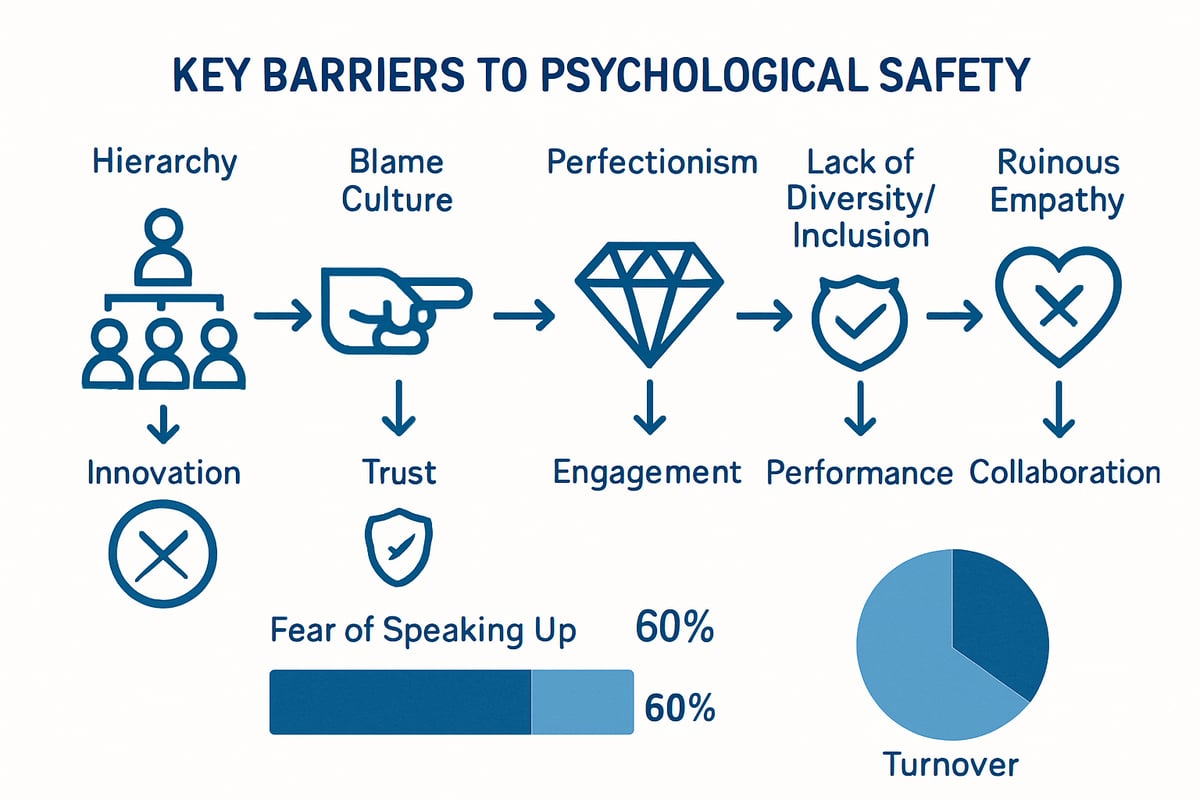
To overcome this, organizations should tailor leadership training to fit their vision, values, and workforce dynamics. Involving leaders in program design, using culture-specific case studies, and tying outcomes to business metrics ensures relevance. Investing in alignment builds organizational resilience and prepares leaders to drive meaningful change.
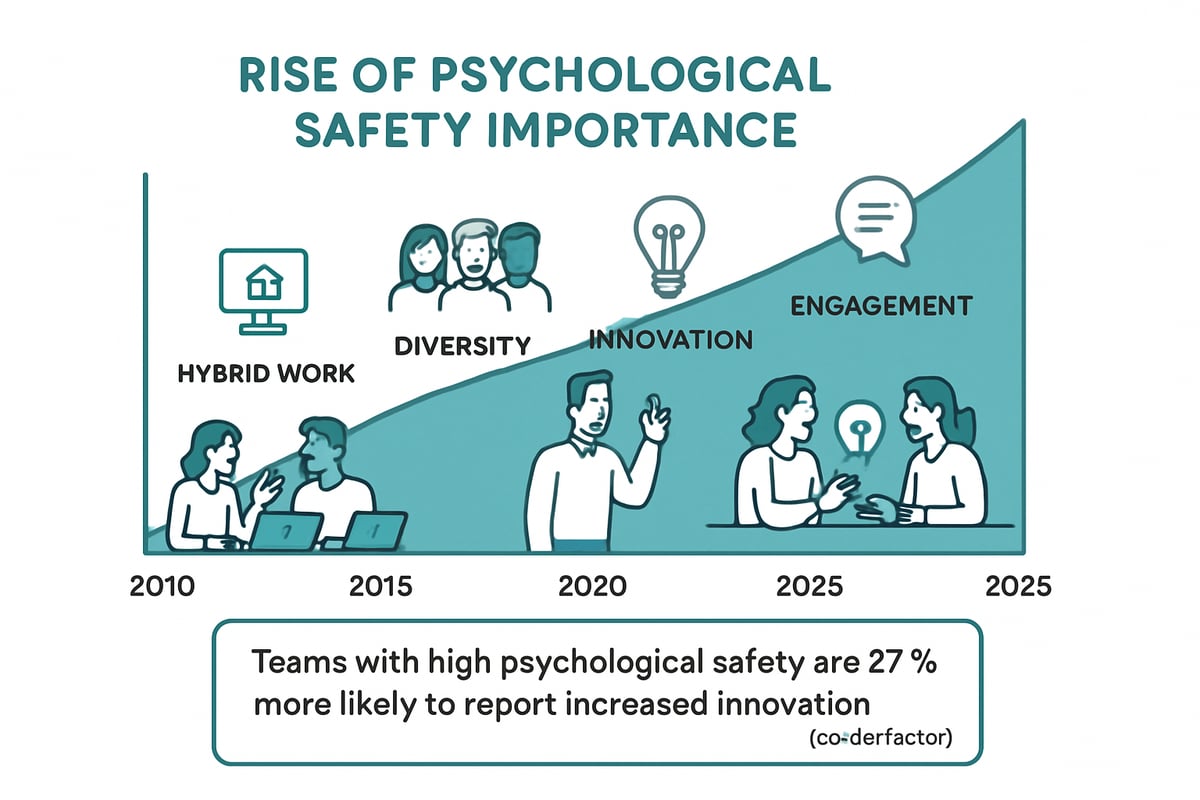
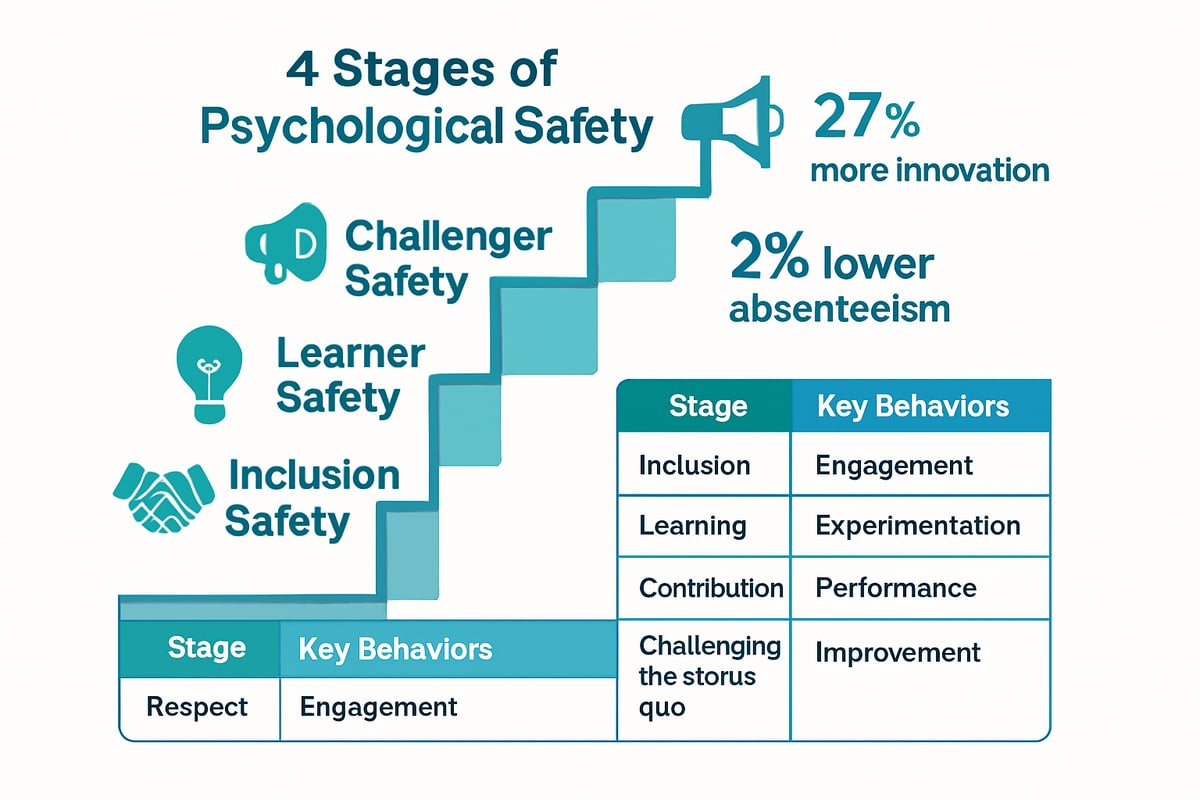
Pitfall Solution
One-Time Training Event Continuous, ongoing learning opportunities
Too Much Theory, Not Enough Practice Real-world application and hands-on learning
No Follow-Up or Reinforcement Coaching, accountability, regular check-ins
Misalignment with Strategy and Culture Tailored programs linked to business goals

By recognizing and addressing these common pitfalls, organizations can unlock the full potential of leadership training and foster a culture of growth, accountability, and adaptability.