
The Essential Guide to Claude Prompts to Help Coaches Build a Funnel
Coaching businesses face increasing pressure to attract, nurture, and convert clients efficiently in a competitive landscape. With the rise of AI technology, more coaches are searching for smarter solutions to streamline their client acquisition process.
Enter Claude, a powerful AI language model designed to simplify funnel creation and management. Using claude prompts to help coaches build a funnel enables you to automate lead generation, personalize outreach, and optimize every stage of your marketing efforts.
This guide will walk you through the essentials, from understanding Claude prompts to real-world examples, strategies for each funnel stage, and proven best practices. Ready to transform your coaching funnel with AI? Let’s get started.
Understanding Claude Prompts and Their Role in Funnel Building
Claude prompts to help coaches build a funnel are precise instructions you provide to the Claude AI language model. These prompts guide Claude to generate content tailored for different steps of your coaching funnel, such as email copy, landing page text, and social media posts. The process starts with a prompt, and Claude produces responses that fit your target audience and objectives.
What sets Claude apart is its deep contextual understanding and strong ethical guidelines. This makes it especially suitable for coaching professionals who value personalization and trust. By using claude prompts to help coaches build a funnel, coaches can automate repetitive tasks while maintaining quality and authenticity.
Prompts can be mapped to every stage of your funnel: awareness (attracting leads), interest (nurturing prospects), decision (overcoming objections), and action (converting clients). According to recent industry data, 61% of marketers now use AI for content generation, highlighting the growing adoption of these tools in coaching and marketing funnels (AI in coaching industry statistics).
For example, a leadership coach might use Claude to create personalized outreach emails, drastically reducing manual effort and increasing engagement. Some worry AI-generated content feels generic, but with the right prompts and review process, output can stay relevant and authentic to your coaching style.

Step 1: Planning Your Coaching Funnel with Claude
Before leveraging claude prompts to help coaches build a funnel, take time to clarify your business goals and target audience. Precise planning ensures your funnel is tailored to attract, nurture, and convert the right coaching clients.
Start by defining your ideal client profile. Consider their pain points, goals, and preferred learning styles. Next, outline your funnel objectives, such as increasing discovery calls or growing your email list.
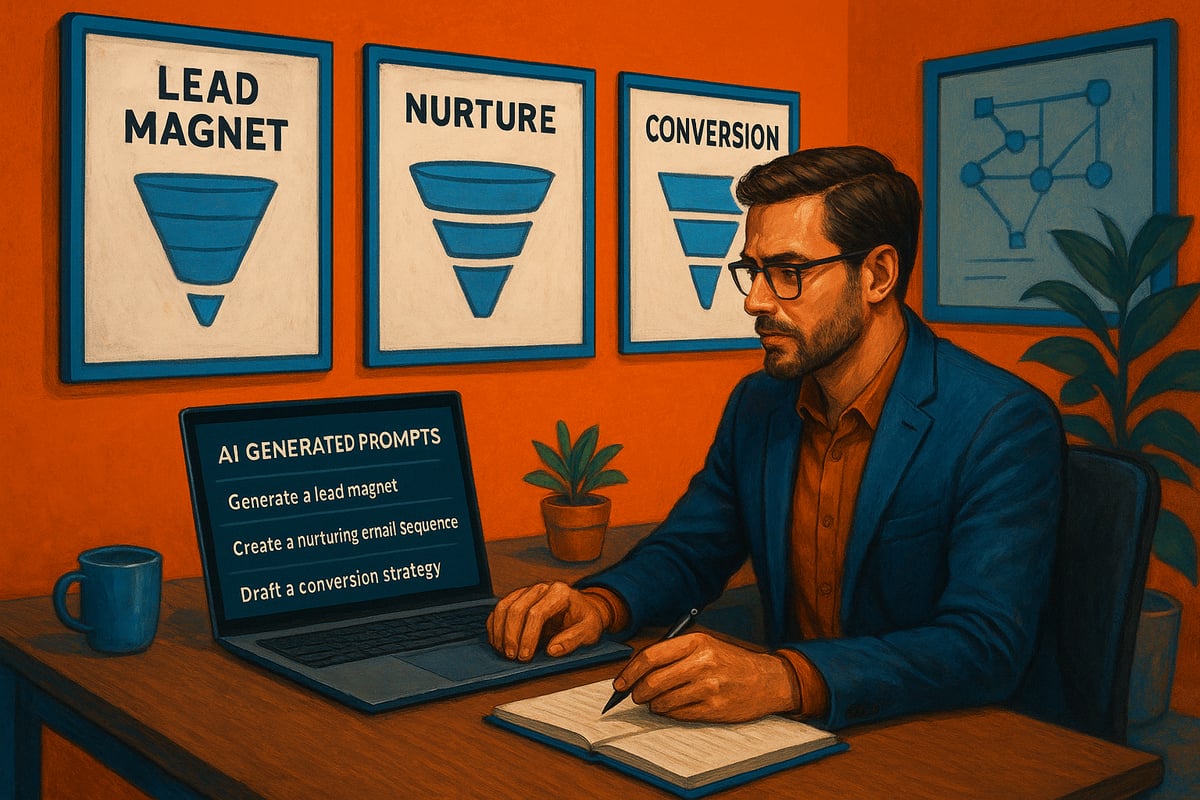
Break your funnel into three core stages:
- Lead Magnet: Offer a valuable resource to capture interest.
- Nurture Sequence: Build trust through email or content follow-ups.
- Conversion Offer: Present a compelling invitation to book a session or join a program.
Use claude prompts to help coaches build a funnel by brainstorming lead magnet ideas specific to your niche. For example, prompt Claude with:
Suggest five lead magnet ideas for executive leadership coaches.
This will generate tailored options, saving you valuable time.
To maintain authenticity, review Claude’s outputs and ensure they reflect your brand voice. Test the effectiveness of prompts by running A/B tests on content performance. Always prioritize ethical considerations—never misrepresent AI content or automate sensitive communication.
For additional prompt inspiration, explore these Claude prompts for getting more coaching clients to refine your strategy and boost funnel success.
Step 2: Crafting High-Converting Prompts for Each Funnel Stage
To maximize the impact of claude prompts to help coaches build a funnel, it is essential to tailor your approach for each stage. Well-structured prompts support content creation, nurture, and conversion, helping you drive results at every touchpoint.
Awareness Stage Prompts
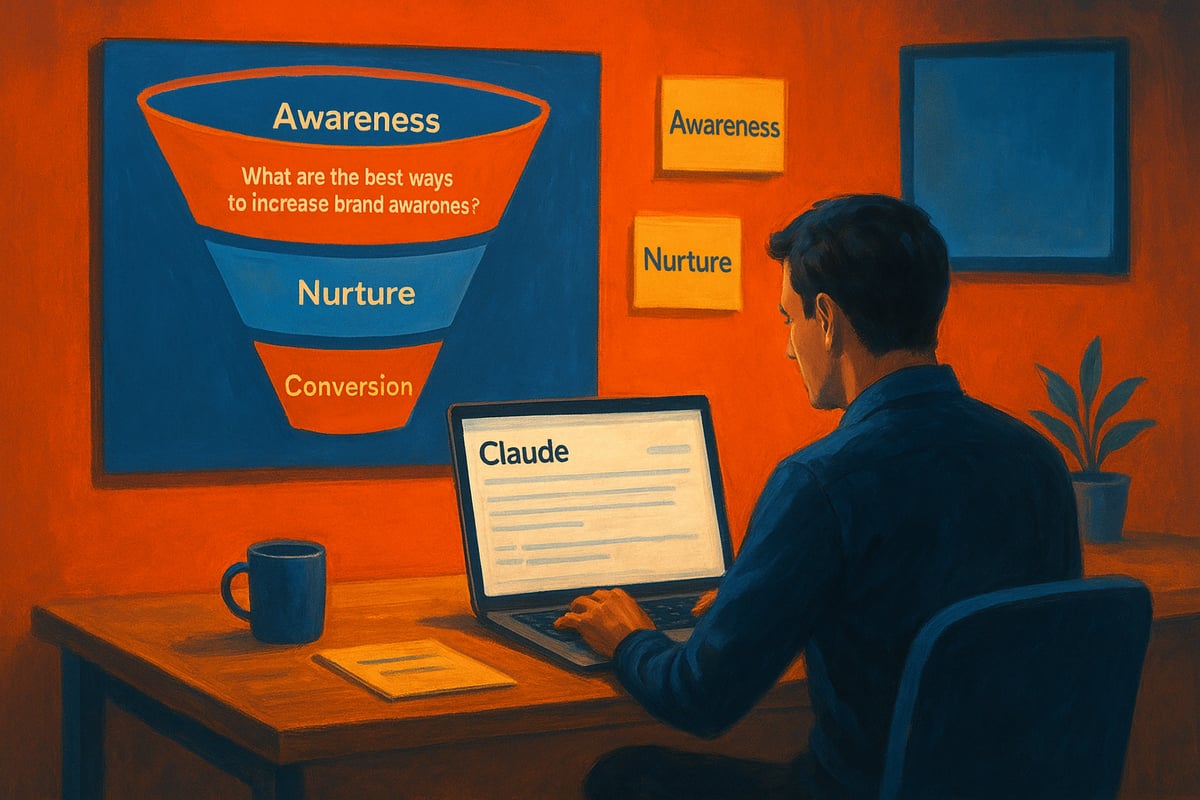
At the awareness stage, your goal is to attract new eyes to your coaching business. Leverage claude prompts to help coaches build a funnel by generating blog topics, social media posts, and ad copy that resonate with your target audience.
Try prompts such as:
- “Write a LinkedIn post introducing common leadership challenges.”
- “Suggest five blog topics for stress management coaching.”
- “Draft an Instagram caption about overcoming imposter syndrome.”
Incorporate relevant keywords directly into your prompts for improved search reach. Consistent, engaging content boosts your visibility and establishes authority.
Interest & Nurture Prompts
Once you have captured attention, nurture leads with personalized and value-driven content. Use claude prompts to help coaches build a funnel for follow-up emails, webinar invitations, and case study shares.
Sample prompts include:
- “Draft a nurturing email for new coaching leads sharing a success story.”
- “Write a webinar invitation for executives seeking team development.”
- “Create a three-part email sequence for new subscribers.”
Claude can personalize these sequences at scale, helping you stay connected with prospects and move them closer to conversion. For more strategies, explore Claude prompts for scaling coaching.
Decision & Conversion Prompts
At the decision stage, focus on converting prospects into clients. Use claude prompts to help coaches build a funnel by crafting persuasive landing pages, discovery call scripts, and objection handling responses.
Example prompts:
- “Write a persuasive landing page for a free coaching session.”
- “Develop a discovery call script for career coaching inquiries.”
- “List common objections and responses for executive coaching offers.”
Refine outputs to match your brand voice and optimize for conversion with clear calls to action.
Step 3: Integrating Claude Prompts Into Your Funnel Tech Stack
Integrating claude prompts to help coaches build a funnel with your existing tech stack is essential for maximizing efficiency and reach. Many leading funnel-building tools, such as Zapier, HubSpot, and ActiveCampaign, offer seamless compatibility with Claude. By connecting these platforms, coaches can automate the creation, scheduling, and delivery of personalized content across every funnel stage.

To set up automation, create workflows where Claude generates weekly email newsletters or landing page copy, then routes drafts to your marketing platform for review and distribution. For example, you might use Zapier to trigger Claude to produce nurturing emails after a lead downloads your resource.
Always ensure a human review step before publishing AI-generated content. This protects your brand voice and upholds quality. Safeguard client confidentiality by limiting sensitive information in prompts and adhering to your privacy policies.
Track key funnel performance metrics, like open rates and conversions, to measure the impact of claude prompts to help coaches build a funnel. Address integration challenges by troubleshooting API connections and regularly updating your automation logic. For a deeper dive into compatible tools and best practices, review the Best AI tools for life coaching to see how Claude fits into a modern coaching tech stack.
Best Practices and Pitfalls to Avoid When Using Claude Prompts
Mastering best practices is essential when using claude prompts to help coaches build a funnel. The right approach maximizes results, keeps your messaging authentic, and ensures your AI-driven funnel resonates with prospective clients.
Best Practices for Claude Prompts
- Keep prompts clear, specific, and tailored to your ideal client.
- Regularly iterate and test prompt variations for higher engagement.
- Align AI outputs with your brand voice and coaching philosophy.
- Use analytics to update prompts in response to audience feedback.
Personalization matters. Studies show that personalized messages can boost conversion rates by up to 202%. To get the most from claude prompts to help coaches build a funnel, avoid using generic or repetitive content. Routinely update your prompt library to prevent audience fatigue.
Common Pitfalls to Avoid
- Over-automation, which can make your communications feel robotic.
- Relying on generic templates without customization.
- Neglecting human review before publishing AI-generated material.
For more guidance, review these best practices for AI-generated content. Transparency is crucial. Always inform clients when AI assists with content, and stay current on legal and ethical standards.
Ongoing training and prompt refinement will keep your funnel effective, authentic, and compliant.
Advanced Prompt Strategies for Coaches Scaling Their Funnels
Scaling your coaching business requires not just more leads, but smarter workflows. Advanced use of claude prompts to help coaches build a funnel can unlock both personalization and ongoing optimization, ensuring your funnel evolves alongside your growth.
Personalization at Scale
To truly scale, use claude prompts to help coaches build a funnel that adapts to diverse client needs. By segmenting audiences—such as corporate leaders versus individual clients—you can instruct Claude to generate tailored follow-up sequences. For example:
Create a follow-up sequence for corporate coaching leadsDraft nurture emails for individual executive clientsSuggest webinar topics for group and one-on-one sessions
Integrate CRM data to inform Claude prompt inputs, ensuring each segment receives relevant messaging. This approach not only increases engagement but also aligns your funnel content with the unique goals of each client type.
Continuous Funnel Optimization
Consistent improvement is key for high-performing funnels. Prompt Claude to analyze metrics like open rates or conversions and recommend actionable changes. For instance:
Review last month’s email open rates and recommend subject line changesAnalyze webinar attendance and suggest content adjustmentsSummarize feedback from discovery calls and identify objections
Combining these claude prompts to help coaches build a funnel with real-time analytics enables rapid iteration. For more on AI’s impact on marketing effectiveness, see the latest AI adoption in marketing statistics. This data-driven loop helps you refine your funnel and maximize results as your coaching practice expands.
[Backlink] Learn More About AI-Driven Coaching Funnels
If you are ready to deepen your expertise with claude prompts to help coaches build a funnel, consider exploring Accountability Now. This trusted resource offers advanced strategies and expert support for integrating AI into your coaching business, helping you scale your client acquisition efforts with confidence.


Leave a Reply
Want to join the discussion?Feel free to contribute!