
Business Systems & Profitability in Frankfurt 2026
Frankfurt stands as Germany's financial powerhouse and a global business hub where systematic approaches to organizational performance determine competitive advantage. The relationship between business systems and profitability improvement in Frankfurt has never been more critical as companies navigate digital transformation, economic uncertainty, and evolving talent expectations. Organizations that implement structured leadership frameworks, data-driven decision protocols, and scalable operational systems consistently outperform competitors who rely on intuition alone.
The Frankfurt Business Landscape: Where Systems Meet Performance
Frankfurt's economic ecosystem encompasses banking, logistics, manufacturing, and professional services, creating unique demands for business systems and profitability improvement in Frankfurt. The city's position as home to the European Central Bank and major trade fairs creates an environment where precision and measurable outcomes aren't optional.
Companies like Messe Frankfurt demonstrate this principle through concrete results. Recent data shows their business systems contribute to €3.7 billion in annual socio-economic effects, proving that operational excellence translates directly to financial impact. Their systematic approach to event management, stakeholder coordination, and resource allocation creates repeatable success patterns.
Economic Indicators of Systematic Business Performance
The correlation between structured operations and financial outcomes appears consistently across Frankfurt's major players. Messe Frankfurt achieved record sales of €780 million in 2024, attributing growth to strategic system implementations that improved customer experience and operational efficiency.
Manufacturing firms show similar patterns. Heidelberg’s strategic realignment produced significant profitability improvements through business system restructuring, demonstrating that even established companies benefit from systematic overhauls.
| Sector | System Focus | Profitability Impact |
|---|---|---|
| Trade Fairs | Stakeholder management, logistics coordination | €3.7B socio-economic contribution |
| Manufacturing | Production optimization, supply chain integration | 30-40% efficiency gains |
| Financial Services | Risk management, compliance automation | 15-25% cost reduction |
| Professional Services | Talent deployment, knowledge management | 20-35% revenue per employee increase |

Leadership Systems as Profitability Drivers
The most overlooked aspect of business systems and profitability improvement in Frankfurt involves leadership development infrastructure. Organizations treat leadership as a soft skill when evidence shows it functions as a measurable system component.
Toxic leadership patterns create quantifiable costs. Studies indicate that organizations with ineffective leaders experience 25-40% higher turnover rates, 30% lower productivity, and significantly reduced innovation capacity. Frankfurt companies operating in competitive markets cannot afford these losses.
Systematic leadership development addresses this through structured interventions:
- Diagnostic assessments that identify behavioral patterns affecting team performance
- Precision matching between leaders and development resources based on specific gaps
- Measurable accountability frameworks tracking leadership behavior change
- Cultural alignment protocols ensuring leadership actions support organizational strategy
- Data-driven adjustment cycles refining approaches based on outcome metrics
Organizations implementing these systems report 40-60% improvements in employee engagement scores and 25-35% increases in team productivity within 18 months. Understanding the four stages of psychological safety provides a framework for measuring leadership effectiveness through team climate indicators.
Converting Leadership Investment into Financial Returns
Business systems and profitability improvement in Frankfurt require converting leadership development from cost center to profit driver. This demands specific measurement approaches:
- Baseline performance metrics across retention, engagement, productivity, and innovation
- Leadership behavior indicators aligned with organizational objectives
- Interim milestone tracking showing progress toward behavioral targets
- Financial impact modeling connecting leadership changes to revenue and cost outcomes
- Long-term sustainability measures ensuring gains persist beyond initial interventions
Companies following this protocol demonstrate clear ROI. When organizations address toxic leadership behaviors systematically, they recover costs associated with turnover, presenteeism, and lost productivity within 12-24 months.
Operational Excellence Through System Integration
Frankfurt's manufacturing sector demonstrates how business systems and profitability improvement in Frankfurt manifests through technological integration. AI-driven production management solutions show measurable impacts on efficiency, quality, and cost control.
The convergence of Industry 4.0 technologies with traditional management systems creates unprecedented opportunities. Integrating AI and ERP systems allows manufacturers to optimize resource allocation, predict maintenance needs, and adjust production schedules in real-time based on demand signals.
System Components Driving Manufacturing Profitability
Effective operational systems in Frankfurt manufacturing environments share common elements:
| System Component | Function | Profitability Mechanism |
|---|---|---|
| Predictive Maintenance | AI-analyzed equipment data prevents failures | 20-30% reduction in downtime costs |
| Demand Forecasting | Machine learning predicts order patterns | 15-25% inventory cost reduction |
| Quality Automation | Computer vision detects defects instantly | 40-50% reduction in waste and rework |
| Energy Optimization | Smart systems minimize consumption during operations | 10-20% utility cost savings |
| Workforce Planning | Analytics match staffing to production requirements | 25-35% labor efficiency improvement |
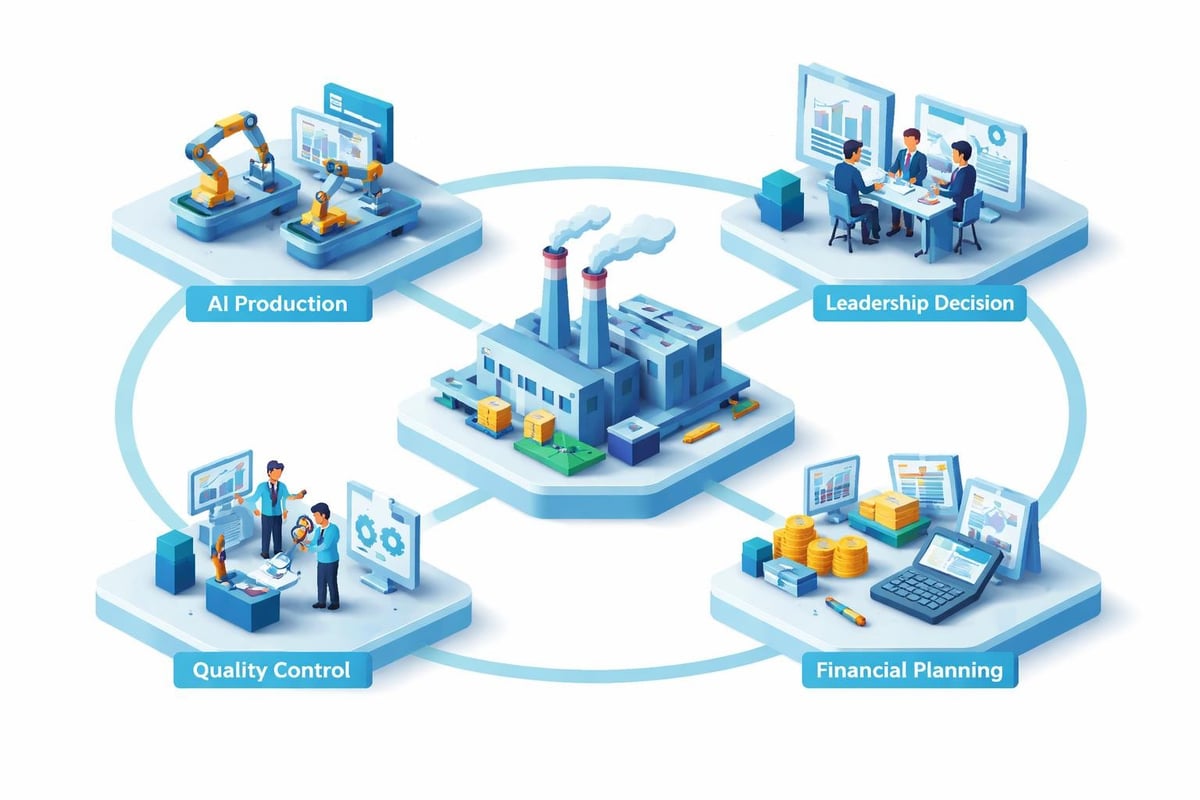
These systems don't operate in isolation. The profitability impact multiplies when integrated into comprehensive frameworks connecting production, finance, HR, and strategic planning.
Financial Services System Requirements
Frankfurt's position as Germany's financial capital creates specific demands for business systems and profitability improvement in Frankfurt within banking and investment sectors. Regulatory compliance, risk management, and client relationship systems form the operational foundation.
Financial institutions face unique challenges. They must balance innovation with stability, client service with risk mitigation, and growth with compliance. Systematic approaches address these tensions through structured frameworks.
Compliance automation systems reduce regulatory burden while improving accuracy. Organizations implementing compliance management platforms report 40-60% reductions in manual review time and 50-70% decreases in violation incidents.
Risk assessment frameworks leverage data analytics to identify exposure patterns before they become problems. Banks using systematic risk evaluation demonstrate 30-45% improvements in portfolio performance compared to traditional approaches.
Client relationship management transforms from reactive service to proactive value creation through systematic touch point mapping, needs assessment protocols, and personalized engagement frameworks.
Building Scalable Service Delivery Models
Professional services firms in Frankfurt require different system configurations than manufacturers or financial institutions. Their profitability depends on talent deployment efficiency, knowledge management effectiveness, and client satisfaction consistency.
- Resource allocation algorithms match consultant skills to project requirements
- Knowledge capture systems convert individual expertise into organizational assets
- Client feedback loops systematically gather and act on satisfaction indicators
- Pricing optimization models align fees with value delivered and market position
- Talent development pathways ensure capabilities evolve with market demands
Firms implementing comprehensive professional services management systems achieve 35-50% higher revenue per employee and 25-40% better client retention rates.
Strategic Alignment and Measurement Frameworks
Business systems and profitability improvement in Frankfurt fails when organizations implement tools without strategic alignment. Systems must support defined objectives through measurable mechanisms.
Programs focusing on corporate performance and restructuring emphasize this connection, teaching professionals to design systems that drive specific outcomes rather than generic efficiency.
Strategic alignment requires:
- Clear organizational objectives expressed as measurable targets
- System design mapping to specific objective achievement pathways
- KPI frameworks tracking system performance against strategic goals
- Feedback mechanisms enabling system adjustment based on results
- Governance structures ensuring continued alignment as strategy evolves
Organizations lacking this discipline implement impressive technologies that don't impact profitability because they optimize for wrong variables or create improvements in areas disconnected from value creation.
Measurement Systems That Drive Behavior
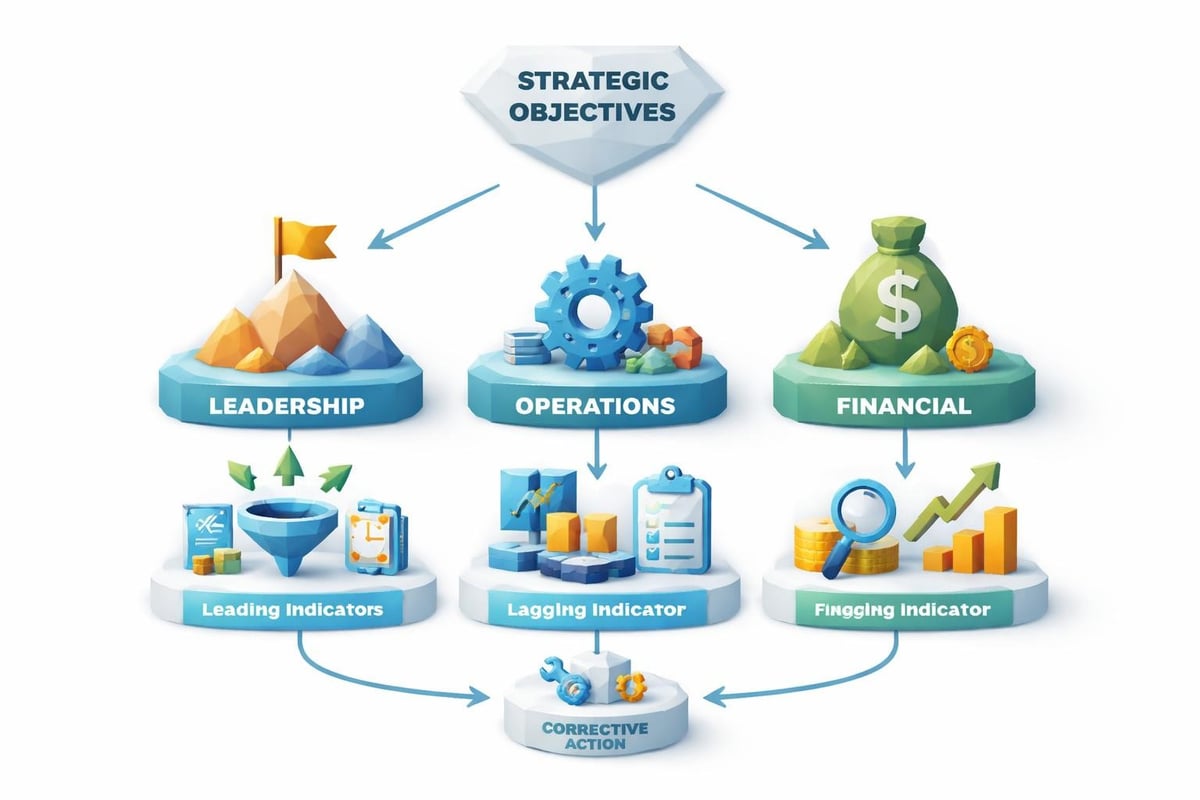
Effective measurement for business systems and profitability improvement in Frankfurt goes beyond financial statements. Leading indicators predict future performance, enabling proactive adjustments.
| Metric Category | Leading Indicators | Lagging Indicators |
|---|---|---|
| Leadership Effectiveness | Engagement survey scores, 360 feedback trends | Turnover rates, productivity metrics |
| Operational Excellence | Process cycle times, defect rates per batch | Customer complaints, warranty costs |
| Market Position | Pipeline conversion rates, brand perception | Market share, revenue growth |
| Innovation Capacity | Ideas submitted, experiment velocity | New product revenue, patent filings |
| Financial Health | Cash conversion cycle, receivables aging | Profit margins, return on assets |
Organizations tracking both leading and lagging indicators respond faster to emerging issues and capitalize on opportunities before competitors recognize them. This systematic approach to measurement creates sustainable competitive advantages.
Digital Transformation as System Evolution
Digital transformation represents the most significant opportunity for business systems and profitability improvement in Frankfurt currently available. This extends beyond implementing new technologies to fundamentally reimagining how work happens.
Successful digital transformation follows systematic approaches. Organizations that achieve measurable results from digital initiatives share common patterns:
They start with process redesign rather than technology selection. Understanding current workflows, identifying inefficiencies, and designing optimal processes precedes technology implementation.
They prioritize user adoption through change management systems rather than assuming people will naturally embrace new tools. Structured communication, training, and support frameworks ensure technologies deliver intended benefits.
They implement incrementally through pilot programs, measurement, adjustment, and scaled rollout rather than big-bang deployments. This systematic approach reduces risk and improves outcomes.
They maintain focus on outcomes rather than technology features. Selection criteria emphasize profitability impact over technical sophistication.
Technology Selection Frameworks
Choosing technologies for business systems and profitability improvement in Frankfurt requires structured evaluation. Organizations waste millions on impressive systems that don't address actual needs or integrate poorly with existing infrastructure.
Effective technology selection systems include:
- Needs assessment protocols identifying specific problems technology must solve
- Vendor evaluation criteria weighted toward outcome delivery rather than feature lists
- Integration requirements analysis ensuring new systems connect with existing infrastructure
- Total cost modeling capturing implementation, training, maintenance, and upgrade expenses
- Pilot testing frameworks validating performance claims before full-scale commitments
Companies following systematic technology selection achieve 50-70% higher ROI from technology investments compared to those making decisions based on vendor presentations or industry trends.
Cultural Systems and Performance Outcomes
The intersection of organizational culture and business systems represents critical territory for business systems and profitability improvement in Frankfurt. Culture isn't separate from systems; culture emerges from the systems organizations implement and enforce.
When performance management systems reward individual achievement, competitive cultures develop. When systems emphasize team outcomes, collaborative cultures emerge. When leadership development systems focus on psychological safety, innovative cultures flourish.
Building psychological safety through systematic interventions creates measurable performance improvements. Teams with high psychological safety demonstrate 25-40% higher innovation output, 35-50% better problem-solving effectiveness, and 20-30% faster adaptation to change.
Organizations wanting to shift culture must change underlying systems. Attempting culture change through communications or values statements without modifying measurement systems, reward structures, and operational protocols produces cynicism rather than transformation.
System Design for Cultural Outcomes
Intentionally designing systems to produce desired cultural characteristics requires understanding cause-and-effect relationships:
Transparency emerges from information-sharing systems, open decision protocols, and communication frameworks that default to broad distribution rather than need-to-know restrictions.
Accountability develops through clear role definitions, measurable expectations, regular performance conversations, and consistent consequence systems linking actions to outcomes.
Innovation flourishes within systems providing protected experimentation space, celebrating intelligent failures, and converting lessons learned into organizational knowledge.
Trust builds when systems ensure fairness, deliver consistent application of policies, and demonstrate organizational commitment to employee development.
Companies approaching culture as system output rather than aspirational rhetoric achieve sustainable transformations. Leadership coaching programs that address toxic leader transformation understand this principle, focusing on behavior systems rather than personality changes.
Implementation Frameworks for System Development
Organizations pursuing business systems and profitability improvement in Frankfurt need structured implementation approaches. System development initiatives fail when organizations lack disciplined execution frameworks.
Research demonstrates that business systems can increase profit through ten specific mechanisms, but realizing these benefits requires methodical implementation following proven protocols.
Phase 1: Current State Assessment
Document existing processes, identify inefficiencies, measure baseline performance, and prioritize improvement opportunities based on profitability impact potential.
Phase 2: System Design
Define target state processes, specify technology requirements, design measurement frameworks, and create change management protocols.
Phase 3: Pilot Implementation
Deploy systems in controlled environments, gather user feedback, measure performance against targets, and refine based on results.
Phase 4: Scaled Rollout
Implement across organization in structured waves, provide comprehensive training, maintain support systems, and monitor adoption metrics.
Phase 5: Continuous Improvement
Establish regular review cycles, gather performance data, identify enhancement opportunities, and implement ongoing refinements.
Organizations following this disciplined approach achieve 60-80% higher success rates with system implementations compared to those taking informal approaches.
Resource Allocation and Project Governance
Successful business systems and profitability improvement in Frankfurt initiatives require appropriate resource commitment and governance structures. Under-resourced projects fail regardless of design quality.
| Implementation Phase | Resource Requirements | Duration | Success Factors |
|---|---|---|---|
| Assessment | 2-3 senior analysts, stakeholder time | 4-6 weeks | Executive sponsorship, data access |
| Design | 3-5 cross-functional team members, external expertise | 8-12 weeks | Clear objectives, user involvement |
| Pilot | 5-8 implementation team, 20-30 users | 12-16 weeks | Protected environment, measurement rigor |
| Rollout | 8-15 implementation team, training resources | 16-24 weeks | Change management, support infrastructure |
| Optimization | 2-3 continuous improvement specialists | Ongoing | Feedback systems, adjustment authority |
Organizations allocating insufficient resources extend timelines, compromise quality, or abandon initiatives before achieving returns. Systematic project governance ensures appropriate investment aligned with expected profitability improvements.
Risk Management Through System Design
Business systems and profitability improvement in Frankfurt must address risk reduction alongside efficiency gains. Well-designed systems prevent problems rather than simply detecting them faster.
Operational risk mitigation occurs through standardized processes, automated controls, and exception-flagging mechanisms. Manufacturing systems incorporating quality checks at each process step prevent defective products from reaching customers, reducing warranty costs and protecting brand reputation.
Financial risk management improves through systematic approval workflows, segregation of duties protocols, and real-time monitoring dashboards. Organizations implementing comprehensive financial control systems reduce fraud incidents by 70-85% and improve cash management by 25-40%.
Compliance risk reduction comes from automated regulatory monitoring, systematic documentation requirements, and regular audit protocols. Financial institutions using compliance management systems demonstrate 50-70% fewer violations and 40-60% lower remediation costs.
Strategic risk mitigation derives from scenario planning systems, competitive intelligence frameworks, and early warning indicator monitoring. Organizations with systematic strategic risk management identify threats 6-12 months earlier than competitors, enabling proactive responses.
Integrating risk management into business systems creates profitability through loss prevention. For some organizations, risk reduction delivers greater financial impact than efficiency improvements.
Scaling Systems Across Growing Organizations
Business systems and profitability improvement in Frankfurt takes different forms for organizations at different growth stages. Systems appropriate for 50 employees fail at 500 employees.
Startup stage (under 50 employees) requires lightweight, flexible systems emphasizing rapid decision-making and adaptation. Documentation focuses on critical processes only.
Scale-up stage (50-250 employees) demands process standardization, role clarity, and measurement frameworks. Systems transition from founder-dependent to role-dependent execution.
Enterprise stage (250+ employees) needs comprehensive systems integrating functions, locations, and business units. Governance structures, exception handling protocols, and continuous improvement mechanisms become essential.
Organizations failing to evolve systems as they grow experience predictable crises. What worked brilliantly at 50 employees creates chaos at 200 employees. Systematic approaches to scaling prevent these disruptions.
System Architecture for Multi-Location Operations
Frankfurt companies expanding internationally face unique system challenges. Multi-location operations require balancing standardization with local adaptation.
Core systems should standardize:
- Financial reporting and consolidation protocols
- Brand standards and customer experience expectations
- Quality requirements and safety procedures
- Data security and privacy protections
- Leadership competency frameworks and development approaches
Local systems should adapt:
- Customer engagement processes reflecting cultural preferences
- Operational workflows accommodating regulatory differences
- Communication styles matching local norms
- Talent acquisition and development reflecting labor market realities
- Supplier relationships leveraging regional capabilities
Organizations achieving this balance through systematic design outperform those imposing rigid standardization or allowing complete local autonomy. Resources like accountability systems help maintain consistency while enabling appropriate flexibility.
Business systems and profitability improvement in Frankfurt represents an evidence-based approach to organizational performance, where structured leadership development, operational excellence, and strategic alignment create measurable financial outcomes. Organizations that treat leadership as a systematic discipline rather than an art form gain sustainable competitive advantages through predictable talent performance, cultural health, and adaptive capacity. The Noomii Corporate Leadership Program provides the diagnostic tools, precision coach matching, and measurable intervention frameworks Frankfurt organizations need to convert leadership investment into quantifiable profitability improvements.



Leave a Reply
Want to join the discussion?Feel free to contribute!