
Business Strategy & Financial Planning in Munich 2026
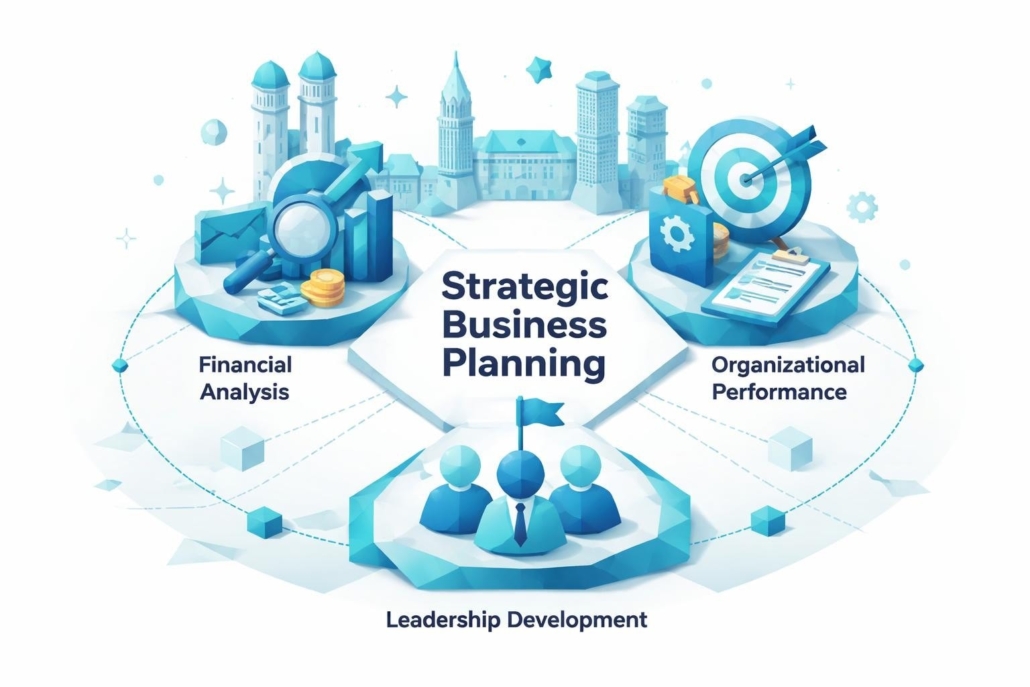
Munich stands as one of Europe’s most dynamic business hubs, where traditional corporate excellence meets cutting-edge innovation. Organizations operating in this competitive landscape recognize that sustainable growth requires more than isolated financial tactics or disconnected strategic initiatives. Success demands an integrated approach where business strategy and financial planning in Munich work as synchronized forces, driving organizations toward measurable outcomes while addressing the leadership capabilities needed to execute ambitious plans. This alignment becomes particularly crucial in 2026, as economic uncertainties and rapid technological changes demand both financial precision and strategic agility.
The Munich Business Landscape: Where Strategy Meets Financial Reality
Munich’s economic ecosystem presents unique challenges and opportunities that directly impact how organizations approach business strategy and financial planning in Munich. The city hosts headquarters of major multinational corporations, thriving mid-sized enterprises, and innovative startups across automotive, technology, financial services, and manufacturing sectors.
Financial planning in this environment requires understanding regional market dynamics, talent costs, regulatory frameworks, and competitive positioning. Organizations must balance growth investments with operational efficiency while maintaining financial resilience. Munich Strategy demonstrates how specialized consulting firms support industries like construction and mechanical engineering with tailored strategic approaches that account for sector-specific financial considerations.
Strategic Financial Planning as Competitive Advantage
Companies that treat financial planning as a standalone function miss critical opportunities to leverage financial resources as strategic enablers. The most successful organizations in Munich integrate financial analysis directly into strategic decision-making processes, creating feedback loops between operational performance and financial outcomes.
This integration manifests in several key areas:
- Capital allocation decisions aligned with strategic priorities
- Performance metrics that connect financial results to strategic objectives
- Risk management frameworks that protect both financial stability and strategic investments
- Resource optimization strategies that fund innovation while controlling costs
- Leadership development investments treated as strategic financial assets
Roland Berger, headquartered in Munich, exemplifies how global strategy consulting integrates financial rigor with strategic vision, helping organizations navigate complex business transformations.

Leadership Capability: The Missing Link in Strategic Planning
Business strategy and financial planning in Munich often fail not because of flawed analysis or inadequate resources, but due to leadership gaps that prevent effective execution. Organizations develop sophisticated strategic plans and detailed financial models, yet struggle when leaders lack the capabilities to translate these documents into operational reality.
Leadership capability directly impacts strategic execution in measurable ways. Research consistently demonstrates that organizations with strong leadership development programs achieve better financial performance, higher employee engagement, and more successful strategy implementation. Yet many Munich-based organizations underinvest in leadership development relative to other strategic priorities.
Identifying Leadership Gaps That Derail Strategic Plans
Strategic plans typically outline ambitious growth targets, market expansion initiatives, operational improvements, and innovation investments. Financial plans allocate resources to support these objectives. Between plan and reality stands leadership execution capacity.
Common leadership gaps that undermine business strategy and financial planning in Munich include:
- Toxic leadership patterns that destroy team cohesion and drive talent away
- Insufficient strategic thinking skills at middle management levels
- Poor cross-functional collaboration that creates organizational silos
- Weak decision-making capabilities under uncertainty
- Limited change management expertise during transformations
- Inadequate communication skills that leave teams confused about priorities
Organizations can leverage evidence-based approaches to identify toxic leader behaviors before they derail strategic initiatives and damage organizational culture.
| Leadership Gap | Strategic Impact | Financial Consequence |
|---|---|---|
| Toxic Leadership | High turnover, low morale | 50-200% of salary to replace key talent |
| Weak Strategic Thinking | Missed market opportunities | Revenue shortfalls vs. plan |
| Poor Collaboration | Duplicated efforts, conflicts | 20-30% productivity loss |
| Inadequate Change Skills | Failed transformation initiatives | Wasted investment in change programs |
Building Financial Models That Account for Human Capital
Traditional financial planning focuses on capital expenditures, operating costs, revenue projections, and cash flow management. Progressive organizations in Munich recognize that human capital investments and leadership quality represent critical variables in financial models.
When developing business strategy and financial planning in Munich, consider how leadership investments create financial returns:
Direct Financial Impact
Executive coaching and leadership development programs generate measurable ROI through improved decision-making, faster problem-solving, enhanced team performance, and reduced turnover costs. Organizations can quantify these benefits by tracking metrics like revenue per employee, cycle times for key decisions, and talent retention rates.
Indirect Strategic Value
Strong leadership capabilities enable organizations to pursue more ambitious strategies, adapt faster to market changes, and execute complex initiatives that competitors cannot match. This strategic flexibility has financial value that traditional planning models often overlook.
For organizations seeking to understand how coaching creates strategic value, aligning coaching investments with specific business outcomes ensures financial accountability while developing leadership capacity.
Integrating Leadership Development Into Strategic Planning Cycles
Business strategy and financial planning in Munich should incorporate leadership development as a core component rather than treating it as an afterthought or HR initiative disconnected from strategic priorities.
A Framework for Strategic Leadership Integration
Phase 1: Strategic Assessment
Begin strategic planning cycles by evaluating leadership capability alongside market analysis, competitive positioning, and financial performance. Use validated assessment tools to identify leadership strengths and gaps across the organization. This diagnostic provides data-driven insights into whether current leadership capacity can execute proposed strategies.
Phase 2: Gap Analysis and Resource Allocation
Compare required leadership capabilities for strategic success against current state assessments. Quantify the performance and financial risks associated with leadership gaps. Allocate budget and resources to address critical leadership development needs as strategic investments, not discretionary expenses.
Phase 3: Targeted Intervention Design
Develop customized leadership development plans that directly support strategic objectives. If strategy requires market expansion, invest in leadership capabilities around strategic thinking and cross-cultural collaboration. If operational excellence is the priority, focus on process improvement leadership and performance management skills.
Phase 4: Execution and Monitoring
Track leadership development progress using KPIs that connect to strategic and financial outcomes. Monitor how improved leadership capabilities translate into better execution, faster decision-making, and stronger financial performance.
- Establish baseline metrics before interventions
- Define clear success criteria aligned with strategic goals
- Implement regular progress reviews integrated with strategic planning cycles
- Adjust interventions based on performance data and changing strategic priorities
Workshops on business planning fundamentals provide valuable context for startups and growing companies establishing these integrated planning processes.

Financial Planning for Leadership Development Programs
Organizations committed to integrating leadership development into business strategy and financial planning in Munich need frameworks for budgeting, measuring ROI, and optimizing leadership investments.
Establishing Leadership Development Budgets
Benchmark Approaches
Leading organizations typically allocate 2-5% of total compensation budgets to learning and development, with significant portions dedicated to leadership programs. Munich-based companies competing for top talent often invest at the higher end of this range or above it.
Strategic Allocation Models
Rather than distributing leadership development budgets equally, align investments with strategic priorities:
| Strategic Priority | Leadership Investment Focus | Budget Allocation |
|---|---|---|
| Market Expansion | Strategic thinking, cultural intelligence | 35% |
| Digital Transformation | Change leadership, innovation capabilities | 30% |
| Operational Excellence | Process improvement, performance management | 20% |
| Talent Retention | Engagement skills, coaching capabilities | 15% |
Measuring Leadership Development ROI
Calculate ROI by tracking both quantitative and qualitative outcomes. Quantitative metrics include reduced turnover costs, improved revenue per employee, faster time-to-decision, and enhanced project success rates. Qualitative indicators encompass improved employee engagement scores, stronger succession pipeline, and enhanced organizational reputation.
Organizations utilizing data-driven coaching approaches can demonstrate clear connections between leadership investments and business outcomes, supporting continued financial commitment to development programs.
Strategic Planning for Organizations at Different Growth Stages
Business strategy and financial planning in Munich varies significantly based on organizational maturity, size, and growth trajectory. Leadership development priorities must align with these different contexts.
Startups and Early-Stage Companies
Early-stage organizations face resource constraints but need strong leadership to navigate rapid growth and market uncertainty. Focus financial planning on developing founder leadership capabilities, establishing scalable management systems, and building initial leadership teams.
Comprehensive business plan guidance helps Munich entrepreneurs structure strategic and financial planning appropriately for their growth stage.
Key Leadership Priorities:
- Strategic vision and communication
- Resource optimization under constraints
- Talent attraction and culture building
- Rapid decision-making and adaptation
Mid-Sized and Growing Organizations
Companies scaling operations need leadership depth across multiple levels. Financial planning should account for developing middle management capabilities, establishing leadership pipelines, and creating consistent leadership practices across expanding teams.
Enterprise and Multinational Organizations
Large organizations require sophisticated leadership development ecosystems that address diverse needs across regions, functions, and levels. Strategic planning must account for leadership succession, executive development, high-potential programs, and organization-wide leadership capabilities.
Munich Global Advisors demonstrates how financial planning firms help organizations navigate complexity through strategic guidance that accounts for global operations and emerging technologies.
Compliance, Governance, and Strategic Risk Management
Business strategy and financial planning in Munich must account for regulatory requirements, governance standards, and risk management frameworks that shape how organizations operate and develop leaders.
Regulatory Alignment in Leadership Development
Organizations in regulated industries face specific requirements around leadership qualifications, training documentation, and competency verification. Financial planning for leadership development must account for compliance costs while ensuring programs meet regulatory standards.
Governance Considerations:
Financial services, healthcare, manufacturing, and government organizations operate under governance frameworks that specify leadership responsibilities, accountability structures, and decision-making authorities. Leadership development programs must align with these governance requirements while building capabilities that support strategic objectives.
Risk Mitigation Through Leadership Investment
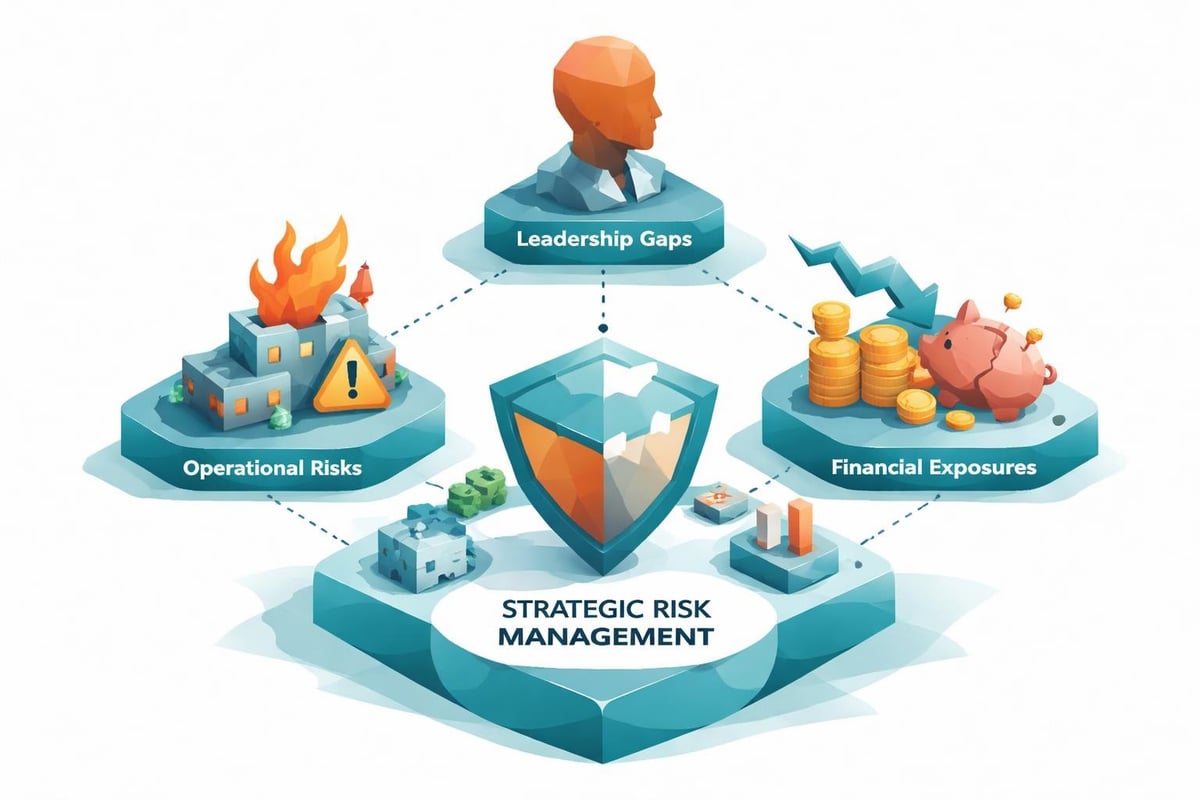
Leadership gaps represent strategic and financial risks that deserve formal risk management attention. Organizations should evaluate leadership risks alongside market, operational, and financial risks, developing mitigation strategies that include targeted development investments.
Building Psychological Safety as Strategic Infrastructure
One of the most overlooked elements in business strategy and financial planning in Munich is the role of psychological safety in enabling strategic execution. Organizations cannot achieve ambitious strategic goals when teams fear speaking up, challenging assumptions, or raising concerns about flawed plans.
Research demonstrates that teams with high psychological safety outperform others in innovation, problem-solving, and execution. Building this foundation requires intentional leadership development focused on creating environments where people feel safe to contribute fully.
Organizations can strengthen psychological safety through structured approaches that develop leadership behaviors supporting open dialogue, constructive challenge, and learning from failures.
Financial Impact of Psychological Safety
Measurable Outcomes:
- 27% reduction in employee turnover
- 40% decrease in safety incidents
- 19% increase in team productivity
- 29% improvement in decision quality
These outcomes translate directly into financial performance improvements that justify leadership development investments focused on psychological safety.
Technology and Tools Supporting Strategic Financial Planning
Modern business strategy and financial planning in Munich leverages technology platforms that enhance analysis, scenario planning, collaboration, and performance tracking. Organizations should evaluate how technology investments support both financial planning processes and leadership development initiatives.
Financial Planning Technologies:
- Integrated business planning platforms
- Scenario modeling and simulation tools
- Real-time performance dashboards
- Predictive analytics for forecasting
Leadership Development Technologies:
- Assessment and diagnostic platforms
- Learning management systems
- Coaching management platforms
- Performance tracking tools
Partner Selection for Strategic Consulting and Financial Advisory
Organizations seeking external support for business strategy and financial planning in Munich should apply rigorous selection criteria when choosing consulting partners, financial advisors, and leadership development providers.
Evaluation Criteria for Strategic Partners
Sector Expertise and Track Record
Select partners with demonstrated experience in your industry, understanding of your specific strategic challenges, and proven results with organizations of similar size and complexity. Corporate finance specialists like WMCF bring deep M&A and strategic transaction expertise relevant for organizations pursuing growth through acquisition.
Methodology and Approach
Evaluate whether potential partners use evidence-based methodologies, customize solutions to your specific context, and integrate multiple perspectives rather than applying one-size-fits-all frameworks.
Cultural Alignment
Successful partnerships require cultural compatibility, shared values around leadership and organizational development, and complementary working styles that support effective collaboration.
| Evaluation Factor | Questions to Ask | Red Flags |
|---|---|---|
| Sector Knowledge | What similar clients have you served? | Generic industry statements |
| Methodology | How do you customize approaches? | Rigid, inflexible frameworks |
| Track Record | What measurable outcomes have you delivered? | Vague success stories |
| Cultural Fit | How do you adapt to client culture? | Prescriptive, one-way approach |
Continuous Improvement in Strategic and Financial Planning
Business strategy and financial planning in Munich requires ongoing refinement as market conditions evolve, organizational capabilities develop, and strategic priorities shift. Establish feedback loops that capture lessons learned, track planning accuracy, and continuously improve processes.
Key Improvement Practices:
Regular post-implementation reviews that compare actual outcomes against strategic and financial plans identify planning assumptions that proved incorrect, execution challenges that emerged, and unexpected opportunities or threats. These insights inform subsequent planning cycles.
Stakeholder feedback from leaders at all levels provides perspectives on planning process effectiveness, clarity of strategic direction, resource adequacy, and alignment between strategy and operational reality. This input helps refine communication, engagement, and decision-making approaches.
Performance analytics track leading and lagging indicators that reveal whether strategic initiatives generate expected results. These metrics support mid-course corrections and resource reallocation to optimize outcomes.
Organizations pursuing advanced training in strategic financial planning can develop internal capabilities that reduce dependence on external advisors while building strategic planning excellence.
Creating Accountability Systems That Drive Execution
Even the most sophisticated business strategy and financial planning in Munich fails without accountability systems that translate plans into action and results. Effective accountability requires clarity about responsibilities, regular progress reviews, transparent performance tracking, and consequences aligned with outcomes.
Designing Accountability Frameworks
Clear Ownership Assignment
Every strategic initiative and financial target needs a specific individual accountable for results. Ambiguity about ownership creates gaps where important work falls through cracks or multiple people duplicate efforts without coordination.
Regular Progress Reviews
Establish cadences for reviewing strategic and financial performance at appropriate levels. Executive teams might review monthly, functional leaders weekly, and project teams daily. These reviews create forcing functions that maintain focus and momentum.
Transparent Performance Visibility
Make strategic and financial performance visible across relevant stakeholder groups. Transparency creates positive peer pressure, enables cross-functional support, and surfaces issues early when corrective action remains possible. For organizations building accountability cultures, resources like AccountabilityNow provide frameworks and tools supporting systematic accountability practices.
Scaling Strategic Planning Across Complex Organizations
Large organizations and multinational corporations face unique challenges scaling business strategy and financial planning in Munich across diverse business units, geographic regions, and functional areas. Effective scaling requires balancing consistency with flexibility, maintaining alignment while enabling autonomy, and creating shared frameworks without stifling local adaptation.
Scaling Best Practices:
Establish core strategic planning frameworks and financial planning standards that all units follow while allowing customization for local market conditions, competitive dynamics, and operational realities. This approach creates consistency in planning rigor and communication while respecting legitimate differences across contexts.
Develop planning capabilities across leadership levels through training, templates, facilitation support, and communities of practice. Building internal planning expertise reduces cycle times, improves plan quality, and creates shared language around strategy and finance.
Implement technology platforms that enable collaborative planning, scenario analysis, performance tracking, and reporting across organizational boundaries. Modern planning systems create transparency, facilitate coordination, and streamline consolidation of unit plans into enterprise perspectives.
Independent financial planning services demonstrate how fee-only advisory models can complement internal planning capabilities, providing objective perspectives without conflicts of interest.
Effective business strategy and financial planning in Munich requires integration across three critical dimensions: rigorous financial analysis, clear strategic direction, and strong leadership capabilities to execute ambitious plans. Organizations that treat these elements as interconnected rather than separate functions position themselves for sustainable competitive advantage. The Noomii Corporate Leadership Program helps Munich-based organizations strengthen this integration by developing leadership capabilities that translate strategic vision and financial plans into measurable results, creating alignment between individual leader growth and institutional success while delivering the executive capabilities needed to thrive in Europe’s most competitive business environment.



Leave a Reply
Want to join the discussion?Feel free to contribute!