

7 Essential Claude Prompts to Help Coaches Write Emails
Writing emails that truly resonate with clients is a constant challenge for coaches. Crafting messages that engage, convert, and save time often feels overwhelming, especially when juggling a busy schedule. Many coaches find themselves stuck between maintaining a personal touch and ensuring efficiency.
Fortunately, claude prompts to help coaches write emails offer a powerful solution. With Claude AI, coaches can streamline their email workflows, making every message more impactful and professional without sacrificing authenticity.
This article will reveal 7 essential Claude prompts designed specifically for coaches. From onboarding new clients to handling follow-ups, each prompt will help you communicate with greater clarity and confidence.
Ready to transform your email strategy? Discover how these actionable prompts can save you time, improve client relationships, and boost your results.
Why Email Communication Matters for Coaches
Consistent and personalized email communication is the backbone of thriving coaching relationships. Over 60% of clients prefer email as their main channel for coach correspondence, according to ICF’s 2023 report. Yet, many coaches face daily challenges, like time constraints, writer’s block, and the struggle to infuse professionalism with genuine warmth in every message.
These challenges can impact client engagement, accountability, and retention. Coaches who send tailored emails see a 40% boost in client satisfaction, underscoring the value of thoughtful communication. Automated tools and claude prompts to help coaches write emails are changing the game by simplifying message creation and reducing friction for both coach and client.
Investing in better processes, such as leveraging Claude prompts to help coaches scale, directly contributes to improved outcomes and business growth. By streamlining workflows, coaches save time and maintain meaningful connections, ensuring their clients stay motivated and engaged throughout the coaching journey.

How Claude AI Can Transform Coaching Emails
Claude AI is revolutionizing how coaches approach email communication. With advanced natural language processing, Claude prompts to help coaches write emails by generating polished, empathetic messages tailored to each client’s needs.
Coaches benefit from Claude’s ability to save time, ensure message consistency, and reduce the mental effort required for every email. Whether you are onboarding a client or following up after a session, Claude adapts its tone and suggestions to fit your unique coaching style and context.
For example, many coaches using Claude prompts to help coaches write emails have reported up to a 30% reduction in drafting time. This means more focus on client relationships and less time spent wrestling with writer’s block.
Claude’s prompts are designed to maintain your authentic voice while scaling communication. According to HubSpot, AI-generated emails can boost open rates by up to 18 percent, highlighting the real-world impact of well-crafted messages. If you’re interested in expanding your coaching outreach, explore these Claude prompts to get more coaching clients for practical, ready-to-use ideas.
By bridging the gap between automation and a personal touch, Claude empowers coaches to build stronger, more responsive client relationships through effective email communication.

7 Essential Claude Prompts to Help Coaches Write Emails
Effective communication is the cornerstone of every coaching relationship. The right claude prompts to help coaches write emails can save countless hours, boost engagement, and enhance client outcomes. Below are seven essential prompts tailored for coaches, designed to deliver clarity, warmth, and results in every message.

1. [Onboarding New Clients Prompt]
Welcoming new clients sets the foundation for a successful partnership. Use claude prompts to help coaches write emails that greet clients warmly, outline expectations, and provide actionable next steps.
Sample prompt:
"Draft a welcoming email for a new client, introducing myself, explaining the coaching process, and listing what they need to prepare before our first session."
Customize for executive, wellness, or life coaching. A clear onboarding email boosts engagement and ensures clients feel supported. Onboarded clients are 50% more likely to complete their program.
2. [Session Reminder Prompt]
Crafting timely reminders is vital for high attendance. Claude prompts to help coaches write emails can generate friendly, personalized reminders for recurring or one-time sessions.
Tips:
- Adjust frequency for weekly or monthly sessions
- Personalize with client names and session topics
Consistent reminders reduce no-shows by 25%. For virtual sessions, include links and tech instructions. For in-person, add location details.
3. [Progress Check-In Prompt]
Maintaining accountability requires regular check-ins. With claude prompts to help coaches write emails, you can encourage honest updates and self-reflection.
Example prompt:
"Write an email checking in on a client's weekly progress, asking for wins, challenges, and next steps."
Regular check-ins double reported client progress. Balance encouragement with constructive feedback for best results.
4. [Goal-Setting and Motivation Prompt]
Help clients clarify goals and stay motivated. Use prompts to elicit actionable responses, tying motivation to specific session objectives.
Example:
"Compose a motivational email to help a client set clear goals for the next month and outline steps to achieve them."
Motivational emails increase goal achievement rates by 30%. Tailor your approach for different personalities.
5. [Follow-Up After Session Prompt]
Follow-up emails reinforce learning and accountability. Summarize key takeaways, list action steps, and invite reflections.
Tips:
- Use automation for timely delivery
- Personalize for each client’s journey
Follow-up messages improve retention by 20%. Automated workflows can save time without sacrificing a personal touch.
6. [Handling Difficult Conversations Prompt]
Sensitive topics require empathy and clarity. Use Claude to draft supportive messages that address challenges while maintaining trust.
Techniques:
- Focus on solutions, not blame
- Use inclusive, non-judgmental language
Empathetic communication reduces client churn by 15%. Always review for tone and clarity.
7. [Re-Engagement for Inactive Clients Prompt]
Win back disengaged clients with thoughtful re-engagement emails. Identify the right timing and offer new value or resources.
Sample prompt:
"Create a re-engagement email for a client who has been inactive for a month, offering support and inviting them to reconnect."
Re-engagement campaigns recover 10-20% of inactive clients. For more insight on integrating AI into coaching, see Life coaches and AI integration.
Best Practices for Customizing Claude Prompts
Customizing claude prompts to help coaches write emails is vital to achieving authentic, high-impact communication. Every coaching relationship is unique, so prompts should reflect the coach's style and the client's personality.
Start by refining the tone, length, and context of each email. For instance, executive coaching may require a more formal approach, while life coaching often benefits from a warmer, conversational style. Adjust Claude’s output by editing phrases or adding personal touches that resonate with your audience.
Testing and iterating are key. Analyze client responses and use feedback to continually improve prompt effectiveness. Incorporating analytics helps you see which emails drive engagement. According to recent research, AI-driven personalization increases click-through rates by up to 14%, highlighting the value of tailored communication.
Ultimately, the best results come from blending Claude’s AI suggestions with your insights. This approach ensures your emails remain professional, relevant, and deeply engaging.
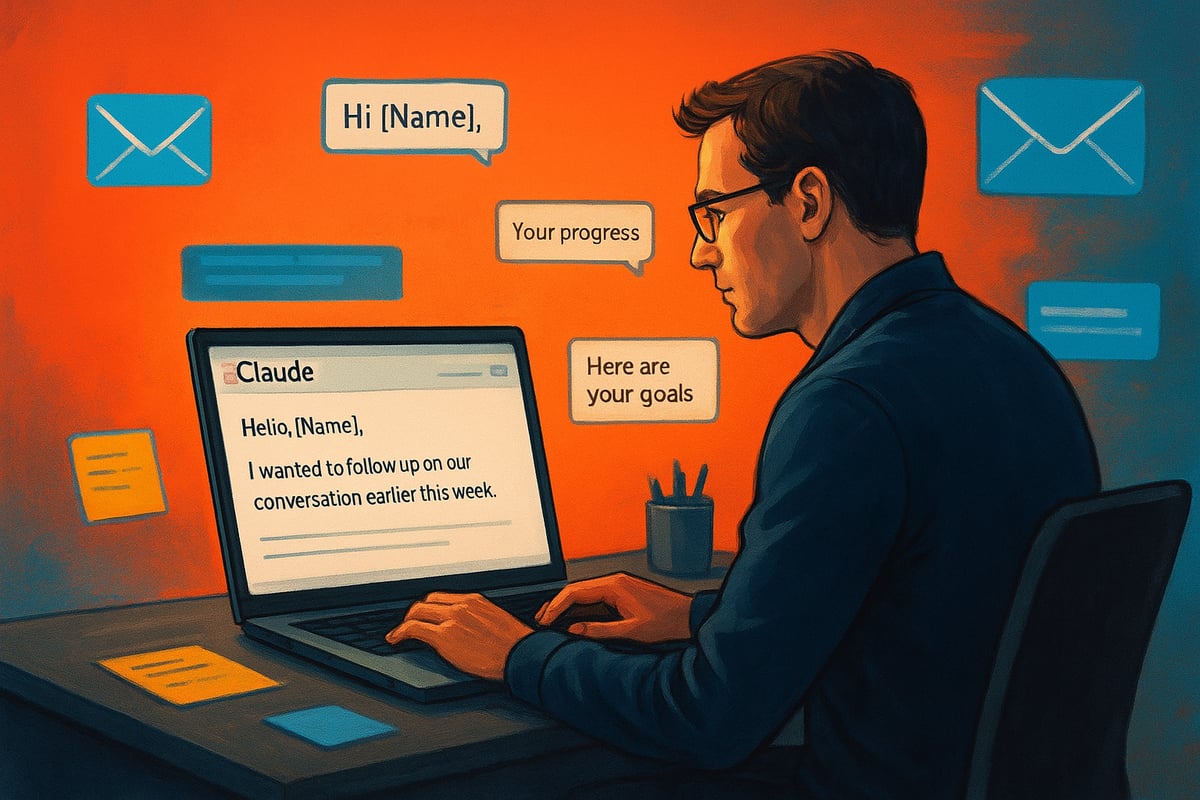
Linking AI-Powered Email Workflows to Accountability and Results
Consistent email workflows are essential for driving client accountability in coaching. Using claude prompts to help coaches write emails ensures every message sets clear expectations, tracks progress, and reinforces key goals. For instance, session reminders and timely follow-ups keep clients on track and engaged with their commitments. If you want to elevate your accountability frameworks and discover proven strategies, explore Accountability Now for practical coaching resources and tools.
FAQ
Coaches often ask how claude prompts to help coaches write emails can streamline their communication. Claude prompts are AI-generated templates designed for efficiency, consistency, and a personal touch in client emails.
You can customize prompts to fit your style, adjust tone, or adapt for executive, life, or wellness coaching. This flexibility ensures every message resonates with your unique audience.
Many coaches wonder if prompts improve engagement. Regular use of AI-generated prompts in onboarding, check-ins, and follow-ups increases client accountability, satisfaction, and retention.
Data security is a priority. Always review content, protect client information, and follow best practices for privacy when using AI tools.
Integrating Claude prompts is simple. Identify routine email scenarios, personalize the suggestions, and automate where possible for better workflow.
For more resources on AI-powered coaching, visit Accountability Now for practical tools and guides.
Noomii Corporate Coaching helps organizations build accountable leaders and teams, driving measurable results. Explore Noomii to find the right professional coach for your business needs.
Don Markland is a recognized authority in accountability and leadership, guiding coaches and organizations to achieve their goals.



Leave a Reply
Want to join the discussion?Feel free to contribute!