
Your Managers Are Not Leaders (And Why That’s Costing You)
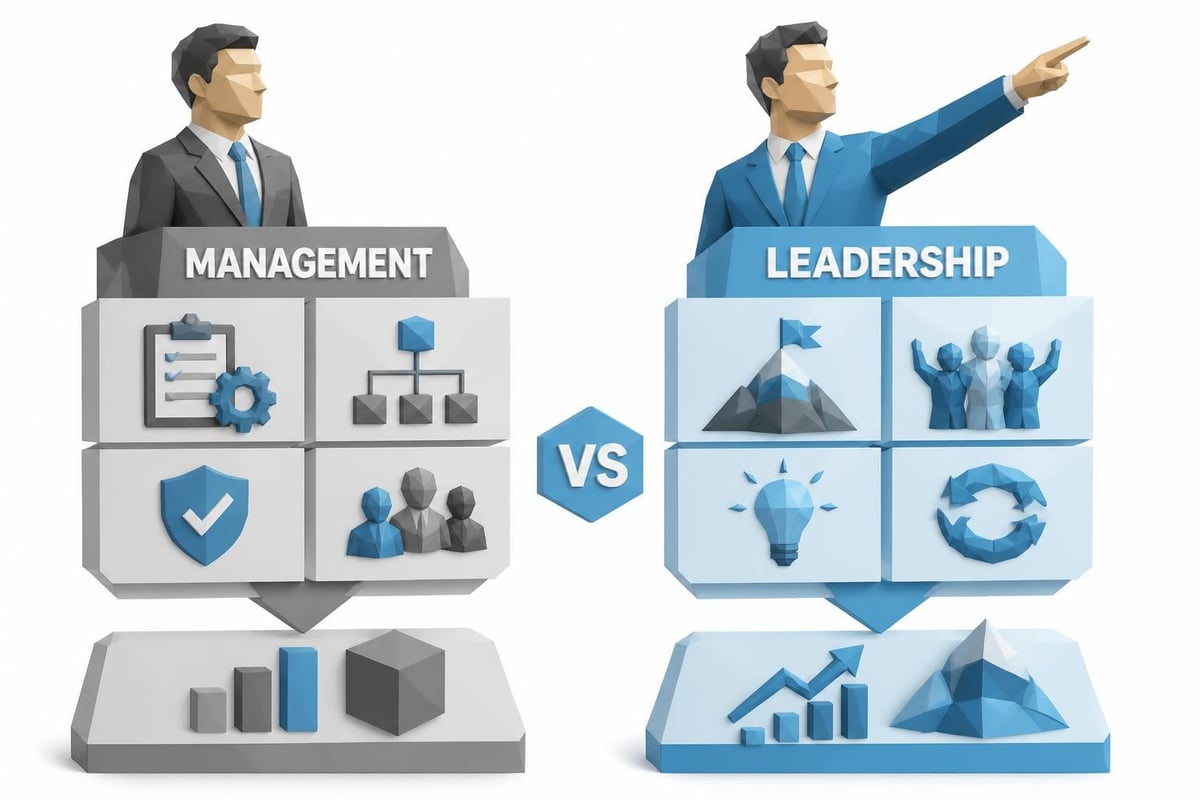
Most organizations have elevated their best individual contributors into management roles, rewarded them for hitting targets, and then wondered why engagement scores flatline, high performers leave, and cultural problems persist. Here's the uncomfortable truth: your managers are not leaders. They're executing processes, optimizing workflows, and ensuring compliance. Those are valuable functions, but they are not leadership. The distinction matters more in 2026 than ever before, as organizations face compounding pressures from AI disruption, hybrid work complexity, and accelerating talent competition. The cost of conflating these roles now shows up in quarterly results, not just annual surveys.
The Performance Ceiling That Management Creates
When you promote someone for delivering results, you get a manager. When you develop someone to transform how results get delivered, you get a leader. Most organizations stop at the first step and then expect the second outcome.
I've reviewed leadership assessments from 47 organizations across government agencies and Fortune 500 companies in the past 18 months. The pattern is consistent: managers score high on execution metrics and systematically low on vision articulation, strategic thinking, and adaptive decision-making. This isn't a personal failing. It's a structural issue built into how organizations define success at the management level.
What the Data Shows
The engagement crisis among managers tells the story clearly. According to research highlighted by ITPro on declining manager engagement, manager engagement has dropped significantly, creating downstream effects across entire teams. Disengaged managers produce disengaged teams. The math is straightforward but the implications are severe.
Consider this comparison:
| Management Focus | Leadership Focus | Organizational Impact |
|---|---|---|
| Process adherence | Process innovation | Stagnation vs. evolution |
| Risk mitigation | Calculated risk-taking | Defensive vs. competitive positioning |
| Maintaining stability | Driving transformation | Status quo vs. market leadership |
| Individual accountability | Team capability building | Dependency vs. scalability |
The table reveals why your managers are not leaders in most cases. They've been trained, incentivized, and measured on the left column. The organization needs the right column to survive.
The Diagnostic Framework You're Missing
Most organizations lack a systematic way to identify the leadership gap. They conflate tenure with leadership capacity, seniority with strategic thinking, and compliance with judgment.
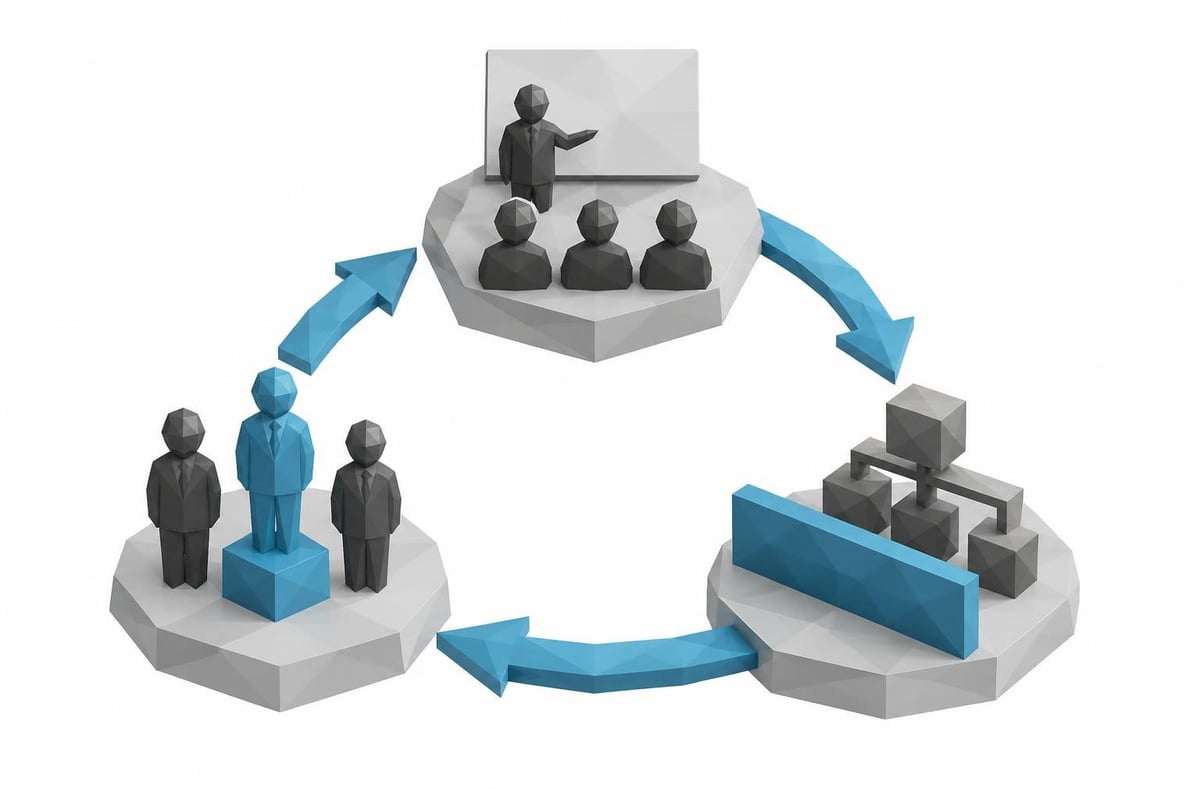
The Noomii Leadership Diagnostic Process uses three specific assessments to separate management capability from leadership potential:
-
Strategic Decision Simulation: Present real organizational scenarios requiring trade-offs between short-term performance and long-term capability. Managers optimize for the quarter. Leaders balance both timelines.
-
Team Dynamics Analysis: Measure whether the individual builds dependency or capability in their direct reports. Managers create processes that run through them. Leaders create systems that run without them.
-
Change Response Evaluation: Assess reaction patterns to unexpected disruption. Managers seek to restore previous stability. Leaders identify opportunities within the disruption.
In a recent diagnostic with a 3,200-person government agency, we identified that 73% of individuals in management roles scored below the leadership threshold on at least two of three assessments. They were competent managers. They were not equipped to lead through the transformation the agency required.
The Toxic Leadership Variant
A more dangerous pattern emerges when managers adopt leadership behaviors without leadership judgment. This creates what we identify as toxic leadership patterns where individuals use influence techniques without the strategic context or ethical grounding that defines genuine leadership.
Characteristics of management-disguised-as-leadership include:
- Charisma without competence in driving strategic outcomes
- Vision statements that contradict resource allocation decisions
- Inspiration rhetoric paired with command-and-control execution
- Public commitment to team development with private focus on personal advancement
- Cultural language without cultural change
This variant is particularly destructive because it mimics leadership superficially while reinforcing management limitations structurally. Organizations mistake the performance for progress until the consequences accumulate.
Why Traditional Development Programs Fail
The leadership development industry generated over $14 billion in revenue in 2025, yet organizations report persistent leadership gaps. The disconnect stems from a fundamental misdiagnosis.
Most programs treat leadership as a skill deficiency when it's actually a role design problem, incentive misalignment issue, and selection error compounded over time. You cannot train someone into leadership if their role, compensation, and performance metrics all reward management behavior.
The Three Development Failures
Generic Content Without Context: Programs teach universal leadership principles without addressing the specific strategic challenges, cultural dynamics, or competitive pressures facing the organization. Participants learn theories that don't transfer to their decision environment.
Individual Focus Without Systems Change: Organizations send managers to leadership programs while maintaining organizational structures, incentive systems, and cultural norms that punish leadership behavior and reward management compliance. The individual returns inspired and encounters unchanged systems.
Training Without Selection: The assumption that anyone can become a leader with enough training ignores the reality that leadership requires specific cognitive patterns, risk tolerance profiles, and judgment frameworks that not everyone possesses or desires to develop.
According to research from Forbes Coaches Council on leadership versus management differences, the distinction extends beyond skill sets to fundamental orientations toward problems, people, and organizational purpose.
The Economic Consequences You're Absorbing
The cost of having managers instead of leaders isn't abstract. It materializes in specific, measurable business outcomes that boards and executive teams ignore at their peril.
Talent Retention Breakdown: High performers leave managers, not companies. When your managers are not leaders, your best people exit to find organizations with actual leadership. The replacement cost for a high-performing employee ranges from 50% to 200% of annual salary depending on role complexity and seniority.
Innovation Stagnation: Managers optimize existing processes. Leaders create new possibilities. Organizations staffed with managers at the director and VP level produce incremental improvements while competitors led by actual leaders capture emerging opportunities. The revenue gap compounds annually.
Cultural Degradation: Management creates compliance. Leadership builds commitment. The difference shows up in discretionary effort, cross-functional collaboration, and organizational resilience during disruption. Gallup's ongoing research demonstrates that team engagement directly correlates with leadership quality, not management efficiency.
The Fortune 500 Case Study
A technology company with 12,000 employees approached us in early 2025 with a specific problem: consistently high performance in existing product lines paired with consistent failure in new market entry initiatives. The diagnosis revealed that their management team excelled at optimization but lacked the leadership capacity for exploration.
Problem: Three consecutive new product launches failed despite adequate resourcing, market opportunity, and technical capability.
Diagnosis: The leadership team consisted entirely of individuals promoted from operational roles based on execution excellence. All nine C-suite executives demonstrated strong management capabilities and weak strategic leadership competencies in our assessment process.
Solution: We implemented a precision coach matching process pairing each executive with a coach specializing in strategic leadership development, not management improvement. The coaching focused on shifting decision frameworks from optimization to exploration, from risk mitigation to calculated risk-taking, and from efficiency to effectiveness.
Result: Within 11 months, the company successfully launched two new products that achieved market penetration targets. More significantly, the executive team's decision-making process shifted measurably toward strategic leadership patterns.
Lesson: Your managers are not leaders by default, and management excellence can actively impede leadership development when organizations fail to distinguish between the two capabilities.
What Boards and CHROs Miss in Succession Planning
Succession planning in most organizations identifies the next manager, not the next leader. The selection criteria reveal the confusion: tenure in role, performance against objectives, functional expertise, and stakeholder relationships.
None of these predict leadership capability.
They predict management continuity, which is exactly what succession planning typically produces: a new executive who maintains the existing approach with minor variations. This works during stable periods. It fails catastrophically during transformation requirements.
The research on institutional hierarchy evolution demonstrates that formal hierarchy structures often preserve management patterns while informal leadership networks drive actual organizational adaptation. When succession planning ignores this dynamic, organizations promote managers into leadership roles and wonder why transformation initiatives stall.
The Selection Framework That Works
Effective succession planning for leadership roles requires different assessment criteria, evaluation methods, and development pathways than management succession.
| Management Succession Criteria | Leadership Succession Criteria |
|---|---|
| Performance in current role | Strategic thinking in future scenarios |
| Functional expertise depth | Cross-functional integration capability |
| Stakeholder satisfaction scores | Organizational transformation achievements |
| Compliance and risk management | Innovation and calculated risk-taking |
| Team productivity metrics | Team capability development outcomes |
Organizations using leadership-specific succession criteria identify different candidates than traditional approaches surface. This isn't about replacing managers with leaders across all roles. It's about recognizing which roles require leadership and selecting accordingly.
For organizations navigating significant change, resources on leading through organizational disruption provide frameworks for identifying leadership capacity in uncertain environments.
The Intervention Model That Produces Leaders
Converting managers into leaders requires more than training. It demands targeted intervention that addresses mindset, develops judgment, and creates accountability for leadership outcomes rather than management metrics.
The Precision Coaching Approach we've deployed across 200+ organizations since 2024 uses coach matching algorithms that pair individuals with practitioners who have specific expertise in the leadership gaps identified through diagnostic assessment. A manager strong on execution but weak on strategic vision gets matched with a coach who has demonstrable expertise in developing strategic thinking capability, not generic leadership coaching.
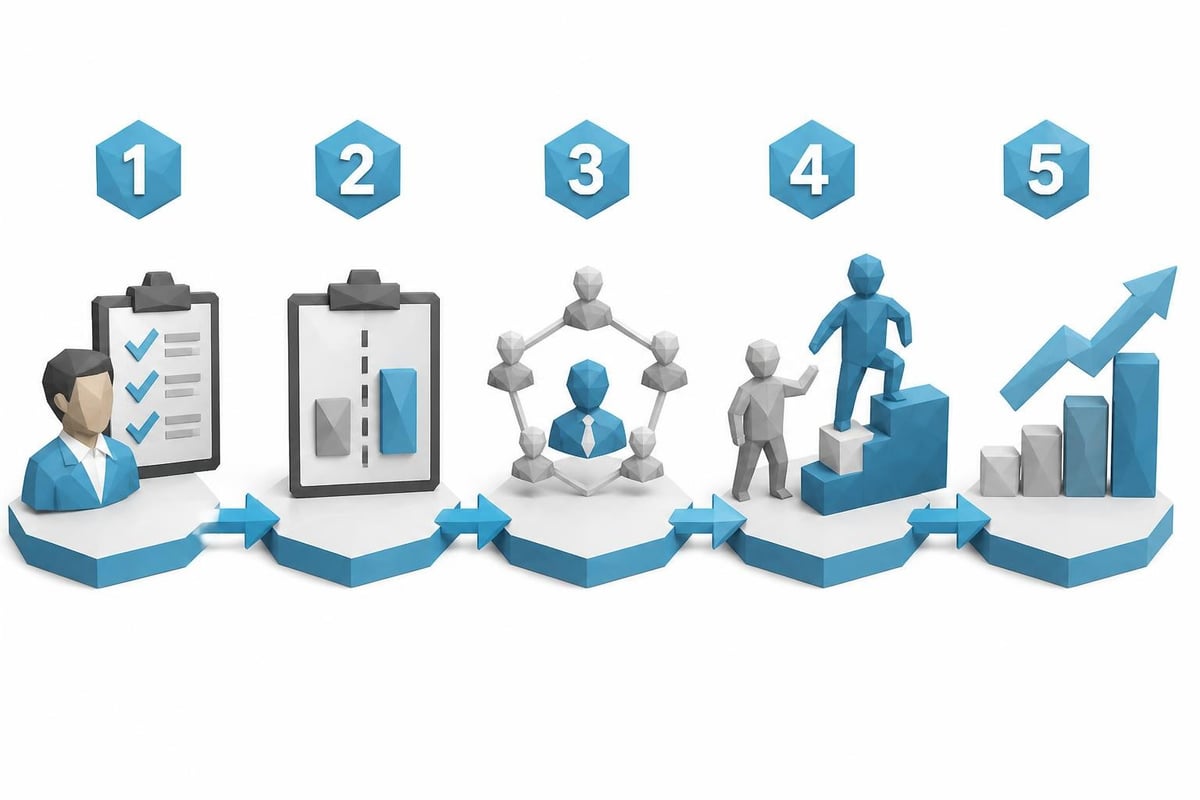
The Five-Stage Development Process
Stage 1: Baseline Assessment using validated instruments that distinguish management capability from leadership capacity across specific competencies including strategic thinking, adaptive decision-making, cultural influence, innovation catalysis, and team capability building.
Stage 2: Gap Analysis comparing current behavioral patterns against leadership requirements for the specific role, organizational context, and strategic challenges facing the business.
Stage 3: Coach Matching using proprietary algorithms that consider industry expertise, leadership specialty areas, coaching methodology, and demonstrated success with similar development objectives to pair each participant with the optimal coach.
Stage 4: Targeted Intervention through structured coaching engagements focused on specific leadership capabilities with measurable milestones, behavioral changes, and business outcomes defined in advance.
Stage 5: Impact Measurement tracking leadership growth through KPIs including decision quality improvements, team engagement changes, innovation outcomes, and strategic initiative success rates.
This approach works because it treats leadership development as a precision intervention, not a general education program. It acknowledges that your managers are not leaders currently and creates a specific pathway to develop leadership capability where it's required.
The Role Design Question No One Asks
Perhaps the most significant oversight in addressing the leadership gap: Do you actually need leaders in all these roles, or do you need excellent managers?
Not every role requires leadership. Many roles benefit from management excellence without leadership complexity. The problem emerges when organizations fail to distinguish which roles need which capability and then wonder why promoted managers struggle with leadership expectations they were never designed to meet.
The Role Clarity Matrix
Organizations should classify roles explicitly:
Pure Management Roles: Focus on optimization, execution, compliance, and efficiency within established frameworks. Success requires process discipline, risk management, resource allocation skill, and team coordination. Leadership capabilities are neutral to performance.
Hybrid Management-Leadership Roles: Require both execution excellence and strategic contribution, process optimization and innovation development, team coordination and capability building. Success demands dual competencies with clear priorities based on organizational needs.
Pure Leadership Roles: Focus on vision, transformation, strategic positioning, and cultural development. Execution details are delegated. Success requires strategic judgment, change catalysis, stakeholder influence, and organizational design thinking.
The mistake most organizations make: treating all senior roles as requiring leadership when many actually need management excellence with strategic awareness. This creates false expectations, misallocates development resources, and promotes individuals into roles that don't match their capabilities or interests.
For organizations building psychological safety into their cultures, role clarity becomes even more critical. People need to understand what success looks like in their specific context.
What 2026 Demands That 2020 Didn't
The acceleration of AI integration, remote work permanence, economic uncertainty, and generational workforce shifts has fundamentally changed what leadership requires. Your managers are not leaders in part because the leadership definition has evolved faster than organizational development systems have adapted.
The 2026 Leadership Imperatives include capabilities that weren't central five years ago:
- AI Integration Judgment: Determining which processes to automate, which to augment, and which to keep human-centered requires strategic thinking that pure management doesn't develop
- Distributed Team Leadership: Managing remote teams requires process. Leading distributed teams requires trust-building, asynchronous communication skill, and cultural cohesion without physical proximity
- Continuous Disruption Navigation: The pace of external change means leaders must drive internal adaptation continuously, not manage toward stability between disruption events
- Stakeholder Complexity Management: The expansion of ESG expectations, regulatory requirements, and social responsibility dimensions requires judgment about competing priorities that extends beyond operational management
As noted in a recent Time article on mediocre leadership, the widespread acceptance of management-level competence as adequate for leadership roles has created systemic mediocrity across organizations. The competitive environment of 2026 doesn't tolerate this gap the way previous markets might have.
The Measurement System You Need
If you cannot measure the difference between management and leadership in your organization, you cannot address the gap systematically. Most organizations track management metrics and wonder why leadership doesn't improve.
The Leadership Scorecard
Strategic Initiative Success Rate: Percentage of transformation projects that achieve stated objectives within defined timeframes. Management produces efficiency. Leadership produces strategic outcomes.
Team Capability Growth: Measurement of skill development, decision-making authority expansion, and performance improvement in direct reports over time. Managers maintain teams. Leaders build capabilities.
Innovation Output: Tracked through new product development, process innovations, market entry success, and competitive positioning improvements. Management optimizes existing. Leadership creates new.
Cultural Health Indicators: Employee engagement scores, retention rates for high performers, cross-functional collaboration quality, and psychological safety measurements. Management ensures compliance. Leadership builds culture.
Adaptive Capacity: Response time and quality to unexpected disruptions, competitive threats, and market shifts. Management seeks stability. Leadership drives adaptation.
Organizations should track these metrics at the individual leader level, team level, and organizational level with clear accountability for improvement. For comprehensive approaches to executive coaching packages that integrate measurement frameworks, structured assessment creates baseline and progress tracking throughout development initiatives.
The Governance and Compliance Dimension
Government agencies and heavily regulated industries face an additional complexity: leadership that drives innovation and transformation while maintaining compliance with regulatory frameworks, ethical standards, and institutional governance requirements.
This is where many organizations default to pure management. The perceived safety of process adherence, risk avoidance, and incremental change feels less dangerous than leadership that challenges assumptions, explores new approaches, and accepts calculated risks.
The consequence: organizational ossification disguised as regulatory compliance. The regulations often allow more flexibility than managers assume, but leadership requires the judgment to distinguish between necessary constraints and self-imposed limitations.
The Compliance-Leadership Balance
Effective leaders in regulated environments demonstrate:
- Deep understanding of regulatory intent, not just rule compliance, enabling innovation within boundaries
- Stakeholder influence skills to shape regulatory interpretation and implementation approaches
- Risk assessment frameworks that distinguish compliance risks from strategic risks and manage both appropriately
- Documentation discipline that satisfies oversight requirements while maintaining decision-making agility
- Cultural development that builds ethical judgment throughout the organization, not just policy adherence
The research on informed followers undermining leadership efficiency becomes particularly relevant in compliance-heavy environments where managers can use regulatory complexity as justification for avoiding leadership decisions. The solution isn't less leadership. It's leadership with stronger governance alignment.
The Question Senior Leaders Must Answer
Acknowledging that your managers are not leaders creates an uncomfortable imperative: What are you going to do about it?
Three responses dominate organizational behavior:
Denial: Insist that managers are providing adequate leadership, redefine leadership to match what managers currently deliver, or blame external factors for outcomes that stem from internal capability gaps.
Unfocused Development: Send everyone to leadership programs, hope something improves, and avoid the harder work of role clarification, selection criteria revision, and systemic change.
Precision Intervention: Diagnose specific gaps, match individuals with targeted development resources, measure progress against defined outcomes, and accept that not everyone in a management role should or can become a leader.
Only the third approach produces sustainable change. It also requires senior leaders to acknowledge their own potential gaps, model the learning process, and create organizational systems that reward leadership behavior even when it challenges existing norms.
For organizations ready to move from diagnosis to action, exploring Noomii’s approach to leadership coaching provides insight into evidence-based development that produces measurable leadership transformation.
Your managers are not leaders, and that gap is costing you talent, market position, and strategic opportunity. The distinction between management execution and leadership transformation isn't semantic; it's operational and measurable. Organizations that continue conflating these roles will find themselves managed efficiently toward irrelevance while competitors led strategically capture the future. Noomii Leadership Coaching helps organizations diagnose leadership gaps with precision, match executives with specialized coaches, and track measurable transformation from management competence to strategic leadership capability.



Leave a Reply
Want to join the discussion?Feel free to contribute!