
Why Coaching Certifications Fail New Coaches in 2026
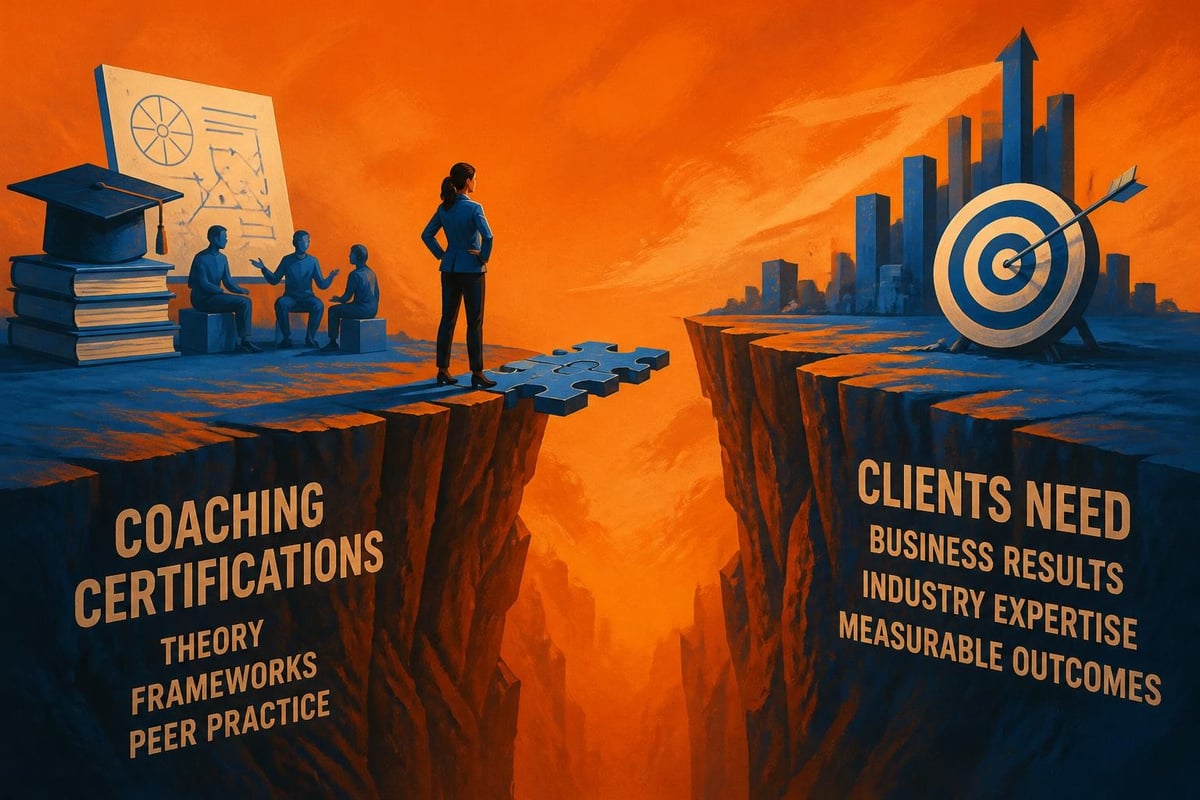
Coaching certifications generate over $2 billion annually in revenue, yet most new coaches struggle to build sustainable practices within their first two years. The disconnect isn't subtle. Certification programs emphasize theory, competency frameworks, and exam preparation while real coaching success demands business acumen, niche expertise, and the ability to demonstrate measurable results. Understanding why coaching certifications fail new coaches requires examining what these programs teach versus what clients actually buy.
The Credential-Competence Gap
Certification programs sell a compelling promise: complete our curriculum, pass the exam, and you're ready to coach professionally. The reality is far messier.
Most certifications focus on knowledge acquisition rather than skill development. Students memorize coaching models, ethics codes, and competency frameworks. They practice in peer coaching circles where stakes are low and feedback is gentle. Then they enter a market where executive coaching requires deep business context, industry knowledge, and the ability to deliver ROI that justifies $200-500 per hour rates.
Research reveals troubling patterns in how certifications assess readiness:
- Assessment design often lacks validity evidence for real-world performance
- Exam formats test theoretical knowledge, not coaching execution
- Peer coaching hours don't replicate high-stakes client conversations
- Supervision quality varies wildly between programs
A recent study comparing AI performance on ICF-style exam items demonstrated that algorithmic pattern matching could score competitively on situational judgment questions, raising serious questions about what these assessments actually measure. If AI can pass certification exams without ever coaching a human, the tests may evaluate test-taking ability more than coaching competence.
The Business Skills Nobody Teaches
Why coaching certifications fail new coaches becomes painfully clear when certificate holders try to generate revenue. Certification programs dedicate 90% of curriculum to coaching methodology and 10% or less to business development, client acquisition, and financial sustainability.
What New Coaches Actually Need
The market reality for coaches in 2026:
- Differentiation in a saturated market with over 100,000 certified coaches
- Niche selection and positioning that attracts qualified buyers
- Marketing skills to generate consistent referrals and inbound leads
- Financial literacy to price services and manage cash flow
- Contract negotiation and scope management
These competencies rarely appear in certification curricula. As HBR notes when examining coaching as a career, many coaches underestimate the entrepreneurial demands and overestimate how credentials translate to client trust.
Experienced business coaches know that clients don't buy certifications. They buy outcomes, expertise, and demonstrated results. A newly certified coach with impressive letters after their name but no case studies, no testimonials, and no track record struggles to compete against practitioners who can articulate specific client transformations.
| What Certifications Emphasize | What Clients Actually Buy |
|---|---|
| Coaching competencies | Business results and ROI |
| Theoretical frameworks | Industry-specific expertise |
| Practice hours with peers | Proven track record |
| Ethics and standards | Practical problem solving |
| Credential recognition | Measurable outcomes |
Assessment Validity and Preparedness
The quality of certification assessments directly impacts how well programs prepare new coaches. Yet many programs use assessment methods with questionable validity.
Research on competency-based assessment highlights how validity tensions emerge when frameworks emphasize what's measurable over what matters most. Coaching certifications often assess:
- Adherence to specific coaching models
- Ability to articulate coaching theory
- Recognition of ethical scenarios
- Familiarity with competency language
They rarely assess:
- Diagnostic accuracy in complex situations
- Ability to shift approaches when clients aren't progressing
- Business context integration
- Outcome measurement and reporting
- Client retention and satisfaction
Platforms like Noomii that connect coaches with clients see this gap daily. Buyers request coaches with specific industry experience, proven methods for particular challenges, and clear outcome metrics, not certification credentials. The disconnect between what programs certify and what buyers seek explains why so many newly certified coaches fail to launch sustainable practices.

The Practice Volume Problem
Why coaching certifications fail new coaches often comes down to insufficient deliberate practice with real clients facing real stakes. Most programs require 60-200 coaching hours, primarily with other students in low-pressure peer arrangements.
Expert coaches typically need 1,000+ hours across diverse client types, industries, and challenges to develop genuine competence. They need exposure to clients who resist, situations that don't respond to standard models, and feedback from experienced supervisors who can identify blind spots.
Studies on performance assessment reliability demonstrate that valid competence evaluation requires multiple observations across varied contexts with trained assessors. Few certification programs meet this standard. Instead, they rely on self-reported hours, peer feedback, and single recorded sessions reviewed by instructors who may not specialize in the coach's target niche.
The consequences show up in client outcomes. Coaches without sufficient supervised practice:
- Apply frameworks rigidly instead of adapting to context
- Miss diagnostic cues that experienced coaches recognize immediately
- Struggle when clients don't respond to initial approaches
- Lack pattern recognition across similar client challenges
Building Real Competence
Organizations seeking executive coaching understand that credentials signal training, not mastery. They prioritize:
- Demonstrated expertise in their industry or challenge domain
- Track record of similar engagements with measurable results
- Assessment tools and frameworks tied to business outcomes
- Accountability structures that ensure progress tracking
This explains why corporate coaching focused on KPIs, meeting facilitation, and visible business results outperforms credential-heavy approaches that emphasize theory over execution.
When Certifications Become Barriers
The certification industry rarely discusses failure modes. Yet research identifying failed coaching education indicators reveals systematic problems:
Content becomes outdated as programs prioritize standardization over innovation. Coaching models from the 1990s persist because they're embedded in competency frameworks, even as organizational challenges evolve.
Insufficient feedback mechanisms mean coaches receive generic encouragement rather than specific, actionable improvement guidance. Peer coaches lack the expertise to identify subtle execution gaps.
Poor practice design creates false confidence. Coaching willing peers differs fundamentally from coaching skeptical executives, resistant managers, or clients facing genuine consequences.
Credential worship convinces new coaches that additional certifications will solve marketing and client acquisition challenges, leading to credential stacking instead of skill building.
The opportunity cost is significant. A coach spending $15,000 and 500 hours on certifications could instead invest in supervised client work, niche expertise development, and business infrastructure that generates revenue and builds real competence.
The Alternative Path
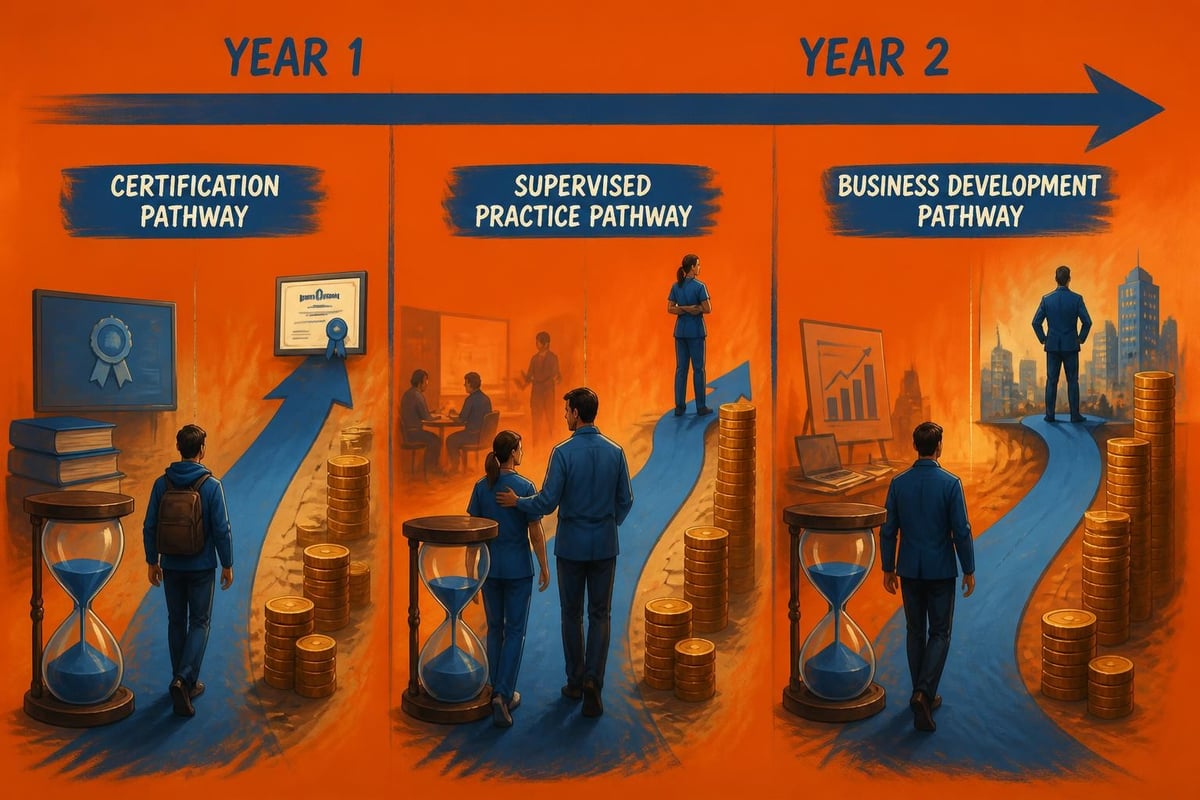
Understanding why coaching certifications fail new coaches points toward better approaches. Competence develops through:
- Supervised client work with experienced mentors who provide specific feedback
- Niche specialization that builds deep expertise in specific industries or challenges
- Outcome measurement that tracks client results and refines approaches
- Business development that generates consistent client flow
- Continuous learning based on actual client patterns, not theoretical models
Smart coaches view certifications as one input among many, not as career prerequisites. They prioritize client results over credential collection, recognizing that sustainable practices emerge from demonstrated value, not alphabet soup after their names.
For organizations, this means finding coaches who emphasize outcomes, business alignment, and practical execution over certification pedigree. The best coaches roll up their sleeves, work alongside teams, and tie progress to measurable KPIs rather than citing competency frameworks.
Frequently Asked Questions
Do coaching certifications have any value?
Certifications provide foundational knowledge, ethical frameworks, and professional standards. They're useful for learning core coaching theory but insufficient alone for building a successful practice or delivering high-level results to clients.
How many hours of coaching experience do I really need?
Evidence suggests 1,000+ hours across diverse clients and contexts builds genuine competence. Most certifications require only 60-200 hours, primarily in low-stakes peer coaching situations that don't replicate real client work.
Why do certified coaches struggle to find clients?
Certifications teach coaching methodology but rarely cover business development, marketing, niche positioning, or client acquisition. Buyers purchase outcomes and expertise, not credentials, so coaches without business skills struggle regardless of certification level.
Are expensive certifications worth the investment?
Cost doesn't correlate with career success. Many $15,000+ programs provide similar content to $3,000 programs. Focus on supervised practice volume, mentor quality, and niche expertise development rather than program prestige or price.
What do clients actually look for when hiring coaches?
Clients prioritize demonstrated results in similar situations, industry-specific expertise, clear outcome metrics, and proven track records over certification credentials. They want coaches who understand their business context and can deliver measurable ROI.
Can AI replace coaching certifications?
Research shows AI can pass coaching certification exams, revealing that these assessments test pattern recognition more than actual coaching skill. This doesn't mean AI replaces coaches but highlights limitations in how programs assess competence.
How do I build coaching competence without expensive certifications?
Pursue supervised client work with experienced mentors, specialize in a clear niche, measure and document client outcomes, invest in business development skills, and prioritize practice volume over credential collection.
What makes corporate coaching different from life coaching certifications?
Corporate coaching requires business acumen, ROI demonstration, organizational context understanding, and alignment with company KPIs. Most general coaching certifications emphasize individual transformation models that don't translate to organizational effectiveness.
Should I get multiple coaching certifications to stand out?
Credential stacking rarely improves client acquisition or results. Instead, deepen expertise in your niche, build case studies demonstrating outcomes, develop business systems, and invest in supervised practice with diverse client types.
Certification programs serve a purpose in establishing baseline knowledge and professional standards, but they systematically fail to prepare coaches for market realities and client success. Smart coaches recognize credentials as starting points, not destinations, prioritizing supervised practice, business skills, and demonstrated results. When you need practical corporate coaching that delivers measurable business outcomes rather than credential worship, Noomii connects you with coaches who roll up their sleeves, work alongside your teams, and tie progress to clear KPIs and visible results.


Leave a Reply
Want to join the discussion?Feel free to contribute!