
Virtual Executive Coaching: A Practical Guide for Leaders
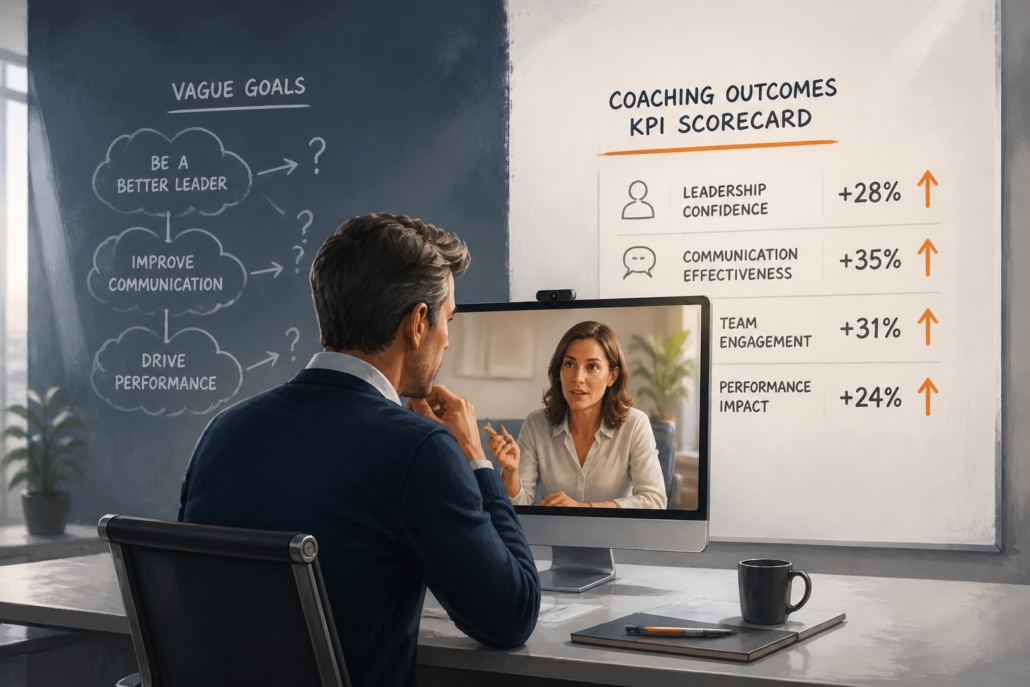
Virtual executive coaching is one-on-one leadership coaching delivered by video, phone, or messaging instead of in a conference room. It works as well as in-person coaching when the coach has real operating experience and the engagement is tied to measurable business outcomes. The format is rarely the problem. A vague contract, a coach with no operating background, and no scorecard are what sink these engagements.
How Virtual Executive Coaching Works
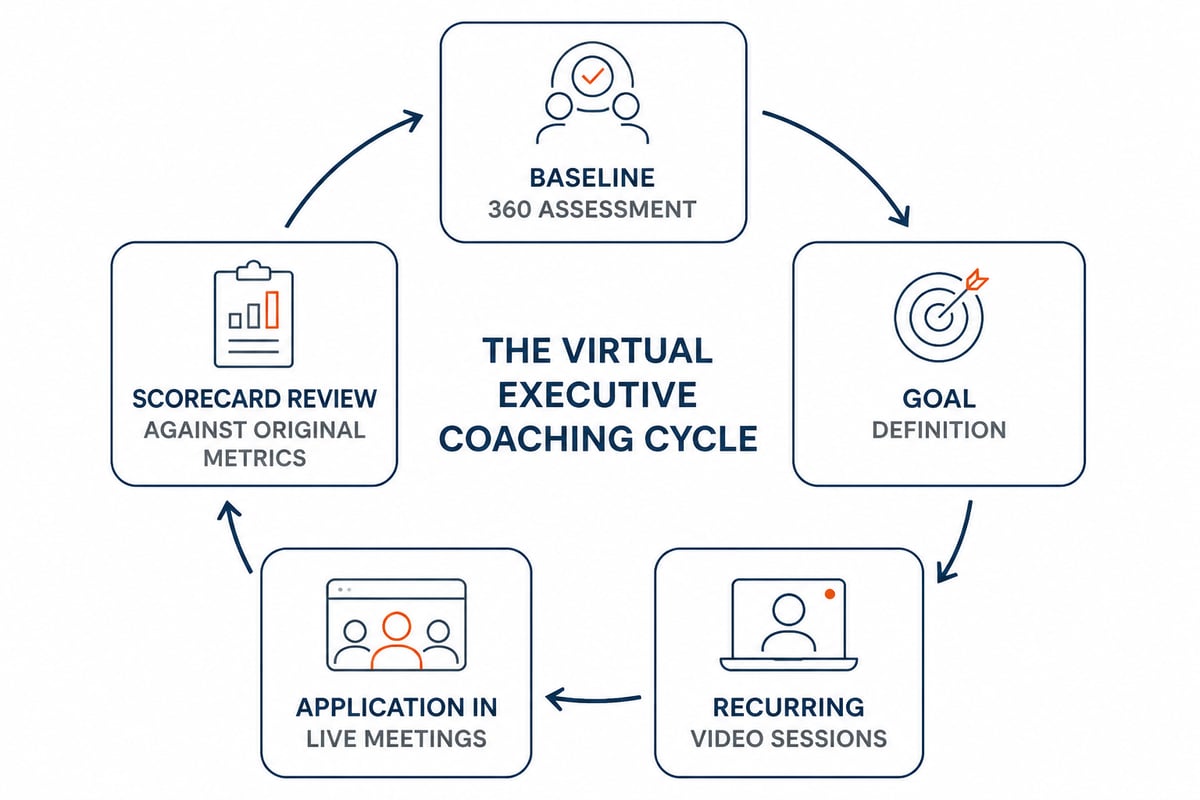
A typical engagement runs on a fixed rhythm: a baseline assessment, a goal-setting session, then recurring video calls with work between sessions.
The sessions themselves tend to follow the same shape:
- Intake and baseline: a 360 assessment or structured stakeholder interviews to find blind spots.
- Goal definition: two or three business outcomes, not personality goals.
- Recurring sessions: usually every one to two weeks, focused on live decisions you are facing.
- Application between calls: you run experiments in real meetings and bring results back.
- Review: progress checked against the original metrics.
The research on short, structured coaching is encouraging. A randomized controlled study of 202 managers from 13 organizations, published in the International Journal of Evidence Based Coaching and Mentoring, gave the coaching group four weekly sessions. Those managers significantly improved their personal goal levels compared with the waiting-list control group. Four sessions is a small dose, which suggests that structure may matter more than the calendar length.
What Remote Coaching Does Better and Worse
Remote coaching beats in-person coaching on access, speed, and scheduling, and loses on observation of live team dynamics.
The advantages are practical. You can work with a coach who understands your industry rather than whoever lives within driving distance. Sessions happen between meetings, so insight lands the same day you need it. Travel cost drops to zero.
The weak spot is observation. A coach on video cannot read a room the way someone sitting in your leadership meeting can. The fix is simple: have the coach join one or two real meetings by video, or review recordings with permission. Coaching that stays in a talking-only loop produces insight without behavior change.
Here is a contrarian point worth stating plainly. Most buyers worry about whether video "feels" as good as face to face. That is the wrong test. The right test is whether your direct reports and peers notice a difference within 90 days.
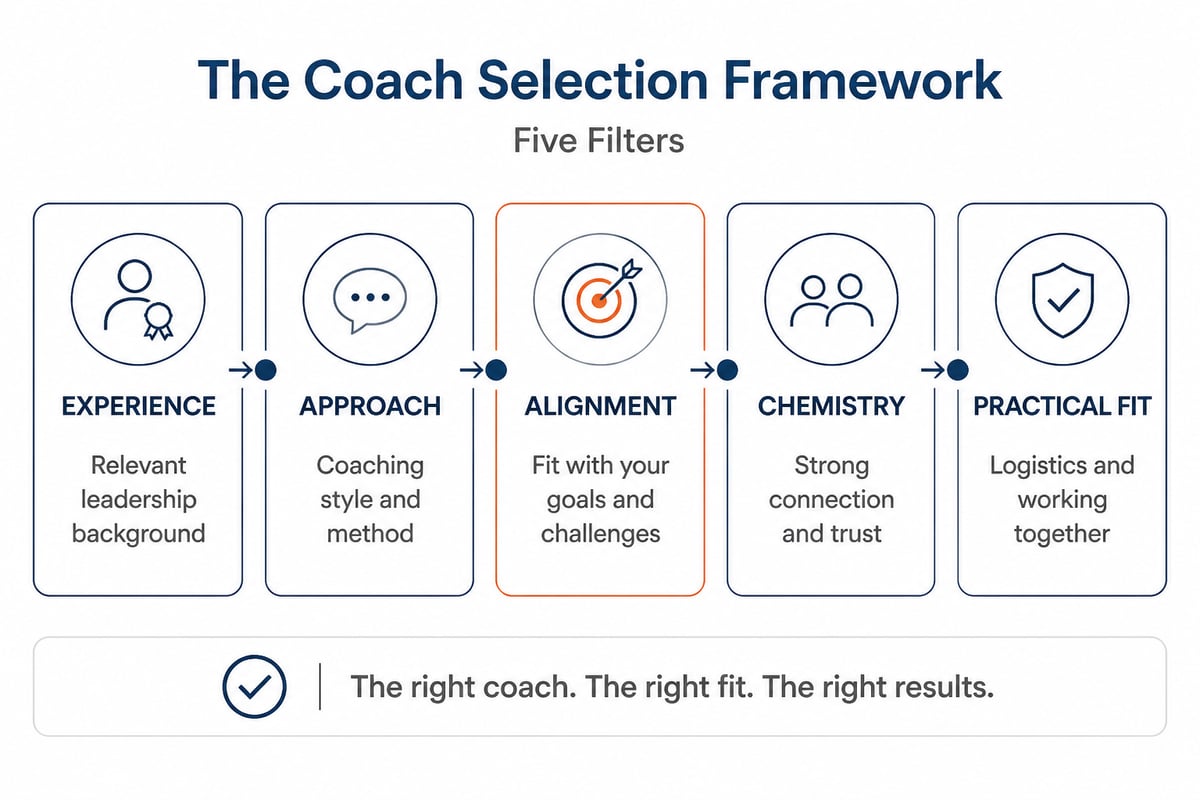
The Coach Selection Framework: Five Filters
Choose a virtual executive coach by testing operating experience, method, measurement, references, and fit, in that order. Credentials come last, because a certificate does not tell you whether someone has ever run a P&L or fired a vice president.
- Operating experience. Has the coach held roles with real accountability? Ask for specific situations they have navigated.
- Method. Can they describe their process in plain language, including what happens in a bad session?
- Measurement. Will they agree to KPIs before the first call? If they resist, walk away.
- References. Speak with at least two executives they have worked with, ideally at your company size.
- Fit. A free consultation should feel like a working conversation, not a sales pitch.
Certification worship deserves skepticism. The coaching industry is large and loosely regulated, and the 2023 ICF Global Coaching Study estimated average annual coaching income at $52,800, up 12% between 2019 and 2022. A growing field means more newcomers with polished credentials and thin experience. Ask what the coach has done, then ask what changed for their last three clients.
A Case Study: The Overloaded COO
A 150-person logistics company hired remote coaching for a COO who personally approved nearly every decision. The pattern fits the problem, diagnosis, solution, result, lesson format well.
Problem: Decisions queued behind the COO for days, and two senior managers were quietly job hunting.
Diagnosis: A 360 assessment showed the team respected her judgment but did not know which decisions they owned.
Solution: Her coach built a decision-rights grid, then coached her through delegating one category per month, reviewing each handoff in biweekly video sessions.
Result: Approval wait times dropped, and the two managers stayed. The coach tracked cycle time and retention as the headline measures.
Lesson: The coaching worked because the goal was a business metric, and the coach observed real decisions rather than discussing leadership in the abstract.
How to Measure Whether It Is Working
Measure virtual executive coaching with two or three business metrics set before the first session, reviewed every month, and owned by you rather than the coach.
Use a simple scorecard:
| Metric type | Example | Review rhythm |
|---|---|---|
| Speed | Decision cycle time | Monthly |
| People | Direct report engagement, regretted turnover | Quarterly |
| Execution | Priorities delivered on time | Monthly |
| Behavior | 360 pulse on two target behaviors | Every 90 days |
If nothing moves in 90 days, that is information. Either the goals were wrong or the coach was. Month-to-month terms matter here, because they let you exit without a fight.
AI Tools Versus a Human Coach
AI tools are useful for reflection prompts and between-session practice, but they cannot hold you accountable or challenge a blind spot you cannot see. A human coach who knows your politics, your board, and your history does something a chatbot cannot: notices what you leave out.
A sensible split is a human executive coach for the hard conversations and strategic decisions, with AI support for drafting and rehearsal. If you want to build that skill across your organization, a platform like MammothClub offers on-demand AI courses your managers can take alongside coaching.
Where to Find a Qualified Coach
Start with a directory that vets for independent, practicing professionals, then run the five filters above on a shortlist of three. Noomii's Executive Coaching offering matches senior leaders with third-party coaches who expose blind spots and sharpen strategic performance, and every coach is a real independent professional rather than an in-house hire or bot. Matching is free for clients, based on your goals, personality, and budget, and coaches may offer a free consultation before you commit.
If your need is broader than one leader, consider team coaching or performance coaching for managers below you. Leaders in specific markets can also look at regional options such as an executive coach in the Philippines or an executive coach in Qatar. Coaches who are building their own practice sometimes work with programs like ICONMAKER on positioning, which is useful to know when you evaluate how a coach markets versus how they deliver.
Virtual executive coaching is not therapy. If you are dealing with mental illness or past trauma, a licensed therapist is the right resource.

Red Flags to Watch For
Walk away from any virtual coach who shows these patterns:
- Guarantees specific income or promotion outcomes
- Cannot explain their method without jargon
- Resists setting KPIs or a review date
- Pushes long prepaid contracts before a trial period
- Offers no references from comparable leaders
Frequently Asked Questions
What is virtual executive coaching?
It is one-on-one leadership coaching conducted over video, phone, or messaging, aimed at improving decisions, communication, and results.
Is virtual coaching as effective as in-person?
It can be, provided the coach observes real work and the engagement is tied to metrics. Format matters less than structure and accountability.
How long does an engagement last?
Many run three to six months, though short, structured programs can show movement. A randomized study of 202 managers found gains after four weekly sessions.
How much does it cost?
Pricing varies widely by coach and scope. Ask for terms in writing and prefer month-to-month arrangements over long prepaid contracts.
Do I need a certified coach?
Certification can signal training, but it does not prove results. Prioritize operating experience, references, and measurable outcomes.
Can AI replace an executive coach?
AI helps with practice and reflection but cannot challenge your blind spots or hold you accountable the way an experienced human can.
How do I know it is working?
Set two or three business metrics before starting and review them monthly. Expect visible change within about 90 days.
What should I ask in a first consultation?
Ask about their operating background, their method, how they measure progress, and what happens when a session goes badly.
Is executive coaching a substitute for therapy?
No. Coaching focuses on performance and goals. Anyone seeking treatment for mental health concerns should work with a licensed therapist.
Your next step is to write down the two business outcomes you want from coaching and the date you will judge them, then bring that to a free consultation. Noomii can shortlist up to five coaches matched to your goals, personality, and budget, so you can get a free match and test fit before committing to anything.



Leave a Reply
Want to join the discussion?Feel free to contribute!