

The Coaching Certification Trap: Why Credentials Don’t Guarantee Results
The coaching industry has convinced thousands of aspiring coaches that certification is the golden ticket to a thriving practice. They invest $5,000 to $25,000 in programs, complete hundreds of training hours, and proudly display their credentials. Then reality hits: clients don't materialize, corporate buyers don't care, and the promised income never arrives. The coaching certification trap has claimed another victim, and the pattern repeats itself thousands of times each year.
Why Coaching Certifications Create False Expectations
The coaching certification industry operates on a seductive promise: invest in our program, display our badge, and clients will follow. This narrative ignores how coaching certifications often fail to equip coaches with skills that deliver measurable outcomes.
The typical certification trap follows this pattern:
- Coaches spend months learning standardized frameworks
- Training focuses on ICF core competencies and process adherence
- Little to no emphasis on business results, KPI tracking, or ROI measurement
- Graduates receive credentials but lack practical client acquisition skills
- The market proves saturated with identically trained coaches
After observing thousands of coaches launch and struggle since 2007, the pattern is unmistakable. Certification teaches process adherence, not outcome delivery. When a mid-market company needs leadership development to reduce turnover by 20%, they don't care whether you followed ICF guidelines. They care whether managers actually improved.

The Credibility Illusion That Keeps Coaches Trapped
Here's what buyers never tell you: most corporate decision-makers don't know what ICF, EMCC, or other coaching acronyms mean. When they do recognize them, many credentials are self-issued and lack external validation, creating an illusion rather than proof of competence.
I've watched this play out repeatedly in Fortune 500 procurement processes. When evaluating coaches for a division of 200 employees, buyers ask:
- What results have you delivered for similar companies?
- Can you show before-and-after metrics?
- How do you measure coaching impact?
- What's your track record with manager retention?
They rarely ask about certification status. The few who do typically misunderstand what credentials actually validate.
| What Certifications Measure | What Corporate Buyers Need |
|---|---|
| Adherence to coaching process | Measurable business outcomes |
| Completed training hours | Track record of success |
| Knowledge of core competencies | Industry-specific expertise |
| Peer-reviewed practice sessions | ROI and KPI improvement |
The Financial Reality Behind the Coaching Certification Trap
The numbers tell a sobering story. According to comprehensive cost analysis of coaching certification programs, coaches invest between $3,000 and $20,000 for initial credentials, plus ongoing fees for renewal, supervision, and continuing education.
Meanwhile, research on the return on investment in coaching credentials shows that certified coaches don't automatically command higher fees or attract more clients. The credential creates cost without guaranteed income increase.
The hidden costs include:
- $5,000 to $15,000 for initial certification training
- $500 to $2,000 annually for credential maintenance
- Hundreds of hours completing required coaching sessions
- Marketing expenses to differentiate from thousands of similarly credentialed coaches
- Opportunity cost of not building a practice while in training
Many coaches discover they're struggling to recoup their investment three years after certification. The trap tightens when they invest in additional credentials, hoping the next certification will unlock the promised success.
What Actually Matters to Sophisticated Coaching Buyers
After nearly two decades connecting coaches with corporate clients, the pattern is clear: sophisticated buyers prioritize demonstrated expertise over credentials. When Fortune 500 leaders face critical challenges, they want coaches who understand their industry, not generic practitioners with impressive letterhead.

The coaches who win significant contracts share these characteristics:
- Specific industry experience in manufacturing, technology, professional services, or other relevant sectors
- Measurable outcomes documented through KPIs, retention data, and performance metrics
- Business acumen that allows them to speak the language of operations, not just coaching theory
- Flexible methodology adapted to company needs rather than rigid certification frameworks
- Risk-sharing willingness through month-to-month terms and performance-based components
Notice what's missing? Certification status rarely makes the list.
The Alternative Path: Building Credibility Through Results
The coaching certification trap persists because the industry lacks clear standards and external accountability. This growing trust and credibility crisis creates opportunity for coaches willing to build credibility differently.
Smart coaches in 2026 are choosing a different path:
They invest in business development over certifications. Instead of spending $15,000 on another credential, they create case studies, document client outcomes, and build referral networks within target industries.
They develop measurable methodologies. Rather than generic coaching conversations, they design systems for tracking manager effectiveness, employee engagement scores, and retention improvements.
They specialize ruthlessly. Instead of being certified generalists, they become team coaching experts in specific sectors where their background gives them genuine advantage.
They demonstrate competence through action. Working month-to-month with clear KPIs proves capability far more convincingly than credentials.
This approach acknowledges that ICF certification measures process, not results, and builds credibility through demonstrated impact instead.
Breaking Free From Credential Dependency
The coaching industry won't tell you this, but some of the most successful corporate coaches never pursued traditional certification. They built expertise through business leadership roles, accumulated industry knowledge, and learned coaching skills through practice and mentorship.
When a manufacturing company needs help reducing safety incidents, they want someone who understands operational risk, not someone who completed 60 hours of coach training. When a technology startup needs leadership development, they want someone who's scaled teams through hypergrowth, not someone with perfect ICF core competencies.
The certification trap breaks when coaches realize credentials serve the certification industry more than coaching careers. Understanding the broader issues within the coaching and consulting industry, including low barriers and lack of meaningful standards, helps coaches make smarter investment decisions.
Building a Practice That Prioritizes Outcomes Over Credentials
The most effective corporate coaching in 2026 looks radically different from certification-focused approaches. It emphasizes:
- Live coaching in actual meetings rather than private sessions disconnected from work
- Clear KPI scorecards that track improvement weekly
- Operating cadence alignment that integrates coaching into business rhythm
- Manager training that builds internal coaching capability
- 360 assessments tied to specific development goals and business outcomes
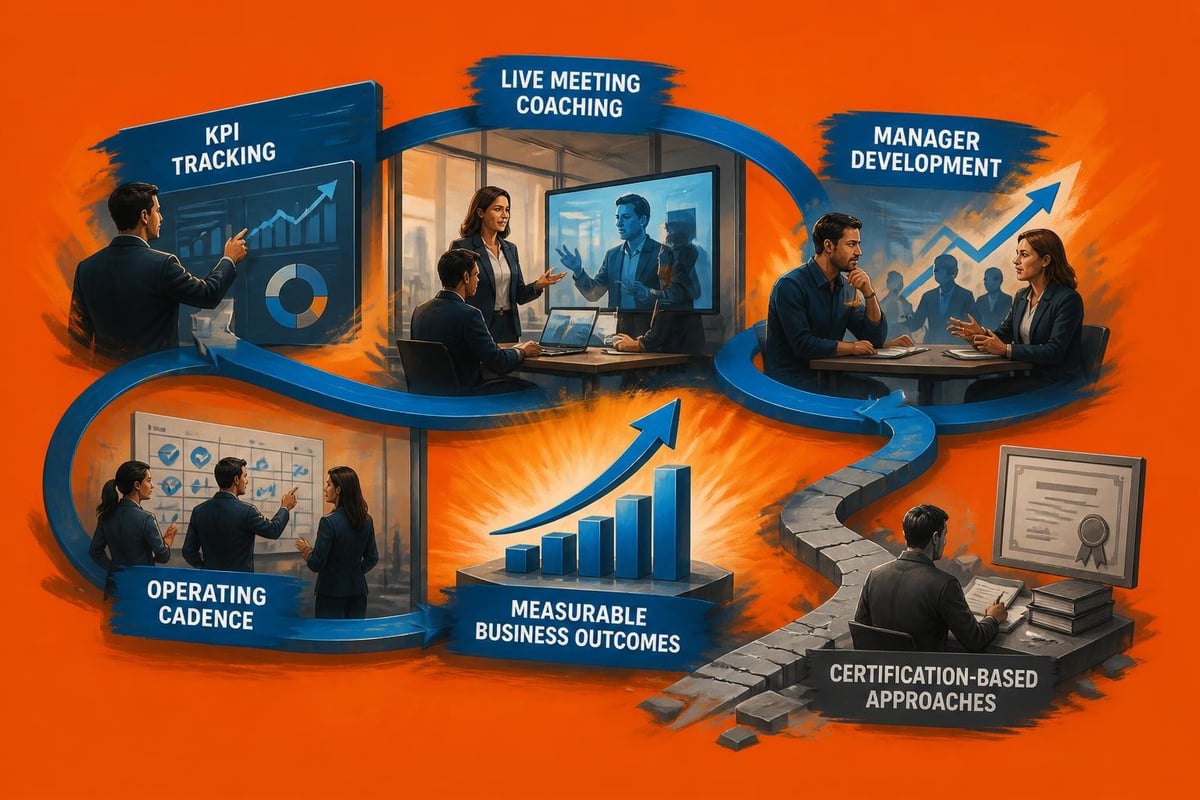
This approach requires different skills than certifications teach. It demands business acumen, industry knowledge, facilitation expertise, and comfort with accountability. These capabilities come from experience, not classroom hours.
When coaches escape the certification trap, they often discover their existing background provides more value than credentials ever could. The former sales director brings revenue expertise. The ex-operations manager understands process improvement. The HR veteran knows talent retention challenges. These experiences create differentiation that certifications cannot.
FAQ
What is the coaching certification trap?
The coaching certification trap occurs when coaches invest thousands in credentials believing they guarantee clients and income, only to discover the market prioritizes demonstrated results over certification status.
Do corporate buyers care about coaching certifications?
Most corporate buyers prioritize track record, industry expertise, and measurable outcomes over certifications. While some recognize ICF or other credentials, they rarely use certification as the primary selection criterion.
How much does coaching certification cost?
Initial coaching certification typically costs $3,000 to $20,000, with annual renewal fees of $500 to $2,000, plus hundreds of hours completing required coaching sessions and continuing education.
Does ICF certification guarantee coaching success?
No, ICF certification measures adherence to coaching process and core competencies, not the ability to deliver measurable business results or attract paying clients.
What do sophisticated coaching buyers actually look for?
Corporate buyers prioritize demonstrated expertise, measurable outcomes from previous engagements, industry-specific knowledge, business acumen, and flexible approaches adapted to their needs.
Can coaches succeed without certification?
Yes, many successful corporate coaches build practices through industry expertise, documented results, specialized knowledge, and business development skills rather than traditional certifications.
What's a better investment than coaching certification?
Coaches often see better returns from business development, case study creation, specialized industry knowledge, measurable methodology development, and building referral networks within target sectors.
How can coaches prove credibility without credentials?
Coaches demonstrate credibility through documented client outcomes, KPI improvements, case studies, industry-specific expertise, testimonials, risk-sharing arrangements, and track records in relevant sectors.
What skills do corporate coaches need beyond certification?
Effective corporate coaches need business acumen, KPI tracking ability, industry knowledge, facilitation skills, change management expertise, and comfort with accountability tied to measurable outcomes.
The coaching certification trap persists because the industry profits from credential dependency, but smart coaches and buyers are recognizing that outcomes matter more than letterhead. If you're a mid-market company seeking coaching that delivers measurable business results rather than process adherence, Noomii connects you with experienced coaches who work month-to-month, tie progress to clear KPIs, and share risk through aligned incentives. We prioritize faster decisions, stronger execution, and visible results over credential worship.



Leave a Reply
Want to join the discussion?Feel free to contribute!