

The Coach-Client Boundary Problem: What Mid-Market Leaders Miss
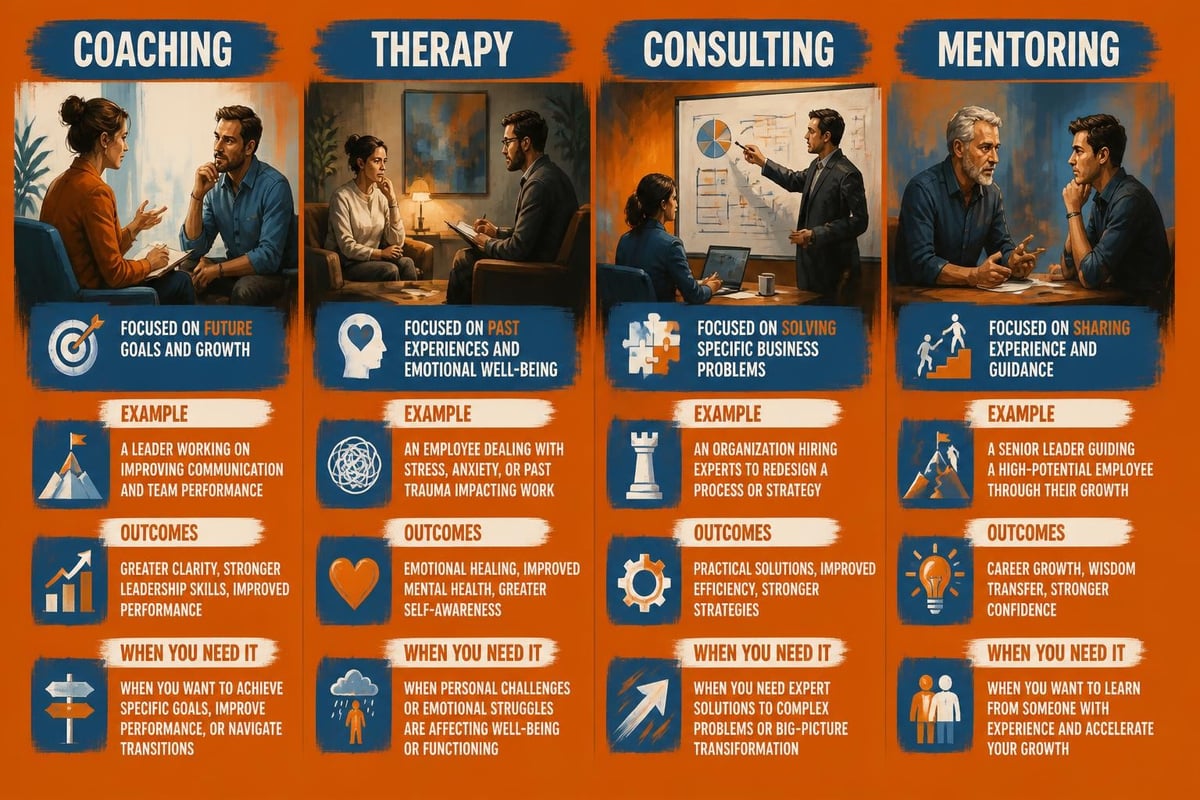
The coach client boundary problem surfaces in coaching engagements far more often than organizations admit. When roles blur between mentor, therapist, consultant, and friend, coaching loses its edge. Mid-market companies investing in leadership development need clarity, not confusion. The most damaging boundary failures happen quietly: a coach becomes too involved in operational decisions, a leader treats sessions as therapy, or an engagement drifts from accountability to cheerleading. Understanding where coaching begins and ends determines whether your investment drives measurable business outcomes or becomes another development expense with vague returns.
Why Boundaries Fail in Corporate Coaching
Most boundary violations stem from poor contracting at the start. Coaches trained in certification programs often learn boundary theory but lack the experience to enforce it when a CFO wants strategic advice or a VP treats sessions as emotional support.
Research on coaching and therapy boundary perceptions shows practitioners themselves struggle to define where coaching stops and other helping relationships begin. This uncertainty creates risk.
Common boundary failures include:
- Coaches offering therapy without clinical training or licensure
- Executives expecting consultants disguised as coaches
- Session time consumed by venting instead of action planning
- Coaches avoiding tough feedback to preserve the relationship
- Leaders delegating decisions they should own back to the coach
The financial cost compounds when companies pay coaching rates for services they didn't contract for. A director spending six months in unfocused conversations might feel supported, but the business sees no change in team performance, decision speed, or retention.
The Three Boundaries Every Engagement Must Define
Effective corporate coaching starts with explicit agreements on scope, method, and outcomes. These aren't administrative details. They're the architecture that protects both the coaching investment and the leader's development.
Scope: What Coaching Is and Isn't
Coaching addresses performance, behavior, decision-making, and leadership capability. It doesn't treat mental health conditions, run projects, or make strategic decisions for clients.
When Noomii Corporate Coaching engages with mid-market companies, the scope conversation happens before any sessions begin. If a VP needs help with quarterly planning execution, that's coaching. If they need couples therapy or clinical anxiety treatment, we refer out.
Clear scope includes:
- Focus areas tied to business KPIs (retention, decision latency, team output)
- Off-limit topics requiring specialized expertise (legal, clinical, technical)
- Decision authority (coach advises, leader decides and owns outcomes)
Method: How Sessions Work and Why
The coaching method determines whether leaders build capability or create dependency. Weak boundaries show up in session structure: no agenda, no homework, no follow-through, no measurement.
| Boundary Aspect | Weak Practice | Strong Practice |
|---|---|---|
| Session prep | Leader arrives unprepared | Pre-work assigned and reviewed |
| Agenda ownership | Coach drives all topics | Leader sets priorities, coach guides |
| Between sessions | No accountability | Specific actions tracked against KPIs |
| Progress visibility | Subjective feelings | Measurable behavior and outcome shifts |
Organizations serious about leadership development should demand this clarity upfront. The British Association for Counselling and Psychotherapy’s boundary guidance offers relevant principles for helping professions, including the importance of contracting and role clarity.
Outcomes: Measuring What Matters
The coach client boundary problem becomes most visible when it's time to evaluate results. Fuzzy boundaries produce fuzzy outcomes. "I feel more confident" isn't a business result. "My team's average time to decision dropped from 14 days to 6 days" is.
Boundary-driven outcome metrics include:
- Manager retention rates before and after coaching
- 360 feedback score changes in specific leadership competencies
- Team engagement scores tied to leader behavior shifts
- Pipeline velocity, close rates, or customer satisfaction when coaching sales leaders
- Meeting effectiveness scores and decision latency reduction
How the Coach Client Boundary Problem Derails ROI
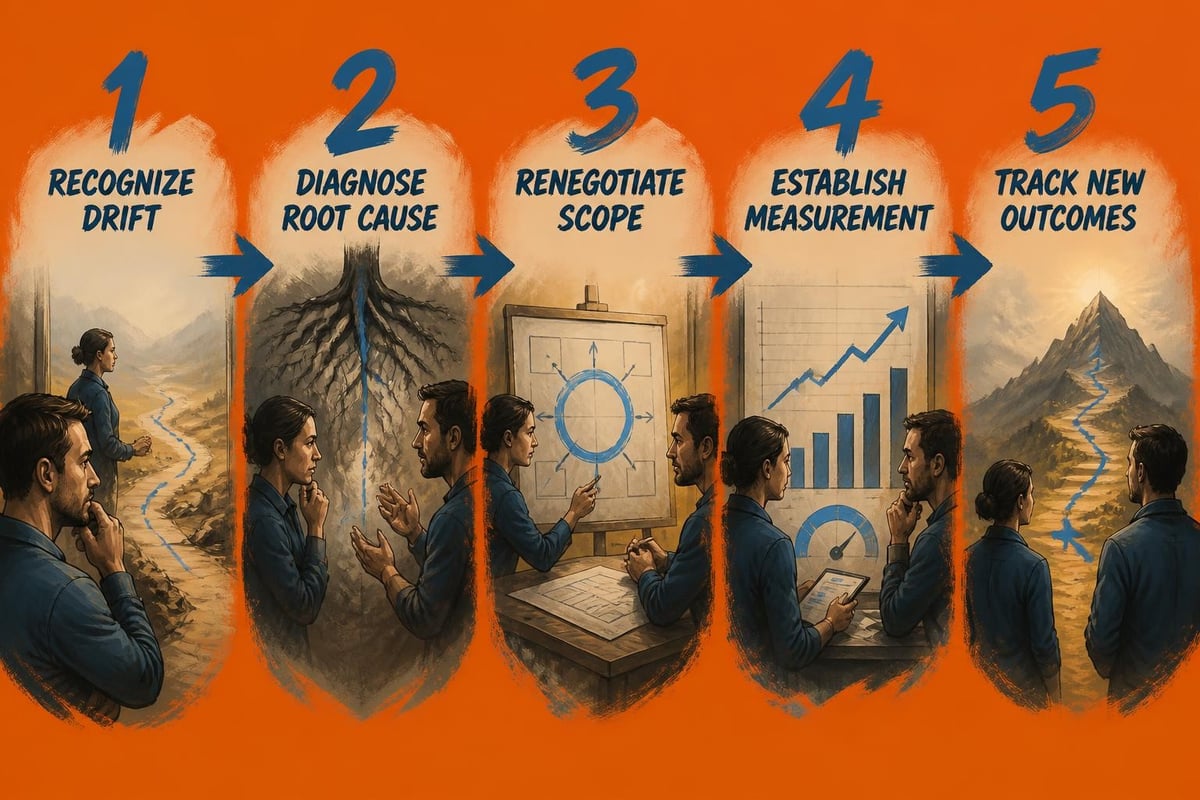
A Fortune 500 division contracted with a coach for their VP of Operations. Six months in, sessions had become therapy for work stress and personal relationship issues. The VP valued the support, but none of the operational KPIs improved. Meetings still ran long, decisions still stalled, and direct reports still complained about unclear direction.
Problem: The boundary between coaching and therapy collapsed. Diagnosis: No clear contracting on scope or measurable outcomes. Solution: Reset the engagement with defined behavioral targets (meeting discipline, decision frameworks, delegation clarity) and weekly accountability. Result: Within 90 days, meeting efficiency improved by 40%, decision cycle time dropped 35%, and team surveys showed marked improvement in role clarity. Lesson: Boundaries aren't restrictions. They're the framework that makes coaching work.
This pattern repeats across industries. The coach client boundary problem isn't about being cold or rigid. It's about maintaining the role clarity that drives results. When coaches become friends, therapists, or consultants without explicit agreement, accountability evaporates.
Practical Signals That Boundaries Are Breaking Down
Mid-market leaders rarely recognize boundary erosion until it's costly. Watch for these red flags in your coaching engagements:
- Sessions regularly run over without clear ROI on the extra time
- The coach provides more opinions than questions
- No written record of commitments or progress against goals
- Leaders describe feeling better but can't name behavioral changes
- Stakeholders (direct reports, peers, board) see no observable shifts
- The engagement extends repeatedly with no clear end criteria
When working with enterprise corporate coaching providers, insist on boundary clarity from contracting through completion. Month-to-month terms force continuous value demonstration.
Building Boundaries That Drive Business Results
Strong boundaries start with these practices:
- Written engagement agreements specifying scope, duration, and success metrics
- Regular three-way check-ins (coach, leader, sponsor) reviewing progress against KPIs
- Session notes documenting commitments and tracking follow-through
- Clear escalation paths when issues surface beyond coaching scope
- Defined completion criteria so engagements end when goals are met
The American Psychological Association's overview on professional boundaries in clinical practice emphasizes that boundaries protect both practitioner and client. The same principle applies in coaching. Boundaries aren't barriers to trust. They're the container that makes trust productive.
Organizations buying coaching need to ask tougher questions upfront: How will we measure success? What happens if the leader needs support outside your scope? How do we know when the engagement should end? What consequences exist if commitments aren't kept?
Coaches who bristle at these questions reveal their own boundary confusion. Professionals welcome clarity because it protects their ability to deliver results.
The Contrarian Truth About Coaching Boundaries
The coaching industry often celebrates unconditional positive regard and deep relational trust as markers of quality. But corporate coaching isn't friendship. It's a professional service designed to improve performance and drive business outcomes.
The most effective coaches maintain warm, respectful relationships within clear boundaries. They challenge leaders, hold them accountable, and end engagements when goals are met. They don't create dependency or confuse support with results.
The coach client boundary problem reflects a deeper industry issue: too much focus on certification theory and not enough on business pragmatism. Leaders don't need coaches certified in boundary management. They need coaches who set boundaries, track outcomes, and tie development to measurable performance shifts.
When companies choose Noomii for executive coaching, leadership development, or team facilitation, they're choosing practitioners who work inside your business, attend your meetings, and link progress to your KPIs. That level of involvement requires even tighter boundaries, not looser ones.
The coach client boundary problem disappears when organizations demand clarity and coaches deliver accountability. Mid-market companies investing in leadership development should expect explicit scope, measurable outcomes, and professional boundaries from day one. Noomii helps companies build accountable leaders through practical coaching tied to KPIs and ROI, with month-to-month terms and no long contracts so you stay because results are visible.



Leave a Reply
Want to join the discussion?Feel free to contribute!