

Executive Coaching for Accounting Firms: What Works in 2026
Accounting firms face a leadership crisis hiding in plain sight. Partner retirements accelerate, technical expertise no longer guarantees promotion, and talent retention challenges intensify across finance and accounting roles. Most firms respond with generic leadership training that treats partners like interchangeable corporate executives. That approach fails because accounting leadership demands a distinct blend: technical mastery, client relationship management, business development acumen, and the ability to mentor teams through complex regulatory environments. Executive coaching for accounting firms only delivers results when it addresses these sector-specific realities with precision, not platitudes.
Why Traditional Leadership Development Fails Accounting Firms
Accounting firms operate under constraints most industries never encounter. Partners must balance billable hour expectations with people development, navigate constant regulatory changes, manage seasonal capacity spikes, and maintain technical certifications while building books of business. Generic leadership programs ignore these operational realities.
The evidence appears in predictable patterns. Firms invest in off-the-shelf leadership courses, participants attend dutifully, nothing measurably changes. Client satisfaction scores remain flat. Turnover among senior managers who should become partners stays stubbornly high. The firms that recognize this mismatch early gain competitive advantage in both talent retention and client service quality.
The Succession Planning Gap Nobody Addresses
Most accounting firms discover their succession crisis five years too late. A partner announces retirement, the firm scrambles to identify internal successors, and realizes their best technical accountants lack the leadership capabilities to manage client relationships and develop junior staff. This scenario repeats across firms of every size because technical promotion tracks rarely include systematic leadership development.
Executive coaching for accounting firms should begin at the senior manager level, well before partnership consideration. Waiting until someone becomes a partner wastes the most critical development window. By then, behavioral patterns have calcified, client relationships follow established grooves, and the perceived stakes of change feel dangerously high.

Firms that implement structured coaching at the senior manager and new partner levels report measurably different outcomes. They identify leadership potential earlier, provide targeted development before bad habits entrench, and create realistic timelines for capability building that align with partnership track expectations.
What Actually Drives Leadership Effectiveness in Accounting
The 2025 workforce transformation research from INCPAS confirms what progressive firms already observe: accounting leadership requirements have shifted dramatically. Client expectations now include strategic advisory capabilities, not just compliance work. Teams demand clarity, development, and work-life boundaries. Technology adoption requires change management skills most partners never developed.
Three capabilities separate effective accounting leaders from struggling ones:
-
Client relationship depth beyond technical delivery – Partners who retain and grow accounts demonstrate consistent communication patterns, proactive strategic thinking, and the ability to translate complex technical matters into business implications.
-
Team development as a core competency – The best leaders systematically develop junior staff, delegate appropriately, provide clear feedback, and create learning opportunities within client engagements rather than viewing development as separate from billable work.
-
Business development discipline – Successful partners treat relationship building and opportunity creation as systematic processes, not personality-dependent activities. They follow consistent prospecting rhythms, leverage referral networks intentionally, and convert conversations into engagements at measurably higher rates.
These capabilities rarely emerge from technical accounting work alone. They require deliberate development, practiced skills, and often external perspective to identify blind spots.
The Toxic Leadership Problem Firms Won't Name
Accounting firms tolerate abrasive partners longer than most industries because technical excellence and client billings provide cover. A partner who generates significant revenue but creates team turnover, undermines confidence, or creates toxic work environments represents a hidden cost most firms never properly calculate.
The true cost includes: replacement hiring expenses when senior managers leave rather than work with difficult partners, reduced productivity from team members operating in constant stress, client service quality degradation when team continuity breaks down, and reputation damage when former employees share experiences publicly.
Executive coaching for accounting firms must include clear protocols for addressing toxic leadership patterns before they become entrenched. This means early intervention when behavioral red flags appear, structured feedback processes that document impact, and accountability measures tied to partnership compensation and client assignment.
The firms that address toxic leadership directly, with evidence-based coaching interventions and clear performance expectations, retain more high-potential staff and build stronger reputations as employers of choice. Those that avoid difficult conversations pay compounding costs in talent loss and damaged culture.
Building a Coaching Program That Matches Accounting Firm Realities
Generic coaching programs fail accounting firms because they miss sector-specific contexts. An effective program must account for busy season demands, client service commitments, regulatory compliance requirements, and partnership structures that influence decision authority and accountability.
| Program Element | Why It Matters | Implementation Reality |
|---|---|---|
| Coach sector expertise | Understands client relationship dynamics, partnership structures, technical career paths | Generic business coaches miss accounting-specific leadership contexts |
| Flexible scheduling | Accommodates busy season, client deadlines, CPE requirements | Rigid coaching calendars create conflicts and reduce engagement |
| Measurable outcomes | Ties coaching to retention, promotion readiness, client satisfaction, team performance | Most programs track participant satisfaction, not business results |
| Partner buy-in | Ensures coaching receives time priority and leadership support | Without partner commitment, coaching becomes optional and ineffective |
The most effective approach combines individual coaching for leadership capability development with structured assessment processes that identify specific gaps. This might include 360-degree feedback from peers, direct reports, and partners, client relationship assessments that reveal communication patterns and strategic thinking depth, and behavioral assessments that uncover blind spots in self-awareness and interpersonal effectiveness.
Coach Selection Makes or Breaks Results
Not all executive coaches understand accounting firm dynamics. The qualifications that matter for executive coaching extend beyond general business experience into sector-specific expertise. The best coaches for accounting firms typically demonstrate track records in professional services, understanding of partner economics and firm governance, experience coaching through succession transitions, and capability in addressing both technical leadership development and interpersonal challenges.
Firms that use precision matching approaches to pair leaders with coaches who understand their specific contexts report higher satisfaction and measurably better outcomes. A coach who has worked with multiple accounting firms brings pattern recognition that accelerates development, understands the unwritten rules of partnership advancement, and anticipates challenges before they derail progress.
The matching process should consider the leader's specific development goals, the coach's relevant sector experience, personality and communication style compatibility, and availability that aligns with the firm's calendar realities including busy season constraints.

Measuring What Actually Matters
Most firms measure coaching program success through participant satisfaction surveys. This captures the least important metric. Satisfied participants who don't change behavior or improve outcomes represent wasted investment.
The metrics that demonstrate coaching program effectiveness include:
- Retention rates among coached vs. non-coached leaders at senior manager and new partner levels
- Promotion readiness timelines showing accelerated capability development in target competencies
- Client satisfaction scores comparing coached partners to firm averages
- Team engagement and turnover for groups led by coaching participants
- Business development results tracking new client acquisition and account growth
These measurements require baseline data collection before coaching begins and consistent tracking throughout the engagement. Firms that establish clear success criteria upfront and measure rigorously separate coaching that delivers value from programs that simply consume time and budget.
The ROI Conversation Leaders Avoid
Accounting firm partners understand return on investment when evaluating technology purchases or office expansions. They often resist applying the same discipline to coaching investments, treating leadership development as a soft benefit rather than a measurable business initiative.
This represents faulty thinking. Executive coaching for accounting firms should demonstrate clear financial returns through improved retention (reducing replacement costs), faster partner development (expanding client service capacity), enhanced client relationships (increasing revenue per client), and reduced toxicity costs (decreasing turnover and improving productivity).
A structured ROI analysis might reveal that retaining one senior manager who would otherwise leave delivers financial benefit exceeding the entire coaching program cost. Or that accelerating partner readiness by 12 months creates significant capacity value. Deloitte’s human capital research consistently shows that organizations treating leadership development as strategic investment rather than discretionary spending achieve superior talent outcomes.
Implementation Realities and Common Failure Patterns
The gap between coaching program intent and results usually traces to predictable implementation failures. Firms launch initiatives without adequate partner support, creating perception that coaching represents optional activity rather than development priority. Time allocation becomes the first casualty when client demands spike.
Another common failure: treating coaching as remediation rather than development. When coaching becomes code for "you have a performance problem," high-potential leaders avoid participation to protect their reputations. The most effective programs position coaching as investment in the firm's future leaders, making participation a signal of potential rather than a warning flag.
The AICPA's guidance on coaching and mentoring in the accounting profession emphasizes integration with broader talent development strategies. Standalone coaching programs disconnected from promotion criteria, performance reviews, and partnership advancement processes rarely achieve sustained impact.
Building Internal Capability vs. External Partnerships
Some firms attempt to develop internal coaching capabilities by training partners or HR leaders in coaching methodologies. This approach delivers value for ongoing mentoring and feedback but typically lacks the objectivity and specialized expertise external coaching provides.
The most sophisticated firms use hybrid models: external executive coaches for high-stakes leadership development and succession preparation, internal coaching programs for broader skill development and peer learning, and structured mentoring that connects experienced partners with rising leaders.
This combination provides external perspective when leaders face significant transitions or behavioral challenges while building internal capability for continuous development. It also addresses the reality that team coaching dynamics differ from individual leadership development and may require different approaches.
The Competitive Advantage Nobody Discusses
Accounting firms compete for talent in an increasingly difficult market. Technical skills remain abundant. Leadership capability represents the scarce resource that determines which firms attract and retain the best people.
Firms that invest systematically in executive coaching for accounting firms create differentiated value propositions for ambitious professionals. They signal commitment to development, provide clear pathways to partnership, and demonstrate that leadership capabilities matter as much as technical excellence.
This competitive positioning becomes increasingly important as younger professionals evaluate firm cultures and advancement opportunities more critically than previous generations. The firms that build reputations as leadership development engines win talent wars.
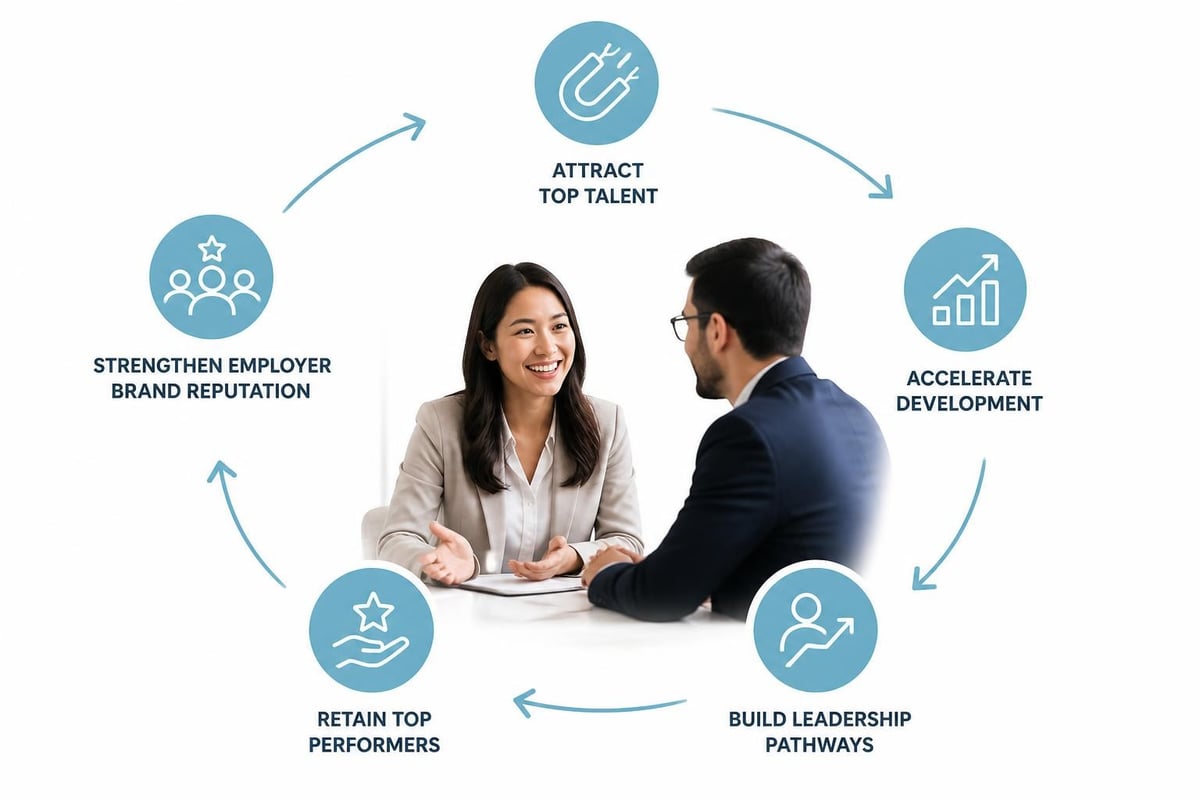
The evidence appears in recruiting outcomes, offer acceptance rates, and voluntary turnover statistics. Firms with robust coaching and development programs consistently outperform competitors in talent acquisition and retention, creating compound advantages as they build stronger teams.
Executive coaching for accounting firms only works when it addresses sector-specific leadership challenges with precision matching, measurable outcomes, and integration into broader talent strategies. Generic approaches waste resources and miss opportunities to develop the distinctive capabilities accounting leaders actually need. The Noomii Corporate Leadership Program delivers evidence-based coaching solutions designed for professional services firms, combining specialized coach matching with rigorous outcome measurement to transform leadership effectiveness at every level.


Leave a Reply
Want to join the discussion?Feel free to contribute!