

ServSafe Certification Guide for Leaders in 2026
Food safety isn't just about preventing illness; it's about building systems that protect customers, employees, and brand reputation. Serv safe certification has become the gold standard in the foodservice industry, creating a framework where every team member understands their role in maintaining safety protocols. While this certification targets restaurants and hospitality businesses, the underlying principles of accountability, training rigor, and measurable outcomes mirror what effective leadership demands in any organization. Understanding how certification programs create culture change offers valuable lessons for executives building high-performance teams.
What ServSafe Certification Actually Measures
ServSafe certification validates that food service managers and handlers understand critical safety practices, from proper temperature control to contamination prevention. The program, administered by the National Restaurant Association, combines comprehensive training with rigorous testing to ensure participants can apply food safety knowledge in real-world settings.
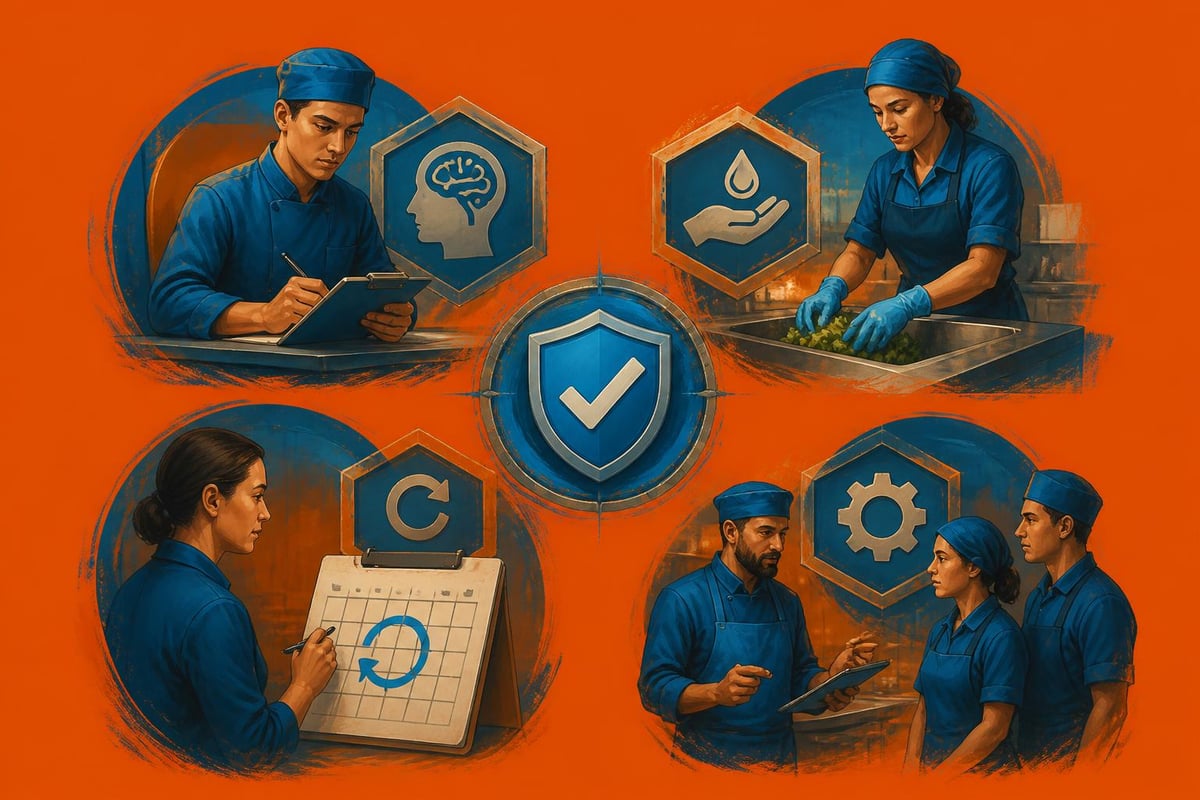
The certification process breaks down into specific competencies:
- Temperature monitoring and control across storage, preparation, and service
- Cross-contamination prevention through proper handling and separation protocols
- Personal hygiene standards that reduce pathogen transmission
- Cleaning and sanitizing procedures using approved methods and chemicals
- Allergen awareness and management to protect sensitive customers
The Testing and Renewal Framework
Obtaining ServSafe Manager Certification requires passing a proctored exam with at least 75% accuracy. Candidates typically complete 8-16 hours of coursework before testing, though self-study options exist for experienced professionals. The certification remains valid for five years, after which managers must recertify to maintain current knowledge.
| Certification Level | Training Hours | Exam Questions | Passing Score | Validity Period |
|---|---|---|---|---|
| Food Handler | 2-4 hours | 40 questions | 75% | 3 years |
| Manager | 8-16 hours | 90 questions | 75% | 5 years |
| Instructor | 16+ hours | 80 questions | 85% | 5 years |
Many organizations partner with institutions like Purdue University’s Extension program to deliver training, combining academic rigor with practical application. This partnership model ensures instructors understand both theory and operational realities.
Why Certification Programs Build Stronger Teams
The true value of serv safe certification extends beyond individual knowledge. When organizations mandate certification, they signal that safety isn't negotiable and that every team member's competence directly impacts business outcomes. This accountability structure creates clarity around expectations and consequences, much like leadership development programs establish frameworks for managerial excellence.
Research from O*NET’s certification database shows that certified food service managers report higher confidence in decision-making and greater awareness of legal compliance requirements. These same benefits appear when companies invest in structured leadership training that ties skills to measurable business results.
Translating Certification Principles to Corporate Leadership
Organizations implementing certification requirements typically see several outcomes:
- Standardized baseline competency across all locations and shifts
- Reduced liability exposure through documented training records
- Faster onboarding as new hires follow established learning paths
- Cultural reinforcement of safety and quality as core values
- Performance visibility through pre- and post-training assessments
Companies building leadership capability can adopt similar structures. When executive coaching includes clear competency frameworks, measurable progress milestones, and accountability for application, leaders develop practical skills rather than collecting credentials.

Choosing the Right Certification Path for Your Context
ServSafe offers multiple certification tracks, from basic food handler credentials to advanced allergen and alcohol training. The expanded training ecosystem now includes online proctored exams, accommodating shift workers and remote learners. Organizations must match certification requirements to operational needs rather than pursuing credentials for appearance.
This strategic approach applies equally to professional development. Mid-market companies often waste resources on generic management training that looks impressive but changes nothing. The alternative is working with coaches who assess current gaps, design targeted interventions, and measure impact through KPIs like retention rates, decision speed, and team engagement scores.
Comparing Value Across Training Providers
ServSafe compares favorably to other food safety programs because it emphasizes practical application over theoretical knowledge. The curriculum addresses real scenarios managers face during health inspections, customer complaints, and equipment failures. This relevance drives higher completion rates and better knowledge retention.
When evaluating corporate coaching options, apply the same filter. Does the provider coach live in your meetings, or do they deliver generic workshops? Are outcomes tied to your specific priorities, or are they vague improvements in "communication" and "leadership presence"? Practical application matters more than impressive certifications on the coach's wall.
Implementation Challenges and Solutions
Rolling out mandatory serv safe certification across an organization requires planning, budget allocation, and change management. Common obstacles include:
- Scheduling conflicts with operational demands and shift coverage
- Language barriers for multilingual teams requiring translated materials
- Cost concerns when certifying large staffs every 3-5 years
- Resistance from experienced workers who view training as unnecessary
Successful implementations address these barriers proactively. Purdue’s program, for example, offers flexible scheduling and multi-language support. The ServSafe examination handbook provides detailed guidance on accommodations and administration procedures.
Organizations building leadership capability face parallel challenges. Managers resist coaching when they're overwhelmed with priorities. Training budgets get cut when ROI isn't visible. The solution is designing programs that integrate with existing workflows, demonstrate quick wins, and share risk through aligned incentives rather than long contracts.

Maintaining Certification Value Over Time
The five-year renewal cycle for serv safe certification creates natural checkpoints for knowledge refreshment. However, leading organizations don't wait for expiration dates. They build ongoing reinforcement through:
- Weekly safety briefings highlighting recent incidents
- Quarterly audits with corrective action plans
- Recognition programs celebrating zero-violation inspections
- Mentorship pairing newly certified managers with veterans
This continuous improvement approach mirrors effective leadership development. Single training events create temporary awareness. Sustained behavior change requires embedding new practices into daily operations, measuring progress against clear metrics, and adjusting based on results. Companies working with performance coaches who understand operational realities achieve faster adoption and stronger retention than those purchasing off-the-shelf programs.
Measuring Return on Certification Investment
Smart operators track metrics beyond pass rates. They monitor health inspection scores, customer complaint frequency, food waste percentages, and staff turnover. When these indicators improve following certification rollout, the program justifies its cost. According to various ServSafe programs, certified establishments report 25-40% fewer critical violations compared to uncertified competitors.
This data-driven approach separates effective training from compliance theater. Similarly, companies investing in manager development should track engagement scores, time-to-decision metrics, and retention rates for high performers. If leadership coaching doesn't move these numbers within 90 days, the program needs adjustment or replacement.
| Metric Category | Pre-Certification Baseline | Post-Certification Target | Measurement Frequency |
|---|---|---|---|
| Critical Violations | Industry average | 50% reduction | After each inspection |
| Food Waste | % of inventory | 20% reduction | Monthly |
| Staff Turnover | Annual rate | 30% reduction | Quarterly |
| Customer Complaints | Per 1000 served | 40% reduction | Weekly |
The ServSafe Food Safety Advantage emphasizes this measurement discipline, providing resources for tracking and reporting. Organizations serious about capability building adopt the same rigor, whether they're certifying kitchen staff or developing their next generation of leaders.
Certification programs work when they combine rigorous standards, practical application, and accountability for results. These same principles drive effective leadership development in mid-market companies facing competitive pressure and talent challenges. Noomii Corporate Coaching delivers measurable outcomes through live coaching, clear KPIs, and month-to-month terms that keep us focused on your priorities. If you need leaders who execute rather than talk about execution, let's build that capability together.



Leave a Reply
Want to join the discussion?Feel free to contribute!