
How to Find a Life Coach Mentor Who Fits You
A life coach mentor is someone who guides your growth by combining coaching skills with real experience in the area you want to change, and you find the right one by matching their track record to your goal, not by counting their credentials. Mentors share what they have lived. Coaches draw out what you already know. The best people in this space do both, and you can test for it before you spend a dollar.
What Is a Life Coach Mentor, Exactly?
A life coach mentor blends two jobs that are usually separate: the coach asks questions and holds you accountable, while the mentor offers advice from experience. Pure coaching is non-directive. Pure mentoring is directive. Most clients need a measured mix of both, depending on the stage they are in.
This matters because the market is crowded and growing fast. The 2025 ICF Global Coaching Study estimates that the number of coach practitioners worldwide has grown since 2023. More supply means more noise, and more people calling themselves mentors with nothing to mentor from.
If you want the forward-looking, goal-setting version of this work, life coaching is built around setting goals and building the steps to reach them, rather than healing the past. Anyone seeking treatment for mental illness or trauma should see a licensed therapist instead.
What Are the 7 Roles of a Mentor?
A good mentor plays seven roles: teacher, guide, sounding board, accountability partner, connector, challenger, and role model. You rarely need all seven at once. A new manager may need a teacher and a connector. Someone stuck in a career rut may need a challenger and an accountability partner.
Use this as a diagnostic. Write down which two roles you need most right now, then ask each candidate how they have played those roles for past clients. Vague answers are a signal. Specific stories with outcomes are the real thing.
The FIT-90 Framework for Choosing a Mentor
FIT-90 is a simple screening method: check Fluency, Impact evidence, and Trial fit, then review at 90 days. It turns a gut feeling into criteria you can score.
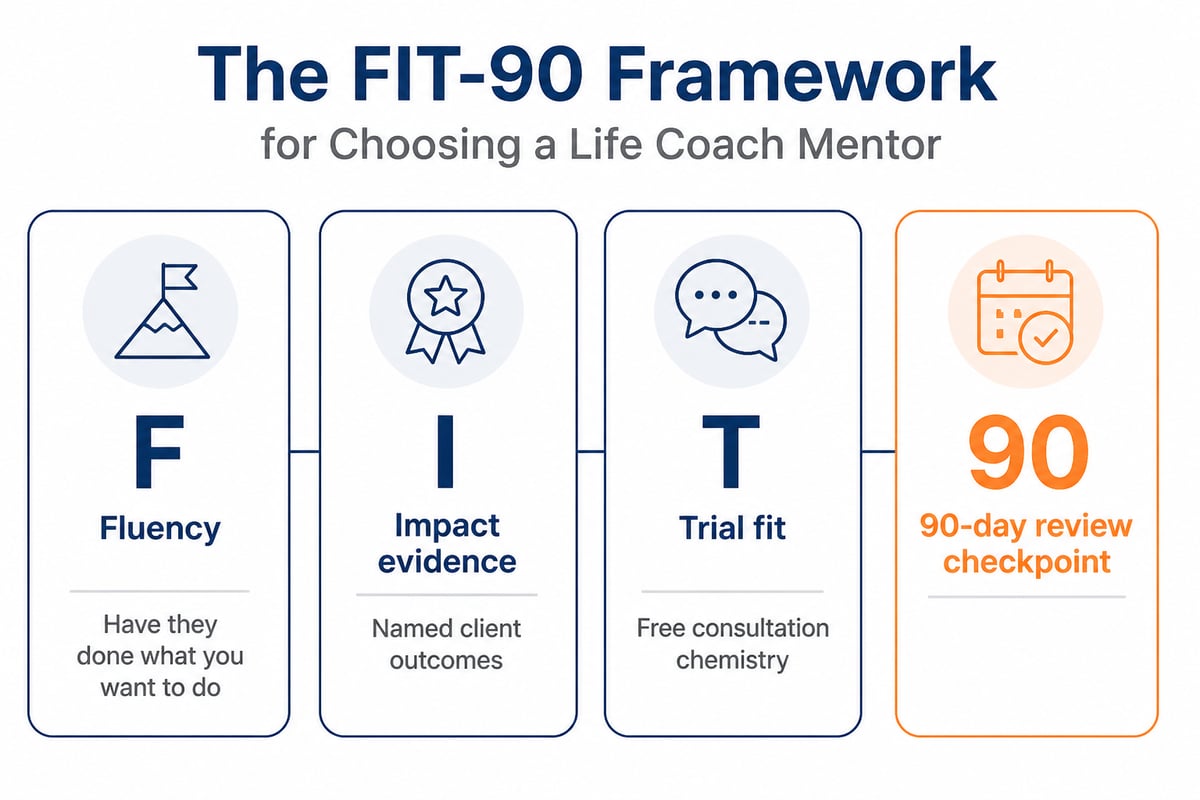
- Fluency: Have they personally done, or repeatedly guided others through, the change you want? A mentor for a career pivot should have made one or coached many.
- Impact evidence: Ask for two anonymized client outcomes with the starting problem, what changed, and how long it took.
- Trial fit: Use the free consultation to see whether they listen more than they pitch.
- 90-day review: Agree up front on what progress looks like at three months, and what happens if it is missing.
Do Credentials Matter When Choosing a Mentor?
Credentials matter less than buyers are told, but they are not meaningless. The ICF study found that most coaches surveyed said clients and organizations expect a coaching certification or credential. That is an expectation, not a performance guarantee.
Certified coaches with thin experience can stall clients, and uncertified practitioners with deep field experience can help people change careers. Treat a certificate as a baseline for ethics and method, then weigh it below demonstrated results. If you want to understand what training involves, see life coach training for context.
The honest test is simple: can this person show you what happened to the last five people who had your problem?
Case Study: A Stalled Operations Director
Problem: An operations director in her forties kept getting passed over for VP roles despite strong numbers.
Diagnosis: In discovery, her mentor noticed she described wins as "the team's" and never her own. Her bosses could not see her strategic contribution.
Solution: The mentor, a former VP, coached her to present quarterly results in her own voice and introduced her to two senior sponsors.
Result: Within a few months she led the executive operations review and was promoted the following cycle.
Lesson: She needed a mentor with access and a coach's questions together. Either alone would have missed the problem.
How Much Should I Expect to Pay for a Life Coach?
Rates vary widely by experience, niche, and format, so expect a range rather than a fixed price. Specialized executive mentors cost more than general life coaches, and group formats cost less than one-on-one work. Nobody can quote you a fair number without knowing your goal.
What you can control is how you compare. Ask what is included between sessions, whether sessions are recorded or summarized, and what the cancellation terms are. Month-to-month arrangements reduce risk while you test the fit. For budget-conscious starts, a coaching circle can give you a lower-cost way to experience the process.
Human Mentor or AI Tool?
AI tools are useful for structured reflection, but they cannot replace a human who knows your history and can challenge you.
An AI assistant can draft a weekly plan, role-play a hard conversation, or summarize your goals at no cost. It cannot notice that you changed the subject when money came up, and it has no stake in your result. Use it between sessions as a rehearsal partner. Keep the human for judgment, accountability, and introductions.
| Need | Human mentor | AI tool |
|---|---|---|
| Accountability | Strong | Weak |
| Network access | Possible | None |
| Practice and drafting | Good | Good |
| Reading your blind spots | Strong | Limited |
Red Flags That Should End the Conversation
Walk away when a candidate shows any of these patterns:
- Guarantees of specific income or life outcomes
- No client results they can describe, even anonymously
- Pressure to sign a long prepaid package on the first call
- Talk time that is 80% theirs
- Certificates mentioned more often than clients
Remember the common rule of thumb in coaching: the client should do most of the talking. A mentor can run higher on advice, but if you leave the free call having said little, that is how the work will feel.
Where to Look and How to Vet Them
Start with a directory that screens for real, independent practitioners, then shortlist three people. Noomii is free for clients to search and match, with coach recommendations based on your goals, personality, and budget. Most coaches offer a free consultation, and remote coaching removes location as a limit. Local searches like life coach Houston help if you prefer in-person sessions.
For leaders who want mentoring tied to team performance, executive coaches and business coaches often bring the operating experience that a generalist lacks. If you read German, the Zdravko Alfred Fric Akademie für Leadership offers practice-oriented leadership training from experienced entrepreneurs.
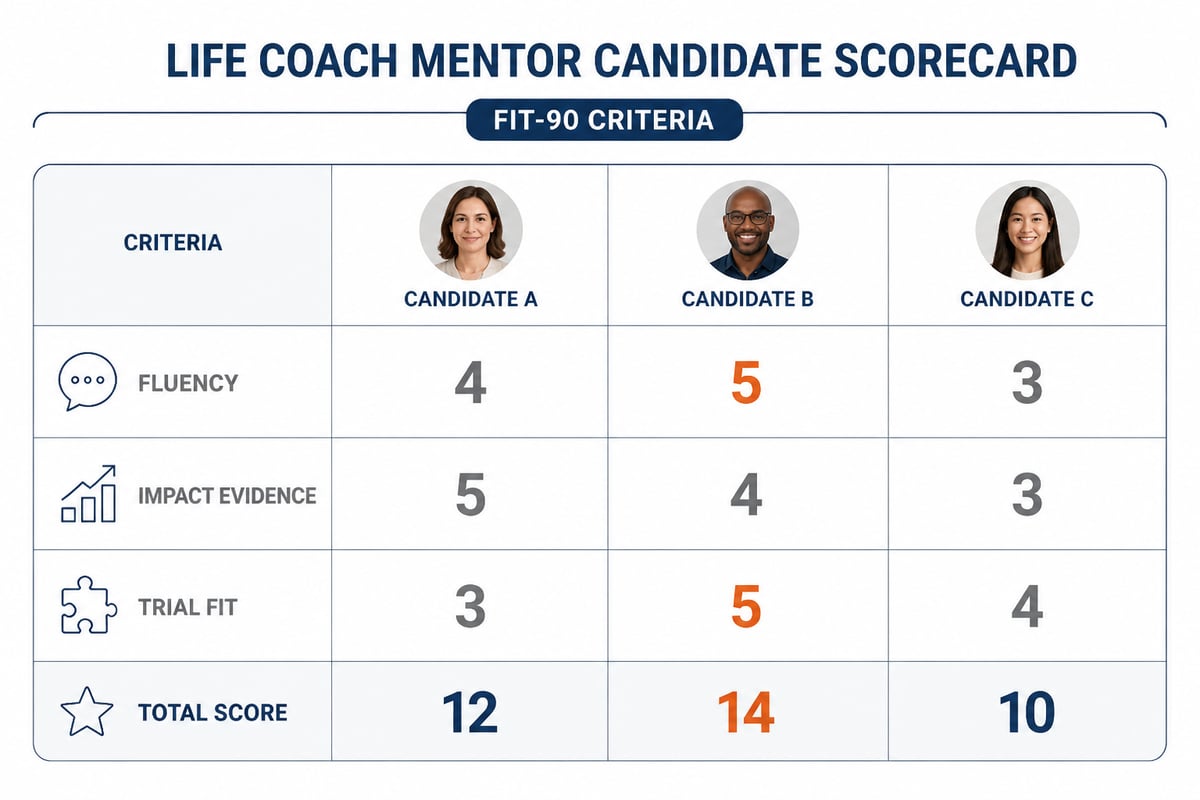
Scoring each of your three candidates on FIT-90 takes about an hour and prevents months of mismatch.
The Market Is Booming, So Vet Harder
The ICF’s report on the 2025 study notes the profession generated an estimated $5.34 billion in annual revenue, with growth continuing from the 2023 study. Growth attracts newcomers, and not every newcomer has anything to teach. Saturation is real, which is why evidence of results beats a polished website every time.

FAQ
What is the difference between a life coach and a mentor?
A coach asks questions to help you find your own answers, while a mentor shares advice from lived experience. A life coach mentor does both, shifting between them depending on what you need.
Can ChatGPT be used as a life coach?
It can support reflection, planning, and practice conversations. It cannot hold you accountable over time or read what you leave unsaid, so treat it as a supplement to a human.
How long should I work with a mentor?
Plan for a first 90-day cycle with a defined goal, then decide to extend, change focus, or stop. Open-ended arrangements without milestones tend to drift.
Should I pick someone in my industry?
For career and leadership goals, yes, because industry fluency shortens the learning curve. For personal growth goals, coaching skill matters more than sector background.
Is a free consultation enough to judge fit?
It reveals chemistry, listening quality, and honesty, which are the hardest things to fake. It does not reveal results, so ask for client outcomes too.
Is online mentoring as effective as in person?
For most goals, yes, since the value comes from conversation and accountability. Remote access also widens your pool of candidates.
Before you sign anything, write down the one outcome you want in the next 90 days and take it to three consultations. When you want a shortlist built around your goals, personality, and budget, Noomii can match you with up to five independent coaches through Get My Free Match, and you can compare them side by side before you commit to a life coaching relationship.



Leave a Reply
Want to join the discussion?Feel free to contribute!