

Corporate Executive Coach: What Works in 2026
Most organizations approach executive coaching backward. They hire a coach, cross their fingers, and hope something shifts. That approach burns budget and credibility. A corporate executive coach works when the engagement is built on diagnostic rigor, precision matching, and defined outcomes. In 2026, the gap between organizations that treat coaching as a feel-good perk and those that use it as a strategic intervention is wider than ever. The consequences of getting this wrong include executive turnover, compliance exposure, and deteriorating culture that shows up in engagement data before it hits the P&L.
Why Most Executive Coaching Fails to Deliver
The executive coaching market is crowded with practitioners who lack sector expertise, diagnostic discipline, or any framework for measuring impact. Organizations often select a coach based on chemistry or proximity rather than evidence of results. This creates predictable failure patterns.
Three diagnostic failures kill coaching outcomes:
- Assigning a generalist coach to a technical or compliance-heavy leadership challenge
- Starting coaching without baseline assessments or measurable objectives
- Treating coaching as a standalone intervention disconnected from organizational goals
A Fortune 500 client came to us in late 2024 after cycling through three coaches in eighteen months for a VP-level leader. The problem wasn't the leader. The problem was misdiagnosis. Previous coaches treated the engagement as a performance issue when the actual challenge was navigating a politically complex matrix organization during a post-merger integration. Once we matched the leader with a corporate executive coach who had led similar integrations, behavioral change occurred in weeks, not quarters.

The Cost of Toxic Leadership Patterns
Research on toxic leadership reveals what most CHROs already know: organizations tolerate abrasive behavior far longer than they should. By the time intervention happens, team damage is severe. Engagement scores crater. High performers leave. Legal exposure accumulates.
A 2025 audit of a government agency revealed that one director's behavior had triggered eleven internal complaints, four early retirements, and two EEOC inquiries over thirty months. The agency delayed intervention because the director delivered operational results. The cost: $2.3 million in separation packages, legal fees, recruitment, and lost institutional knowledge. A corporate executive coach specializing in behavioral remediation could have intervened at month six for under $50,000.
The lesson: early intervention with the right coach prevents organizational damage that compounds monthly.
What Distinguishes Effective Corporate Executive Coaching
Effective coaching is built on three pillars: diagnostic precision, specialized expertise, and measurable accountability. Organizations that get this right see leadership behavior change within sixty days and sustained impact at twelve months.
| Success Factor | Low-Impact Approach | High-Impact Approach |
|---|---|---|
| Assessment | Informal conversation | Validated tools measuring behaviors, competencies, and organizational fit |
| Coach Selection | Availability and price | Sector experience, specialized skills, proven outcomes |
| Objectives | Vague ("improve leadership") | Specific, measurable, time-bound KPIs |
| Stakeholder Involvement | Coach works in isolation | Structured feedback loops with HR, manager, team |
| Measurement | Subjective self-report | 360° feedback, engagement data, retention metrics |
The Proprietary Matching Algorithm Advantage
Generic coach directories leave matching to chance. Organizations waste time vetting coaches who lack relevant experience. Our proprietary matching process evaluates sixteen variables including industry background, coaching methodology, cultural fit, and specific challenge expertise.
In Q1 2026, we matched a pharmaceutical executive facing FDA compliance pressure during a leadership transition with a coach who had twenty years in regulated industries and prior experience as a compliance officer. The coaching engagement focused on building decision-making frameworks under regulatory scrutiny. Result: zero compliance incidents during the transition, promotion to SVP within nine months.
Matching matters because context expertise accelerates trust and shortens the learning curve. A corporate executive coach who understands your sector speaks your language from session one.
The Shift Toward Evidence-Based Coaching Interventions
The coaching profession has matured. Peer-reviewed research now demonstrates what works. A 2023 meta-analysis of executive coaching found significant positive effects on leadership behaviors, attitudes, and goal attainment when coaching followed structured protocols.
What the evidence shows:
- Behavioral change requires baseline measurement. Without pre-coaching assessments, impact claims are anecdotal.
- Goal specificity predicts outcomes. Vague objectives ("be a better leader") produce vague results.
- Feedback integration accelerates progress. Coaching that incorporates 360° input outperforms coach-only observation.
- Session frequency matters. Bi-weekly sessions for three months beat monthly check-ins for twelve months in creating habit change.
Organizations are demanding this rigor. Deloitte’s 2024 Human Capital Trends research highlights that companies are moving from "coaching as perk" to "coaching as performance system." CHROs want dashboards, not testimonials.
Building Scalable Coaching Programs
Scalability is the challenge for large organizations. You can't assign personalized coaches to two hundred leaders using manual processes. Automation and standardization enable quality at scale.
Scalable coaching architecture includes:
- Centralized assessment platform that tracks baseline and progress data
- Tiered coaching model (1:1 for C-suite, group for mid-level, digital for frontline)
- Compliance protocols ensuring all coaching meets regulatory and ethical standards
- Real-time dashboards showing engagement rates, completion metrics, and outcome tracking
A multinational client deployed this model across seventeen countries in 2025. They matched 340 leaders with certified coaches in six weeks. At six months, engagement scores improved 22% in coached cohorts versus 3% in control groups. Voluntary turnover dropped 31% among coached high-potentials.
The infrastructure investment paid for itself in reduced recruiting costs within the first year.
When to Deploy a Corporate Executive Coach
Timing matters. Deploy coaching too early and leaders dismiss it as unnecessary. Deploy too late and the damage is done. Strategic coaching moments include:
Leadership Transitions
New roles create predictable failure modes. Leaders promoted for technical skills often lack people leadership experience. External hires struggle with cultural integration. Research from Stanford’s Executive Program shows that coaching during transitions reduces time-to-productivity by 40%.
A private equity portfolio company promoted a CFO to CEO in early 2026. The CFO had never managed P&L or led commercial teams. We matched her with a corporate executive coach who had made the same transition twice. The coaching focused on stakeholder management, board communication, and strategic decision-making. She hit her first-year EBITDA target and retained all critical executives.
Behavioral Remediation
When leaders exhibit toxic patterns, organizations face a binary choice: terminate or remediate. Remediation only works with specialized coaching, clear behavioral contracts, and tight accountability.
We documented a case where a senior director in a government agency exhibited aggressive communication patterns that violated workplace conduct policies. The remediation approach involved:
- Problem: Verified pattern of intimidating behavior toward direct reports, supported by multiple complaints
- Diagnosis: Assessment revealed the director equated directness with aggression due to military background and lacked self-awareness of impact
- Solution: Matched with a coach experienced in behavioral remediation, established a formal improvement plan with specific observable behaviors, and created a stakeholder feedback loop
- Result: Complaint volume dropped to zero within ninety days, engagement scores for the team improved from 38th to 72nd percentile over six months
- Lesson: Early intervention with the right coach prevents termination costs and preserves institutional knowledge

Succession Planning
Building the next generation of leadership requires intentional development. Organizations that wait until succession moments are urgent make desperate choices.
A manufacturing client identified eight high-potential directors for C-suite readiness in 2024. Each was paired with a corporate executive coach focused on strategic thinking, executive presence, and enterprise-wide perspective. Two years later, five were promoted to VP or above. Internal promotion filled three critical C-suite roles that would have cost $400,000+ each in search fees.
Coaching as a succession tool reduces external hiring risk and strengthens retention of high-performers who see a clear path up.
The CHRO's Role in Coaching Success
CHROs who treat coaching as a strategic lever rather than a transactional benefit create competitive advantage. SHRM research on CHROs and executive coaching emphasizes that senior HR leaders must own coaching strategy, vendor relationships, and impact measurement.
Five CHRO responsibilities in coaching programs:
- Define clear coaching policies that specify who qualifies, under what circumstances, and with what budget
- Establish vendor standards that require coach certification, sector experience, and outcome documentation
- Build measurement frameworks that tie coaching to retention, engagement, and performance data
- Integrate coaching with talent reviews, succession planning, and high-potential development
- Protect confidentiality while maintaining appropriate oversight and accountability
A CHRO at a Fortune 500 financial services firm built a coaching governance model in 2025 that included quarterly reviews of all active engagements, coach performance scorecards, and anonymized outcome data shared with the executive committee. The transparency increased coaching budget by 35% because the C-suite saw documented ROI.
When CHROs can answer "What did we get for our coaching spend?" with data, coaching becomes strategic investment rather than discretionary expense.
Choosing Between Internal and External Coaches
Internal coaching programs build capability but create conflicts of interest. External coaches provide objectivity but lack organizational context. The optimal model uses both strategically.
| Coaching Need | Internal Coach | External Corporate Executive Coach |
|---|---|---|
| Skills development | Effective for technical and process coaching | Better for strategic and behavioral work |
| Career guidance | Limited by organizational politics | Provides unbiased perspective |
| Confidentiality | Compromised by reporting relationships | Protected by professional standards |
| Cost | Lower per-session cost | Higher cost, faster results on complex issues |
| Availability | Constrained by internal capacity | Scalable through coach networks |
We recommend external coaches for C-suite, high-risk behavioral issues, and transition support. Internal coaches work well for skill-building and manager development. The key is clarity about which tool solves which problem.
The ROI Question Everyone Asks
Executives want proof. Measuring ROI from executive coaching requires linking coaching investments to business outcomes, not just satisfaction scores.
Quantifiable coaching impact includes:
- Reduced executive turnover (calculate replacement cost savings)
- Improved engagement scores in coached leaders' teams
- Faster time-to-productivity for newly promoted leaders
- Decreased HR complaints and legal incidents
- Higher performance ratings at six and twelve months post-coaching
A healthcare system calculated that reducing VP-level turnover by three positions in 2025 saved $1.8 million in recruitment, onboarding, and productivity loss. Their coaching program cost $220,000 annually. ROI: 8:1.
Organizations that track leading indicators (coaching session completion, action plan adherence, 360° score improvement) can forecast lagging indicators (retention, promotion readiness, team performance) with reasonable accuracy.
What Harvard Business Review Gets Right About Coach Selection
HBR’s analysis of what it takes to become an executive coach highlights competencies that many organizations overlook: business acumen, psychological insight, and ethical judgment.
A corporate executive coach needs more than listening skills. They need to understand P&L pressure, board dynamics, regulatory constraints, and competitive strategy. The best coaches have held senior leadership roles themselves. They've made the mistakes their clients are trying to avoid.
We evaluated over 1,200 coaches in our network in 2025. Fewer than 30% had C-suite operating experience. Those who did produced measurably better outcomes in executive-level engagements. Leaders trust coaches who've sat in their chair.
Government and Regulated Industries Require Specialized Coaching
Public sector and heavily regulated organizations face constraints that commercial coaches often misunderstand. Budget transparency, procurement rules, union environments, and political oversight create unique leadership challenges.
A federal agency leader we coached faced simultaneous pressures: delivering a digital transformation mandated by Congress, managing a 40% budget cut, and navigating a political appointee with no operational experience. The coaching engagement required understanding federal HR regulations, appropriations cycles, and interagency dynamics.
Generic leadership advice was useless. The coach needed fluency in government operations. Understanding how to deliver leadership coaching in complex organizational environments separates effective coaching from well-intentioned but irrelevant sessions.
When evaluating coaches for regulated environments, verify they understand your compliance obligations, documentation requirements, and risk landscape.
The Future of Corporate Executive Coaching
Three trends are reshaping executive coaching in 2026:
AI-augmented coaching provides leaders with real-time feedback between sessions. Natural language processing analyzes meeting transcripts and suggests communication adjustments. This doesn't replace human coaches but extends their reach. AI’s role in leadership is augmentation, not replacement.
Team coaching is scaling beyond individual development. Organizations are deploying coaches to intact leadership teams to improve decision-making, reduce conflict, and accelerate strategy execution. Team coaching addresses systemic issues that individual coaching can't solve.
Coaching is becoming preventative rather than reactive. Instead of coaching leaders after problems emerge, progressive organizations are building coaching into leadership roles from day one. This mirrors how elite athletes use coaches continuously, not just when injured.
The organizations winning the talent war in 2026 treat leadership development as continuous, coaching as infrastructure, and impact measurement as non-negotiable.
Frequently Asked Questions
What qualifications should a corporate executive coach have?
Look for ICF certification (PCC or MCC level), ten-plus years of business experience, sector-specific expertise, and documented client outcomes. Verify they've held senior roles themselves and understand the organizational context your leaders face daily.
How long does executive coaching typically last?
Effective engagements run three to six months with bi-weekly sessions. Behavioral change requires consistent reinforcement. Shorter engagements work for specific transitions or skill development. Complex behavioral remediation may extend to twelve months with decreasing frequency.
What's the typical cost of hiring a corporate executive coach?
Rates range from $300 to $1,500 per hour depending on coach experience, geography, and engagement scope. Most organizations invest $15,000 to $50,000 per leader for a complete coaching engagement. Understanding coaching costs helps budget appropriately.
Can coaching fix toxic leadership behavior?
Yes, but only with three conditions: the leader must acknowledge the behavior, commit to change, and accept accountability. Coaching paired with a formal improvement plan, stakeholder feedback, and consequences for non-compliance produces measurable behavioral shifts in 60-70% of cases when intervention happens early.
How do you measure executive coaching effectiveness?
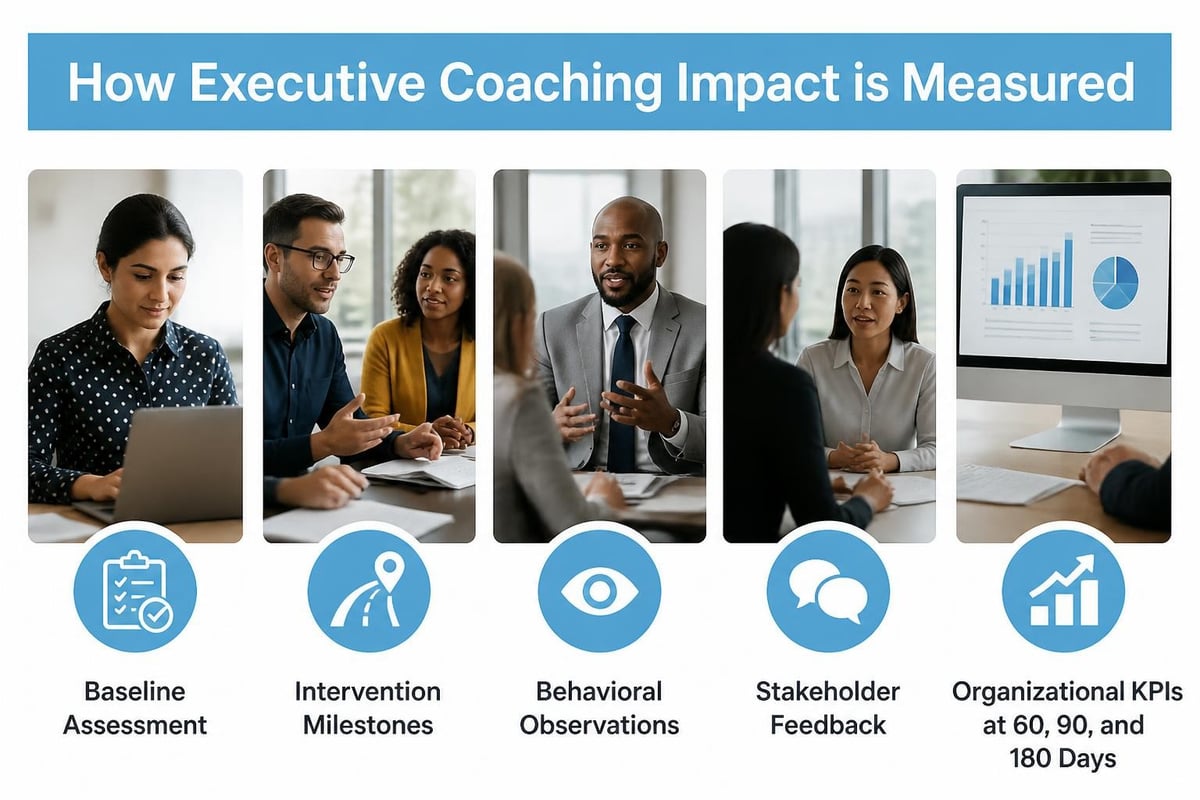
Use baseline and follow-up 360° assessments, track specific behavioral KPIs, monitor team engagement scores, measure retention of direct reports, and calculate business impact metrics like time-to-decision or project completion rates. Self-reported satisfaction is insufficient.
Should coaching be confidential or transparent to the organization?
Coaching conversations must remain confidential to build trust. However, goals, progress against objectives, and outcome metrics should be visible to HR and the leader's manager. This balances psychological safety with organizational accountability.
Corporate executive coaching delivers measurable impact when organizations move beyond hope to diagnostic rigor, specialized matching, and outcome accountability. The difference between coaching that transforms leadership and coaching that wastes resources comes down to precision, expertise, and measurement discipline. Noomii Leadership Coaching helps organizations solve complex leadership challenges through evidence-based diagnostics, proprietary coach matching, and scalable programs that align individual growth with institutional priorities.



Leave a Reply
Want to join the discussion?Feel free to contribute!