
Can Coaching Accelerate Your Career? Evidence & ROI
The question "can coaching accelerate your career" lands on my desk monthly from mid-market leaders evaluating their people investment. The short answer: yes, if you focus on outcomes, not credentials. The long answer involves discarding most of what the coaching industry markets and zeroing in on what actually moves careers forward. After two decades observing what separates promotional velocity from stagnation, I've seen patterns most buyers miss. Coaching accelerates careers when it addresses specific performance gaps, builds managerial capability, and ties directly to business results. Everything else is overhead.
What Career Acceleration Actually Means
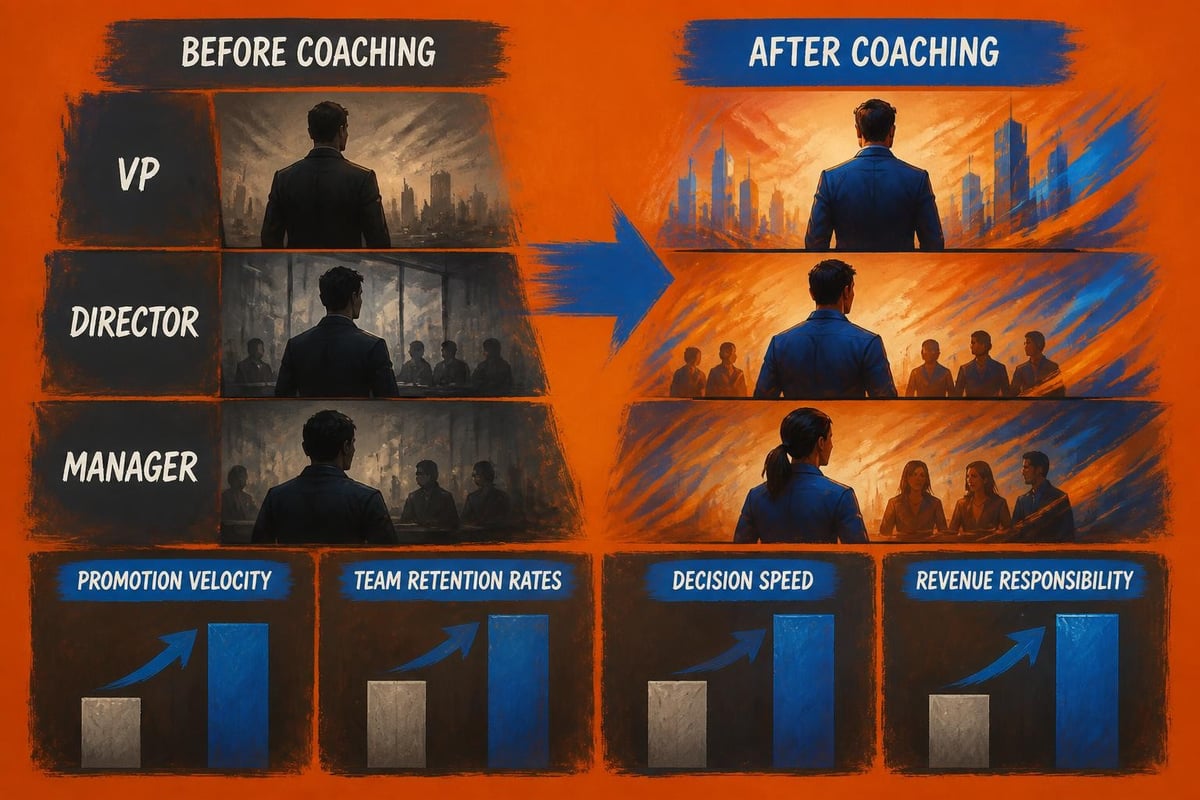
Career acceleration isn't vague "leadership presence" or comfort with feedback. It's measurable velocity through organizational levels.
Concrete indicators include:
- Time to promotion (18 months vs 36 months to director)
- Span of control expansion (3 direct reports to 12)
- Revenue or P&L responsibility growth
- Cross-functional leadership assignments
- Retention of high performers on your team
A recent SHRM benefits survey shows 42% of employers now offer coaching as a development benefit, up from 28% in 2023. But uptake doesn't equal results. Most organizations can't articulate what changed after six months of coaching.
The gap between coaching popularity and coaching impact reveals the industry's central problem. Certification worship, theory fixation, and avoidance of accountability have created a market where process substitutes for outcomes. When we ask "can coaching accelerate your career," we're really asking whether the specific coaching engagement you're considering will produce measurable advancement. Most won't, because they aren't designed to.
The Evidence on Coaching and Career Outcomes
Meta-analyses show coaching effectiveness, but the details matter. A comprehensive 2023 review in Frontiers in Psychology examined workplace coaching studies and found moderate to strong effects on goal attainment and skill development. The catch: effect sizes varied wildly based on coaching design, specificity of objectives, and measurement rigor.
Translation: generic "executive presence" coaching produces generic results. Coaching tied to specific performance gaps, business outcomes, and behavioral change shows measurable impact.
What the research actually supports:
- Coaching on defined skills (delegation, difficult conversations, strategic thinking) outperforms vague "leadership development"
- Shorter, focused engagements with clear success criteria beat open-ended relationships
- Integration with 360 feedback and team observation accelerates results
- Accountability mechanisms (KPIs, peer review, manager involvement) predict success
The World Economic Forum’s 2025 analysis of future-ready workforce strategies emphasizes personalized development and upskilling. Coaching fits that frame when it addresses specific capability gaps blocking advancement. It fails when it becomes therapy, cheerleading, or certification collection.
The Mechanics of Career Acceleration Through Coaching
Here's what actually accelerates careers, based on patterns across hundreds of mid-market engagements:
| Coaching Focus | Career Impact | Timeline |
|---|---|---|
| Manager capability (delegation, feedback, development) | Promotion readiness, team scalability | 4-6 months |
| Cross-functional influence and communication | Lateral moves, VP track visibility | 6-9 months |
| Strategic thinking and prioritization | Executive readiness, P&L responsibility | 9-12 months |
| Sales or revenue coaching tied to quota | Commission growth, account expansion | 3-6 months |
The common thread: specificity. When coaching targets a defined gap blocking the next level, progress is visible and measurable. When it addresses "leadership generally," results disappear into subjective territory.
The Role of Team Coaching in Individual Acceleration
Individual coaching gets the attention, but team coaching often delivers faster career impact. Here's why: your promotion depends on your team's performance. A director who can't scale their team, retain talent, or deliver through others hits a ceiling regardless of personal capability.
Team coaching accelerates careers by:
- Improving team execution, which reflects on the leader
- Building coaching capability in the leader through live practice
- Creating visible wins that senior leaders notice
- Developing bench strength that makes the leader promotable
This contrasts with the typical model where a coach meets privately with an executive, discusses challenges, and offers perspective. That has value, but it's indirect. Coaching the leader in their actual environment, with their actual team, on their actual priorities produces faster results because it changes what happens Monday morning.
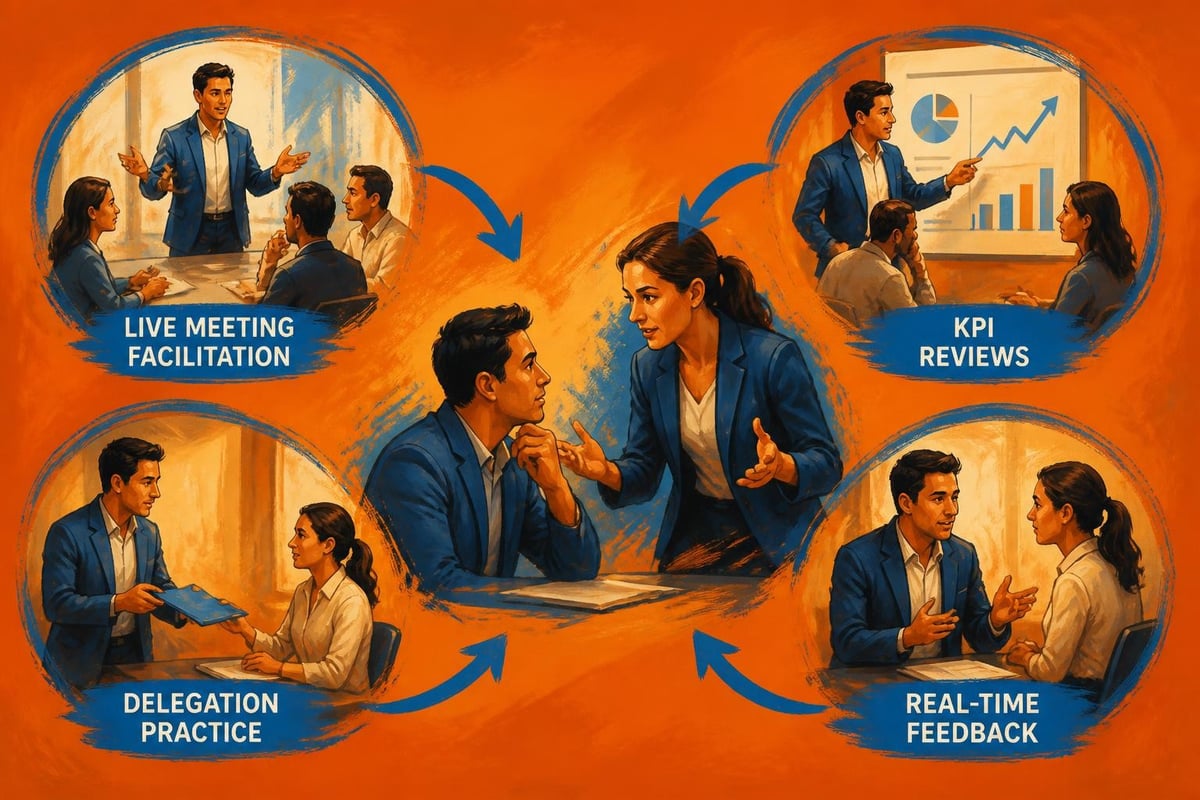
The question "can coaching accelerate your career" shifts when you realize career velocity depends on team performance. Coaching that improves how your team communicates, decides, and executes makes you promotable. Coaching that helps you "process feelings about difficult team members" doesn't.
What Buyers Miss When Evaluating Coaching ROI
Most organizations evaluate coaching based on credentials, testimonials, and coach charisma. These predict almost nothing about career impact.
What actually predicts results:
- Specificity of engagement design: What exactly will change? What's the success metric?
- Integration with business systems: Does coaching connect to performance reviews, KPIs, operating rhythms?
- Accountability structure: Who measures progress? What happens if there isn't any?
- Coach's business fluency: Can they read a P&L? Do they understand your market?
- Timeline and intensity: Is this a sprint to fix a gap or an endless "development journey"?
The ICF research portal contains hundreds of studies, many showing positive coaching outcomes. But research conducted on volunteer participants with high motivation differs from real-world corporate engagements where coaching was "recommended" (mandated) by HR.
When we've tracked promotions, the pattern is clear: coaching accelerates careers when it makes someone better at their job in ways senior leaders notice. That means better decisions, stronger team performance, clearer communication, and faster execution. Coaching that focuses on "authenticity," "purpose," or "balance" may have personal value, but it rarely shows up in promotional decisions.
The Certification Trap and Career Acceleration
The coaching industry's credential obsession has convinced buyers that ICF certification or fancy alma maters predict results. They don't. Harvard Business Review’s career coaching collection rarely mentions coach credentials because they're not relevant to outcomes.
What matters:
- Has the coach operated in your type of organization?
- Do they understand the skills required at the next level?
- Can they diagnose performance gaps and build capability?
- Will they tie coaching to measurable business outcomes?
A certified coach with 500 hours of training but no business experience can't accelerate your career as effectively as someone who's been a GM, run P&Ls, and coached executives to VP in your industry. The market's worship of credentials over experience creates a selection problem that wastes development budgets and stalls careers.
Practical Framework: The Career Acceleration Diagnostic
Before engaging a coach, run this diagnostic to determine if coaching can accelerate your career:
Step 1: Identify the specific gap blocking your next level
- What feedback have you received repeatedly?
- What does your manager say you need to improve?
- What skill do peers at the next level have that you lack?
Step 2: Confirm the gap is coachable
- Is it a skill, behavior, or capability (coachable)?
- Or is it structural, political, or organizational (not coachable)?
Step 3: Design a 90-day sprint
- Define 2-3 observable changes that would signal progress
- Attach each to a business metric (team retention, decision velocity, pipeline growth)
- Build feedback loops (360, peer input, manager check-ins)
Step 4: Select a coach based on business fluency, not credentials
- Have they worked in your industry or function?
- Can they point to specific career outcomes from past clients?
- Will they commit to measurable results?
This diagnostic separates coaching that accelerates careers from coaching that consumes time and budget. The SHRM toolkit on building career paths emphasizes similar specificity in development planning.
| Question | Career-Accelerating Answer | Red Flag Answer |
|---|---|---|
| What will we measure? | Specific KPIs tied to business outcomes | "Growth," "awareness," "presence" |
| How long will this take? | 3-6 months for defined outcomes | "As long as it takes" or multi-year |
| What's your business background? | Specific industry, function, P&L experience | Certifications, training hours, methodology |
| How will my manager be involved? | Regular check-ins, feedback, alignment | "This is confidential, just between us" |
Can coaching accelerate your career? Yes, when it's specific, accountable, tied to business outcomes, and focused on capability gaps blocking your next level. Most coaching doesn't meet that standard, which explains why so many executives finish engagements feeling supported but not promoted.
Frequently Asked Questions
1. How long does it take for coaching to accelerate my career?
Expect 3-6 months for visible skill improvement and 6-12 months for promotional readiness when coaching targets specific gaps. Vague "development" coaching may never produce measurable advancement.
2. Should I choose a certified coach or one with industry experience?
Industry experience and business fluency predict career acceleration better than certifications. A coach who understands your function, market, and organizational dynamics will deliver faster results than one with impressive credentials but no relevant operating background.
3. What's the ROI of career coaching for individual professionals?
ROI shows up in faster promotions, higher compensation, expanded responsibility, and improved team performance. Quantify your promotion velocity, span of control, and revenue responsibility before and after coaching to measure impact.
4. Can coaching accelerate my career if my company doesn't support it?
Career acceleration depends partly on organizational opportunity. Coaching helps you build capability and readiness, but if your company has no growth path or values seniority over performance, you may need to apply that capability elsewhere.
5. Is team coaching or individual coaching better for career advancement?
Team coaching often accelerates individual careers faster because it improves the team performance that determines your promotability. Leaders advance when their teams execute well, retain talent, and deliver results.
6. What should I measure to know if coaching is accelerating my career?
Track promotion timeline, team retention rates, 360 feedback scores on specific competencies, manager assessment of readiness, and business metrics tied to your function (sales, delivery, engagement).
7. How is career coaching different from mentoring or sponsorship?
Mentoring provides guidance and perspective, sponsorship creates opportunities, and coaching builds specific capabilities. All three matter for career acceleration, but coaching uniquely focuses on skill development and behavioral change.
8. What are red flags that coaching won't accelerate my career?
Avoid coaches who resist measurement, focus on feelings over performance, can't articulate specific outcomes, lack business experience, or propose open-ended engagements without clear success criteria.
9. Can AI tools or platforms replace career coaching?
AI tools excel at providing frameworks, feedback, and accountability for self-directed development. They can't replicate the adaptive, context-specific guidance of an experienced coach who knows your industry and organization. The most effective approach combines both.
The evidence is clear: coaching accelerates careers when it's specific, accountable, and tied to business outcomes, not when it's a vague development exercise fixated on credentials. If you're a mid-market leader ready to build promotable managers and accelerate team performance through practical, ROI-focused coaching, Noomii rolls up our sleeves and coaches live in your environment, tying every engagement to clear KPIs and measurable business results-month to month, no long contracts, because results should be visible.



Leave a Reply
Want to join the discussion?Feel free to contribute!