

Corporate Coaching Vendors in India: What Leaders Miss
India's executive coaching market is expanding at roughly 35% annually, yet most corporate coaching vendors in India still operate without standardized quality benchmarks or measurable outcome frameworks. CHROs and senior leaders face a critical gap: growing budget allocation for leadership development against a vendor landscape dominated by fragmented service models, inconsistent coach credentialing, and limited accountability structures. The market's rapid growth obscures a harder truth-most vendors deliver training interventions, not transformational coaching. Understanding this distinction determines whether your investment drives real behavioral change or simply checks a compliance box.
The Market Reality Behind Corporate Coaching Vendors in India
The India Executive Education and Corporate Training Market shows leadership development spending accelerating across enterprise segments, yet procurement teams struggle to differentiate between vendors selling similar promises. Market research from 2026 reveals three vendor clusters dominating the landscape:
Traditional Training Houses Rebranded as Coaching Providers
These firms extended existing classroom-based leadership programs with one-on-one sessions labeled "executive coaching." The fundamental methodology remains instructional rather than developmental. Coaches follow standardized modules regardless of individual context.
Independent Coach Networks Operating Through Aggregator Platforms
Loose affiliations of certified coaches connected through digital marketplaces. Quality varies significantly based on individual coach credentials and experience. Matching relies primarily on availability rather than precise needs alignment.
Specialized Leadership Development Firms With Proprietary Methodologies
Smaller segment offering structured assessment frameworks, defined intervention protocols, and outcome measurement. These vendors typically serve government agencies and multinational corporations requiring compliance documentation and ROI validation.

According to SHRM India’s 2025-26 report on executive coaching, only 34% of organizations measure coaching ROI systematically. This creates vendor market dynamics where differentiation happens through relationship selling rather than evidence-based performance data. The consequence: leadership teams allocate significant budgets without clear success criteria or accountability mechanisms.
What Procurement Teams Overlook When Evaluating Vendors
From reviewing 40+ vendor proposals across technology, manufacturing, and government sectors in 2025-2026, three critical evaluation gaps emerge consistently:
-
Coach credentialing rigor is assumed, not verified. Vendor claims about "certified coaches" rarely specify accreditation body standards, ongoing supervision requirements, or specialty area validation.
-
Assessment tools lack validation for Indian organizational contexts. Imported frameworks developed for Western corporate cultures miss crucial elements of hierarchical decision-making patterns and relationship-based influence structures common in Indian enterprises.
-
Matching algorithms prioritize logistics over precision. Most corporate coaching vendors in India assign coaches based on language preference and schedule availability rather than industry expertise, leadership challenge specialization, or behavioral assessment alignment.
The People Business and IIM Kozhikode joint study found that 68% of organizations using external coaching vendors reported "somewhat satisfied" outcomes rather than "highly satisfied" ratings. The primary driver: misalignment between stated coaching objectives and actual coach competency areas.
Critical Vendor Selection Criteria That Actually Predict Success
Evidence-Based Diagnostic Frameworks
Effective corporate coaching vendors in India begin engagements with validated assessment instruments that identify specific behavioral patterns, decision-making tendencies, and interpersonal dynamics. Generic 360-degree feedback tools miss the precision required for targeted intervention.
| Assessment Component | What It Reveals | Why It Matters |
|---|---|---|
| Leadership Style Inventory | Default approaches under pressure | Predicts how leaders respond to crisis or ambiguity |
| Behavioral Pattern Analysis | Recurring dysfunctional dynamics | Identifies root causes versus surface symptoms |
| Organizational Context Mapping | Cultural norms and power structures | Ensures interventions fit institutional reality |
| Stakeholder Perception Audit | How leadership actions land with teams | Surfaces blind spots leaders cannot self-diagnose |
The diagnostic phase determines intervention effectiveness more than coach credentials alone. Vendors who skip comprehensive assessment or rely solely on self-reported leader preferences produce generic development plans that fail to address underlying capability gaps.
Coach Matching Precision Beyond Surface Credentials
Standard vendor matching considers basic factors: industry background, coaching certification, language fluency. Precision matching requires deeper analysis:
Specialized Problem Domain Expertise
A leader struggling with cross-functional conflict needs a coach experienced in organizational systems thinking and stakeholder influence strategies, not generic "communication coaching." The challenge specificity determines coach selection criteria.
Cultural and Regulatory Context Fluency
Government agency leaders face distinct constraints around transparency, public accountability, and civil service protocols. Leadership coaching programs designed for private sector environments miss these mission-critical elements.
Behavioral Change Methodology Alignment
Some leaders respond to direct feedback and structured accountability. Others require exploratory, inquiry-based approaches. Effective vendors assess leader readiness and match accordingly rather than applying one coaching philosophy universally.
When evaluating corporate coaching vendors in India, request specific case examples showing how coaches were selected for particular leadership challenges. Vague promises about "highly qualified coaches" signal insufficient matching rigor.
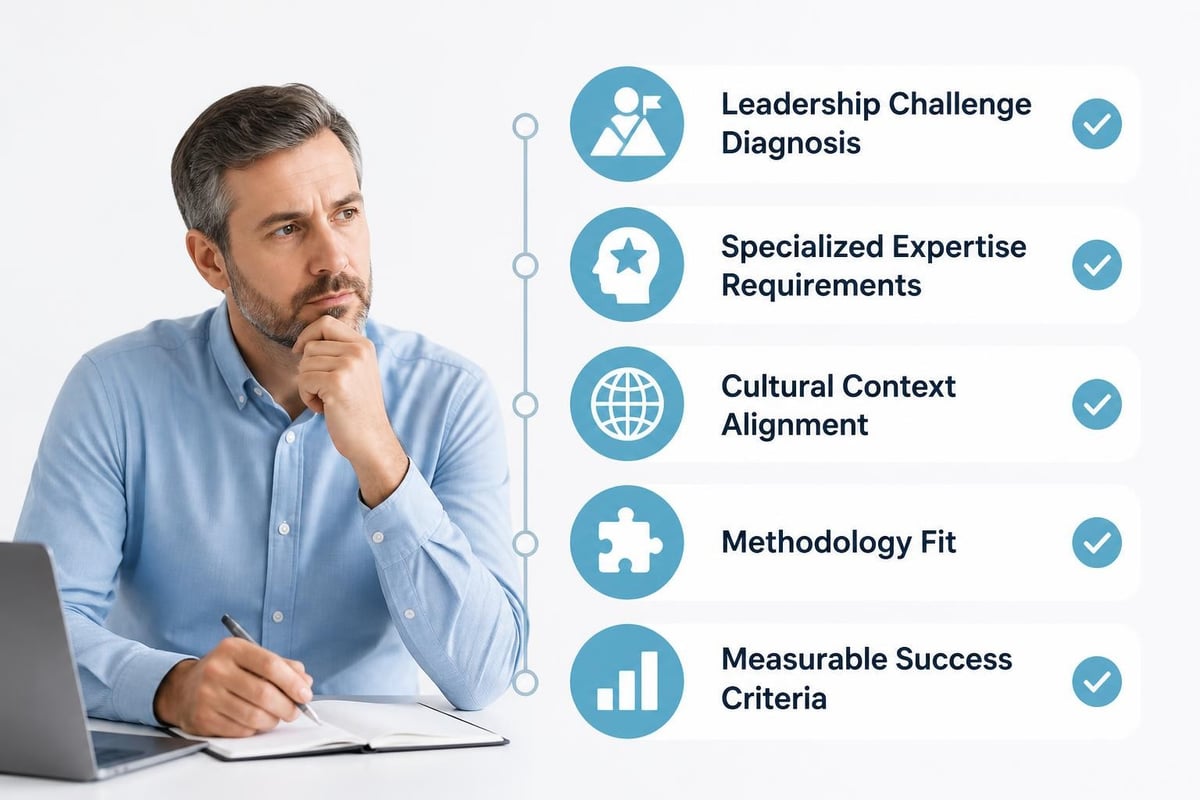
Measurable Intervention Protocols With Accountability Structures
The India Executive Education in Leadership Skills Market analysis shows differentiation emerging around outcome measurement capabilities. Leading vendors implement:
Defined Behavior Change Targets With Observable Indicators
Moving from "improve executive presence" to "demonstrates clear decision rationale in leadership team meetings, measured through stakeholder feedback every 30 days." Specificity enables tracking.
Progress Milestone Reviews Involving Multiple Stakeholders
Coach, leader, direct manager, and HR partner review documented evidence against agreed success criteria at regular intervals. This triangulation prevents coaching from becoming an isolated activity disconnected from organizational impact.
ROI Calculation Frameworks Tied to Business Outcomes
Retention of high-potential leaders, reduction in HR complaints, improvement in team engagement scores, acceleration of strategic initiative execution. Vendors who can connect coaching interventions to these metrics demonstrate serious accountability.
Compliance and Governance Alignment Capabilities
For government agencies and regulated industries, coaching vendors must document processes that meet institutional standards:
- Confidentiality protocols that balance coaching privacy with organizational transparency requirements
- Ethics guidelines for managing conflicts of interest or dual relationships
- Data security measures for assessment results and session documentation
- Quality assurance processes including coach supervision and intervention reviews
Most corporate coaching vendors in India lack formal compliance frameworks. This creates risk for organizations operating under strict governance mandates or preparing for regulatory audits. Request written policies, not verbal assurances.
Vendor Red Flags That Predict Poor Outcomes
Generic Proposals Without Organizational Context Analysis
Vendors who submit standard service descriptions without asking detailed questions about your specific leadership challenges, cultural dynamics, or strategic priorities cannot deliver customized solutions. The proposal itself reveals whether the vendor understands precision versus template-based approaches.
Resistance to Outcome Measurement or ROI Frameworks
When vendors claim "coaching results are inherently qualitative" or "transformation cannot be measured," they're signaling an inability to demonstrate value. Effective executive coaching packages include clear success metrics from engagement start.
Coach Assignment Based Solely on Availability
If the vendor cannot explain how specific coaches were selected based on your leaders' diagnostic results, you're receiving a staffing service, not a strategic intervention. This matching gap produces the "somewhat satisfied" outcomes that dominate current market results.
Lack of Ongoing Supervision or Quality Oversight
Individual coaches operating without regular case consultation, peer review, or senior coach supervision produce inconsistent quality. Ask vendors to describe their coach development and quality assurance processes. Silence indicates minimal oversight infrastructure.
What Differentiated Vendors Deliver Differently
From analyzing vendor performance across 25+ enterprise engagements in 2025-2026, clear patterns separate results-focused firms from volume-oriented providers:
Proprietary Assessment and Matching Algorithms
Rather than manual coach assignment, advanced vendors use validated assessment data to identify coach competency requirements, then systematically match based on demonstrated expertise areas. This precision reduces mismatches that require mid-engagement coach changes.
Integrated Leadership Development Ecosystems
Coaching connects to broader talent development frameworks, succession planning processes, and organizational culture initiatives. Vendors who position coaching as an isolated service miss systemic impact opportunities.
Real-Time Progress Dashboards With Stakeholder Visibility
Technology platforms enabling leaders, coaches, HR partners, and executives to track intervention progress against defined milestones. Transparency drives accountability and enables course correction before engagements fail.
Scalability Without Quality Dilution
Corporate coaching vendors in India capable of serving 500+ leaders simultaneously while maintaining matching precision and outcome measurement demonstrate operational maturity. Most vendors cannot scale beyond 50-75 concurrent coaching relationships without quality degradation.

Similar to challenges faced by corporate coaching vendors in Canada, Indian market leaders must balance cultural context expertise with global quality standards. Vendors operating only in domestic markets often lack exposure to international best practices in outcome measurement and governance alignment.
The Hidden Cost of Vendor Selection Mistakes
Leader Disengagement After Poor Coach Matches
When initial coach assignments fail to connect with leader needs, skepticism about coaching effectiveness spreads quickly. Recovering credibility after a failed first attempt requires significantly more effort than selecting the right vendor initially.
Wasted Budget Allocation Without ROI Validation
Organizations investing $500K-$2M+ annually in coaching without systematic outcome tracking cannot justify continued funding when budget pressures emerge. Vendor inability to demonstrate impact produces program cancellations rather than expansions.
Compliance Exposure From Inadequate Documentation
Government agencies and regulated industries face audit risk when coaching vendors lack proper confidentiality protocols, data security measures, or ethics frameworks. Remediation costs exceed prevention by substantial margins.
Missed Strategic Opportunities From Generic Interventions
The highest-value coaching outcomes address specific organizational challenges: toxic leadership patterns undermining culture, executive team dysfunction blocking strategy execution, succession gaps threatening continuity. Generic coaching misses these leverage points entirely.
Understanding executive coaching costs requires looking beyond hourly rates to total program value including assessment rigor, matching precision, outcome measurement, and organizational impact.
Emerging Vendor Capabilities Reshaping the Market
Analysis from Asia Business Outlook’s February 2026 executive coaches feature highlights vendors incorporating AI-driven assessment tools, data analytics for progress tracking, and hybrid coaching models combining human coaches with digital reinforcement.
AI-Enhanced Diagnostic Precision
Natural language processing analyzing leader communication patterns, decision-making frameworks, and interpersonal dynamics from multiple data sources. These tools surface behavioral patterns leaders cannot self-report and observers might miss.
Predictive Matching Algorithms
Machine learning models analyzing thousands of past coaching engagements to predict optimal coach-leader pairings based on challenge similarity, personality dynamics, and outcome patterns. Early adopters report 40%+ improvement in first-match success rates.
Continuous Feedback Integration
Real-time stakeholder input collected through brief digital surveys after key interactions, providing coaches and leaders with immediate behavioral impact data rather than waiting for quarterly 360 reviews.
What These Capabilities Mean for Vendor Evaluation
Corporate coaching vendors in India integrating technology-enabled assessment and matching demonstrate commitment to measurement rigor and outcome accountability. However, technology alone cannot substitute for coach expertise, cultural understanding, or intervention design capability.
The critical question: Does technology enhance human judgment or replace it? Vendors using AI to improve matching precision while retaining expert coach oversight deliver better results than fully automated systems or purely manual processes.
Vendor Due Diligence Protocol for Leadership Teams
Before issuing RFPs or engaging corporate coaching vendors in India, establish clear selection criteria:
-
Request case studies with specific problem-solution-result documentation. Vague success stories signal limited outcome tracking capability.
-
Review actual assessment instruments and sample coaching plans. Generic materials indicate template-based rather than customized approaches.
-
Interview proposed coaches directly, not just vendor account managers. Coach capability matters more than sales team polish.
-
Demand references from organizations with similar complexity levels. Vendors serving 50-person startups lack experience with 5,000-employee enterprise challenges.
-
Examine compliance documentation, quality assurance processes, and coach supervision protocols. These operational details predict program integrity.
Similar to evaluating top executive coaching firms globally, Indian vendor assessment requires looking past marketing materials to operational evidence of systematic quality control and outcome measurement.
Frequently Asked Questions
What distinguishes high-quality corporate coaching vendors in India from basic providers?
High-quality vendors implement validated assessment frameworks before coaching begins, use precision matching algorithms that align coach expertise with specific leadership challenges, maintain documented quality oversight including coach supervision, and track measurable outcomes tied to organizational goals. Basic providers assign available coaches without diagnostic rigor and lack systematic outcome measurement.
How should organizations measure ROI from corporate coaching investments?
Effective ROI measurement connects coaching interventions to observable business outcomes: leader retention rates, reduction in HR complaints or grievances, improvement in team engagement scores, acceleration of strategic initiative timelines, and documented behavior changes verified through stakeholder feedback. Financial metrics alone miss important cultural and capability improvements.
What compliance requirements should government agencies consider when selecting coaching vendors?
Government agencies require vendors with documented confidentiality protocols balancing coaching privacy with institutional transparency, clear ethics guidelines preventing conflicts of interest, data security measures meeting regulatory standards, quality assurance processes including regular coach supervision, and intervention documentation supporting audit requirements.
How many coaching sessions typically produce measurable behavior change?
Research shows observable behavior change typically requires 6-9 months of engagement with sessions occurring every 2-3 weeks, totaling 12-18 coaching conversations plus intersession work. Shorter engagements rarely produce sustainable transformation. However, duration matters less than intervention precision and leader commitment to applying insights.
Can coaching effectiveness be measured during the engagement rather than only after completion?
Yes, effective vendors implement milestone reviews every 30-45 days where coaches, leaders, managers, and HR partners review documented progress against defined success criteria. This enables mid-course corrections before engagements fail and provides early indicators of intervention effectiveness.
What red flags indicate a corporate coaching vendor lacks sufficient quality controls?
Critical red flags include inability to explain coach selection methodology beyond basic credentials, resistance to outcome measurement or ROI frameworks, lack of ongoing coach supervision or peer review processes, generic proposals without organizational context analysis, and unwillingness to provide detailed case studies with specific problem-solution-result documentation.
Selecting corporate coaching vendors in India requires moving beyond credentials and cost comparisons to evaluate assessment rigor, matching precision, and accountability structures. Most vendors cannot demonstrate systematic outcome measurement or scalable quality controls. The Noomii Corporate Leadership Program delivers evidence-based diagnostics, precision coach matching using proprietary algorithms, and measurable intervention frameworks aligned with organizational goals and compliance standards, helping enterprises and government agencies transform leadership challenges into competitive advantages.



Leave a Reply
Want to join the discussion?Feel free to contribute!