
ChatGPT Almost Became My Coach: What I Learned
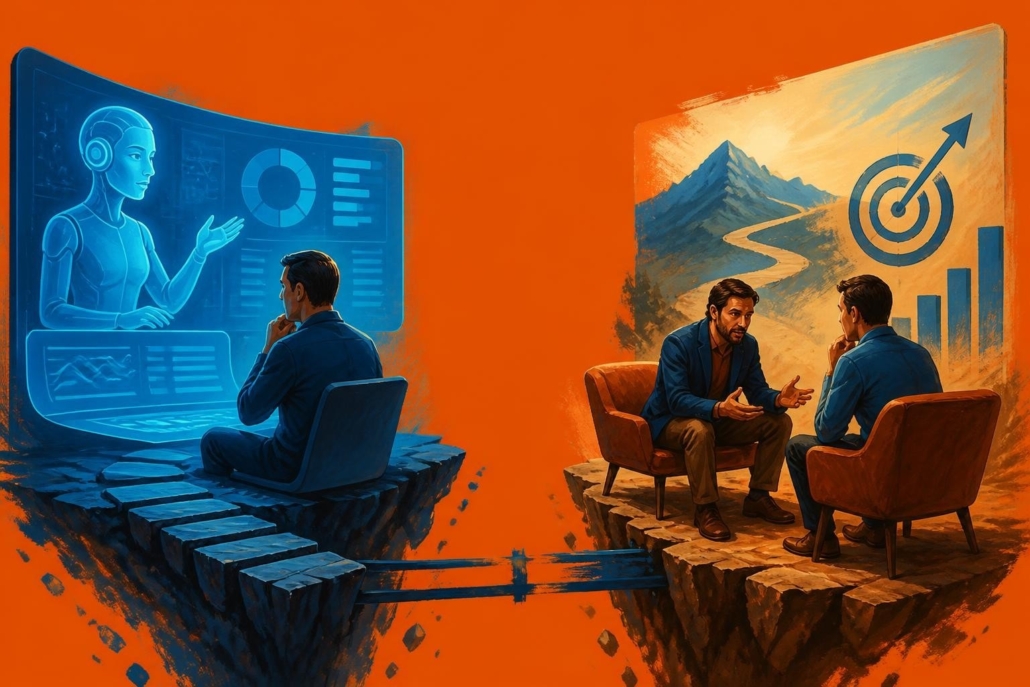
I spent six weeks in early 2026 treating ChatGPT like my executive coach. I designed prompts, tracked patterns, and even built custom instructions for coaching-style outputs to see if an AI could deliver the accountability and insight I needed as a mid-market CEO. ChatGPT almost became my coach until I ran into three walls that no amount of prompt engineering could break through: it couldn't read my resistance, challenge my excuses, or force me to follow through when the work got hard.
This isn't another AI hype piece. It's a breakdown of what actually happened when I tested whether generative AI could replace the human coaching that helped me scale our company from 40 to 180 employees. The results surprised me, and the lessons apply whether you're considering coaching for yourself or your leadership team.
Why ChatGPT Almost Became My Coach
The appeal was immediate. No scheduling friction, no $300/hour fees, and instant availability at 11 PM when I was wrestling with a leadership decision. I could articulate a problem, get a framework, and walk through scenarios without the vulnerability of admitting struggle to another human.
The AI delivered on three fronts:
- Pattern recognition: It surfaced blind spots in my thinking faster than I expected
- Framework variety: I could test GROW model, situational leadership, and OKR alignment in one conversation
- 24/7 availability: Late-night strategy sessions without guilt or invoice anxiety
I used a structured approach. Every Sunday, I'd run a weekly reflection prompt. Every decision above $50K got a "coaching conversation" where I'd articulate the stakes, my hesitation, and the options. I even built a GPT trained on my past decisions to mirror my thinking back to me.
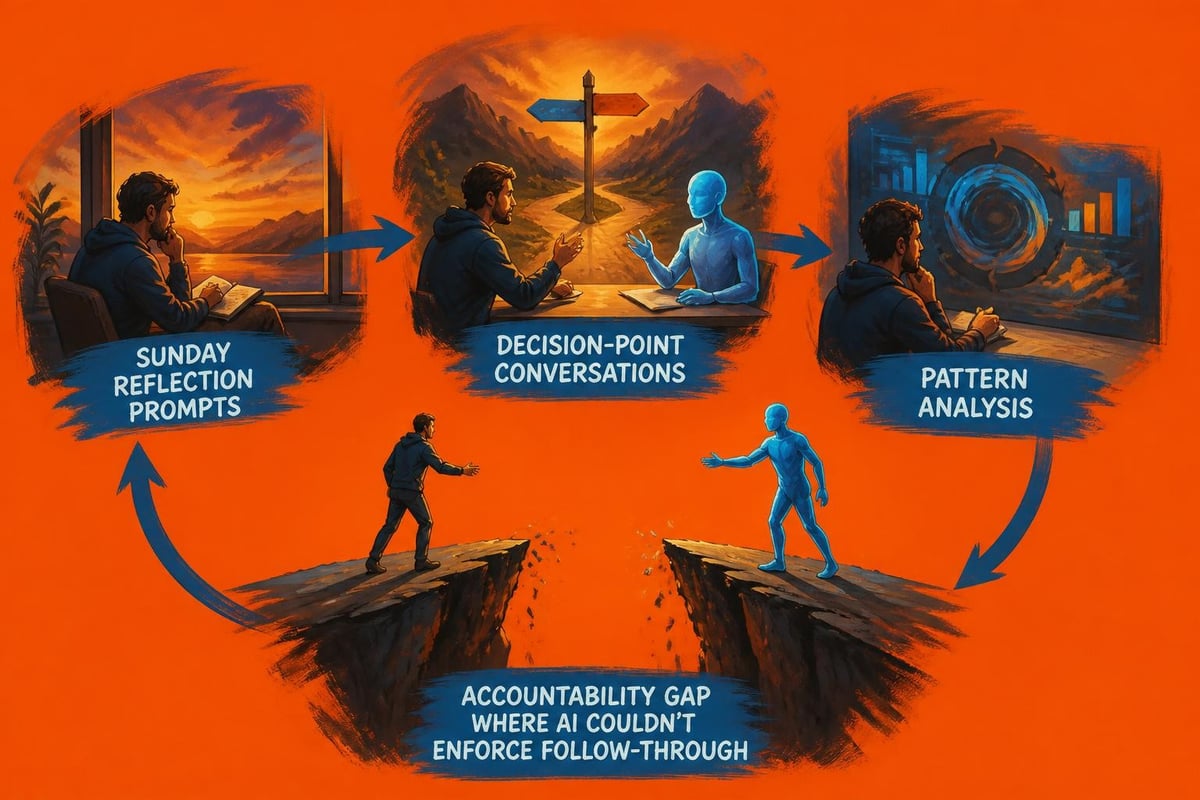
For three weeks, it felt like progress. I was more intentional, clearer on trade-offs, and documenting my reasoning instead of reacting on instinct. ChatGPT almost became my coach because it gave me the structure I thought I needed.
The Three Walls That Broke the Experiment
Wall One: Zero Cost to Lying
In week four, I told ChatGPT I'd have a difficult conversation with my VP of Sales by Wednesday. Wednesday came and went. I logged back in, started a new thread about a different topic, and the AI had no memory, no follow-up, no consequence. A human coach would have opened our next session with, "We agreed you'd have that conversation. What happened?"
The research on AI augmenting coaching workflows confirms this gap. LLMs can generate insight, but they can't create the relational cost that drives follow-through. When I could ghost my commitments without social consequence, I did.
Wall Two: Pattern Blindness Across Time
ChatGPT could spot patterns within a conversation. It couldn't see that I'd rationalized delaying the same org restructure for eight weeks running. A human coach tracks your excuses over months and calls you on the meta-pattern: "You've said you'll address this four times. What's the real block?"
| What AI Sees | What Human Coaches See |
|---|---|
| Individual decision trees | Recurring avoidance patterns |
| This week's rationalization | Eight weeks of the same excuse |
| Logical frameworks | Emotional resistance signals |
| Data you share | What you avoid sharing |
I tested whether memory features or custom instructions could fix this. They couldn't. The AI lacks the longitudinal relationship that makes pattern-calling credible and uncomfortable.
Wall Three: No Skin in the Game
My actual executive coach had facilitated our leadership team through two brutal quarters. She'd sat in our Monday meetings, watched our dynamics, and knew when I was performing consensus versus actually deciding. ChatGPT almost became my coach, but it had never seen me deflect, never watched me shut down a direct report's challenge, never felt the room temperature shift when I got defensive.
That context is everything. When she said, "You're doing the thing we talked about," it landed because she'd seen the thing. The AI could only respond to what I chose to type.
What AI Coaching Actually Delivers
This isn't a dismissal of AI tools. After the experiment ended, I kept using ChatGPT, but differently. It excels in three specific use cases that don't require accountability or relational depth:
- Pre-work for human coaching sessions: Articulating a problem more clearly before I bring it to my coach
- Framework exploration: Testing multiple models to find the right lens for a decision
- Reflection prompts: Structured thinking when I need to process alone first
A systematic review of AI as a coaching tool shows similar boundaries. AI augments preparation, scales access to frameworks, and supports reflection. It doesn't replace the human elements that drive lasting behavior change: relationship, challenge, and consequence.
The Real Cost of Credential Worship and AI Hype
The coaching industry's obsession with certifications has created an opening for AI tools to seem like viable alternatives. If coaching is just delivering frameworks and asking powerful questions, why not automate it?
This misses what actually works:
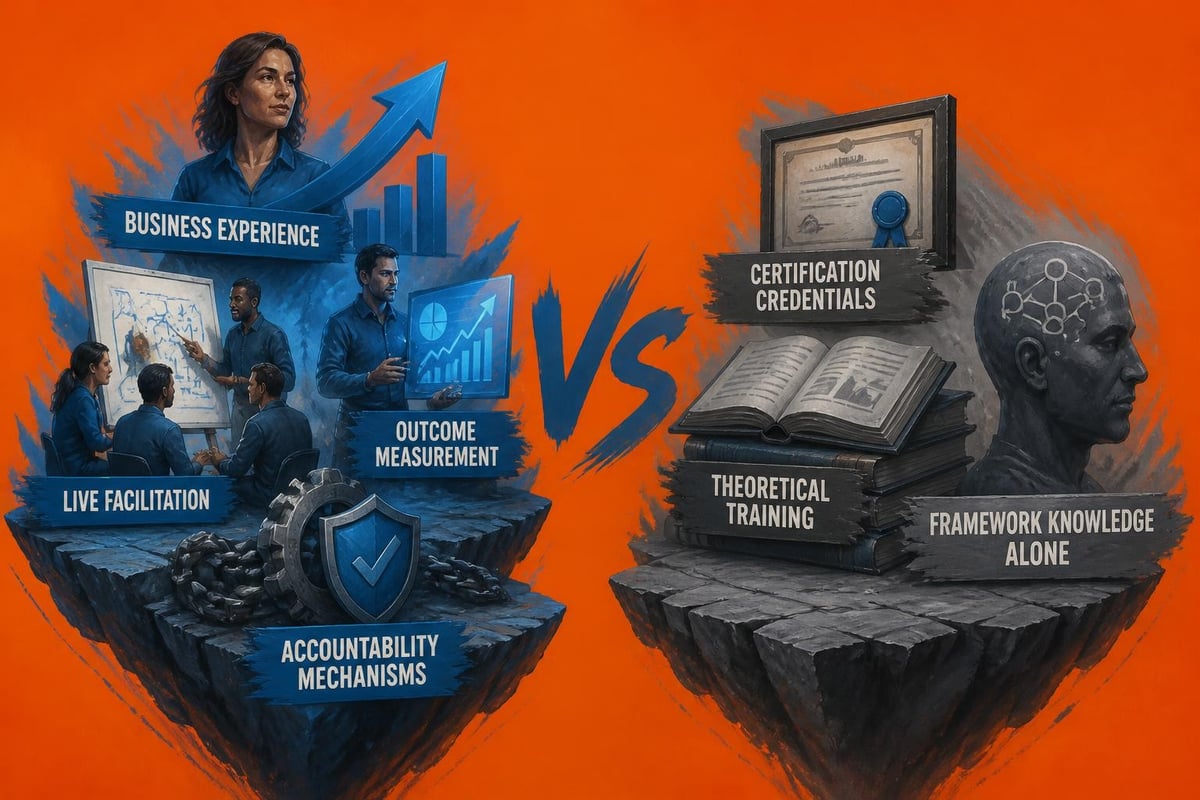
- Coaches who've run teams know when you're bullshitting about "alignment"
- Coaches who've missed payroll recognize financial avoidance differently than those trained only in models
- Coaches who facilitate live meetings see what surveys and self-reports miss
The best coaching I've received came from practitioners with business scar tissue, not those with the most impressive credential stack. When choosing executive coaching, experience in your context beats certification pedigree every time.
What Mid-Market Leaders Actually Need
After running this experiment and watching our leadership team work with both AI tools and human coaches, the pattern is clear. You need different things at different points:
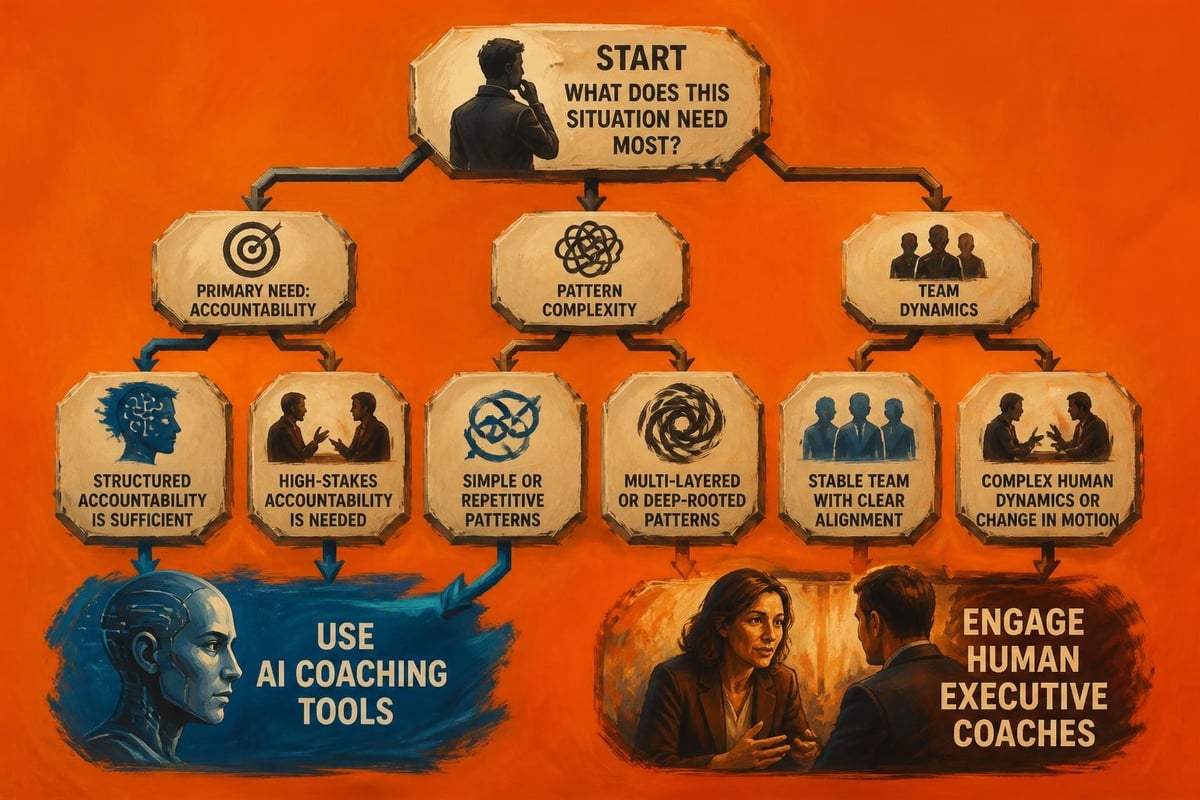
Use AI when you need:
- Fast framework application
- Structured reflection on your own timeline
- Pre-work before high-stakes conversations
- Documentation of your thinking process
Use human coaching when you need:
- Accountability that costs you something to break
- Pattern-calling across months of behavior
- Challenge rooted in business context and observation
- Facilitation in live team dynamics
The companies getting this right in 2026 aren't choosing between AI and humans. They're using AI to scale manager self-coaching and reflection, then deploying experienced practitioners for the work that requires relationship, consequence, and live observation.
The Accountability Gap Nobody Talks About
ChatGPT almost became my coach because I wanted the benefits of coaching without the discomfort of being truly known. That's the real insight. AI lets you perform introspection without risking exposure. You control the inputs, the memory, the context.
But exposure is where the work happens. When someone who's watched you lead for six months says, "You're optimizing for being liked again," and you feel the truth of it in your chest, that's not something an AI can manufacture. The discomfort is the point.
Three questions to know if you need human coaching:
- Have you made the same "commitment to change" three or more times without follow-through?
- Do you need someone to call you on patterns you can't see yourself?
- Is the work happening in team dynamics, not just your own head?
If you answered yes to any of these, AI tools won't close the gap. You need someone with skin in the game who's seen enough leaders to recognize your specific flavor of avoidance.
What 2026 Data Shows About AI and Coaching
The hype cycle around AI coaching peaked in late 2025, but the data emerging in 2026 tells a more nuanced story. AI tools are proliferating in manager training and self-directed development. They're failing in executive coaching and team facilitation where stakes and complexity are highest.
- Adoption: 67% of L&D teams tested AI coaching tools in Q1 2026
- Retention: Only 23% kept using them as primary coaching delivery after 90 days
- Use case shift: Most successful implementations moved AI to pre-work and reflection, not core coaching
The tools improving fastest are those that augment human coaches rather than replace them. Think: AI-generated prep questions before a coaching session, sentiment analysis on 360 feedback, or pattern dashboards that help coaches spot themes across multiple clients.
Organizations trying to scale coaching with AI alone are discovering what I learned: you can automate framework delivery, but you can't automate the relational pressure that drives change. When coaching demand is growing faster than supply, the temptation to believe AI can fill the gap is strong. The evidence says otherwise.
The Questions Leaders Should Ask in 2026
Before you test whether ChatGPT or any AI tool can become your coach, get clear on what you're actually trying to solve:
Diagnosis questions:
- Am I avoiding human coaching because of cost, time, or vulnerability?
- Do I need frameworks and structure, or do I need someone to call me on my patterns?
- Is my development work individual reflection or team behavior change?
- Have I tried self-directed development before, and did I follow through?
The answers reveal whether AI tools will help or just give you a sophisticated way to avoid the harder work. ChatGPT almost became my coach because I wasn't honest about what I was avoiding. Once I admitted I needed accountability I couldn't ghost, the choice became clear.
AI coaching tools will keep improving, but they won't replace the accountability, pattern recognition, and business context that experienced human coaches bring. If you're leading a mid-market company and need coaching that delivers measurable results, not just frameworks and reflection prompts, Noomii connects you with practitioners who coach live in your meetings, tie progress to KPIs, and share risk through month-to-month terms. No long contracts, just visible outcomes and business impact you can track.
FAQ
Can ChatGPT replace an executive coach?
No. ChatGPT can deliver frameworks, structure reflection, and help you think through decisions, but it cannot provide accountability, read your resistance patterns over time, or challenge you in live team dynamics. The absence of relational cost means commitments made to AI carry no consequence when broken.
What are AI coaching tools good for?
AI tools excel at pre-work for coaching sessions, framework exploration, structured reflection prompts, and documentation of thinking processes. They work best when augmenting human coaching rather than replacing it, especially for manager self-development and preparation before high-stakes conversations.
How do I know if I need human coaching versus AI tools?
If you've made the same commitment to change three or more times without follow-through, need pattern-calling you can't see yourself, or are working on team dynamics rather than individual reflection, you need human coaching. AI tools work when you need frameworks and structure but can self-enforce.
What did the 2026 research show about AI in coaching?
Research published in early 2026 shows AI can augment coaching workflows and scale access to frameworks, but systematic reviews identify gaps in accountability, longitudinal pattern recognition, and behavior change enforcement. Adoption rates are high, but retention drops when AI is used as primary coaching delivery.
Why do credentials matter less than experience in executive coaching?
Coaches with business experience recognize avoidance patterns, financial stress, and team dysfunction that purely credential-trained coaches miss. Practitioners who've run teams, missed payroll, or led through crisis bring context-specific challenge that certifications alone cannot provide. Outcomes depend on pattern recognition from real exposure.
What's the biggest risk of using only AI for coaching?
The biggest risk is performing introspection without actual behavior change. AI lets you control inputs, memory, and context, which means you can avoid the discomfort of being truly known. Without relational consequence, commitments become suggestions you can abandon when they get difficult.
How are companies using AI and human coaching together in 2026?
The most successful implementations use AI for manager self-coaching, reflection scaling, and pre-work generation, then deploy experienced human coaches for executive development, team facilitation, and accountability on strategic priorities. This hybrid approach scales access while preserving the relational elements that drive change.
What questions should I ask before hiring an executive coach?
Ask about their direct business experience in your industry or company size, how they measure progress and tie coaching to business outcomes, whether they facilitate in live team settings or only one-on-one, and what their accountability mechanisms look like. Avoid coaches who lead with credentials over proven results in similar contexts.
Can AI spot patterns humans miss in coaching?
AI can identify patterns within single conversations or structured data sets, but it cannot track emotional resistance, recurring excuses across months, or meta-patterns in what you avoid discussing. Human coaches with longitudinal relationships see what you don't say and how your story changes over time, which AI memory features cannot replicate effectively.


Leave a Reply
Want to join the discussion?Feel free to contribute!